Kia EV3 Light LR road test review: King of the block
/Here’s a car that truly amps up the compact electric category.
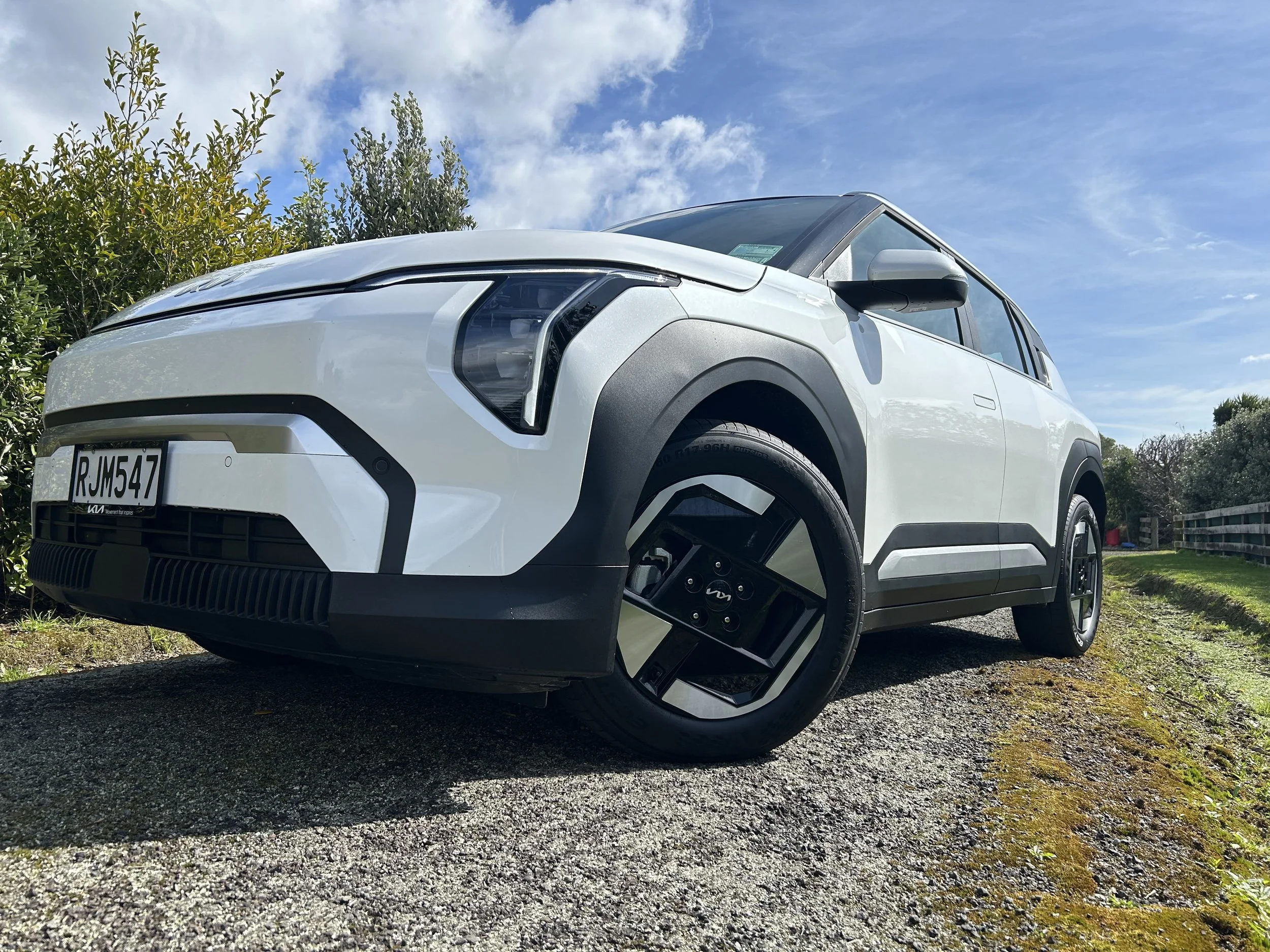
How much: $62,220
Powertrain: Single motor 153kW/283Nm, single drive.
How big: 4300mm long, 1850mm wide, 1560mm high.
We like: Urban friendly size with huge open road competence; the category champ for range, efficiency, dynamics and comfort.
Not so much: Small yet irksome spec shortcomings; for all the quality, it would stand a better chance with sub-$60k pricing.
RANGE anxiety is fast becoming an electric car non issue now; these days surely more consideration goes into determining how realistic claimed ranges really are.
My experience? The gap between what a maker says is possible and what an actual user believes is closing. That doesn’t mean I think there will be a day soon, if ever, when there’s 100 percent certainty of hitting manufacturer-cited marks. We’ve had more than a century with internal combustion and never cracked it with that. Electric makes it easier, but so many variables can impinge.
Yet the benefits of massive improvements in drivetrain tech and battery chemistry and cooling is benefitting.
In my view, electrics now are at least coming within reasonable coo-ee of those window card calibrations. With caveat that I’m just talking about WLTP-3 calculated data. Forget NEDC or CLC. You might as well rely on tea leaves.
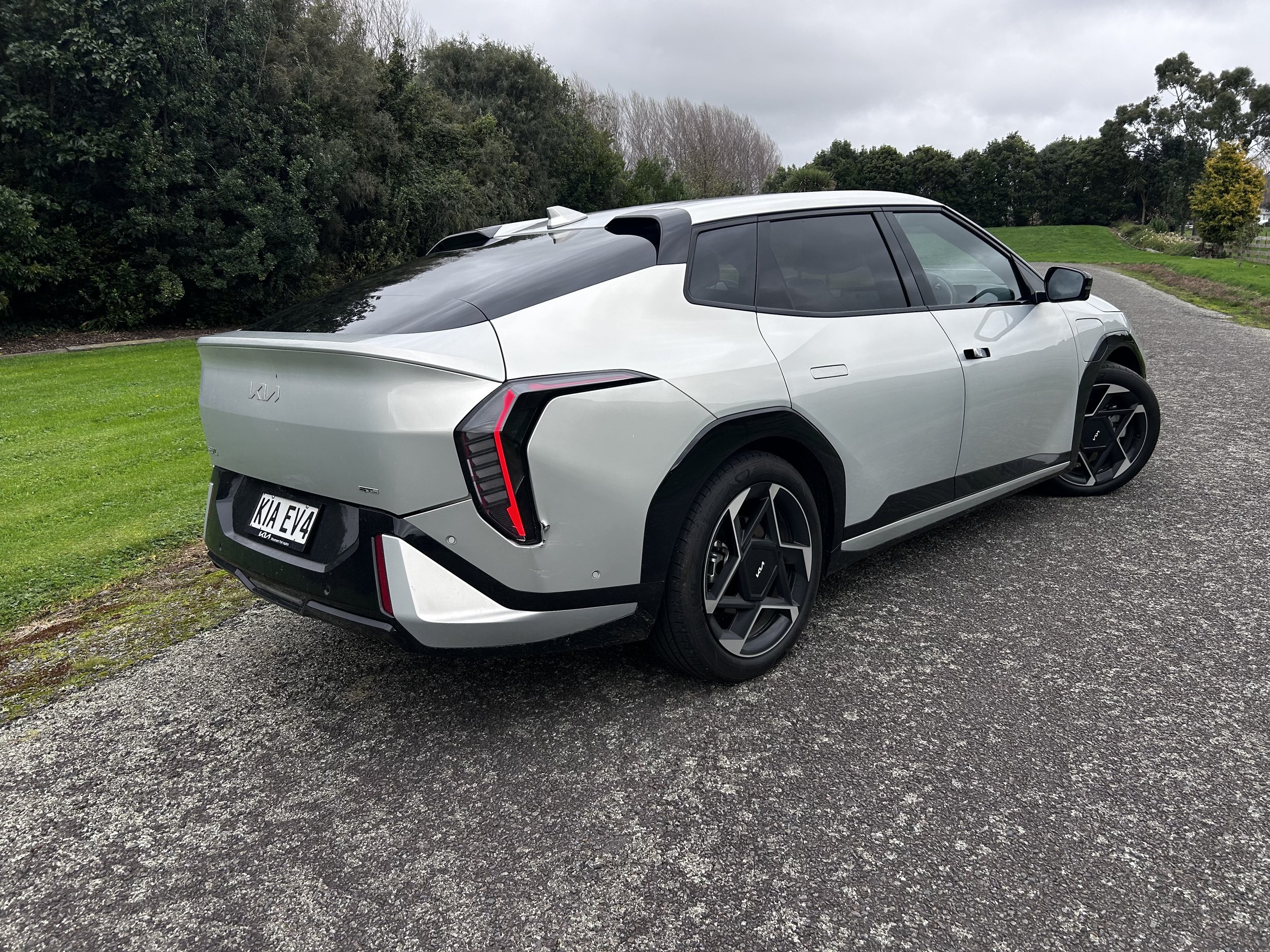
So, anyway. Here’s the EV3 from Kia. Currently the smallest and least pricey of the South Korean make’s family of boxy all-electrics, this compact five-seater is delivered with two sizes of battery.
It’s the ‘big’ one of those that is of interest here. Of 81.4kWh usable capacity, it’s a relatively large battery for such a modest car an, happily, the longest-legged of the three with it is the cheapest, the Light Long Range on test.
Kia reckons a canny driver should be able to see 605 kilometres from this edition.
That’s a useful 169km more than the $6700 cheaper Light Standard Range can eke from a 58.3kWh battery. The Earth LR and GT-Line that are respectively $7k and $13k more expensive than the Light LR also fall by the wayside 42km earlier than the tester should, a result of them being on larger wheels and tyres.
You could still easily be keen on those dearer types because they are better kitted. Conversely, you can see attraction of the Standard Range car because, smaller battery aside, Lights are equipped identically; so if you never drive that far, it’s a considerable saving.
On the other hand, some people do have that ‘rainy day’ mentality about needing a car with lots of range … just in case they suddenly do decide to drive the entire length of the North Island in a day. In which case, if you want to undertake that, with reasonable comfort and convenience, then the Light LR really is in the sweet spot.
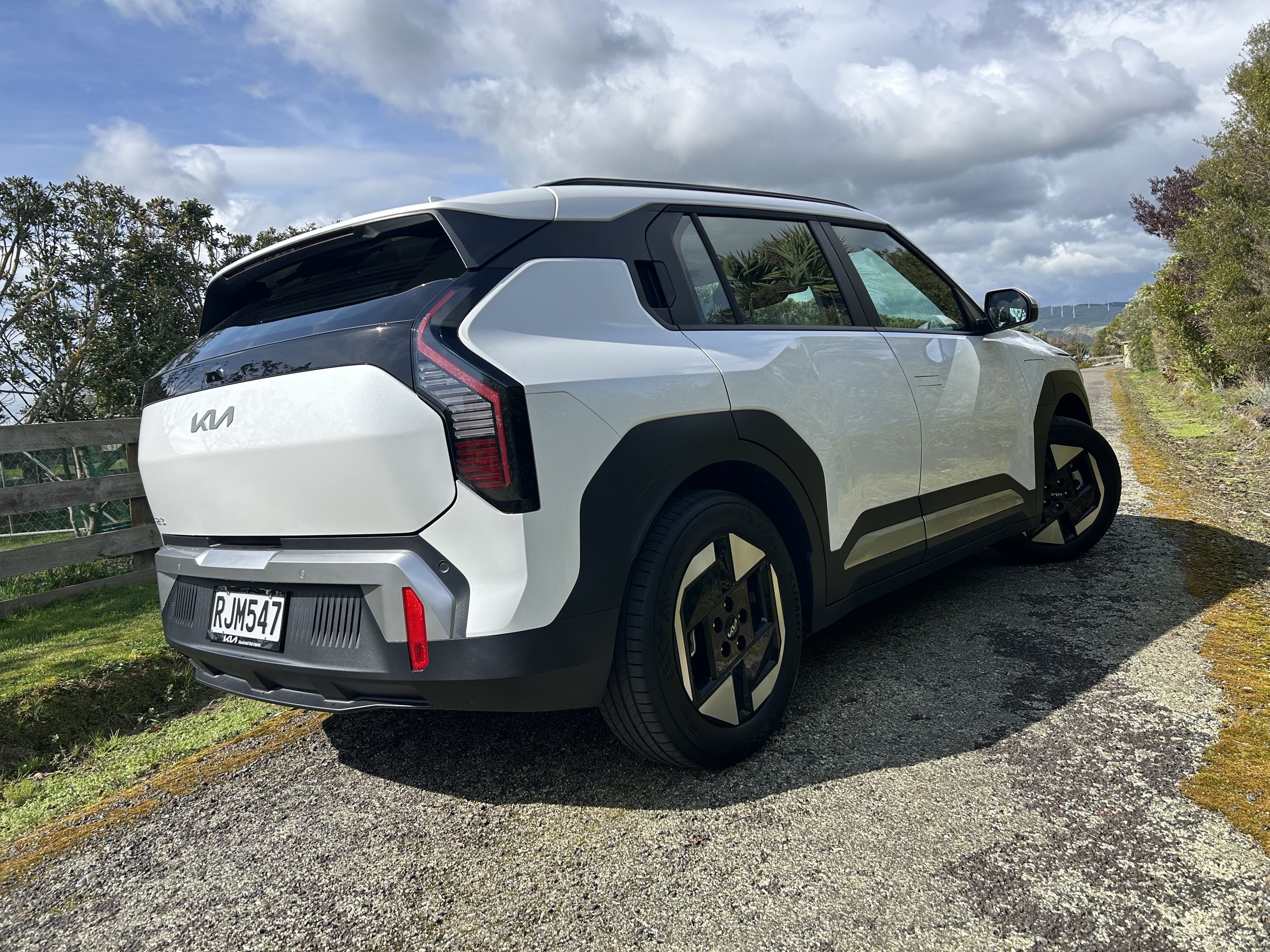
Assuming it does what it says on the box. For my part, I’m pretty sure it will, and without need to resort to any hyper-miling, traffic stream-impeding silliness that Nissan Leaf owners think is acceptable.
I didn’t drive the whole of the North; just the lower half, with driving distance of 320km conceivably not threatening to leave it ohm-less, though given the terrain included three ascents, the second a substantial wending 15 minute climb, who could be absolutely sure?
In hindsight, no need for any concern. For this it started out out with the battery at 98 percent and finished with it down to 39 percent.
Beyond lending actual range based driving habit and mode - in this case, mainly in the standard driving setting - the trip computer lends best and worst potentials; these I assumed to be basing on it being switched to either Eco or Sport, and the pace either lessening or increasing.
For purposes of seeking to achieve an idea of what that could deliver, I broke down the run into four legs; on the first of 132km, it figured I’d have 560kms actual, 738km if absolutely light-footing and 233 if I nailed it.
By reaching home, it had re-evaluated my effort, so considered I had 200kms’ remaining range, extending to 268km or depreciating to 117km.
But, anyway, an average of 15.3kWh per 100km for a journey that was pretty much always at highway pace suggested it likely can do its owners proud enough to make that optimal range at least a tangible possibility.
Subsequently, the car remained mainly on an urban cycle, and that average improved a lot. The main benefits, as always, come from smooth driving and keeping speed consistency as often as possible. Not having the air conditioning going also benefits, though on this day I didn’t feel need to go to that extreme.
When you do need to replenish, you don’t get the same ultra-fast charging found in 800 volt Kia models, but a maximum 128kW on DC fast chargers is still better than you will see from some others in its specific category.
What also demands consideration is that Kia’s battery management system also means the charge speed is kept up for more of the charging time, allowing it to claim a massive 460km added in just 30 minutes of charging.
AC power, with peak 11kW, is also at peak for that appraoch, but of course it’s not a big uptake. Charging this car at home is as much a measured process as with any other; if a big re-instatement is required, you’ll be looking at that being an overnight job.
But that’s hardly unusual, so doesn’t impinge on the many solid reasons to absolutely give this car consideration, including over a stablemate.
Recently, I drove the EV5 Light, which is to the same styling theme, at slightly larger scale, though it’s also a five-seater.
Often brands structure their line-ups to avoid comparison, but that’s not the case here. I’d suggest the EV3 absolutely demands to be considered an alternate to its bigger brother, and not simply before the ‘Five” Light is but $5k dearer.
The smaller car is better. Because? To use that classic Dennis Denuto line from ‘The Castle’, it’s the vibe.
The designs are very close but the cars themselves are not. The ‘Three’ is from South Korea on the E-GMP platform, but breaks from previous application in being in front-drive form.
It’s big bro with the same distinction is out of from China as a joint venture, gets a BYD Blade battery and is on a revised version of an older ICE platform, now tailored for batteries.
They are equals for build quality, but not quality of materials. China has harder, more brittle plastics; the seats look identical, but a driver will surely find the EV3’s more agreeable on a long drive.
Comfort appointments are pretty much lineball, but everything on the electronic side seems to work just a bit more seamlessly in the EV3. Out on the road, the sourcing channels are more apparent. Simply, the EV5’s N3 platform doesn’t feel as dynamic as the E-GMP. The EV3 also has a more refined ride quality and the drivetrain is quieter. I’d suggest it will stand as the more consistently efficient car.
Neither are sporty. For now, that style of set-up seems restricted to the EV6 alone. With the EV3, there’s a sense it is carefully calibrated for comfort, with a substantial dollop of refinement. Given the car’s family friendly focus, that has to be a pleasing plus.
It might seem odd that the smallest, least pricey car in the whole family of pure electric Kia cars should impress in having the best suspension tune, but there are reasons for holding that view.
It seems to be very good at keeping the car calm on ripply surfaces and worse. Coarse chip is a real challenge for some electrics; the EV3’s feel across it is much less jittery than from the EV5.
As is always the case, the imposition of a hefty battery plays for and again. For the most part this is a pretty serene car to drive. The other side of the coin is that it doesn’t offer any advantage from being driven with great enthusiasm.
Overall sound insulation is excellent, especially at low-to-medium speeds; wind noise and tyre noise do build up on stone-intensive surfaces, but it’s never to an unpleasant level.
I grew to appreciate the drivetrain tuning, too. The performance mode makes it a bit more perky and peakier. Outside of that the power delivery is pleasingly linear, with pleasant, smooth electric urge from step-off. It just feels more natural to drive than some.
Kia’s idea of what a family car of the electric era should look like is now very obvious. Feedback about this car was much the same I’d heard when driving the EV5 and EV9.
It’s clear not everyone shares Seoul’s view that snub-nosed and chunky, four-square crossovers in an assortment of sizes are the best pitch.
There is also some confusion about where all this leaves the EV6. Kia’s first car on the ubiquitous E-GMP platform is so differently shaped it has become the family oddity.
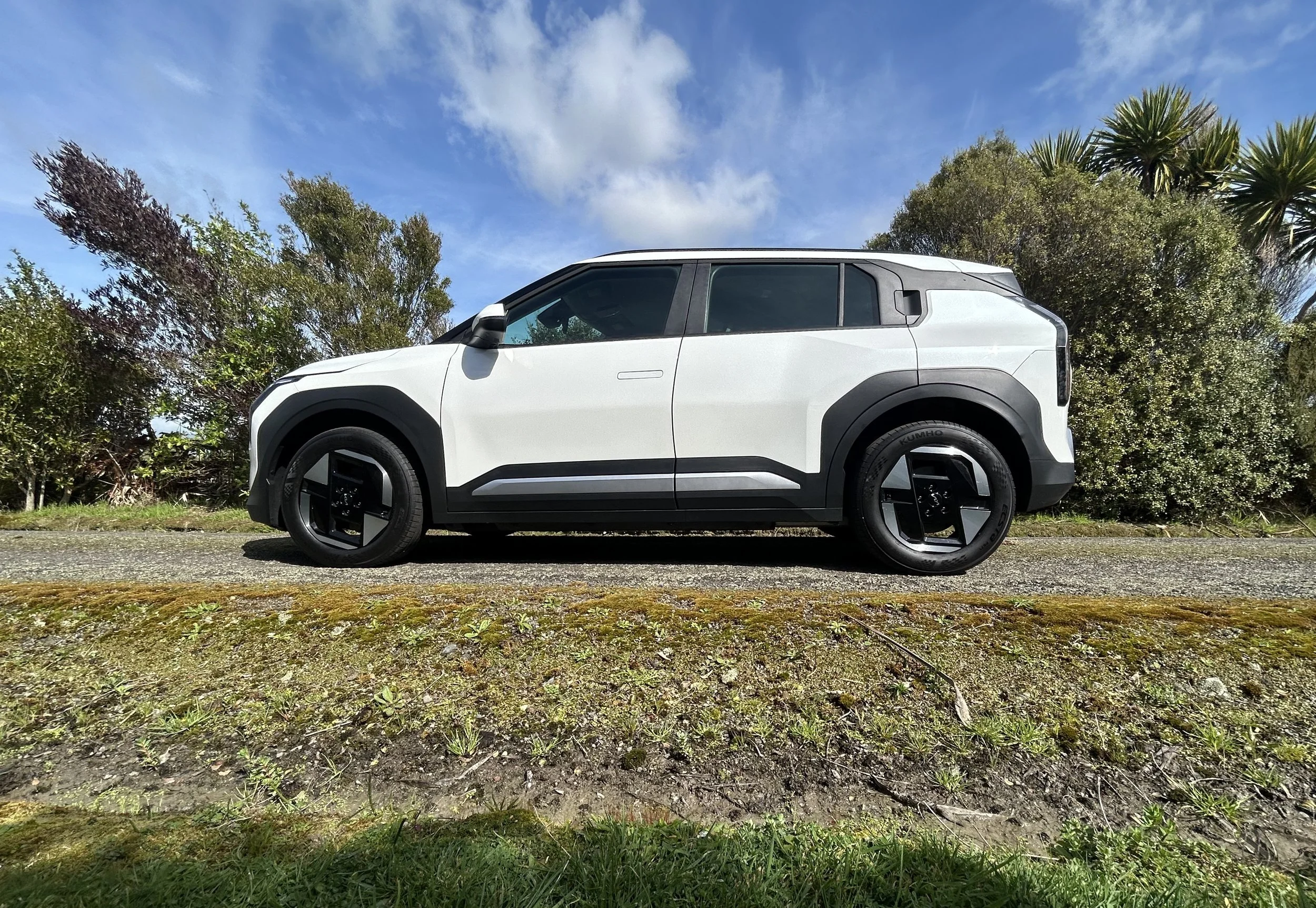
I don’t mind the square-cut look; it’s a bit less retro-futuristic than how Hyundai does it, but if anything it seems to work better for the EV3 than the larger stablemates.
There’s something more pleasant about a car that is almost as wide as it is long. and some of the detailing delivered into that chiselled shape is really nice. Those vertical headlights, for instance.
Plus there’s benefit to being blocky. Jibes about it being so box-like will surely die off when those critics see how well it delivers in respect to practicality and usability.
Thanks to a wheelbase that’s identical to that of the bigger Kia Sportage SUV, there’s decent space, though potentially if occupancy is intended to be adult-only and distance driving is planned it’s more a car for four than five; the middle rear seat is pretty narrow. Also, the stadium-style seating will make taller rear passengers feel a bit perched up, and some will find their hair brushing the headlining. A different story for parents up front, kids in the back. Those fitting baby seats will enjoy the outboard ISOFIX points and that the rear doors open wide. The flat floor means that there’s plenty of rear space for feet as well.
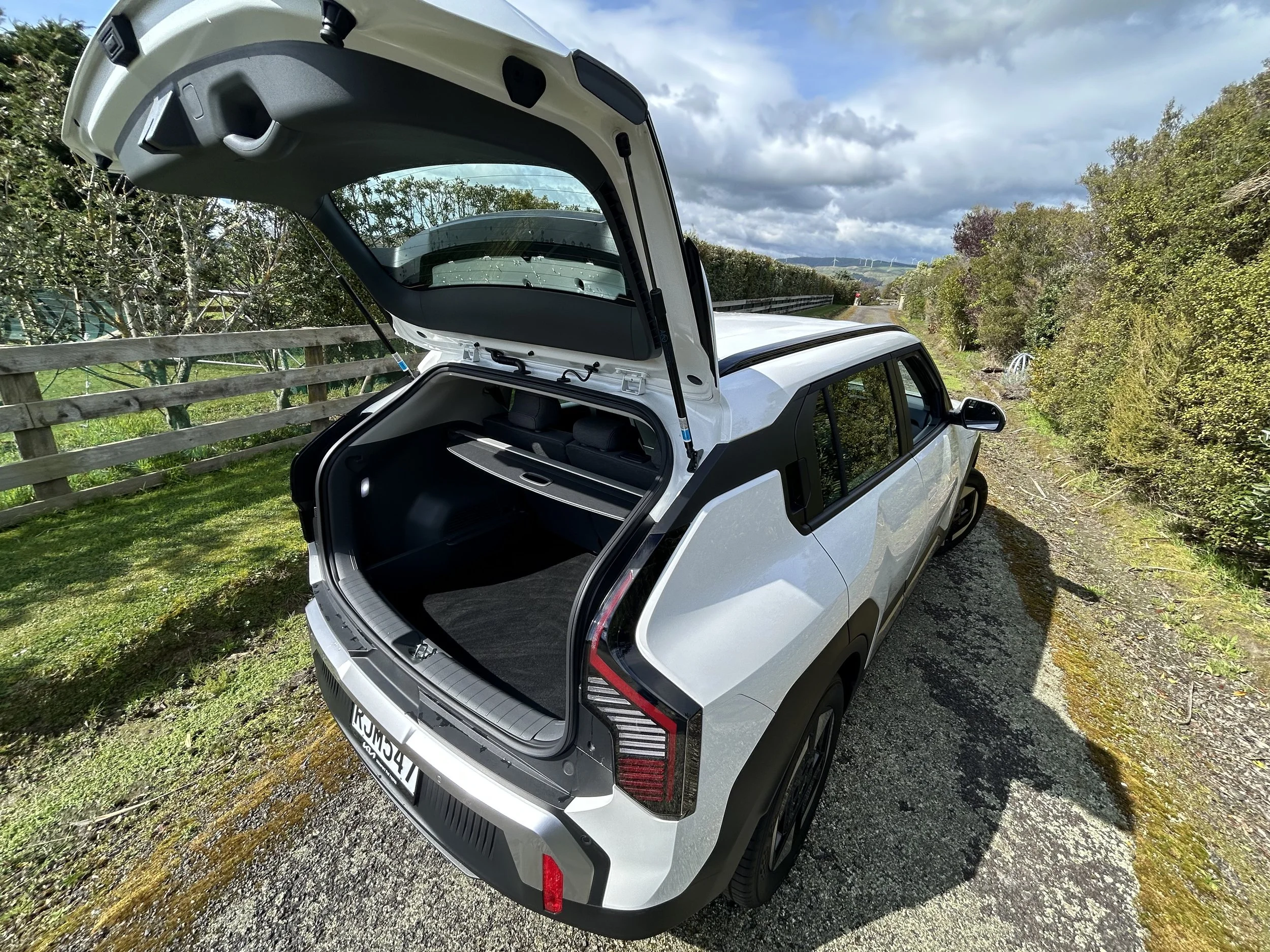
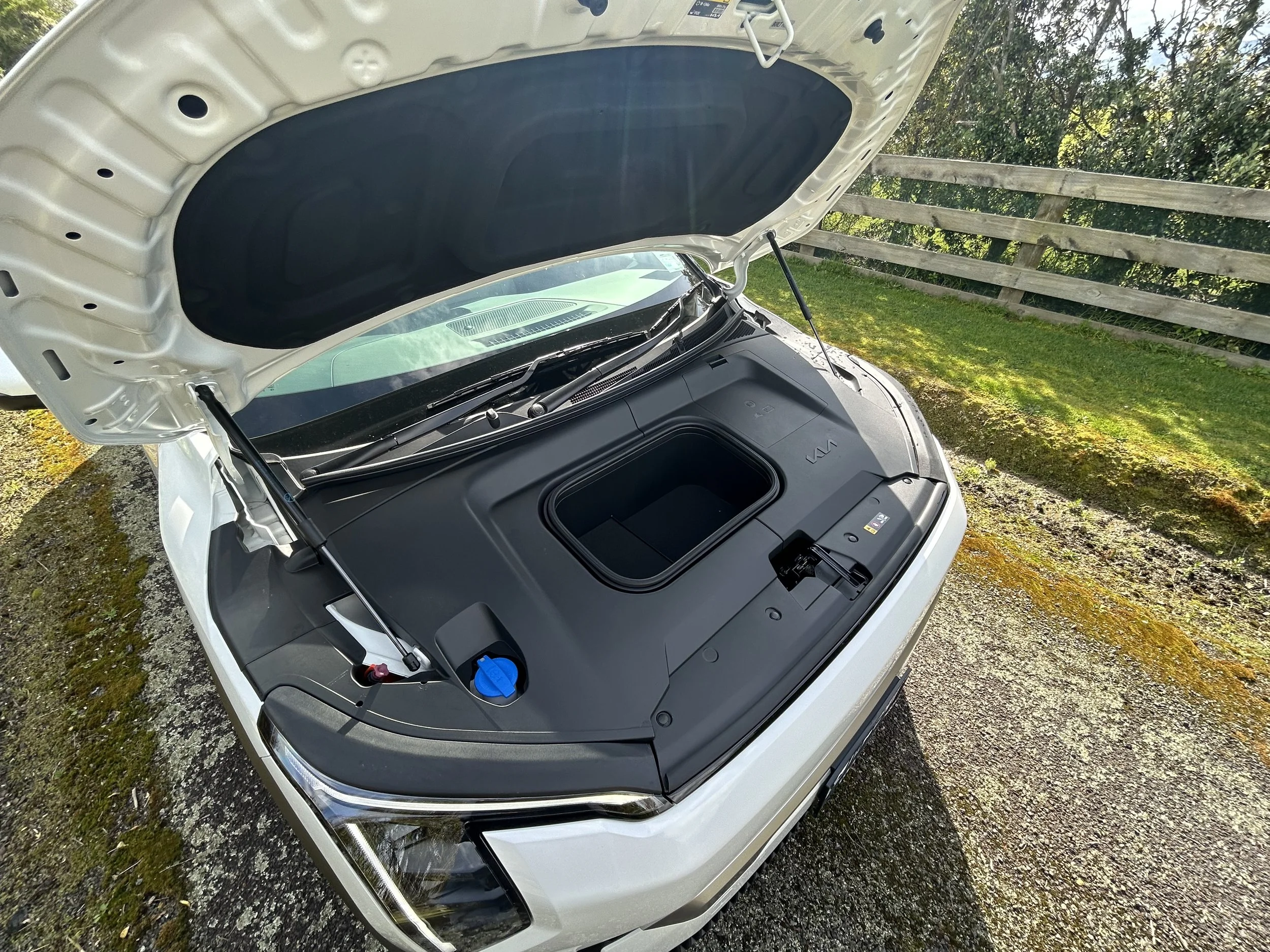
Still, that’s one aspect where it’s obviously a bit more compromised than EV5. The other is for boot capacity. The cited 460 litres is 43 litres less than in the EV5, and when the rear seats fold flat - well, nearly - that opens up 1230 litres of space, whereas the next size-up car has 1713. EV3 also has a 25-litre ‘frunk’ storage area in the nose; it you prefer not to leave the charging cable in the main boot, it can go there.
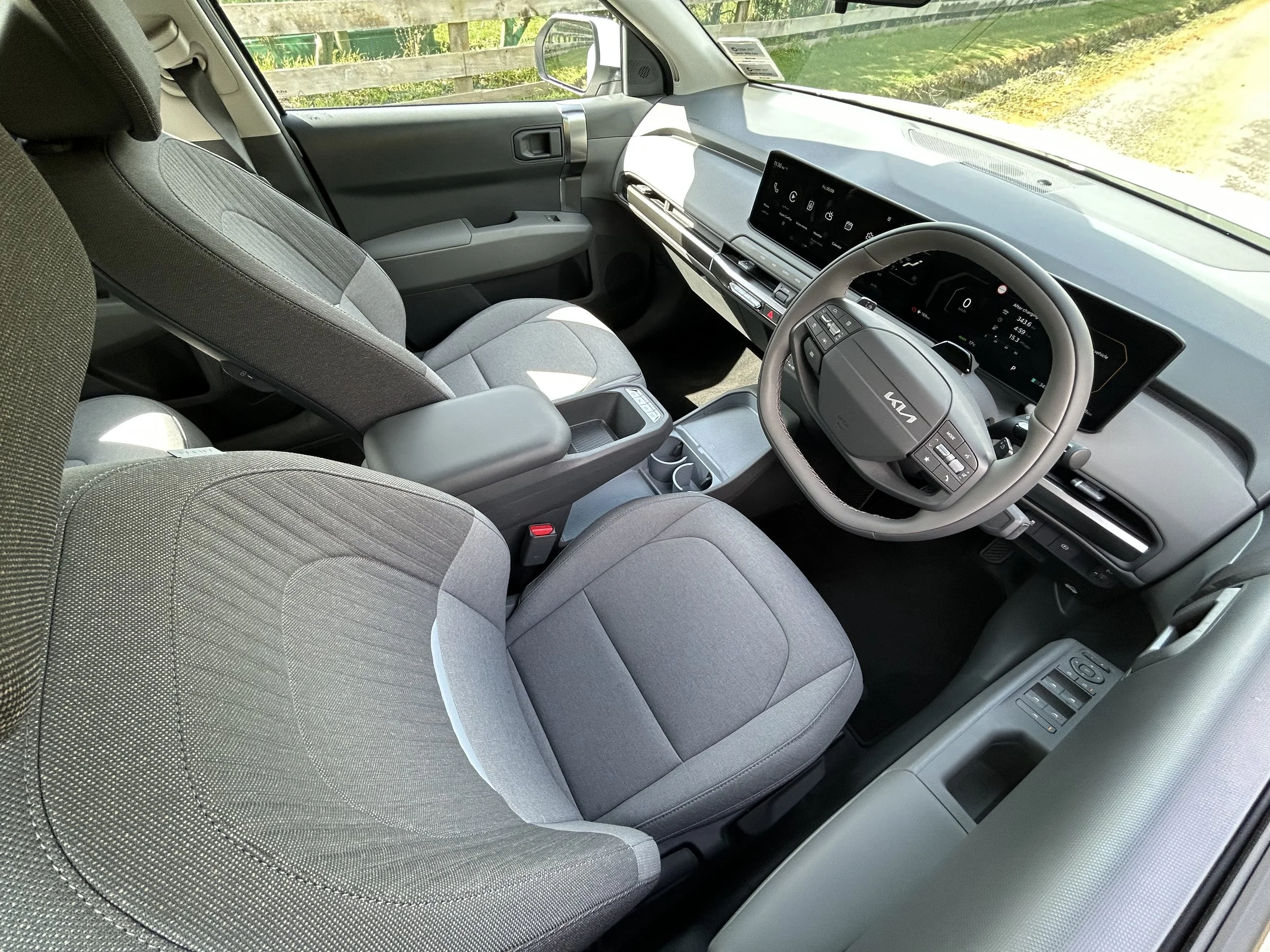
The interior ambience is what I’d term as upmarket austerity; Hyundai Group electric cars in general seem dedicated to a clean and uncluttered interior look.
The main feature point of course are those big screens that provision a lot of daily operability. The driver gets a chunky, squared-off two spoke steering wheel, the dashboard is covered with a soft fabric, which - like a lot of materials in the EV3’s cabin - is made from recycled plastics.
One quirk is that all of the cabin’s storage space - aside from the glovebox - is open and on view. I guess it’s a good inducement not leave bags, wallets, phones and keys in the car. Another is that the cup holders are set extremely low down, far enough to be a bit of stretch away. Clever how the cup holder surrounds can be retracted to create more storage.
Equipment provision is solid but this is one area where argument that electric cars are going to have to become more affordable if they’re to achieve mass-market status is not easily countered.
The issue for the EV3 isn’t that it’s poorly rendered; with the Cupra Born now gone from the scene, it’s the new king of this category. Very much the smartest buy in its class, including for technology application. It has great little touches that speak to very intuitive thinking from the design team. One example is the standalone audio-mode button on the steering wheel, which allows you to switch between personal media and radio even when phone projection is running on the main screen. It’s a small thing, but a massive breakthrough.
So it’s genuinely smart and clever. However, there’s likelihood it will stand to be compared against other products that are’t as competent, yet - unfairly or otherwise - will still be considered potential competitors nonetheless.
One potential weak point is how it furnishes. As much as the fit out is solid, for the same spend you can buy larger electric product from China that is obviously more affluent in presentation.
The lack of a 360-degree camera when you get such nice screens seems a bit unnecessary. The rationale behind equipping this car with wireless CarPlay but not a phone charging pad escapes me. It’s just a quick way to drain your phone battery.
Kia will remind there are two USB-C sockets in the front, one of which has a handy switch allowing use as either a data connection to the big screen, or just as a charger. But if you don’t like cable clutter, it’s a faff. And if you tether, you’re likely to simply effect the CarPlay option, which will also keep your phone charged. Which makes wireless a bit pointless.
One area where Kia doesn’t scrimp is on driver assistance. The driver monitor is a bit prone to chastise for nebulous reasons and the speed monitoring function is still to nanny state tuning (if quieter) but one function to be appreciated is the adaptive cruise control linking to the navigation so that it will automatically reduce your speed for speed zones. EV3 also has forward collision avoidance braking, intelligent speed limiter, lane-keeping steering, driver monitoring and seven airbags.
Kia internationally proposes the EV3 as being part of an major wave of more affordable new electric cars. The stickers carried by all versions show that it really isn’t quite cable of presenting itself to that level in our market.
You can of course buy like-sized internal combustion cars for less. But that’s not the main issue.
Kia NZ will surely be fully aware of the count of like-credentialed China-sourced products - including cars that don’t come with Chinese branding, including the Volvo EX30 as an example - that also compete in the same or slightly lower price zones as this car. Conceivably, those are the headache that won’t go away.
Given the market condition, pushing that EV3 also comes with the polish to stand what might be construed as a fat sticker is a brave option. As unpalatable as this might be for the distributor, re-evaluating the price could be more prudent.