Audi A5 Avant PHEV road test review: In the right circles
/An advanced plug-in hybrid powertrain seems a good fit for a shapely sports-themed wagon.
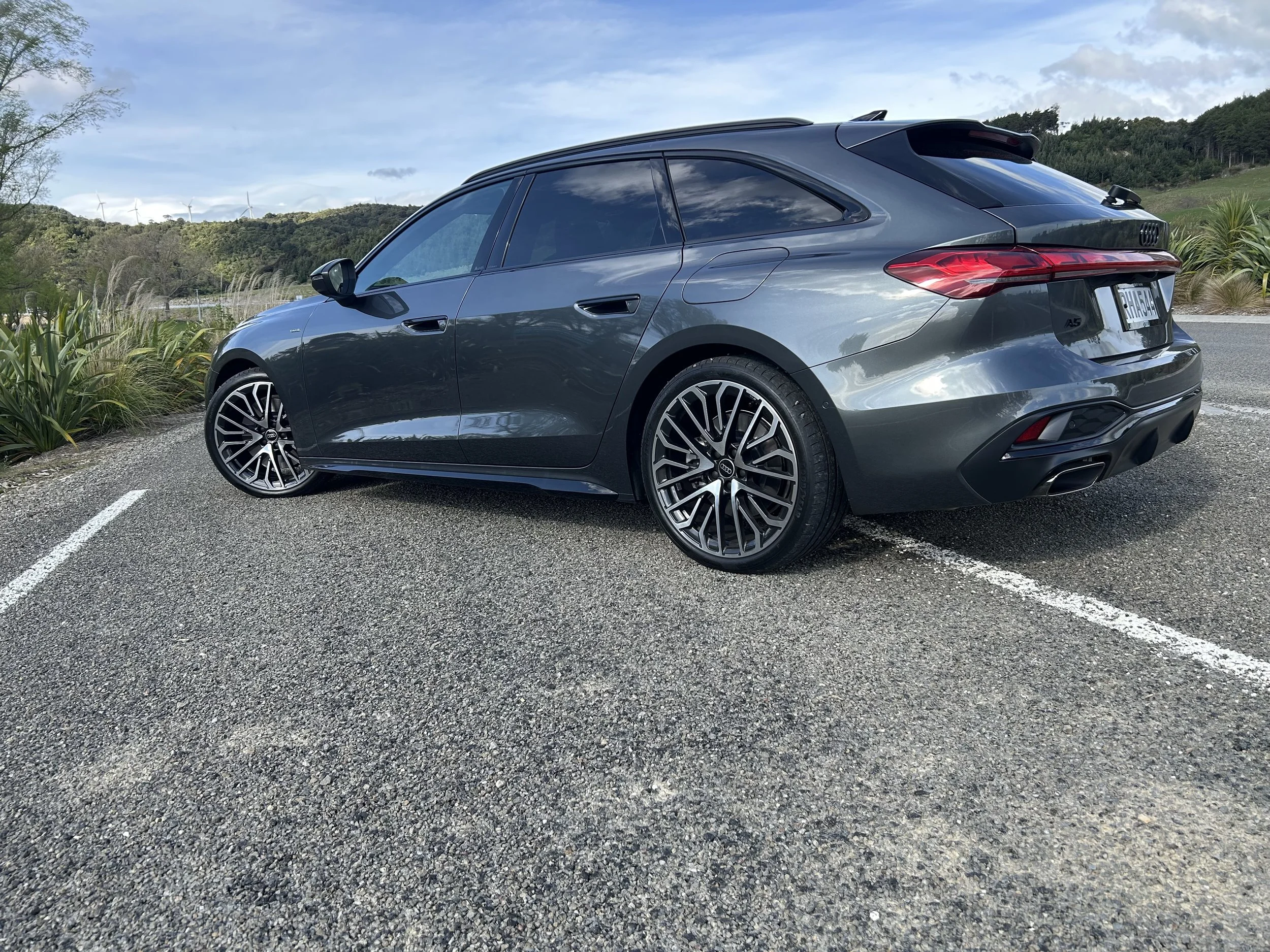
Price: $117,990 ($141,490 as tested).
Powertrain: 1984cc turbocharged 2.0-litre petrol with in-gearbox electric motor, 220kW/440Nm, seven-speed, quattro four-wheel-drive.
How big: 4835mm long; 144mm tall; 2099mm wide.
We like: High potential for reducing running costs and emissions; genuinely useful electric range.
Not so much: Small boot; AC only charging; expensive once optioned.
PLUG-in hybrid technology has regressed to slow burn acceptance here, but new car distributors keep introducing it nonetheless.
The strategy is a reminder, if any were still needed, that New Zealand’s erratic uptake of these ‘new-age’ efficiencies is misguided. Too many here still seem to think we have time to debate the pros and cons of environmental issues. Patently, we do not.
That’s why the world’s car makers are acting so decisively. That’s why the call from Kiwis without social conscience for reversion to old-school ways, to turn the clock back to times of proliferate and polluting V8s and the like, are rightly being ignored.
Globally, PHEV is important to achieving emissions and economy standards set in stone in markets far more important than our own.
Just because Road User Charges and withdrawal of rebates has derailed acceptance of electrified and electric technologies more advanced than the closed-loop hybrid which Toyota, for one, excels in?
Well, the car industry whose long-term ambition is to adapt in order to survive is moving forward. And if a country whose entire annual new car acceptance amounts to no more than a month’s output from some of the biggest performers decides not to come along? Well, too bad. It’s either get on the programme or forget about gaining access to new cars.
Even the world’s supercar providers have accepted they have a social responsibility to better. So they have joined an industry that now spends billions finessing technologies, some still utilising fossil fuels, others bypassing completely, that aspire to deliver commensurate feel good, with more Green goodness.
But it’s not easy. Audi recently joining several rivals in making the tough call to backioff from an aggressive electric vehicle strategy.
When announcing in June that plans to end internal combustion engine (ICE) production by 2033, chief executive Gernot Dollner was clear to express firm view that, to ensure climate protection, EVs are simply the better technology and still the ultimate end game.
However, with consumer sentiment not aligning to that ideal as strongly as they should, Ingolstadt has been forced into what it calls ‘greater flexibility’.
Having previously said it was going all-in on a pure electric path, it now intends to keep developing petrol and petrol-hybrid cars alongside EVs. For at least another decade.
That means product like the one on test here stand to have a higher priority now than might have been imagined for them during development.
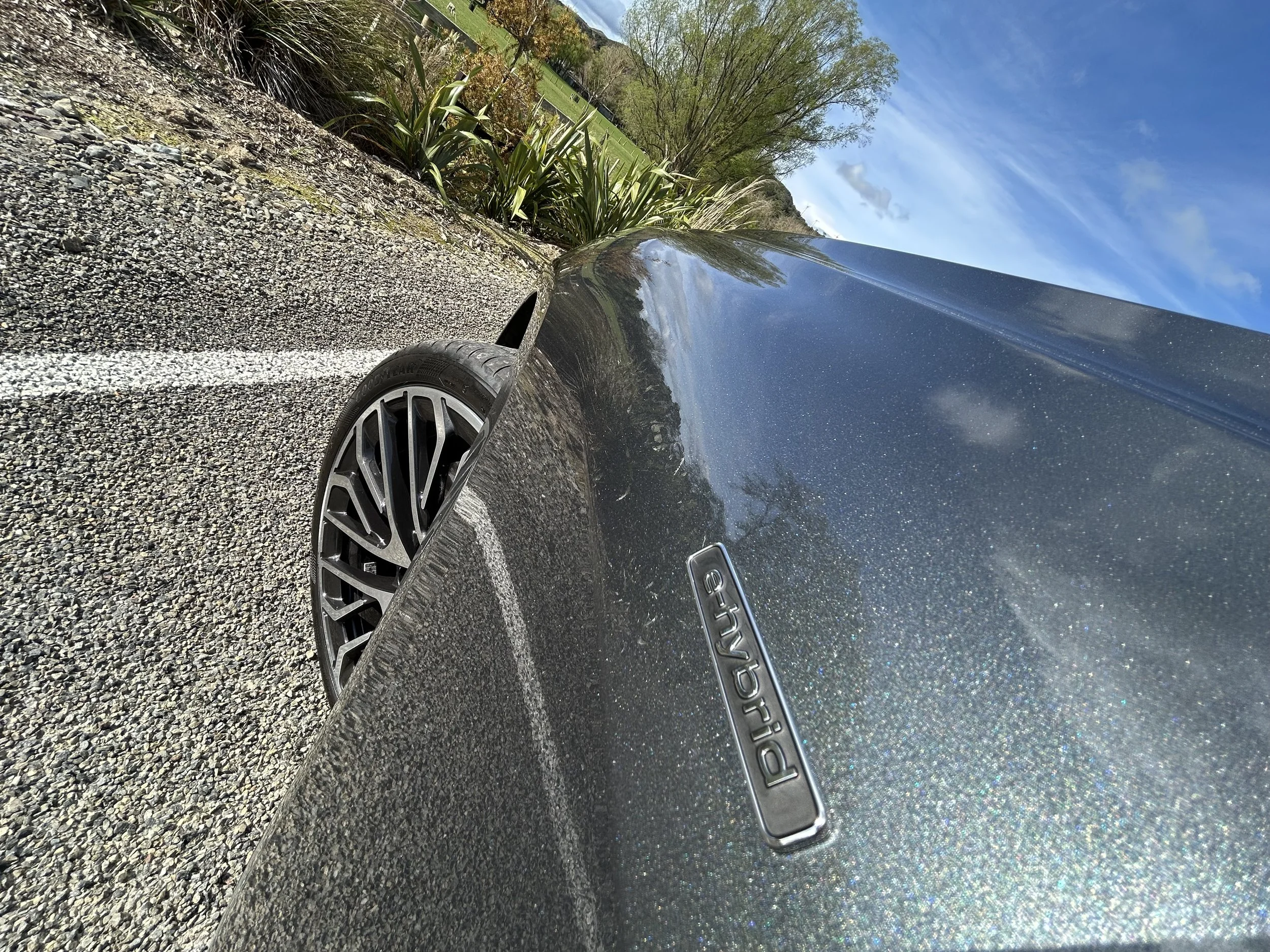
The A5 Avant arrives with a plug-in hybrid powertrain which centres on VW Group’s ubiquitous 2.0-litre EA888 turbo petrol four. This combines with a 104kW electric motor inside the seven-speed automatic gearbox to deliver 220kW. The set-up here is exclusively sold in four-wheel-drive Quattro guise.
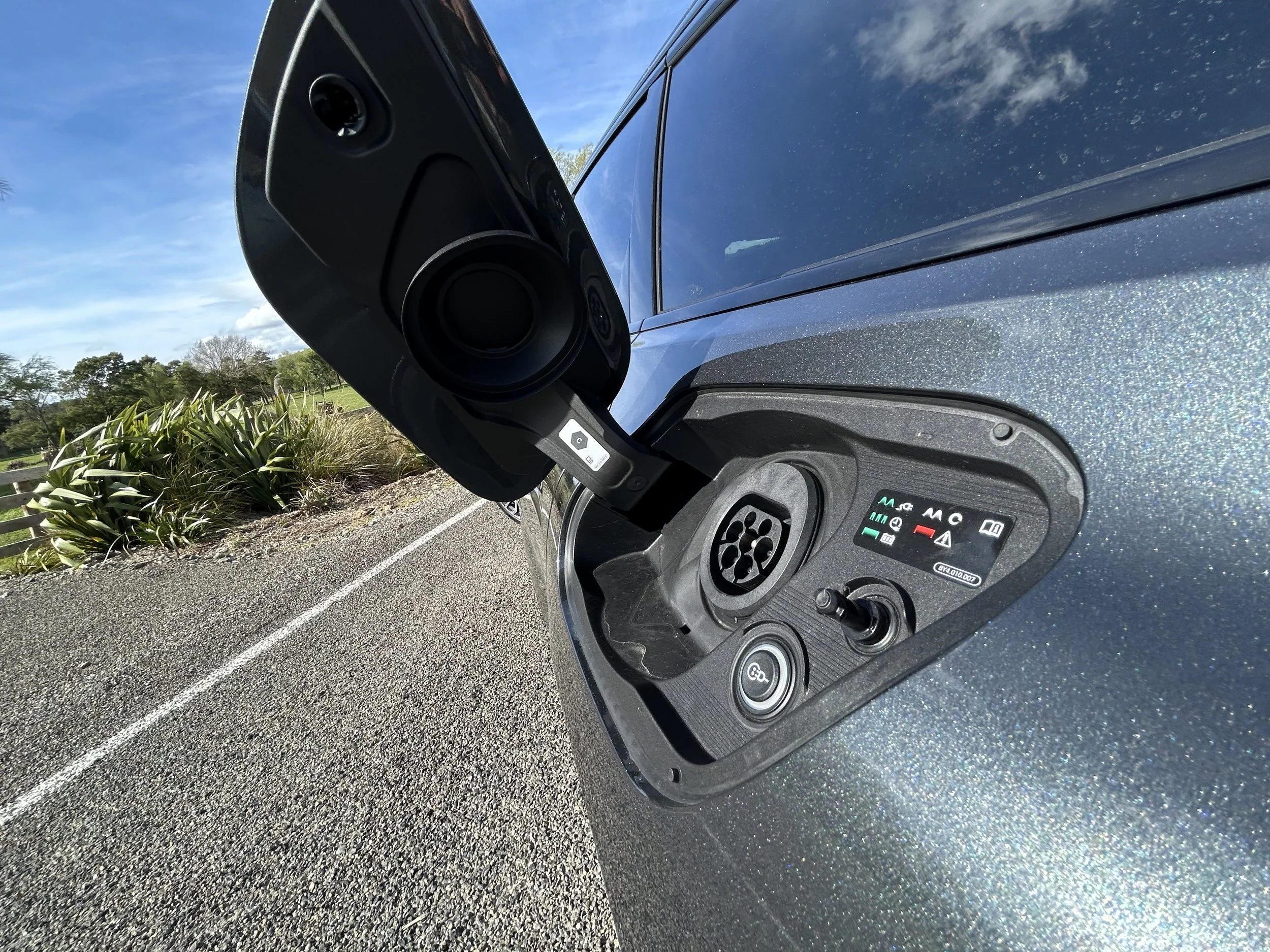
The battery is of 20.7kWh (usable) capacity and offers an electric-only range of 101 kilometres, measured to the NZ-trusted WLTP scale.
It can be charged via a maximum AC current of 11kW (with a 0-100 percent charging time of 105 minutes) and recharged via regenerative braking, with levels selected via paddles behind the steering wheel.
Is that of appeal? Notwithstanding that this car is priced about point where it would have applied apply, the loss of the rebate and introduction of Road User Charge hasn’t helped this tech.
Also, station wagon take-up isn’t so strong these days. As much as the A4 the new model replaces has commanded considerable Kiwi attention over the years, buyer tastes have gravitated to crossovers and SUVs.
It’s fair to therefore imagine the Audi Q5 will logically continue to draw in far more volume than the A5 Avant.
Yet, if decisions are allowed to be determined more by the heart than the head, then the car on test today surely has every chance of reverting tastes back toward traditional.
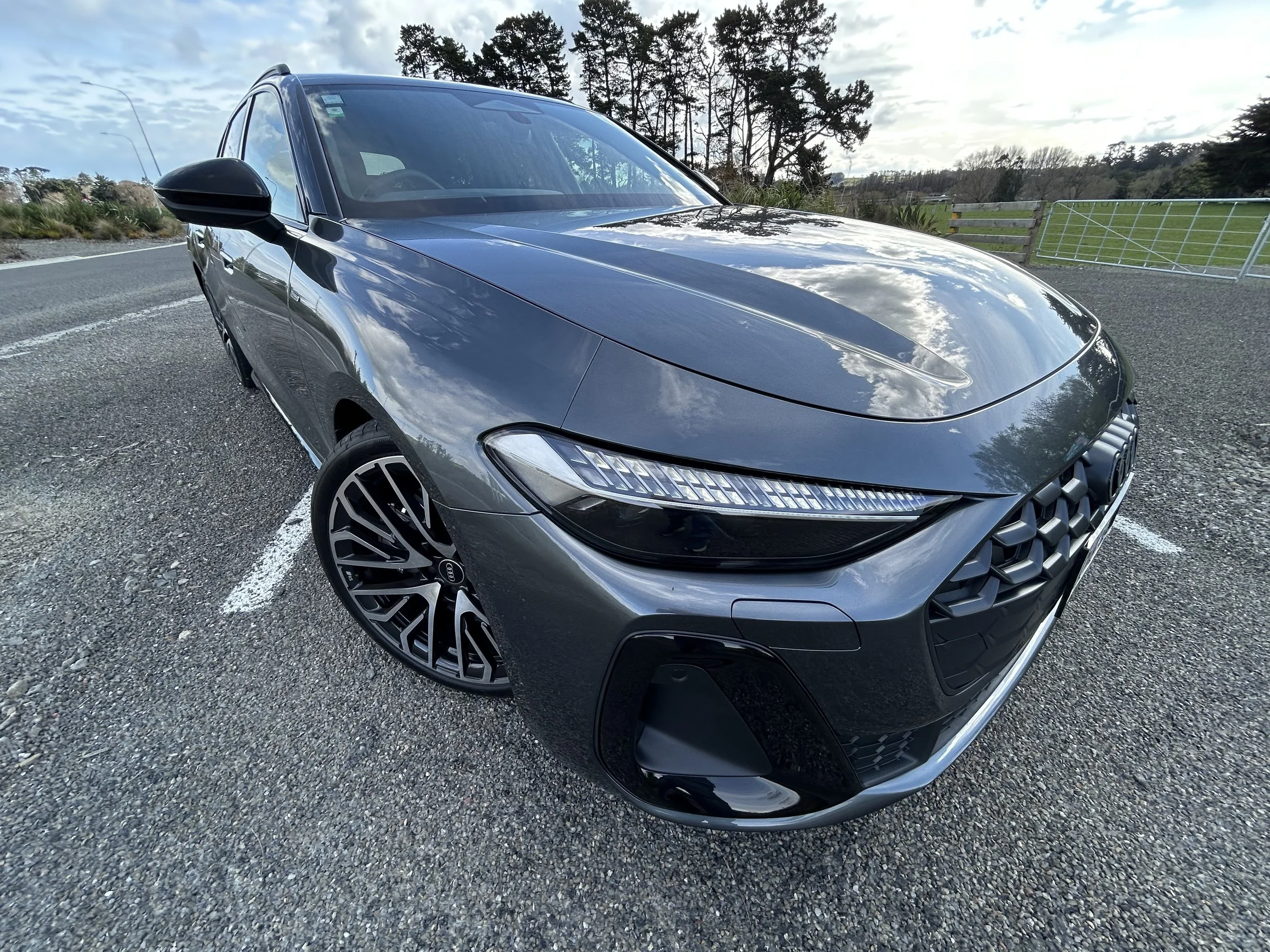
Audi’s station wagons have always been lookers but this car is exceptional in its silhouette and stance. You can’t help but admire how handsome it is. And how upmarket. The high-quality approach pervades in all directions, but is particularly evidenced in a cabin delivering a modern, tech-forward feel, dominated by some truly impressive screens, and the build quality seems excellent.
It feels very robust and decidedly premium, which makes it a pleasant place to spend time, and despite the low roof, the cabin is okay for four occupants.
Admittedly, you need to be flush to buy into the level of plush presented for test.
The recommended retail for the e-hybrid S-Line is $117,990, and for that you achieve the S line exterior and interior, Matrix LED headlights, privacy glass, progressive steering, and a suite of premium technology such as the MMI panoramic display, navigation, and inductive phone charging, plus three-zone automatic climate control.
Even so, getting the car up to the standard here would demand a good fossick under the cushions of your Pauanui holiday home’s buffalo leather couch. Specially, you’ll be coughing up another $23,400.
Because? Let’s start with the wheels. With the PHEV, 20 inch rims are standard, but the Audi Sport styling worn here is a $3500 hit.
The test car also had a $2500 Black Exterior and $7500 Tech Pro packages, the latter delivering damper adjustment for the S sport suspension, OLED tail lights with selectable signatures, electric steering column adjustment and additional seat heating for the outer seat seats.
It also sported a $4000 retracting trailer hitch and $1000 headrest speakers further enhanced the top drawer Bang and Olufsen premium sound.
So, all up, a $141,490 sticker. Which is just $6500 below the RRP for the other kind of A5 Avant here, the S5. Which has a lot of those PHEV-additional comforts as standard, but becomes a very different beast, aimed at a very different audience, because it is the sports model.
There is no doubting that the car as it arrives with a twin turbo 270kW/550Nm V6 will be a more honed device than the one tested. The S5’s outputs are just 31kW/51Nm shy of those out of the last RS4, a superb V8 stormer now consigned to history.
How much consideration needs be given to difference between the flagship and the heavily electric-assisted kind is in a way moot. The PHEV is clearly on a different mission, simple as that. Still, regardless that it has 50kW and 170Nm less to give than the V6, it’s not a dull powertrain.
The 0-100kmh time of 5.9 seconds isn’t too bad for a car of this ilk, and the top speed if chased is high enough to suggest that, in its home country, this model would be fine for autobahn cruising. So, if you need to give it some welly, it won’t lack in spark.
Conversely, restraint is also rewarded. If Green goodness is a priority, then Audi has all the figures to relate a good story.
When the battery is fully replenished, they suggest, driving will become a quiet life style where efficiency is less a matter of consumption than of impressive conservation.
Optimal electric consumption of 15.8kWh/100km is achievable in optimal conditions, while blending engine and motor in the primary economy mode can eke out fossil fuel burn to a remarkable 2.1–2.6 litres per 100km, and 48-60g/km CO2, down from 117 at peak. Even when the battery is discharged, Audi cites fuel consumption of 6.5 to 7.4L/100km on its test regime.
In reality, of course, finding a driving consideration as good as that delivered in an Ingolstadt lab isn’t at all easy, yet the test car came out of a week of operation with an average fuel burn of 6.8L/100km, which I thought was pretty decent.
It also was also reflective of how the drivetrain has been programmed.
Most PHEVs will always prioritise electric for low-speed and even city driving, but the Audi system is particularly zealous at striving to places ohms before octane in that environment, to point it is programmed to optimise battery usage based on navigation data.
Ostensibly, just the ‘EV’ mode is for fully electric driving (obviously) and next up ‘hybrid’ is supposed to be more strategic.
But in my experience in anything other than its outright performance setting it would do all it can to regress to electric as often as it could.
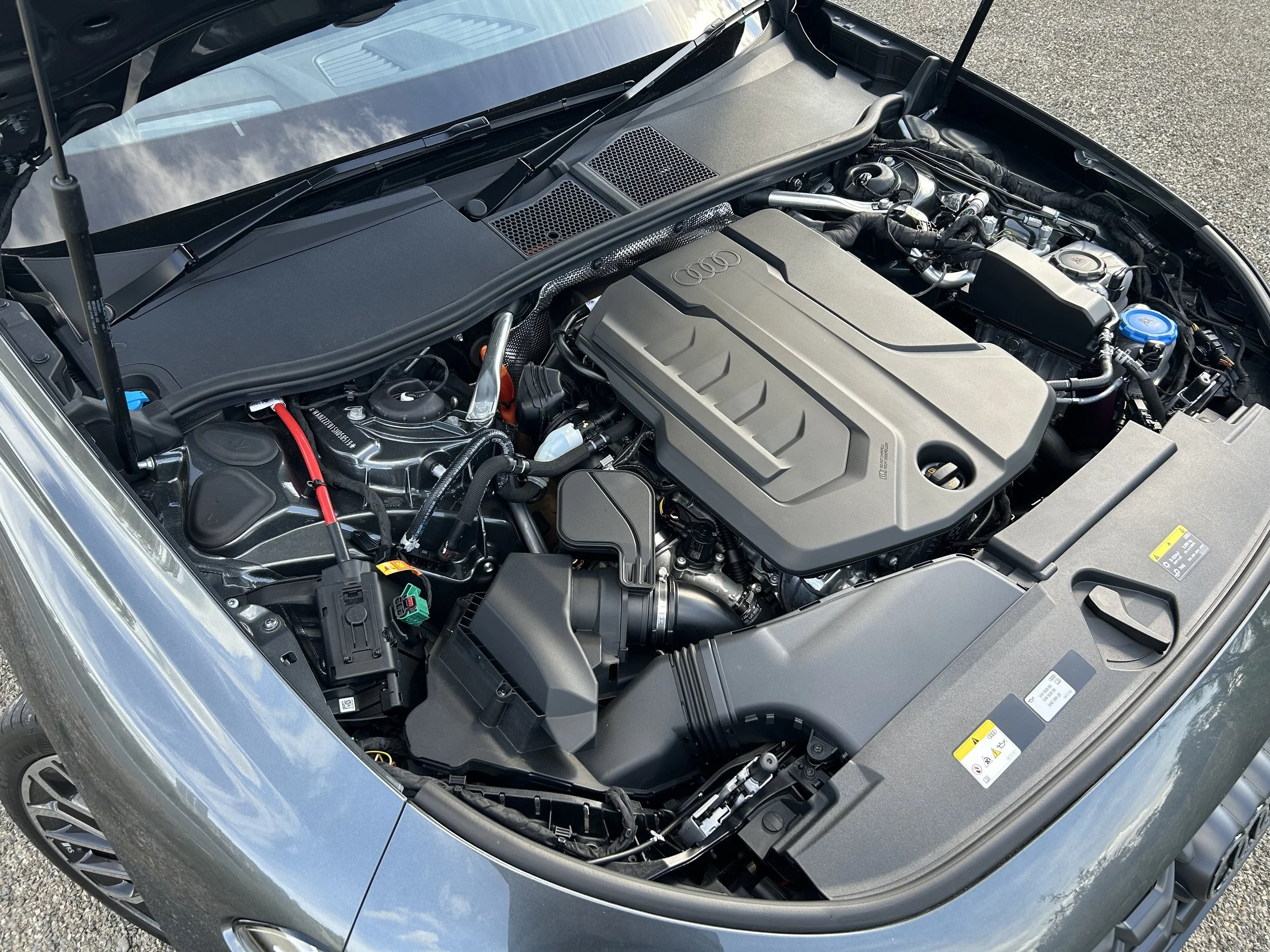
It will always start its journey using electric power in its hybrid setting, but I found it would at urban running keep that green EV light illuminated with tendency to avoid awakening the fuel-fed element unless the accelerator pedal was somewhat firmly pushed.
Of course, the driver can select the fully electric mode that only uses the battery until it depletes its charge. That’s pleasant. Driving on electric power never leaves the car feeling burdened or lacking in performance.
But obviously you do need to keep an eye on how much charge is always available to keep it in that particularly sweet spot. The perfect scenario, I’d assure, is a regime that demands around 90 kilometres mixed condition driving, then a good bout of daily charging during down times.
I cannot attest to being religious about that. And I also have to put a hand up to being a bit keen on using the performance mode, in which the car forgoes being parsimonious and instead utilises both motors to deliver optimal punch. That it also remains quite thrifty despite that is testimony to the quality of tech Audi is delivering, I’d say.
Go into the zip rather than zap end of the drive selection range and the sound from the four-cylinder petrol engine isn't going to get your pulse racing like an in-line six or V8 might. But it does pull well.
For all the sporty ambience of the styling, the PHEV could well prove to be a lot quieter than the S5. Wind and road noise cause little complaint and even the engine note is largely more muted than I’d anticipated. Naturally enough, driving in the electric mode most perfectly highlights how work appears to have gone into tuning the acoustics and prevention of unwanted sound from seeping into the cabin.
Audi says it worked hard on the A5’s suspension, attempting to improve handling and bring the car closer to its rivals when it comes to driving pleasure and driver involvement. Body control is good, too, keeping lean in corners to a minimum, and though the ride quality is not limo - that’s not Audi’s style with this sort of car - the quality of bump absorption is impressive.
Refinement being a strong suit of the PHEV could mean it is more adept at making longer distances melt away than chasing down apexes than the S5, but in respect to the dynamic side there just isn’t anything major to complain about either.
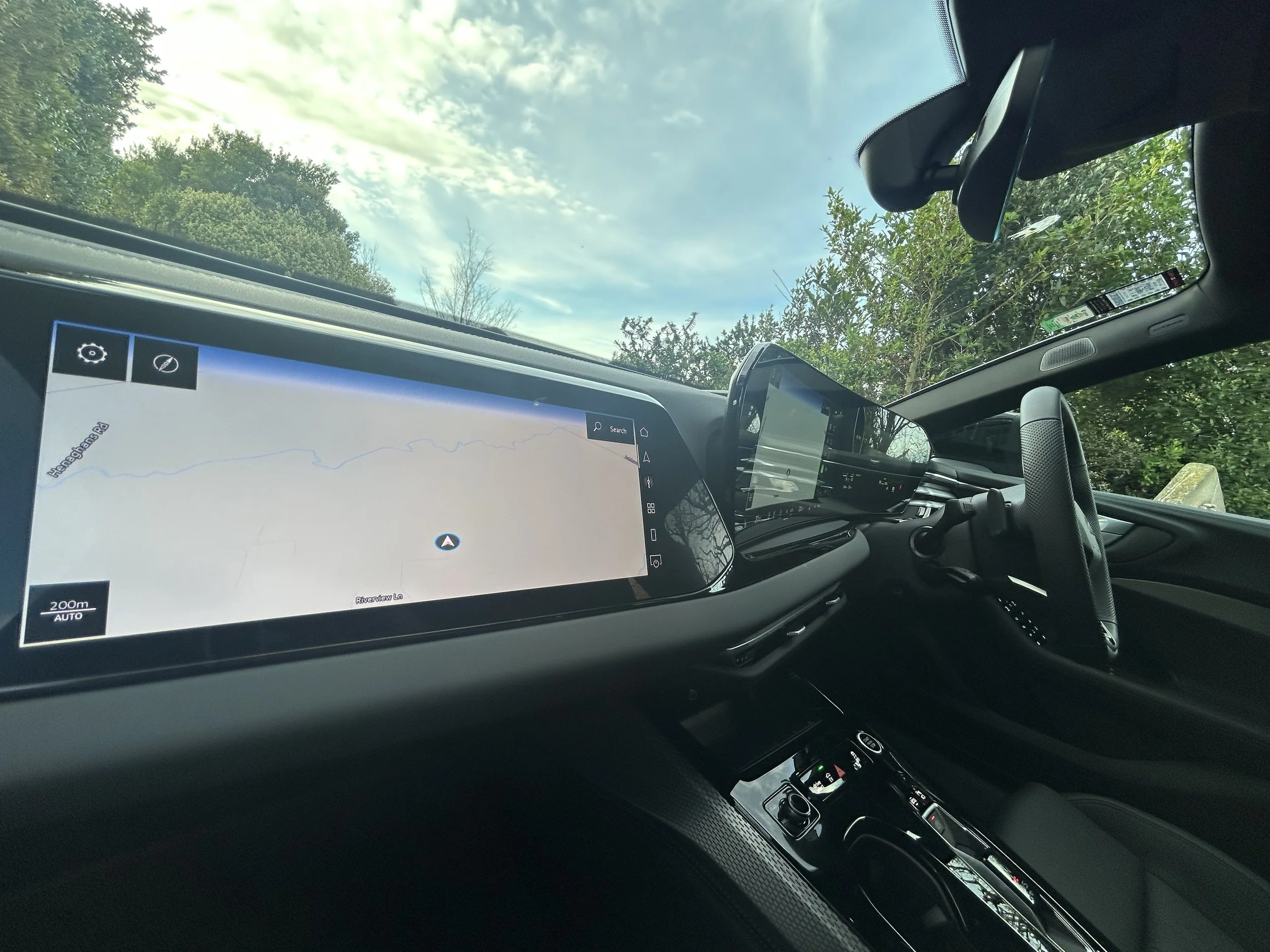
The busiest element of the driving side is keeping up with the data it is relaying. The cabin being largely free from buttons, aside from the vast number found on the steering wheel, doesn’t make it minimalist, as the dashboard is almost entirely covered in screens, particularly in our test car with its optional passenger display - so three of those, plus the head-up display directly ahead of the driver.
To be fair, the screen that sits in front of the front-seat passenger, alongside the wide, curved housing that plays host to the digital instrument cluster and the central touchscreen, isn’t of particular relevance to the driver.
But it does raise the question of how much technology you can stand before it becomes an overload. I’d say Audi is taking that proposition to an extreme.
As smart as the cabin looks, the wholesale dependence on touch and swipe operability is full on. Those of opinion that using a screen is more distracting than using a button will have a hard time coming to terms with this one.
I’m okay with touchscreen as a rule, but would have to say Audi’s menus are less logical here than some others I’m comfy with and some of the software feels less intuitive.
That the temperature controls are always on display and features such as the demister are always immediately available is a thoughtful approach, but accessing other fundamental functions can be distracting. And the steering wheel buttons don’t help much, because they’re fiddly and tightly packed.
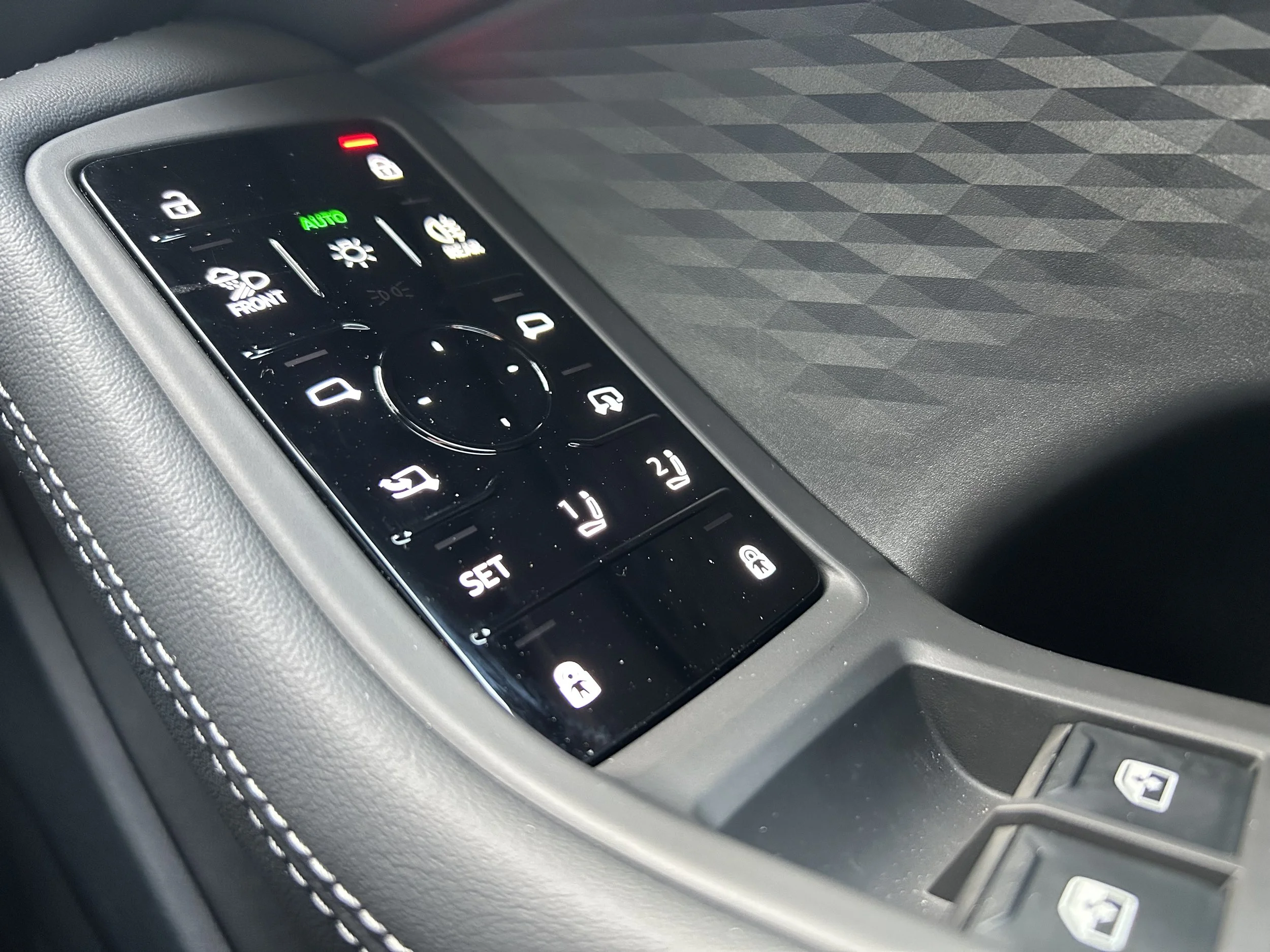
It also seems remarkable that even after taking up all the dashboard with screens, Audi nonetheless has to put another touch pad on the driver’s door for a whole lot more functionality.
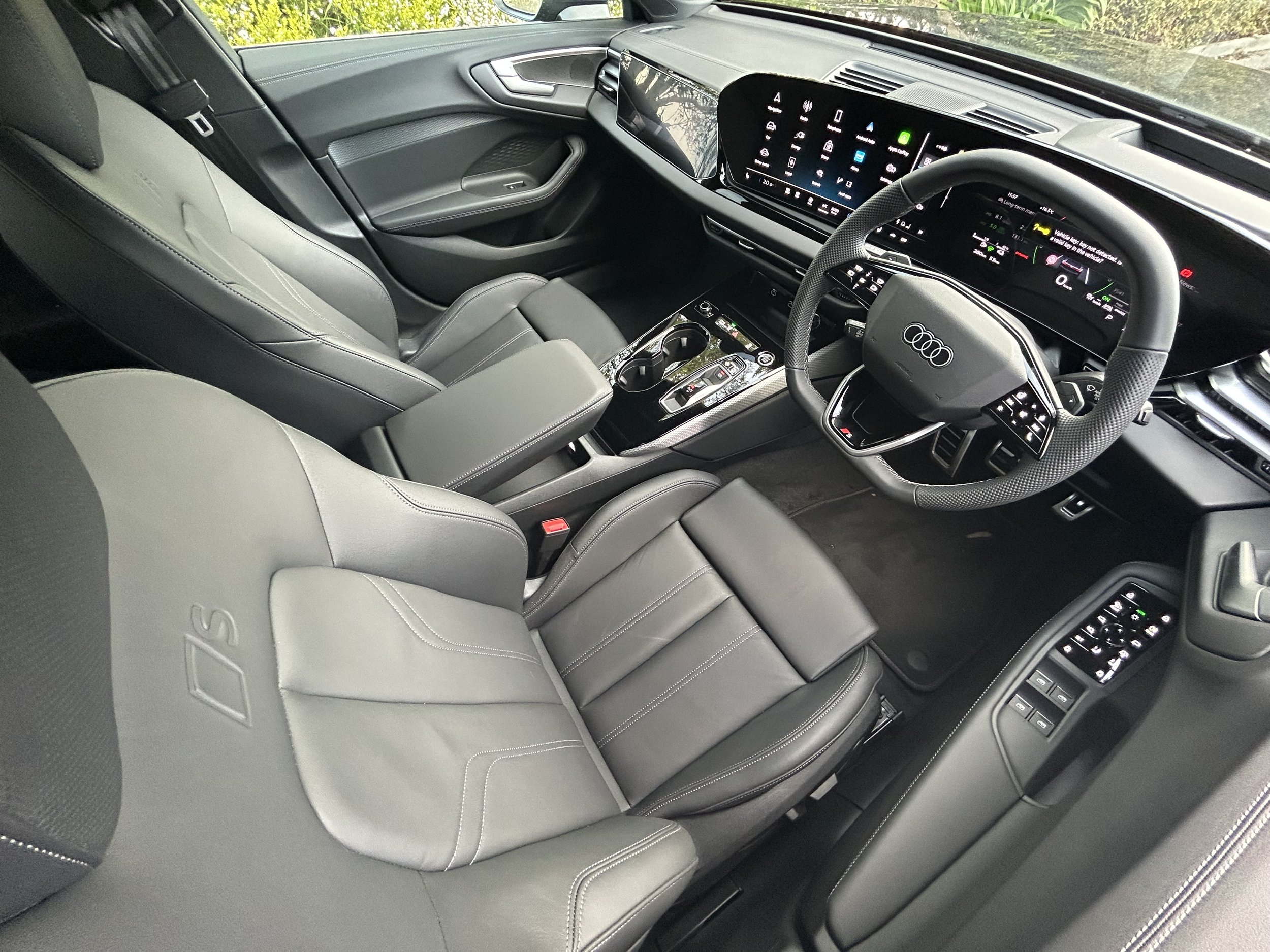
Where the front passenger screen will be useful is when you have someone in that sat who is up to helping out, if needbe. while it more pared back than the central display (and is therefore more ergonomic as a result), you can change the audio, re-set the cabin temperature and configure the sat nav from there.
The A5’s tech doesn’t just reside in the cabin. The lights are a big part of the technology offering, with their customisable light signatures and the adaptive beam technology, which allows the lights to dip in the direction of other vehicles to avoid dazzle, while still maintaining maximum illumination of other areas.
Safety qualities are taken seriously, with heaps of safety equipment, including autonomous emergency braking that can stop the car if the driver fails to react to a hazard, and lane departure warning to help prevent drivers from drifting out of their lane. There are other features, as well, including parking sensors to help prevent low-speed bumps, and you get all the usual stuff, including anti-lock brakes and an electronic stability programme.
The challenge? Avant is Audi-speak for station wagon and it’s not spoken with particular force here.
Plug-in hybrid don't compromise on rear passenger space but get less cargo capacity in the boot. The S5 Avant claims 476 litres (against 445 for the sedan variant), which in itself is modest, but the PHEV fares worse. It’s down to 361 litres. It also loses the spare wheel, because that’s where the battery installs.
A parcel shelf that moves up and out of the way when you open the tailgate, a twin floor, and various bag hooks and nets and so on are much appreciated and the boot shape is useful in width and height, but right at point of pick up I chose to ditch the charging addenda. Obviously some of what Audi provides is intended to be installed in your home but even when it’s gone, you’re left with a compartment that demands light luggage, a week’s worth of groceries or a small dog.
If you feel the styling makes up for this, then it’s a sacrifice worth making. If not? You’re better off with the Q5 or looking outside the brand.
Either way, Audi has moved the bar up for this car, with a cabin that confirms its luxury status and technology push.