Ford Fiesta ST – celebrate the madness

Ford’s smallest hot hatch hasn’t cooled its heels in the time taken to get here.

IMG_5273.jpeg

Base price: $35,490.
Powertrain and performance: 1.5-litre turbo-petrol three-cylinder, 147kW/290Nm, 6-speed manual, FWD, fuel economy 7.0 litres per 100km (source: WLTP), 0-100kmh 6.5 seconds.
Vital statistics: 4068mm long, 1469mm high, 2493mm wheelbase, luggage capacity 311 litres, 18-inch alloy wheels with 205/40 tyres.
We like: Characterful engine and chassis, so much fun.
We don't like: Recaro seats better for short distances than long, chintzy interior.

 WHO wants a sensible, straight-laced small car?

Yeah, not many hands are being raised these days. Understandable. For better or worse, the models that used to be pick of the litter are now struggling to be noticed.

So, it’s really not that surprising that the latest Ford Fiesta won’t be emigrating. If too few bought the old one, why bother bringing in the new, right 

Except that’s not quite how it goes. Ford NZ hasn’t left the party entirely. For fans of the hotshot ST, it’s still very much Fiesta time. In fact, from now on playlist entirely fixates on the performance model.

Which is … well, a ‘fascinating’ strategy. No dissing the ST, it’s a great car. A really great car. But if this is a pitch to pep up the model’s sales pace …. well, history suggests it’s not going to work.

Hot hatches are select choices. Hot hatches with manual gearboxes all the more so. Ford learned as much with the previous ST. Though the best of the bunch, it also pulled in the fewest registrations of all the variants.

So, clearly, Ford here has been affected by some sort of madness. And, personally, I hope they never find a cure. If they’re happy to sell simply it on the strength of vivacious verve and not give a thought to actual volume, then assuredly their risk is your gain.

As oxymoronic as it might seem, the ST is all the better for being tailored to the tastes of a maniac few than to the mainstream many.  In saying that, this car is so tailored to the push-on enthusiast you wonder how on Earth its development team got away with achieving sign off. Quite potentially, they might never get to do so again.

All power to those motorsport genes, right? Erm, actually … no.  One of the ST’s naughty secrets is that the marketing pitch lending impression of firm association between this hot hatch and the machines that fly the Blue Oval flag in rallying is not quite true. In fact, it’s barely credible.

IMG_5284.jpeg

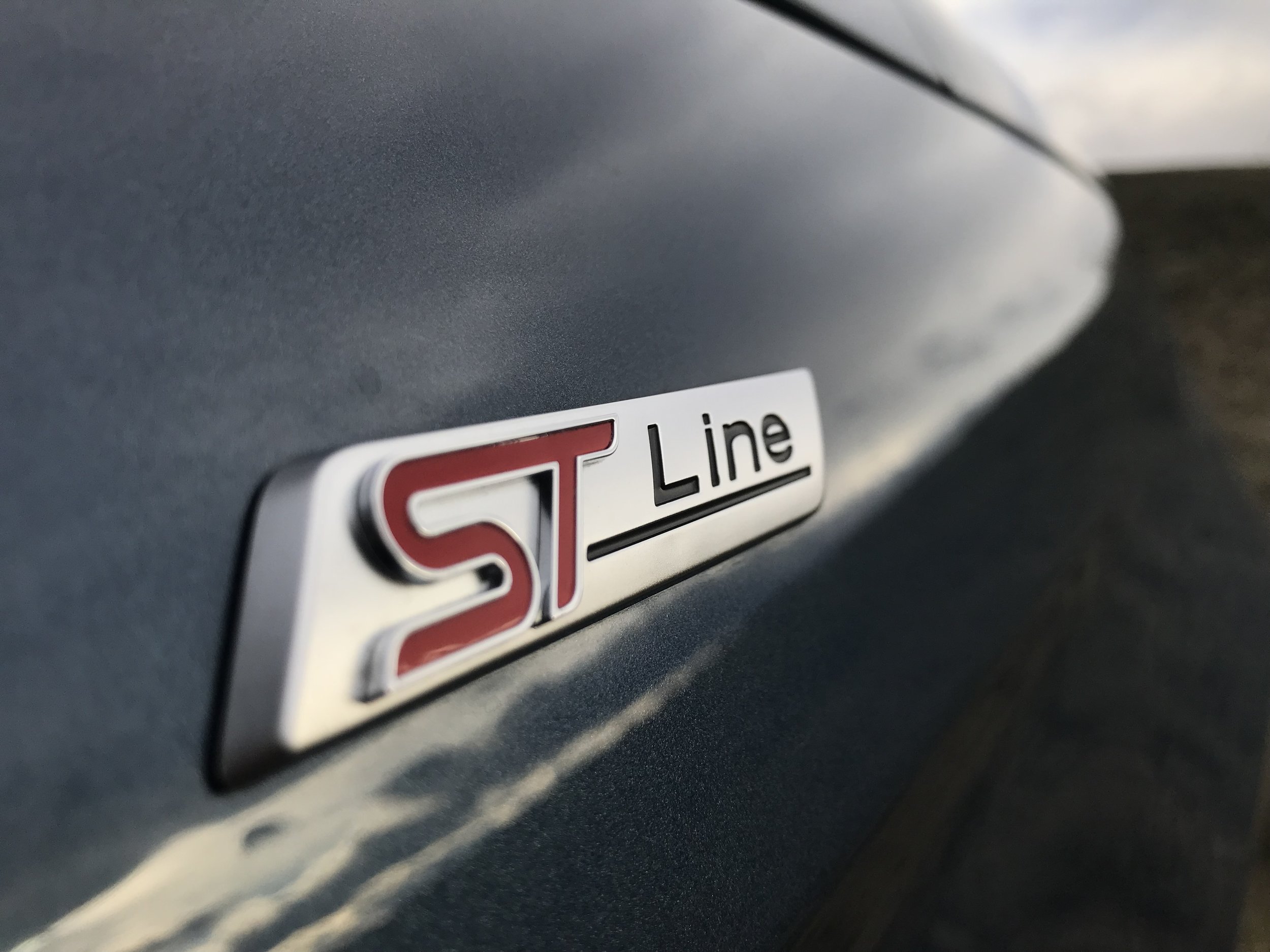
This ST wasn’t in circulation when the full-out WRC and R5 Fiesta cars that gravel smash for Blue Oval glory were developed. Malcolm Wilson’s M-Sport crowd, which isn’t so much a works outfit as a works-supported one, developed its wee titans off the Fiesta ST-Line. Basically a standard car in sports shoes. 

Not that it matters one way or the other because, on technical grounds, the race and road products clearly rally to different causes. Good luck trying to buy from a dealer a Fiesta with a tricky sequential gearbox and four-wheel-drive, let alone enough horsepower to frighten Ferraris. You can’t. Indeed, if any production Ford comes even remotely close to that formula, it’s the Focus RS. Which has just been axed.

No matter. It’s not as if the ST has been neglected under the bonnet. True, the 1.5-litre three-cylinder is the smallest engine ever committed to duty behind the ST badge, but it’s no shirker.

If anything, actually, this is exactly the right ingredient for these times. If you want a fast, agile, eager powerplant that hits the target for requisite social responsibilities in regard to economy and emissions, yet still manages to feel properly old-school raw edged and loud at all the right times, then this engine is it.

The outputs are a very senior and serious 147kW and 290Nm of torque, which is 15kW and 50Nm more than the predecessor’s 1.6-litre created, most of which is thanks to a new, bigger, turbo and some fuel injection and exhaust manifold trickery.  Power peaking at 6000rpm suggests you’ve got to work it, yet that’s not quite case – yes, it loves a good rev, but with torque laying out from 1600-4000rpm, it also delivers very broad pull.

And though thrift is potentially going to take a back seat to its thrust, it is quite clever in hitting good economy thanks to a clever fuel-saving cylinder shut-down system, which can reduce this to a two-cylinder car. That trick occurs only under light throttle loads so, you know, will probably be something many owners only get to read about rather than actually experience, yet it’s a tweak that keeps it on the right side of Green worriers. 

IMG_5277.jpeg

But, anyway, it’s a real tribute to the three-cylinder programme that all began with a 1.0-litre that also debuted in Fiesta and was also a fantastic thing. Like that one, the 1.5 only occasionally betrays its odd-numbered cylinder count with a curious thrum. Generally, though, you'd otherwise never guess it's been down-sized. There's minimal turbo lag, it pulls strongly right throughout the rev range and also snarls and gurgles and gets a bit deep-throated.

Could it do with a direct shift gearbox with paddle shifts? Assuredly that kind of tech would straight away broaden the car’s appeal and undoubtedly a good one would elevate its attractiveness for push-on driving. And, yet, the ST is also all the more of an experience from having a hand-shifted snappy, slightly meaty, six-speed in marriage with this gem of an engine. Manuals demand dexterity, but if you’ve got the talent, this one just really ‘engages’ with the experience.

And wow, what an experience. Drive hard and the ST becomes, as a colleague put it during a pre-coronavirus lockdown run, “effing quick, with a capital eff.” All the more so when slotting into the Sport or ultimate Race mode – which, you can use quite easily on a decent road despite being warned it’s really just for tracks (mainly that’s Ford covering its butt because the traction control is disabled). In either mode it really rockets. So much so that the time of 6.5 seconds to 100kmh almost seems understated. It certainly feels faster through the gears. For all that, I dunno if it really needs the Launch Control. Yes, it contains the wheel-spinning hooliganism on hard-out releases, but also seems to somehow sanitise the take-off experience.

Read up on this car and you’ll find different opinions about the steering. It has become lighter and has a slightly artificial feel now. Is this Ford trying to broaden the car’s appeal to a wider audience? You’d have to think so. You’d think that’s also why the the ride, while still very firm, is definitely softer and, for all its  the ST is, overall, more refined.

IMG_5306.jpeg

Yet only within the parameters of what it is. Outside of those, it remains a very feral and involving car, requiring more dedication to driving duty than your average Fiesta. Which, as I say, is what makes it great – and yet, of course, is what will make it too much for many. 

Anyway, the steering gains real feel and feedback when you’re hoofing and, in fact, the car’s whole attitude changes. For one, it has decently good balance. That's helped by the Quaife differential, which can help you tuck the nose into a tight corner. And it also has suitably decent tyres, with 18-inch 205/40 Michelin Pilot Sports, though those on the test car – an Ireland market model they nabbed to raise interest ahead of release of actual NZ-market models – were pretty close to being shagged. And, yes, the four-disc brakes are excellent, too.

I suppose you can argue that this car sells on its family-minded practicality, and sure enough the cabin is roomy for the class and the boot is big enough to make it practical. Yet the provision of Recaro front seats is a pretty telling indicator in its own right about this being the most driver-centric Fiesta by far.

As much as all the spending on performance bits likely makes this model a bottom line burden for Ford, it is hardly matched by attention to broader design detail. I’m not saying the car feels cheap but, on the other hand, it’s apparent Ford has a different approach to ambience and detailing than VW does with the Polo. There’s no sense of ‘premium budget’ here. Too many cheap plastic parts inside for that.

Might that pin it back? Only if you take the wrong attitude and try to measure it against others in the category that are similar sized and specced, but haven’t the same shove. Against them, the Fiesta will seem something of an extravagance. Yet if you can view it for ewhat it actually is – a performance model foremost – then it surely positions in a pretty sweet spot, given everything else that ticks the ‘fun’, ‘agile’ and ‘truly fiesty’ boxes all cost more.

IMG_5281.jpeg

There’s just one annoyance about this car and it’s this: The time it’s taken to get here. Basically, we’re being introduced only now to a variant that has been cutting up UK and European roads since 2018.

Fair dues, it’s not Ford NZ’s fault. The delays in getting the car here are all down to Ford Australia. As is so often the case, Ford head office considers our two countries as one yet, when it comes to determining spec, it’s the larger of the two that has all the say.

In this instance, the whole delivery process has been grievously held up by specification quibbles. The Aussies wanted as standard an active safety kit that’s optional overseas. This all meant a first quarter 2019 launch became a Q4 2019 launch, which in turn became a Q1 .. sorry, make that Q2 … 2020 launch.

Okay, it’s a good news story in the end, because it means the car is loaded. In Europe, Fiesta STs are available in ST-1, ST-2 or ST-3 guise, with an optional Performance Pack on top of that, but our cars get the lot.

So, keyless entry and start, an 8.0-inch infotainment touchscreen with smartphone mirroring and SYNC3 connectivity, a 10-speaker Bang & Olufsen stereo, heated leather steering wheel, heated Recaro front seats, auto headlights, auto emergency braking, blind-spot monitoring, forward-collision warning, lane-keep assist and more. Plus the big wheels, the diff, launch control and shift lights, all of which constitutes the Performance Pack that’s an option overseas. 

So it’s all worked out well in the end. But what a palaver! Now all Ford NZ has to do is buy it. Were the allegiance so far sworn by every motoring writer who has so far sampled the test example to turn into actual sales – and it won’t, because I’m in the minority within that group as being an actual new car owner – then the ST would have its best year here yet. Something to think about.

IMG_5286.jpeg


Ford Focus ST-Line: No sweat going to sports-lite version

The new generation car has plenty of appeal, but this version is a low-temp warm-up to the ST.

IMG_1579.jpeg

Base price: $36,990.
Powertrain and performance: 1497cc three-cylinder turbo petrol, 134kW/240Nm, 8-speed automatic, FWD, Combined economy 5.3 litres per 100km.
Vital statistics: 4398mm long, 1454mm high, mm wheelbase, luggage capacity 375 litres, -inch alloys.
We like: The drivetrain, strong spec, appealing to drive. We don't like: Too-dull interior ambience, fiddly gear selector.

REMEMBER when a Ford car was a New Zealand best seller?

Bad call, all who answered ‘just last year’. Family use favouritism regardless, utilities are defined as commercial vehicles. So, exclude Ranger from this exercise.

In respect to a pure Ford passenger car? It’s been a while. Best evidence – because this precedes current industry record-keeping process - suggests the year was 1982 and the titleholder the Mark V Cortina, a rare sight now. There’s a cracker on display at Southward Museum.

 Anyway, market realities will assuredly keep the Focus from making history. So what that Ranger cruised to the top. With cars it’s harder. Fleet penetration is key. Ford had it 40 years ago. Toyota does now and so completely nothing else achieves a decent look-in.

So everything comes down to private buyer interest and Focus has been tailored accordingly. It’s also made tastier by being more ideologically European in dynamic attitude and driver engagement than its predecessor.

IMG_1584.jpeg

An arresting styling, an intriguing and very forward-thinking drivetrain technology and a talented chassis that gives a big thumbs up to a fresh and more rigid platform are also core to achieving appeal.

That new C2 platform delivers a larger, more practical basis. The increase in cabin space is particularly noticeable in the back, the changes are less obvious in headroom (well, the silhouette demands compromise) but certainly delivers in legroom and the wide cabin means there’s decent shoulder room. Three people across the rear bench? It’s possible.


The boot is a decent 375 litres, and the load lip to lug heavy items over is modest. The rear seats drop to extend capacity to 1354 litres, with an almost-flat load floor.

The Focus has been awarded a five-star crash test rating by Euro NCAP. You can see why, too, with automatic emergency braking, electronic stability control, hill start assist and a system that locks the brakes on after an accident to help prevent any further impacts. 

Updating to a head-up display (HUD) is timely and lane departure warning, lane keep assist and a parking aid (smart enough, now, to do gear selects and braking) are also the norm. Evasive steering assist helping drivers steer around stopped or slower vehicles, night-time pedestrian and cyclist detection, a rear wide-view camera, an adaptive front lighting system with its predictive camera-based tech that pre-adjusts headlamp patterns for improved visibility by monitoring bends in the road and road signs are premium features nice to find here.

IMG_1588.jpeg

With dual-zone climate control, keyless entry and start, and wireless smartphone charging as standard, it really is smartly-specced.

A shame, then, that Ford’s struggle to match best rivals for interior quality continues. The materials should prove fairly hard-wearing, but most of the surfaces don’t have the tactility, texture or colour tone to cut it with the best. In this case, the Mazda3.


The dashboard has a fairly sensible layout and though the touch-screen infotainment system demands some playing about, it’s worth persevering, as the technology is impressive. Sync3 infotainment system, satellite navigation with live traffic, Apple CarPlay and Android Auto support, Bluetooth connectivity, voice control and Wi-Fi hotspot …. again, that’s pretty much at the leading edge.

Ability to deliver a solid, comfy driving position is a cinch as there’s lots of adjustment and visibility is pretty clear in every direction, with no major blind spots. Controls locate sensibly though there are operational niggles. One is with the weight of the switchgear: it’s so light as to make it very easy to overshoot the intended selection. Another is the rotary dial to operate the eight-speed automatic. Ford’s following Jaguar down this route but nowhere as pleasingly, with piddly, loose-feel controller. 

IMG_1581.jpeg

For all that, the gearbox itself works well and the engine works even better – it’s the best element.

Three-cylinder engines are not new, but turbocharging and precisions unachievable 10 years ago having done the trick for refinement and flair and Ford is a proven leader with its EcoBoost mills. The one-litre in the previous Fiesta was a breakthrough but the 1.5 in this Focus is better still; very responsive to throttle inputs and providing good acceleration, yet also going easy on the juice. It also engages really positively with this transmission and, on top of all that, there’s a lovely exhaust note.

Such a willing, energetic and characterful engine surely deserves a chassis of equal quality.

On that note, the Focus now isn’t the car it used to be, having traded off some nimbleness for a more grown up attitude, not least in respect to the ride, which is compliant, comfortable and well-controlled. Another example of its improved sophistication comes with the reduction in mechanical and exterior noises. They’re not wholly eradicated, but are better isolated.

The attitude change isn’t wholly total, though. While more grown up in how it deals with poor surfaces and fiendish bumps, it’s still a fun car if you want to let the reins loose. 

Trademark Focus impishness reveals especially well on secondary routes. It flows really nicely through bend to bend, with lot of grip, impressive agility and steering that could be a little quicker yet is lovely for feel. It’s not so sporty as to leave thinking something spicier is unnecessary yet is nonetheless so well tied-down in its body movements to raise a smile and leave impression that, by any normal hatchback measure, it is well-sorted, not least for damping and control.

In summary, it has winning qualities in good looks, a roomier interior, tons of useful tech and lots of on-road character. All factors that should keep it sweet with anyone seeking a nice niche mainstream five-door.

IMG_1609.jpeg


Ford Mustang Bullitt: Gunning for greatness

It’s a closed case. This IS the best factory-delivered edition of the current Pony car.

IMG_0140.jpeg

Base price: $93,490.
Powertrain and performance: 5.0-litre petrol V8, 345kW/556Nm, six-speed manual transmission, RWD, Combined economy 13 litres per 100km, 0-100kmh 5.15sec.
Vital statistics: 4789mm long, 1382mm high, 2720mm wheelbase, luggage capacity 408 litres, 19-inch alloy wheels.
We like: The best distributor-delivered Mustang yet, just 50 on the road. We don't like: Just 50 on the road … and they’re all spoken for.

A Ford Mustang GT 390 Fastback driven by Lieutenant Frank Bullitt (Steve McQueen) duels with a Dodge Charger 440 driven by a pair of assassins down the jagged hills of San Francisco to the soundtrack of squealing tyres and howling V8s.

Actually, there’s more to the plot, but it’s this 10-minute epic duel that lifts Bullitt above being just another 1960s’ lone-wolf-cop-fights-for-justice-in-a –world-gone-bad flick. It still captivates today, despite amusing continuity gaffes: The Charger loses six hub cabs and hugely misses the petrol pumps that trigger a fireball; without wing mirrors getting to the car wash, the Mustang departs with one. And the same green VW Beetle is overtaken repeatedly.

You shrug this off because … well, it’s just so epic, so raw.

The same can be said of the Mustang Bullitt who release is supposedly to celebrate 2018 being the 50th year since the film issued. Could a film in which the most memorable line had McQueen telling a superior “you work your side of the street, I’ll work mine” be THAT crucial? Actually, to Mustang’s image, it was.

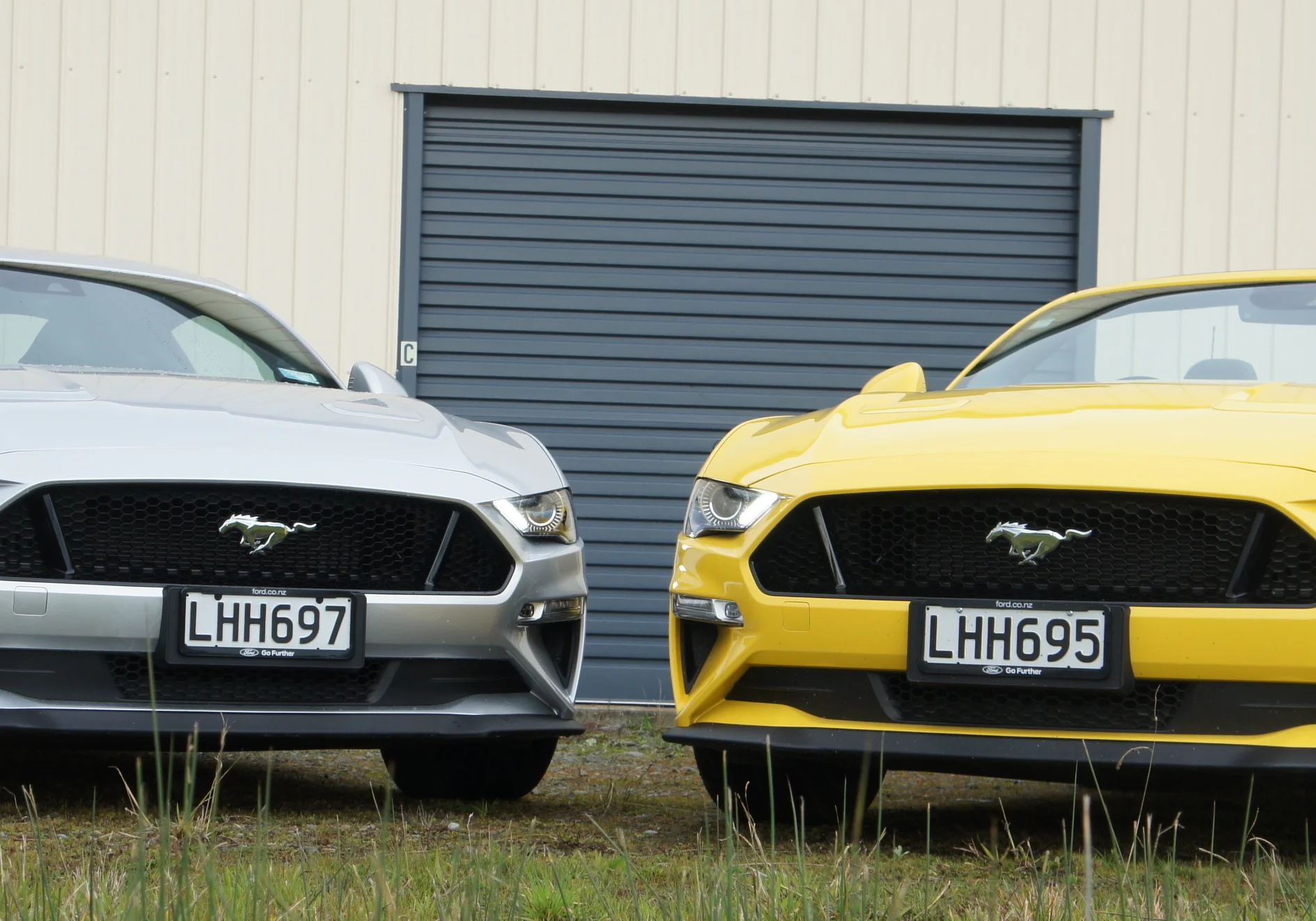
Even so, there’s surely a touch of Hollywood to the release timing of this reprise. The Mustang nameplate holds the record for the fastest-selling model in history, yet the latest generation, a white-hot showroom performer when it kicked in, has now starting to drop sales pace. Moreso in North America than places revelling in seeing the Pony Car in right-hand-drive for the first time. Still, this seems a good time for a quick buck blockbuster.

IMG_0148.jpeg

From my time with it, I’d say if any edition can reprise the ‘I want one’ feeling for Ford’s little pony it has to be this Bullitt.

Being based off the best variant, the V8 manual coupe, is an excellent start; I know the shifter’s ‘measured’ action puts off many, but a ‘stick’ is utterly in keeping with the car’s theme.

The car does a great job in announcing itself. Ford NZ only ordered Dark Highland Green, the same colour as McQueen’s ride. It looks amazing, better than the alternate Black (‘as a hitman’s heart?’) they could also have chosen.

The tribute also includes 19-inch aluminium wheels, reminiscent of the original’s Rostyles, and though it bows to the modern in having navigation, all the usual safety assists and air conditioning, it also sharpens fast road (or track) readiness with semi-active suspension, Recaro seats, red, painted Brembo brakes, and a new induction system, specifically the intake manifold from the Shelby GT350. This doesn’t alter the 5.0-litre’s torque and only elevates power output by just 5kW, but it’s nonetheless quite enough to lift the top speed and, just as crucially, make the engine sound meaner.

The only crime against good taste is perpetrated by a swag of Bullitt emblems Stakeout discretion was never likely but the largest - on the steering wheel boss and the tail, mimicking where the original model had its fuel filler – are just too much.

IMG_0133.jpeg

Even emblazoned it’s not a given everyone understands why this car exists. I’d always imagined Bullitt would never misfire, yet I met a few from the Mustang’s traditional 50-plus customer base who honestly had forgotten all about the link. Then there was a mate, too young for the era yet a serious film and car buff, who stunned by fessing he’d heard of, but never seen, the pic. 

Of course, visually the car has enough of what would, back in McQueen’s day, be called a ‘badass’ ambience to achieve kerbside cool. Yet what makes it really worthy is a factor that, admittedly, comes from left field.

Namely that the Mustang in latest form has turned into quite a decent driver’s car. Yes, it’s big and wide and a touch hefty. Yet just this generation being the first with an independent rear suspension is a huge positive. Beyond that, the Bullitt’s calibre is improved by all sorts of further refinements. You might not want to chase Porsches, but it is genuinely good enough to utterly blow apart perception of American cars being wallowy, ponderous and prone to fall off corners.

Here control weights and steering in particular impress, the power is thrilling - you tend to ‘hit the gas’ just to hear it roar - and, though the weight and size are never fully disguised, it is a refreshingly honest car. One that makes you feel connected and happy to be alive. I just loved every minute with it. Even when it rained.

You’d expect nothing less from a ‘special’.  Yet, on that note, another twist. Even though Ford New Zealand has decided to cap the order to just 50 units – all spoken for, sorry – and says it will deliver no more, in theory it could. Because, from what I can tell, the build plan allows the Flat Rock factory to knock out many as it wants for as long as it sees fit.

IMG_0163.jpeg

The Bullitt is not perfect – you’ll not be surprised that it drinks hard and, though I don’t doubt the sincerity of the window sticker attesting to the plant being staffed by world class people, that’s not quite a descriptive that sticks when discussing assembly. However, the fuel burn and the occasional trim rattle are not in any way plot spoilers. They’re just … well, character.

You wonder, of course, what the man himself would think of it. Being a petrolhead, you’d think Terence Steven McQueen – who died in 1980, aged 50 from a rare cancer – would have ultimate interest in Shelby’s 2020 GT500. But hey, that’s not likely set for NZ screening, so best not dwell.

It’s hard to think of any reason why he wouldn’t also enjoy the Bullitt, nonetheless.

One thing everyone who knew the man, not least some big name race drivers, tend to testify is that McQueen loved a fast car and knew how to handle one,

He intended to do all the driving in the film, but a crash rattled McQueen’s wife so much she implored director Peter Yates to bring in stunt ace Bud Ekins. McQueen was furious. (Check the interior shots: When McQueen is driving, the rear view mirror shows his face. When Ekins is driving it is up, so his face is hidden).

Final film fact. There were two Mustangs used for the film; one went to the wreckers’ just after shooting was over but the other – even though it was used for the remarkable hill driving stints - is still around and looking good.

IMG_0154.jpeg