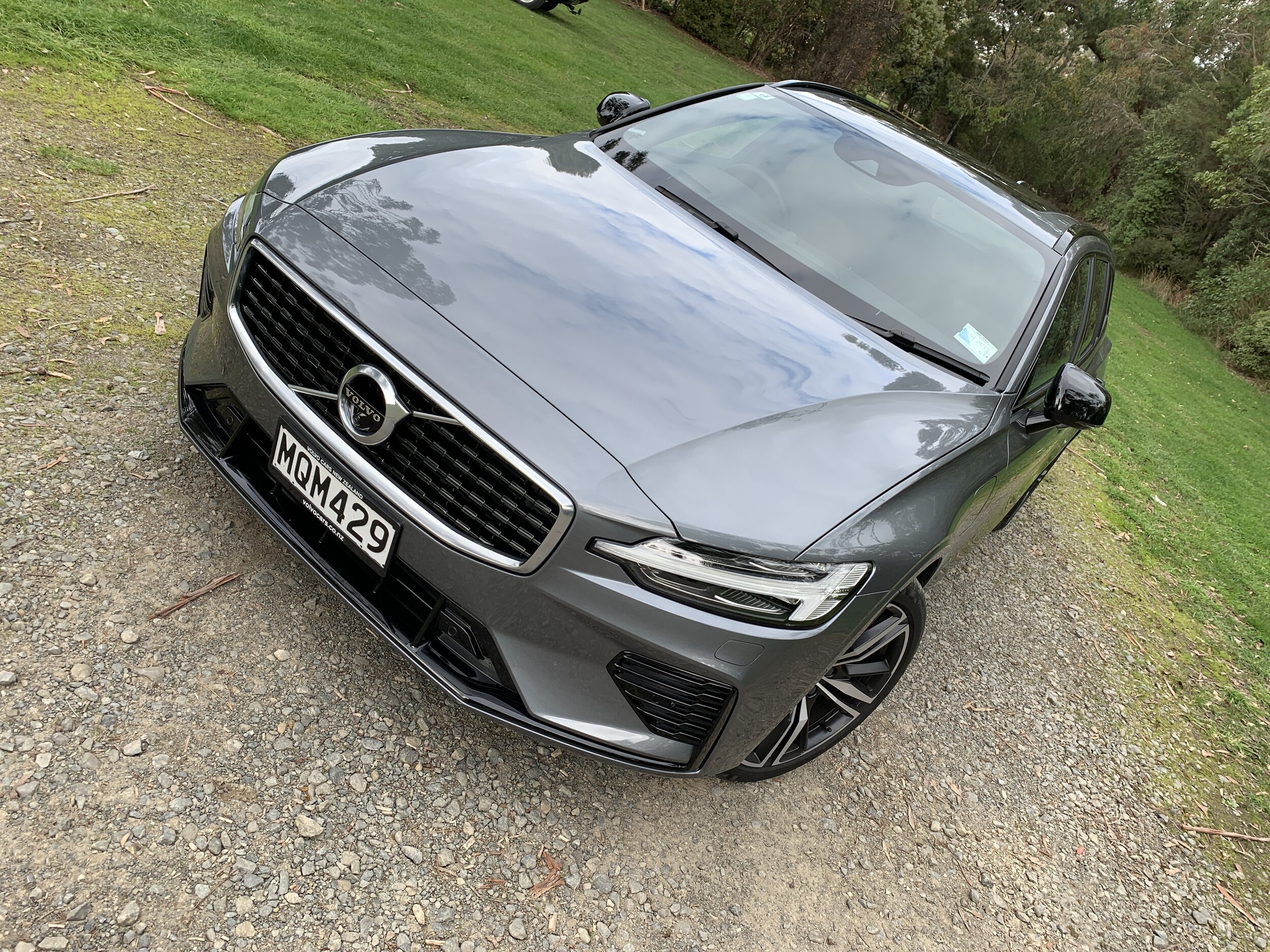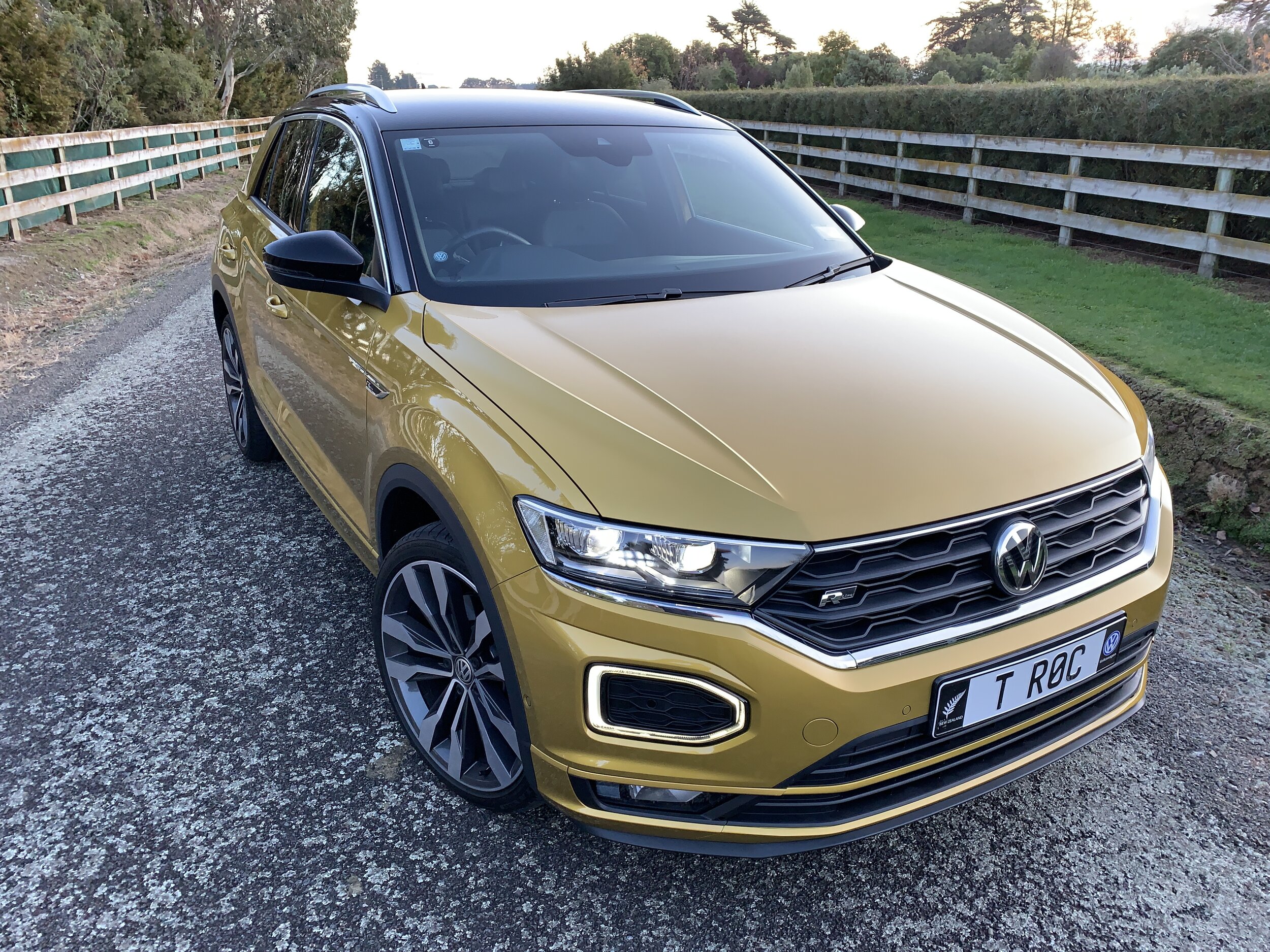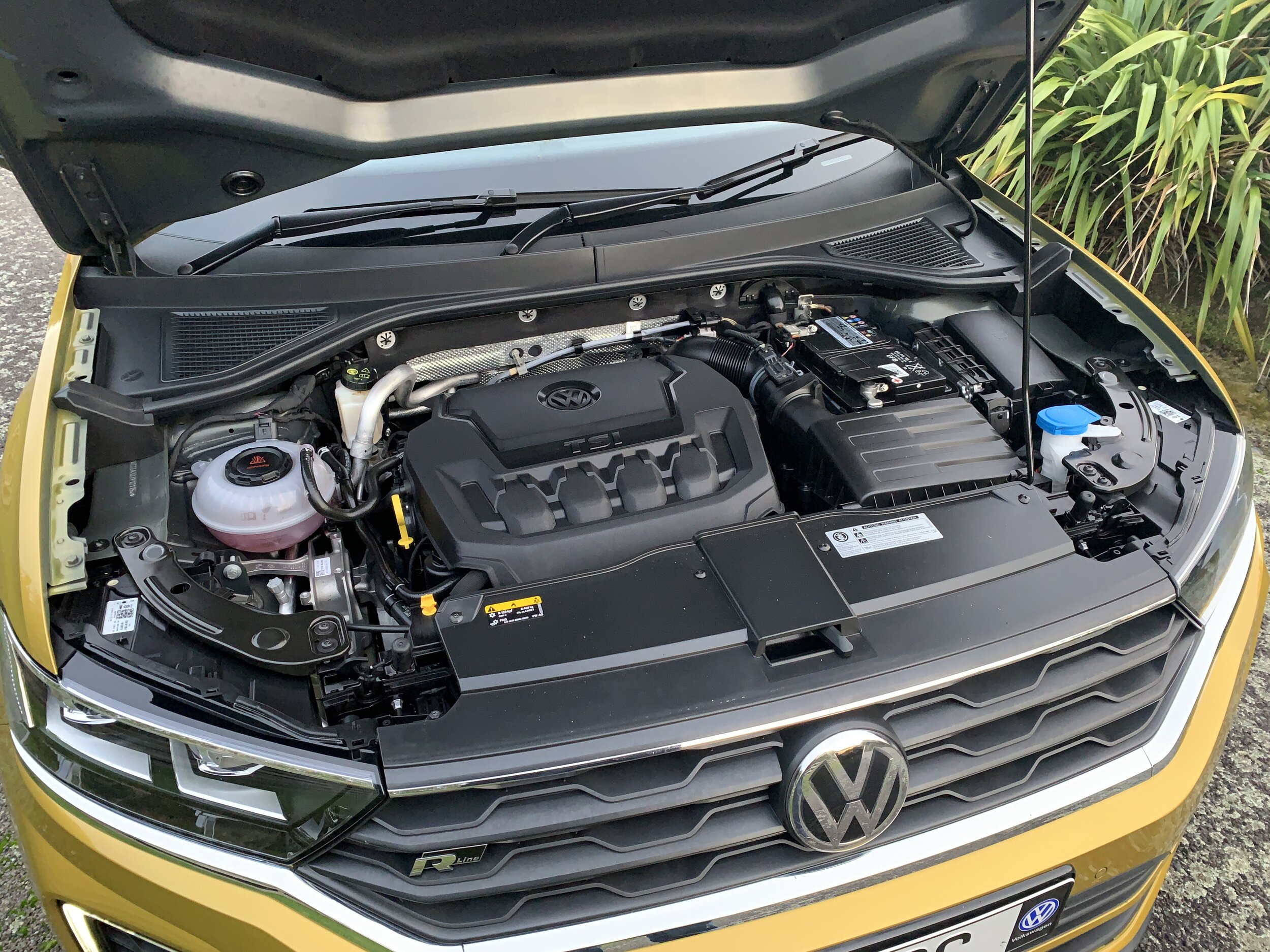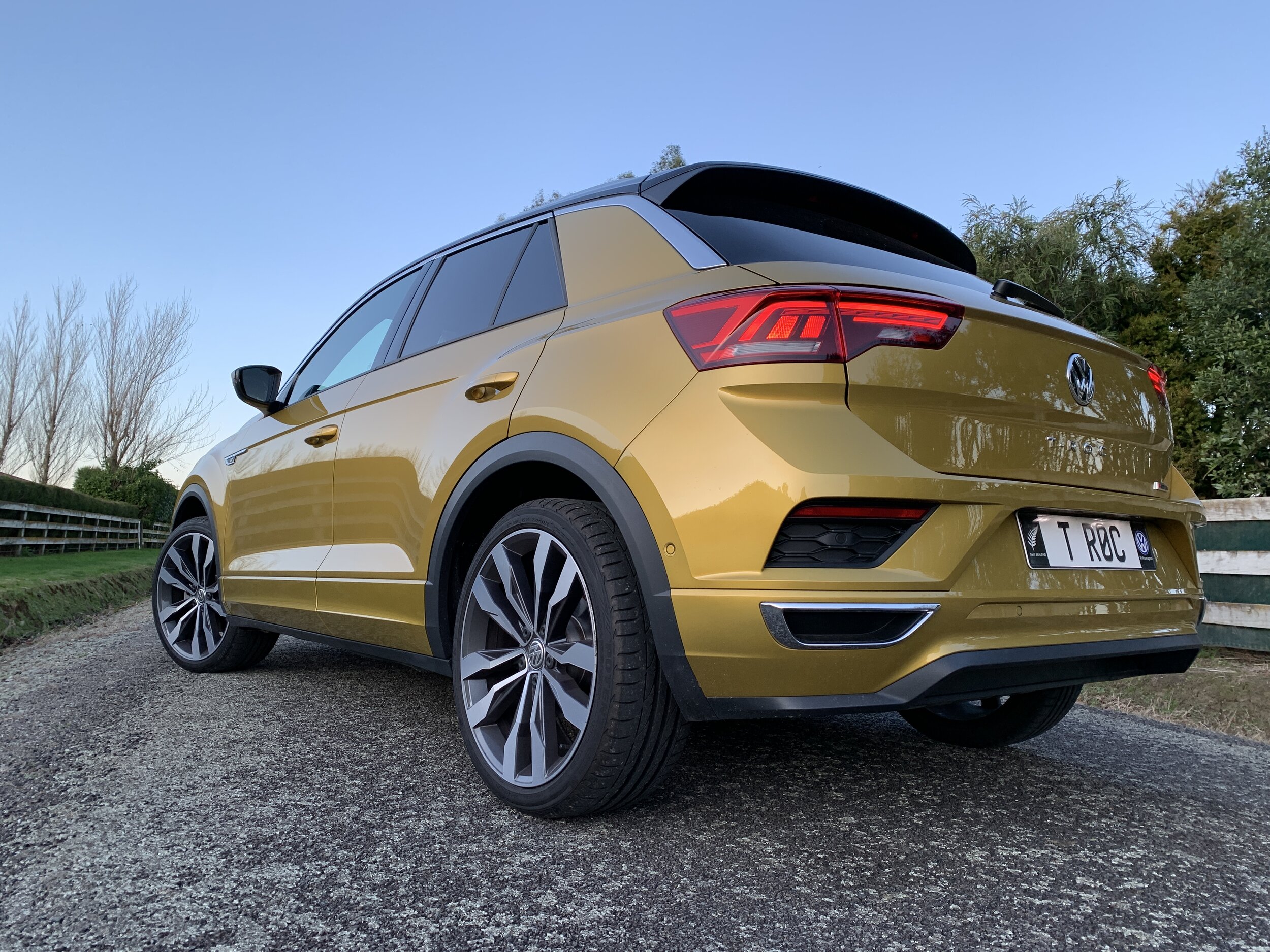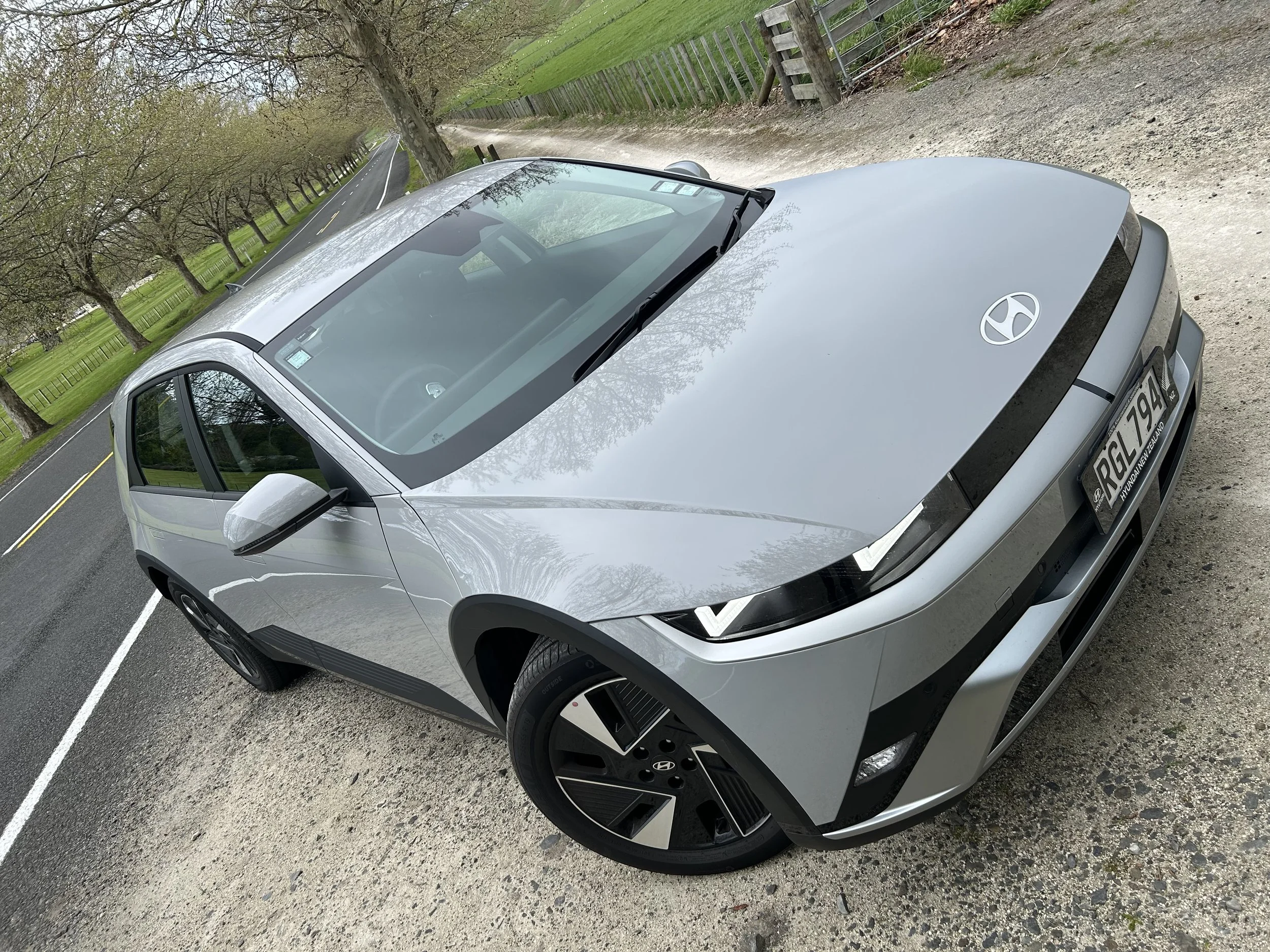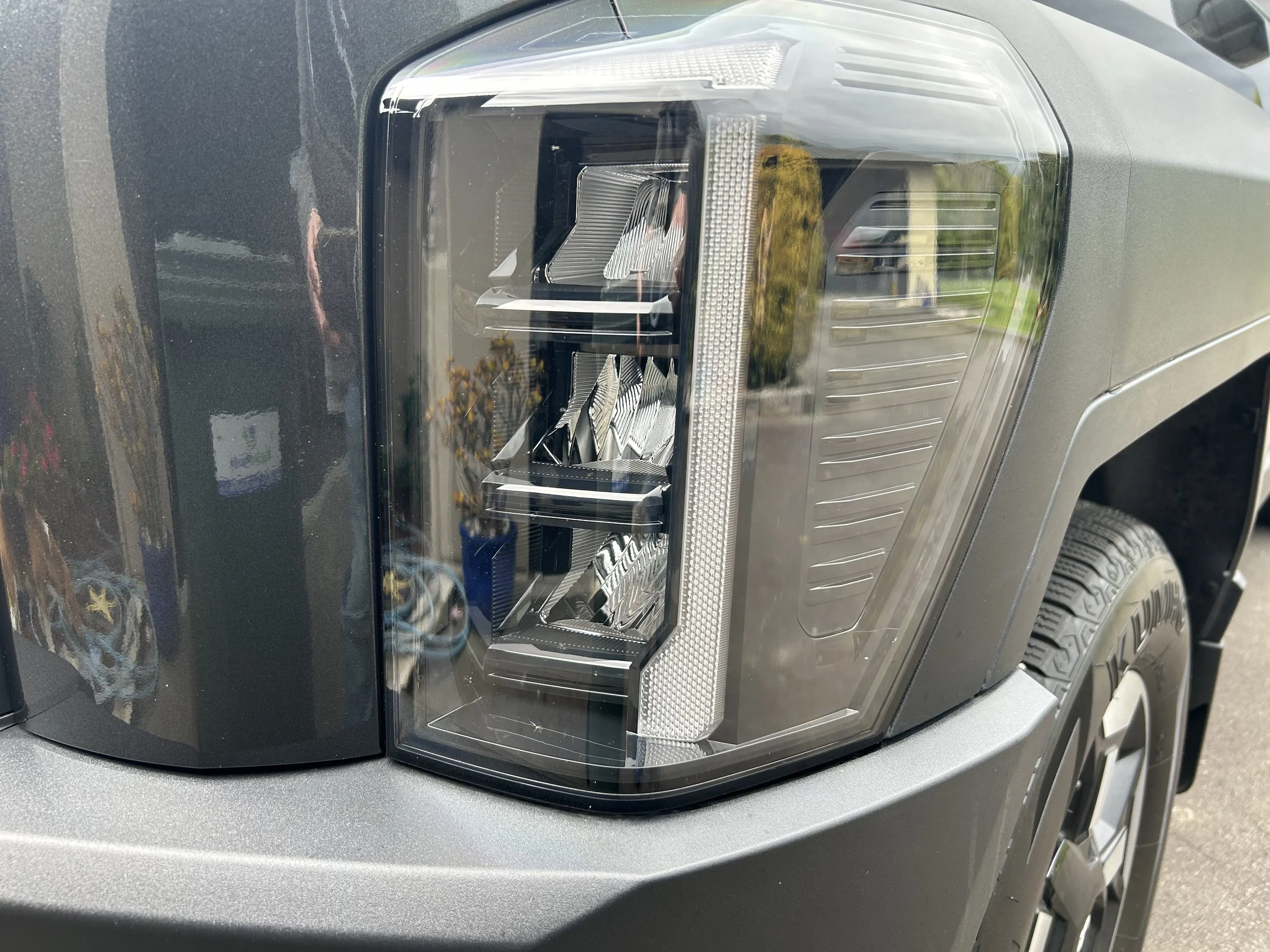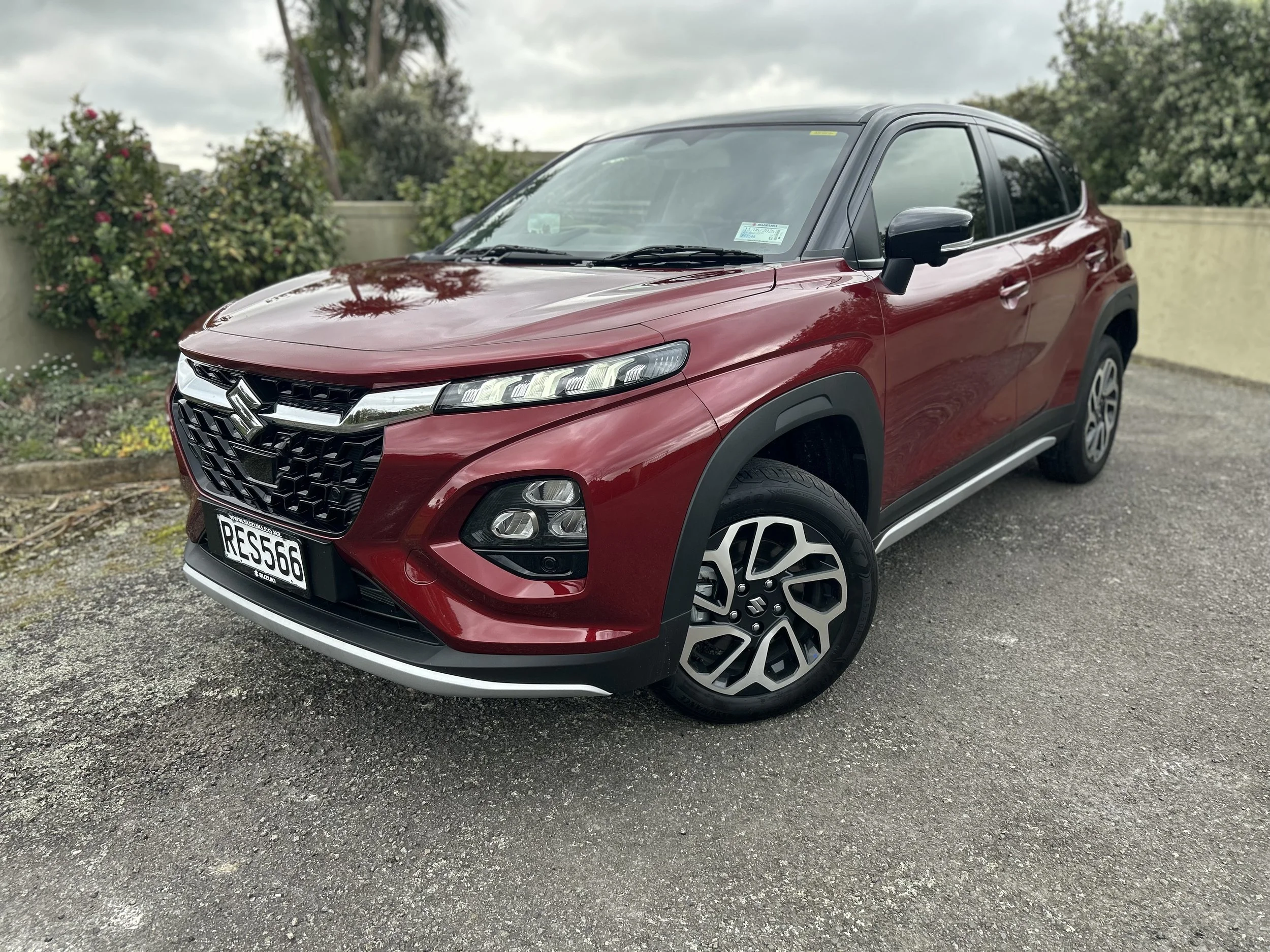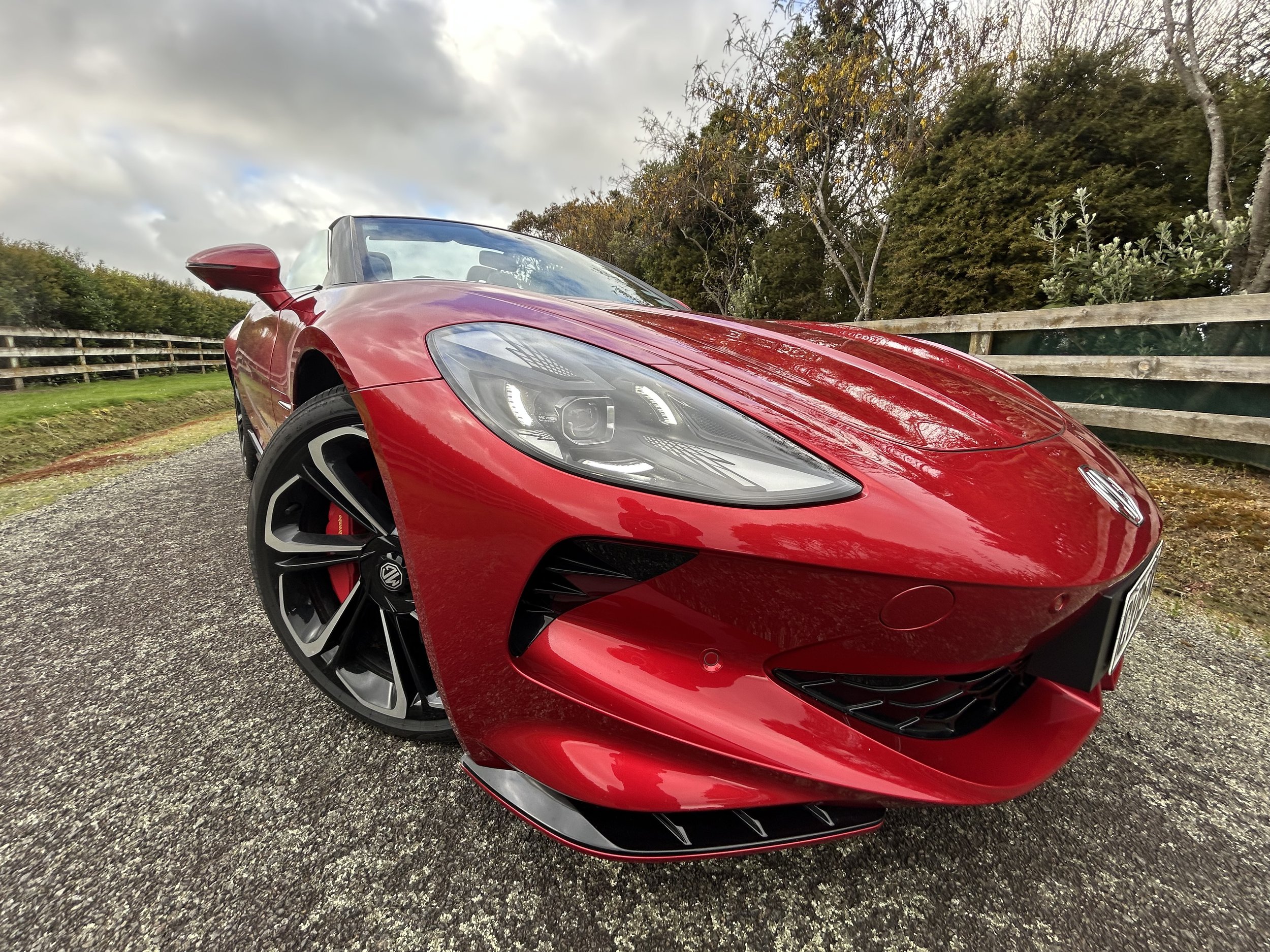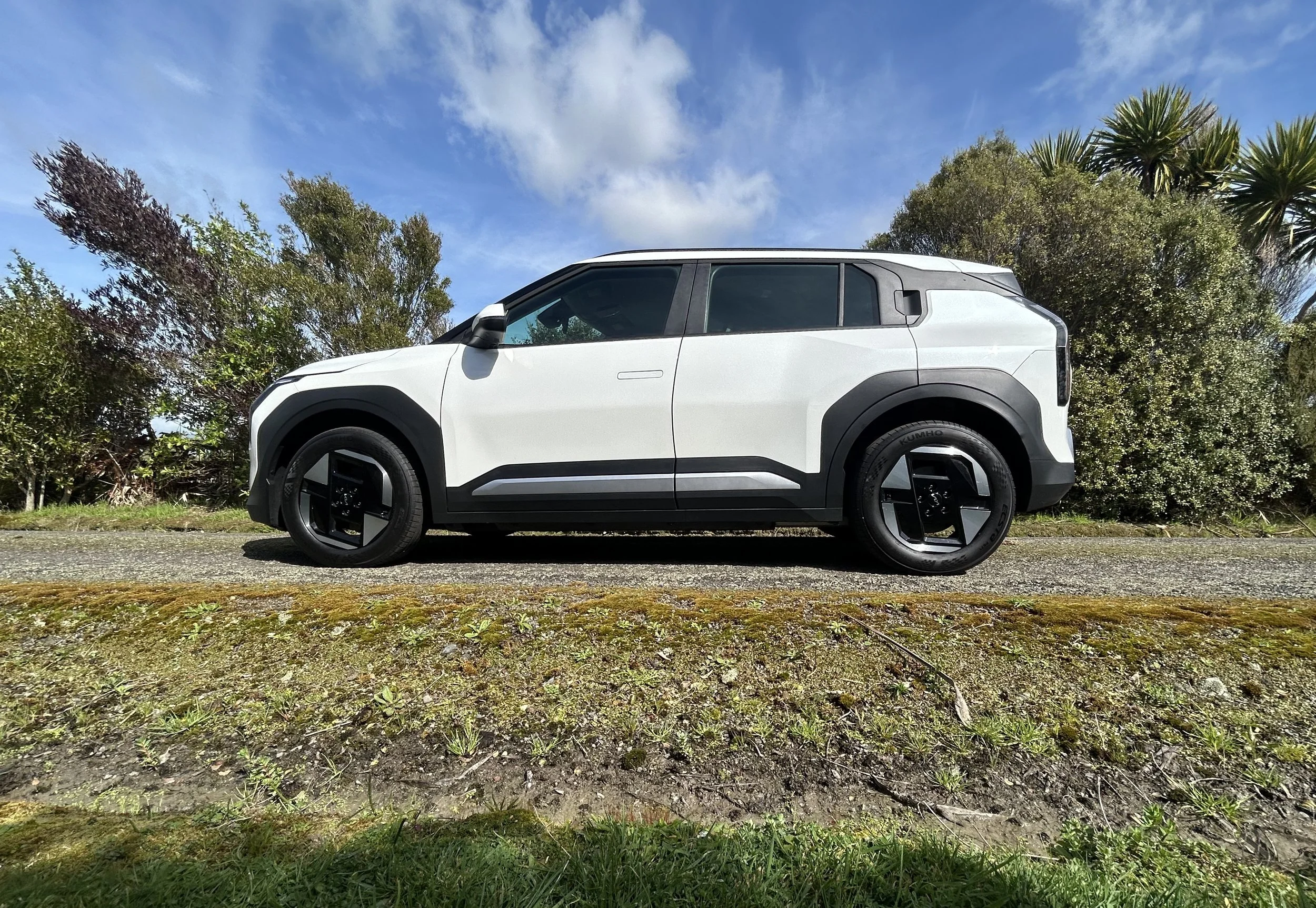
RAM 1500 Express: Smallest still in the big time

Shifting house was a workout too big for any one-tonne ute … yet this baby barely raised a sweat.

IMG_6053.jpeg

Base Price:  $104,990 (as tested: $109,990)
Powertrain and performance:  5.7-litre eight-cylinder 16-valve petrol engine. 291kW/5500rpm, 556Nm/3950rpm. Rear-wheel drive. Fuel consumption 12.2L/100km (claim), 14.2L/100km (road test).
Vital statistics: Length 5833mm, height 1917mm, width 2080mm, wheelbase 3569mm. Cargo deck volume 1.4 cubic metres. Wheels: 20-inch alloys with 275/60 R20 Hankook Dynapro HT tyres.
We Like:  Heavy-duty towing and load-carrying competence, well-designed deck, comfortable ride.

We don’t like: Lack of a decent diesel, dated interior design, slightly awkward egress, no overhead grab handles.

FROM one side of the North Island to the other, starting and finishing pretty much in the middle – quite a road trip, basically an entire day on the move, with quite a few twists.

Helping relations effect a house move from the remote beach community of Herbertville back to their home town, Whanganui, with a start and finish near Palmerston North and the first leg in the opposite direction (to Whanganui, to get the trailer and three brothers-in-law helping with the lifting) meant tackling challenging country roads - narrow, winding, demanding on the best of days. Just a touch more with that sizeable trailer in tow. 

To add to the fun, it was raining and there was intensive logging going on in the most challenging section of the drive, Dannevirke out to the east coast. 

Meeting big semis loaded with pine trunks, avoiding slips, threading across debris from a huge pine felled right across the route just as we hit the logging site … that was all part of the day’s activity.

How’d it go? No sweat. A big job demanded a big vehicle and, on that scale, we went right to the top, beyond the usual world of ute-dom.

Adopting a smaller body than the 2500s and 3500s that have been offered until now as part of factory-approved right-hand drive conversions gives the 1500 rights to be called the smallest member of the RAM family. 

But in everyday measurement, it’s a big thing. Much bigger than any ‘regular’ traydeck. So much so that really it’s a utility in design only. 

Still, if I was a distributor selling in the one-tonne sector, I’d be keeping an eye on this fella, at least in the new Express format used on this drive.

IMG_6068.jpeg

When RAM originally added the 1500 to the local market family, it offered in Quad Cab format with proposition it would more appeal to folk who’d been holding onto their V8-engined Holden Commodore and Ford Falcon performance utes until something better came along. 

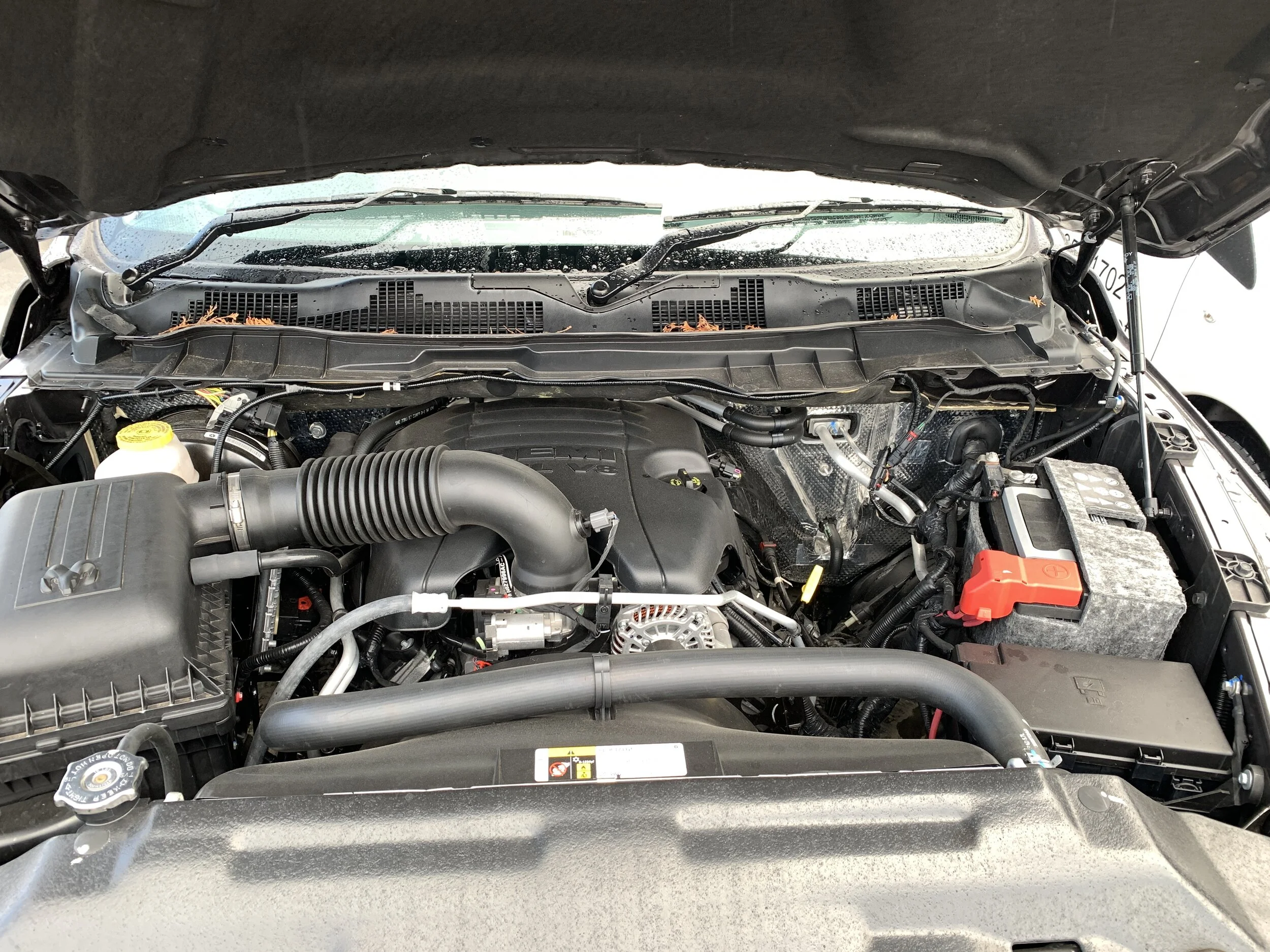
No doubt it has done just that. A 5.7-litre HEMI V8 very much plays to that particular taste for semi-prestige with performance-added expectations and size versus sizzle tastes.

Yet even with that set-up, it remained challenging to understand how a RAM could pose a direct threat to even the highest-end offers in the one-tonne ute sector.

Conceivably, that conundrum is best addressed by what’s on test, by the Express in a Crew Cab (basically, bigger cabin, slightly smaller deck) provision. Regardless that the price gap has widened – this one costs $10k more than the Quad Cab – going to a body layout favoured by most Laramie buyers, but with more of a blue collar imprint, is a smart move.

It’s basically a budget Laramie; giving nothing away on the performance and ability side but toning down on specification elements that elevate it as a stronger workhorse choice. 

For all that, it doesn’t really leave lifestyle in the garage. And despite being in another dimension for size and slurp, it could well present as a possible alternate to the most expensive variants of the in-crowd favourite Ford Ranger in Raptor spec and Volkswagen Amarok V6 in Aventura trim, not least if you draw conclusion that the caravan or boat you want to haul is potentially just a bit too large for those one-tonners to cope with.

There’s just the one challenge: Fuel choice. America’s finest doesn’t come with diesel in this format. The one positive about the 1500 being petrol-wed is that, as much as it enjoys a drink, it doesn’t seem to quaff as heartily as the larger models. I saw an overall average economy of 14.2 litres per 100km. That’s nothing spectacular by diesel standards, but in my mind was really something of a victory, as it’s just two litres’ shy of the official average.

It’s also worth taking note that the 1500 is at least a steady drinker. It knocked back no more when hauling a chunk of household stuff than it had on the first leg, with four-up but a bare deck and empty trailer. Okay, yes, it’s true the rate when it was running with just me aboard and nothing on the hook was hardly any better, but still. 

IMG_6087.jpeg

Still, it reinforces why this model has a 121-litre tank (and why a ‘top up’ cost $90 without making hugely discernible difference to the needle’s position). 

The benefit of having a large capacity V8 comes with its muscularity; you’re sitting behind a unit endowed with massively impressive and schmoozy oomph. Outputs of 291kW of power and 556Nm of torque make it much gruntier than any traditional utes and while it’s pushing significant weight – at 2.6 tonnes, the 1500 is toting around half a tonne more than the smaller diesel-fuelled utes - there’s no sign this powerplant feels any strain; if anything, the 0-100kmh time of about 7.8 seconds signals there’s more in reserve.

The engine’s pull really impresses. The rev span isn’t massive – really, it’s pointless pulling more than 4000rpm, regardless that the pwer peak is higher – but the torque spread is generous. It hardly seemed to lose any significant edge when pointed up hills and, more especially, when put to work on household hauling. It simply kept pulling quietly and confidently under that load (which, admittedly, was light for a vehicle rated to heft 4.5 tonne), for the most part cruising at a relaxed 1700rpm in the tallest of the eight gears and only starting to burble enough to be audible when hitting big ascents. On the flat it was generally operating in an eerily calm manner. 

Speed wasn’t a talent brought to the fore on this trip, of course. Hooking up the trailer meant knocking back to 90 and taking more time to enjoy the view and come to terms with the sheer size of this thing.

Five-point-eight metres long, 1.9 tall and two metres wide with the mirrors folded … that doesn’t sound too bad on paper. And, as said, the other RAMS are appreciably bigger.

Yet, in its own right, this thing feels substantial. It’s not just the width and length. The cabin step up, the high-set seating position, the limo-like cabin dimension … these also speak of it being a Lomu Class rig. Looking out over the bonnet alone delivers a sense of Kenworth kinship and the sense of it being a lane filler was never shaken. One-lane bridges seem barely wide enough and encountering those logging trucks was air-suckingly daunting.

It feels better in country towns than the city proper. I cannot understand why anyone would want one for daily driving in the full urban jungle. For me, there was some surprise discovering it DOES fit into a parallel park (albeit with the right side rubber outside the box) and none whatsoever when discovering angle parks are wide enough for the vehicle proper but less so for door opening room. 

IMG_6094.jpeg

For all that, driving feel is only heavy duty insofar as the turning circle and steering feel is concerned. As much as it needs space to stop and manoeuvre, there’s still more nimbleness here than you’d give it credit, likewise the braking responsiveness is brilliant, even if pedal feel itself is a touch spongey.

Overall, though, the on-road manners are surprisingly tame. Those sizeable 20-inch tyres offer respectable grip and even though ultimately leaning on its front tyres if you wind the pace up too much, the steering is accurate. The ride also benefits from the long wheelbase and a coil-sprung rear axle – quite something in an era when most utes still employ a rugged leaf spring rear-end. Everybody remarked on how composed the RAM is; even big dips and significant potholes are disposed of beautifully.

As good as it is for driving, it is primarily fitted out for toiling. RAM owners who fail to use it to tow big stuff are wasting its talent. Even this ‘baby’ has the same 4.5 tonne braked towing rating as the larger 2500 and gets a heavy duty tow bar. Something this big and heavy – it weighes in at 2505kg at the kerb (3450kg gross vehicle weight) – is perfect for big boats and caravans. It assuredly ain’t going to be pushed by anything on the hook, as some lighter vehicles potentially can be. 

Let’s hope they also use it to heft lots of stuff too, because the deck is so well-sorted; not just in dimension – again, extra-sized at 1712mm long with the tailgate closed, 1270mm wide and 509mm deep – but also detail. Honestly, those one-tonne kings who imagine they’re doing their customers proud by provisioning a plastic liner and a vinyl tonneau need to look to a RAM to see what they should be doing.

For starters, the deck here is properly lined, with the base and sides of the load area coated in a hardy rubber finish, plus comes with a robust load separator. The test model also featured a tri-folding hardtop deck cover and, most impressive of all, the RamBox side compartment with top-mounted lockable doors. These bundle as a $5000 option that I’d call a must-have. The latter comprises waterproof containers that flow around the wheel arches. They’re terrific and capacious; just one was enough to provide stowage for the blankets, tarpaulins and heavy duty tiedowns I brought along. The one surprise is the relatively low, sub one-tonne payload.

IMG_6085.jpeg

The cabin is also roomy, large enough to accommodate five adults, the two up front split by a deep, broad centre console. There’s no gear lever to get in the way. It’s a dial on the dash. Switches alongside take it from rear-to-four wheel drive, with another control to go from High to Low range. Simple, right?

 Those in the rear get great legroom and comfortable seats. Despite the distance between the front and rear seats, the cabin is quiet enough to entertain conversation A pity, that: My wife’s brothers’ are non-stop talkers, with two specialist subjects: Rugby and extreme politics. It was a l-o-o-o-o-ng day.

RAMs sold here are built in America then remanufactured, as right-hand-drive models, in Australia as the Stateside plant doesn’t do that directly. 

Amazingly, a policy that has always applied with the DS generation line still being sold here has not been reviewed for the replacement DT, which is already in circulation Stateside and which RAM Australia has confirmed it is now tooling up to also convert, the switchover occurring next year and just as well.

The DS has been a winning act – incredibly, the Melbourne operation has converted 5000 of these, which you’d hope would be enough to off-set its investment of over $100 million in tools, equipment, inventory, and stock for the re-engineering process.

The risk with RAM was obvious; its favouritism obviously relies heavily on factors like decent exchange rates and palatable fuel prices. Also, it’s no secret this is an obviously old design, inside and out. In saying that, the Express actually benefits from all the bits that are chromed on the Laramie being body-coloured on the cheaper option. Painted finishes are very much in vogue and the test car being in ‘granite crystal’, a semi-matte metallic dark grey, was a winning touch. 

The DT seems well-placed to keep RAM in touch with its audience. It has the same engine but a revised interior, with a large 12.0-inch touchscreen infotainment display. The new model also grows dimensionally, but sheds some all-important kilos thanks to the use of aluminium for certain body panels. 

The new job means a fresh start for the Aussie workers. They created 400-odd parts to effect the DS’s conversion to right-hand drive; the DT will demand even more, around 600 bits. 

The quality of the Express shows why these ‘Aussiefied’ models are so well received; the redesigned interior parts alone blend beautifully with the original parts from the factory. Sure, there has been some comprise: The aerial is on the driver’s side, the wing mirrors poke awkwardly of their surrounds and some switches and their surrounds are obviously the ‘wrong’ way around. 

IMG_6019.jpeg

But none of the accommodations are so comprised as to be annoying. In a way, they’re easier to accept in the Express given its work-first ambience. On that note, it is quite nicely specced.

Sure, here you eschew leather for more basic cloth trim and the ventilation system is manually-operated, as is the adjustment of the front seats. Still, it gets rear parking sensors, a reversing camera, Apple CarPlay and Android Auto smartphone connectivity. 

Safety-wise it needs to sharpen up. Front and side airbag protection is standard in the front and rear seats and it has the stability control and traction control systems that are mandatory for all new vehicles. Its lack of auto emergency braking would exclude it being eligible for the maximum five-star rating … not that it … ahem … has one directly relevant to our market. Right-hand-drive RAMs have not been independent crash tested by the ANCAP regime our taxes part-fund, so no rating.

Conceivably, the only rival of the same size and level of competence for this variant is the Chevrolet Silverado, which despite having a different parentage is almost quite literally a sister ship as it is also subject to right-hand drive conversion in Australia …. at the same facility in Clayton, south-east Melbourne, albeit on a separate line.
IMG_6098.jpeg


Ford Focus ST: Kicking butt in the new performance hero

Will an underdog be accepted as king of the kennel? More specifically, can a 206kW front-drive hot hatch fill the boots of a far more hyperactive four-wheel-drive big brother now out of the picture?

focusST4.JPG

Base Price:  $59,490
Powertrain and performance:  2.3-litre four-cylinder DOHC 16-valve turbocharged petrol engine. 206kW/5500rpm, 420Nm/3000-4000rpm. Front-wheel drive. Fuel consumption 8.6L/100km (claim), 8.8L/100km (road test).
Vital statistics: Length 4388mm, height 1492mm, width 1825mm, wheelbase 2700mm. Luggage 273 litres. Wheels: 19-inch alloys with 235/35 ZR19 Michelin Pilot Sport 4S tyres.
We Like: Genuine hot-hatch turbo performance supported by highly competent suspension tuning, braking capability plus superb steering. Appealing sub-$60K price point delivers a cohesive mix of performance, five-door hatch practicality and a generous equipment level.

We don’t like: No manual transmission availability for NZ market. Gearing of auto is not quite suited to 100kmh highway cruising.

SAY hello to Ford’s half-RSed new hot-hatch.

That’s both a cheeky journalist quip and a compliment to the Ford Performance engineers’ achievement with the new Focus ST.

For three generations the Focus has offered warmed-up ST and properly hot RS models. However, it was recently confirmed there isn’t going to be a gen-four Focus RS.

That’s bad news if you like insanely quick AWD hot-hatches with $80K price tags but good news if your situation allows a seriously quick car with a sub-$60K window sticker.

The ST becomes a more serious performer with the first clues to its progress found on the specification list.

There’s increased engine displacement with the new 2.3-litre four-cylinder being a close relative of both the Mustang Turbo and gen-3 Focus RS engine.

In ST tune it features twin scroll turbo plumbing, electronic waste gate control plus anti-lag system and develops 206kW at 5500rpm (up from 184kW from the previous 2.0-litre unit). A 60Nm increase hikes peak torque to 420Nm between 3000-4000rpm. 

In perhaps the biggest change the ST becomes exclusively a two-pedal experience for Kiwi buyers to rival the likes of the VW Golf GTI and Renault Megane RS and differentiate from the manual-only Hyundai i30N and Honda Civic Type R.

The new seven-speed automatic with paddle shifters will broaden the buyer appeal of the Focus ST. Other markets – including Australia – offer a six-speed manual version as well but Ford NZ believes the volume sales potential rests with the ST auto and wants to concentrate on a single variant.

focusST10.JPG

The ST can deliver punchy acceleration and has high-torque part-throttle response. The transmission shifts quickly and smoothly but the gearing is slightly out of step with Kiwi speed limits - at 100km/h it settles in sixth gear at 1700rpm and doesn’t make the final upshift till about 107kmh.

The new ST performance hardware doesn’t end with the engine and transmission.

An electronically controlled limited slip differential assists with power application through the front-drive chassis and a Continuously Controlled Damping (CCD) system makes its debut.

CCD monitors suspension, steering and braking inputs at 2 milli-second frequency to adjust damping responses. It’s a very responsive system that gives a much more supple ride than you might expect at lower speeds but provides taut damping control when it’s required.

Along with the e-LSD the new ST gains revised steering and front suspension geometry along with a multi-link rear suspension rather than the torsion beam axle used in mainstream Focus hatches.

It rides 10mm lower and the power-down confidence even on damp surfaces is impressive with excellent 235/35 ZR19 Michelin Pilot Sport 4S tyres working alongside the new geometry and electronics. 

Well defined Normal, Sport, Track and Slippery selectable drive modes further widen the character of the ST. Sport and Track add some throaty amplified engine note accompaniment and throttle blipping down shifts. For quicker access to Sport mode there’s a button on the steering wheel rather than scrolling through modes.

But perhaps the very best attribute of the Focus ST is the quickened steering ratio and the consistent feedback that it offers. 

It’s just 2.0 turns lock-to-lock and the level of assistance and road feel is very impressive. The car communicates its confidence and grip level whether it’s on city streets, the smoothest of highways or a lumpy and twisty rural road.

focusST2.jpg

Ford New Zealand has launched the new Focus ST with a $59,490 price-tag. It’s smartly appointed with highlights including the firmly bolstered, leather and alcantara trimmed Recaro front seats, a Head-Up Display and excellent LED headlights with auto high beam control.

The ST exterior theme includes unique dark grey mesh grille and lower frontal treatment, side skirts, 19-inch alloy wheels, an extended rear spoiler and lower rear diffuser. 

There is a reasonably large diameter flat bottom steering wheel provides substance to the driving experience and ST detailing includes instruments with red needles, Ford Performance sill plates and silver stitch seat trim.

Standard equipment includes dual zone climate control, heated front seats, keyless entry and start, an electric park brake, auto park system, the latest generation SYNC3 infotainment system with Navigation, Apple Car Play and Android Auto accessed by the 8.0-inch touchscreen.

In terms of practicality the Focus ST shares the longer wheelbase benefits with its mainstream stablemates including improved rear passenger legroom and offers a 60/40 split fold rear seat. 

The ST carries a space saver spare wheel but there is room to stow a full-size tyre if you remove the plastic spacer.

This half-RSed strategy has achieved a substantially heightened level of performance and capability for the Focus ST. It’s exactly where the wisecrack suggests – neatly between previous ST and RS excitement and is made all the more attractive by remaining close to the prior ST price point.  

FocusST1.jpg


Audi RS6 Avant, RS7 Sportback: Lightning quick's electric edge

A 48 volt hybrid system lends these muscular all-wheel-drive V8 monsters extra life.

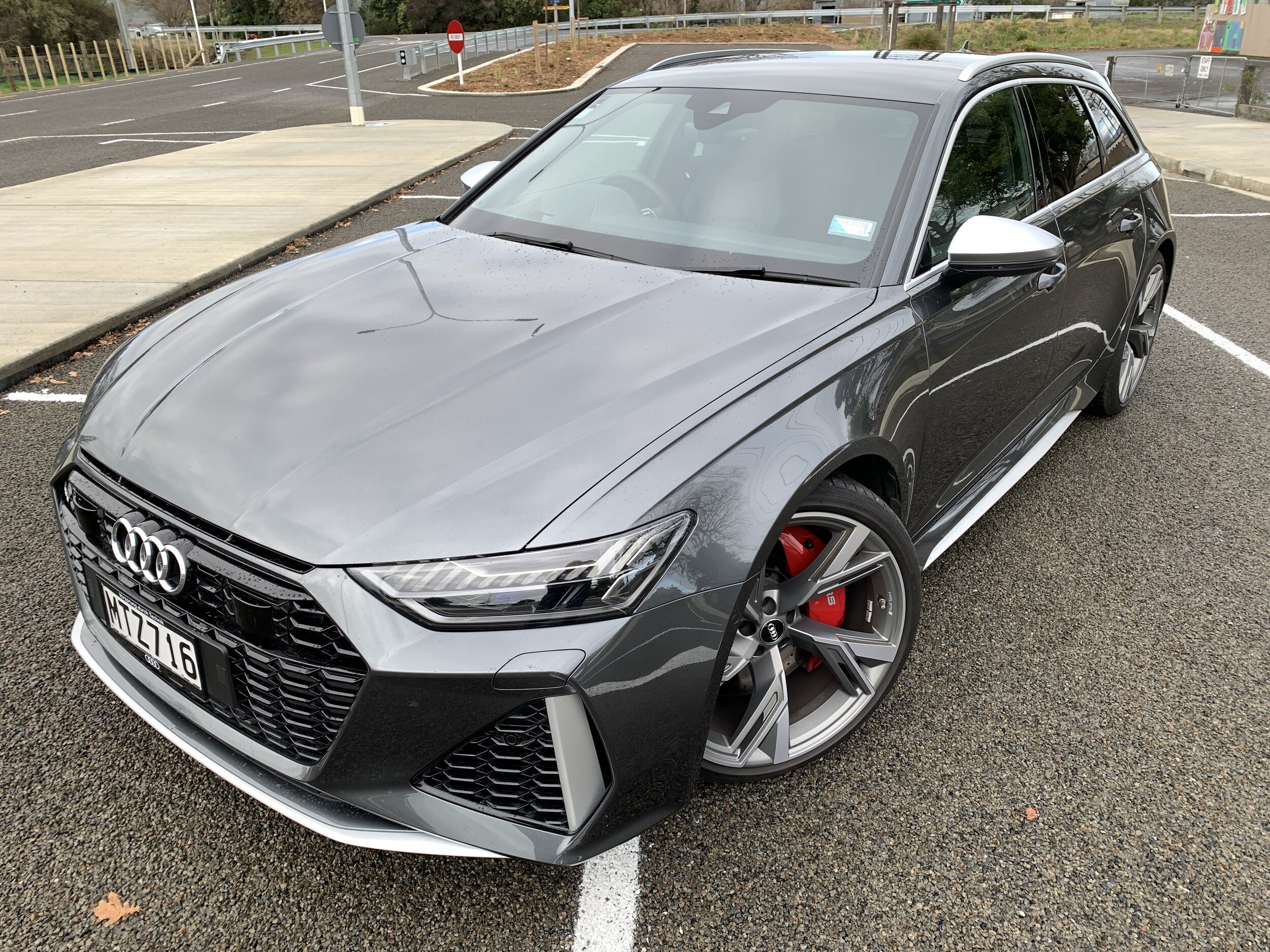
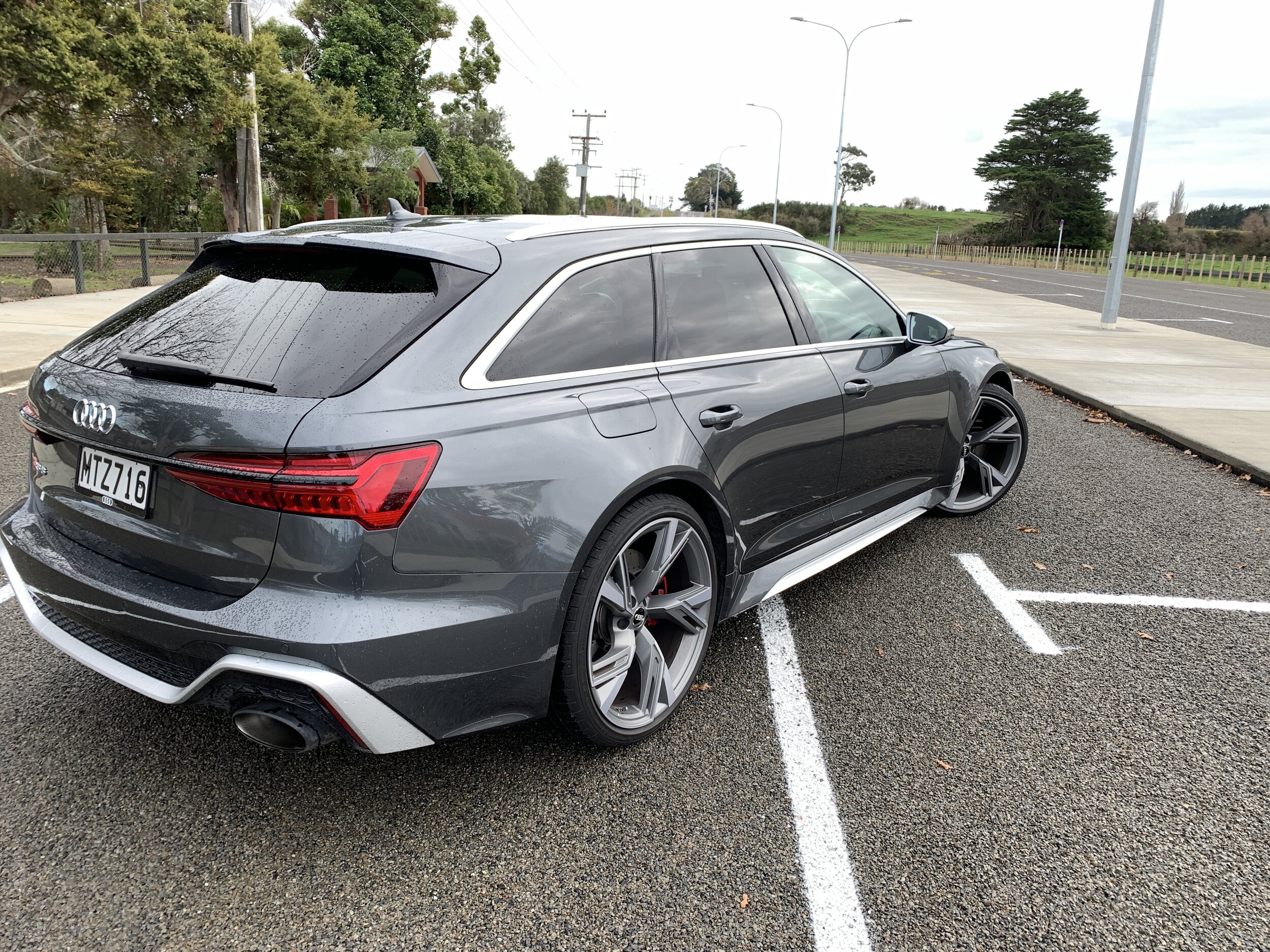
identical kapow but more practical and cheaper … that’s why we’d take the RS6 AVant (above) over the RS7, but either way these are impressive cars.

identical kapow but more practical and cheaper … that’s why we’d take the RS6 AVant (above) over the RS7, but either way these are impressive cars.

white 2.jpeg

Base price: $218,900 (RS6) and $228,900 (RS7)

Powertrain and economy: 4.0-litre turbo-petrol V8, 441kW/800Nm, 8-speed automatic, AWD, combined economy 11.4/11.5 litres per 100km, CO2 262-264 g/km.

Vital statistics: 4995/5009mm long, 1951mm wide, 1460/1422mm high, 2929mm wheelbase, luggage capacity 565/ 535 litres, 22-inch alloy wheels.

We like: Hefty technology update, improved driving feel, wagon format.

We don't like: Quirky haptic controls, enhanced width fills an angle park.


WITH the course toward electric so obviously set, what compells Audi to continue to pump out V8 petrol-reliant RS product?

Fair question. Assuredly, whatever’s fuelled introduction of mid-life revised RS6 wagon and RS7 Sportback cars and something wholly new, an RS edition of the Q8 sports utility, it isn’t a rethink about electrification.

That’s happening. VW Group’s commitment is beyond question and anyone keeping up with e-tron news will know Audi taking leadership. Moreover, the pace of changeover is ramping up.

Yet, thing is, we’re in a period of transition; rather than go totally cold turkey, it makes better sense to wean gradually. So, while one day Renn Sport as we know it now will undergo radical change, this isn’t the time for it.

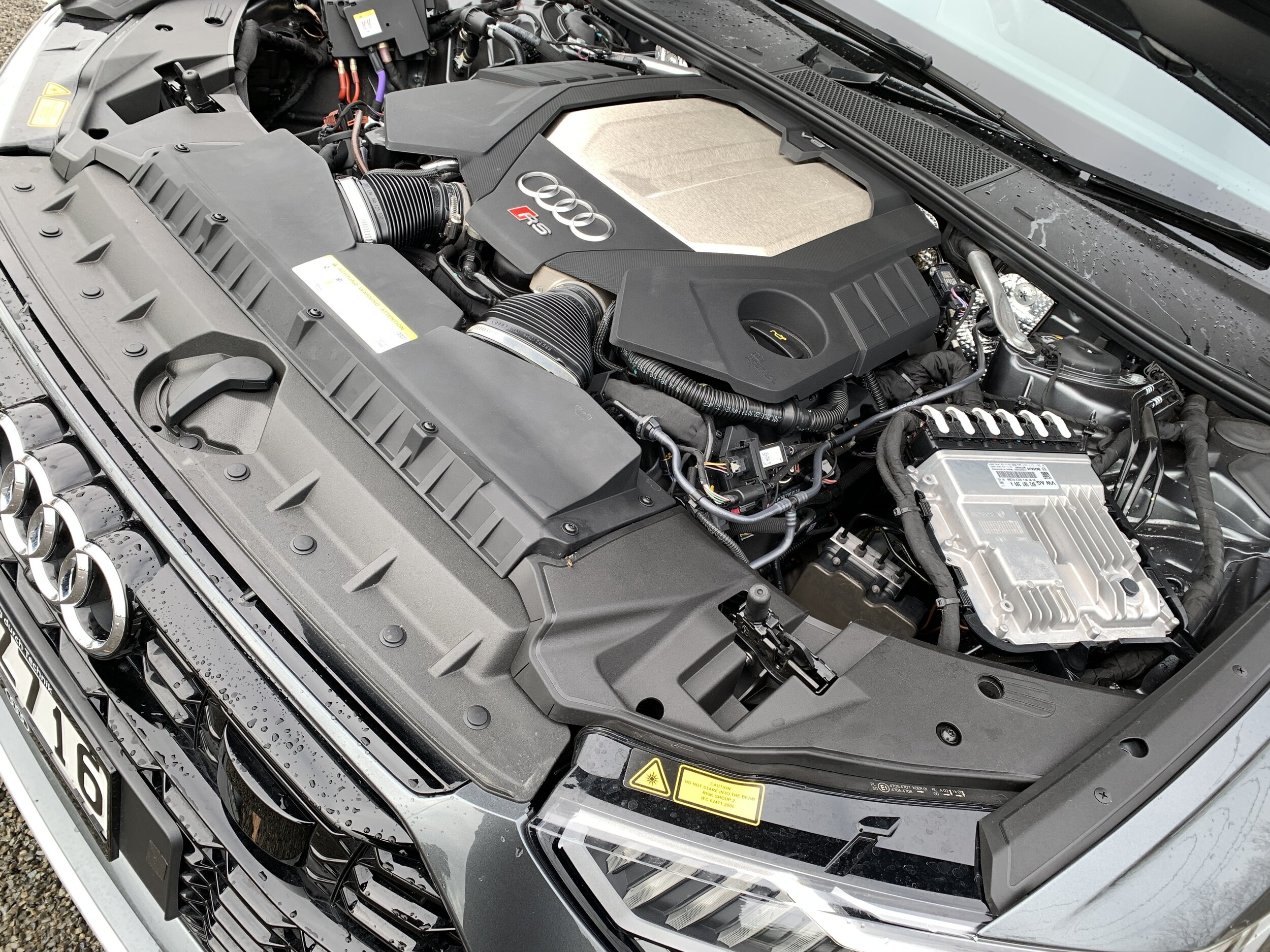
Not that Audi and its performance arm hasn’t started cutting back. Phase one has been a gradual downsize in engine capacity (and cylinder count). Phase two is what the update RS6 and RS7 now deliver. A 48-volt hybrid driveline that works in tandem with the TSFI 4.0-litre twin turbo V8 is quite significant on the technical scale.

But what difference does it really make? Well, I’d be reluctant to deride the tagline for this marriage, ‘high-performance meets high efficiency,’ as a falsehood. The lithium ion battery enabler and a cylinder deactivation system have positive effect on economy and emissions.

However, let’s face it: This a performance V8. There are no miracle cures. Achieving the cited optimal economy of 11.4 litres per 100km will require a deliberation potentially unfamiliar to the buyer set and the claimed 261 grams per kilometre emissions output remains high enough to earn a Green blacklisting.

Yet even if it was political impetus more than anything else that demanded adding in electrification and its power source, a small lithium-ion battery in the rear of the vehicle, you can achieve positives.

Soft-shoeing the throttle might be against the RS credo, but it will ease the pain of fuel burn; go lightly enough and it’ll actually off the engine from 21kmh as you slow to a stop. And if you find a long enough flat straight in the 100km zone it’ll also occasionally run purely on electric impetus, albeit for no more than 40 seconds. That’s also the environment in which the cylinder-on-demand function, that deactivates four of the eight cylinders, leaving it to run as a V4, is also most likely to action. Audi says that this can help to reduce fuel consumption by up to 0.8 litres/100km and, similar to the engine-off mode, once more throttle is applied, the dormant cylinders immediately reactivate. Is that enough to save the icecaps from melting? Probably not. But it’s a start. 

Plus, it keeps this story from finishing early. Keeping this engine relevant and fighting fit in an increasingly steep challenge for Audi, but you can understand why they keep trying. It’s an amazing thing.

EV fans might feel they’re point-scoring in reminding that there are battery cars – including one soon to join the local Audi family – that feel as oomph-laden and will quite possibly match their impressive 0-100kmh times of 3.6 seconds. Fair enough, it’s true.

Yet that ohm team will be rendered silent when asked to nominate anything battery-reliant sold here that matches, let alone betters, these dinosaur-juiced sister ships for absolute stomp. It’s certainly not going to be a Hyundai Kona, or even a Tesla Model S.

And yes, as much as it seems lunatic to suggest the ability to clock 250kmh (or, after a slight factory-sanctioned tweak, slightly more than 300kmh) is of any kind of importance in a country where 100kmh is the absolute limit … well, it nonetheless still does. Likewise, the RS cars might also sell simply on strength of their brilliantly Jurassic soundtracks. I agree, it all seems a bit juvenile. And yet … well, damned if I can’t help but get excited by it.

In respect to tailpipe tone, it’s intriguing that the RS7 has a noticeably louder exhaust than the wagon alternate given that it is the quieter-looking product at the kerbside, regardless that this time around the hatchback option is more hunkered than it previously was. This is as result of consumer feedback; existing customers told Ingolstadt the previous gen car just didn’t have enough visual cojones.

And now? Well, it’s definitely more muscled, being 40mm wider than the standard A7, a reprofiling that means just the bonnet, front doors, roof and tailgate are shared. It also has the same big wheel arches as the RS6, and filling those openings in NZ-spec are 22-inch rims. So, yeah, it looks a whole heap more aggressive.

Yet, and maybe it was because of the paint choice for the testers (a lily-white RS6 seems almost oxymoronic, a metallic grey Avant just perfect), the wagon just continues to be all the more imposingly feral in its appearance. That impression imparts with the bodyshapes’ relative substance, for sure, but also the cars’ common face: The unique grille design and the additional ventilation ports on the lower corners of the bumper (to aid thermal management), plus those matrix LED laser headlights just seem to engender more malevolence in the hauler.

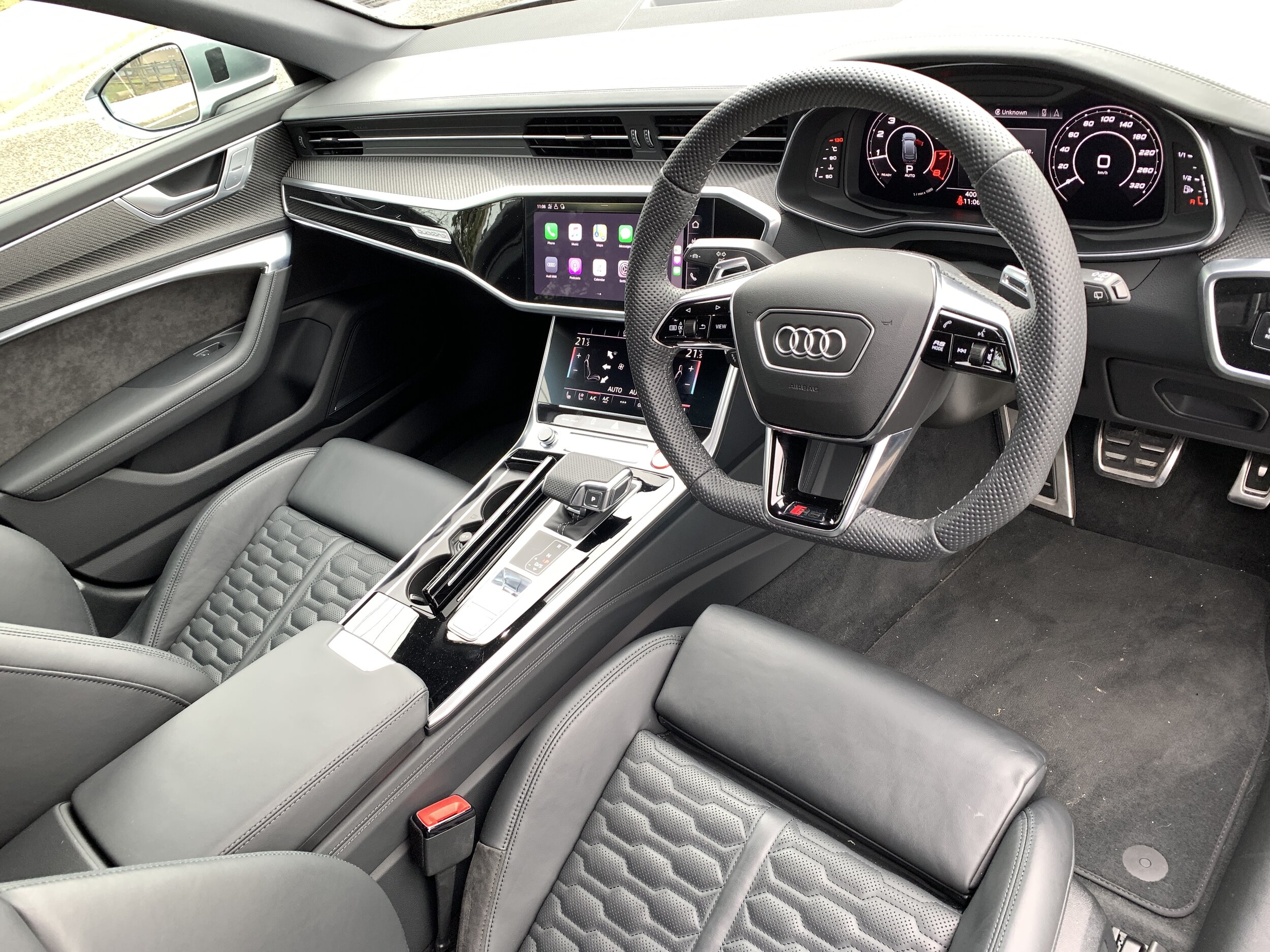
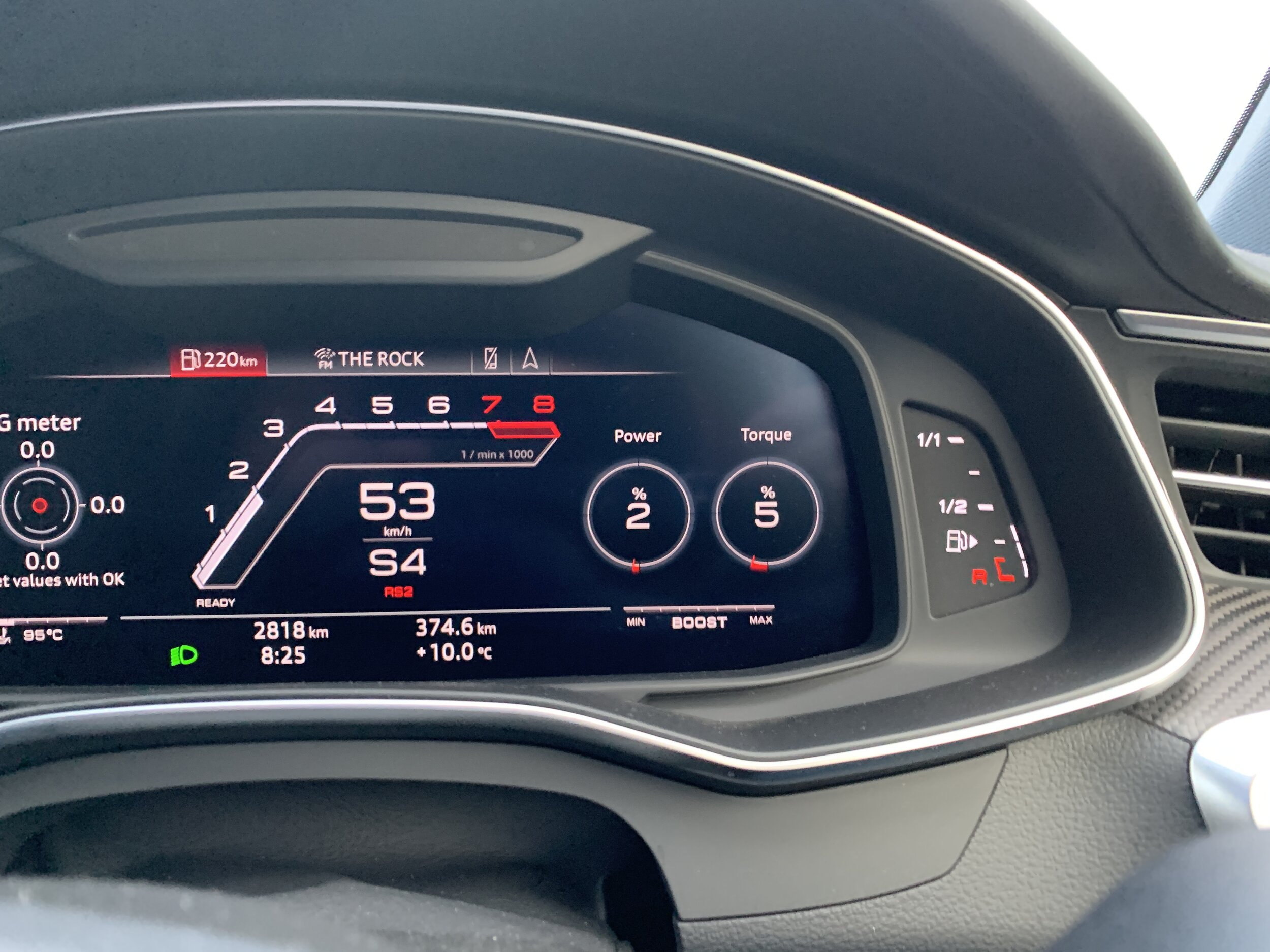
From the inside, at least when looking forward, the cars are of a muchness; abetting the usual displays found in all upmarket Audis are additional touches are specific to the RS product, such as instant read-outs for power and torque that, quite amusingly, show how very little of each is required to hold these cars at a 100kmh pace. Everything you need to know when driving and not wanting to release your eyes from scanning the roadscape comes up digitally on the main screen and in a head-up display.

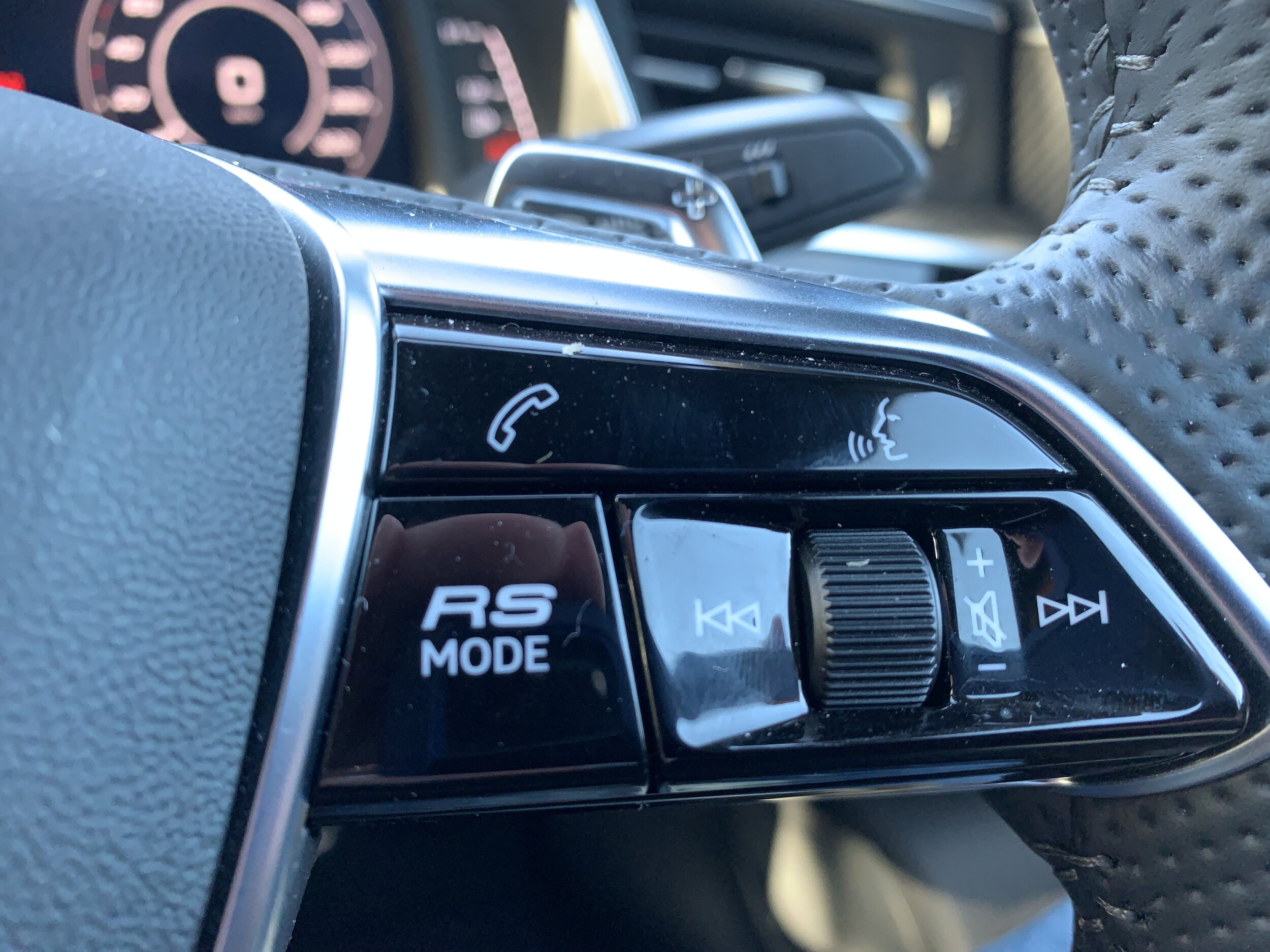
The improvement this time around comes with two RS buttons that serve direct routes to pre-set driving modes and chassis settings. There are also the traditional buttons and centre screen accesses that allow switching between the myriad of settings, of course, but the shortcut buttons seem a safer idea.

Both are five-seater models (that’s new for RS7 as the old one’s back bench was shaped for two), with very luxurious fittings, but not so plush in appointment that you wouldn’t think twice about making use of the practical elements. They are, in short, still expected to be used as everyday cars.

Buy the Sportback and you get a vast but shallow boot holding up to 535 litres, or 1390 litres when the rear seats are dropped down. Sounds good? Well, in isolation, it is. But if filling the boot is a requisite requirement, fact is the $10,000 cheaper RS6 presents a significantly higher value return; 30 litres more capacity with the back seats up is modest – drop these, though, and the load-all is vastly more commodious. That, and the fact that the wagon just looks better, would seal it for me.

But surely the practicality comes at expense of punch? Not at all. For all its extra aural aggression, that the RS7 is pretty mush equally pegged by the wagon, not just in any sprint but in driving feel, too. That might sound weird, given the RS6 just looks to be so much bigger, but really it isn’t. Weight-wise, they’re both similar: That is, heavy, at over two tonne each, but the load-all is just 10kg lardier.

Such is the crushing oomph from the engine that the kilo count doesn’t seem to any sort of imposition; these RS sister ships are capable of moving at quite phenomenal rate.

Just as well, then, that the packages a whole are designed to take that into account. You’ll be especially pleased with the monster brakes gripped by huge callipers; without condoning recklessness on the road, if you are intending on going briskly, having the best brakes possible is usually a good idea. Likewise great quality rubber and well-sorted suspension. Audi ticks those boxes, too. 

As strange as it might sound, the cars’ ability to run hard without much in the way of theatrics beyond the rumbly exhaust note is part of the appeal. Salute, as always, that quattro all-wheel-drive technology, which includes a mechanical centre differential and an RS-tuned sport differential on the rear axle. Providing a 40:60 front-to-rear split, and up to 70 percent of power to the front axle or up to 85 percent to the rear, depending on the situation, it’s an astoundingly adept accomplice. Also influencing with subtlety is the cleverly-integrated rear wheel steering. You only realise how good it is when twigging how easily, confidently and accurately the cars handle direction changes under accelerative load, without tyre squeal or body lean.

The RS models sit 20mm lower than their donors, and when the speed surpasses 120kmh, the ride height reduces by a further 10mm to optimise aerodynamics and aid stability, and Sports Suspension with Dynamic Ride Control is standard in NZ spec.

In this, the shock absorbers are diagonally opposed, meaning the front left is hydraulically linked though a central valve with the rear right, and vice versa. This setup works to reduce pitch and roll movements when cornering at higher speeds and when driving quickly it works well. What also impresses is that this update also brings better absorption from the suspension when put into its softest setting. It’s not outright supple, but neither is it as unremittingly solid as Comfort used to be. The alternate Sports adjustment is, of course, very solid. 

No debating the ultimate star of the show. Assessed purely on its performance, the powerplant is a stunner, not simply because it delivers virtually obscene grunt – though, in saying that, what’s remarkable is that the RS Q8 has another 100Nm still – but also because of how all that muscularity unfolds.

Give it hell and the consequences are … well, basically supercar-like. Yet even when taken into the utterly feral zone, you can trust it in part simply because the throttle has been so deftly weighted. It’s a crazy mo-fo this unit, no argument, yet not so hair-trigger berserk that the slightest twitch or sneeze won’t unleash utter mayhem. As momentous and visceral as the grunt is, these are cars of everyday capability.

How much longer this can go on for is a good question. All big-lunged petrol engines are now on notice. It says a lot about the calibre of these cars that they still feel more relevant than they conceivably should in the here and now. To be fair, that’s not just because of the mechanical changes; refinements to the chassis and also the steering response have done a lot to answer criticism of the preceding cars’ being overly-sanitised in feel. For sure, these still impart as big rigs on a tight country road, the Avant especially, but they do position very accurately when asked and don’t feel as overwhelming as you imagine. 

It’s interesting that Audi Sport’s intention for the immediate future is to keep fettling petrol-addicted product, albeit moreso from the SUV side of the family from now on.

Without meaning to sound deprecating, as useful as the added drivetrain tech is, when driving these cars, the sense is that more that you’re getting to the last chapter of a great story.


Subaru Impreza: Holding the line

The Sport edition is the last Impreza standing.

IMG_7695.JPG

Subaru Impreza Sport

Price:  $32,490
Powertrain and performance:  2.0-litre four-cylinder horizontally opposed petrol engine. 115kW/6000rpm, 196Nm/4000rpm. All-wheel drive. 6.6 L/100km.
Vital statistics: Length 4460mm, height 1480mm, width 1775mm, wheelbase 2670mm. Luggage 345 litres. Wheels: 17-inch alloys with 205/50R17 89V tyres.
We like: Solid boxer engine performance, helped along by SI Drive. All-wheel drive for an economical price. Excellent safety specification.
We don’t like: Body design is getting a bit dated. Car competes in a shrinking market segment.

HELLO old friend – how’s life?

In the case of the Subaru Impreza, things are a bit lonely these days.

When it was first introduced back in 1992 as a replacement for the Leone, small cars including five-door hatchbacks were very popular, and as a result at one stage there were up to 16 different versions of the Impreza to choose from.

But now the selection is just a single $32,490 Impreza Sport hatch.

It’s the fault of those darned SUVs, you see, which are now so popular with New Zealand motorists that compact and medium-sized versions currently make up 37 percent of all new vehicle registrations.

In fact this popularity is so great that a year or so ago it prompted one member of the Impreza family to change gender and become a compact SUV called XV.

 Over the years the Impreza  has also been the basis of creation of a couple of the motoring world’s great performance cars, the WRX and STi.

IMG_7702.JPG

Not only that, but the Impreza’s platform has  also been used for development of several other Subarus currently on sale, including the Levorg wagon and the Forester SUV.

So as the Impreza Sport  sits there all on its own as the only five-door hatch on every Subaru sales yard, it can reflect on the fact that over the years it has been responsible for development of a good many other models.

And – importantly – the Impreza isn’t finished yet. In fact a few months ago it received a facelift in an effort to remain competitive in the small car category of the kiwi new vehicle market.

It’s had an exterior cosmetic overhaul via changed frontal design and new 17-inch alloy wheels, performance potential has been improved thanks to installation of Subaru’s Intelligent Drive (Si) system, and safety has been improved via the marque’s EyeSight driver assist feature.

That’s significant improvement to a hatch that appeals as perhaps the value package of the small car sector – remember, the model is all-wheel drive which usually adds several thousand to the price of any car.

From a performance perspective, on paper the Subaru doesn’t look to be anything special. It’s 2.0-litre horizontally opposed engine offers 115kW of power and 196Nm of torque, which is bettered by a number of other small cars including Ford Focus, Hyundai i30 and Toyota Corolla.

But boxer engines are inherently excellent performers, because their lower profile in the engine bay provides a more even distribution of power to the rest of the drivetrain.  That’s the case with this Impreza, which can turn on quite robust performance when required, particularly when the SI Drive is moved from the everyday Intelligent mode to Sport to enhance performance.

IMG_7699.JPG

The Impreza’s Lineartronic continuously variable automatic continues to be one of the best around, and it offers manual mode, and I personally enjoy a push-button hill hold function that can be used to remain stationary when stopped at, say, a set of lights on a hill.

I also very much enjoy the EyeSight driver assist system, which uses a pair of ‘eyes’ located on the windscreen in front of the rear-view mirror to continually scan the road ahead and if necessary warn the driver of potential danger ahead. Sometimes I tired of the system’s lane departure warning, but at the end of the day I would much rather have it than not.

It’s worth remembering that the Impreza Sport is a vehicle that retails for less than $32,500, yet standard specification includes an eight-inch infotainment touch-screen, Bluetooth hands-free with both Apple Carplay and Android Auto, dual-zone climate control air conditioning, and reversing camera.

I have a soft spot for the Subaru Impreza, because it has consistently been a very good car.

The first-generation model was launched in 1992 in both four-door sedan and five-door hatch forms, built using a shortened platform of the Legacy. It was immediately recognised for the quality of its drive, which explains why these days there are still plenty of them used by enthusiasts in club rallying events.

The second-generation version launched in the early 2000s wasn’t available as a hatch, with Subaru preferring to go the way of the sedan and wagon instead. But that changed six years later when the third generation model was offered as a sedan and hatch.  When the fourth-generation model was launched in 2012 the body shapes continued to be restricted to sedan and hatch, with the wagon duties passing on to a new model Subaru named Levorg.

We’re now on to the fifth generation, released worldwide in 2016 and which was the first Subaru to be built on a new global platform that offered more than 70 per cent more torsional rigidity, and which is now used on all Subaru models.

And now that model has been facelifted – even though the constantly changing preferences of the motoring public have forced a reduction in the Impreza selection in New Zealand to just the single model.

So how’s life, old friend? It’s a bit lonely, but that one hatchback is keeping alive a strong Subaru pedigree.

IMG_7690.JPG


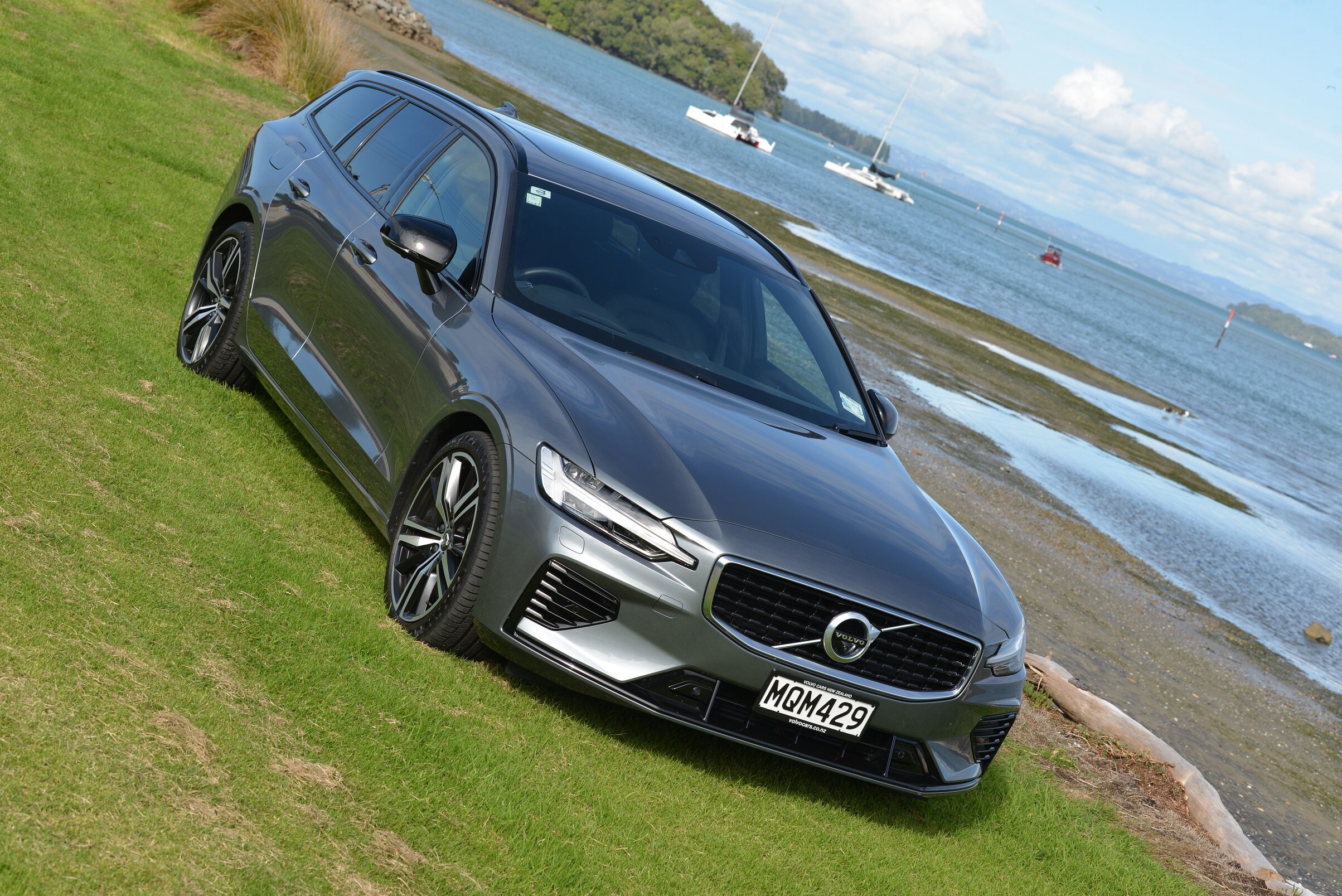
Volvo XC60 T8 Polestar: Going for gold

This cleverest version of this Swedish make’s compact sports utility offers a new definition of click bait.

images: colin smith

images: colin smith

Base price:  $129,900
Powertrain and performance:  2.0-litre four-cylinder DOHC turbocharged and supercharged petrol engine with plug-in hybrid electric drive. 246kW/6000rpm, 430Nm/2200-5400rpm (Combined 311kW/670Nm). All-wheel drive. 2.2L/100km.
Vital statistics: Length 4688mm, height 1658mm, width 1902mm, wheelbase 2865mm. Luggage 468 litres. Wheels: 21-inch alloys with 255/40 R21 Pirelli P-Zero tyres.
We Like: Versatile five-seat SUV design and stylish proportions, excellent seating comfort and visibility, wide-ranging capability from low consumption efficiency to high performance SUV.
We don’t like: Those bright gold seat belts.


IN an era where you occasionally lift the bonnet to check washer fluid levels or perhaps take a quick glance at the dip stick, this Volvo presents a chance for a little more hands-on interaction than usual.

A key part of the performance content for the top-of-the-range XC60 T8 Polestar Engineered is an Ohlins adjustable suspension featuring competition car-style Dual Flow Valve Technology.

If you want a take a couple of minutes beneath the bonnet – and a little more challengingly under the rear wheel arches – you can dial the suspension damping of your choice into this rapid SUV.

 After a couple of days of driving in the firmly damped XC60 flagship I dived into this click-and-count procedure. As long as you have an understanding of clockwise and counter-clockwise - and can count to 22 - you are in the adjustment business. 

It was evident the test car had been adjusted towards the stiffer range of settings and to experience contrast I opted for Volvo’s recommended Comfort setting (15 of the 22 available clicks). 

It took much of the harsher response out of the city driving and lumpy surfaces but the XC60 remained securely planted on the highway with a wide tyre and track stance to accompany taut chassis control.

If I drove the XC60 long term I’d probably remain at or near that recommended Comfort setting. A quick run up the Coromandel or some favourite Waikato back roads might call for a few more clicks toward the firmer performance settings.

xc60test1.JPG

This is the second of Volvo’s top-end ‘Twin Engine’ T8 AWD models I’ve sampled recently. The powertrain combines 2.0-litre petrol power boosted by both a supercharger and turbocharger along with plug-in hybrid electric drive. It’s the rear electric motor that provides All Wheel Drive.

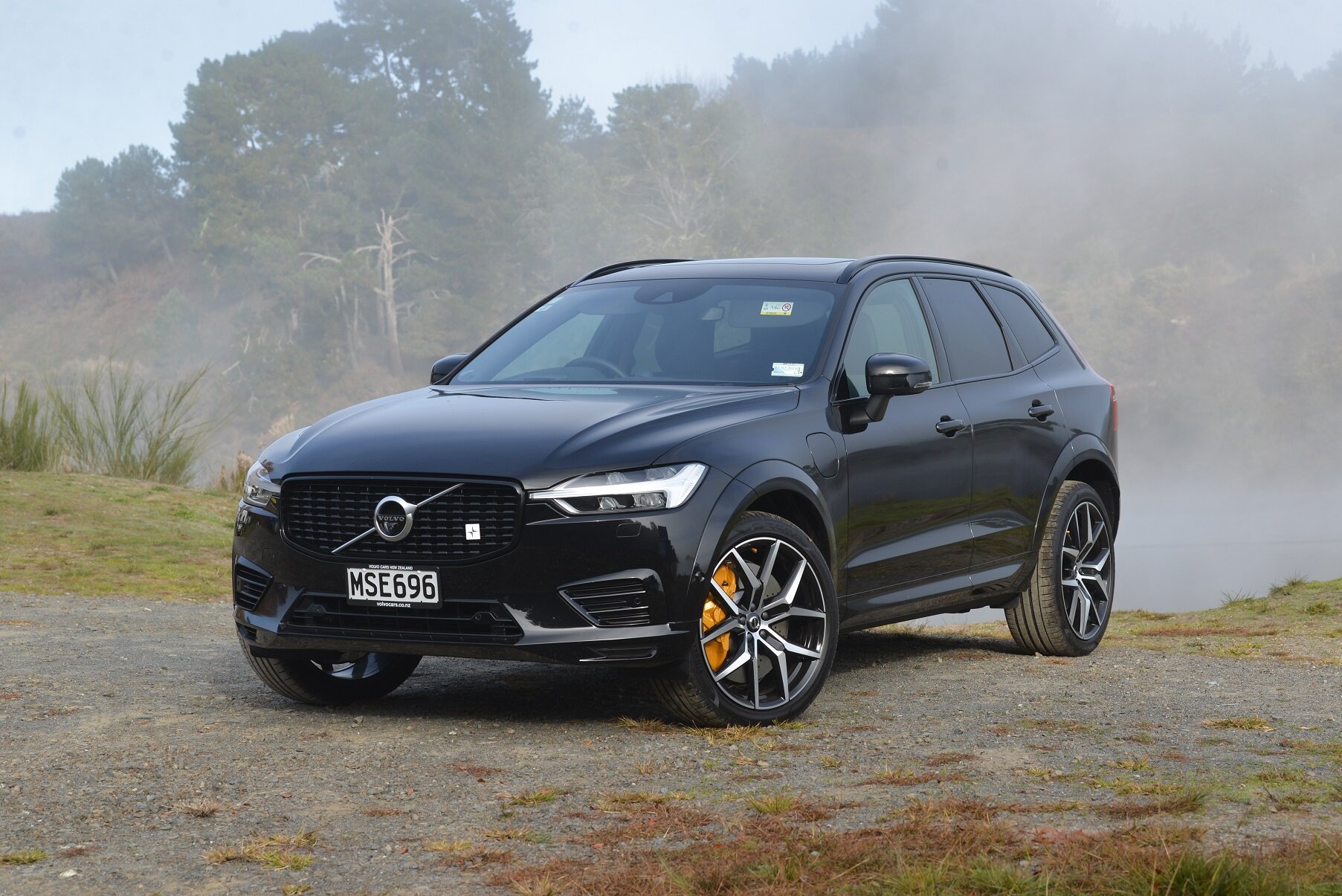
Along with the Ohlins suspension and a front strut tower reinforcement bar the Polestar Engineered content also includes high performance Akebono braking hardware and forged 21-inch Y-spoke alloy wheels with grippy 255/40 R21 Pirelli P-Zero tyres. 

Visual cues include flared wheel arches to house the big Pirellis with a gloss black grille and roof rails and subtle Polestar exterior badging. Inside less than subtle gold seat belts communicate the Polestar status. 

In total the powertrain delivers 311kW and 670Nm of torque. There is a surge of acceleration when prompted (with 0-100kmh in a claimed 5.2 seconds) but the prime attribute is the immediate and smooth torque delivery and low-effort overtaking response as turbo urge and electric torque combine with the close ratios of the eight-speed Geartronic transmission.

Plug-in hybrid status also allows for short zero-emission journeys using the power stored in an 11.6kWh lithium-ion battery housed in the centre tunnel. It’s an easy overnight charge from a domestic power supply and the best estimated range I saw with a fully charged battery was 35km.

The plug-in XC60 is heavier, slightly less aerodynamic and rolls on wider tyres than the V60 T8 AWD I had driven earlier and which had signalled a 40km EV range. Volvo claim a combined cycle consumption figure of 2.2L/100km which is achievable on short city runs with a high proportion of EV driving.  With some highway running I averaged 6.5L/100km. 

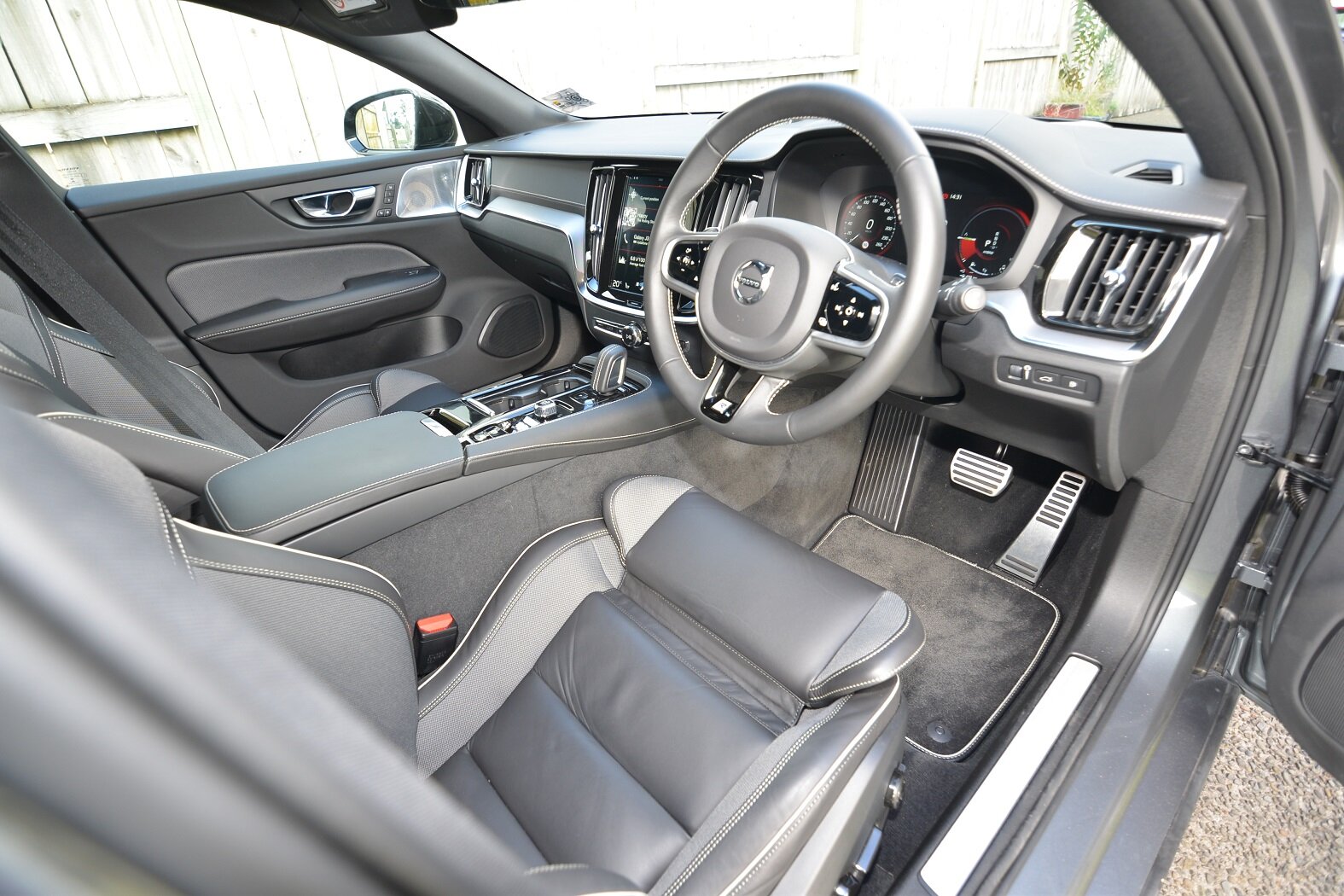
The new V60 and XC 60 cars are very similar in stylish cabin design and simple operation including the dash layout, Head-Up Display and portrait format Sensus 9.0-inch touchscreen.

The taller configuration of the XC60 partially overcomes one issue that compromises the V60 - the rear passengers sit a little more upright in the SUV and the centre tunnel isn’t as raised and that makes the fifth passenger position a more viable place.

xc60test2.JPG

Specification highlights include a premium Bowers and Wilkins audio system, powerful LED headlights with adaptive high beam control and a sports cabin theme with charcoal roof liner and contoured sports seats. 

The supportive seat design and comfortable driving position allow the benefit of SUV raised sight lines but the XC60 retains a sense of sitting in the cabin rather than seated up particularly high. The front seats are power adjustable and heated, there’s a powered tailgate and a panorama sunroof is standard for the Polestar Engineered version.

The test vehicle was in standard specification without optional equipment and priced up at $129,900. Luxury-performance rivals include the Audi SQ5 and this swift Swede also finds an interesting position between rival plug-in and performance SUV models.

Where customers are left to choose between the Mercedes-Benz GLC 300e plug-in and Mercedes-AMG GLC 43 performance models – or similarly the BMW X3 xDrive30e or X3 M40i – the XC60 in Polestar Engineered guise delivers both efficiency and performance skills set in a single vehicle.

xc60test3.JPG


Subaru XV: In search of middle ground

Where is the centre of the North Island? We use the smallest Subaru SUV to reach that spot.

IMG_7677.JPG

Subaru XV Premium
Price:  $42,490.
Powertrain and performance:  2.0-litre four-cylinder horizontally opposed petrol engine; 115kW/6000rpm, 196Nm/4000rpm. All-wheel drive.
Vital statistics: Length 4465mm, height 1615mm with roof rails, width 1800mm, wheelbase 2665mm. Luggage 310 litres.
Wheels: 18-inch alloys with 225/5 R18 tyres.
We like: Balanced ride and handling, ground clearance, substantial feel, safety specification.
We don’t like: Body shape starting to date, so is the engine.

SORRY Wellington,  but we’re reminded of that old joke.

Question:  How many Wellingtonians does it take to change a lightbulb? Answer: Just one – they simply hold on to the bulb and the whole world revolves around them.

While Wellington often seems to regard itself as the centre of everything, in fact our capital city isn’t even the centre of New Zealand – well, geographically anyway.

That honour goes to Nelson, which has a monument on the top of Botanical Hill which proclaims the spot to  the geographic centre of our country. But that’s not entirely true either – the official spot is actually about 50km away in the middle of Golden Downs Forest.

Mind you, even Nelson’s claimed central location is better than that suggested a few years ago by scientists who said that if all of New Zealand’s continental shelf is included in the calculations, then the country’s geographic centre should be located 11km north-west of Greytown in Wairarapa.

It’s tempting to think that if said scientists regard the sea bed as part of New Zealand’s land mass, then maybe they should attempt to live there...

There’s always been some debate about the exact location of the centre of the North Island, too. Because of its Te-Ika-a-Maui shape, various claims have been made that the centre is at Waharoa north of Matamata, and at Horahora near Cambridge, and at the base of Mt Titiraupenga in the middle of Pureora Forest Park.

IMG_7663.JPG

Personally we’re in favour of the Pureora location, because we love the story about how it was located.

In 1961 a Taupo surveyor created a cardboard cut-out of the North Island, bent it slightly to take into account the curvature of the earth, then suspended it using a pin and thin nylon. When a perfect balance was obtained, the spot where the pin was stuck was deemed the geographic centre of the island. As good a way as any, huh?

During our research we discovered there’s a plinth deep in the Pureora Forest that marks that spot – so we decided we should find it. And we further decided that to find this perfectly central location we should use a vehicle brand that is all about balance.

So we chose Subaru. After all, all its models are all-wheel drive. They are all powered by boxer engines with low centres of gravity. As a result, all the brand’s vehicles are among the most balanced on the market.

Our research further told us that actually getting to the official centre of the North Island is a bit of a mission, especially in the middle of winter, because there are several kilometres of rough unsealed road to be negotiated. So we felt that removed Subaru’s lower-riding Impreza, WRX, Levorg and Legacy models out of the selection, leaving an SUV choice of XV, Forester or Outback.

We got our hands on an XV, which in essence is a jacked-up and SUV-ised version of the Impreza five-door hatch, complete with hard plastic bodyshell protection, bigger wheels and tyres, and perhaps most importantly a 220mm ride height.

Our XV was a good one, too. A top $42,490 Premium model that has just undergone a minor facelift that has seen a bit of cosmetic change, some minor powertrain adjustments, and improvements to the brand’s EyeSight driver assist technology.

IMG_7682.JPG

The XV is one of two Subaru models – the other is the Forester – that have recently also become available as an eBoxer mild hybrid.

But for our assignment our XV was the conventional version, powered by a 2.0-litre four cylinder boxer engine that offered 115 kW of power and 196Nm of torque.

So where to go? We were instructed to drive along SH30 between Te Kuiti and Whakamaru, turn off the highway at a dot of a place called Barryville to end up at a DOC facility at Pureora, then enter the forest park itself along an unsealed route called Link Rd.

This we duly did, and it wasn’t long before we were really appreciating the extra ground clearance as we picked our way along a route that got increasingly rough.  The, just as we were beginning to worry that somehow we’d missed our destination, we reached a turnoff signposted Centre of North Island Rd.

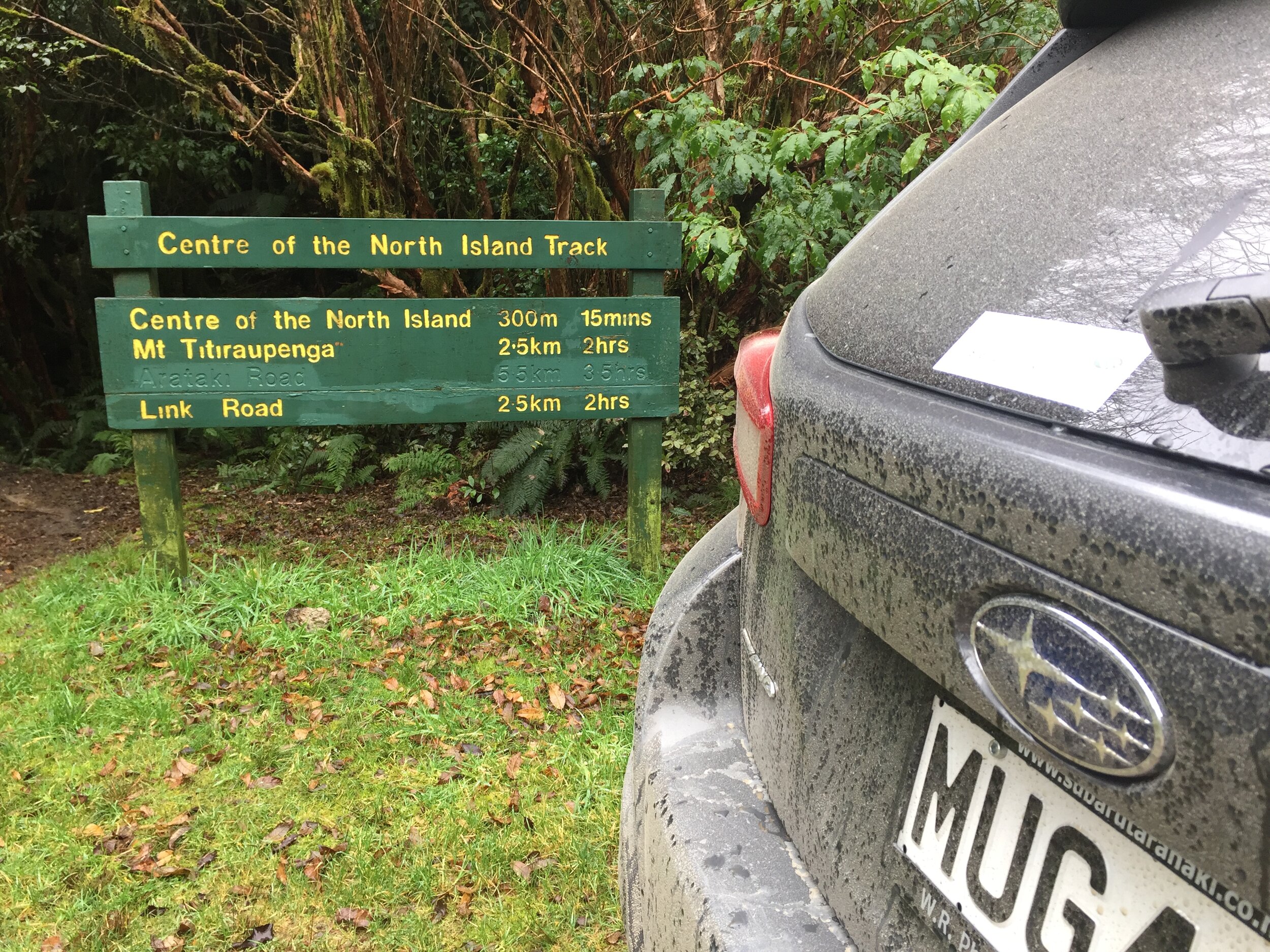
Then after a short drive down an even rougher piece of roading, we reached a carpark where we parked our XV and walked 300 metres through bush to the plinth.  It was located in a little clearing, sitting alongside DOC signage that indicates various walking and cycling tracks in the area.

Truth be told, it was all a little underwhelming. Maybe, we thought, considering just how the location had been found close to 60 years ago, the centre of the North Island could have been better marked not by a concrete plinth – but by a big sculpture representing a pin....

IMG_7688.JPG

So we turned around the drove home again, scrabbling our way along the rough and very wet Link Rd, before finally getting our by now very muddy XV Premium  back onto SH30.

The Subaru XV is an unassuming sort of small SUV. It does come in for criticism from some quarters for a lack of power, but we feel this is often because the critics don’t quite understand how boxer engines work.

Granted, our XV would no doubt offer improved performance if it were fitted with  the 2.5-litre engine from the slightly larger Forester SUV – which is going to happen in North America where the XV is called Crosstrek – but even with 2.0-litre power the vehicle has a strong feel about it.

In typical Subaru fashion, this vehicle enjoys being worked, both on the road and off it. Which is just as well, because the boxer engine does need to be worked.

Even thought the XV’s interior dimensions are the same as the Impreza hatch, it feels a lot more substantial. Maybe it’s the higher ride height and the fact that at the Premium level it is shod with 18-inch wheels and tyres, but this Subaru feels a lot bigger than it actually is.

And that potentially positions the XV as the most offroad-ready small SUVs currently on the market, to the extent we’d be happier taking one off the seal than we might do in such product as Mazda CX-3, Hyundai Kona, Kia Seltos and Hyundai Venue.

IMG_7667.JPG

Volvo V60 T8 Polestar: Plug-in plays well

A second look at this sweet-looking Swedish sports wagon cements our sentiment.

IMG_5615.jpeg

Price:  $114,900 ($121,400 as tested).
Powertrain and performance:  2.0-litre four-cylinder DOHC turbocharged and supercharged petrol engine with plug-in hybrid electric drive. 246kW/6000rpm, 430Nm/2200-5400rpm (Combined 311kW/670Nm). All-wheel drive. 2.0L/100km.
Vital statistics: Length 4761mm, height 1432mm, width 1850mm, wheelbase 2872mm. Luggage 390 litres. Wheels: 19-inch alloys with 235/40 R19 Continental Premium Contact6 tyres.
We like: Comfort, styling, innovative drivetrain engineering.
We don’t like: Fidgety suspension tune, type one recharging (and short household wall-plug cable).

WHEN it comes to citing a top-level European brand with leadership in drivetrain achievement, it’s all too easy to propose one of the usual German suspects.

After all, Audi, BMW and Mercedes do tend to make so MUCH noise about every new thing they bring to the market, right?

On the evidence presented by todays test car, really it’s the quiet Swede, Volvo, that deserves the spotlight. Definitely so on strength of the mechanical package delivered with the new flagship edition of its V60 mid-sized station wagon.

Turbocharged, supercharged, petrol, electric and a blend of both, driving through two wheels or four: That’s a heck of a drivetrain, right? 

Almost every part of that recipe is special and rare to find elsewhere in motoring, even the elements that – to Volvo at least – are a bit old hat, now.

Actually, to be fair, the Swedes are the third marque I can name that has sought to combine the choice of forced induction between two philosophically opposed setups – turbocharging, to achieve a revvier, higher-strung sort of boost (thanks to exhaust gases), and supercharging, to deliver a gruntier and lower-end power enhancement (courtesy of crankshaft inertia). 

As far as I can tell, the combo achieved its first successful cameo with Lancia's Delta S4 Group B rally car in the mid-1980s, which trickled down into a roadgoing version, and more latterly came in a Volkswagen Polo that sold briefly here.

IMG_5622.jpeg

Even so, it’s fair to suggest Volvo has gone further with it. The result of Chinese owner Geely’s $300 million investment in the Skovde engine plant has resulted in a particularly intense involvement that achieves with the test car’s 2.0-litre inline four-cylinder T6 engine standing out as a bright spot of innovation. 

The initial outcome from combining turbocharging and supercharging was to tick a best of both possible worlds – great zonk and also commendable economy (and claim of a first in its class to deliver more than one kiloWatt per gram of CO2 emissions). That box was first ticked a couple of years ago. Now the powertrain is up to its next level, with the supplementary positive of an electric backup.

How it all enacts in daily operation is intriguing. For one, there’s such a broad and muscular spread of power; the engine when acting in isolation, which is mainly when the performance-first Polestar drive mode is enacted, creates discernible low-end supercharger grunt that starts to plateau around the 3000 rpm mark - right around where the turbo kicks in.

You’d easily be fooled into imagining there’s a much larger powerplant lurking under the bonnet. Depending on your enthusiasm with the go pedal, you might twig to brief moments of almost imperceptible interruption between one ‘spinner’ handing over to the other, yet overall it demonstrates that there is a way for these enhancers to peacefully co-exist.

And that’s only half – or, if you have a heavy right foot – two-thirds of the story here, because on top of this is the electric ingredient whose inclusion identifies externally with a new title - T8 'Twin Engine' - another 'fuel filler flap' on its front wing, for the Type 1 charging port, internally with some hybrid-related displays and on the road with … well, everything from silence to surge, depending on how it happens to be interacting.

IMG_5631.jpeg

Ostensibly, in its Green mode – enabled most effectively by switching a selector to Eco - the 10.4kWh battery pack that feeds the electric motor (that drives the rear wheels) will allow you to achieve up to 49km on electric power alone, which should make it ideal for commuters who can charge it both at home and the office, day in, day out.

Or is it better to save that extra inertia for Polestar? Hmm. With both forms of propulsion pushing forward together, it’s a serious mover. Zero to 100kmh crops up in under five seconds – pretty scintillating when bearing in mind this car weighs in at a fraction under two tonnes – and as all grunt transfers as grip thanks to the traction-maximising effort of its four-wheel-drive (resulting from the electric motor being mounted to the rear axle), there’s real push-back surge.

All that’s missing from this almost-V8 oomph is an almost-V8 soundtrack, though the noise as it goes about its business is intriguing in its own right; a blend of four-cylinder engine grumble overlaid with a whine of supercharger and electric motor noise.

There’s no assurance of an absolutely free lunch here. As with anything that uses batteries, the harder the power hit, the faster the depletion rate. Just a few energetic starts and foot-down accelerations when moving will slash the EV range significantly.

And while the battery is never as wholly exhausted as the indicator shows – which reveals in it always having enough to enable silent movement from starting off – it’s a balancing act if you want to use it to scurry around without using any petrol at all for a reasonable distance. 

Yet it’s not that much of a challenge. I got used to seeing just 3.5 litres/100km on a daily mixed condition and speed test run; I wasn’t thrashing, but neither was a tender-footing. Get in the habit of plugging it in whenever there’s a chance and you’ll always have some zap to help the petrol-fed zip.

Beyond the powertrain, you’re into more regular Volvo territory, which means a very nice cabin presentation, some of the best front seats in the business and a decent specification to warrant its premium market placement, including the nine-inch Sensus touchscreen satnav, the 12.3-inch digital instrument cluster, a powered tailgate, rear parking sensors, two-zone climate control, cruise control with a speed limiter and more. 

IMG_5608.jpeg

High-end station wagons are relatively rare nowadays, not least in a property sporty format, and anyone who has become utterly convinced by car-like SUVs will complain, first, about how low this car is to get into and, second, about how firm-riding it is.

Both are factors you just to need accept as part of the overall theme. It’s true, nonetheless, that R-Design Volvos are quite crunchy in their firmer-than-standard suspension tune and as gorgeous as the big wheels with low profile tyres look, they’re also going to unavoidable transmit a bit of road patter through on scarred surfaces. 

To be fair, though, we need to accept that our road surfaces are pretty poor and that suspension engineers who tune the car for far more important markets do so in knowledge that those places have smooth tarmac surfaces.

Even so, the damping control was pretty good, keeping vertical movements of the body to a minimum, and it across as pretty well-sorted in the cornering department, with clean steering, lots of grip and minimal body lean to work around. If it is not as thrilling to drive fast as the obvious German equivalents, neither is it too far from being a threat to them. 

The T8 update demanded adoption of brake-by-wire; meaning the brake pedal sends a signal to a computer and the computer translates that into braking power. We’ve been down that road before with varying degrees of success. Some other systems that rip out the vacuum booster and replacing it with an electrically powered hydraulic pump can be quite grabby. 

However, in general use, the Volvo’s stoppers meet the aim of providing a linear feedback a smooth transition between regenerative and non-regenerative braking. And there’s certainly plenty of stopping power. 

The T8 drivetrain also affords in a taller and robust-looking XC setting and I imagine that’ll be the one more buyers gravitate to, simply because SUVs are just more in vogue. In a way, that might enhance the V60’s standing with those who still prefer orthodox wagons; in adding a degree of ‘rarity’ value for a car whose general styling and R-Design furnishings lend wonderful kerbside presence.

Bunging an EV drivetrain and battery into an orthodox design always demands some give and take; by shaping this into a T-design is clever as the main part spans under the back seat, with the vertical running forward into what would be a driveshaft tunnel if it had an orthodox all-wheel-drive. That provision ensures the boot space remains decent. However, it also effectively makes this a four-seater, as the central tunnel is quite and wide and high.

There are a couple more quirks beyond that. Engaging Reverse after being in Drive demands a double-tap movement else it’ll revert to neutral, which a bit odd. Also, the recharging cable for plugging into home supply is very short, there’s no logical place in the boot designed to stow it (and, if there is a bag, it had been ‘repuposed’ before the car arrived) and also replenishment by this method is so achingly slow off a three-pin plug you really need to upgrade to a proper home charger or roam around to find a local utility. In that respect, head down to your local mall. A lot of free-use public EV setups are still configured for Type 1 plugs and they’re generally located in shopping centres. But how long will that remain the case? Having this plug type seems a step behind where most other brands are going and it’s in fact interesting to see that, in some other markets, the car appears to come with a Type 2 set-up.

Beyond that, though, it does seem a pretty strong all-rounder; a car that blends the sporty side of its nature very nicely with its practical facets with the potential of super-low running costs, if you’re sensible in how and when hybrid drivetrain is engaged. If you leave it in hybrid mode then it really is quite brilliant in how it apportions the best elements of the petrol power and the electric motor. The world’s hybrid king, Toyota, could learn from this car.

A car that has come about purely as result of Volvo determining to distance itself from diesel deserves recognition from eco-conscious buyers who might have already been attracted by the Swedish manufacturer’s reputation for being a frontrunner in safety and solid design. Knowing that there’s nothing else quite like it in the market must also stand as an interest point.


IMG_5637.jpeg


VW T-Roc R-Line: Golden child crossover

First taste of this key small SUV comes in a premium serving sure to interest style (and badge)-conscious buyers.

IMG_5745.jpeg

Price:  $51,990.
Powertrain and performance:  2.0-litre four-cylinder DOHC turbocharged petrol engine; 140kW/4200-6000rpm, 320Nm/1500-4177rpm. All-wheel drive.
Vital statistics: Length 4234mm, height 1573mm, width 1992mm, wheelbase 2593mm. Luggage 392 litres. Wheels: 19-inch alloys with 225/40 R19 tyres.
We like: Chunky styling, seating comfort, handles better than you’d expect a crossover to.
We don’t like: Some interior plastics, rigid ride.


BE honest now: Who hasn’t felt a hankering over the past few years to take the wheel of a compact wannabe four-by-four with a countryside-ready stance yet none of the actual off-road gumption of a proper, actual, real SUV? 

Even if the customer queue stretches for kilometres more in literal than actual sense, perhaps the selection of ready-and-able candidate vehicles really now might if they were to be collected and lined up nose to tail.

Yet, as much as the crossover catalogue might seem to already be crammed to bursting, brands with ability to add another one or two into the mix are rushing to do just that.

Covid-19 notwithstanding, this sector is an automotive Klondike. Everyone who mines it seems to strike paydirt. 

Volkswagen is having two goes, with some fresh product they seem to so believe will suit consumers to a ‘T’ they’ve used that letter in the naming convention. (actually, that’s not the reason. The letter is to associate with the Touareg and Tiguan). 

Today’s test focuses of the larger of the two, the T-Roc, which the maker reckons will help sales grow from 6.4 million globally to 10.6 million in just 10 years. This car will sit alongside the smaller T-Cross, but don’t go looking for it quite yet. The baby is here but the slightly bigger bro is not. Well, not officially. Confused about what I’ve just said there? All will be explained.

IMG_5782.jpeg

The ‘Roc’ – from ‘rock’ and apparently to establish the car’s off-roading bone-fides (yeah, that’ll rattle Suzuki and Jeep … not) - is of course built on the modular transverse matrix (MQB) platform that underpins others of its ilk, from the Audi Q2 to the Skoda Kodiaq and Karoq. You might need to be a particular student of VW Group architecture application to also twig to a further DNA association.

Which is to … ? Well, the car that, despite the erosion caused on hatch interest by these crossovers, is still very vital to VW: The Golf. The T-Roc can claim DNA association not just to the Golf as we know it now but also the new one coming at the end of the year (or early in 2021). 

That’s not to suggest complete triplet-ship. The distinctions between the crossover and the road cars are diverse in detail, if less so in basic design and mechanical application. Still, familial links are so cemented and market trends being what they are it seems probable one will be examined as an alternate to the other.

Where to put your money? Well, there’s another twist to consider, and that’s to do with the T-Roc itself. When saying that this car doesn’t launch for another couple of months, I mean in its full NZ market spec. The scheduling is a reminder that this ‘latest’ arrival is also a late one. 

T-Roc has been in production for almost three years and, in fact, there’s a 150-strong colony here already. This comprises flagship R-Lines ordered by another right-hand drive market and snapped up by our distributor when they became surplus stock. The test car is the last of that lot, so its residency status is well sorted. However, getting more has proven a challenge to VW NZ. It seems the car has been so well received in other places we’ve been pushed down the queue. The perils of being small? Well, sometimes that works to advantage, too (for instance, our modest uptake of Touareg V8s has allowed us to achieve that car ahead of many larger countries).

IMG_5780.jpeg

The early arrivals deserve mention because they might well yet differ slightly to the incoming fully-accredited local market versions that were supposed to land next month but, on latest talk, might not now arrive until November, thanks of course to Covid interruption. Nothing major; but talk is that ‘ours’ could well have a more upmarket audio unit and perhaps a less plasticky trim.

What’s also important to note is that in addition to the 2.0-litre all-wheel-drive on test, the NZ range will include a pair of 1.5-litre front-drive Life and Style editions in a lower price positioning, at $39,990 and $44,990 respectively.

That’s a positive, too. It would not be fair to call the R-Line overly expensive, simply because there are others in its price level. For instance, Mazda’s CX-30 Limited is exactly lineball with this $51,990 VW. YEt it’s fair, surely, to suggest anything sitting above $50k tends to to be considered an almost premium purchasing experience.

Having basically handed in Hiroshima’s new baby just days before driving the T-Roc, it seemed to me the Mazda only has clear advantage on content, but would be beaten on spaciousness and have to concede a touch on performance – they’re all but lineball on power but VW’s engine has almost 70Nm more torque than CX-30’s 2.5-litre. 

You could quibble about the styling for ages; the VW is less daring and potentially less ‘modern’ in its look, but that’s not to say it loses appeal for it. If anything it’s a bit beefier with its flared arches and a wide grille, and there’s something more macho in its stance (regardless that it has just 2cm more ground clearance than a Golf). Those pronounced wheel arches and plastic cladding around the lower sections don’t seem false and it looks swollen in most of the right places, while the extra touches coming with R-Line - additional brightwork along the top of the plastic-clad sills, those anodised roof rails and the 19-inch alloys - add flair. Really, it’s aged quite well for a car that has been around in its home market for almost three years.

As you’d expect from VW there are plenty of safety and tech features, with a hefty focus on safety. So, Front Assist with city emergency braking and lane assist, adaptive cruise control, road sign display, blind spot monitor, park assist and a reversing camera all feature on the R-Line.

IMG_5787.jpeg

The design also delivers a useful amount of room for a family of five. The boot has enough space to swallow up bulky items though going all-wheel-drive clearly also erode capacity, with 392 litres’ boot space quoted for the R-line against 445 litres for the front drivers. Of course, you can drop the rear seats to create a significantly large cargo volume, though again it’s 1232 litres versus 1290. Throughout the rest of the interior there are several storage areas for placing oddments. 

Notwithstanding that detail change seems likely, the infotainment system as I saw it was very neat and is slick and intuitive to inputs. Crucially, it also supports Android Auto and Apple CarPlay, and the USB ports for this are within easy reach at the base of the centre console.

An adjustment to the trim quality would be welcomed, though. The leather is very good and it ergonomically sound but there are hard surfaces and scratchy plastics, that, for me, don't fully reflect the price tag. For sure, those surfaces are wipe clean and durable, which is a good thing if you have kids, but overall VW could do well to see how Mazda has introduced much nicer surfaces to lend impression of a far more premium ambience.

Actually, you needn’t even go that far: As much as the T-Roc’s interior space and big boot could stand as good reasons to go for it over a Golf, the hatch in the here and now (and certainly, it seems, in its next execution) is better in terms of perceived quality. 

Curiously, they’re less far apart in respect to the driving position than I’d imagined they might be, in that the T-Roc’s is more car-like than SUV-like. So much so that those that like a higher, more commanding placement may be a little disappointed. However, this does make for a more relaxing and comfortable experience and enhances the sense that it is more fun to drive that you might initially give it credit for.

IMG_5769.jpeg

As good as the Golf? For the most part, yes. Even on a winding road, where you’d think it would simply have to feel feel more top-heavy, the T-Roc surprises in retaining plenty of composure. The well-judged steering allows you accurately choose a line through the bends. It’s not an overtly sporty car, but when you push it harder it doesn't get flustered.

The ride quality might not appeal to everybody, in that it’s a little on the firm side, even when avoiding the Sport mode that obviously reduces the damper yield. If you automatically think that a crossover means a plush ride, it’s out to demonstrate otherwise. In saying that, it is certainly not so rigid as to be unacceptable and you certainly won’t find any shortcoming with other elements, such as its very sure-footed traction. If anything, it is a ‘grower’, in that the deeper under its skin you get, the more rewarding it becomes. I’d put some of that down to that well-engineered feeling that Volkswagen imbues into its cars.

The top line engine has more than enough performance to cope with the daily commute and gets up to open road speed comfortably and quickly. In all honesty, the smaller unit en route might suit its role even more comfortably. Yet the 2.0-litre’s not going to disappoint easily, either. There’s more than enough torque to not only pull its mass along quite comfortably but to also ensure the seven-speed direct shift gearbox retains its decorum even when you find sudden need to hurry up the pace. On the other hand, it is also rather economical if you light-foot the throttle. 

VW is definitely a magnet brand for style-conscious buyers and those looking for looks, practicality and the latest tech in an urban four-wheel-drive (of sorts) are surely going to see plenty to like here, starting with the package’s sizing. If you think a Tiguan is too big, then the T-Roc might be for you, given it has the immediate advantage of being 252mm shorter, which – along with a tighter turning circle - makes it more manoeuvrable around town. It’s a better looking car, too.

Of course, as said, this is a very congested segment and even if you’re particularly wed to VW Group design and engineering approaches, it’s possible to shop for an alternate without leaving the broader family. The SEAT Arona and the Karoq, which play to a lower budget yet also build on the same underpinning, are equally practical and, in the Skoda’s case, slightly roomier. Alternately, you could await that new Golf – it does seem to be extremely swish. 

Or go electric? Ultimately, too, VW’s boots and all foray into battery-dedicated motoring is set to deliver a plug-in equivalent of sorts, in the form of the ID.4. But that’ll be a couple of years away yet.

 Meantime, there’s likelihood the T-Roc family might expand further, not to include the fatuous and climatically-inappropriate Cabriolet that’s already selling overseas but another model that outwardly seems a touch oxymoronic but will doubtless prove to be exactly to market taste. This being the R edition, which borrows all it go-fast gear from the Golf R; so a 220kW 2.0-litre mated to a DSG automatic transmission and 4Motion all-wheel drive, delivering 0-100kmh in under five seconds and a top speed of 250kmh. Grrrr.

IMG_5771.jpeg


Toyota Corolla Hybrids: Form versus function

Twin-test time, with the Toyota Corolla hybrid in sedan and hatchback formats.

IMG_7632.JPG

Prices: GX hatch (as tested) $33,490, SX sedan $35,490. An SX version of the hatch has also just been introduced, at $35,490.
Powertrains and performance:
1.8-litre four cylinder  petrol engine, 72kW at 5200rpm, 142Nm at 3600. Combined with Toyota hybrid system for total system output of 90kW. Front-wheel drive. Hatch 4.2 L/100km, 97 g/km CO2, sedan 3.5 L/100km, 81 g/km CO2.
Vital statistics:
Hatch: length 4370mm, width 1790mm, height 1435mm, wheelbase 2640mm. Sedan: length 4630mm, width 1780mm, height 1435mm, wheelbase 2670mm. Luggage: hatch 208 litres, sedan 470 litres.
We like:
Hatch: better looks, better drive. Sedan: more interior room, superior fuel economy.
We don’t like:
Hatch: That lack of interior room. Sedan: Those conservative looks. 

THIS is a tale of two Toyota Corolla hybrids – one a hatch, the other a sedan.  We’re comparing one model against the other because it could be said that while one body style puts form before function, the other puts function before form.

The comparison had its beginnings back in 2018 when Toyota New Zealand launched the new 12th generation Corolla hatch, which went on sale in petrol and hybrid forms.

This powertrain choice was important, because it represented the latest step in Toyota Motor Corporation’s grand plan to offer a hybrid version of every popular model by 2025. And especially important for TNZ, because it was known that the Government intended introducing a proposed Clean Car Initiative from 2022.

Remember that? The initiative, introduced in July last year, proposes a Clean Car Standard (a fuel efficiency standard) and a Clean Car Discount (a feebate scheme that would apply a rebate or penalty depending on exhaust emissions), all with a target for 2025 of exhaust emissions of no more than 105 grams per kilometre (g/km) of CO2.

IMG_7647.JPG
IMG_7648.JPG

Not much has been heard of a proposal since.  Submissions closed in August last year and presumably are now being considered. Then in February New Zealand First took action to put the kybosh on the whole plan anyway, but the Greens countered by saying they would make it an Election issue.

MMP politics, huh? But what is a constant through all this proposal, submission and debate is the acknowledgement that something has to be done about the role transport plays in the level of New Zealand’s greenhouse gas emissions. After all, light vehicles – which are all vehicles of 3.5 tonnes gross vehicle weight or less – account for almost two-thirds of our country’s transport emissions, which in turn account for 20 per cent of all emissions.

So with that background, it was good that Toyota NZ launched the 12th generation Corolla hatch with a choice of variants with petrol-electric hybrid powertrains.  In hatch form the Corolla hybrid has an official average fuel consumption of just 4.2 L/100km and exhaust emissions of 97 g/km of CO2.

That’s way below the Clean Car Initiative’s 105 g/km target for 2025. Corolla has also helped Toyota NZ reduce the average CO2 emissions  by close to 10 per cent across its entire vehicle fleet, because the hatch immediately became among New Zealand’s most popular passenger vehicles, with a high percentage of sales (current 68 per cent) the hybrids.

But as popular as the new Corolla hatch has been, it also has some glaring faults. It has a lovely exterior design, particularly the rear where the hatch gracefully sweeps down from the roofline. But these swept lines also translate to the car’s biggest design issue – a lack of rear space.

The rear seats are cramped for legroom, and with all seats in use there is a mere 208 litres of cargo space under the tonneau cover (300 litres in the top ZR model which carries a tyre repair kit rather than a spare).

IMG_7650.JPG
IMG_7652.JPG

In every other respect the new Corolla hybrid is a really good car that offers an excellent drive and which carries leading-edge technology. But the vehicle’s interior function has been compromised by its exterior form, and the end result is a Corolla hatch that is not quite as good as it should be.

So what to do about it? Toyota has come up with an obvious solution – it has released a sedan version of the Corolla that offers a lot more interior room. Even better, it includes a hybrid variant that is cleaner than even the hatch, with claimed average fuel consumption down to 3.5 L/100km and exhaust emissions a low 81 g/km of CO2.

By the way, as I wrote this article, the news broke about the UK couple who had been allowed to breach the Covid-19 lockdown requirements and had apparently driven non-stop from Auckland to Wellington to attend a funeral. This prompted the mainstream media to speculate whether it was possible to drive this 640 km distance on one tank of fuel.

Well, the Corolla sedan hybrid is so economical that despite the fact its fuel tank carries just 43 litres of petrol rather than the usual 50 litres, theoretically  it could not only be driven from Auckland to Wellington on one fill – but also back to Taupo. That’s impressive. And I’ve got to admit it’s a comforting feeling when you fill up the vehicle and the onboard computer tells you your distance to empty is 1032km.

IMG_7653.JPG
IMG_7655.JPG

The sedan is able to achieve better fuel consumption than the hatch not only because its body design is more slippery, but also because whereas the hybrid hatch at GX and SX level has 16-inch wheels shod with conventional Dunlop 205/55 R16 tyres, the sedan (which is only available as an SX) has 15-inch wheels shod with low rolling resistance Bridgestone 195/65 R15 tyres. Overseas experts say such tyres can achieve fuel savings of as much as 15 per cent.

Mind you, I have to say that during a long trip in this sedan, I was unable to achieve an average fuel consumption that was any better than  4.0 L/100km, which is what my wife and I regularly achieve with the Corolla hybrid hatch that we own. And I tried hard, too – I was really looking forward to seeing if I could get the consumption down to at least the claimed 3.6 L/100km open road figure.

I suspect it was all because low rolling resistance tyres or not, it is impossible to achieve any vehicle’s official consumption figures when driving on coarse chip sealed roads that wind through New Zealand’s rolling landscape.

 The sedan is also 260mm longer than the hatch but slightly narrower, and its wheelbase has been extended by 30mm to 2670mm. All this has allowed the load space in the boot to be 470 litres, more than double that of the hatch.

A personal test of any vehicle’s load space is to load my golf clubs into it – you’d be surprised how many vehicles, even some substantial European SUVs, can’t accommodate a bag and clubs side-on.  With the Corolla hatch this task is impossible without first taking the woods out, but with the sedan there’s heaps of room.

IMG_7630.JPG
IMG_7644.JPG

Let’s go to the back seats. There’s more room in the sedan back there, too. In the hatch, the gap between the rear of the centre console to the front of the rear seat squab is 230mm, while in the sedan it is 300mm.

Both the hatch and the sedan are powered by the same Toyota hybrid system that combines a 1.8-litre petrol engine with an electric motor to provide a total system output of 90kW, and which is mated to what has to rate as one of the best CVT transmissions on the market.

Overall, it all presents an interesting choice. From the visual perspective, personally I feel the hatch is the more appealing of the two body styles – it has more character to it, while the sedan body shape is smooth to the point of being just a little boring. The hatch is also the more entertaining drive, because it is lighter and has the bigger wheels and tyres.

But what the hatch lacks, the sedan certainly doesn’t.  The hatch doesn’t have sufficient rear legroom or rear cargo space, but the sedan does.  The sedan also has the superior fuel consumption, which is saying something because the hatch is quite capable of returning figures of less than 4 L/100km when driven quietly.

So there we go. In many respects the Corolla hatch leans towards form over function, while the sedan favours function over form. And they’re both hybrids. It’s an excellent choice presented by one (or should that be two?) of the best small cars on the market.


Volvo V60 T8 Polestar: Swedish science fare

A performance-tuned plug-in hybrid station wagon? That’s something new to think about.

v60test4.JPG

Price:  $114,900 ($121,400 as tested).
Powertrain and performance:  2.0-litre four-cylinder DOHC turbocharged and supercharged petrol engine with plug-in hybrid electric drive. 246kW/6000rpm, 430Nm/2200-5400rpm (Combined 311kW/670Nm). All-wheel drive. 2.0L/100km.
Vital statistics: Length 4761mm, height 1432mm, width 1850mm, wheelbase 2872mm. Luggage 390 litres. Wheels: 19-inch alloys with 235/40 R19 Continental Premium Contact6 tyres.
We like: Handsome sportwagon styling, seating comfort, interior finish quality and effortless high torque performance.
We don’t like: High-rise central tunnel makes five passengers marginal.


NOT many years ago Volvo served the luxury market with a typical mix of sedans and estates.

Today the brand is another case study of how far the market has shifted toward SUVs with just a single four-door in its 2020 New Zealand line-up and the new V60 filling the wagon role while XC models represent the volume of its business.

For drivers who prefer the sportwagon configuration over something riding higher, the V60 offers space and a thought-provoking blend of attributes and technologies. 

The V60 flagship pairs the stylish R Design equipment package with the T8 plug-in hybrid powertrain - a supercharged and turbocharged 2.0-litre engine boosted by electric drive and with the rear electric motor also being the enabler for all-wheel-drive. 

The dual-boosted four-cylinder petrol engine develops 246kW at 6000rpm along with 430Nm of torque from 2200-5400. The electric motor contributes 65kW and most importantly 240Nm of torque. 

It’s an impressive combo of efficient sophistication and genuine performance with combined output totals of 311kW and up to 670Nm of torque. 

In Polestar drive mode the V60 T8 can sprint from 0-100kmh in 4.5 seconds and electric torque fills any gaps or pauses in the torque delivery from the relatively small combustion engine. A braked towing capacity of 2000kg adds a little more versatility to the wagon theme.
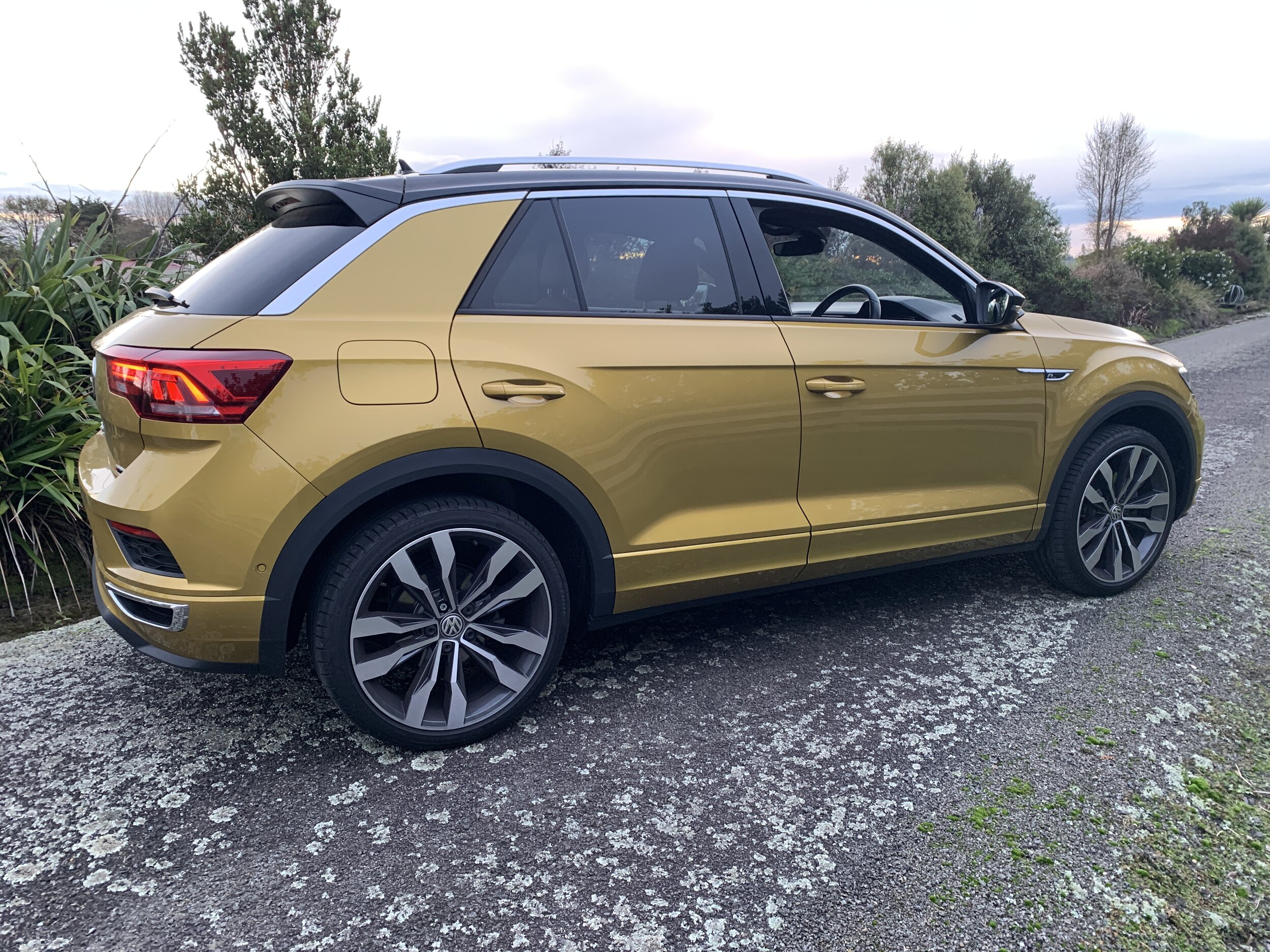
v60test2.JPG

Claimed average consumption is 2.0L/100km but like all plug-ins that figure varies significantly based on the driving environment. 

The best indicated range I saw when driving away with a fully charged battery was 40km. That’s enough for short city commutes and errands to be completed with zero - or close-to-zero - consumption and emissions.

The road test reality for a 122km run over a mix of open road and city driving was a 4.8L/100km consumption average. On a longer highway run the consumption is likely to settle in the high-5s or low-6s – still an appealing level of efficiency for a 4.8-metre long family-size estate with some serious performance potential. 

The lithium-ion battery is rated at 11.6kWh capacity – slightly smaller than a Mitsubishi Outlander PHEV for example. Charging from a domestic supply will take about four hours at 10amp charge rate. 

Using a Type-1 plug in the New Zealand market seems something of an anomaly in an industry that is heading towards Type-2 fast charge capability. But the reality for plug-in vehicles is they will be most commonly charged overnight from a domestic supply.

The V60 T8 can be driven in Pure (electric), Hybrid, All-Wheel-Drive and Polestar modes. Additional energy recuperation can be prompted by nudging the gearshift lever back into Brake mode. The steering wheel paddles still shift the eight-speed Geartronic automatic transmission rather than adjust the level of energy recuperation.

IMG_5625.jpeg

A highlight of the T8 driving experience is the way the comfortable sportwagon slips effortlessly along in bumper-to-bumper traffic queues on electric drive avoiding the hesitations of awkward stop-start systems. But can then be prompted to deliver serious acceleration in Polestar mode.

The new generation V60 is a medium-large format wagon and continues where Volvo has excelled in the past. There is family-size load space and convenient accessibility via the powered tailgate and it’s sensibly kitted out with the load securing and separation nets.

But the reality of the rear seat layout with a high-rise centre tunnel - for the battery storage – falls somewhere between marginal five-seat accommodation and very comfortable four-seat capability with generous rear headroom and supportive seat shape.

The V60 T8 AWD R Design is priced from $114,900. Options on the test car included panorama sunroof, window tints and Bower and Wilkins premium sound system – grouped as a Premium Pack – to bump the price-tag to $121,400.

Specific highlights of the R Design equipment level include charcoal leather with mesh textile inserts and contrast stitching and R Design detailing of the steering wheel, pedals, shift knob and tread plates with a charcoal headlining.

The exterior carries R Design badging along with gloss black treatment for the roof rails, mirrors and grille while diamond-cut 19-inch alloy wheels are generously shod with 235/40 R19 Continental PremiumContact6 radials.

The 4-C Dynamic Chassis active damping allows plenty of adjustment of the body control and ride comfort characteristics to progress between luxury and firm sportwagon settings.

v60test7.JPG

Also standard is a head-up display, excellent 360-degree camera, Park Assist, four-zone air conditioning and heated front seats. All of the infotainment, satellite navigation and heating/ventilation functions are controlled from the 9.0-inch portrait format Sensus touchscreen.

The V60 R Design showcases Volvo attributes of an uncluttered control layout and clear displays with an emphasis on quality surfaces including mesh metallic décor. 

There is excellent visibility past the cleverly shaped A-pillars and Volvo seat design continues to provide a lesson in both welcoming comfort and firm long-distance support with full power adjustment including four-way lumbar and cushion length adjusters. 

Part of the challenge is for luxury brands is to differentiate themselves and offer an identifiably unique experience.

Modern plug-in hybrid performance and effortless refinement sits very neatly with handsome Volvo wagon design and traditional brand attributes of comfort and safety.