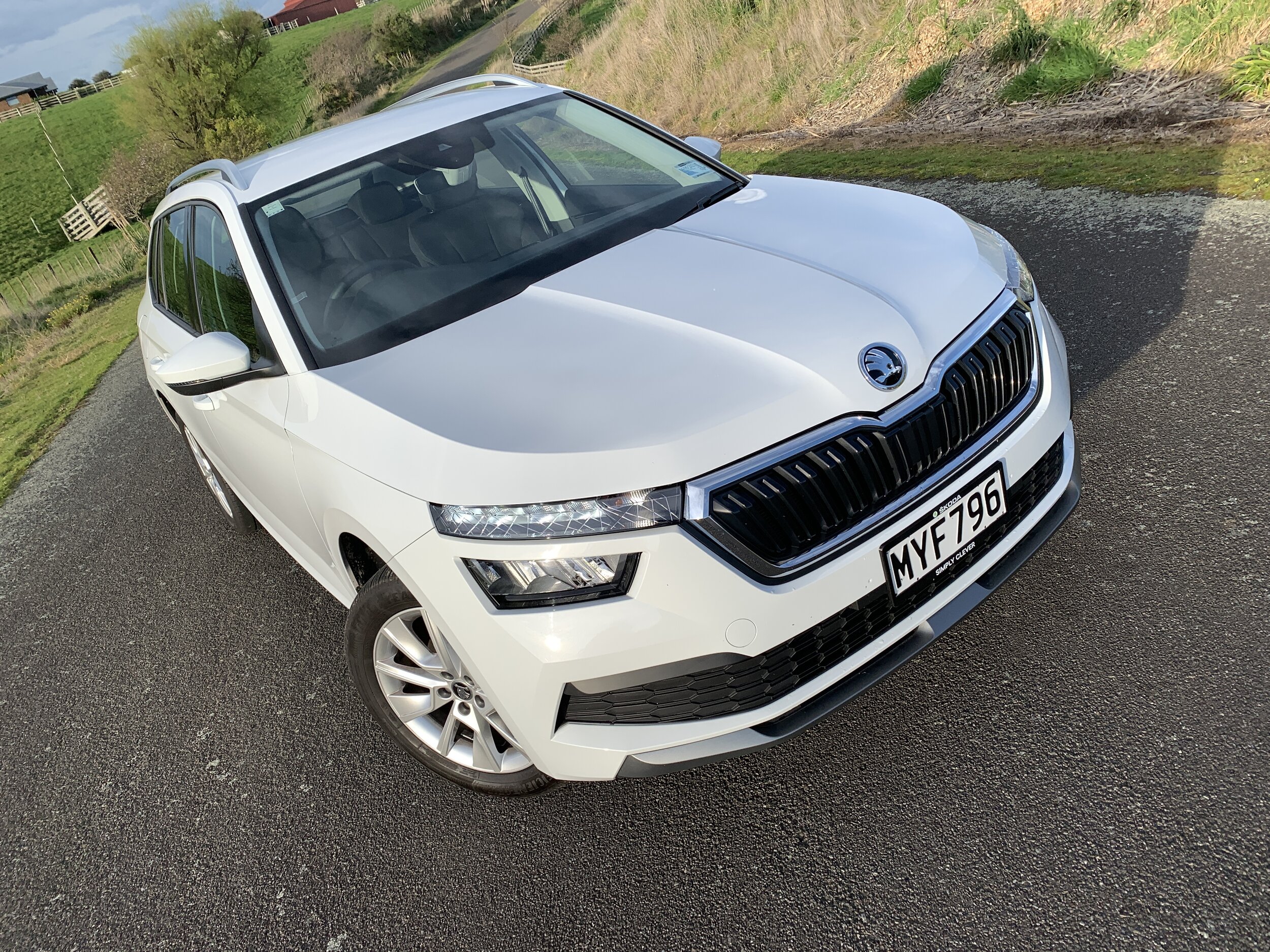
Skoda Kamiq: Big on aspiration, but ...

As much as the mid-level variant’s designation suggests optimised ambition, perhaps a touch more still wouldn’t hurt.
IMG_6563.jpeg

Skoda Kamiq Ambition Plus

Price: $36,990

Powertrain and economy: 1.5-litre turbo-petrol inline-four, 110kW/250Nm, seven-speed dual-clutch automatic, 2WD, combined economy 5.8L/100km, CO2 131g/km.

Vital statistics: 4241mm long, 1988mm wide, 1553mm high, 2651mm wheelbase, luggage capacity 400 litres, 17-inch alloy wheels.

We like: Effervescent and economical powertrain, roomy interior, quiet running.

We don't like: Dull interior trims, undersized infotainment screen, incomplete driver assist provision.

NOT too much, not too little – as the middle child version within the three-strong family representing Skoda’s smallest crossover, the Kamiq in its Ambition Plus configuration should occupy a sweet spot.

The less expensive of two derivatives running the strongest engine, a 1.5-litre petrol, kit-wise more in tune with the 1.0-litre base car and cost-wise at the dead centre, $6000 less than the Monte Carlo flagship, $6000 more than the entry car.

Outwardly, then, the most pragmatic selection from a brand that aces as a sensible choice; the perfect stop for those seeking a practical, versatile family transport in a compact, affordable package.

And yet … somehow, not quite.

Why? Let’s get back to that. First, let’s say the Kamiq in general is a good addition within Skoda SUV-dom. Entering a sub-sector that’s winning a lot of attention, it’s also sure to ride comfortably into action.

Yes, there are a huge host of potential rivals, yet it delivers with quiet commitment to making a good fist of being the best kind of Skoda: A car that stands out without ever doing anything overt to draw attention to itself. Different, but not weird. Well-designed, but nothing dramatic.

IMG_6556.jpeg

The look is familiar. Who mentioned Russian Dolls? Well, yeah, in respect to the general body design, it looks as much like a smaller Karoq as that car comes across as a three-quarter scale Kodiaq. But don’t go thinking Skoda design is a cushy job involving little more than rescaling blueprints on the company photocopier. The general ethos might not have changed, but there’s a lot of evolution happening here. Just look at their faces, for instance.

Putting the dipped beam projectors just above the daytime running light strips, as part of one combined unit, has been the look affected by the Karoq and Kodiaq. On the Kamiq, though, the DRLs are above and the headlights themselves sit – separately, but only barely – just below. A minor tweak, perhaps, agreed, but one that has massively dramatic effect of making the baby immediately look the more modern.

Same goes inside. The general ambience is samey, yet the new baby has some sassy in-cabin design improvements - such as a smarter infotainment touch screen - that are destined to feature in the Karoq next.

All this and the model’s name - Kamiq comes from the Inuit language spoken in Greenland and northern Canada and means ‘perfect fit’ – would seem to relay impression that a lot of the special K flavour from the bigger models has filtered into this newbie.

Yet, while true in general ambience, it’s not quite right in respect to overall ability. As a spin-off from the Scala hatch, Kamiq builds upon the VW Group MQB-AO platform, designed for small cars. This delivers plenty of pluses, yet also means it can only have front-wheel drive and torsion beam rear suspension.

IMG_6570.jpeg

So even though it has some electronic assists to help reduce wheel slip on challenging surfaces, it’s not at all up to emulating the off-road adventure abilities that are a given with the larger lookalikes. Likewise, with such a light frame and a modestly-oomphy engine, which revs hard but hasn’t a lot of low-down pull that you’d get with diesel (which doesn’t offer in our market), it doesn’t have the same towing credibility.

Still, being crossover-lite is hardly breaking against sub-category convention; if anything, it means this model is running at common pace with everything else it directly sells against.

If you only want a car such as this for mainly urban fossicking and there just one or two people using it for the majority of the driving time, then the Kamiq sells itself quite well. The performance is good, the car’s external dimension is perfect for zipping around built-up areas and fitting into tight parks and, space-wise, the cabin keeps up established Skoda hallmarks.

Though front seat occupants are seated a little closer to each other than in a Karoq, it seems to pretty much have as much head and leg room up front as the larger car and proved pleasant for adult-sized rear seat occupants even with a tall driver. That Kamiq rides 37mm higher than Scala with which it shares its underpinnings and also has raised seating also means it fulfils the all-important remit of delivering a SUV-ish aura, though ultimately it is quite ‘ish’ in that respect.

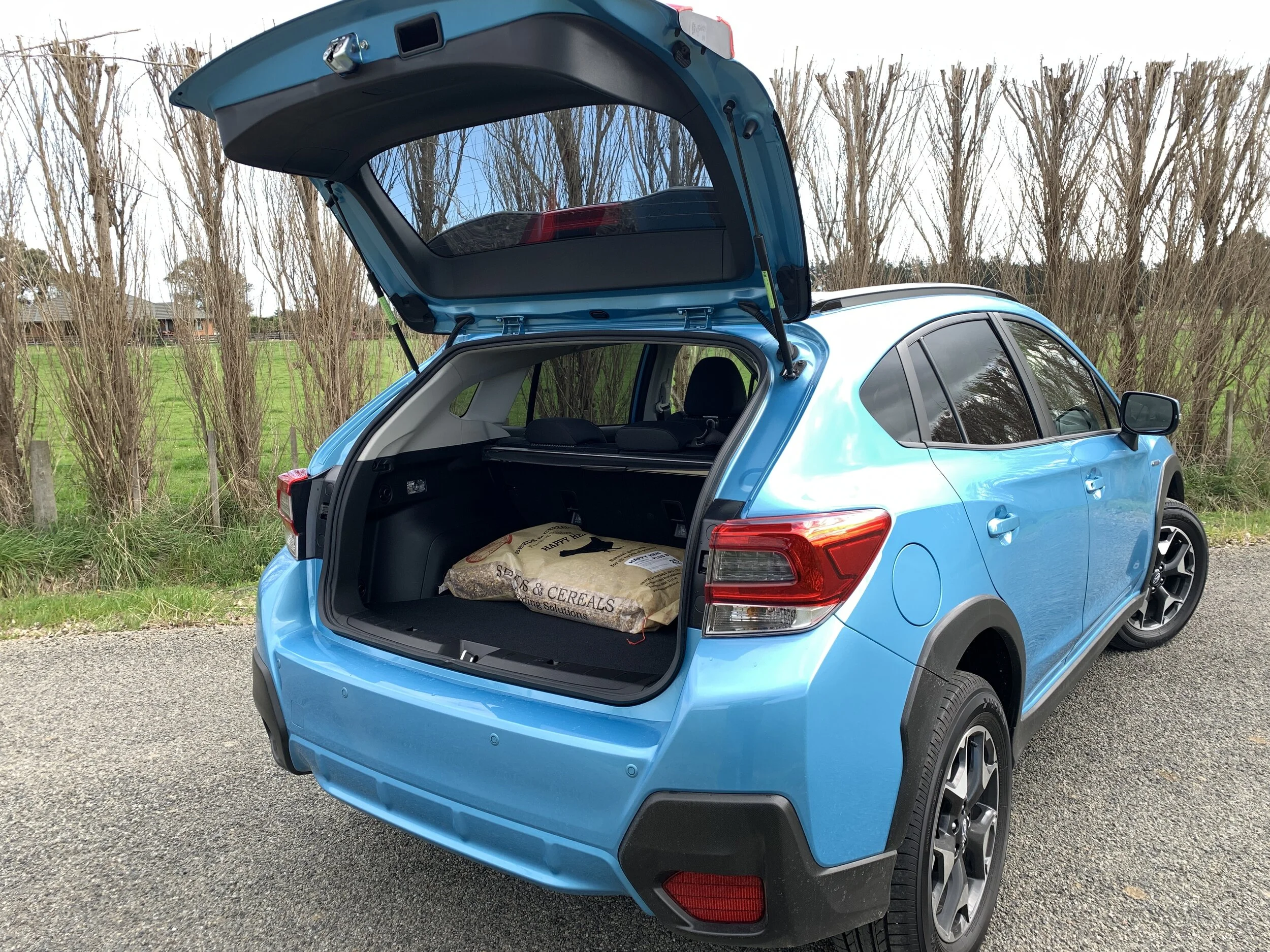
Chuck in a 400-litre boot, with a useful reversible floor mat (rubber one side, carpet the other), and 60:40 split rear seats that can increase the cargo capacity to 1395 litres and it’s really on target as a particularly decent choice among compact crossovers that might even feasibly act as a family’s only car. Assuming you want that with a SUV flavour. If not, then there’s the Scala. 

IMG_6577.jpeg

The equipment provision is intriguing and is potentially this derivative’s weak point.

It’d be churlish to scold Skoda NZ for determining a commitment to piling in a load of active and passive safety features as a priority. The Plus doesn’t tick every box, but it has almost all the good gear, with a lane keeping device, fatigue alert, seven airbags, cruise control, AEB along with collision avoidance.

Notwithstanding, it’s a pity the brand’s largesse doesn’t reach to blind spot monitoring, rear traffic alert and active cruise control. The Plus can, be ordered with these, but obviously inclusion has to happen at time of assembly, so conceivably most potential buyers won’t bother. At best, you’d have to wait four years between box-ticking and the car’s arrival.

As things stand, then, you can either accept the Ambition Plus as is, or take a deep breath and spend that extra $6k and buy the Monte Carlo. Frankly, the temptation would be great: As much as the flagship is priced to the point of almost being precariously placed, it seems to be the better deal. On the equipment side, it has all the stuff you might wish wasn’t absent from the mid-range model and a lot more: A panoramic sunroof, adaptive LED headlights, tinted windows, front parking sensors , adaptive dampers, a bigger centre infotainment screen with much better resolution and black carbon sports seats.

On top of that, the Monte’s cabin is trimmed far more nicely; I normally don’t mind cloth trim, but the quality and colour of the furnishings in the Ambition Plus on test were disappointingly dowdy. They’d probably pass muster were the car aiming at fleet interest but, of course, that generally doesn’t happen. Private buyers just want a bit more pizzazz and flair than this car was able to present.

For sure it’s not billy basic. Though the infotainment display is meanly-sized, it does a good job of supporting Apple CarPlay. And some of Skoda's 'Simply Clever' touches (door-edge protectors, an umbrella in the door, a torch in the boot and more) also still provision.

IMG_6566.jpeg

The four-cylinder TSI engine operates well enough with the seven-speed DSG automatic to support conjecture it’ll be the bigger seller. Performance is adequate, rather than pacey, but with a sub-ten-second 0-100km/h time and good midrange responsiveness, it's a good engine. Smooth from idle to redline and keen to slip into fuel-saving cylinder deactivation mode when it gets the chance, a sequence that you might not even twig to if it wasn’t signalled on the dash display, because the refinement barely erodes. 

The car’s overall quietness is set to be a selling point. Moreso than the general driving characteristics. It’s tidy enough – little understeer, lots of grip, nicely-weighted steering and good pedal feel – and is up for being driven at a tidy clip, yet seems less vibrant and informing than the VW T-Cross and SEAT Arona which share this platform. It’s fine, but not flamboyant.

That’s often the Skoda way, of course – this is a brand that aces in understatement, after all - and while some might think it a bit too dull, undoubtedly others will find appeal in how it gets the job done with quiet, grown-up efficiency.

For all that, the Ambition Plus would be all the more appealing were it meted just a little more pizzazz. As much as it has a good drivetrain, decent interior space, it would be better with a slightly stronger equipment list and some high-quality fixtures and fittings.
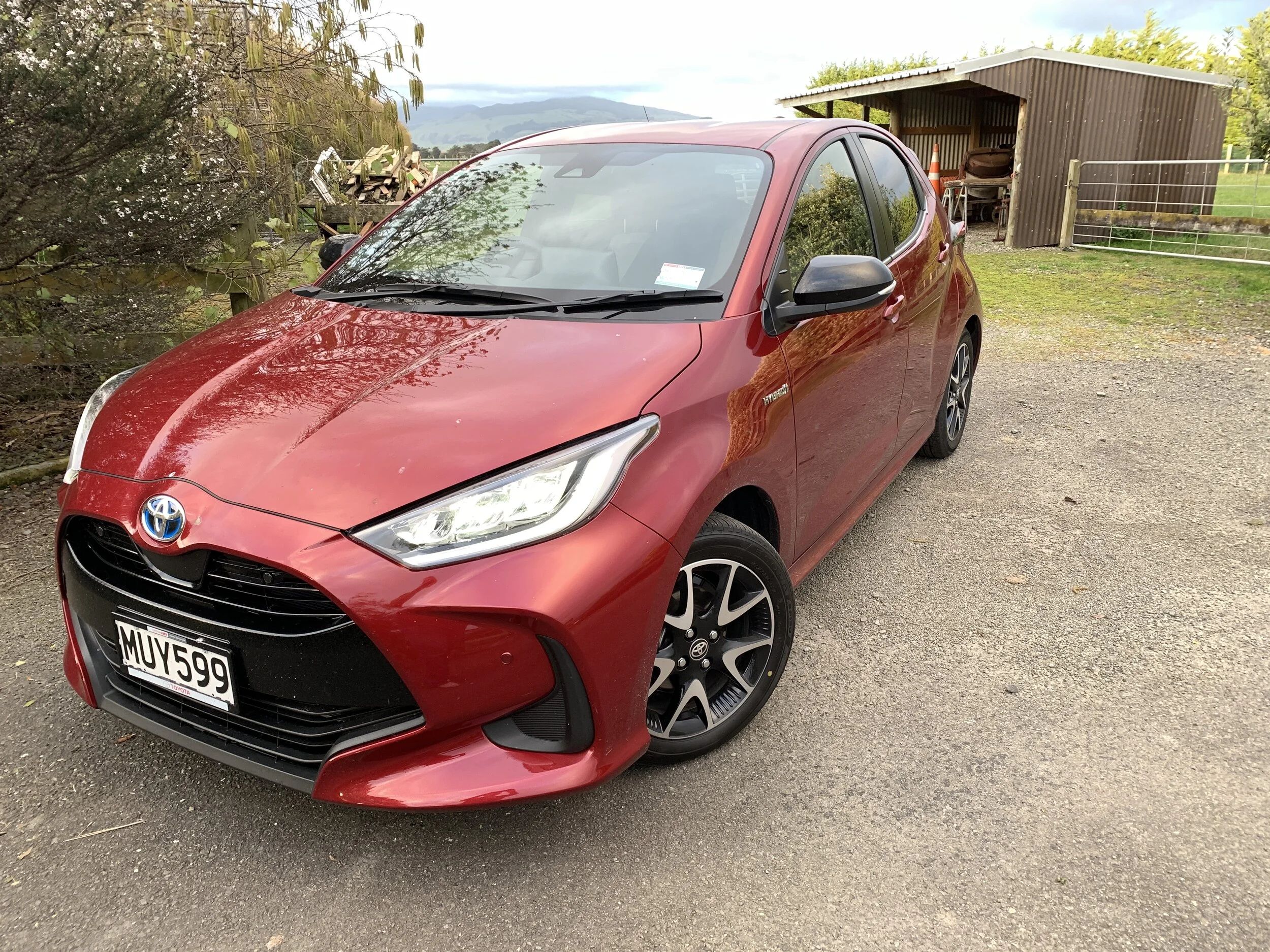


Toyota Yaris ZR Hybrid: Meet the car that kills the Prius

Is a super-thrifty version of a car already known for its economy over-egging things? After driving the Yaris in its flagship Hybrid version, it’s hard to resist the petrol-electric option.

IMG_6654.jpeg

Price: $32,990.

Powertrain and economy: 1.5-litre petrol three-cylinder, 67kW/120Nm (85kW total system output), constantly variable transmission, FWD, combined economy 3.3L/100km, CO2 76g/km.

Vital statistics: 3940mm long, 1695mm wide, 1500mm high, 2550mm wheelbase, luggage capacity 270 litres, 185/55 R16 alloy wheels.

We like: Impressive thrift, playful chassis, strong spec.

We don't like: Drum brakes, overly-fussy dash displays.

CALL it Brutus … the car that not only stabs Toyota’s Caesar in the back, but puts a knife through its heart.

Okay, so the Prius has had it coming for some years. Other Toyotas with intrinsically the same battery-fed petrol-electric drivetrain that made its world debut in a gawky hatch (internationally, the sedan was officially Japan-only) have already proven themselves to be smarter buys in respect to driveability, comfort, social awareness and cost-effectiveness (and, in the here and now, that means you, RAV4).

Yet there’s one ace card the nameplate that ‘started it all’ has always held grimly. The one constant with the nameplate that kicked everything off and has been around since 1997 has been that it’s the ‘go-to’ car if you want ultimate fuel economy. All four generations have set that pace.

On release, Toyota let it be known, but not too loudly, that the 1.5-litre Yaris hybrid, entering the scene with the first three-cylinder petrol engine it has paired to an electric motor and battery, was a thriftier car than the Prius hatch.

However, it wasn’t by much – just 0.1 litres per 100km – and with all indication being that this result came from a lab result rather than the latest WLTP testing protocol, accepted as the measuring stick for cars entering our market, my own supposition was that it probably wasn’t that relevant for real world operability. 

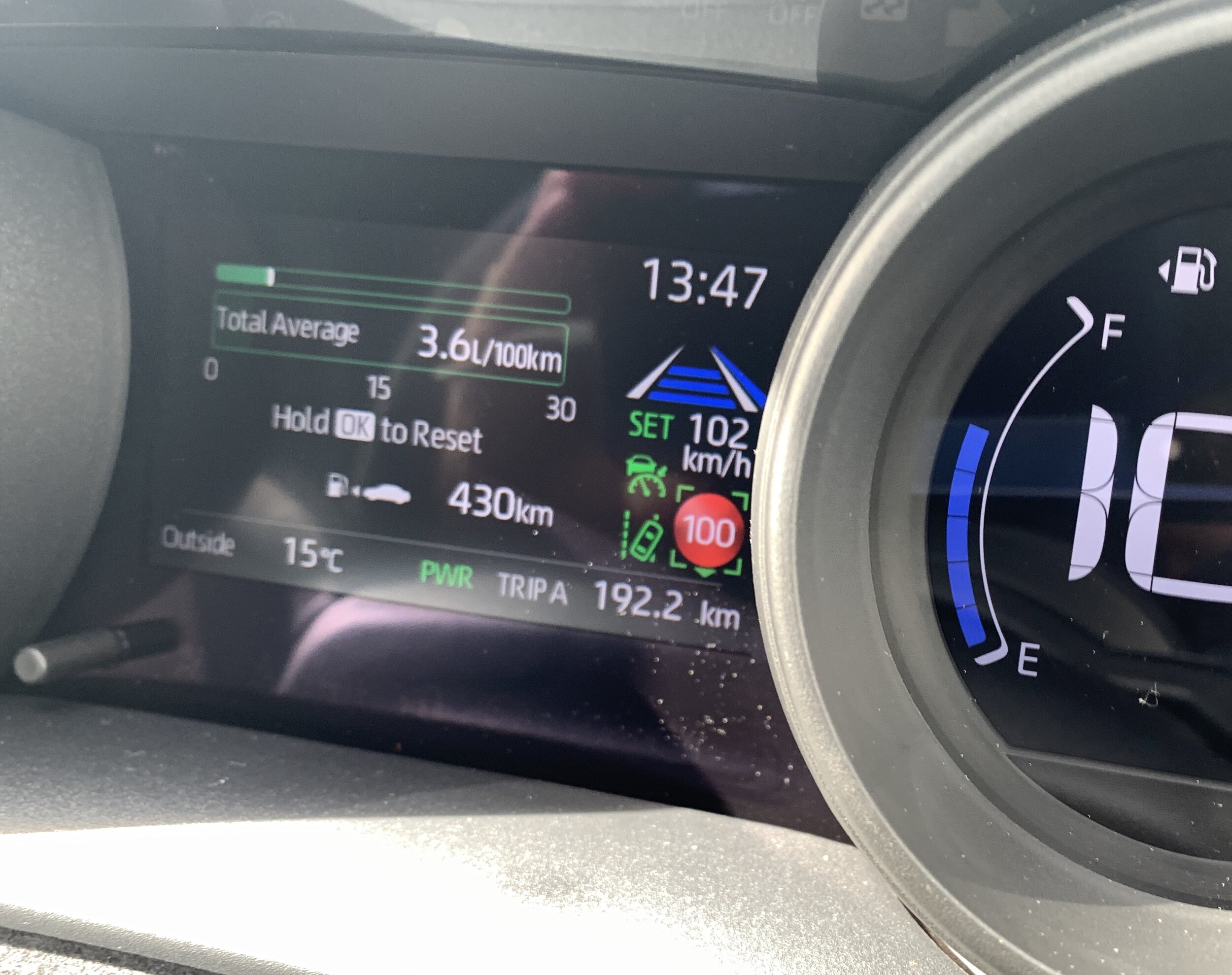
So, anyway, with the ZR Hybrid the aim was to drive normally for a week; over a cycle that might be considered usual for an average owner. No special consideration to economy. Just driving. Air con on, going with the flow speed-wise and so on.

Before giving away how it went, a quick recap on what the brand reckons is ultimately achievable. An official combined consumption of 3.3 litres per 100km represents a 0.1L/100km advantage over the full-sized Prius, a 0.6L/100km advantage over the Prius C and also 0.1 up on the most parsimonious non-Toyota here, Hyundai’s Ioniq Hybrid. Also well up on the non-hybrid Yaris, which also has this 1.5 but in different tune. That car’s a guts in this company, with an optimal 4.9.

IMG_6647.jpeg

So, the ZR Hybrid clocked just under 300kms. Around half of that was in urban driving, the remainder dedicated to an open road drive. Sounds like something you might do?

I expected the best thrift coming up around town and, sure enough, it was certainly sipping then, dipping to as low as 2.1 litres per 100km in stop-start traffic. I also expected that the burn would increase on the open road. And, yes, that happened; just as it does with a Prius. Except not to the same degree. Not even close.

My experience with Prius is that you have to work diligently to extract a sub four litres’ per 100km average from open road driving. The Yaris?

For the first half of the trip, the car was run in its economy mode, with an average of 3.8 litres per 100km by halfway. I drove a further 20kms in a 50kmh zone, in a busy traffic stream, then retraced the open road trip, this time with the transmission in its Power mode. Sure enough, this made the car feel noticeably brisker. Yet … and here’s the kicker … the average by the end of the trip was 3.4L/100km. When the car was returned to Toyota three days on, it was up to 3.9L/100m. With no effort involved. That’s thrifty. 

Will a Yaris ever be considered by a Prius purchaser? The cars are unequal in size and price, yet the prospect cannot be ignored; the cheapest Prius, the SX, is $7000 clear of the dearest Yaris but if you want specification comparability, then the gap widens by a further $6500.

It’s something of a moot point. Even though Toyota hybrid sales keep strengthening, it’s driven by interest in versions of regular cars: Camry, Corolla and, now, RAV4. Market interest in Prius, a car that was once a must-have for every one whose was anyone, has eroded to the point it barely achieves double registrations figures in any month. Now that the old hero has been outgunned on economy … well, is that the sound of a nail being hammered in?

50171692792_81d1b7685e_c.jpg
IMG_6608.jpeg

Fratricide isn’t really what Yaris is all about, of course. As always, expectation is to continue supremacy in the supermini zone, which though eroded by those pesky crossovers is still a core business.

The brand has gone in hard in respect to maintaining profile. This is a completely fresh start – new from the tyres up, and the biggest change in philosophy and shape in 15 years.

Going big means going a touch smaller. The shift to the make’s smallest adaptable platform yet, known internally as TNGA-B, allows the car to be 5mm shorter, 50mm wider and 40mm lower than the old model, but with a 50mm longer wheelbase to generate additional interior space. It also sits closer to the asphalt and has a squarer stance, which makes it look more serious this time around.


So much of how the car is shaped reminds the small cars are a design nightmare; there’s huge impetus to deliver a sense of individuality, of course, and character is important as well, yet the abiding remit above all is to maximise the interior capaciousness without affecting exterior compactness. In short, panache is all well and good, but it has to be practical. 

Toyota’s perhaps treading a fine line. The Yaris is definitely bold. It’s also … well, a bit quirky, too.  A more aggressive nose is attached to a body that appears slightly inflated, with some weird creases, angles and push-outs. It’s a new look for the street, no argument, if not necessarily for Toyota – the profile is strongly reminiscent of a car we never got here, the even smaller Aygo, a co-production with PSA purely for Europe. One tip if you’re keen to be noticed: Sidestep the dull colours, including the dark metallic red on our tester, and instead plump for a vibrant primary hue, then spend the extra $500 on achieving a black roof. Doing so will really lift its kerbside character.

IMG_6600.jpeg

Being big where it counts delivers when you slip inside. The front half of the cabin is a top spot. There’s a good amount of room and, with the front chairs being set quite bit lower and a touch further apart, it not only delivers a far more natural driving position but also one less prone to shoulder-rubbing.

This revision doesn’t impinge on the rear, where a lofty driver doesn’t have to give too much consideration to allow taller passengers to achieve reasonable back seat comfort. Short distances are better than long, perhaps, but there’s foot space beneath the front seats, a sensible amount of kneeroom and decent headroom.

To optimise occupant space they’ve reduced real estate further behind, fortunately not to the cruelly detrimental effect that has really hurt the Corolla. While still better than some, in a sector where every skerrick of space counts, a 16 litre reduction in capacity, to 270 litres now, with all design accommodations – a false floor for hiding valuables, a skinny space saver, hybrid battery under the back seat - it’s coming close to marginal.

If it lightens the load there, it packs it on in another key area: Specification. When it comes to the equipment level, even cynics will have to admit Toyota has upped its game, not least in respect to safety this time around. 

The Yaris has yet to undergo the ANCAP crash test that matters most here, but it is surely well-prepared. The new TNGA platform has performed well in its other representations and all models come with eight airbags in total, including twin centre airbags (on the inboard cushion of both front seats) to better protect occupants in a side-impact crash.

On top of this, it’s gone all serious about avoidance tech, with far more than has ever previously been seen in a Yaris. Now everything specifies with speed sign recognition, lane-tracing assistance, autonomous emergency braking with intersection assistance, reverse camera, and automatic high beam, while the ZR chucks in blind-zone warning, rear cross-traffic alert, and front and rear parking sensors. It’s a pity the latter only go into the optimum level, as those functions are increasingly standard on new models, but all in all it ticks a lot of boxes and it’d be churlish to criticise it for that.

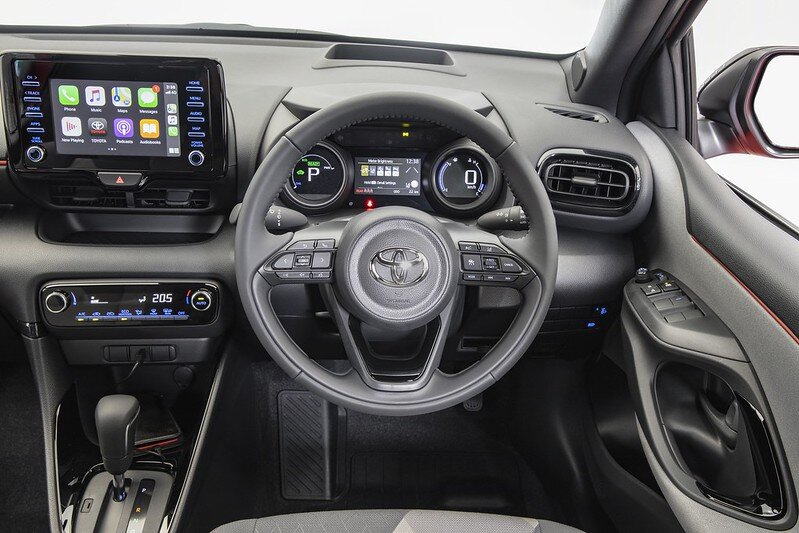
All these functions require display space and the priority spot, a modest-sized panel adjacent to the speedo, can become busy. You can be facing a load of icons, all vying for your attention, spanning quite a lot of interest points, from lane keep and speed sign awareness to economy, range and the hybrid system’s operability. Oh yeah, and a few sub-menus that, realistically, shouldn’t be explored until you’re parked up. 

IMG_6599.jpeg

Just too much? There’s surely some risk newbies will become bewildered to the point of simply ignoring what the car is relating. Which is surely counter-productive to all the good deeds it can perform.

The ZR has other displays. There’s a head-up projection that’s well designed and comprehensible at a glance; just as it should be. The touch sensitive head unit on the console directly ahead of the transmission lever is right-sized, well sorted in respect to finger-prodding functionality and looks swish. Arrival, at last, of Apple CarPlay integration means you needn’t use any of the in-build functionality, which is just as well, because Toyotas own displays haven’t progressed in years. The fonts, graphics, washed-out colours and slightly whiffy resolution has a staleness and operability is slow. You’d never bother with the in-built sat nav. Google maps are so much faster and better resourced. This, some hard, shiny plastics and use of old-style switches deliver unnecessary cheapness to a cabin that, on the whole, really represents as a step up in quality and style and could, with a bit more effort, have set a new bar for the category.

Given that Toyota has been making hybrids since last century and this is actually the fourth compilation of a petrol-electric drive system to go into a Yaris (though the first for our market), you might start to wonder when a petrol-electric set-up starts to be considered time-worn.

Well, not in this sector. For one, because Toyota alone presents this level of tech in the category and also because this is a fresh approach; not as technically advanced as the system implemented in the RAV4, similar in basics to those in the Corolla, Camry and … ahem .. the Prius but sharper and smarter.

What you’re getting is a three-cylinder version of the more familiar 2.0-litre, four-cylinder, utilising the Atkinson cycle and running a high compression ratio of 14:1.

It’s linked to a new electrical motor producing almost 60kW and 140Nm of torque, along with a lighter lithium-ion battery pack, still driving the front wheels via a CVT automatic gearbox, of course, though even that seems sharpened.

This Yaris is the first to use this new type of battery pack, allowing double the recharge capacity and 50 percent more output. The battery cools through the use of the cabin’s air temperature, negating the need for a stand-alone liquid system.

Impression Toyota has made another step forward increases with operability; the car still doesn’t go wholly electric for prolonged periods, but it does deliver more battery-first involvement: It’s the default when you punch the Start-Stop button at start-up – though, the colder the morning, the shorter the delay before the engine might also fire as well – but once warmed and with a light throttle from standstill you can stay on EV power for almost a kilometre if you don’t go over 40kmh. At higher pace and even under a more enthusiastic approach, the classic Toyota hybrid experience that occurs once underway seems slightly more oriented toward electric optimisation. Hence, I guess, why there’s such a clear fuel-saving benefit.

The thrum that’s a trademark of all three-cylinders is not too obvious here; yes you can hear when the engine is toiling, but it’s not overly obvious. A shame in a way, as it has quite a nice note. When both energy sources are working as one, the car feels quite sprightly and you can feel when the instant torque from the electric motor in lending to the job. 

Fun to drive, I hear you say? Well, yes, I’d have to agree with that. It’s quite a world away from those earlier hybrids, where the science project approach was all too obvious.

Of course, there’s a very good reason why Yaris is stepping up for driver involvement. The TNGA was designed to deliver this and, beyond that, the mainstream model is the basis of a genuine hot hatch, the GR Yaris, that’ll be here at year end. Different body (three-door, not five), a substantially different powertrain and drive system (all-wheel-drive) and quite in another league for performance .. yet, underneath it all, the same basic car. I can’t wait. 

The ZR Hybrid doesn’t ache for racing stripes, because it’s never sporty. And why should it be? Yet the ride and handling is improved and the bigger footprint is a plus point; all the previous jauntiness has been replaced by a more grown-up feel. It’s settled on surfaces that would jolt the predecessor and is a much more precise-feeling car. At same token, out on the open road, it is less wearying. There’s clearly been huge effort put into making it more refined and much quieter. The engine is rarely outright vocal and, at a steady pace, the mechanical involvement is hardly obvious. More obvious is the tyre roar over coarse chip.

50171694262_ee76d65862_c.jpg

I don’t particularly like CVTs, I’d have to agree this one works competently in this application; it still flares a bit and doesn’t encourage manual intervention but will probably still come across as being well-sorted and in tune with buyer expectation. 

The Yaris arriving with rear drum brakes is a bit of an eyebrow raiser. The emergency stopping performance isn’t brilliant; that could also be down to the low-friction tyres as well. 

Even this, the overly-complex dash displays and that it has some obviously cheap plastics inside that doesn’t keep the Yaris from winning a lot of plaudits.

It’s thoroughly executed product; the chassis delivers the road manners of cars in the next class size up; the drivetrain has verve beyond its size; the car has flair. We don’t mind the look and look forward to trying out the other family members. The Yaris Cross and the GR are clearly coming off good bones.

 Why bother with a hybrid system when small cars are generally fuel-ekers by nature anyway? Fair question: It’s probable the standard Yaris will also take its time to empty a tank. Yet highly improbable it will come close to emulating the efficiency discovered here.

If not quite as technically advanced as that in the RAV4, the Yaris hybrid is a technical tour de force; it’s hard to imagine it not going into other existing cars. It’d be a good fit for the Corolla, I’d suggest. For sure, Toyota has to push on into more overly electric fare – a plug-in hybrid option for the Yaris facelift would seem only logical and, ultimately, it has to front up with a compact fully electric vehicle.

Even so, the Hybrid as it presents now is pretty decent, what adds to the allure is how easily it appears to accomplish its efficiency.

 In that respect, you shouldn’t be surprised if you see a death notice for a legend. It’d be sad to see the Prius go, given its history and major impact, but unless it manages to find another ace card, it’s really surely now on borrowed time.


Audi Q3: Sharp and strong

Sportback styling adds extra zip to the Q3, though for full zap we’d always prefer the RS.

RSQ3 (above) is a true stomper, but we also like the 45 TSFI Sportback styling

RSQ3 (above) is a true stomper, but we also like the 45 TSFI Sportback styling

IMG_6038.jpeg

AUDI RS Q3/RS 45 TFSI Sportback

Prices: $111,900 (RS Q3), $114,900 (RS Q3 Sportback)

Powertrain and economy: 2.5-litre turbo-petrol five-cylinder, 294kW/480Nm, seven-speed dual clutch automatic, AWD, combined economy 8.8L/100km, CO2 202g/km; 45 TFSI 2.0-litre turbo-petrol four-cylinder 169kW/350Nm, seven-speed automatic, AWD, combined economy 7.7L/100km, CO2

Vital statistics: 4506mm long, 1851mm wide, 1571mm high, 2680mm wheelbase (RS Q3), 4507mm long, 1851mm wide, 1557mm high, 2680mm wheelbase, 20-inch alloy wheels.

We like: Spunky Sportback styling, well-specced, quality.

We don't like: Annoying auto stop/start, RS3 still beats Q3 version.

POWER doesn’t just express in kiloWatts – it can also show as killer looks.

In respect to that statement, then, I know exactly what question is formulating in the minds of Audi-philes smitten by the cars on test here today.

So, let’s fast track to the answer. Which is a ‘yes’. Yes, the RSQ3 also formats in the Sportback shape also under scrutiny, in a 45 TFSI guise.

And, yes, I’m also glad about that. As eye-catching as the original, more rounded styling continues to be, it’s still beaten by the newer, leaner and lower-roofed but still five-door look now also delivered for the second smallest SUV in the four-ringed circle.

Achieving the sharpest shape with the sharpest engine is a more premium buy-in. Audi adds bumps up the regular RS price by another $3000. That model, by the way, is defined as a wagon in Audi-speak. I don’t see quite see it, either. Then again, I’m still wondering why they just don’t call the Sportback what it emphatically is. A ‘coupe.’

Anyway, semantics. This new shape? Money well spent. Whatever the sportback gives away over the regular edition in respect to practicality – and it’s really not TOO much - it more than makes for with additional panache. There’s just something about a coupe, right? Which is what it is, even if this maker is reluctant to call it that. 

The wagon and co… sorry, ‘Sportwagon’ models are much of a muchness in styling detail, especially at the front. When viewed from that aspect it’s clear Ingoldstadt expects you to like large grilles. The new singleframe item is not horrendously large as in the latest BMW sense, but is still pretty big and, with the RS, it’s backed up by more vents in the bumper and under the leading-edge lip of the bonnet. Sad to say, some are fake.

Obviously, the RS interior is rather sportier than the 45’s – for starters, the latter misses out on the performance car’s high-backed, perforated leather bucket seats – but they don’t differ too hugely in terms of general ambience. 

It’s all highly digital in respect to the displays, which deliver as a big touchscreen angled towards the driver in the centre of the dash and a TFT screen in front of the driver that delivers all the instrumentation. With the RS, you get specific layouts set up to deliver lap times, cornering Gs, torque and power loadings and all the other stuff that will be useful when on the racetrack you’re never likely to visit. At least, not in your own car.

IMG_6026.jpeg
IMG_6468.jpeg

The flagship has a flat-bottom steering wheel, clad in Alcantara suede of course, and which has the RS button that allows you to easily flick it into the monster modes.

From the inside looking out, differences between the body styles are really only noticed by rear seat occupants and when you’re loading the boots.

Boot space in either better than you might expect. An extra 77mm in wheelbase and 100mm in overall length means this Q3 is space efficient enough to encroach on Q5 territory. Of course, the sportback is the more compromised - you’re giving away around 125 litres’ cargo space – and yet the shaping of the luggage space doesn’t seem too unfriendly. The 45mm-lower roofline means it concedes a small amount of headroom and rear-seat flexibility, but the sister ships are much of a muchness for overall occupant space.

 From the outside, the 45 gave a great support to the ‘looks can thrill’ concept. It didn’t look outrageously muscled, as the RS car obviously does, but just portrayed as being particularly sophisticated, in an impressively suave way. 

Mind, you, it had all the right ingredients: In addition the performance-themed S-Line bits and a spectacularly eye-catching Tango Red paintjob, this example was outfitted with an Audi Exclusive back styling package, had dark tinted glass and  the regular 19-inch rims were replaced with 20-inchers in a five-spoke design.

It looked extravagant and, assuredly, in altogether adding $6600 to the car’s regular $87,900 sticker, served as an excellent example of how to make an already fairly expensive front-drive two-litre car all the pricier. And yet, if you’re among those who can afford admission to this show, the premium might seem fair value, given how you’d seen how much attention the car received.

All the same, as much as each will doubtless have their own enthusiast circle, it seems to me that the RSQ3 is the more alluring in, simply though being the edition that conceivably stands better chance of carrying itself higher, for longer, given that it simply leaves no stone unturned in its quest for performance bragging rights.

IMG_6045.jpeg
IMG_6472.jpeg

I wouldn’t like to get into debate about whether the most powerful Q3 is the best car that comes from the Renn Sport division – realistically, it is not – but equally it’s pretty hard to argue against the pedigree. 

Though the 2020 RS maintains its 2014-born predecessor’s basic elements – so a 2.5 litre five-cylinder, dual-clutch tranny, quattro – everything has been sharpened all the more, including that eponymous engine. Add in the additional RS-pure loadings of 21-inch alloys in anthracite black with diamond-turned finish and 255/35 tyres, RS sports suspension plus with adaptive damping, an RS sports exhaust system (with dual black-edged oval tailpipes) and every available assistance system in the Q3’s safety-tech cache. Well, it’s really very appealing. 

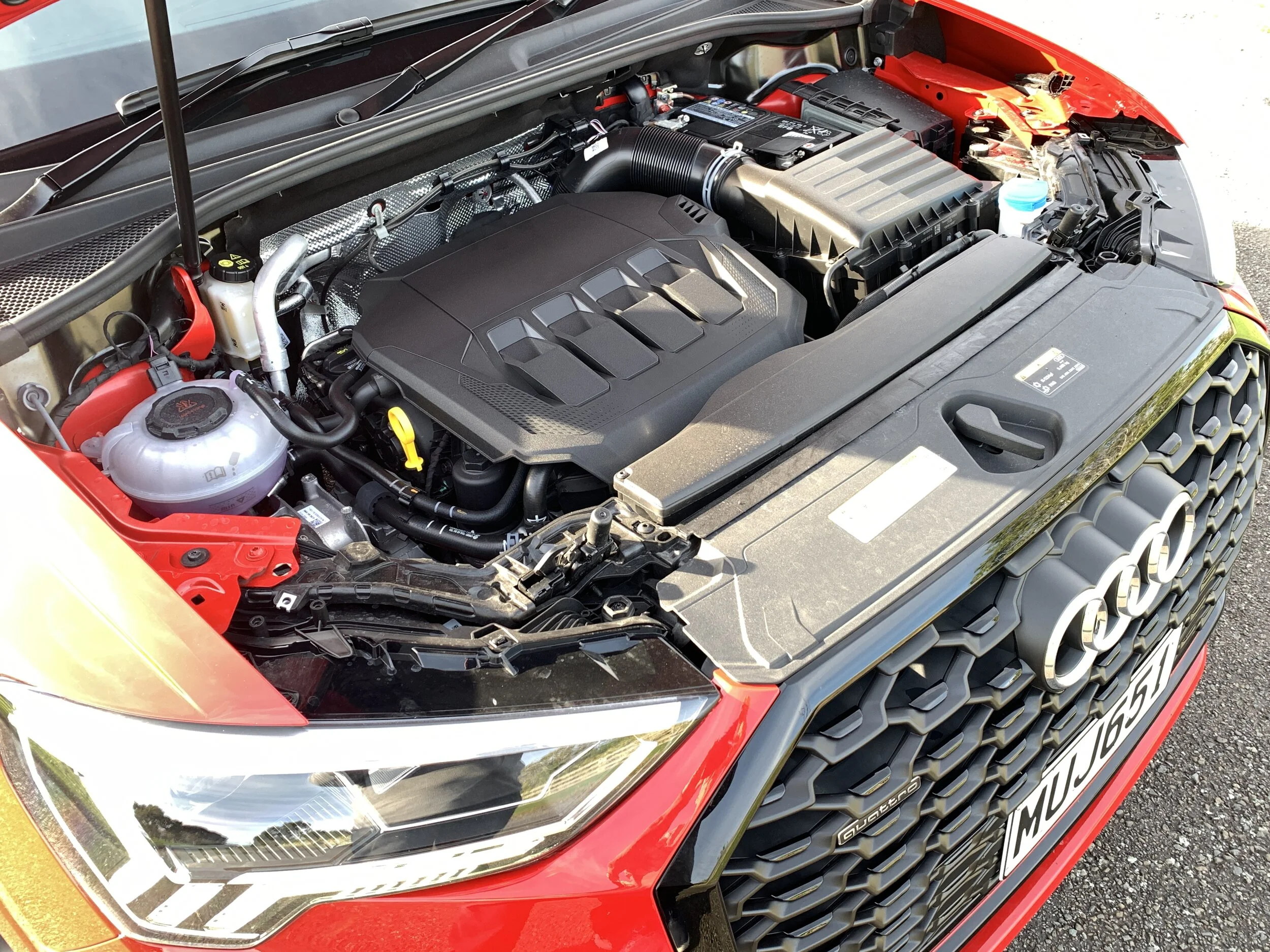
The engine gains an aluminium cylinder block and crankcase for an overall weight saving of 26kg, but it’s the improvements in outputs that more keenly appreciated; with 294kW and 480Nm the 2020 edition has 24kW and 15Nm more than the previous car to at last assume level-pegging with the RS3 hot hatch. 

Start up from cold, in Comfort mode, and it's distantly rumbly. Nice for the neighbourhood. Let it warm, switch up to Dynamic mode, stiffen up the dampers, put the gearbox in Sport and open up the taps in the sports exhaust … and, well, put it this way. Those modes, if used on the school run, would have the car in detention within minutes.

Restrict the full-out rudeness to special occasions and it’s a fairly decent accomplice. The engine in the less than full-out mode is quite driveable for every day mooching; it’ll happily burble along at a meander. But you don’t want to be heavy-footed on the urban beat.

Adjust all the settings to the other extremes and, yes, it’s a creature of the fright; top speed of 250kmh, 0-100kmh in 4.5 seconds and drawn to redlining the boomerang-shaped digital tacho at every opportunity. Keeping yourself from running it hard means having to resist the exhaust note, and that’s a challenge. Thanks to the 1-2-4-5-3 firing order, it is quite unlike anything else for sweetness of tone and snap-crackle. There's no direct connection between this engine and the original 1980s Audi Quattro five-cylinder unit, but the aural lineage is unmistakable.

All this horsepower, but does it have a chassis equally worthy of it being worthy of being in the big boys’ club? Well, it’s certainly eager to prove this, the RS refit delivering stiffer, lower springs compared to the 45 Sportback and faster, sharper but also heavier steering. You can get adaptive dampers and ceramic (front) brakes. So, yeah, straight away it’s a firmer, more resolved car than the 45. 

That doesn’t obviously make it better for every occasion. The RS recipe is rather between firm to outright chunky for urban driving and, yes, tyre-generated road noise is more obvious, even when measured against a Sportback on its optional, enlarged wheels and wide tyres. But, then, that’s the breaks with an RS.

IMG_6042.jpeg
IMG_6484.jpeg

The bonus comes on an entertaining road; which is where it really sets a high bar; sitting flat, composed and possessing endless grip and traction. Yes, the 45 will also shine in this condition, but not as brightly. The difference of one having a Haldex-based multi-clutch system, that can send as much as 100 percent of the power to the rear wheels, and the other having a more traditional viscous coupling differential is one factor. The degrees of separation in sheer shove … well, yes, that counts too.

So, within the family, it’s rightly the star. If consideration is broader, though, it’d still be challenging to recommend the RS Q3 over an RS3. As fast, capable and steadfast as the crossover is, it still hasn’t the same level of deftness and I’m not sure it will communicate quite as directly; understandably because, with the Q3, it’s all about having to keep higher-standing mass in check.

Still, it’s not as if Audi has created a one-dimensional character. The cleverness of the ‘RS mode’ button on the steering wheel avoids this. You can use it to configure the suspension’s drive-select set-up into two distinct arrangements. Perhaps lighter steering, cushier ride, less engine noise for everyday and more athletic settings for special times.

So much about this car, so little said about the ‘45’. Yeah, sorry about that. It’s that the lesser is unworthy of comment in respect to its performance. Everything’s okay there. But fair to say it’s a different kind of thing; that 2.0-litre engine is more about good manners and reasonable economy that presenting an absolute level of energy.

Both models drive with a real sense of quality but, notwithstanding that neither are really designed for anything that could be termed as ‘off-roading’ – regardless that there’s a mode to support just that - the ‘45’ feels more like an SUV for the urban dweller. Still, if you're looking for style and refinement it’s pretty handy in the city chic role.


Twin test - Kia Seltos LX, Limited Turbo: The price of power

Comparing the entry and top versions of Kia’s compact crossover provides reminder about the depth of its core talent.

Seltos LX (above) hasn’t the full suite of technology availed to the Limited Turbo (below) yet, though a little undercooked in some aspects, nonetheless presents strongly for value and competence.

Seltos LX (above) hasn’t the full suite of technology availed to the Limited Turbo (below) yet, though a little undercooked in some aspects, nonetheless presents strongly for value and competence.

IMG_7841.JPG

Prices: LX $27,990, Limited Turbo $46,990.
Powertrains and performance: LX: 2.0-litre four cylinder petrol, 110kW at 6200rpm, 180Nm at 4500rpm, constantly variable automatic, 6.8L/100km, 157g/km CO2. Limited Turbo: 1.6-litre four cylinder turbocharged petrol, 130kW at 6000rpm, 265Nm at 1500-4500rpm, 7-speed dual clutch automatic, 7.6L/100km, 175g/km CO2.
Vital statistics: Length 4370mm, width 18000mm, height 1615mm with roof rails, wheelbase 2630mm. Cargo 468/1428 litres (LX), 433/1393 litres (Limited Turbo).
We like: Good looks, plenty of interior room, LX value for money, Turbo cheerful performance.
We don’t like:
LX price point lowers safety specification, Limited Turbo transmission can get confused.

AN old saying about twins: Two unique souls united by birth.

It’s of relevance with Kia’s compact SUV, the Seltos. There’s the front-drive LX that represents as the entry choice. And, at the top of the family, there’s the all-wheel drive Limited Turbo which costs a whopping $19,000 more.

And yet both these variants of the Seltos share the same body – in fact, if you lined them up alongside each other and squinted, it would be impossible to differentiate between the two. But the two models are way different, nonetheless.

Of course this sort of thing happens all the time. Obviously all vehicle model ranges have to begin with an entry model, and they invariably top out with either a highly specified or performance-oriented version.

IMG_7817.JPG
IMG_7843.JPG

There are two differences with the Seltos range, though. The first is that the entry LX presents as an outstanding value package for the money even though it does lack in some important areas. The second is that the Limited Turbo offers both specification and performance – it has a different engine and transmission, different running gear and suspension, and a much higher level of standard spec.

Little wonder then that Seltos is currently New Zealand’s biggest-selling small SUV, with 1437 registrations to the end of July, well ahead of its nearest competitors Mitsubishi ASX, Hyundai Kona, Honda HR-V and Suzuki Vitara.

But in the case of the LX, in some respects you do – or should that be don’t – get what you pay for.

What you don’t get is the full suite of safety features that is otherwise standard on every other member of the Seltos range, including an LX+ model that Kia New Zealand has cleverly included which carries an $8000 price premium over the LX.

What the LX doesn’t have, which the LX+ does, includes blind spot detection, rear cross-traffic alert, front parking sensors, and electronic park brake. Not only that, but the LX’ camera-based autonomous emergency braking system (AEB) is designed to recognise cars and pedestrians only, while the rest of the Seltos range’s radar-based AEB also recognises cyclists.

Despite this, the LX has received a five-star ANCAP safety rating, although the organisation does warn that it is important consumers are aware that there are some differences in safety performance for the entry level Seltos.

IMG_7815.JPG
IMG_7844.JPG

“Base models of the Seltos miss out on some of the more advanced features available with the radar-fusion AEB system, and we would encourage consumers to purchase a variant which offers the advanced collision avoidance capability as this can translate to real differences on the road,” it says.

Truth be told, at this time safety features such as blind spot detection, rear-cross traffic alert and cyclist detection should be the preserve of the more expensive higher-specified vehicles, not product that retails for less than $28,000.

And despite its price, the LX still carries good specification that includes lane keep assist, ABS brakes with all the goodies, hill start assist, high beam assist, a reversing camera, tyre pressure monitor, and even a driver attention alert that judges when the person behind the wheel is losing concentration and sounds a warning.

Powering the LX is a 2.0-litre Atkinson Cycle four cylinder engine mated to an intelligent continuously variable automatic that Kia calls iVT.

Atkinson Cycle engines, which up until now we have mainly seen in hybrid vehicles, are designed for efficiency and economy rather than sheer power, and in that regard are ideal for the sort of operation that would normally be expected of a small SUV such as Seltos.

The vehicle performs well if slightly breathlessly at times when the vehicle selectable drive mode is set to Normal, but the major upside is that the average official fuel consumption is 6.8 L/100km. The drive mode also offers an Economy setting but that felt like somebody had connected a parachute to the vehicle, while a Sport setting quite markedly improves performance. So overall, it works well.

IMG_7814.JPG
IMG_7842.JPG

At the LX level the Seltos drives rather well, too.  It is front-driven, and the suspension comprises MacPherson struts at the front and a torsion beam axle at the rear. I found the ride to be quite firm, and the handling felt secure despite the vehicle’s 177mm ground clearance.

Being the entry Seltos, its level of specification is entry as well – albeit in a new-age way. Lighting is halogen rather than LED, all the exterior finish is black or body-coloured, and the wheels are 16-inch. Inside, the front seats are manually adjustable, the trim is cloth, the air conditioning is manual, there’s a single USB port, it’s the only Seltos with no satellite navigation as standard, and both the instrument cluster and central touch-screen are the smallest of the Seltos range.

This model also comes with a space-saver spare tyre, which ironically gives the LX the best rear cargo space of the Seltos selection. It offers 468 litres with the rear seats in use, compared to 433 litres offered by the Limited which has a full-sized spare.

Right up at the top of the Seltos range there’s the AWD Limited Turbo, which with its $46,990 price tag, is quite a different vehicle.

For starters, it carries a lot more kit. The exterior features a lot of chrome and black highlights down its beltline, and the interior includes such luxuries as heated and ventilated composite leather seats that are power adjustable, climate control air conditioning, a head-up display, and wireless phone charging.

The Limited Turbo also has an interior mood lighting system with six selectable themes and eight colours that can change at regular intervals or even pulse in sync with whatever music is being played through the audio system.

Good heavens. Fortunately the performance potential is in keeping with whatever colour-coded rock might be blasting out of the speaker system. That’s because under the bonnet is a 1.6-litre turbocharged engine. It is quite grunty, especially when the vehicle is in the Sport setting.

The engine is mated to a fast-acting seven-speed twin-clutch auto, and for improved handling potential the vehicle’s rear suspension is a multi-link setup. This Seltos also runs on 18-inch alloys shod with 235/45 R18 tyres, and it has an upgraded braking system.

What’s interesting about this model is that it is quite capable of being trundled around town in the normal way. Then if more sparkling performance is desired, then the Limited Turbo is quite capable of providing that, too.

But is it all worth the extra $19,000 that must be shelled out to purchase the Turbo model over the LX? That’s up to the buyer to decide, and the good news in that regard is that there are three other models in between for the customer to choose from.

You could say they are quintuplets – five unique souls all united by birth.


Hyundai Venue Elite: Passenger car by any other name

Isn’t it time we stopped marketing very urban models as sports utilities?


IMG_7755.JPG

Price: $33,990
Powertrain: 1.6-litre 16-valve OHC petrol engine with CVVT, 90kW at 6300rpm, 151Nm at 6850rpm. Six-speed auto with SportShift. Combined economy 7.2L/100km, 165g/km CO2.
Vital statistics: Length 4040mm, width 1770mm, height 1592mm, wheelbase 2520mm. Luggage capacity 355 litres. 17-inch wheels with 205/55 R17 tyres.
We like: Excellent interior design, good room, easy drive.
We don’t like: Engine gets a little breathless; it’s not an SUV

HYUNDAI’S Venue is a sports utility vehicle, right?

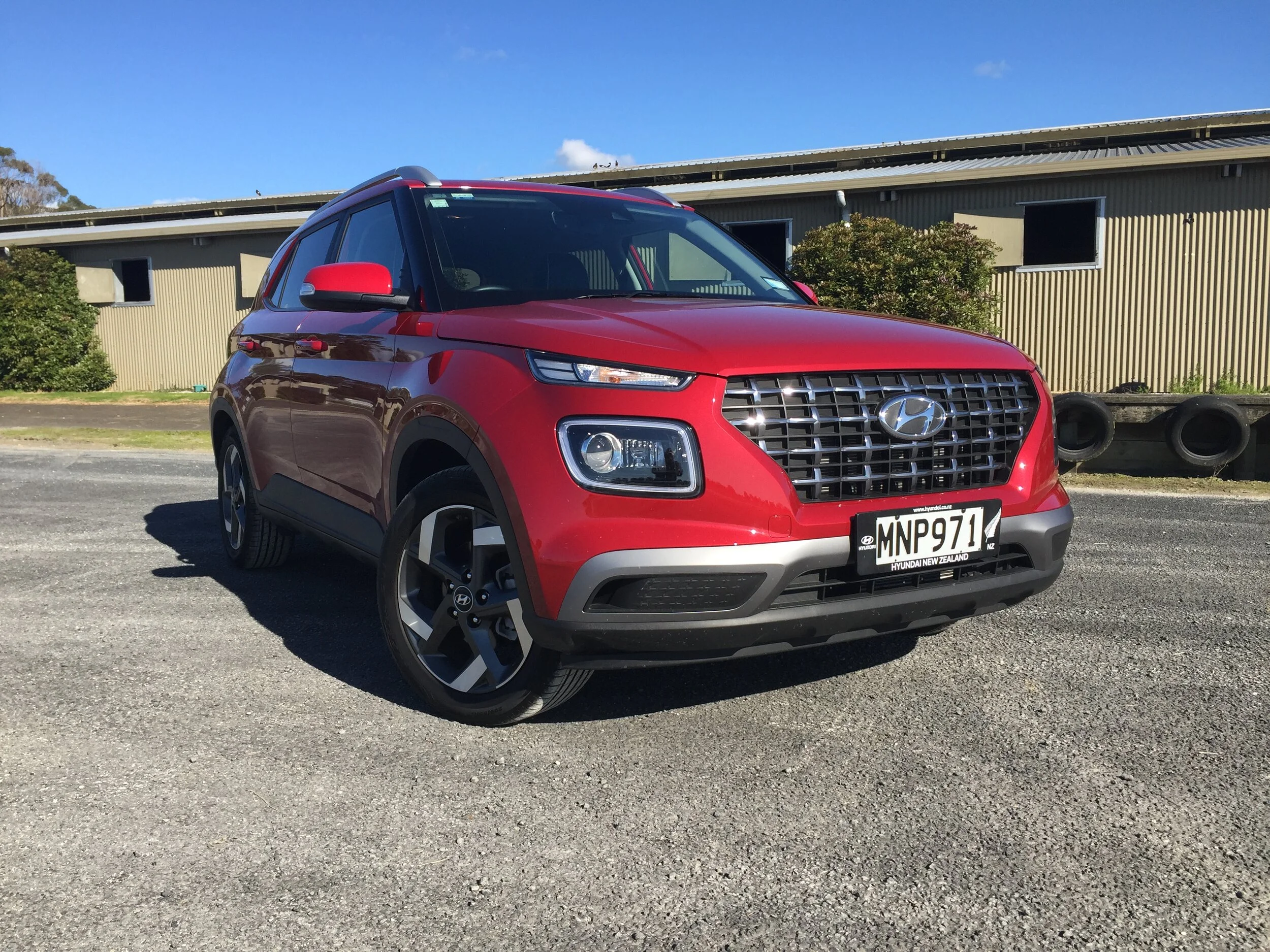
It certainly looks like an SUV, its ground clearance is slightly higher than a passenger car and so its ride height is also slightly more elevated. Armed with all that detail, the Hyundai marketers tell us that makes the Venue an SUV.

But it isn’t. What the Venue is, is a front-wheel drive hatch with new-age bodyshell design, and with ride and handling characteristics that are all passenger vehicle.

That’s no criticism of the Venue, which is an excellent example of latest trends in passenger vehicle design. But it is also a latest example of the current blurring of the lines regarding what is an SUV and what is a passenger vehicle.

The Motor Industry Association, the organisation which represents the interests of New Zealand’s motor vehicle distributors, classifies vehicles according to a market structure set down by Australia’s Federal Chamber of Automotive Industries.

IMG_7762.JPG

At the highest level, vehicles are split into three classes – passenger, SUV, and commercial. The FCAI classifies an SUV as a vehicle based on a wagon body style and with an elevated ride height. And while typically an SUV should have either 4WD or AWD, the organisation says that 2WD variants of a model are acceptable.

But here’s the rub. While it used to be that a true SUV was a rugged medium to large vehicle with an elevated ride height via ground clearance of 200mm or more, these days that ground clearance is reducing so the ride can be more passenger car smooth than SUV lumpy.

With the Venue the ground clearance is 170mm, which isn’t much more than a hatch or sedan which is usually around 145mm-150mm. To my reckoning the Hyundai’s ground clearance is the lowest of all compact SUVs currently on the market – even the diminutive Suzuki Ignis, which is the smallest SUV of all, has a minimum ground clearance of 180mm. And by the way, the equally little Suzuki Jimny’s clearance is 210mm.

So the question needs to be asked: isn’t this getting just a little silly? Aren’t the vehicle marketers taking so much advantage of the current popularity of SUVs – they currently take up close to 50 per cent of all new vehicle sales here – that they are ruining the intent of the vehicle classification system?

MIA chief executive David Crawford agrees that motor vehicle design, and customer preferences, are evolving to the extent that the classification process needs to be reviewed.

IMG_7753.JPG

“I think things are reaching a stage where we need to decide what constitutes an elevated ride height. It isn’t defined. Is there a need for us to specify what a vehicle’s minimum ground clearance needs to be for it to be called an SUV? I think the issue has to be discussed among MIA members.”

Crawford and his team might overcome this issue by reviewing how SUVs are segmented.

At present, decisions on whether SUVs are compact, medium, large or upper large are made simply by multiplying their length by their width to get their so-called footprint. If the total is 8100 or less, the SUV is a compact. If the total is 8101 to 8800 the vehicle is a medium, and so on.

Maybe if minimum ground clearance was factored into this calculation, then anything with a clearance of less than, say, 180mm could be considered a passenger vehicle. Or crossover. Or lifestyle. Anything – but not an SUV.

As I said towards the start, all this is no criticism of the Hyundai Venue, because it is an excellent new vehicle from the South Korean manufacturer. It takes all the good things from the SUV style – elevated ride height for higher seating hip points and improved visibility, and superior passenger and cargo accommodation – and combines it with the ease of use normally expected of an urban passenger vehicle.

Two versions of the Venue are available – a $29,990 entry model, and a $33,990 Elite. Both are powered by a 1.6-litre Gamma engine that is under the bonnet of a number of Hyundai and Kia vehicles, and which in this application offers 90kW of power and 151Nm of torque, and which is mated to a six-speed automatic with a SportShift manual function.

IMG_7757.JPG

While that’s modest amount of grunt – which underlines the fact that the Venue is very much an urban-oriented vehicle – an interesting feature is a Driving Control/Traction Control function that is operated by a rotator control on the centre console.

Select Driving Control and the driver can choose Normal, Eco and Sport driving modes. In the Eco mode the engine and transmission logic is set to maximise fuel economy, while the Sport mode changes steering effort and the engine and transmission logic for better performance.

By selecting Traction Control, the driver can then choose traction modes that cater for Snow, Mud and Sand. What the system does is adjust left and right front wheel slip control, and engine torque and gearshift patterns according to available levels of traction.

It all helps, and Hyundai says that theoretically it could put all the vehicle’s power through a single wheel, but it’s nowhere near AWD. The vehicle’s instruction manual warns exactly that. It says the Traction Control system’s design is based on 2WD, and the Venue should not be driven in conditions that exceed the intended design. So there you go. It could be said that the Traction Control is halfway towards proper SUV operation – which is exactly what the Venue is anyway.

The model we drove was the Elite, which offers a high level of safety specification for the price. This includes blind spot collision warning, lane keep assist, driver inattention warning, rear cross traffic alert, rear park assist, forward collision avoidance, and a reversing camera. It’s all part of Hyundai’s SmartSense safety package.

Ironically, the Venue carries a four-star rather than five-star ANCAP crash safety rating, because it doesn’t have the European-style ISOFIX child seat harness system, and there is no cyclist detection in its automatic braking system.

IMG_7761.JPG

Comfort and infotainment specification is very good, too. The vehicle carries an 8-inch multimedia system that caters for Apple Carplay and Android Auto, and at the Elite level it boasts such goodies as proximity key and push-button start, climate air, and a heated steering wheel. A connected car platform also allows remote operation of such things as air conditioning by using a smartphone.

How very urban is that? Which is exactly what the Hyundai Venue is intended to be. That’s why while it might look like an SUV, it isn’t. It’s a passenger vehicle folks. And that’s what makes the model so appealing.


Stinging mettle – so, you're looking for a performance hatch

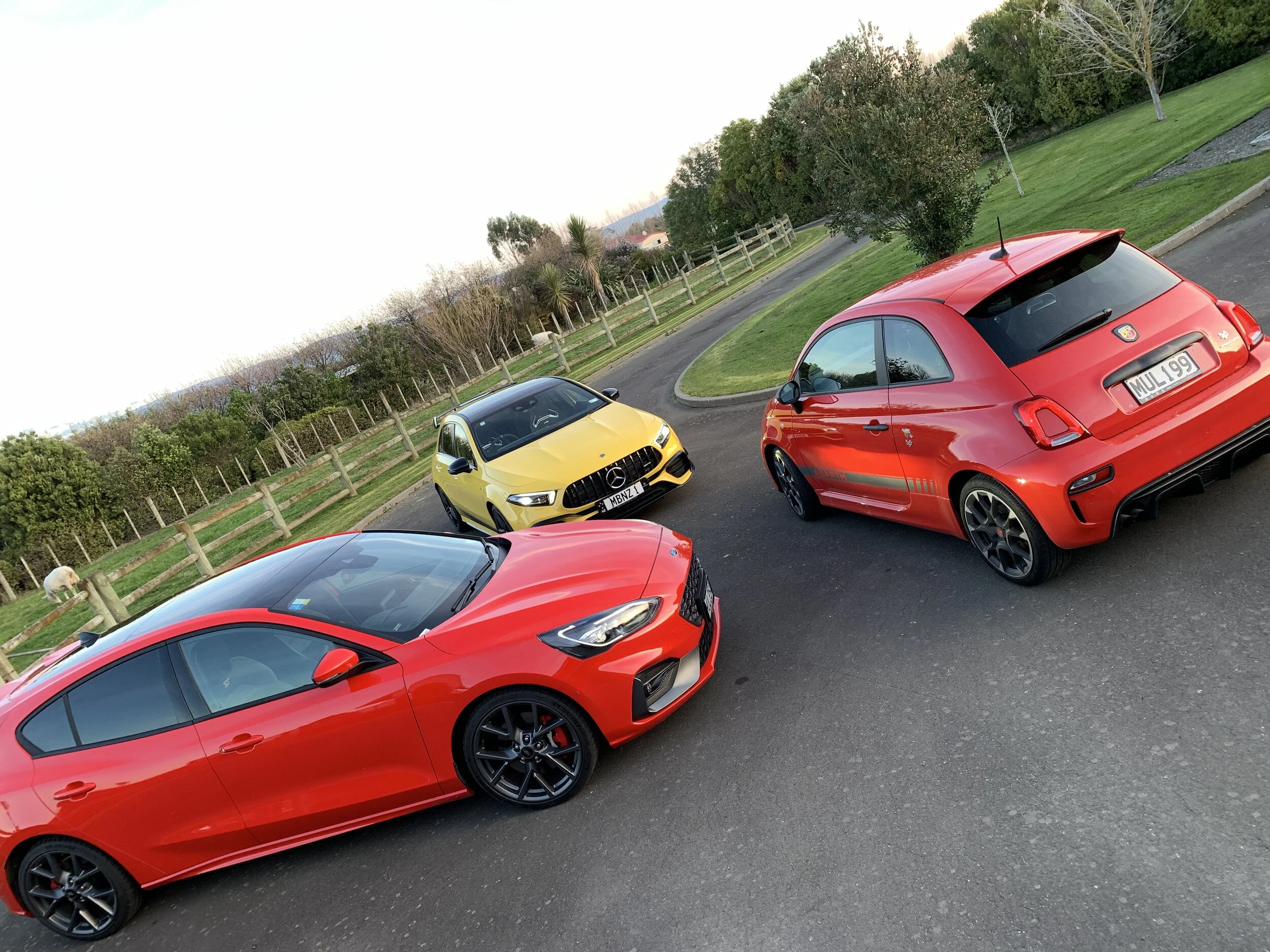
In alphabetical order, here they are – the Abarth 595 Competizione, AMG 45 S and the Ford Focus ST. Oh, and just for good measure, a surprise mystery guest.

main.jpeg

ON the right roads, in the right conditions, there’s nothing to touch a compact car packing a big punch – so here’s a big ‘yeah boi’ for that fantastic creation, the hot hatch.

Here’s an acknowledgement, too, of how far that formula has gone. The four cars on test today very much remind just how elastic the genre has become. 

Today’s ilk present across a span of abilities, from instruments of cost-effective fun to full-out, spend up large small-sized supercar slayers.

The common connect? Easy. All aim, of course, to deliver the base attraction of being driver’s cars of pedigree performance purity. Compelling zest, eye-popping pace, keen handling and an easily exploitable chassis … often, too, an ability to provide the most amount of laughs for the smallest amount of money. It’s right here.

Hot hatches – a category anything packing a tailgate of some kind fits into, even when the body stylings otherwise diverge – have been in our blood for 40 years now, but that’s not to say they’re here to stay. At least, not in the banging and burbling format we’ve got to know so well.

In case you still didn’t know, purely fossil fuel-reliant engines are on the way out. Cold hard fact, in the distant future, the hot hatch will follow every other passenger vehicle in having to ultimately abdicate its internal combustion engine entirely in favour of being completely electric.

Stricter emissions standards are already increasingly putting pressure on car makers to reduce their average CO2 emissions across their fleet of models or face hefty financial penalties; which puts pressure on low-volume but high CO2 producing cars like hot hatches. 

That’s why Ford cancelled plans for the next-generation Focus RS, why Peugeot, which has a long and illustrious hot hatch legacy, has reportedly added electric impetus into the formula for it next 208 GTi and why Volkswagen, arguably the inventors of the hot hatch with the 1975 Golf GTI, has committed to battery-assisted impetus for all almost all its performance fare. The new GTi coming next year will be spared, but anything from now on with an ‘R’ badge won’t.

 So, if you’re convinced petrol purity is an essential element of this concept, it’s potentially time to act fast. If you’re out to ‘get ‘em while they’re hot’, the following should all be considered.

IMG_6281.jpeg

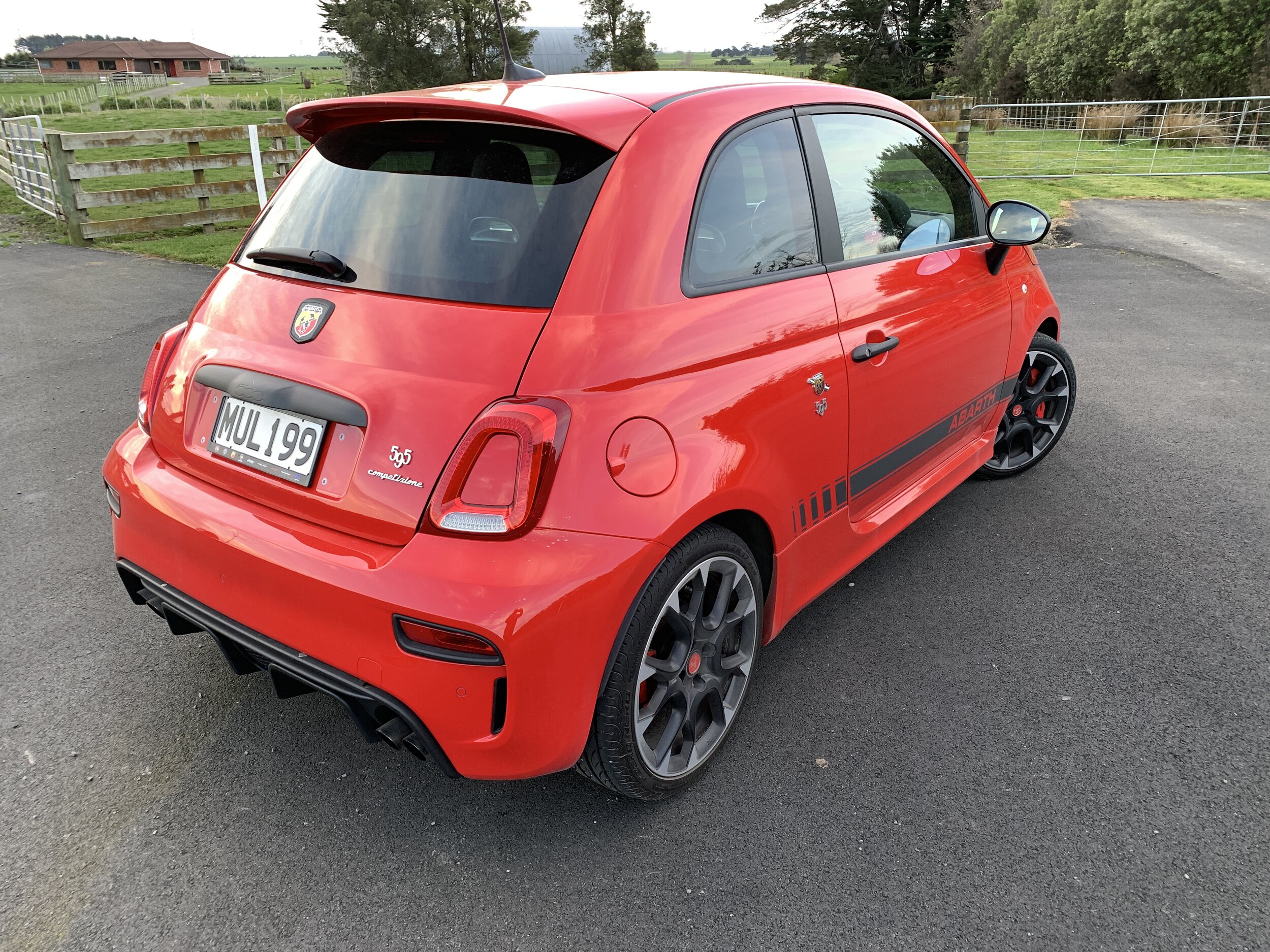
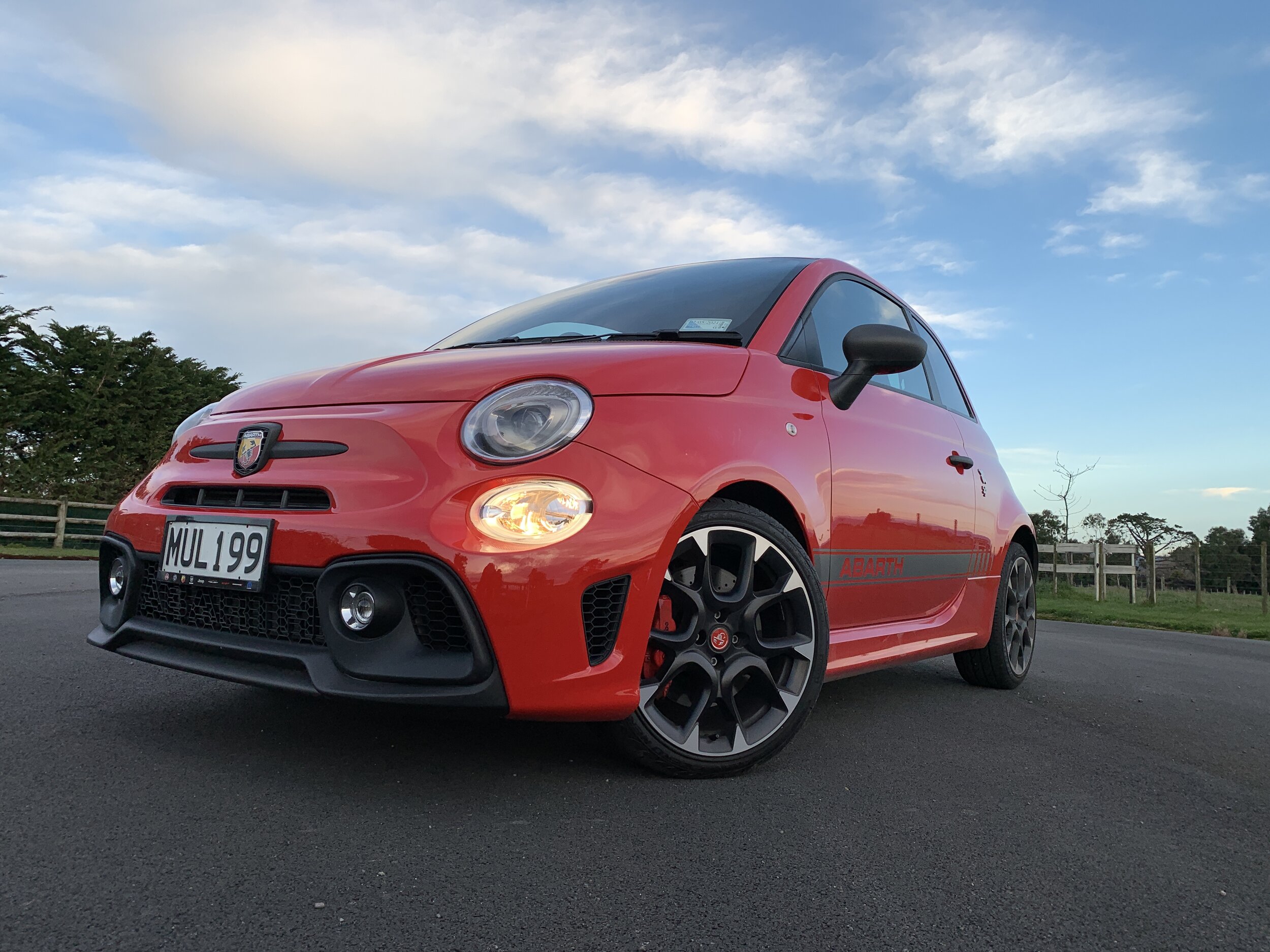
ABARTH 595 COMPETIZIONE

 Base price: $42,490

Powertrain and economy: 1.4-litre turbo-petrol four-cylinder, 132kW/250Nm, 5-speed automated single-clutch transmission, FWD, combined economy 5.8L/100km, CO2 133g/km.

Vital statistics: 3657mm long, 1627mm wide, 1485mm high, 2300mm wheelbase, luggage capacity185 litres, 17-inch alloy wheels.

For: Giant-killing spirit, design’s longevity, sounds fantastic.

Against:  A touch too mad to be a daily driver, that gearbox!

BACK in 2007 I had the amazing good fortune to travel to Italy to drive the hot Ferrari of the moment, the 430 Scuderia.

In addition to that Michael Schumacher-tweaked model, we also had opportunity to drive a Fiat that, while highly familiar in teensy ambience and look, was then so new to the scene it was still months from being exported, let alone being built in right-hand drive. 

The ‘Scud’ was a fab but fleeting thing; a treasured veteran now, so increased in value most are no longer driven. 

The Fiat 500, on the other hand, has kept going … and going … and going. Thirteen years is sometimes two complete production cycles these days, yet the 500 endures. It’s more than just the life cycle; the design’s longevity is also something special. A very modest facelift in 2015 aside, it’s been completely unchanged.

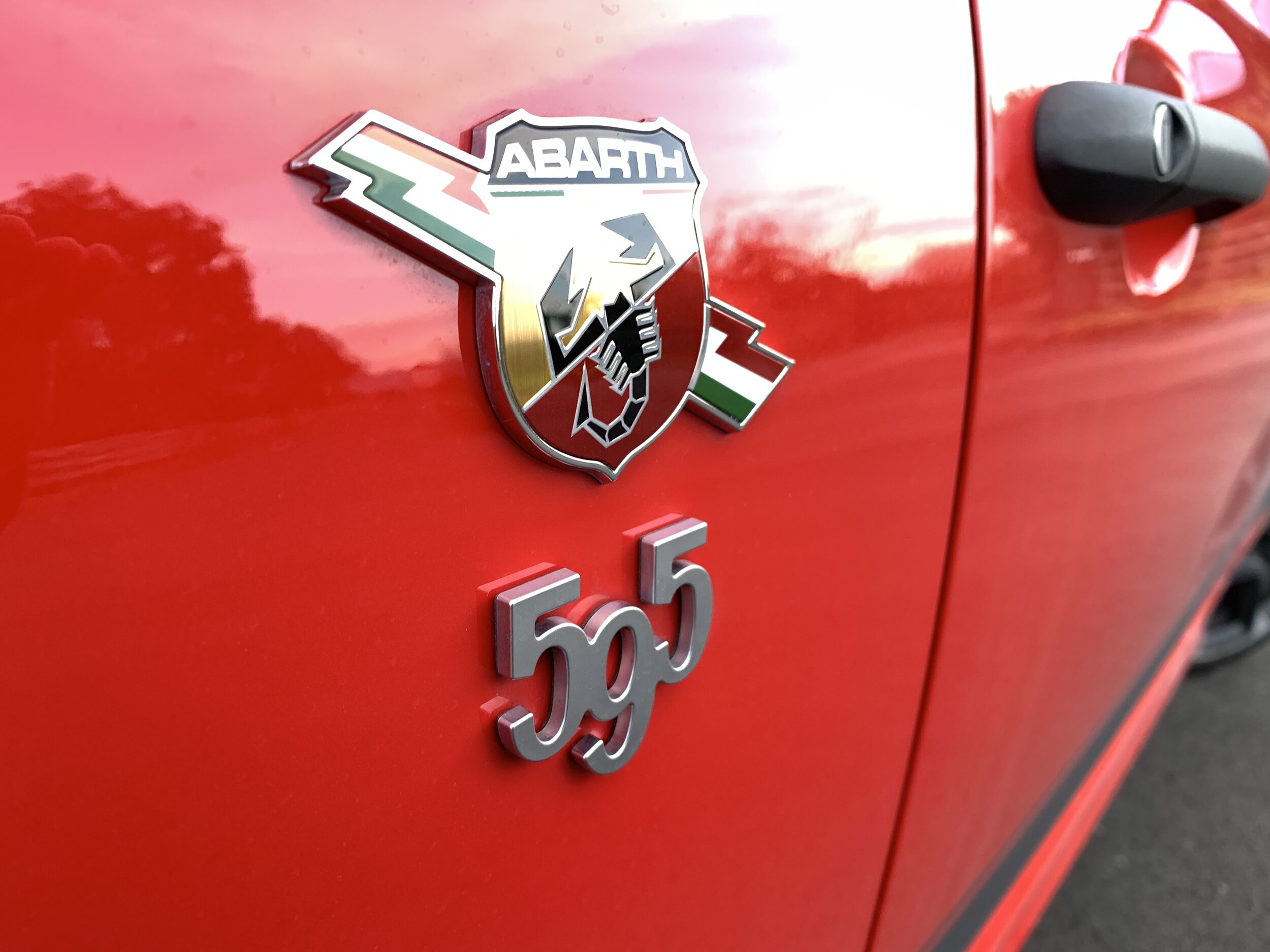
The only version still around now is the 595 Competizione from Abarth, which has been spinning out heated versions of Fiat’s supermini since 2008. 

Really, the 595 is a reheat. You might recall that the most bonkers limited-edition Abarth 500 ever was a limited count tribute car to Ferrari issued in 2012; the maddest, most extravagant version of this bad-ass baby ever. 

Would we ever see the likes of it again? Yes. It’s this car.  Okay, the 595 isn’t a complete reissue, but only in sense that there’s less carbon fibre and there are no Prancing Horse badges now. 

But when it comes to the essentials and even some ingredients such as the steering wheel … well, I’d suggest there’d be an excellent chance of interchangeability. The turbocharged 1.4-litre powertrain, single clutch automated manual transmission, suspension, tyre type and wheel sizes are all as first rolled with that Fezza-aligned funster. Which, by the way, at $80,000 a pop, cost basically twice as much as a 595 does now.

At half the price, Italy’s smallest streel brawler obviously becomes a much better pitch against its most obvious competition - mainly the auto-only $39,740 Volkswagen Polo GTI and the manual-only $35,490 Ford Fiesta ST.

Well, in theory. In reality, it is a harder road to take. The Tom Thumb size, a transmission that’s the work of the Devil; the skateboard ride, Mack-like turning circle and dated ambience.

And yet, as an ultimate format of a car designed as 500s always were – as cheap, friendly choices for the cash-constrained masses. – it’s an impressive feat that, for all the annoyances and constraints, gets under your skin. 

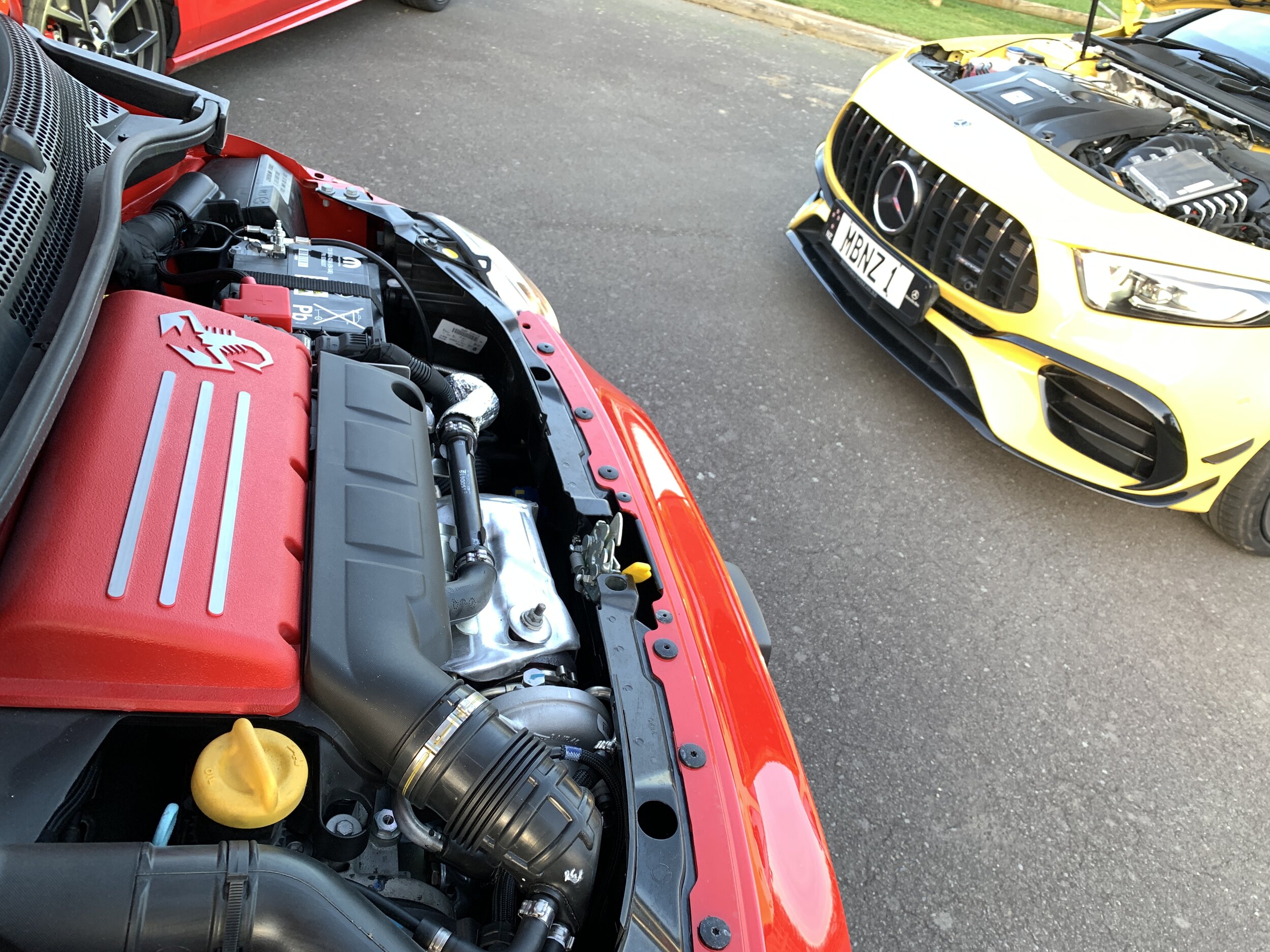
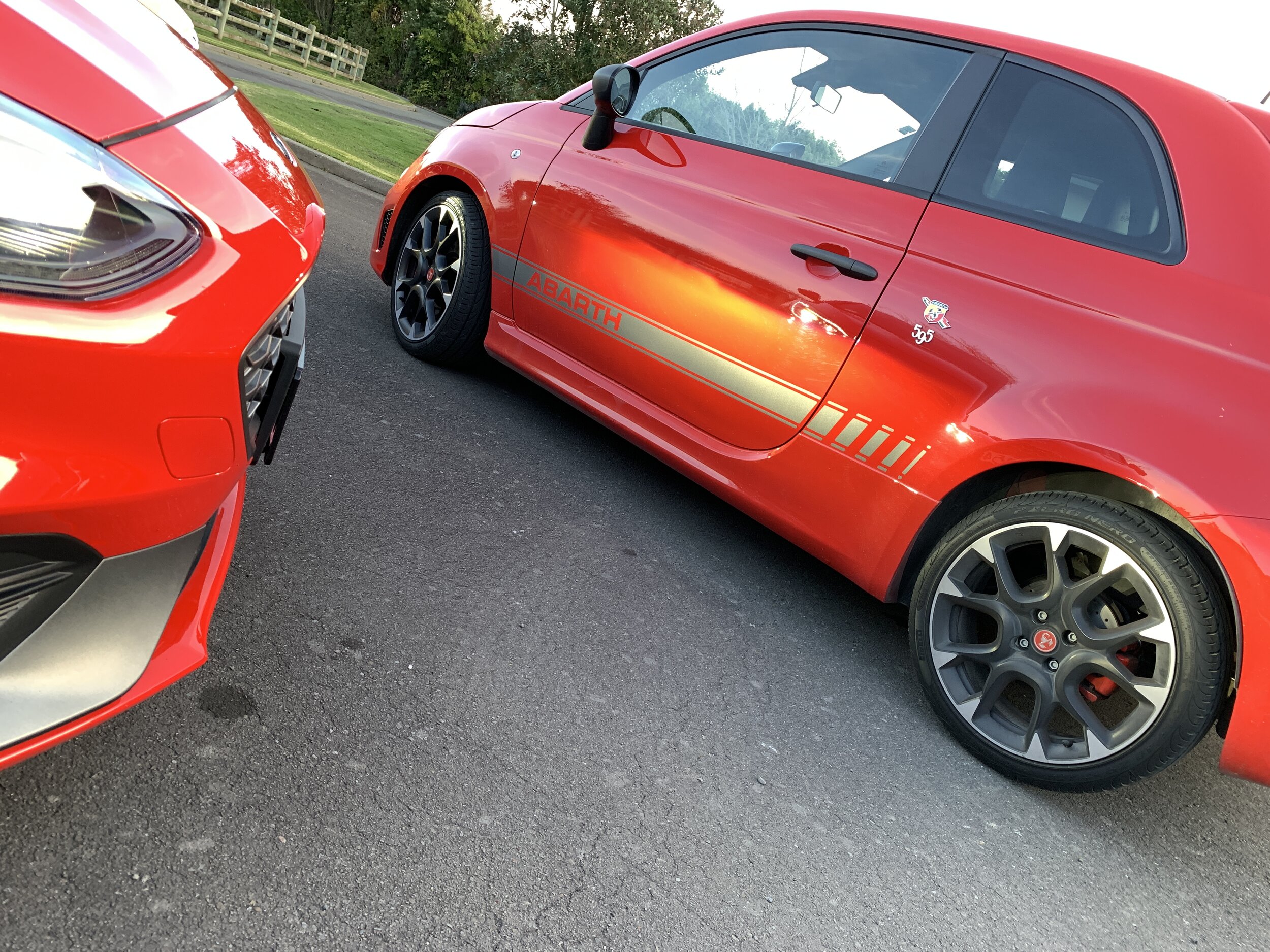
Race seats, a fat-rimmed, flat-bottomed steering wheel. alloy pedals, leather-trimmed shifter, a boost gauge cum shift light, plonked boy racer import car-style atop the dash, a back seat that’s more a low-set parcel shelf … all ludicrous, I know, but superb to see. Likewise the 17-inch alloys, fat sill extensions, twin exhausts and Brembo brakes with red calipers.

Even if anything fails to draw your eye, it’ll certainly turn your head on strength of sound. Of the cars gathered here, it was by far and away the loudest for exhaust note. And bravo to whoever tuned those twin pipes to deliver such a barking - dare I say Ferrari-esque – stridency.

Does it go? Does it heck, though everything tends to be brought down to scale. A 0-100kmh time of 7.4 seconds and top speed of 215kmh isn’t hugely hot, but when the setting sites just centimetres above the road and in a wee capsule everything is somewhat ‘amplified’. Karters know what I mean.

Somewhere between extra-nippy and surprisingly rapid, it’s certainly busy enough at 100kmh to warrant your full attention, the engine being spirited and rev hungry, especially in Sport. This activates the turbo’s overboost function and makes the exhaust note raspier and is, of course, mandatory, as driving it like a loon is operating at ‘Italian normal’.

That “Competizione MTA automated manual” delivers with four buttons: 1, N, R and A/M translating to ‘first’, ‘neutral’, ‘reverse’ and ‘auto/manual.’ You need to start out in first and then either allow it to self-shift through the forward gears or go into manual, which requires you to change up and down with paddle shifters.

Auto mode is the default but hardly good; the shifts tend to be lurchy and ill-timed. Manual is far sportier, snappier and much more in tune with the engine’s effervescence … once you learn that the path to smooth, slick upshifts is to snap off the throttle just at the point of upshift, then smack down on it again as the gear engages.

Basically, it’s a wild wee ride …that (and you knew this was coming) due to the wee wheelbase, light weight and limiting strut front, torsion beam rear suspension, feels that way, too. Jauntiness evident around town becomes the primary attribute that will make or break long-distance travel at open road speed.

The patron saint of tyres is a saving grace; it relies hugely on the 17-inch Michelin tyres providing plenty of sticky grip (they do). Also, you’ll find those brakes are much more than titillation and the go-kart-like direct steering means it points faithfully. Yet bumps that would be shrugged off by larger, heavier fare cause it to jump and crash about and it’ll accomplish hard cornering with untidy, inside rear wheel-lifting brio.

There’s nothing to suggest there’s a lack of sincerity in its engineering yet it’s also a car challenging you to accept that, in its world, things are different.

IMG_6393.jpeg

MERCEDES-AMG A 45 S

Base price: $111,000

Powertrain and economy: 2.0-litre turbo-petrol inline four-cylinder, 310kW/500Nm, 8-speed dual-clutch transmission, AWD, combined economy 8.9L/100km, CO2 204g/km.

Vital statistics: 4419mm long, 1796mm wide, 1440mm high, 2729mm wheelbase, luggage capacity 355 litres, 19-inch alloy wheels.

For: Exquisite engineering, astounding engine, surprisingly flexible.

Against: So pricey, can we have the gear stick back?

WHEN the A45 first launched it was packing 265kW and, once the Audi RS3 achieved a touch more, AMG pumped it up to a class-leading 280kW, enhancing the torque by 25Nm to 475Nm for good measure. And that was enough to reinstate as the world’s most powerful 2.0-litre hot hatch, never to be troubled since.

Now there’s this while new generation. Which conceivably could have kept all the good bits of before and still been class king. Except, of course, it hasn’t. AMG was probably bothered, for one, that the old car was just 0.1 seconds faster to 100kmh from a standing start than the Ingolstadt worrier. Also, this is a brand whose credo is based on continual improvement.

Accordingly, with transference to a new platform, they’ve gone and redone all the performance hardware. Comprehensively. Power climbs to 310kW, torque to 500Nm, 0-100kmh falls to 3.9 seconds and … well, life with this wee smasher becomes even more of a blaring blur.

Well, that’s how it looks. In reality, there’s potentially a point where fast is fast, and faster doesn’t really feel it. I’d imagine that were all editions to be brought together, I guess you would have little trouble rating their respective blast values and picking the one that has, on the hot hatch scale, just gone into the equivalent of a thermonuclear zone. 

But among A45 constants is that it has always been so much about the thrusting rush. Every predecessor has offered what this one delivers so easily; the kind of heart-jolting accelerative excitement that normally only associates with roller coasters when they free-fall off the ride’s highest point.

So it keeps doing that. Just as it keeps on setting the mark for being a car that seems almost over-qualified for the job it undertakes. 

As a rule of thumb, you can generally take it for granted that any carmaker, when heating up any family car – which this still is, being an A-Class by birthright – will approach the process with some extra consideration and enthusiasm. But the AMG is more than that; the processes that involve here are astounding exacting, perhaps not to the point of overkill, but certainly to a level where the word ‘perfection’ seems to translate as ‘borderline acceptable’. 

Assuredly, some owners will wonder why it needs as many performance functions or even why it so patently factors in performance abilities that, let’s agree, are well beyond reach in our driving environment, even on some racing circuits, and perhaps even the average level of engagement.

Fair point? Well, maybe, though I think the colleague who reckons it has somehow become so good as to be sanitised is missing the point. 

For sure, it is a car that enforces you’d have to be driving like an utter loon – and then some - to reach beyond the point where it cannot cope. There’s a massive zone in which it will behave at a level that is as intoxicating as it is incredible, to the point where it will make you question all you thought you knew about physics. 

And yet as much as it does all that, it also gives greater acknowledgement to the probability that some drivers haven’t the skill level to meet its capabilities, and accordingly gives them a better chance when they mess up. Yet on the other hand it also plays to expectations of those who do have the talent.

You imagine it already very devilish in the daily drive modes, which reach to Sport, but turn the dial further into Race and it assuredly so much more evil evidences that you realise PDQ that with this car, there’s extreme and there’s EXTREME. 

The throttle sharpness is so much greater, every bit of the grunt is availed, it revs more readily to 6750rpm, which is where peak power occurs, and anything beyond light throttle translates into extremely quick forward motion. The latency is obvious when pegged at a standstill as the car positively quivers.

The exhaust note, too, finally releases the pop-bang, so reminiscent of Group A rally cars of old, that used to avail so easily in the first-gen car. Enforcing the seriousness here are the bonus facilities of launch control and drift modes; each open on presumption you already have a handle on the basics of their technique. Chucking an all-wheel-drive car into a slide is still a tricky business. 

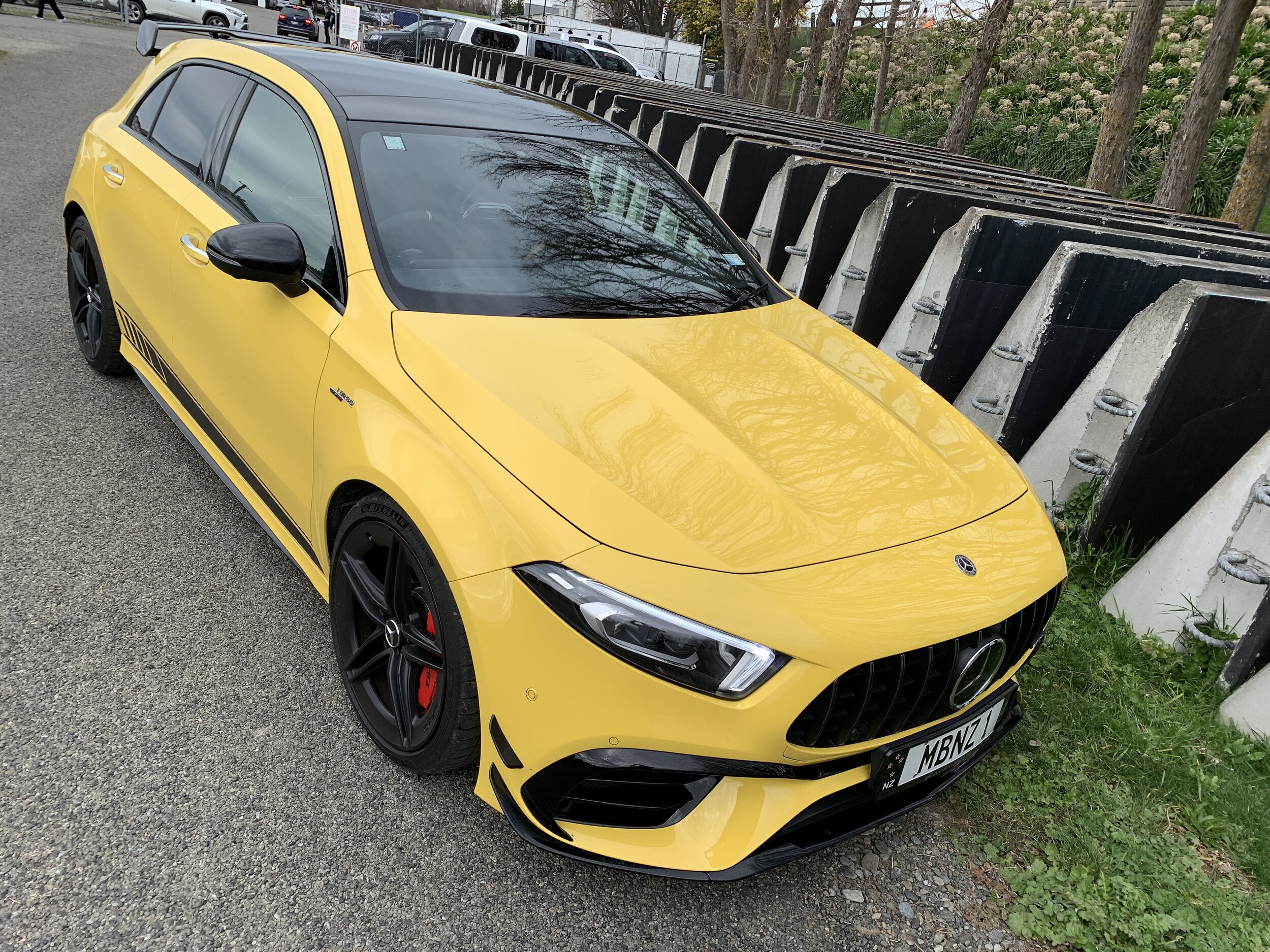
As always, it isn’t shy in announcing the insanity. The test car’s special yellow paintwork, which is all part of the Edition 1 treatment, is barely necessary, because so much more about the car’s appearance draws attention anyway.

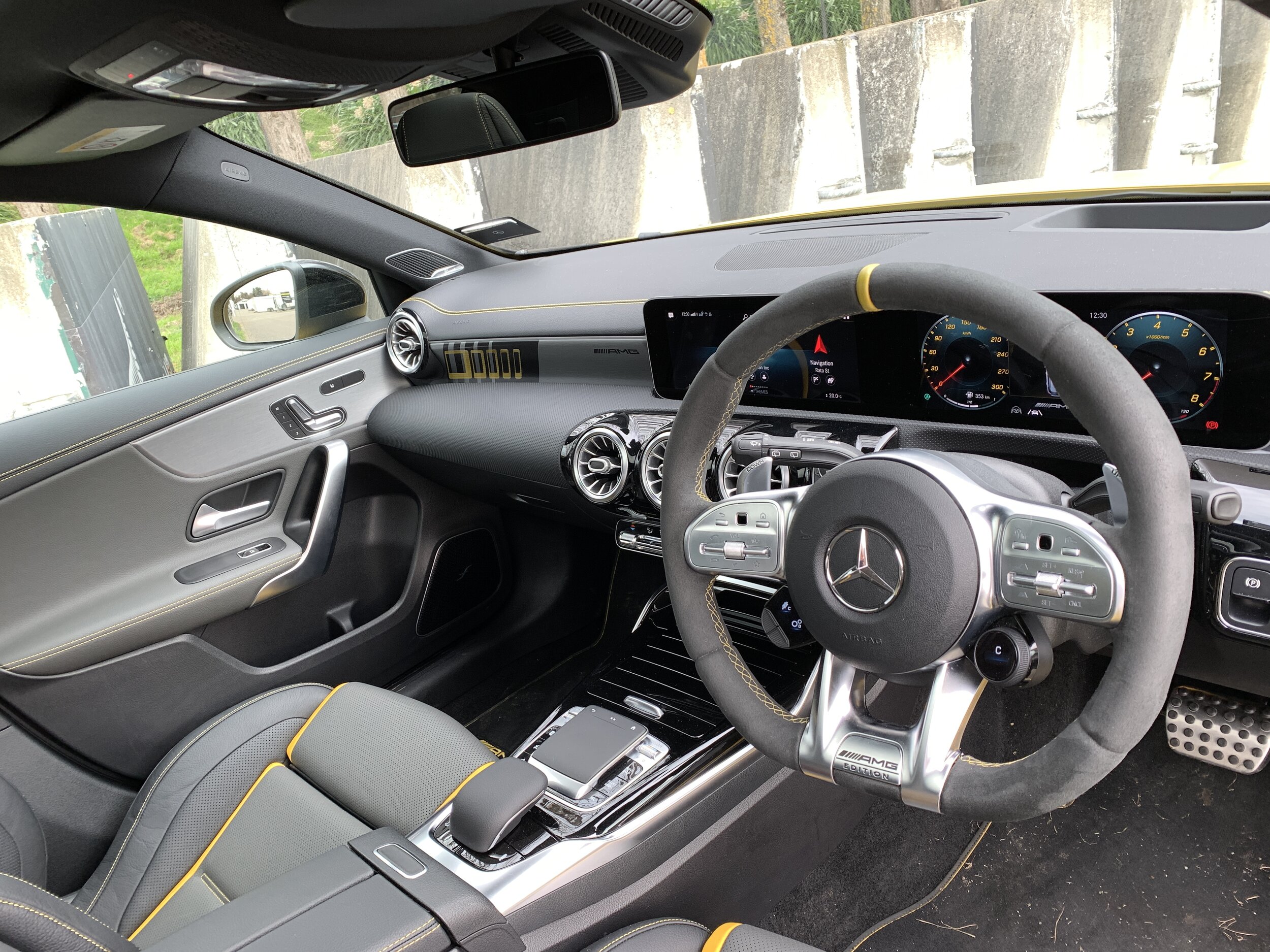
Those 90mm diameter quad exhaust pipes sitting either side of a diffuser marked out by two vertical twin fins, there to help to suck the rear of the car down – also the job of the big angled spoiler on the top of the boot lid and the dive planes jutting out of the DTM-ready front spoiler - the huge 360mm cross-drilled front discs and accompanying six-piston callipers sitting all too obviously behind the fat tyre-shod 19-inch alloys, plus all the performance shop stuff inside – in this case, including heavily-bolstered front chairs that are a no-cost option to wider, more roadcar-style types, plus the requisite flat-bottomed and flat-sided steering wheel in Alcantara and complete with yellow twelve o'clock marker on the top  … all lend very obvious clues to it being intended for rather more than a shopping run.

Those used to the old cars will find easily acquaintance with the new, save that they’ll search in vain for the stubby central gearshifter.

Notwithstanding that the new approach - shifting, when things get busy, by way of the now larger, alloy paddle, one on each side of the steering column, and then fine-tuning adjustment with chubby multifunction switchgear on the wheel hub – presents a more appropriate tie-in with  Mercedes’ F1 involvements, and definitely delivers good result from the new AMG Speedshift eight-speed dual-clutch auto, I do miss the shifter, if only because it looks far more ‘pro’ than what we get now: The Mercedes’ 101 of a plastic column wand to engage Drive, Reverse, Park and Neutral. 

The dials you’ll play with most are the shortcuts that can be set up for the damper settings and active exhaust, or something else should you prefer and another that lets you toggle through the different drive modes. Elsewhere, the broad double display setup of the MBUX infotainment system stretches across the top of the shallow dashboard and it’ll also impart loads of performance-specific info, in addition to undertaking all the everyday functions dedicated to infotainment and the like.

The active and fully variable 4Matic Plus all-wheel-drive transmission with its AMG Torque Control is a thing of beauty. Power is distributed between the front and rear axles, with torque vectoring by brake on the front axle and a more advanced twin multi-disc clutch setup on the rear. These electronically controlled clutches offer total variability in power distribution across the rear axle.

So it’s good to go. And go, and go. And though it can accommodate drivers who are compelled to keep it in Comfort mode and tootle within the posted limits, to the point of offering a reasonably cosseting ride and even some decent degree of comfort – notwithstanding those sports seats are probably only good for a couple of hours – it’s really designed to drive. Hard.

The most rewarding section of a two-hour final run was the quite country road section that was done and dusted in 20 minutes. On that piece, the reward was intense: The car was all but telepathic.

It’s really hard to see how the A45 could be improved. Except, of course, they’ve already managed to do just that three times already. So, undoubtedly, it will be.

Shame the price has to be so stratospherically high, though the one consolation is that A45s are among those AMGs that seem to hold remarkably good residual value. Surely that’s as much a nod of acknowledgement to their special qualities as anything else?

IMG_6414.jpeg

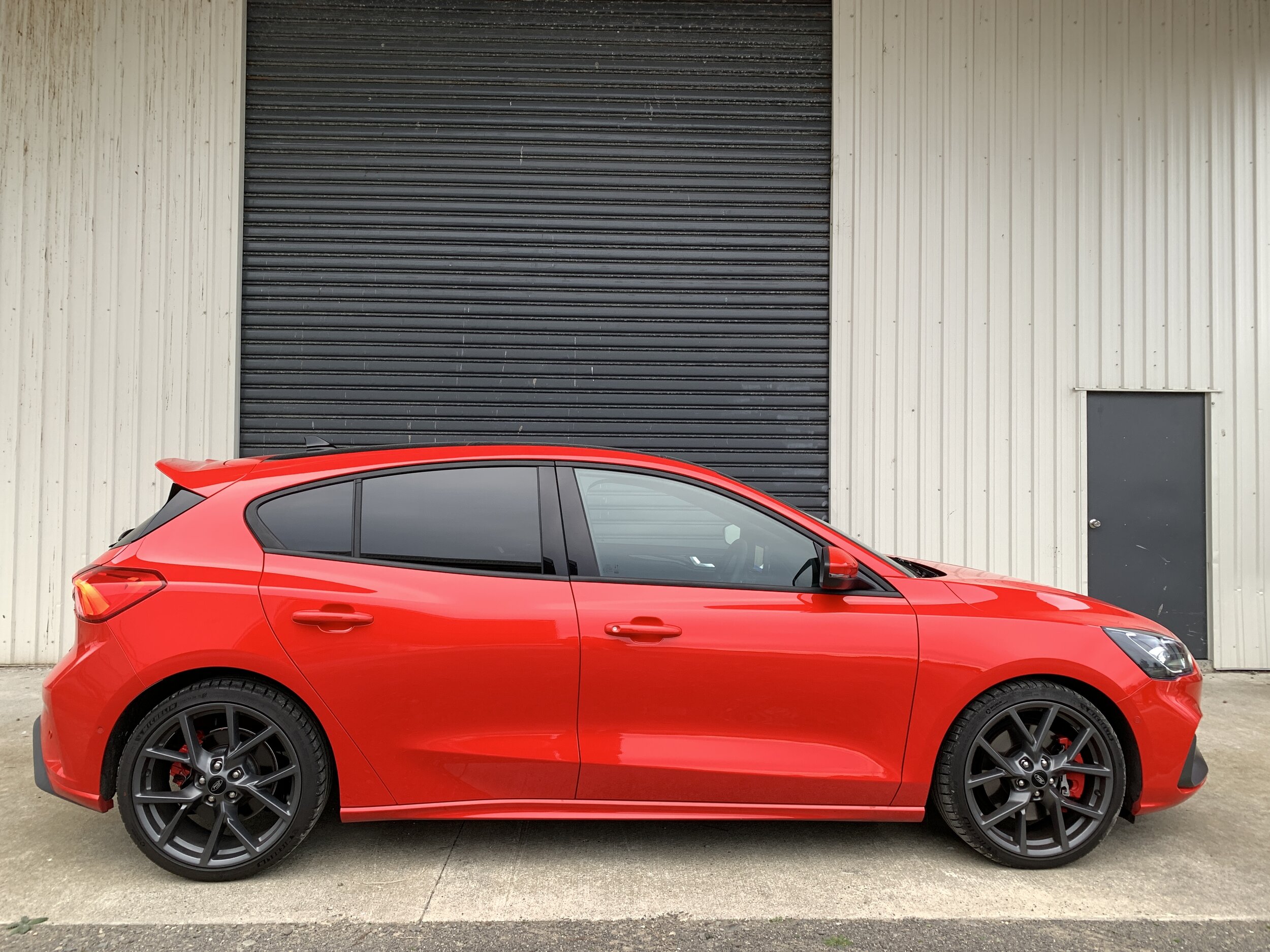
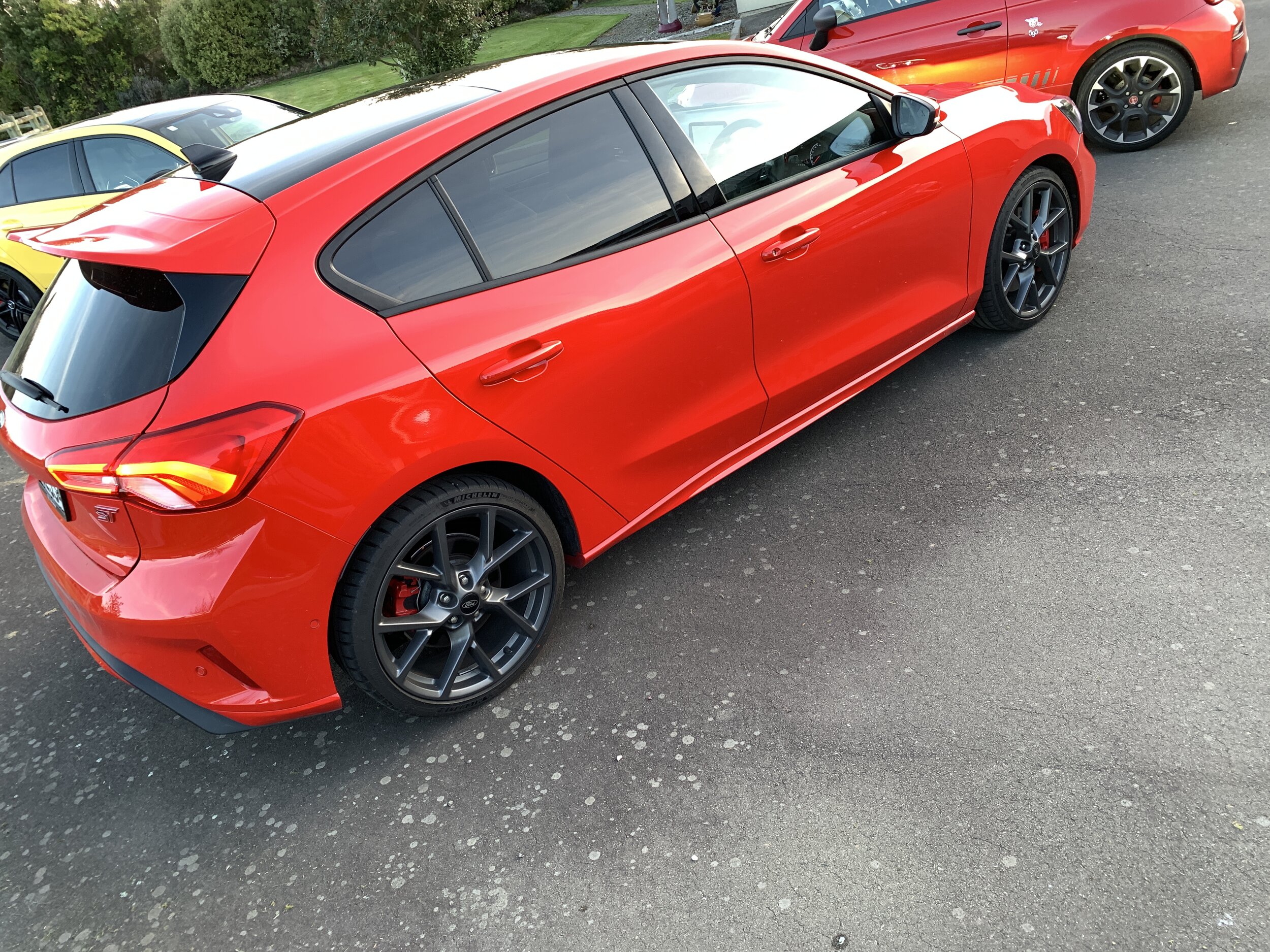
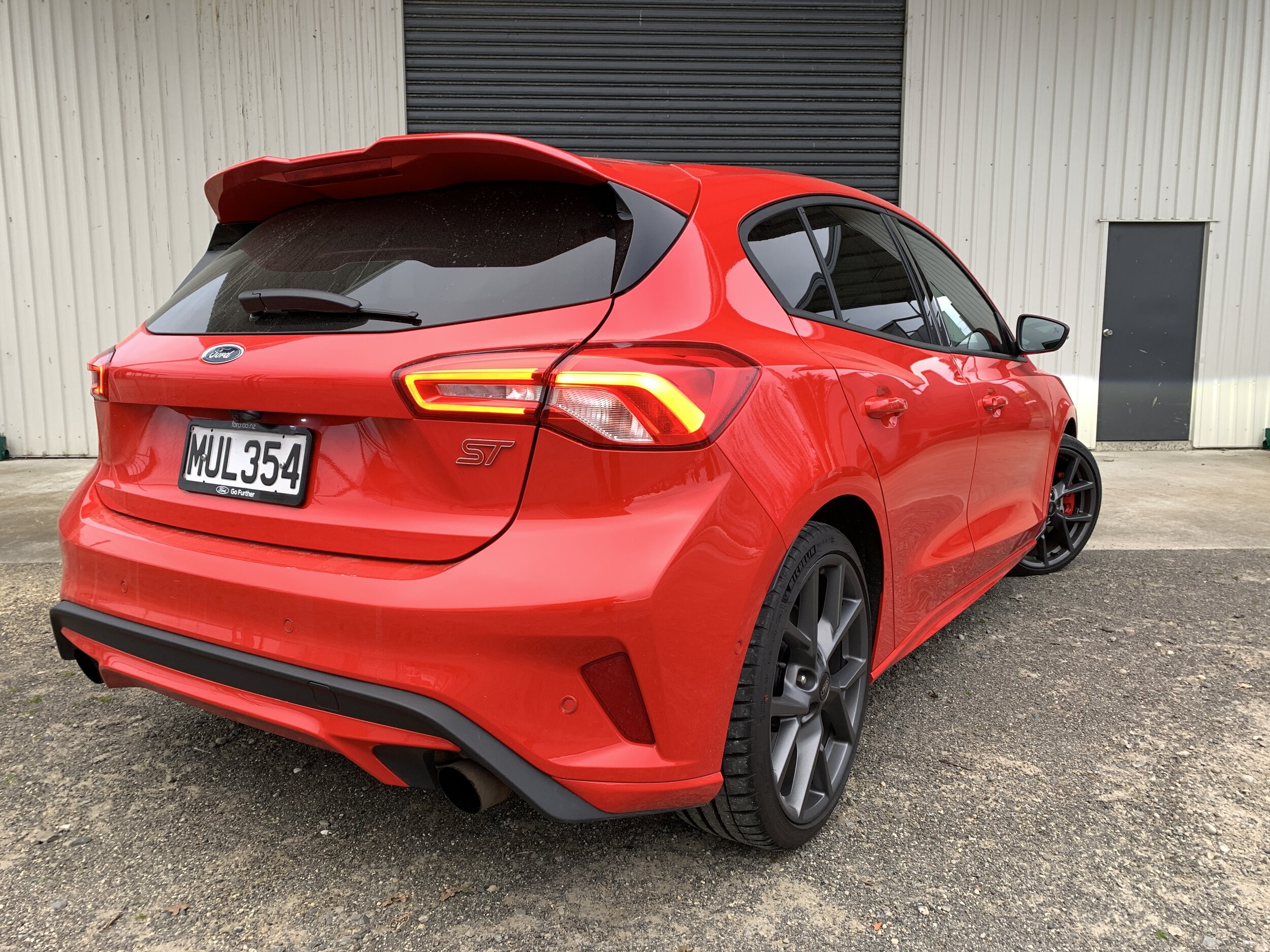
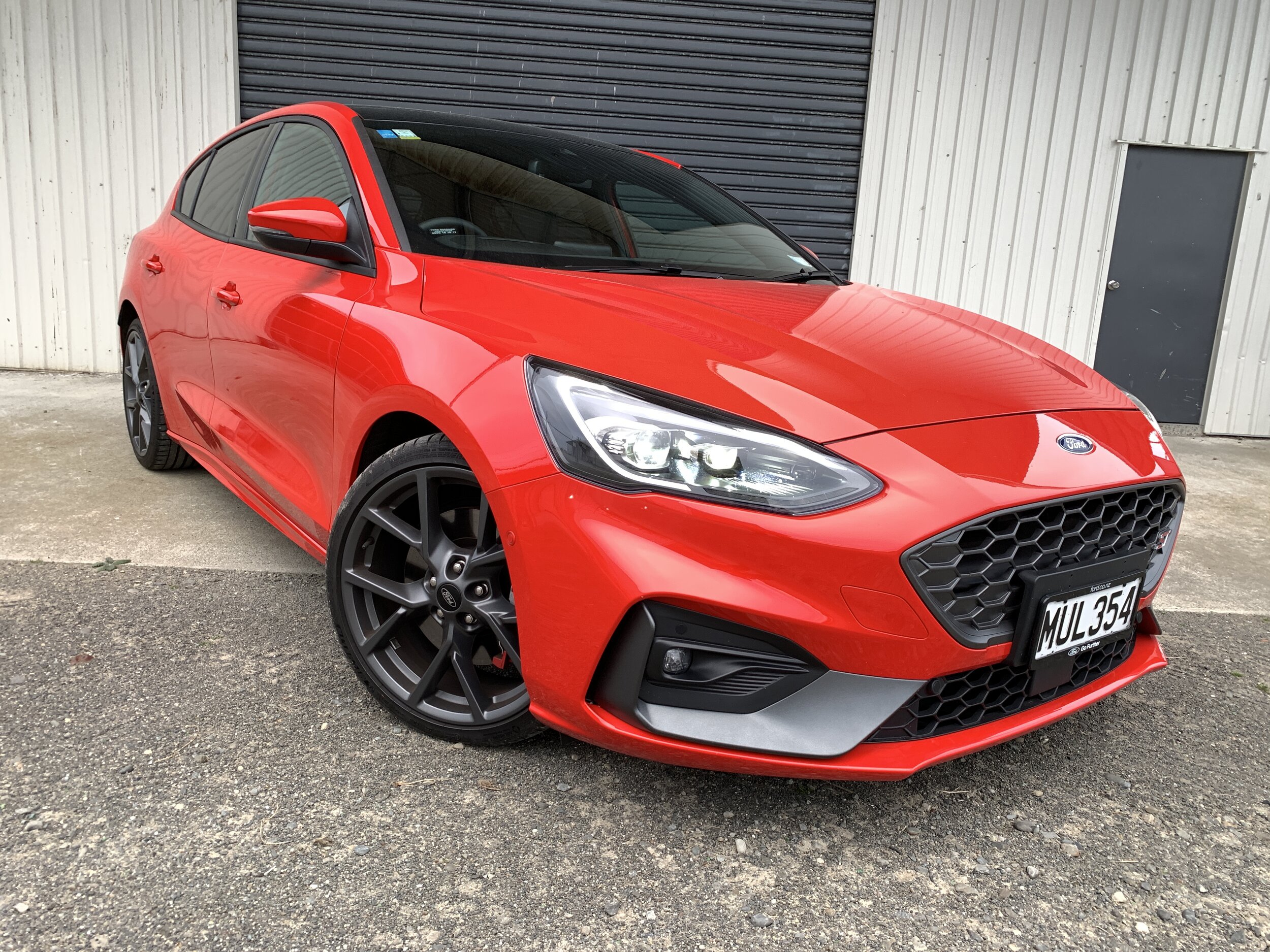
Ford Focus ST

Base price:  $59,490
Powertrain and performance:  2.3-litre four-cylinder DOHC 16-valve turbocharged petrol engine. 206kW/5500rpm, 420Nm/3000-4000rpm. Front-wheel drive. Fuel consumption 8.6L/100km.
Vital statistics: Length 4388mm, height 1492mm, width 1825mm, wheelbase 2700mm. Luggage 273 litres. Wheels: 19-inch alloys with 235/35 ZR19 Michelin Pilot Sport 4S tyres.
For: Best Focus ST yet.

We don’t like: A manual option wouldn’t hurt, cheap interior plastics, RS fans need look elsewhere.

NEW Zealand’s association with fast Focuses (or should it be Focii? You decide) has been a wild ride through history.

Beginning with the 127kW/196Nm 2.0-litre four-cylinder ST170 of 2003, the adventure really fired up with the thrilling and hugely characterful 2.5-litre 166kW/320Nm five-cylinder XR5 Turbo. Everything became all the more exciting after that when Ford doubled the mix; keeping a front-drive firework but also offering a more honed higher-tier model that, by adding in the ingredients of four-wheel-drive, tricky differentials and even more explosive power – initially in a five-pot format that performed sensationally and sounded superb - and then as a four-pot that kept everything on the boil, even that amazingly evocative burble, really shook things up. 

And now it’s … different, with all bets hinging on the lesser of the two formulas.

Which makes things interesting, when you consider that two letters have always explained not just why the ST has previously been sporty to a certain point, but still is. 

Ford ditching the RS was a late action. One that occurred well after the ST now acting in its stead had gone into production. You’d have to think that, had the determination to axe the previous flagship occurred before ST had been signed off, the latter might have been made even more sharp-edged than it is. But that’s not how it played out.

So the point is? Well, just this. Don’t hung up about how well this car compares to the RS. It was never designed to be an alternate so doesn’t deserve consideration as a stand-in now. How can it?

The only Focus it needs to be compared with is the previous ST and that’s an exercise in which the outcomes are pretty much entirely positive – it’s a major step forward.

Obviously, there’s significantly more fizz, though in spending time with it you quickly realise that’s not the only pull. Also adding to the value is the shift in transmission choice – yes, it’s a shame it no longer has three pedals, but an automated manual now is crucial for ongoing (and elevated) success. The car’s on a much better platform, the latest styling is more attractive and the ST equipment level is finally properly sorted. That previous ST was too ‘lite’ for comfort features and driver assists. 

Simply, what we get now is something that feels less a product of marketing hype than engineering can-do. Even though it retains rather more of the basic bits that go into a standard Focus than the RS ever would, it uses those shared parts well. And all the special extras are … well, more special.

 For instance, while the suspension components are basically the same, it takes adaptive dampers, which stiffen and soften according to which buttons you've pressed. There’s an electronically controlled differential, which uses hydraulically operated clutches - and a myriad of sensors and inputs - to shunt as much as 100 percent of the engine's power to the wheel that can handle it best. And to help keep it on the boil, the engine gets an anti-lag system, distantly related to that used by Ford's rally cars, which keeps the turbo spinning even when you've lifted off the throttle. 

While the body kit isn’t overly rakish, it takes Recaro front bucket seats – which, for the first time ever in a performance Focus, are properly low-seat - and the grey-finished alloy wheels are treated to the same, very grippy Michelin Sport Pilot tyres Benz puts onto the A45.

If you have to pick immediate allures, that’s easy. One is that engine, the other is the chassis.

It’s not just that it has 22kW more and another 60Nm; the more crucial element is that the new outputs are a lot more honest. The old car’s oomph unrolled in in intriguing fashion; it was an engine that felt faster than it potentially was, as evidenced by a claimed 0-100kmh sprint time that put it in the dust raised by the Golf GTi, the RenaultSport Megane and Subaru’s WRX manual back in the day.

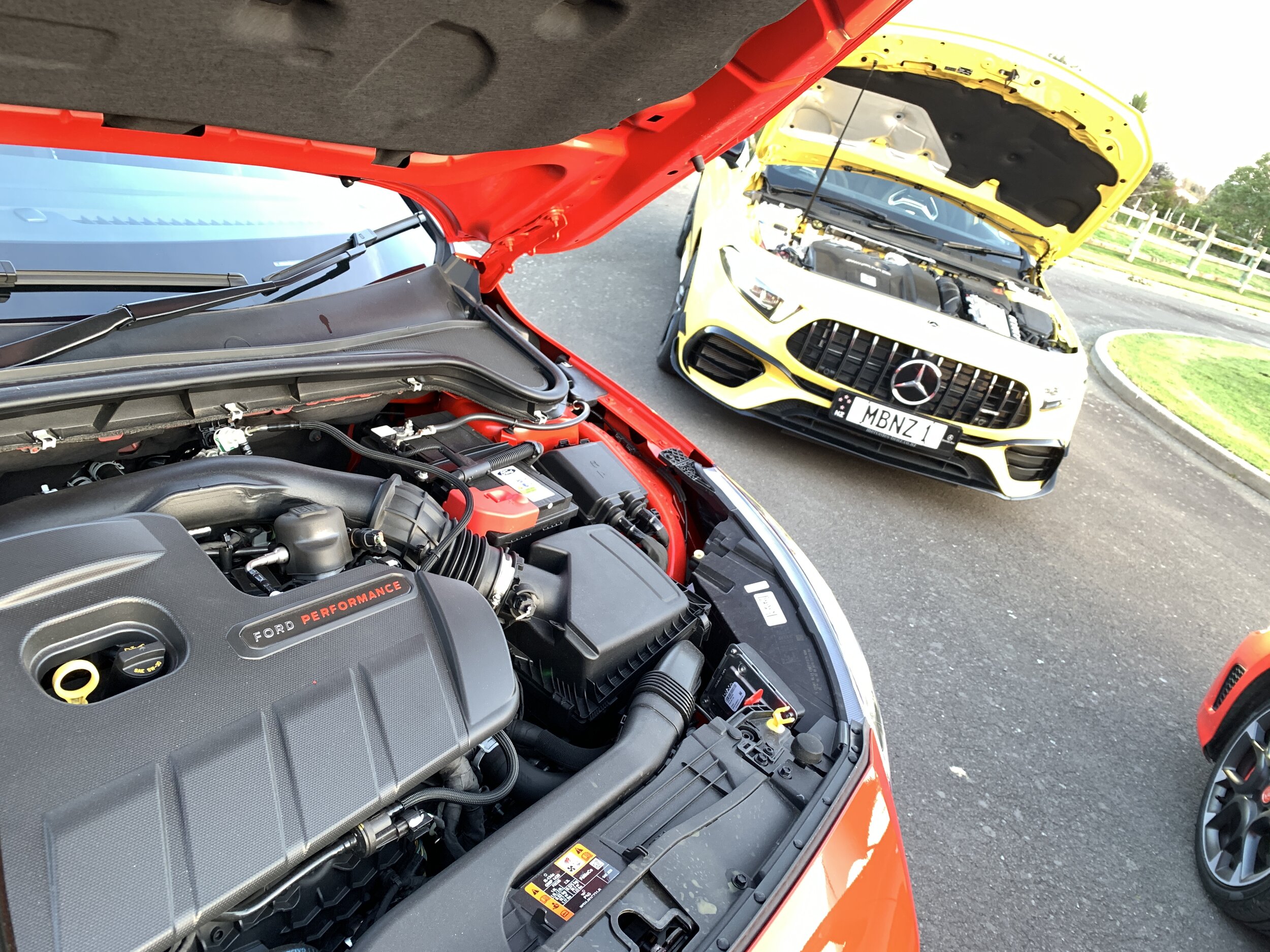
The new is far less likely to feel the sting of sand in its face. An increased displacement is handy, but really this engine shines because it is of better pedigree, being basically the Mustang's 2.3-litre, turned sideways, and detuned just a little. Its maximum power output is more than you'd get in all but the most expensive versions of the Golf GTI, the same as from that Megane RS and a just a little bit less than a Honda Civic Type R. The big torque and that clever anti-lag system ensure it's sure not slow, that 5.7-second 0-100kmh time confirms it, though really it’s the wide slug of oomph that really seals the deal. This is an engine that feels robustly muscular all through its rev range.  It also sounds good, almost like the old five-cylinder engine, with some nice pops and crackles on the overrun. 

Such a gold medal effort for a car that previously struggled to find a podium place holder deserves the silver lining of a terrific transmission. Which the new seven-speed is … in the main. 

A six-speed manual alternate still exists – in other markets. Ford NZ has chosen not to bother, in belief the volume sales potential rests with the auto, so it wants to concentrate on a single variant. 

Logic suggests that’s going with the flow – for instance, almost all hot Golf buyers prefer direct shift and the Renault Sport Megane’s status has lifted by going this way. Ford’s box delivers pretty good shift quality. It’s as snappy as you’d want into the Sport and Track settings, smoother in the Normal you’ll revert back to for everyday driving.

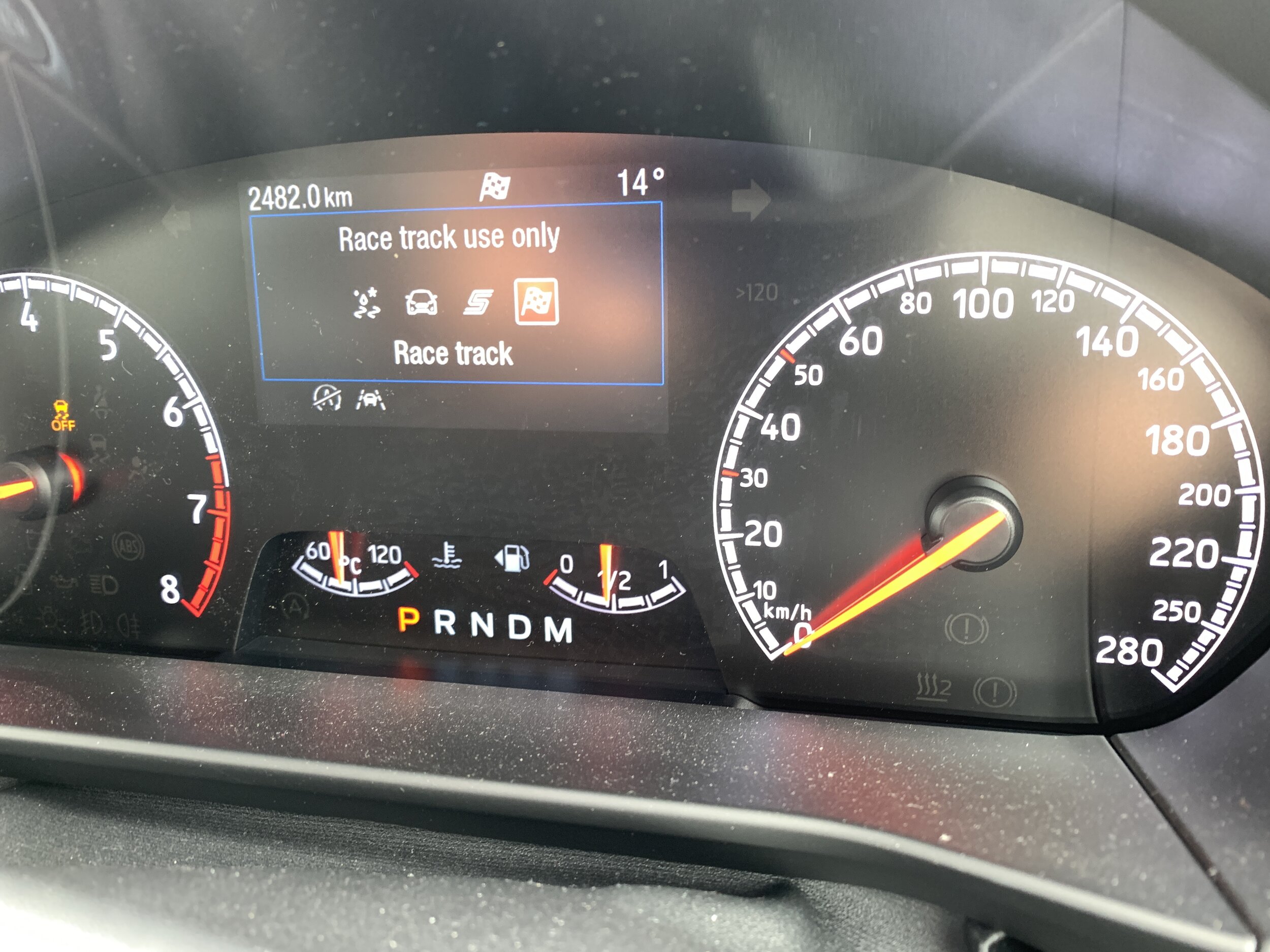
However, there are irks. For one, as Colin Smith pinpointed in his own test, the gearing is slightly out of step with Kiwi speed limits; an irksome indecisiveness between sixth and seven incurs around 100km. Also, the rotary dial gear selector is a bit budget - as indeed are too many plastics within the cabin – and a bit underwhelming for a performance model while the  steering wheel buttons that initiate the sports functions could be more logical – why two, separated by a third that has nothing to do with going faster? The one closest to the wheel boss allows a primary access whereas the other opens into a sub-menu for the fully fun stuff that very much widen the car’s character. Track – which comes with the usual ‘circuit only’ nonsense advisory – very much amps up the engine note accompaniment and delivers pronounced throttle blipping down shifts. 

There’s some steering tug when you floor it, but with an electronically controlled limited slip differential assisting with power application, it’s nothing like the wrist-stretching torque steer that used to affect old-school types. The ST also achieves sharper steering than the regular Focus, too, so there’s less swivel.

Another high-end aid that delivers positively is the Continuously Controlled Damping, which monitors suspension, steering and braking inputs at 2 milli-second frequency to adjust damping responses. It’s a very responsive and clever system.

Ford has good history insofar as chassis development goes and the ST doesn’t let the side down. It’d be intriguing to put this model up against the ST Fiesta to judge which was the more athletic; potentially the smaller car has a touch more deftness, but it’d be close.

The Focus definitely has an ace card with the multi-link rear suspension it gains in place of the torsion beam axle used in mainstream Focus hatches; that it rides closer to the tarmac than the standard car also is a positive.

Basically, it has an exciting stick-like-glue feel, is hugely confident attacking corners and is rarely significantly rattled by ruts and bumps. How could it be improved? Well, there is a way … but it involves provisioning the enhanced traction that is delivered to the AMG 45. An all-wheel-drive ST would be a heck of a thing, but it’d also be a lot closer to being the kind of Focus Ford says it no longer wants to build.

All the same, it’s this greater … ahem .. focus on hardcore dynamism that really makes this ST more impressive to drive than any before it. A touch more effort on cabin quality and perhaps a bit of a rethink about how to improve the gearbox’s actions and involvements and this direct, agile and purposeful model would be the best thing out there in the sub-$60k sector.

IMG_6429.jpeg

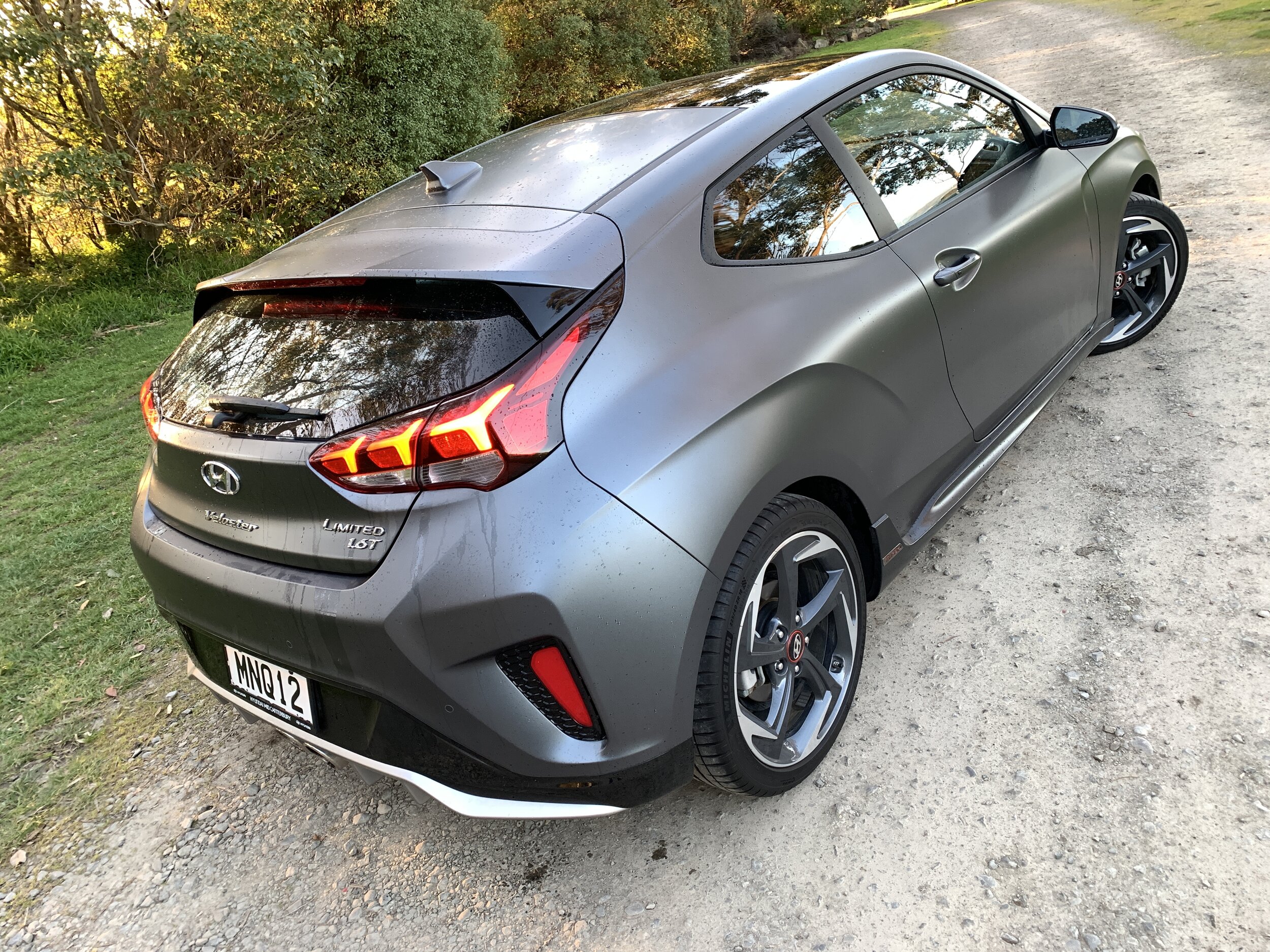
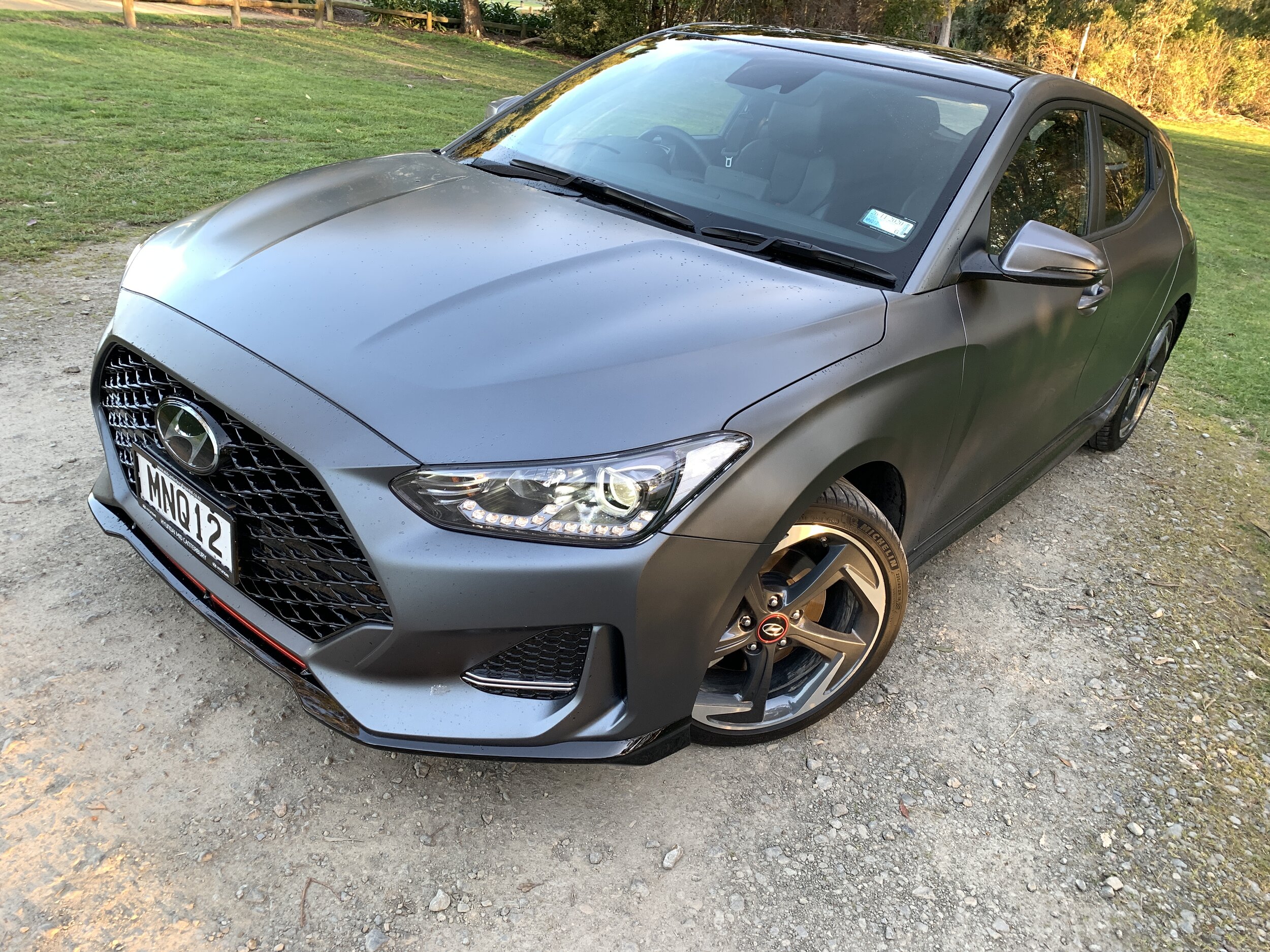
HYUNDAI VELOSTER 1.6T LIMITED
Base price: $52,990
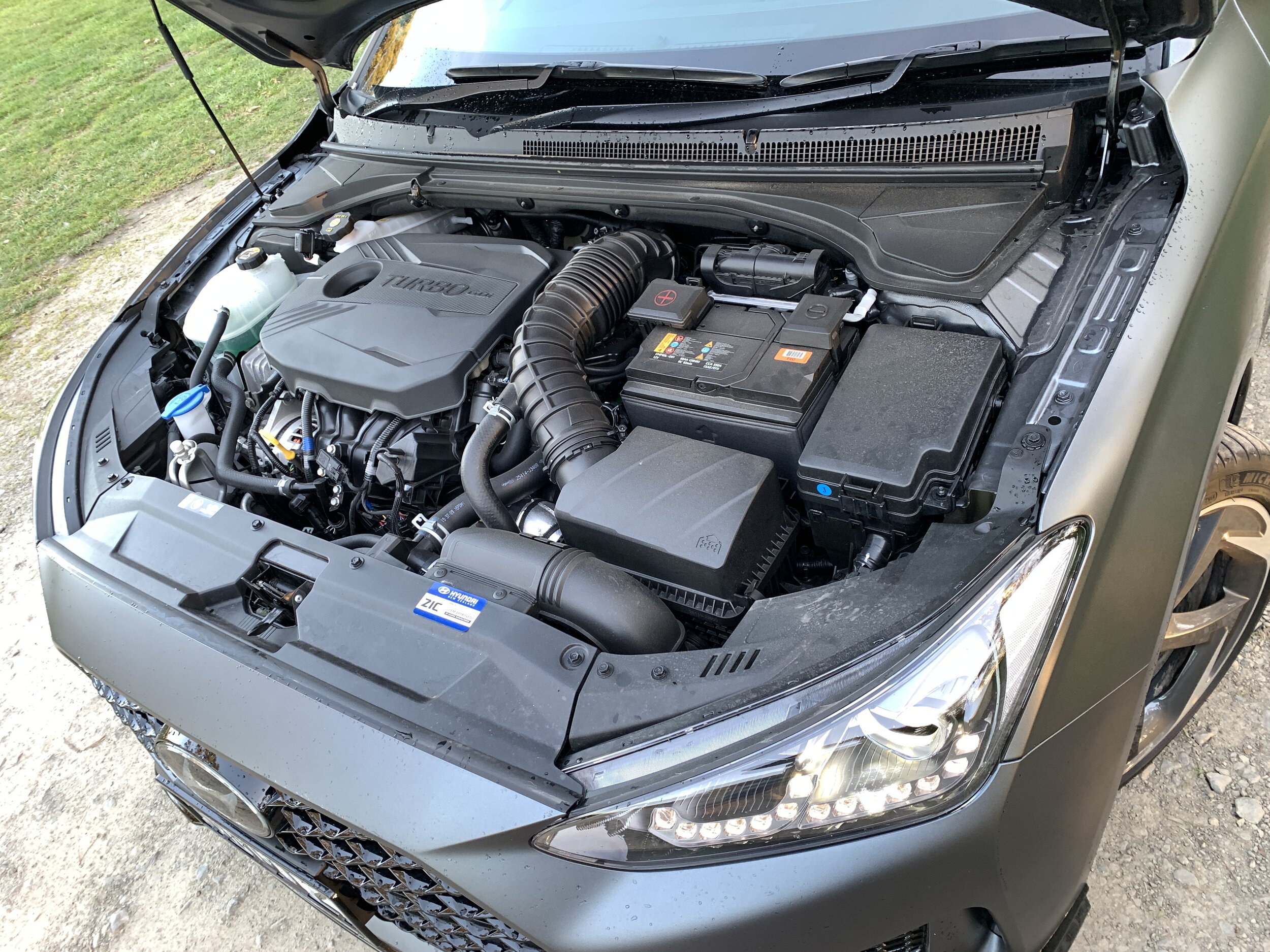
Powertrain and economy: 1.6-litre four-cylinder turbo-petrol, 150kW/265Nm, 7-speed dual clutch transmission, FWD, combined economy 7.1 L/100km, CO2 163g/km.
Vital statistics: 4240mm long, 1800mm wide, 1409mm high, 2650mm wheelbase, luggage capacity 303 litres, 18-inch alloy wheels.
For: Second generation car is so much better sorted than its predecessor.
Against: Too closely priced to the massively harder-edged i30 N and who needs this weirdo design?

THIS was, quite literally, the car in the background.

If not for a change in testing date, the Hyundai would not have been on the scene. And, truth be told, it wasn’t expected to be part of the scene when it did turn up. The intent was to leave it parked up and totally out of the picture until the ‘fast’ stuff story had been signed off.

Except that proved impossible. During those days there were occasions when the Veloster had to be driven. And, every time it was, it took opportunity to strive to impress that it, too, had a right to be considered picked for play. So should it?

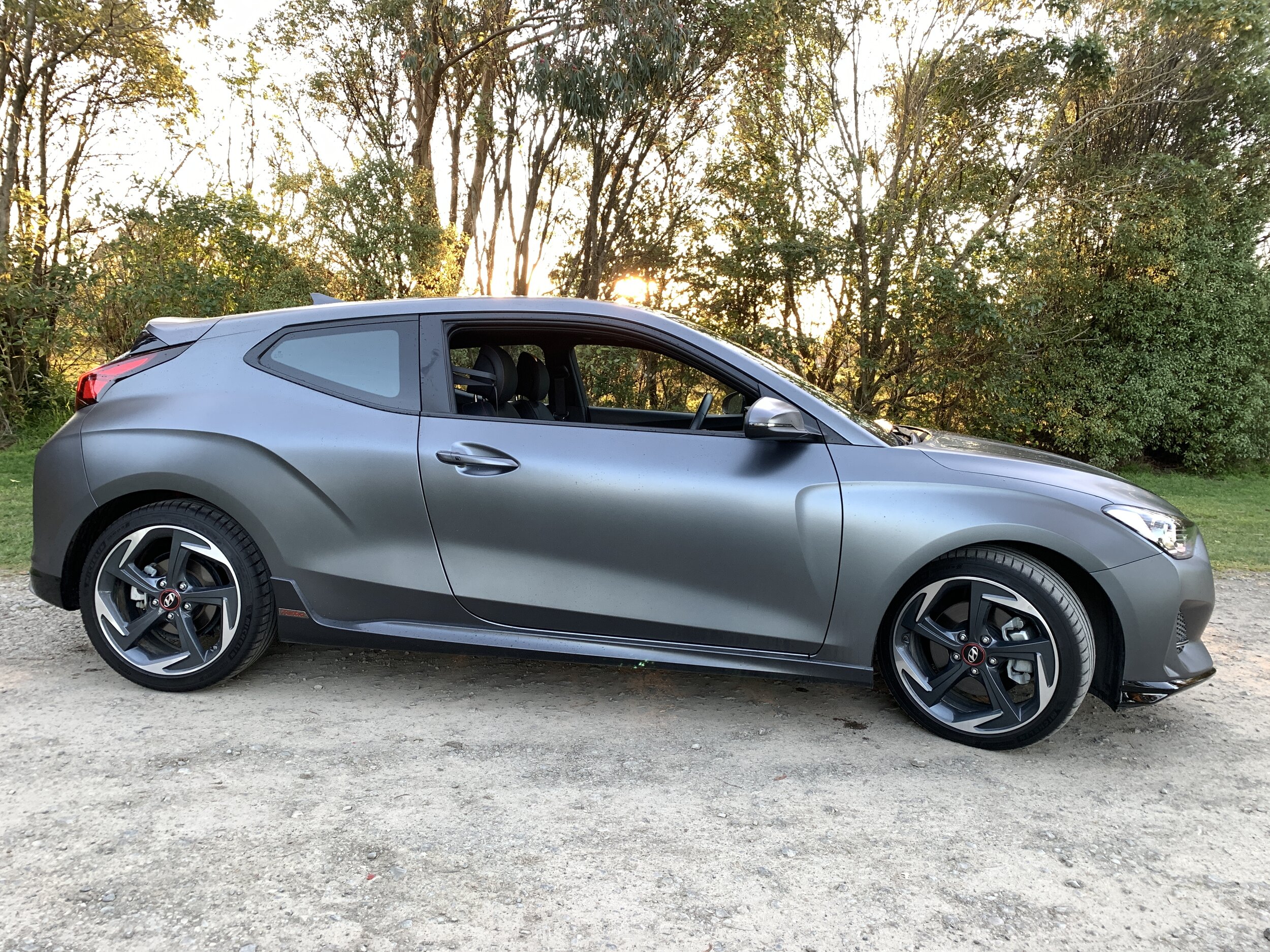
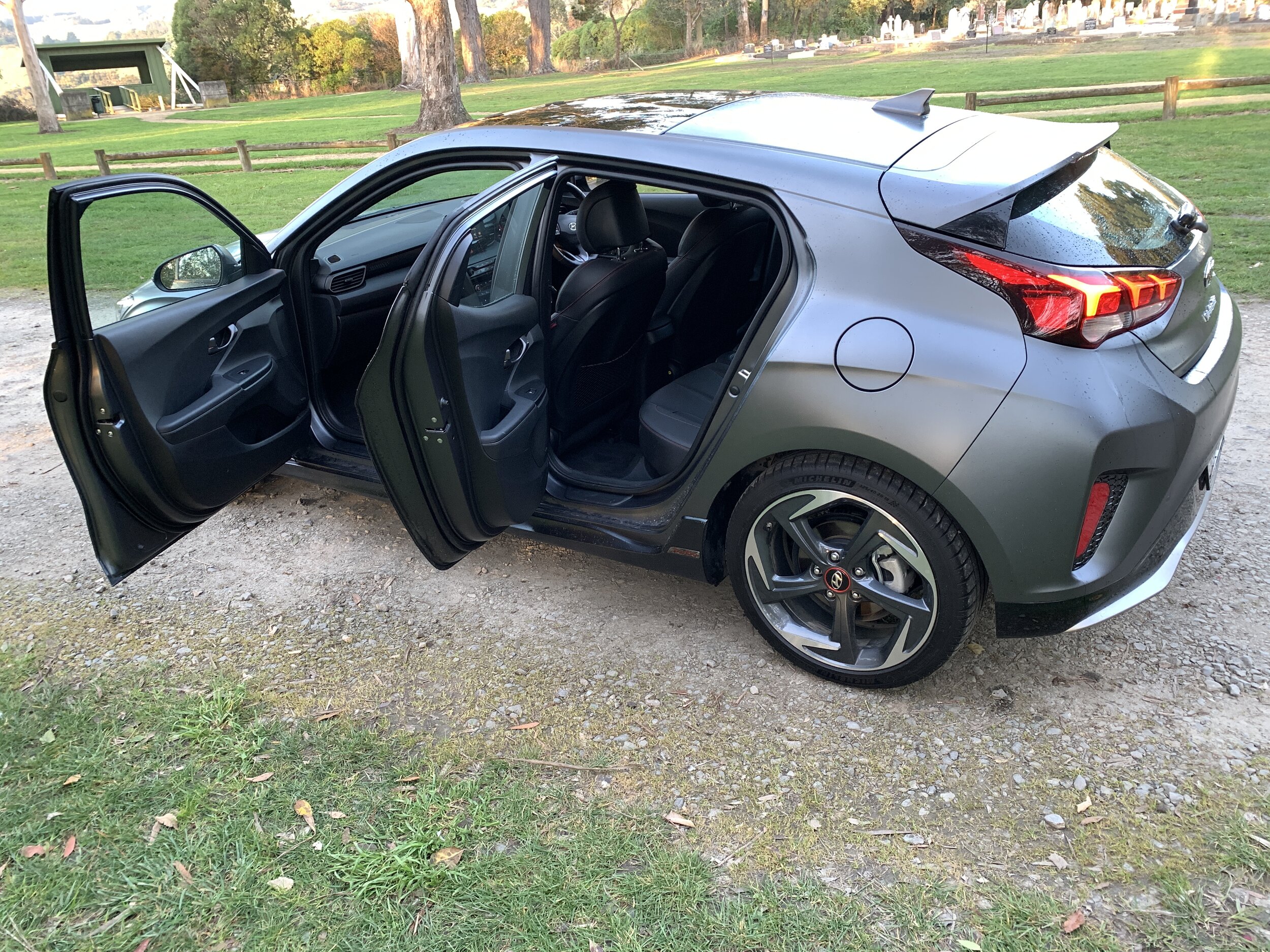
Well … maybe. In truth, there are hurdles beyond the first and most obvious one; which is that asymmetric body styling. It’s not for me.

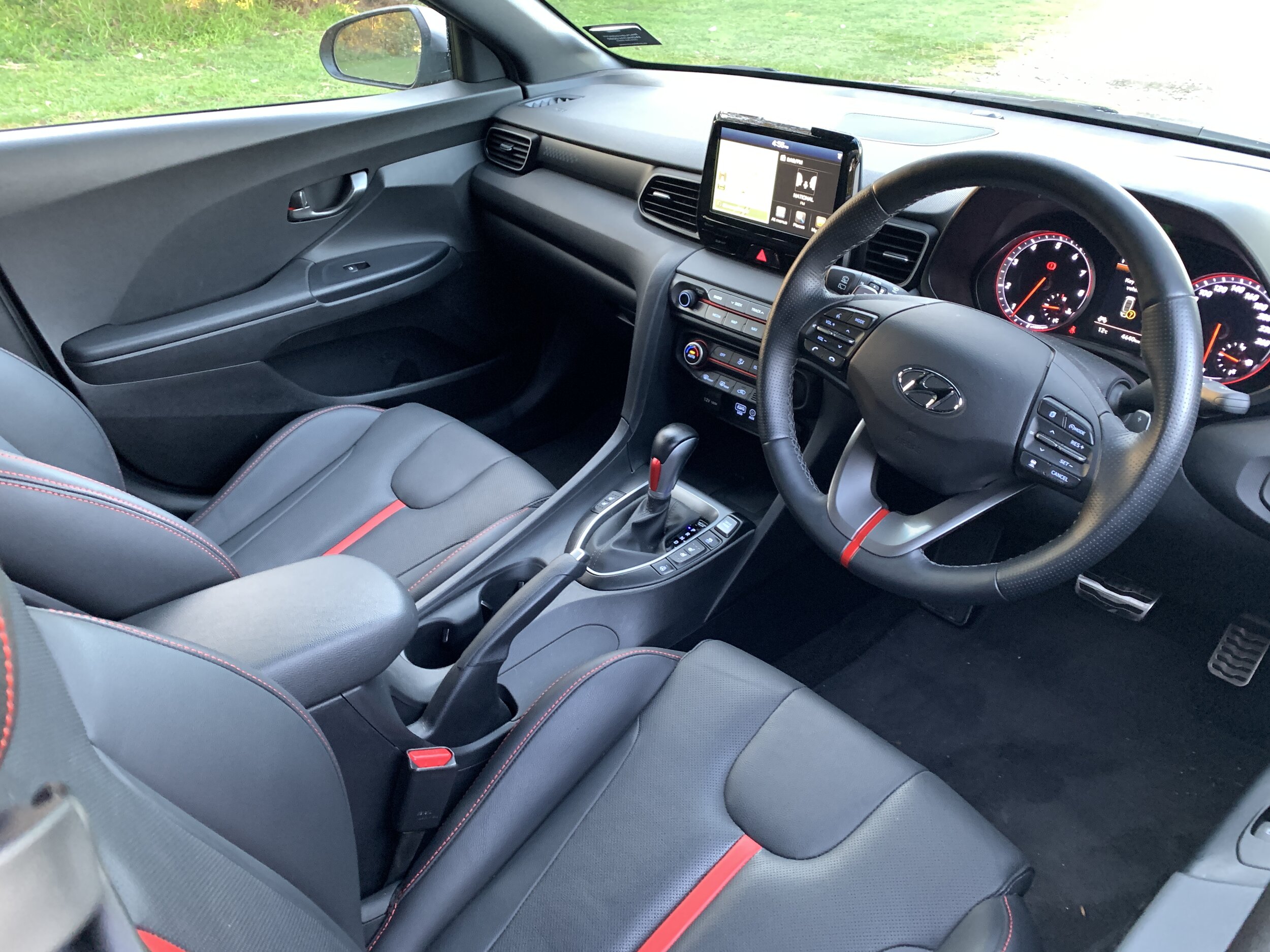
Frankly, I never warmed to with the first generation of this car and still see no point to with the second. Mostly, it’s because I’m just a person who enjoys the neatness of symmetry; so the Veloster’s ‘two doors on one side, one on the other’ approach straight away irks on that level.

But it also fails to convince because it lends no particular benefit in respect to practicality. If anything having front doors this long simply makes it awkward when you’re parking, because in angle slots especially you are always aware of the requirement for additional space in which to swing them, else it’s hard to get in or out. Beyond that, it just looks weird. So, yes, as much as I acknowledge that it’s always good to have a USP, basically any standout ingredient only becomes a plus when it has a purpose. And this doesn’t.

Anyway, putting all that aside – impossible, I know, but let’s try – the Veloster will have to convince that it’s basically as good as the established Hyundai hot hatch that is very good indeed; the i30 N.

Surprised it comes closer to the car the South Korean mega-brand hired former BMW M Division engineering supremo Albert Biermann to help make, and then poured huge R&D resources behind? Yeah, me too.

The Veloster in previous form has never been anything like that sporty. And, truth be told, it still isn’t feral enough to take on the N product in a straight-up fight, because outright performance still isn’t on par. And yet it does at least feel a lot sportier now than it previously did. Transference to a more competent chassis (the same platform as the i30, which brings a new multi-link rear suspension) seems to have inspired the development team, but perhaps they also began to spend time with Biermann’s group as well.

Whatever has happened, the Veloster has a lot more fighting spirit than previously. It has a nicely snappy version of the direct shift transmission – which, of course, the N has yet to get and very much needs – achieves much better suspension tuning than before, is given some decent brakes, is treated to good tyres (no points for guessing these being Michelin Pilots) and even has better seats. All of which makes it much more memorable.

Even that the colour range now includes the shade seen here, a dull metallic grey finish that seems identical to the hue that was once a very expensive option on very high-end performance cars (Ferraris and AMGs especially) and was so special care it couldn’t be hand-washed with anything other than an expensive solution … well, it adds to Hyundai taking this car in a route that was previously too hard. What’s always been a sports car by definition has, at least become sporty.

Mind you, that’s possibly just the version on test. An entry level model with Hyundai's 2.0-litre four-cylinder petrol engine is available, but you know it’s highly unlikely to be as sharp or as involving as the flagship Turbo Limited. 

This one is powered by a 1.6-litre turbo petrol four-cylinder. It’s the same size engine that does the i30 N such good and, though not as highly tuned here – with 52kW less at optimum - assuredly it has decent verve, particularly when you tap into the turbo over-boost though kick-off enthusiasm is reasonably good, too. It even manages a snarly exhaust note from time to time. 

It’s in marriage to a seven-speed dual clutch transmission whose character is in theme with the engine’s improved nature. Sure, it demands a moment to sort itself when transferring from forward to rearward motion – but, then, all transmissions of this type tend to ask for this. But if you’re pressing on and expecting swift, accomplished up and down changes, it’s really in the mood. 

The car’s ride is the most cosseting in this group, no arguing about that. Yet grip is good and the car now has a far more positive attitude, at least with just a driver aboard, than it previously demonstrated. The nose-led attitude has been vanquished for a sharp, responsive turn-in. The torque vectoring control system doubtless helps keep it tidy, but it doesn’t seem too intrusive.

It’s all good, if only to a point. Frankly, this is still the car that will struggle to keep the others in its sight; there’s not quite enough wick, for a start. But does deserve kudos for a demonstrating more tenacity than it appears capable of. 

If more madcap, it still stays sensible on safety grounds. In typical Hyundai fashion the car is loaded with assists. The SmartSense suite now standard on every Veloster incorporates driver attention warning, forward collision warning, forward collision-avoidance assist, blind-spot collision warning, rear cross-traffic collision warning, adaptive cruise control, high beam assist and lane keeping assist systems. Some can be a little over-zealous, but it’s all for a good cause.

The second-gen cabin has a more affluent feel now and of course it has a large touchscreen with provision for Apple CarPlay and Android Auto, plus a heap on in-house developed functions. There’s wireless phone charging, too; on a decent-sized pad to boot. Heated and ventilated front seats, a head-up display, a full-width glass sunroof and an 8-speaker Infinity premium audio system are provisioned, plus the kind of leather that never convinces as being from a bovine.

So, all in all, it’s an intriguing car, albeit not one that ultimate sells itself easily. It’s become bigger, which helps free up more interior room – though not to the point of making it four adult friendly - and while the design proper doesn’t work for me, I’d have to agree the shape has become more attractive, particularly in silhouette.

Realistically, if any Veloster has a chance of getting into your life, it’s this one. But it’s probably only an outside chance. Especially with the family opus i30 N costing just $2000 more. Still, it was interesting and if you’re an absolute fan of ‘out of the ordinary’ …. well, it’s certainly that.


Volvo S60 T5 R-Design: Keeping the boot in

Once a badge of outright fiery performance pedigree – Volvo in this instance reserves the T5 designation to signal a slow burner.

Volvo S60_1.JPG

Base price: $82,900
Powertrain and economy: 2.0-litre turbo-petrol four-cylinder, 192kW/400Nm, 8-speed automatic, AWD, combined economy 7.3L/100km, CO2 168g/km.
Vital statistics: 4761mm long, 2040mm wide, 1431mm high, 2872mm wheelbase, luggage capacity 390 litres, 19-inch alloy wheels.
We like: Lots of tech, smart look, smooth engine.
We don't like: Small boot, not like the old-school T5.

 HERE you go, another car that sets up a ding-dong battle between heart and mind.

Why should be obvious to see. The market has put the absolute boot into sedans. If there’s any commonality to the avalanche of marketing data every brand accrues, it’s the overwhelming evidence that no kind of passenger vehicle can succeed unless it has a semblance of something plainly absent from today’s tester. Let’s call it the crossover gene. 

So, with that in mind, the S60 should be basically invisible, because nobody’s supposed to be interested.

And, yet, on the day I used it as a retreat from the cold when, having decided not to race in a car club event at my local track, I volunteered for gate duty undertaking Covid compliance checks on the final day these were relevant under what transpired to be the first round of Level Two, I met a lot of ‘nobodies’. 

Who were all genuinely interested. Maybe not to the point of wanting to buy in, but certainly keen to sit in it, look at the powertrain and run up questions about what the car was about. 

The one thing it particularly did, too, was draw out owners of older Volvos. Even though this brand isn’t a huge performer in respect to NZ-new registrations, the Swedish enclave is surprisingly healthy, thanks to used imports. The guys I met seemed to be running ex-Singapore cars. Mainly a few V90s sitting up in the spectator area and the service park but also a 1980s’ S80 T5 R from the 1990s that was proudly reprising the famous international touring car racing works effort. 

IMG_5685.jpeg

The S60 here gave the old-school supporters a fair bit to think about. Volvo has changed hugely in the past few years, but rest assured in ownership with China’s Geely and despite production now expanding from Scandinavia to the United States and China, it’s still emphatically Swedish in spirit.

That exemplifies in how this car delivers in its styling, comfort, equipment level and under the bonnet. And with the badges?

Well, today’s T5 is no longer a five-cylinder, but a 2.0-litre four-cylinder turbo petrol, and the T8 format this level of sedan and wagon can also equip with is also well off the traditional numerical mark, as it now represents the presence of a "twin engine" powertrain that combines another version of the 2.0-litre, but this time with a supercharger working with the turbo and backing from an electric motor.

The latter format delivers something quite remarkable - a PHEV system that is emphatically performance-minded yet can also be driven in quite frugal manner – and I’d readily admit that transferring to the S60 T5 after a week with a V60 T8 demanded attuning, quite literally, to a different, less frantic pace. 

At same token, of course, it’s only fair to acknowledge that the transition also took me into lower pricing altitude, exaggerated all the more through the V60 having come with enough options to almost double the $20,000 difference that divides the models in their purely factory formats.

Could you tell? Well, yes, in respect to their fitouts, the V60 clearly had more finery to justify its higher placement in the prestige zone. At same token, though, the S60 hardly felt like it was trading at pauper pack level. 

IMG_5691.jpeg

Volvo interiors these days are exemplars of modern Scandinavian design and, beyond that, this is a brand that accepts it has to provision fulsomely if it has a chance of being thought of as a true rival to other like-sized and powered Euros.

While sedans are falling out of favour, the competition is still pretty hot. The rivals for this models conceivably included all the stars; the BMW 3 Series, Audi A4, Mercedes C-Class, Jaguar XE and Alfa Romeo Giulia. None can be taken lightly.

The S60 pitches in with appealingly modern styling, a cabin fitout and comfort features that will be familiar in this sector, delivers well in cabin size and then throws in the additional possible allure of being all-wheel-drive, when most others are not.

While it is not an outright performance model, the engine also achieves an optimisation tweak from Polestar, which though now primarily involved in making electric cars still lends a hand to its original task of tweaking the fossil-fuelled engines to deliver a touch more pep.

That’s how is translates here. The S60 is not emphatic in expressing sporting intent, but the engine has more than sufficient power for most circumstances and, certainly, it has no issue with reaching, holding and exceeding our legal limit. The eight-speed gearbox works well with it to produce a rounded, pleasing performance envelope. It lacks the impressive oomph that the PHEV so effortlessly implements yet there’s enough of a torque swell, from quite low revs, to make it feel ‘larger’ than it really is.

Volvo S60_5.JPG

That’s definitely a good thing. The S60 is in its fourth generation and each seems larger than the last; this time there’s a 100mm increase in length, mostly to improve rear seat leg room, which has previously been so tight as to be criticised.

That possibly won’t now happen, though perhaps as the dimensional increase doesn’t influence boot space, some might question what’s going on there. It’s a 392 litre cavity – long and wide but shallow in shape – and even though it has a 60/40 split folding seat, the amount of luggage room will be questioned. Volvo will, of course, say the answer is the V60.

If styling sense, too, the wagon has an edge though that’s not to say the chiselled, sculpted styling doesn’t look any less good on a sedan. Those abbreviated overhangs, the squared and hunkered stance and the detailing of those Thor’s hammer DRLs bisecting the headlamps. Everything about this car expresses that this is a maker in a confident frame of mind.

Volvo interior design is all heading to a commonality, so no surprise to see the S60 achieve the feature interior element of a big, upright 'Sensus' touchscreen in the middle that remains a model of clarity and simple menu layouts. Worried about fingermarks? Well, yes, it does suffer them – so Volvo includes a cloth cleaner for that. As you would expect, the R-Design seats are sumptuously comfortable.

The engine start and stop function might have newbies guessing, as this is by a rotating knob near the electronic park brake button. It requires a 45-degree turn clockwise, then release. Different? Sure, but it’s easy to locate and use.

All in all it imparts as being very executive in its ambience, and aside from the plastics being perhaps not quite up to German premium standard, there’s very little to quibble about.

The specification delivers four-zone climate air, full LED lighting with cornering lamps, powered and heated front seats and connectivity for both types of smartphone, though the USB ports are a little awkwardly placed. Also, there’s a three-pin (220V) outlet located in the rear of the centre console for recharging devices that don't have a USB lead. 

And no-one could claim Volvo is neglectful in respect to the well-being of its customers. The safety provisions are so impressive. City Safe’s recognition smarts keep improving and it also initiates autobraking if a head-on collision seems imminent. Adaptive cruise and lane keeping, a 360-degree camera, self-parking and extremely well-sorted traffic sign recognition. A little pop-up graphic in the speedo advises when the car is approaching a speed camera.

The S60 runs adaptive damping with three drive modes and also has decent 245/40R19 PremiumContact rubber, the chassis is quite well-sorted and likewise the all-wheel-drive. Yet as impressive as it is for its grip and flowing mannerisms, it stops short of delivering a fully engaging feel; there’s nothing here that suggests it’s going to deal to the top Germans. A lot of this is to do with the steering. The rack is accurate and nicely weighted, but devoid of feel.

Volvo V70 Hybrid_5.JPG

Still, even if truly keen drivers won’t be captured, it feels pleasingly planted and secure and while the ride quality is firm, it soaks up surface imperfections well. So, while imagining it to be a modern equivalent of those classic 850 T5 BTCC racers is asking too much, it’s quietly quick when you need it to be. Plus, it’s also decently thrifty, too. At a steady 100kmh the engine is only revving at around 1600rpm; holding it there and running in Eco mode allows easy access to sub 10 L/100km outcomes.

So, yeah, there are pluses and minuses, pretty much in even quantity, really. Not that this really matter, because what the S60 really requires if it is to achieve volume is something that doesn’t appear likely to occur any time soon. A change to consumer tastes. If we go back to sedans, then obviously it has a chance. But, frankly, it’d have to do more to convince me.

Even so, step back and view it through a broader spectrum and there’s every reason to be impressed, if not about the car specifically then at least in respect to what it represents as a brand effort. 

Volvo’s really a make on the move, now. Annual output has doubled in less than a decade to stand at 700,000 units – a count the likes of Jaguar can only dream of achieving –and the entire model range is delivering all-new designs, architectures and technology. It's standing tall and that’s even before we’ve been given a chance to look at its opus, the Polestar electric cars.


Mercedes-Benz GLB 250 revisit: A class act spurs ML memories

It’s Colin Smith’s turn to consider this new Benz. Among conclusions? ‘Small’ today is bigger that ‘large’ used to be.

mbglb250b.JPG


Base Price:  $92,900

Powertrain and performance:  2.0-litre four-cylinder DOHC 16-valve turbocharged petrol engine. 165kW/5500-6100rpm, 350Nm/1800-4000rpm. All-wheel drive. Combined cycle fuel consumption 7.7L/100km (claim), 8.2L/100km (road test).

Vital statistics: Length 4634mm, height 1659mm, width 1834mm, wheelbase 2859mm. Luggage 565 litres. Wheels: 19-inch alloys with 235/50 R19 Continental PremiumContact6 SSR tyres (run-flat).

We Like: Driving position and visibility, five-seat family wagon space and occasional third row versatility. Brilliant multi-beam headlight technology, intuitive MBUX infotainment and control system.

We don’t like: Aggressive lane departure interventions, compromised access to third row seats.

THE alphabetic sequencing suggests the new Mercedes-Benz GLB sits one-size-up from models carrying the `A’ designation.

And the knowledge that Mercedes-Benz has built its new GLB on the same transverse engine platform as the latest A-Class hatch - and derivatives including the CLA, GLA crossover and B-Class - points to a compact definition.

But slot it into a car park and the GLB actually seems larger. So, I checked and compared.

Do you remember the W163 Series ML introduced in 1997 as its first Mercedes-Benz foray into SUVs beyond the mighty G-Wagen? The GLB has a wheelbase dimension 40mm longer than the ML and is also 47mm longer overall.

Width measures up at an identical 1834mm but the ML stood 116mm taller and that is where the impression of larger size is gained.

The debut of the GLB offers a family wagon solution between the GLA crossover and the GLC mid-size SUV with a spacious interior layout that includes three-row seating.

Pricing begins at $78,900 for the entry level GLB 200 (front-drive) version and the GLB 250 4Matic (tested here) is priced from $92,900. The step to the GLB 35 AMG performance model adds another $12K.

mbglb250g.JPG

The 1991cc direct-injection petrol engine is a staple across multiple Mercedes-Benz model lines and powers the GLB 250 4Matic with 165kW available between 5500-6100rpm and peak torque of 350Nm across a wide 1800-4000rpm range.

And one more comparison to the old ML - the 2.0-litre turbocharged engine in the GLB 250 4Matic offers 5kW and 40Nm more than the 3.2-litre V6 from the late-90s.

Matched to the new eight-speed DCT dual clutch transmission there is readily accessible torque and close ratios to deliver relaxed highway cruising or a couple of quick downshifts and plenty of punchy response.

On the highway at 100kmh the GLB 250 4Matic settles at a long-legged 1500rpm in eighth gear or shifts to 1800rpm in seventh 2400rpm in sixth and 3000rpm for some fifth gear urgency.

It’s capable of the 0-100kmh sprint in a very respectable 6.9 seconds while a claimed combined cycle fuel consumption figure of 7.7 litres per 100km was nearly met by an 8.2L/100km road test average and a 7.2L/100km highway check.

A big part of the GLBs appeal is direct transfer of the intuitive technology introduced on the latest A-Class and since deployed across other Benz models.

That includes dual 10.25-inch displays with a configurable dash layout, the MBUX operating system with ``Hey Mercedes’’ voice inputs plus touchscreen, command controller and steering wheel haptic ``scroll and click’’ buttons providing multiple ways to interact with the GLB.

Where the GLB departs from the A-Class is its lengthened wheelbase, raised ground clearance and upright wagon styling. It’s a ruggedly stylish SUV with a purposeful stance, bold 19-inch alloy wheels and the detailing includes black roof rails and mirror housings.

The layout and dimensions make it a roomy mid-size wagon with the active lifestyle benefits of all-wheel-drive including off-road drive mode, boosted ground clearance, a powered tailgate that reveals 565-litres of load space plus a 2000kg braked tow rating.

mbglb250i.JPG

One more skill in the GLB play book is the third-row seating and 5+2 accommodation.

It’s an occasional third-row suitable for younger children and going seven-up in the GLB requires clambering over the folded second row seats. And creating any useful footwell space means sliding the second-row well forward - although the front seats help with a deeply scalloped shape.

While the third-row falls somewhere between ambitious and occasional, the second row is a comfortable place to be when the GLB is configured as a five-seater. Generous shoulder width and only a moderate amount of centre tunnel intrusion combine with enhanced rear passenger visibility from a raised seat height.

The second row is configured with a 60/40 fore-aft slide mechanism and a 40-20-40 folding backrest. Installing the extra seating means a spare wheel isn’t carried and the GLB rides on Continental PremiumContact6 SSR run-flat tyres in a 235/50 R19 sizing.

The wide tyres provide surefooted feel on the road and once beyond the city limit, I liked the firmer suspension feel and reduced steering assistance offered in Sport mode.

The GLB proves easy to drive with a comfortable seating position including full power adjustment and memory functions for the front seats.

A check through the GLB model line-up reveals the step from 200 to 250 level brings more than increased output, one extra gear and 4Matic all-wheel-drive. The equipment list is also boosted with adjustable suspension damping, a panorama sunroof, heated front seats, shift paddles and carbon look cabin trim.

The test vehicle was optioned with the Galaxy Blue metallic paint ($1490) and three of the well-priced option packages including AMG Sports Package ($1990) including sports steering wheel and Sports Direct Steer while the Vision Package ($1190) adds a 360-degree camera display and the excellent Multibeam LED headlight technology.

The Driving Assistance Package ($1990) brings Active Lane Change Assist, Active Distance Assist cruise control and route-based speed adaption. The test vehicle priced up at $99,560.

Other standard technology content includes Traffic Sign Assist, multiple mini-USB charge points – including two in the second row and two more back in row three – and the 64-colour ambient lighting system.

The new GLB evolves the modern style and technology appeal of the latest A-Class and its follow-up derivatives with the addition of SUV capability and a generous increase in cabin space. The result is a strong new Mercedes-Benz contender in the fashionable medium SUV and crossover segment. 

Jaguar F-Type P575 R: Cat-napping with a feral feline

Pussy-footing through the Far North in Jaguar’s sharpest-clawed coupe. Jealous yet?

IMG_6250.jpeg

Price: $214,900.

Powertrain and economy: 5.0 litre supercharged petrol V8, 423kW/700Nm, eight-speed automatic, AWD, combined 10.7l/100km, 252g/km.

Vital statistics: 4475mm long, 1923mm wide, 1308mm high, 2622mm wheelbase, luggage capacity 310 litres, 20-inch alloy wheels 305/30 tyres.

We like: Awesome grunt, chassis balance, styling updates.

We don’t like: Slow infotainment screen responses, coarse chip harshness wearying, not as loud as it used to be, having a stern co-driver.

DEPARTING at sunrise was a heartbreak … and, yet, also so heart-warming.

As a spot in which you’d want to be to enjoy the start of a brand-new day, Doubtless Bay is pretty much unbeatable. Doubtless Bay Villas, all the more so.

The past 48 hours had been brilliant, taking it easy in a car that could have made this trip one huge rush.

Eight years is a lifetime in the car world, but Jaguar’s F-Type maintains a youthfulness that belies its age and a recent facelift has so deftly ironed the obvious wrinkles it still looks fantastic enough to keep turning heads and dropping jaws.

The wide, short, low and taut dimensions are pure sports car; so too the snug cabin in which the driving position feels just right. The F-Type's designer, Ian Callum, has moved on but there’s no reason why his opus needs to.

The P575 R format I’m driving is now the new flagship. With four-wheel-drive and a 423kW version of the supercharged V8 that has been with the car from the start, it’s a serious piece of kit; so much so that it’s ironic that one revision for 2020 has been to reduce the famous flare and blare on start-up.

IMG_6178.jpeg

While it announces less stridently when awakened – well, at least within Jaguar terms (there’s still rumble, but less neighbourhood window shake) - anything with this much power is going to be interesting and the V8 is massively potent when it comes on song, with 0-100kmh just 3.7 seconds away and a 300kmh top speed also achievable, according to this maker.

And when push comes to shove, it returns to being as outrageously vocal as ever, blaring under power, crackling, popping and fizzing on the over-run.

This much I learn when driving it in isolation around the Auckland area in the spare time before I head to the airport to pick up Mrs B, who has given me the day to myself before flying in.

I’m not saying at-the-wheel fun time is completely over from that point, yet it’s fair to say that, from that point on, the car was operated in a less adventuresome way. Jaguar’s drive modes do not include anything marked ‘tenderfoot’, but if they did, that’s where we would have been. My co-pilot has very firm convictions about where and where such potency can be unleashed. And it’s on her watch.

This trip was all about relaxation, a chance to take four days away from our respective work stations to breathe the good air, eat the good food and, after the car was put away for the night, enjoy the good drinks.

No better place to do all that than the last of three overnight hideaways. The Hilton on Auckland’s waterfront has been fun, the Waterfront Paihia homely … but Doubtless Bay Villas (doubtlessbayvillas.co.nz) was truly the best, saved for last.

Snuggled on a hillside overlooking the most beautiful maritime outlook in the Far North, an hour from the Bay of Islands, is a luxury complex comprising modern self-contained and serviced villas which sleep up to six. So, room aplenty for the two of us.

We’re feeling rightly chuffed to have one of the prime sea view duplexes, a score made easy from being friends with the custodians.

IMG_6186.jpeg

John and Sue Oxley might be familiar to you as well. He’s a celebrated name from the motoring journalism beat, here and previously in South Africa, where his wife was a high-up on the other side of the fence, as an industry comms specialist.

Anyway, after a grand life on the fast lane, they’ve gone into property management, this taking them to the Coromandel, then Brisbane and now to what would outwardly seem the ultimate lifestyle job.

Well, appearances and all that … assuredly, there’s plenty to keep them busy because this is a five-star property where great care and attention goes into keeping everything ‘just right’. And, yet, this couple readily agrees it’s all the easier when located in the warmest part of New Zealand. When we turn up, John’s in summer wear … quite a sight for those of us who, two days earlier, had been waking to heavy frosts. Well, it’s not called the ‘Winterless North’ for nothing.

Bringing the Jaguar here also feels ‘right’ because it’s exactly the kind of property car brands love to use as an event showcase. Indeed, several have already. They’ll doubtless be as impressed as we were that it’s just been awarded the prestigious HotelsCombined Recognition of Excellence Award for 2020, with an almost-perfect score of 9.6 out of 10, based on guest ratings.
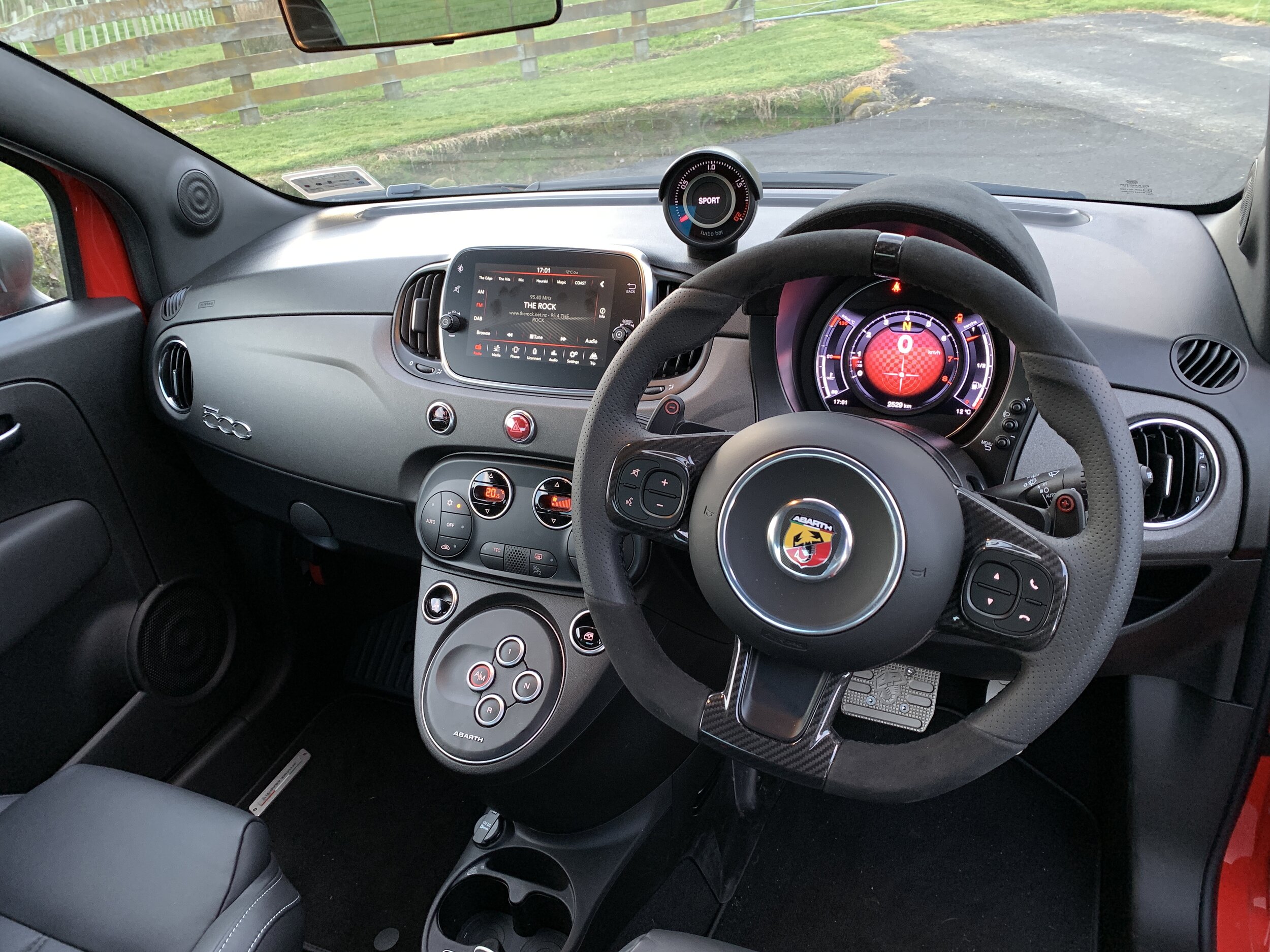
 “The big thing about the villas is that they offer an island life-style without leaving New Zealand,” says John.

“With waving palms, views across the attractive Cable Bay beach and out to sea Doubtless Bay Villas offers the perfect getaway from the stresses of daily life,” he impresses.
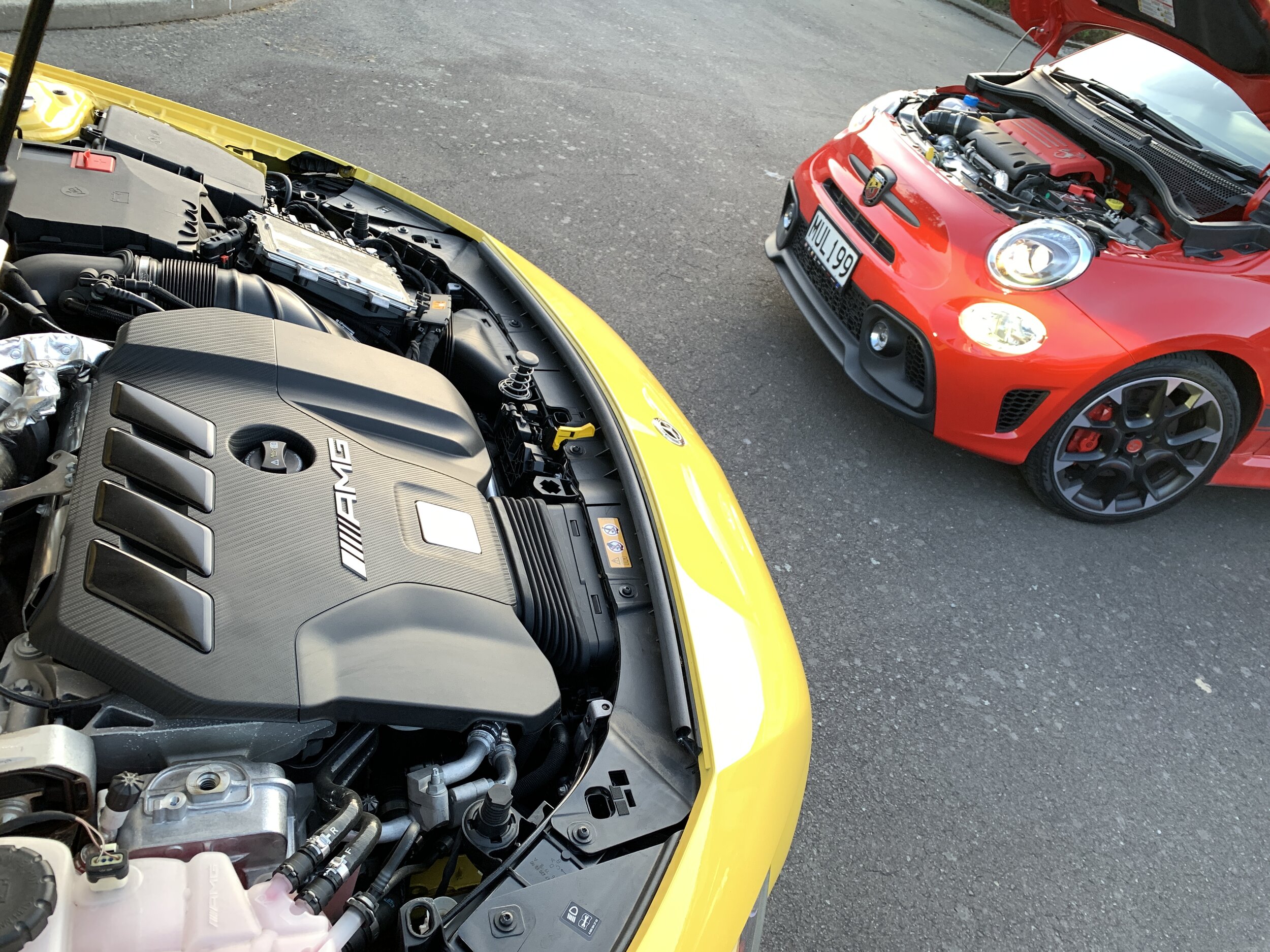
“You can either chill out in your villa and listen to the ocean, or you can jump in your car and explore the area, including the beautiful KariKari peninsula, or even drive right to the top of New Zealand at Cape Reinga, where not only will you see where two oceans meet, but you will feel the spiritual energy of this sacred place.
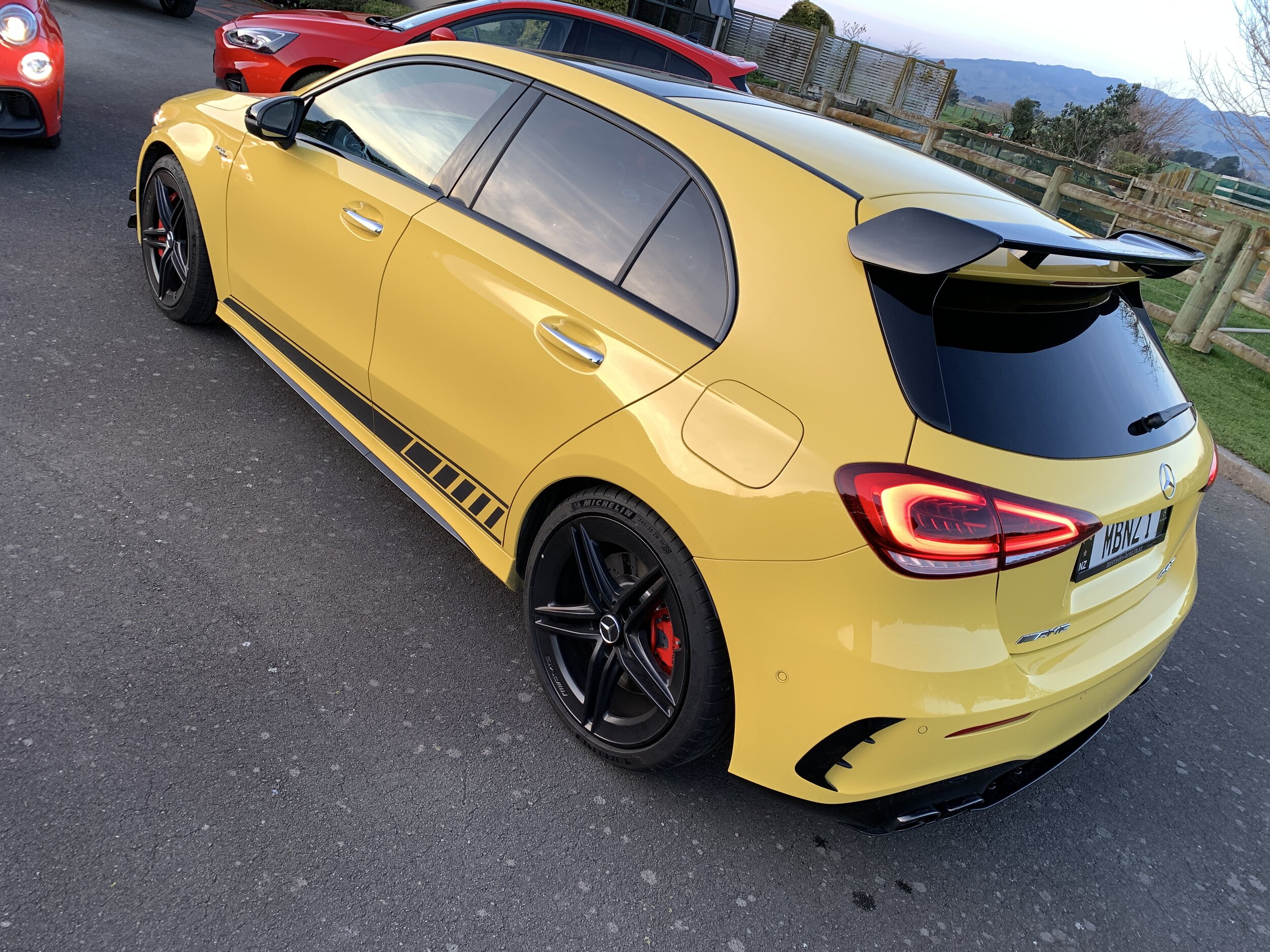
“As a motoring journalist for more than 50 years I travelled the world, and I have been to many, many beautiful places, but this is where I have chosen to finally hang up my driving gloves, and have changed my driving boots  for tennis shoes. It’s a great place to be.”

In saying that, my pal also concurs the Jaguar offers up quality accommodation, too. Naturally enough, he knows this brand well, and is intrigued to check out all the updates arriving with the refresh.

IMG_6193.jpeg

Technically this is a facelift, realistically cognoscenti might call it more than that, given the extent of the overhaul, which includes a visual restyling of such magnitude it has become quite a different looking car, at least when viewed front-on, to the one it supersedes.

Much slimmer headlight units and a reshaped grille serve to provision a very different face, and one that seems more aggressive, especially at this level. That vast aluminium bonnet - an impressive feat of production - lends illusion of the car having an even longer nose, though the overall vehicle length is unchanged.

Aesthetic alterations to the rear of the car are less dramatic, which is no bad thing. They got that right from the get-go. However, slimmer tail lights that incorporate the 'chicane' signature first seen on the brand’s impressive electric car, the I-Pace, sit well here.

The interior also updates as comprehensively; it’s now all-digital, with a 12.3-inch display ahead of the steering wheel that’s highly configurable to and includes a shift light when driving in manual mode.

The 10-inch infotainment system is much improved with the addition of Apple CarPlay and Android Auto, which at least allows you to circumvent a lot of the JLR proprietary stuff. I found early on that it was far more preferable using the mapping on my phone for navigation rather than the in-car system because the latter was slow and, also, seemed unable to find some of the addresses that Google knew of and located in a flash.

This edition also takes sportier 'Performance' seats that feature taller shoulder supports and are very embracing. The age of the car and, one supposes, its electronics shows perhaps in the absence of every cutting-edge driver assistance. The one you might want to see but don’t is adaptive cruise control. As much as I accept that sports cars should be especially ‘hands-on’ machines, it’ll likely lose sales because of this alone. It would also benefit from a head-up display.

IMG_6258.jpeg

Of course, is saying that, having to accept a certain degree of concession is just part of the ownership experience. For instance, there’s no disguising that it is designed wholly as a sports car – what’s harder to quantify is exactly what kind of sports car it really is.

One the one hand, it still expresses a fair degree of old-boy posh. On the other, it’s very cosseting and, for all that the trim is very luxurious, the equipment level as a whole is more tailored towards matters relating to hard-out driving than abject comfort.

That much enforces when you slip into it. The styling might project this as being a large model, but in reality it’s a car you virtually wear. The dimensions are tight and the two-seat cabin is quite snug.

So is the boot. We’d determined to pack light for four days and three nights on the road, but I hadn’t taken into account that our weekend luggage would come to include a Lego Land Rover Defender model, a surprise gift from the brand for attending the launch of that vehicle on day one of this trip.

The kit in finished form would have taken up much less space than the box it comes in but that wasn’t going to happen – assembly is a job of several days’ non-stop work.

Naturally, I was hardly going to leave it behind, but what to do with it? The only two places the box would fit were the passenger side footwell or the boot. The first was out of the question; the second raised different challenges once our weekend luggage also figured. We only had a single suitcase of the type that easily fits in an aircraft overhead locker, but the first time I tried to get everything in, the bootlid wouldn’t close.

Fortunately, Mrs B worked out that by putting the Lego in first, stowing my laptop bag on top of it and the (heavier) suite case to its side, then stashing our coats with other odds and ends - including the ‘essentials’ of a couple of bottles of wine – on top and whereever they’d go did the trick.

IMG_6179.jpeg

All had to be somehow squeezed in because there’s utterly no real room in the cabin for anything like that. It’s a real capsule; even m’lady’s handbag had to go into the boot.

As much as everything about this edition’s fit-out speaks to it being finessed for feral fun foremost, driving out of Auckland on the motorway raised false hope about the car’s comfort; but any impression of it being something of a grand tourer only lasted until we found a change of surface; the car physically altered the moment it transitioned from smooth tarmac onto more coarse chipped surfaces.

Road noise climbed to the point where we had to turn up the volume of the audio to overcome the tyre-induced roar and, even in its softest mode, the suspension was still transmitting any surface irregularities into the seats and bodies. It’s not an unduly harsh-riding car to threaten to realign your bones, but they’ll certainly get rattled enough to remind that, you’re out to enjoy a Jaguar with a magic carpet ride, you’d be better served by the four-door models.

Again, though, it’s not as if you shouldn’t expect it. Everything about it shouts out as a sports car, starting with how you sit in it: Impression you’re essentially sitting right on the ground, arms and legs outstretched with that massive bonnet arcing out the front, was enforced when I went to put the car away in the Paihia stop’s underground carpark.

The impression of it having a race-ready stance was proven to be far from illusionary. My prudence of entering this at barely walking speed was justified when I heard an awful momentary graunch as the car went through the dip at the ramp’s bottom; fortunately, it wasn’t the super-fancy carbon fibre lip spoiler that touched the concrete but a lower-set and assuredly hugely less expensive plastic piece. Still, the relief of extricating it the next day without reoccurrence was great.

Given that everything about this car leaves impression it will spaghetti speed limits at a snap, perhaps the biggest surprise about this package is that the drivetrain has enough docility to continence reasonably refined and fluid urban and 100kmh driving.

Some might even say the transmission is a little too relaxed: certainly, in the least aggressive drive mode it prefers to stretch the torque of the engine as far as possible rather that deliver instant kick down. That’s remarkable, given that another update has been to the calibration; the shift action is now supposed to be akin that that delivered on the very special Project-8 sports sedan that is pretty much designed purely for track driving.

Of course, you need just give it a touch more throttle – or, in fact, just snip it into the ‘race-flag’ identified driving modes – to find the car’s true self. There’s good reason why this variant’s 20-inch rims are clad with stupendously wide tyres and why it has massive brakes and comes only with all-wheel-drive.

Some might decry the lack of a rear-wheel-drive option, and the resultant lack of tail happiness, but assuredly all-paw power distribution makes for a far more exploitable machine. Potentially, a more enjoyable one, too: It would be hugely troubled to get all of that power down to the ground safely in such a compact car, with such a short wheelbase.

On that strength, a shout out, too, for Jaguar’s Intelligent Driveline Dynamics system, which also earns its keep. Even the car’s weight adds a sense of security; it certainly feels nicely pinned down because of it. And yes, for sure, that something as compact as this is clocking close to two tonnes might outwardly seem to be a slight concern – or, at least, have you wondering how much heavier it could have become without the obvious savings delivered by its alloy body parts – rest assured it has more than enough oomph to maintain a power-to-weight outcome that very much tips the scales toward punch over presumed paunch.

In many ways, the further you go in the F-Type, the harder it is to define its persona. Not surprising, really.

After all, you’re getting elegance and extravagance in look but a whole lot of rawness in feel. If you allow it.

In hindsight, a trip that was such a treat for us was hardly the same for the car. We stuck to the easiest roads – not always by choice, flooding just the week before had ruined opportunity to take the most scenic routes which in better conditions would have been great with the lack of international tourists – and never pushed it, save for when passing the very occasional meandering camper van asked for a throttle squeeze. That’s all it took for a quick dash past.

That I even almost matched the officially cited optimal overall fuel burn of 10.7 litres per 100km fuel economy revealed the full extent of my folly.

Owners need to think about what they’re taking on. As much as the national driving condition pegs thoroughbreds such as this back to show pony status, it really does deserve at least occasional opportunity to run fast and free. Track day outings would be the answer.


Subaru XV Sport e-Boxer: Enough meat or Greens?

If you’re imagining Subaru’s first hybrid is going to be a revelation, best sit down. With only minor improvements in efficiency and responsiveness applied to a model that’s dating, it’s challenging to see the point.

IMG_6505.jpeg


Price: $42,490

Powertrain and economy: 2.0-litre petrol four-cylinder with electric motor, 110kW/196Nm (12.3kW/66Nm electric motor), continuously variable transmission, AWD, combined economy 6.5L/100km, CO2 161g/km.

Vital statistics: 4465mm long, 1800mm wide, 1595mm high, 2665mm wheelbase, luggage capacity 345 litres, 17-inch alloy wheels 225/60 tyres.

We like: Improved ride, coherent hybrid-specific graphics.

We don't like: Fussy drivetrain antics, no ‘wow’ moment with hybrid engagement, XV design has dated quickly.

NOW the count of cars with potential to replenish partially – as, by virtue of a plug-in hybrid set up – or wholly (so your full electric car) -is significant enough not to be ignored, where do mild hybrids stand?

The brand that changed the world with the Prius and put more than 15 million hybrids on the world’s roads insists mild hybrids will remain relevant for years yet. Toyota’s conviction is great news for Subaru, given it’s also now taking the same path as the global giant.

Interestingly, as much as the e-Boxer inserting into the XV driven here, in entry Sport trim, and a more expensive Forester variant represents a giant leap for its maker, it might nonetheless appear something of baby step in the overall scheme of electric things, if not also off the pace set by others.

IMG_6516.jpeg

Really? Well, it’d be an insult to Subaru’s engineers to call e-Boxer primitive. Yet let’s just suggest it’s hardly fortunate for its rollout to occur so soon after the RAV4 Hybrid, a certain sector rival despite some price disparity. If you’re set on the Subaru star, comparison with Toyota’s similarly-pitched product won’t help. The latter is far more advanced. 

Toyota stands mention because it owns about a fifth of Subaru Corporation, the company formerly known as Fuji Heavy Industries, they also obviously co-operate (86/BRZ) and are partners on an electric car project.

It’s some surprise, then, to hear Subaru claim e-Boxer to be entirely an in-house concoct and that all the brands share is a common philosophy centred on using a combination of petrol and electric motors – capable of running individually or in tandem – to reduce economy and emissions (and without the need to charge the vehicle via a plug). When you are buddies with the world leader, you’d think every opportunity to use their talent would be taken, right? And yet …

Subaru’s claims for the degree of improvement from this driveline are hardly outrageous; they cite a 14 percent improvement in fuel efficiency over the equivalent petrol model on the urban cycle and a seven percent improvement on the combined cycle. They also cite an official overall full burn of 6.5 litre per 100km; which is nothing to brag about when in the company of a Prius or RAV4 hybrid owner and is just 0.5L/100km sharper than the official combined figure cited for a regular XV.

That’s in optimal conditions. What’ll it do in a ‘real world’ application? From my experience, not a great deal of improvement over the regular model, at least not in the environment I exposed it to.

Running up a couple of hundred kays in a mix of country and urban running delivered an average of 7.6 litres per 100km. A regular edition, with effectively the same engine, I’d driven several weeks prior over similar circumstances returned 8.3L/100km: So, in those circumstances, the hybrid remained 1.1L/100km shy of its optimal whereas the regular model was 1.3 L/100km off shy of its own target. 

IMG_6508.jpeg

That suggests it’s easier to get economy from the hybrid. But it also impresses the advantages could be slight. Even if it bulls-eyed the factory claim, logically it will take years of ownership to recoup the variant’s $5000 premium. Also, it’s obvious the hybrid’s overall range will always be lower, because the electric drivetrain’s implementation asks for 48 litre fuel tank, whereas the regular car has a 68 litre tank. (Quirkily, cargo volume increases, from a 310 litres to 345).

Of course, the picture is bigger than just fuel burn alone. Emissions were lower from the e-Boxer, but not much: 147 grams per kilometre against 159 according to manufacturer figures.

So far, so damning? Well, while the overall averages were less worlds apart, there were specific instances when the e-Boxer appeared to be operating far more efficiently than the pure petrol, even if it wasn’t always when I expected it.

Hybrids are renowned for being most effective at fuel-saving around town, where they can rely more frequently on their electric motors.

From my exercise, though, the XV e-Boxer’s sweetest spot on the move appeared to occur when it was driving somewhere around 70kmh; an awkward area when most speed jurisdictions are either 50kmh or 100kmh.

 The other scenario where it also leans down is when its literally crawling. So, if caught for prolonged periods in very slow traffic, it’s potentially not a bad friend. Around where I live, ‘rush hour’ at its worst lasts about 15 minutes.

So is it worth it? Not really. Above that, there’s the question of whether you even want the XV to start with. It’s no longer a particularly new product and, despite continuing improvement to the spec, has patently been left behind by the Forester, let alone quite a few cars from other makers, in how it drives and presents. The origami styling hasn’t aged particularly well, either. It’s simply not Subaru’s finest effort. And I say this from viewpoint of being a brand fan; we still own a older Forester and had the current Outback for a while.

IMG_6514.jpeg

If you are going to buy in, be assured it’s at least a simple science by hybrid standards. A powertrain married to an electric motor fed by a lithium ion battery that operates mainly in tandem, but occasionally in isolation, is hybrid 101. No driving modes to manage the motor’s performance and the paddles behind the steering wheel have not been repurposed, as so often occurs, to alter the strength of the regenerative braking. Pull those and you’re moving through the pre-set change points built into the CVT.

The battery isn’t huge; outputs in isolation are 12.3kW and 66Nm of torque. Self-charging using regenerative braking energy. It combines with the engine to produce a total output of 110kW at 6000rpm and 196Nm at 4000rpm; that’s identical torque as you get with the regular XV but 5kW less power. This all feeds through a drivetrain that’s Subaru tried and true. So, permanent all-wheel-drive system and chain-and-pulley CVT, though the latter is slightly recalibrated.

The rationale for Subaru calling it a ‘motor assist’ tech and enforcing that it is more of a supplementary unit than a primary driver made increasing sense as the test progressed. For the most part, the system’s imprint was subtle. 

Well, except with the starting process. That’s bound to be surprising to those used to other hybrids, in that going straight-to-electric on activating for a silent roll-away, forward or reverse, never occurs. It’ll do that stuff when the car is fully operational, yes, but at initial firing it’s always the petrol engine that kicks into life – and with quite a cacophony when cold. Going straight into burning hydrocarbons; where’s the Green ‘wow’ in that? 

Time with the standard model imprinted that this engine is probably the most raucous of Subaru’s current crop of horizontally-opposed units; as much as I enjoy a good boxer burble, it’s just not a particular refined unit; the harder you rev, the louder it gets. The implantation of electric assistance lifts its manners, but not enough. It’s not a smooth experience and with the power band being narrow and a CVT that’s quite anxious to involve it can be a juggling act to keep it operating quietly and calmly.

Also, for the most part it barely feels any sharper than the non-assisted variant. The modest contribution to accelerative responsiveness is most evident with light throttle applications. Under intense acceleration – such as for overtaking – it sounds and feels no less strained.

IMG_6510.jpeg

Keeping a weather eye on the display dedicated showing the ebb and flow of the power feeds is fascinating. Even in general daily driving at even speed, contribution can be incredibly sporadic and fleeting. Don’t imagine you’ll always catch the sequence on the schematic indicating when all the handovers occur and don’t take it for granted that the electronic warble the car emits when it is running in EV mode below 24kmh won’t continue momentarily into the period when the engine re-engages.

The best chance of achieving a feel of the car being in operation on electricity alone for forward propulsion comes when you build up pace, then lift off the throttle. The engine will shut down, allowing for emissions-free coasting which, along with braking, helps replenish the battery, a process it will signal with the green ‘EV’ light illuminating on the driver display. But not for long. On anything but an ascent, though, the interaction is usually brief, perhaps just 20 seconds at most, before the car slows to a point where it needs a jolly up.

So what, then, of the proposal it can accelerate on electrons alone up to 40kmh, depending on factors? Well, good luck. Try as I might, I found it impossible to prevent the engine kicking in at anything beyond parking speeds. And kick in it does; the transition is far from subtle, with a noticeable shunt from the driveline as the engine sparks to life and the CVT flares its revs in anticipation.

Subaru’s crossovers build their reputation on being adventure wagons. You’d hope at least most owners would use them as such and, while the XV isn’t as rugged as a Forester or Outback, it does okay in its standard format.

How about the e-Boxer? Well, the positive is that the incorporation of the electric kit doesn’t seem to impinge on the design overall. Yet neither does it add to the car’s beyond-seal talent. That seems to me to be a missed opportunity. Recognition that battery-fed drive offers intriguing benefits when negotiating tricky scenarios is set to be exploited by Jeep and Land Rover. Towing also reduces. The hybrid and regular models should tow up to 650kg unbraked, but in braked situations the hybrid peaks at 1270kg, against 1400kg.

IMG_6512.jpeg

Even in situations where the hybrid is taking a back seat, other tech is working to make impression.

Subaru has really stepped up on driver assist systems and while Sport trim, as the entry level, doesn’t lend the whole package, apart from the obvious absence of Vision Assist that monitors driver behaviour and alerts to fatigue, but the main element of the core EyeSight technologies it is design to supplement are in place. There’s a Front View Monitor that compensates for the lack of front sensors, a reversing camera and Lead Vehicle Start Alert lets you know when traffic has got under way. It also has an autonomous emergency braking system, lane-departure warning and lane-keeping systems.

Graphics are quite basic, and the main menu’s set of icons look incomplete unless Apple CarPlay or Android Auto has been hooked up, which is requisite for using navigation. The screen is responsive, though.

The XV’s interior is soundly built, but is also struggling to sell itself for ambience; even though there’s decent tactility to buttons and dials, it is skewed toward functionality over flair, burdened by cheap plastics and though less busy than the Forester cockpit, is also less attractive. All sorts of clues point to it being from an age we are now fast departing; for instance, a centre console storage area that seems sized for phones of the 1990s rather than 2020s and the USB points for cellphone integration is awkwardly located.

The XV Sport trim delivers on 225/60 R17 rubber and handling attributes with or without the battery set seem similar, save that the electric encumbered models additional kerb weight – 1576kg versus 1474kg – does seem to make it a bit less sharp in cornering. That’s only really noticeable in extreme situations though and, as is common with cars of this ilk, the hybrid actually has improved ride quality; the benefits from the additional low-set weight reflect in a car that is less bothered by surface imperfections. That’s a plus point as the XV in standard form can feel a touch overly firm. Steering weighting is well judged, though a vague on-centre feel arises. Like all Subarus, it feels confident and safe on loose surfaces.

I’d have trouble recommending an XV these days and would all the more reluctant pointing anyone to the e-Boxer. The technology works, but from my experience it doesn’t do anything near enough to make a persuasive difference. And what will hurt Subaru’s chances with it is that there is at least one other model in this sector that can deliver more coherently, even if it costs a bit more.

While it’s good to see Subaru taking its first hybrid steps, it’s also really apparent they should have phoned a fri