Land Cruiser 300 Series first drive review: New, still familiar
/
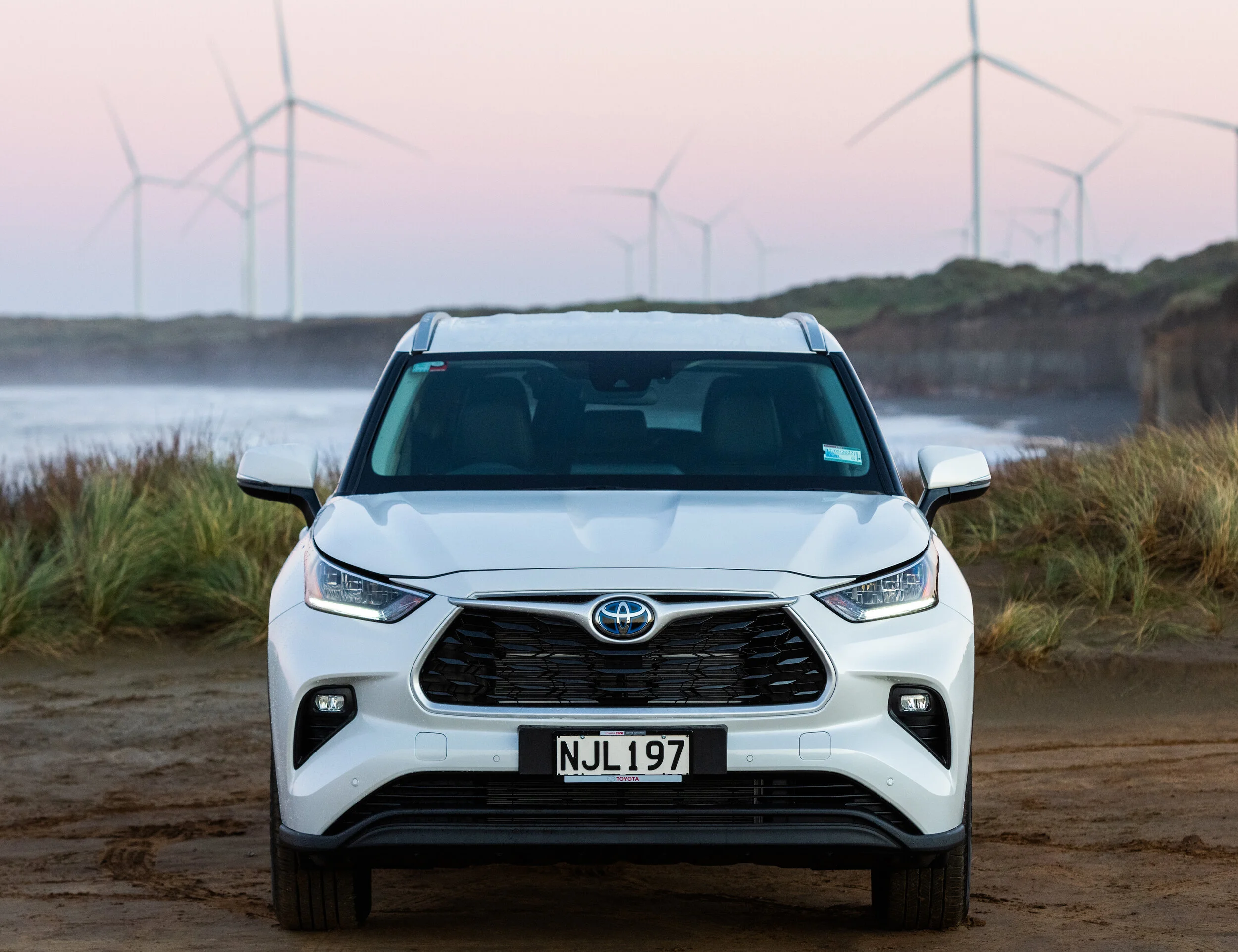
Toyota’s latest all-conditions SUV made its global debut today. Here’s how it goes on New Zealand roads.
Read MoreToyota’s latest all-conditions SUV made its global debut today. Here’s how it goes on New Zealand roads.
Read MoreThe new hybrid doesn’t quite have the V6’s oomph, but you can’t help but be impressed by the other-worldly efficiency.
Read MoreCONVENTIONAL with a touch of sporty; quasi off-road themed; step-into-tomorrow electric-prioritised: The choice is yours.
After three generations that had full focus on the first, Honda has finally awoken to how much the world is changing and attuned one of its best sellers, here and internationally, to better meet today’s tastes.
Read MoreSO you imagine the MX-30 is Mazda’s first go at electric motoring?
Not so fast. Certainly, what we’ll see entering the showroom on July 1 in two formats, price-undisclosed mild hybrid and $74,990 full electric, is - in respect to the latter - the first purchasable battery-pure product.
Read MoreDOES it sound mean to suggest that Skoda New Zealand couldn’t have picked a better car to be in short supply than the one they’ve just landed?
Okay, maybe it does. So, some context.
Covid-19 is not making schedules it easy for car makers to keep to production. A world-wide shortage of computer semi-conductors has made a bad situation worse.
Read MoreWITH Volkswagen putting so many eggs into the electric basket, where does that leave the brand’s most celebrated modern-era model?
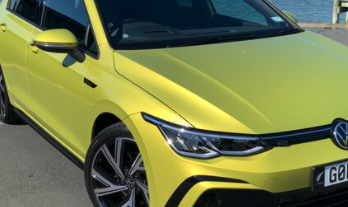
Sitting pretty, actually. Timing neatly with the national launch of the Mark 8 Golf hatch, initially in mainstream petrol 110kW/250Nm 1.4-litre turbocharged $37,990 Life and $47,990 R-Line formats with yet-to-be-priced 2.0-litre turbo 180kW/370Nm GTI and 235kW/420Nm Golf R hotshots arriving in May and November respectively, some good news.
World out of Wolfsburg, Germany, is that there will definitely be a Mark Nine line. And it will definitely continue with combustion engines.
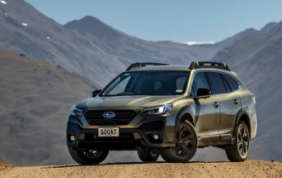
Read More“Subaru NZ doesn’t like being pushed around and this Outback experience suggests this car won’t be a pushover either.
“Slightly roomier, more tech and luxury within a cautious redesign: These factors will help but what’ll keep it sweet with the faithful are toughness, durability and all-round competence.”
Words penned six years ago on this page, about the previous generation Subaru Outback, really still ring equally true today, with arrival of a successor.
Read MorePrice: $48,289 to $55,764
Powertrain and performance: 2.0-litre four-cylinder turbocharged and intercooled diesel engine,110kW/3500rpm, 375Nm/1500-2400rpm. Rear-wheel drive. Six-speed manual and six-speed auto.
Hydraulic rack and pinion steering. MacPherson strut front suspension, taper leaf springs with gas filled shocks at the rear.
Vital statistics: Length 5546-5940mm, height 2555-2755mm, width 2062mm, wheelbase 3366-3760mm. Wheels: 16-inch steel.
CHINESE brand LDV sits in solid third place in van sales in New Zealand, which is pretty good considering the product has been here for just over six years.
Leading the way is the Toyota Hiace which commands a 30.3 percent share, followed by the Ford Transit on 23.2 percent. Then there’s LDV with its 12.7 percent, which puts it above the likes of Hyundai, Volkswagen, Mercedes-Benz, Renault and, more latterly, Mitsubishi which has just re-entered the van market with its Express.
LDV has achieved that market penetration with two vans. There’s the aging V80 which had been designed and produced in the United Kingdom by the commercial division of British Motor Corporation prior to it being acquired by China’s state-owned SAIC Motor in 2009. There’s also the smaller G10 which launched here in 2015.
That penetration has a big opportunity to improve, because a brand-new LDV van has arrived.
It is the Deliver 9, so named because the V90 badge it has in China cannot be used in export because Volvo has a V90 wagon.
So Deliver 9 it is, and LDV importer Great Lake Motor Distributors is introducing it in three guises.
There’s a mid-wheelbase and mid-roof model called Big, a long-wheelbase mid-roof version called Bigger, and a long-wheelbase high-roof model called .. yup, you guessed it: Biggest. Prices range from $48,289 for a Big through to $55,964 for a Biggest.
“Vans are one of the best new vehicle market segments to be in,” GLMD managing director Rick Cooper related at yesterday’s launch.
“The vehicles are all about logistics and high mileages – some of our existing customers drive upwards of 15,000km every two months. So the more efficient the interior space, the more money can be made – which allows their operators to eat steak at night instead of saveloys!”
Cooper and his general manager, Andrew Bayliss, argue the dollar value of cargo space.
The Deliver 9 Big is 3019mm long and 1792mm high, it has a cargo volume of 9.7 cubic metres, and a floor area of 5.4 square metres. The Bigger is 3413mm long and has a cargo volume of 11 cubic metres and a floor area of 6.1 square metres. Topping things out thanks to a higher roofline is the Biggest’s cargo volume which is a massive 12.3 cubic metres, which is way ahead of both Transit and Hiace.
Bayliss has calculated a cost per cubic metre of cargo volume. Excluding good and services tax, that works out to $4206 with the Biggest, $4390 with the Bigger and $4978 with the Big.
By way of comparison, a Toyota Hiace is at least $5644, Ford’s Transit is no lower than $5817 and the Hyundai iLoad comes to $11,589.
Undertaking the same exercise but with focus this time on cargo-specific floor area, Bayliss says it comes to $7916 per square metre with the Bigger and $8482 with the Biggest - which has the same 6.1 square metre floor - and $8942 with the Big.
The lowest such cost with Hiace, Transit and iLoad are respectively $8748, $10,321, and $13,418.
In other parts of the world the Deliver 9 has been launched as a replacement for the V80. In New Zealand the latter remains, for the meantime at least, part of the LDV lineup.
It’s not a development off the V80 either. The new model is brand-new, powered by a freshly-created four cylinder turbocharged and intercooled diesel that offers 110kW of power at 3500rpm, and 375Nm of torque from 1500-2400 rpm.
Truth be told, there’s a certain Transit look to the new van, with a major difference being a very big bright silver front grille. On the inside the similarities continue, right down to a high-mounted gearshift which clears legroom for three people up front, and a swag of minor storage all over the place.
All models have single sliding doors on their left side for access to the load areas, and they all feature ‘barn’ doors that swing open 180 degrees to allow forklifts to be used to load cargo. The cargo areas also feature eight tie-down points, plus integrated rear steps for ease of access.
There’s an impressively high level of safety specification that includes hill hold, lane departure warning, cruise control (adaptive on the auto models), rear parking sensors, and driver, passenger, side and curtain airbags. The model has yet to undergo any ANCAP crash testing.
Interior features air conditioning, power windows, a big 10.1-inch touchscreen, and a heap of minor storage including document storage in the roof lining.
Short drives in a Big and a Biggest following the presentation confirmed the Deliver 9 as an easy drive, with fully adjustable driver’s seat and a comfortable driving position, and of course the excellent visibility that traditionally comes with vans. It’s obviously going to be a nice drive for the commercial users.
And the cargo areas to the rear? They are among the most spacious around, and when it comes to the cubes and squares for the dollars, the GLMD people say there’s nothing to beat them. Considering that vans are commercial vehicles pure and simple, that’s surely going to be a major selling point.
Steak instead of saveloys seems a tasty proposition.
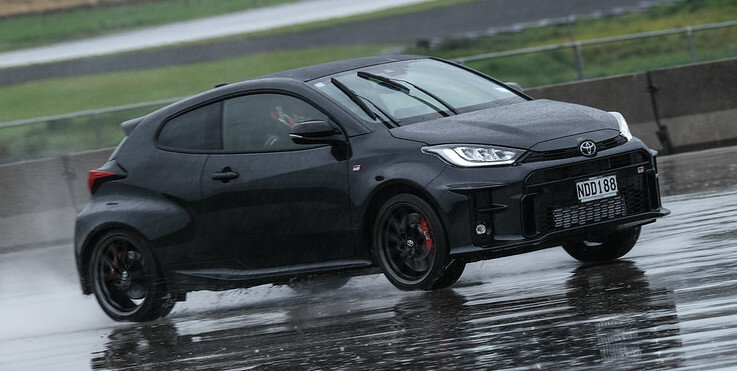
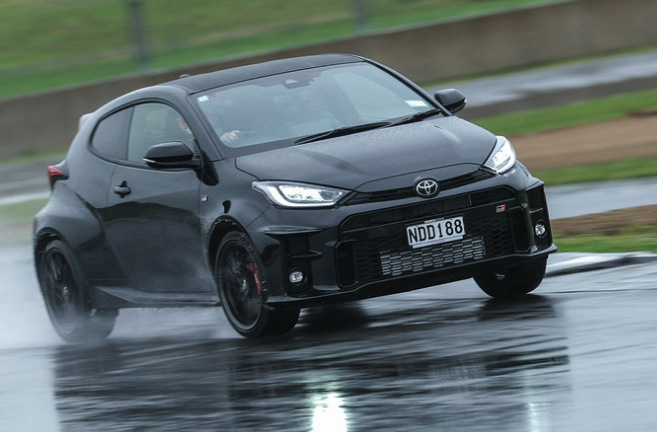
WE all only got two laps of a wet Hampton Downs racing circuit today, driving the national layout – so, less than six kilometres clocked, not quite five minutes at the wheel, pit time included. In the rain.
Yet I’m confident I can tell you a couple of things about the eagerly anticipated second car in the Toyota Gazoo Racing family.
The GR Yaris hot-hatch boasts a growling three-cylinder engine note which is blend of raw aggression and cheerful enthusiasm. And in a pleasing contrast to most 200kW cars of recent times, the rally-bred Yaris doesn’t feel heavy.
Keeping the weight of an AWD Turbo hatch to about 1300kg is a fair achievement and achieves a cracking power-to-weight ratio that betters many larger engine and more powerful hot-hatches.
Track impressions are of sure-footed agility with crisp turn-in and direction change. The confident wet track grip level heightened expectations for a run along a twisty road where this little ripper might be even more at home than on a race track.
Even before the all-to-brief time behind the wheel we already knew a lot about the GR Yaris. It has launched with a tasty $54,990 price-tag and Toyota NZ has opted to focus on the premium specification while other markets also offer lower-spec versions.
The car has a close association with the Yaris WRC rally programme and in joining the GR Supra it plays a lead role in expanding the Toyota Gazoo Racing product line.
While it bears the Yaris name the muscular exterior shares only the LED headlights and taillights plus the door mirrors with the new Yaris hatch.
Toyota calls it a hybrid car – not in the sense of a combined petrol-electric powertrain but because under the skin it merges two different vehicle platforms.
The front end is common with the new Yaris hatch while the rear is Corolla-based. That’s how the rear driveline and trailing arm independent rear suspension layout is achieved.
It’s also a three-door and sits 55mm lower as well as being significantly wider thanks to those pumped-out wheel arches. All body panels including alloy doors (a frameless design), rear hatch and power bulged bonnet plus the carbon composite roof are unique to the GR version.
So too are the aerodynamics and the prominent cooling intakes and mesh grille that dominates the facia of the GR.
The engine is a bespoke 1618cc three-cylinder turbo which develops 200kW at 6500rpm and 370Nm of torque from 3000-4800rpm. It has slightly ``under-square’’ bore/stroke dimensions, a 10.5:1 compression ratio, single scroll turbo and Toyota’s D-4ST port and direct injection technology.
Toyota claims 0-100km/h in 5.2secs and a top speed of 230km/h.
The compact and lightweight engine sitting over the front end along with quick ratio (2.36 turns lock-to-lock) steering are also contributors to that immediate impression of a light and nimble car.
If you were around to hear a Daihatsu Charade GTti in full cry you’ll recognise the soundtrack. It’s an enthusiastic growl with the engine not only delivering an early ramp up of torque delivery but it also revs eagerly to 6500rpm and feels like it still has more to give – a rare trait for modern high torque turbo cars.
There’s a six-speed manual transmission with short throw shift and rev-matching function. The sophisticated Active Torque Split all-wheel-drive system features Torsen diffs front and rear and a clever electromagnetic solution for distributing torque between the front and rear.
In Normal drive mode the front:rear default is 60:40. Switch to Sport and there’s a rear-biased 30:70 split and in track mode there is a 50:50 torque distribution for maximum traction.
Beneath the muscular wheel arches and wide track stance is performance suspension and serious braking hardware including 356mm x 28mm slotted and ventilated front rotors with four piston callipers. The 18-inch forged alloy BBS wheels are shod with 225/40 ZR 18 Michelin Pilot Sport 4S tyres.
Considering Toyota’s modern WRC rivals – the Hyundai i20 and Ford Fiesta - are cars that are only offered in front-drive configuration for the road, the GR Yaris is the closest thing you can buy to a current WRC car since Subaru and Mitsubishi exited the top level of the rally game. There’s also a nice nod to Toyota rally history with a GT-Four badge on a tailgate.
As well as the performance focus the GR Yaris is a well-equipped car with dual-zone air conditioning, an eight-speaker JBL audio system, 7.0-inch touchscreen with navigation, Apple CarPlay and Android Auto, a Head-Up display, heated front seats and alloy pedals.
I’ll add one more attribute to what I learned in two laps. The neatly-sized – and actually round - steering wheel provides a great connection with the car and the front seats offer supportive bolstering around the hips and ribs.
In spite of the rally bloodlines the GR Yaris doesn’t divert from Toyota’s policy of equipping all models with its full Safety Sense driver assist and safety package. However, the car hasn’t returned an ANCAP crash test result yet.
So far 40 cars have been allocated to the Kiwi market with 36 already pre-sold and the company registering the remaining four for itself.
Toyota NZ wants more and is working hard to secure additional units from the limited global supply. Two laps behind the wheel certainly left me wanting more as the GR Yaris had teased one of the sharpest driving experiences of recent times.
Escape (above) and Puma are expected to provide Ford with a healthy standing in their respective sports utility market segments.
THE smile was extra-wide on the face of Ford New Zealand managing director Simon Rutherford.
Why? Because he was happily introducing to the Kiwi motoring media a pair of sports utilities that will compete in the two biggest-selling segments of the New Zealand passenger vehicle market.
The pair are the Escape, sourced from Spain, which will compete in the medium SUV segment which currently accounts for 20 percent of all new vehicle sales, and the Puma, out of Romania, which will sell in a compact SUV segment which accounts for an 18 percent slice.
Ford was not performing particularly well in those spots previously.
The medium SUV segment is dominated by the Toyota RAV4 which last year achieved 5611 sales, and other solid performers include Mazda CX-5 (3312 sales), Kia Sportage (3273) and Hyundai Tucson (2047). The previous generation Escape’? Just 1040 found homes last year.
In Ford terms that in itself was rather good, because the rest of the brand’s SUV fleet couldn’t get past 500 sales last year. The smallest and least expensive model, the EcoSport out of India, achieved just 446 registrations. Paltry compared to what the Mitsubishi ASX, Suzuki Vitara and Honda HR-V were achieving.
As a consequence of this mediocre customer acceptance of the Ford SUVs, the brand has had to rely on stellar performances by its commercial vehicles, particularly the Ranger ute.
Bald statistics tell the story. Last year Ford achieved a total of 14,776 new vehicle sales which put it in second place overall behind Toyota – but 64 percent of those sales were the Ranger, with the Transit van accounting for a further eight percent. And frankly, that left the rest of the Ford new vehicle fleet picking up the pieces.
But now there’s every prospect that will change.
Escape has undergone quite the transformation so it is now longer, lower and wider than before, and with svelte bodyshell lines that must put the vehicle up there as one of the best-looking competitors in the medium SUV selection. Its interior has also been modernised and now features the same rotary-style shifter as that aboard the Focus hatch which is built off the same platform.
There are some design features that help set the new Escape apart, too. One is a sliding rear seat that can be moved back and forward to provide a choice of more cargo room or more rear leg room. Another is a tonneau cover that is attached to the rear glass so it moves out of the way when the rear hatch is lifted up. Another? Little rubber arms that pop out of the doors whenever they are opened, to help protect paintwork.
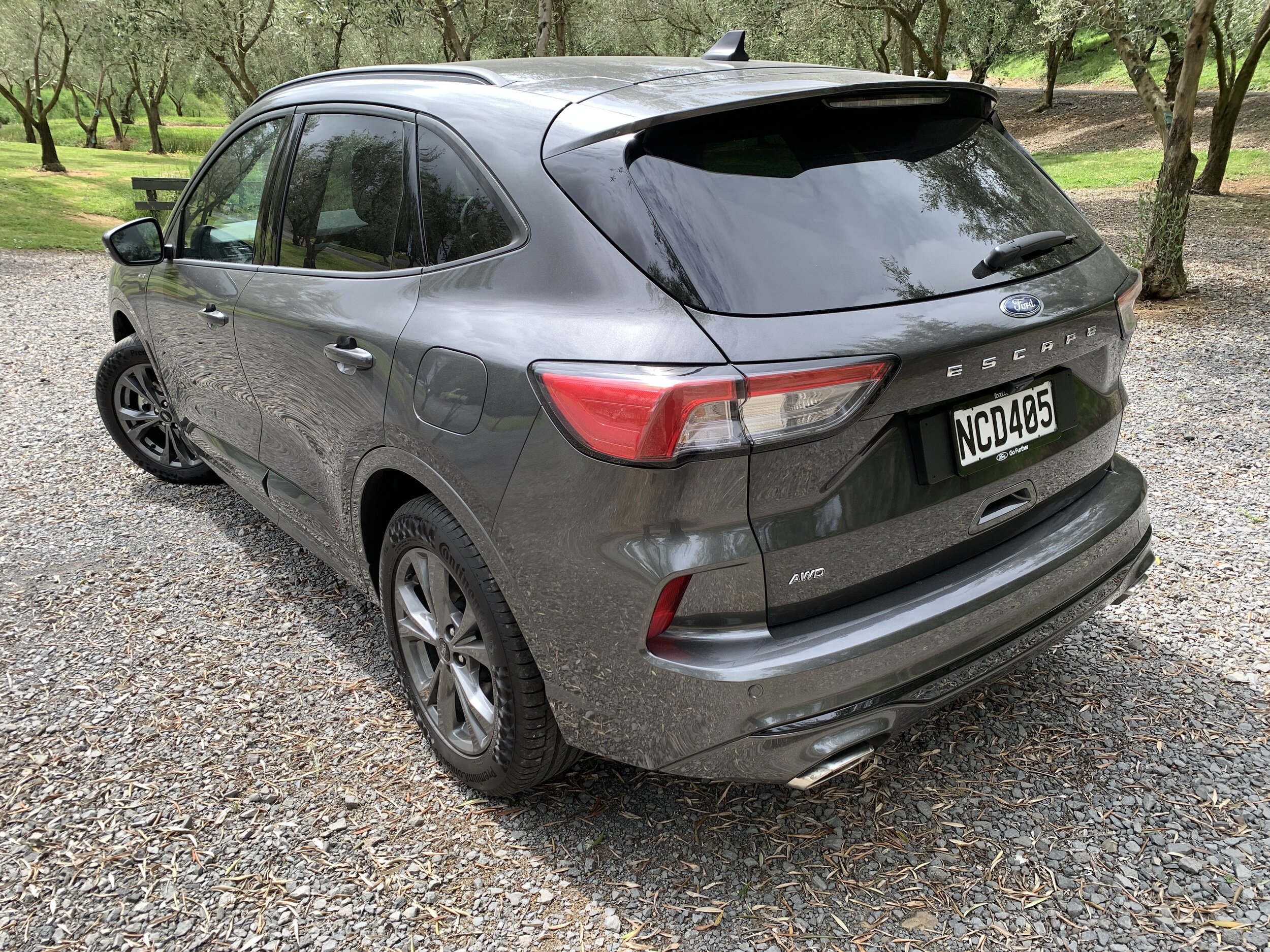
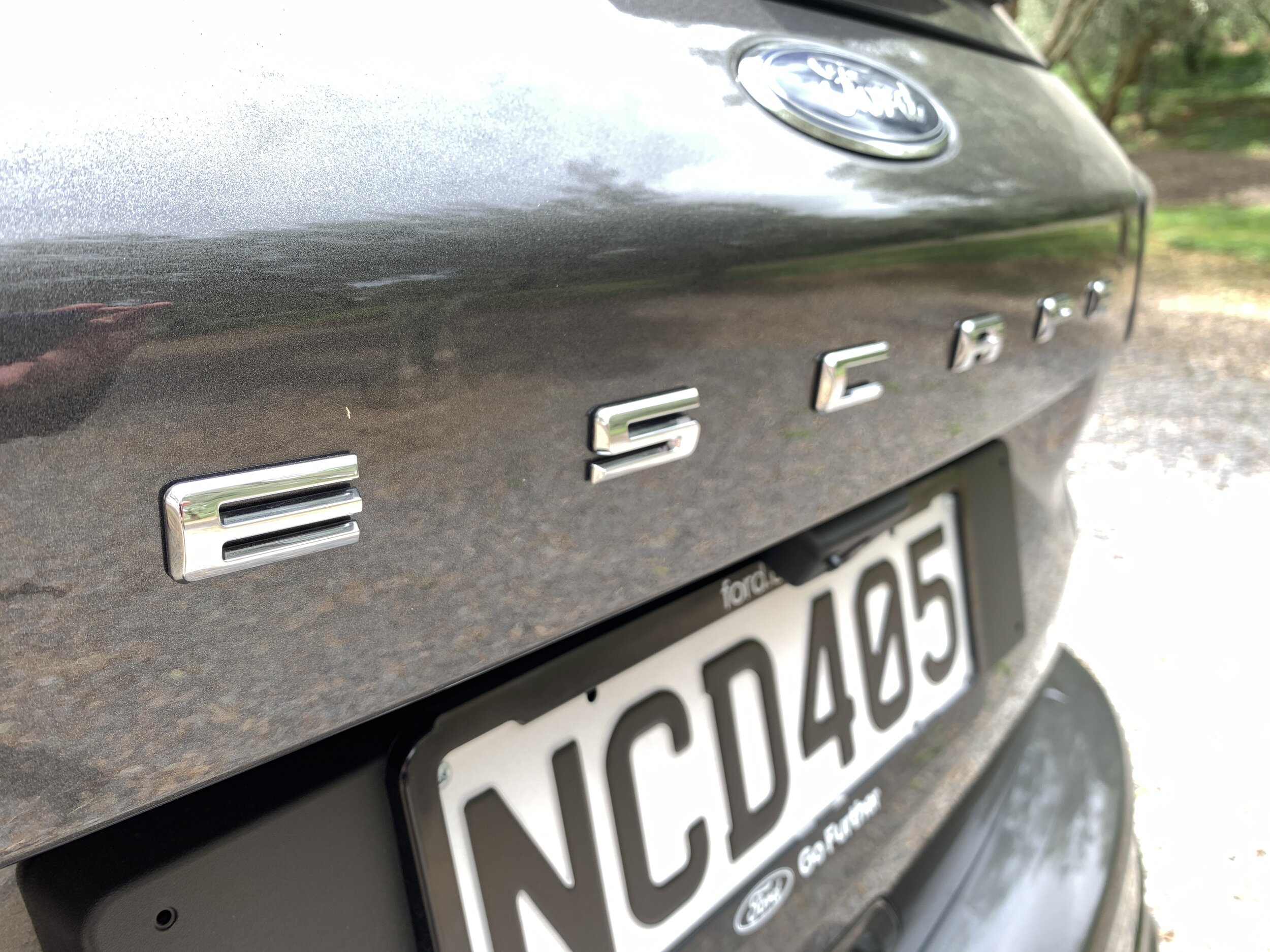
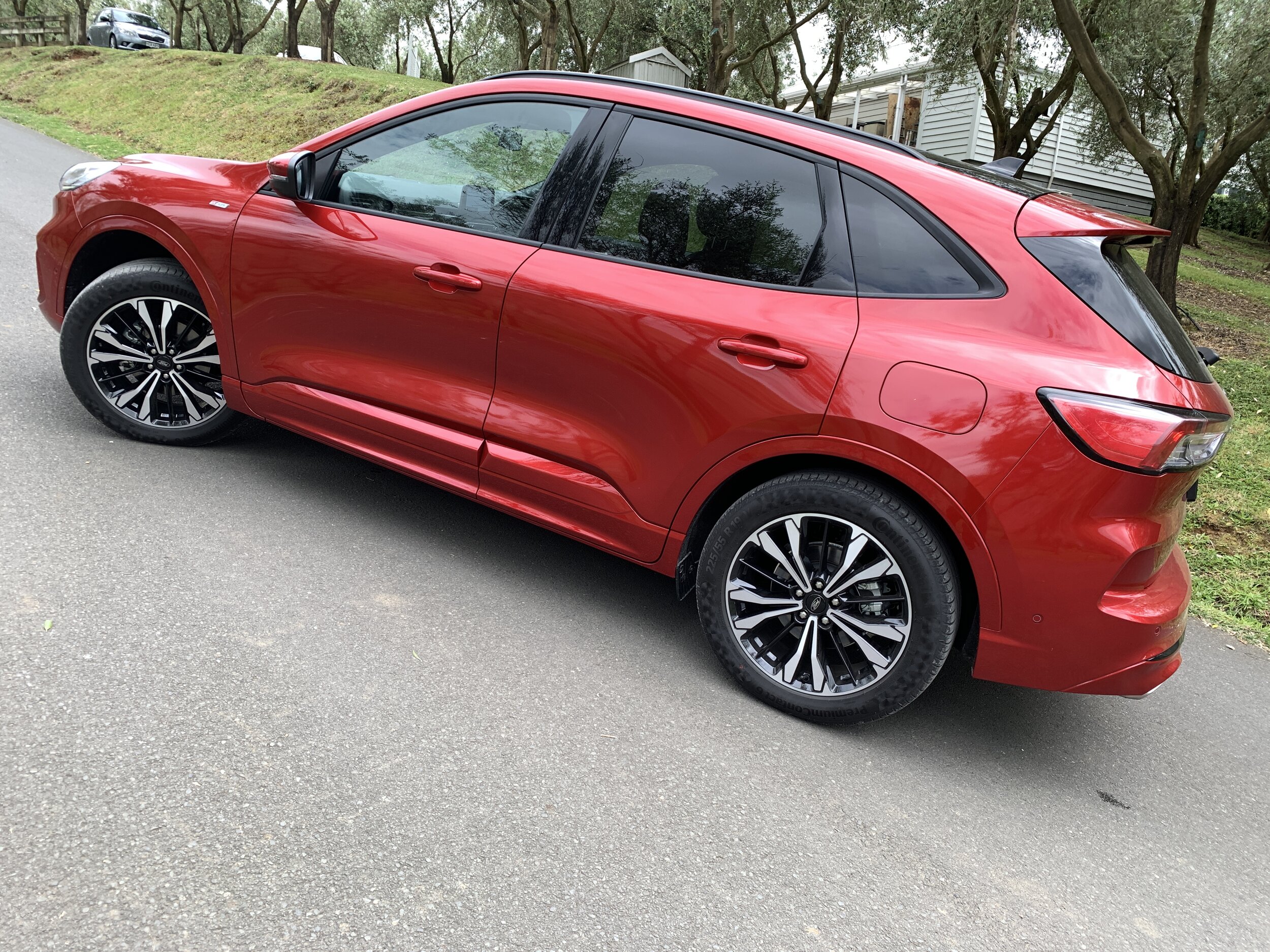
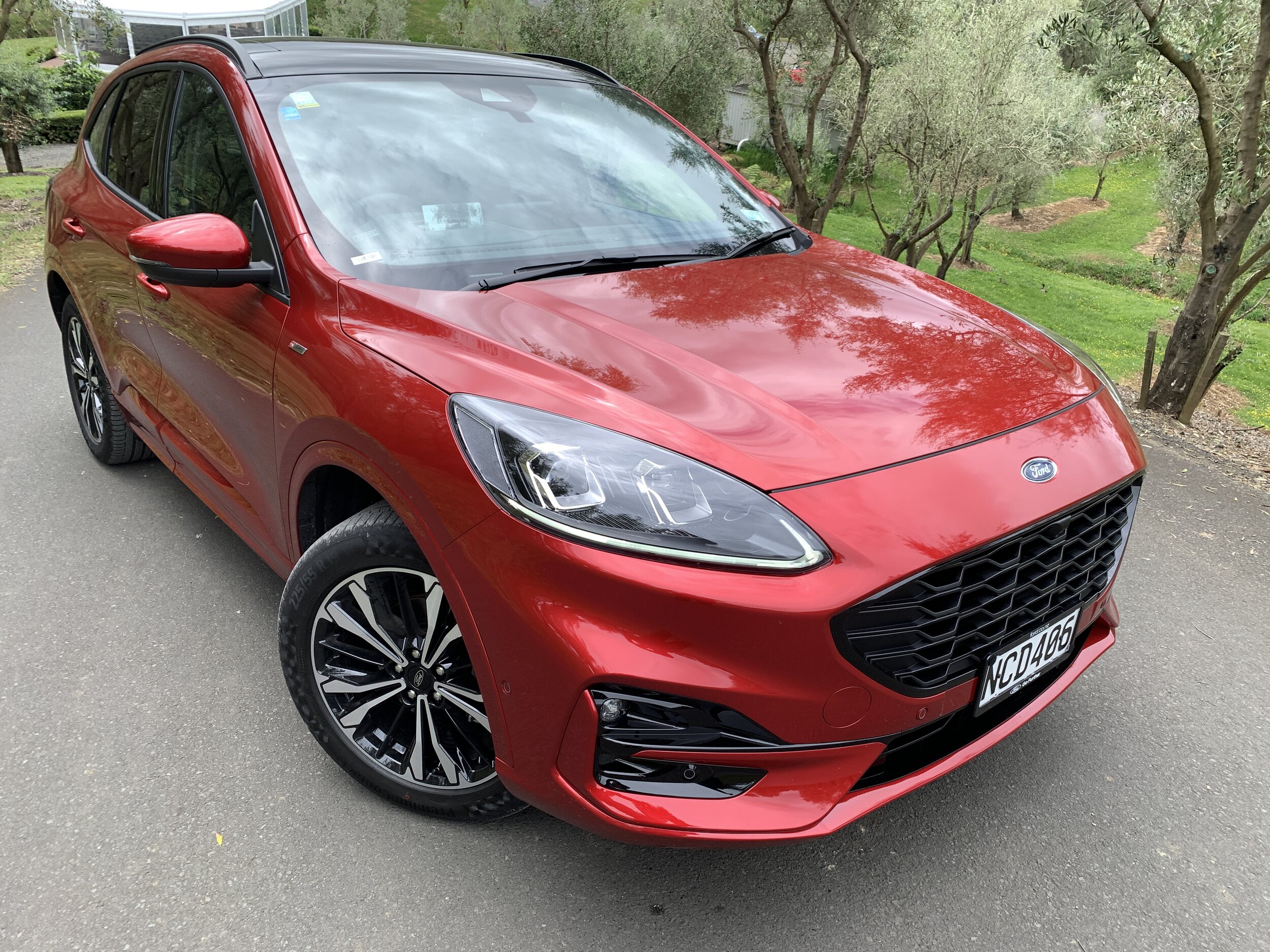
Escape’s turbocharged 2.0-litre EcoBoost petrol engine also now breathes a little better which has increased its power and torque outputs to an impressive 183kW and 387Nm, and the engine is now mated to an eight-speed automatic which replaces the previous model’s six-speeder.
If the new Escape looks a lot more swept than the model it replaces, the change is nothing compared to the difference in looks between the new Puma and the EcoSport it replaces. It’s a really good-looking small SUV, with some within Ford of Europe apparently claiming it to be the most beautiful car they’ve ever made.
It certainly looks a lot better than the EcoSport, which was quite a lumpy small vehicle with the spare tyre mounted on its side-opening rear door.
Like the EcoSport, the Puma is powered by a 1.0-litre three-cylinder turbocharged petrol engine that develops 92kW of power and 170 Nm of torque from a low 1400 rpm, and it is mated to a seven-speed automatic. Interior is very similar to that of the Fiesta hatch, which is built off the same platform.
EcoSport’s performance has been so dire Rutherford was comfortable suggesting Puma is basically entering a white space market.
“We will sell more Pumas this month (November) than all of the EcoSports sold last year,” he said. “Our aim is have a far greater presence in the small SUV segment.
“Many customers buy their cars from the outside – in other words, they are initially attracted by their looks,” he said.
“The previous Escape didn’t look particularly sexy, and on the inside its top-hat dash was all a bit fiddly,” he added, referring to the design of the centre console.
“But now, we’ve got this new model which I believe will be truly competitive. It’s a clean-looking vehicle with lines that are much more progressive. There’s no reason why it won’t do much better for us than before.”
MotoringNZ reviews new cars and keeps readers up-to-date with the latest developments on the auto industry. All the major brands are represented. The site is owned and edited by New Zealand motoring journalist Richard Bosselman.
NEWS | FIRST DRIVE | TESTED | VIDEO | CONTACT | THE CREW | TERMS + CONDITIONS