
Tucson revealed, NZ choices unknown
/Petrol, hybrid with or without a plug, two wheelbase formats and a tough-looking flagship.
SET to land some time next year, the next-generation Tucson is being proclaimed as Hyundai’s boldest sports utility yet - but already it seems we will miss out on the toughest version.
As now, the car is being built in different formats for specific markets; so there’s a short wheelbase edition for Europe, out of the Czech Republic, and a longer-wheelbase type that seems set to come to our part of the world, from South Korea.
Both are larger than their predecessors in those deliveries.
Drivetrain spread starts with a pure petrol engine and two different hybrids, one with a plug and one self-involved.
All use a turbocharged 1.6-litre four-cylinder unit as the base, referred to as the T-GDI.
The base engine makes 111kW and 250Nm of torque and marries to a seven-speed, dual-clutch automatic gearbox, with 0-100km/h in 9.9 seconds.
The regular hybrid (HEV) and plug-in hybrid (PHEV) both using a six-speed automatic transmission and sending their power to either the front wheels alone or all four wheels, depending on specification.
The hybrid matches the engine with two electric motors making 182kW and 380Nm for 0-100kmh in 8.3 seconds in the HEV and 217kW, with the same peak torque, in PHEV. But the latter is quicker to the national open road limit by 0.4s.
The PHEV Tucson has an estimated 81km of all-electric range but he battery size is modest and there’s a 7.2kW AC charging limit, with no DC-charging capability at all.
Fuel consumption for the new editions ranges from 5.6-6.2L/100km on America’s EPA combined cycle.
What might come here has not been spelled out by Hyundai NZ and that might remain the case for some time. It says specifications, like pricing, won’t be announced until closer to launch.
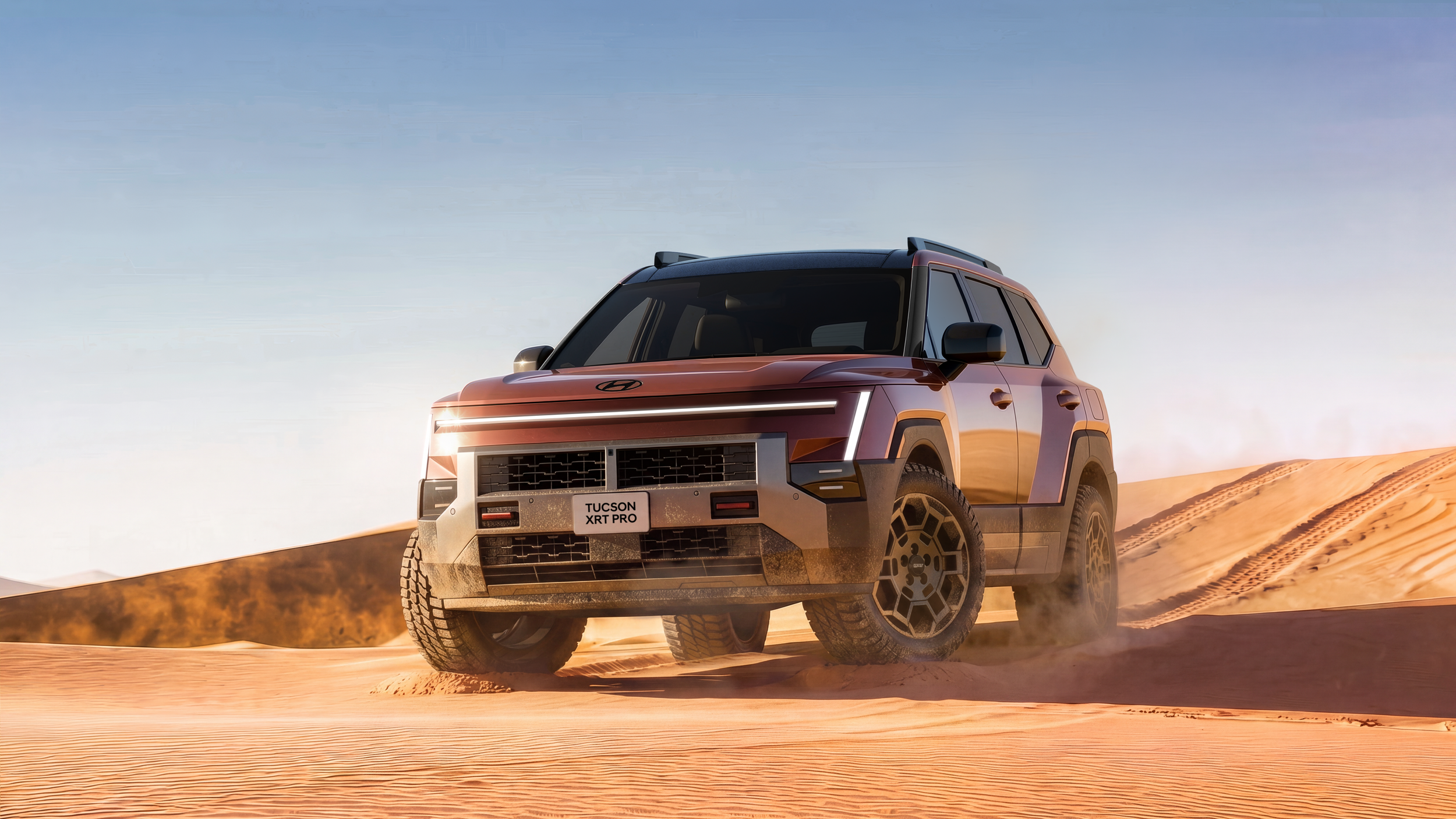
An international information pack sent out today might lend false hope in one respect. It speaks to the family including an especially rugged edition, called the XRT Pro (top photo).
But it’s now apparent that edition is only going to be available in North America; on there places, the selection is headed by an XRT, which has rugged looks but goes lighter in respect to outdoorsy mechanical fare.
Also yet to be shown is a continuation of a the N-Line trim - that’s being unveiled in 10 days’ time.
If just the long wheelbase type lands here, then you’ll see a car that’s 60mm longer and 40mm wider than the model it replaces, with 300mm extra wheelbase. The overall dimensions are 4700mm long, 1905mm wide, 1685mm tall and 2785mm wheelbase.
That delivers more room inside with Hyundai claiming headroom in the second row is up by 29mm.
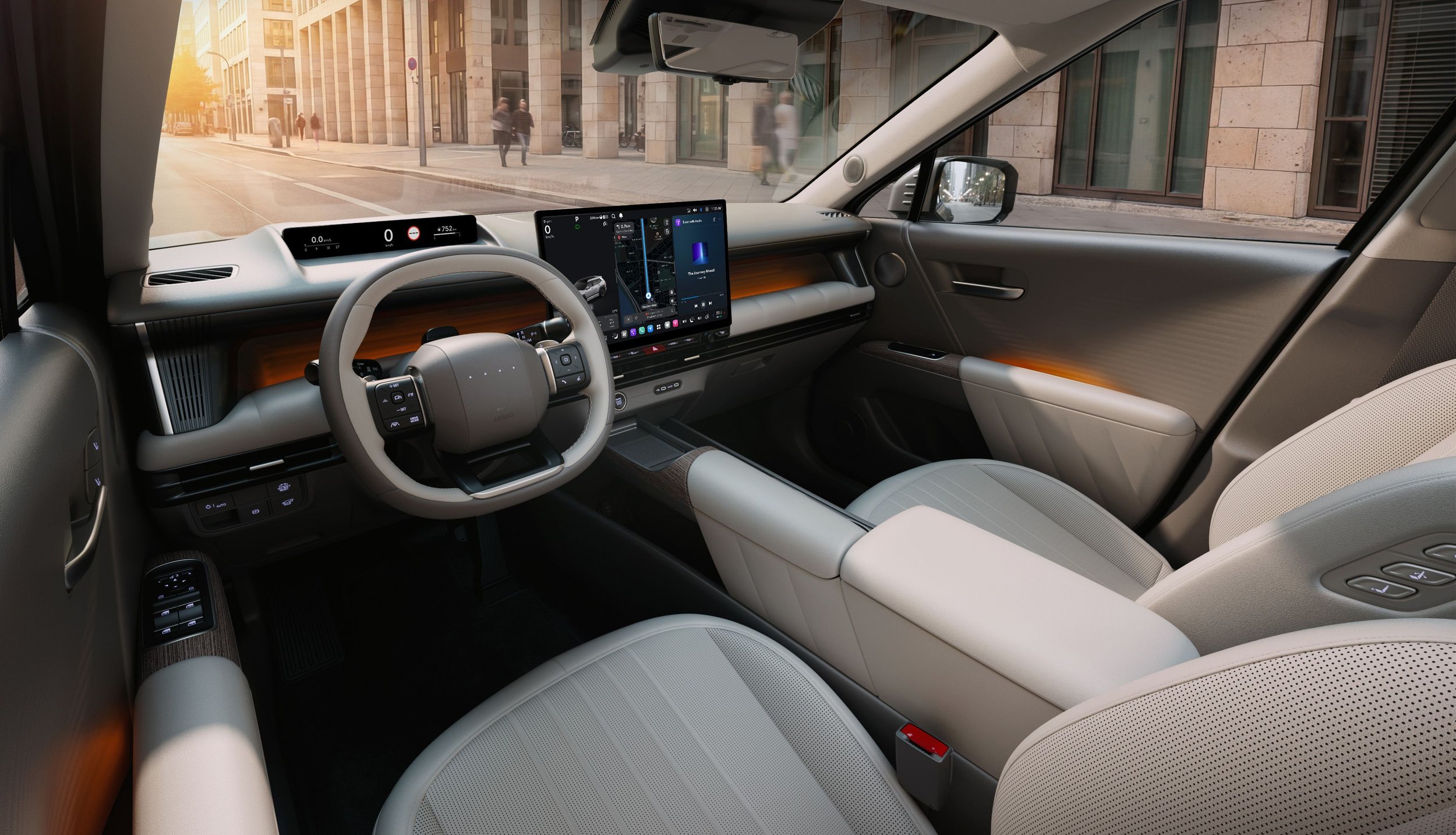
The slightly squared-off steering wheel is quite small, and also has proper buttons, while the main driver's instruments move to a slim strip on top of the dashboard, close to the base of the windscreen, which obviates the need for a projected head-up display.
The cabin also gets a central multimedia display of 12.9 or 17 inches, depending on the model, and runs the new Pleos Connect infotainment system.
The dashboard has deep recesses, backlit with ambient lighting effects. The centre console incorporates two cupholders, a wireless phone charging pad and some storage.
Three-zone climate control, trailer reverse assist, the brand’s Ergo Motion massaging front seats and Micro Pixel headlights with 25,600 LED pixels apiece is being spruiked in initial information.
Safety features have been upgraded with the addition of Door Unlock Power Redundancy, which will unlock the vehicle even if main power is out, Memory Reverse Assist, and Pedal Mis-operation Safety Assist.
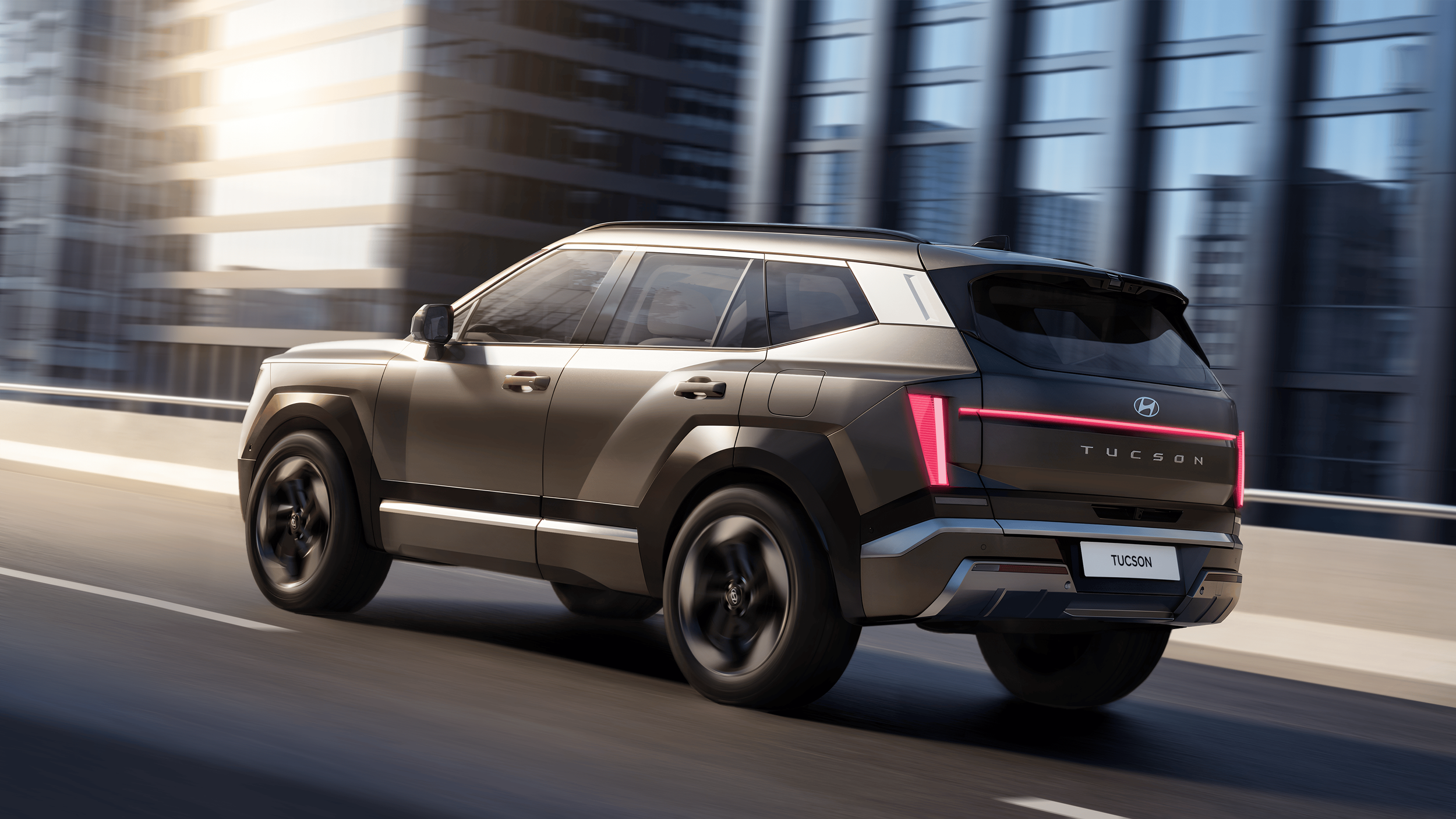
The new design pathway is called ‘Art of Steel’ and the only commonality with the current car is the extended wheelarches and the way the rear wheelarch blends into the back doors.
This reshape leaves Tucson now looks more aligned with the bigger Santa Fe and bigger-still Palisade in styling terms.
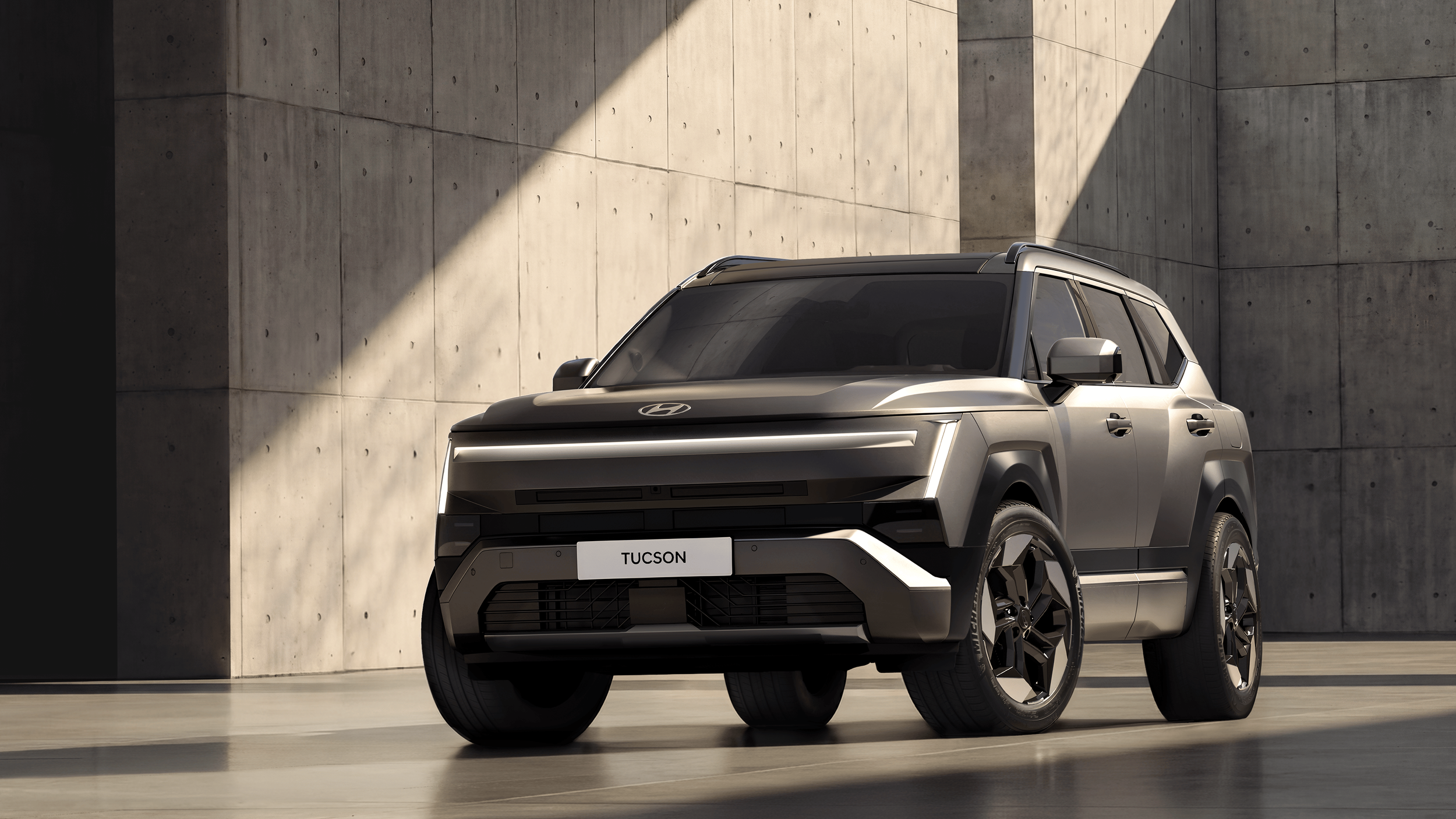
Current Tucson has its lights in a big, wing-shaped grille. The new look is very different, with a squarer front end that features a wide LED light strip just below the leading edge of the bonnet. There are upright side LED strips for the daytime running lights. The main beam units tucked in closer to the top of the bumper.
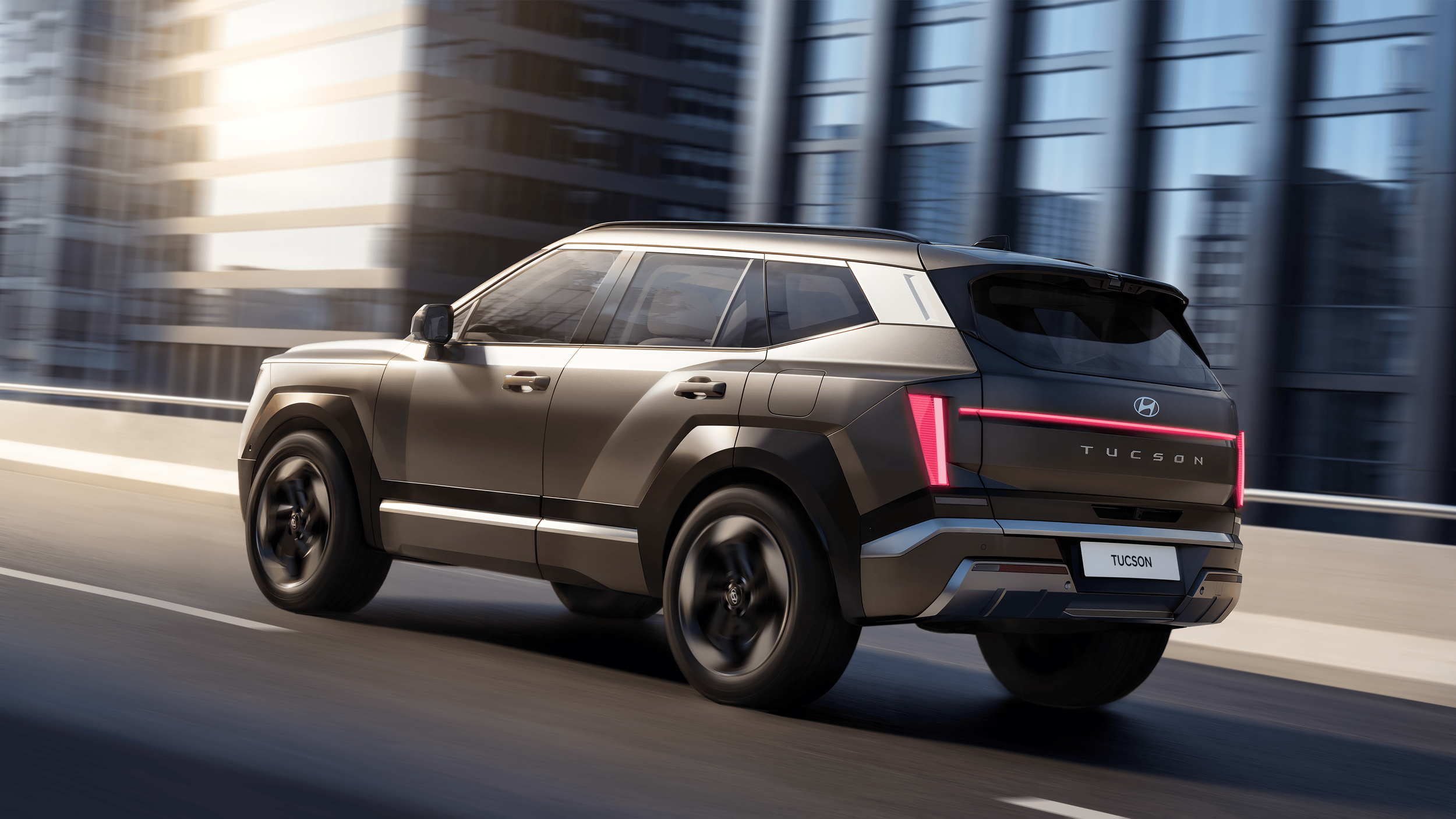
At the rear, there's a similar effect: a thin LED strip running horizontally across the boot lid, with upright, slightly angled elements at the outer edges of the bodywork.
The Tucson name is much more prominent on that bootlid, and Hyundai has kept its stylised H badge at the back.
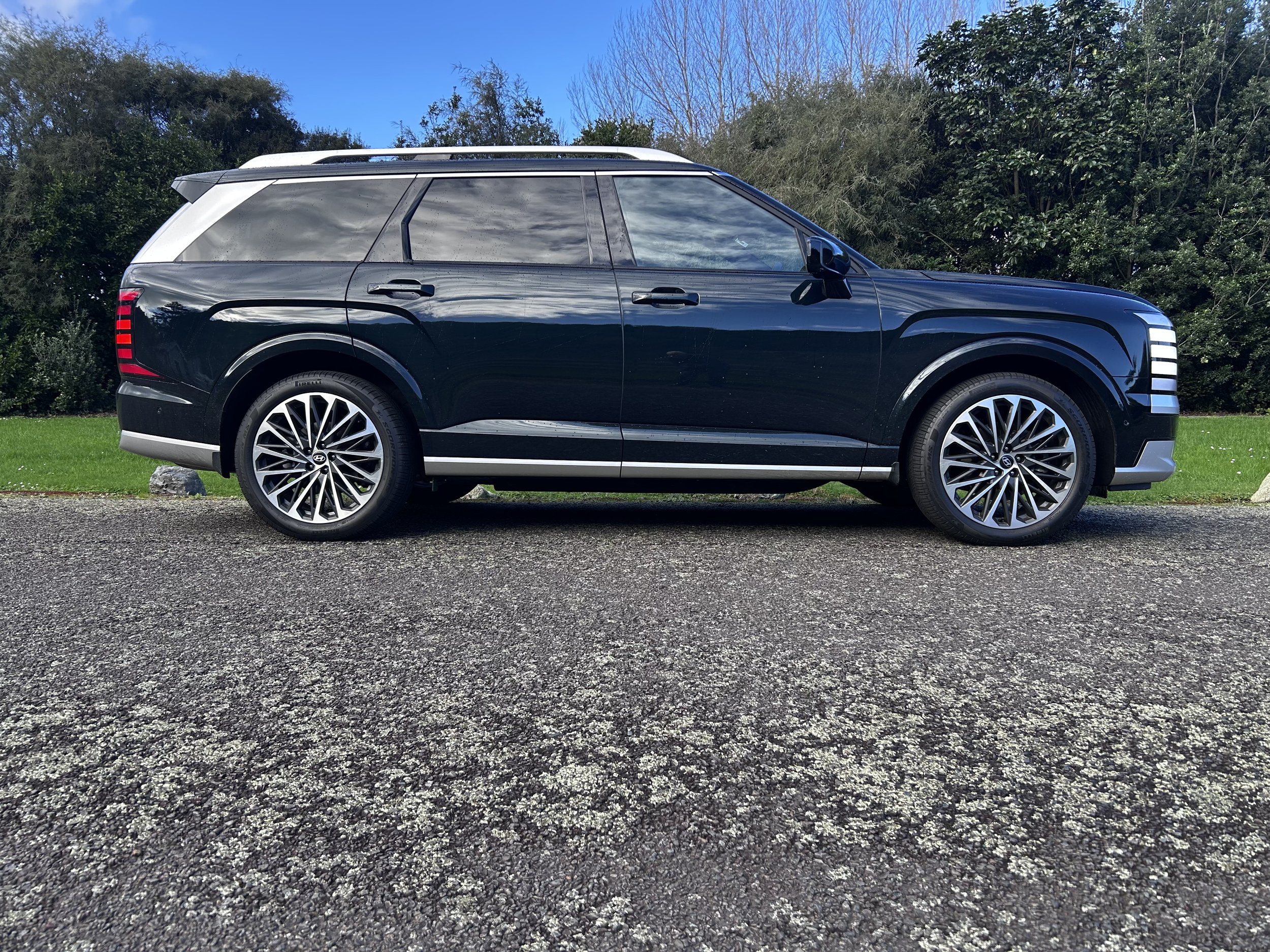
The side view is dominated by the boxy wheelarches, and a shallow glasshouse that includes a distinct angled kink at the rear pillar.