BMW iX3 xDrive 50 roadtest review: Crushing class action
/Munich’s first car engineered from scratch around EV hardware and software makes a powerful positive statement.
PANORAMIC Vision, Heart of Joy … what new names for those BMW subscriptions will be chosen by car makers in the one country where copying is still accepted, if not encouraged?
At least one electric car producer somewhere in China emulating these and other advancements found in Munich’s ‘Neue Klasse’ product seems a dead cert. So many elements are too good for them to ignore.
This speaks to a good outcome for a new generation of BMW models that aren’t evolved from existing platforms but engineered from scratch around EV hardware and software.
Munich is effectively betting that what it introduces here will shape the brand’s direction for the next decade.
And timing is right. The iX3 arrives just when many Kiwis might be of opinion China holds all the ace cards in this game.
From all that was learned on this test, this BMW simply destroys that pro-Sino sentiment. With the iX3, BMW shows that those working from Shenzhen, Shanghai, Beijing, Hangzhou, Chongqing, Wuhu and Wuhan have more to learn.
I would be happy to take this BMW up against any rival in its category and hold high confidence of it winning over as the more competent, more complete, more charismatic product.
Moreover, I’d lay a bet now that it won’t be long before design, if not engineering, elements start being replicated by makers located in the one country where copying is still king.
Begging for emulation will be the car's panoramic iDrive, which ditches conventional dials for an ultra-wide projected display.
Likely also to be dissected and returned under another twee title is the Heart of Joy chassis integration software; the most important of the four new computing hubs (called 'Superbrains') that manage all its complex and interrelated systems as it controls the way the car drives is called.
Cheesy name, but in respect to how the BMW integrates everything and, most importantly, how it engages, it definitely suggests the iX3 has its heart in the right place.
Another factor selling it is the sense of it being an excellent car to drive in every orthodox sense.
Energising performance comes as naturally to this electric car as is does to pretty well any other, and that’s all well and good. But that the greater attraction here is how well engineered the iX3 is as a whole in respect to its command of the road is the best news of all. ‘Ultimate driving’ cred has been hard to justify with previous BMW electrics of this genre. The bombastic iX, for instance, is no ballerina. But iX3 is light and accurate on its feet.
The manner in which it communicates is truly impressive. Steering, braking, suspension tune and chassis feel are simply above-average for any battery car.
Getting on top of these are surely how BMW will break down the boundaries of electric car resistance. Honestly, the iX3 could prove to be one of a handful of products that become something of a tipping point for electric motoring.
Anyone still arguing that electrics are simply appliances needs to try it. And suspension, steering and chassis wizards from brands other than BMW who fail to twig to its talent need rethink their careers.
Well, all the signs of it being super good were there. The huge clue came from chosing to name this same platform after the original 'Neue Klasse' BMW 1500 sedan of the 1960s. That, remember, was the car that saved the Munich company from an impending bankruptcy back then.
BMW in this era has again bet its future on Neue Klasse. But having tried the iX3, that wager no longer seems a risk.
It seems clear the platform that will go on to underpin an entire new generation of BMW models, including the all-important new electric 3 Series due in 2027, is deserving of being hailed a benchmark.
Thoughts are based on time with the iX3 xDrive 50, a train motor chosen to be first arrival of a broadening model charge here.
Opinion also derives from having spent a week with the car in almost factory-standard specification, merely with addition of M-Sport Package Pro, a $3500 option that, being completely aesthetic, makes no difference to the driving feel.
In hindsight, you might question one ingredient of that first-step enhancement. Additional to a M steering wheel, M seat belts, mirror caps, grille and diffuser in gloss black are sports seats which though body-hugging in all the right places also have bulked side bolsters. It was challenging to egress without putting weight on the outside edge, which seemed imprudent given every time that happened a plastic panel on the seat base popped off.
In totality of effort, though, this new iX3 is breathtaking ahead of anything BMW has previously produced in electric, especially the previous equivalent. That car was a brave effort, but as a rebuild of the fossil fuel X3 was poor in having a small battery, only so-so performance - limited to rear-drive - and barely alluring range. BMW must have recognised almost immediately it had to do better.
And so it has. If nothing about the iX3 on the electric side is outright pace-setting, it is at least matching the current pace. A 108.7kWh lithium ion battery and dual motors producing 345kW and 645Nm in this first-to-land format (456kW/875Nm in next year’s M60) brings it from mid-pack to the front, but the 800 volt architecture is the better advancement because it lends better recharging and greater range.
The literature cites 805km WLTP, which is massive. At pick up, at 99 percent state of charge, the test car’s trip computer suggested 520km might be more likely. But within half an hour, it obviously figured my driving style was better than the previous occupant’s, because it recalibrated to 640km. By time of handover, I was confident this would be the first EV in which I could genuinely clock 500kms’ travel without need of a recharge. It got one, but just to check out validity of the make’s replenishment rate, which was brilliant.
DC charging at up to 400kW is fairly notional here, but marrying it to a 300kW charger and seeing it instantly suck in the good stuff at a wow-worthy 222kW was a giggle-trigger that supports claim a 10-80 percent recharge might take as little as 21 minutes. Of course, the issue with big batteries does show in home feeding. The kit that comes with the car is hardly worth taking from its wrapper, because with 800v, three-pin trickle charging will take forever.
Delighting electric nerds is one thing, but because it’s a BMW, the car also needs to be a banner waver for style. In this regard, the iX3 is clearly going to cause waves.
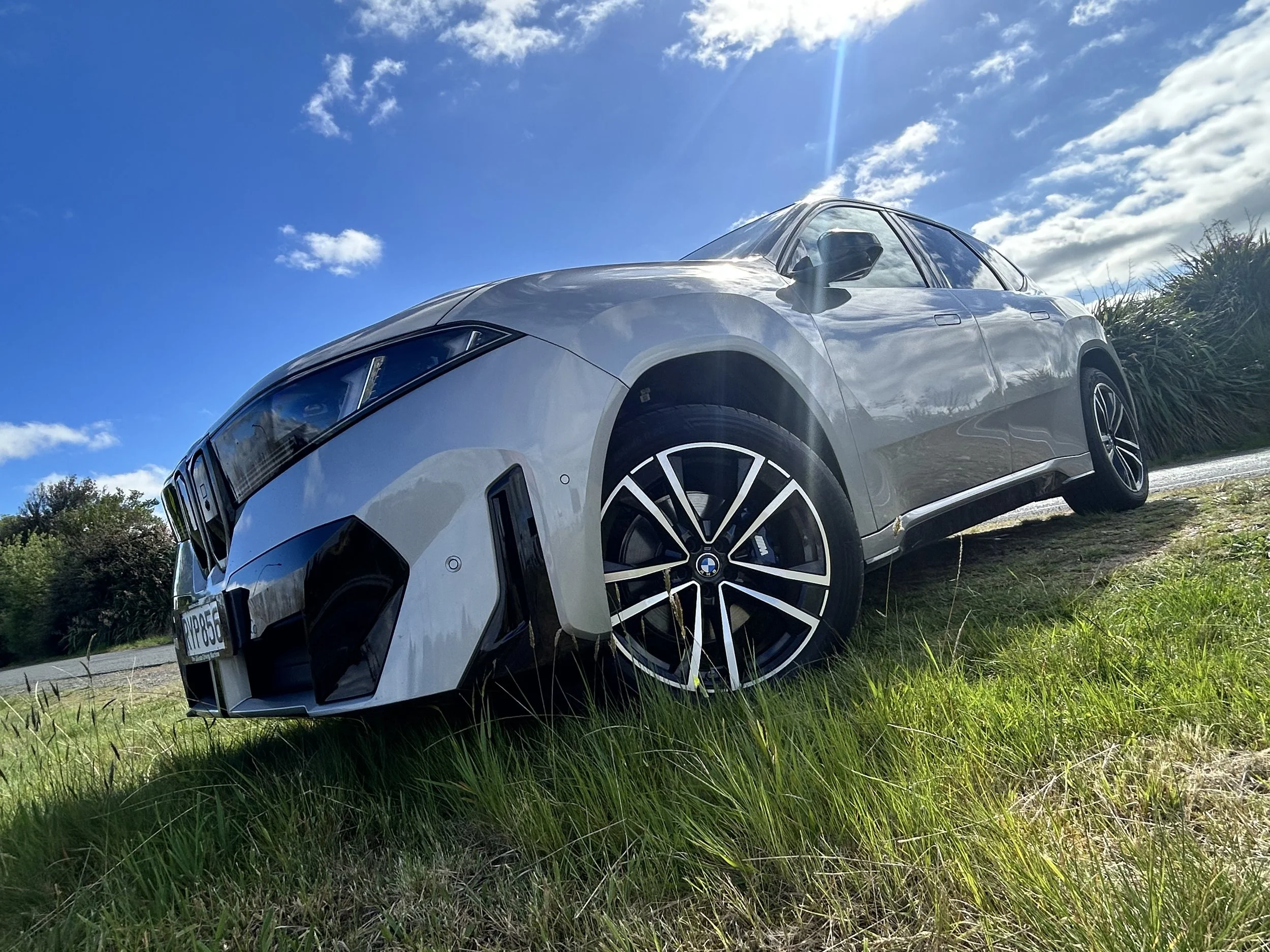
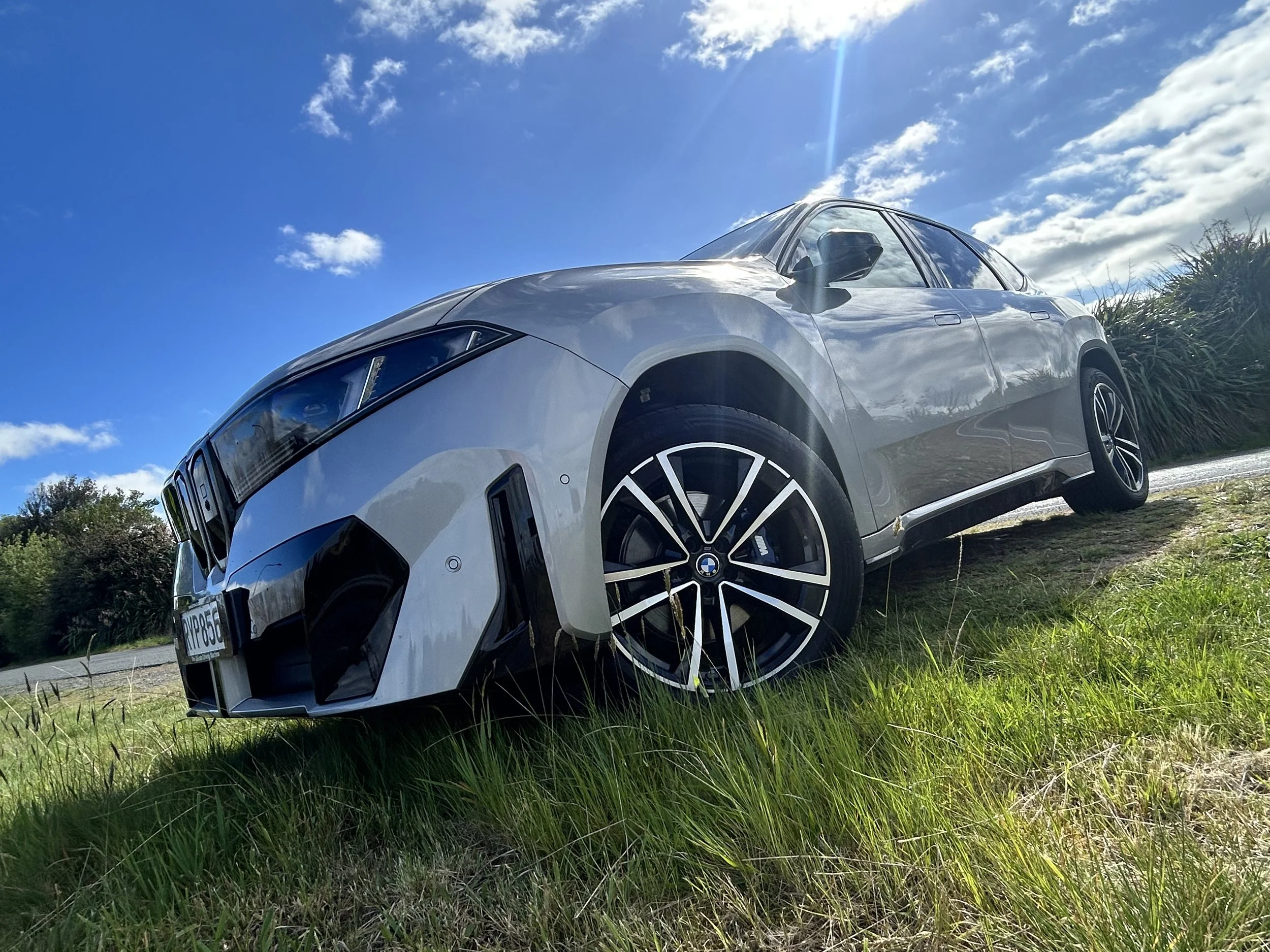
BMW’s SUV design language has become strong, to point of raising salty comment in respect to the iX. I’d struggle to call the iX3 a pretty car, but it doesn’t seem so intent to push people into for and against camps. The period of giant grille vulgarity seems to be over. In this instance, that element is actually an LED panel, not a gap through which cooling air can flow, that illuminates at night.
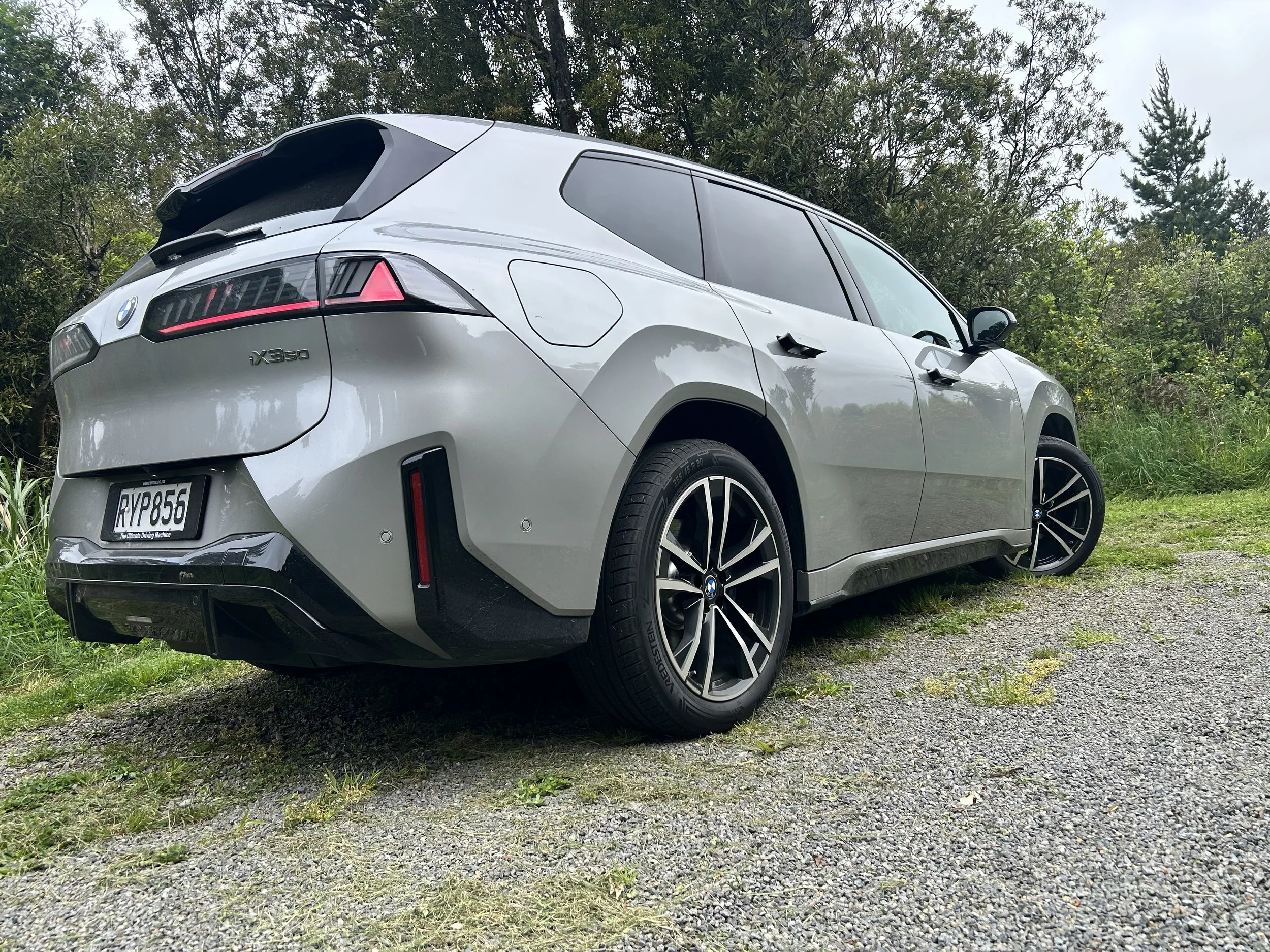
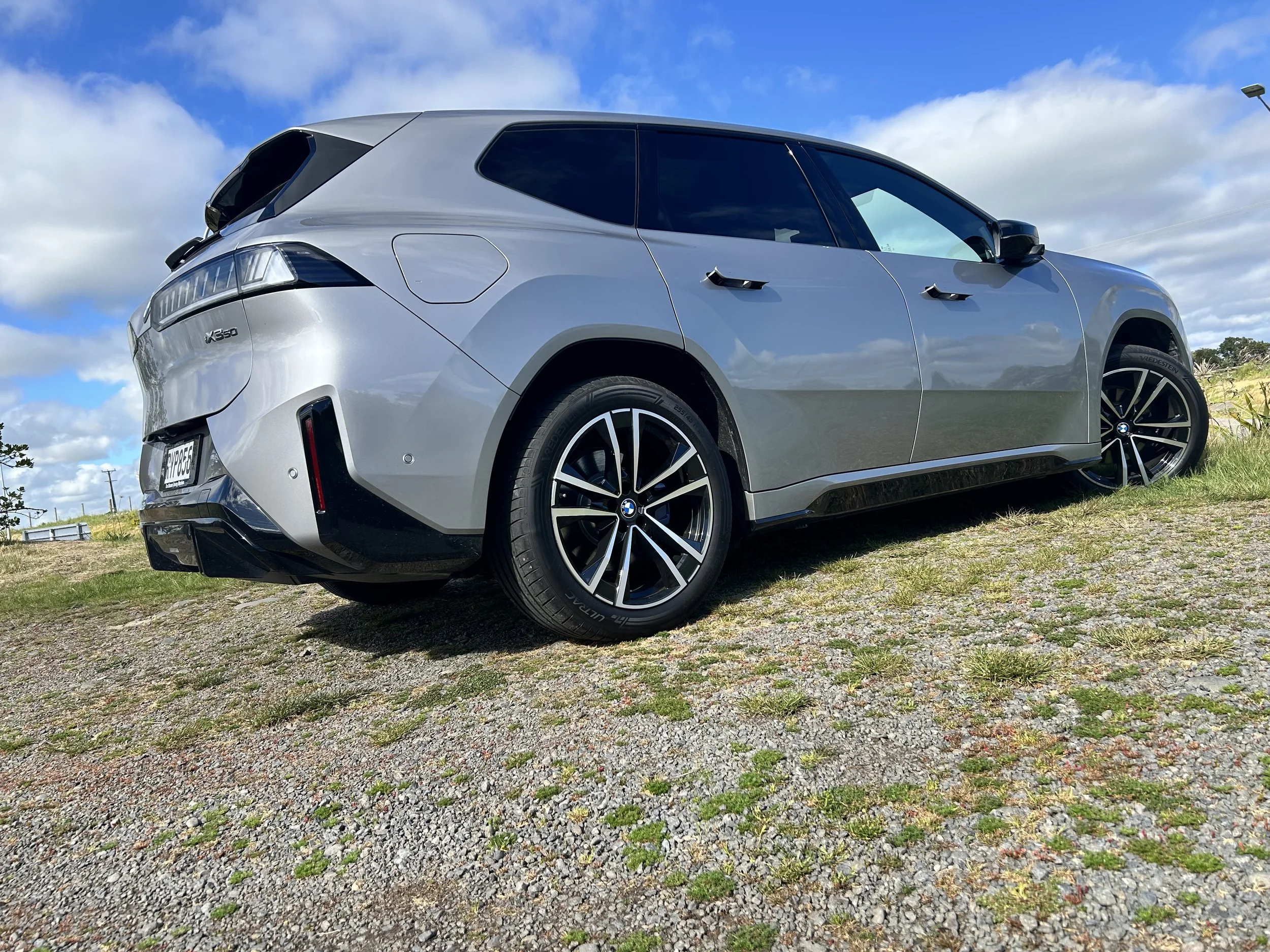
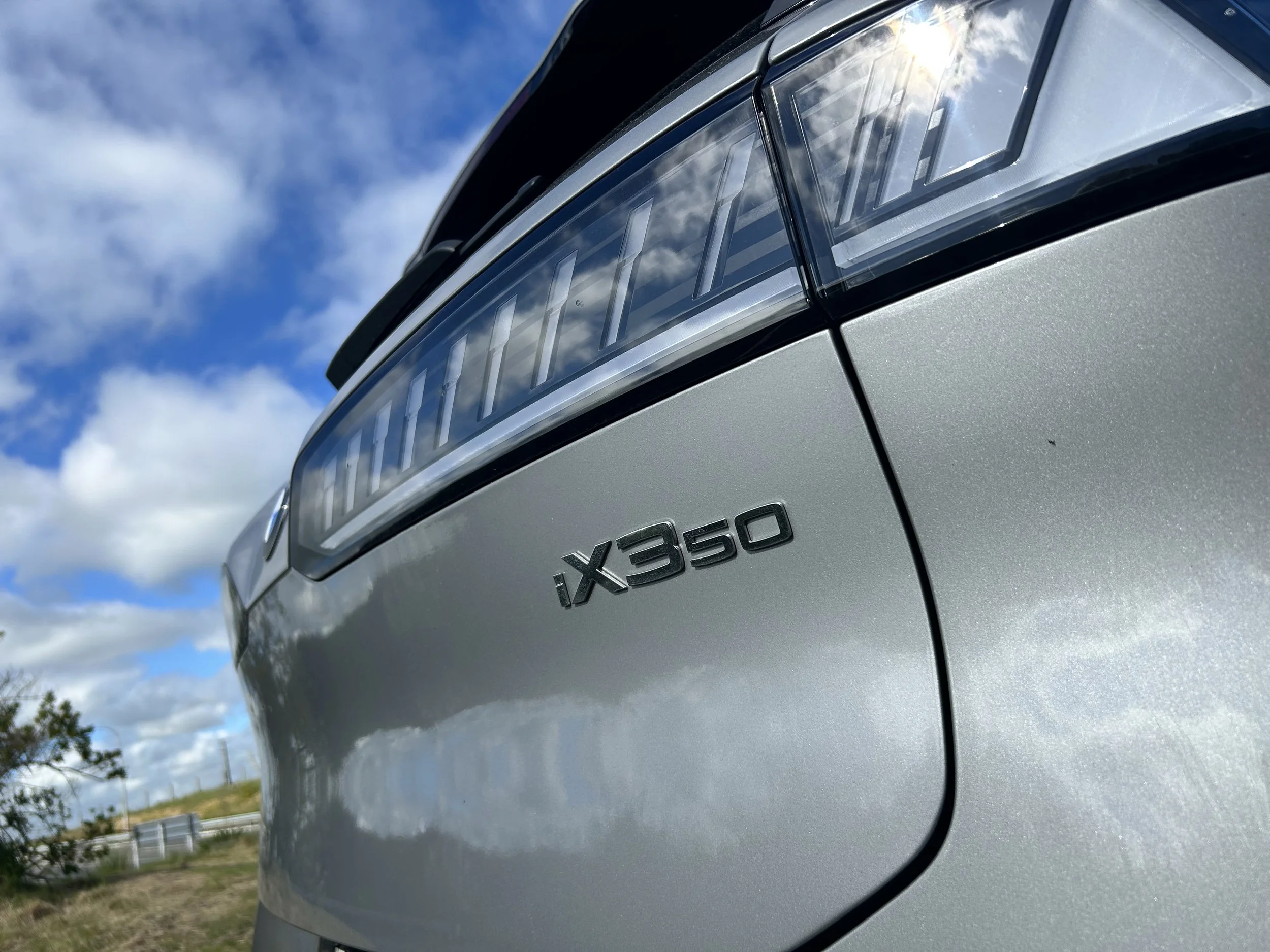
The flanks have some of the same surfacing and the prominent pushed-out wheelarches as the iX, but the overall treatment is much cleaner and smoother, benefitting from the glasshouse being larger and deeper. The rear brake lights have'digital jewellery' in their design but they do make seem a touch over-exaggerated in shape.
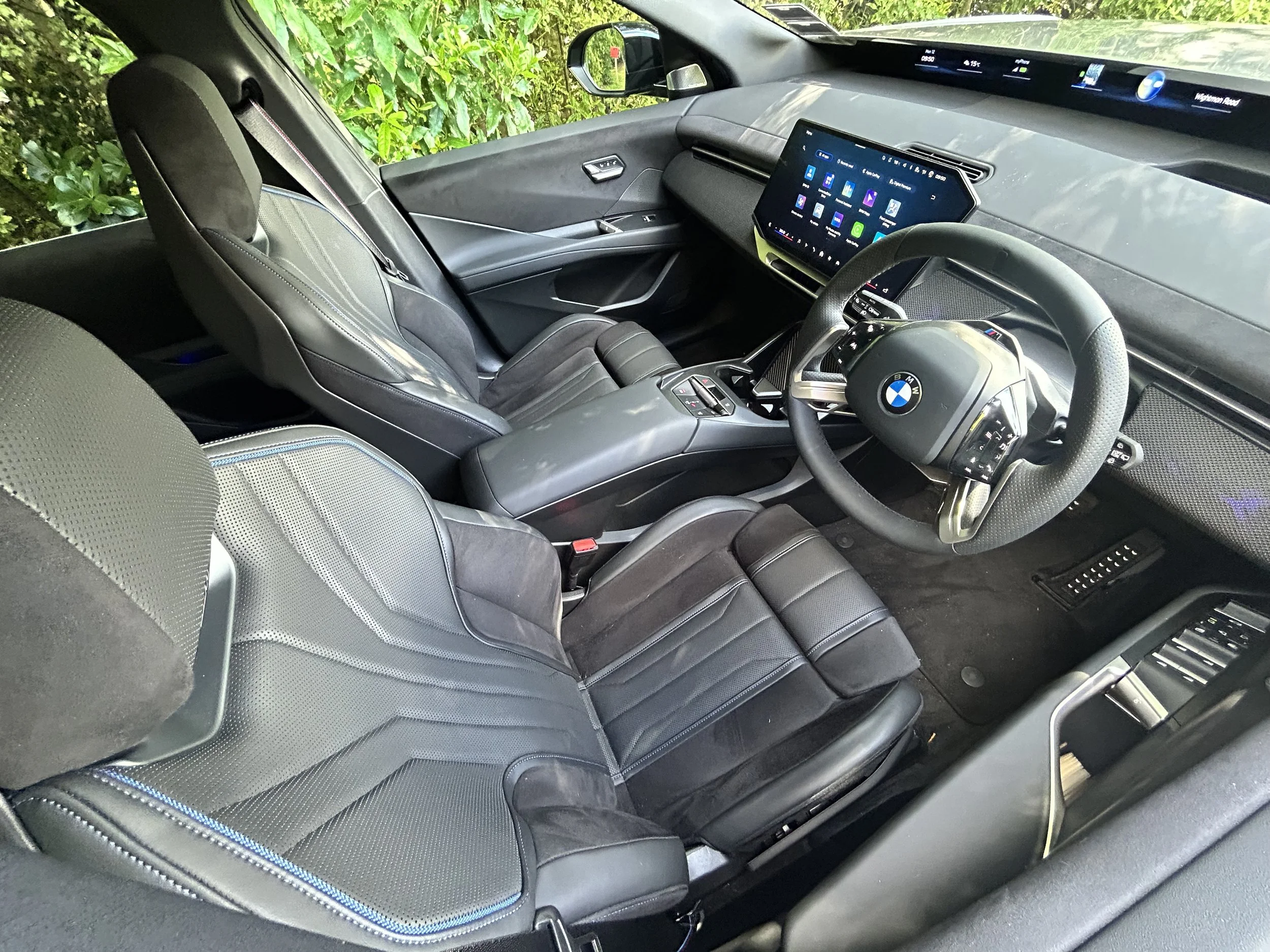
Talk of the iX3's interior will focus on the electronic displays; which are very much front and centre, with physical controls scarce.
Normally you’d be focussing on the centre interface, a 17.8 inch touchscreen, in this instance in an offset rhombus shape is angled towards the driver sand is meant to mimic the angled centre consoles of BMWs from the 1980s and 1990s.
However, here it’s the Panoramic Vision screen that deserves primary focus. Kudos to those who brought into production a slim display sweeping dramatically from one windscreen pillar that is almost like peeping under the edge of the bonnet. The proposal is very out there and at first glance might seem a huge risk, but stick with it.
The concept of keeping instruments and data of your choosing a tiny eye-flick away from your natural direction of view is a fantastic, ground-breaking idea, so naturally intuitive in its functionality it almost makes the projected head-up system redundant.
Selecting from functions on the touchscreen and transferring them to the vision screen is easy and worth doing. Your speed, range and battery state of charge, navigation instructions, which music track is playing, a localised weather forecast, or an air quality indicator. You can have it there in your peripheral vision, easy comprehended, but importantly never a distraction.
It also tells you when you're conversing with the 'Hey, BMW' digital voice assistant. Don’t take brand assurance the assistant is up to engaging in normal conversation. For me, it was often obtuse and obscure when asked basic questions and also butted into conversations unbidden.
The main screen has impressively slick software. You can add extra apps and there’ some gaming for whiling away the time at chargers, including a BMW-exclusive Hot Wheels game. This screen takes time to learn, but presentation and operability is among the class leaders. BMW has resisted fitting a passenger-side screen and I’ve no qualms about that.
The iX3 uses electrically adjustable seats which have slim, metallic controls mounted on the doors. These are simple to use but the range of movement in the seat isn't extensive, and the height adjustment is not generous. That, and the lack of height adjustment for the seatbelts, means that getting a truly comfortable driving position can be a touch tricky depending on your size.
The steering wheel is a new design which uses a low-set two-spoke design and haptic control buttons on the centre. It could also do with a bit more upward adjustment, but has a lovely feel.
The iX3's cabin is practical. Up front you get a large open storage area under the centre console, on top of which you'll find two sensible cupholders and a wireless phone-charging pad. There's more storage under the front armrest, but this is a little bit tight. Door bins are also on the small side.
The rear seating area is decent, but no more than that. If you are a big family, the X5 is still the better car. Still, I’m tall, yet there was easily enough room for me to sit behind my own driving position and while the floor in the back isn't entirely flat, it’s not bad, and headroom is reasonable. The iX3 has two ISOFIX fittings, both in the back seat. The centre rear seat is just about wide enough to be able to squeeze in a narrow booster cushion. The iX3 having quite a low window sill will allow smaller passengers chance to get a good view of the outside world.
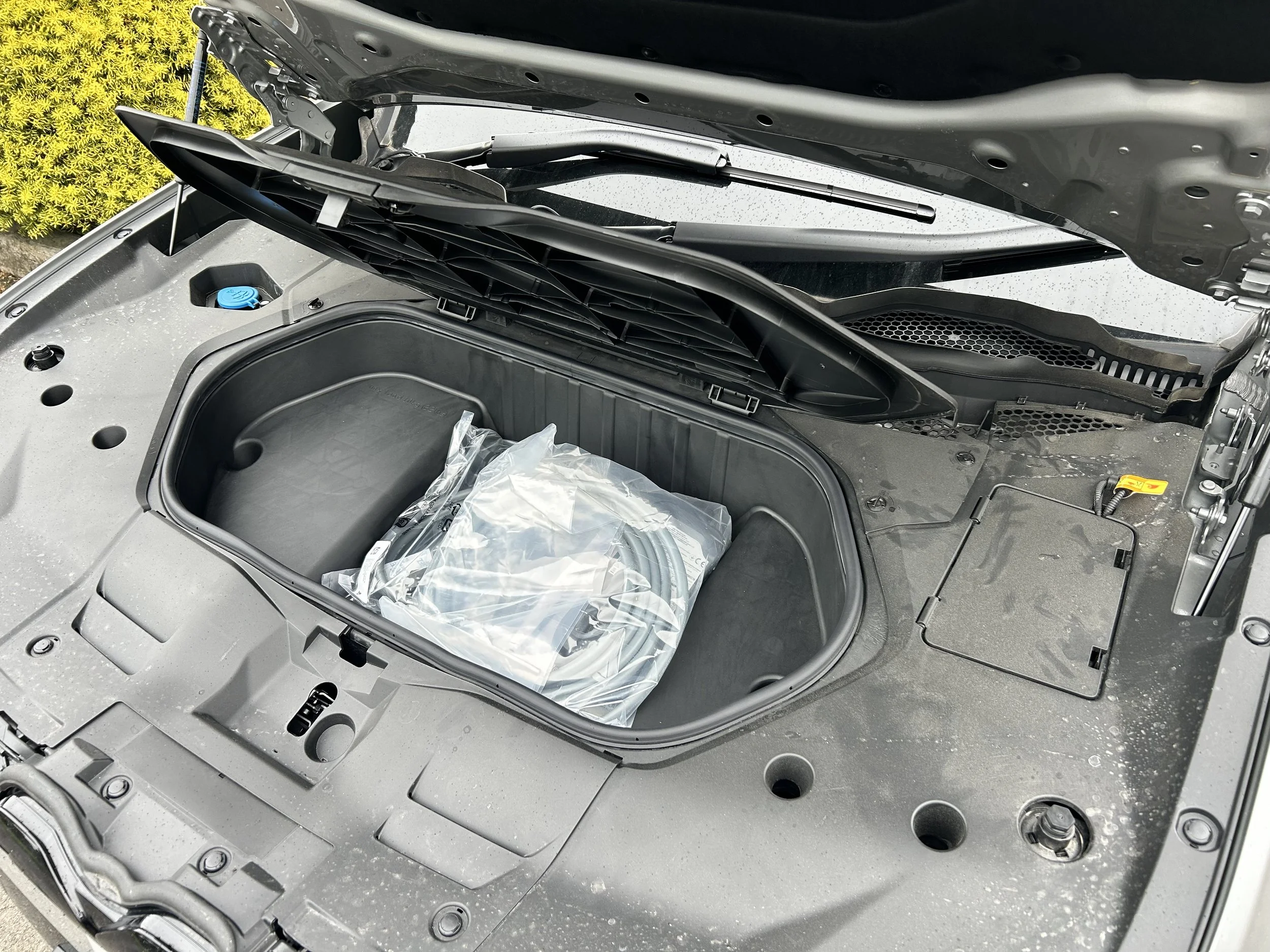
A boot volume of 520 litres is class average. The rear seat splits and folds in 40:20:40 formation. Do that and the cargo volume expands to 1750 litres, although the backs of the seats don't fold entirely flat. There’s also a handy 58-litre 'frunk' in the nose (pull the bonnet release twice for access) which holds the charging cables and the tyre repair kit;.
The boot floor is nice and flat to make loading easy, and there are handy moulded shopping bag hooks at the sides and a netted section, and some more handy space under the floor.
The iX3’s towing capacity of 2000kg braked (750kg unbraked) is decent for an EV and also welcomed is a specific menu for towing assistance in the driver's assistance section of the big touchscreen. The integrated lowball is, of course, to Europe market specification.
The BMW iX3 hasn't yet been tested by Australasian NCAP for safety, but it achieved five stars from Euro NCAP in July.
There's the usual plethora of electronic safety aids, including emergency automatic braking, active speed limiter, adaptive cruise control and a driver drowsiness monitor. What’s great about the integration is that everything has been sensibly integrated; there are no annoying bing bongs and when the assists do intrude with steering wheel tugs and self-braking, it’s done in an almost human way.
BMW's engineers say that they've tried to create a 'symbiotic' relationship between the car's steering, suspension, brakes and the various electronic aids, so that the driver ideally shouldn't notice any interventions. I applaud them for this.
The brakes are almost un-EV in two respects. BMW has included a 'Soft Stop' function which is designed to bring the car to a final halt without a head-tossing jerk. There is a regenerative function, but the rather than the steering wheel paddles commonly provided, you you have to dig into the touchscreen menus to make adjustments. It’s almost as if they don’t want you to do this.
As said, the driving feel is fantastic. It’s a salute in itself to simply say the iX3 steers and rides like a proper BMW. Yes, it’s sporty, but while the ride reflects that, it’s not brittle. Likewise, the steering weighting is firm, but not excessively so. What’s really remarkable is how light-footed and agile it seems. This is a car deporting 2.3-tonnes’ weight. Yet it spears eagerly into corners and impressive damping that means the body recovers quickly and smoothly from sudden actions or surface imperfections.
The driving modes, of course, affect the feel. In its normal setting, it’s relaxed; in Sport mode more emphasis goes to the rear motor than the front, but have to be trying pretty hard to feel the difference.
Which wheel size to go for is a question most intending owners will mull. The test car was on standard 20-inch rims, which are clearly the engineers’ preference. I’ve driven on one 22s, which will be hard for customers to turn down. They look great. The rolling radius is the same, but in terms of ride quality, the car is better on the smaller rim and a tyre that has more meat in its sidewall.
Overall? Such a clever, charismatic car. So much more personality here than many electric SUVs offer and the technology interaction is brilliant. More than just the best electric car driven so far this year. It’s a genre landmark.