
China-made Frontier Pro favoured as mystery Nissan PHEV
/A plug-in hybrid petrol is set to join Nissan’s NZ line-up, with full details being spilled on Thursday. Don’t be surprised if it’s a tray deck from Dongfeng.
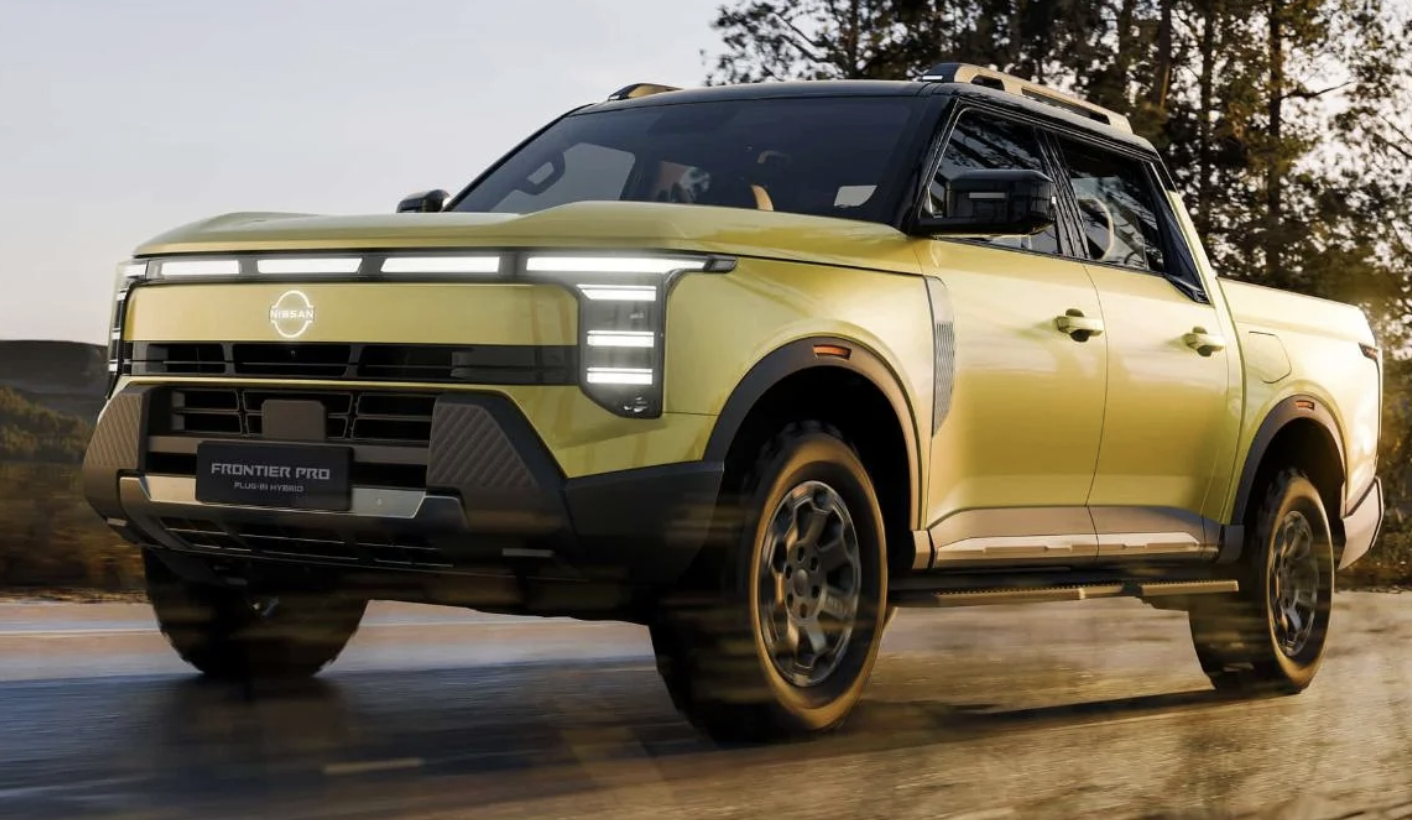
INTENT by Nissan to announce on Thursday a petrol plug-in hybrid vehicle to its New Zealand line-up raises several potentials, but easily the most likely is a utility from a partner brand in China.
Like the diesel-wed Navara it has now, the Frontier Pro is a product coming from a partner - in this instance, China’s Dongfeng (whereas Navara is a revised Mitsubishi Triton).
Ties to Dongfeng, which also presents directly here - but in a distribution arrangement that does not tie to the Japanese maker - go back 20 years.
Nissan regional high-ups recently told Australasian media that they want Dongfeng-supplied vehicles here as Nissans.
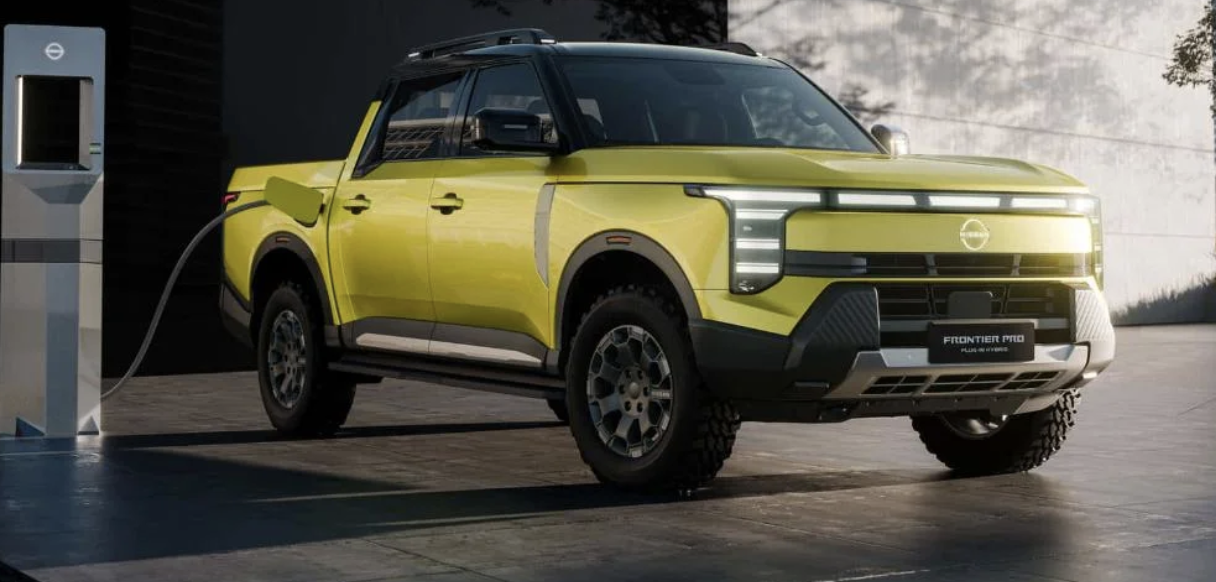
Frontier Pro was shown in the prototype form seen here to Nissan NZ dealers a year ago.
Further in the future are a sports utility with off-road potential that is also running PHEV; this would be sold with an older Nissan name, Terrano.
A very large SUV is also in their thinking, as are sedans in full and PHEV. Nissan hasn’t had a four-door booted car in years.
Nissan NZ has notified intention to “announce an exciting new addition to its New Zealand vehicle range this Thursday, marking a significant new step in the brand’s journey in New Zealand.”
A media share goes on to state: “The announcement will provide the first details of a highly anticipated model’s arrival in New Zealand, bringing electrified performance and new levels of capability to Nissan’s local line-up.
It further added: “Tailored to the needs of New Zealand customers in a key segment and extensively tested and tuned for regional conditions, the model represents an important milestone for Nissan.”
Representing as the Dongfeng Yuanye Z9 in China, the Frontier runs a 1.5-litre turbocharged four-cylinder along with a transmission-mounted electric motor.
The powertrain produces at least 300kW/800Nm sent to all four wheels, a big lift on the Navara’s 150kW/470Nm turbodiesel.
When displayed at last year’s Shanghai motor show, a range of 135 kilometres on pure electric power, 1046km of combined driving range, and fuel consumption of 6.9L/100km was claimed, but these figures were judged from a domestic market scale far more lenient than our own WLTP.
Towing is capped at a Navara-equivalent 3.5-tonnes and the wading depth is rated at 700mm.
Vehicle-to-load is also available, allowing owners to power external devices with the car’s battery pack.
The Frontier Pro measures 5520mm long, 1960mm wide and 1950mm tall. The Navara measures 5320mm long, 1930mm wide and 1815mm tall.
Frontier Pro has double wishbone front and five-link rear suspension, an electromechanical rear differential lock, drive modes and runs 265/65R18 tyres.
Design ingredients include a strip of LED lights along the leading edge of the bonnet, a distinctive rear pillar and a horizontal rear LED bar in which ‘Nissan’ is spelled out.
It has a 10.0-inch driver display and a large 14.6-inch multimedia touchscreen, an array of physical controls, and a new two-spoke steering wheel.
Nissan NZ’s explanation for how the Frontier Pro will fit in will be interesting to hear. Logically, it allows a foil to the BYD Shark 6, the GWM Cannon and Cannon Alpha and Ford Ranger PHEVs. Of those, Shark 6 has raised highest volume, but overall PHEV utes remain a niche.
It seems unlikely that Nissan would ever see the Frontier Pro as a full replacement for Nanavar, given that the latter is such a well-established nameplate. All the same, latest Navara has struggled to win acceptance, with much consumer resistance coming down to it being lightly veiled reprise of the Mitsubishi Triton, the country’s third best-selling one-tonner.
Nissan here is in an interesting state in respect to electric-involved products and does not have a plug-in hybrid model, though conceivably could chose up to three from other parts of the world.
In current state, the Auckland-based distributor puts most faith in its e-Power tech in the X-Trail and Qashqai.
This virtually sites in a class by running a petrol engine purely as a generation an electric drivetrain. It is in all intends an EV, but classes as a combustion car, so escapes Road User Charge. But it also escapes attention from electric car buyers.
For them, it has … nothing. Although popularity as a used import makes Leaf the biggest volume product as an electric choice, Nissan withdrew the last of the NZ-new versions that competed with those and chose not to uplift the radically different new one to this region.
The larger Ariya, which has the same platform and drivetrain tech as the latest Leaf, proved a short-stay involver. It launched in late 2024 and is no longer offered.
Nissan has a PHEV version of the Rogue, which is effective a Qashqai in slightly larger scale, designed for North America and plucking the same drivetrain sold to Kiwis in the Mitsubishi Outlander PHEV.
The PHEV Rogue has a 20kWh battery pack with an estimated all-electric range of up to 61km, intelligent all-wheel drive, and a 2.4-litre four-cylinder engine paired with dual electric motors.