
Three is Hyundai’s latest electric number
/Chirpy five-seater aims to lower Ioniq entry price. NZ is interested.
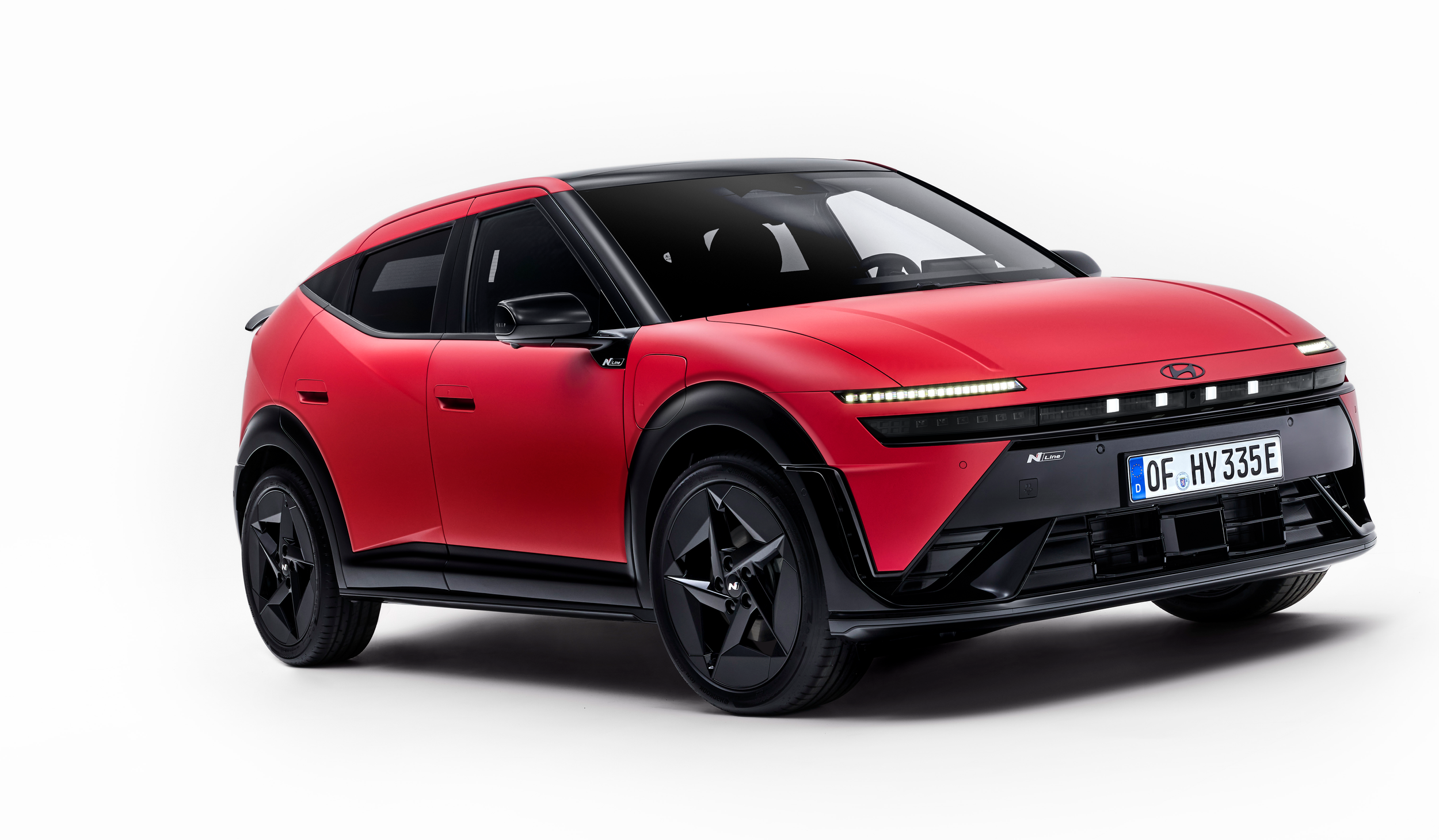
FAMILIAR shape but in smaller scale - there’s the Ioniq 3, Hyundai’s little brother option to the Ioniq 5 that presently leads its electric charge in New Zealand.
What’s set to be the entry-level Ioniq-badged model unveiled overnight in Europe, where it first aims, and the full availability programme has yet to clarify, but a spokesman for Hyundai NZ has confirmed interest.
“Ioniq 3 is a model we’re currently evaluating for New Zealand, given the ongoing growth of the compact EV segment,” he aid today.
“… it’s still early and no decision has been confirmed for our market. If it were to proceed, it wouldn’t arrive before 2027, and it’s too soon to comment on pricing or specification.”
The mode’s unveiling comes as Hyundai here has yet to make clear its intent for two other battery-fed potentials, the smalest car it could achieve - that’s the eensy Inster - and the largest, the Ioniq9 seven-seater that’s more or less equivalent to the Kia EV9.
In respect to what’s happening to those, the spokesman said: “ In regards to Hyundai New Zealand’s electric vehicle range, we continue to assess our line up to ensure each model has a clear role and meets the needs of Kiwi buyers as the market evolves.”
The Ioniq 3 is a front-drive five seater with choice of two battery packs. There’s a standard-range item with a 42.2kWh capacity and a WLTP range target of more than 335 kilometres and a 61kWh alternative, called the long-range option, targeting a range above 490km.
With the first choice, the car runs a 100kW motor and with the second it has a 109kW unit, both producing up to 250Nm of torque. Hyundai quotes 0-100kmh times of 9.0 seconds for the standard-range car and 9.6 seconds for the long-range variant, a consequence of it being heavier.
Batteries can in theory be charged 10-80 percent on a DC fast charger in half an hour. They can make use of 11kW three-phase AC chargers too, while a 22kW upgrade is available for the long-range battery.
The car features 'V2X' tech, meaning it can be used as a mobile power pack.
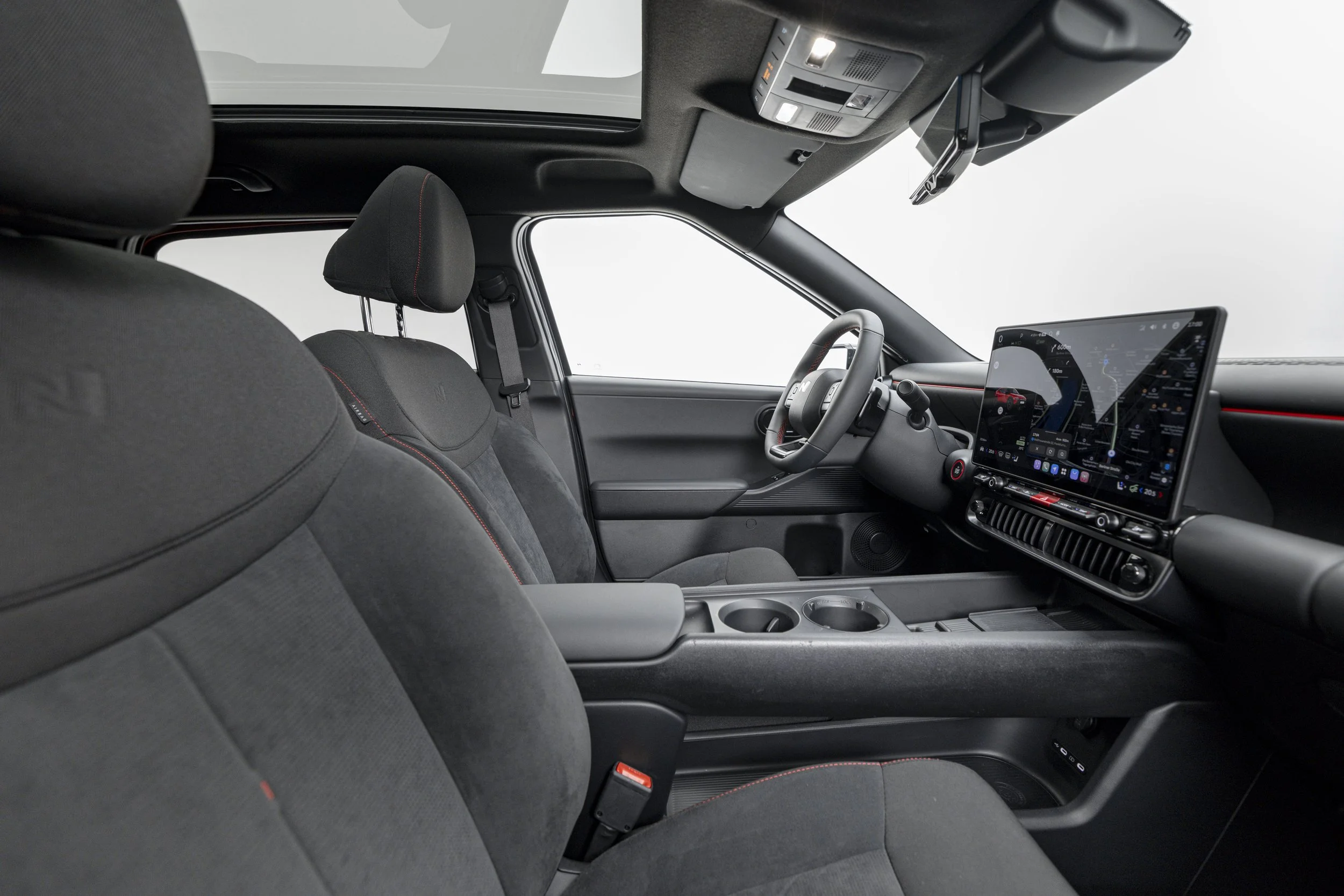
An overall length of 4155mm in standard format and a relatively long wheelbase of 2680mm puts it close to the Hyundai Kona as well, though it's much lower at 1505mm. Ioniq 3 can accommodate almost as much luggage in its boot as the Kona, with a capacity of 441 litres; it doesn’t look that large but there’s a fold up the boot floor with a cavernous space underneath. Hyundai calls this the 'Megabox' and it alone swallows 119 litres.
The boot floor can be set at two different levels and has rails on its sides to allow the attachment of various aftermarket accessories.
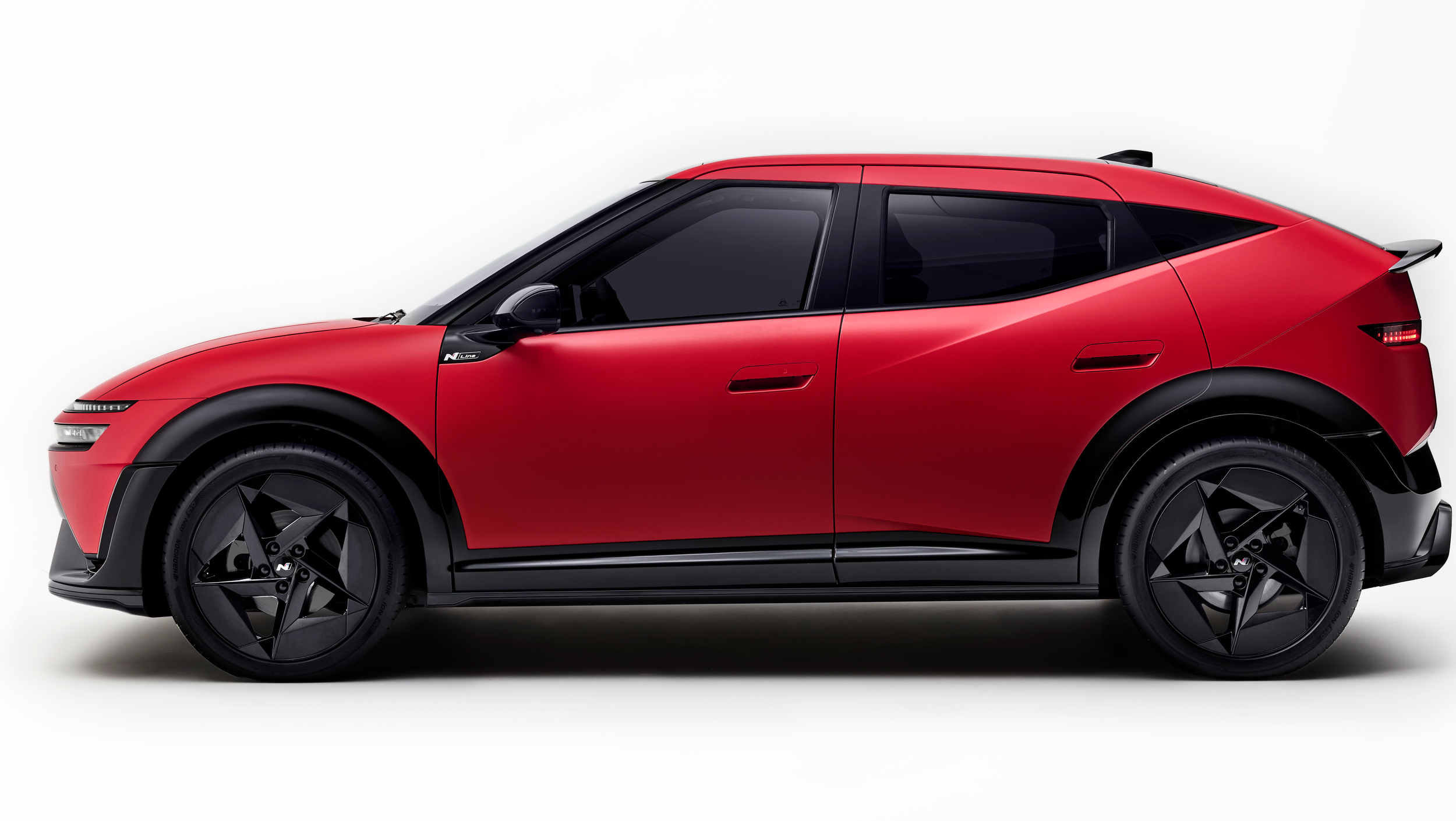
The car goes 5-like with a low, smooth nose with slender, pixelated daytime running lights representing the four dots of Morse code that represent "H”. The same detail is found on the door mirrors and at the back of the car.
The N Line variant pictured lends the nose a black 'mask', gloss-black wheelarches and side sills, a notably pronounced aerodynamic diffuser at the back and a large boot spoiler splitting the glass into two. This is toned down for the other versions.
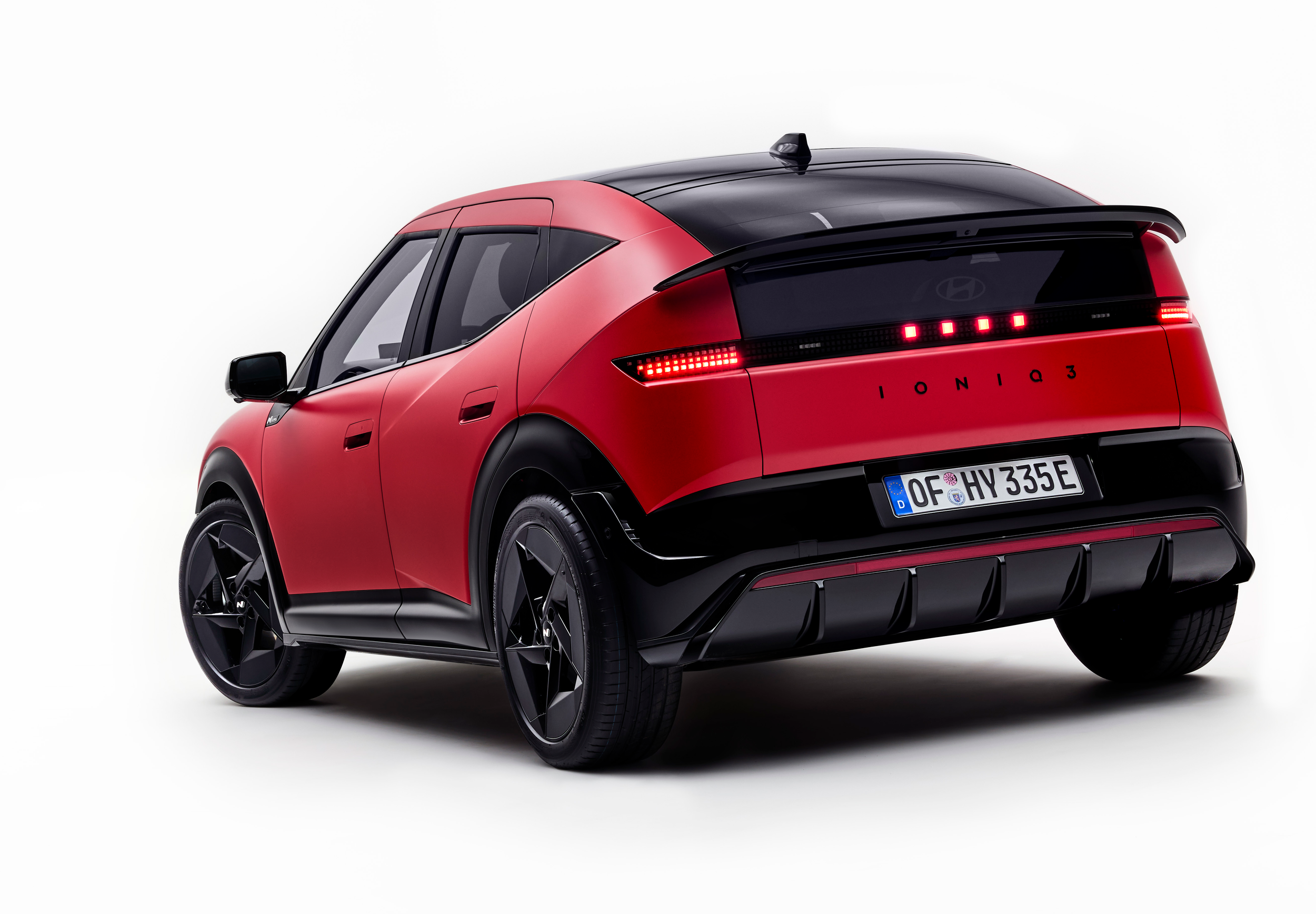
The model has the new Pleos infotainment system, based on an Android Automotive platform. The standard touchscreen measures 12.9 inches across the diagonal, and it can be upgraded to a 14.6-inch item, complemented by a sliver of a screen with the driving information on it ahead of the steering wheel.
It retains switches underneath the touchscreen to allow for quick, safe adjustment of things such as the fan speed and temperature.
Hyundai has taken pride in some practicality touches around the cabin. The tall centre console, for example, has two storage levels, variable cupholders and loads of areas in which a smartphone could be stashed or charged.
Despite the Ioniq 3's position as an entry buy, it provisions big-car features such as the firm's 'Relaxation Seats' that can recline at the touch of a button for a more relaxed position, designed for use when charging up the car at a public charger.