
All-paw for freshened ZR-V?
/Allocating drive to all four wheels is among changes to car in Japan; Google update also delivered.
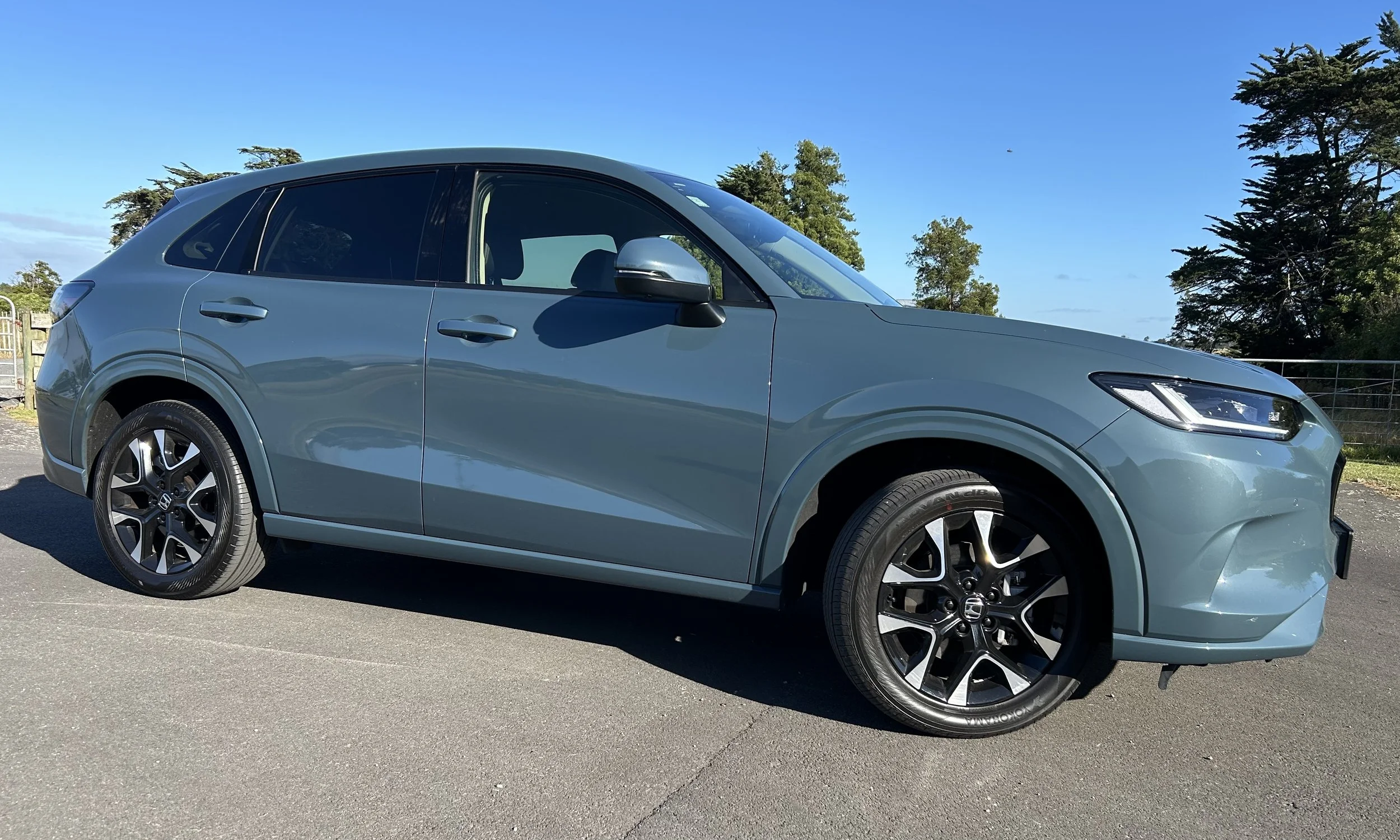
FURTHER revision seems imminently set for a compact Honda sports utility that stands to challenge dominant hybrids from the countryside strongest-established brands.
After three years on sale, the Honda ZR-V is set for a freshen that brings news technology.
Japan has already begun sale of the 2026 car and while Honda NZ has yet to identify exactly when it will come on sale, it has indicated arrival is close.
The 2.0-litre electric-assisted powertrain labelled e:HEV will continue, in unabated format - so a combined 135kW and 315Nm from the engine and two electric motors - but the alternate turbocharged 1.5-litre petrol has been permanently retired.
The likely big news for a product designed to stand up to Toyota’s RAV4, at times the country’s best-selling passenger product and consistently the market leader’s most popular petrol-electric, is that there will be an all-wheel-drive option to the front-drive format that has been so far sold to Kiwis.
The car in its Japanese market format receives a new trim grade, updated standard features, new 18-inch wheel designs, a revised grille, updated interior styling, and fresh colours.
Also incoming is Google built-in tech, already seen on Honda’s only full electric car here, the e:N1. Those updates include Google built-in apps for the 9.0-inch infotainment screen, such as Google Maps, Google Assistant and Google Play Store.
Carryover features include a 10.2-inch digital instrument cluster, a 12-speaker sound system, heated and power-adjustable leather seats, and a 360-degree camera.
NZ began with ZR-V in 1.5-litre Turbo and 2.0-litre e:HEV Sport (above) variants, but the choice has now winnowed down to the latter, selling for $55,000.
Japan has a Z grade, a Black Style variant - with a black honeycomb front grille design, black 18-inch wheels, black exterior accents, and a darker interior - and has added a Cross Touring, which has all-wheel-drive.
It is fitted with a grille and front bumper design from the US model, and aims to be more outdoor-focused, with skid plates, protective cladding on the bottom of the doors, side sills, and 18-inch matte wheels.
Honda’s e:HEV is engineered to essentially use the engine as an on-board power station for the electrics, just as Nissan’s e-Power does. But whereas the Nissan set-up is fully electric-dedicated, the Honda approach can still drive the wheels by petrol means on occasion.
There is no gearbox as such, so as with a fully electric car, there are buttons for selecting forward, reverse, neutral and park.
The ideal is very low economy, with less than 6.0-litres per 100km cited.