
NZ-involved study highlights A1 charging adds zap
/Battery life can be increased by almost 23 percent without extending the charging time.
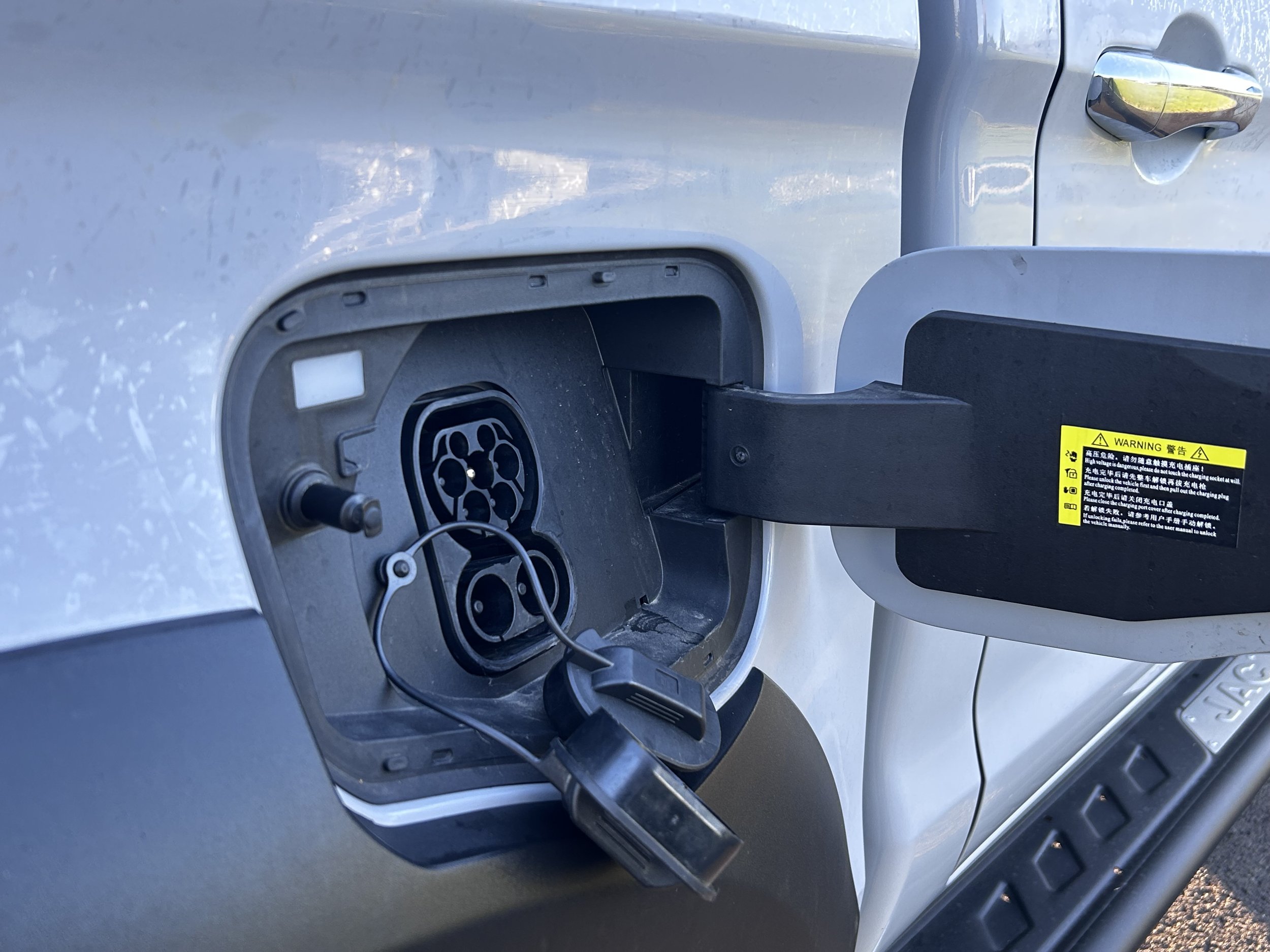
AS reasons go for Kiwis hesitating on the switch to electric, doubts about how long the drive battery might last sit high on the list — and right behind that is concern effect fast charging, the element that makes long-distance EV travel workable, has on long-term battery health.
That trade-off has been treated as more or less unavoidable for as long as electric cars have been a thing.
Researchers at Sweden's Chalmers University of Technology — working with a co-author based in Wellington — reckon it isn’t.
Their study presents an artificial intelligence-based charging strategy that uses reinforcement learning to read the state of health of an individual battery and adjust the current it receives in real time. In testing, the approach delivered a 23 percent gain in battery life compared with the standard fast-charging methods used today. Charging time was essentially unchanged.
And it does it all in software. No new hardware. No expensive pack redesign. Just an update to the vehicle's battery management system.
The Wellington link is Meng Yuan, an assistant professor at Victoria University of Wellington and a former Chalmers researcher, who co-led the work with Chalmers electrical engineering professor Changfu Zou.
Yuan says the central problem with current fast-charging practice is that it treats every battery the same regardless of age, even though the risk of damage rises over time.
“The risk of lithium plating increases with the age of the battery,” she notes, referring to the chemical effect in which metallic lithium deposits on the electrode rather than being properly stored inside it.
The older the pack, the more vulnerable it is — yet today's chargers continue to apply the same current and voltage on day 3000 as they did on day one.
The fix is to make the charger smarter, not gentler. Zou's argument is that adapting the current to the battery's evolving electrochemical state during each charge gets the best out of the pack on both speed and longevity. The reinforcement learning algorithm is trained to understand how a pack ages and to balance the two at every point in its working life.
There's a Kiwi-relevant kicker that goes beyond bench science. EV batteries typically last between eight and 15 years before capacity falls to the 80 percent figure that defines end-of-useful-life — Volvo, for instance, warranties its packs for eight years or 160,000km.
A 23 percent extension would, in real-world terms, hand drivers a couple more years before that point arrives. For anyone leaning on the public DC network rather than charging at home, the cumulative gain stacks up faster still.
It also has implications for the used-car trade, which matters in a country whose new-vehicle market is small and whose EV resale market — in part battered by the rebate scheme's withdrawal and the subsequent RUC reset — is still finding its feet.
A longer-lived battery means stronger residuals, and that's the figure that ultimately decides whether a Kiwi household concludes the EV maths actually works.
For manufacturers, Zou flags the prize as “lower warranty costs, better resale value and more efficient use of critical raw materials” — the lithium, cobalt and nickel whose supply chains are not getting any less contested.
Next step is to test the strategy on physical battery packs beyond simulation. The team also notes that for the method to scale across the industry it would need to be calibrated for different battery chemistries — though transfer learning, where the AI carries lessons from one pack to the next, looks to do much of that heavy lifting.
The study, Lifelong Reinforcement Learning for Health-Aware Fast Charging of Lithium-Ion Batteries, has been published in IEEE Transactions on Transportation Electrification.