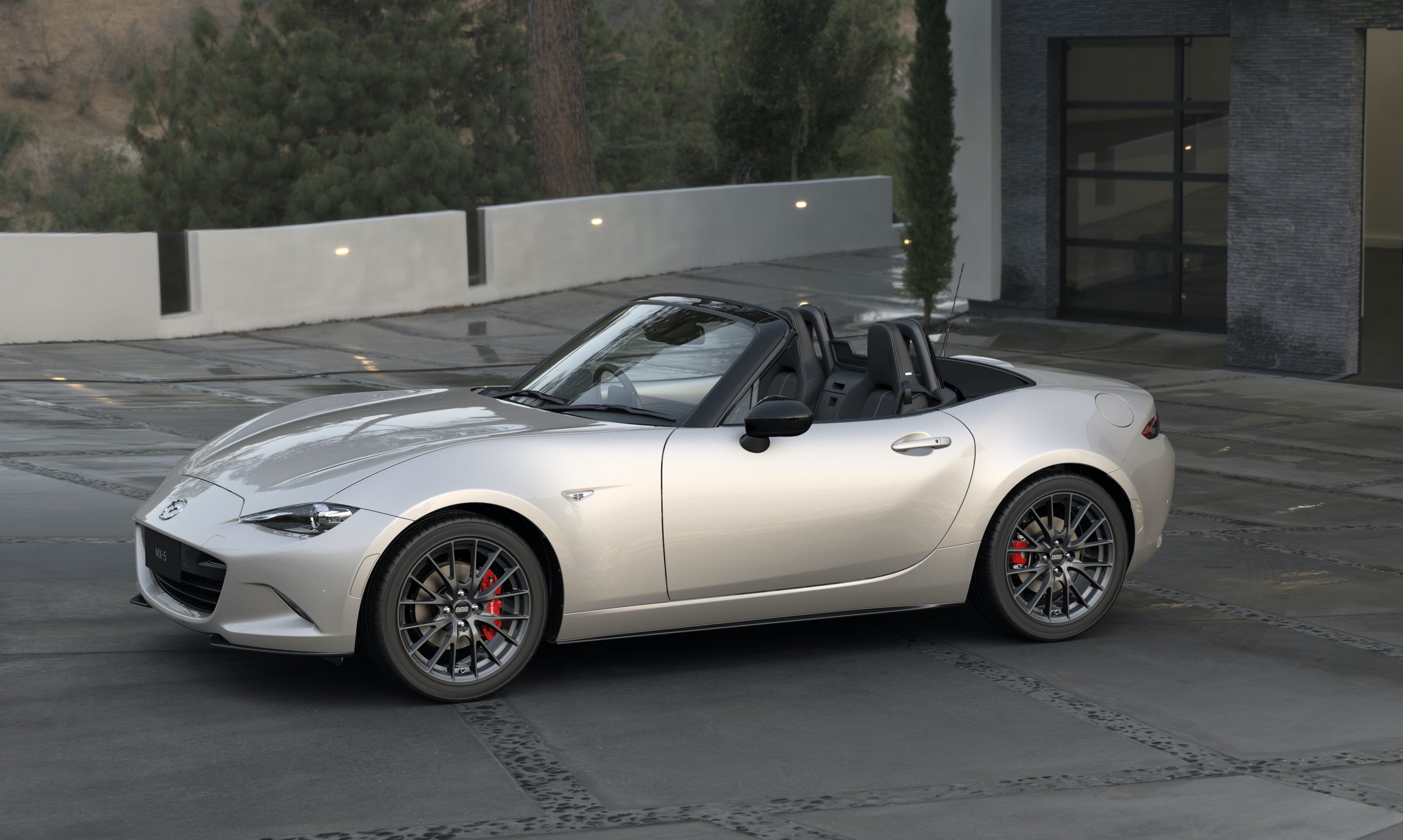

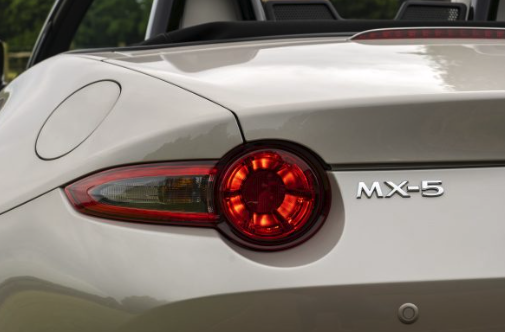
Wait, is that an electric MX-5?
/
Design study of small battery-packed coupe flashed at Mazda conference.
Read MoreDesign study of small battery-packed coupe flashed at Mazda conference.
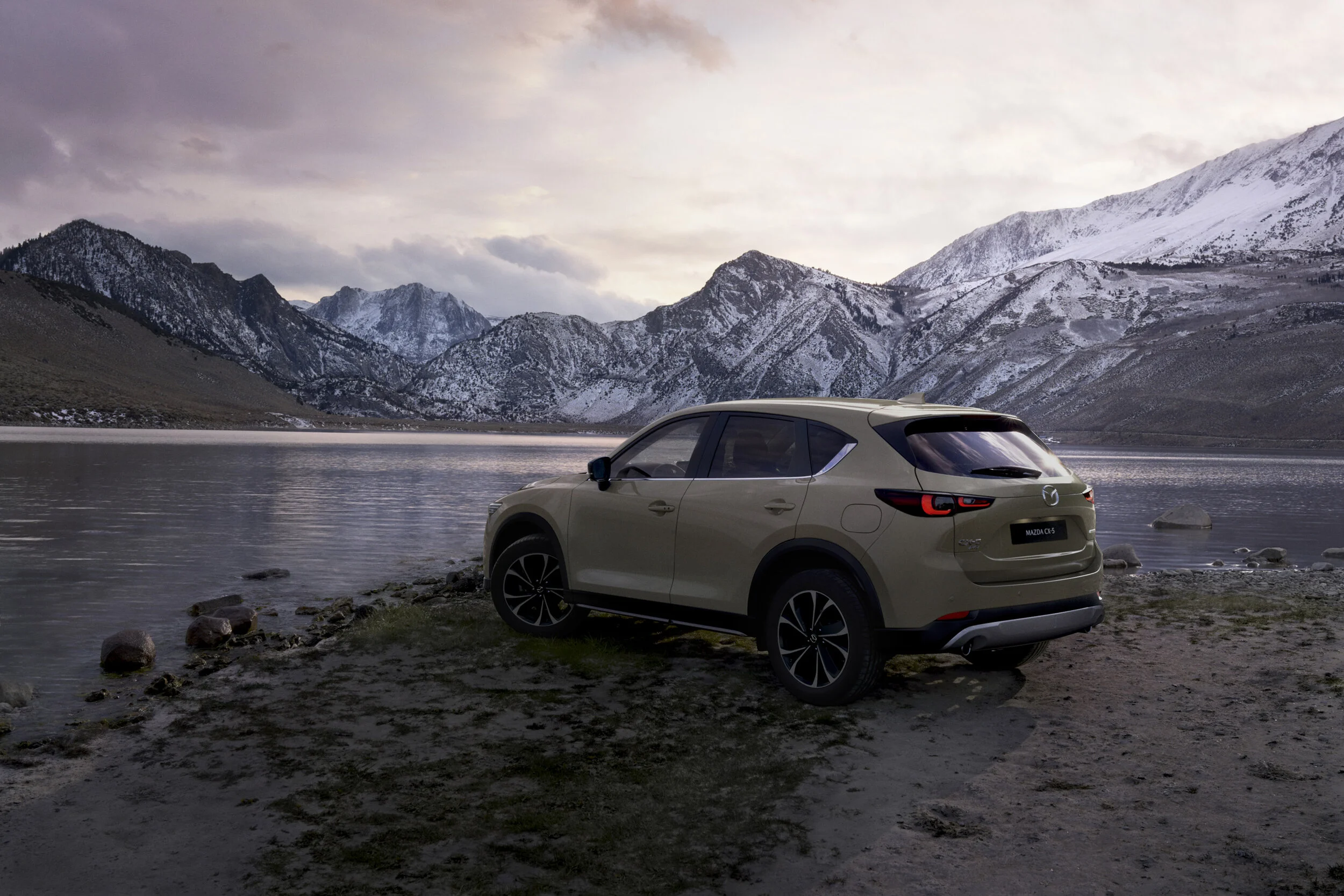
Read MoreMazda’s new flagship expected to overshadow CX-9 as a five-star family fare.
Read MoreNZ market preferences for plush battery-involved SUV adopted by neighbour
Read MoreWhile our neighbour is securing CX-60 this year, NZ is further down the queue.
Read MoreArrival of handling-honed model coincides with signs Mazda’s classic has a solid future
Read MoreHiroshima’ most powerful road car is designed to go up against Germany’s elite marques.
Read MorePowertrain detail revealed about the CX-60 in run-up to full unveiling next month.
Read MoreMazda has outlined its upcoming sports utility range and lots more.
Read MoreBEING in the business of making and selling products that create greenhouse gases responsible for global climate change also fuels Mazda’s eco-consciousness.
It all began in 2007 with Sustainable Zoom-Zoom, a multi-solution plan to reduce vehicle emissions; including a key resolution to reduce “well to wheel” CO2 emissions from its vehicles by 50 percent by 2030 and by 90 percent by 2050.
Read MoreTHE latest entrant to the electric car sector is also proposing keeping petrol and diesel vehicles in circulation for decades yet.
Mazda New Zealand’s call is tied to adoption of synthetic fuels that could make internal combustion engine (ICE) vehicles just as clean as electrics.
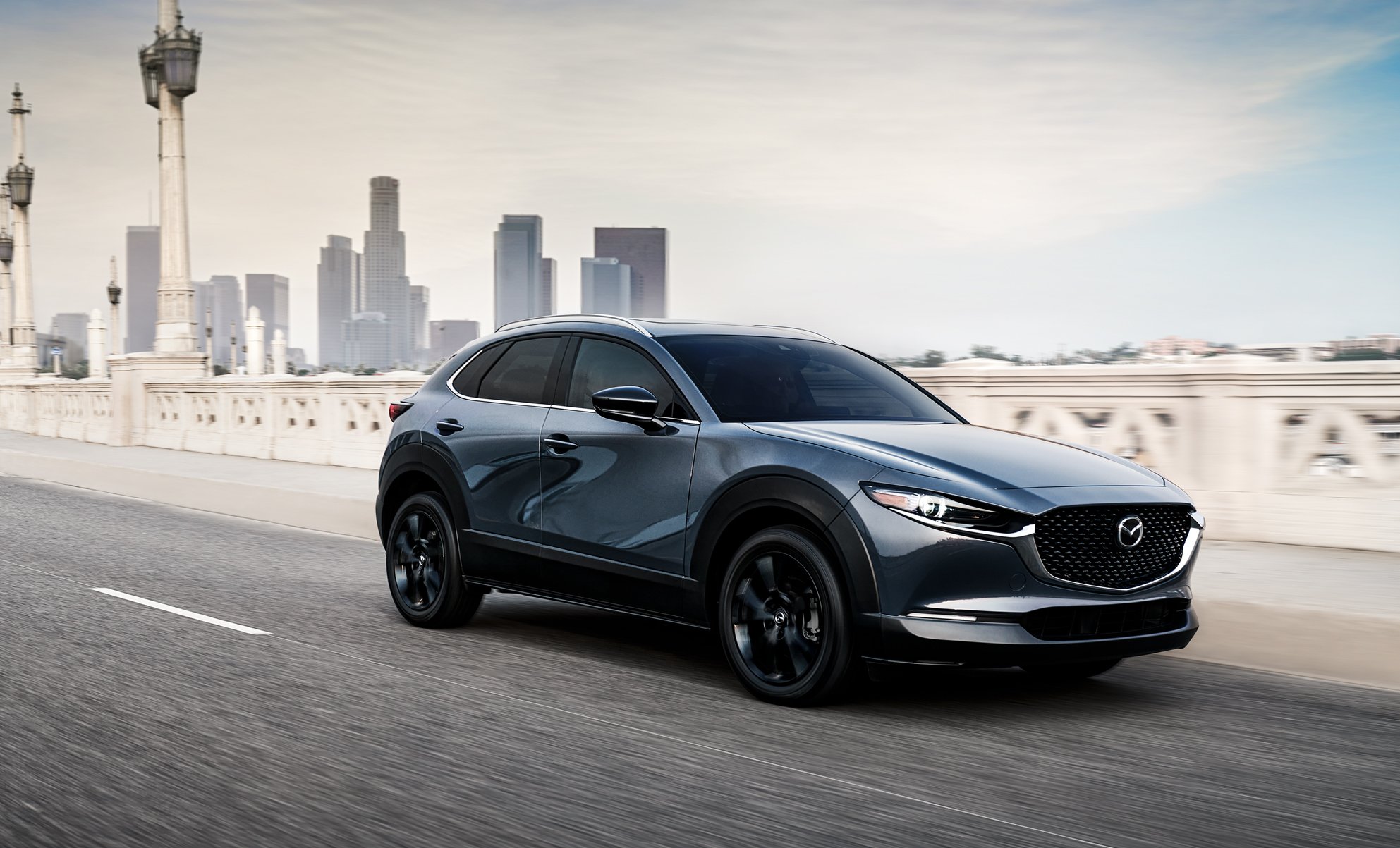
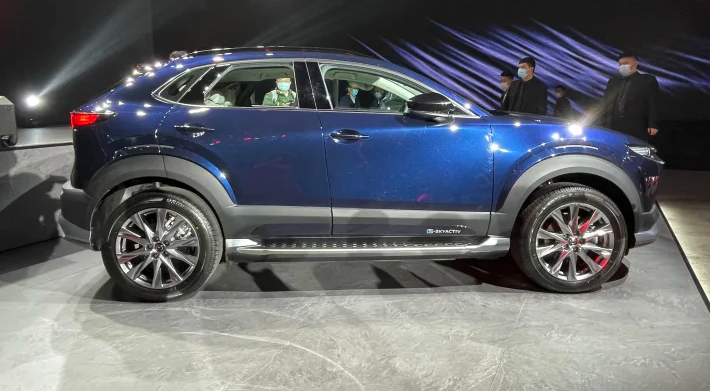
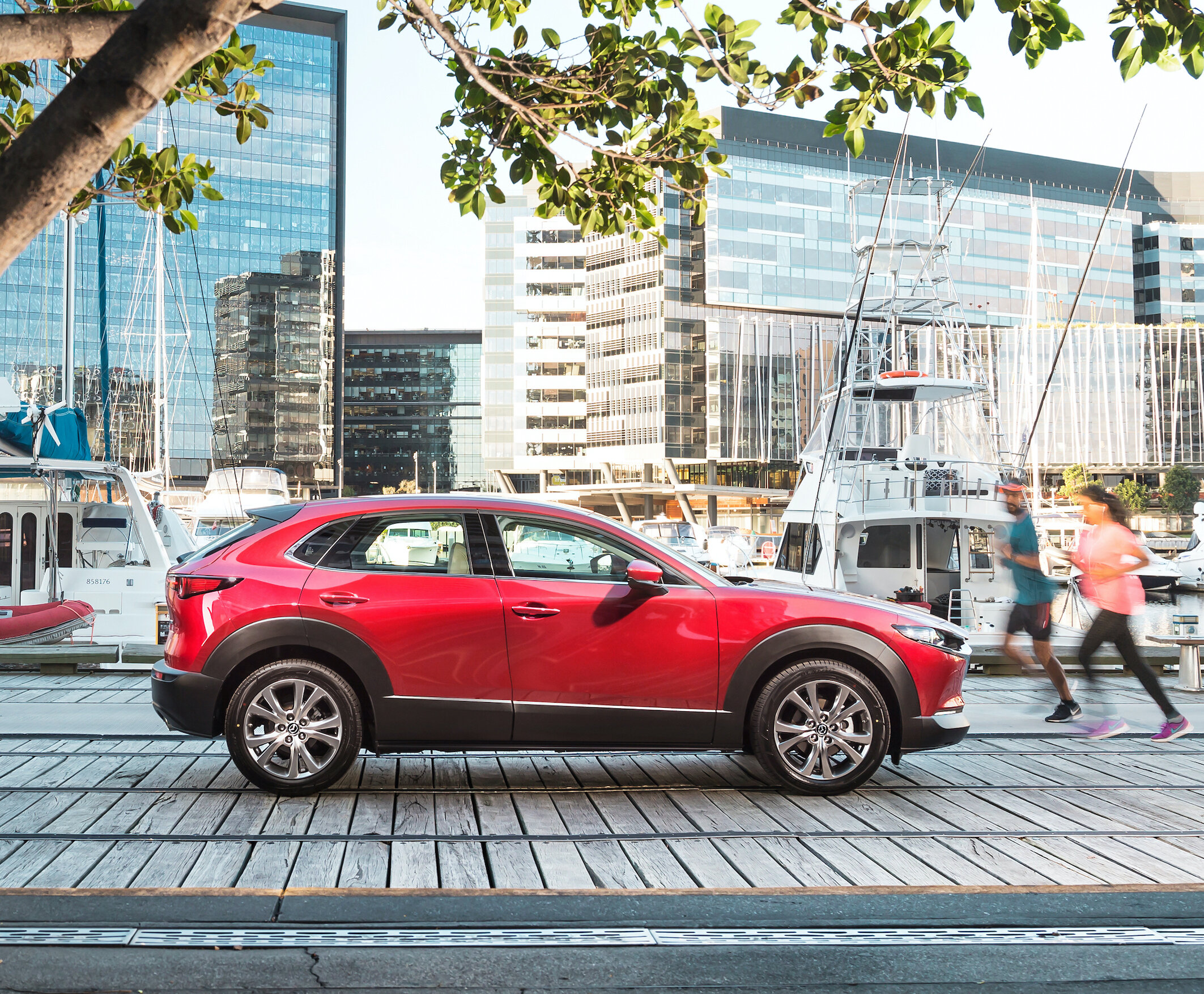
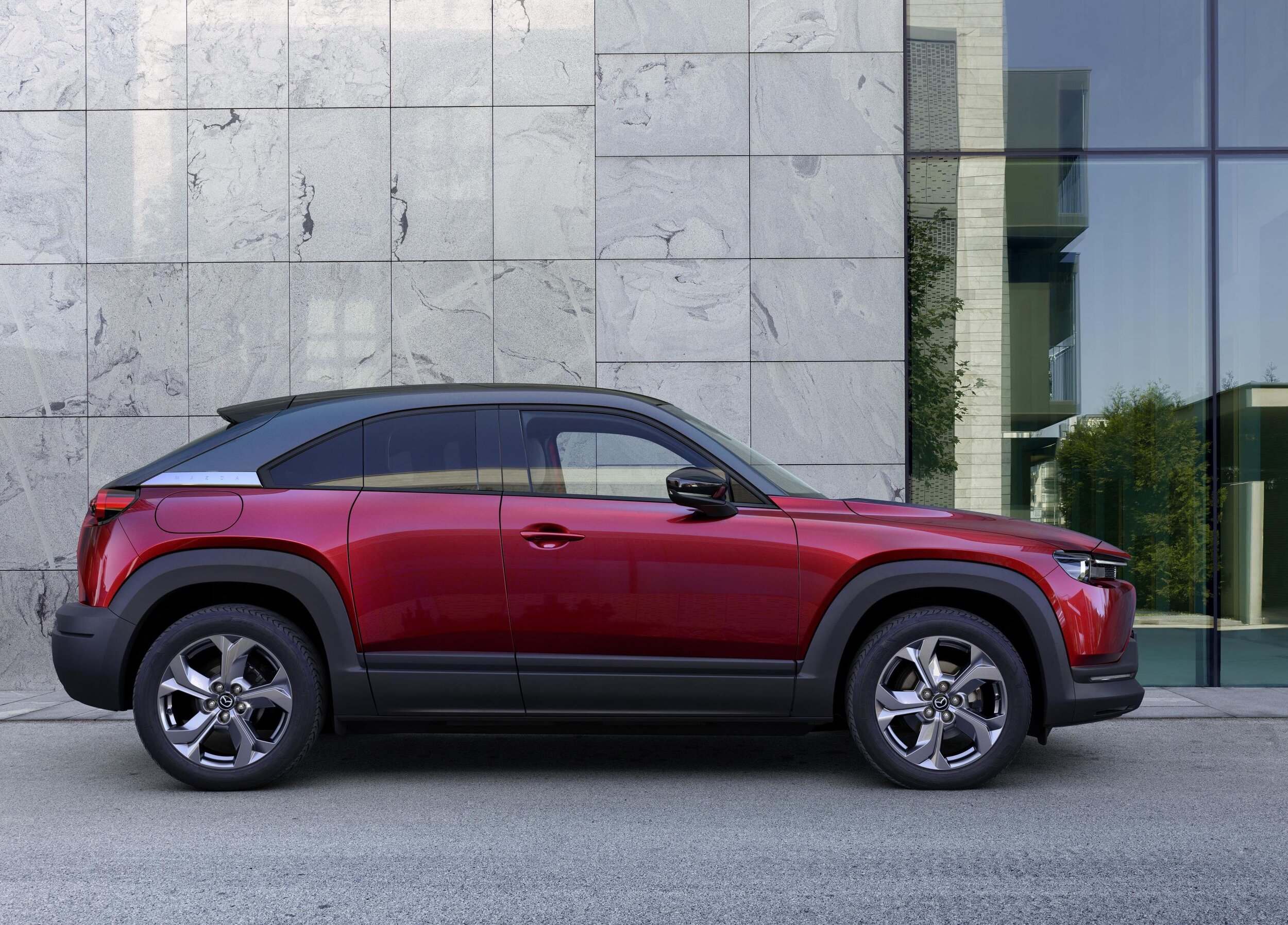
Read MoreThe CX-30 EV at the Shanghai motor show, above, is a derivative of the petrol edition popular with Kiwis (below) that appears to run the same drivetrain as the MX-30 Electric (bottom) about to release in New Zealand.
MAZDA’S electric vehicle family has doubled, but chances of one day seeing the ‘second child’ CX-30 in New Zealand alongside the battery-fed MX-30 about to go on sale here seem slim at best.
The fully mains reliant version of the CX-30 unveiled at the Shanghai motor show yesterday would conceivably attract Kiwi interest, as the petrol versions on sale here are popular sellers.
However, Mazda Japan has made clear the new car – called CX-30 EV - is for China only at this point.
That point is reinforced by it being set to be produced solely by the brand's Changan Mazda joint venture in Nanjing, China, rather than in Japan, the sourcing point for all Mazda NZ’s passenger product.
Despite having very different body styles – the MX-30 being more rakish and noteworthy for having pillar-less freestyle doors, which open outwards from the central B-pillar point – the MX-30 and the CX-30 are closely related.
Both are based on a common architecture, also shared with the Mazda3, and physical dimensions are very close.
The MX-30 formats in two distinct drivetrain provisions – there is one model designed to run with petrol engine-assisted hybrid and another that avails in full electric. Both are destined for New Zealand availability, pricing yet unknown.
The CX-30 EV also appears to share technology with the expressly battery MX-30 Electric.
The MX-30 MX Hybrid, meantime, is powered by a 2.0-litre, four-cylinder petrol engine paired to Mazda's M Hybrid system, producing maximum outputs of 114kW and 200Nm through a six-speed automatic transmission sending power to the front wheels only.
The addition of the mild-hybrid system means the model's official fuel consumption figure is reduced to a claimed 6.4L/100km on a combined cycle.
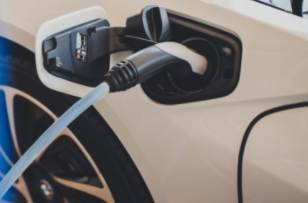
The MX-30 Electric looks much the same as the mild hybrid car, save for some subtle electric badging on the exterior and a combined AC/DC charging point where the fuel cap would normally be – on the rear right-hand side of the vehicle.
The electric model is powered by a 107kW/271Nm electric motor on the front axle and boasts a 35.5kWh lithium-ion battery pack mounted beneath the floor. It is thought the CX-30 EV has the same powertrain.
The MX-30 Electric is capable of up to 200km on a single charge according to the World harmonised Light vehicle Testing Procedure (WLTP). The CX-30 EV is thought to have the same range, which is notably lower than some key competitors, like the Hyundai Kona EV, which has 484kms on WLTP.
Styling differences between the CX-30 EV and regular model that Kiwis know are minimal, though the placement of the battery pack under the floor means the electric model rides somewhat higher than its petrol-powered counterpart. It runs on 19-inch wheels and has 'e-SkyActiv' badging.
It is not clear if the CX-30 EV could provision as the MX-30 Electric also ultimately will, with a petrol-fed rotary engine range-extender drivetrain.
NOW there are two – derivatives of Mazda’s top-selling CX-5 sports utility, that is, with a fiery turbocharged 2.5-litre petrol engine.
One outcome of a mild refresh of the model line is that the 170kW and 420Nm SkyActiv-G 2.5T that has previously restricted to the flagship $61,795 Takami is now also under the bonnet of a new introduction to the family.
At $58,995, the SP25T is effectively a Takami that presents with a bit less plush – so, no leather or sunroof - than the top dog and a slightly sportier ambience, the pair being mechanically identical and both delivering a maker-cited 0-100kmh time of 7.7 seconds.
The engine’s outputs are 30kW/168Nm more than the naturally aspirated 2.5-litre petrol engine offered in mid-spec models.
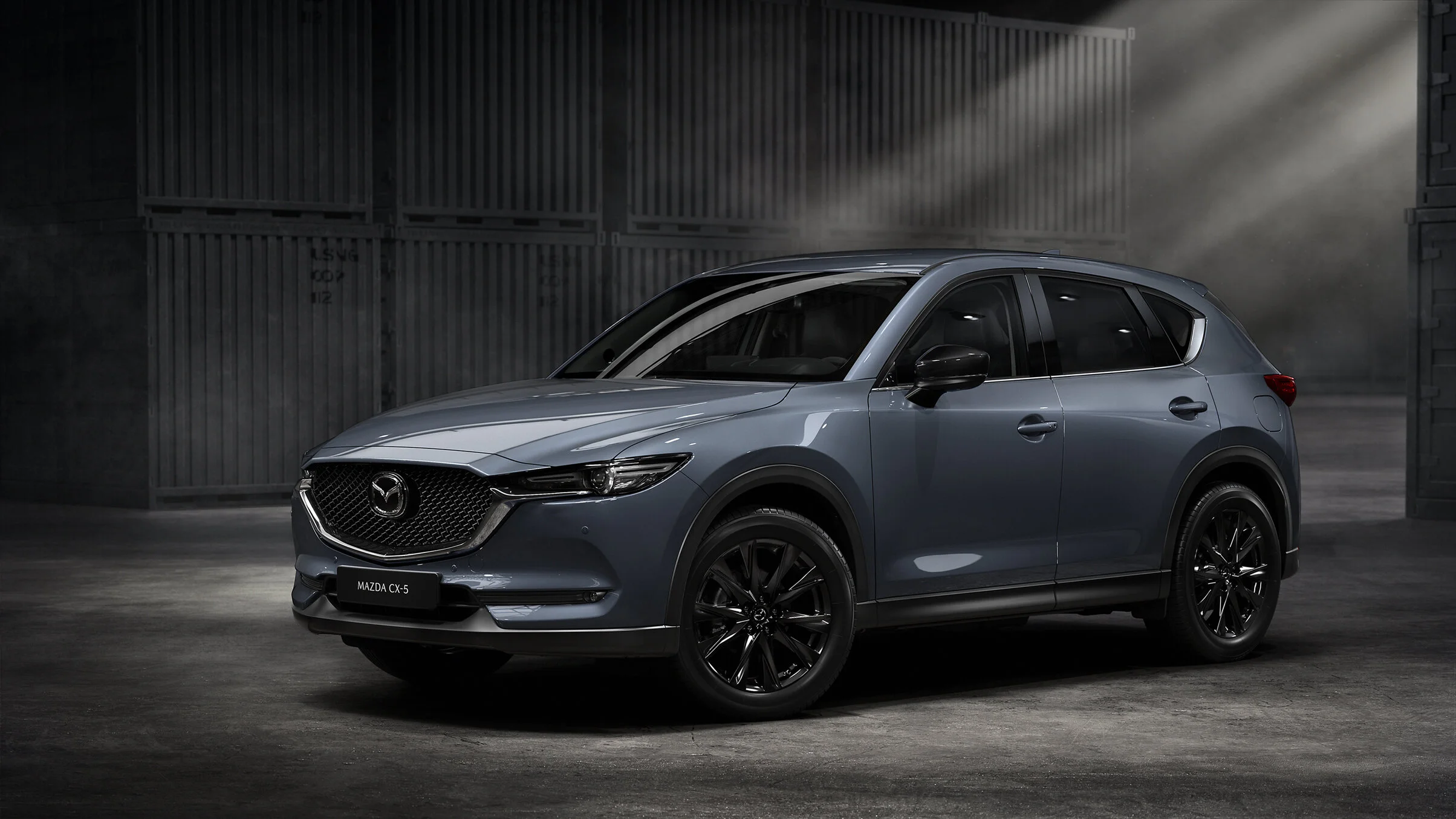
Mazda NZ says a feature of the SP25T trim is a blackout theme – appropriate, the brand feels, in a country where the national sporting colour is black.
The exterior elements include black metallic alloy wheels and piano black exterior mirrors, while the interior gets black deluxe leatherette/suede seat trim along with a black decoration panel. To set off the black, red stitching has been added to seats and steering wheel.
David Hodge, Mazda NZ managing director, believes the SP25T grade will add to the CX-5s’ solid reputation.
“With the blackout features it will appeal to New Zealand motorists who want all the great features of the CX-5 but in a sportier package. It will certainly make a statement on the road.”
Other changes to the CX-5 line up include the addition of privacy glass to GSX models and turbo badging on the SP25T and Takami grades. All models now feature wireless Apple CarPlay as well as Android Auto, though via USB.
One revision that has appeared overseas will not get here until year-end. That’s the adoption, in high-end models, of a 10.5 inch Mazda Connect infotainment display. For the interim, the upgrade cars will maintain the previous line’s 8.0-inch interface.
The enhanced screen has been on US-market CX-5 models since last August and has a faster processor.
DETERMINATION to align the BT-50 more naturally with its passenger models was a reason Mazda NZ gave when successfully winning head office approval to site the one-tonner into a price zone that has proven significantly different to that occupied by its Isuzu doppelganger.
That impetus also explains why the Auckland-centre distributor has bypassed worksite-biased variants in the D-Max family and focused purely on double cab automatics wellsides, in three rear-drives and three four-wheel-drives, formatting in GSX, GTX and Limited.
The BT-50 rear-drives placing respectively at $47,490 GSX, $51,490 and $53,990, with the four-wheel-drive versions adding an additional $7000, leaves them undercutting their Isuzu equivalents, most obviously at flagship level, where the Limited 4x4 sites $14,500 below the top D-Max X-Terrain. The latter has additional body styling enhancements that, when added to the BT-50, do not reduce the gap significantly.
Isuzu Utes New Zealand, which released its range a month before the BT-50 launch yesterday, has been asked to share its thoughts about Mazda NZ’s strategy, but has not responded.
While BT-50’s pricing also leaves it looking good against the category-dominating Ford Ranger and Toyota Hilux, it’s the situation that exists between it and the D-Max that is most likely to create chat as the models are essentially one and the same under different skins.
Identical chassis, drivetrain, closely linked for bulk interior architecture and built in the same factory in Thailand, on a common line. Mazda was able to implement its own exterior styling, so few panels are shared, and had responsibility for the cabin’s look, but the ute is primarily enough of an Isuzu project for Mazda NZ to refer to their brand as being a customer.
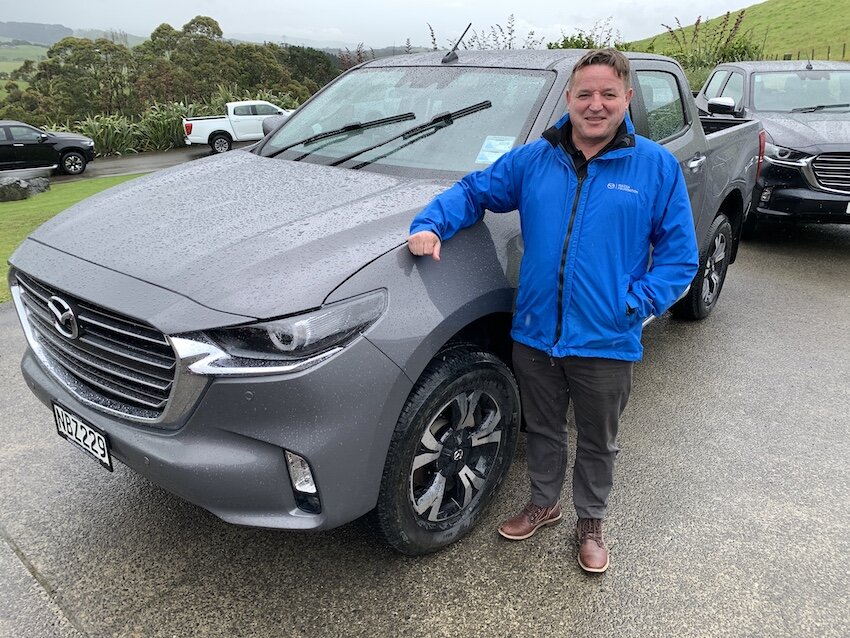
David Hodge (pictured), Mazda NZ managing director, said he could not speak to how Isuzu chose to market the D-Max, but confirmed that BT-50 negotiations were conducted solely with Mazda HQ in Hiroshima, took more than a year and were based on persuading that aligning the BT-50 as not only a workhorse but also a lifestyle alternate to the CX-designated sports utilities would bring growth.
The caveat from persuading Japan to give the green light is that the big factor that has driven the ute market, willingness to discount, will be absent from the sales process for this one.
“Traditionally the (ute) segment has been about a high recommended retail and a high discount, and it’s been that way for a very long time,” Hodge says.
“I think most retail buyers have not had to pay the full RRP for a long time and, if they were, they were probably paying too much.
“With passenger cars, certainly Mazda passenger cars, we’ve tried to make our pricing more transparent, and having our retail price close to what the transaction price is. We’ve now followed that example with the BT-50.
“We don’t expect there will be discounts, but we think … we will have no problem selling it to buyers wanting to pay the price we ask. We think it is a fair price and still offers bloody good value for money.”
They’re not outright selling the BT-50 as a car, or even a straight out car alternate, but the intent is to sell it in the same way they would a passenger vehicle.
Says Hodge about the type: “It was once pretty much solely the vehicle for farmers, tradies and those in the construction industry.
“While they are still a very important buying segment … we wanted to create a truck that was equally capable of being a tough workhorse and also doing the business of transporting the family in comfort to outdoor leisure activities.
“A design that shines equally in all situations, all the way from rough off-road settings to passenger car-like comfort for active weekend life-stylers and families.”
Mazda NZ is confident a fresh step of now including the BT-50 in the Mazda Car programme that has previously been for passenger models, will pay dividend. The old model was subject to a less generous process than now. Buyers of the new benefit from the same cover that has been provisioned the make’s cars: So five years, 150,000km factory warranty and a fixed priced servicing programme, also over five years, in which any scheduled workshop time will never cost more than $250.
That servicing cost cap is a big driver for building trust, Hodge says. “Some of these services can be really, really expensive. If a customer feels they are being looked after by a dealership then they are more likely to want to stay with a brand.”
There’s a third identified strength with the latest model: It’s improved safety. Hodge says it is “as safe, if not safer, than any other new car on sale today.”
As much as Mazda NZ anticipates growth, and has established sales targets, it has no intent of making these public. The outgoing BT-50 was generally languishing at fifth on the annual ute sales roster, but with the new model offering so much more, and with the Holden Colorado – which usually held at third place behind Hiliux and Ranger even after its maker announced in February it was departing from the market – now out of the picture, it’s clear every lower-placed performer will see opportunity to move up.
Hodge doesn’t disagree, but he and product and sales planning manasger Tim Nalden say BT-50’s success will not be measured by chasing share; it’s more about customer satisfaction.
“We’ll just accept where the market puts us,” says Hodge. “WE have a really successful passenger range, so we’re not heavily reliant on the BT-50. It sits alongside our passenger range as an extra vehicle, so we have a complete range. It’s not our do-or-die model.
“We’re pretty confident we are going to do alright with our truck, but the volume is what the volume will be. We will have limited amounts that we can get from the factory. It’s not a tap we can turn on quickly. We can increase volume, but it will take a while.”
In respect to this, Mazda NZ has still not had clarity from Japan about the plant’s operational status, which has been in question since Isuzu announced that production has curtailed, and might not restart until February, due to a Germany-based supplier of a vital part having been closed by Covid-19. Isuzu has intimated the vehicle cannot be built without a component only that supplier can provide. So it has closed the factory.
Well, apparently. Hodge says as far as Mazda NZ is concerned, the BT-50 is still in production until it is emphatically advised otherwise.
“I cannot talk for Isuzu but everything we have been told is that our December production is firm. We have not heard anything about our January production but we will assume, until we hear otherwise, that this is also unaffected.”
TWINS under the skin – but the Mazda BT-50 and Isuzu D-Max have proven somewhat less closely related when it comes to price, particularly at sales hot zone flagship level, where a $14,500 difference exists.
Focused purely on double cab automatics wellsides, Mazda’s mix comprises three rear-drives and three four-wheel-drives, formatting in GSX, GTX and Limited, the rear-drives respectively at $47,490 GSX, $51,490 and $53,990 and the four-wheel-drive versions adding an additional $7000.
So, three trim levels versus Isuzu’s four, no single or space cabs as in the partner’s mix and, so, fewer choices.
The line isn’t adverse to work, yet aims at a lifestyle-valuing customer chasing a reasonable passenger experience. It’s all about lifestyle balance, suggests product spokesman Tim Nalden.
“It’s rugged, it gets the job done … but it also offers new versatility outside of nine to five.”
On current trend, pure toilers aren’t requisite for volume expansion. Diesel utes achieve one in four new vehicle sales nationally, double cabs snare 94 percent of that volume and, within that, automatic uptake is high (86 percent). Three in every five utes sold in NZ are diesel, double cab and four-wheel-drive. So, what Mazda has now tailors very well to consumer taste.
And that’s where it gets interesting. Like its sister ship, BT-50 installs a remarkably high tech loading, particularly in respect to safety and driver assist. Like Isuzu, Mazda has felt need to raise its prices to account for this, yet at showroom level, the outcomes are quite different.
All weighing in Mazda’s favour? In scenarios of best specification equivalency with Isuzu’s models, the Mazdas seem to have price advantage.
That is most apparent when flagships are compared. Whereas Isuzu asks $75,490 for the high-tech and glam D-Max X-Terrain, Mazda NZ’s equivalent, the Limited, is a $60,990 vehicle.
The top choice models’ specifications are not identical; X-Terrain standardises with roof rails, fender flares, a rollout tonneau cover, rub liner and aero sports bar Mazda buyers will have to pluck from the accessories catalogue. Even after doing so, the BT-50 buyer is likely spending comfortably less.
The BT-50 enjoys keyless entry and start, a feature only on X-Terrain, in mid as well as high-grade trim; both flagships have part-leather seats but Mazda adds seat heating; the BT-50 is sold with a spare alloy wheel, where the D-Max ships with a steel spare and Mazda is confident it has an appealing warranty and servicing package, both five years and up to 150,000km (any service capped at $250), and five years roadside assist.
On top of that, both stand equally tall due to their maker (Isuzu) having gone to town on active and passive safety equipment in an attempt to establish technology and safety benchmarks.
Buy into either range and regardless of the variant you get eight airbags (including a segment-first “far side” restraint to separate driver and front passenger in a side collision), autonomous emergency braking, stop/go adaptive cruise, blind spot detection, lane departure warning/assist, forward collision avoidance, drive attention warning, automatic high-beam lights, rain-sensing wipers and a reversing camera.
The D-Max and BT-50 are the only two utes tested under the very latest ANCAP protocols; both achieved the maximum five score and, though other rivals have this too, their returns were achieved when the test was less stringent. The Isuzu just beat the Mazda on the Vulnerable Road User score (69 per cent versus 67), so it’s officially the safest one-tonne ute on the market right now.
Mazda’s pricing strategy is also bullish when compared for those for the Toyota Hilux and Ford Ranger, which are the dominant two choices with ute buyers, again resonating in the same formats Mazda brings, as well as the Mitsubishi Triton.
When comparison restricts to the top spec offers, the Limited undercuts the Ranger Wildtrak – and incoming $69,990 FX4 - but places $2000 above Hilux SR5 Cruiser, though Mazda’s spec is stronger, closer overall to Ford’s highest trim provisions and, in some instances, exceeding them.
However, the situation that exists with the BT-50 and D-Max is arguably most interesting, given that they are essentially one and the same under different skins. Identical chassis, drivetrain, closely linked for bulk interior architecture and are built in the same factory line, on a common line (which has closed until February due to Covid concerns).
It is not clear if suspension tuning is different between brands, but both offer same base level of performance of 140kW/450Nm from the 3.0-litre turbo-diesel four-cylinder engine. Quoted fuel consumption is the same for both, with an 8.0L/100km combined claim for the shared auto transmissions; so, around 20 percent more efficient than the preceding BT-50’s five-cylinder.
Both utes have a maximum braked towing capacity of 3500kg – pretty standard for a 4x4 double-cab ute – and both have payloads of 1050 to 1080kg.
Off-road wise, they share approach, departure and ramp-over angles of 30.5, 24.2 and 23.8 degrees, respectively and each is able to wade in depths up to 800mm.
Look inside either and the cabins are very well equipped. Each receives a 9.0-inch infotainment screen which runs wireless Apple CarPlay and Android Auto on top-spec models. A smaller digital read-out within the instrument cluster to provide key vehicle information. Entry-level variants in each range equip a 7.0-inch infotainment screen.
Dual-zone climate control, rear air vents, leather-appointed seats and keyless entry are other hallmarks in the higher-end models.
Fair to summarise that both new models are far advanced than their predecessors; all those extras unavoidably have to add to the bottom line. The old D-Max at full retail was positioned between $39,890 and $61,990, but an aggressive clearance over the last few months has delivered those editions for substantially reduced stickers. The previous BT-50, which will continue in some forms for months yet, was generally around $8000 less now.
The utes share few exterior panels because Mazda’s styling team has again worked to engender a tie to its car line; much more successfully than with the previous generation, which suffered from over-ambitious creativity and poor timing.
Within 18 months of the last ute coming out, Mazda adopted a new styling ethos called Kodo which it still adheres to 10 years on. The old ute was right out of step; the new one not at all.
MAZDA BT-50 is about to release here, following in tyre tracks of its Isuzu D-Max sister ship, which launched here in October.
DISTRIBUTORS for the Isuzu D-Max and its Mazda BT-50 sister ship are confident they have enough stock here and en route to establish the utes in the market while the factory in Thailand making both is closed, potentially for at least three months.
However, the national sales operations for each brand have stopped short of commenting about the potential of supply of the technically-aligned models yet being affected at some juncture.
All that is known for sure about the shutdown is that it has been caused by a third-party supplier being unable to get a vital component to Isuzu, which makes both vehicles, and that this will likely keep the plant closed until February, though that timeline is tentative.
Mazda New Zealand was today awaiting further information from head office in Japan.
At the moment, it has not been advised about whether the BT-50 is even directly impacted. It is on standby for any updates and says, for now, it’s business as usual.
Meantime, Isuzu Utes New Zealand has offered the following: “ Our understanding is there is a reduction in production due to the delay in component supply from Europe, and are therefore working with (the) factory to manage our future supply chain.”
News of the situation comes as Mazda NZ is in the process of launching the BT-50 to dealers, with intent to publicly announce pricing and specifications when showing it to media on November 24.
A Mazda NZ spokesman expressed confidence today that even if there was to be an impact on New Zealand, it would not be felt immediately – or perhaps at all.
There is a big stockpile of vehicles in this country already because the model is of high priority “and we have forward ordered supply numbers accordingly.”
Isuzu Utes New Zealand, which released the D-Max in October, offered much the same thought.
“We have sufficient stock here in NZ with further arriving later this month, December and January,” said communications manager Kimberley Waters.
Isuzu Japan acknowledged the situation yesterday, saying had to ‘suspend’ assembly. Subsequent media reports say it stems back to a parts supplier in Europe being shut down due to Covid-19. Some outlets are suggesting the crucial item is an engine component from Germany.
The two utes were co-developed by Mazda and Isuzu and, though stylings and equipment levels appear to differ, they are identical in mechanical make-up; same 3.0-litre turbodiesel engine, same transmissions and a common platform.
Yet that doesn’t automatically mean Mazda is in the same pickle. Parts for the jointly-developed vehicles are sourced globally, so at this stage only the D-Max is absolutely known to be affected.
The D-Max line selected for New Zealand appears identical to that going to Australia, where Isuzu’s distributor has expectation of fall-out.
It has sent out statement regretting the vehicle’s production has been “temporarily put on hold” and explaining that this “unfortunate pause in vehicle production is related to one of our key component suppliers in Europe (producing unique components for our Australian-specification D-Max) has had to temporally close their manufacturing plant due to COVID-19.
“As a result we have had to suspend our D-MAX production in Thailand for up to three months, with a tentative recommencement of vehicle production of February 2021."
The models’ arrival and market impact in New Zealand is a big news story as the latest generation has been the first one-tonne utility to be accredited with a top-drawer five star safety score under a toughened test regime that independent scorer and national crash test agency, the Australasian New Car Assessment Programme, implemented in January. Other competitor utes with five star scores from ANCAP received these when the test was easier.
DIFFERENT badges, same basic engineering, technology and design – and it’s paid off for Mazda’s twin to the Isuzu D-Max in crash testing.
A month after determining Isuzu’s soon-to-release new one tonne ute was worthy of a maximum five star score from a crash test that became tougher this year, the national crash testing agency has decided the BT-50 that is a co-development of that model should achieve the same score.
Surprised? Well, there’s potential you might be because, even though the sister utes are both on the top rung, it’s questionable the Mazda can claim utter category-first equality.
Mazda’s ute scores just slightly lower for impacts regarding pedestrians and cyclists in the vulnerable road user criteria due to the different nose design.
That in itself might seem an interesting outcome as, when it came to assessing the Mazda, the New Zealand Government-funded and NZ Automobile Association-supported Australasian New Car Assessment Programme didn’t put one into the wall, as occurred with the D-Max.
Rather, the outcomes determined for the Mazda accrue from the agency extrapolating results from the D-Max test and also giving consideration to technical data provided by Mazda.
All this means the BT-50 carries the exact same ratings for adult occupant protection (83 percent), child occupant protection (89 percent), and safety assist (81 percent).
The safety system on the Mazda, like the Isuzu, consists of a comprehensive suite of tech such as AEB, adaptive cruise control, lane departure warning with steering assist, blind spot monitoring and advanced speed assist, and many others.
ANCAP’s rating applies for all BT-50 models.
Isuzu will have a head start on leveraging the score, with the D-Max expected to be on sale within the fortnight; timing which gives it around four week’s head start over the Mazda, this to honour an international agreement between the makes that gives Isuzu first dibs on strength that the ute is their basic design and comes from their factory.
OLD will remain selling beside new when Mazda here releases the latest BT-50.
Talk of at least some variants from the present model family remaining on sale for months beyond the new rig’s arrival has been tacitly confirmed by the national distributor.
While Mazda New Zealand isn’t keen to discuss specifics of how and when everything will unfold, it has confirmed the two generations will sit together and also not denied this is planned to occur from November until next March.
Conceivably, it’s a strategy that seems to be mainly to answer demand for models other than those in a dual cab configuration, which is the only format the new vehicle will initially provision in.
Thought that the distributor might also be undertaking a plan to lessen the sticker shock that has come with the new model’s sister ship, the Isuzu D-Max, seems less likely now that BT-50 pricing for Australia has been released.
Assuming – and it’s sometimes not a good idea to – that our neighbour’s positioning has some relevance to what will happen here, then the Mazda would seem to be in stronger position than the Isuzu models.
On today’s exchange rate, the 11-strong BT-50 line starts at the equivalent of $NZ47,694, for a dual cab chassis four by two in XT automatic form, and tops at $64,889 as a dual cab pick up four-wheel-drive auto GT.
The Isuzu line runs from $49,990 to $75,490 here.
Mazda NZ product and sales planning manager Tim Nalden has indicated that NZ market pricing is still being sorted.
“We’re still obviously working through that as it’s coming out toward the end of the year.”
He did not want to go into the details of the product strategy, beyond acknowledging the current and incoming vehicles will be together for a while.
“We just think there’s potential for the current model.”
What helps Mazda NZ with this is that the new BT-50 and the existing vehicle come from different plants in Thailand.
The one incoming built in Isuzu’s plant in Thailand, off a line that has been dedicated to making the Holden Colorado and the previous D-Max.
The present BT-50, of course, was developed with Ford, and comes from the AutoAlliance factory which will continue to make the Ranger for the next year.
One potential selling point for the D-Max is the impressive score it achieved in crash testing by an independent assessor recognised and funded by our Government and the New Zealand Automobile Association.
Ironically, that five star accreditation meted the D-Max after it flew through a tougher test than older utes faced to achieve their equivalent scores won’t be of use to Mazda.
Although the BT-50 and D-Max and identical in technical make up and are sure to be closely related in their engineering, it is understood by Nalden that the Mazda will have to undergo an entirely separate crash test so as to achieve a wholly bespoke rating.
MotoringNZ reviews new cars and keeps readers up-to-date with the latest developments on the auto industry. All the major brands are represented. The site is owned and edited by New Zealand motoring journalist Richard Bosselman.
NEWS | FIRST DRIVE | TESTED | VIDEO | CONTACT | THE CREW | TERMS + CONDITIONS