AMG GLE 53: When mild enhances wild


A punchy twin-turbocharged 3.0-litre petrol engine with a 48-volt mild-hybrid system … fast AMG SUVs needn’t have to be V8 any more.

19C0119_108.jpg

 “AMG personality, performance and poise without compromising on everyday usability.” 

That’s how AMG’s spokesman related the positioning of the GLE 53 during the model’s international introduction in Austria in November.

Okay, so it was the GLE Coupe rather than the GLE wagon that is the focus of this story, but even so. Different look, common drivetrain: So, the comment’s still valid.

Those with understanding of Affalterbach’s numerical designations will understand that the 53 is a step below the 63 editions that express the full might of this tuner’s abilities. It all comes down to cylinder count and capacity.

While it’s true that the 53’s straight-six, 3.0-litre petrol hasn’t quite the fireworks or soundtrack of its hardcore V8 brethren that’ll arrive later in the year, driving the Coupe with this engine in the mountains of Austria was far from disappointing.

Not only is it still an aurally interesting engine, especially when you dial up the driving modes and set the AMG Performance exhaust to 'Powerful', but it also has lots of shove – smashing up some incredibly steep, and occasionally icy, mountain roads to our ultimate destination, a resort containing Europe’s highest motorcycle museum atop the Timmelsjoch High Alpine Road, was an easy and enthralling ask. (for more see: https://www.motoringnz.com/firstdrive/2020/4/4/fire-in-the-ice-with-gle-coupe).

19C0119_037.jpg

 The depth and spread of the torque roll out is almost akin to that from the alternate diesel, even though the latter has 180Nm in its pocket you’d think the engines were closer in muscularity.

Unpack the data and you’ll see why. The power in isolation is plentiful – 320kW at a relatively high 6100rpm – but that 520Nm impact isn’t just what outlays, between 1800-5,800rpm, from the engine alone.

The reason why it feels all the more muscular is the help it receives from the use of an auxiliary electrically driven compressor, as part of the on-board 48-volt system. That's before you take into consideration the 'EQ Boost', which is a 16kW electric motor that acts as a starter/generator. It adds up to 250Nm to proceedings, depending on a variety of factors, though Mercedes doesn't quote the system maximums. All this means it feels particularly torque-rich in the midrange, and it's very quick to get off the line - 100kmh from rest in just 5.3 seconds in respect to either model.

It’s most engaging in Powerful mode, if just because that setting really liberates its voice. Nip it in into the Sport Plus driving setting as well and you get the full vocal repertoire, including gratuitous pops and bangs on the overrun. Plus the excellent nine-speed automatic engages a throttle blip feature into its operation.

It’s not just about punishing performance. Another benefit that’ll make V8 drivers green comes with economy – you needn’t tread too lightly to find the EQ Boost set-up eking really decent fuel consumption, ultimately 9.4 litres per 100km according to the maker.

There’s no argument that the GLE feels like a large vehicle – to the point where some village drive-throughs had me wondering it was a touch too wide – but, assuredly, it feels really handy on the road; AMG doesn’t scrimp on its tyres, suspension tune and brake packages. The AMG-tweaked 4Matic Plus all-wheel-drive system, which always drives the rear wheels, and can fully vary the split front-to-rear as needs be, is also a great assistant. 

19C0119_024.jpg

As much as a GLE really isn't a car for throwing around a twisty back road with abandon, the AWD set-up certainly is good for your confidence. It enabled the Coupe to feel moderately agile and rear-lead – sure, that model has shorter wheelbase than the wagon, yet it’s surely a good portent all the same.

 A shout out, too, to the steering itself, which is a speed-sensitive and variable ratio electromechanical system, and also the suspension tune. Yes, it’s firm – perhaps enough to become a touch too ‘pattery’ and jittish on some coarse chip (a surface that drives all suspension experts nuts) – but my experience is that the model doesn’t really feel its weight and, more importantly, has good control if its weight transfer.

What else is important? Well, that the cars in NZ-trim seem to be pretty much as loaded as the examples Benz laid on during the international launch, with AMG Ride Control Plus air suspension factoring in as standard – though an all-out active ride enhancement remains an option - along with all the usual plush stuff. They stand out from non-AMG GLEs by adopting an active exhaust, performance brakes, Panamericana front grille and sports seats.

Standard equipment includes a Burmester sound system, 21-inch wheels, panoramic sunroof, illuminated door sills, wireless smartphone charger, heated front seats, 64-colour ambient lighting and head-up display.

MBUX technology handles multimedia duties, displayed across a 12.3-inch touchscreen, which sports satellite navigation, digital radio, Apple CarPlay/Android Auto support and voice recognition controls.

Instrumentation is also displayed on a 12.3-inch screen with added AMG-specific graphics and readouts.

Safety kit is comprehensive. The provision includes a surround-view monitor, adaptive cruise control, rear cross-traffic alert, lane-keep assist, blind-spot monitoring, lane departure warning, tyre pressure monitoring, traffic sign recognition and autonomous emergency braking.

You’ll pay $180,100, not including on-road costs, for the wagon and undoubtedly the Coupe will continue to carry a premium. The more rakish model will be landing imminently, Benz NZ assured yesterday, but a price has yet to be set.

It’s also too soon, of course, for a dollar figure in respect to the GLE 63, but Benz has already indicated that this smasher will exclusively import in the higher-grade 63 S spec.

Despite AMG progressively moving to smaller engines, the flagship GLE is still adhering to eight-cylinder values, with the crowd favourite 4.0-twin turbo V8, albeit also with an electric twist.

The plant delivers outputs of 450kW and 850Nm, and is also matched with an electric motor which can temporarily boost power by 16kW/250Nm.

And saving the best for last …. zero to 100kmh is in just 3.8 seconds.

GLE 53 Interior.jpg


Goodbye HSV, hello GMSV?


Is HSV about to disappear? The famous performance make’s New Zealand boss is coy about rebranding talk.


1000th-Chevrolet-Camaro-Built.jpg

 CONJECTURE about Holden Special Vehicles being set to soon morph into a new set-up involving General Motors has garnered a cool response from the New Zealand operation.

 Andrew Lamb, the specialist make’s New Zealand regional manager, was approached for comment on media speculation across the Tasman that a public announcement on a new branding and direction will be revealed very soon.

Talk about a re-emergence as General Motors’ Speciality Vehicles traces back to comment aired during GM’s announcement on February 17 that Holden was heading for the grave.

References were made to GMSV that day in a media release and during a subsequent trasntasman press conference.

Yesterday Australia’s top car mag, Wheels, ran a story on its website suggesting this scenario has progressed to a deal between GM and Walkinshaw Group, the powerhouse behind HSV, which dates back to 1988.

According to the Wheels report: “GMSV is expected to be a joint venture between Walkinshaw Group and GM and its task initially will be exactly what HSV does now; take North American-built, left-hand-drive GM product and convert it to right-hand drive in Melbourne.”

It also cited that those vehicles will then be distributed through a revised, slimmed-down dealer network. Currently, HSV has 56 dealers in Australia and eight in New Zealand, all but two in the North Island. 

The speculation is that GMSV’s focus will initially be on Chevrolet pick-ups, SUVs and performance vehicles. The new mid-engined C8 Chevrolet Corvette is expected to be part of the line-up. 

As for the Camaro? HSV last week acknowledged it has ceased remanufacturing of that vehicle into right-hand drive and has no plan to restart this.

Chris Polites, HSV’s executive director of sales and marketing, is reported by the CarAdvice website as saying: “There are no plans to bring back the Camaro. Once these cars are gone, they are gone.” 

Questions for Lamb included what was the status of HSV here presently and are HSV Camaros still available here and, if so, for how much longer?

He was asked if he wished to share any thoughts about emergent conjecture about the future of HSV and the likelihood of it becoming GMSV and if he had any messages for HSV customers and potential purchasers.

HSV_SILVERADO 1500_F3Q_BLACK BG LIGHTS ON.jpg

In response to this, he indicated no change to business. “We continue to sell vehicles through our specialist HSV and Chevrolet NZ dealer network and plan for this to continue for the foreseeable future.”

In respect to Camaro and its stock count and ongoing availability here, he offered: “HSV re-engineered RHD Camaro 2SS and ZL1 models are still available through HSV dealers in NZ.”

In respect to the potential for GMSV, he contended: “That is being discussed well above my pay grade and when finalised appropriate announcements will be made”

He said HSV owners and intending purchasers could be reassured that all HSV and HSV re-engineered Chevrolet vehicles in NZ “are fully backed by HSV with a three-year warranty and three-years’ roadside assist so owners can buy with confidence. 

Lamb also confirmed the Silverado 1500 pickup released in Australia several weeks ago has now been priced for New Zealand – it’s a $123,990 ask before options - and would soon be available.

“First vehicles are already built and should be with NZ dealers later next month.”

Just a single version, a feature-laden LTZ Premium Edition, is being converted by the Melbourne operation with the RAM 1500 cited as the primary rival.

The Chevrolet is slightly larger but gives away a little on payload capacity, 845kg vs 712kg.

Under the bonnet there is a naturally aspirated 6.2-litre V8 petrol engine producing 313kW and 624Nm, driving all four wheels via a 10-speed automatic transmission and resulting in a maximum braked towing capacity of 4500kg.

Drivers have four different driving modes at their disposal depending on the journey at hand, those being Touring for everyday driving, Sport for increased throttle response, Off-road for slippery conditions and Tow/Haul for towing duties.

Features include 10-way power adjustable, heated and ventilated leather front seats with memory function, heated leather steering wheel, leather rear seats (outboard seats also heated), dual-zone climate, keyless entry and start, powered sunroof, express front and rear windows, tyre pressure monitoring, 60:40 split-folding rear seats, auto-dimming rearview mirror and dual-zone climate control.

On the safety front, lane change alert with side blind zone alert and rear cross-traffic alert, forward collision alert, low speed forward automatic braking, front pedestrian braking, Intellibeam automatic headlamp control, following distance indicator, front and rear park assist, safety alert seats, six airbags, electronic stability control, trailer sway control and hill-start assist are all fitted as standard.


Covid-19: How's post-Level Four life for distributors?

How’s our new car market doing – and what’s the sentiment about an environment in which coronavirus and its after-effects seem set to imprint for a long time? The big names of the industry speak.

NT-SportsPurpose-ScrambleApril2018-6011.jpg

TODAY’s move to Level Three precautions allows for improved business opportunity; parts supply will resume, service bays will reopen and, yes, you might even be able to buy a new vehicle.

Yet everything still requires care and consideration. While less restricted than Level Four, the next step down still demands every contactless interactions. Restrictions will still apply with Levels Two – the next step, potentially coming after May 18 if all goes well – and One, though those are definitely more welcoming.

With this in mind, the distributors here – leading distributors were invited to offer thoughts, pertinent to their brands, in respect to this question:

“What are the challenges and potential opportunities as you see them that will arrive in a Level Three Covid-19 new vehicle market. Is that a level at which you can begin to restore your business and, if not, what condition would be required?”

Neeraj Lala, chief operating officer, Toyota New Zealand.

Reason for inclusion? Market leader.

IMG_5404.jpeg

Toyota will continue to provide our customers with an exceptional customer experience under Level Three.

Twenty-four months ago, we revolutionised our business to a new model, and both fleet and private customers have enjoyed the new experience. Under Level Three, our haggle-free pricing for private and fleet customers of various fleet sizes, means the car buying experience is easier as you don’t need to negotiate a price over email or phone.

We have also been operating flexible test drives for the same period which means customers have the flexibility to collect a vehicle and enjoy the experience with their bubble without any face-to-face contact and safe distancing on collection. 

We have expanded our service to offer a home delivery with strict health and safety and social distancing options. Every vehicle collected from a Toyota Store, either for servicing or a new or used vehicle sale, will meet the strict sanitisation guidelines we have put in place to keep everyone safe. 

Our website will provide customers with an easy booking system for test drives and servicing, and live chat to assist those customers who require extra support. In terms of vehicle ownership, our servicing facilities have been organised to comply with alert level 3 standards and will continue to provide their high level of friendly service, looking after all Toyota customers.

Neeraj.jpg


Reece Congden, head of marketing and corporate affairs, Mitsubishi Motors NZ.

Reason for inclusion? Top electric vehicle volume, wide product portfolio

As New Zealand moves to Level Three, the automotive industry will continue to face severe trading conditions.

While it is a return to work in part, it has yet to be fully understood how effective contactless sales will be for a high involvement product like cars.

MMNZ have been undertaking extensive work while we have been under Level Four restrictions, to ensure that our business is not only 100 percent compliant, but also that our dealer partners are ahead of the curve. 

Our investment in digital platforms and engaging customer-facing content has us well placed to start making the transition to contactless sales - even if it’s only a temporary move.

Reece Congdon.jpg

Having said that, car sales is a ‘people business’ and our dealers are an active part of their local communities, so how Kiwis respond to being asked to purchase a car from their living room will be a point of great interest for all brands.

One of Mitsubishi’s key strengths is our high-performing dealer network. We are supremely confident that they will adapt and fight for their slice of whatever pie is available under Level Three. When you match that with the value-focused offers we currently have in the market, we believe that we’re as well placed as any brand to rebound strongly.

(One initiative from MMNZ has been to produce three awareness videos relating to sales and servicing interactions under level Three. No lockdown regs were breached by the way: The NZ operation reached out to friends in Australia, with content shot across the Tasman). 

Simon Rutherford, managing director, Ford New Zealand

Reason for inclusion? Light commercial dominance with Ranger ute 

There certainly will be challenges - for everyone. We are effectively operating in a constrained environment; our showrooms are closed, sales, service and parts operations will be contactless.

We are also operating new systems and process with strict controls and rules around sanitation, social distancing and contact tracing to keep customers and our staff as safe as possible – all this in a market that looks like it has stepped back to 2008 - 2009.

We and our dealers are pretty adaptable and satisfied that the measures and capabilities we have put in place to conduct business in a Covid-19 safe way at Level Three will protect and support our customers and employees.

We see more opportunity than challenge and we are not going to let a crisis go to waste. We see Level Three as a level at which we can only begin to restore our business. We really need to move to a Level Two and beyond quickly, as unfortunately there has already been significant impact. 

Simon Rutherford with RTR car.jpeg

The road to recovery in a lower market in a high cost of capital business presents a longer term challenge.

The conditions that are really required are for the broader economy and the industry to be supported with “back to work” domestic stimulus packages to get people spending and investing and so the industry can continue to contribute to GDP and be an engine room of recovery. 

Longer term, the opening up of borders and in turn strengthening tourism and hospitality will be key.

As regards to our operations in Level Three? On the vehicle sales side of the business, selling and delivering in a “contactless” and remote fashion is nothing new for us – we do this under normal business circumstances for new and used vehicles, for different customers in different segments of the market - from retail to fleet, government and rental and across our network to support nationwide deliveries. The opportunity we have had is to get better and more efficient at operating in this way. We have been operating on-line sales in Level Four. Now we can deliver those vehicle in a contactless manner. 

Our on-line and contactless capabilities are much fitter now and we will continue to pursue improved capabilities as we go forward. Although this is just one of the ways we can conduct business and support the varying needs of our customers, it will not be the only way we transact business. We will certainly be exercising that capability more than we were.

IMG_5412.jpeg

In addition we anticipate that there will be a demand bias towards our top performing Ranger and Transit commercial vehicles as our primary industries and construction sectors lead our economic recovery and the need for moving goods remains.

Separate from our special offers we have also launched a peace of mind finance programme that offers a nil deposit plan and the first three months paid for by Ford and a further three months deferral option for customers if they want to take that up. This is designed to give our customers peace of mind as we all try and climb out of this challenge together. This in addition to the help we are offering existing customers financing through MyFordFinance.

On the service and parts side of the business, many of our dealers already offered pick-up and delivery services ahead of Level Four.  All 31 dealers within our national dealer body will be supporting the new pick-up and delivery service we are launching. We will have nationwide coverage for that. 

We have implemented robust hygiene and social distancing measures alongside contact tracing and will maintain this also when we get to level Two, when customers can enter our premises. At that point we will also have point-of-sale that will help orientate customers to social distancing and hygiene enablers we will provide.

Dean Sheed, General manager, Audi New Zealand

Reason for selection? Prestige sector giant. 

The opportunity that moving to Level Three provides is a partial move back to a full business for all our dealers nationwide. 

I say partial because it’s a move to contactless business across the operation, working within the Government/Worksafe health and safety guidelines and maintaining a major focus on keeping our staff and customers safe and supported as we transition back to normality.

Partial business also means some form of revenue to support the decimated financial results of March and April for both ourselves and our dealer partners. 

The businesses will be focussed on the physical servicing of customers’ cars and the ongoing virtual customer discussions in other areas of the business.

Dean Sheed.jpg

The challenges are clearly the new modes of doing business under the umbrella of Level Three: Stricter controls of cleaning and sanitisation across each business, contactless servicing, contact tracing of everyone within the business and the use of personal protective equipment by our team. All within the new health and safety guidelines implemented by the dealerships.

We are allowed to deliver presold cars to customers which must be handled according to the new protocols as well which will assist in driving some vehicle sales volume under Level Three.

This volume is likely to remain small until Level Two and only with Level One will all facets of the dealerships resume some form of normality.

Restoring the businesses fully will happen over time - many months - as the demand side of the car market is restored through normal purchasing by private and business customers. The economy needs to restore itself on the demand and supply side.

If you have been thinking of buying a new vehicle, now is a great time to purchase given solid inventory and very motivated dealers nationally.

Greg Leet, General manager Volkswagen NZ.

Reason for inclusion? Dominant European marque

It certainly won’t be normal trading and I’m certain we will all be in that position. Likewise, we will all be thinking that the safety of our customers and our staff will remain paramount.

We have been doing a lot of work with the dealers in respect to their ability to comply to Level Three trading conditions regarding personal protective equipment, sanitation and contactless services. Our dealers are well up to speed with that.

What kind of level do we need to get to before we contemplate normality? I think we need to be well out of Level One. Even the two levels below Three will still have social distancing, will still have people with very heightened levels of awareness around hygiene and sanitation. So while some of those will be relaxed from a Governmental view, I think society will remain pretty in tune going forward. 

greg leet.jpg

There will be sectors of business that, I think, will be in a strong position after lockdown. There will be businesses that will be severely impacted. The tourism sectors will be under immense pressure. But I think industries like food supply and any essential services are going to be still very active.

Purely from a volume perspective, our forecast for the balance of the year would still have passenger at roughly two-and-half times our light commercial volumes.

We’re predicting anywhere between a 30 to 40 percent drop in the market. In a global sense, some markets are more severely impacted than that, and some might well be less impacted.

There are times when a car will be seen as a luxury. But we also see possibility that customers might decide to buy a new vehicle with the money they might have previously have kept aside for an overseas trip. They potentially might well want to travel, but locally, and that might involve a new car.


Covid-19: So you want to buy a car under Level Three? Here's how ...

Buying a new or used vehicle is again possible - but it’s hardly as easy as just sauntering onto a yard.

car yard.jpg

 CAR yards might from today become a front line in testing the limits of what constitutes ‘contactless’ under Covid-19 restrictions.

Today’s easing of rules of business under the coronavirus emergency allows new and used vehicle traders opportunity to resume selling, though with caveats and great care.

They might also expect to be under close official scrutiny to ensure Level Three boundaries are not crossed. Quite literally, in fact.

A core requirement carrying over from Level Four is that businesses cannot offer services that involve face-to-face contact.

 Whether that even allows yards and showrooms to operate and to what extent has caused demarcation and seems sure to become controversial. 

All this in a climate of growing desperation to resume trading.

Allowance to keep supplying new products to essential services since lockdown hit on March 26 has hardly been any panacea for the new car industry. 

Franchises are braced for April being the worst month for vehicle registrations since data-gathering began in 1975.

It’s been little better for the used car sector that has spent almost a year grappling with a slow but steady decline in used import volumes. Over-saturation and a regulation demanding electronic stability control in all ex-Japan passenger fare imported from March 1 have hurt.

Level Three gives franchise outlets a lifeline in that they can reinstate serving and parts provision, but with clear proviso customers do not have direct involvement. 

The core business of selling vehicles now also seems possible to accomplish, but not easily. Car yards are the sole avenue as Trade Me has stopped sales of non-essential items, including vehicles, and auctions are also off.

Want a test drive? Some brands are trying out virtual tours by video, where a salesperson shows you around on screen.

But plenty of punters will prefer to drive. First, prospective vehicle buyers are being asked to communicate remotely (so by phone or email). There’s no direct handing over the keys. Cars will be left at a mutually agreed place for hand over and return. When you’re out driving, sales folk might want you to patch into the Bluetooth – a good way to chat about the features and how stuff works. Vehicles will have to be extensively sanitised before and after. Arranging any eventual sales will also be by phone or internet and could become completely paperless.

What has raised concern is intention by some new and used vehicle sellers to staff and open their yards to customer visits – either to the edge of the property or actually onto premises. 

From the tenor of their website announcements, some operators seem to believe they can allow the latter so long as a visit pre-arranged, social distancing is maintained and there are hygiene provisions. 

That potentially takes them into a danger zone that the The Motor Industry Association, which represents new vehicle distributors, believes is best approached with extreme caution.

The Government’s Unite against Covide-19 website also sides with that viewpoint and offers this might become a matter than might attract further investigation. 

It reminds no physical storefronts can be open. “They can do contactless delivery or click and collect … customers wanting to look at cars (on the sales site) would have to do so through video call and not in person.”

MIA Chief executive David Crawford understands a number of distributors have indicated their franchises will open, but not showrooms.

“If somebody wants to buy a vehicle it can be done, but it’s on-line and contacting the franchise dealer. Showrooms will not be open.”

As for allowing public access to premises? “Yeah, we’ve looked into this. I’d like to be able to say the rules are crystal clear. They’re not. But they are relatively clear.” 

The only possible solution had, or created, a drive-through corridor whose dimension and markings met requirement. “If they had that and were able to maintain a contactless exchange then it’s possible.”

However, it was complex and “the margins are going to be very fine.” 

Used car dealers contacted had varying viewpoints about how much care was required and more than one suggested it really came down “to how this is interpreted.” 

In his instance, the yard would be staffed, but the gates would be locked so no-one could simply wander in. Any customer interaction would be by invitation only. “We arrange a pick-up time and leave the car outside the gate for them to take away.”

If lines are crossed, should there be sympathy? Crawford says there’s no argument the industry is under pressure.

“It doesn’t matter if you’re a franchise dealer or not, whether you’re selling new or used. It’s about cash flow. Just getting those businesses to operate and generate even a bit of cash flow is important. 

“This is a capital-intensive sector and with lots of money tied up with servicing capital and there’s no incomes …. well, you can get crippled fairly quickly.” 

At same token, new vehicle distributors were wholly supportive of the Government’s action against coronavirus and felt it was crucial to maintain the letter and intent of their advice. 

“No doubt there will be some people out there who might try to push the barriers … but the last thing any of the franchise dealers and distributors want is to bring disrepute to the sector at this time.”


Skoda product stream still flowing

The Kamiq will launch soon and the Octavia is still maintaining inbound status for this year.

octavia_006-1920x1280 (1).jpg

EXPECTATION of the new generation of Skoda’s international best-seller still reaching New Zealand this year remains high.

This local confidence about the Octavia comes in the wake of latest, more optimistic signals from the Skoda factory.

Having earlier indicated that the model’s international release might no longer be in June, as planned, the maker is now set to resume production next week.

While the restart is going to be gradual, there’s hope the production stream will be enough to keep local supply planning more or less intact.

Knowing all this, Skoda New Zealand general manager Rodney Gillard remains quietly hopeful he can get the car here before year end.

“We are still planning on launching this year and are working with the factory right now.”

It’ll take a couple of weeks before the factory can give absolute clarity about what this effort will deliver, insofar as the export markets are concerned. However, he says none of the talk from head office to date has raised cause for undue concern.

octavia_combi_021.jpg

“There will be a delay, but at the moment it is only theoretical, not confirmed, so I still see it being available for us prior to the end of the year.” 

He also affirms another core model, the Kamiq small crossover, remains on track for local release – cars are here and they will likely become available to customers within a matter of weeks, with that process obviously made all the easier if lockdown relegates to Level Two.

In respect to that, he says the Covid-19 crisis will very likely influence the way cars are sold from now on, even if the country finally gets back to the same level of daily normality that existed before the virus was known about. 

However, he says the car industry has always shown fantastic flexibility when it comes to dealing with challenges. 

As one for instance, he reminds that the requirement for contactless interactions that will flavour the limited resumption of business under Level Three won’t seem that foreign, in that “dealers have been selling new and used cars on TradeMe for 20-odd years.”

“So I think we will just need to modify the way we do things, but we can still get on with it.”

Kamiq is key because rhe small crossover segment was the fastest-growing category prior to the Covid-19 crisis, and are expected to keep fostering interest even if new car sales fall as predicted.

Yet Skoda here also has faith the Octavia, which has been the brand’s biggest volume model internationally and was the car that re-introduced Kiwis to Skoda in its new-generation (meaning, VW-owned) format, will also be a hit. 

Some of that confidence is based on this fourth-generation line now presenting in hybrid and plug-in hybrid editions in addition to the ongoing fully fossil-fuelled variants provisioned until now.

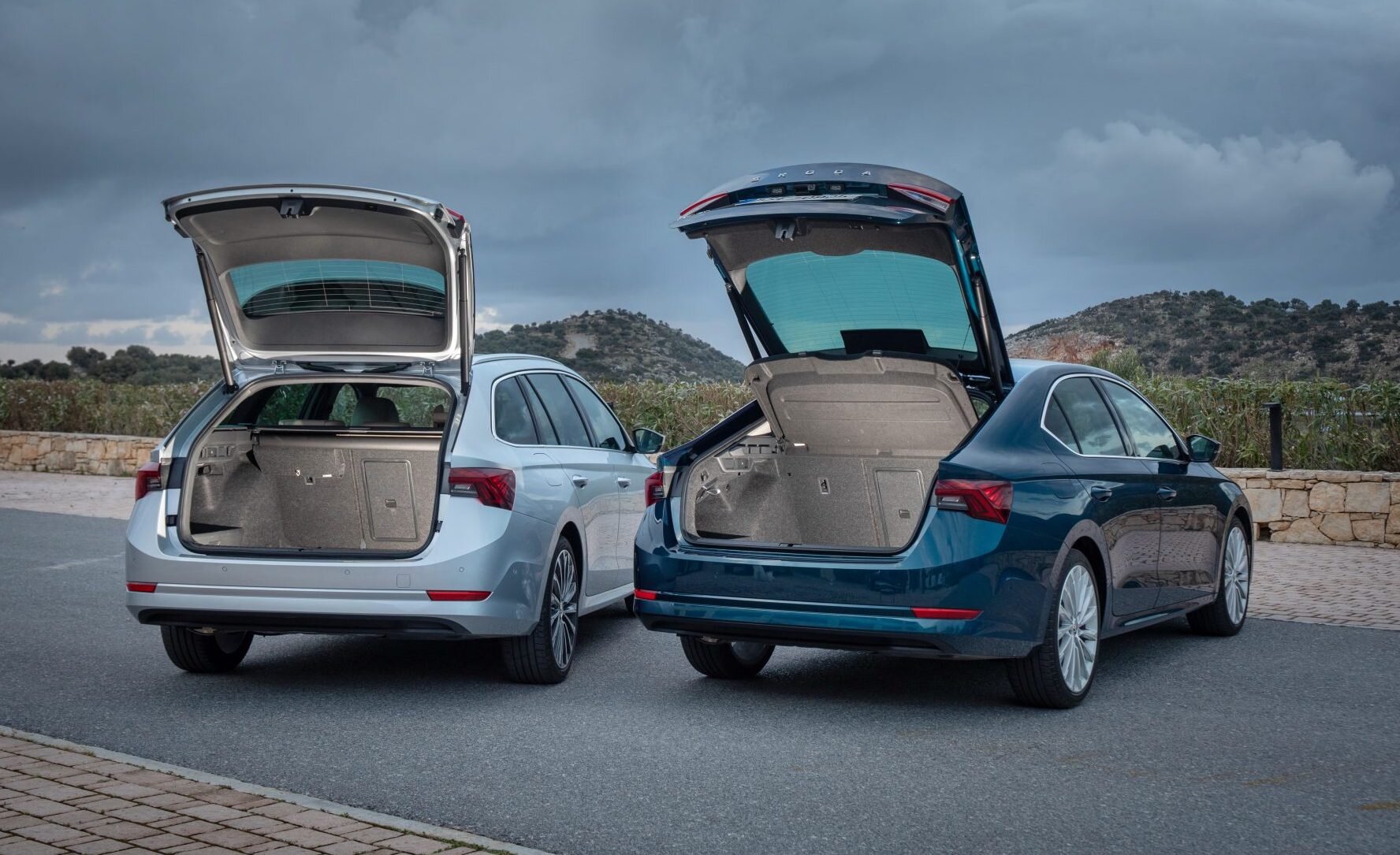
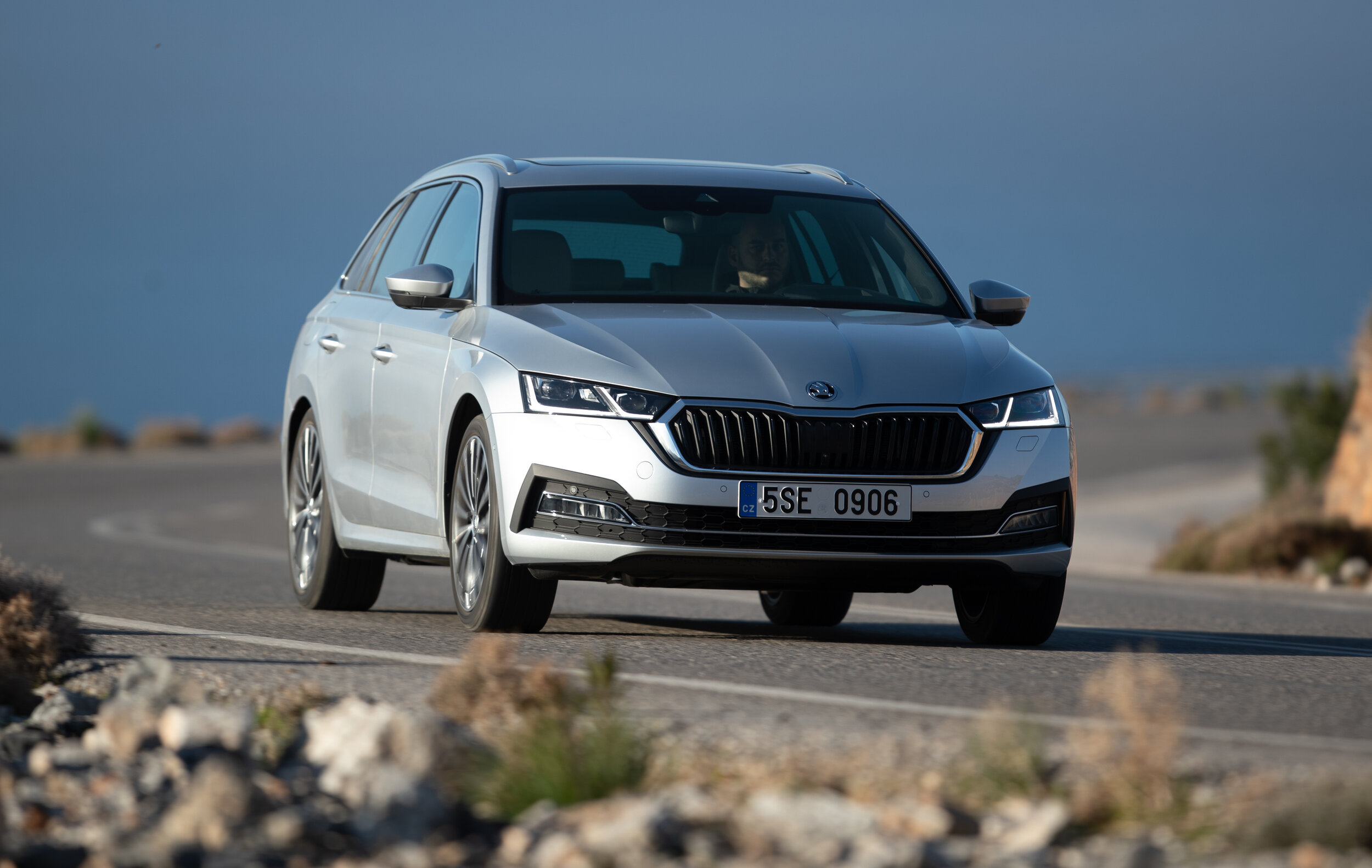
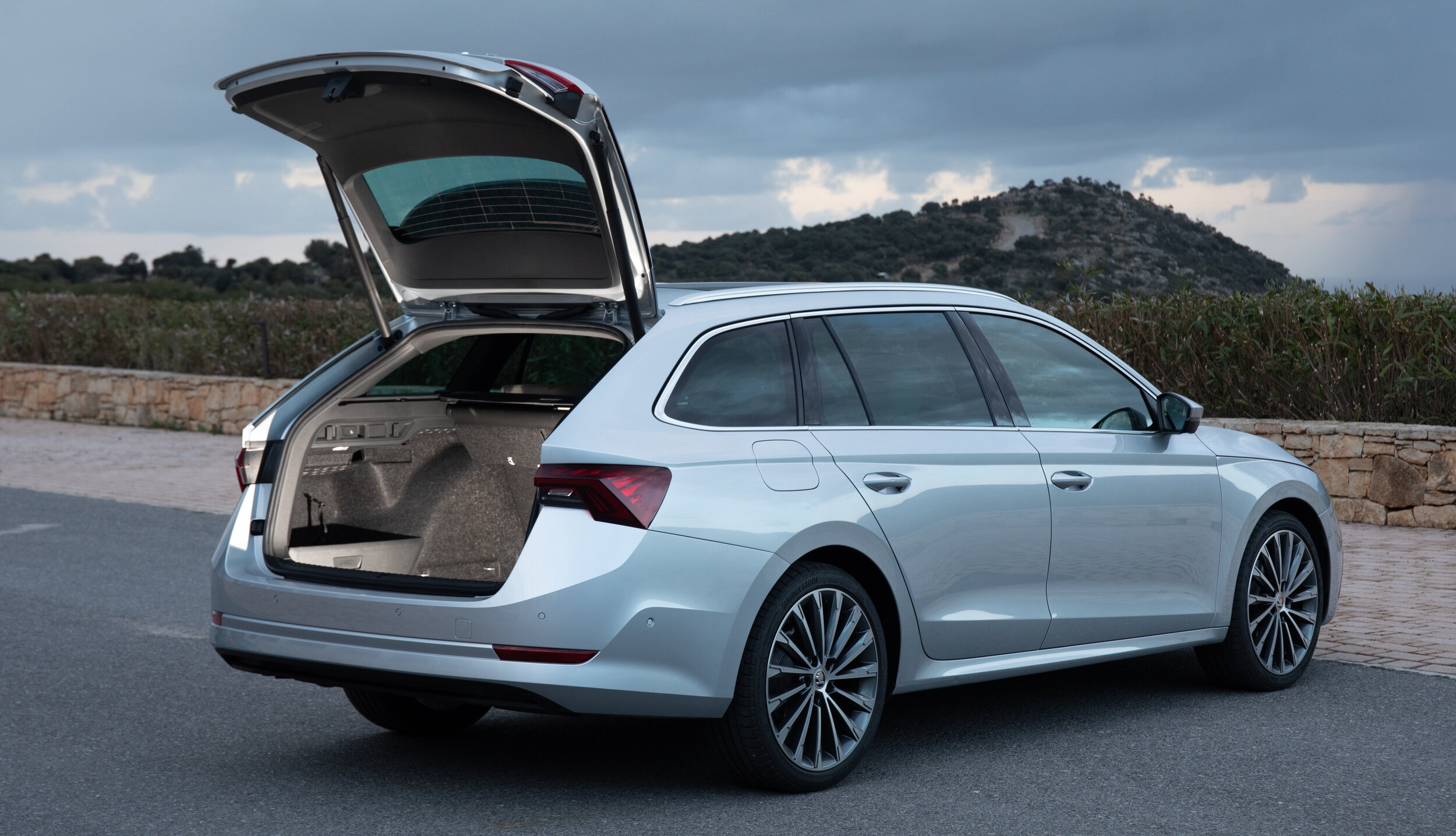
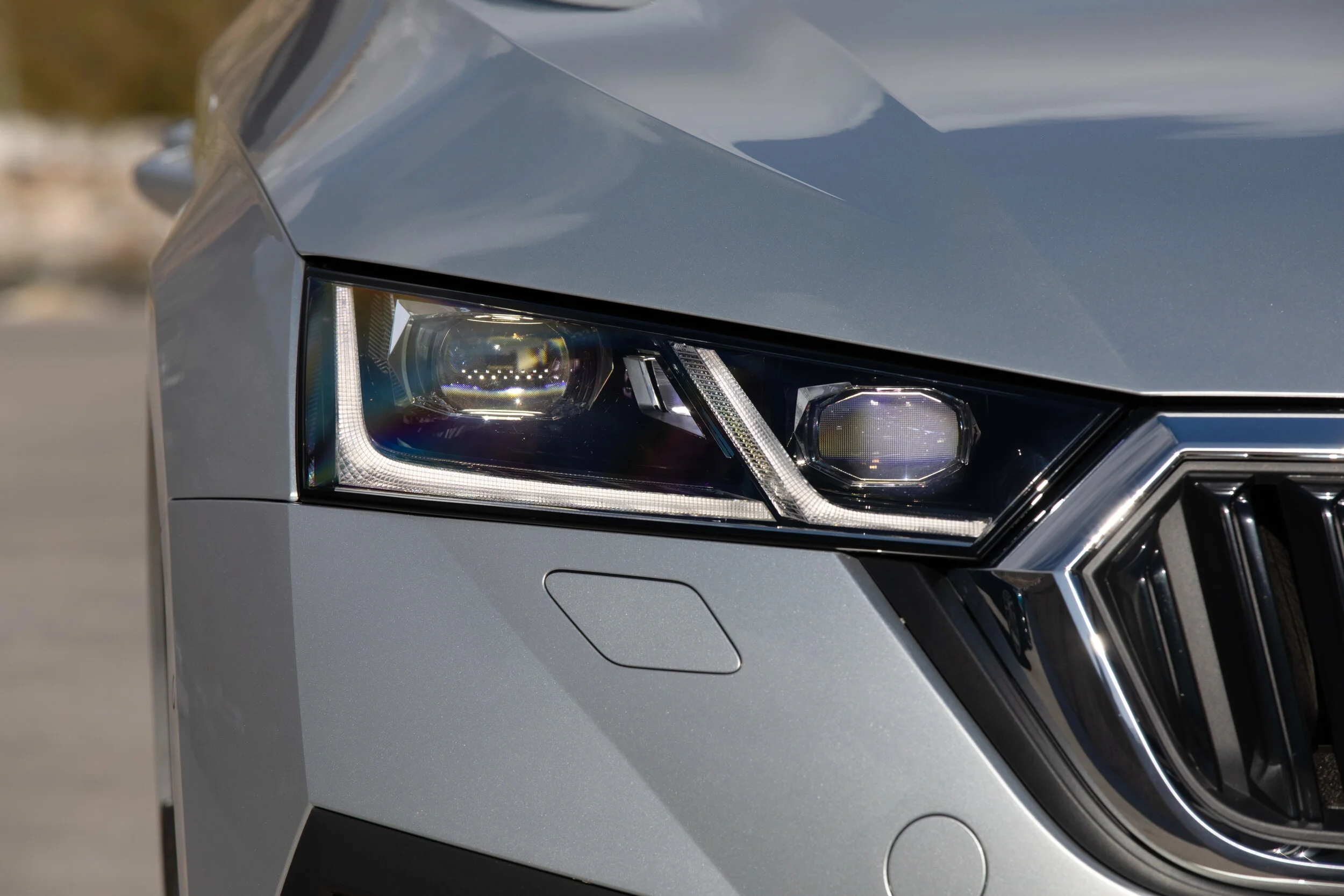
Additional detail about the model line was revealed this week, with the covers being taken off the wagon – Combi in Skoda-speak – that will place alongside a liftback sister model that was unveiled several months ago.

The car is based on the MQB Evo platform that’s also used by the rest of VW Group’s latest compacts.

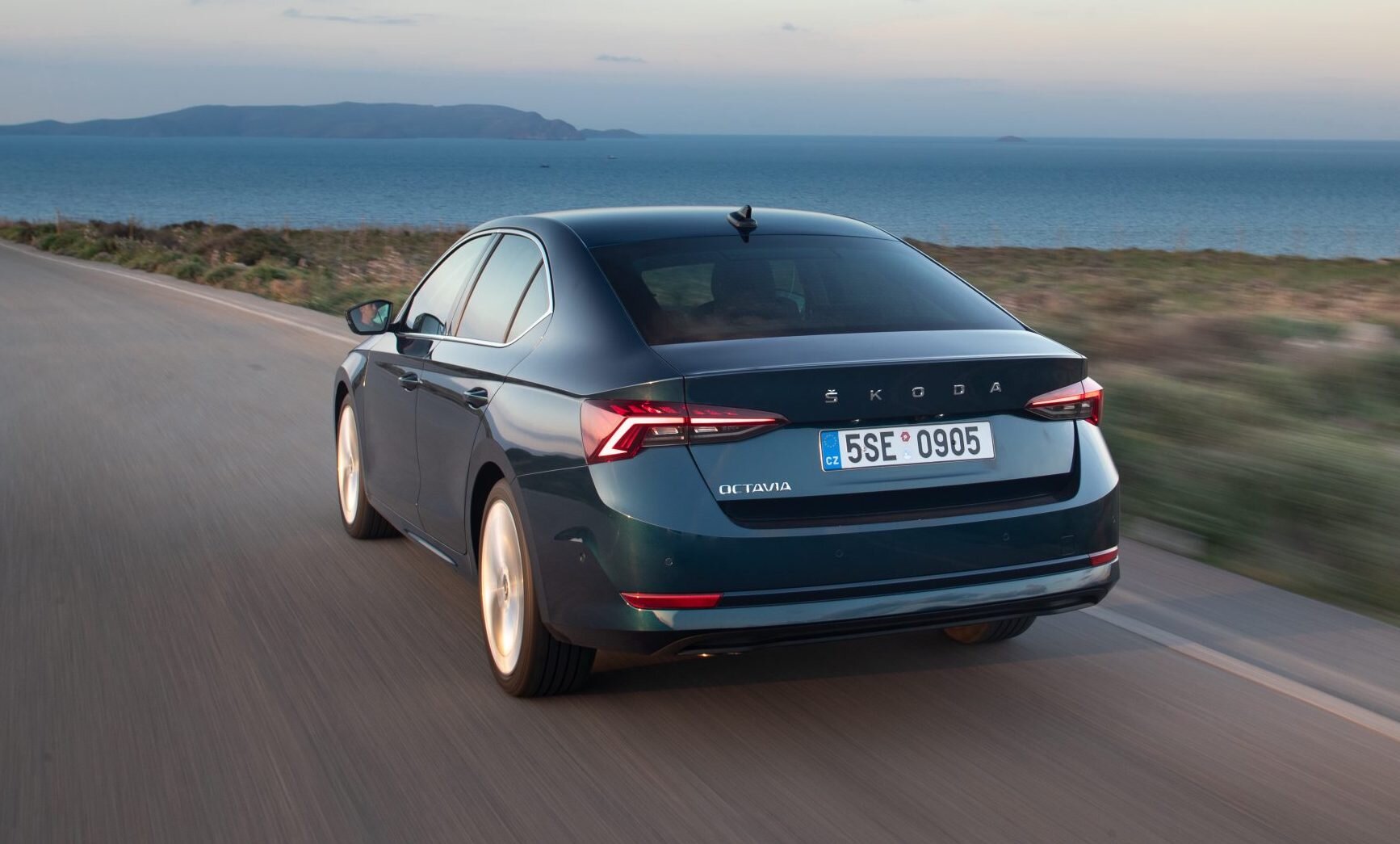
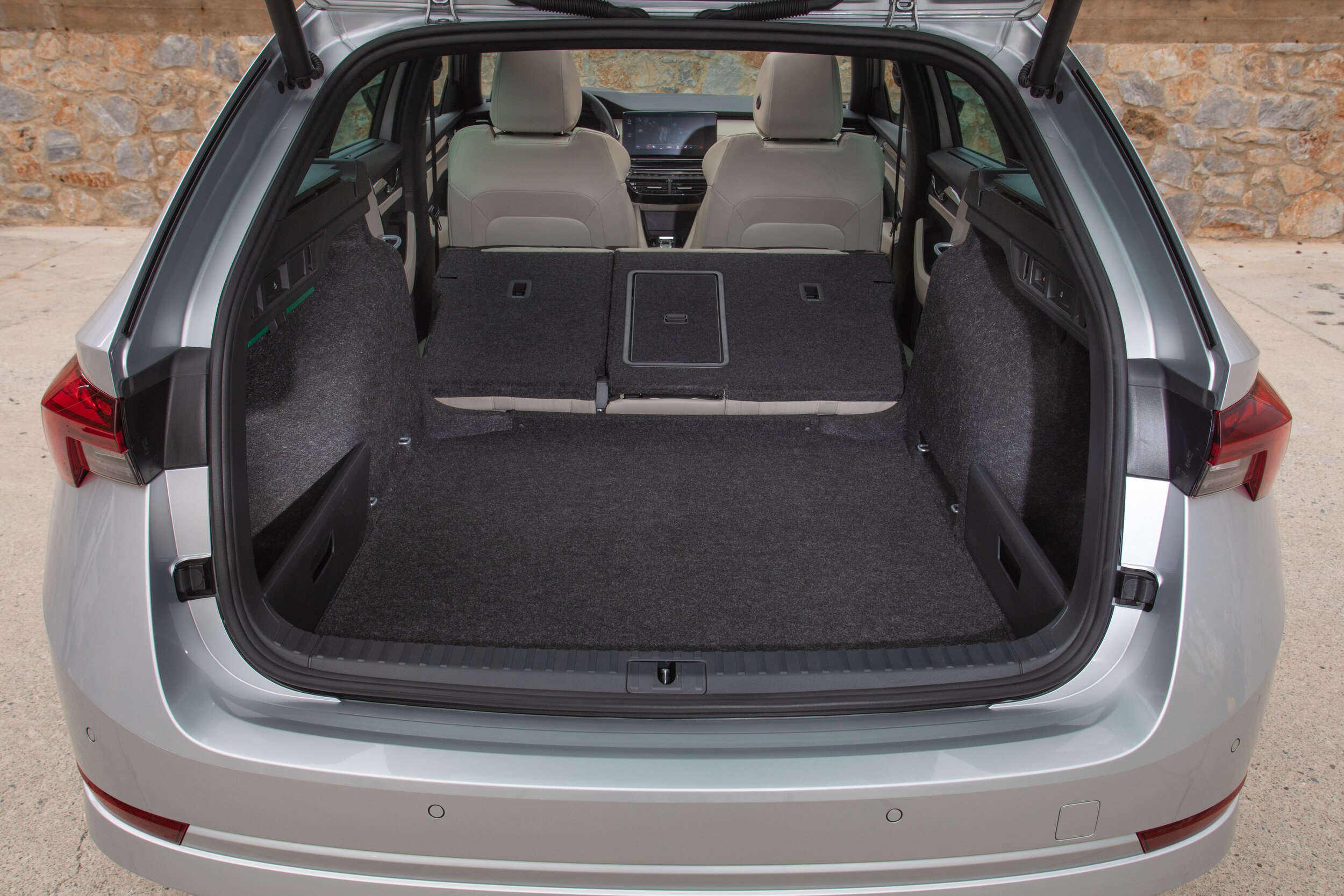
By ‘compact’ they mean in class category. Not in physical size, clearly. Being 19mm longer than its forebear ensures this Octavia accounts for a 4689mm space in a car park. The wheelbase has remained unchanged at 2686 mm. It’s also 15mm wider, at 1829mm. 

Skoda cites it having markedly more interior space than the current model, giving a cargo volume in either liftback or wagon format of 600 litres before the rear seats are lowered.

octavia_057.jpg

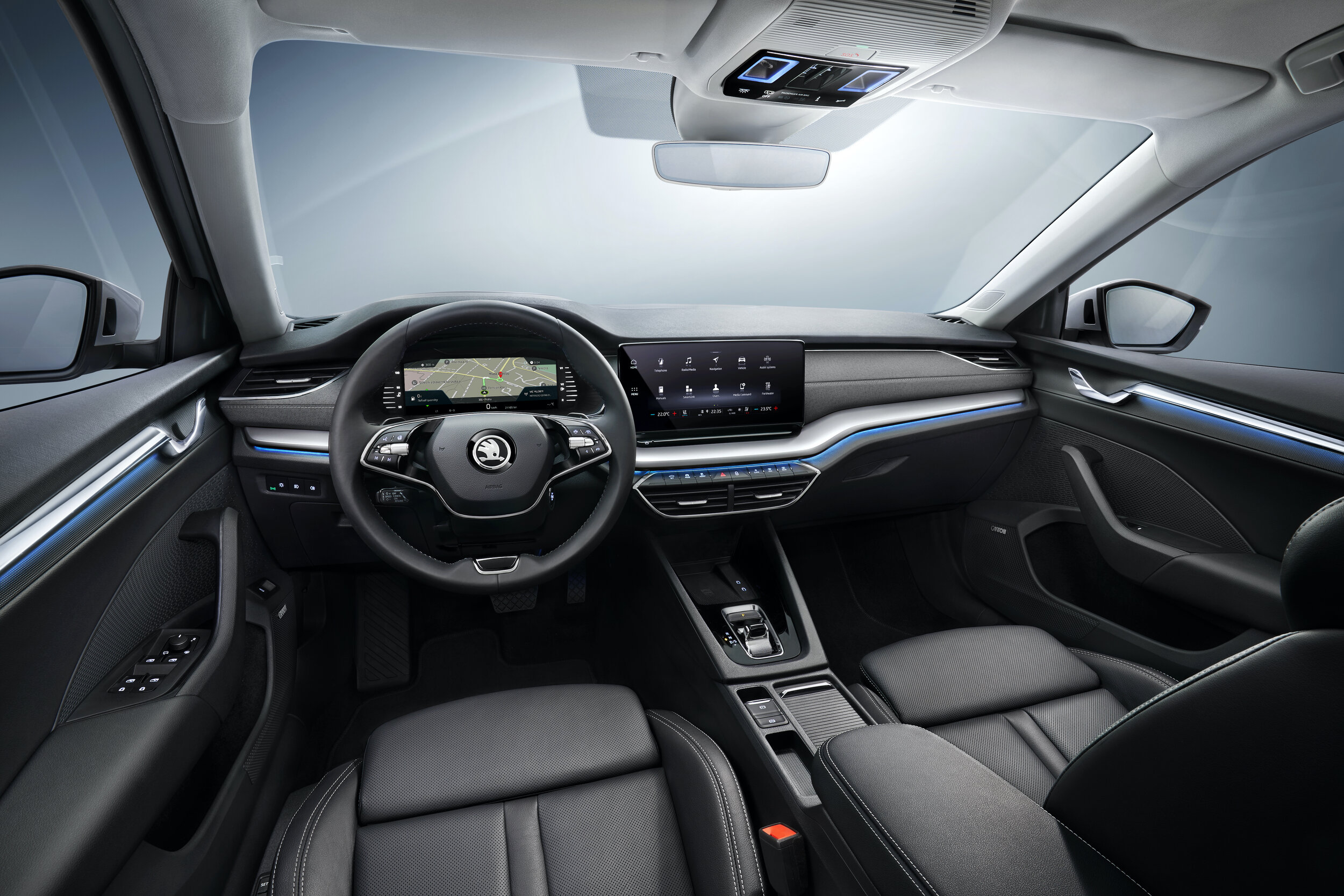
 The interior is also more advanced technologically, offering a choice of four infotainment systems from the latest-generation Modular Infotainment Matrix and a permanent online connection via an integrated eSIM.

The central touchscreen display measures 8.25 to 10 inches and supports gesture control for some functions. There’s also a Laura digital voice assistant and it has inductive smartphone charging and up to five USB-C ports on board. A 10.25-inch Virtual Cockpit digital instrument panel can be implemented as an alternate to an orthodox display.

The plug-in hybrid technology is just one Green alternate. It also provisions with a mild-hybrid setup and, in addition to petrol and diesel, European markets will also have opportunity for CNG engines.

With Skoda, the ultimate electric assisted option means alacrity in addition to efficiency. That version, called the Octavia iV, achieves a 150kW output from pairing a 1.4 TSI petrol engine with an electric motor and 13 kWh battery. All that, and an EV driving range of up to 60km in the WLTP cycle. If that’s not good enough, there’s also the new Octavia RS iV plug-in hybrid which offers 180kW and a similar EV driving range.

The new gen delivers big improvements is driving assistance technology. New systems include Collision Avoidance Assist, Turn Assist, Exit Warning and Local Traffic Warning, among other features.


Yaris Cross for hot compact sector

Toyota has revealed the Yaris Cross and suggested there’s a chance it might hit NZ before Xmas.

THAT funky looking baby Toyota crossover you had your heart set on?

Good news. It might yet be here by Xmas. With emphasis on the word ‘might’.

In tandem with Toyota’s overnight international unveiling of the Yaris Cross, Toyota New Zealand has re-stated intent to have the car on sale before the end of 2020.

However, it shouldn’t be taken as a absolute hard and fast promise, the exact quote being: “Toyota New Zealand expects to introduce this model towards the end of 2020.” So, if you’re aching to have one as a Christmas pressie … maybe also consider a Plan B.

That timeframe is months behind the original expectation, but is pretty good effort nonetheless if achieved.

This car, remember, was likely the world’s first automotive victim of coronavirus, having been pulled last minute from being revealed at the Geneva Motor Show in the first week of March. Sorry, make that the virtual Geneva show, because the actual event was also cancelled days before opening by … well, the same thing. 

At that time, too, the brand was so publicly pessimistic about the production timeframes it left impression right-hand-drive markets might not see it until 2021. Which might, of course, still be the case, given that most of the major RHD recipients are reporting just that timeframe.

TOYOTA_NEW_YARIS_CROSS_REAR_LEFT.jpg

Let’s hope for TNZ’s sake it makes the boat this year. Even though the new car market is heading toward massive bust – with prediction of being at least 40 percent down on last year – after some really good years, the small crossover and sports utility sector had really been hitting its stride prior to Covid-19 lockdown. Conceivably, then, if any cars are going to be sold, the chances of them being from this category have to be fairly good, not least when it has the extra twists of a hybrid drivetrain and a high tech all-wheel-drive.

The car’s make-up has been touched upon before, but just to recap: It’s a crossover built on the same 'GA-B' compact car platform as the imminent new fourth-generation Yaris hatchback. It promises more space, increased ride height and even the option of four-wheel drive. With a twist: It’s an electric motor-driven system.

Today’s photos are of the hybrid in flagship form, on 18-inch wheels that provide a nice finishing touch to a styling that’s neatly adopts the same wheelarch shape and rising door sill detailing that have taken the RAV4 to new heights. An upright nose and vent design, sharp creasing and high-tech lighting also mark it out as a street cred champion.

In terms of size, the Yaris Cross sits on the same wheelbase as the new Yaris, but is actually 240 millimetres longer. A bigger proportion of that has been added behind the rear wheels (180mm), which should mean a larger boot. It is also 20mm wider (presumably due to the arches) and 90mm higher. And, usefully, it has 30mm more ground clearance, too.

At 390 litres, the boot volume is a touch more than the equivalent Yaris hatch. The rear seat backs split 40:20:40 and there's a variable boot floor arrangement to help make the most of the space. A powered tailgate will apparently be available.

TOYOTA_NEW_YARIS_CROSS_INTERIOR_2.jpg

About that all-wheel-drive. Toyota calls it 'AWD-i', for intelligent. It certainly is. The system uses an electric motor to turn the rear wheels, supplementing the regular powertrain up front in the car. Apparently, it operates when pulling away from rest and accelerating, but otherwise only when traction at the front axle is limited.

Yaris Cross has the same powertrain choices as the hatch, meaning 1.0- and 1.5-litre three-cylinder petrol engines. TNZ has previously explained that its focus is on the latter, which is, according to the maker, more thermally efficient than a typical diesel engine. This further fuels the claim that the hybrid edition is 20 percent more efficient than the engine in the outgoing Yaris Hybrid. The brand says it also seemingly has the 'world's fastest combustion speed'. Does that translate into decent low-down torque?

Nothing has been revealed about the hybrid side’s electric motor, save that it is lighter and more compact than before, in part through it eschewing a nickel-metal hydride battery for a 27 per ent lighter lithium-ion item, which also allows more power to the motor more often. Maximum system power is quoted at 76kW. Toyota also says that the CO2 figures are 120g/km for the front-drive model and 135g/km for the AWD, on WLTP assessment.

The spec? A lot has to be finalised, but the car has been configured to offer a large wireless device charger, heated steering wheel and big head-up display. Touchscreen infotainment is likely to be present on most versions, as is a generous suite of active safety functions, under the 'Toyota Safety Sense' umbrella.

TOYOTA_NEW_YARIS_CROSS_HIGH_FRONT_LEFT.jpg


Evoque, Disco Sport plugged but not priced

The old adventurer has a fancy new tool in its off-road kit – but whether it’ll chart a course here comes down to price.

RR_EVQ_20MY_PHEV_220420_10.jpg


EVEREST-rated sleeping bag and tent, multi-tool, freeze-dried food but perhaps no need for a jerry can of fuel as you’ll be heading into the rough with a three-cylinder petrol engine with electric motor that’ll give a Toyota Prius a run for ultra-efficiency.

The announcement of plug-in hybrid versions of the Range Rover Evoque and Land Rover Discovery Sport remind this famous off-road brand is packing for new kinds of adventures these days.

This greater involvement with electric drivetrains won’t just touch into the small, more city-favoured cars. It is highly probable Land Rover is set to introduce new mild-hybrid six-cylinder diesel engines to the Range Rover and Range Rover Sport within a few months effectively spelling an end to the V8 diesel. 

However, the big push starts with the smaller cars, just-revealed in the United Kingdom.

And set to show in New Zealand when exactly? Jaguar Land Rover New Zealand says it certainly has interest in the product – but not the price the maker is setting for it.

LR_DS_20MY_PHEV_220420_04.jpg

 Says product manager Paul Ricketts: “We are currently in pricing negotiations with the central team on these models.

“The pricing we have at the moment does not allow for the models to be competitive in New Zealand.”

Exactly what premium those P300e variants hold is anyone’s guess, as UK pricing has yet to be made public.

These editions are the first to use Land Rover's new Premium Transverse Architecture, which allows them to use plug-in technology for the first time and despite perception about this drivetrain approach being a touch ‘lite’, the maker categorically assures it’ll survive exploration outings of the Ureweras and Central Otago. 

The hybrid system combines a 149kW turbocharged three-cylinder 1.5-litre petrol engine with a 81kW electric motor fed from a 15kWh battery stack, tucked under the rear seats.

The combined power output of both cars is 230kW, with 540Nm of torque. That's good enough for the Evoque to achieve 0-100kmh in 6.1 seconds and the Land Rover in 6.6s. 

LR_DS_Powertrain_Infographic_220420.jpg

Claimed fuel economy and emissions are an eye-opener. Just 1.4 litres per 100km with emissions of just 32g/km, while the slightly larger, heavier, Discovery Sport scores 1.6 litres per 100km and 36g/km of CO2. Both cars can travel for more than 60km on a fully-charged battery - 66km for the Evoque and 62km for the Discovery, both capable of speeds of up to 135kmh on battery power alone.

It’s a technology leap that has been tackled with typical Land Rover ingenuity. The engine is effectively an Ingenium four-cylinder with a pot lopped off the end, which makes it 37kg lighter than the donor. 

The PHEV technology marks a major change in Land Rover's four-wheel drive technology. For the first time on a four-wheel drive Land Rover model, there's no transfer box, and no propshaft going to the rear wheels. Instead, the rear of the car uses Electric Rear Axle Drive (ERAD) tech. The electric motor drives the rear wheels at speeds of up to 135kmh, after which it's decoupled to reduce transmission drag and save even more fuel.

There's also a new brake-by-wire system which maximises brake energy recuperation, and an on-board 7kW charging system for topping up the battery. Both cars can rapid-charge from 0-80 percent in 30 minutes. From a domestic socket, charging takes six hours and 42 minutes, while from a 7kW home charger box, it takes one hour and 24 minutes to reach 80 percent.

When running in hybrid mode, the vehicle's electronics use Predictive Energy Optimisation (PEO) tech, which combines inputs from the steering, throttle, and brake as well as localised GPS data and the sat-nav destination to best juggle the mixture of petrol and battery power.

The engine drives the front wheels through an updated eight-speed automatic transmission.

Nick Rogers, Jaguar Land Rover Executive Director of Product Engineering assures the models still meet traditional requirements.  

The drivetrain lends “fantastic all-wheel drive capability and the perfect blend of performance, depending on your driving style” while the cars maintain “the same awesome capability and composure with all-electric driving and stunning efficiency, both on- and off-road.”

RR_EVQ_20MY_PHEV_220420_15_Miles.jpg


CX-30 optimism remains though some orders lost

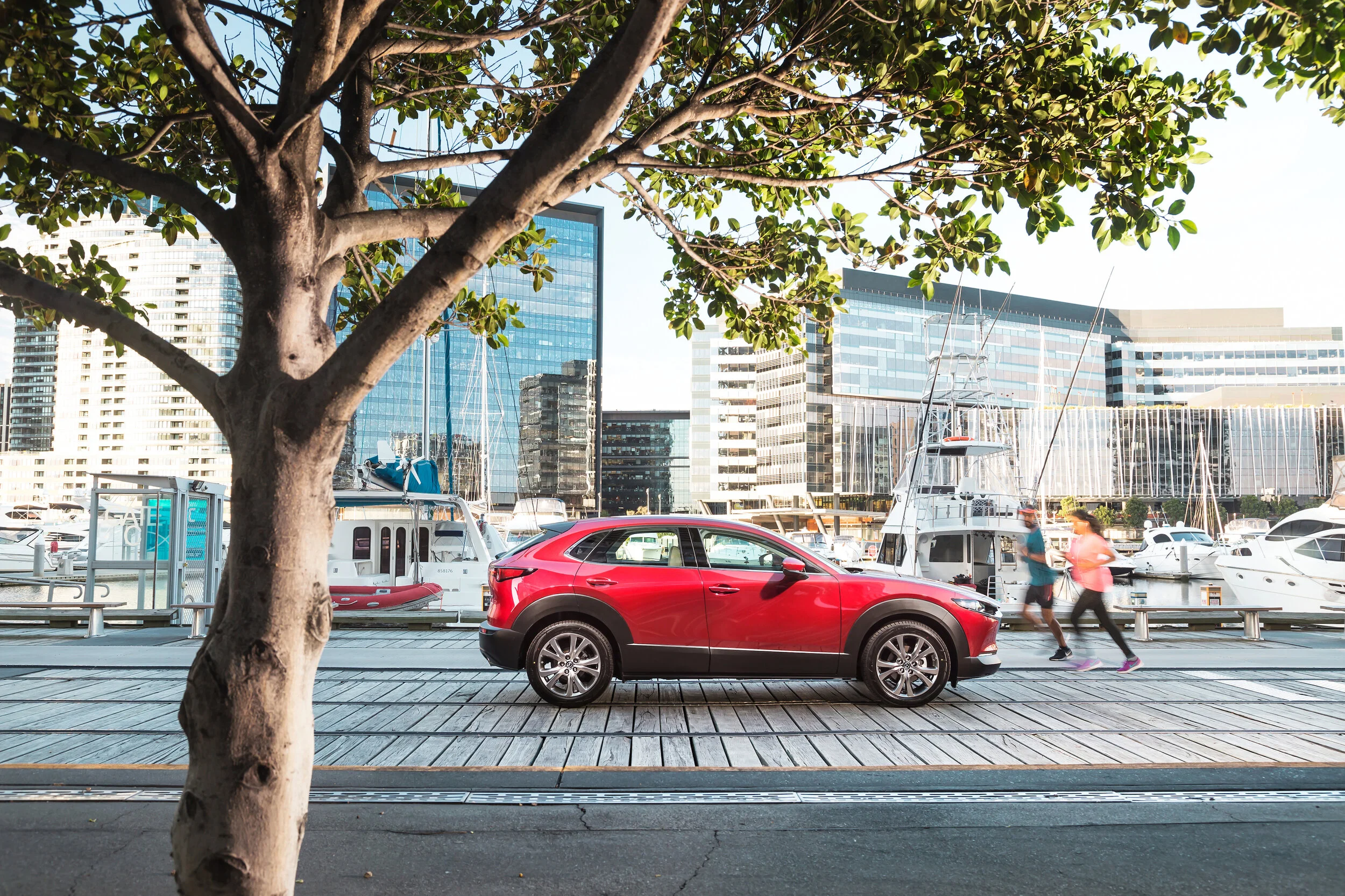
The CX-30 releases into a different market environment Mazda had forecast just a few weeks ago.

CX30crop.jpg

ACCEPTANCE this year’s new car market might crash and deliver just half the 2019 volume hasn’t destroyed Mazda NZ’s confidence, yet will steer sales expectation. 

In discussing hopes for the CX-30 compact crossover, which stands as the first new car to launch nationally since the Covd-19 lockdown enacted, the brand has admitted some would-be buyers have already u-turned and pulled out of deals.

The Mazda3-based five-seater priced from $41,490 to $50,990 will become available from next Tuesday, a timing that synchs in with a relaxation in national restrictions that allows resumption of car sales, though with caveat of this being contactless. So, no showroom visits and a continuation of social distancing which demands care when handing over new cars to customers.

The release is subsequent to a dismal forecast from the Motor Industry Association. The national body representing new vehicle distributors is predicting the new car and light commercial count this year could be 40 to 50 percent lower than last year’s count of 154,763 units 

The industry is also anticipating potential of hugely diminished fleet interest, mainly from the crucial rental sector, which appears to have skidded to a sudden halt as result of tourism freeze.

Nonetheless, Mazda NZ is putting on a brave face. It still sees some business sector opportunity for CX-30, moreso than comes with its other crossover contenders, notably from small to medium businesses.

1S2A2114.jpg

Even so, it will be mainly reliant on private buyer interest in its new model which, as essentially an elevated version of the Mazda3 hatchback becomes the fifth crossover Hiroshima offers and places above the CX-3 and below the CX-5 that has been their best-selling model for some time.

In an online presentation today, Mazda NZ’s managing director, David Hodge, and his manager of product and sales planning, Tim Nalden, signalled that as much as CX-30 is ‘right’ for the market – aiming at the compact crossover category that was showing best growth prior to the coronavirus emergency - market conditions could not be more challenging.

The Auckland-domiciled operation has passed on sharing volume expectations for the car and admits that an original launch timing stymied by the lockdown has been so disrupted by the ensuing national situation that much pre-crisis forecasting has effectively been rendered useless.

Yet that wasn’t just his brand’s dilemma; Nalden hazards the entire car business is in the same situation.

“If you asked anyone (in the industry) what the forecast will be, I doubt anyone will be able to give an accurate reading.”

The market is all but impossible to read. “I suspect you will see that change, day by day, week by week, month by month as we work through this ... at the end of the day, who knows?”

The MIA’s sobering assessment of 2020 has come from canvassing opinion from all new vehicle distributors here and has since been supported by an Infometrics forecast, issued yesterday, Hodge says.

Nalden says Mazda NZ has lost orders for Mazda product, CX-30s included, since lockdown hit. He and expected more cancellations to come. This after such strong interest in CX-30 that 50 percent of the initial shipment had been spoken for during January and February.

1S2A2301.jpg

“Yes, we have had some orders cancelled … and that is simply just potentially reflecting the state of the economy and anxiety around job security and also the propensity to be able to spend money.

“I would be surprised if 100 percent of all of the deposits currently on our vehicles are retained. 

“I think it’s just natural that we can’t expect everyone to stay there, nor should be expect to force people to have to follow through (on deals) if their financial position has changed.”

Hodge has reinforced that Mazda NZ will extend vehicle warranties if they expire during the period of the lockdown, and look after vehicles that have become overdue for their servicing.

As coronavirus continues to spread across the world, car makers are taking the extreme measure of plant closures, mainly in China, South Korea and Europe – though several there seem to be looking to restart soon – and in America, where makers have extended shutdown periods.

Japan’s car industry seems to have been spared the worst in that only factories outside of their home country have been hit. Domestic assembly lines, including those in Hiroshima that makes CX-30 and most other core passenger product for NZ, are still operating. The bigger question hangs over the supply of part from third-party providers. China is the primary provider of components for the world’s car makers; the epicentre of that industry is, ironically, the place where coronavirus was first identified, Wuhan. 

Nalden says supply to New Zealand remains good and the stock count here is healthy.

“We've had a month without any selling, so naturally stock is higher than usual.”

Added Hodge: “Mazda has good stocks of new vehicles that should last us at least three months. But going forward, it is obvious the vehicle supply pipeline will be disrupted.”

Longer term, Nalden anticipates the situation in respect to ‘indent’ models – the industry parlance for variants of such low volume they are secured through placing customer orders at the factory - and also for supply in the medium term could yet become less clear. 

“While our factories in Japan and Thailand are still operational, each factory is running less staff and reduced shifts (for social distancing) and consequently outputs are lower.

“Also, given each country around the world is at different stages with the pandemic, component supply is less assured than normal.”

On top of this, the shipping lines are altering schedules, as volumes have changed markedly for all automotive brands.

This report includes additional reporting by Rob Maetzig


Hotshot RS has gone but Focus ST will still burn

Ford NZ has reacted to news the fabulous Focus RS won’t continue with suggestion the ST is hot enough to fill in.

Focus ST 1.jpg

Will an underdog be accepted as king of the kennel?

More specifically, can a 206kW front-drive hot hatch fill the boots of a far more hyperactive four-wheel-drive big brother that, in the final tuning of its previous format presented to New Zealand, generated 257kW and smashed 0-100kmh in 4.7 seconds?

As hard as it might be for some revheads to accept the Focus ST incoming to New Zealand in June, price and final specification still undisclosed (and Covid-19 notwithstanding), having the cojones to satisfy RS-level expectations, that’s exactly what is going to happen, with news that the latter Focus has been killed off.

Ford New Zealand is pulling on its brave pants in responding to thought that, with the RS gone, it might lose a fanbase and struggle with ST to maintain the traction RS gained as an ultimate Euro-flavoured Blue Oval bad boy.

Corporate communications manager Tom Clancy believes the ST has enough flavour to win at least a look from the RS fanbase.

“The initial reviews from Europe of the … ST have been highly positive so we will see some RS customers and hot hatch enthusiasts in general checking out the new Focus ST.”

Ford has left those hardcore addicts no choice, with news that a famous badge with lineage going back to early Escorts now ends with $76,990 RS Limited Edition that came here in September of 2018.

Focus ST 3.jpg

The idea of developing a fourth generation RS hinged on it working with what’s turned out to be a developmental dead-end – a high-output hybrid turbo four-cylinder engine and an emissions-reducing 48V mild-hybrid system to meet tighter CO2 targets while retaining ballistic capability.

A company statement reads: “As a result of pan-European emissions standards, increased CO2 taxation and the high cost of developing an RS with some form of electrification for a relatively low volume of vehicles, we are not planning another RS version of the Focus.”

This doesn’t necessarily mean the RS will not re-emerge in the future – the statement is careful to apply specifically to this generation Focus – yet it does mean that for the time being the onus of being the ultimate family funster falls on a variant that, until now, has always been a stepping stone between the mainstream and the fully malevolent formats.

The new ST is certainly set to be a faster, more honed car than its predecessor. Notably, it comes equipped with a 206kW/420Nm 2.3-litre four-pot turbo – up by 22kW and 60Nm over the old model.

That means it is offering just 20Nm less than the last RS in its hottest factory format, though the power output is also 49kW shy.

It is also surely set to win a wider audience than the previous ST, or any RS, as they were manual gearbox models, whereas the next transfers to a seven-speed direct shift transmission.

Says Clancy: “The RS was more suited to enthusiasts as was the previous Focus ST.  

Orange_Fury_ST_068.jpg

“Where we anticipate the largest customer interest/movement is from the fact that this is the first time we’ve offered a 7-speed automatic transmission with paddle shift in a Focus ST.

“We anticipate many new customers and customers coming from competitors who have had autos before the Focus ST.”

However, the ST is patently not on the same level as the last RS in respect to drivetrain tech, which stands to reason.

In production and on sale in its primary markets for almost a year, ST was developed at a time when Ford was committed to doing as it has previously done: Continuing it as a fun, but lower-tier, excitement than the RS which was – back then – was a definite starter. 

Which is why the RS alone had the full-out race-spec tech and aimed at utterly bonkers high-end specialist all-wheel-drive Euro fare – the likes of the Audi RS3 and Mercedes A35 and A45 - whereas the ST was designed more as a foil to front-drive hotties, most notably the Renault Megane RS and the VW Golf GTI.

The RS will certainly be remembered as a marvel of chassis technology and sheer aggression.

As other have noted, it’s been no stranger to variety. The first-generation car relied on turbocharged, 2.0-litre power sending drive to the front axle; the second also put power through the steering set and switched to a five-cylinder unit. The previous Focus RS returned to four-cylinder power, but adopted an all-wheel-drive system and lifted the game all the more. 

Orange_Fury_ST_097.jpg

 Huge grunt from a 2.3-litre turbo engine (with 1.8bar or 26PSI of turbo boost) channelled via a six-speed manual gearbox and, in most-prized Limited form, a Quaife mechanical (meaning real, not a pretend electronic approximation) limited-slip differential at the front and it had a RS Performance Wheel Pack with 19-inch rims and Michelin Pilot Sport Cup rubber. All this, and a fun-tastic Drift Mode that unleashed it for impressively Hoonigan-style big skids (track use only, of course). 

That clever stuff showed in the price, of course. At $76,990, that last blast RS added $4000 to the sticker attached to the standard model and left it around $25k above the ST. 

So much for so little? As much as the RS sticker seemed to put it beyond the faint-hearted, it sold fast anyway.

And though, of course, the RS car park was always smaller than the ST’s, which in itself held something of a niche presence, it proved how strongly street cred can ‘sell’ a car, being utterly untroubled being noticed by those in the know.


Right gear, wrong car

The transmission that would definitely broaden the appeal of the best driver’s car Hyundai sells here has been unveiled.

VelosterN8-DCT02.jpg


HERE’S something to make you smile – a wet dual clutch transmission with a ‘grin’ feature.

No, for real. In releasing information about the two-pedal eight-speed box that will provision into its hard-out i30N hot hatch as an option to the six-speed manual that’s the sole choice now, Hyundai has identified one of the box’s three settings is called … ‘N Grin Shift’. Only in Korea, right?

Laugh along, because the joke will be on rivals who might dare to diss. The i30 N as is rates really well and this new transmission is simply going to broaden the appeal.

We likely won’t know by how much for a little while yet, unfortunately.

The make has decided the Veloster N coupe should be the first recipient of this tricky tech. Indications from the factory have long been that this car is only available in left-hand-drive and might only avail in two places, South Korea and the United States.

The brand claims that the DCT Veloster N will accelerate from 0-100kmh in just 5.6 seconds – exact-matching its six-speed manual counterpart.

Slotting into ‘N Grin Shift’ doesn’t make it any faster, yet promises a feistier more feral feel as that ups torque by seven percent to 378Nm thanks to a turbocharger overboost function for 20s.

An ‘N Power Shift’ feature is also included, which stays in the torque band when upshifting at more than 90 per cent throttle.

There’s also an N Track Sense Shift feature can pre-select gears depending on driving conditions, such as downhill or racetrack settings, for “optimal performance”, according to Hyundai.

The edition also retains functions such as rev matching and launch control, while also gain steering wheel-mounted paddle shifters. Expect also see them on the two-pedal i30 N whenever it rolls out.

VelosterN8-DCT01.jpg


CX-30 snuggles close to sister models

The latest addition to Mazda’s already well-configured crossover family touches into siblings’ patches.

DynamicCX30-ThomasWielecki-55.JPG


WHEN space is tight, muscle in – that’s the tactic Mazda has employed with it its latest addition to the CX family.

In advance of an on-line discussion tomorrow where strategies are expected to be outlined, the Auckland domiciled brand has released specification and pricing detail of its CX-30 five-seater elevated crossover hatch. 

The information confirms it will initially foot three versions, with a Takami flagship following in the second half of 2020.

Those here now have drivetrains already used elsewhere in the family - though CX-30’s versions of the SkyActive-G petrols are finessed for slightly different outputs – whereas the Takami will introduce the new SkyActiv-X tech.

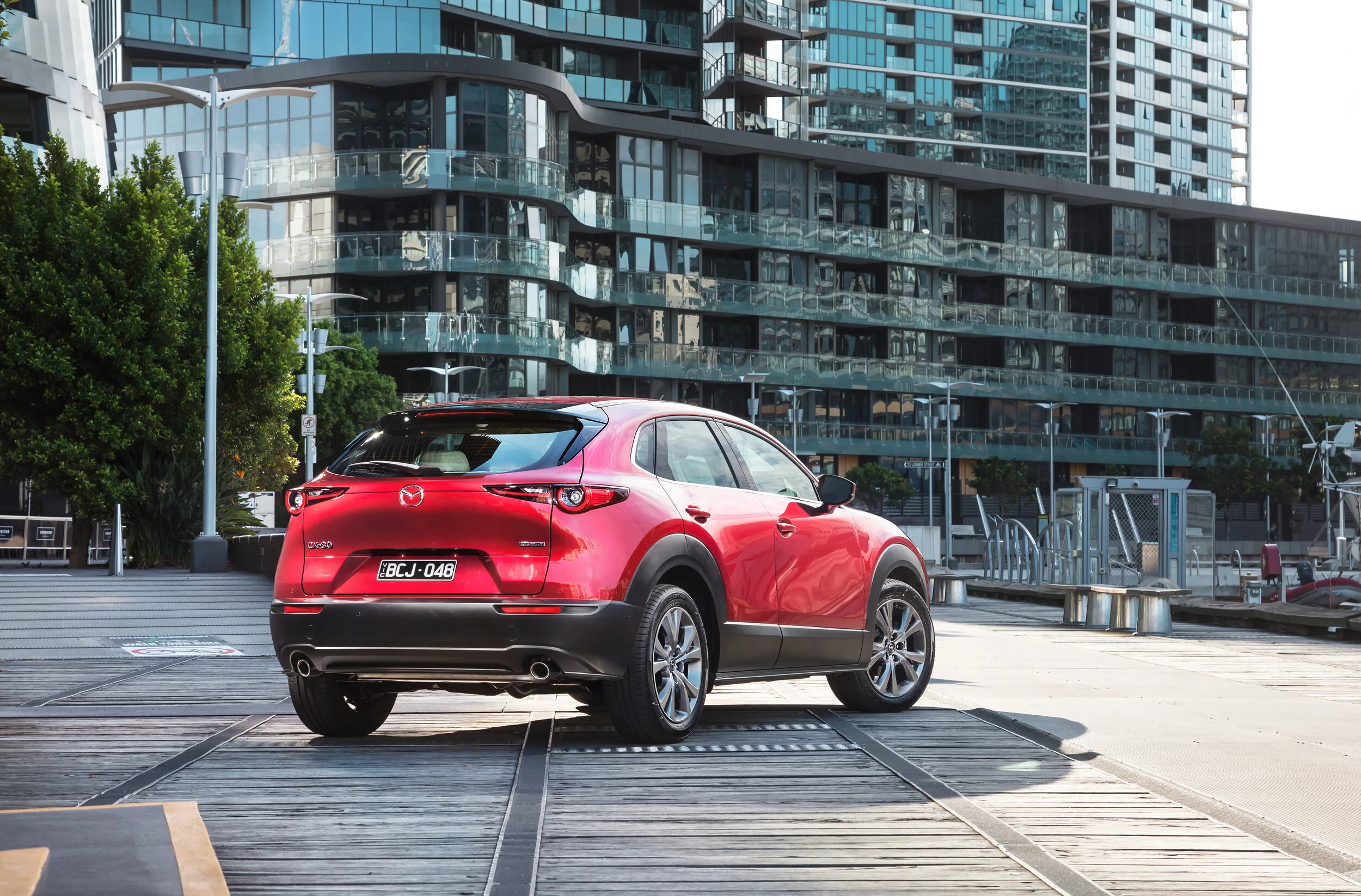
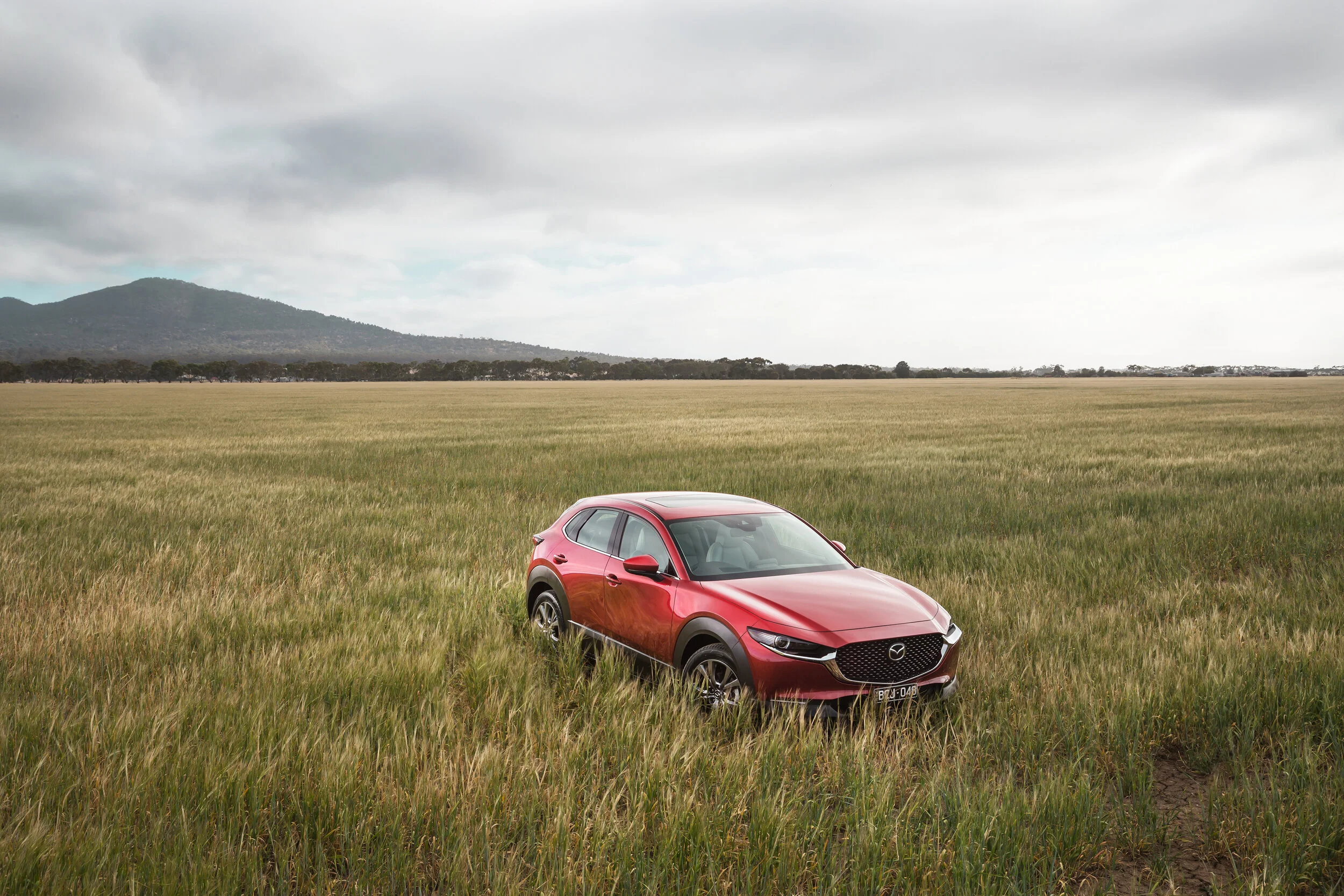
The coupe-like styling delivers a new spin on the established Kodo styling. A more modern platform and enhanced versions of the driver assist and comfort tech that comes in other Mazdas also feature.

Also interesting is the price positioning of the base GSX front-drive, with a 140kW/200Nm 2.0-litre engine, and a pair of 140kW/252Nm 2.5-litre all-wheel-variants, badged GTX and Limited.

The recommended retails of $41,490, $44,990 and $50,990 further cement that, in order to make room for a car that would have been called CX-4 - had that designation not gone to a model developed purely for China - the product planners had to work beyond the clear air that existed between the CX-3 and CX-5, which defy the CX-30’s ‘first ever’ marketing tag (insisted because it goes a bit more coupe-like) by very obviously being sister cars. 

DynamicCX30-ThomasWielecki-58.JPG

The newcomer’s potential to pluck sales from each camp has always seemed strong – it’s bigger and better-kitted than the CX-3 and more modern and arguably more stylish, inside and out, than the CX-5 and nips ahead on core safety and assist considerations. Any advantage with the latter should be a fleeting, as updates to CX-5 have been announced in other markets.

However, the pricing plan is bound to raise interest, as it establishes the newcomer with a foot in each existing camp.

Consumers eyeing up the entry CX-30 will note it is $205 cheaper than a CX-3 Takami but otherwise dearer than the less well-provisioned editions of the smallest Mazda rock hopper.

Consideration against the CX-5 reveals more to think about, as the incursion is more pronounced.

Keeping comparison to just petrol all-wheel-drive options seems only reasonable – there are two CX-5s with a turbodiesel, but that engine is not on CX-30’s horizon. 

Anyway, if customers chasing the most expensive CX-30, the Limited, are looking to see how it stacks up against CX-5, they’ll see it basically sits midway between the base and Limited editions of the larger model.

So there’s that to consider. Then there’s the size. The CX-30 was developed through recognition some customers think the CX-3 is a bit too small and the CX-5 a bit too big.

If actual dimensions are required to get a true feel for where it stands, then note that at 4395mm long and 1795mm wide, the CX-30 is 120mm longer and 30mm wider than a CX-3 and 155mm shorter, 45mm narrower and 150mm lower than a CX-5.

A first appraisal – prior to shut down – showed it’s roomier than the smaller car, more snug than the larger, but by less of a margin. Basically, it eats the CX-3 as a four to five seater, but is so close to being up to CX-5 level that it will create significant discussion about rear seat, head space and lower leg room.

MazdaCX30-interior_DASH_3.JPG

Same goes when comparing cargo room. CX-30’s seats-up boot space of 317 litres above the boot floor is a useful 53L over the CX-3, while using underfloor storage brings the total to 430L on most variants. That’s just 12 litres short of the CX-5’s cited capacity. 

As for spec?  Yes, the GSX and GTX grades are more workmanlike, inside and out, but really only stand apart by having cloth trim (whereas the Limited steps up to black leather) and smaller wheels with less sporty tyres.

That first look suggests cabin environments are common and all variants have blind spot monitoring, lane departure warning and lane keep assist, radar cruise control with Stop and Go, rear cross traffic alert, reversing camera, traffic sign recognition and smart brake support. 

but the latest Mazda Connect infotainment system, with integrated satellite navigation plus phone-mirroring technologies Apple CarPlay and Android Auto, via an 8.8-inch wide-screen centre display, spans the family.

A high plaudit from our only recognized safety auditor, the Australasian New Car Assessment Programme, also goes to all models. ANCAP has given it a record near-perfect 99 percent score for passive safety in adult occupant protection and a five-star rating.

When it comes to considering how they perform, everything might come down to driving feel rather than outputs, because the one common link between all three is under their bonnets. 

The 2.0-litre in the CX-30 is also employed by the CX-3 – where the state of tune is lower - and entry CX-5, where the outputs are identical to those claimed for the new car. 

The 2.5-litre engine in CX-30 only otherwise goes into CX-5. It makes the same torque output in either application and there’s just 1kW power difference. All have six-speed automatics. The CX-30 all-wheel-drive system is like that in the CX-5 2.5 

MazdaCX30-interior_GPS_1.JPG

With all this going on, Mazda NZ managing director Dave Hodge is patently not understating anything in proposing that this latest and fifth crossover has had to “create its own space in the small SUV segment”

Nonetheless, in comment sent out ahead of the on-line conference he suggests CX-30 will be able to chart its own course with confidence through having “the practicality of an SUV combined with coupé-like styling and dynamic handling inspired by its small car sibling, Mazda3.”

Proposing the car as complete package for customers looking for a practical, stylish vehicle without compromising on performance, he suggests it will do well simply from having a more modern interior than the CX cars positioned on either side of it and also from touting the most advanced systems and technology. 

Integral to CX-30’s drive experience is Mazda’s G-Vectoring Control Plus (GVC Plus) which sets out to enhance handling stability by using brake and engine control to help the vehicle respond to sudden steering inputs and give the driver confidence when cornering.

The CX-30’s 2.5-litre also have cylinder deactivation, which contributes to fuel economy by shutting-down the outer two cylinders when driving at constant speeds, and the all-wheel-drive has 27 sensors that monitor environmental and vehicle conditions at a computation rate of 200 times per second to predict traction requirements before wheel slip occurs.

MazdaCX30-Exterior_R3Q_4.JPG


Covid-19: Green light for sales and servicing – with care

Level three coronavirus regs are a favoured route that nonetheless demands driving with care.

oil check.jpg

 NEXT week’s diminished national lockdown status will allow car dealerships to entertain a broadened level of sales and servicing, but it isn’t a signal for a return to pre-coronavirus state and showrooms will remain shut.

“It’s nowhere like business as normal and that won’t even start to be until we at least we get to Level Two,” says David Crawford, chief executive officer of the Motor Industry Association, which speaks for new vehicle distributors, in respect to Government’s decision to drop out of the current Level Four condition on midnight of April 27.

The country will remain in that status for a fortnight before another review, on May 11.

The key word during Level Three will be ‘contactless.’ Says Crawford: “What we cannot do is allow customers on sites.” 

Don’t see that as a sign of disappointment: The industry understands why a full lockdown was required and backs the Government. “New Zealand needed to shut down to save lives.”

So easing into Level Three is an important step toward restarting an industry battered by a month of closure. It at least allows “the cash flow to start moving again which will be a great relief.”

Yet he says it is just that, a step and one that demands a high degree of care and responsibility to ensure contactless and interactions to ensure no chance of coronavirus contagion.

“In a Covid-19 constrained world, operating at Level Three will not be business as usual. 

“It is a careful step towards restarting businesses that have put in place adequate steps to limit the transmission of Covid-19.”

Everything comes down to achieving necessary sanitation, distancing, and other health requirements.

It also allows for the sale of new vehicles, but without face-to-face customer contact throughout this and the delivery process, with the onus on the retailer to ensure vehicles are properly sanitised.

DavidCrawford.jpg

“So, for instance, even if the sale is largely done on line they (product) have to be delivered carefully and there are challenges around that.”

Customers will be asked to be patient. “It may not be possible to respond immediately to all requests. We ask the public to be understanding if a request to service or repair your vehicle during this time is not possible or is deferred.” 

There’s good news in respect to parts supply. “The moving of freight and parts under Level Three is unrestricted so that supply will begin to move, which allows us to consider serving of what would be called non-essential vehicles in a way that remains safe.”

Crawford reminds that, in terms of imports, the new vehicle sector is second only to the importation of oil in its contribution towards the New Zealand’s gross domestic product.

“Getting these businesses operating again in a safe way is vital to allowing New Zealand’s economy to begin to recover. 

“The sooner we can stop the spread of the virus the sooner New Zealand can fully reopen for business.”


Covid-19: Cut and paste (and colouring) motoring

How to keep in tune with the car world when driving is basically out of the question.

Screen Shot 2020-04-20 at 12.36.03 PM.png

PABLO Picasso reckoned every child is an artist. We think every adult who is a kid-at-heart also deserves to be considered in the same light.

It’s not easy to buy a car during the Covid-19 crackdown but the world’s auto makers have been quick to cash in exploring the limits of our creativity, by piling out a ton of car-themed design activity to lift the spirits of anyone bubble-bound and stuck in a rut.

So, fire up the printer, curse at the lack of inkjet cartridges, then sharpen your pencils and pick your way through the following.

BMW

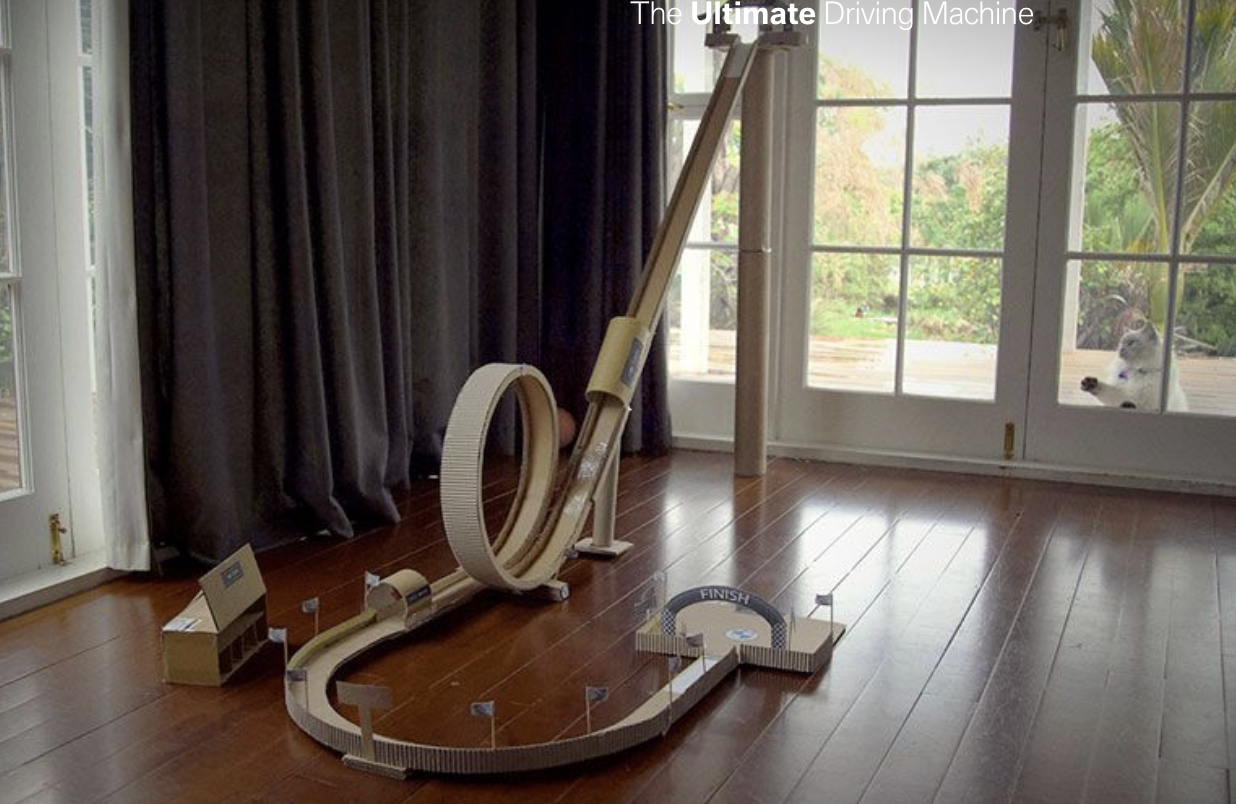
The Munich make’s New Zealand distributor has gone all out to bring home the joy of driving with a downloadable ‘do-it-yourself’ M-Town entertainment packs – one for building a race-track, and the second for building you’re a car – with handy instructional videos, filmed completely under lockdown at home (using high end lighting techniques like opening and closing curtains).

The beauty of this concept is that it goes big on stuff you’ll have readily at hand.

Gabrielle Byfield, Head of Marketing for BMW New Zealand, commented: “Kids may be short on new toys, but they aren’t short on creativity.  With regular household items like leftover cardboard boxes and depleted toilet rolls, and you can challenge your kids to create some BMW magic at home.”

Screen Shot 2020-04-20 at 10.10.03 AM.png

It's not just for your entertainment, either. This is a sharing thing. So, ensuring your cars are in the appropriate livery, from the Race Track Decals pack, just share a share a snap / video of your racetrack in action, for uploading to BMW Instagram, make sure you #BMWDIY 

The downloadable ‘Play at Home’ pack includes flags, starter grids and car decals to decorate your own BMW  and M-Town track and are available here: https://www.bmw.co.nz/en/topics/offers-and-services/promotions/DIY-M-town.html.

Fiat

Just look up ‘Fiatforkids’ as internet images and you’ll discover heaps of drawings ready to colour-in.

Screen Shot 2020-04-20 at 10.14.17 AM.png

Ford

Henry’s mob is another that has put a lot of effort into stopping you from feeling too blue.

The ‘Ford family fun hub’ has a heap of pictures to colour in – not just sweet racers the Focus ST, Mustang, and GT supercar but also the Kiwi favourite Ranger ute – and there are also challenges in dot-to-dot and maze formats. A spot the difference, too.

If they seem a bit lame, then try your skill at building the new Puma SUV in origami. This one has its own instruction sheet.

http://www.fordfamilyfunhub.com/

Screen Shot 2020-04-20 at 10.19.25 AM.png

Isuzu

Japan’s ute specialist gives you opportunity to have early ownership (or at least allegiance) to the new D-Max set to launch later this year. There’s a selection of images to colour-in, dot-to-dots, a word search and spot-the-difference.

https://www.isuzu.co.uk/kids

Jaguar i-Pace Formula-e

If you fancy yourself as a budding talent at race car liveries, try your hand coming up with a cool scheme the i-Pace eTrophy VIP electric car.

https://media.jaguarracing.com/news/2020/03/design-your-own-jaguar-i-pace-etrophy-vip-car-0


Land Rover Defender

Have you already configured your dream Defender on the Land Rover site? If you can’t find the colour of your choice, how about making your own one here?

https://www.dropbox.com/sh/2deouwl73fxb7vd/AABBCxUZqmvXBtjsy2FY7jHja?dl=0

Lexus

No argument, Lexus LC 500 sports coupe is a sharp looker, all the more so in the motorsport version as raced by our own Nick Cassidy in Japan’s Super GT.

The deal here is that you can create your dream racing car livery for that car, remembering “to stay within the (racing) lines.” Good joke, right?

Generously, this illustration also includes rival brands’ racers. BMW, Audi and Aston Martin also feature because this scene commemorates the 2019 race when Super GT cars from Japan and cars from the German DTM series competed against each other for the first time.  The first of these so-called ‘Dream Races’ was held at Fuji Speedway, with a certain Kiwi taking victory.

Download the Lexus LC 500 colouring pages

Mazda

‘The world’s best budget sports car’ seems a heck of a hefty mantle, but assuredly it’s one this wee beauty has had no trouble carrying over four generations.

The MX-5’s popularity is such it’s hard to imagine anyone could turn down this opportunity to build your own. Yes, of course it’s out of paper, but still, what a little beauty, right?

https://mazda.co.nz/sites/default/files/papercrafts/Papercrafts/Papercrafts/Step1/2016papercraft_mx-5.pdf 

Screen Shot 2020-04-20 at 1.47.59 PM.png

Mercedes-Benz

The world’s oldest car maker now has so many vehicles that choosing just one to feature for a colouring-in portrait was clearly just too hard. So, basically, if you go to their Covid-19 fun page you’ll find a subject to suit anyone here, with a comprehensive range of pages with all sorts of models, whether they’re classic or modern. Plus the current Formula One car.

https://www.mercedes-benz.com/en/vehicles/passenger-cars/design-sketches/?shortener=true&csref=sm_fbk_pc

Nissan

 Another brand to add a neat twist to the colouring concept by virtue that, in addition to provisioning a range of images of current products, it also allows you to test your artistic skills of cars that might, or might not be, in this brand’s future. Some of these concepts are really cool.

Alfonso Albaisa, Nissan's senior vice president for global design, and Nissan designers across the world put this effort together and they’re truly keen to see how you get on with adding your influences, so is asking for finished images to be posted on social media with #drawdrawdraw. Albaisa says Nissan designers will be looking out for these drawings and interacting with the talents.

All is explained in the video.

http://www.supercoloring.com/coloring-pages/transport/cars/nissan

Skoda

The Karoq is a cute compact crossover with heaps of charisma and no shortage of perky practicalty … and I’m not just saying that because I happen to be an owner. Well, okay, perhaps my view is a touch skewed. Still, it makes for a fun build project. Thanks to Skoda NZ.

https://www.skoda.co.nz/company/kids-activities 

Toyota Gazoo Racing

With Brendon Hartley now part of the Toyota Gazoo Racing effort, why not add some colour to his title-winning TS050 Hybrid, or perhaps one of the predecessor cars that ran at Le Mans? The link goes to a download that expires at the end of this month, so if you’re in for the challenge, make haste.

You can download the TS-series here 

Toyota.

 No need to use your drawing sticks on this one; the cars are already coloured in. Unfortunately, as a Toyota UK delivery, the selection doesn’t include the NZ racing series versions, but still.

https://media.toyota.co.uk/2020/04/make-your-own-retro-liveried-toyota-gt86/


Covid-19: For VW, crisis highlights old school values and new age strengths

Life under Level 4 has accelerated the biggest European distributor’s digital planning. How far might it go?

Can a major car brand really be run from a laptop? In times of needs must, the outcomes have been heartening.

Can a major car brand really be run from a laptop? In times of needs must, the outcomes have been heartening.

 PANDEMIC lockdown has influenced a major car distributor’s view about the relative values of ‘clicks’ and ‘bricks’.

Like so many businesses, Volkswagen New Zealand has taken its office structure into the homescape since the country closed for business on March 26.

It might not be too much of a stretch to suggest that, as result of the shutdown and social distancing, this massive machine – it’s the largest importer of European automotive product – is operating from laptops on kitchen tables.

Enforced change has asked for fresh ways of working and thinking, plus accelerated reliance on online tools, some in the works for quite some time, one or two considered unnecessary in times of normality. The Covid-19 crisis has left no choice.

All in all, general manager Greg Leet has been impressed by how this unexpected needs must exercise is running. It has so cemented trust in systems and e-commerce approaches he believes what’s working has continued merit once all this over. “When we get back to work, it would be terrible if we did not take the learnings of these dramatic times along with us.”

Greg Leet.- the Covid-19 shutdown has taught a lot about digital operating systems and flexible working practices.

Greg Leet.- the Covid-19 shutdown has taught a lot about digital operating systems and flexible working practices.

Does this raise broader discussion about brand-retailer-customer interactions. For instance, when we’re in a situation where it’s impossible for the traditional – that is, in basic terms, a customer going to to a showroom, is this now the time when more effort is required to essentially bring the showroom to them?

There’s no argument that, since we’ve been placed in our bubbles, we’ve become more computer-reliant than ever; web traffic in the past few weeks has soared to unprecedented level. Surely we’re not all watching funny pet footage?

All this has hit at a time when it’s hardly a secret that the car world is becoming increasingly reliant on digital solutions, with inevitability of more to come. As Leet puts it, what’s happening and being increasingly thought about right now is an acceleration of what was always going to be.

The exceptional circumstances of the moment have acted as a catalyst for consideration of change. No-one is under any illusions about the impacts of coronavirus, not just now but going forward. Any return to life as it used to be will be slow and measured.

Working through new potentials and opportunities has keep VW and its agents – in New Zealand, that’s Giltrap Group – brainstorming busily at corporate level, Leet acknowledges. Examining the fuller potentials of flexible working environments and technology leveraging has been fulfilling.

“What this (crisis) has done is allowed us to take stock of some of the future thinking that we’ve been working with. We have found opportunities from these challenges.

 “The customer journey is going to be, and should be, different as an outcome of what we have been going through. I think our dealers (also) have an opportunity to become more present in a customer’s environment.”

As to that. Whatever it entails, this hastened journey down the virtual highway won’t diminish the human element nor would it bypass the core historic destination: The established franchise network.

On the first, Leet says for all the merits of online, it’s been an incredible staff effort that has been key to keeping the brand on the road these past few weeks. All that starts at the top; family business, family values.

VW New Zealand’s usual home is this Auckland headquarters.

VW New Zealand’s usual home is this Auckland headquarters.

“There’s been a lot of discussion around ensuring our staff’s health and well-being. When these times come and when the chips are down, the values of an organisation really shine through … I feel pretty bloody lucky to be working in an organisation led by those guys (the Giltrap family). It’s just phenomenal. It’s people first, no matter what. 

While inaccessible to the public, the national franchise network has remained a stalwart; there’s been a lot going on behind those closed doors, within the constraints expected with Level 4.

“The contact between us and our dealers is still as much as it would be any other day. The content of our conversation, of course, is a little different. 

“But we are supporting and enabling them to make sure that their staff and customers are safe in their environment.”

For many students of automotive utopia, the ultimate undertaking might be an online purchasing platform enabling customers to configure and purchase new vehicles remotely.

That process has been toyed with before and found wanting by Toyota New Zealand, which had little luck some years ago when touting Prius and 86 editions that couldn’t be bought from a showroom.

Last week VW in Australia followed a similar route with a structure that makes every new VW model – including commercial vehicles – available to order online. As with the NZ experiment, the process allows buyers to configure their selection and lay down a deposit before a designated dealership takes over to the rest of the process. In Australia, once the deposit has been received, the dealership is in contact within 48 hours to complete the purchase and manage the vehicle delivery. Here legislation requires going to a dealership to sign a sales agreement.

Virtual showrooms as an adjunct to the actual thing increased development of on-line tools that already allow customers to assess and tailor a product they’re considering is an international emergent with potential, Leet says. Additionally, there’s a logic to enhancing those experiences during a time when social distancing makes anything more personal simply impossible.

In the same way, having ‘sales geniuses’ giving a tailored guided tour to a vehicle by video link, which Skoda in the United Kingdom has introduced in the past week as a way of limiting social interaction, is also a good idea even in times of normality.

“We are definitely thinking about those things and even, too, to the likes of how of internal training might look like from a video perspective.”

Cars are essentially computers on wheels already, and the advance to the electric ID models will just bring more digital engagement.

Cars are essentially computers on wheels already, and the advance to the electric ID models will just bring more digital engagement.

That has already begun, with VW NZ having provisioning ongoing sales and technical training by video link during shutdown.

Regardless of what can be achieved via e-means, the traditional still has a core role. Dealer outlets lend strength and fuel credibility and, as much as direct selling works for some products, vehicles are different, simply because of the emotional connect. See, touch, drive, talk.

Were it not for Covid-19, today’s showroom-centric chat would surely reference this week’s national introduction of a fresh brand stance, pitched around the new look logo from Germany first unveiled last September. Months in the planning, an effort that would undoubtedly have become subject to a lot more raa-raa were it not for the pandemic could not be diverted because of it.

Aside from the latest badge that, the brand says, has reduced to its essential components and with a new flat 2-D look to become “perfectly recognizable in a digital landscape”, this brand design exercise includes a new female brand voice, a new website, and a complete overhaul of each local dealership, set to be implemented in the months to come.

That a roll out theming to new beginnings has timed just when coronavirus is costing the parent a staggering $US2.2 billion in lost revenues every week is wholly happenstance, yet poignant nonetheless.


Covid-19: How to alleviate DPF concerns

The coronavirus lockdown is forcing people to drive their cars less. Will this cause a problem for some diesel vehicles?

127174 GEM.jpg

TAKING a sensible approach will likely be enough to keep diesel vehicles being troubled by the limitations of the Covid-19 lockdown. 

That’s the opinion of experts whose opinion has been sought in respect to overseas’ reports raising concern about how some models’ exhaust limiting technology might perform when motorists can only drive infrequently, and for short distances.

Their thoughts are in respect to particulate filters, which are installed into the exhaust system and designed to capture diesel particulate matter or soot to keep these from entering the environment, where they can be potentially harmful.

The technology has been common for 20 years and since 2009, and the introduction of the Euro 5 emissions standard, has been fitted to all new cars with diesel engines.

 Though now being superseded by a more efficient system that involves injecting liquid urea – commercially called AdBlue – the setup remains common on many utilities and sports utilities sold in NZ.

One of the inevitable effects of NZ being placed on lockdown due to the coronavirus is that we’re all driving our cars less.

IMG_5339.jpeg

The catch with DPFs – one avoided by AdBlue-involved engines - is that they only have a limited capacity and at some point the excess soot needs to be burned off.

In order to do that, the vehicle might require being for around 15-20 minutes at 2500rpm or higher. This process is known as DPF regeneration and is vital. Cleanly burning off the excess soot reduces harmful emissions and helps to prevent the tell-tale black smoke you used to see from diesels, particularly when accelerating.

 Recently an expert group in the United Kingdom, the Independent Garage Association, warned that if people are only using their diesel cars for short journeys during the lockdown, their DPFs might not be able to regenerate.

The organisation has advised owners of modern diesel cars to avoid using them for trips of less than 30kms in order to avoid clogging up the DPF.

Does that advice also hold firm in New Zealand?

Experts who discussed this with MotoringNZ.com said in theory it might. Certainly, they said, the industry accepts that short journeys at low speeds are the prime cause of blocked filters.

But they also agreed that some commonsense usage might also keep issues at bay.

One valuable tip: Avoid driving a diesel consistently at low speed and never allowing it to get up to temperature.

Also, if an engine enters in a DPF regeneration phase – which should be obvious, as the engine note will change, a cooling fan might activate, idle speed will increase, the automatic stop/start might deactivate and you might smell a hot, acrid exhaust aroma – then allow it to fulfil this.

It’ll do this by one of two ways. Passive regeneration is probably not as easily entertained unless you’re driving on essential services, as this occurs when the car is running at speed on long journeys which allows the exhaust temperature to increase to a higher level and cleanly burn off the excess soot in the filter.

IMG_5321.jpeg

Active regeneration means extra fuel is injected automatically, as part of the vehicle's ECU, when a filter reaches a predetermined limit (to raise the temperature of the exhaust and burn off soot.Again, though, it asks for the car to be driven a distance: If the journey is too short, as the regeneration process may not complete fully. Either way, check your handbook.

If that doesn’t happen? Well, when a DPF has built up too much soot and hasn’t been able to burn it off, a warning light will come on. If this happens, you need to avoid using the vehicle until it can be cleared.

It may be possible for a mechanic to use specialist equipment to carry out a forced DPF regeneration, which is the ideal outcome.

If drivers ignore the warning light and carry on using their car with a full DPF, they risk blocking the DPF altogether, in which case the car will enter limp-home mode and a whole new filter may be required. You don’t want that: DPFs can cost between $5000 and $9000.

As said, this is only as issue for DPFs that use the high-heat process to eradicate soot build up. Those that adopt the ADBlue technology – and that includes almost all vehicles designed to meet the latest European Union emissions standard – still run DPFs.

However, the injection of Adblue - a non-flammable, high purity urea solution - just ahead of the catalytic converter makes a world of difference. This reduces nitrogen oxide emissions by more than 90 percent so makes for much lower residual soot.

AdBlue is held in a separate tank – it should not be pre-mixed into the fuel – and the reservoir access is often right alongside the fuel filler and has a blue cap.


Covid-19: Additional VW models still on track for NZ

Golf Mk8 has been delayed a couple of months but we’ll have plenty of new diversions from VW NZ in the meantime.

DB2019AU00434_medium.jpg

FOUR high-profile Volkswagen products are still tracking true for New Zealand though volume count for several might hit speed bumps as the year unfolds.

This from the brand’s New Zealand boss, Greg Leet, who says while the Covid-19 pandemic and national lockdown certainly haven’t made life easy, neither has it completely thrown impending introductions of the T-Cross and T-Roc – crossovers with huge volume potential through giving VW solid standing in the sub-Tiguan compact sector -  the Golf GTi TCR and a new Touareg V8.

 Though new car sellers are bracing for 2020 to be a tough year, with stock supplies looming and growing likelihood that registrations could be down by at least 40 percent on the bumper 2019 tally, the Auckland distributor’s intents not only remain more or less on track but could yet be further emboldened by heartening by latest news from Germany.

Notwithstanding the huge hit the global car industry has taken from coronavirus – first with parts supply problems and then with complete production shutdowns – Volkswagen Group is already looking set to imminently re-open some plants in Europe, albeit with social distancing measures in place.

On top of this, prior to the virus’s impact, it was already re-establishing  models that had been delayed or briefly curtailed last year as result of the brand being challenged to  meet Europe’s WLTP emissions testing requirements.

DB2019AU00431_medium.jpg

Also, while the national sales network is closed to the public, the Auckland-centred head office has remained busy – albeit with staff working from home – in planning life beyond lockdown, including localised implementation of the latest, simplified VW logo, which became official today.

Additionally, products built and shipped out of plants, mainly in Europe, have already landed or are set to ship in soon, so will be available to the public as soon as is allowed.

The first big T-Cross shipment landed just days before the nation went to Level 4 on March 26, so just a handful of the Polo-based front-drive model made it into dealerships – but more are awaiting dispersal.

The car (above) initially represents in $34,240 Life and $38,490 Style formats, with a turbocharged three-cylinder petrol that produces 85kW of power and 200Nm of torque and mates to a dual-clutch automatic transmission, with these to be joined by an R-Line, taking a 110kW/250Nm 1.5-litre four-cylinder. VW NZ has also secured 42 examples of a launch special, in First Edition trim, this also with the smaller engine and a bespoke trim. This costs $39,990. 

Meantime, the T-Roc, which shares a Golf platform, is now tracking for local release in July – three months later than expected, because the first NZ-bound consignment missed a sailing through being held up at the Spanish border.

It will also provision in three levels of specification, topping with a continuation of the R-Line trim that briefly availed last year with the surprise introduction of cars originally built for the United Kingdom that were subsequently made available as a one-off taster for NZ.

DB2017AU01557_medium.jpg

The Life and Style models feature the same 1.5-litre as T-Cross, with identical outputs, while the R-Line keeps the 140kW/320Nm 2.0-litre already experienced in those 150 examples already here and also holds the same price: $51,990. The Life and Style models, meantime, sticker at $39,990 and $44,990. As with T-Cross, T-Roc runs with a dual clutch transmission. But it’s also going to have all-wheel-drive in the top spec.

The cars adopt similar stylings but in different sizes. T-Cross is a longer overall (by 54mm) and in wheelbase (by 13mm) than the Polo and is 112mm taller, but only fractionally wider (at 1750mm) than VW’s smallest hatch. T-Roc is around 250mm shorter than the Tiguan, and otherwise similar in stance to its donor.

A First Line special edition part of the Touareg V8’s introduction; this $149,990 edition packs delivers with the 48-volt active roll stabilisation system that is a $7500 cost-extra on the mainstream alternate, which will retail for $141,990. The First Line also has a Black Pack trim and a top-level Dynaudio sound system that, again, aren’t standard to the cheaper variant. 

Of course, the main attraction is the powerplant, a version of the mighty eight-cylinder turbodiesel that has until now restricted to richer fare, in the shape of Audi’s SQ7 and SQ8 and the Bentley Bentayga.

VW NZ anticipates keen interest in the twin-turbo 4.0-litre unit that stands as a new-era equivalent of the V10 turbodiesel that figured in the first generation Touareg and was developed at the behest of Ferdinand Piech to simultaneously elevate the diesel engine and the VW brand.

DB2019AU00587_medium.jpg

The incoming unit isn’t the premium version, in that it doesn’t take the electric supercharger that Bentley’s rig also achieves, but with 310kW and 900Nm nonetheless generates 87kW more power and 151Nm more torque than the old 10-cylinder, and of course utterly gazumps the current V6, which in strongest format makes 210kW and 600Nm.

Also set to satisfy sporting tastes is that Golf GTI TCR, probably landing in July and intended as a swansong not just to the current GTI but also to the Golf 7.5 range – though, in that respect, because of coronavirus the current line will now be around for the remainder of the year, rather than replaced in October by the Mk 8 form in October.

Leet’s new plan now is to introduce new generation in January. Hopefully. Meantime, VW Germany will keep making the 7.5 version for NZ - on the same line that is otherwise pumping out the next generation for many other markets – with an R Limited model also coming to keep up mainstream interest while the TCR targets hard-out enthusiasts.

 The latter should move through the showroom as quickly as it nails all the usual performance tests.

VW_9013_Golf_GTI_TCR.jpg

Named in recognition of a brand involvement in Touring Car Racing  that has since discontinued, the special dethrones the GTI 40 Years as the most powerful Golf GTI ever. In that it has a permanent peak power figure of 213kW from its 2.0-litre turbo-petrol four-pot engine – as opposed to the 40 Years, which could only reach the same power on overboost.

Peak torque comes in at 350Nm, the same as with a regular GTi. The grunt is delivered exclusively to the front wheels via a six-speed dual-clutch automatic transmission – so, not the seven-speed going to some other markets.

Dynamic deftness is enhanced with it using a limited-slip differential on the front axle, a firmer suspension set-up that rides 5mm lower than the GTI, a unique adaptive chassis control system and beefed-up front brakes.

It also announces with a unique engine note provided by the bespoke exhaust system. VW reckons on 0-100kmh in 5.7 seconds. That’s 0.6s quicker than the 40 Years and just 0.9s shy of the R.
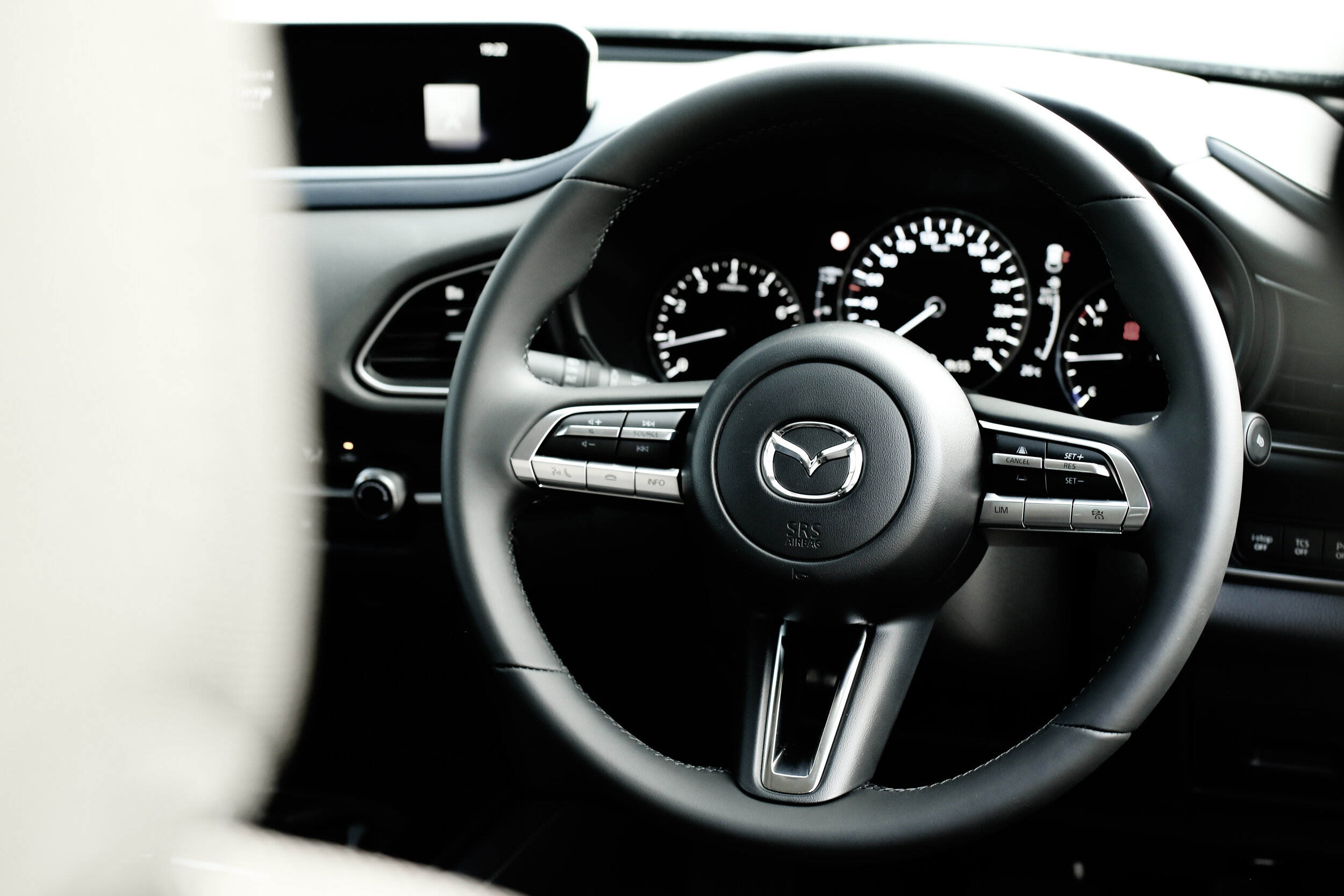
Price? It’s still being finalised, but should be just over $65,000. And availability? Well, best be quick: Just 40 units are earmarked.

Visually, the TCR is distinguished by its honeycomb decals, 19-inch alloys wheels and black roof, plus three exterior paint colours – Pure White, Pure Grey and Tornado Red.

The interior treatment includes Alcantara accents on the gear lever and door trim inserts, black and red cloth upholstery, GTI steering wheel with perforated leather on the hand positions and a red 12 o’clock marker.

Other exclusive standard equipment includes LED headlights with dynamic cornering function and dynamic light assist.

These features build on a standard GTI provision which includes GTI body styling, electrically folding exterior mirrors, keyless entry and start, an 8.0-inch infotainment system with sat-nav, active info display, city autonomous emergency braking (AEB) with pedestrian monitoring, adaptive cruise control with lane keep assist, traffic jam assist, emergency assist, blind spot monitor, rear cross-traffic alert and a rearview camera with park assist.

Speaking of kit. Even though the T-Cross will seem a bit pricier than some compact rivals, it also promises to perhaps have a longer features list than usual, with all high-level safety and driver assists standard, including pedestrian and cyclist monitoring. Adaptive cruise control, lane and side assist, a rear view camera, park assist and park distance is also standard.

DB2020AU00359_medium.jpg

Meantime, VW here is considering further additions to these families, but says the T-Roc convertible has already been decided against while performance-tuned R version is perhaps several years away.

Also unlikely to be seen for a while yet is the Touareg R Hybrid, revealed internationally in February and VW’s very first R model to have a plug-in hybrid powertrain, in this instance delivering ability to run solely on electric power at  up to 140kmh and for 30km range thanks to a lithium-ion battery pack mounted beneath the boot.


Covid-19: Key Mazda will shrug off lockdown hit

Timing is everything … or not. Poised to launch an important new vehicle when Covid-19 became a national crisis, Mazda NZ remains in confident mood.

CX30-ThomasWielecki-006.JPG

Here’s the scene: At roughly the same time as the new Mazda3 was receiving the design gong at the World Car of the Year awards, Mazda New Zealand was preparing to launch its CX-30 compact sports utility wagon.

That global gong promises as a good synch: The CX-30, of course, has been developed off the Mazda3, which prior to securing a WCOTY acknowledgement was also toting a “best of the best” design award from Red Dot and has also been widely praised for its technology provision and fine driving feel.

Even with all that going for it, Mazda3 has not been good enough to stymie the market trend favouring SUVs. Sales are reflecting the diluted consumer interest in hatchbacks and sedans. But that’s fine, because Mazda also has ‘CX’ cars in its range that do scratch that itch.

The portent for CX-30 is extremely positive. Compact SUVs are very hot property and having a vehicle to slot in between the smaller  (Mazda2-based) CX-3 and the larger (Mazda6-spun) CX-5 is an essential service

CX30-ThomasWielecki-015.JPG

So, everything was good to go. Mazda NZ has cars in the country; indeed, most dealerships have examples and 54 have already been registered, the majority in March. Pre-launch television advertising had begun. A national dealer and media events were sorted.

And then? Well, you know the story: The full force of the COVID-19 pandemic struck and we went into a lockdown that might end next week or could yet continue longer. More will be known on April 20.

Meanwhile, dealers have been brought up to speed by video conference, media will have to wait a bit longer to learn about the national line-up and sales strategy … and Mazda NZ has left the past behind and is looking forward to better days ahead.

“Unfortunately it’s just one of those things,” says marketing services manager Maria Tsao, additionally reminding that everyone in the car industry is in the same boat. “The pandemic is having the same effect on all members of the motor industry.”

When the CX-30 does become available for sale in New Zealand, it will be offered in exactly the same grades and with identical drivetrains that the Mazda3 currently offers. So, petrol-only and 2.0-litre and 2.5-litre SkyActiv-G engines, with all but identical outs to those given for its CX-5 application.

And what about the vaunted SkyActiv-X powertrain? It’s coming, though stated intention to add in later in the year in both types remains impossible to stake down to an exact timeframe.

“Just how much later this year is now impossible to say,” Tsao explains. “At this stage, given what is going on, I simply can’t answer that question.”

CX30-ThomasWielecki-010.JPG

However, it is utterly certain these cars to be the debut models for the world’s first production petrol engine featuring compression ignition which combines the advantages of petrol and diesel power, increasing fuel economy and torque, whilst reducing emissions.

In there here and now, it comes down to the 2.0-litre CX-30 in front-drive and provisioning 114kW/200Nm and the 2.5, punching 139kW and 252Nm, running all-wheel-drive. Both pair to a six-speed automatic.

The smallest-capacity model presents in a single grade, the second in GTX and Limited trims. Could it be that the SkyActiv-X provisions in a ‘Takami’-identified ultimate specification? That’s a speculation, yet one that surely seems highly probable.

Mazda NZ has yet to provision pricing detail. However the specification is less of a closed book, as internationally the car provisions to a common standard in respect to its core safety/driver assist and comfort features.

So, seven airbags, adaptive cruise control with stop/go function, blind-spot monitoring with rear cross-traffic alert, lane-keep assist, lane-departure warning, driver alertness monitor, autonomous emergency braking in forward and reverse gear including for rear cross-traffic detection, forward collision warning, a reversing camera, rear parking sensors, road-sign recognition and tyre pressure monitoring.

CX30-ThomasWielecki-016.JPG

Dusk-sensing LED headlights with auto high beam, keyless push-button start, a 7.0-inch multifunction trip computer, auto-folding exterior mirrors with electric adjustment, an electric park brake with auto-hold and hill-start assist and four-way steering column adjustment implement. Also included is a multimedia screen with rotary controller operating the standard Apple CarPlay and Android Auto smartphone mirroring plus native satellite navigation. There is also Bluetooth audio streaming and USB input.

In visual assessment, the CX-30 doesn’t look THAT much bigger than a CX-3: Mainly, perhaps, because they are exactly the same height (1540mm). But it really is. At 4395mm long and 1795mm wide, the newcomer is 120mm longer and 30mm wider than Mazda’s smallest crossover. Compared to the CX-5, it is 155mm shorter, 45mm narrower and 150mm lower. Boot space of 317 litres above the boot floor is a useful 53L over the CX-3, while using underfloor storage brings the total to 430L on most variants, close to the CX-5’s 442 litres.

The Mazda3 and CX-30 were designed by different teams – the SUV’s designer, Ryo Yanagisawa, was previously involved with the BT-50 (and lived in Australia for several years) – but the exterior design themes are very alike, and the new SUV patently continues the ethos of Mazda’s latest “less is more” philosophy that swayed the WCOTY jury.

What does that mean? When I interviewed the Mazda3’s chief designer Yasutake Tsuchida during the vehicle’s big reveal at the Los Angeles Motor Show about 18 months ago, he explained it is all about how a vehicle looks when it is moving. 

For this reason, the Mazda designers removed all hard character lines and creases from the Mazda3 bodyshell, and developed bodyside undulations that showed off various reflections when the car was moving.

Car brands’ favourite drive-time hit?

A car commercial song so effective it’ll likely never leave the fast lane.

Screen Shot 2020-04-14 at 9.15.18 AM.png

Car companies use songs in their advertisements to brand their car to a particular demographic.

Up-and-comers looking to attract young professional buyers might choose a more obscure, hipper musical selection to accompany their ads in an effort to convey that their cars are more relevant and ‘in the know’ than other brands.

More established marques, on the other hand, might select a more straightforward song that reflects solid values their target customer will relate to.

A new trend started where music artists, responding to the rapidly changing music business, use car commercials as a medium to get their new songs into the mainstream. The use of songs in car commercials has a long history and is continually evolving.

And so to today’s story, triggered by being sent a link by a neighbourhood mate who thought I might have interest in this neat ad America’s retail giant, Walmart, had put together, apparently in tune with Covid-19.

Actually, that’s not quite true. For sure, the grocery pickup scheme it spruiks is certainly not a bad idea in these times of social distancing and in places – such as the US, where Level 2 and Level 3 practices are still being entertaining in some places.

Yet in fact the ad and the idea were conceived and actioned a year ago. So well before Wuhan and the viral nasty were in the headlines; very probably even before Covid-19 had transferred to humans.

Even so, the ad is still worth featuring, not least for the obvious reason that it’s highly-quirky, extremely humorous and features all these cool classic movie cars. The Batmobile, the DeLorean from ‘Back to the Future,’ Scooby Doo's Mystery Machine, the yellow VW Beetle from ‘Bumblebee,’ the Flintstone car …

Turns out Walmart worked with several Hollywood studios to gain access to the vehicles, which mostly are replicas but deemed by studios as most like the ones in the actual films.

So there’s that. The second angle arrived when we hit YouTube and used the name of the soundtrack as a search reference. 

The old label of ‘sellout’ often accompanies the use of a song in a car commercial, but it’s clearly one New Age (kids, ask your parents) pop figure Gary Webb is happy to shoulder, given the royalties he has received just from the song featured in this effort.

In fact not just this effort. Walmart was not alone is selecting this synth classic.

Turns out the discount hypermarket operator was by no means the first to see the potential of ‘Cars’, which was quite a hit for an English singer, songwriter, musician, composer and record producer who goes by the name of Gary Numan when he’s performing.

Evidence from a very cursory web check shows three other brands – Diehard Batteries, Nissan and Oldsmobile - beat Walmart to using this new wave hit of 1979 in an automotive association for America-centric ads.

Remarkably, in today’s lockdown reality, ‘Cars’ has an eerily prescient theme. Numan/Webb says his intent was to impress “about how people use technology and material goods to isolate themselves from human contact.”  Music to the ears of any Pet Goat II-level conspiracy theorists, right?

BTW, ‘Cars’ was Numan's only hit in the US, though he had many others in England, where he retains a large cult following and is recognised as an influence on artists like Marilyn Manson and Nine Inch Nails, which does a nice cover of it.

Anyway, check out all four ads and decide which you like best. Hint: There’s no contest, really. Oh yeah, and as a bonus, also included is the Holden NZ ad that used Numan’s other big hit. Can you pick it? Clue: Volt.


Covid-19: Cheap fuel and no-one's pumping

Cheap fuel and nowhere to go. What a waste of a long weekend.

A familiar sight throughout NZ right now - an empty service station forecourt.

A familiar sight throughout NZ right now - an empty service station forecourt.

EASTER is traditionally a time when thousands of New Zealanders hit the road for an autumn break before the onset of winter.

But not this time – the COVID-19 Level 4 lockdown has required us all to remain at home in our ‘bubbles’.

Spare a thought for one of the Kiwi businesses most affected by this: the fuel retailers.

They’re officially considered essential services so are remaining open, but they are suffering a massive 80 percent fall in fuel sales and an estimated 40 percent reduction in shop sales.

Over the long weekend, instead of enjoying bumper trade as motorists parked to fill their vehicles with the cheapest petrol and diesel for years, the forecourts have been largely empty.

One retailer who talked on condition of anonymity - citing contractual obligations with the service station’s fuel supplier - said business had reduced so much that it was hardly worth remaining open.

“However we are an essential service, so we are continuing. But business is very hard right now, and we think it will be some time before any recovery begins.”

The irony of all this is that right now petrol and diesel prices are at historically low levels in New Zealand. They have reduced to the extent that prior to Easter 91 octane petrol could be purchased for as low at $1.70 in parts of New Zealand when discounts were applied. It’s because of continued production disputes between the major oil nations, and the global effects of the pandemic, which have combined forces to result in the biggest collapse in worldwide crude oil demand in the history of the oil industry.

The Level 4 lockdown has resulted in little traffic on Kiwi roads and streets.

The Level 4 lockdown has resulted in little traffic on Kiwi roads and streets.

And when demand – and therefore the price of crude - falls, then so do petrol prices.

At the beginning of the year the Brent benchmark for crude oil prices had the commodity at US$68 a barrel. But just before Easter it was hovering at around US$31, with many international commentators suggesting that the price has all the potential to fall into the US$20s as the battle continues over whether worldwide supply restrictions should be introduced to counter the effects of the Coronavirus pandemic.

Close to 60 percent of all New Zealand’s petrol and 67 percent of the country’s diesel comes from the Marsden Point refinery, which under normal circumstances imports around 42 million barrels of crude a year, primarily from South-east Asia but also from the Middle East and Russia. And normally this crude is processed into around 6.5 billion litres of petrol, diesel, jet fuel and other petroleum products.

But the COVID-19 lockdown and the virus-caused collapse of New Zealand’s aviation industry has resulted in a huge drop in demand for fuel, which has forced Refining New Zealand to essentially halve its output by rotating its processing facilities - operating only half at a time and keeping the remaining equipment “warm”. Marsden Point will continue operating this way at least until the end of August, and it warns that there is likely to be further reductions in production due to insufficient fuel storage capacity throughout the country.

The fuel retailers have been closely monitoring the situation, and have been responding to the ructions in the global oil market by progressively reducing the prices of petrol and diesel. It’s difficult to say whether prices will drop further, because the price of crude oil is just a small part of the total fuel pricing model – other factors include the value of the New Zealand dollar, shipping, rent, maintenance, and localised competition caused by a proliferation of other fuel retailers, which in recent times has had a major impact on pump prices in various parts of New Zealand.

It’s doubtful whether 91 octane petrol will ever get to the very low prices currently being experienced in Australia, where motorists in Sydney can pay less than 80 cents a litre for their 91 octane petrol at some locations. And in Melbourne, petrol at less than $1 a litre is easy to find. But there are five times more people in Australia than in New Zealand, and the sheer volume of petrol sold means it can be offered at cheaper prices at the pump.

It’s no use getting concerned over all of this though – because since we can’t drive anywhere anyway,  it’s not worth spending the money buying the fuel at the current low price.

But if we could, here are some calculations just to make your day.

In January this year, 91 octane petrol cost an average of $2.28 in Auckland and $2.15 in most other parts of New Zealand, which would have meant it would have cost $114 to fill an average car from empty in Auckland, and $107elsewhere. Just before Easter the prices had lowered to the extent the price to fill had reduced to $91 in Auckland and $85 elsewhere.

That would have been a saving of $23 in Auckland and $22 elsewhere – a not insignificant amount.  But cheer up everyone – it’s also about the equivalent of a decent bottle of wine for you to enjoy in your bubble.

IMG_7489.JPG


McLaren goes with the flow

You thought McLarens were slinky simply to be sheikh chic?

McLaren Senna GTR_01.jpg

 ‘Conversations online with the minds behind our pioneering technologies.’.

That all sounds a bit pretentious and utterly boring, right?

It could well be were the subject matter, say, window blinds or whiteware.

But it’s not. The subject is the Kiwi-founded, based-Britain hero brand that these days brings its astounding motorsport pedigree to the road.

Specifically, it’s the McLaren Tech Club, whose remit is to explain and explore the technologies featured in McLaren road cars. With videos in which the interviews with McLaren experts is abetted by footage of great cars doing their thing.

Here are episodes one and two, respectively dealing with aerodynamic magic and how air and wind affect a car’s design. The first centres on the open-top Elva concept and the second uses as its muse another wee special, the Senna GTR.

With the latter, principal Designer Esteban Palazzo explains how the latter followed the F1 GTR and P1 GTR in adopting a multi-tiered, multi-layered, carbon fibre pedestal wing.

Palazzo says it was not only inspired by high-performance cars of the past and aircraft design, but also by the likes and tastes of the intended customers.

So as much for show as go? Well, that might be so, but it is effective. Additional to episode two McLaren has released three videos of the Senna GTR testing on the Bahrain International Circuit, where the car holds the fastest race lap in the circuit's current configurations.

Any, you’ve lots of time to spare, so here are all five videos. Don’t forget to turn the track footage up loud.