VW Multivan PHEV roadtest review: One out of the box
/
It’s a clever and comfy experience, but the price of the best seats will make you sit down.
Read MoreIt’s a clever and comfy experience, but the price of the best seats will make you sit down.
Read MoreThe sporty, high-performance versions of VW’s related sports utilities are intriguing involvers.
Read MoreHow does the daily grind work out for the most playful version of the most potent model?
Read MoreAll the positive traits of a five-seater model but with a bigger boot and two extra occasional chairs. But is the flagship too plush for school run punishment?
Read MoreTime to go big with a brand with a long and illustrious heritage when it comes to outdoorsy adventures.
Read MoreThe latest edition of this legendary model balances nicely between suave and savage.
Read MoreGermany’s biggest brand is renowned for its bangers. This one is tasty, though you do have to pay.
Read MoreLoaded with important tech and wrapped in the usual suave yet understated style, it aces the job of being the benchmark hatch.
Read MoreThe occupants’ coffee consumption possibly outdid the Multivan’s modest thirst for diesel.
VIP lounge came with an ever-changing view.
Volkswagen Multivan
Price: $79,500.
Powertrain and economy: 2.0-litre four-cylinder turbodiesel, 110kW/340Nm, 7-speed automatic, FWD, combined economy 6.6L/100km.
Vital statistics: 4904mm long, 1904mm wide, 1970mm high, 3000mm wheelbase,18-inch alloy wheels.
We like: It's a unique take on the people mover, loads of passenger space, clever interior fitout, highly efficient powertrain.
We don't like: No spare wheel, no orthodox power plug.
AS is typical of best-laid plans, this one didn’t wholly go as I’d imagined it would.
The idea was brilliantly simple. I thought.
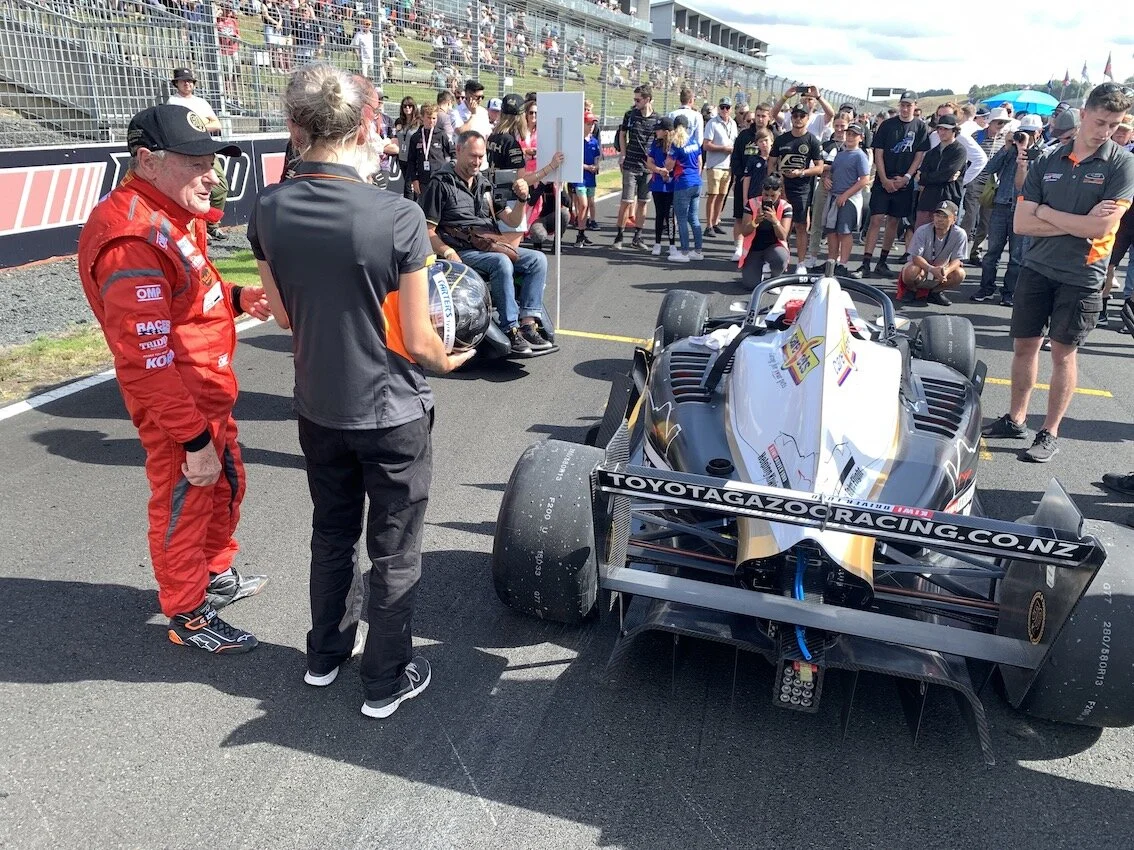
We’re motorsport fans. The New Zealand Grand Prix had moved up from our favourite locale, Manfeild Circuit Chris Amon, up to the Hampton Downs track in south Waikato. It would be Ken Smith’s 50th turn-out. Toyota New Zealand and circuit owner Tony Quinn had mustered a who’s who of famous Kiwi ‘name’ drivers to join the veteran great on the grid.
Irresistible, right? Particularly since I was down to test what logically seemed to be the perfect vehicle for such a roadie.
Before getting into that … basically, there were four starters to do this: Myself and Mrs B, and two mates.
We were at the point of sorting accommodation when things got wobbly.
Josh, so straight-out enthusiastic, had cold feet. Convincing his partner hadn’t gone well. “She’s threatening me with a visit to A and E.” One man down, just like that.
Big Jerry was still 100 percent in. But with a caveat. His much-loved but all-too-under-utilised motorbike needed a run, sooooo … a twist. He’d ride the Triumph to Hamilton, where we’d found digs, then ride in our vehicle to and from track on race day. Which he did.
This meant, all the same, that for 80 percent of its utilisation, ‘VIP1’ – our preferred reference for what Volkswagen calls a Multivan 6.1 Cruise – was tragically under-utilised.
Just Team Bosselman aboard and upfront meant the ‘lounge’ behind was, for much of our escapade, as empty as a Queenstown tourist hotel.
We only managed to fill the ‘back room’ to something like capacity for a Saturday trip to a restaurant, Jerry and two old friends from Cambridge making a party of five for a 20-minute run each way.
That was the only occasion when the mid-row bucket seats were experienced on the move in their rear-facing position. Ken preferred to face forward, Julie taking the plunge and finding it “weird but comfortable.”
In fact, comfort was the common feedback factor from all, as well it should be.
In this market, vans are associated much more with moving pallets and parcels than people. In Europe, VW’s mainstay model goes … well, both ways. In addition to formatting for cargo, this mobile box also fits out for human cargo.
The end result is hugely impressive. As much as a Multivan obviously draws from the Transporter commercial vehicle, look inside and it’s another, wholly VW-designed, impressively plush world:.
kids with their electronic devices … Jerry enjoyed the VW’s comfort, at least for the leg between Hamilton and Hampton Downs.
Ours was a standard wheelbase front-drive edition configured for day-tripping, so although it could convert into a mobile bedroom – assuming you don’t mind laying on the floor - , it’s really more a mobile dayroom, with two chairs up front purely for travelling plus three more in the back, provisioning as another pair of chairs that can swivel backwards to face big bench set up for three occupants. Everything, including a clever cubby that converts into a table, affixed to a tracking system in the floor. This allows all elements to slide, tilt, rotate and be removed completely, allowing the Multivan to transform from people mover into a full-blown van.
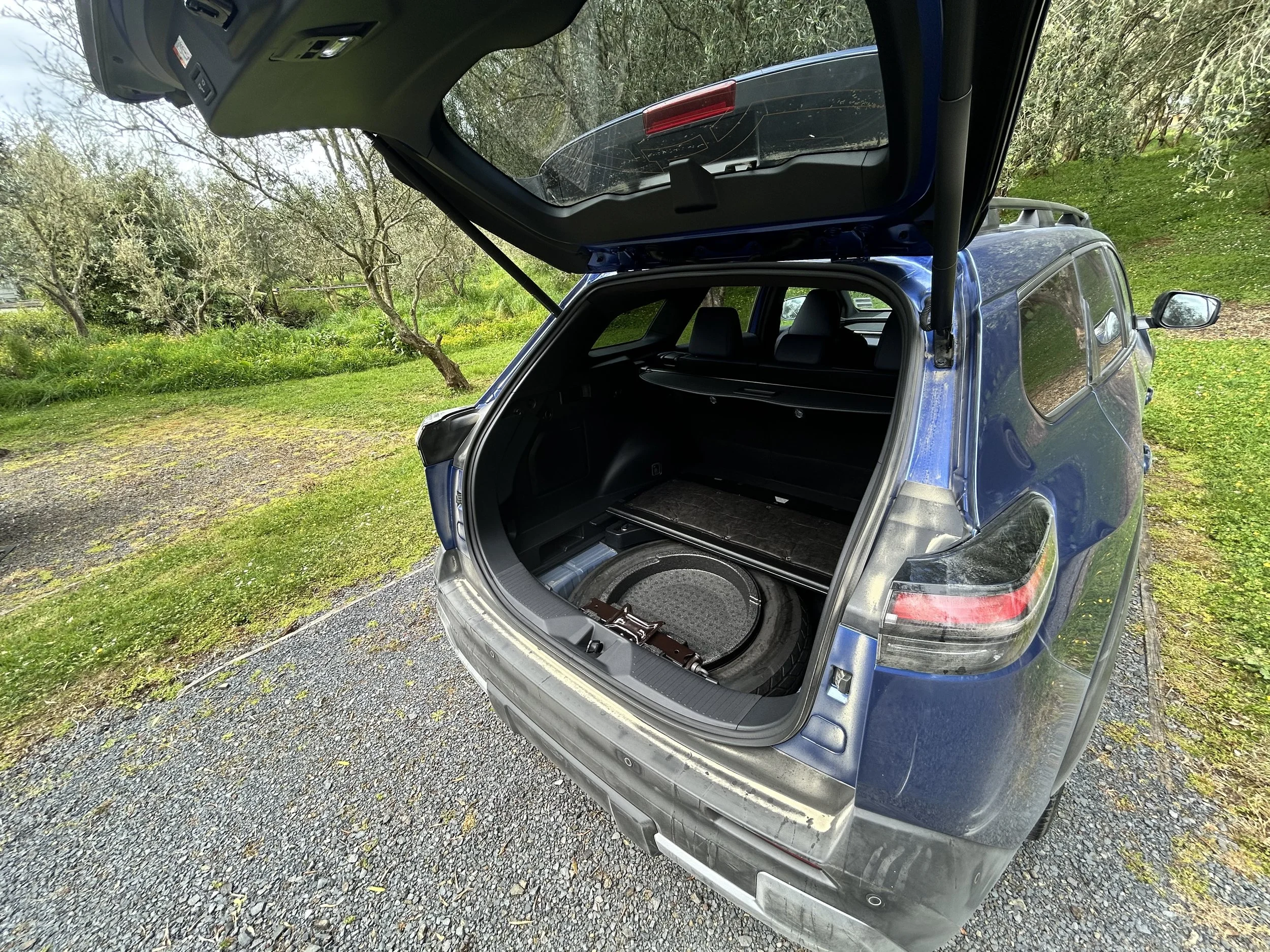
It’s not a complete Tardis, in that the packaging ultimately only allows a fully expansive rear guest room at expense of luggage room. Yet it’s not impossible to cart luggage and bodies. You just have to get creative. Sure, when the back seat is ALL the way back, the floor space reduces considerably: Basically, think Suzuki Swift. But you still gets loads of vertical room and, with a bit of thought about it could all stack without toppling, I got four bags - one each for us, two for Jerry (a bloke who apparently packs for EVERY possible occasion) – slotted in. Heading back two days later, I recognised that all that stuff could just as eaaily stow behind those reverse-faced chairs. If you were a family heading off, you’d use the roof rails and maybe fit a pod. Or big a bigger version. VW does those.
For me, though, what I got was just right and very pleasing; which kind surprised, because I’m anything but a ‘van man’. Yet, this one is so well considered I was pretty much won over; as vehicle configurations go, it gives a pretty solid reason to think outside the box. Even though that’s what it is.
The Cruise trim we experienced is a step up from the alternate Comfortline for equipment level. You’ll find some snazzy appointments within a space accessing by electric-opening (by touch or remote) sliding side doors and the thoughtfulness of the design is compelling, while for quality of materials, fit and finish it was well ahead of the far-from-inexpensive motel room we took for two nights. Maybe I should have thought about sleeping in the van. The motel’s bed was terrible, too.
Ken Smith accomplished his 50th New Zealand GRand Prix outing … an astounding achievement. WEll done that man!
The attention to technology detail really impresses. One of the big changes for this year is adoption of a dashboard straight from the latest VW cars, so you get a neat touchscreen with all the latest gadgets and Apple CarPlay/Android Auto inclusion. You know a brand is right up to speed when the personal electronics inputs are high-flow US-C types (don’t worry, US-B users, VW provisions an adapter). And in case you were wondering – there’s no chance of mid-flight escape from those side doors as there’s a child lock activated electrically from the dashboard.
The internal versatility isn’t entirely complete; there was sad faces within Team B on realisation that it lacks the three-point plug input required to run our Nespresso Pixi coffee machine. No fridge, either. But you could get around both (and we did) to enable the roadside ‘scenic spot’ coffee stop between Waiouru and Turangi, shifting to the back so as to enjoy the seating and table (which is also so perfect as a work station you could imagine it opening up as easily as a mobile office as a use beyond weekend jaunts).
As a refresh of the T6 (which debuted in 2016), which in turn carried over the same platform that traces back to the T5 in 2003 (that, in turn, looks all the way back to the Type 2, colloquially known by every Kiwi as the Kombi), the 2021 line achieves styling revisions that tie it more neatly with VW’s latest cars without any awkwardness. So, apart from the interior reshape, it also has a grille design replicating that of other Volkswagen models from the crossover and sports utility family. This one also had a chrome pack, darkness-piercing LED headlights and continued a Kombi-born tradition, of a two two-tone, ‘white on the bottom trendy colour of your choice’ paint scheme. Spearmint green seemingly being a bit too wild for some.
Two litre turbodiesel isn’t overly power-packed, but it has heaps of torque and aces on refinement. It doesn’t drink much, either.
That 10.25-inch 'Digital Cockpit' instrument display and a huge touch-operated infotainment screen, on which users can adjust the layout to show driving data, full-screen mapping information from the navigation system or alternately use it as an Apple CarPlay portal, is brilliant, though integration didn’t operate seamlessly. I’m wondering if my iPhone is also to blame; you always hear about designed obsolescence and, after two and a bit years, the Bluetooth seems a bit dodgy. However, VW’s set-up also seems to demand decent WiFi link-up and that’s not a given in the central North Island. Driving up from the Manawatu and via Taupo then Tokoroa and to Cambridge provided a seamless podcast-listening, call-taking and making and map-using operability. Whereas coming back via the western side of Lake Taupo took us into a black spot that put the integration into quite a tizz. Even after radio reception returned, the phone integration never properly enabled for the rest of that day.
Never mind, the driving in itself was entertaining. For sure, the van-ness puts it in a wholly different category to a road car, but for those with SUV driving experience there’s a lot more similarity.
You sit more upright in a van, yes, and there’s a dashboard gear selector, but there’s plenty of adjustment for the seat and the steering wheel (rake and reach) and though you do rely even more on the sensors, mirrors and excellent rear vision camera to cover off all the blind spots, forward visibility is mostly unobstructed. This, the imperious driving position and sense that it’s a vehicle that rewards those who respect its 2300kg mass and stance don’t make it much different than, say, a large Range Rover.
The model featured is powered by a 2.0-litre 110kW/340Nm turbodiesel. This churns through a seven-speed twin-clutch trans to spin the front wheels. There is a factory engine update package that boosts the grunt and other versions are all-wheel-drive. Maybe you’d look at that power upgrade if you were frequently going to be driving with most of the seats filled, and some luggage aboard, and AWD is good for all-weather, but neither seems an absolute imperative.
we were fortunate to go from one vip lounge to another. Thanks Toyota New Zealand.
For sure, there’s good reason why you won’t see a GTI badge on the back of one of these. This drivetrain is more about hauling big kilos then high kmh count sprinting; it’s a toiler. There’s some brief turbo lag from idle, easily overcome by giving the throttle a decent stab initially then easing off when the torque arrives; that doesn’t take long. At same token, it’s far from being a road slug like a full-out campervan; when opportunity came to overtake, it delivered well.
Low-end muscularity is what this engine is all about; you get a big wave of twisting force served up from just 1500rpm to 3000rpm. It’ll rev harder but, for the most part, you find no need to make it do that. That’s the sweet spot pretty much all the time. Even within that band, it’s hardly being stressed. Giving the throttle a small nudge on the throttle was quite enough to keep it settled on 100kmh on some serious ascents.
Having the seven-speed automatic helps, and it acts swiftly and smoothly to move up through the gears and exploit the engine's torque.
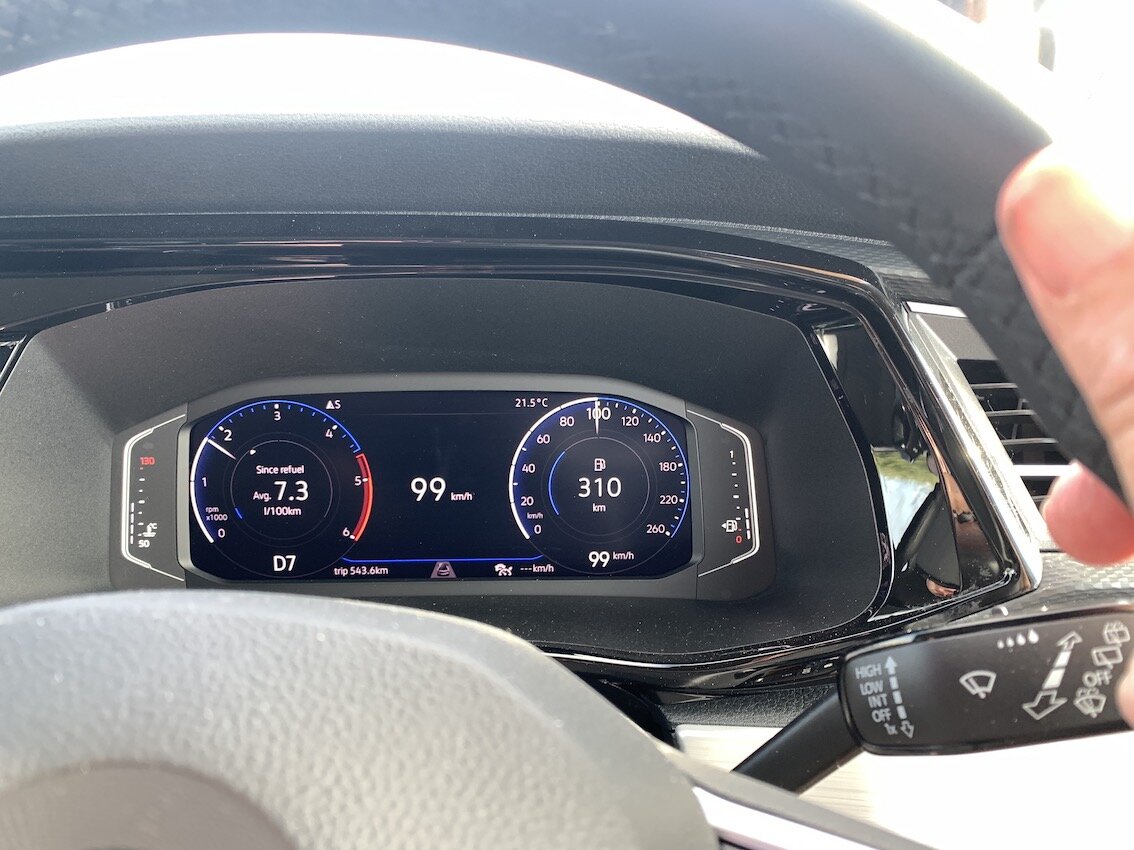
The benefits of how it presents as driven seem two-fold. First, it’s surprisingly refined. The only diesel clatter comes at start-up; from there on it’s a low-toned background noise. Second, when tooling around in a tall gear at a steady clip trip, it becomes impressively thrifty. I was stunned that the trip computer’s long term average at journey’s end was reading 7.2 litres per 100km. That’s just 0.6L/km off the claimed optimal and better by 0.2L/100km than I saw from our Skoda Karoq TDi after our last big run.
This frugality meant the VW only needed a single refuel, which was more of a top-up since most of what I put in before leaving Hamilton still seemed to be in the tank 400kms down the line.
The refuelling exercise highlighted one quirk; the filler location is on the left side, right by the passenger door, which needs to be opened first so that the fuel hatch can be opened. Obviously, something that makes more sense when a driver is located on that side.
One salient change with this model is VW’s move to electro-mechanical power steering. You might not notice the change in respect to how it feels. That’s not the point. The more important reason for its implementation is that it enables better driver assistance systems to be added: Lane-keep assist, lane departure warning and park assist are now available. There’s also autonomous emergency braking (up to 30kmh), blind-spot monitoring and rear cross-traffic alert.
Another element that will surely be appreciated is a cross wind assist that automatically activates at speeds above 80kmh. Should the van be hit by a sudden gust – or buffeted by a truck’s slipstream - the ESC will activate one or more of the brakes to help steer against it. If the vehicle begins to drift out of its marked lane at or above 60kmh, the system will counter-steer to correct its course.
Some will argue that, with its commercial-grade bones, the Multivan doesn’t offer the same kind of ride sophistication that more dedicated passenger vehicle platforms offer. I take that point.
if seat count is more important than ability to seriously off-road, then the Multivan smashes it.
On the other hand, there’s a practicality and value side here that also demands consideration, though it might not be readily apparent.
Thought about this rose in the aftermath of this test, when colleagues on a national publication offered thought about what kind of seven-seater SUV would be best suit a workmate whose family had recently grown.
Here’s the thing: The candidate seemed to be a city person who lived, worked and played in a city environment. So there was no absolutely valid reason for it to be any kind of SUV.
As it turned out, only one of his associates recognised this, in nominating the Mercedes GLB (car-based, tightly dimensioned, a good choice if perhaps a bit tight). The others, depressingly, all pitched XXL-sized $100k-plus off-road models as ‘best picks.’
For sake of failure to use a better descriptive - ‘vehicle’ would have done nicely - the Multivan at half the price as some of their choices delivering twice the efficiency and double the practicality was ignored.
What’s the hardest challenge to overcome for passenger-sorted vans? Quite obviously, it’s gotta be another ‘v’ word. Vanity.
Price: $141,900
Powertrain and economy: 4.0-litre turbodiesel V8, 310kW/900Nm, 8-speed automatic, AWD, combined economy 9.9L/100km, CO2 258g/km.
Vital statistics: 4878mm long, 1984mm wide, 1702mm high, 2984mm wheelbase, luggage capacity 810 litres, 21-inch alloy wheels.
We like: Effortlessly muscular, a smart alternate to more prestigious VW Group models.
We don't like: Emissions count, no third row seating, awkwardly-site front cupholders.
AROUND $60 billion to spend on increasing the count and production of electric cars and batteries … within the next four years.
You could say Volkswagen Group is spending as if there’s no tomorrow … and, in a way, that’s exactly why they’re doing it. That the ‘tomorrows’ for orthodox fossil fuelled vehicles are running out is recognised as being a cold, hard fact.
VW isn’t hanging around for the end of that world as we know it before concocting a Plan B. It’s blasting off to Planet Electric now. There’ll be 70 all-electric VW Group models by 2030, of which 20 are already signed off, and around 60 hybrid models by then as well, of which just over half are already being built.
The volume ambitions are massive: 26 million fully electric models built this decade; 19 million based on the MEB (basically, mainstream electric) platform that underpins the NZ-bound Skoda Enyaq, Audi Q4, VW ID.4 crossovers, the remainder utilising a high-performance PPE (for ‘premium platform electric’) underpinning, which has yet to be used. That one is designed for vehicles of medium size or larger and is suited to both low- and high-riding applications.
Their rush has been fuelled by Dieselgate. VW’s unfortunate incident has utterly reshaped Europe’s biggest car maker and hastened the death of diesel.
Or so the headlines might have you believe. In fact, as much as VW is keen to move on from a period of significant unpleasantness – and despite the fuel type falling fast out of favour in key markets close to VW’s homeland - it has yet to quit a dirty habit.
Look at the make’s pitches into the markets two core sectors, utes and large sports utilities, and you’d have to conclude diesel is far from dead. Quite the contrary.
Still, that’s going to change. A platform-sharing project with Ford in which the Blue Oval takes the lead role means the next generation of VW’s Amarok, coming in 2022, is set to be a ‘Ranger-rok’. The drivetrains remain a mystery, but Ford has said it wants to electrify its commercials. Hence why NZ will get a fully battery-enabled Transit as an option to the PHEV edition now incoming. Same for the traydeck?
Later this year, the big Touareg five-seater sports utility wagon will also take the plug-in plunge, becoming not only the first in this family to do so but also set to be the first large mainstream sub-$150,000 European vehicle here in that format.
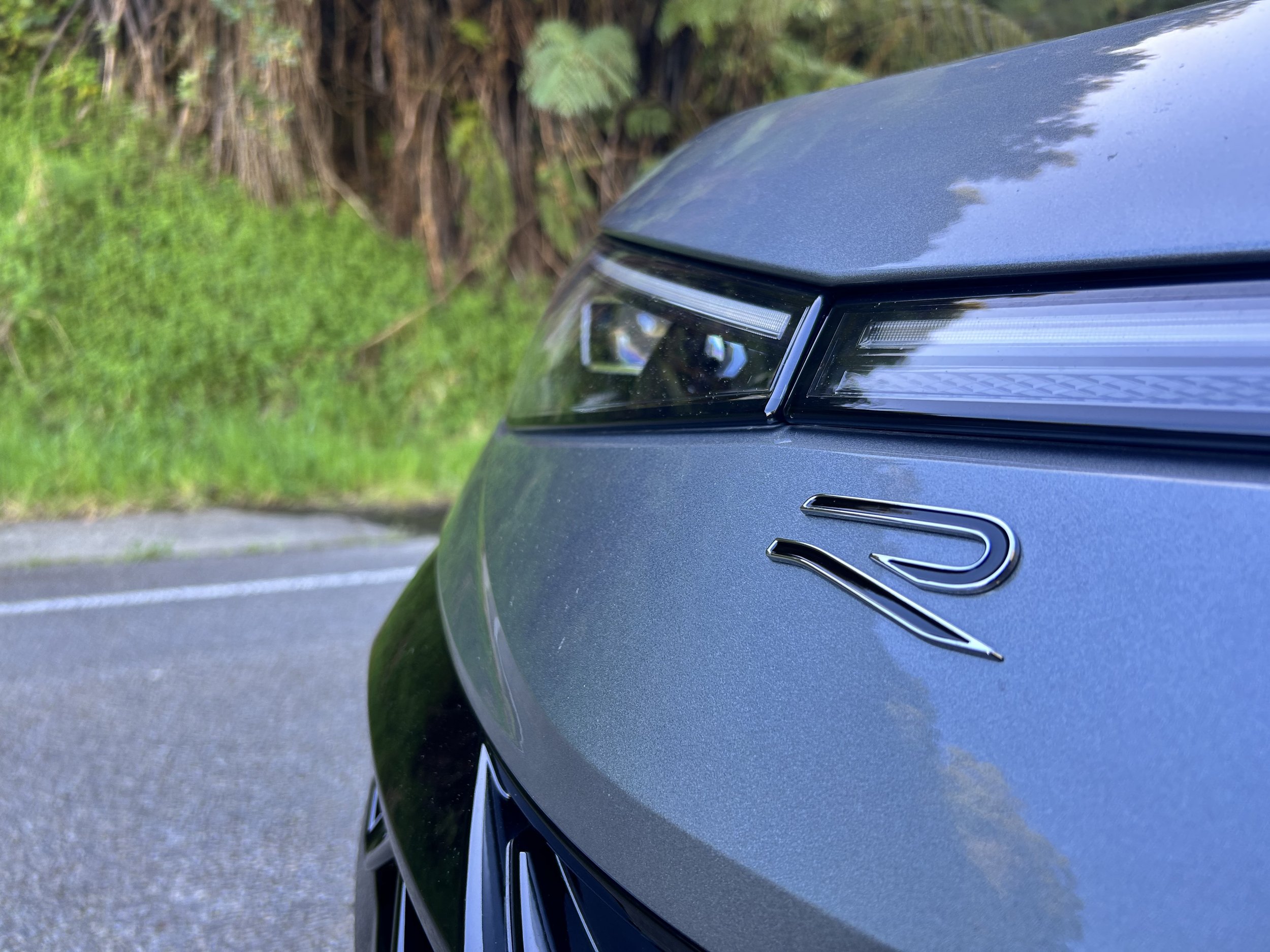
The e-Hybrid variant is going to be high-profile. It represents as a member of the make’s R performance sub-brand and delivers with the same 250kW turbocharged 2.9-litre petrol V6 mated to a 100kW electric motor, fed by a 14.1kWh battery mounted beneath the boot floor, that has represented in the Porsche Cayenne E-Hybrid.
It’s a smart drivetrain: Up to 50kms’ electric-only running, plus emissions and economy that, just a decade ago, would have only been possible from a small car. Yet it’s a miser with serious muscle. Hence that R accreditation. Although VW says their package prioritises comfort and refinement over outright punch, it’ll be … well, electrifying. Expect the 0-100kmh sprint to take around five seconds and an electronically limited top speed of 250kmh.
So the Touareg R is a model to look forward to, the next big step into a future we cannot ignore, one that quite potentially will lead to an all-electric conclusion in time.
Still, it would be surprising if Touareg fans immediately warm to it. Not because electric isn’t ‘right’ so much as because diesel has done their vehicle of choice no wrong.
Of all VW’s SUV models, the Touareg has consistently been the most dedicated to diesel powertrains with proven plus points of low fuel consumption and running costs for higher kilometres-per-litre economy, effortless grunt and long range between refills.
Having a new compression-champ in the line is unlikely to make transition away from the dark side any easier.
The new 4.0-litre V8 that became available from late last year is potentially going to be viewed as the most obvious alternate to the electric newcomer, given it holds the same flagship status and is very likely set to be closest on price.
If comparison is to be made, however, it’s likely there will more differences than similarities in how they operate and what they deliver.
They come closest in respect to power, and even then there’s no parity; the PHEV generating 30kW more than the big-bore diesel. When it comes to torque, the diesel wins easily, with a third as much again.
VW has yet to present economy and emissions figures for the PHEV, but it’s fair to assume the counts Porsche has discussed will be a fair indication. In which case … well, it cleans up against every diesel. Comprehensively. Which of course, is the whole point. Even though it meets latest Euro 6 requirements, and rarely puts out any black smoke even at start-up, a rated count of – cough, cough – 258 grams per 100km means that, even with the smog unseen, the V8 counts as a smutty thing.
Still, while a black mark, it’s hardly a killer blow in our market, not least when our Government has yet to initiate any particular emissions legislation. It’s not the cleanest new diesel, but at same token it’s far from being the dirtiest vehicle on our roads. You only need to follow any school bus or any light truck imported used from Japan to be reminded of that.
The prospect of the V8 being subbed out once the Touareg R hits the playing field has never been voiced by VW here and I doubt it’ll happen, for good reason that the latter has become an immediate hit since launch.
To say that this engine has imprinted on the buyer base is an understatement. It’s quite possibly the ultimate black hearted hero of the moment.
The test car, at time of driving, the last of the First Edition models that comprised the initial shipment; every one of those was snapped up. Basically, all examples on the next boat were signed up when still at sea and there’s a growing waiting list.
The appeal is pretty obvious. Putting environmental concerns to one side, the spec of this twin-turbo engine is drool-inducingly impressive.
For one, it’s the most powerful Touareg engine ever; gruntier even than the first generation model’s flawed but fondly-remembered V10, developed at the behest of Ferdinand Piech to simultaneously elevate the diesel engine and the VW brand.
It’s come to this model with an illustrious heritage, having done time in the rich-lister Audi SQ7 and SQ8 and the Bentley Bentayga – where it took an electric supercharger. The lack of that latter element in the VW formula is no particular problem as it still emphatically from a different planet than the Touareg’s V6 that, in most powerful form, makes 100kW less power and 300Nm less torque.
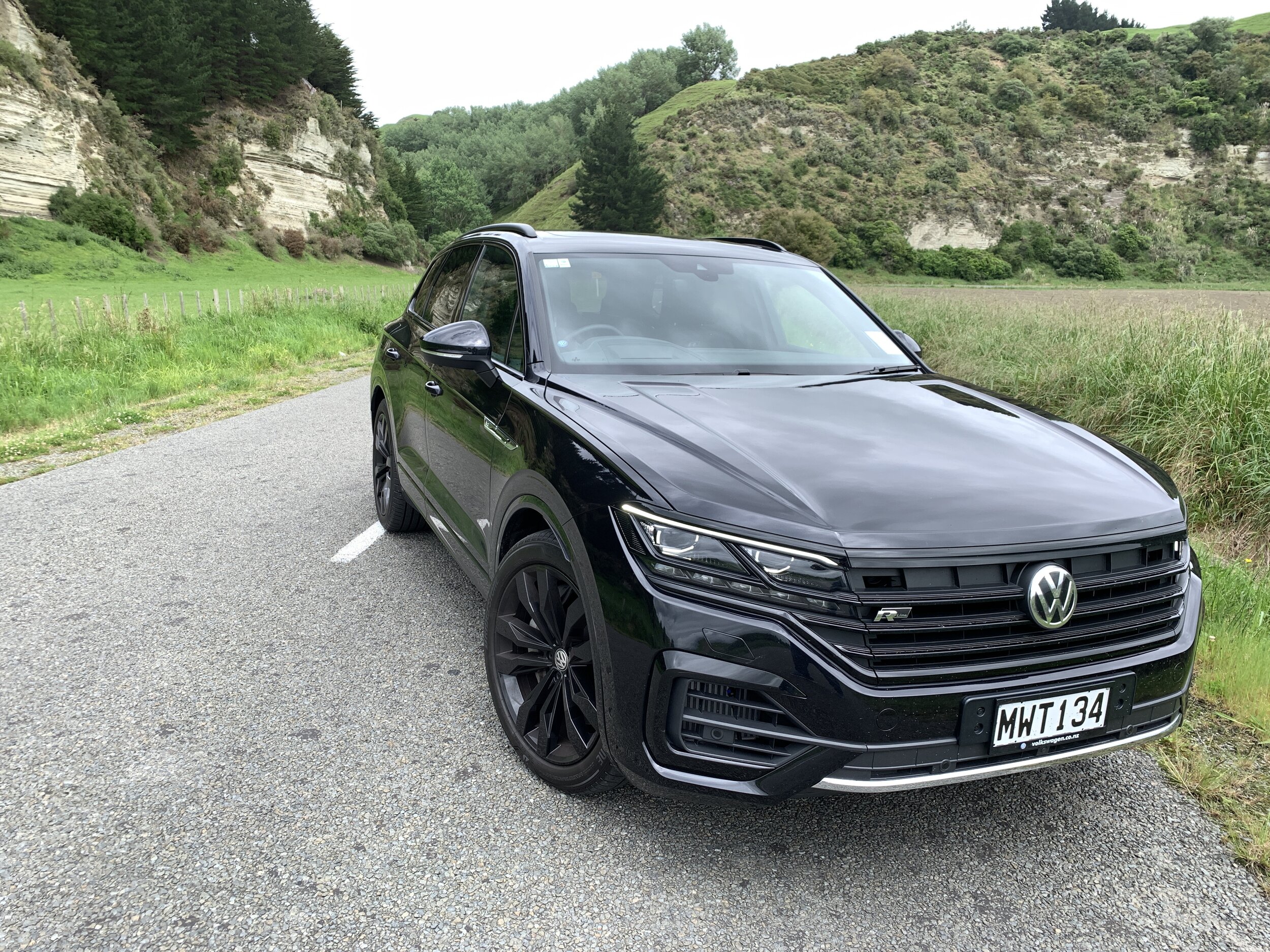
Those who bought into the First Edition did well. With a Black Pack trim – literally that, with every exterior element in that colour (and most of the interior, too) – it’s a smart-looking car and a smart buy, too. The premium it held over the regular version covered the cost of a 48-volt active roll stabilisation system that’s a $7500 cost-extra in the regular model. In addition to this, the First Edition also received a superb Dynaudio sound system. That’s also a pricey item, so effectively it came for free in this case.
The engine is the big pull. Quite literally. The appeal reveals easily; it’s smooth, refined and massively powerful; put your foot down and, no matter what pace you happen to be holding, it just surges forward with huge and growing momentum. In typical diesel style, the oomph emerges in considerable force at rev levels at which any performance petrol would still be in doze mode. Even at a steady 100kmh, the thing is typically showing around 1800rpm on the dial. There are quite a few numbers between there and the redline that possibly will never be visited much at all, if ever. Because there’s no need.
Ok, so it’d be stretching to say it's not wholly free from lag, in spite of the efforts of its clever dual turbo set-up. There is still a momentary hesitation, but once that breath is taken, though, the load of seamless stonk is truly impressive and bodes well for off-roading and towing. Anyone who buys one of these and doesn’t use it to haul something significant is wasting a tonne (well, two and bit tonnes) of talent.
What’s a bit unnerving, initially at least, is that there’s not a lot of noise when it goes into lout mode, at least until you activate the performance mode. That seems to introduce extra aural fireworks. But it’s not necessarily a true-life soundtrack. I suspect it has an acoustic enhancer that uses the stereo speakers. Leave it in the standard drive mode, though, and it is pretty quiet.
Economy suffers when you push the limits, of course, but it’s nothing like as thirsty as any petrol. Volkswagen claims an optimal 9.9 litres per 100km is possible, but I wasn’t at all unhappy seeing an average of ‘only’ 10.8L/100km from a week-long stint in which the vehicle was employed in a wide variety of driving duties, even a touch of off-roading. Nothing particularly strenuous, of course.
Putting almost 500km on the clock accounted for less half a tank consumed; nothing to do with a poorly calibrated gauge. This version runs a 90-litre fuel tank. According to the drive computer, it will deliver at least 1100km of range on a single tank. So you could cruise all day.
About that. Cruising is what is does best, yet don’t estimate the talent: On occasion it feels even more agile to drive than the Audi Q7, which is supposedly the sportier model.
That active roll stabilisation system definitely has positive imprint on body roll, the air suspension that either firms or soften the ride, depending on what you want, is also a good thing and having 4Motion permanent four-wheel drive is an obvious plus. True, it’s not outright thrilling, but it does come across as a easily-controlled car, but not an outright dextrous one.
Of course, that’s all written in context of its sheer size. In pure physical terms, this generation of Touareg large enough to be hulking, so it’s a big thing to put down a country road.
In that scenario, the steering also still feels a bit too light and distant for true entertainment; it needs room stop, too. The PHEV should be better, but so it should, given the pedigree it’ll bring. R-Line is all well and good, but nothing should surpass a real R.
Saying it’s happiest on big, wide, sweeping roads is perhaps not a criticism. The ride quality is more decent than you’ll find from the Audi equivalent, for instance. And being more laidback suits the overall personality. The combo of refinement, sledgehammer thump, quality, comfort and space mean that it's a decent choice for long journeys, and a deeply pleasant thing into which to climb every day. But it's not as agile, nor flickable, nor engaging as it might be. Call it composed.
The exterior styling - big, square of shoulder and jaw, and with that massive radiator grille and piercing lights – is lasting well, but it's the interior that’s the Touareg’s strongest aspect.
Quality levels in this model are exceptionally high, and even if if the overall design and layout might seem a bit stark and grey – because, well, that’s just the VW way - it's nonetheless a very pleasant place in which to spend time.
If you had to pick one outstanding aspect, it's that it is very welcoming to occupants. Front seat occupants haul themselves into big front armchairs. Those behind also enjoy decent comfort and lots of leg and headroom. There's no seven-seat Touareg as yet, nor any sign of one on the horizon. Is that because VW doesn't want to pinch sales from the seven-seat Q7? Anyway, it does have a massive boot.
All Touaregs bring a huge amount of equipment to the table and all have the 15-inch touchscreen in the middle of the dash backed up by the 12.3-inch 'Active Info' display behind the wheel, which is your all-singing, all-dancing instrument panel.
The two displays are linked, although you can't slide, drag and drop items between them, but you can use the central display to setup the information that the instruments show you. You can also use it to adjust the seats, the stereo, the navigation, the climate control - virtually everything in fact. There are hardly any physical buttons. Yes, the system is a touch fiddly and thought-intensive at times, but it’s more logical than many.
The comfort, the car’s height and solidity, plus performance that feels brisk and muscular enough for almost any circumstance … well, there’s a lot going for this particular variant.
All in all, it very much reinforces that while diesel is slowly leaving the scene, it isn’t set to depart without reinforcing why it still has many merits.
MotoringNZ reviews new cars and keeps readers up-to-date with the latest developments on the auto industry. All the major brands are represented. The site is owned and edited by New Zealand motoring journalist Richard Bosselman.
NEWS | FIRST DRIVE | TESTED | VIDEO | CONTACT | THE CREW | TERMS + CONDITIONS