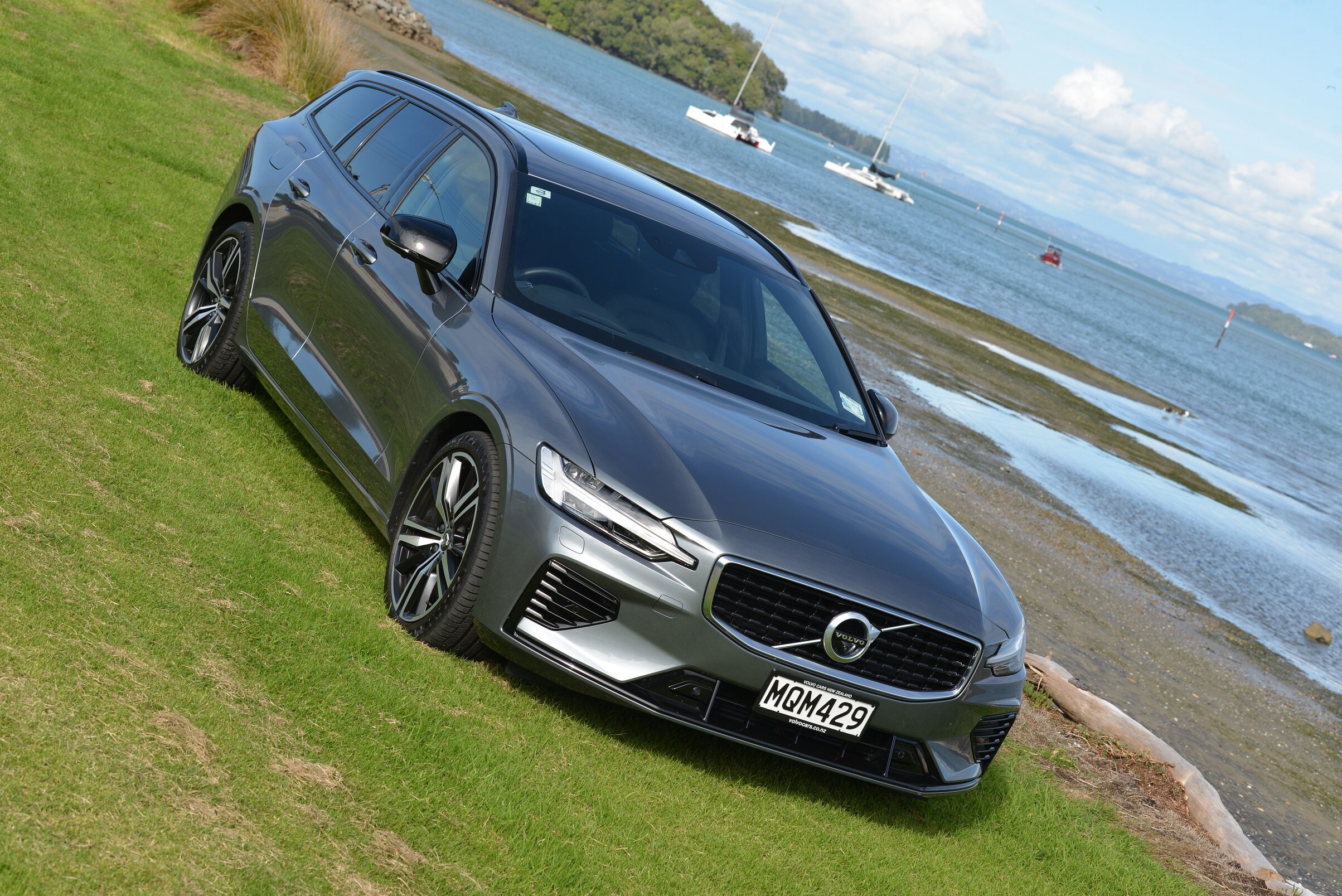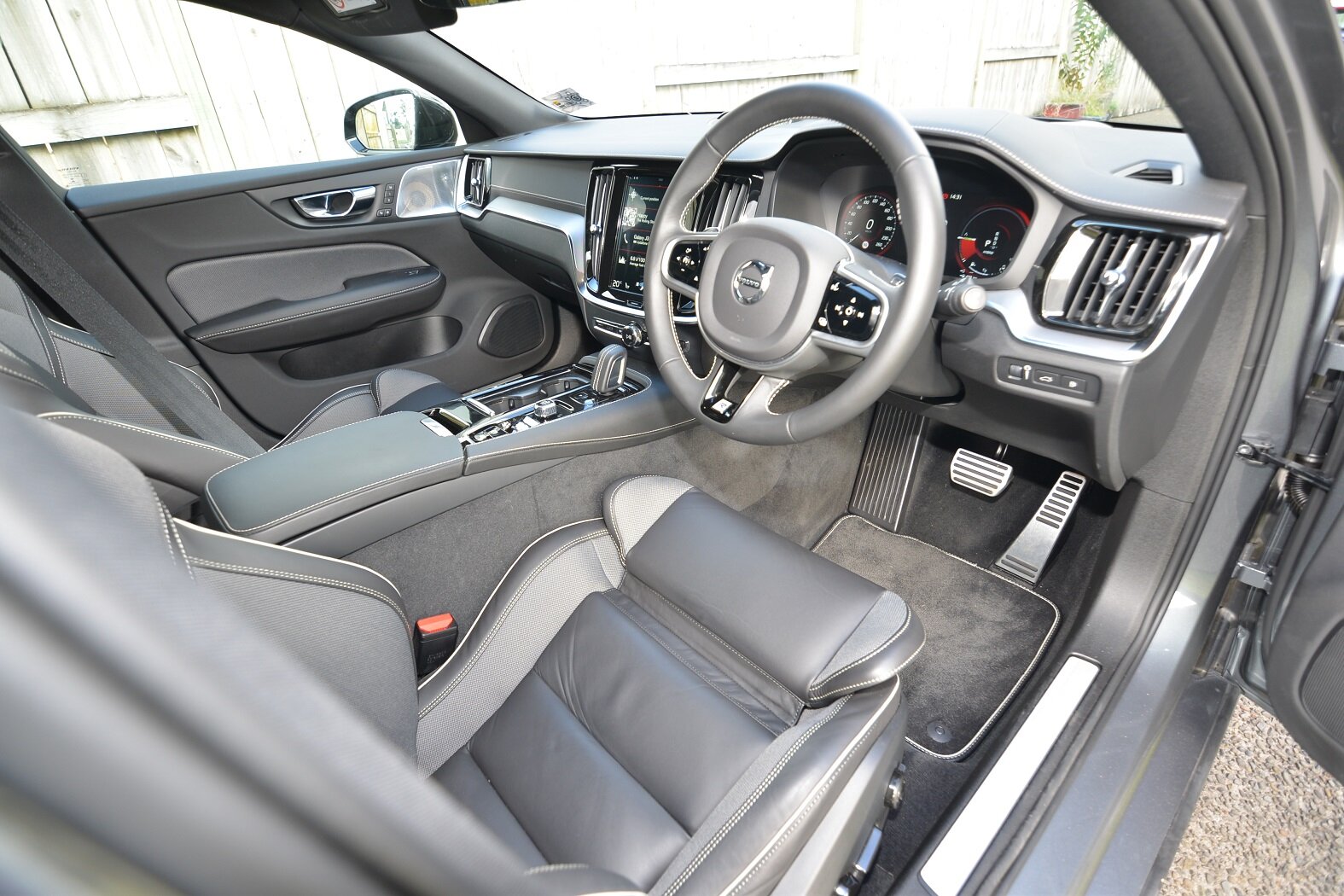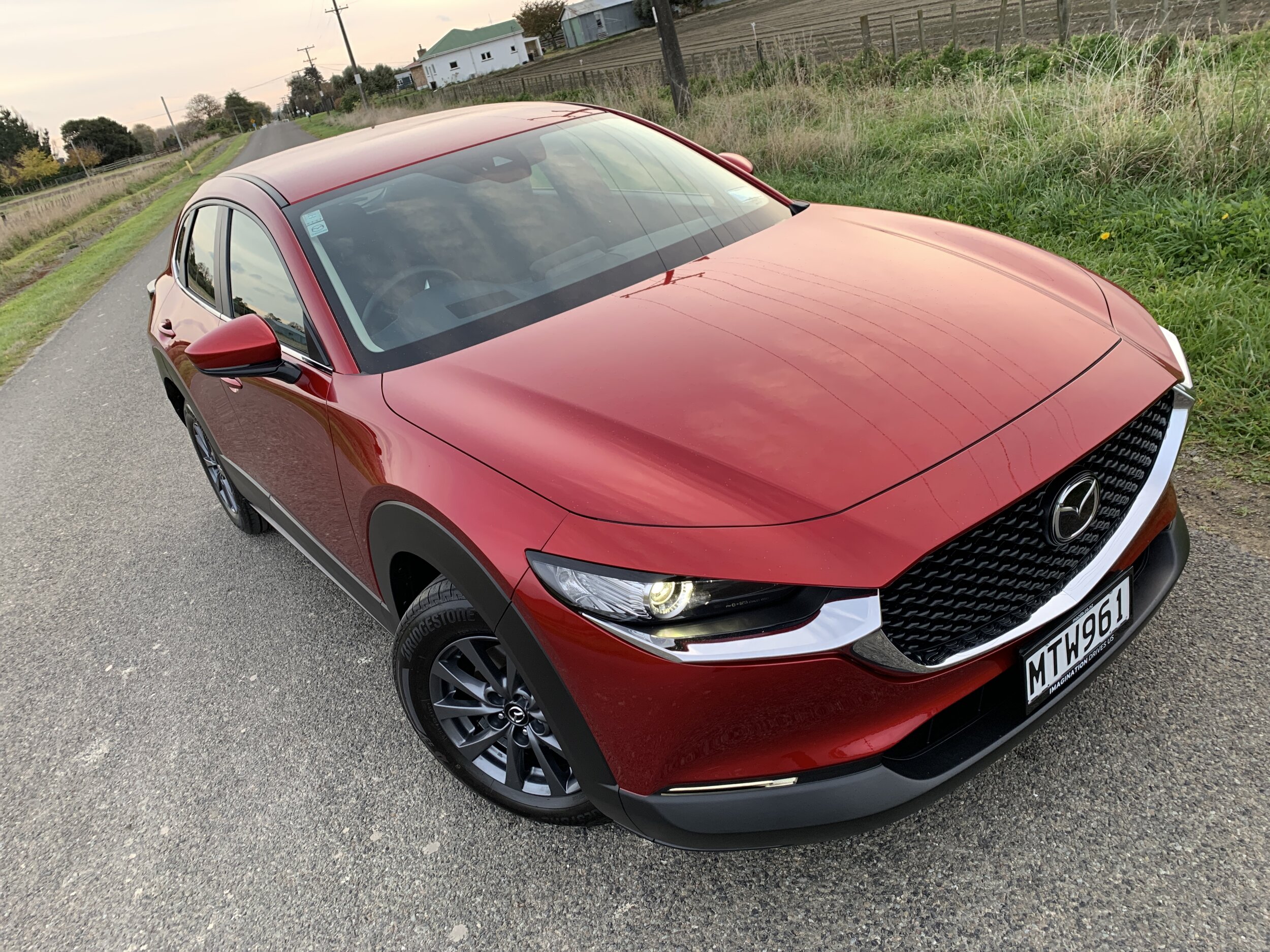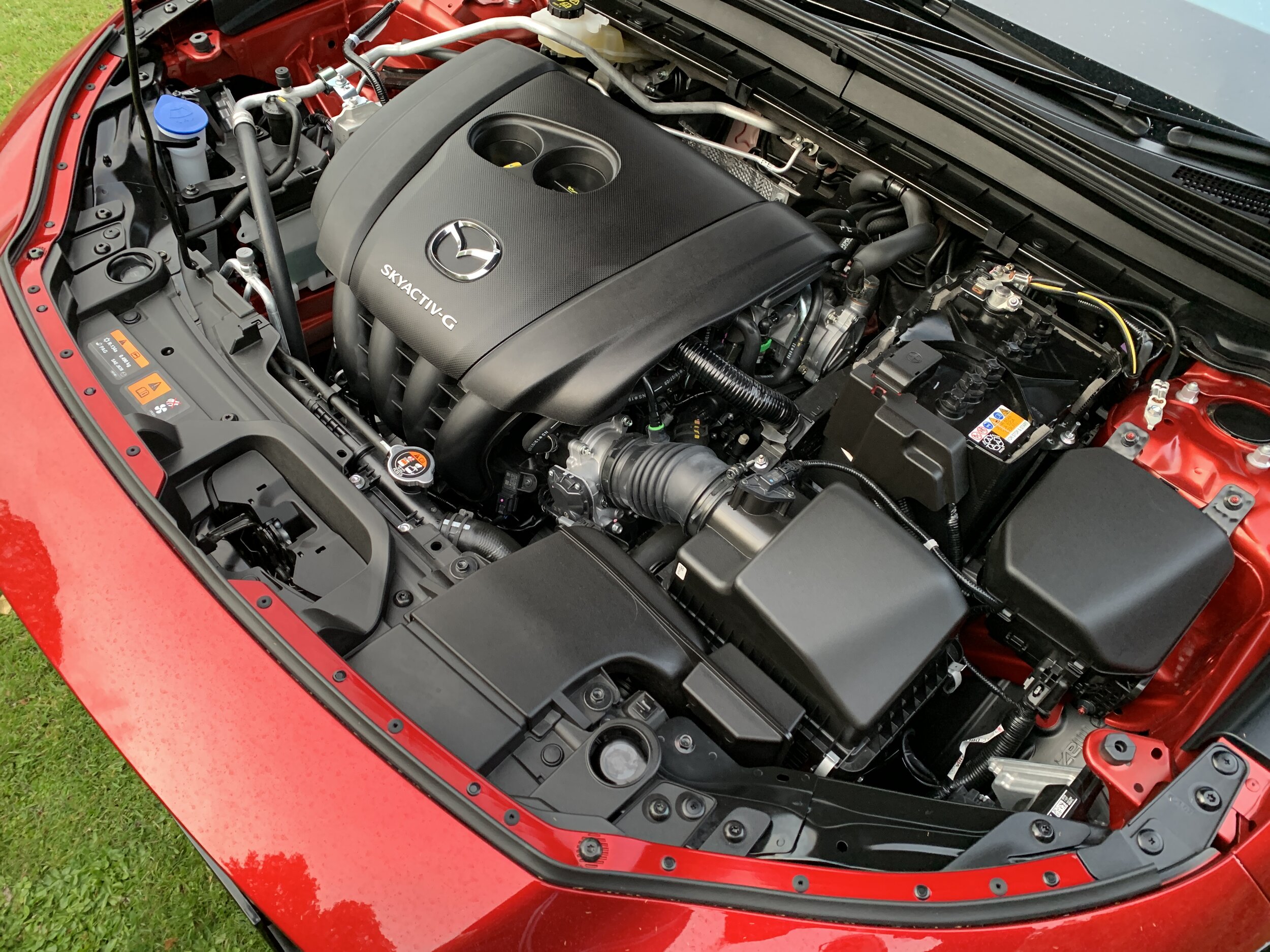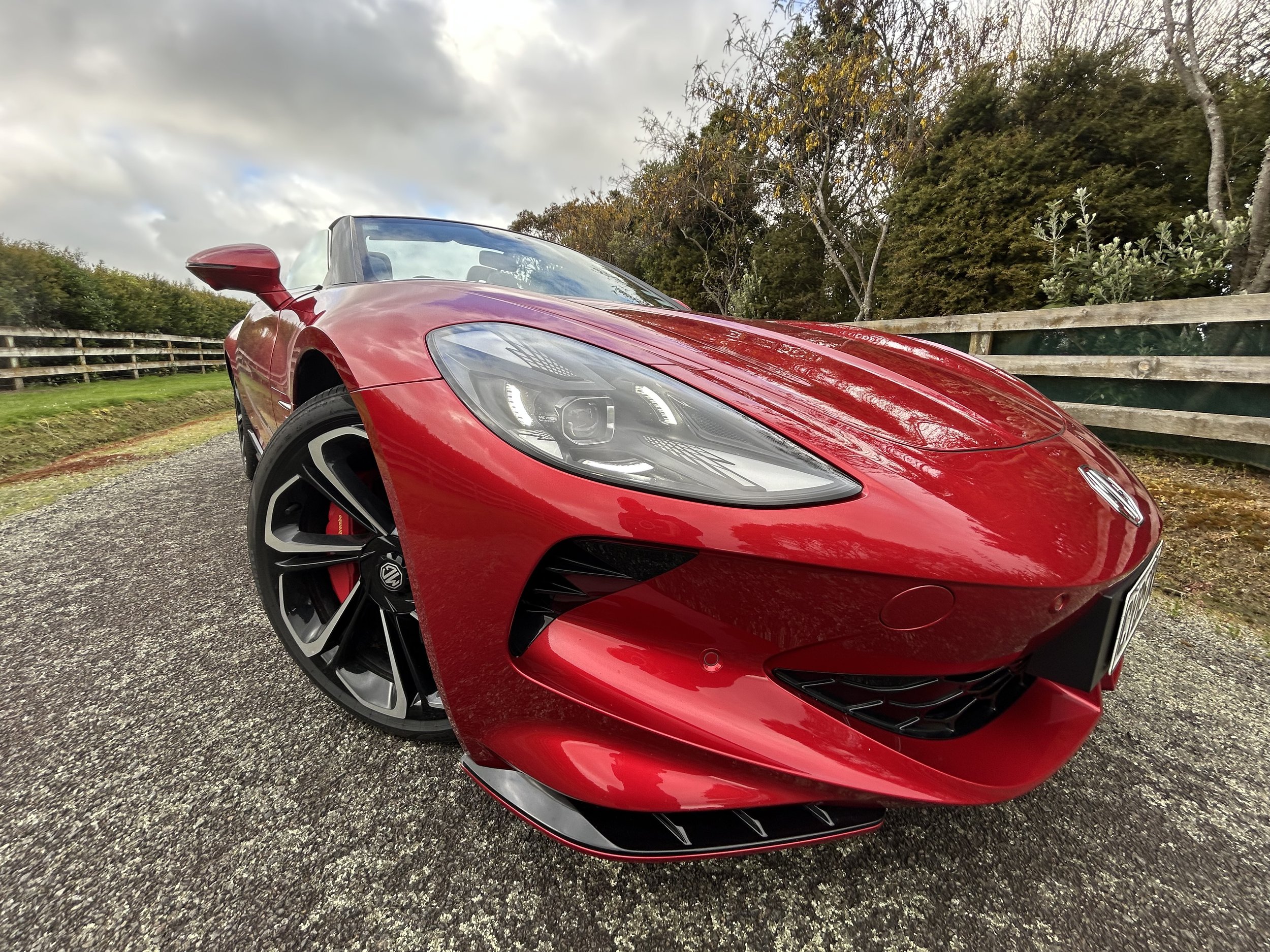
Subaru XV: In search of middle ground

Where is the centre of the North Island? We use the smallest Subaru SUV to reach that spot.

IMG_7677.JPG

Subaru XV Premium
Price:  $42,490.
Powertrain and performance:  2.0-litre four-cylinder horizontally opposed petrol engine; 115kW/6000rpm, 196Nm/4000rpm. All-wheel drive.
Vital statistics: Length 4465mm, height 1615mm with roof rails, width 1800mm, wheelbase 2665mm. Luggage 310 litres.
Wheels: 18-inch alloys with 225/5 R18 tyres.
We like: Balanced ride and handling, ground clearance, substantial feel, safety specification.
We don’t like: Body shape starting to date, so is the engine.

SORRY Wellington,  but we’re reminded of that old joke.

Question:  How many Wellingtonians does it take to change a lightbulb? Answer: Just one – they simply hold on to the bulb and the whole world revolves around them.

While Wellington often seems to regard itself as the centre of everything, in fact our capital city isn’t even the centre of New Zealand – well, geographically anyway.

That honour goes to Nelson, which has a monument on the top of Botanical Hill which proclaims the spot to  the geographic centre of our country. But that’s not entirely true either – the official spot is actually about 50km away in the middle of Golden Downs Forest.

Mind you, even Nelson’s claimed central location is better than that suggested a few years ago by scientists who said that if all of New Zealand’s continental shelf is included in the calculations, then the country’s geographic centre should be located 11km north-west of Greytown in Wairarapa.

It’s tempting to think that if said scientists regard the sea bed as part of New Zealand’s land mass, then maybe they should attempt to live there...

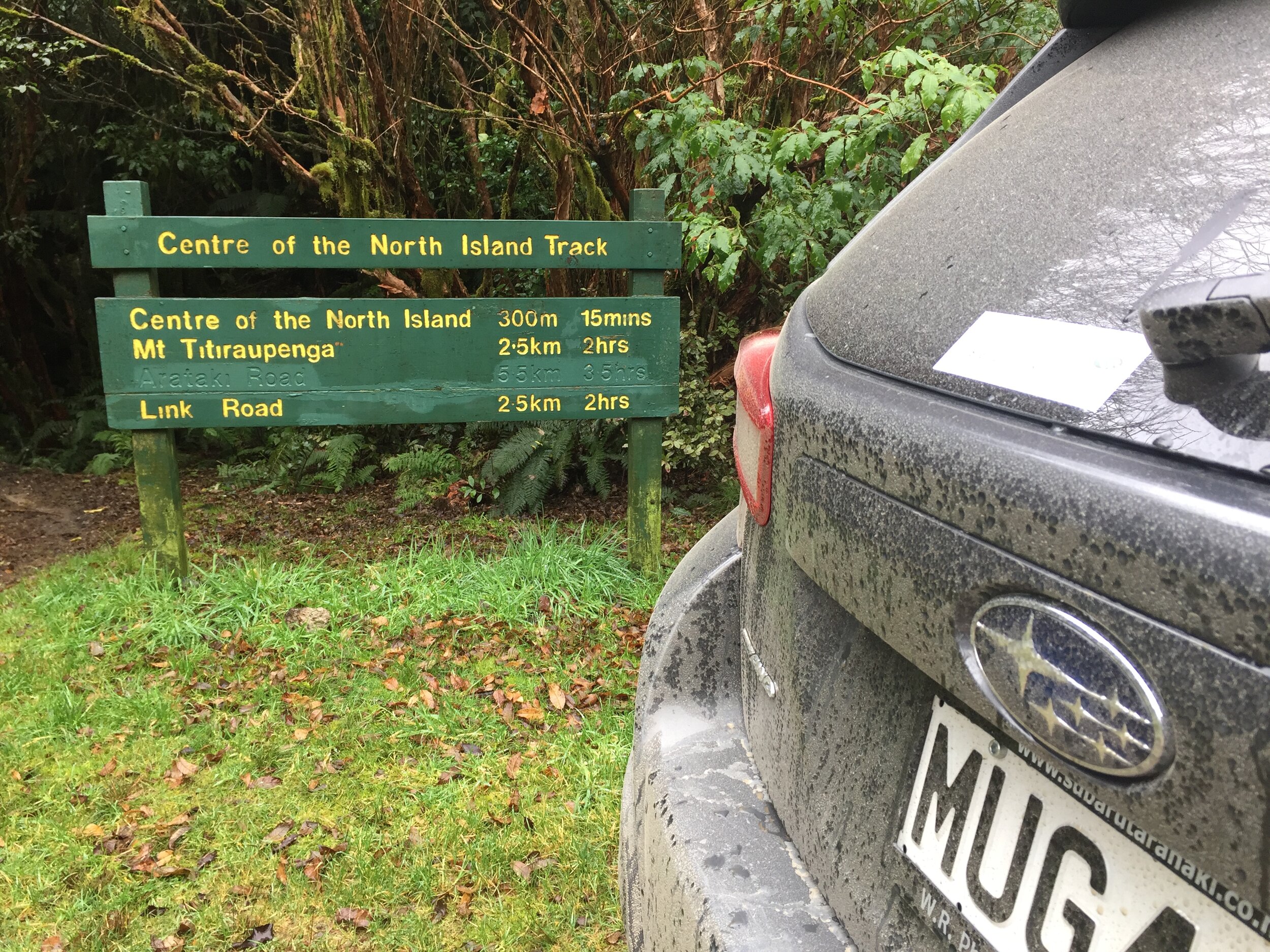
There’s always been some debate about the exact location of the centre of the North Island, too. Because of its Te-Ika-a-Maui shape, various claims have been made that the centre is at Waharoa north of Matamata, and at Horahora near Cambridge, and at the base of Mt Titiraupenga in the middle of Pureora Forest Park.
IMG_7663.JPG

Personally we’re in favour of the Pureora location, because we love the story about how it was located.

In 1961 a Taupo surveyor created a cardboard cut-out of the North Island, bent it slightly to take into account the curvature of the earth, then suspended it using a pin and thin nylon. When a perfect balance was obtained, the spot where the pin was stuck was deemed the geographic centre of the island. As good a way as any, huh?

During our research we discovered there’s a plinth deep in the Pureora Forest that marks that spot – so we decided we should find it. And we further decided that to find this perfectly central location we should use a vehicle brand that is all about balance.

So we chose Subaru. After all, all its models are all-wheel drive. They are all powered by boxer engines with low centres of gravity. As a result, all the brand’s vehicles are among the most balanced on the market.

Our research further told us that actually getting to the official centre of the North Island is a bit of a mission, especially in the middle of winter, because there are several kilometres of rough unsealed road to be negotiated. So we felt that removed Subaru’s lower-riding Impreza, WRX, Levorg and Legacy models out of the selection, leaving an SUV choice of XV, Forester or Outback.

We got our hands on an XV, which in essence is a jacked-up and SUV-ised version of the Impreza five-door hatch, complete with hard plastic bodyshell protection, bigger wheels and tyres, and perhaps most importantly a 220mm ride height.

Our XV was a good one, too. A top $42,490 Premium model that has just undergone a minor facelift that has seen a bit of cosmetic change, some minor powertrain adjustments, and improvements to the brand’s EyeSight driver assist technology.

IMG_7682.JPG

The XV is one of two Subaru models – the other is the Forester – that have recently also become available as an eBoxer mild hybrid.

But for our assignment our XV was the conventional version, powered by a 2.0-litre four cylinder boxer engine that offered 115 kW of power and 196Nm of torque.

So where to go? We were instructed to drive along SH30 between Te Kuiti and Whakamaru, turn off the highway at a dot of a place called Barryville to end up at a DOC facility at Pureora, then enter the forest park itself along an unsealed route called Link Rd.

This we duly did, and it wasn’t long before we were really appreciating the extra ground clearance as we picked our way along a route that got increasingly rough.  The, just as we were beginning to worry that somehow we’d missed our destination, we reached a turnoff signposted Centre of North Island Rd.

Then after a short drive down an even rougher piece of roading, we reached a carpark where we parked our XV and walked 300 metres through bush to the plinth.  It was located in a little clearing, sitting alongside DOC signage that indicates various walking and cycling tracks in the area.

Truth be told, it was all a little underwhelming. Maybe, we thought, considering just how the location had been found close to 60 years ago, the centre of the North Island could have been better marked not by a concrete plinth – but by a big sculpture representing a pin....

IMG_7688.JPG

So we turned around the drove home again, scrabbling our way along the rough and very wet Link Rd, before finally getting our by now very muddy XV Premium  back onto SH30.

The Subaru XV is an unassuming sort of small SUV. It does come in for criticism from some quarters for a lack of power, but we feel this is often because the critics don’t quite understand how boxer engines work.

Granted, our XV would no doubt offer improved performance if it were fitted with  the 2.5-litre engine from the slightly larger Forester SUV – which is going to happen in North America where the XV is called Crosstrek – but even with 2.0-litre power the vehicle has a strong feel about it.

In typical Subaru fashion, this vehicle enjoys being worked, both on the road and off it. Which is just as well, because the boxer engine does need to be worked.

Even thought the XV’s interior dimensions are the same as the Impreza hatch, it feels a lot more substantial. Maybe it’s the higher ride height and the fact that at the Premium level it is shod with 18-inch wheels and tyres, but this Subaru feels a lot bigger than it actually is.

And that potentially positions the XV as the most offroad-ready small SUVs currently on the market, to the extent we’d be happier taking one off the seal than we might do in such product as Mazda CX-3, Hyundai Kona, Kia Seltos and Hyundai Venue.

IMG_7667.JPG

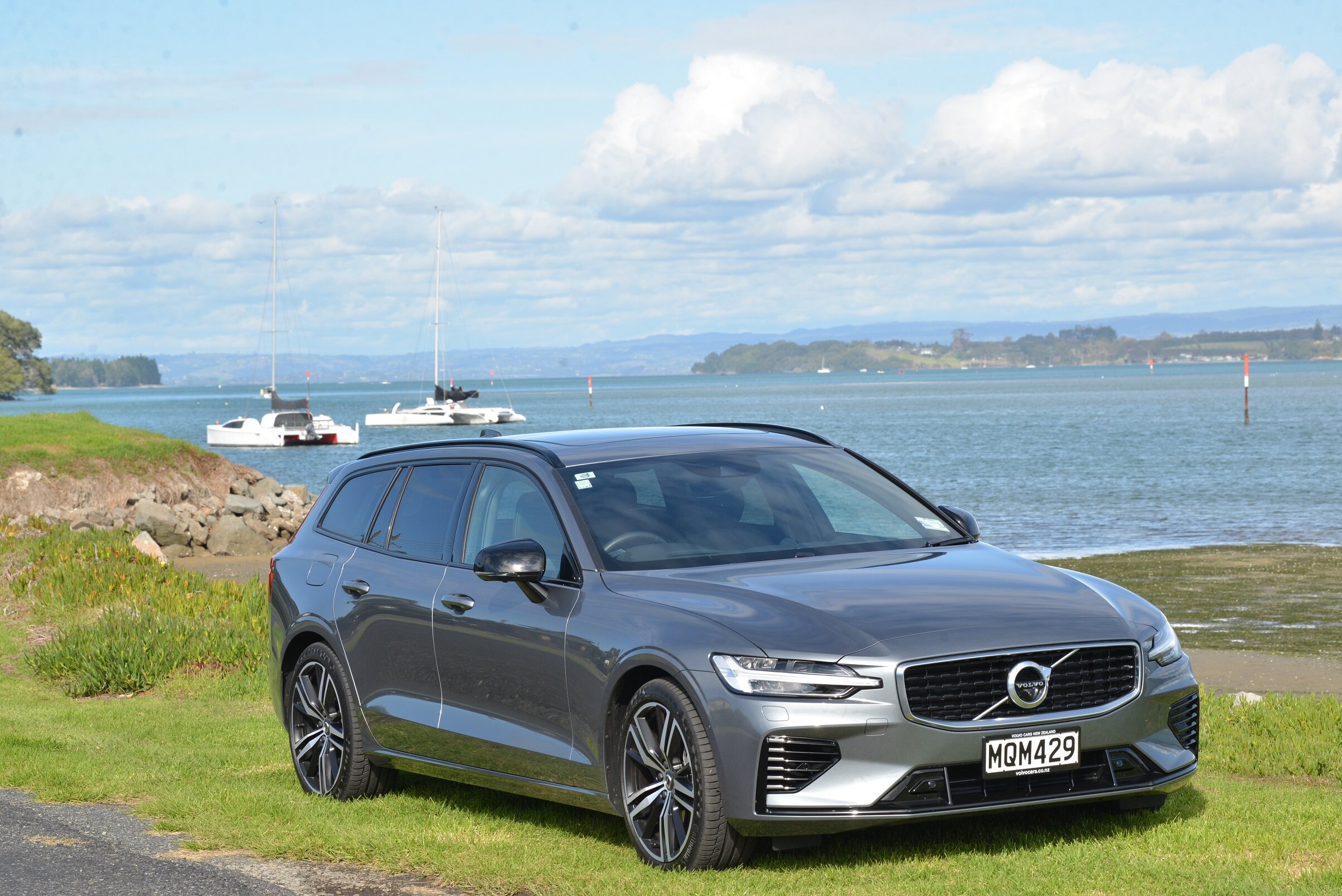
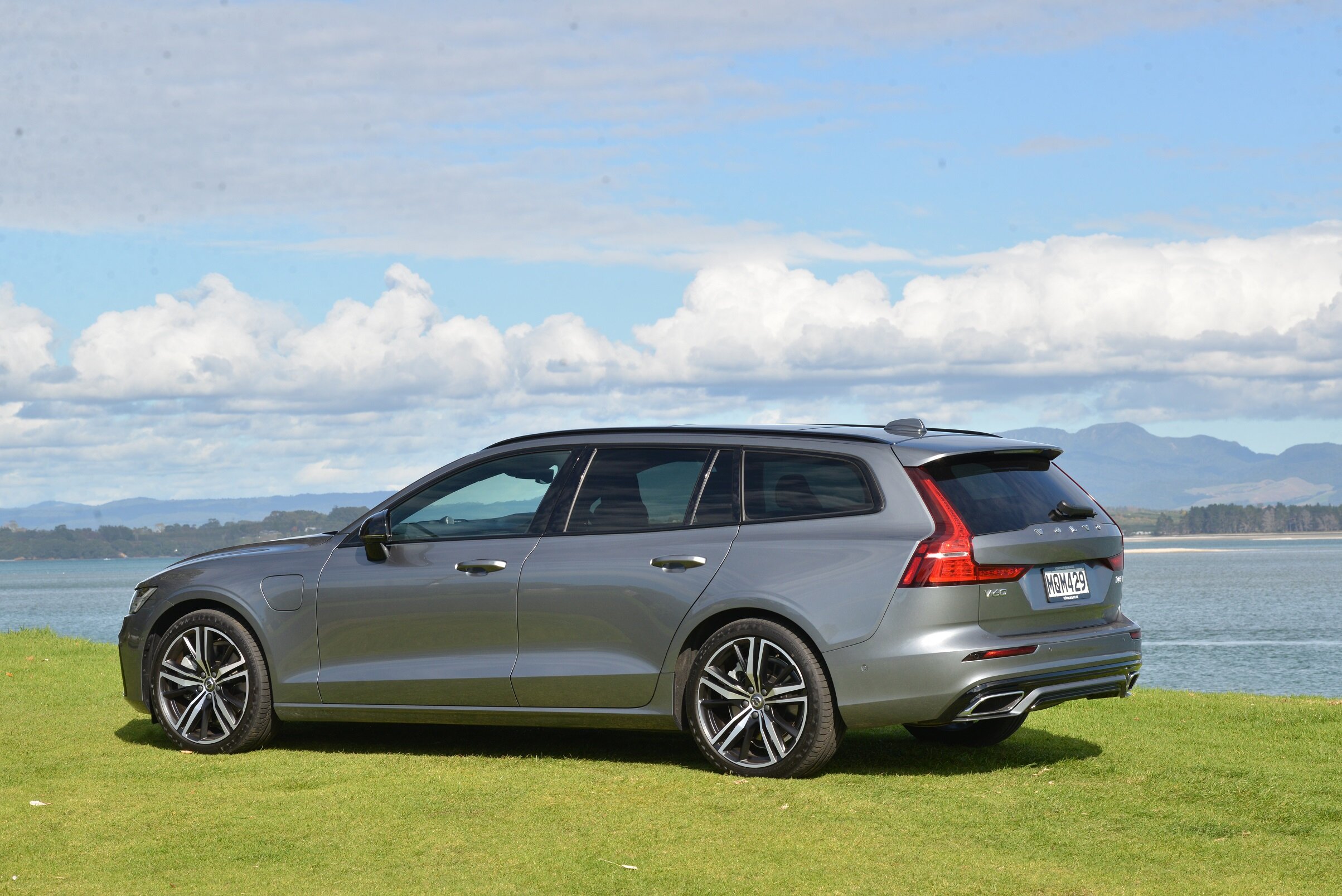
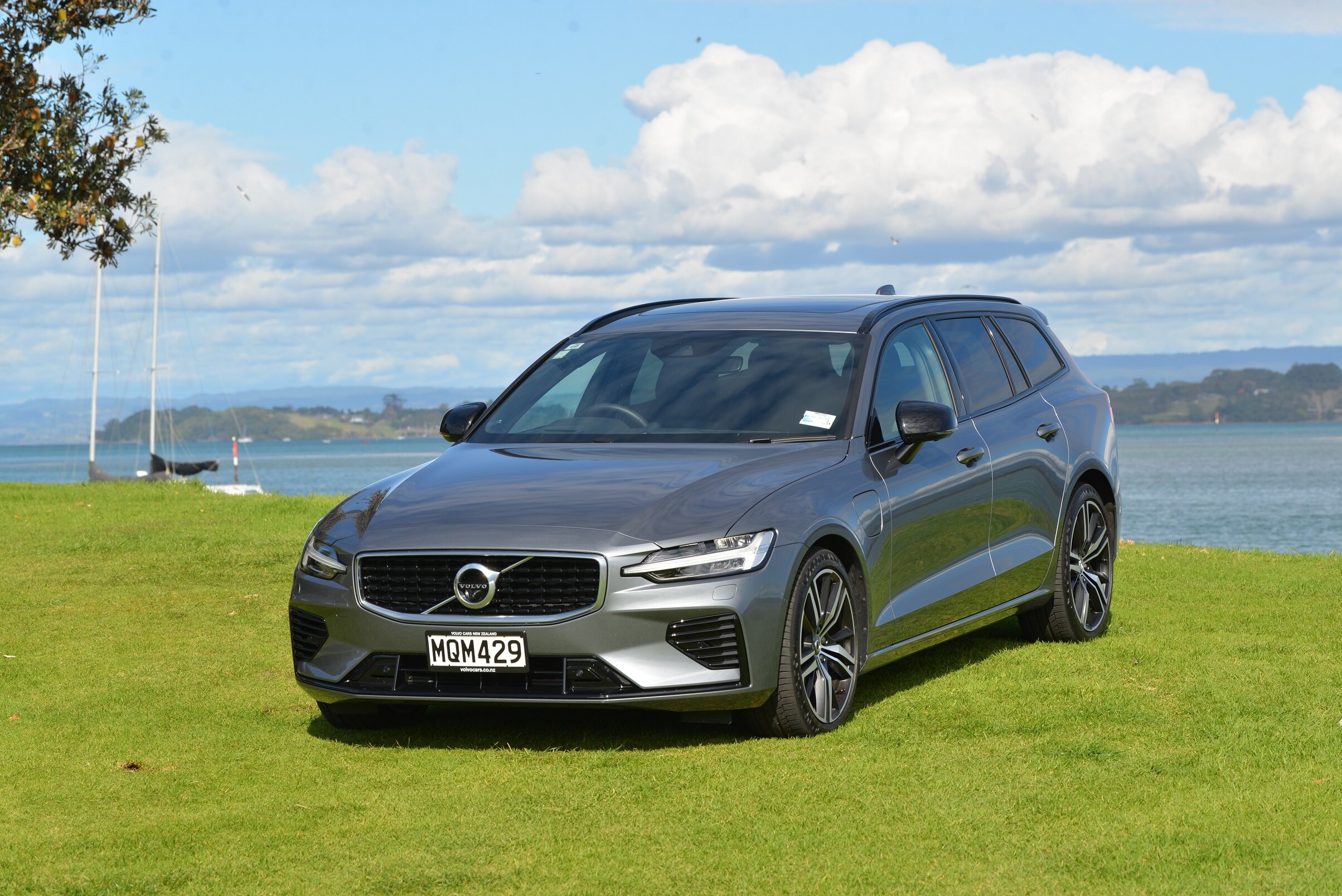
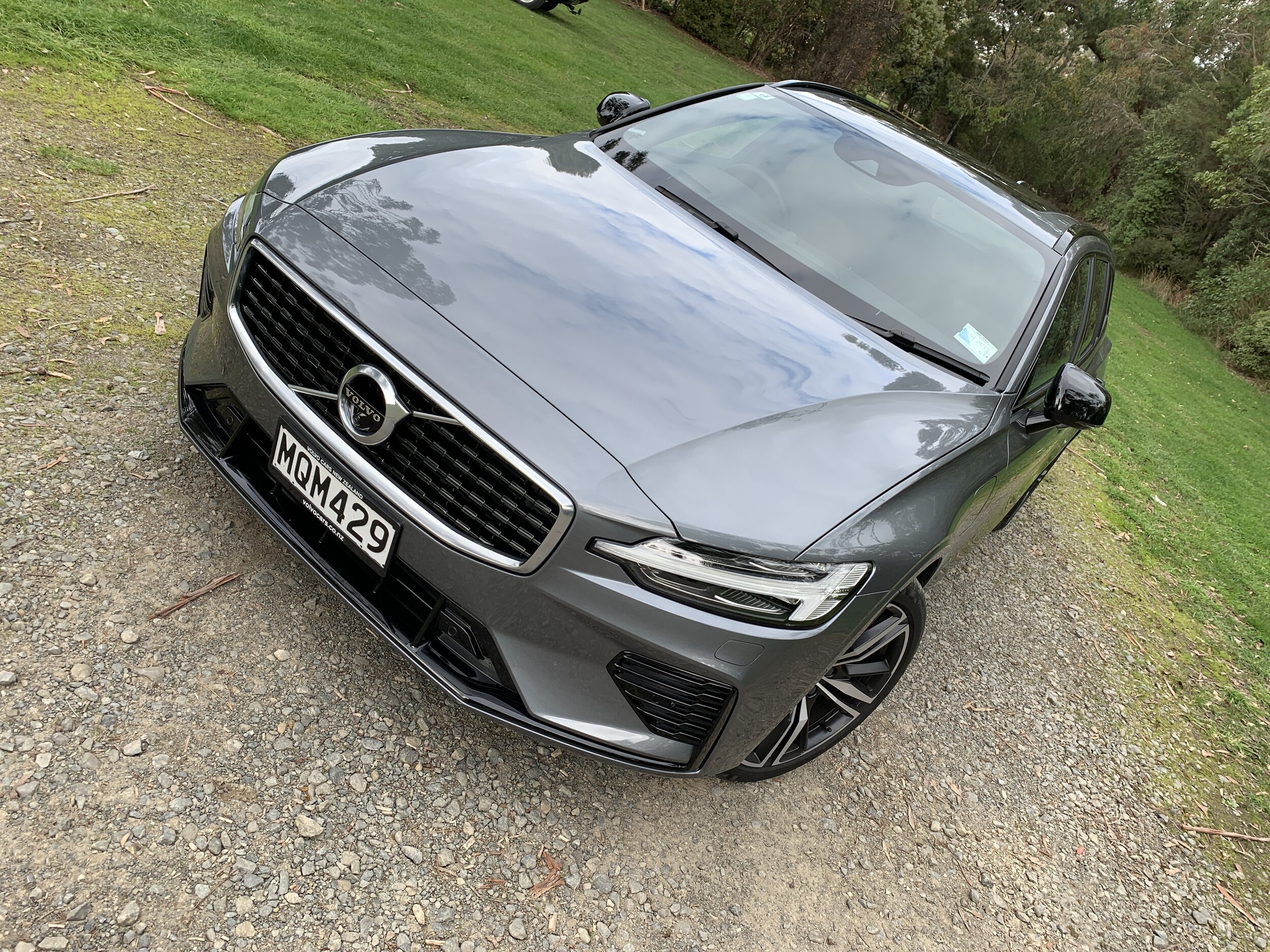
Volvo V60 T8 Polestar: Plug-in plays well

A second look at this sweet-looking Swedish sports wagon cements our sentiment.

IMG_5615.jpeg

Price:  $114,900 ($121,400 as tested).
Powertrain and performance:  2.0-litre four-cylinder DOHC turbocharged and supercharged petrol engine with plug-in hybrid electric drive. 246kW/6000rpm, 430Nm/2200-5400rpm (Combined 311kW/670Nm). All-wheel drive. 2.0L/100km.
Vital statistics: Length 4761mm, height 1432mm, width 1850mm, wheelbase 2872mm. Luggage 390 litres. Wheels: 19-inch alloys with 235/40 R19 Continental Premium Contact6 tyres.
We like: Comfort, styling, innovative drivetrain engineering.
We don’t like: Fidgety suspension tune, type one recharging (and short household wall-plug cable).

WHEN it comes to citing a top-level European brand with leadership in drivetrain achievement, it’s all too easy to propose one of the usual German suspects.

After all, Audi, BMW and Mercedes do tend to make so MUCH noise about every new thing they bring to the market, right?

On the evidence presented by todays test car, really it’s the quiet Swede, Volvo, that deserves the spotlight. Definitely so on strength of the mechanical package delivered with the new flagship edition of its V60 mid-sized station wagon.

Turbocharged, supercharged, petrol, electric and a blend of both, driving through two wheels or four: That’s a heck of a drivetrain, right? 

Almost every part of that recipe is special and rare to find elsewhere in motoring, even the elements that – to Volvo at least – are a bit old hat, now.

Actually, to be fair, the Swedes are the third marque I can name that has sought to combine the choice of forced induction between two philosophically opposed setups – turbocharging, to achieve a revvier, higher-strung sort of boost (thanks to exhaust gases), and supercharging, to deliver a gruntier and lower-end power enhancement (courtesy of crankshaft inertia). 

As far as I can tell, the combo achieved its first successful cameo with Lancia's Delta S4 Group B rally car in the mid-1980s, which trickled down into a roadgoing version, and more latterly came in a Volkswagen Polo that sold briefly here.

IMG_5622.jpeg

Even so, it’s fair to suggest Volvo has gone further with it. The result of Chinese owner Geely’s $300 million investment in the Skovde engine plant has resulted in a particularly intense involvement that achieves with the test car’s 2.0-litre inline four-cylinder T6 engine standing out as a bright spot of innovation. 

The initial outcome from combining turbocharging and supercharging was to tick a best of both possible worlds – great zonk and also commendable economy (and claim of a first in its class to deliver more than one kiloWatt per gram of CO2 emissions). That box was first ticked a couple of years ago. Now the powertrain is up to its next level, with the supplementary positive of an electric backup.

How it all enacts in daily operation is intriguing. For one, there’s such a broad and muscular spread of power; the engine when acting in isolation, which is mainly when the performance-first Polestar drive mode is enacted, creates discernible low-end supercharger grunt that starts to plateau around the 3000 rpm mark - right around where the turbo kicks in.

You’d easily be fooled into imagining there’s a much larger powerplant lurking under the bonnet. Depending on your enthusiasm with the go pedal, you might twig to brief moments of almost imperceptible interruption between one ‘spinner’ handing over to the other, yet overall it demonstrates that there is a way for these enhancers to peacefully co-exist.

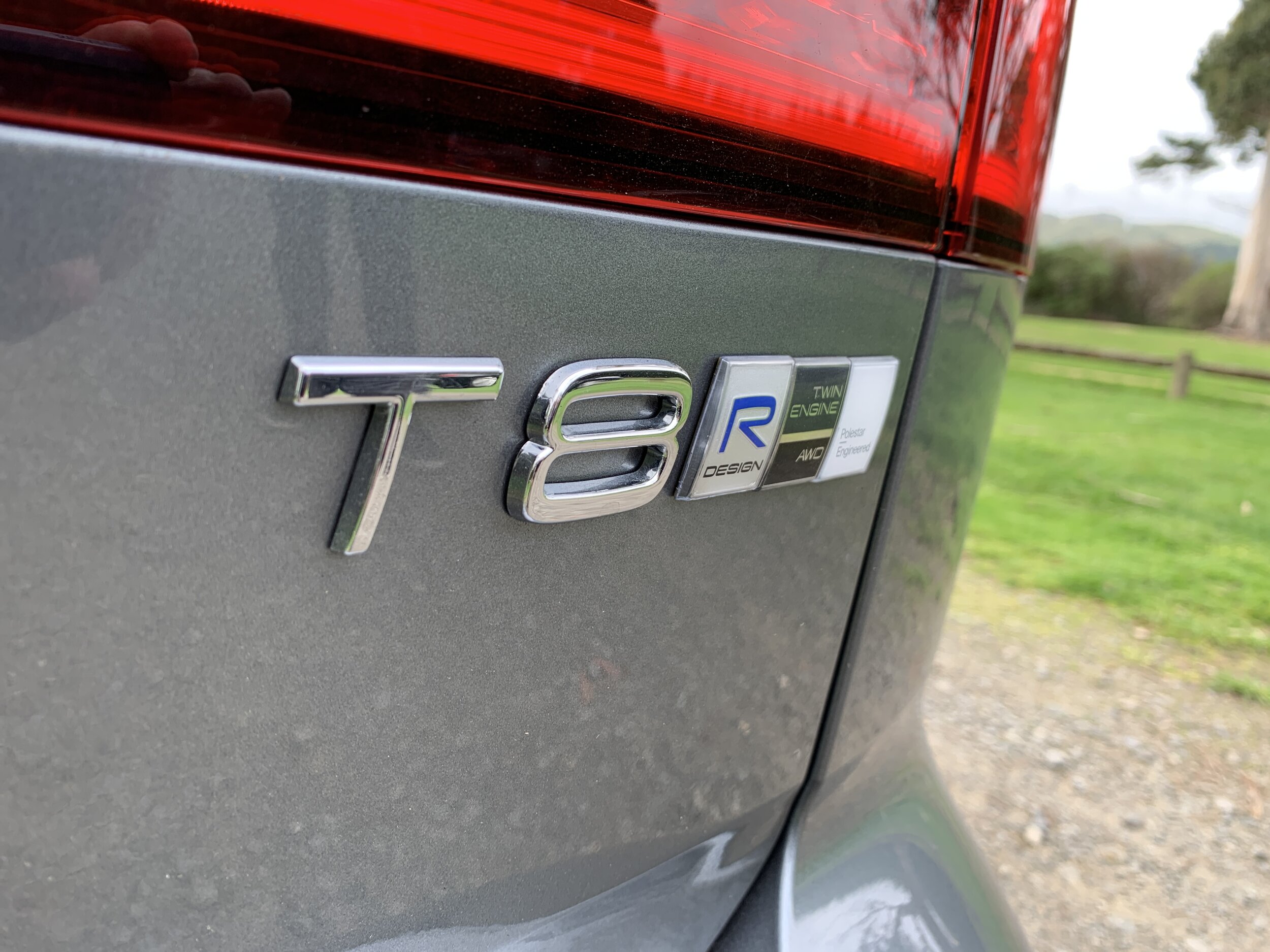
And that’s only half – or, if you have a heavy right foot – two-thirds of the story here, because on top of this is the electric ingredient whose inclusion identifies externally with a new title - T8 'Twin Engine' - another 'fuel filler flap' on its front wing, for the Type 1 charging port, internally with some hybrid-related displays and on the road with … well, everything from silence to surge, depending on how it happens to be interacting.

IMG_5631.jpeg

Ostensibly, in its Green mode – enabled most effectively by switching a selector to Eco - the 10.4kWh battery pack that feeds the electric motor (that drives the rear wheels) will allow you to achieve up to 49km on electric power alone, which should make it ideal for commuters who can charge it both at home and the office, day in, day out.

Or is it better to save that extra inertia for Polestar? Hmm. With both forms of propulsion pushing forward together, it’s a serious mover. Zero to 100kmh crops up in under five seconds – pretty scintillating when bearing in mind this car weighs in at a fraction under two tonnes – and as all grunt transfers as grip thanks to the traction-maximising effort of its four-wheel-drive (resulting from the electric motor being mounted to the rear axle), there’s real push-back surge.

All that’s missing from this almost-V8 oomph is an almost-V8 soundtrack, though the noise as it goes about its business is intriguing in its own right; a blend of four-cylinder engine grumble overlaid with a whine of supercharger and electric motor noise.

There’s no assurance of an absolutely free lunch here. As with anything that uses batteries, the harder the power hit, the faster the depletion rate. Just a few energetic starts and foot-down accelerations when moving will slash the EV range significantly.

And while the battery is never as wholly exhausted as the indicator shows – which reveals in it always having enough to enable silent movement from starting off – it’s a balancing act if you want to use it to scurry around without using any petrol at all for a reasonable distance. 

Yet it’s not that much of a challenge. I got used to seeing just 3.5 litres/100km on a daily mixed condition and speed test run; I wasn’t thrashing, but neither was a tender-footing. Get in the habit of plugging it in whenever there’s a chance and you’ll always have some zap to help the petrol-fed zip.

Beyond the powertrain, you’re into more regular Volvo territory, which means a very nice cabin presentation, some of the best front seats in the business and a decent specification to warrant its premium market placement, including the nine-inch Sensus touchscreen satnav, the 12.3-inch digital instrument cluster, a powered tailgate, rear parking sensors, two-zone climate control, cruise control with a speed limiter and more. 

IMG_5608.jpeg

High-end station wagons are relatively rare nowadays, not least in a property sporty format, and anyone who has become utterly convinced by car-like SUVs will complain, first, about how low this car is to get into and, second, about how firm-riding it is.

Both are factors you just to need accept as part of the overall theme. It’s true, nonetheless, that R-Design Volvos are quite crunchy in their firmer-than-standard suspension tune and as gorgeous as the big wheels with low profile tyres look, they’re also going to unavoidable transmit a bit of road patter through on scarred surfaces. 

To be fair, though, we need to accept that our road surfaces are pretty poor and that suspension engineers who tune the car for far more important markets do so in knowledge that those places have smooth tarmac surfaces.

Even so, the damping control was pretty good, keeping vertical movements of the body to a minimum, and it across as pretty well-sorted in the cornering department, with clean steering, lots of grip and minimal body lean to work around. If it is not as thrilling to drive fast as the obvious German equivalents, neither is it too far from being a threat to them. 

The T8 update demanded adoption of brake-by-wire; meaning the brake pedal sends a signal to a computer and the computer translates that into braking power. We’ve been down that road before with varying degrees of success. Some other systems that rip out the vacuum booster and replacing it with an electrically powered hydraulic pump can be quite grabby. 

However, in general use, the Volvo’s stoppers meet the aim of providing a linear feedback a smooth transition between regenerative and non-regenerative braking. And there’s certainly plenty of stopping power. 

The T8 drivetrain also affords in a taller and robust-looking XC setting and I imagine that’ll be the one more buyers gravitate to, simply because SUVs are just more in vogue. In a way, that might enhance the V60’s standing with those who still prefer orthodox wagons; in adding a degree of ‘rarity’ value for a car whose general styling and R-Design furnishings lend wonderful kerbside presence.

Bunging an EV drivetrain and battery into an orthodox design always demands some give and take; by shaping this into a T-design is clever as the main part spans under the back seat, with the vertical running forward into what would be a driveshaft tunnel if it had an orthodox all-wheel-drive. That provision ensures the boot space remains decent. However, it also effectively makes this a four-seater, as the central tunnel is quite and wide and high.

There are a couple more quirks beyond that. Engaging Reverse after being in Drive demands a double-tap movement else it’ll revert to neutral, which a bit odd. Also, the recharging cable for plugging into home supply is very short, there’s no logical place in the boot designed to stow it (and, if there is a bag, it had been ‘repuposed’ before the car arrived) and also replenishment by this method is so achingly slow off a three-pin plug you really need to upgrade to a proper home charger or roam around to find a local utility. In that respect, head down to your local mall. A lot of free-use public EV setups are still configured for Type 1 plugs and they’re generally located in shopping centres. But how long will that remain the case? Having this plug type seems a step behind where most other brands are going and it’s in fact interesting to see that, in some other markets, the car appears to come with a Type 2 set-up.

Beyond that, though, it does seem a pretty strong all-rounder; a car that blends the sporty side of its nature very nicely with its practical facets with the potential of super-low running costs, if you’re sensible in how and when hybrid drivetrain is engaged. If you leave it in hybrid mode then it really is quite brilliant in how it apportions the best elements of the petrol power and the electric motor. The world’s hybrid king, Toyota, could learn from this car.

A car that has come about purely as result of Volvo determining to distance itself from diesel deserves recognition from eco-conscious buyers who might have already been attracted by the Swedish manufacturer’s reputation for being a frontrunner in safety and solid design. Knowing that there’s nothing else quite like it in the market must also stand as an interest point.


IMG_5637.jpeg


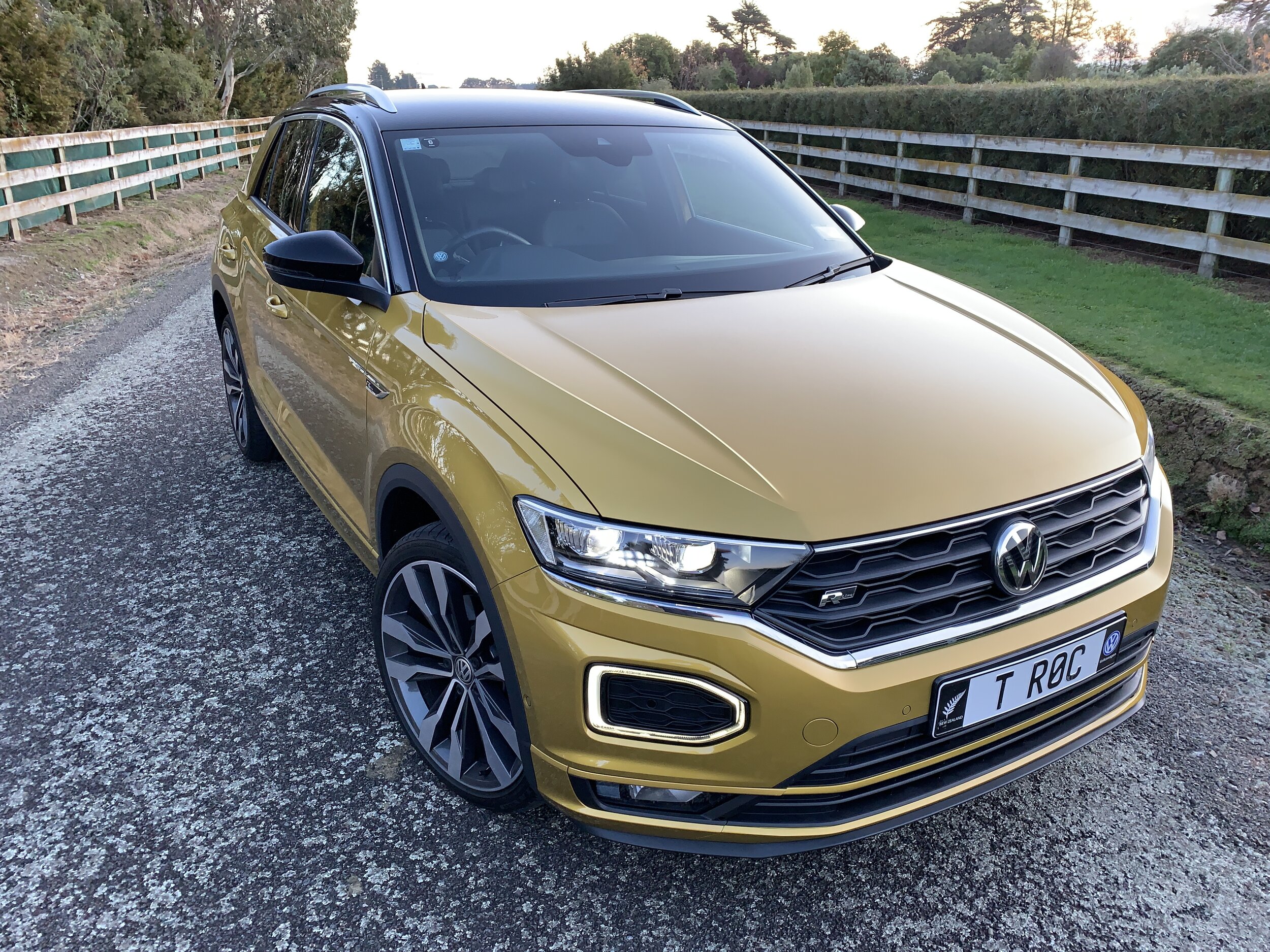
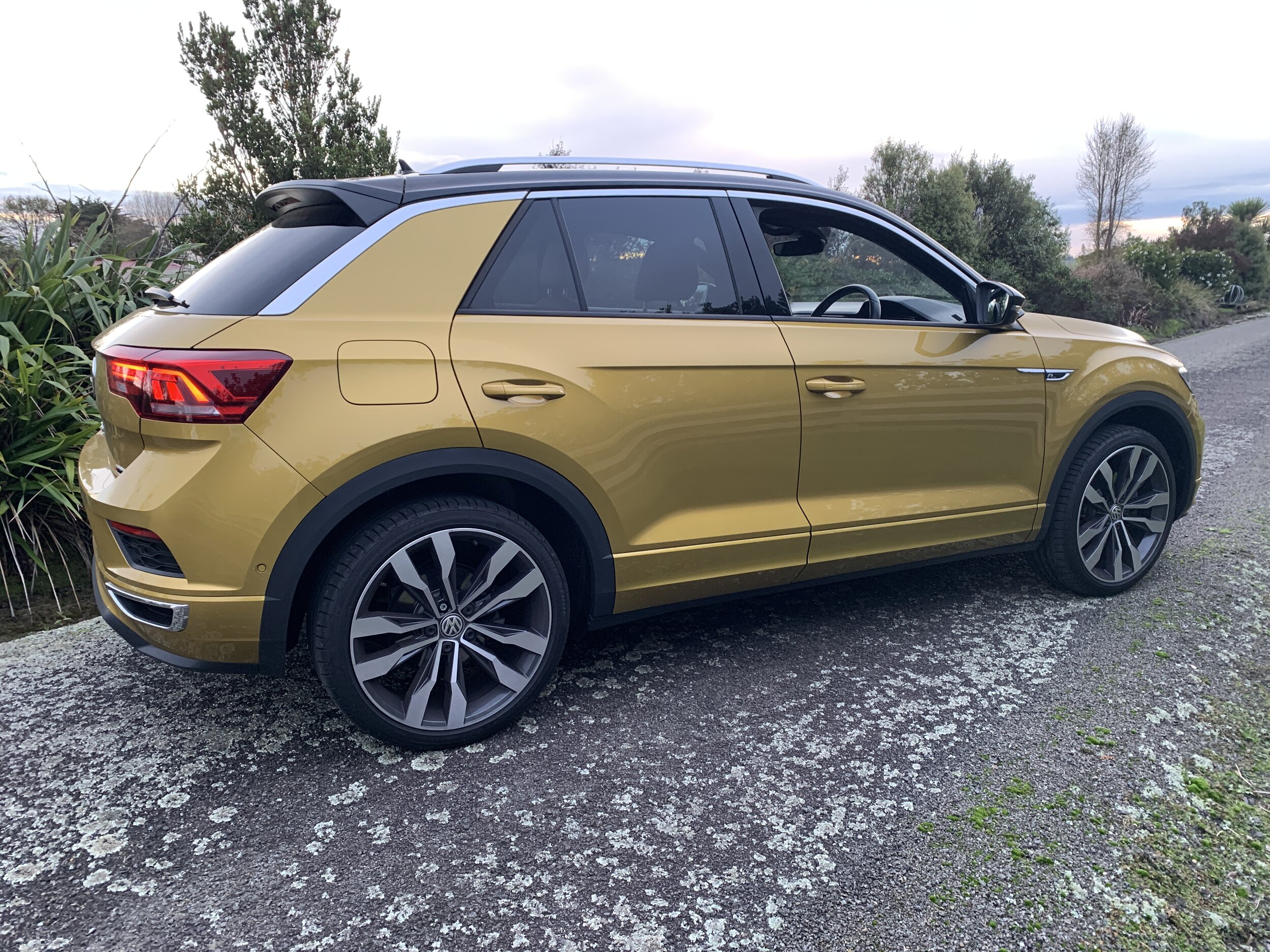
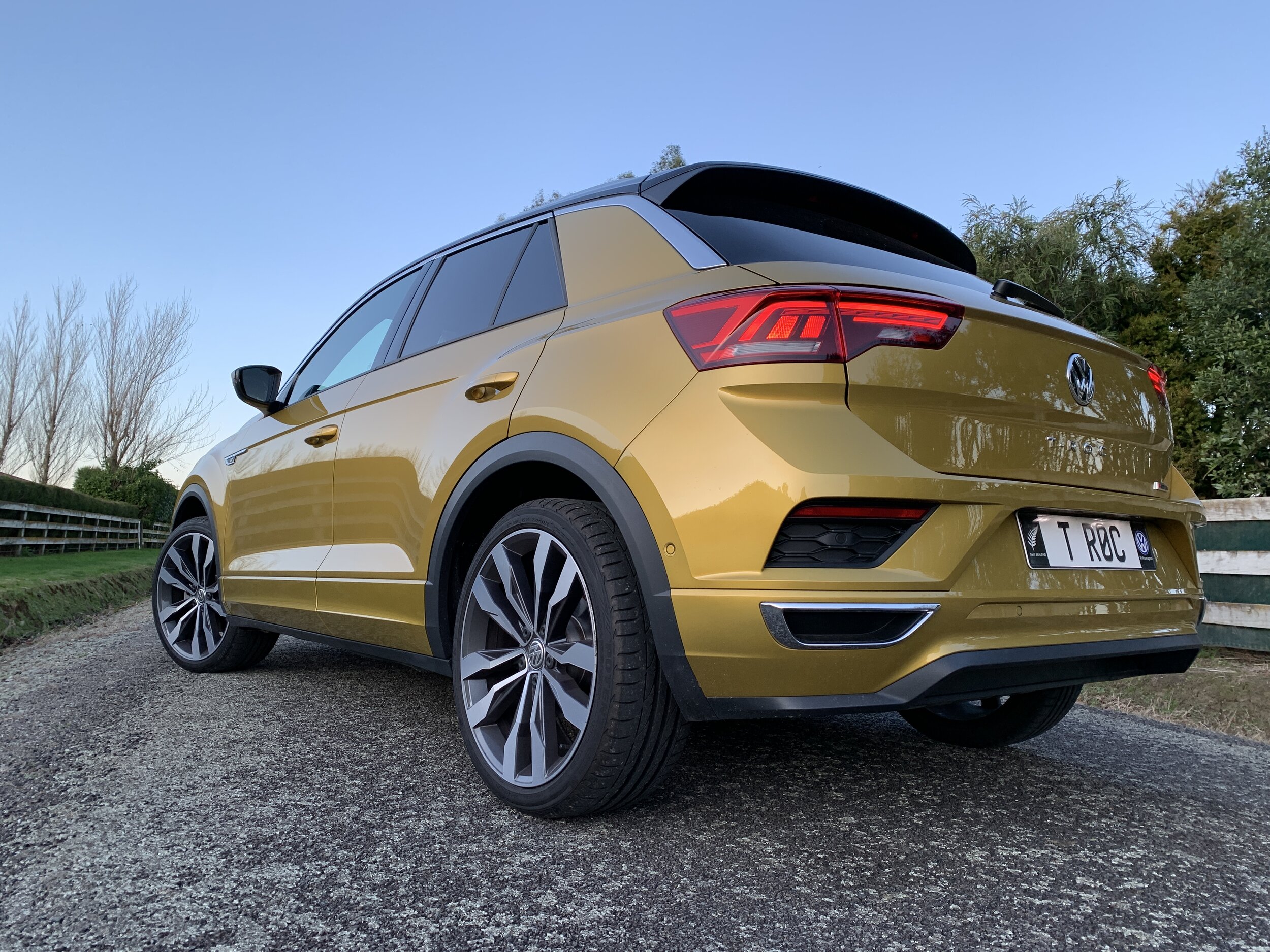
VW T-Roc R-Line: Golden child crossover

First taste of this key small SUV comes in a premium serving sure to interest style (and badge)-conscious buyers.

IMG_5745.jpeg

Price:  $51,990.
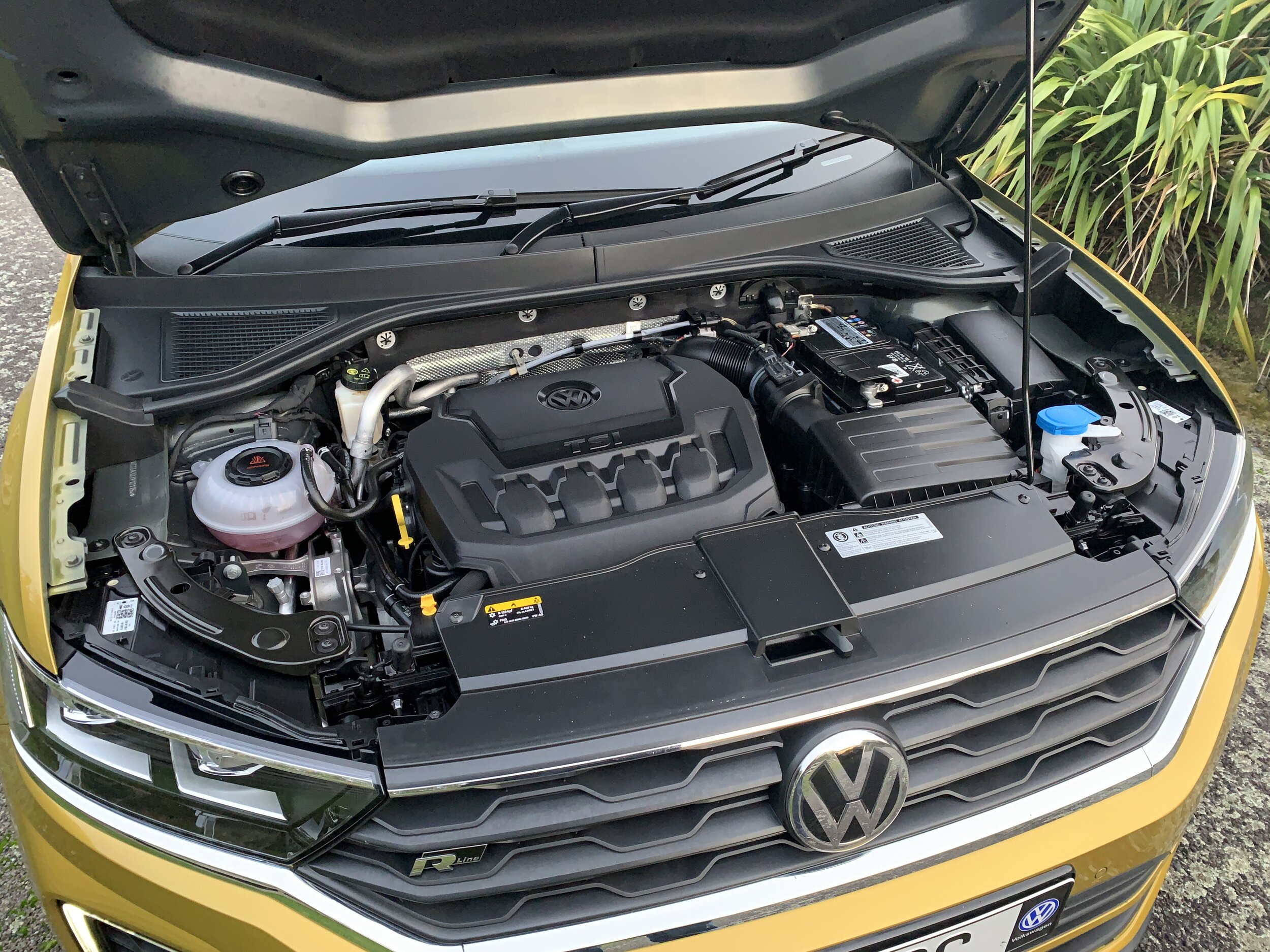
Powertrain and performance:  2.0-litre four-cylinder DOHC turbocharged petrol engine; 140kW/4200-6000rpm, 320Nm/1500-4177rpm. All-wheel drive.
Vital statistics: Length 4234mm, height 1573mm, width 1992mm, wheelbase 2593mm. Luggage 392 litres. Wheels: 19-inch alloys with 225/40 R19 tyres.
We like: Chunky styling, seating comfort, handles better than you’d expect a crossover to.
We don’t like: Some interior plastics, rigid ride.


BE honest now: Who hasn’t felt a hankering over the past few years to take the wheel of a compact wannabe four-by-four with a countryside-ready stance yet none of the actual off-road gumption of a proper, actual, real SUV? 

Even if the customer queue stretches for kilometres more in literal than actual sense, perhaps the selection of ready-and-able candidate vehicles really now might if they were to be collected and lined up nose to tail.

Yet, as much as the crossover catalogue might seem to already be crammed to bursting, brands with ability to add another one or two into the mix are rushing to do just that.

Covid-19 notwithstanding, this sector is an automotive Klondike. Everyone who mines it seems to strike paydirt. 

Volkswagen is having two goes, with some fresh product they seem to so believe will suit consumers to a ‘T’ they’ve used that letter in the naming convention. (actually, that’s not the reason. The letter is to associate with the Touareg and Tiguan). 

Today’s test focuses of the larger of the two, the T-Roc, which the maker reckons will help sales grow from 6.4 million globally to 10.6 million in just 10 years. This car will sit alongside the smaller T-Cross, but don’t go looking for it quite yet. The baby is here but the slightly bigger bro is not. Well, not officially. Confused about what I’ve just said there? All will be explained.

IMG_5782.jpeg

The ‘Roc’ – from ‘rock’ and apparently to establish the car’s off-roading bone-fides (yeah, that’ll rattle Suzuki and Jeep … not) - is of course built on the modular transverse matrix (MQB) platform that underpins others of its ilk, from the Audi Q2 to the Skoda Kodiaq and Karoq. You might need to be a particular student of VW Group architecture application to also twig to a further DNA association.

Which is to … ? Well, the car that, despite the erosion caused on hatch interest by these crossovers, is still very vital to VW: The Golf. The T-Roc can claim DNA association not just to the Golf as we know it now but also the new one coming at the end of the year (or early in 2021). 

That’s not to suggest complete triplet-ship. The distinctions between the crossover and the road cars are diverse in detail, if less so in basic design and mechanical application. Still, familial links are so cemented and market trends being what they are it seems probable one will be examined as an alternate to the other.

Where to put your money? Well, there’s another twist to consider, and that’s to do with the T-Roc itself. When saying that this car doesn’t launch for another couple of months, I mean in its full NZ market spec. The scheduling is a reminder that this ‘latest’ arrival is also a late one. 

T-Roc has been in production for almost three years and, in fact, there’s a 150-strong colony here already. This comprises flagship R-Lines ordered by another right-hand drive market and snapped up by our distributor when they became surplus stock. The test car is the last of that lot, so its residency status is well sorted. However, getting more has proven a challenge to VW NZ. It seems the car has been so well received in other places we’ve been pushed down the queue. The perils of being small? Well, sometimes that works to advantage, too (for instance, our modest uptake of Touareg V8s has allowed us to achieve that car ahead of many larger countries).

IMG_5780.jpeg

The early arrivals deserve mention because they might well yet differ slightly to the incoming fully-accredited local market versions that were supposed to land next month but, on latest talk, might not now arrive until November, thanks of course to Covid interruption. Nothing major; but talk is that ‘ours’ could well have a more upmarket audio unit and perhaps a less plasticky trim.

What’s also important to note is that in addition to the 2.0-litre all-wheel-drive on test, the NZ range will include a pair of 1.5-litre front-drive Life and Style editions in a lower price positioning, at $39,990 and $44,990 respectively.

That’s a positive, too. It would not be fair to call the R-Line overly expensive, simply because there are others in its price level. For instance, Mazda’s CX-30 Limited is exactly lineball with this $51,990 VW. YEt it’s fair, surely, to suggest anything sitting above $50k tends to to be considered an almost premium purchasing experience.

Having basically handed in Hiroshima’s new baby just days before driving the T-Roc, it seemed to me the Mazda only has clear advantage on content, but would be beaten on spaciousness and have to concede a touch on performance – they’re all but lineball on power but VW’s engine has almost 70Nm more torque than CX-30’s 2.5-litre. 

You could quibble about the styling for ages; the VW is less daring and potentially less ‘modern’ in its look, but that’s not to say it loses appeal for it. If anything it’s a bit beefier with its flared arches and a wide grille, and there’s something more macho in its stance (regardless that it has just 2cm more ground clearance than a Golf). Those pronounced wheel arches and plastic cladding around the lower sections don’t seem false and it looks swollen in most of the right places, while the extra touches coming with R-Line - additional brightwork along the top of the plastic-clad sills, those anodised roof rails and the 19-inch alloys - add flair. Really, it’s aged quite well for a car that has been around in its home market for almost three years.

As you’d expect from VW there are plenty of safety and tech features, with a hefty focus on safety. So, Front Assist with city emergency braking and lane assist, adaptive cruise control, road sign display, blind spot monitor, park assist and a reversing camera all feature on the R-Line.

IMG_5787.jpeg

The design also delivers a useful amount of room for a family of five. The boot has enough space to swallow up bulky items though going all-wheel-drive clearly also erode capacity, with 392 litres’ boot space quoted for the R-line against 445 litres for the front drivers. Of course, you can drop the rear seats to create a significantly large cargo volume, though again it’s 1232 litres versus 1290. Throughout the rest of the interior there are several storage areas for placing oddments. 

Notwithstanding that detail change seems likely, the infotainment system as I saw it was very neat and is slick and intuitive to inputs. Crucially, it also supports Android Auto and Apple CarPlay, and the USB ports for this are within easy reach at the base of the centre console.

An adjustment to the trim quality would be welcomed, though. The leather is very good and it ergonomically sound but there are hard surfaces and scratchy plastics, that, for me, don't fully reflect the price tag. For sure, those surfaces are wipe clean and durable, which is a good thing if you have kids, but overall VW could do well to see how Mazda has introduced much nicer surfaces to lend impression of a far more premium ambience.

Actually, you needn’t even go that far: As much as the T-Roc’s interior space and big boot could stand as good reasons to go for it over a Golf, the hatch in the here and now (and certainly, it seems, in its next execution) is better in terms of perceived quality. 

Curiously, they’re less far apart in respect to the driving position than I’d imagined they might be, in that the T-Roc’s is more car-like than SUV-like. So much so that those that like a higher, more commanding placement may be a little disappointed. However, this does make for a more relaxing and comfortable experience and enhances the sense that it is more fun to drive that you might initially give it credit for.

IMG_5769.jpeg

As good as the Golf? For the most part, yes. Even on a winding road, where you’d think it would simply have to feel feel more top-heavy, the T-Roc surprises in retaining plenty of composure. The well-judged steering allows you accurately choose a line through the bends. It’s not an overtly sporty car, but when you push it harder it doesn't get flustered.

The ride quality might not appeal to everybody, in that it’s a little on the firm side, even when avoiding the Sport mode that obviously reduces the damper yield. If you automatically think that a crossover means a plush ride, it’s out to demonstrate otherwise. In saying that, it is certainly not so rigid as to be unacceptable and you certainly won’t find any shortcoming with other elements, such as its very sure-footed traction. If anything, it is a ‘grower’, in that the deeper under its skin you get, the more rewarding it becomes. I’d put some of that down to that well-engineered feeling that Volkswagen imbues into its cars.

The top line engine has more than enough performance to cope with the daily commute and gets up to open road speed comfortably and quickly. In all honesty, the smaller unit en route might suit its role even more comfortably. Yet the 2.0-litre’s not going to disappoint easily, either. There’s more than enough torque to not only pull its mass along quite comfortably but to also ensure the seven-speed direct shift gearbox retains its decorum even when you find sudden need to hurry up the pace. On the other hand, it is also rather economical if you light-foot the throttle. 

VW is definitely a magnet brand for style-conscious buyers and those looking for looks, practicality and the latest tech in an urban four-wheel-drive (of sorts) are surely going to see plenty to like here, starting with the package’s sizing. If you think a Tiguan is too big, then the T-Roc might be for you, given it has the immediate advantage of being 252mm shorter, which – along with a tighter turning circle - makes it more manoeuvrable around town. It’s a better looking car, too.

Of course, as said, this is a very congested segment and even if you’re particularly wed to VW Group design and engineering approaches, it’s possible to shop for an alternate without leaving the broader family. The SEAT Arona and the Karoq, which play to a lower budget yet also build on the same underpinning, are equally practical and, in the Skoda’s case, slightly roomier. Alternately, you could await that new Golf – it does seem to be extremely swish. 

Or go electric? Ultimately, too, VW’s boots and all foray into battery-dedicated motoring is set to deliver a plug-in equivalent of sorts, in the form of the ID.4. But that’ll be a couple of years away yet.

 Meantime, there’s likelihood the T-Roc family might expand further, not to include the fatuous and climatically-inappropriate Cabriolet that’s already selling overseas but another model that outwardly seems a touch oxymoronic but will doubtless prove to be exactly to market taste. This being the R edition, which borrows all it go-fast gear from the Golf R; so a 220kW 2.0-litre mated to a DSG automatic transmission and 4Motion all-wheel drive, delivering 0-100kmh in under five seconds and a top speed of 250kmh. Grrrr.

IMG_5771.jpeg


Toyota Corolla Hybrids: Form versus function

Twin-test time, with the Toyota Corolla hybrid in sedan and hatchback formats.

IMG_7632.JPG

Prices: GX hatch (as tested) $33,490, SX sedan $35,490. An SX version of the hatch has also just been introduced, at $35,490.
Powertrains and performance:
1.8-litre four cylinder  petrol engine, 72kW at 5200rpm, 142Nm at 3600. Combined with Toyota hybrid system for total system output of 90kW. Front-wheel drive. Hatch 4.2 L/100km, 97 g/km CO2, sedan 3.5 L/100km, 81 g/km CO2.
Vital statistics:
Hatch: length 4370mm, width 1790mm, height 1435mm, wheelbase 2640mm. Sedan: length 4630mm, width 1780mm, height 1435mm, wheelbase 2670mm. Luggage: hatch 208 litres, sedan 470 litres.
We like:
Hatch: better looks, better drive. Sedan: more interior room, superior fuel economy.
We don’t like:
Hatch: That lack of interior room. Sedan: Those conservative looks. 

THIS is a tale of two Toyota Corolla hybrids – one a hatch, the other a sedan.  We’re comparing one model against the other because it could be said that while one body style puts form before function, the other puts function before form.

The comparison had its beginnings back in 2018 when Toyota New Zealand launched the new 12th generation Corolla hatch, which went on sale in petrol and hybrid forms.

This powertrain choice was important, because it represented the latest step in Toyota Motor Corporation’s grand plan to offer a hybrid version of every popular model by 2025. And especially important for TNZ, because it was known that the Government intended introducing a proposed Clean Car Initiative from 2022.

Remember that? The initiative, introduced in July last year, proposes a Clean Car Standard (a fuel efficiency standard) and a Clean Car Discount (a feebate scheme that would apply a rebate or penalty depending on exhaust emissions), all with a target for 2025 of exhaust emissions of no more than 105 grams per kilometre (g/km) of CO2.

IMG_7647.JPG
IMG_7648.JPG

Not much has been heard of a proposal since.  Submissions closed in August last year and presumably are now being considered. Then in February New Zealand First took action to put the kybosh on the whole plan anyway, but the Greens countered by saying they would make it an Election issue.

MMP politics, huh? But what is a constant through all this proposal, submission and debate is the acknowledgement that something has to be done about the role transport plays in the level of New Zealand’s greenhouse gas emissions. After all, light vehicles – which are all vehicles of 3.5 tonnes gross vehicle weight or less – account for almost two-thirds of our country’s transport emissions, which in turn account for 20 per cent of all emissions.

So with that background, it was good that Toyota NZ launched the 12th generation Corolla hatch with a choice of variants with petrol-electric hybrid powertrains.  In hatch form the Corolla hybrid has an official average fuel consumption of just 4.2 L/100km and exhaust emissions of 97 g/km of CO2.

That’s way below the Clean Car Initiative’s 105 g/km target for 2025. Corolla has also helped Toyota NZ reduce the average CO2 emissions  by close to 10 per cent across its entire vehicle fleet, because the hatch immediately became among New Zealand’s most popular passenger vehicles, with a high percentage of sales (current 68 per cent) the hybrids.

But as popular as the new Corolla hatch has been, it also has some glaring faults. It has a lovely exterior design, particularly the rear where the hatch gracefully sweeps down from the roofline. But these swept lines also translate to the car’s biggest design issue – a lack of rear space.

The rear seats are cramped for legroom, and with all seats in use there is a mere 208 litres of cargo space under the tonneau cover (300 litres in the top ZR model which carries a tyre repair kit rather than a spare).

IMG_7650.JPG
IMG_7652.JPG

In every other respect the new Corolla hybrid is a really good car that offers an excellent drive and which carries leading-edge technology. But the vehicle’s interior function has been compromised by its exterior form, and the end result is a Corolla hatch that is not quite as good as it should be.

So what to do about it? Toyota has come up with an obvious solution – it has released a sedan version of the Corolla that offers a lot more interior room. Even better, it includes a hybrid variant that is cleaner than even the hatch, with claimed average fuel consumption down to 3.5 L/100km and exhaust emissions a low 81 g/km of CO2.

By the way, as I wrote this article, the news broke about the UK couple who had been allowed to breach the Covid-19 lockdown requirements and had apparently driven non-stop from Auckland to Wellington to attend a funeral. This prompted the mainstream media to speculate whether it was possible to drive this 640 km distance on one tank of fuel.

Well, the Corolla sedan hybrid is so economical that despite the fact its fuel tank carries just 43 litres of petrol rather than the usual 50 litres, theoretically  it could not only be driven from Auckland to Wellington on one fill – but also back to Taupo. That’s impressive. And I’ve got to admit it’s a comforting feeling when you fill up the vehicle and the onboard computer tells you your distance to empty is 1032km.

IMG_7653.JPG
IMG_7655.JPG

The sedan is able to achieve better fuel consumption than the hatch not only because its body design is more slippery, but also because whereas the hybrid hatch at GX and SX level has 16-inch wheels shod with conventional Dunlop 205/55 R16 tyres, the sedan (which is only available as an SX) has 15-inch wheels shod with low rolling resistance Bridgestone 195/65 R15 tyres. Overseas experts say such tyres can achieve fuel savings of as much as 15 per cent.

Mind you, I have to say that during a long trip in this sedan, I was unable to achieve an average fuel consumption that was any better than  4.0 L/100km, which is what my wife and I regularly achieve with the Corolla hybrid hatch that we own. And I tried hard, too – I was really looking forward to seeing if I could get the consumption down to at least the claimed 3.6 L/100km open road figure.

I suspect it was all because low rolling resistance tyres or not, it is impossible to achieve any vehicle’s official consumption figures when driving on coarse chip sealed roads that wind through New Zealand’s rolling landscape.

 The sedan is also 260mm longer than the hatch but slightly narrower, and its wheelbase has been extended by 30mm to 2670mm. All this has allowed the load space in the boot to be 470 litres, more than double that of the hatch.

A personal test of any vehicle’s load space is to load my golf clubs into it – you’d be surprised how many vehicles, even some substantial European SUVs, can’t accommodate a bag and clubs side-on.  With the Corolla hatch this task is impossible without first taking the woods out, but with the sedan there’s heaps of room.

IMG_7630.JPG
IMG_7644.JPG

Let’s go to the back seats. There’s more room in the sedan back there, too. In the hatch, the gap between the rear of the centre console to the front of the rear seat squab is 230mm, while in the sedan it is 300mm.

Both the hatch and the sedan are powered by the same Toyota hybrid system that combines a 1.8-litre petrol engine with an electric motor to provide a total system output of 90kW, and which is mated to what has to rate as one of the best CVT transmissions on the market.

Overall, it all presents an interesting choice. From the visual perspective, personally I feel the hatch is the more appealing of the two body styles – it has more character to it, while the sedan body shape is smooth to the point of being just a little boring. The hatch is also the more entertaining drive, because it is lighter and has the bigger wheels and tyres.

But what the hatch lacks, the sedan certainly doesn’t.  The hatch doesn’t have sufficient rear legroom or rear cargo space, but the sedan does.  The sedan also has the superior fuel consumption, which is saying something because the hatch is quite capable of returning figures of less than 4 L/100km when driven quietly.

So there we go. In many respects the Corolla hatch leans towards form over function, while the sedan favours function over form. And they’re both hybrids. It’s an excellent choice presented by one (or should that be two?) of the best small cars on the market.


Volvo V60 T8 Polestar: Swedish science fare

A performance-tuned plug-in hybrid station wagon? That’s something new to think about.

v60test4.JPG

Price:  $114,900 ($121,400 as tested).
Powertrain and performance:  2.0-litre four-cylinder DOHC turbocharged and supercharged petrol engine with plug-in hybrid electric drive. 246kW/6000rpm, 430Nm/2200-5400rpm (Combined 311kW/670Nm). All-wheel drive. 2.0L/100km.
Vital statistics: Length 4761mm, height 1432mm, width 1850mm, wheelbase 2872mm. Luggage 390 litres. Wheels: 19-inch alloys with 235/40 R19 Continental Premium Contact6 tyres.
We like: Handsome sportwagon styling, seating comfort, interior finish quality and effortless high torque performance.
We don’t like: High-rise central tunnel makes five passengers marginal.


NOT many years ago Volvo served the luxury market with a typical mix of sedans and estates.

Today the brand is another case study of how far the market has shifted toward SUVs with just a single four-door in its 2020 New Zealand line-up and the new V60 filling the wagon role while XC models represent the volume of its business.

For drivers who prefer the sportwagon configuration over something riding higher, the V60 offers space and a thought-provoking blend of attributes and technologies. 

The V60 flagship pairs the stylish R Design equipment package with the T8 plug-in hybrid powertrain - a supercharged and turbocharged 2.0-litre engine boosted by electric drive and with the rear electric motor also being the enabler for all-wheel-drive. 

The dual-boosted four-cylinder petrol engine develops 246kW at 6000rpm along with 430Nm of torque from 2200-5400. The electric motor contributes 65kW and most importantly 240Nm of torque. 

It’s an impressive combo of efficient sophistication and genuine performance with combined output totals of 311kW and up to 670Nm of torque. 

In Polestar drive mode the V60 T8 can sprint from 0-100kmh in 4.5 seconds and electric torque fills any gaps or pauses in the torque delivery from the relatively small combustion engine. A braked towing capacity of 2000kg adds a little more versatility to the wagon theme.

v60test2.JPG

Claimed average consumption is 2.0L/100km but like all plug-ins that figure varies significantly based on the driving environment. 

The best indicated range I saw when driving away with a fully charged battery was 40km. That’s enough for short city commutes and errands to be completed with zero - or close-to-zero - consumption and emissions.

The road test reality for a 122km run over a mix of open road and city driving was a 4.8L/100km consumption average. On a longer highway run the consumption is likely to settle in the high-5s or low-6s – still an appealing level of efficiency for a 4.8-metre long family-size estate with some serious performance potential. 

The lithium-ion battery is rated at 11.6kWh capacity – slightly smaller than a Mitsubishi Outlander PHEV for example. Charging from a domestic supply will take about four hours at 10amp charge rate. 

Using a Type-1 plug in the New Zealand market seems something of an anomaly in an industry that is heading towards Type-2 fast charge capability. But the reality for plug-in vehicles is they will be most commonly charged overnight from a domestic supply.

The V60 T8 can be driven in Pure (electric), Hybrid, All-Wheel-Drive and Polestar modes. Additional energy recuperation can be prompted by nudging the gearshift lever back into Brake mode. The steering wheel paddles still shift the eight-speed Geartronic automatic transmission rather than adjust the level of energy recuperation.

IMG_5625.jpeg

A highlight of the T8 driving experience is the way the comfortable sportwagon slips effortlessly along in bumper-to-bumper traffic queues on electric drive avoiding the hesitations of awkward stop-start systems. But can then be prompted to deliver serious acceleration in Polestar mode.

The new generation V60 is a medium-large format wagon and continues where Volvo has excelled in the past. There is family-size load space and convenient accessibility via the powered tailgate and it’s sensibly kitted out with the load securing and separation nets.

But the reality of the rear seat layout with a high-rise centre tunnel - for the battery storage – falls somewhere between marginal five-seat accommodation and very comfortable four-seat capability with generous rear headroom and supportive seat shape.

The V60 T8 AWD R Design is priced from $114,900. Options on the test car included panorama sunroof, window tints and Bower and Wilkins premium sound system – grouped as a Premium Pack – to bump the price-tag to $121,400.

Specific highlights of the R Design equipment level include charcoal leather with mesh textile inserts and contrast stitching and R Design detailing of the steering wheel, pedals, shift knob and tread plates with a charcoal headlining.

The exterior carries R Design badging along with gloss black treatment for the roof rails, mirrors and grille while diamond-cut 19-inch alloy wheels are generously shod with 235/40 R19 Continental PremiumContact6 radials.

The 4-C Dynamic Chassis active damping allows plenty of adjustment of the body control and ride comfort characteristics to progress between luxury and firm sportwagon settings.

v60test7.JPG

Also standard is a head-up display, excellent 360-degree camera, Park Assist, four-zone air conditioning and heated front seats. All of the infotainment, satellite navigation and heating/ventilation functions are controlled from the 9.0-inch portrait format Sensus touchscreen.

The V60 R Design showcases Volvo attributes of an uncluttered control layout and clear displays with an emphasis on quality surfaces including mesh metallic décor. 

There is excellent visibility past the cleverly shaped A-pillars and Volvo seat design continues to provide a lesson in both welcoming comfort and firm long-distance support with full power adjustment including four-way lumbar and cushion length adjusters. 

Part of the challenge is for luxury brands is to differentiate themselves and offer an identifiably unique experience.

Modern plug-in hybrid performance and effortless refinement sits very neatly with handsome Volvo wagon design and traditional brand attributes of comfort and safety.


Mazda CX-30: Equality through the ranks

Time for a second look at this new baby Mazda crossover, this time checking out the base model as well as the flagship.

The CX-30 GSX (above) is quite unfazed being compared to the richer-trimmed Limited flagship (below).

The CX-30 GSX (above) is quite unfazed being compared to the richer-trimmed Limited flagship (below).

IMG_5718.jpeg

Prices:  $41,490 GSX, $50,990 Limited.
Powertrains and performance:  2.0-litre four-cylinder DOHC petrol (GSX) with i-Stop, 114kW/6000rpm, 200Nm/4000rpm. Front wheel drive, 6.4 litres per 100km; 2.5-litre four-cylinder DOHC petrol engine with i-Stop and cylinder deactivation, 139kW/6000rpm, 252Nm/4000rpm. All-wheel drive. 6.8 L/100km.
Vital statistics: Length 4395mm, height 1540mm, width 1795mm, wheelbase 2655mm. Luggage 430 litres. Wheels: 16-inch alloys with 215/65 tyres; 18-inch alloys with 215/55 R168 tyres.
We like: Feels crafted, surprisingly emphatically driver-centric attitude, fun attitude, strong warranty.
We don’t like: Little practicality benefit over a Mazda3, 2.5 getting gruff with age.


 “Well, it looks nice, but I like my little car; this one seems a bit too big for me.” 

So, less interest than I’d expected from the friend who owns a CX-3. Moving on, then, to two with CX-5s, mainly driven short distances and solo. Surely they could see the appeal of something of similar ilk, yet smaller, lower and more stylish?

Erm …

Positivity about the car’s overall style and the instrumentation improvements was mutual; but from one uncertainty about whether the rear seat would be comfy enough for fast-growing grandkids. And the other? “The one thing I really like about the CX-5 is that I sit high. I can’t get that from this, it’s more like a car.” 

Okay, so on basis on that hardly scientific poll, the potential for the newest addition to Mazda’s quasi soft-roader lineup, the CX-30, to simply create its own empire from in-house conquest alone seems challenging. 

Is all that effort to ensure every dimensional metric – save front headroom, which is more modest – sites the CX-30 between the larger and smaller alternates seems wasted if those with existing commitment to the lines sandwiching this new meat aren’t going to stand to be easily cannibalised? 

Well, no.  Even if CX-30 finds more success poaching customers new to Mazda than converting existing brand fans, that won’t inhibit progress. The small to compact sports utility sector is a big place in its own stead. In great health before we know about coronavirus, it seems so far to have come through the challenges of lockdown and diminished car sales activity pretty well, too. On top of all that, there’s this new twist of a crossover hatchback. That’s not without attraction, either. 

today’s challenge: Pick the base interior. Not easy, right?

today’s challenge: Pick the base interior. Not easy, right?

IMG_5712.jpeg

As much as Mazda’s CX model plan has always represented something of a boundary push, with the only consistent being a tailoring to trend softly insofar as the sports utility side of operability, CX-30 presents particular commitment to what might be called crossover chic. 

This doesn’t mean it lacks eagerness for driving the mild side of ‘wild’ – it’s a confident car on gravel, regardless of whether all four or just the front set of wheels are laying down the power, and is as unfazed by steering onto dirt, sand and grass as the CX-3 and CX-5. Yet you immediately sense the newly-emerged middle child is sassier in different ways.

Certainly, it is particularly well polished in respect to presentation. Describing it as the best-looking CX model yet is bound to trigger enthusiast argument, given the Hiroshima design department has been smashing out hit after hit in this Kodo-influenced styling period. Comparing against rivals is suggests just two – the Toyota CH-R and incoming Nissan Juke - are as intricate in design and finish, but also debatedly do so with an outrage Mazda’s carefully-judged 'beauty through subtraction’ process carefully sidesteps.

Anyone who has been checking out recent Mazda interiors will understand, already, how these have become as ‘crafted’ as the exteriors. Here, you’re looking at the best yet. It’s an exemplar to the industry about how to lend a sense of premium expensiveness using materials that probably cost out effectively for mainstream duty. In many respects, the entry GSX offers better example of the execution than the Limited, not because the latter isn’t plush enough – it really is – but more because the base car lends very little obvious sign of the cost-cutting that allows it to fly $10,000 in the price stream.

Those lowballing on spend aren’t cutting themselves short on kit, either. Automatic headlights, an 8.8-inch infotainment screen, a head-up display, an eight-speaker audio system and the i-Activsense safety package - which includes lane-keep, active cruise control, blind-spot monitoring, rear cross traffic alert and active emergency braking that detects cyclists and pedestrians – come as standard fare, plus even base buyers also get a reversing camera, rear parking sensors sat nav and various electronic handling assists.

Spend more and there’s a swap from 16-inch to 18-inch wheels (which, admittedly, look better), autonomous rear braking which acts to inhibit, by jolting the brakes, potential to inadvertently reverse into something solid and more electric assists like 'Intelligent Speed Assistance' which is linked to the cruise control system and provides additional speed limiting warnings. There are also parking sensors on the nose and an off-road traction assist feature for the AWD system. The Limited also has LED rather than halogen headlights, gets leather trim and achieves a 12-speaker Bose sound system. Oh, yes, and Mazda has set a high standard with a five year, unlimited kilometre warranty and a very good scheduled servicing setup.

IMG_5650.jpeg
IMG_5720.jpeg

Whatever the fitment, the basics are the same. There’s positivity about the latest version of  Mazda Connect; the controls are clearer and operability more finessed. The addition of a head-up display in all levels is good; so too that it now projects onto the windscreen rather than a fragile looking pop-up gunsight … just the realisation that even all instrument fonts have altered a touch, to become sharper, there’s more change than might first seem warranted, and a lot that takes time to appreciate. But the overall impact will appeal to the faithful or newcomers alike.

Clearly, there’s one area where its shape and lower roofline impinges. It’s … cosy for overall space. Tjat’s not to say the rear section isn’t a wholly tough spot for adult passengers, but it’s obviously less spacious than a CX-5. The boot is deep but markedly narrower than the CX-5’s and, even with 430-litres’ capacity, really only competitive within the bounds of the class. Basically, growing families intent on giving the CX-30 consideration need to be careful for what they wish for. I’d personally judge it as being better suited to a couple who might just occasionally offer the back seat to occupancy.

The sense of its intimacy also shows in a driving position far more in keeping with the Mazda3 (or even an MX-5) than any other CX edition, simply by virtue that you’re still sitting just as you would in a normal car, not an SUV. That’s what jinxed it for my pal Lisa; she’s a big fan of a command driving position, so never sensed the CX-30 felt ‘high’ enough.  Obviously, it really is elevated – just plant it alongside a Mazda3 to see how much - however, I get her point. The increase in ride height is subtle enough that there’s never a sense you’re stepping up into this cabin.

Still, there’s as positive from this that undoubtedly plays well for the driving feel, where playful nimbleness is a common trait whether driving a GSX with a 2.0-litre engine powering the front wheels only or a Limited, where a 2.5-litre and Mazda's i-Activ all-wheel drive system fits. Both paired with a six-speed automatic transmission only.

That mechanical fitout is pretty much Mazda ‘101’ these days and, certainly, it’s in line with CX-5, too, save here there’s no diesel. Yet, simply because the CX-30 is smaller and rather more trim in its kerb weight, it seemed to me that the logics that determine the larger petrol being preferable in the larger car aren’t really fair to apply with this one.

the 2.0-litre has less punch than the 2.5, but delivers a sweeter note and evidences thrift more easily.

the 2.0-litre has less punch than the 2.5, but delivers a sweeter note and evidences thrift more easily.

IMG_5725.jpeg

For sure, GSX's output being 25kW and 52Nm less than that from the larger engine is obvious at step off and the 2.5 feel more muscular in the mid-range, so it doesn’t have to put in as much effort when accelerating or overtaking.

Yet the entry unit shouldn’t be discounted simply because of that. For one, it earns marks for being more obviously economical. From this experience, the maker-claimed optimal returns (which don’t seem too major at 6.4 versus 6.8 litres per 100km) are much easier to close in on with the smaller unit – as Rob Maetzig reported in his own story about taking the Limited on a long-distance drive, the 2.5-litre ain’t so easy to rein into its thrift zone. 

The other reason for considering the 2.0-litre is that it has a sweeter, less intrusive, note. And it’s still zesty enough that, basically, if you intend to employ the CX-30 simply for urban driving, occasional open road bursts and never in a more robust SUV involvement, then it’s more than an okay choice.

Not that the CX-30 deserves to be kept on a city beat. It’s just too delightful to drive for that. I’m not suggesting the MX-5 is under threat, yet within the crossover quarter it delivers well above the average expectation. 

It’s not so much the suspension design – Macpherson strut front end and a torsion beam around the back is fairly simplistic – as the finessing.

As in the Mazda3, it is rewarded by Mazda's G-Vectoring torque control system. This senses when you're turning into a corner and pulls back the engine's torque output for a fraction of a second, to transfer weight onto the outside front wheel. That gives better turn-in. The same system then adjusts the torque output as you steer through, helping to balance the car all the way through to corner exit. Subtle stuff, assuredly, but work it does. 

Mazda credits some of its dexterity to a new concept tyre, which has a smaller side wall and rigid tread that allows the tyre to distort when hitting a bump, which in turn has effect of reducing the load on the suspension and translating to a smoother ride for occupants. I’m not so sure the last part of that ambition is delivered entirely successfully, in that coarse chip alone will erode any serenity and it is fairly firm, in either spec format, around town.

Obviously the additional traction that the Limited’s drive system is beneficial – and, to me, the added pluses in the wet or slippery conditions would make it my choice. But to be fair to the GSX, in its own right it is fluid, confident and good fun on a twisting road. And both models lend a better driving involvement than any other CX, regardless that steering feedback could be sharper.

Perhaps this on-road dexterity becomes another recognised talent for CX-30 when a proper owner pool forms. In the here and now, it relies more on being acknowledged as the best beneficiary of the current styling language. All from just taking the Mazda3 and making it taller? The main points are the same - simple, elegant lines, a big bold grille, narrow lights – but maybe that’s too simplistic an analysis. 

Winner? Well, it’s not going to be as easy as that, perhaps. Yet, if you want to experience the best of Mazda design, and can cope with losing some degree of practicality in the process, then there’s no better place to start. And, assuredly, as comfortable as life at the top is, starting at the bottom is absolutely no penalty.

IMG_5710.jpeg


Mitsubishi Outlander Sport: Playing the numbers

Another year – another Mitsubishi special edition.  Don’t yawn … they always represent good value.

IMG_7511.JPG


Price:  $39,990
Powertrain and economy: 2.4-litre  inline four cylinder petrol engine, 126kW/224Nm, CVT automatic transmission with six-speed electronic sport mode, 4WD, combined economy 7.2 L/100km, CO2 167g/km.
Vital statistics: length 4695mm, width 1810mm, height 1710mm, wheelbase 2670mm. Luggage capacity up to 1608 litres. 18-inch black alloy wheels.
We like: Strong value, five-star ANCAP rating, seven seats
We don’t like: Powertrain, styling starting to age.


COVID lockdown level one: Back to the footie, shoulder-to-shoulder in the stands, packing seven people into an SUV ...sweet.

These days there are a decent number of seven-seater SUVs available in New Zealand, with the most popular being the Mitsubishi Outlander.

Despite this generation having been around for eight years already, it consistently features in the list of the top 10 biggest-selling new vehicles here.  The reasons seem obvious: It’s an honest and safe SUV that in typical Mitsubishi fashion is offered at reasonable prices.

Little wonder then that the brand happily markets Outlander as the SUV you’d design for your family.

There’s sound reasoning behind that marketing strapline, too. As any parents of a young family will tell you, it can be difficult to safely and legally secure small children into a vehicle, especially if any of said children have any of their mates with them.

If the kids are aged six or less, they must be properly belted into approved child restraints. If they are seven or immediately older, they must use a child restraint if one is available. Up to and including the age of 12, they should be seated in a back seat.  It’s only when a child reaches 148cm tall that they are officially considered to be ‘adult’ enough to be able to be seated right up front.

IMG_7515.JPG

All that is why complications can arise, particularly with the so-called nuclear family. The parents take up the front seats, the kids are in the back – but what if said kids have a friend or two? And that explains why seven-seater vehicles can be so useful for any family.

The current Outlander is a third-generation model, and it has been in New Zealand since 2013, in build since slightly earlier. It has received regular updates, the most recent last year, so it now sports Mitsubishi’s latest family grille and a host of other refinements.

But underneath it all it is essentially old-school – it is built on the same GS platform as the smaller ASX and Eclipse Cross SUVs, as well as various Chryslers. Dodges, Fiats and even Citroens, a throwback to the time Mitsubishi held a Chrysler shareholding.

I’d argue the Outlander doesn’t feel old-school, though. That’s particularly the case with the electrified version, the PHEV, which can be plugged in and charged up overnight to give it a 55km range as a pure EV.

Trouble is, the PHEV has just five seats, and the XLS and VRX versions cost $52,490 and $57,990, which is a substantial amount of money. That explains why, excellent SUV that it is, the PHEV accounts for not much more than a fifth of all Outlander sales. Considerably more popular are various versions available with a choice of 2.4-litre petrol and 2.3-litre turbo diesel powertrains, with 2WD and 4WD – and the seven seats - and with prices as low as $34,490.

And then there are limited-edition special models that Mitsubishi Motors New Zealand regularly makes available in an effort to keep Outlander sales ticking over.

MMNZ is good at doing the special-edition thing – that’s a primary reason why most of its vehicles boast real longevity. Think ASX, for example. That SUV has been around for close to two decades and it is still highly popular because it offers such good value.  

Same with the Outlander. This test is of the latest limited-edition special – a $39,990 Outlander Sport, which is essentially a $36,990 4WD 2.4-litre petrol LS model but with a bunch of added features normally reserved for the top $45,990 VRX.

Driving was a challenge, because the day the press Outlander Sport arrived was the day our world changed. New Zealand went into Level Four Lockdown. So the car was out of reach and, even if it had successfully transferred from the local dealership to my driveway, it really could barely be driven anyway.

But eventually the Covid crisis began to pass, and we were allowed to pick up the Mitsubishi – and beautifully sanitised it was too. It came with a note stating that we were the first to enter the vehicle since it was sanitised, which was comforting.

IMG_7528.JPG
IMG_7520.JPG

Also comforting was the knowledge that the Outlander Sport had been fitted with an array of premium features, but still carried a price tag of less than $40,000. Such features included a ‘black-out’ package that previously featured in another limited special, the Outlander Black Edition, comprising such things as a black grille outer, black skid plates front and rear, black roof rails, black door garnish, and black door mirrors.

The Sport also came with black 18-inch alloy wheels.  Was it also available with black paintwork, we wondered? The answer was yes – but our vehicle was coloured silver, the hue matched by the colour of a specially installed rear spoiler.

The VRX treatment continued on the inside, naturally with a touch of black via piano black trim on the dash and centre console, and black headlining.

Another important feature was heated leather-appointed front seats with power lumber support.  The vehicle also came with dual-zone air conditioning, a sunroof, and a new 8-inch smartphone link display audio system.

The Outlander Sport also had an electric tailgate, making it easy to open access to the rear load area. With all seven seats in use this cargo space is reasonably restricted, but it does open up to a massive 1608 litres when the second and third row of seats are folded down – perfect for a parent needing to chuck the bike in the back for a spell away from all those kids...

These days the Outlander isn’t the liveliest medium-sized SUV on the market, but with 126kW and 224Nm on hand it does the job well enough, and there’s a Sport button for a bit more oomph if required. But its doubtful that would be for sheer sportiness – rather, to carry a heavy load of up to seven bodies and potentially a trailer.

But, for a bit of more enthusiastic driving, the Outlander’s CVT auto can be turned into an electronically controlled six-speeder able to be operated using paddles on the steering wheel.

IMG_7522.JPG

The vehicle’s 4WD system is also electronic, with 4WD Eco, Auto and Lock able to be selected at the touch of a button.

The thing is though, the Mitsubishi Outlander is intended more as a family vehicle than an enthusiast’s ride, and in that respect it does the job admirably. And that, perhaps, is why the special edition versions sell so well when they are released in limited numbers – they provide a little more pizzazz and comfort for the parents, allowing them to luxuriate just a little while travelling with all the kids in the back.


Mitsubishi Pajero Sport VRX: Trading on tough

As a wagonised Triton utility, Mitsubishi’s seven-seater is within a diminishing sub-species. But it seems in good health nonetheless.

IMG_5562.jpeg

Price: $68,990 ($58,990 on test)
Powertrain and economy: 2.4-litre inline four-cylinder turbo-diesel, 135kW/437Nm, 8-speed automatic, 4WD, combined economy 8.0 L/100km, CO2 208g/km.
Vital statistics: 4825mm long, 1815mm wide, 1835mm high, 2800mm wheelbase, luggage capacity 131/502/1488 litres, 18-inch alloy wheels.
We like: Strong value, slick auto, good equipment level, excellent AWD.
We don't like: Slow steering, diesel harshness, quirky infotainment.

TO SOME it’ll be the second-choice sports utility, the one settled for on realisation all like-sized and specified new-age types are simply out of reach.

To the others, it’s the sensible choice, selling itself by virtue of solid basics and  realisation it has most of what you can also get  on more expensive alternates. Why spend more when you can get it all for less, right?

The Pajero Sport really seems to have settled into its role as diamond in the rough, a good choice for those who sign up on acceptance that, even in its latest and heavily updated format, it nonetheless does ‘new’ in a slightly old-fashioned way. 

Speaking to that. How soon before the days of taking a ute, giving it a boot and calling it a station wagon still being a tried-and-true construction formula are over? Time is surely running short. So many makers have moved on to monocoques that the chassis rail club can barely raise a quorum any more. With the Holden Trailblazer about to hit the road, and Isuzu’s M-UX equivalent also driving into history, really there’s just this Mitsubishi, the Ford Everest and Toyota’s Fortuner left to fly the flag. All are well into their production life cycles and none of those makers are discussing replacements.

Yet even if what we have now is on a one-way trip, that doesn’t diminish their value. If you don’t mind accepting body roll, raised knee second-row seating and engine roar in your driving day, there are patent pluses from keeping one foot in the past.

While those old-school constructs just aren’t as polished as the new-age products, they certainly still stand tall for robustness and are just the ticket for a life of honest toil. If you anticipate hauling properly big loads and possibly thumping into truly places that more elite and street-set fare would find challenging, if not impossible … well, then it’s hard to imagine how a Pajero Sport still couldn’t escape consideration. 

IMG_5518.jpeg

And if that doesn’t get your attention, there’s another draw. In situations when the money side of things holds primary currency, then even among its own kind, this model pitches a strong ‘value’ argument. All the moreso during test, when the VRX was selling for $10,000 under list, making it a $59k proposition. How they can make a buck? One assumes they still do and, if that is the case, it’s probably a reminder about how much ‘fat’ this type of vehicle (and utes) carry at full retail.

All the same, why spend more when you can get much the same for spending less? While Mitsubishi isn’t at the very sharp end for tech these days, it still bangs out some solid product and even if the Pajero Sport only sells on perceived value alone, that’s probably enough to keep it rolling out the door. 

Certainly, nothing came out of this latest experience to alter views established when driving the vehicle in its original format four years ago: Namely, that it’s still a pretty honest machine that, now it’s undergone a mid-life refresh that delivers not just a different look but also considerably more kit, is probably good enough to soldier on solidly for the remainder of its life cycle. Which could well be at least five more years, depending on the outcome of decision-making between this brand, Nissan and Renault about who gets to build what under their latest platform-sharing agreement.

Picking the Pajero Sport from the SUV pack has never been a chore; the Dynamic Shield design language ensured it has a face no-one could easily forget. The 2020 revision brings quite a lot of alteration, but the basic ethos is still as before, with a lot of drama going on, not least around the nose. The lights are much slimmer now and the grille less extravagant, but as before you’re left thinking whoever shaped this has been influenced by Klingon attack ships. All the same, it does at least bring it more in line with the latest Triton, which seems only proper given their DNA link, and creates visual impression of the vehicle being lower and more square-shouldered, regardless that it really isn’t.

IMG_5546.jpeg

The touch-up crew has also tended to the rear end, by touching up the tail-light shape as best they can, given the limited space these take up, but with a more orthodox outcome. New bumpers also affix front and rear and the bonnet is now rendered from aluminium, though it still remains a hefty thing to lift. 

The interior has come in for a freshen-up as well, of course, and not before time. The general ambience is less Triton familiar and the fitout is definitely plush, with more soft-touch materials than you’ll find in the ute but still a fair  few hard-wearing plastics.

The biggest change is the introduction of a 8-inch multi-information display that replaces the traditional dials behind the steering wheel, plus a new and larger central touch screen.

The latter isn’t one of those displays that is easy to immediately acquaint with; the lack of buttons isn’t so much as an issue but there’s an initial confusion about how to access some rather fundamental operations: Changing a radio station means first having to fathom how to locate the frequency settings; even altering the volume control on the interface is initially tricky. Stick with it. All ultimately becomes clear.

One trick is to understand that so much of the operability is governed by the usual Japanese over-zealousness toward safety, which makes it impossible to influence much of the functionality unless the vehicle is stationary and in Park. That’ll be a frustration for those used to set-ups that are far more lenient. Plus, you’ll initially imagine there’s a quirk in the audio side of the system that occasionally kept it from defaulting back to radio when leaving Apple CarPlay. Again, there’s a way around this. But it takes time and a bit of detective work to fathom. 

All the same, the displays are more coherent and even if having three different ways of showing the speed and tachometer is, ultimately, a bit gimmicky, the manner in which that display relates core information is easily understood.

The electronic update also introduces ability to enable remote control access via a phone app, which is probably a first in this price band – certainly, I’ve only previously encountered it in far more expensive fare.

Three choices of instrument display …..

Three choices of instrument display …..

IMG_5510.jpeg
IMG_5512.jpeg

Change doesn’t stop there. The VRX also takes an electronic tailgate – if you’re tall, watch your head when loading up the rear, as the max height setting is still a touch low for the lofty – and while it still doesn’t access the same level of snazzy driver assists that Ford delivers to the Everest, that the VRX also includes a 360 degree camera, rear cross traffic alert, blind spot monitoring and an adaptive cruise control for a whole lot less money makes the absence of even more complex aids easy to accept.

Claim that the cabin has more room before seems based on a myriad of millimetric alterations here and there. The front seats seem to have changed in shape – again, for the better – and storage space has also increased, though the choice of handy slots and flat spots for holding keys, sunglasses, your wallet, mobile and other paraphernalia is still modest. 

Sense that Pajero Sport (and Triton) has always looked a touch narrow for its height hardly disperses when you sit in it. The cabin simply feels a touch narrower that most. In saying that, there’s no actual shoulder-rubbing and it’s hardly lacking for length, with good knee and lower leg room in the second and third rows. For sure, that seven-seater format is more adult-adult-kid, but given that an elevated mid-row bench and rear-set chairs are an unavoidable compromise (because of the suspension and floor design) that means taller passengers’ in the second row might find their heads close to the sunroof lining than they might in a car-based SUV, it’s acceptable overall. For the most part it makes sense to drop the third row seat as you then get a fairly decent, if somewhat high-set load area. 

Driving-wise, it’s much the same experience as ever, but with tangible improvement to the ride quality, wrought purely from some suspension tune amendments and switching to another brand of tyre, which also seems to produce less road noise and has better gravel surface qualities.  

The drivetrain element that has most potential to be beneficial remains the Super Select 4WD II system. Four-wheel-drives that are actually all-wheel-drive all the of the time are a great thing, especially for those who adventure trek only occasionally, and it’s astounding there aren’t more of them.

There’s never an issue of ‘should I, shouldn’t I’ about Mitsi’s system, which provides ability to drive on high-grip surfaces in high-range four-wheel-drive mode without trashing the transmission.

There are also four driving modes - gravel, mud/snow, sand and rock – tailoring toward more specialised operation, all accessed via a rotating dial on the centre console, plus an electronic locking rear differential – always a good ‘last resort’ when the wheels start churning uselessly - and a hill descent control.

IMG_5578.jpeg

That’s a comprehensive fitout that will doubtless offer a lot of reassurance to owners who might tend to only venture off seal occasionally or will need to make prudent use of the traction when towing. 

In saying that, it’s by no means an elevated Quattro. You’re always aware of its mass, so driving does ask for a more thoughtful approach than can be entertained with a monocoque SUV. It’s not a nervous type, but definitely isn’t in any way car-like, either; it might be a wagon, but those ute genes still show through. Push too hard and the stability control will be intervening as a last resort to a situation you won’t want to be in.

On the other hand, take it off-road and it’s eminently friendly. The increased length from the enlarged bumpers hasn't affected the approach angle, still an impressive 30 degrees, and only fractionally diminishes the departure angle and ground clearance of 218mm is awesome.

The Pajero Sport uplifts the Triton’s 2.4-litre diesel four-cylinder and, frankly, it’s not going to be an obvious selling point. As neither the most powerful nor the most refined in the category; it requires working to get the best out of it – peak torque doesn’t occur until 2500rpm, which is bit high for a diesel - and when driven in that way, you do occasionally tend to hear all about it, though the eight-speed transmission at least removes a lot of the rough spots and enables the power delivery in unflustered (meaning highway) driving to be fluent and relaxed.

A relatively handy 11.4m turning circle and reasonably good visibility – apart from the restrictions imposed on the rear three-quarter view by the small, tapering rearmost side windows – are factors that play positively for urban use, less so the steering, which still feels slow, and the overall length. Sometimes you’re not so much parking as berthing.

The Pajero Sport certainly isn’t the most polished choice to settle on by any means. Even within its sub-category it is more relaxed about refinement than others and, frankly, if you’re of the mind that a snooty badge and a swankier ambience are keys to SUV success … well, it’ll struggle.. 

Keep an open mind and acknowledge and admire the sheer honesty of the concept. Fact is that, if you only have so much to spend and all you want is competence, with good quality build and a level of engineering that, while perhaps not quite leading-edge, is at least extremely reliable and failsafe when it matters most, then it still stands scrutiny. All the moreso now that the only like-sorted (and even cheaper) rival in this small family, that Trailblazer, is about to leave the scene. A rough diamond, perhaps, but still a gem if your SUV intent is genuine.


Mazda CX-30 Ltd: Chocks away in best-dressed baby

A flying visit allows new smooth to meet vintage industrial

IMG_4393.jpg


Base Price:  $50,990
Powertrain and performance:  SkyActiv-G 2.5-litre four cylinder DOHC petrol engine with i-Stop and cylinder deactivation, 139kW/6000rpm, 252kW/4000rpm. All-wheel drive. 6.8 L/100km.
Vital statistics: Length 4395mm, height 1540mm, width 1795mm, wheelbase 2655mm. Luggage 430 litres. Wheels: 18-inch alloys with 215/55 R168 tyres.
We Like: Very attractive styling, sophisticated level of specification, secure and safe drive.
We don’t like: Slightly lumpy ride at the lower speeds. It’s not a coupe, Mazda.


Beauty is in the eye of the beholder – a phrase that came to mind during this stint with Mazda’s swish new compact SUV, the CX-30.

That’s because we used the vehicle to head to Tauranga and introduce it to a machine 77 years its senior – a Boeing Stearman biplane.

When we parked the smooth Mazda in front of the more industrial American aircraft, the contrast between the two was starkly apparent, because one was streamlined to the extreme, while the other was definitely not.

Of course they are totally differences pieces of transport technology in that one is a new-age motor vehicle and the other is a vintage aircraft, but they are both the result of industrial design excellence of the day.

And visually, they are both highly attractive.

Maybe you ask: How can a 1943 biplane, with its big undercarriage, wings made of wood and fabric that are joined together using struts and wire, and which is powered by a nine-cylinder radial engine that burns through 46 litres of fuel and up to three litres of oil an hour, be considered attractive?

Well…- it just is, that’s how. With its bright yellow wings, silver fuselage and red tail (the US Navy painted them those colours so they were easier to spot whenever one crashed), the Stearman is one of those aircraft that simply looks like it is meant to fly.

And it did too – in its thousands. More than 10,000 of them were built in the 1930s and 1940s as primary trainers, and following the end of World War II a large number were sold on the civilian market for recreational flying. As a result there are a number of them in New Zealand, this example operated by Classic Flyers New Zealand.

Mind you, it has to be said that the Stearman doesn’t offer particularly comfortable flying. It’s interior is spartan to the extreme. An open cockpit means the environment is noisy and windy. When taxiing forward visibility is so limited the pilot has to weave from side-to-side to see where to go.

IMG_4387.jpg

But once the biplane is in the air, the experience is a joy. As the aircraft trundles along at not much more than New Zealand’s open road speed limit, you appreciate the fact that the Stearman was designed and built for a purpose. As a primary trainer, introducing thousands of young pilots to the world of aviation.

And that makes you wonder if these days, with so many vehicles registered for use on New Zealand’s roads that we have among the world’s highest car ownership statistics, can motoring also still be a joyful experience?

Mazda certainly thinks so. It believes it is still possible for an emotional bond to be created between car and driver. It’s all to do with personal freedom, travel, and the appeal of actually being behind the wheel of a car.

As a result, the Hiroshima-headquartered company aims for autonomous technologies to support, not replace, the driver. While other carmakers might be heading towards ‘machine-centric’ automation, Mazda takes what it calls a ‘human-centric’ position by developing all sorts of electronic aids that are there to help, not dominate.

All of that is the reasoning behind a vehicle design philosophy the company calls Kodo – Soul of Motion.  Call it marketing hype if you will, but it’s a fact that in recent years this philosophy has resulted in creation of some outstanding vehicles.

The latest is this new CX-30. In essence this vehicle is the SUV version of the new Mazda3 hatch. As such it plonks itself into a gap on Mazda’s SUV fleet between the smaller CX-3 and the larger CX-5.

That gap needed to be filled, too. The new vehicle enters a market segment officially known as SUV Compact, which is growing so quickly it is due to take over from SUV Medium as New Zealand’s most popular vehicle segment.

As at the end of April both these segments held a 19 percent market share. But in April itself – albeit a very bad sales month due to the Covid-19 shutdown – SUV Compact claimed a massive 26 percent market share, while SUV Medium held 14 percent.

CX-30 cabin rather more comfortable than Stearman’s …. .but comes second-best for all-round visibility.

CX-30 cabin rather more comfortable than Stearman’s …. .but comes second-best for all-round visibility.

IMG_7562.JPG

The CX-30 has been designed using the Kodo principle, and as a result it has perhaps the best exterior simplicity of form of any of the compact SUVs currently available in this country. In stark contrast to the old Stearman biplane which could hardly be described as streamlined, this Mazda is very smooth to the eye.

It offers a smooth drive, too. Our model for test was the top CX-30, a $50,990 2.5-litre Limited. That’s quite a bit of money for a compact SUV, but it does  carry a lot of kit, particularly from a safety perspective – including Mazda’s i–Activ electronic all-wheel drive system, and a wealth of passive and active driving aids.

These include lane-keep assist, active cruise control, blind-spot monitoring, front and rear cross traffic alert, and active emergency braking that recognises cyclists and pedestrians.  Little wonder then that all this has contributed to the CX-30 being awarded a five-star Ancap rating which included a 99% score for adult occupant protection, the highest ever recorded.

Powering the CX-30 Limited is Mazda’s 2.5-litre SkyActiv-G engine that a lot of New Zealanders have already experienced aboard such product as the CX-5, Mazda3 and Mazda6. In this application it offers 139 kilowatts of power and 252 Newton metres of torque which is ample for a vehicle of this size.

Mazda’s SkyActiv technology has been developed with economy in mind, and as such the 2.5-litre engine features an i-stop system which automatically stops the engine running at places such as the traffic lights, and cylinder deactivation which runs the vehicle on two cylinders when circumstances permit.

All this helps the CX-30 boast an official fuel consumption of 6.8 L/100km – which seems a bit low to me. I rate myself as a careful driver and I couldn’t get better than 8 L/100km. But still, it has to be said even that is very good for a vehicle that is all-wheel-drive.

The CX-30 sits about 45mm higher than a Mazda3, but despite that higher ride the vehicle still offers a secure ride. This is helped along by Mazda’s G-Vectoring Control Plus system that helps make cornering as smooth and comfortable as possible by tweaking engine torque and gently braking the outer front wheel.

The vehicle is also shod with a new concept tyre which has smaller sidewalls and a more rigid tread, which Mazda claims helps give a smoother ride because the tyre distorts less when hitting a bump.

A feature of the new CX-30 is its interior, which is very good. It’s slightly different in design to the Mazda3’s, but offers the same level of specification, including an Active Driving Display with a wide-screen centre display, and a rotary Commander Control on the centre console.

At the Limited specification level the vehicle has a black cabin theme that includes black leather seat trim, which is pretty much the same as that aboard the hatch/sedan.

All in all, the new Mazda CX-30 appeals as an outstanding new entry in the compact SUV market, and it should immediately play a major role in taking that market segment to the lead in the new vehicle sales statistics.

The MMNZ marketing people are advertising the vehicle as combining coupe styling with SUV practicality. I wouldn’t go quite that far, even though the CX-30 definitely appeals as a very good-looking vehicle.

 That’s especially the case when you park it alongside something as lumpy as an old WWII biplane. But then again, beauty is in the eye of the beholder, huh?

IMG_7574.JPG


Mercedes Benz EQC: Electric stuff gets serious

So impressively polished it’s hard to believe this is Benz’s first electric production car.

IMG_5182.jpeg


MERCEDES-BENZ EQC 400
Base price: $142,900.
Powertrain and performance: 80kWh lithium-ion battery pack, 300kW/760Nm, dual electric motor AWD, consumption 21.4kWh per 100kmh, range 417km (WLTP), 0-100kmh 5.1 seconds.
Vital statistics: 4761mm long, 1624mm high, 1884mm wide, 2873mm wheelbase, luggage capacity 500 litres, 20-inch alloy wheels.
We like: Beautifully engineered, hugely refined, impressive ride.
We don't like: Not as spacious as rivals, slightly anodyne styling.


WHEN his Lotus cars were cleaning up Formula One, Colin Chapman famously attributed everything to a process of “simplicity and adding lightness”. 

Electric car makers must hate hearing that. For them, a satisfactory kilowatt and kilogram balance is fiendishly challenging to achieve. Lithium ion battery performances keep improving, but at present commensurate weight reductions rarely avail.

A degree of podginess is an unavoidable for the Mercedes EQC. Another burden might seem to be the cost. It’s a hard fact that, in any part of the market, electric just right now unavoidably still means expensive. Assuredly, it won’t always be so. One day, cost equality with regular fossil-fuelled product will come.

Then again, premium is hardly unexpected for this brand. It’s the place where Benz has always preferred to ply its trade. Tree huggers on a budget might whine about how only the affluent have means to really influence EV acceptance, yet it’s surely easily understood why the marque positions where it does. If you want the best, you have to pay for it.

IMG_5178.jpeg

Big spenders will surely be intrigued by what is proposed by a model targeted at the Jaguar I-Pace, Tesla Model X and Audi e-tron, in part because it is obviously not setting out to be too different to regular Mercedes SUV fare that it snuggles in with. In look it is striking but conventional; in driving feel it is clearly ‘electric’, yet also very much free of revolutionary tendencies.

The price structure placement between the GLE and GLS, when sizing up more appropriately with GLC, reveals more about how the EQC asks for some dispensation. This and the fact that, operationally, it further blurs the already well obscured lines between car and SUV.

If ‘SUV’ means off-roading? Well, best not. As much as electric drive has awesome potential – instant torque to the individual wheel that needs it, for instance – it’s not an adventure car. Towing is possible, but it’s not set up to haul stuff that’ll go behind the big diesel and petrol models. As much as anything, it’s designated an SUV by virtue of happening to have been based on one. You could just as easily call it a very big car.

Which is fine, actually. Regardless of where it sits, it’s impossible not to find this product hugely interesting. Driving EQC very much raises excitement about others to come - EQV, a van-based people carrier, the EQA and EQB compact crossovers and EQS, aimed at the Tesla Model S and Porsche Taycan – and a brand strategy expected to result in up to 50 percent of the make’s sales coming from EV and hybrid models by 2030, up from a projected nine percent this year. 

Will you buy in? With Benz also aiming to also progressively reduce its present lineup and platform and powertrain options (a big call as it presently has 45 models), it’s a moot question 

IMG_0118.jpeg

Patently, this transition’s a stepped process. EQC’s introduction comes with acknowledgement tomorrow’s products will better what’s here today. The point is enforced specifically in that it does not follow other makers’ practice of being based on a standalone platform. That process is coming for Benz, but it’ll happen when EQS arrives in 2022. However, even then the brand will continue to make others to the formula of expedience applied with EQC. That is, adapt an underpinning also designed for fossil-fuelled fare. In this case, it’s the GLC.

To be fair, the relationship is hardly obvious. Just 15 percent of the older goes into the electric. Above shared steering and suspension bits, the EQC has entirely new body panels and acoustic glass, and that swooping profile, smoothed-out roofline, and trick grille reduces the drag coefficient to a slippery 0.28 to help eke out more mileage from each charge.

Engineering conversion also goes well beyond just ripping out the combustion bits and transmission and banging in two drive motors, one in front and one behind, and an underfloor battery.

The one quirk of ensuring EQC behaves as protectively as GLC in a crash is explained when the bonnet is lifted. The steel-tube replicas of the combustion car’s engine block and gearbox housing occupy a space others would re-shape as a luggage space. Benz though about giving it ‘frunk’ but then preferred to put safety and structural integrity first.

Also, it makes EQC slightly tighter inside than the Jaguar I-Pace and Audi e-tron, even though all three have a similar footprint. It’s not tight, but it is cosier, in part because the others have a flat floor.

Like a GLC Coupe? Funnily, they share almost the same luggage capacity, but the EQC’s boot is higher-floored and only accommodates 1060 litres when its split-folding rear seats are down.

If you’re hoping for this compactness to deliver compensation on the scales, well, like I said, battery packs are heavy. EQC’s 384 cell unit lends a significant 652kg to the quoted kerb weight. Maybe the surprise isn’t that it’s 650kg heavier than a GLC 220d 4Matic but that, at 2420kg, it outweighs the Jag and Audi, but don’t be dismayed. Like all electrics it has sharp step-off and the torque stream is rich.

IMG_5164.jpeg

The claimed 0-100kmh time of 5.1 seconds is utterly believable and impressive, given that is only two-tenths off the Mercedes-AMG GLC43 performance SUV's claim.

Despite what Teslarati believe, the dash from a standstill to the legal limit isn’t what it’s all about, of course. What it does even better is drive really nicely. It holds the open road pace very easily and with everything feeding asynchronous electric motor/generators on each axle to enable four-wheel drive, but actively varying the amount of torque to manage traction, nothing wastes.

Yet it’s not bombastic. Though AMG accessories avail and, as in other Benz SUVs, it can be finessed to suit driving styles, through personalising or choosing from three pre-sets, it’s a car tuned for refinement, civility and comfort.

So despite firmish damping, and well-controlled body roll that clearly benefits from having so much battery weight positioned low down, it

doesn’t like being pushed too far. It’s best as a cruiser in which you can enjoy the serenity of a cabin is impressively isolated from the outside world.

Efficiency encouragement is naturally to the fore. The Eco mode familiar in fossil-fuelled models has more bearing here. Beyond that comes Max Range, which actively encourages e-driving, including the use of a haptic accelerator pedal that 'taps' the driver's sole to suggest easing off. Altering the level of energy recuperation harvested on deceleration, enabling one-pedal driving further enhances Green-ness.

Still, when it comes to range, it’s in the same boat as most others. Mercedes claims consumption against Australian Design Rules’ testing of 21.4kWh per 100km, which equates to an ADR driving range of 434km between charges. However, the more accurate WLTP test claims a range of 353km, which is more in line with what – from my experience – you should expect to see. Likewise, in terms of energy use, the car was mainly between 26kWh and 28kWh per 100km. Using WLTP for reference, Jaguar claims 470km, Audi 436km, and Tesla between 375km and 505km depending on which version of the Model X you purchase. That doesn’t mean those cars will be guaranteed to give you those ranges in real-world use, but does suggest that they will go further between charging requirement. But that’s hardly a crippling blow, in that you can accept that all those cars will entertain big drives at open road pace over perhaps half a days’ duration at least before you need to think about recharging.

IMG_5167.jpeg

The cabin is mainly as you’ll find in any other modern Benz, notwithstanding that the lower fascia, steering wheel and split centre console is pure GLC. The top part of the dash takes a specific design course beyond the usual adjustable lighted pipes and cold steel inserts in the doors. The copper-coloured sections are apparently inspired by electrical wiring, and the air vents by circuit boards.

The dedication to battery push means there are also EQ-only toys and menus to find your way around, mainly via the twin-10.25-inch-screen display running the vaunted MBUX infotainment system controlled by touch or Siri-like voice commands.

You have an endless procession of display modes to cycle through, and some particularly cool features like a large head-up display, energy usage monitors, and the option of Mercedes' ingenious augmented reality satellite navigation, which overlays a moving blue directional arrow over a live forward camera feed onto the screen.

A set-up glitch that defied rectification meant this car wasn’t as smart as it could have been – it couldn’t locate the rechargers provisioned by the network the brand partners with - but enough operability remained to signal just how key the Mercedes me smartphone app is.

The specification is fulsome, with multibeam LED headlights, a sliding sunroof (albeit smaller than the twin-pane GLC's), 20-inch AMG wheels, a 590W and 13-speaker Burmester audio system, wireless phone charging, a head-up display, leather seats with heating, Apple CarPlay/Android Auto, sat-nav, proximity key and electric seat and steering column adjustments.

Also standard re nine airbags, a high-resolution 360-degree camera, auto parking software, active cruise control with GPS-based speed adjustments, evasive steering assist, autonomous emergency braking, blind-spot monitoring, and lane-departure assist that steers you between road lines, sometimes too obtrusively, admittedly.

IMG_5174.jpeg

What really hammers home is that it feels ready for the world of today and tomorrow. There’s just no sense of this car being a new territory for the world’s oldest brand. No shoddy workmanship or low-quality materials to embarrass. You’d think Benz had been doing this for as long as Tesla. Engineering and finish-wise, it’s already doing it better.

That in itself is a fantastic reassurance to buyers looking to make the leap. And the compulsion to do so will surely not go away. If the EQC doesn’t suit, there’s more coming. EQC will soon be bookended by the a small full electric crossover and that big limo, but by 2023 there'll be seven Mercedes-badged EVs sold here.