
PHEV GWM Tank pips hybrid edition
/Why cheaper? On the one hand, it has full electric and a plug … on the other, there are fewer seats.
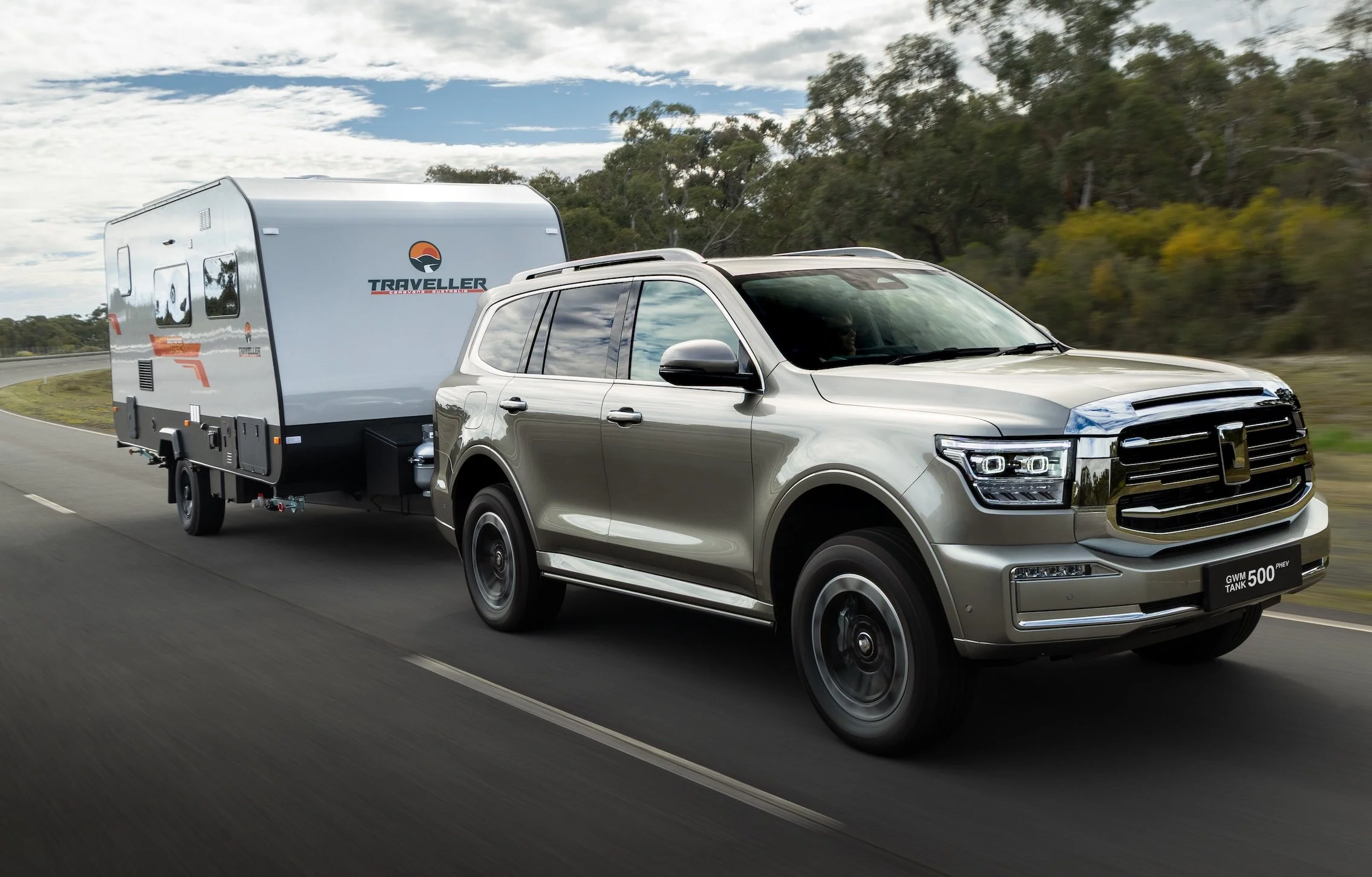
ADDING a big battery allows the latest edition of the GWM Tank 500 large sports utility wagon to achieve genuine distance driving on electric alone, but means fewer occupants get to enjoy this.
That concession reflects in the price, with the new model set to sell for $79,990 - so, $3000 less than the Ultra Hybrid electrified example already here.
Because? While the new PHEV has many pluses, including much more electric punch that the non mains-reliant self-replenishing version, it also - because of the engineering challenges of fitting its much larger drive battery - reduces from the seven chair capability of other types to be a five seater.
GWM sentiment about how well the Tank 500 Hi4-T could do here is expected to be expressed at a massive brand event over the next two days.
The ‘GWM Tech Day’ in Melbourne is in two parts; day one gives high-ups from the brand, some out of China, a chance to talk about technology that is impending, and some that is more future-focused, with no firm on-sale timeline for here.
Day two is all about driving out at the vast pricing ground GWM has just signed up to use for all regional fine-tuning of its products.
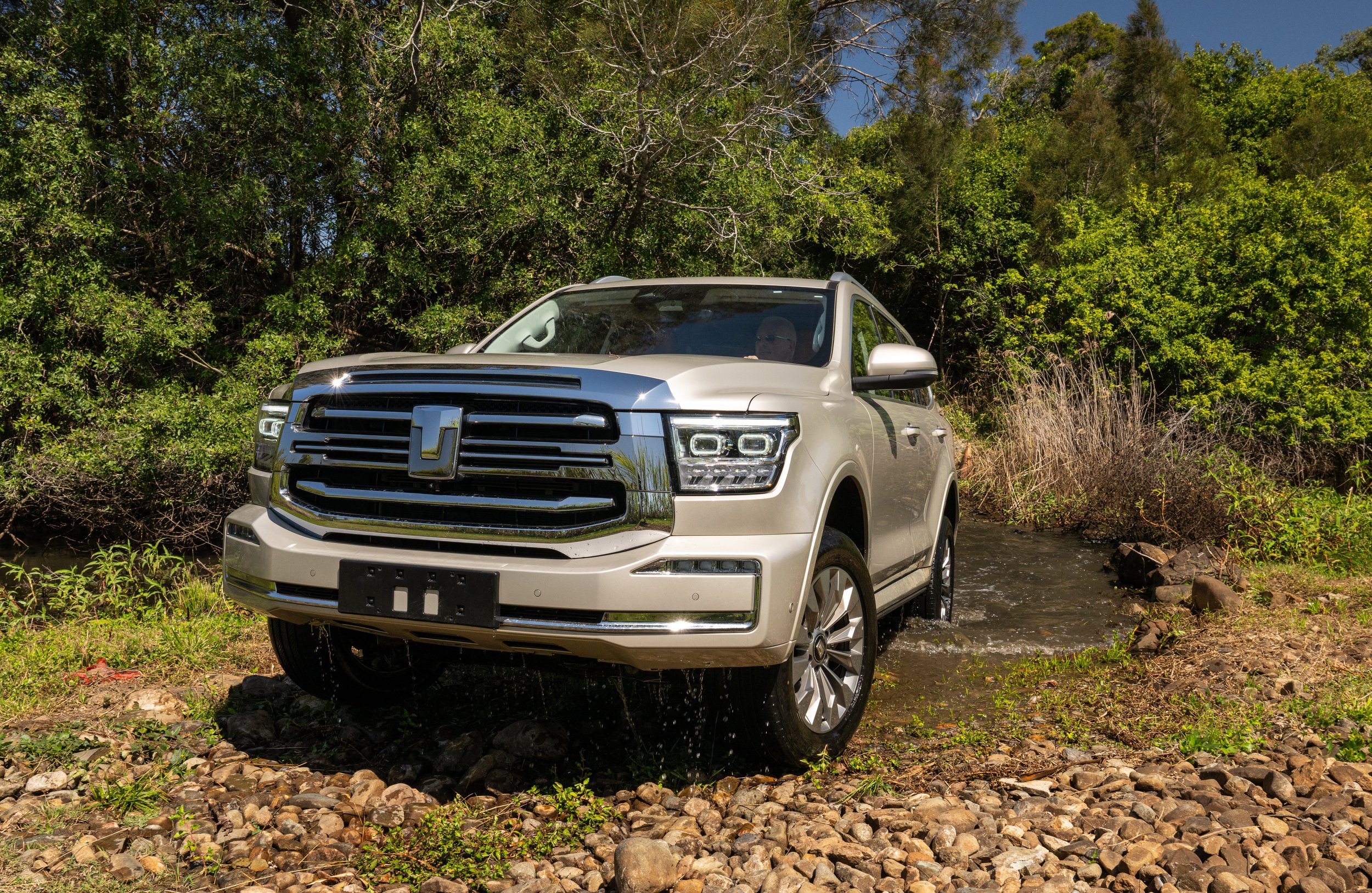
A star of that event is rhetorical PHEV, which takes the same mechanicals as the Cannon Alpha Hi4-T utility already selling here - so, a 2.0-litre turbocharged petrol engine pairing with a 120kW electric motor.
The Tank is among new models media and dealers are being invited to put through its paces at the Lang Lang testing ground outside of Melbourne, a facility which was of course developed by Holden, but sold off by General Motors subsequently to its regionally famous brand being retired.
In August GWM announced it had secured permanent residency at what’s now called the Lang Lang Proving Ground (LLPG).
In March the company announced the appointment of Rob Trubiani to lead the development and localisation of GWM products for this part of the world.
He is one of Australia’s most respected automotive engineers, with more than 25 years of experience developing and testing Holden’s vehicles for Australian roads. Much of that time was spent at Lang Lang. His sign-off was the hugely respected Commodore SS-V Redline.
Journalists have been told driving impressions of the new products are subject to embargoes. In respect to the Tank 500 PHEV, that lifts early afternoon on October 13.
The NZ pricing for the PHEV is sharper than in Australia, where it is line ball with the Toyota LandCruiser Prado GXL Hybrid, a $85,990 product here.
GWM regionally has opted to launch the Tank 500 PHEV with the brand's 'Hi4-T' technology, which retains mechanical four-wheel drive and traditional differential locks, rather than its 'Hi4-Z' system available in China, which upsizes the battery even more but deletes conventional 4WD hardware to allow this.
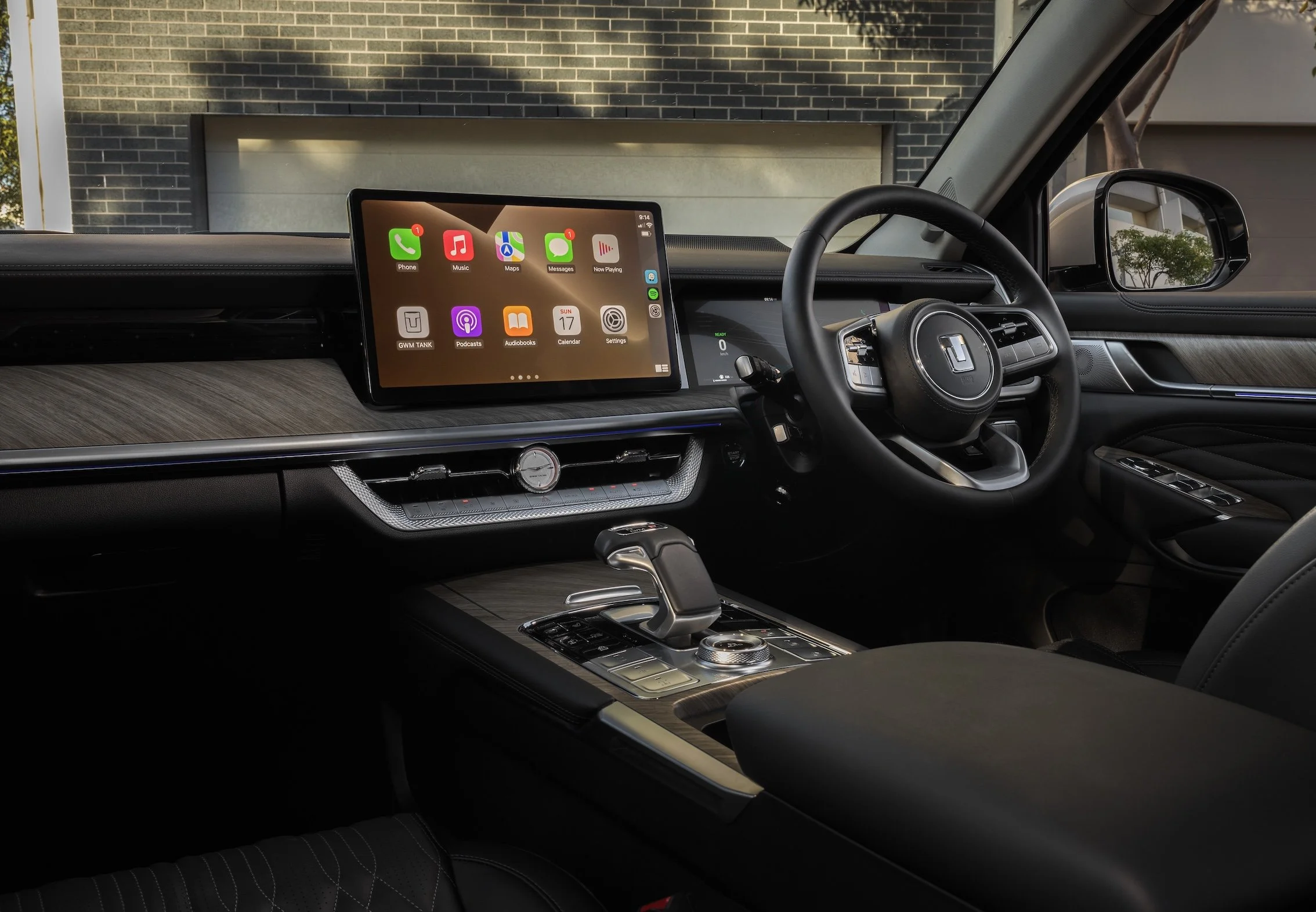
The PHEV keeps the hybrid's 180kW/380Nm turbo four-cylinder petrol engine, but fits a more powerful 120kW/400Nm electric motor ahead of the nine-speed automatic transmission.
Combined outputs of 300kW and 750Nm are claimed, up from 255kW/648Nm in the regular hybrid.
The type takes a 37.1kWh nickel-manganese-cobalt (NMC) battery pack for energy storage.
GWM quotes a 120km electric-only driving range and 950km hybrid range, but that’s to the NEDC scale that is not considered credible here.
New Zealand favours the WLTP scale, but GWM sticks with NEDC because it is prioritised in Australia, where it regionally headquarters. WLTP figures are being sought.
Fuel consumption is rated at 2.1L/100km - again when using the NEDC scale - compared to 8.5L/100km for the Tank 500 hybrid, and 1.7L/100km for the Cannon Alpha PHEV.
DC fast charging at up to 50kW is supported. Vehicle-to-load technology feeds energy to external electrical devices at up to 6kW.
It is rated to tow 3000kg, as with regular hybrid models, as well as wade through an identical 800mm of water, and climb off-road obstacles with locking front, centre and rear differentials.
Approach, departure and breakover angles are also unchanged, though the PHEV is expected to quote 213mm of ground clearance, down from 224mm.

The Hi4-T has mechanical torque-on-demand 4WD and up to three differential locks.
Drivers can select from 11 driving modes, while an off-road display provides data on gradient, tilt and differential lock status.
Standard features include a 14.6-inch touchscreen, panoramic sunroof, nappa leather upholstery, front seats with heating, cooling and massaging, and an Infinity-branded sound system.
It will also offer dual-zone climate control, a head-up display, automatic parking, a 360-degree camera, an eight-way power-adjustable driver's seat and Apple CarPlay and Android Auto.
Safety features include seven airbags, autonomous emergency braking, lane keeping assist, forward collision warning, 360-degree camera, and front and rear parking sensors.
Meantime, the 500 is unlikely to always be the largest SUV GWM offers in the region, with reports out of Australia say GMW is looking to adopt the physically larger Tank 700 (above).
Registered as of September 29, GWM Australasia has reported secured the flagship Tank’s exterior design with IP Australia which, while a long way short of an official confirmation, sets the scene for a product announcement in the coming months, media there believe.
Only a flagship Special Edition has been registered, suggesting the luxury 4x4 might only be offered in modest or exclusive numbers.
This type presently offers in China with a turbocharged V6 petrol plug-in hybrid credited with a combined 385kW/850Nm.