
One or two? Box set to meet Atto’s ICE-matching price position
/EXCLUSIVE: BYD’s announcement of a NZ-first sub-$30,000 sticker for a new electric car seems set to be matched in a few days by another same-format Chinese car with even better performance and range.
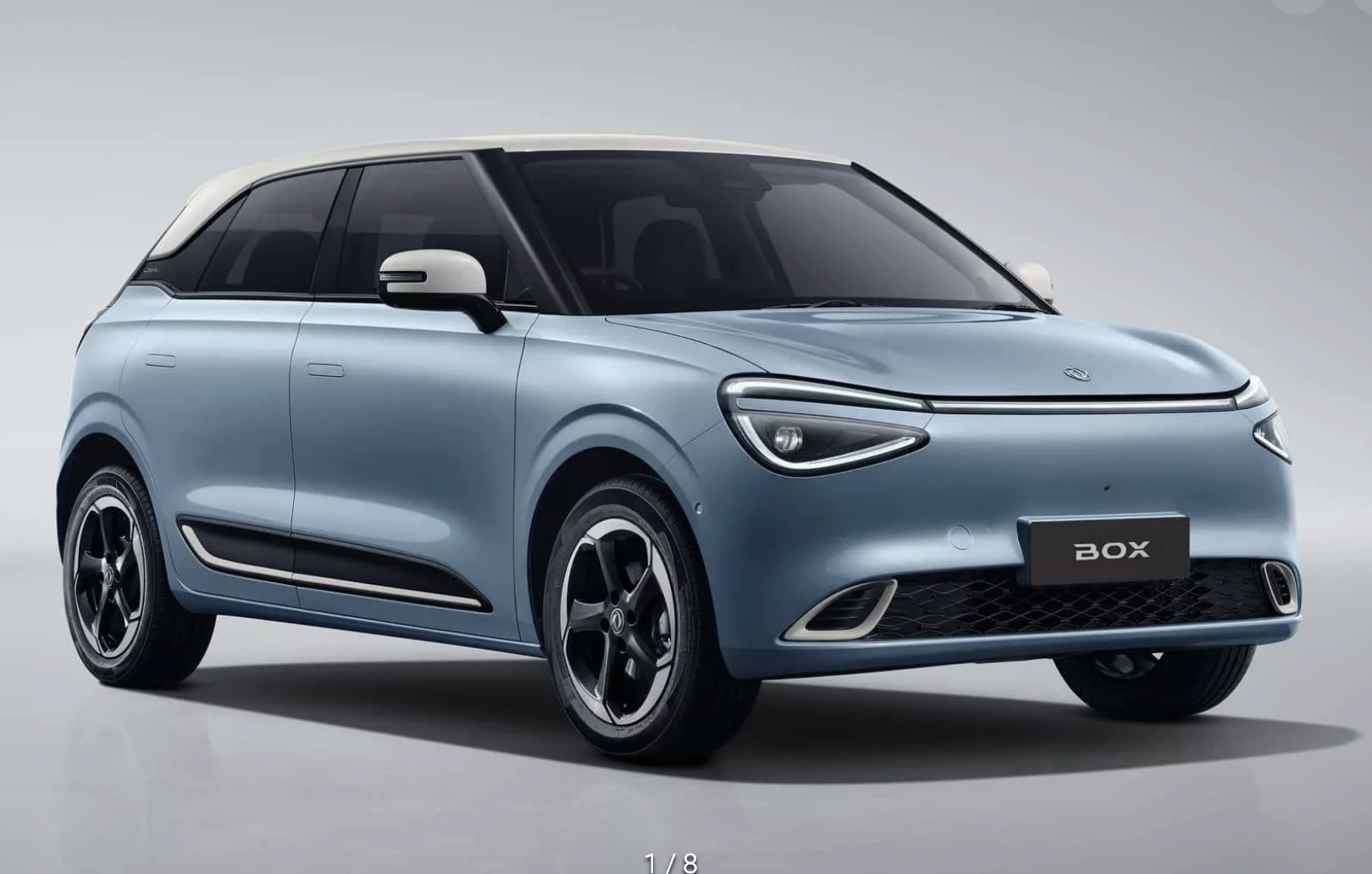
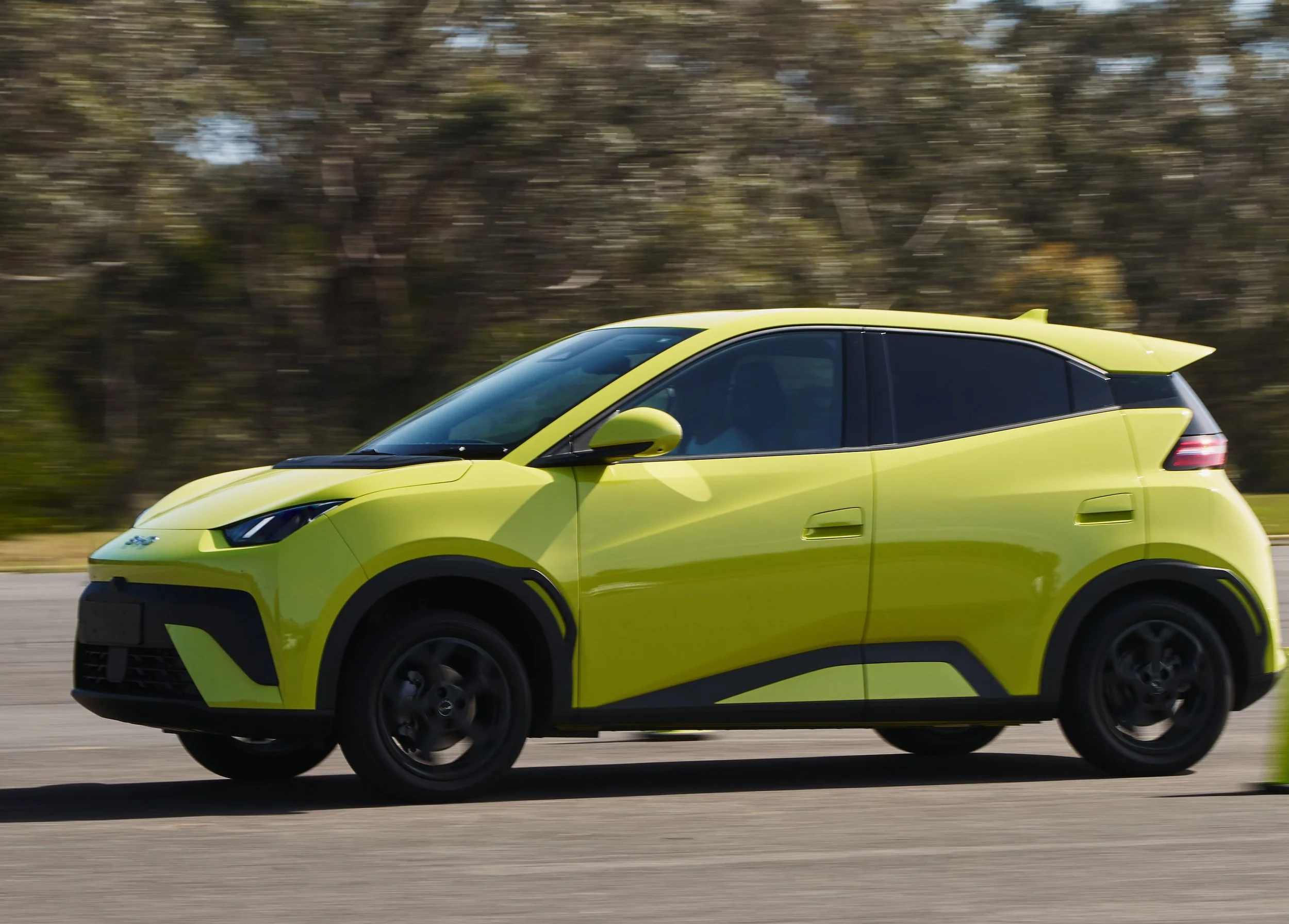
THE BYD city hatch that has realised as the cheapest electric car here and a hunter for the country’s favourite small car, the Suzuki Swift, already seems set to become the hunted - with a more potent rival from China lining it up.
The Dongfeng Box (top) is expected to announce on November 11 with the same $29,990 sticker BYD New Zealand has attached to the Atto 1 (the yellow car), MotoringNZ.com has learned.
That sets up an intriguing battle between two battery-reliant five-door babies, with Suzuki principal among makers of like-priced small petrol cars waiting to see if regime change occurs.
Now a petrol hybrid, Swift has been firmly positioned as NZ’s top selling small car for years, but has never directly faced up again an electric car before.
It starts at $25,990 in manual and from $27,500 in automatic, so maintains slight pricing advantage.
However, local BYD claim the Atto 1 is now setting EV precedent in realising full price compatible with an internal combustion car still stands true.
A $29,990 sticker is held by the petrol Mazda2, which has modest penetration, and betters the Toyota Yaris, which goes from $33,490.
BYD’s announcement was widely-expected.
On October 7 the NZ operation’s general manager, Warren Willmot, was directly asked by MotoringNZ.com if the car was set to take that sticker. He declined to say.
Until yesterday, the cheapest fully electric new product in the market was another compact five-door hatch from China, the GWM Ora.
It this week dropped to $35,000, having until then had a regular RRP $2000 higher. Last year, when distributors were forced in discounting to shift excess stock, the Ora was down to as low as $26k.
If Box and Atto1 come to a head-to-head, then base technical detail seems to favour the Dongfeng as it has a larger battery, slightly more power and better range. And it might also land earlier.
BYD’s push with Atto 1 begins in January, though orders are being taken now, whereas Box should be on sale pre-Christmas.
The Atto 1 version that achieves the headline sticker is the entry Essential spec with a 30kWh battery paired with a 65kW/175Nm motor, delivering up to 220km of WLTP range.
Box which has a 42.3kWh battery, a 70kW motor and is cited to deliver 340km on the WLTP scale.
Atto 1 is a new opportunity for a make that kicked off strongly with another electric, the Atto 3, when sub-$80,000 electric earned a rebate, but has not run so strongly since that incentive was dropped at end of 2023.
Box has similar potential for Dongfeng, a state-owned enterprise founded in 1969 based in Wuhan, China, already in 100 countries and aspiring here to secure much the same buyer set as BYD.
It is represented nationally by Armstrong Group, which also has distribution rights to Peugeot, Citroen, LeapMotor, Smart and Opel, though the latter is expected to soon be retired.
Armstrong Group says the focus with Dongfeng is to deliver an EV breakthrough moment for Kiwis by redefining expectations of value when it comes to sustainable motoring.
In addition to affordability, it also promises innovation and advanced safety systems, with driving ranges to suit both city commuters and long-distance travellers.
In addition to the Box, Dongfeng will sell another SUV, called the Vigo, and a sports sedan, the 007, whose full specifications and pricing is expected to be shared at a media function next week.
The Box is the first model built on the Dongfeng Quantum Architecture S3 platform.
It made headlines in mid October when Euro NCAP shared a crash test concern, citing how body welds failed in a standard frontal impact assessment.
It was deemed to have performed poorly in that regard, with NCAP saying that increased the risk of deformation around the cabin and reducing protection for occupants.
Euro NCAP additionally criticised Dongfeng for not providing any kind of safety aid to prevent front seat passengers from bashing into each other in a side impact collision.
However it still achieved a three star score, the same score the Swift holds with Australasian NCAP, which runs an identical test regime so can, and often does, adopt Euro NCAP findings.
Atto 1 - aka the Seagull in China, Dolphin Mini/Surf in Europe and the United Kingdom - has a five star score from Euro NCAP, a reflection of the export variety’s safety systems being beefed to be more agreeable to the test regime.
In domestic Chinese market fit out, the Atto 1 sells for as little as $16,200. But the export version was never set to be that cheap, as it picks up a swathe of safety features that are either not standard, or simply not provisioned, in the China market, which was happy with it forgoing some airbags and any active safety tech.
Along with revised front and rear styling, the export versions have a driver assistance package known as God’s Eye C, with features like adaptive cruise control, autonomous emergency braking, blind-spot monitoring, lane-keep assist and rear cross-traffic assist. Also included is a front-centre airbag.
In addition to the Essential grade, BYD will also provision the Atto 1 in a Premium variant for $35,990, featuring a 43kWh battery with 310km range and 115kW and 220Nm.
BYD NZ yesterday also confirmed intent to sell a compact SUV, the Atto 2, with a 51kWh battery delivering up to 345km range. This will present in $39,990 Dynamic and $45,990 Premium variants.
It is also furnishing two plug-in hybrid cars. The Sealion 5, at $39,990 and $45,990, depending on spec, runs a 1.5-litre engine married to an electric motor, an entry with a 12.9kWh battery and a Premium with a 18.3kWh battery. The Sealion 8 is described as a flagship seven seater, but no detail is shared.