
Meister class: Acing the ultimate Toyota title
/The best of the best of test drivers employed by Japan’s most powerful brand earn an accreditation that has just gone to a Kiwi. But is all as it seems?
WHEN the word’ meister’ crops up in Toyota and Lexus talk, true fans take notice.
Within Japan’s biggest car maker, a meister is a test driver, but more. Meister is an ‘earned’ accreditation.
Toyota has 300 test drivers, Yet only a handful are recognised as having the talent to be so exceptional they are driving gods.
Those who meet that "highest-ranked" standard achieve meister status.
The aces of aces influencing the makes’ performance cars include figures like former Toyota Motor Company President Akio Toyoda, who earned his spurs racing as “Morizo”.
Some, but not all, current factory team drivers in the racing genres Toyota competes in with factory effort have the accreditation.
They come from the two categories the make has excelled in; the World Endurance Championships, a sportscar circuit racing genre, and World Rally Championship.
Among those is WRC title holder Kalle Rovanpera, the record-breaking, youngest-ever WRC world champion when secured the title here in NZ in 2023.
Rovanpera is back here next month to begin a new chapter of his motorsport career, single seater circuit racing. With Toyota, of course, via the CTFROC (nee TRS) competition.
All are still, or have been, key to Toyota's motorsports success and development.
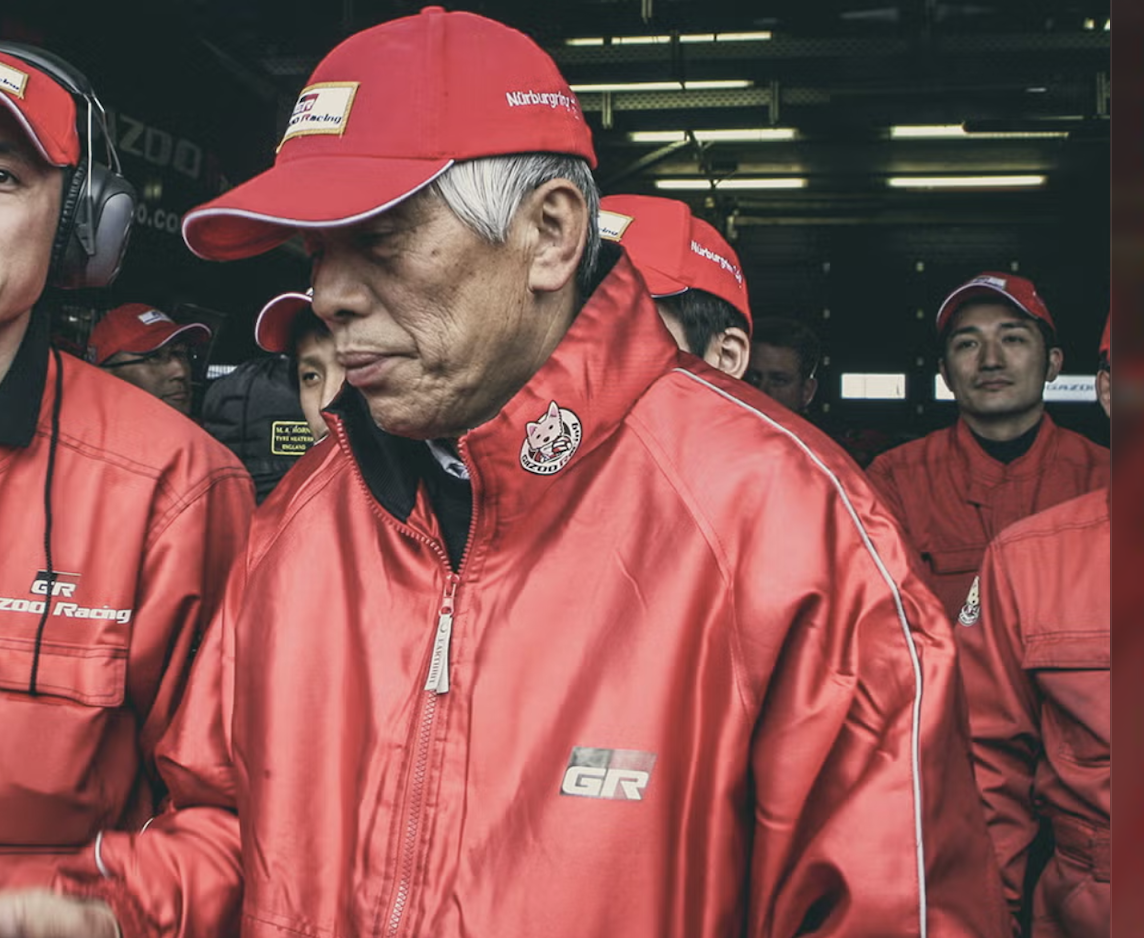
The most famous of all remains Hiromu Naruse (top photo), Toyota’s most senior test driver, with the brand for more than four decades. A legend in Japan who perhaps only fully came to international status for his work on the fabulous Lexus LFA V10.
Any Kiwis likely to be considered meisters? That’s the reason for today’s story. It has an interesting twist.

The most obvious historically would have to Chris Amon (above), but it seems his time associated with Toyota pre-dated popular application of the internal title.
Still, Toyota certainly held the Rangitikei-born, 1966 Le Mans winner and former Ferrari Formula One works driver in very high regard.
After retiring for F1, he was of course recruited by Toyota NZ to make their - at the time - early mundane products drive with more allure and flair; most of that work undertaken at Manfeild, his home circuit, now renamed in his honour.
Amon had astounding feel for a car - he could tell if a tyre pressure was ‘off’ by infinitesimal degree - and he and a tea, of Toyota NZ engineers adjusted Corollas and Coronas to greatness with relatively easy suspension and tyre choice refinements.
So modest were the adjustments is said head office in Japan was originally sceptical. But after they drove the cars and hosted Amon in Japan, they realised and acknowledged his talent.
Anyway, history.
How about in the now? You’d have to think Toyota thinks highly of Brendon Hartley (below).
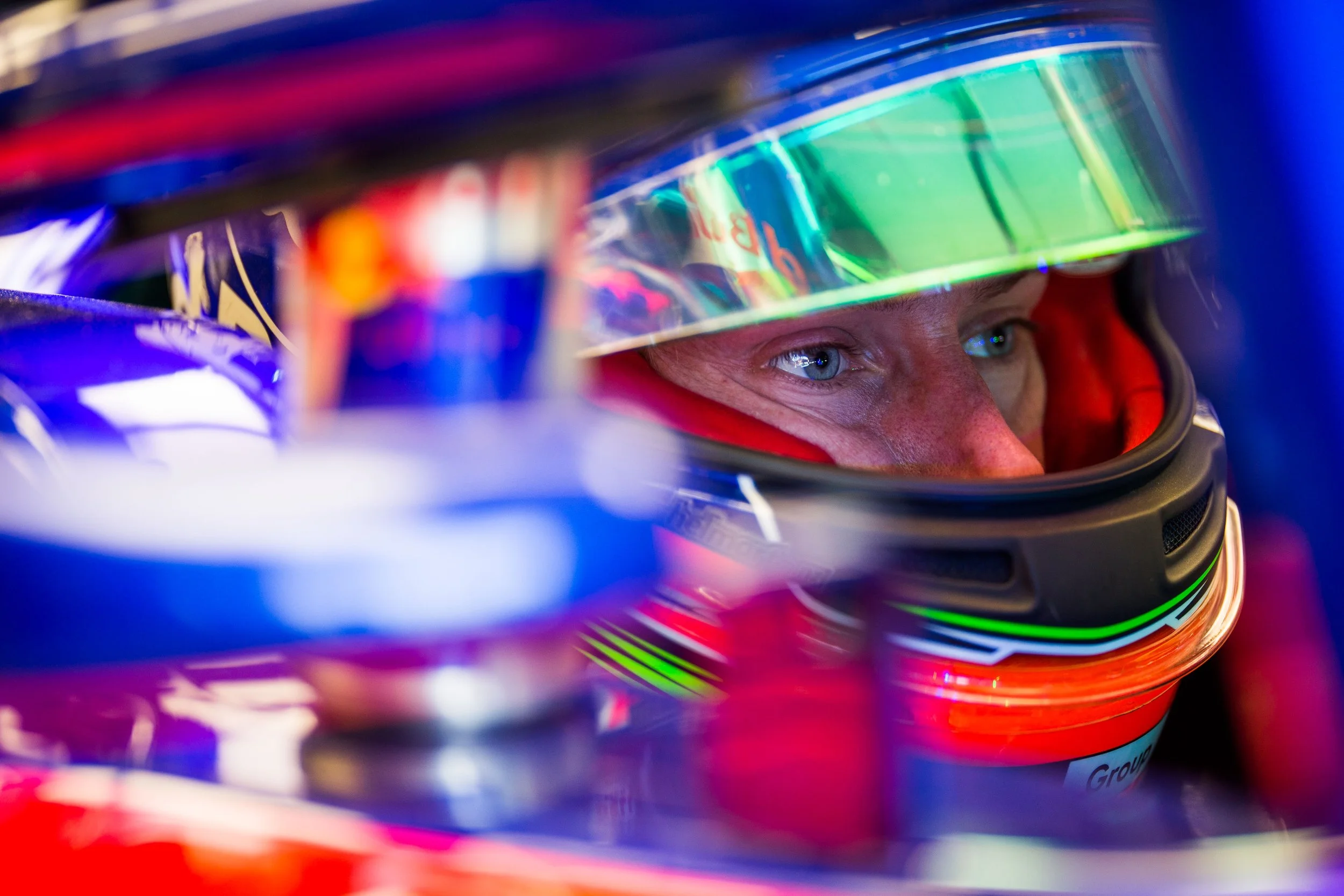
Four-time world endurance championship title winner (twice with Porsche, twice with Toyota), three-time Le Mans 24 Hours winner (first with Porsche, twice with Toyota); the very first winner in what began as Toyota Racing Series.
Regardless he interspersed his sports car career with two (sadly unremarkable) years in Formula One, with Toro Rosso, the career stats show Hartley to be one of our very best, ever. Amon was a supporter.
Yet neither hero of has ‘meister’ to their name … is any Kiwi worthy of the accolade?
An intriguing announcement earlier this month raise potential of there being another Jedi from here, someone who’d been operating so deeply in the shadows as to invisible.
December 5 was a huge day for Toyota and Lexus; the international unveiling of the GR GT in road and track-set GT3 formats, plus a Lexus LFA concept on he ample affirm, but swapping out the Toyota models’ twin turbo 4.0-litre V8 hybrid for a as-yet-unspecified fully electric powertrain.
The GR GT is set for sale here in 2027. With announcement of the car, came Toyota also naming a number of senior involvers as ‘GR Meisters’.
One of those was Andrew Davis (below), Chief Strategic Officer and Vice President of Mobility, Lexus and Motorsport at Toyota NZ.
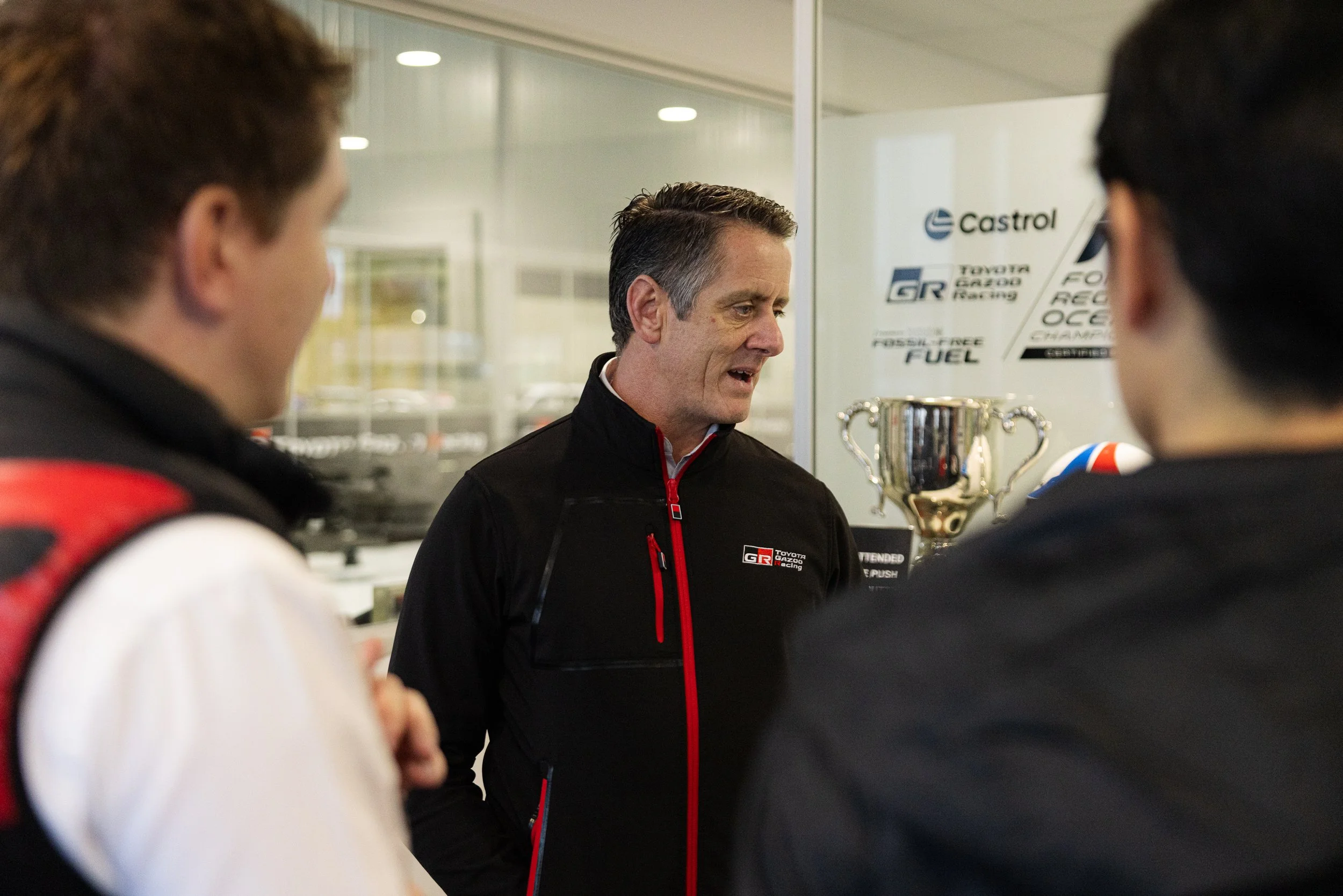
In his younger days, Davis was quite a handy kart then single seater racer; good enough to win national titles and also be a finalists for the Shell Scholarship, which in the 1990s supported young racers into circuit racing.
In his professional career, Davis has been a central figure in developing our pinnacle circuit racing category, what began as Toyota Racing Series then re-named as CTFROC … for, deep breath, Castrol Toyota Formula Regional Oceania Championship.
Whatever you want to call it, this is the absolutely proven primary springboard for any emergent talent looking to make a big break.
So, anyway, the title. Could this suggest Davis helped on the GR GT development programme …?
Erm, no.
When asked for explanation, TNZ’s communications people explained it’s not quite as it sounds. In this sense, it’s more about being a master of marketing and the like rather than any machine.
“‘GR Meister’ in this release is an honorary title that reflects Andrew’s role as a champion for Toyota Gazoo Racing’s brand in New Zealand, focused on shaping marketing direction, building customer relationships, and creating authentic GR experiences - rather than direct involvement in the car’s technical development, which was handled by GR’s engineering and driver teams.
“In addition, Andrew provides feedback from the local market back to Japan to help guide future brand direction and customer engagement strategies, and earlier this year travelled to Japan for special GR training to deepen his understanding of the brand’s philosophy and performance vision.”
So, turns out Toyota now has two kinds of meister, some of whom are potentially sharper circuit samurais than others.
But still, let’s agree that in broadest sense, the accreditation means they are invested in the brand’s most driver-focused products.
And the GT GT set to reach production in 2027 certainly seems set to benefit from that ethos.
It appears set to be an ultra-enthusiast dream car. One clue to that is the technical drawing here Toyota has released.
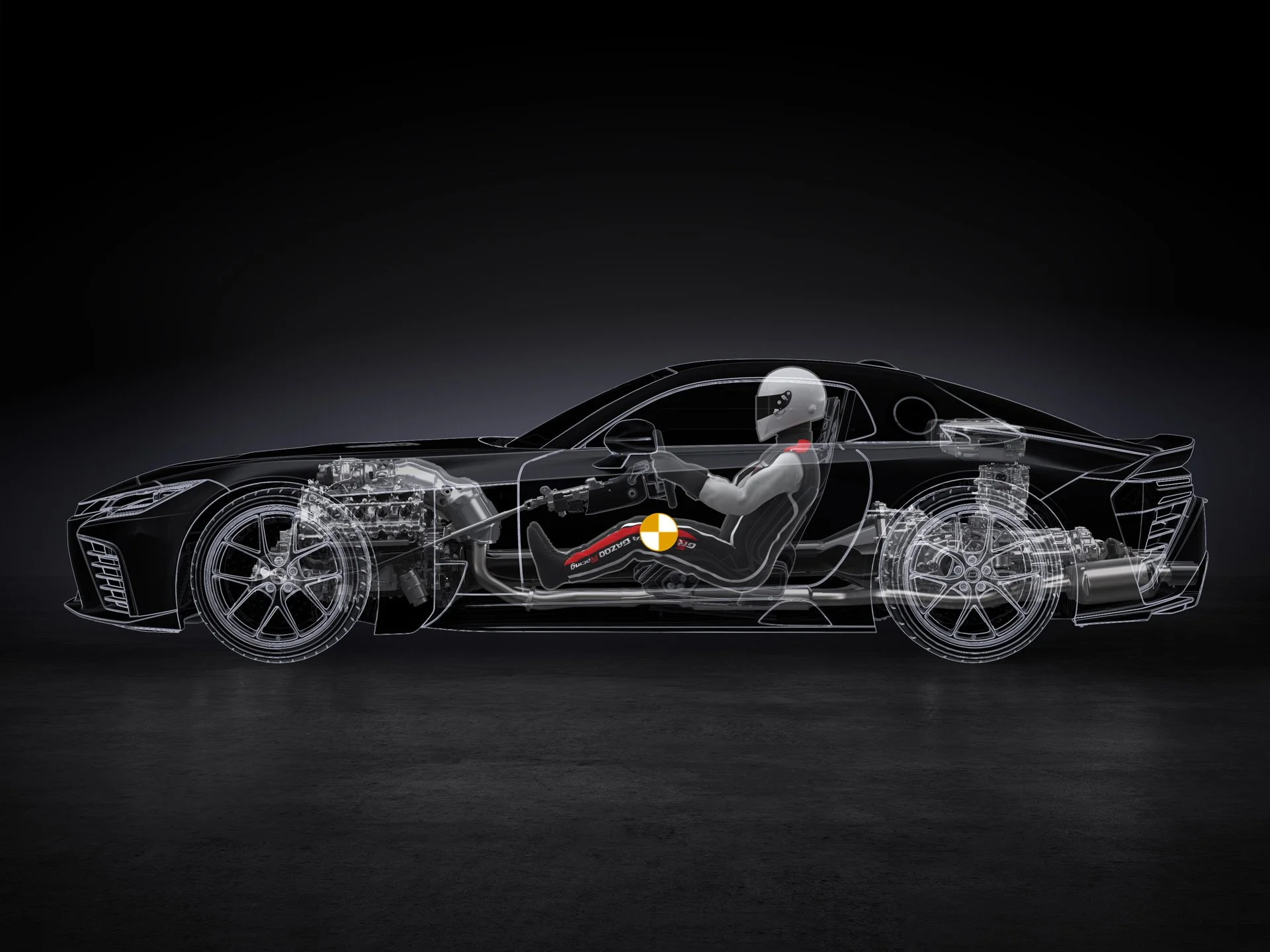
Wondering why this car’s bonnet is almost extravagantly long? The drawing (above) shows why. You can see the mid-front engine placement and note the entire block is aft of the front axle centreline. You cannot achieve that on any properly designed front-engined car.
Weight distribution is 45/55. Rear-mid weight distribution… suggesting a preference for rear weight bias. The centre of gravity is marked at the driver’s knee.
A car for ‘meisters’, then? Certainly, a car of the kind that would have pleased Naruse.
Toyota still speaks of the old bloke with reverence and so much about the GT suggests it’s just the kind of car he would have loved to have helped craft.
Naruse has been a driver for Toyota since 1963, involved with the development of cars such as the 2000GT, Sports 800, 1600GT, AE86, AW11 MR2, Supra, Lexus IS and many others.
He was very involved in the make’s various motorsport ventures, including the Toyota 7, a legendary but ill-fated series of prototype racing cars developed in the 1960s and early 1970s with Yamaha, which never went into competition, the programme being dropped after a fatal accident.
Some say it was so fast it became to dangerous to drive.
Naruse also died at the wheel of the product many consider his opus.
It was midmorning on June 23, 2010, and he had just completed another lap of the Nurburgring in a Lexus LFA.
Gazoo Racing has a base at the world famous circuit in Germany; in his 47 years he had accumulated the most laps of the original Nordschliefe of any Japanese driver.
It all led to the LFA he was driving, his life’s work; a car he had lived and breathed and raced for 10 years.
A feature subsequently published by Road and Track magazine is well worth finding on line.
It says Naruse was in great spirits. The orange LFA Nurburgring Package he was driving had more power than the standard LFA, plus a fixed rear wing and a more focused suspension.
“Naruse had been involved with many of Toyota’s legendary performance models, but he had never shown such delight in a vehicle—not the AE86, the Celica, nor the MR2. Not even the Supra.”
The magazine interviewed test driver Yoshinobu Katsumata, who’d been sitting in the passenger seat for the circuit session.
He recounted Naruse’s optimism at that moment. The car that would achieve his dream—building a machine that could topple the best from Europe on their own turf - was almost ready.
Naruse asked Katsumata if he wanted to take the wheel. Katsumata hesitated—he’d tested vehicles with Naruse for years and only drove when the car was nearly complete.
There was still another week of testing on the schedule. Katsumata politely declined and stepped out.
Naruse headed back to Toyota’s nearby engineering facility. An assistant normally rode along. On this day, “I’ll just drive back alone.”
The drive was less than 3km. Naruse had driven it hundreds of times. The accident was brutal, a head on with a local resident, who survived. The crash has never been fully explained.
There was no hope for the man who joined Toyota as a temporary mechanic, who Amon - one of the most gifted drivers of his era - once met and saluted as exceptional.
Naruse was 67.