
New car sales up, but caution still in air
/January this year was better than the same month in 2025, but that doesn’t mean the market is finally running well.
THOUGHT from the distributor organisation about vehicle sales in January is that caution is still required when considering market trends, despite the count suggesting improvement has occurred.
“January has opened the year on a stronger footing than the same month last year, with growth coming through most clearly in light passenger vehicles,” said Motor Industry Association Chief Executive Aimee Wiley in assessing the official dataset.
This shows 11,807 new vehicles were registered in January, up 8.7 percent on the 10,858 recorded in same month of last year.
Wiley says the increase was supported by higher rental registrations and steady business demand, but points out private registrations were slightly lower.
The slight climb in passenger registrations was offset a slight decline in commercial, the sector where market-favoured one tonne utilities reside.
The passenger take came to 9038 units, a 12.1 percent increase year-on-year from 8059. The commercial sector recorded 2769 registrations, down 1.1 percent from 2799 in the same month last year.
“These results indicate improving conditions, but the market continues to remain sensitive to broader economic and confidence settings.”
Once again, the battery electric vehicle sector whose health is most vital to distributors achieving CO2 reductions demanded by legislation - with penalties applying to those that fail - showed least movement.
Just 761 of those were registered last month and some high-fliers kicked in the year on a low, no more so than Tesla, with just a dozen cars plated.
The BEV sales represented 6.4 percent of the market, actually higher than the same month last year, but well off the pace that is required to meet Clean Car targets.
The top registering electric was the new BYD Atto 1, with 94, with the slightly larger and also new-to-market Atto 2 sister ship coming second, with 71.
Plug in hybrid vehicles were recorded 738 registrations or 6.3 percent of the market, again a modest showing. The top performer in that sector was the BYD Sealion 6, on 86, with another offer from China, Haval’s H6, second on 75.
Hybrid electric vehicles continued to present as the clear preference. These accounted for 3312 registrations (28.1 percent of sales).
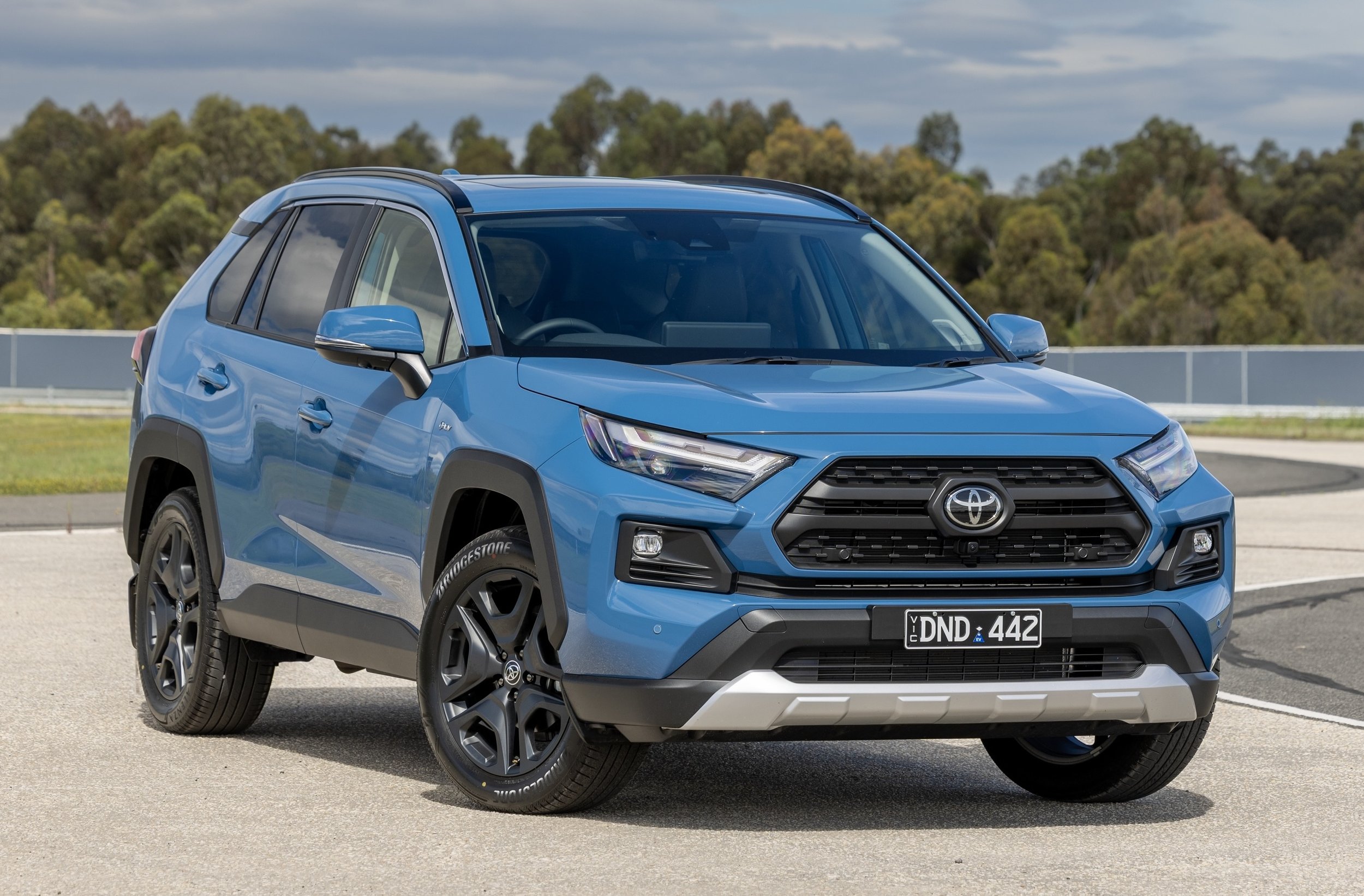
The top single performer was the Toyota RAV4, presumably the runout edition, on 641; it was also the best selling passenger product in January, repeating a feat also established in the same month last year, but with 1023 units.
Toyota’s Corolla Cross and Yaris Cross then followed, respectively with 334 and 284.
Those performances helped Toyota lead the new passenger market with 1868 registrations, up 10.5 percent year-on-year, giving it a 20.7 percent market share.
Mitsubishi claiming second place with 1070 was a 61 percent surge; Kia followed with 990 registrations, up 15.4 percent, with Ford next with 441 units, a 17.6 percent climb. Chery was a new entrant to the improvers.
Some fell back, none more heavily than Suzuki, Nissan and Honda; they respectively dropped 24.7 percent to 381 units, 43.7 percent to 134, and 23.3 percent to 237.
Ford held top spot in commercial with 775 registrations, up 20.7 percent year-on-year, followed by Toyota with 485. Ranger was top commercial with 688 registrations, well ahead of the Nissan Navara in second on 405.