
Electric-age Ferrari in Kiwi fans’ sights
/Maranello’s plug-in hybrid supercar unveiled this week.
WELL-heeled and well-connected Kiwi fans of Ferrari will be considering how to secure the latest from the Italian sports car supremo’s stable.
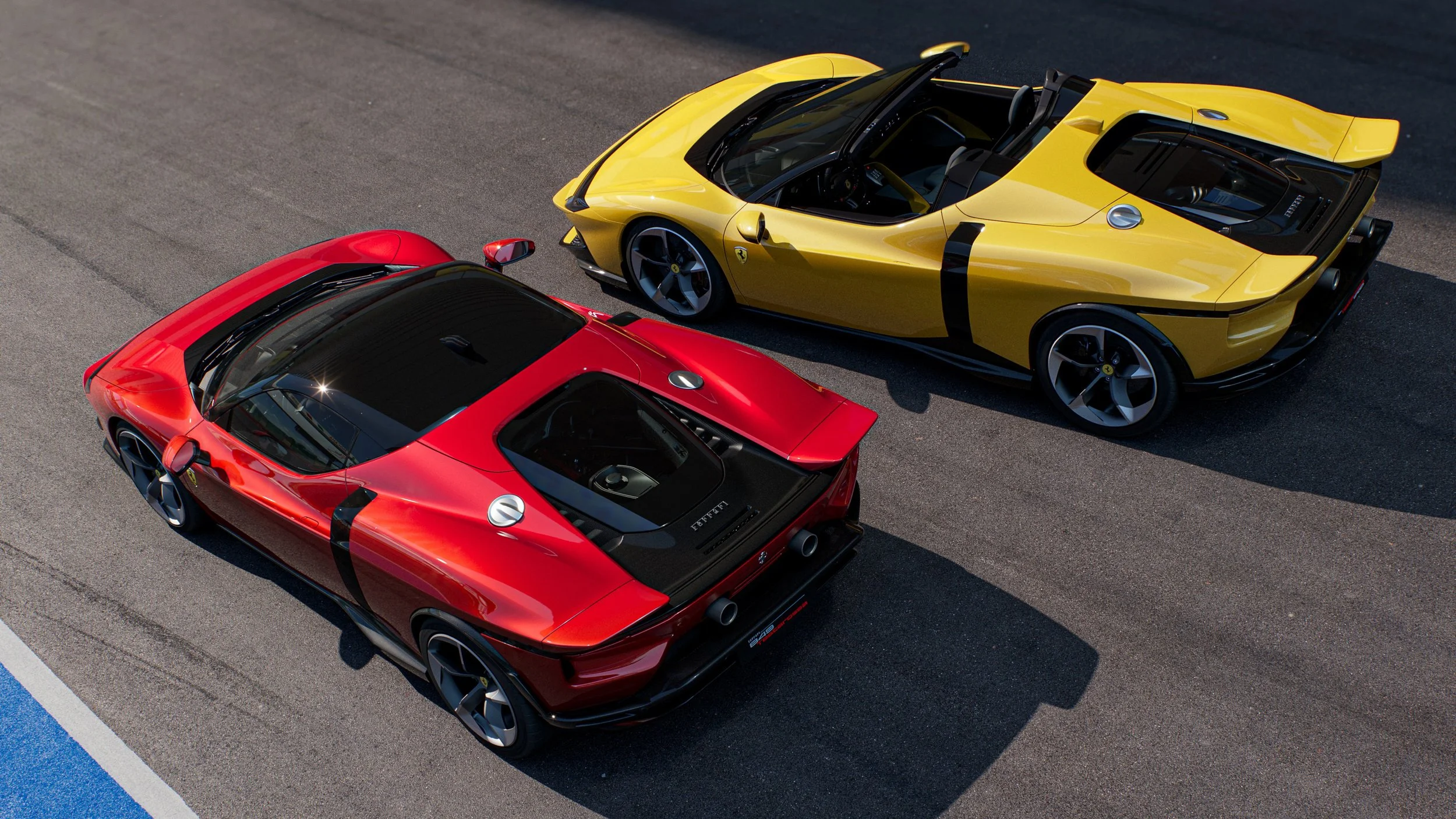
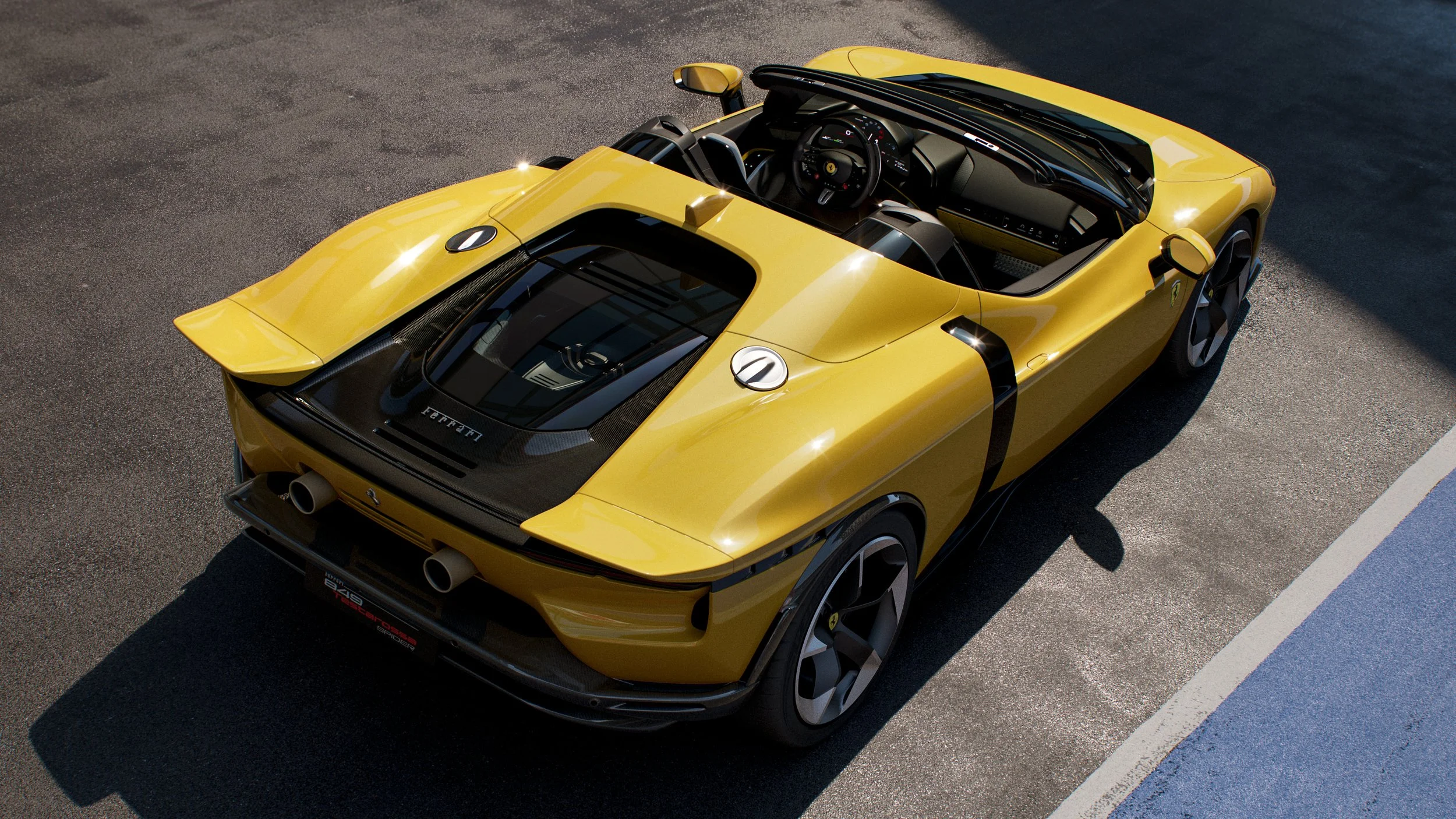
The 849 Testarossa being a technology high point not just mechanically by in terms of how it was shaped has made it a headline-hogger of the automotive week.
More allure comes from this V8 plug-in hybrid two-seater reprising a name steeped in Maranello history and is a huge homage to Ferrari’s racing heritage.
First used in 1956 to describe the red cam covers of competition engines, the Testarossa badge later defined one of Ferrari’s most recognisable road cars of the 1980s.
The make asserts the new car continues that lineage, in combining tradition with the most advanced technology ever fitted to a Ferrari it establishes Maranello’s new benchmark supercar.
How limited will it be? Ferrari is not a volume producer, but neither is the 849 a limited edition. It’s referred to as series production model. That puts it in the same ilk as the original Testarossa of 1984-1991 and its revisions, the 512 TR and F512 M, whose cumulative count ran to 10,000 units.
A person close to New Zealand’s enthusiast scene believes some who are already driving the make’s top dollar creations will be looking to this one, which comes in traditional coupe and open-top Spider formats.

He offered that thought earlier this year, when the 849 Testarossa, though still unnamed and under wraps, had become the subject of numerous sightings over the past couple of years as it underwent pre-production development.
Ferrari made clear then that something big was coming, and that pricing was not known - and still isn’t - won’t have dulled any desire to secure on for use on Kiwi soil, it was suggested.
“People who really want these cars will find a way, even if they have to wait years.”
At the heart of the 849 Testarossa is Ferrari’s re-engineered twin-turbo V8, producing 610kW on its own. Combined with three electric motors, the plug-in hybrid system raises total output to 772kW, so 37kW more than the outgoing SF90 nd making it Ferrari’s most powerful series production offer.
The layout includes two electric motors on the front axle for torque vectoring and four-wheel drive, and one motor on the rear axle derived from Formula 1 technology.
A 7.45 kWh battery enables up to 25km of pure electric driving, while four modes – eDrive, Hybrid, Performance and Qualify – optimise output for different conditions.
Ferrari’s engineering team has focused on reducing weight while increasing performance. Titanium components, recycled aluminium castings, and machining techniques inspired by racing engines help deliver the best power-to-weight ratio ever in a Ferrari range model.
The 849 Testarossa features a host of dynamic upgrades. A new ABS Evo controller sharpens braking precision, while revised suspension geometry, lighter springs, and recalibrated dampers enhance agility and comfort. Ferrari’s advanced digital control system, FIVE (Ferrari Integrated Vehicle Estimator), creates a real-time “digital twin” of the car to improve traction, braking distribution, and stability.
Tyres co-developed with Michelin, Pirelli, and Bridgestone further tailor the handling for track or road use.
The design draws inspiration from Ferrari’s 1970s Sports Prototypes and the legendary 512 S, combining sharp, geometric lines with functional aero.
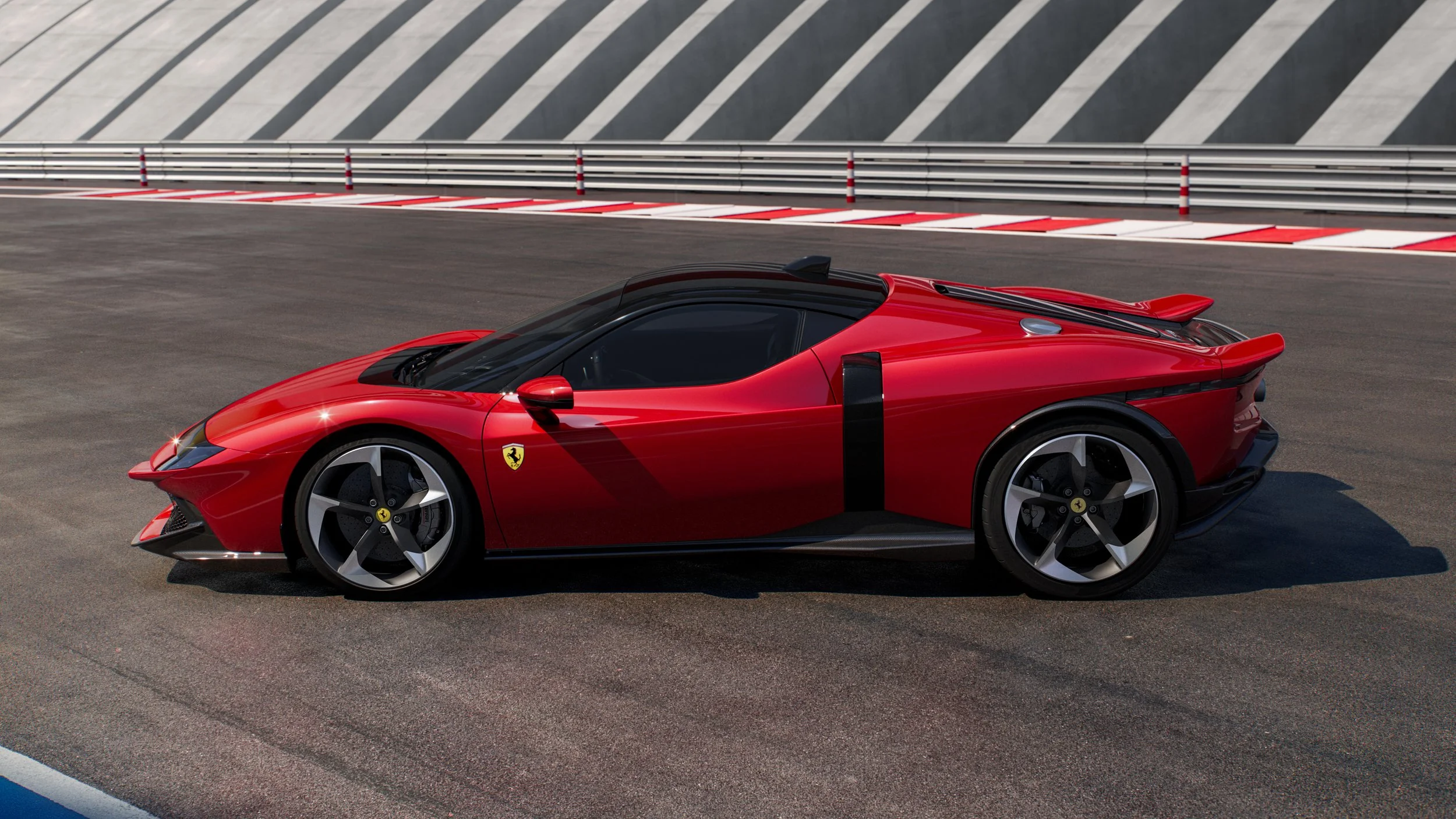
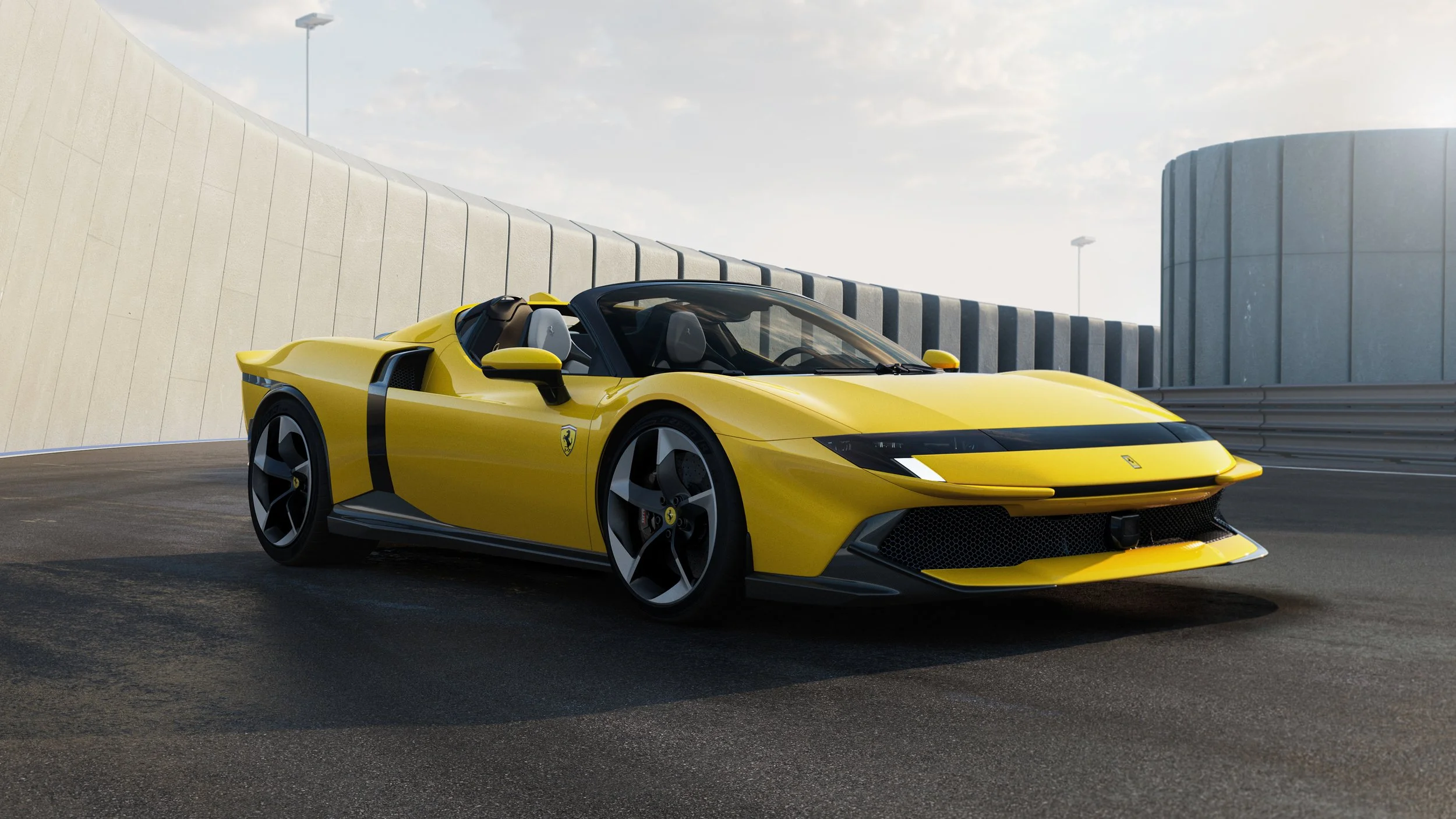
The car generates 415kg of downforce at 250 kmh, a 25kg increase over the SF90. Active elements, including a lightweight rear spoiler that switches between low-drag and high-downforce modes in under a second, balance stability with efficiency.
The sculpted doors double as aerodynamic ducts, feeding the intercoolers and brakes; the twin-tail rear architecture houses an active wing.
The interior continues Ferrari’s driver-focused philosophy, featuring an enveloping cockpit layout and a new steering wheel with mechanical controls, including the iconic red start button. A redesigned gear-change gate, inspired by the F80, sits in the central sail motif, while the new HMI system simplifies interaction. Connectivity includes Apple CarPlay, Android Auto, and wireless charging, supported by the MyFerrari Connect app.
The Spider format allows the retractable hardtop to open and close in 14 seconds at up to 45 kmh.
For clients seeking even greater performance, there’s an optional Assetto Fiorano package cuts weight by 30 kg using carbon fibre and titanium, adds stiffer suspension, and introduces aggressive aero elements. Exclusive liveries and bespoke wheel options expand Ferrari’s personalisation programme.