
EV2 now a ‘maybe’ for NZ
/Kia’s smallest electric is now in production and distributor sentiment has become more positive than it was a year ago.
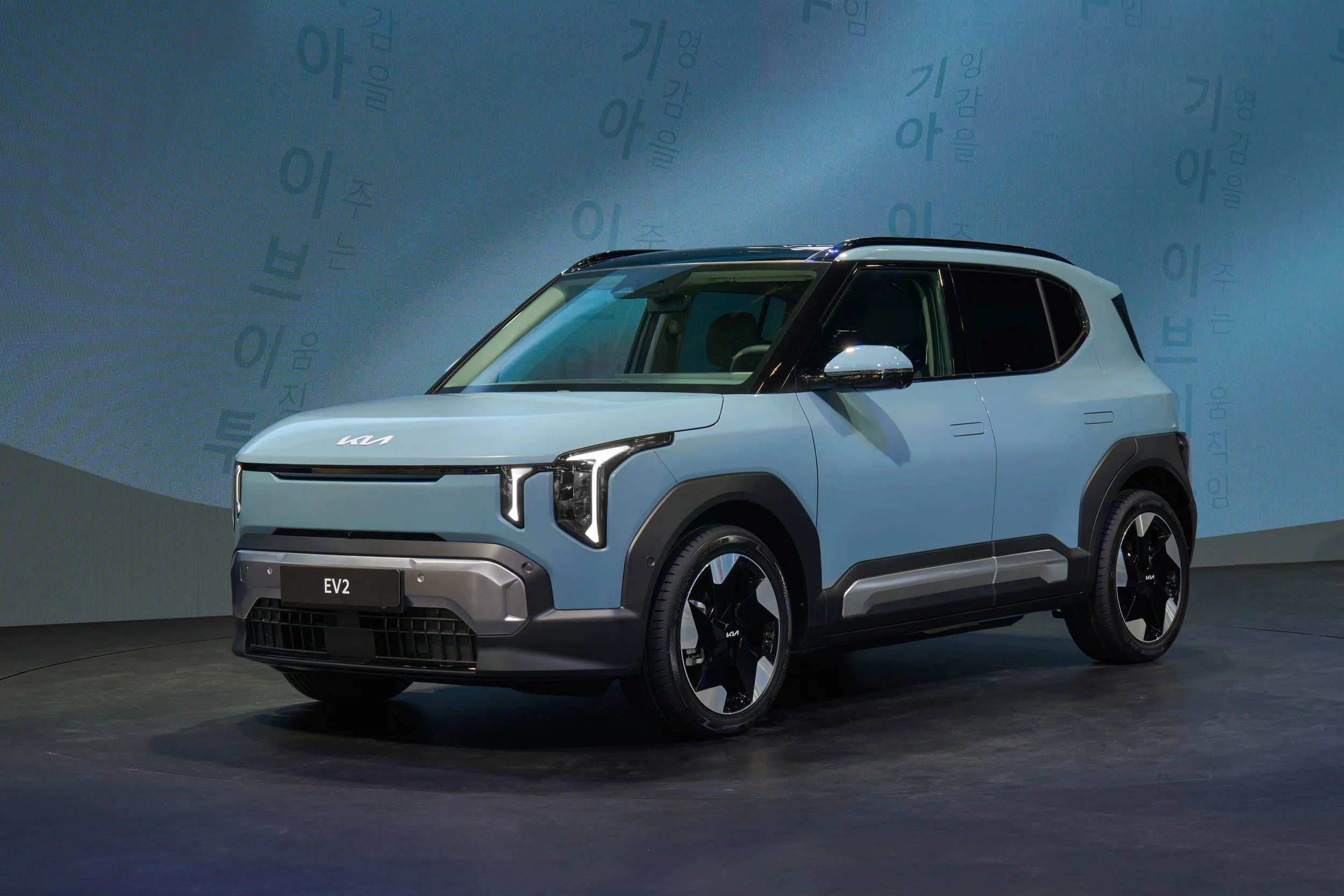
HAVING said ‘highly unlikely’ when it first revealed, Kia New Zealand now seems to be thinking ‘yeah, maybe’ about the smallest electric car the make has yet produced.
In wake of the full production type having unveiled in Europe, where it will be built, comment just out of the Auckland-based distributor about local sales potential for the EV2 seems more conciliatory than it was when the car was revealed in South Korea last March.
Now it’s a case of the petite entry point to the Hyundai Group make’s electric passenger car aspiration being under consideration. Far from confirmed, but not out of the picture, either.
That’s a more positive comment than it provisioned 10 months ago; at that time the prospect of NZ seeing this little brother to the then freshly-launched EV3 compact was non-existent.
Kia NZ has not opened up to why it is more open-minded now, but the small EV sector has become more interesting now.
Also, since its original position was aired, sister brand and arch competitor Hyundai has expressed aspiration to have its equivalent battery tot here, the Inster.
The four-metre long, 1.8m wide and 1.5m tall hatchback certainly has a key role in Kia’s international electric car strategy.
It is expected to attract what Kia calls the “early majority” - budget-minded first timers, not just to electrics but also potentially any kind of car.
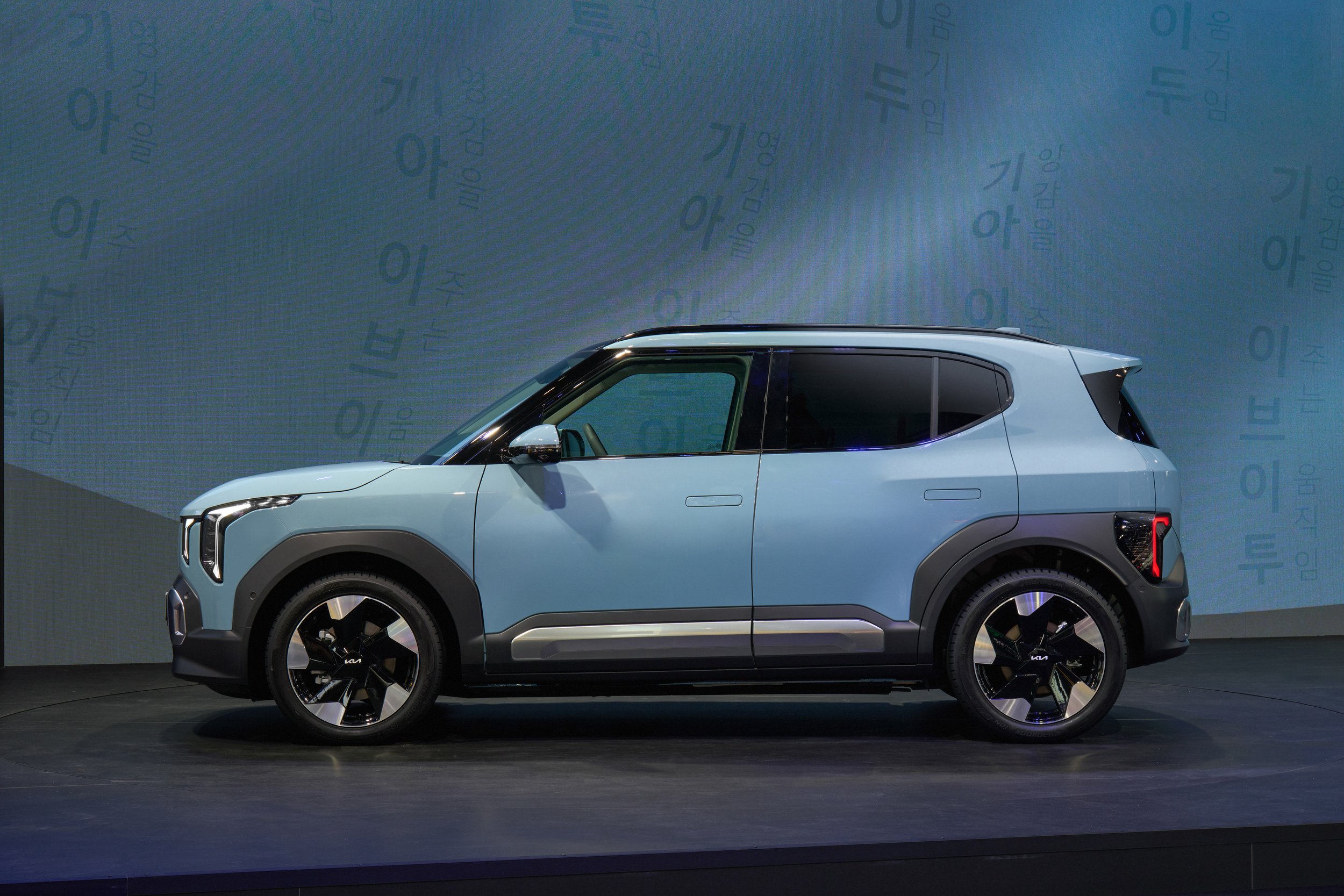
The small crossover shares the same new 'simplified' 400V version of the brand's E-GMP platform as EV3 and EV4.
Kia’s international intent is plain. This is going to be their cheapest electric vehicle.
Even as a price leader, it would conceivably be measured against the BYD Atto1 and the Dongfeng Box, which each sell for $26,990 - a pricing precedent for new EV and a big leap for Kia NZ, whose cheapest electric currently is the entry EV3 at $55,520.
Could Kia NZ get there? A factor in complicating its availability when first considered hasn’t changed.
The model is solely set to come from a plant in Slovenia. That’s great for supplying Europe, the primary market, but complicates for shipping here, all the moreso when the NZ dollar versus Euro exchange rate isn’t looking healthy.
That doesn’t impact on the EV3 or EV4, as they are respectively out of South Korea and China.
Kia fully unveiled the showroom-set EV2 at the Brussels Motor Show, in Belgium, a couple of days ago.
It will only avail in front-wheel drive, with a single 108kW electric motor on the front axle, in two variants, in four and five-seater provisions.
The standard range takes 42.2kWh LFP battery and the long range model has a 61kWh NMC battery. WLTP range figures are 317km and 448km.
It can achieve 11kW and 22kW AC charging, the latter first for Kia that lends full replenishment in three hours. No maximum figure for DC charging has yet been shared.
It can be fitted with bi-directional charging with V2L (vehicle-to-load) and V2G (vehicle-to-grid) capabilities.
The standard-range EV2 accelerates from 0-100kmh in 8.7 seconds, whereas the long-range takes 9.5s, the disparity due to the increased battery weight.
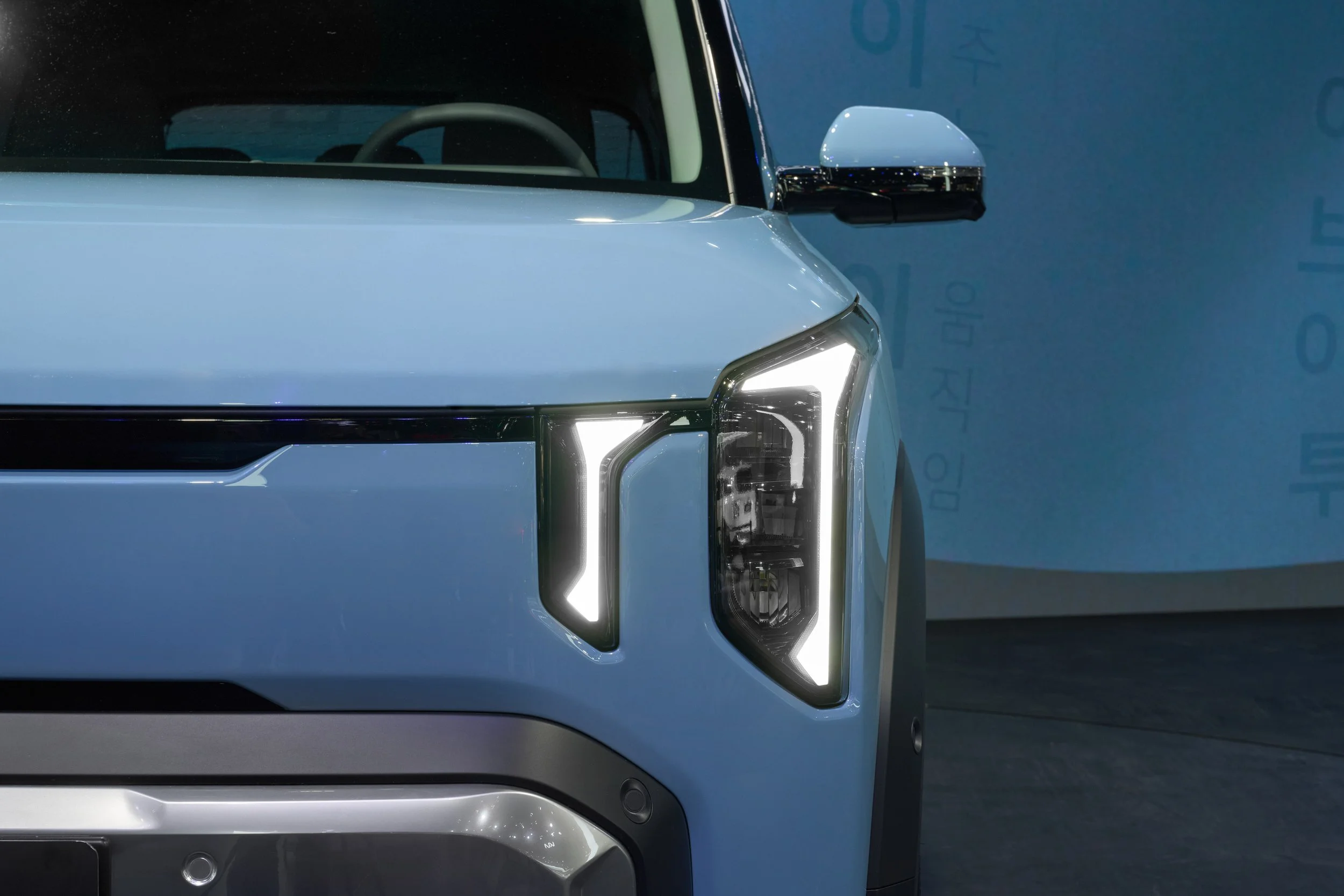
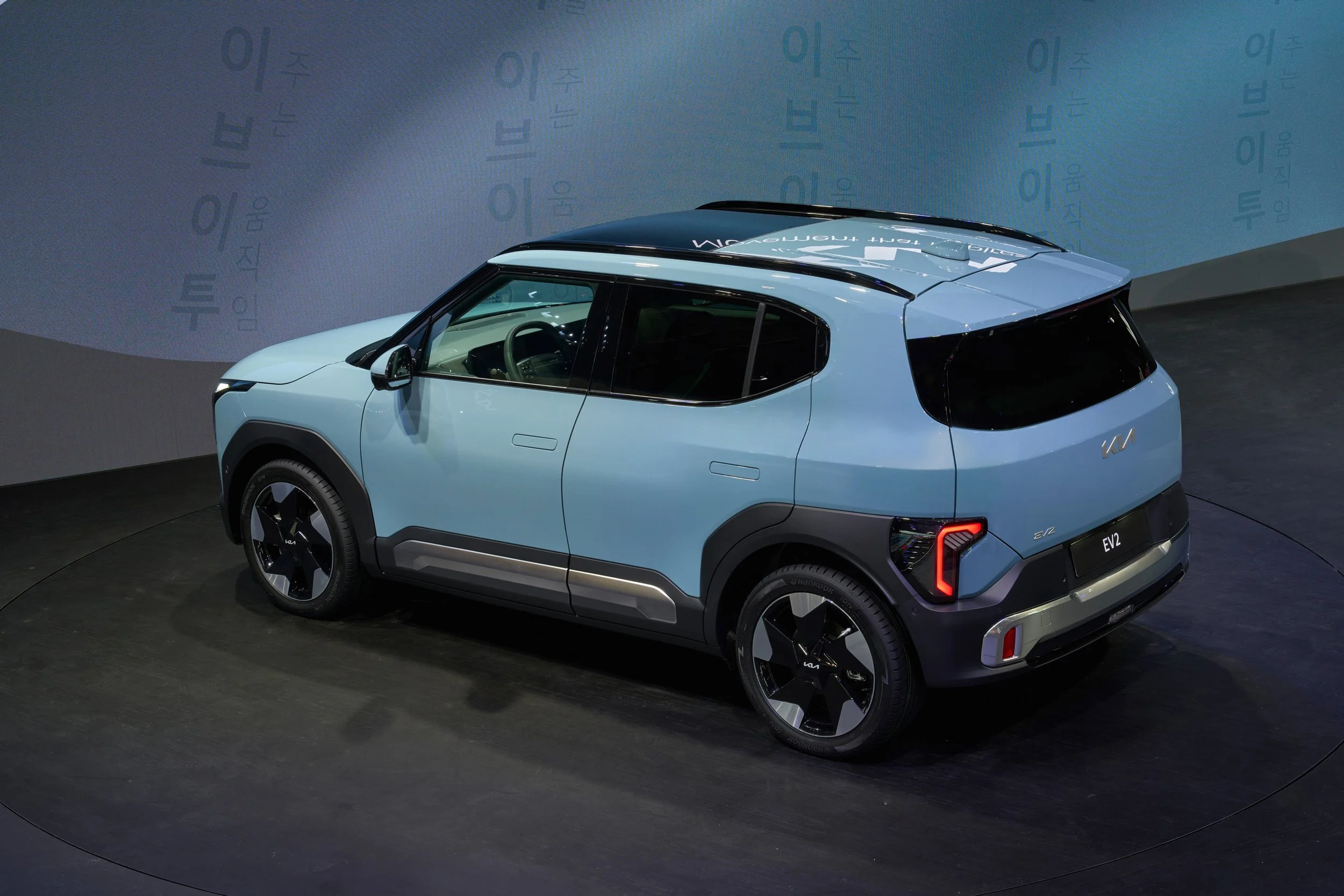
Kia’s 'Opposites United' design language influences the look; it’s another boxy, SUV-ish car. Vertical daytime running lights conform to larger Kias and all versions have LED lighting front and rear. As with Kia's other models, the EV2's door handles sit flush against the bodywork when the car is locked. A vertical rear end rounds out the clean design, with a wiper tucked underneath the roof spoiler.
Wheel sizes range from 16 to 18 inches on the standard car, with 19-inch options on GT-line versions. A variety of colours are available, including some with pearl and matte finishes.
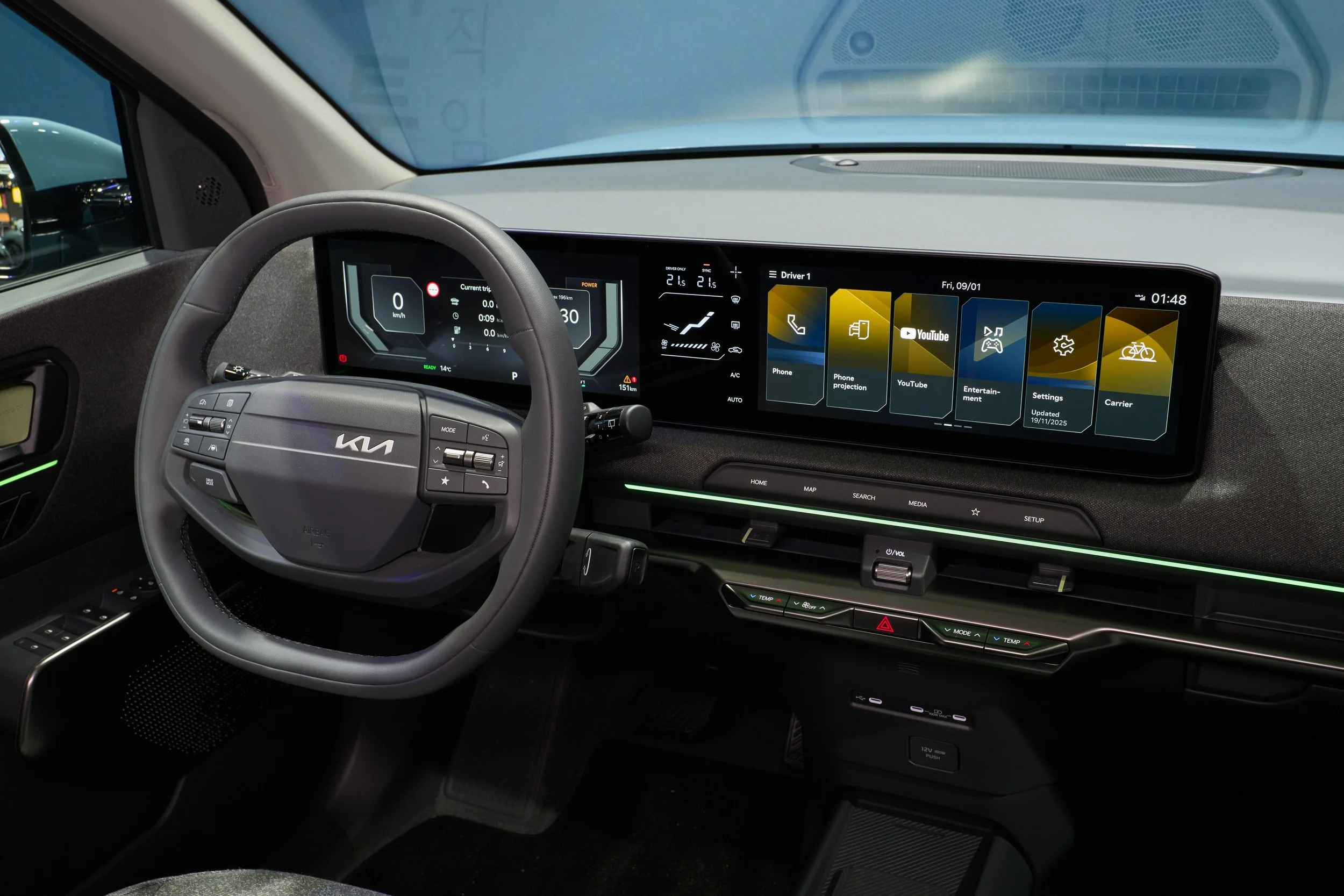
Baseline models get a two-spoke multifunction steering wheel while the GT-Line gets a three-spoke design. The dashboard features a fabric fascia that extends into the front doors, while ambient lighting offers a variety of colour options.
All versions utilise Kia's digital dashboard, a single-piece panel housing two 12.3-inch displays sandwiching a 5.3-inch touch panel for the climate control.
Wireless smartphone mirroring is available with Android Auto and Apple CarPlay. Technology includes an EV route planner that enables battery preconditioning to optimise fast charging during longer journeys.
For sake of affordability, Kia also plans to offer an entry-level infotainment system. This version retains the same look and layout but forgoes the built-in GPS technology. That means it doesn't get the route planner, but drivers can manually activate the battery preconditioning. The base infotainment system maintains ability to receive OTA updates.
The safety provision delivers Kia’s entire suite, including Highway Driving Assist, Smart Cruise Control, Lane Keeping Assist and Lane Following Assist.
It is a very compact SUV, but said to be roomy. The four-seat version provides broader, more comfortable seat bases for those in the rear, and the two rear seats slide forward and back independently, increasing legroom from 885mm to 958mm.
Seatbacks can also be reclined to improve rear passenger comfort. This function also affects the boot capacity, which can range from 321 litres when the rear seats are fully slid back, to 403 litres when boot space is prioritised.
In the five-seat version, the rear seat bench is fixed in place, though it features a 60:40 split. Boot space is quoted at 362 litres - including an underfloor compartment.
Both seating plans involve two ISOFIX mounting points for child seats.
The car includes a 15-litre 'frunk' under the bonnet, suited to carrying the car's charging cable. EV2 is also rated to tow up to 750kg, and can hold a hitch-mounted bike carrier.