
Screen distraction a major
/NZ survey confirms we’re all likely to be caught out.
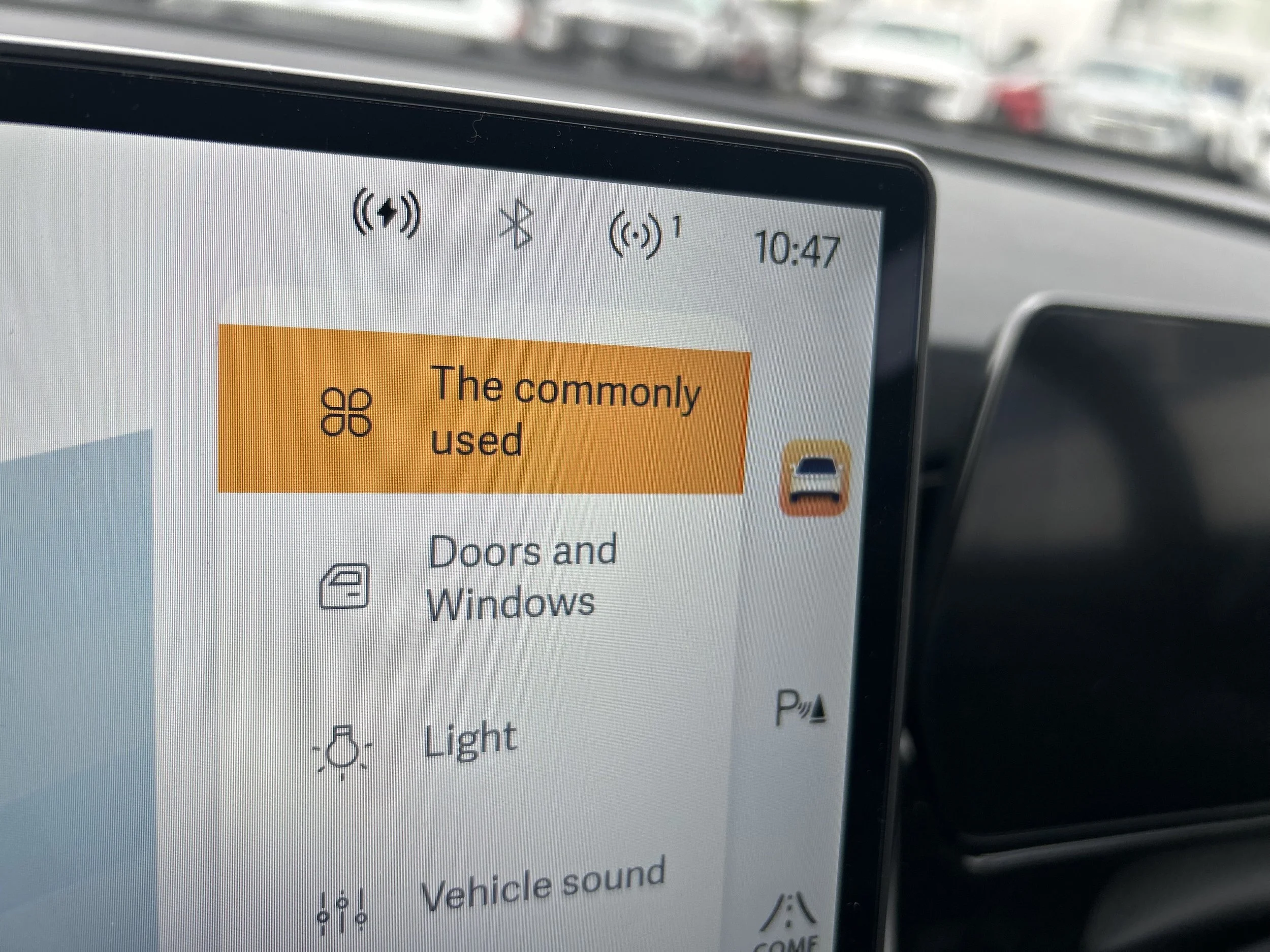
AMOST all New Zealand drivers whose vehicles have touchscreens say they have been distracted at some point while using them.
That’s the finding of a survey, which involved 476 people, and was conducted by a provider of driver monitoring technology, which is often now already implanted into many new cars as it is required for consideration for a maximum safety score from the national crash test auditor, ANCAP.
Data was accrued for Taupo-headquartered AutoSense, which describes as a New Zealand and Australia-based fleet and driver safety company whose aim is to reduce road risk and improve safety cultures for heavy and light commercial vehicle fleets, which ANCAP does not generally assess.
Some vans have embedded driver monitoring equipment but some light trucks seem not to, and for those AutoSense has developed technology that can integrate.
Monitoring is core to advance driver assistance systems (ADAS) - which facilitate as lane departure warnings, speed limit chimes and tiredness alerts, which in totality are now being given closer attention by ANCAP.
In introducing revised safety protocols at start of this year, the part NZ-funded, Australia-based independent safety body said it is no longer focused solely on whether ADAS works, but also on whether it has become so intrusive drivers end up switching them off.
This attitude change came in light of ADAS having become commonplace, especially in new passenger vehicles.
Carmakers use a range of warning methods, including visual prompts or haptic feedback through the steering wheel. Increasingly, many ADAS functions are now being controlled via central screens, which require touch operability but also driver attention.
Often important functions might be in sub-menus. Also, some functions that historically have been operated by switches - such as headlight high/low beam and wing mirror adjusts - are migrating into haptic prompts.
AutoSense’s inquiry wonders if such increasingly screen-heavy vehicle interiors are competing with the road for drivers’ attention.
It says its finding show this is the case. Ninety-three percent of respondents had experienced touchscreen distraction, almost one in four (22.9 percent) saying it happened frequently and close to half (48.5 percent) occasionally.
Asked which vehicle controls were easiest to use while driving, 49 percent chose physical knobs and buttons, compared with just six percent who chose touchscreens - a preference of more than eight to one. A further one in five preferred a mix of both.
The poll found almost 61 percent identified at least one screen, device or vehicle interface as something that commonly pulls their attention from the road - from adjusting controls and checking navigation to work alerts and hands-free calls.
AutoSense chief executive Charles Dawson says the findings expose a growing tension in modern vehicle design. Screens put more functions at drivers’ fingertips, but can also demand more of their eyes.
“A knob or button gives you tactile feedback. Once you know where it is, you can often make an adjustment without taking your eyes off the road,” Dawson says.
“With a touchscreen, you may need to find the right menu, see where your finger is landing and check the vehicle has responded. None of those glances may feel particularly dangerous on its own, but they add up.”
Dawson says the problem extends beyond private motorists. Commercial drivers can also be juggling navigation, dispatch systems, work tablets and incoming job alerts.
“Distraction doesn’t always look like somebody scrolling on their phone. It can be repeated, very short glances between the road and a screen, navigation prompt or work alert.
“The driver may never look away long enough to recognise it as a major distraction, but their attention is still being divided. It comes back to attention on task – or off task. If it is diverted elsewhere in the cabin, it is not fully on driving. There is no such thing as a ‘good’ distraction.”
The firm’s Guardian Generation 3, developed by Seeing Machines, replicates embedded tech in cars by using camera-based gaze tracking to identify where a driver is looking, rather than relying largely on head position.
As in many cars with factory-developed ADAS, the firm’s equipment sounds an in-cab alert when it judges that a driver has been distracted for too long,. In this instance, it alerts if a driver looks away from the road for a cumulative 10 seconds within a rolling 30-second period.
If the driver returns their gaze to the road for more than two seconds, the timer resets.
AutoSense says its technology is also helping NZ fleets identify when their own processes, rather than simply driver behaviour, are contributing to distraction.