
Marooned at see - no quick change for Tasman
/Kia’s stocks are rising - but with no help from its controversial ute, which has achieved fewer registrations since it released in August of last year than rival Toyota and Ford product notched up last month.
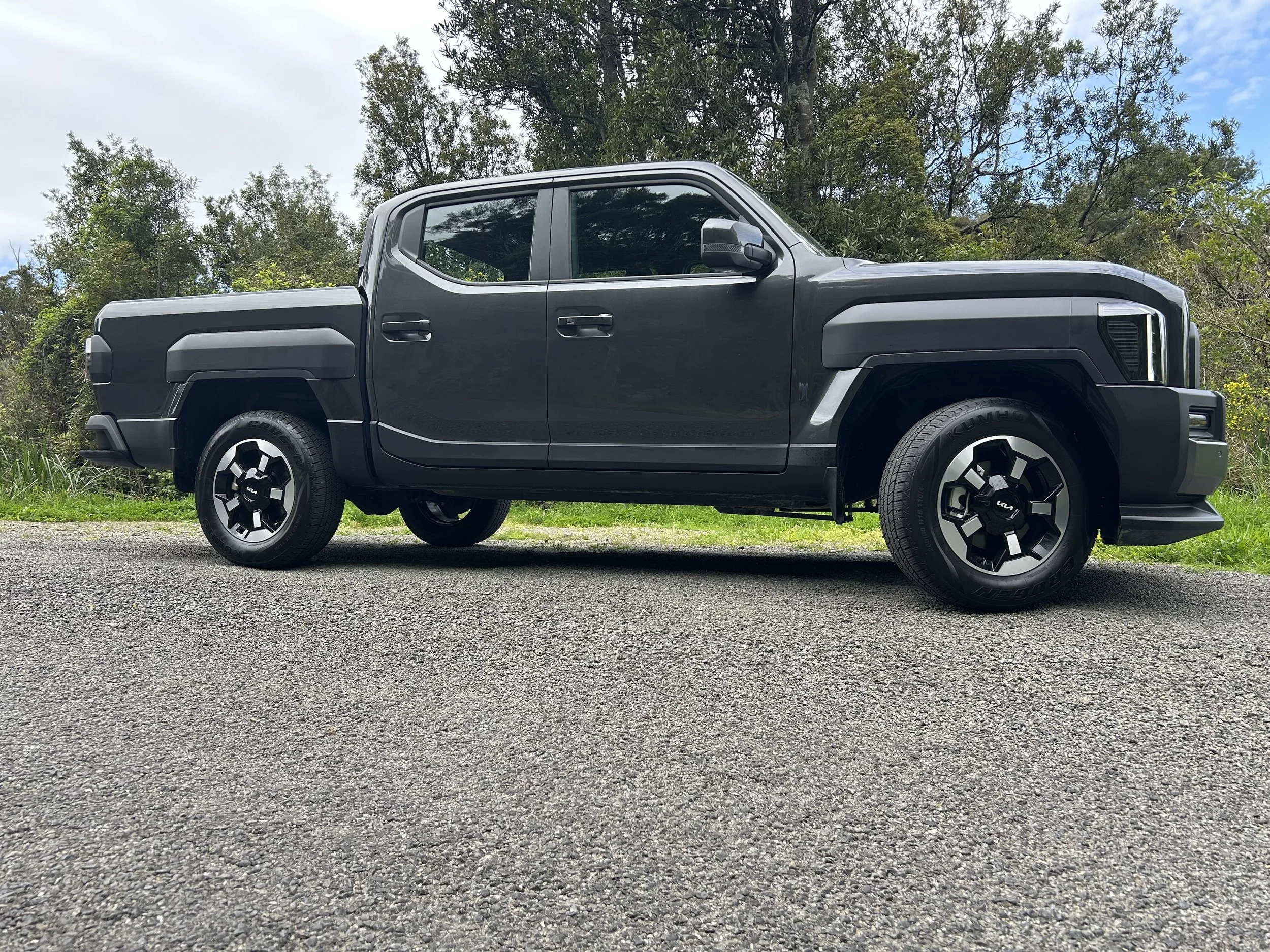
ASPIRATION to hold firm as a top-selling car brand has been expressed by Kia New Zealand - as has ongoing confidence in a vehicle type that very much sustains all other big players, but so far has failed the Korean challenger.
Comment about the Tasman utility was sought during a recent Kia NZ media event at which the factory operation’s overall market success this year was a theme.
Kia NZ takes pride in being one of a few legacy brands that will sell more cars this year than it did in 2025.
It anticipates achieving 10,550 new-vehicle registrations by the end of the year, which would represent a 15 percent year-on-year increase on a 2025 tally that was bettered as of last month.
What raises interest is that it has risen despite one model not having pulled its weight.
Utes are hot property here - unless, it seems, they come with a Kia badge.
Tasman having done poorly, with just 751 coming into circulation between release on a high in August 2025 and up until end of last month, is not something the make wants to dwell on.
This was made clear by Kia NZ general manager Todd McDonald (below) when taking questions at the Kia Seltos launch on November 6.
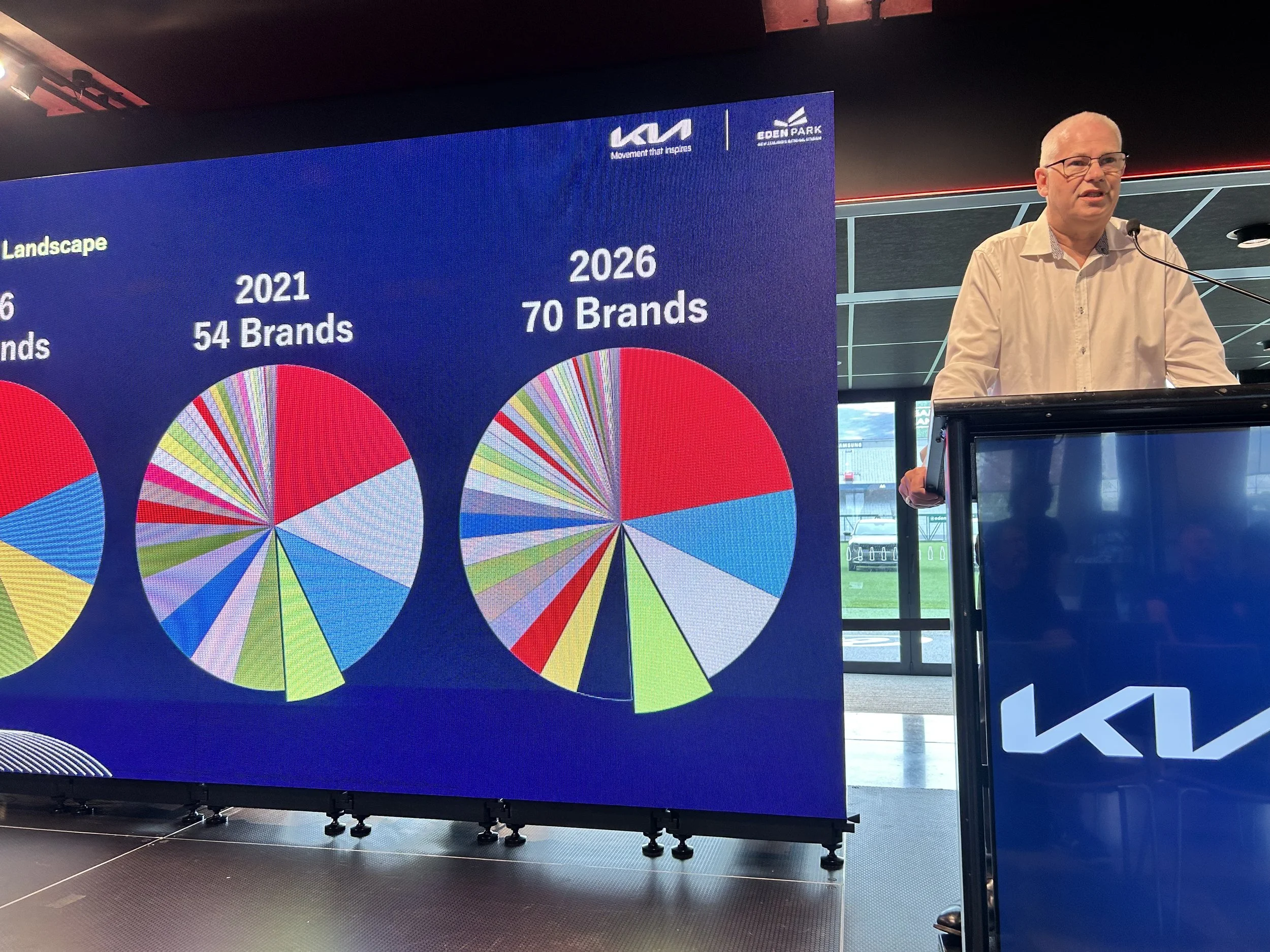
He was also reticent to add view on a then fresh overseas’ media report about potential changes ahead for the ute, including a fix for its controversial styling.
Assertion that the model is in for a major design was revealed by The Korean Car Blog and has since strengthened.
It bases on a leaked document originated from Kia’s Employment Stability Committee that outlines the South Korean manufacturer’s production plans for later this decade.
In respect to Tasman, plans are to improve the model and potentially expand the range with new variants.
But that’s not an imminent change. The report says all developments are for 2028 or 2029.
McDonald was steadfast the ute in 2027 will represent as we see it, save for a revision to improve emissions from the 2.2-litre turbodiesel.
Tasman’s inability to resonate also shows in Australia, where it has so far this year taken less than a quarter of the 20,000 sales tipped for it this year, and is the only blemish to Kia NZ’s impressive national market performance.
The make is very much outshining DNA-tied Hyundai here and if current trend continues as expected, it could usurp Mitsubishi Motors New Zealand out of third place in the market and put heat on second-placed Ford NZ.
Strong acceptance for its passenger products, not just in electric where it has leading presence and restored confidence but also in internal combustion, has fed Kia’s growth.
Its cars and sports utilities have found 8663 sales YTD. Kia believes the new generation of the Seltos, its best seller since 2019, will feel in more growth, but emphasises that with the car lines, this is a team effort.
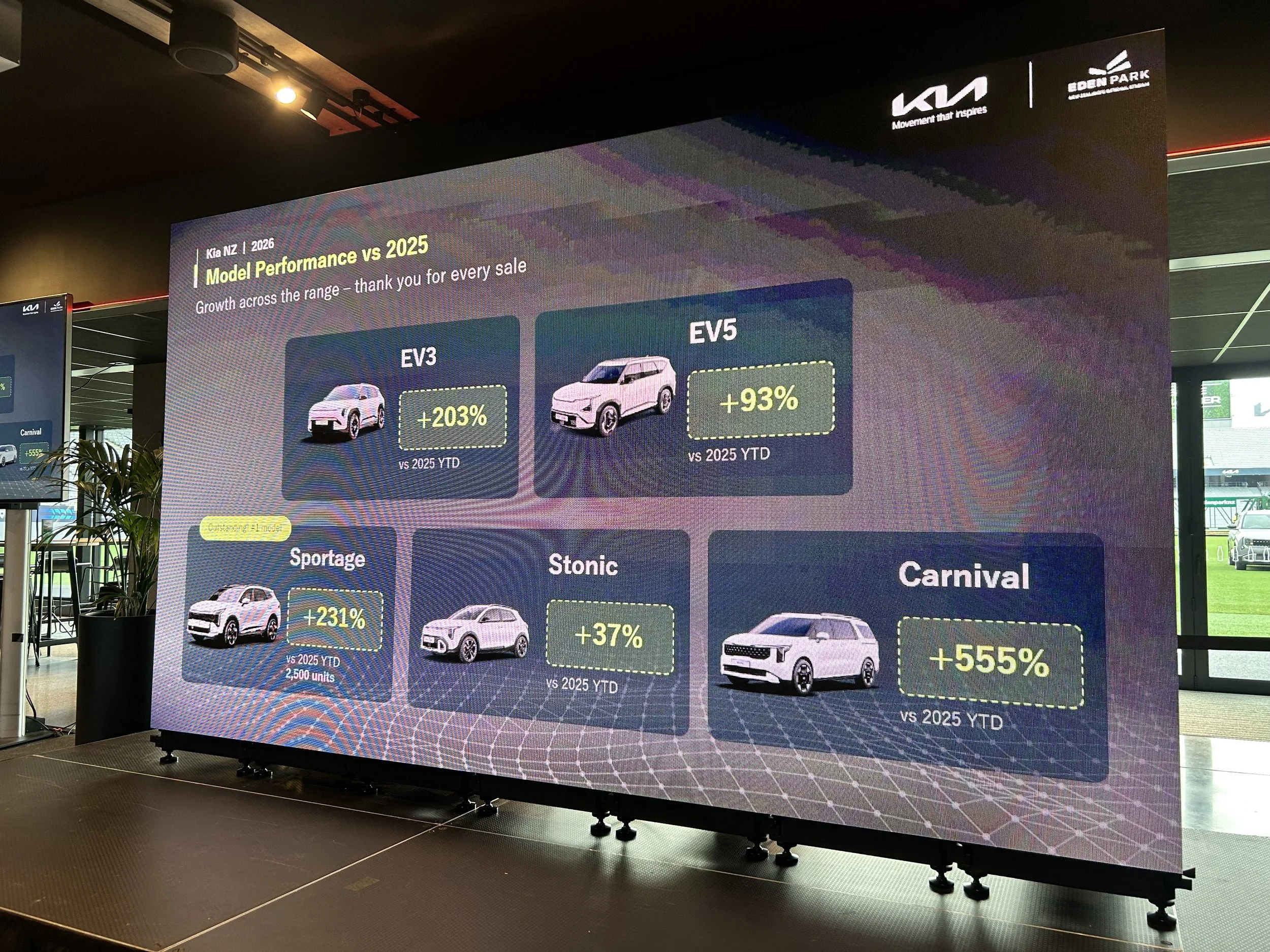
It pointed to five models having shown specific improvement this year over 2025.
Take-up of the EV3 and EV5 electrics has lifted 203 percent and 93 percent respectively, while in the ICE zone the now hybrid Sportage has risen 231 percent, the Stonic 37 percent and the Carnival an astounding 555 percent.
The Tasman, by comparison, has one percent share of its sector, which is far short of expectation expressed when it launched in August, 2025.
Back then McDonald asserted confidence a ute whose model range was specifically targeted at volume would in 2026 “… hit the top five in New Zealand for commercials.”
Data created by Land Transport and shared by the Motor Industry Association reveals a different reality and makes contention from McDonald that Tasman’s sales aren’t where the brand wants them to be seem an example of massive understatement.
The type’s 2026 year to date tally of 411 units adds to a count of 340 having gone into circulation in the last quarter of 2025.
The 2026 tally is less than half those achieved just last month alone by the sector-leading Ford Ranger and second-sited Toyota Hilux. Add in last year’s total and it still falls short.
This performance is against trend. Even though the commercial segment in which they categorise has lost ground, one-tonne utes are historically steadfast in holding high popularity with Kiwis.
This shows with the high ongoing favourability of products from Mitsubishi, Ford and Toyota, the three brands that in ascending order currently also out-perform Kia for overall new vehicle performance.
The top 15 commercial sector performers this year in the period up to end of October puts Kia’s controversially-styled model at No.12 and lowest positioned for a one-tonne choice.
The Tasman’s YTD count is 122 units shy of that for the next product in order of ascendance, the GWM Cannon, which holds 10th in a sector where vans also place. The Isuzu D-Max is at No.8, with 911 registered.
The BYD Shark 6 and the new Nissan Navara have not been immune to controversy, but they nonetheless are charting a much stronger courses, with 1533 and 1528 registrations to date respectively.
All those returns are a fraction of those for brands that have historically dominated the category and currently hold the top three spots on the commercial tier.
Third in that order is Mitsubishi, which with a count of 3196 Tritons has placed seven examples of its ute into the roadscape for every one Tasman that has registered this year.
Sector top dog Ford Ranger and second-sited Toyota Hilux, with 6853 and 7867 registrations respectively, are outpacing Tasman this year by factors of just under 20 to one and 16 to one.
The greatest challenge to Tasman’s acceptance isn’t hard to see. The type’s boxy and bluff styling was controversial well before it was ever seen here in the metal.
McDonald suggested last week consumer opinion about the look has mellowed, commenting “I think we're now seeing a change in mindset and a normalisation of consumer acceptance.
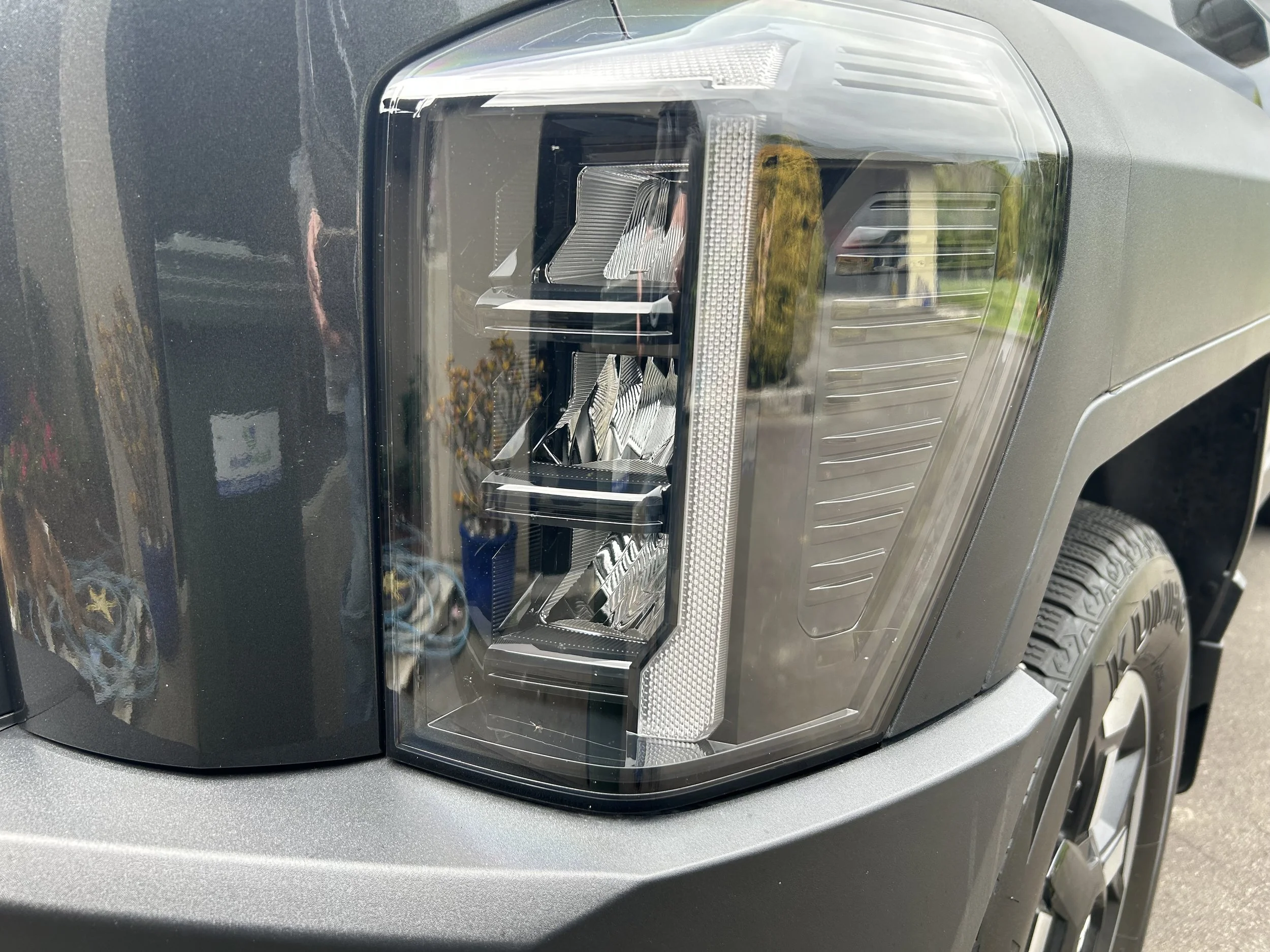
“A lot of the new entrants are also in a similar design, which is actually assisting the consumer acceptance of a more boxy-styled ute.”
Meantime Tasman has been subject to distributor inducements, which right now comprise a free service plan spanning three years or 45,000 kilometres, a trade-in allowance of $2000 and an free upgrade that provisions an 18 inch tyre and choice of three alternate rim styles, a towbar and a set of all-weather mats.
Opinion about the Tasman requiring a massive restyling in order to resonate has been regularly expressed in media here and in Australia. Whether a major facelift is enough now that the sector is now taking an increasing count of cheaper rivals arriving from China is also often debated.
The whichcar.com.au website says Kia in Australia has already acknowledged the need to improve the Tasman.
It says while the leaked document doesn’t specify exactly what improvements are planned, a redesigned front is one possibility.
It also speculates additional powertrain options could also be introduced, including a plug-in hybrid to compete with the Shark 6 and Ford Ranger PHEV.
“A new SUV based on the Tasman’s ladder-frame underpinnings is also another possibility, which Kia has previously confirmed it was investigating,” the online magazine suggests.
The leaked document also revealed Kia is preparing to introduce its first EV7 electric SUV, which is expected to sit between the EV6 and EV9, and is working on an all-new Sorento Hybrid and a next-generation Carnival Hybrid, both entering production in 2028.
Insofar as NZ is concerned, the only new products confirmed for introduction here in 2027 are the passenger version of the PV5 electric van, a larger platform-sharing commercial edition of this vehicle, called PV7.