
Self-drive potential for HW3 Teslas en route
/Confirmation of NZ access timeframe comes as reports from the United States suggests complications in getting older cars to match latest fare.
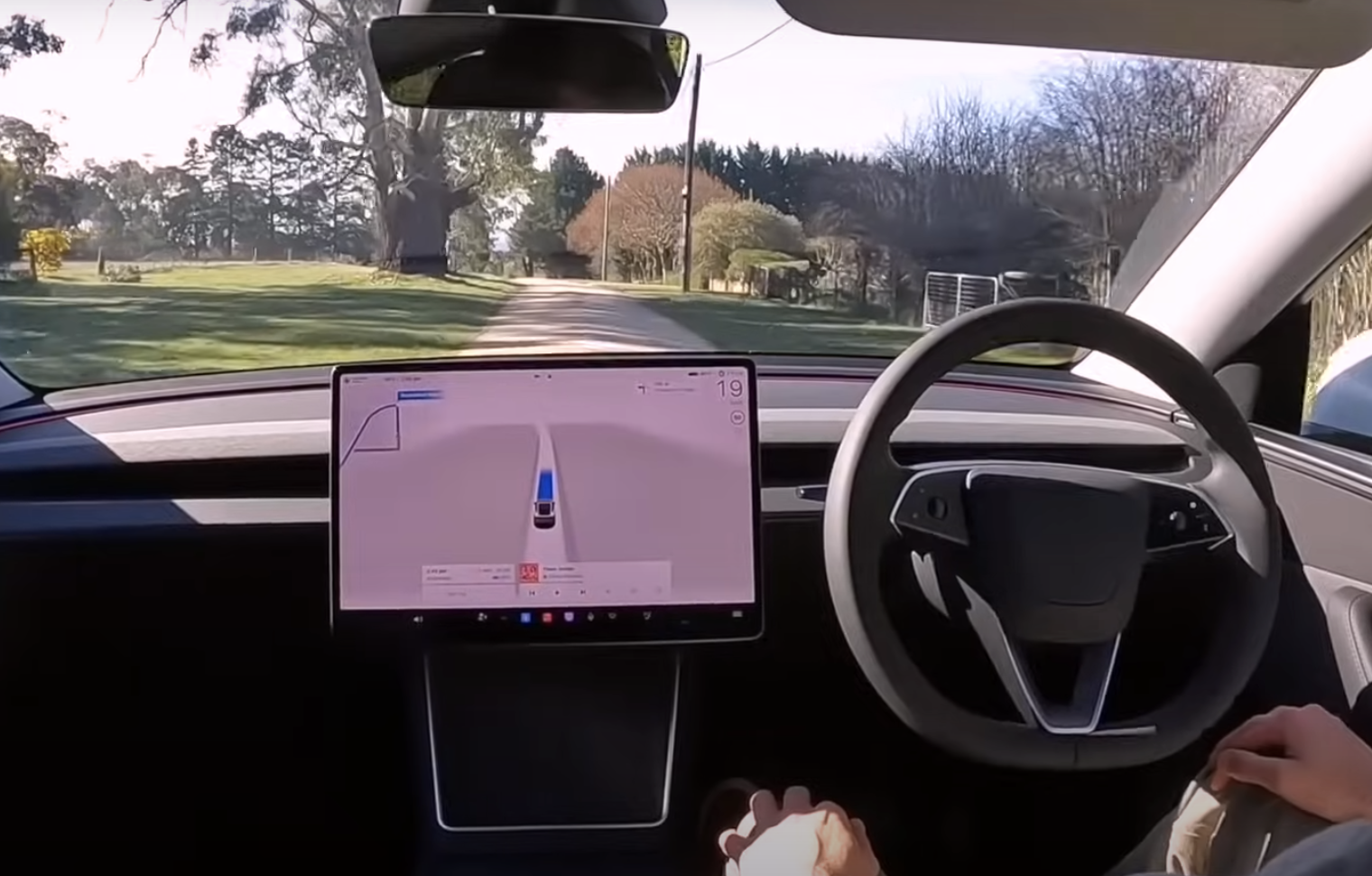
DEGREE of actual ‘full self drive’ ability for Tesla cars pre-dating variants taking this high-profile assistance system here has been questioned, but the brand isn’t rattled.
FSD-Supervised availing in the latest New Zealand market Model Y and Model 3 since September, 2025, was a true international breakthrough - our country and Australia are the first right hand drive countries to have it.
The release has caused owners who bought those models in their pre-facelift format to wonder when they will also get to achieve a technology that allows prolonged hands-free operation, albeit with a human’s constant supervision.
In checking with Tesla’s regional office today, the response is that the timings that have been given to New Zealand owners still stands, which means movement soon after mid-year.
FSD-S relies on cameras that provide 360 degrees of view feeding information into a neural network navigation software that determines how the car will steer, accelerate, brake and change lanes to navigate to a user’s destination.
All Teslas have cameras and all are highly computerised. But at launch Tesla said FSD-S only works with the latest computing hardware, HW4, operating on the new A14 computer.
This is specific to the newest cars which rolled out from mid-2025. The original look Model Y and Model 3, which respectively provisioned in 2019 and 2022, have the old HW3 hardware.
Some owners of those early period cars who on buying new also showed their loyalty by paying around $11,000 for FSD as an option, in awareness it was not functional then but on understanding it would become so in due course.
Hope has pinned on the brand delivering a package that would suit HW3, and also provision much the same level of assistance meted the HW4 cars, by mid 2026.
At the moment, the HW3 cars achieve only slightly enhanced automated features such as automatic lane changing and automatic parking.
One owner of a Model 3 that was one of the first to land after it launched in 2021 has expressed belief to MotoringNZ.com that a FSD set-up that works for his car will come in July.
A spokesman for Tesla regional office, which bases in Sydney, has suggested that’s still the plan.
“It was announced in the earnings call that Q2 was the targeted roll out.
“Your timing estimate would be about right with your current thinking. I know the engineering team are working on it and resources have been allocated for the timing that was announce(d).”
The Model 3 owner who has been touch with MotoringNZ.com paid for lifetime FSD when he bought the car brand new and pins hope on it engaging hands-off operation.
Tesla was also asked about reports out of the United States of difficulties the brand is said to be facing in making FSD-S work at any level in HW3 cars, but there was no comment forthcoming.
When it demonstrated FSD-S in its Australasian format last August, Tesla made clear the integration was not as simple as activating a programme that has previously restricted to North America.
To achieve regulatory approval here and in Australia demanded a massive pre-release programming to acquaint a protocol initially tailored for North America to right hand drive and local road signs, road conditions and hazards. That project took several years.
Reports from motoring news sites in the United States are questioning if it is possible for HW3 to uptake and adopt the massive data accrual.
Some commentators there are convinced a fix for those older cars won’t be as proficient as the HW4 set-up - assuming it works at all.
Website electrek.co is reporting HW3 integration challenges are numerous and that what eventuates could become a different product than what early adopters were sold.
In a post that has become an element of a news story on the Autoline Daily podcast this week, it again questions if what is known as the “v14 Lite” will work.
“Tesla’s own US patent filing US20260017503A1, which describes the math trick Tesla is using to squeeze a modern FSD model onto HW3, acknowledges that the workaround can render the system ‘inoperable’ for perception units of an autonomous driving system.
“That’s not a rumour or a critic’s interpretation, that’s the language in Tesla’s own patent.”
It says Tesla has acknowledged HW3 runs a “relatively smaller model” than AI4 with workarounds to emulate operations that run natively on AI4.
Reported admission from Elon Musk in a January, 2025, earnings call that “we will need to replace all HW3 computers in vehicles where FSD was purchased” continues to crop up.
The frustration about this have led to Tesla facing a law firm-led class action launched in Australia’s Federal Court last year.
Thousands of owners there have joined the action, which also includes allegations regarding phantom braking and overstated battery range.
The assertion is that owners “forked out for upgrades and capabilities that simply have not been delivered”, with marketing material failing to align with reality.
Now discord has spread to Europe, where FSD-S having won type approval from Holland’s motoring authority opens the door for wider allowance in the European Union.
Last week Mischa Sigtermans, a Dutchman who paid almost $NZ13,000 for FSD in a Model 3 he bought back in 2019 has launched a collective claim website.
Sigtermans said he waited seven years for Tesla to deliver the autonomy he was sold, and finally gave up after last week’s FSD approval in the Netherlands made clear his car would be left out.
“Tesla owes me €6800. And if you’re a HW3 + FSD owner, they owe you too,” Sigtermans wrote. “I waited 7 years. SEVEN years!”
His site, hw3claim.nl, is specifically aimed at bundling European Tesla owners who paid for the “Full Self-Driving” package on HW3 cars so they can either negotiate with Tesla or, if it comes to it, pursue a legal claim.
FSD was once promised by Musk to be a pathway to full autonomy, but that’s not the case.
FSD-S is legislatively considered to be at level two of the five levels of technology, meaning it has credential to allow the vehicle to simultaneously control both steering and acceleration/deceleration under certain conditions. However, the human driver must remain engaged and monitor the driving environment actively.
The next level is a huge step and no cars availing in NZ are there yet.
At level three, the vehicle can manage most driving tasks independently and make decisions based on real-time data.
While a human driver is still required to be present and must be ready to take over if the system encounters situations it cannot handle, he/she can disengage from continuous monitoring during specific driving conditions defined by the manufacturer.
This month FSD-S switched away from being a one-cost option, at $11,400 a hit on HW4 cars, and is now purely a monthly subscription service.
Tesla says its move to a subscription-only model for the feature aligns with a broader shift toward software-as-a-service offerings in the automotive sector.