Defender set to lead from front

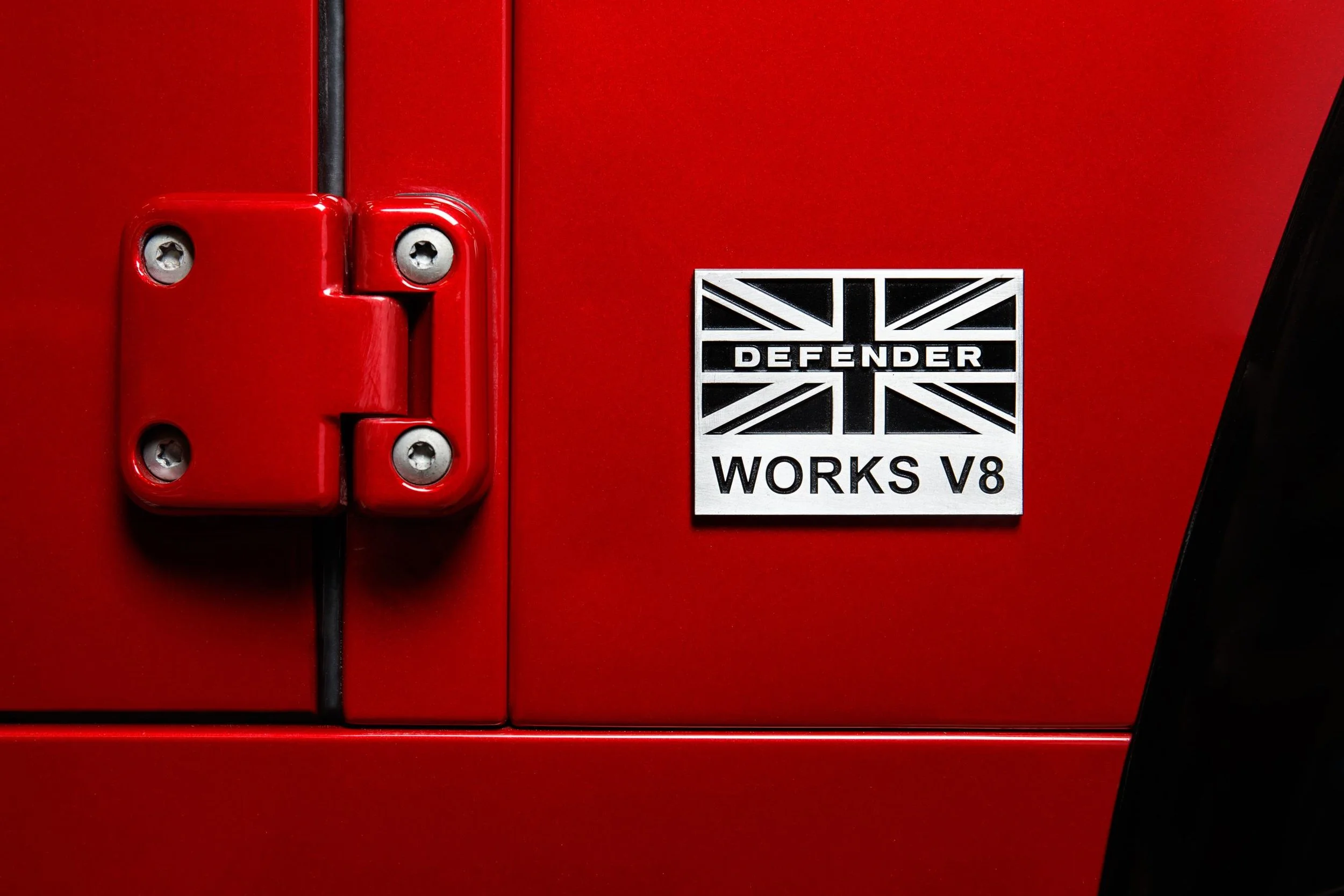
The old one spent its last years as a niche choice. The new won’t have that luxury – it’s expected to do a big job for Jaguar Land Rover New Zealand.

Paul Ricketts (left) and Steve Kenchington believe Defender will secure up to 30 percent of Land Rover volume within the next 12 months.

Paul Ricketts (left) and Steve Kenchington believe Defender will secure up to 30 percent of Land Rover volume within the next 12 months.

THINK Vera Lynn and Adele.

Two huge world-renowned, household name stars but each very much of their own respective times. So much so that no-one would ever imagine the passing of the first would trigger an enhanced allegiance to the other.

It’s the same with the Defender. The old one was such an icon – an automotive Vera, you could say. You’ll never hear Land Rover New Zealand ever say anything less. That it has now gone into history does not demean what it is, what it did, how it should be remembered. 

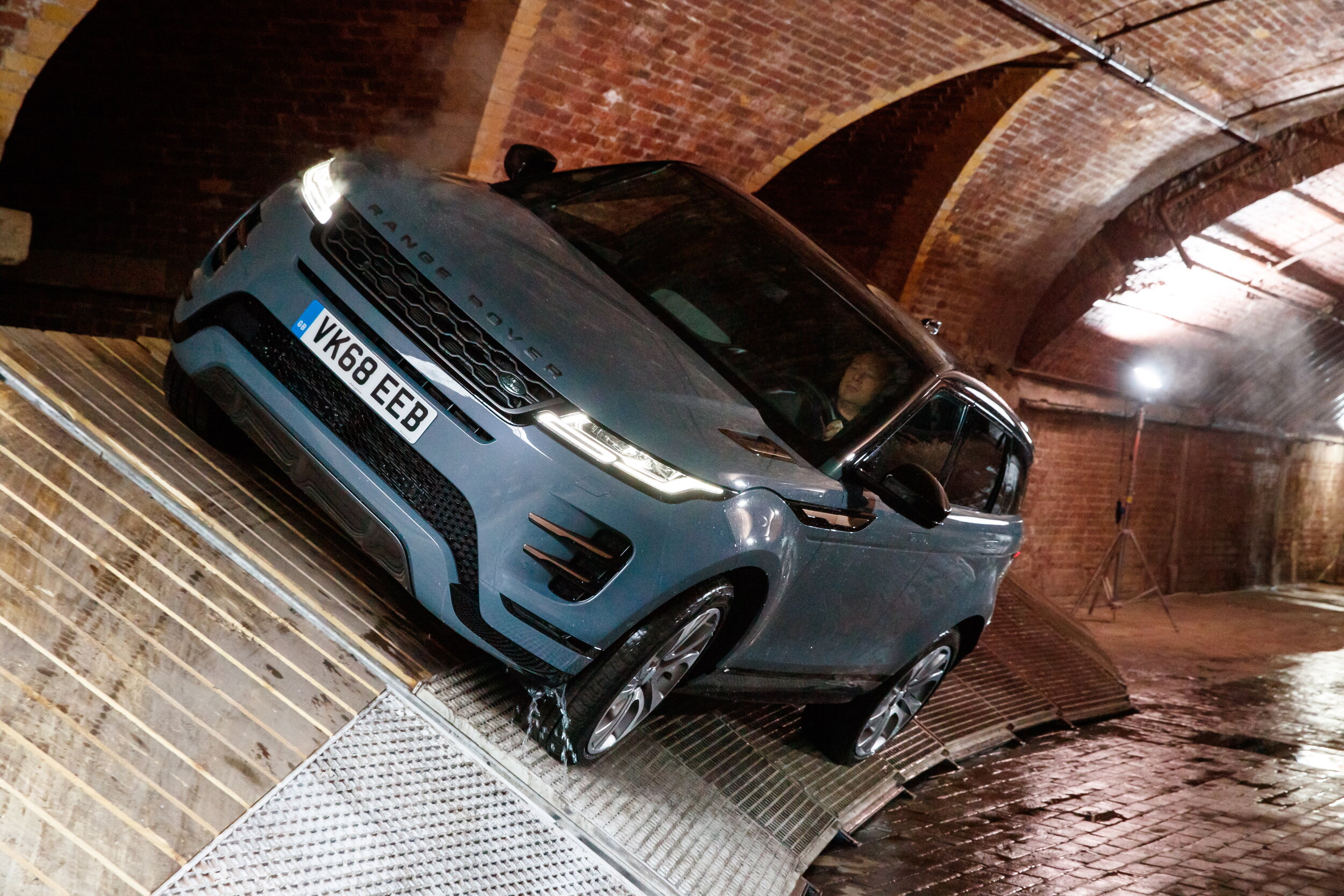
Of course, at same token, the past is the past and the future belongs to a new Defender. Still hugely rugged off-road, yet obviously from another world in respect to its luxuries, look and tech. Especially tech. It’s jammed with up-to-the-minute assists. One example: ClearSight Ground View technology, which utilises small cameras to film the ground in front of the wheels to show you what you’re about to drive into if you’re off-roading. Personally, I couldn’t get enough of this during the car’s first media drive.

So, yeah, it’s amazingly special. So, even those fans who cannot break away from the illustrious past need excuse the Auckland-domiciled brand for putting their effort into getting the successor line established. 

Though, actually, that’s not the right word. Effort, that is. So far, little of this has been required.

In conversation during the model’s media reveal, Steve Kenchington, the general manager of Jaguar Land Rover’s distributor, Motorcorp, and national JLR product manager Paul Ricketts were delighted to admit the car has so far basically sold itself, with almost every unit in the first shipment of 115 units already accounted for. (Don’t worry, more are coming).

It’s a strong start, one befitting a strong product. On that note, Defender is expected to pull itself out of the rut of niche-dom. It’s back to being what it once was, back in the day before its maker had even discovered the Discovery: A mainstream competitor.

MotoringNZ: “Is it fair to call this your most important model of the past five years?” 

Steve Kenchington: “Without a doubt. I’d suggest it’s probably we will ever have in our careers.”

MNZ: Defender is an icon, but had also become remarkable niche in its it final decade – basically, by then it had fallen out of all workplace use. Taking into account that Land Rover has developed Hardtop models that are designed for work, how challenging will it be the re-establish it in that sphere, or have those days gone?

Kenchington: “I don’t think they have gone. We’re still researching and undertaking some analysis about what we might be able to do with the commercial vehicles. I’d just point out that there is a lot of DNA from the old Defender that has gone into the new one. Which is why I think the pursists are going to love the new Defender. 

“We certainly think we are going to capture some of them (the old model’s fanbase). But we also think this new vehicle is going to provide a much bigger audience.”

MNZ: “On that note, it we look forward to this time next year, what percentage of total Land Rover volume should new Defender be achieving? 

Kenchington: “It’s a quite difficult to say … it’s not a Discovery, even though it reaches into the Discovery price area, and it’s not a Range Rover. Even though we expect a lot of early adopters will be buying the very high spec editions to start, we think the main thrust will be from the D240 in the $115,000 price area. 

“Yes, it will cross over into Discovery, but I think they are two very different customer sets.

“In terms of our overall volume? We’re thinking it could achieve 25 to 30 percent. And 90 percent of that we see as being incremental.”

MNZ: “Just getting back to the  ‘purist’ viewpoint of this car – do you really care if some fans of the old one just cannot see anything to like from the new; does it matter?

Kenchington: “It does to me. Old Defender is an icon and certainly during the design, build and testing phases it was always about trying to create another icon. We want the purists to love it … so long as they understand that it has had to evolve into what it has become today. 

“For the survival of a brand you have got to get volume.”

MNZ: “Speaking of that, you seem to have got of to an excellent start, with almost your first shipment already accounted for. A good sign of it being what the market is waiting for?”

Paul Ricketts: “115 have landed in the country and we expected more than 300 over the next year. The supply chain for Defender is solid. Defender has been a key focus for Land Rover and so, where some of the factories were affected more by Covid, Defender production was able to continue on.”

MNZ: As you say, the Defender plant in Slovakia seems to have escaped the coronavirus crisis. But, of course, car plants in the United Kingdom – from where the majority of Jaguar Land Rover product still sources – were hit. Is there concern that some other product lines by be hit by supply shortages?

Kenchington: “We haven’t seen it. Our volumes are extremely strong at the moment and it’s across all the model line ups. Top-end volume has been remarkably strong, but we’ve seen good sales across Discovery, Discover Sport and Range Rover Evoque and Velar.  We’re getting a really good mix of volume.

“From Defender point of view, we always anticipated 300 for the year but we are already realigning that, to 400 unites, based on the initial inquiry levels we’ve had.”

MNZ: “So the commonly-heard viewpoint from thin industry at the moment about how people are buying cars because they cannot take expensive holidays overseas is ringing true?

Kenchington: “Absolutely. It’s very true.”

MNZ: “Your main thrust in the initial period will be with D240 and the P400, but do you imagine these will be the mainstay choices in the long run? 

Ricketts: “Over this year it will be the D240 SE. Going forward we will have the D300 with the in-line six-cylinder Ingenium diesel and we can see that becoming very strong.”

MNZ: “Keeping with engines, it’s all but confirmed that the line will include another petrol V8 – in SVX guise - and that there is also a plug-in hybrid coming; what can you tell us about those and where do they fit in to your planning?

Kenchington: “We’re really excited … we can’t wait! We don’t know too much about SVX but there is a lot of expectation around it. It’s going to be the very extreme off-road vehicle of the same flavour as the very extreme Discovery that got put on ice because they’ve decided to launch it in Defender first.

“We’re very excited for that and see a strong market for it. Land Rover has established a strong SV (special vehicles) credibility.”

 Ricketts: “We’ve already had lots of customers inquire about the plug-in hybrid. It’ll be available next year with the P300 engine and 100PS of battery.”


Range Rover Sport engine swap

Going straight takes literal meaning with this model in turbodiesel form.

RRS_21MY_SVR_CARBON_EDITION_150720_01.jpg

A REVISION that hits the Range Rover Sport for six within the engine bay has been announced.

The biggest element of an update for the model is the retirement of its Ford-sourced V6 turbodiesel for an in-line equivalent that’s Land Rover’s own work.

The unit from the make’s Ingenium family is also a mild-hybrid, and provisions in three formats, labelled D250, D300 and D350. Power outputs range between 183kW and 257kW (D250 and D350).

The D350 is the geekiest, as in addition to using a single twin-scroll turbo and continuously variable valve lift to maximise power and efficiency where it can, it also has 48v mild hybrid tech and an electronic supercharger. The cited 0-100kmh time is 6.5 seconds, and it produces a CO2 output of 237g/km. 

The Sport still continues in petrol-powered options, so all in all it produces with nine different drivetrains, including the plug-in hybrid P400 and the V8-powered P525 and P575.

To mark the arrival of these new straight-six diesels, the Sport also gets a number of new special editions - the HSE Silver, HSE Dynamic Black and the model featuring in today’s images, the SVR Carbon Edition, which as you'd expect is dripping with carbon fibre detailing.

Visible carbon fibre elements include the exposed centre section of the carbon fibre bonnet with integrated cooling vents, the front bumper insert surrounds, main grille and vent surrounds, mirror covers and tailgate finisher. There are extended trim finishers on the SVR-branded steering wheel and a Carbon Fibre Engine Cover. In addition, the SVR Carbon Edition features Exclusive Illuminated SVR Carbon Edition treadplates. It runs on 22-inch five split-spoke lightweight alloy wheels finished in Gloss Black. Subtle? Not in the slightest.

The exclusive 423kW/700Nm 5.0-litre V8 supercharged engine delivers 0-100kmh in 4.5s, top speed of 283kmh and, the brand assures, provisions a “distinctive soundtrack.” The model also has SVR Performance seats, Sports Command driving position and a driver-focused cabin.

RRS_21MY_SVR_CARBON_EDITION_150720_03.jpg

Range Rover says this Sport SVR is “the most dynamic Range Rover ever.” Coupled with bespoke enhancements to the chassis, the SVR delivers more dynamic handling without compromising traditional Range Rover comfort or all-terrain capability. The engineers at Land Rover Special Vehicle Operations focused on controlling pitch under heavy acceleration and braking, and the damping hardware is tuned to provide exceptional turn-in, mid-corner grip and body control. 

Other new features across the range for 2021 include an updated infotainment system, with Apple CarPlay and Android Auto as standard across, and in-built 4G wifi with up to eight connections. Spotify is now included. There's a new air purification system, which Land Rover says helps with driver alertness and passenger comfort.

The New Zealand distributor has yet to release detail about what models are coming and when.


JLR finance offer set to spur rival actions?

Incentives to jolly up consumer interest in new cars could become a new norm.

Diminished interest in new vehicles seems a certainty this year, the industry believes.

Diminished interest in new vehicles seems a certainty this year, the industry believes.

DETERMINATION by Jaguar Land Rover’s distributor to offer deferred payment finance deals on new vehicles has raised interest within the industry.

Thought from onlookers is that it’s a behaviour that can be expected to increase as dealers and distributors work to recover from the drop-off in economic activity, not just the impact of lost trading during Level One lockdown but also to counter the likelihood of tougher times ahead.

 There’s some belief, too, that premium car brands in particular will set the pace with an increasing count of stimulus and relief programmes. In addition to special financing, enhanced warranties might also become a pitch.

The impact of the economic shutdown to contain the Covid-19 pandemic has been especially hard on the car industry.

At international level, assembly lines remain either closed or at least constrained by social distancing requirements and logistics spanning parts supply to vehicle delivery have been unsettled.

Customers keen to sign up for expensive metal facing longer wait times is an annoyance, but the real challenge is what Jaguar Land Rover New Zealand appears to be now preparing for – a prospect of diminished retail spending. 

 The high-end sector is obviously at highest risk if new car sales fall by between 40-50 percent for the remainder of the year, as predicted by some participants.

The $150,000-plus sector was showing clear signs of softening well before coronavirus became a factor; with some signs of decline revealing in early mid-2019.

incoming new Defender is exempted from the opportunity.

incoming new Defender is exempted from the opportunity.

In recent weeks, too, there have been examples of prestige car owners divesting their expensive wheels to free up capital – sometimes at no small pain. Talk of high-end product that even in normal times might half in value within the first year  of ownership being divested well below even that is beginning to emerge.

Processes to buoy consumer faith during Covid-19 are also involving mainstream operators.

Hyundai New Zealand set a tone in extending warranties from early April, when lockdown conditions were more onerous, a move that affected more than 2000 vehicles.

It has also instigated Hyundai Assurance, which provides customers who lose their job within the first six months of entering into the finance agreement with the option of deferred interest and principal payments for up to six months. The NZ programme appears to ape one Hyundai first set in place in the United States amid the financial crisis of 2008 and now restored as coronavirus runs rampant there.  

Industry involvers speaking on condition of anonymity in wake of the JLR NZ announcement believe other competitors will likely also be looking at unrolling new and creative of maintaining customer confidence and bolstering sales volume. 

Announcement of the move arrives at an interesting time for the British manufacturer 

It is likely no more than an unhappy coincidence that the local initiative’s announcement came in a period of reports about JLR in the United Kingdom being in talks to borrow more than one billion pounds (more than $NZ2 billion) availed by an emergency coronavirus lending programme set up by the British government.

The marques are represented in New Zealand by Motorcorp Distributors, which founded in 2006. The makes represent in eight dealerships nationally.

JLR New Zealand explains its motivation for the 48 months option arranged through Heartland Bank at a rate of 2.95 percent. is to capitalise on low interest rates and provide business continuity for its dealers.

The deal includes 12 months of deferred payment and is available on Land Rovers and Jaguars already landed in New Zealand and in stock – and thus excludes the new Defender, set to arrive in July or August.

“Our role as an importer is to provide business continuity for our retailer network, whilst passing on any finance terms we can negotiate to our customers,” says general manager Steve Kenchington.

“The 12 months deferred payment offer … allows customers to drive away in their vehicle today whilst incurring no repayments until June 2021.

 “If the customer currently has an existing finance plan with us, they can terminate it, use any additional equity in the vehicle as the required 20 percent deposit and enjoy no repayments for 12 months,” says Kenchington.

“In such unknowing times we understand the need for lateral thought and creative solutions to drive business continuity and adapt to customer needs. 

Observers suggest the scheme is not entirely dissimilar to pre-coronavirus incentives that ask for programmed payments of ‘one third’ over set periods, starting with the initial down payment.

“On that basis, it is all interest-free,” said one. “They (JLR NZ) are covering at least the cost of the interest.”

In this scenario, it was suggested, a weight of risk falls as heavily on Heartland as it might on the distributor, which had reduced some of its risk through seeking a 20 percent deposit.

However, the great imponderable as always in depreciation, which has historically been particularly savage nationally as result of the free market attitude.

“Everything is worth less now than it was before Covid, maybe at least 10 percent, perhaps more.”

So, in respect to the JLR proposal, “it will still be upside down after 12 months because the car is unlikely to be worth 80 percent of its purchase price by then.

“It’s a very strong offer.”

F-PACE has been a solid seller for JLR NZ.

F-PACE has been a solid seller for JLR NZ.


JLR defiance as market toughens

 In the face of black clouds … is one brand channelling the Black Knight?

updated f-type will be at forefront of JLR’s local effort this year.

updated f-type will be at forefront of JLR’s local effort this year.

PRODUCTION lines halted, factories closed, new models delayed, registrations at the lowest since … well, forever in some countries. 

Certainly, it seems fair to suggest the global coronavirus crisis has caused no small amount of pain to the car industry and probability of more discomfort ahead seems unavoidable.

The New Zealand forecast of 2020 delivering around 40-45 percent fewer new car sales compared with 2019’s national tally is actually optimistic compared with others being expressed elsewhere around the world.

In face of all this, what brand would dare demonstrate a degree of stiff upper lip against-whatever-odds’ defiance?

Step forward SVO, the performance division of Jaguar Land Rover.

Primarily taking this moment to celebrate how well it is done in the past 12 months – both globally and in New Zealand – it is also expressing a touch of confidence about the future being … well, if not outright bright, then perhaps ‘less bleak. 

Admittedly, even that level of quiet confidence will jar with how others see it.

rrsportsvr18mydetailtianmenroad13031823.jpg

And, assuredly, there’s still so much uncertainty about the market condition that what might for now seem to be a reflection of the spirit that kept Britain chipper after Dunkirk might yet equate to the outright nutsy ballsiness of the famous Black Knight of Monty Python and the Holy Grail movie fame who, you might recall, was so staunch in his refusal to give up that, even when reduced to a limbless torso, he wanted to fight on claiming those injuries were but a flesh wound.

Still, SVO having achieved record worldwide sales for the most recent fiscal year reminds that the Brit battler is making good gains in a sector where Mercedes-AMG and BMW’s M Division in particular have long held the high ground.

That success has been particularly felt on New Zealand soil, where the Kiwi pick of the very fast, very powerful, very loud and quite expensive versions of Jaguar Land Rover road cars and sports utilities has been a model that has impacted significantly everywhere, the F-Pace SVR.

Jaguar NZ general manager Steve Kenchington can be rightly proud that the $157,900 supercharged V8 flagship has nabbed 35 percent of local F-Pace volume, a rate that puts up well above the global average. 

Of course, as impressive as the local effort’s cited 175 percent year-on-year climb in volume sounds, it pays to bear in mind that the total count of SVO product sold here comes to a modest count. 

That just 157 units across the Land Rover and Jaguar portfolios in total came from the SVO operation reminds how exclusive this option is. Also, how expensive.

roaring f-pace svr has been a stalwart in this market.

roaring f-pace svr has been a stalwart in this market.

What imprint the hottest F-Pace can present in the future is less certain. The car’s 404kW/680Nm 5.0-litre eight-cylinder is set to soon be discontinued, with Jaguar switching to an alternate engine from BMW. 

Perhaps what’s especially plucky, all the same, is brand sentiment that, once we put this coronavirus issue behind us, Kiwi enthusiasts will again be keen to rev up their buy-in these understandably expensive products.

According to a local spokesman: “The demand (for SVO) is such that when we enter a more normalised world post Covid-19, we will be keen to restart SV specific drive days for our customers.”

There’ll be a new hero to try on those occasions, in the form of the updated and extensively re-engineered F-Type.

Meantime, Kenchington reckons the strong sales in the New Zealand market reflect Kiwi’s love for SV products “and their more sophisticated buying habits when it comes to performance vehicles.”

“While the SV product range has assisted Jaguar Land Rover New Zealand’s total sales growth over the last 12 months, the introduction of new technologies in electrification have meant that we are also able to offer the likes of World Car of the Year Jaguar I-Pace.

“Being able to deliver such strong innovation in quite different parts of the market is a testament to the incredibly hard work and innovation that is taking place at our factories,.”

rang rover svr product has also resonated

rang rover svr product has also resonated

The F-Pace aside, SVO has identified the Range Rover SVAutobiography as another particular winner that helped towards total sales of over 9500 cars.

But about that I-Pace. SVO ‘s overall boss, Michael van der Sande, has confirmed that his division is set to launch its first all-electric car within a few years.

However, in spite of SVO developing and running the I-Pace in the e-Tophy race series that supports Formula E, the battery crossover will not be the first electric car to receive an SVO makeover.

Speaking to Britain’s Auto Express magazine, van der Sande said: "We will be developing electrified versions of our cars, be that fully electrified or plug-in hybrids.

“I-Pace is not on that path, but there are various other things we are working on which we can’t talk about, but we’re very interested in electrification. That’s why we get involved in the eTrophy. 

“The technology transfer, the learning applies to that car and other cars but we’re not planning an SVR I-Pace at the moment.”

Part of that reason could be because the I-Pace sits on its own unique all-electric platform that won’t be used for any other JLR product.

The new XJ luxury sedan, to be unveiled later this year, will be the first car to make use of JLR’s new MLA architecture that’s set to be used across the entire large Jaguar and Land Rover product line-up in the coming years.

SVO’s boss has suggested it makes more sense for his division to work on that platform, making an XJ SVR a possibility, with the high-performance technology then rolling on to other all-electric models.

Another all-electric, full-size Jaguar J-Pace SUV and an as-yet unnamed Land Rover crossover are also ikely to use the MLA electric car platform.


Evoque, Disco Sport plugged but not priced

The old adventurer has a fancy new tool in its off-road kit – but whether it’ll chart a course here comes down to price.

RR_EVQ_20MY_PHEV_220420_10.jpg


EVEREST-rated sleeping bag and tent, multi-tool, freeze-dried food but perhaps no need for a jerry can of fuel as you’ll be heading into the rough with a three-cylinder petrol engine with electric motor that’ll give a Toyota Prius a run for ultra-efficiency.

The announcement of plug-in hybrid versions of the Range Rover Evoque and Land Rover Discovery Sport remind this famous off-road brand is packing for new kinds of adventures these days.

This greater involvement with electric drivetrains won’t just touch into the small, more city-favoured cars. It is highly probable Land Rover is set to introduce new mild-hybrid six-cylinder diesel engines to the Range Rover and Range Rover Sport within a few months effectively spelling an end to the V8 diesel. 

However, the big push starts with the smaller cars, just-revealed in the United Kingdom.

And set to show in New Zealand when exactly? Jaguar Land Rover New Zealand says it certainly has interest in the product – but not the price the maker is setting for it.

LR_DS_20MY_PHEV_220420_04.jpg

 Says product manager Paul Ricketts: “We are currently in pricing negotiations with the central team on these models.

“The pricing we have at the moment does not allow for the models to be competitive in New Zealand.”

Exactly what premium those P300e variants hold is anyone’s guess, as UK pricing has yet to be made public.

These editions are the first to use Land Rover's new Premium Transverse Architecture, which allows them to use plug-in technology for the first time and despite perception about this drivetrain approach being a touch ‘lite’, the maker categorically assures it’ll survive exploration outings of the Ureweras and Central Otago. 

The hybrid system combines a 149kW turbocharged three-cylinder 1.5-litre petrol engine with a 81kW electric motor fed from a 15kWh battery stack, tucked under the rear seats.

The combined power output of both cars is 230kW, with 540Nm of torque. That's good enough for the Evoque to achieve 0-100kmh in 6.1 seconds and the Land Rover in 6.6s. 

LR_DS_Powertrain_Infographic_220420.jpg

Claimed fuel economy and emissions are an eye-opener. Just 1.4 litres per 100km with emissions of just 32g/km, while the slightly larger, heavier, Discovery Sport scores 1.6 litres per 100km and 36g/km of CO2. Both cars can travel for more than 60km on a fully-charged battery - 66km for the Evoque and 62km for the Discovery, both capable of speeds of up to 135kmh on battery power alone.

It’s a technology leap that has been tackled with typical Land Rover ingenuity. The engine is effectively an Ingenium four-cylinder with a pot lopped off the end, which makes it 37kg lighter than the donor. 

The PHEV technology marks a major change in Land Rover's four-wheel drive technology. For the first time on a four-wheel drive Land Rover model, there's no transfer box, and no propshaft going to the rear wheels. Instead, the rear of the car uses Electric Rear Axle Drive (ERAD) tech. The electric motor drives the rear wheels at speeds of up to 135kmh, after which it's decoupled to reduce transmission drag and save even more fuel.

There's also a new brake-by-wire system which maximises brake energy recuperation, and an on-board 7kW charging system for topping up the battery. Both cars can rapid-charge from 0-80 percent in 30 minutes. From a domestic socket, charging takes six hours and 42 minutes, while from a 7kW home charger box, it takes one hour and 24 minutes to reach 80 percent.

When running in hybrid mode, the vehicle's electronics use Predictive Energy Optimisation (PEO) tech, which combines inputs from the steering, throttle, and brake as well as localised GPS data and the sat-nav destination to best juggle the mixture of petrol and battery power.

The engine drives the front wheels through an updated eight-speed automatic transmission.

Nick Rogers, Jaguar Land Rover Executive Director of Product Engineering assures the models still meet traditional requirements.  

The drivetrain lends “fantastic all-wheel drive capability and the perfect blend of performance, depending on your driving style” while the cars maintain “the same awesome capability and composure with all-electric driving and stunning efficiency, both on- and off-road.”

RR_EVQ_20MY_PHEV_220420_15_Miles.jpg