Richer outfitted Fortuner coming

Engine upgrades, improved towing capacity and more equipment for Toyota’s ‘other’ medium SUV.

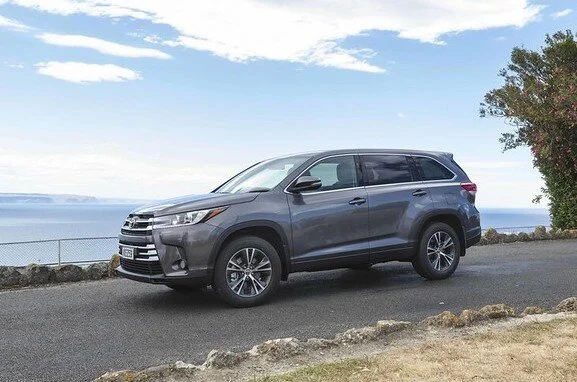
GUN165R-STTHXT-MLM-3U5-16hr.jpg

THE diesel ‘alternate’ to the petrol-wed Highlander is about to be upgraded for New Zealander followers 

Revisions to the Fortuner, available here since 2015, largely follow those just announced for the HiLux.

The changes are obvious when spotted – though sighting a Fortuner has tended to be a challenge. With 54 registered in its year of launch, in 2015, 534 in 2106 – its full year – when 87 were rentals, 440 (25 rental) in 2017, 465 (one rental) in 2018 and 816 (of which 542 were rental) last year, plus 20 this year to date, it’s been a quiet achiever for Toyota New Zealand.

No matter. The Palmerston North-based distributor is sticking by its competitor to the Mitsubishi Pajero Sport, Ford Everest and soon-to-go Holden Trailblazer and Isuzu MU-X.

Moreover, it is likely renew marketing focus on Fortuner because the model is just about to enter the market in an updated form that delivers a more sophisticated look, improved performance and better tech.

The detail will sound familiar, because unsurprisingly it’s pretty much the same stuff that will come to the 2021 HiLux, revealed last week.

TNZ could have, in fact, chosen to discuss Fortuner concurrently with the HiLux presentation, but chose to keep them separate to keep the information flow tidier. So Fortuner’s story was held over to this week.

So, what’s in store? The current two model grades, GXL and Limited, seem set to continue to be offered and the mid-life update will mirror most of the changes made to the HiLux, including its upgraded 2.8-litre four-cylinder turbo-diesel.

Pricing and full spec are unlikely to come with this week’s announcement; in all probability, TNZ will follow normal process and hold these details until much closer to launch, which will surely tie to when HiLux appears.

On that matter, TNZ suggests “late year.” Surely we won’t be far behind Australia, which is taking both ute and wagon in August? Presently Fortuner GXL is a $55,490 ask and Limited sites $3000 above that.

GUN165R-STTHXT-MLM-3U5-11hr.jpg

Anyway, the images and some detail is already out, thanks to our neighbour.

Access to their press material suggests that as well as the sophisticated new exterior design, characterised by its sleek multi-LED headlight clusters, equipment levels have increased with the fitment of Apple CarPlay and Android Auto (wired, not wireless) as part of a significant improvement to the infotainment system, which also takes a new touch screen, enlarged to eight inches (so, up one inch).

This is as much as Toyota wants to say about the interior, but suggestion is that it will get a fancier cabin fit-out than the updated HiLux ute.

The engine upgrade is significant. Matched as standard to an automatic transmission, the tweaked engine pumps out significantly more power and torque – up from 130kW/450Nm to 150kW/500Nm – thanks to “new and uprated components”.

Fuel consumption has also been reduced courtesy of improved cooling, says Toyota, which claims a 17 percent efficiency increase in the urban/city cycle, which will see combined consumption reduce from the current 8.6L/100km.

The boost in power also sees the Toyota Fortuner’s towing capacity increase from 2800kg to 3100kg, and is likely to be accompanied by a fix for the diesel particulate filter problem .

The sales pitch? Well, it used to be that TNZ marketed Fortuner as a a "medium rugged" SUV, pitching it as a less expensive alternative to the Land Cruiser Prado (also "medium rugged") or a more hard-core wagon than the passenger-car-based Highlander crossover, which it described as "medium soft". There’s no logical reason to divest from that strategy, not least given that Highlander from next year will drop its V6 in favour of a smaller capacity four-cylinder petrol with hybrid assist.

GUN165R-STTHXT-MLM-3U5-08hr.jpg


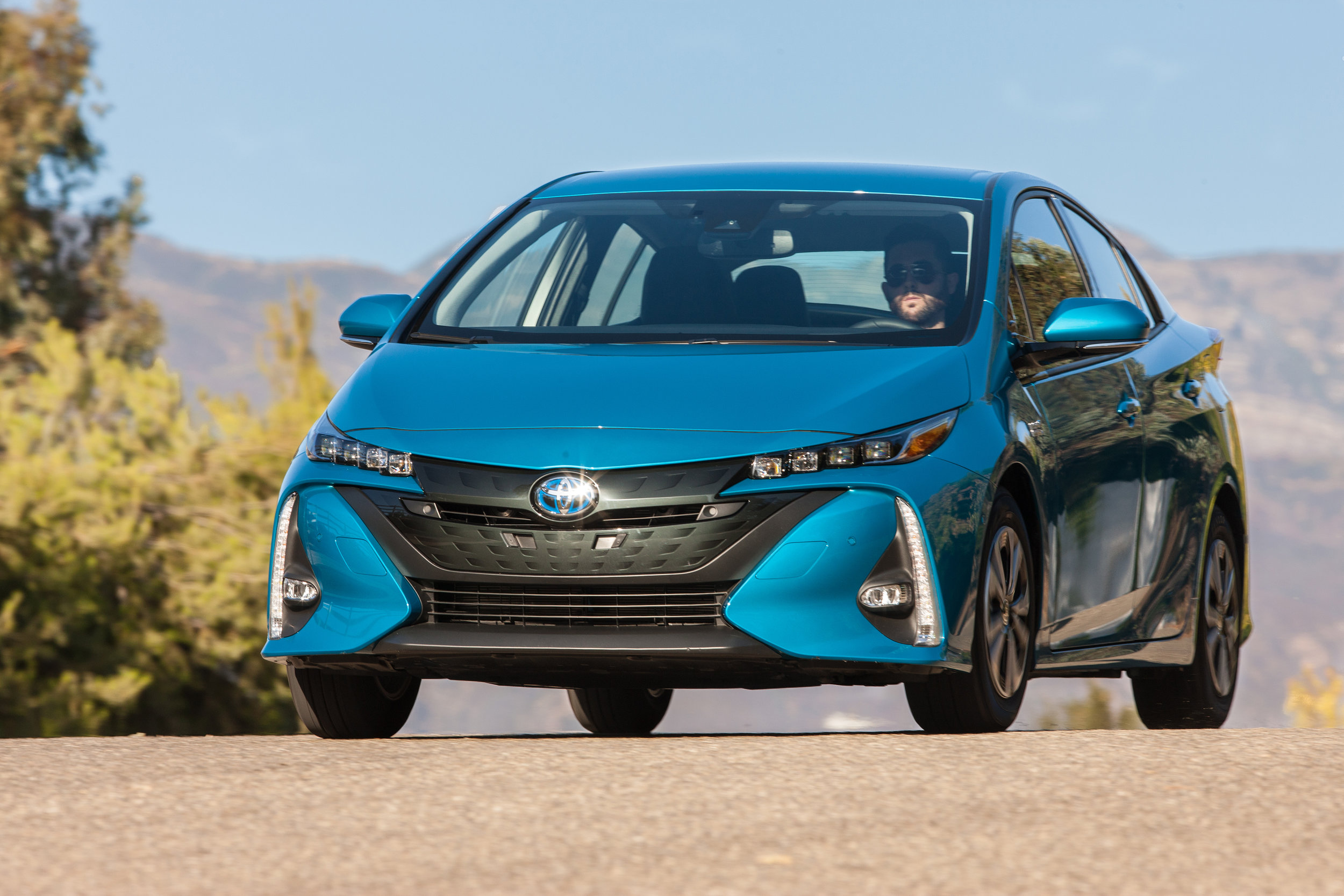
Prius no hit but still a stayer

Latest sales returns remind Kiwi love for hybrids is cemented .. except when it comes to the car that introduced the world to this tech. The Prius’s battery charge is all but depleted.

No question about the rav4 hybrid … Toyota’s most popular model in may, when the market was down overall, is still subject to a waiting list.

No question about the rav4 hybrid … Toyota’s most popular model in may, when the market was down overall, is still subject to a waiting list.

IS time just about up for the Toyota Prius?

Actually, it’s a not a new question. This poser has been relevant since at least 2015.

That’s really the first year when it became obvious that the hatchback that 25 years ago introduced motorists to the bright new world of electrified motoring was not doing at all well, at least in New Zealand-new form.

Which might seem crazy because, of course, as much as Prius appreciation has been falling away, our hybrid penetration has been ramping up, and quite considerably. And when it comes to favourite battery-assisted products, they’re all from the same brand: Toyota.

So, really, as much as the Prius has been on losing streak, the fact is that Toyota New Zealand has been winning. Really, then, the original hybrid car from Japan’s No.1 looks to be a victim of its own success. It has simply spawned development  of so many other Toyota hybrids at its own expense..

New Zealand new vehicle registration figures for May show that just two Prius and 10 of the smaller Prius Cs were sold during the month, way down on sales achieved by other Toyota hybrids – 413 RAV4s, 127 Corollas, 85 C-HRs, and 20 Camrys.

And year-to-date hybrid registration figures make just as depressing reading for the model. They show just 96 Prius and Prius C have been sold so far in 2020. Compare that to 1239 RAV4s, 431 Corollas, 246 C-HRs and 152 Camrys. Not only that, but various ‘H’ versions offered by Toyota’s luxury cousin Lexus have achieve a combined total of 187 registrations so far this year.

current prius has struggled since launch in 2016 and its predecessor was a falling star, too.

current prius has struggled since launch in 2016 and its predecessor was a falling star, too.

How does that compare to back in 2015 and prior? Well, it was a slightly different structure then, when Prius was a bigger family, including the V people carrier then. By chance, MotoringNZ owner Richard Bosselman happened to have written  ‘a what chance for Prius?’ story back in 2016, in which the data was presented.

According to the NZTA information cache from that period, in 2015 the C achieved 367 sales – whereas Prius hatch took just 30 (and the V 11). The preceding year was stronger for the hatch, with 121 units (against 287 C and 3 V), 549 in 2013 (no count for C, 55 for V) and 473 in 2012, a period when only the hatch was available. The was all collated because Toyota at that time was about to launch not only the fourth generation (aka ‘4G’) hatch we have now but also a car that seemed to do all Prius could, but in more acceptable form: Corolla hybrid. And, yet, five years on, the Corolla and Prius co-exist still. Who’d have picked that scenario?

Given all latest statistics continue to add up to a sad time for the iconic Prius, which earlier in its career was so new-age that it was the green vehicle of choice for everyone from Hollywood movie stars to politicians., the question obviously still seems reasonable. But TNZ is steadfastly true.

The hatch’s story began back in the early 1990s when Toyota Motor Corporation decided to attempt to develop a car that would have up to twice the fuel economy of its big-selling Corolla. The project culminated in the the brand’s first petrol-electric hybrid, a prototype Prius unveiled at the 1995 Tokyo Motor Show – the name, appropriately, a Latin word for “first” or “to go before”.

The model sure was a first.  With its Hybrid Synergy Drive system and battery pack that combined forces with a conventional petrol engine to achieve vastly improved fuel economy, it opened the way for electrified motoring well before fully electric motoring could begin to become economically possible.

The first-generation Prius, a four-door sedan, was launched in Japan in 1997. Toyota New Zealand introduced the second-generation model, a slightly geeky-looking five-door hatch, in 2003. Since then close to 6000 of them have been sold new here, their owners appreciating the superior fuel economy and reduced exhaust emissions that come from combining the self-charging electric motor and petrol engine.

arrival of Corolla in hybrid format could have been the end of Prius … but it wasn’t.

arrival of Corolla in hybrid format could have been the end of Prius … but it wasn’t.

But now it seems the Prius’ job is done, leaving it up to more conventional-looking Toyota models to further the career of the hybrid passenger vehicle.

Those models – RAV4, Corolla, C-HR and Camry – are doing very well, too. Last month the hybrids accounted for 77.4 percent of all RAV4 sales, 68.6 percent of Corolla, 70.2 percent of C-HR and a remarkable 90.2 percent of all Camry sales.

The overall Toyota performance led the way in a stellar month for hybrids,  which saw them jump from around 4.3 percent of all new vehicle registrations in the opening four months of the year, to 13.3 percent in May. Compare that with the penetration achieved by electric vehicles – the models that mains-replenish – which was 0.94 percent for plug-in hybrids and 1.07 percent for full electrics.

While other hybrid product such as the Kia Niro and Hyundai Ioniq, have contributed to all of this, by far the biggest contribution has been from the Toyotas. 

But obviously the Prius, the model that started it all for hybrids, hasn’t figured much at all in this success. So what does this mean for the future of the car? Will it be retired?

Internationally, one opinion among the international media is that the Prius name is too iconic to be completely retired, so it may be saved by TMC for use on a future battery electric vehicle.

TNZ chief operating officer Neeraj Lala says he hasn’t heard any official word relating to the future of Prius.  That doesn’t worry him; he’s happy to see the model continue to remain on sale in New Zealand for those who want it – and he reminds that it is very popular as a taxi.

“More to the point is that Prius is the Toyota model that introduced hybrid motoring to New Zealand, and in that regard it has been a success,” he says.

“Look where Toyota is now. We have hybrid versions of almost all our passenger vehicles, and we will soon be adding to that – hybrid versions of the new Yaris and Yaris Cross, the Highlander larger SUV, and in around 18 months we’ll also get a hybrid version of the Hilux ute.”

CH-R in hybrid form would seem to provision a better kind of Prius … that it is also tracking strongly suggests the market recognises this.

CH-R in hybrid form would seem to provision a better kind of Prius … that it is also tracking strongly suggests the market recognises this.


Loan scheme gives new life to ghosts

Recipients of Highlanders loaned by Toyota as a small business assistance won’t need to run them in. That’s been well and truly taken care of.

32724397653_340f1bb428_c.jpg

 LOANING cars to struggling businesses potentially helps the country’s biggest brand ease a headache Covid-19 might hardly improve.

Toyota New Zealand’s intent to provision 100 Highlander sports utility vehicles to small businesses nationwide for a year’s free usage comes with a caveat it has been happy to discuss. To a point.

Though current models, small print with the Small Business Driver package clearly relates the 3.5-litre V6 seven-seaters in mid-level GXL trim are not as might be imagined: Brand-new examples of this $58,490 car.

What’s on offer is stock first registered in 2018 and likely to have 30,000km to 45,000km on the clock, apparently accrued from toting tourists. 

Plucked from the in-house Signature Class used vehicle processing programme, the Highlanders are from what is perceived within the broader industry to be a massive count of vehicles laid up in what could be called TNZ’s ‘ghost fleet’.

Which is? A raft of mainly ex-rentals the market leader has acquired through buy-back agreements far less common now and then parked up for months … perhaps years.

This the result of TNZ having been unable to push them through used car channels en mass, for fear of causing a glut that might collapse used car prices. 

Instead, they sit inactive in what has been derisively called, by rival brands, a ‘rental swamp’. Holding yards and warehouses. Some there for so long that – according to talk - registrations have retired, batteries depleted and tyres squared.

Industry lore relates enough vehicles are in a limbo to likely be costing the brand many thousands of dollars annually in upkeep and storage fees. Can that be true? 

TNZ has been asked on numerous occasions, including during compilation of today’s story, to offer clarification. Every request has been met the same way. With silence.

As much as chief executive officer Neeraj Lala was happy to share his enthusiasm about the loan scheme – which is, beyond doubt, a very generous opportunity – he declined to deal with a host of follow-up questions relating to the cars’ provenance and the state and size of the stockpile. 

The finer details of what’s on offer currently were passed on by a potential applicant who, while a little surprised by the cars’ suggested histories, was not particularly perturbed.

“A free car is a very generous offer, no argument. As it turns out, I don’t qualify because another of the stipulations is that you have to be a recipient of the Government’s wage subsidy, but it’s a good concept.”

An industry involver spoken to subsequently also thought the idea was interesting.

“It’s a rental swamp and the swamp needs draining ... this is what has to be done.

“They’re probably not making anything on it. But it at least gets some vehicles back on the roads and free of storage fees that, while quite cheap on a per day per car basis, soon adds up to a chunk of change when you’re talking big counts for long term.” 

32724395513_f2c941a2b8_c.jpg

‘Buy-back’ was said to be a core ingredient of when Toyota basically sought to corner the national fleet business, which some years accounts for up to 80 percent of new car sales. 

Since 2018 TNZ has sought to swing its focus back to private buyers with its Drive Happy programme that aims for fair pricing and says it has detuned the intensity and scale of its fleet push.

Even so, it still agrees to discount to large-scale purchasers and, as a glance around any airport carpark (at least pre-Covid) would confirm that, while other brands have come back into hirer circles, there are still a lot of Corollas, Highlanders and RAV4s behind those rental placards.

And 2018 appears to have been the last big year, with industry statistics showing 1660 Highlanders having gone into rental, whereas just 179 followed last year. The majority were GXL variants. 

Now, of course, there’s coronavirus, which has certainly dented the car trade and is doing those brands supplying rental providers no favours.

Distributors have been pressured to take back stock – often in as-new condition - now standing idle and waive delivery of incoming product.

That’s a big ask: June has historically been a big month for rental car fleet replenishment to cope with the tide of winter tourists. TNZ indicated recently it is challenged by this; it doesn’t want to upset core corporate clients, but neither can it afford to assume responsibility for pre-agreed consignments.

With the Highlanders, it’s not quite a matter of first in, first served: Only small businesses with fewer than 20 employees are eligible and applicants are vetted by a selection panel.

The scheme has been created in conjunction with MediaWorks, and includes a share of $1 million of advertising with the media company for successful applicants. 

Those interested in applying have until 11.59pm on June 9 to apply. 

Perhaps, at the end of the exercise, users might receive tasty opportunity to purchase the vehicles outright.

Of course, they have to weigh up the deal against the fuel costs. The V6’s taste for petrol is a core reason why the next-generation Highlander, coming next year, will only be offered as a four-cylinder hybrid.


Hilux unmasked - new look, more kit, extra grunt

Here it is, the updated Hilux. Would you trade a Supra for it?

GUN126R-DTTHXT-OE-3U5-01lr.jpg

 THEY’RE calling it the most technically-advanced ute ever offered by Toyota – so is that enough for the reinvigorated Hilux, unveiled internationally today, to at last wrest market leadership from its core rival, Ford Ranger?

Toyota New Zealand chief operating officer Neeraj Lala is understandably bullish about the updated variant, whose exact launch timing this year still has yet to be revealed, though Australia has signalled it will start receiving stock in August.

His enthusiasm is such that he has vowed to ditch his current company car, a GR Supra, for an example of the latest truck, which is incoming in four specification levels – Workmate, SR, SR5 and the range topping SR5 Cruiser, the latter available in both 2WD and 4WD and automatic only.


“I believe the performance of this truck is so good, I’ll be swapping out my GR Supra so we can tow our go kart trailer to my son’s weekend races. I can’t wait to see customers return to Hilux with this significant improvement,” says Lala.

Introducing two years after the ute’s last big refresh, the new line will also contain a special launch edition inspired by the recent success of the Hilux Gladiator. Lala says this edition, which he spoke to MotoringNZ about last month, will be “custom-built … for New Zealand customers and conditions.”

GUN126R-DTTHXT-OE-1D6-09lr.jpg

What isn’t mentioned in launch material is the variant some in the national media insisted was coming – though Lala always said it was not: A Gazoo Racing version, supposed with a twin turbo diesel.

So, what’s in store? Well, it’s a restyling exercise, with a bolder, tougher-looking exterior ‘on most variants’. And that  2.8-litre turbo diesel engine offers more power, achieves better cooling, resolves the diesel particulate filter issues and has better fuel efficiency than its predecessor. Ride comfort, towing and equipment levels also improve.

Maximum power has been increased by 20kW to 150kW – so, a 15.3 percent lift -  while peak torque on automatic models has been ramped up to 500Nm, which represents an 11.1 percent/50Nm improvement.

Fuel consumption also improves by up to 11.1 percent while tuned accelerator response delivers greater driver control. The six-speed automatic remains.

Suspension upgrades run to revised shock-absorber tuning, new bushings and improved leaf-spring design. Toyota claims a more comfortable ride, particularly over rough roads and with low loads while maintaining the model’s legendary off-road capabilities.

In 4x4 models with downhill-assist control, an additional traction control feature when using 2WD mode reroutes torque to assist grip in muddy or grassy conditions on worksites.

Towing capacity for automatic 4x4 variants has been upgraded to a maximum of 3500kg to match manual versions. On 4x2 variants, all diesel automatics are now rated at 2800kg, an increase of up to 300kg.

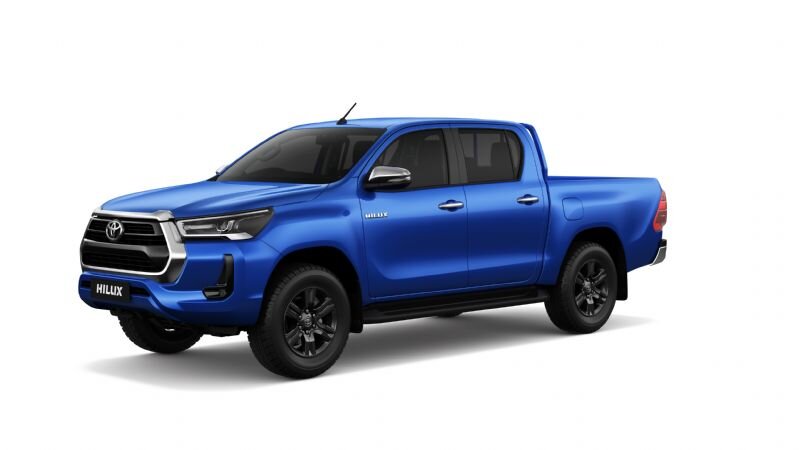
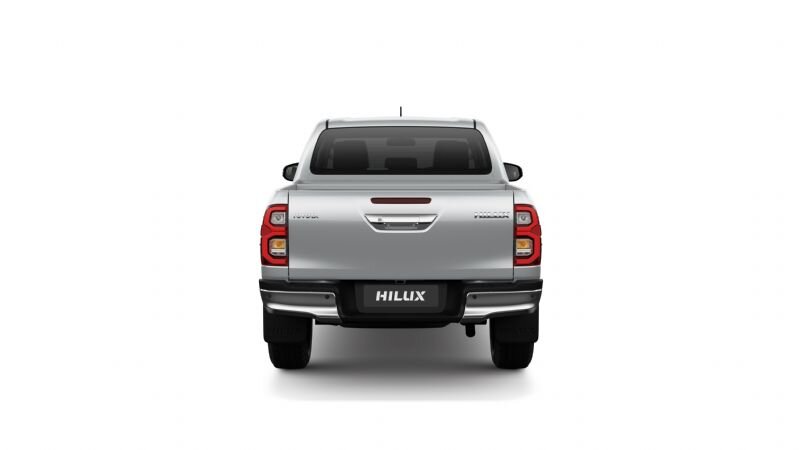
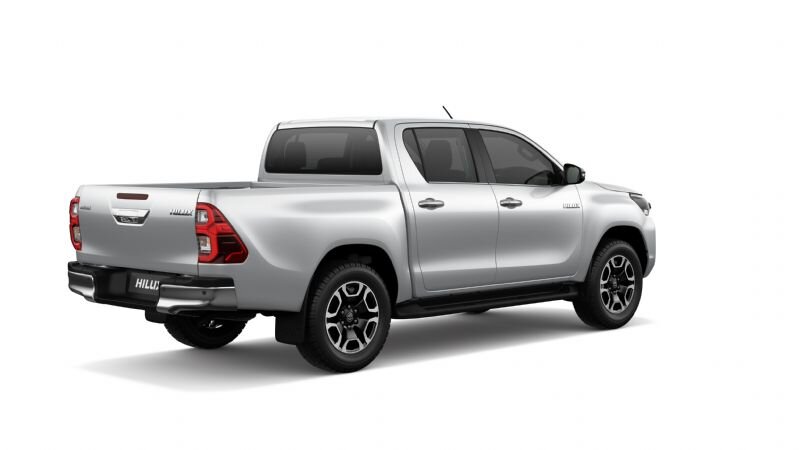
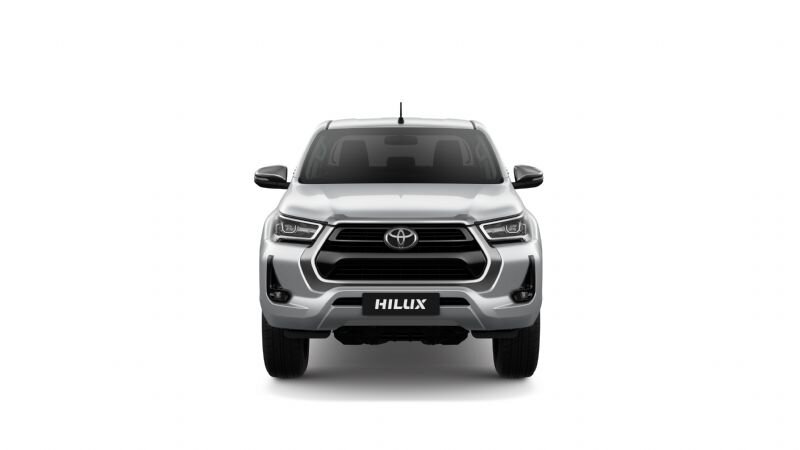
Revised exterior styling is intended to deliver a ‘tough, robust on-road presence’ that is intended to be more in keeping with the global Toyota ute/truck family. Particularly obvious is that large trapezoidal grille that dominates the front design and incorporates more pronounced horizontal elements that deliver a wider, more planted look.

Grille surrounds differ by grade while newly designed headlights are smaller for a "meaner" look and light clusters include LEDs on high grades.

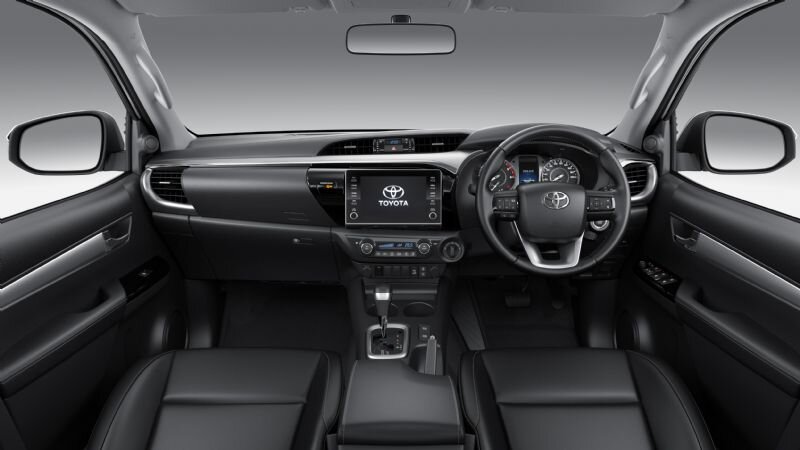
Inside, all models have been upgraded to an 8-inch display screen with enhanced voice recognition and the latest smartphone integration functions, including the adoption at last of Apple CarPlay and Android Auto. Higher grades are also equipped with satellite navigation and digital radio.

A 4.2-inch multi-information display in the instrument binnacle incorporates a digital speed readout, among other new functions. Overseas reports speak of front and rear parking sensors, keyless entry and start, automatic air-conditioning and a nine-speaker JBL stereo system with an 800W eight-channel amplifier, plus accessories such as roller bed covers, a locking tailgate and a 12-volt power supply for the cargo bed.

Full NZ pricing and specifications are expected to be announced closer to launch.


RAV4 hybrid rising as market drops

New vehicle sales in May were down, but the leading player still had something to cheer about.

RAV4 limited hybrid.jpg

THE new vehicle market was down by around a third last month, but a big surge of interest in the RAV4 during that period has buoyed its distributor.

Toyota New Zealand says the crossover achieving 538 registrations to place as the top-selling car in May, when 8313 new vehicle registrations were accrued in total, also reveals a scenario that might outwardly might seem surreal given the market condition.

At a time when new vehicle sales are dropping, this car is in hot demand – so much so that anyone ordering one now won’t see it until perhaps July or August. 

Actually, it’s just the battery-assisted edition that’s on the ‘most wanted’ list. TNZ always knew the hybrid would be popular – it surged ahead at launch simply because every dealer wanted one as a demonstrator – but is impressed nonetheless that the private market is driving the car’s progress now.

And there’s another twist. The RAV4s that have been built for the rental market, which now wants out of new vehicle with international tourism now kaput, cannot be diverted to meet that demand, as hire companies only ordered the petrol pure variants.

In discussing the May count, TNZ chief operating officer Neeraj Lala says he has around 800 RAV4 hybrid pre-orders still unfulfilled. Most of those cars should be delivered in June, the remainder probably in July. 

All up, TNZ’s passenger volume in May is down around eight percent year-on-year, not so bad all things considered. What factors into this is that it was delivering cars ordered before lockdown.

As for what happens from now on? “Our new car inquiry rate is low,” he concedes. “But we have this incredible back order of deliveries, so for the next couple of months we will still look quite good. So, in that sense, it’s quite good. And the (ongoing) demand for hybrid RAV4 is simply phenomenal, a little bit unprecedented.” 

The Motor Industry Association, which speaks for distributors, has also signalled a degree of satisfaction with the May result, which though well off the same month last year, when 12,5259 cars and light commercials were sold, nonetheless represents a relatively decent post lockdown result, given the circumstances.

“The month of May re-opened for business albeit in a constrained manner,” noted chief executive David Crawford.

“It was a challenging month operating under alert level two and an economically depressed environment.”

Year-to-date the entire new vehicle market is down by 19,622 units, a 32 percent drop on the count for the same period of 2019.

Registrations of 5401 passenger and SUVs for last month were 29.2 percent (2223 units) below 2019 volumes while a commercial vehicle tally of 2912 units represents a 37.2 percent decrease.

After RAV4 the Ford Ranger installed as the second-strongest seller for May, though with 498 units, with another Toyota, the Hilux, nabbing third place, just 58 units behind. Lala was also stoked with that result.

Toyota was the overall market leader with 19 percent market share with 1611 units, followed by Holden, with nine percent (760 units) then Ford (eight percent, 702 units).

The MIA has joined those calling for the Government to bring the country to Level One Covid-19 restrictions “sooner rather than later.”

 Commented Crawford: “The MIA shares the views of many that with no new Covid-19 cases for the last 11 days and no known community spread for at least two months, we should be looking to move to alert level 1.

“The country is better prepared now to manage the odd case of Covid-19 should it arise. Our health system has improved significantly in terms of testing capability, contact tracing and hospital intensive care capacity.

“It is time to get our economy moving forward while maintaining our health gains.”

Toyota RAV4.jpg

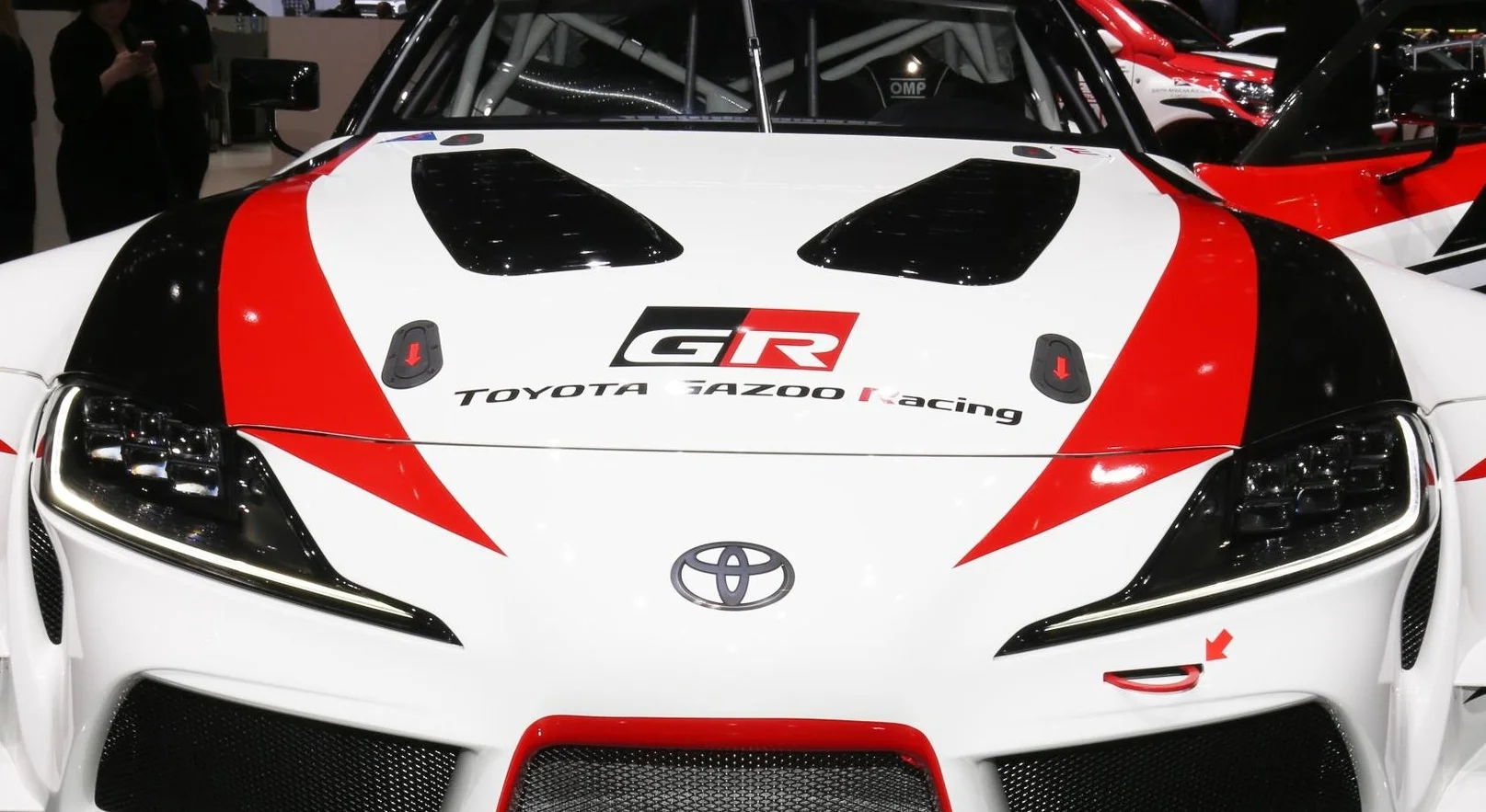
GR Corolla? Toyota NZ’s revved

The big sleep might be ending, with talk about Toyota reviving an old-school favourite. What’s the local distributor’s reaction?

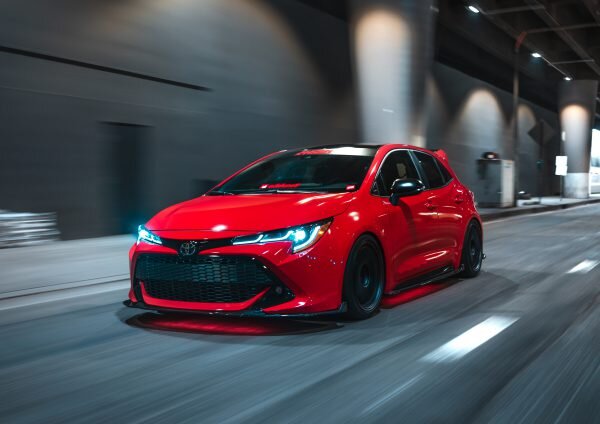
2018_SEMA_SUPER_STREET_COROLLA_01_D2B2B7E04D5C834A9948D9825F753EABE399AA21-600x424.jpg

SPECULATION about Toyota Japan prepping a Gazoo Racing version of the Corolla sounds sweet to a local brand boss.

When asked for his thoughts about the potential of any such programme, Toyota New Zealand chief operating officer Neeraj Lala was unequivocal: Bring it on.

 Talk about the potential of a GR Corolla that would be a direct heir to the celebrated 4AGE 1.6-twin cam AE86 and GT Corollas of the 1980s has re-emerged on strength of a tweet sent out by Toyota America to media.

A message relating that the NZ-confirmed baby GR Yaris hot hatch is not a starter Stateside, the American operation raised flags – and hopes – by adding “it’s time the U.S. got a hot hatch to call its own.” 

Commentators saw that as a green light for Corolla, purely on strength that the brand’s top seller is the only other conventional hatchback in the Toyota line-up.

Sounds thin? Well, then consider what might be construed from this sole comment from Lala: “We are working hard on confirming this model, and would love to have it here in NZ.”

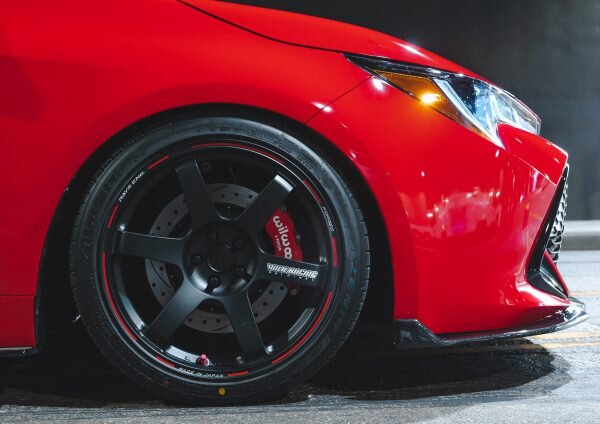
2018_SEMA_SUPER_STREET_COROLLA_05_848D017C86407298C5239034F701290320B268C5-600x424.jpg

Interesting choice of words, right? Does ‘confirming’ mean there’s definitely something going on? Or is this just mischief?

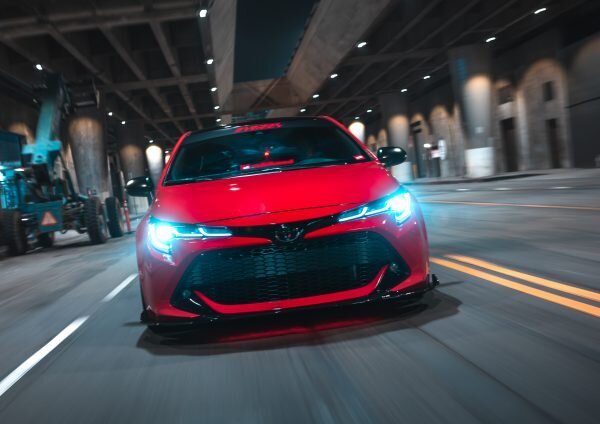
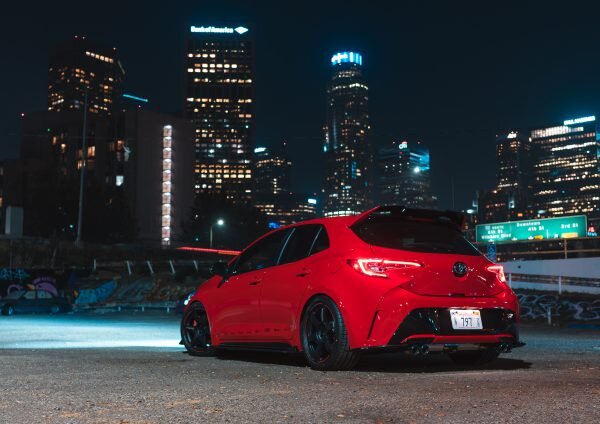
Let’s not forget Toyota America’s interest in the concept of a hot Corolla has already been delivered in exactly that form. The highly-modified one-off special pictured here was a one-off created for the 2018 SEMA show in Las Vegas. 

Certainly, Lala and other TNZ high-ups are huge fanboys for Akio Toyoda’s aggressive expansion plan for its GR (Gazoo Racing) high-performance road cars.

NZ was amongst the first export customers for the GR Supra that has revived the brand’s most famous sports car and is also in the queue for the upcoming GR Yaris, a quasi-homologation homage to its World Rally Championship car 

If and when a GR Corolla does arrive, then don’t be surprised if it borrowed heavily from the GR Yaris, including using the blitzer baby’s 200kW/370Nm turbocharged 1.5-litre three-cylinder engine and all-wheel drive system.

In addition to Supra and Yaris, the GR clan will also include the next-generation 86 sports coupe – with the GR 86 nameplate – by the end of 2021 and also the GR Super Sport, a road-going version of the race car Toyota is creating to run in the Le Mans hypercar category expected to start in the 2021/22 season, though the category is looking precarious after Aston Martin froze its programme.


TNZ confirms Highlander in hybrid only

The V6 has served its purpose, but from now on petrol-electric efficiency makes more sense, distributor says.

KL-34RR-HV-20hr.jpg

EVERYTHING hinges on hybrid – that’s from Toyota New Zealand, in confirming today that the just-revealed next-generation Highlander will divest its V6 here and devote to petrol-electric purity.

Total commitment from TNZ to a new-to-type drivetrain that bumps a petrol V6 that continues in other markets and has been a mainstay here in the current and previous models is a safe call at the right time, local chief operating officer Neeraj Lala says. 

Pointing out that hybrids now account for one in three sales of new Toyota cars here, he said: “The introduction of another hybrid to our line-up further complements our focus on moving towards a low emission economy, while delivering our customers with a fuel-efficient large SUV.”

And that’s the whole point of the exercise. While the V6 models have been popular for their impressive power output, the engine has been increasingly tested to come up to speed in respect to economy.

That the current car has maintained healthy volume here has been increasingly due to its popularity as a rental car – where the seven-seat configuration lends favourability.

KL-34FR-HV-20hr.jpg

At same token, it has slipped in status with private buyers, to the point where Toyota and its fleet customers have found moving ex-rental stock into the used car forum a challenging exercise. All the more so, perhaps, now that the coronavirus crisis has destroyed tourism and thus forced operators into selling off stock.

“Toyota has now sold more than 15 million hybrid vehicles globally, including in excess of 17,000 in New Zealand,” Lala said.

"The all-new hybrid Highlander is the beneficiary of Toyota's global hybrid leadership, extensive experience in SUVs, and unrivalled reputation for quality, durability and reliability,"

On arrival in early 2021 the model will achieve immediate status as the first seven-seater hybrid SUV has had here with a Toyota badge – a distinction that separates it from the brand’s Lexus RX, which added a third row two years ago.
Married to a 2.5-litre petrol engine, it is of course a mild system – plug-in recharging has yet to enter the Toyota lexicon – and the cited total hybrid system power output is expected to be 179kW (whereas the new V6 has 218kW).  

The hybrid drivetrain marries to an intelligent AWD system that incorporates front and rear electric motors. The hybrid battery is located under the second-row seats.

The fourth-generation Highlander sits on the Toyota New Global Architecture GA-K platform, providing multiple benefits for dynamics, safety and styling, Lala says.

KL-TOP-SHOT-HV-3-SEATS-UP-20hr.jpg

“The new Highlander is brand new from the ground up; a new platform for improved stability and handling, a new engine with class leading efficiency, new levels of safety and with a dynamic styling package.”

He says it will appeal as being “a significant improvement on the outgoing model, with improved efficiency and flexibility for families.”
Toyota says this has enabled engineers to develop a lightweight and highly rigid bodyshell with a low centre of gravity - features that provide the new SUV with nimble handling and comfortable driving around town and on the highway.

The new generation has advanced Toyota Safety Sense active safety technologies designed to help prevent or mitigate collisions across a wide range of traffic situations.

The new platform has also allowed designers to craft a longer, more distinctive body that delivers a more flexible interior with expanded cargo space and a more tailored ambience.

Toyota has sold more than 15 million hybrid vehicles globally.


New Highlander hybrid revealed

Here’s the new Toyota Highlander – but you won’t see it in the metal for a little while yet.

KL-34FR-HV-20hr.jpg

DETAILS about the hybrid system set to drive the next-generation Highlander have been revealed.

In giving insight into the new-to-type drivetrain that Toyota New Zealand has previously affirmed will be a sole choice, thus bumping a petrol V6 that continues in other markets, the brand has also provisioned a first look at the new styling.

The Palmerston North-based brand has yet to offer any comment on the car and its timing. Toyota Australia, whose launch timings general chime with ours, has said it is set to land in the first half of 2021.

KL-34RR-HV-20hr.jpg

This will be the first time a hybrid powertrain has been offered on new Highlander here. Married to a 2.5-litre petrol engine, it is of course a mild system – plug-in recharging has yet to enter the Toyota lexicon – and the cited total hybrid system power output is expected to be 179kW (whereas the new V6 has 218kW). 

Toyota also cites “excellent fuel economy and low emissions” without being too specific. The hybrid battery is located under the second-row seats.

The hybrid drivetrain marries to an intelligent AWD system that incorporates front and rear electric motors.

The fourth-generation Highlander sits on the Toyota New Global Architecture GA-K platform, providing multiple benefits for dynamics, safety and styling.

Toyota says this has enabled engineers to develop a lightweight and highly rigid bodyshell with a low centre of gravity - features that provide the new SUV with nimble handling and comfortable driving around town and on the highway.

The new generation has advanced Toyota Safety Sense active safety technologies designed to help prevent or mitigate collisions across a wide range of traffic situations.

The new platform has also allowed designers to craft a longer, more distinctive body that delivers a more flexible interior with expanded cargo space and a more tailored ambience.

Toyota has sold more than 15 million hybrid vehicles globally.

KL-DASHBOARD-HV-20hr.jpg


Hilux future: NZ specials, hybrid … but no racer V6

An update is due for Toyota NZ’s top-selling vehicle five years into its model life.

44843816325_d36d85de43_k.jpg

BESPOKE versions of Hilux tailored in New Zealand are likely to be offered.

Production of special, perhaps even one-off, editions will be undertaken by Toyota New Zealand at its Signature Series facility at Thames, which started out as an assembly plant but now operates as a refurbishment centre for used import and ex-fleet and rental NZ-new product. 

The Palmerston North-centred national new vehicle sales leader says any such models would be to special order and specified above the current SR5 Cruiser.

What has inspired the programme is positive customer reaction to a flamboyant design study the distributor commissioned, chief operating officer Neeraj Lala says. 

Based on a 4WD double cab Hilux SR5 and unveiled at the 2017 Mystery Creek Fieldays, the Gladiator (below) carried around $65,000 worth of modifications and accessories. It remained in TNZ’s fleet for two years before being auctioned in December, 2019, the new owner being a Taupo man who bid $81,000 and also traded a Landcruiser in on it.

Says Lala: “We figure there’s an opportunity to do more of this. It’s taking Hilux back to its roots, because there’s long been a tradition of individuals doing big improvements their Toyota utes.”

36033792275_1ce428e7bf_k.jpg

Further information about the special edition programme is to be aired when TNZ also breaks silence on what is coming with a big mid-life facelift for the current generation Hilux. 

What’s set to arrive is far more extensive than the 2018 update that improved TNZ’s strongest-selling product in 2019, with around 7000 registrations. 

Toyota Japan plans an international announcement on May 21.

The upgrade is expected to include substantial cosmetic changes plus a re-powering of the 2.8-litre four-cylinder turbodiesel, which currently develops 130kW of power and 450Nm of torque in automatic form and 130kW/420Nm in manual, and revisions to improve the diesel particulate filter.

It is also expected to receive mild revisions to the interior that will include an upgraded infotainment system that includes Apple Car Play and Android Auto.

Lala says he can offer no comment until May 21, explaining “we are bound by an embargo. 

What has particularly excited media are renderings that have been bounced around the internet for weeks that appear to expose the facelift design.

Purportedly sourced from an independent global Toyota exporter, Milele Motors, and based on leaked internal documents, the images suggest the upgrade delivers new LED headlamp design, a larger front grille inspired by US truck styling and revisions to the Hilux’s rear, plus new 18-inch alloy wheels at the high end and 17s for the outright workhorses.

43939695850_79de2d4dd5_k.jpg

Beyond those images, there has been further intense speculation that Toyota is also entertaining with this update a new GR – for Gazoo Racing – variant featuring a twin-turbo V6 diesel making perhaps 200kW/650Nm if not more.

One national provider has become particularly fixated, with speculation repeated as recently as yesterday, apparently based on musing published by an Australian online outlet. 

Fake news?

“New Zealand is not going to get a V6 twin-turbocharged diesel-powered Hilux ute,” says Lala.

The NZ outlet’s stories have resulted in TNZ’s call centre being hit by inquiry from customers asking what other information was available. Lala wishes the writer would simply pick up the phone and talk to him.

One big drivetrain revision that is set to involve with the current ute, but won’t be included in the facelift, is adoption of hybrid technology.

“We’re committed to focussing on lowering exhaust emissions throughout our vehicle fleet, and that includes the Hilux ute,” says Lala. 

“So far Toyota Motor Corporation has produced 15 million hybrids, so we know how to build them.

“In New Zealand we are already selling hybrids that can tow – the RAV4 SUV – so it’s no big step to acknowledge that a hybrid will feature in the current model lineup some time in the next 12 to 18 months.”


.

Covid-19: National need could pep battered rental scene

The rental car scene has been massively disrupted but the coronavirus crisis won’t kill it, Toyota New Zealand contends.

40155180750_55306e878e_k.jpg

 GREEN shoot opportunities, probability of continued national need and sheer resilience will keep some rental car operations going.

This proposal is from the chief operating officer of Toyota New Zealand, historically the largest provider of NZ-new vehicles and caught now in an unfolding sector crisis.

With fleet providers desperate to relinquish stock and new vehicle distributors into treading a fine line in wanting to help as best they can while also having to protect their own operations, it’s a tough time.

Yet Neeraj Lala believes all is not lost.

Speaking after a week in which providers’ and the industry have taken turns to express sometimes controversial views, he accepts it’s not at easy time.

Yet he has faith in the entrepreneurial spirit and dogged determination now being demonstrated by many players, not least lower-tier independents.

In wake of the Rental Vehicle Association proposing that tourism accounts for up to 80 percent of work, Lala proposes New Zealander hirers also present valuable support that will reprise and even grow.

So, insofar as the idea of a wholesale rental car industry collapse goes? He doesn’t buy it.

“I don’t expect it to collapse, per se. There is a significant portion of the rental market that is business and corporate and they still rely on regional travel.

“As we transition down through the (Covid-19 alert) levels, then regional travel will open back up. I don’t think air travel will be as significant.

Neeraj.jpg

“Yes, tourism and international travel is going to play a big part in terms of the new size of the fleets that some of the rental companies might have to carry.”

Yet the operators TNZ has been conversing with “are definitely not thinking that because tourism is over they are going to die.”

That’s not just the big-name brands but also some lower tier operations previously reliant on tourism alone. There are plenty of them; 40 in Queenstown alone, Lala says.

But these small set-ups have often been established by highly-entrepreneurial individuals. They’re inventive and imaginative and some are looking at reconfiguring their fleets into freight and delivery roles. He salutes that spirit. 

“An unintended consequence of what we are facing is that new industries and new companies are going to emerge.

“Freight and deliveries are going to be in higher demand than we realise. I heard just last week that there is one company already looking at re-utilising its fleet to enable one to two-hour deliveries of food.”

This didn’t surprise. “You have to remember that these people are very entrepreneurial. They are not just going to be happy to close the doors and die. They will be looking to diversify their fleet – especially if they cannot sell it – and turning it into something.

“I think it is going to be exciting..” 

Lala’s positivity is at odds with the RVA, which pulls no punches in determining the $700 million a year trade involving anything from 30,000 to 50,000 vehicles is serious trouble, with some notable names unlikely to survive.

As much as TNZ has been attempting to reduce its exposure to the rental market over the past two years, many of those favour Toyota vehicles.

The Palmerston North-headquartered operation provisioned around 7000 vehicles into that sector last year and had thousands more set to go out in coming months to meet the traditionally peak winter period.

Fortuitously some of a consignment locked in last October wasn’t built –Japan’s Covid-19 response caused a slowdown in production, so those yet to go down the line cancelled – yet about 30 percent of the consignment, still hundreds of vehicles worth several million dollars, is either already here or on the way.

Resolving what to do with them is under way, and some - particularly models subject to waiting list with private buyers - might yet divert, yet this matter will be as delicate to manage as the other issue of the moment: Being asked to buy back more vehicles than it can cope with. In respect to the latter Lala warns: “The industry’s, and the country’s problem, in regard to rental cars cannot simply become Toyota New Zealand’s problem.”

33155213280_e8ec729030_k.jpg

On top of this, coronavirus impacted when TNZ was already working to manage returning to the market an undisclosed, but thought to be significant, stockpile of ex-fleet and rental stock it had corralled when times were good. 

The challenge of reinstating to the market just those vehicles – some of which, insiders say, were mothballed for so long some were out of registration and requiring tyres and batteries - in a way that did not flood the used market was, in isolation, big enough.

The scenario that might yet emerge would be far bigger. The prospect of rental fleets, particularly the tier one operators with effectively brand-new cars, fire sailing their stock in bulk is not palatable.

As much as sudden and unrestricted availability of an avalanche of effectively ‘as-new’ vehicles, likely at highly-discounted prices, might seem good for any consumer in position to snatch a great deal, it could cause massive disruption within the new car sector.

The potential for this was seemed to be hinted by RVA chief executive Pim Borrens’ when he complained to national media that distributors were using ‘force majeure’ clauses to renege on buy-back agreements.

Lala says that’s not exactly fair. In respect to how TNZ operates, there’s no legal obligation. Rather, TNZ cites as being amenable to being first in line for taking vehicles as and when they become available.

But TNZ has been pulling back on this. The pre-coronavirus stockpile, Lala said, reflected that “in the past five years we have probably taken back more than we have needed. That’s one of the reasons why we have turned the volume back these past two years.”

The glut reflected that some models popular as rentals were sometimes less so as private vehicles. The Highlander sports utility being a good example.

Lala can understand why rental companies are trying to ‘de-fleet’ and he says TNZ is doing the best it can to help achieve that. 

Yet “the difference between what the rental companies want us to take back, and what we can take back is substantial.

“I cannot call it an obligation because it is not an obligation. The rental companies who feel I should be buying back all of their cars … the expectation that Toyota will fund the whole thing and rescue the whole industry is … well, that’s just not realistic or feasible.

“We want to respect the relationships we have – some go back three decades - and are trying to do that by taking as many cars as we can.” Yet if operators were simply going to divest in large scale “it is just going to drop the residual values that we have calculated going in.”

“I cannot afford to have 30-40 months’ stock of Corolla. Normally I would have normally taken 50 percent of that (first tier rental) volume and pumped it into tier two, three or four.” That wasn’t going to happen now so TNZ had to mitigate its risk. 

As much as Toyota remains a big rental involver, and potentially the most dominant by volume, it no longer by any means owned the scene, and plenty of distributors were involved once again. However, he agreed, even if TNZ dropped out completely, it would still retain overall new car market leadership.

David Crawford, chief executive of the Motor Industry Association which speaks for new car distributors, has expressed disappointment the RVA spoke out last week.

“The Rental Vehicle Association is, of course, trying to represent its member’s view and plight in a way that helps that sector, but this is only one side of a commercial arrangement.”

Borren did not reply to requests for comment.


Yaris Cross for hot compact sector

Toyota has revealed the Yaris Cross and suggested there’s a chance it might hit NZ before Xmas.

Toyota reveals the new 2021 Yaris Cross compact SUV The new Toyota Yaris Cross has been designed and developed for Europe, specifically to meet the requireme...

THAT funky looking baby Toyota crossover you had your heart set on?

Good news. It might yet be here by Xmas. With emphasis on the word ‘might’.

In tandem with Toyota’s overnight international unveiling of the Yaris Cross, Toyota New Zealand has re-stated intent to have the car on sale before the end of 2020.

However, it shouldn’t be taken as a absolute hard and fast promise, the exact quote being: “Toyota New Zealand expects to introduce this model towards the end of 2020.” So, if you’re aching to have one as a Christmas pressie … maybe also consider a Plan B.

That timeframe is months behind the original expectation, but is pretty good effort nonetheless if achieved.

This car, remember, was likely the world’s first automotive victim of coronavirus, having been pulled last minute from being revealed at the Geneva Motor Show in the first week of March. Sorry, make that the virtual Geneva show, because the actual event was also cancelled days before opening by … well, the same thing. 

At that time, too, the brand was so publicly pessimistic about the production timeframes it left impression right-hand-drive markets might not see it until 2021. Which might, of course, still be the case, given that most of the major RHD recipients are reporting just that timeframe.

TOYOTA_NEW_YARIS_CROSS_REAR_LEFT.jpg

Let’s hope for TNZ’s sake it makes the boat this year. Even though the new car market is heading toward massive bust – with prediction of being at least 40 percent down on last year – after some really good years, the small crossover and sports utility sector had really been hitting its stride prior to Covid-19 lockdown. Conceivably, then, if any cars are going to be sold, the chances of them being from this category have to be fairly good, not least when it has the extra twists of a hybrid drivetrain and a high tech all-wheel-drive.

The car’s make-up has been touched upon before, but just to recap: It’s a crossover built on the same 'GA-B' compact car platform as the imminent new fourth-generation Yaris hatchback. It promises more space, increased ride height and even the option of four-wheel drive. With a twist: It’s an electric motor-driven system.

Today’s photos are of the hybrid in flagship form, on 18-inch wheels that provide a nice finishing touch to a styling that’s neatly adopts the same wheelarch shape and rising door sill detailing that have taken the RAV4 to new heights. An upright nose and vent design, sharp creasing and high-tech lighting also mark it out as a street cred champion.

In terms of size, the Yaris Cross sits on the same wheelbase as the new Yaris, but is actually 240 millimetres longer. A bigger proportion of that has been added behind the rear wheels (180mm), which should mean a larger boot. It is also 20mm wider (presumably due to the arches) and 90mm higher. And, usefully, it has 30mm more ground clearance, too.

At 390 litres, the boot volume is a touch more than the equivalent Yaris hatch. The rear seat backs split 40:20:40 and there's a variable boot floor arrangement to help make the most of the space. A powered tailgate will apparently be available.

TOYOTA_NEW_YARIS_CROSS_INTERIOR_2.jpg

About that all-wheel-drive. Toyota calls it 'AWD-i', for intelligent. It certainly is. The system uses an electric motor to turn the rear wheels, supplementing the regular powertrain up front in the car. Apparently, it operates when pulling away from rest and accelerating, but otherwise only when traction at the front axle is limited.

Yaris Cross has the same powertrain choices as the hatch, meaning 1.0- and 1.5-litre three-cylinder petrol engines. TNZ has previously explained that its focus is on the latter, which is, according to the maker, more thermally efficient than a typical diesel engine. This further fuels the claim that the hybrid edition is 20 percent more efficient than the engine in the outgoing Yaris Hybrid. The brand says it also seemingly has the 'world's fastest combustion speed'. Does that translate into decent low-down torque?

Nothing has been revealed about the hybrid side’s electric motor, save that it is lighter and more compact than before, in part through it eschewing a nickel-metal hydride battery for a 27 per ent lighter lithium-ion item, which also allows more power to the motor more often. Maximum system power is quoted at 76kW. Toyota also says that the CO2 figures are 120g/km for the front-drive model and 135g/km for the AWD, on WLTP assessment.

The spec? A lot has to be finalised, but the car has been configured to offer a large wireless device charger, heated steering wheel and big head-up display. Touchscreen infotainment is likely to be present on most versions, as is a generous suite of active safety functions, under the 'Toyota Safety Sense' umbrella.

TOYOTA_NEW_YARIS_CROSS_HIGH_FRONT_LEFT.jpg


Toyota all but disappears from rental action

Where are the rentals, Toyota?

2018 Toyota Corolla hatch, ZR hybrid, Eclectic Blue, front three quarter headlights on.jpg

LATEST new vehicle registration statistics from the Motor Industry Association indicate Toyota New Zealand has gone from dominating the national rental vehicle industry to barely figuring.

Last year more than 9000 Toyotas were registered as rental vehicles – an average of 750 a month.

  The dominant vehicles were the Corolla which took a massive 20 percent share of the rental sales with 3990 registrations, followed by the RAV4 (1963 registrations), Camry (809) and Yaris (751).

But so far this year, the Toyota brand has all but disappeared from the rental scene.

MIA statistics show just nine Hilux utes and seven Hiace vans were registered as rentals last month. Year to date to the end of March just 114 Toyotas have been registered – 80 of them Yaris hatchbacks, the remainder Hilux. Yaris is on runout with a new model coming soon.

Absent were Corollas, RAV4s, Camrys, Prados and Fortuners. All were dominant models in last year’s rental rego statistics.

Sources within the rental industry say it’s a direct result of a new Toyota New Zealand policy to not offer big discounts for bulk purchases of its product. This change would add to rental companies’ costs of holding Toyota vehicles in their fleets, so they have chosen not to buy them.

ASX VRX 4WD ad campaign.jpg

As a result, it’s now the Mitsubishi ASX that is the top-selling rental vehicle with 200 registrations so far this year, followed by the Holden Trax, Ford Ranger ute and the Suzuki Swift.

TNZ’s chief operating officer Neeraj Lala said the very low volume of rental sales is the result of the company slowly moving out of the rental business for the past two years.

“We’ve been reducing our rental volume in an effort to make our business more sustainable overall,” he said.

“Our strategy is to be a business with a full value chain, involving both new and used product. As our product has become more sophisticated, with a strong emphasis on low-emission hybrid vehicles, the cost of some of that product has gone up which has meant that some parts of the chain have become less viable.

“To deal with this, we won’t discount. That includes to the rental industry.” 

Despite Toyota dipping out of the rental sector, its product remains highly popular overall.

Last month the RAV4 was the country’s most popular passenger vehicle, with 318 of them registered in a sales environment hammered by the effects of the Covid-19 shutdown. And Corolla ran second with 240 sales.

But now, the company is anticipating very harsh trading conditions for the next few months because of the corona virus pandemic.

“As a result, we’ve asked our bosses in Japan to put our April shipment on ice for a month,” said Lala.

The implications of coronavirus for New Zealand’s tourism industry are dire; it appears increasingly likely that pain is going to also be felt by rental vehicles providers. Gaining comment has so far proven impossible, as major rental companies’ offices seem to be closed.

Yet some are suggesting it will be no surprise if there are far fewer rental operators by year-end than there are now.

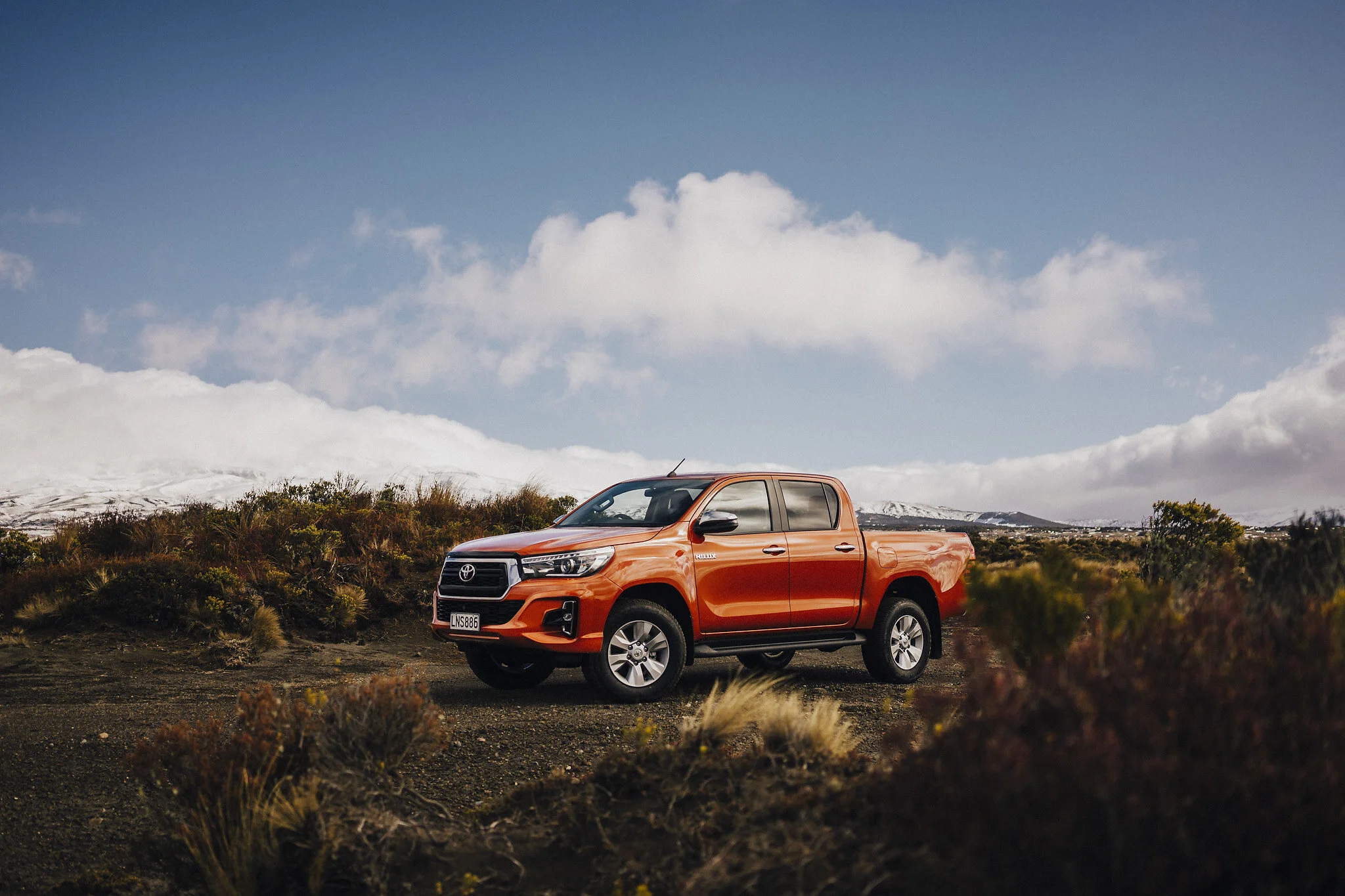
ToyotaHiluxSR5_1.jpg