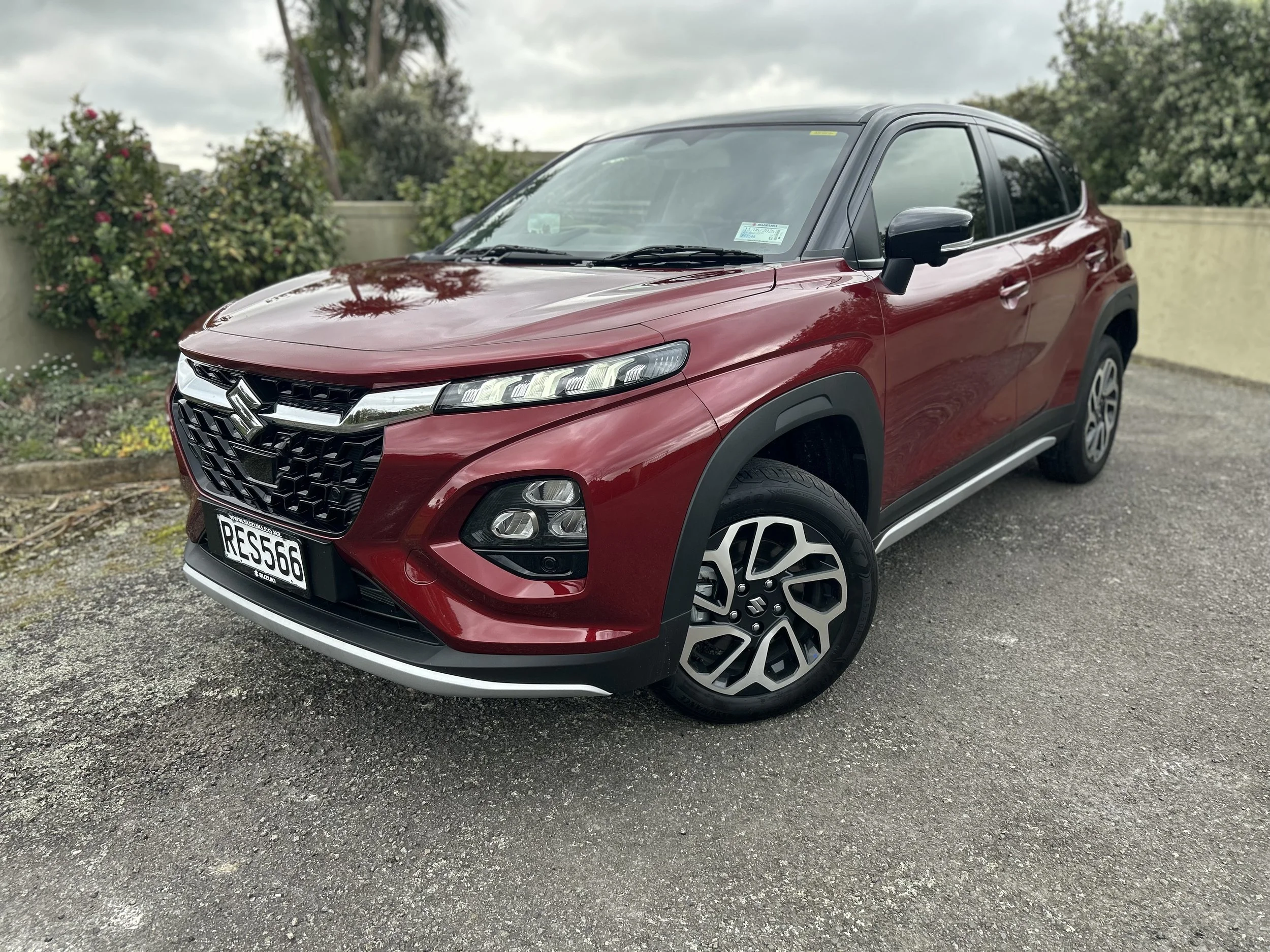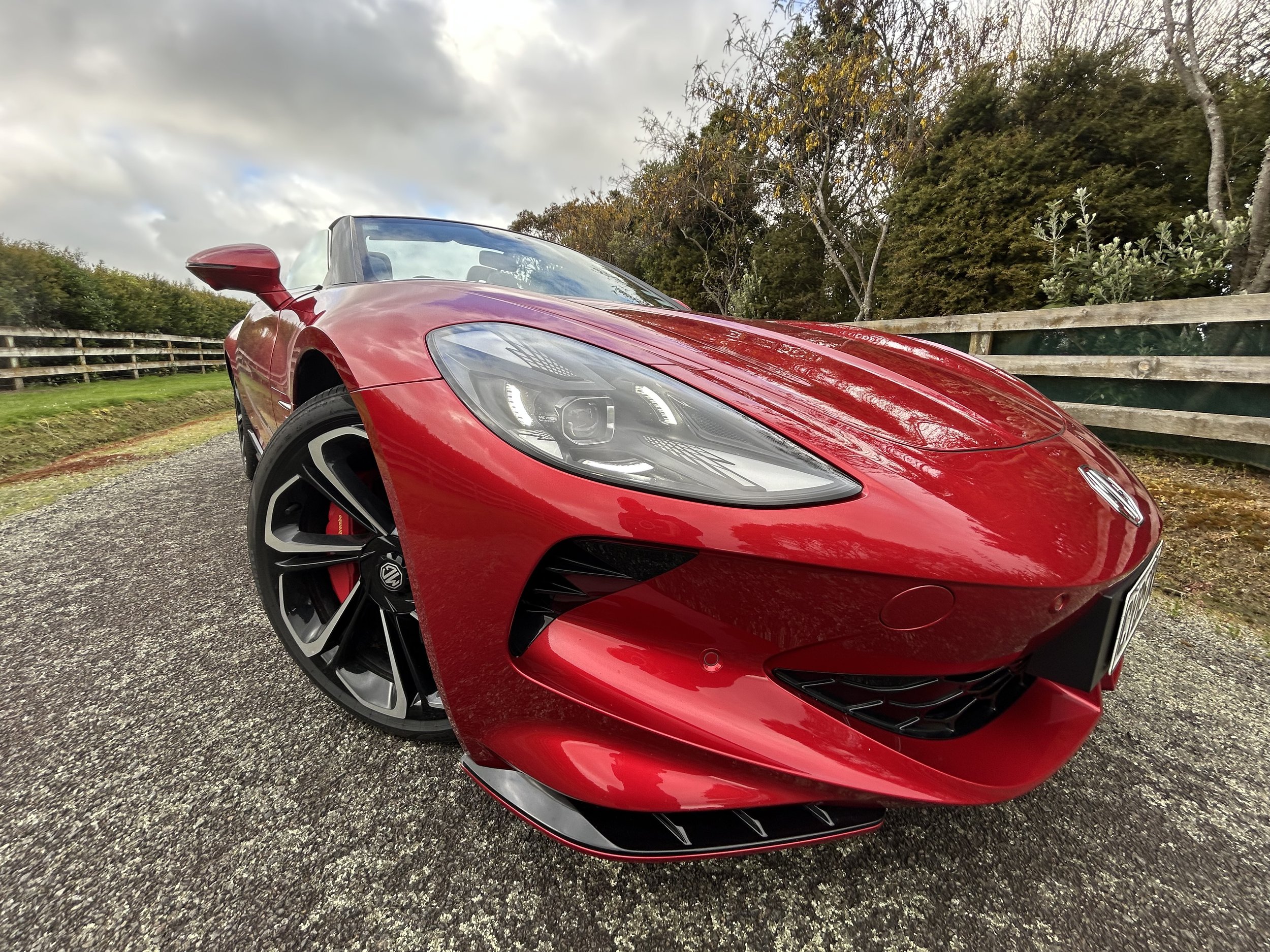
Future TT has promise, current has done its dash

The TT as we’ve known it is now a memory – the one that might be next is an exciting thought for Audi NZ.

Still hankering for a TT? Sorry, this one has done its dash in NZ.

Still hankering for a TT? Sorry, this one has done its dash in NZ.

LAST chance to see has already gone – but, assuredly, if the TT returns in the form it is predicted to adopt, as an electric car, the local distributor will be interested.

This today as Audi New Zealand has confirmed it has bypassed opportunity to resume selling the TT, preferring instead to focus on the new-generation RSQ3 models set to release imminently in Sportback and continued hatchback formats. 

General manager Dean Sheed says it was a tough call to determine to keep the car that when released originally in 1998, was a global styling bombshell.

But fact is that TT volume was down to a trickle when the car was withdrawn from global production last year, a victim of Volkswagen Group having been defeated in its bid to get all its products homologated in time to meet a rigorous World new Worldwide Harmonised Light Vehicle Test Procedure emissions deadline.

Withdrawing certain models was the only option; cars lacking WLTP compliance could not be sold anyway (in Europe at least) and the maker would have faced hefty fines as well.

That issue has now been resolved for the TT, which has been reissued in a smartened format, headed again by a sharp-looking RS flagship, that in all likelihood will present as the final run for the car in a fossil-fuelled format.

And then? Well, it’s really not shock-horror news any more that there’s supposedly a new TT on the drawing board set to be energised in a totally different, future-ready way.

five cylinder fun can still be had … in the new RSQ3

five cylinder fun can still be had … in the new RSQ3

Audi – and the wider car world of course – is going all-in on electric. And future E-tron models won’t restrict to the sports utility range we presently see. 

Talk about the successor to the TT we have now being re-energised into a fully electric sports weapon for its fourth-generation dates back to May of 2019, when then Audi boss Bram Schot announced that “in a few years, we will replace the TT with a new emotive model in the same price range … with an electric car.”

Just recently, a new report claims the car will ride on the Volkswagen Group’s MEB platform that debuted last year with the ID.3. The final shape is still under wraps and there’s even been talk that it could re-emerge in an SUV-ish format rather than as it is now.

Sheed was cautious when asked if he knew anything about the e-TT, saying: “I haven’t seen the model you refer to, although it’s been talked about in the media.

“You know our customers and we love performance cars (Audi Sport) and electric powertrains, so naturally I would entertain the concept when it was available – the decision will be the same as today, a hot SUV or a hot sportscar, market size and consumer preference.”

The ‘if’ and ‘when’ of an electric TT will doubtless clarify once Audi gives out some signs about how much longer the current car, with its evocative five-cylinder petrol engine, will live. Potentially it’s not for much longer given this generation shape hit the street in 2014.

Audi’S e-tron family plan is cemented - and an all-electric sports car would seem logical.

Audi’S e-tron family plan is cemented - and an all-electric sports car would seem logical.

It’s also prudent to bear in mind that Audi’s grand plan is to sell one million electrified cars each year by the middle of the next decade, which is quite a lot of electrified cars to sell by 2025.

Of course, that ideal was explained prior to coronavirus, so perhaps the delays and financial walloping the illness has inflicted on the global car trade, and national economies, might slow things down a bit. Yet, at the end of the day, the future will inevitably continue to head away from oil because … well, it’s a finite fuel, remember.

In the here and now, you’d have to think the conventionally powered model would be hardly set to leave the scene quietly.

With 294kW and 480Nm, that 2.5-litre five-cylinder turbocharged engine is a forceful involver; a true celebration of the five-pot fury whose family line runs right back to those original Ur Quattro rally scene changers. The new RS is claimed to accomplish 0-100kmh in 3.7 seconds, which makes it half a second faster in that sprint than the (much more expensive) Porsche 718 Cayman GT4.

Potentially, then, knowing that the ‘final fling’ editions aren’t officially coming here might bolster the residual values of previous RS, which held a recommended retail of $149,500. That car became unavailable around mid-2019.


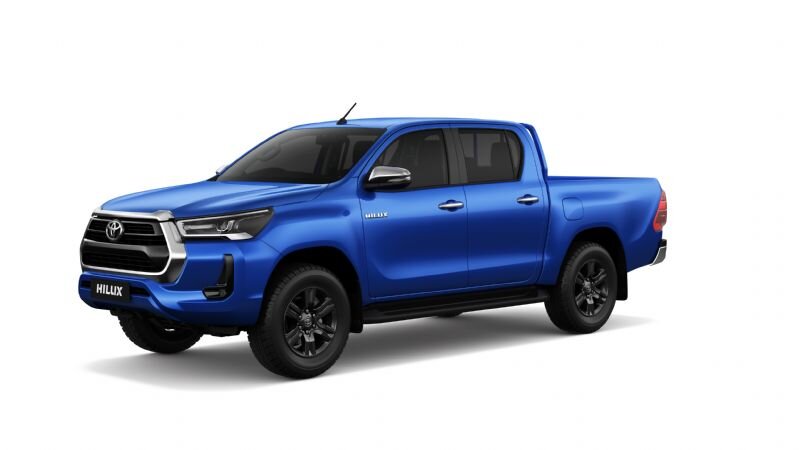
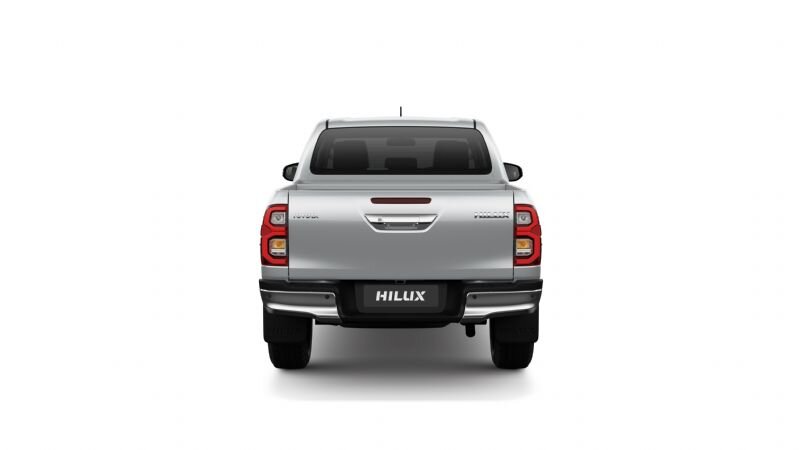
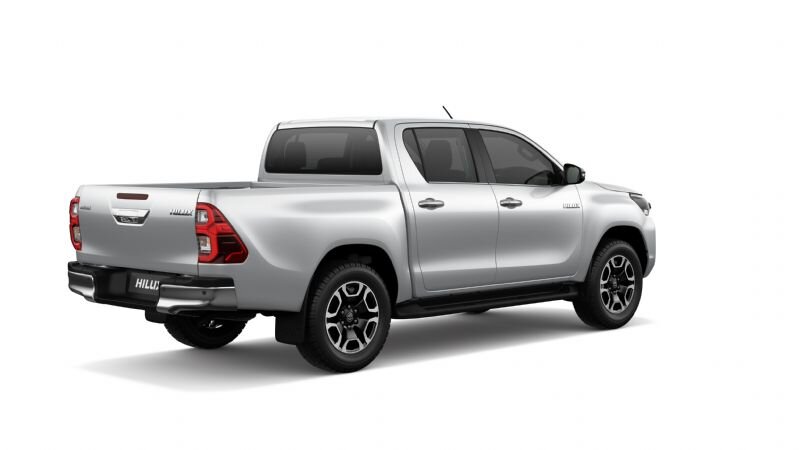
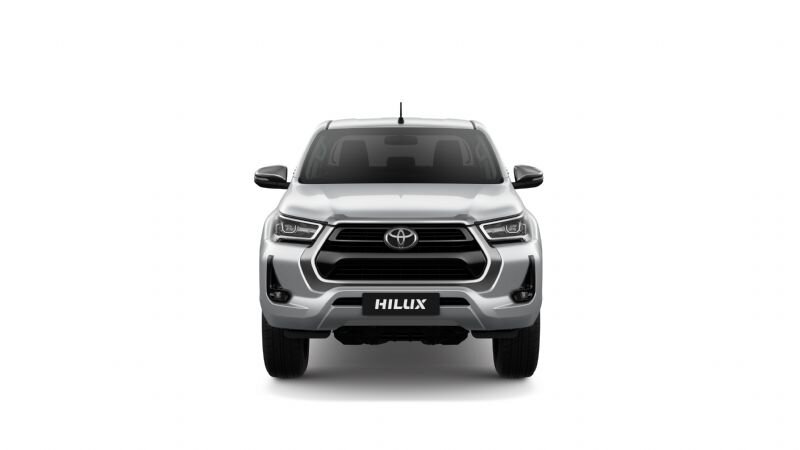
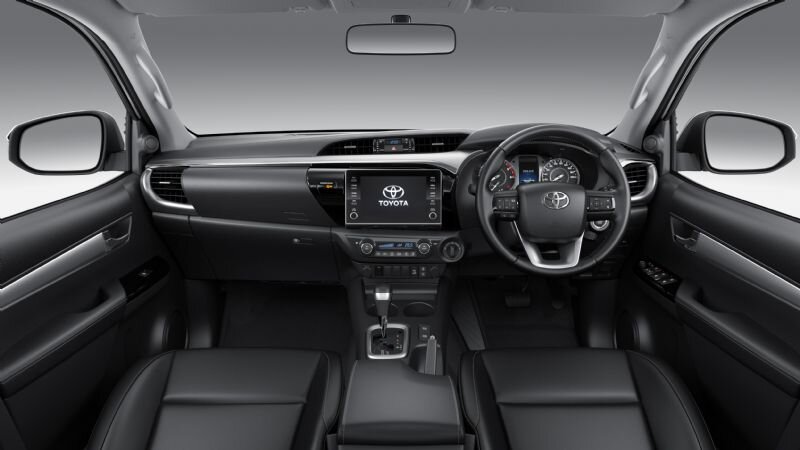
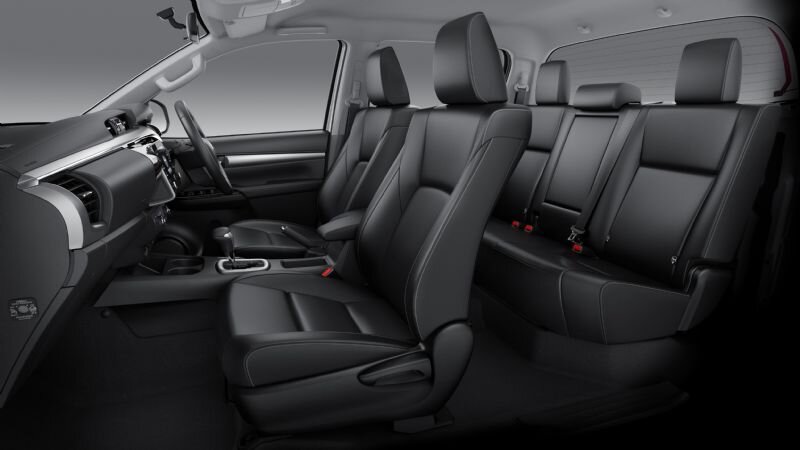
Hilux unmasked - new look, more kit, extra grunt

Here it is, the updated Hilux. Would you trade a Supra for it?

GUN126R-DTTHXT-OE-3U5-01lr.jpg

 THEY’RE calling it the most technically-advanced ute ever offered by Toyota – so is that enough for the reinvigorated Hilux, unveiled internationally today, to at last wrest market leadership from its core rival, Ford Ranger?

Toyota New Zealand chief operating officer Neeraj Lala is understandably bullish about the updated variant, whose exact launch timing this year still has yet to be revealed, though Australia has signalled it will start receiving stock in August.

His enthusiasm is such that he has vowed to ditch his current company car, a GR Supra, for an example of the latest truck, which is incoming in four specification levels – Workmate, SR, SR5 and the range topping SR5 Cruiser, the latter available in both 2WD and 4WD and automatic only.


“I believe the performance of this truck is so good, I’ll be swapping out my GR Supra so we can tow our go kart trailer to my son’s weekend races. I can’t wait to see customers return to Hilux with this significant improvement,” says Lala.

Introducing two years after the ute’s last big refresh, the new line will also contain a special launch edition inspired by the recent success of the Hilux Gladiator. Lala says this edition, which he spoke to MotoringNZ about last month, will be “custom-built … for New Zealand customers and conditions.”

GUN126R-DTTHXT-OE-1D6-09lr.jpg

What isn’t mentioned in launch material is the variant some in the national media insisted was coming – though Lala always said it was not: A Gazoo Racing version, supposed with a twin turbo diesel.

So, what’s in store? Well, it’s a restyling exercise, with a bolder, tougher-looking exterior ‘on most variants’. And that  2.8-litre turbo diesel engine offers more power, achieves better cooling, resolves the diesel particulate filter issues and has better fuel efficiency than its predecessor. Ride comfort, towing and equipment levels also improve.

Maximum power has been increased by 20kW to 150kW – so, a 15.3 percent lift -  while peak torque on automatic models has been ramped up to 500Nm, which represents an 11.1 percent/50Nm improvement.

Fuel consumption also improves by up to 11.1 percent while tuned accelerator response delivers greater driver control. The six-speed automatic remains.

Suspension upgrades run to revised shock-absorber tuning, new bushings and improved leaf-spring design. Toyota claims a more comfortable ride, particularly over rough roads and with low loads while maintaining the model’s legendary off-road capabilities.

In 4x4 models with downhill-assist control, an additional traction control feature when using 2WD mode reroutes torque to assist grip in muddy or grassy conditions on worksites.

Towing capacity for automatic 4x4 variants has been upgraded to a maximum of 3500kg to match manual versions. On 4x2 variants, all diesel automatics are now rated at 2800kg, an increase of up to 300kg.

Revised exterior styling is intended to deliver a ‘tough, robust on-road presence’ that is intended to be more in keeping with the global Toyota ute/truck family. Particularly obvious is that large trapezoidal grille that dominates the front design and incorporates more pronounced horizontal elements that deliver a wider, more planted look.

Grille surrounds differ by grade while newly designed headlights are smaller for a "meaner" look and light clusters include LEDs on high grades.

Inside, all models have been upgraded to an 8-inch display screen with enhanced voice recognition and the latest smartphone integration functions, including the adoption at last of Apple CarPlay and Android Auto. Higher grades are also equipped with satellite navigation and digital radio.

A 4.2-inch multi-information display in the instrument binnacle incorporates a digital speed readout, among other new functions. Overseas reports speak of front and rear parking sensors, keyless entry and start, automatic air-conditioning and a nine-speaker JBL stereo system with an 800W eight-channel amplifier, plus accessories such as roller bed covers, a locking tailgate and a 12-volt power supply for the cargo bed.

Full NZ pricing and specifications are expected to be announced closer to launch.


Next Santa Fe – a bit of old, a lot of new

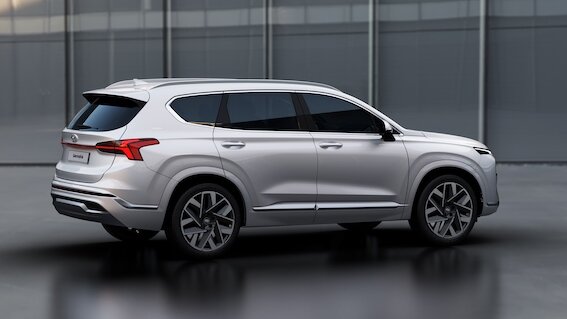
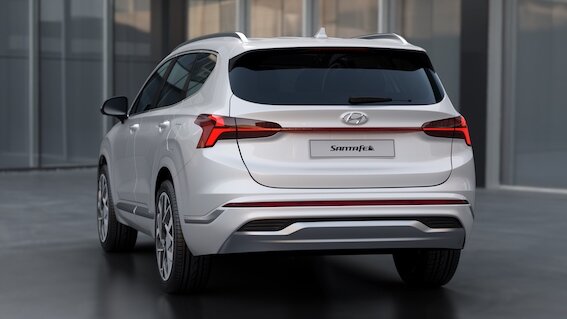
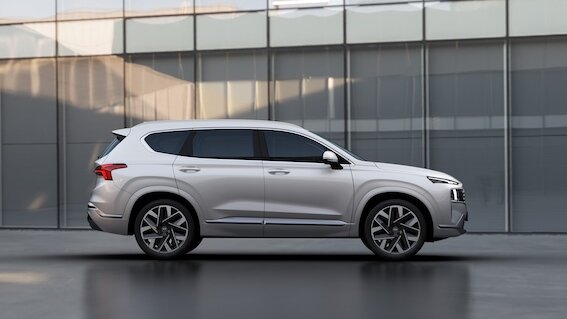
The new Santa Fe has finally been revealed and will be here in late 2020.

SantaFe(TM)PE-01.jpg

NEW body, new interior, new tech and heavily revised underpinnings - the next generation of Hyundai’s crucial big sports utility is certainly a significant departure from the current edition’s design direction.

And, yet, strictly speaking, the ‘gen four’ coming in the final quarter of this year is essentially a revision, the maker admitting it still uses core elements of the current-generation seven-seater. Not that this shouldn’t keep it from winning plenty of attention.

 “We modernised the new Santa Fe with premium features and appealing aesthetics that are sure to add value,” said SangYup Lee, the senior vice president who also heads the brand’s Global Design Centre and is been elevated to becoming the brand’s design spokesman in wake of the recent sudden departure of Luc Donckerwolke as design chief. 

“The bold lines that extend from one side to the other and from front to back give Santa Fe a rugged yet refined look that SUV customers want. Besides, we’ve added numerous features and functions to create a truly family-focused SUV that is a pleasure to drive.”

The new Santa Fe’s front section is defined by the wide grille that extends across the entire width of the vehicle. The brand suggests the ‘clamped shape’ of the lower air intake harmoniously extends the horizontal line to accentuate the vehicle’s wide and well-balanced stance.

The grille – or grilles, as there are two designs, the more intricate pictured here being reserved for the new flagship - also integrates the headlamps, a signature style found on many Hyundai cars. LED Daytime Running Lights (DRLs) start at the top of the grille and cut through it to create T-shapes at each corner when lit.

Each side section of the New Santa Fe is characterised by a seamless line that connects the DRL to the taillights, this to lend the car ‘a sensuously sporty look’. The increased width on wheel arches accentuate the SUV’s rugged and powerful character, which is also emphasised by 20-inch wheels.

The new Santa Fe’s redesigned taillights are connected across the rear hatch by a slim illuminated bar that complements the horizontal design theme on the front and sides of the vehicle. The theme is once again expressed by the wide rear reflector and skid plate, creating a unique three-layer look. 

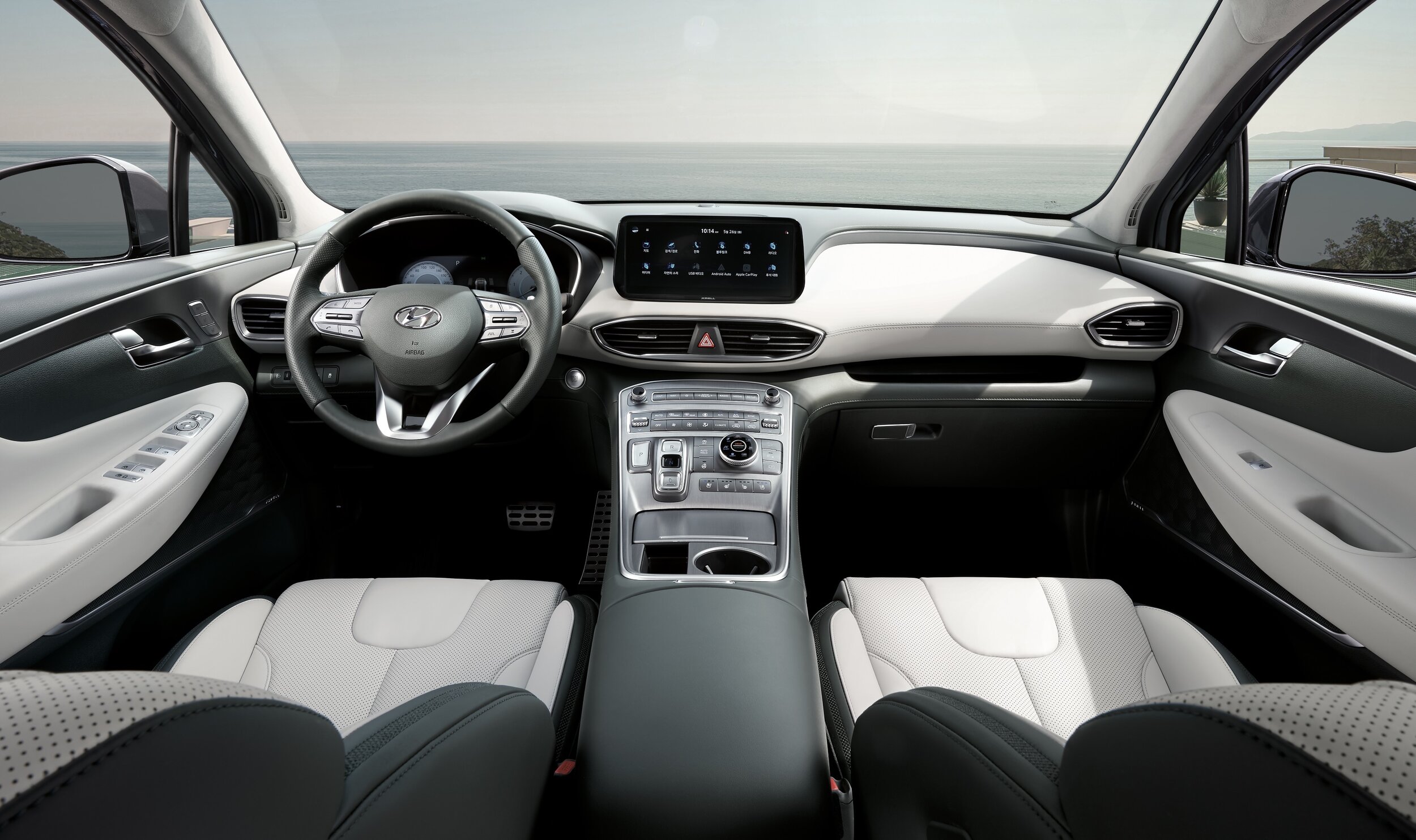
Hyundai says the redesigned interior now provides more space, comfort, and convenience compared to the previous model and also takes the car to ‘a new level of luxury’ with every component finished in premium soft-touch materials. The centre console sits high, giving the driver and front passenger the feeling of sitting in an armchair, according to information released today.

The buttons are all centred for intuitive and ergonomic use. In the middle of the redesigned centre console sits gear shift buttons along with other functions that are used often. Hyundai says a ‘shift-by-wire system’ allowed the designers to put buttons instead of the conventional shift knob.

For the first time, the new Santa Fe comes with a Terrain Mode selector: a control knob located in the centre console to conveniently switch between different drive modes, optimising performance and ‘HTRAC’ all-wheel-drive settings for a variety of driving situations. This feature includes unique modes for sand, snow and mud, as well as eco, sport, comfort and smart modes, the last of which automatically recognises the driving style and selects a mode so the driver does not have to.

The new centre console’s layout freed up space for more storage in the redesigned lower dashboard. The console also accommodates a new 10.25-inch AVN (audio, video, navigation) touchscreen display with pre-loaded maps, satellite-based voice guided navigation, rear camera display, and complete in-car entertainment and connectivity features.

As for the mechanical package? tjhat’s still be be explained, but it could be that Hyundai also moves to adopt a hybrid set-up that is going into the Kia Sorento, a sister ship despite any corporate claims to the contrary.

The latter is taking a 1.6-litre petrol with battery assist – in ultimate form this being a 44.2kW electric motor and a 1.49kWh lithium ion polymer battery, for a total output of 169kW and 350Nm.

The new powertrain is presented under a new mantle, ‘Smartstream’, that also applies to the purely fossil fuel-reliant engines also confugring, these being a 206kW/421Nm 2.5-litre petrol and a refined version of the outgoing cars’ 2.2 turbodiesel, making 148kW and 440Nm. These marry to an eight-speed wet double-clutch automatic.


BMW 4-Series: The uber-grille age begins

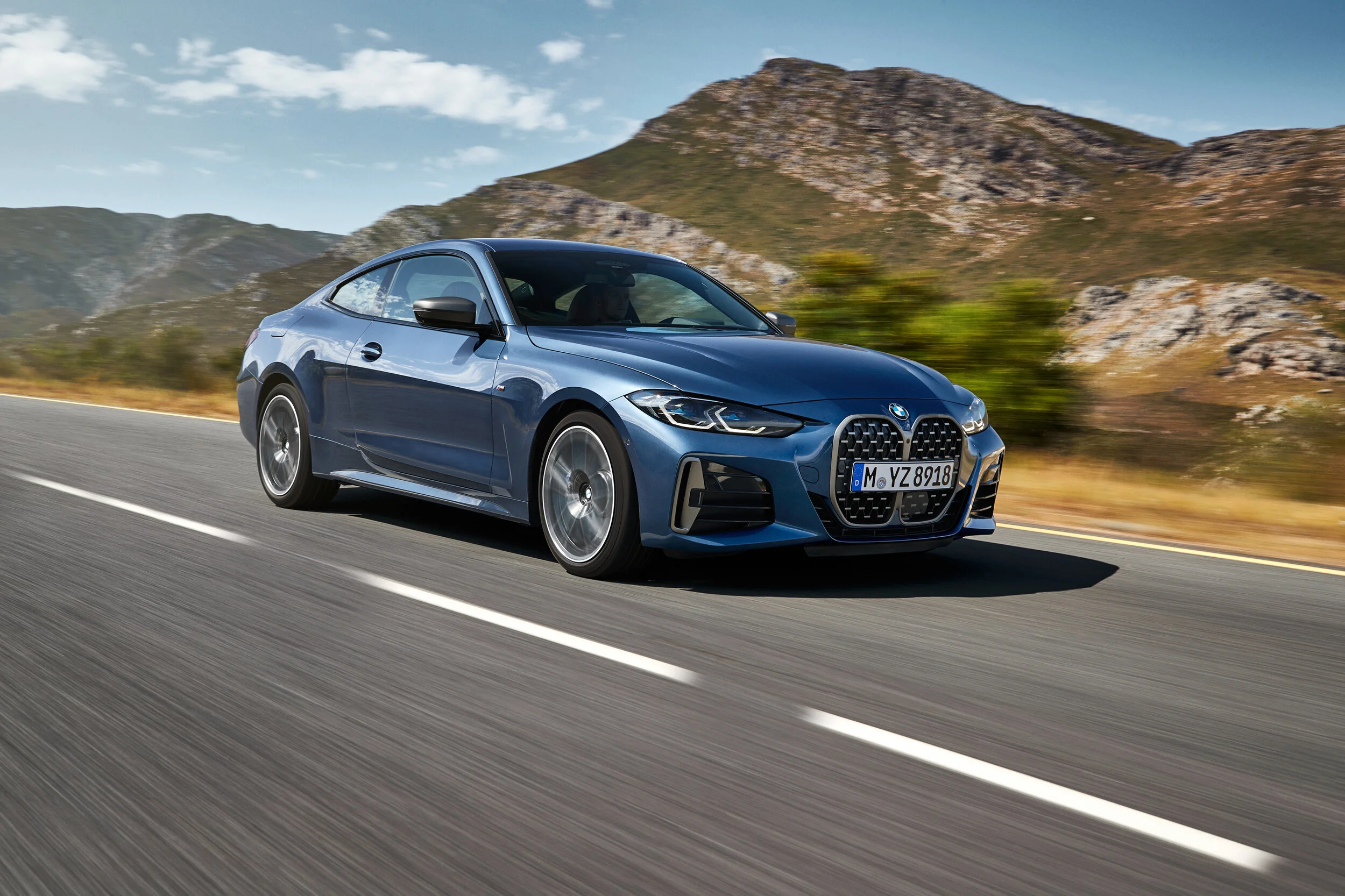
Not the face, right? Actually, yeah – right in the face.

P90390188-highRes.jpg

SHOCKED? You shouldn’t be – BMW has been preparing the market for the radical new nose design that debuts on the new Four Series for some time now (last year’s Concept 4 show car being a particularly strong enforcement of intent).

Even so, there’s bound to be a lot of fresh comment in reaction to the new ‘uber’ approach that is sure to spread across the entire family and presents as a differentiation from the rapid re-scaling project that, having already delivered wider grilles, is now seemingly into a new phase of making them much taller.

This, plus headlights in a particularly slanted design, will certainly ensure the Four will stand out all the more from its Three Series sedan and wagon stablemates, potentially to the point of leaving impression that it’s something more than what it’s always been: The coupe in that family. 

Officially unveiled today, about 36 hours after images leaked on-line, the new model is set to reach New Zealand in October, with 30i and M440i variants initially incoming, but assuredly followed in time by an M4 of course. Pricing and local specs will be announced closer to launch.

P90390168-highRes.jpg

In respect to the look – since, you know, it’s going to fixate everyone for a while - it’s only fair to point out that the styling exercise goes beyond the nose. The whole car is 13 centimetres longer than the old coupe, with a wheelbase 4cm longer, and eclipses the Three sedan’s length by 5.5cm. It's also a touch wider than before. Regardless, it’s also more aerodynamic, dropping from 0.29 Cd to 0.25.

In respect to those engine, the car has the single-turbo 2.0-litre four-cylinder and 3.0-litre six from the Three. Tht meansa the 420i delivering 135kW/ 300Nm and the M440i packing 285kW/ 500Nm. The latter’s engine also makes use of a 48-volt starter/generator hybrid assist system. It produces around 8kW as needed, and allows for the start-stop system to activate when decelerating. 

Like the Three Series, the Four also drops the manual transmission altogether, so everything has an eight-speed automatic transmission.

The M440i xDrive is a clutch-operated all-wheel-drive system that can send all power to the rear wheels only when conditions permit. 

P90390231-highRes.jpg

The M440i also takes other performance goodies such as the M Sport electronically controlled limited-slip differential, M Sport suspension and variable steering assist, and upgraded brakes with four-piston front calipers. It can also be fitted with the adaptive M Sport Suspension that can be adjusted for sporty stiffness or softer comfort. Exterior accents in Cerium Grey form a further identifying feature of BMW M440i xDrive while an M Carbon exterior package can also be optioned to add a motorsport-inspired aesthetic.

Design change is less extreme on the inside, with few extreme curves or angles. Standard equipment features an 8.8-inch infotainment screen and a 5.1-inch screen nestled between physical gauges in the instrument panel, but a 10.25-inch instrument display is optional, as is a 12.3-inch infotainment screen.

A sunroof and wireless Apple CarPlay and Android Auto come standard, too, along with a host of safety features including blind-spot monitoring, automatic emergency braking with pedestrian recognition, automatic high-beam headlights and lane-departure warning. Adaptive cruise control, lane-keep assist and parking cameras and sensors are optional.Full-LED headlights with high beam assistant are fitted as standard, while adaptive LED headlights with BMW Laserlight are available as an option.

BMW NZ is also promising local cars will have Remote Software Upgrade, which enables improved vehicle functions, the ability to update the vehicle software and additional digital services to be imported over the air.

P90390178-highRes.jpg


RAV4 hybrid rising as market drops

New vehicle sales in May were down, but the leading player still had something to cheer about.

RAV4 limited hybrid.jpg

THE new vehicle market was down by around a third last month, but a big surge of interest in the RAV4 during that period has buoyed its distributor.

Toyota New Zealand says the crossover achieving 538 registrations to place as the top-selling car in May, when 8313 new vehicle registrations were accrued in total, also reveals a scenario that might outwardly might seem surreal given the market condition.

At a time when new vehicle sales are dropping, this car is in hot demand – so much so that anyone ordering one now won’t see it until perhaps July or August. 

Actually, it’s just the battery-assisted edition that’s on the ‘most wanted’ list. TNZ always knew the hybrid would be popular – it surged ahead at launch simply because every dealer wanted one as a demonstrator – but is impressed nonetheless that the private market is driving the car’s progress now.

And there’s another twist. The RAV4s that have been built for the rental market, which now wants out of new vehicle with international tourism now kaput, cannot be diverted to meet that demand, as hire companies only ordered the petrol pure variants.

In discussing the May count, TNZ chief operating officer Neeraj Lala says he has around 800 RAV4 hybrid pre-orders still unfulfilled. Most of those cars should be delivered in June, the remainder probably in July. 

All up, TNZ’s passenger volume in May is down around eight percent year-on-year, not so bad all things considered. What factors into this is that it was delivering cars ordered before lockdown.

As for what happens from now on? “Our new car inquiry rate is low,” he concedes. “But we have this incredible back order of deliveries, so for the next couple of months we will still look quite good. So, in that sense, it’s quite good. And the (ongoing) demand for hybrid RAV4 is simply phenomenal, a little bit unprecedented.” 

The Motor Industry Association, which speaks for distributors, has also signalled a degree of satisfaction with the May result, which though well off the same month last year, when 12,5259 cars and light commercials were sold, nonetheless represents a relatively decent post lockdown result, given the circumstances.

“The month of May re-opened for business albeit in a constrained manner,” noted chief executive David Crawford.

“It was a challenging month operating under alert level two and an economically depressed environment.”

Year-to-date the entire new vehicle market is down by 19,622 units, a 32 percent drop on the count for the same period of 2019.

Registrations of 5401 passenger and SUVs for last month were 29.2 percent (2223 units) below 2019 volumes while a commercial vehicle tally of 2912 units represents a 37.2 percent decrease.

After RAV4 the Ford Ranger installed as the second-strongest seller for May, though with 498 units, with another Toyota, the Hilux, nabbing third place, just 58 units behind. Lala was also stoked with that result.

Toyota was the overall market leader with 19 percent market share with 1611 units, followed by Holden, with nine percent (760 units) then Ford (eight percent, 702 units).

The MIA has joined those calling for the Government to bring the country to Level One Covid-19 restrictions “sooner rather than later.”

 Commented Crawford: “The MIA shares the views of many that with no new Covid-19 cases for the last 11 days and no known community spread for at least two months, we should be looking to move to alert level 1.

“The country is better prepared now to manage the odd case of Covid-19 should it arise. Our health system has improved significantly in terms of testing capability, contact tracing and hospital intensive care capacity.

“It is time to get our economy moving forward while maintaining our health gains.”

Toyota RAV4.jpg

Mach 1 not completely out of NZ’s reach

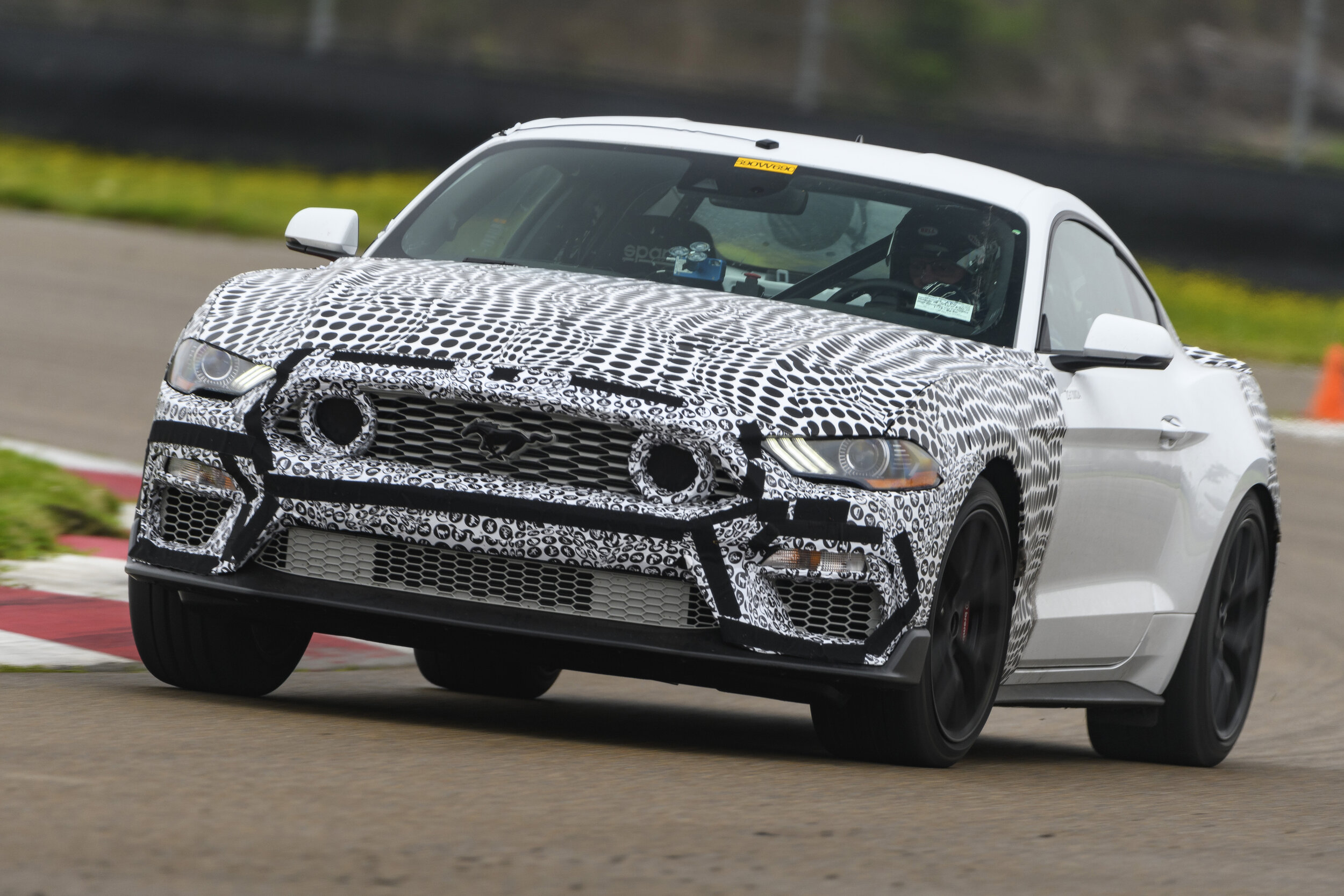
Ford NZ is among those getting revved up for a Mach 1 Mustang.

Mach-1-Teaser.jpg

“IF we can get it for New Zealand we will definitely have to think about it – I mean, it’s such a legend, right?”

This from Ford New Zealand’s communications manager today in response to the latest and ultimate iteration of its popular Mustang muscle car, the Mach 1.

The parent brand has shared teaser images- but no video, unfortunately - of a kingpin mode which revives the legendary nameplate first used in 1969 and ushers in specific performance and handling upgrades designed, the brand boasts, to make it “the most track-ready 5.0-litre Mustang ever.”

Can Kiwis access this beast? One way or the other, yes: Because if it doesn’t achieve as a factory car for local release, buyers could always ship in a US-spec car as a private import.

Ford New Zealand, of course, would like nothing better than to represent the car in the showroom – there’s obvious potential to further spark up Mustang sales that, until Covid-19, were rolling along at 40 to 50 units a month, with V8 versions snaring the bulk of sales.

Mach-1-Teaser-2.jpg

For Mach 1 to be ‘official’ requires it to be produced in right hand drive.

Is that possible? According to our neighbour, the answer is no. Ford Australia seems adamant variant is a US-based initiative, telling a news outlet there “the Mach 1 news is specific to the US.”

Ford NZ’s Tom Clancy, though, is more optimistic, in that he says there is no specific news from Detroit about who gets the car, when and how. Until all that it spelled out, it’s impossible to say one way or the other.

“It hasn’t been confirmed for right-hand-drive markets as yet,” he acknowledged. But that’s not to say it might not be. “It hasn’t been confirmed either way. 

“If it is, we will certainly look at it. We’re definitely excited. I mean, who wouldn’t be? There are a lot of enthusiastic Mustang customers in New Zealand so if it is conformed for right hand drive, we’d certainly want to know about it. 

“It would be very good for New Zealand. As soon as we  have news we will share it, but I don’t have any timing for when that might be.”

The highest-performance right-hand-drive Mustangs available at present are Roush and Shelby GT editions, which are in both case after-market enhancements performed locally on regular NZ-new 339kW V8 GTs. 

The ultimate Roush version is the supercharged V8, generally making around 510kW, whereas the top Shelby, the Super Snake, promises around 600kW. Ford Australia has concocted – but purely for home market consumption - a Mustang R-Spec, also supercharged, has 522kW and 830Nm.

Mach 1 will be naturally-aspirated and while Ford US has yet to announce outputs, it has promised it’ll be up to performance fans’ expectations. It also has dropped hints that the model is, in any event, about much more than a bad-ass engine.

Mach-1-Teaser-1.jpg

The focus on transmission, brake, suspension and handling enhancements has been considerable as well. Ford has also treated it to track-rated Michelin Pilot Sport Cup 2 rubber.

Visually, the Mach 1 is distinguished by styling cues that reference past editions. The front has a dual-headlight design with a second set of lights set inside the centre grille – a signature of the famous 1969 original.

The model is also expected to achieve a new front bumper and air inlet design, will take quad-exit exhaust pipes and a unique spoiler. The 19-inch black alloy wheels are in a spindle design to evoke historic association and it is sure to take ‘Mach 1’ decals and a two-tone paint colour scheme. BTW, the last time the Mach 1 designation was seen on a Mustang was in 2004. 

As much as Ford is rekindling its performance past, it is also taking Mustang into the future with another ‘Mach’, the Mach-E fully electric car. Which is also expected to hit New Zealand at some point.

1969-Ford-Mustang-Mach-1-fastback-neg-CN5503-266.jpg


Clever bricks recreate Mt Panorama

Honda has laid claim to a Holden versus Ford battleground.

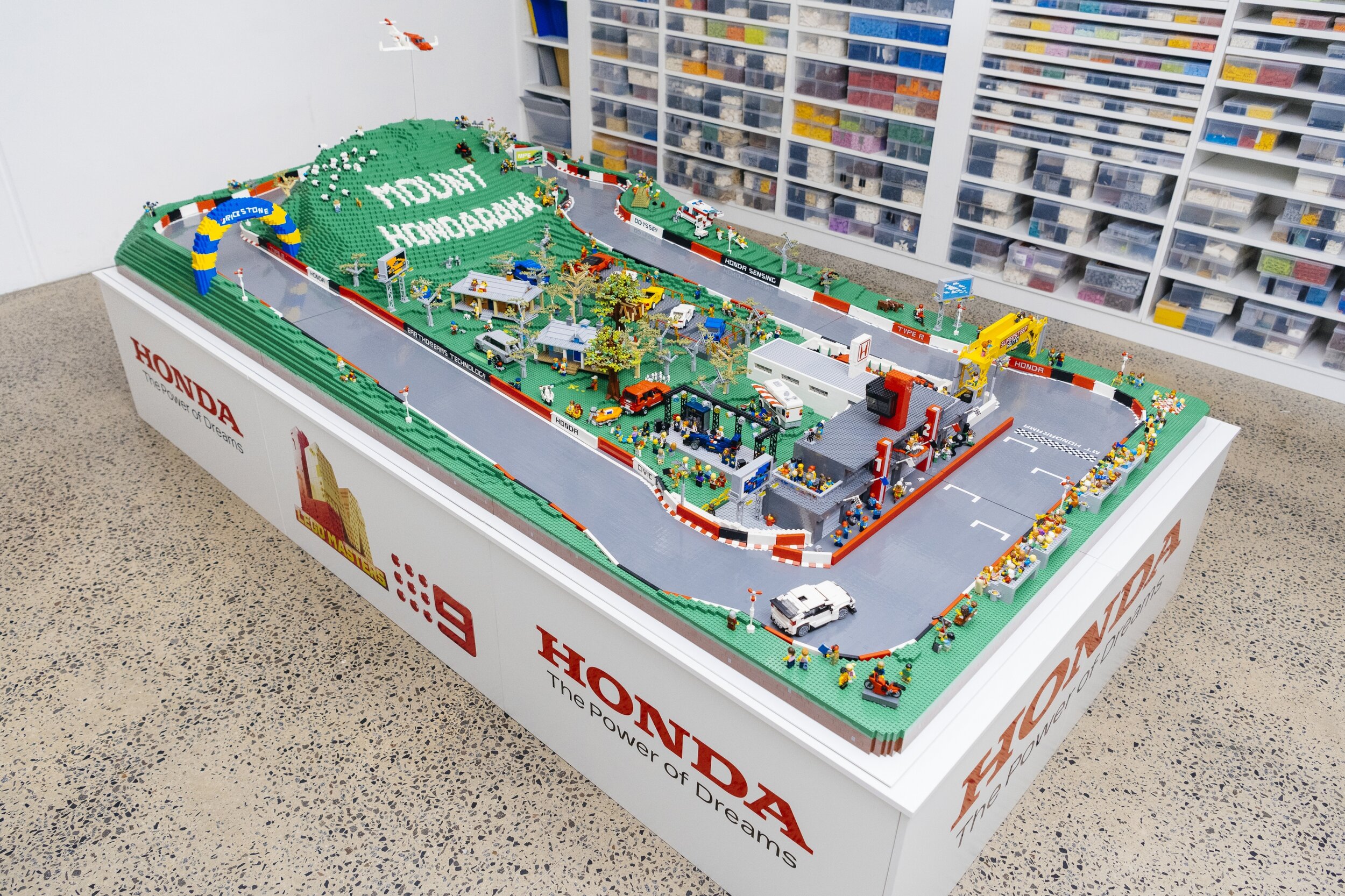
MountHondarama(4).jpg

BUILDING a Lego race car … well, who hasn’t done that?

Creating a famous race circuit with those plastic bricks is a different story.

As a promo for its Lego Masters television programme, Australia’s Channel Nine has team with our neighbour’s Honda distributor and a professional assembler to create the Mt Panorama circuit at Bathurst, New South Wales, out of the interlocking materials, but with a twist to suit the backer.

Mount Hondarama is a neat follow-up to last year’s commission involving the car brand and Ryan ‘The Brickman’ McNaught, a life-sized Civic Type R hot hatch, as just on a year ago former Formula One champion Jenson Button set a benchmark lap time for a front-wheel drive production car around the famous Bathurst layout.

Obviously Mt Hondarama isn’t to the same life-sized scale as the real thing, but its still pretty substantial, being 3.3 metres long and 1.8 metres wide, weighing approximately 210kg and involving a team of eight builders, who used more than 150,000 bricks and were working for more than 650 hours.

So, a big job, but still rather less of a challenge than the Civic Type R, which used more than 320,000 bricks and took more 1300 hours.

Adding to the special flavour is the use of extremely rare LEGO remote control cars.

“The biggest challenge for us this year is the fact that we’ve got lots of moving pieces. Moving parts are very challenging to do with LEGO, let alone having cars actually racing around a LEGO model,” said ‘The Brickman’, who is credentialed as a ‘LEGO Certified Professional’.

“Our mantra is to grab people’s attention with something obvious and then hold their attention with lots of special details and fun things. One of the great things about LEGO bricks is that you can bring dreams to life and that’s exactly what we’ve been able to do with all of Honda’s products.”

MountHondarama(3).jpg

Robert Thorp, Honda Australia’s general manager of product, customer and communications, views the work as being “a Honda dreamscape, a graphic representation to reflect Honda’s values and the joy of creating.”

Mount Hondarama includes many of Honda’s most recognised products transformed into LEGO, including its latest cars, motorcycles and power equipment, along with some iconic cars from years gone by. There is also a Honda dealership and service centre, a F1 car to represent Honda’s global motorsport activities, as well as the truly unique HondaJet, which is the fastest, highest-flying, quietest and most fuel-efficient jet in its class. But no sign of bogans along Skyline.


Nissan plans bring pain and joy

Plant closures, more platform-sharing with Mitsubishi and Renault and the potential of a new Z-car … it’s been a big week for Nissan.

Navara’s ambitions are presently headed by the just-released N-Trek.

Navara’s ambitions are presently headed by the just-released N-Trek.

COMING in the wake of Nissan identifying readiness for a new product onslaught that could include a new-generation ‘Z’ sports car is determination to slim down spending, in part by closing a plant that has supplied New Zealand.

A factory in Barcelona, Spain, that has been a supply point for the Navara utility appears to be the biggest victim of the maker’s determination to cut global production by 20 percent. 

Nissan’s overnight signal that it intends to close the factory by December has triggered worker protests and a response from Spain’s government, which is asking for a reconsideration on grounds that it will cause considerable unemployment and hit the national economy hard. In addition to the 3000 factory positions, 20,000 more jobs in the brand’s supply chain in Spain are also at risk.

The full extent of impact on our market remains unclear. Current Navara also sources out of Thailand, is nearing production life and odds of it being developed off the next-generation Mitsubishi Triton seem to have strengthened with another announcement this week confirming that platform-sharing between the Japanese firms and their other partner, Renault, will intensify.

This to the point, some onlookers say, that an effort to slash model investment costs by up to 40 percent will inevitably mean some crucial forthcoming models such as next-generation utes and SUVs will become badge engineering exercises.

The three makers have acknowledged implications of their “leader-follower” vehicle strategy discussed this week will be significant.

A core ideal of a new co-operation business model is that it green lights the current “standardisation strategy” evolving from the platform sharing that occurs now to common adoption of upper bodies: So, effectively, no more styling divergence to create individual identities but instead lookalikes differentiated at best by modest design revisions and, at worst, by badges alone.

The potential for this seems high given the alliance has also said that, going forward, responsibility for product development and regional priorities will go to a single brand.

Mitsubishi has been saying for some years that it has been in the box seat for being the home base for a future ute, as current Triton presents as a far more cost-effective vehicle to build and sell than the Navara.

Any cloning is unlikely to stop with the ute. It’s highly certain the next-generation Mitsubishi Outlander, Nissan X-Trail and Renault Koleos mid-size SUVs will come off a new Nissan-developed platform. Mitsubishi already has a rebadged version of the Renault Trafic van.

Closing the plant in Spain (and another in Indonesia) is in response to Nissan sinking into the red for the first time in 11 years as the coronavirus pandemic squashed global demand and disrupted production.

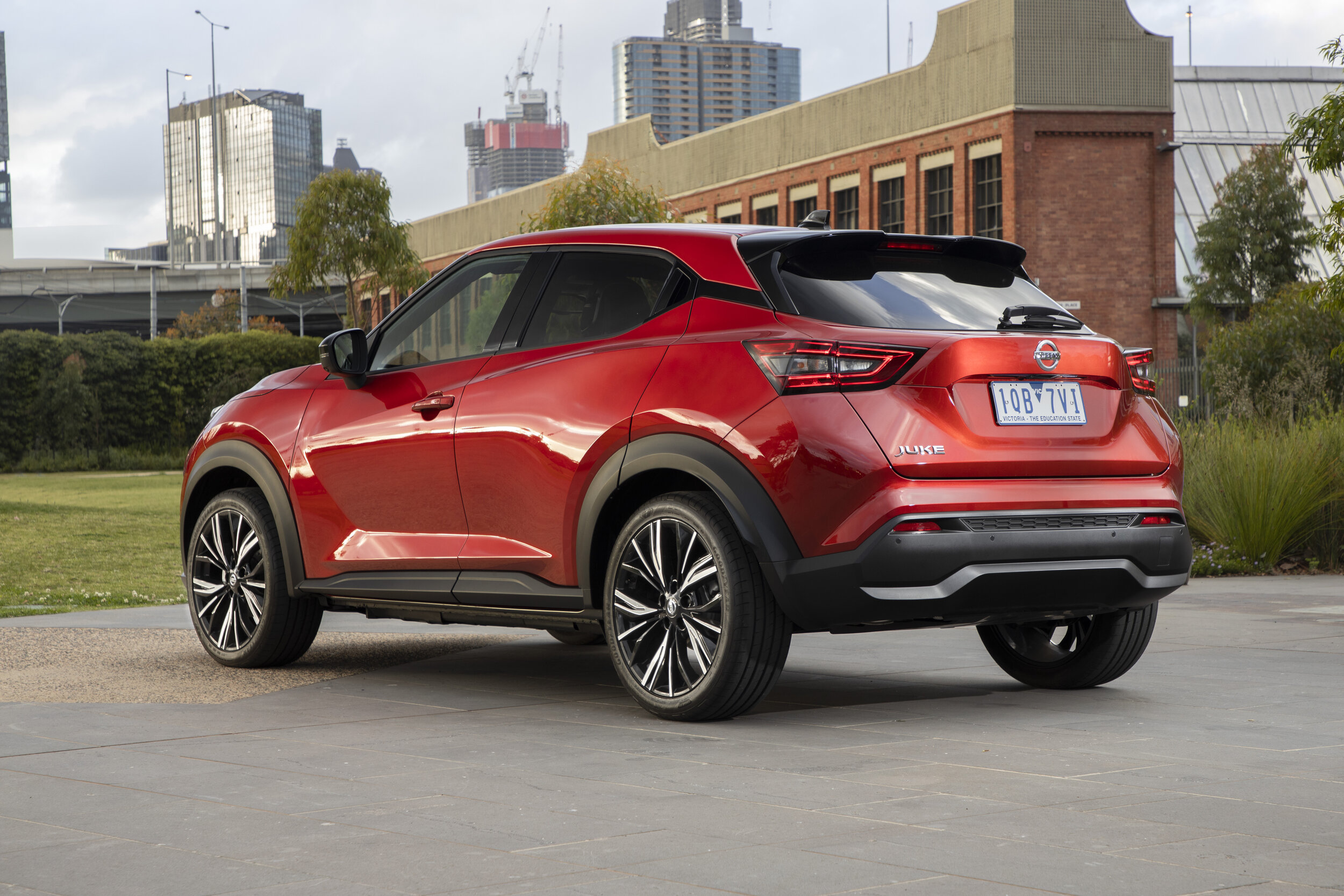
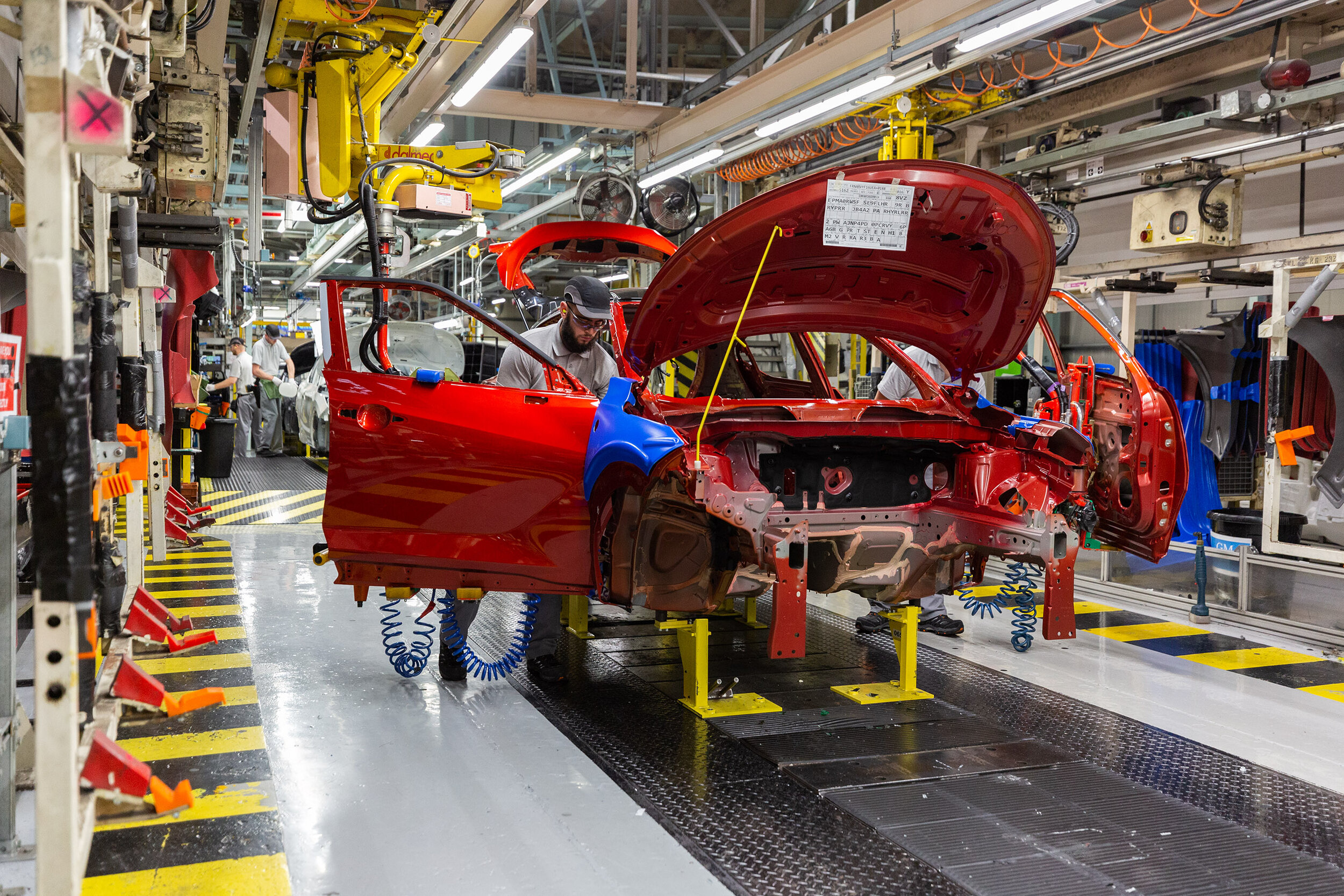
In announcing the closures, the maker has also reiterated that its biggest plant, the Sunderland facility in the United Kingdom that supplies the new Juke that releases here soon, is not going to be touched. In fact, Sunderland’s status will be elevated as the centre of all future production for Europe.

Nonetheless, with global vehicle production having dropped 62 percent in April from a year earlier to 150,388 vehicles and global vehicle sales slipping nearly 42 percent last month, Nissan is having to move fast and decisively.

It also determined today to reduce the number of its models and focusing on certain geographic areas, such as Japan, China and the United States, to enhance its efficiency and profitability, rather than chasing sales size.

Nissan has spent much of the past year seeking to recover from the November 2018 arrest of its former chairman, Carlos Ghosn, over financial misconduct allegations, including under-reporting future compensation and misusing Nissan money.

The company’s management appeared to be in disarray after the sudden departure of Ghosn, who was sent by Renault to help Nissan recover from near-bankruptcy in 1999.

Ghosn’s successor, Hiroto Saikawa, also ended up resigning amid allegations about dubious income.

Amidst all this, Nissan this week also released the future model teaser video (above) that suggests it has a replacement for the 370Z sports car. 

What media have immediately tagged the ‘400Z’ is expected to be remodelled on the same platform as the 370Z and the video suggests it follows the same styling path as its predecessors. The especially eagle-eyed have identified that the headlights appear to be circular – a nod to the original 240Z, it’s conjected.

The engine will be a 3.0-litre twin-turbo V6, producing 298kW (400hp, hence the 400Z name), and 475Nm through an automatic transmission to the rear wheels. 

Other new additions include refitting of the original ‘Z’ badge to the rear quarter panel like the old models have and, in its home market, the Fairlady nameplate is to continue.


Drive to defeat Covid-19

Carmakers are thinking hard about how to turn cabins into safe spots.

Sanitation5.JPG

WORRIED that even big doses of disinfectant mightn’t keep coronavirus out of your vehicle?

So, it seems, are car makers. Which is why they are looking to employ other, sometimes more extreme methods.

How long, then, before the vehicle in your driveway can maintain bug-free status through using ultraviolet light, really high-tech air filtration or even just as a result of turning up the heat really high?

These are the methodologies coming to the fore. Latest to hit headlines is Ford’s hot shot approach. 

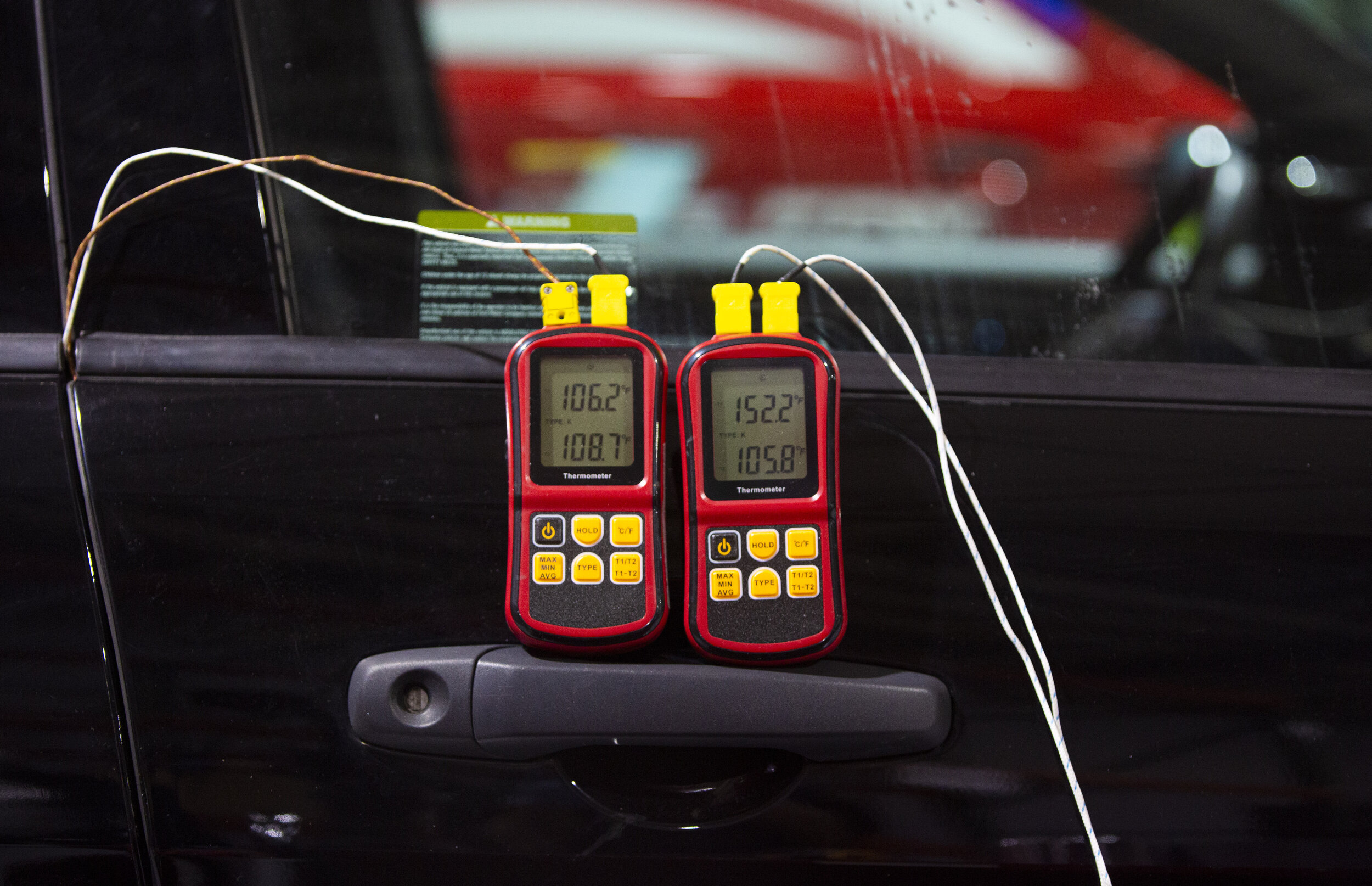
As the images today show, the “heated software enhancement” system is literally a matter of turning up the heat.

We’re talking hot. As in generally ‘beyond Sahara in summer’ hot. Fifty-six degrees Celsius is generally well above the maximum settings that your vehicle’s own system is usually designed to achieve and within a range considered risky for prolonged safe human tolerance.

However, it’s what the doctor – or at least researchers at Ford Motor Company in Detroit and Ohio State University – have ordered as being effective in terminating any viral elements that might be lingering in a vehicle’s cabin.

Sanitation10.JPG

The research has hit the front line, in that it has fitted the Police Interceptor Utility vehicle it builds for law enforcement use in North America with a new cabin heating feature designed to “inactivate” any virus particles.

The New York City Police Department, Los Angeles Police Department and Michigan State Police have participated in field-testing the system, which works by baking the car’s interior at 56C or higher for 15 minutes.  

The software purposely increases the engine temperature and raises the climate control and fan settings to these new maximum settings then enables a subsequent cooldown protocol at the end of the cycle. 

To ensure officers know when the system is operational, a series of pre-set flash sequences are carried out by the hazard and tail-lights with a separate sequence displayed at the end of the cycle during cooldown.

And yes, there are precautions against inadvertent use. In latest cars it only triggers by pressing cruise control buttons in a certain order, while earlier models require an external tool that connects via the OBD port.

Ford chief product development and purchasing officer Hau Thai-Tang said first responders were in dire need of protective measures given they were on the front line protecting everybody else.

“We looked at what’s in our arsenal and how we could step up to help,” he said.

“In this case, we’ve turned the vehicle’s powertrain and heat control systems into a virus neutraliser.”

Sanitation4.JPG

According to Ohio State University department of microbiology laboratory supervisors Jeff Jahnes and Jesse Kwiek, “exposing coronaviruses to temperatures of 56C (or 132.8 degrees Fahrenheit) for 15 minutes reduces the viral concentration by greater than 99 percent on interior surfaces”.

Ford meanwhile says that the system adds an extra level of thoroughness to the sanitisation guidelines approved by Centres for Disease Control and Prevention given that heat can “seep into crevices and hard-to-reach areas, helping reduce the impact of human error in applying chemical disinfectants”. 

Ford police brand marketing manager Stephen Tyler described Covid-19 as an “invisible enemy” and said he was proud Ford was able to provide a solution. 

So, keen to get your Fiesta, Ranger or Mustang all toasty? Sorry, it’s a no-go.

The make has made clear a system designed to be used in conjunction with proper cleaning methods is not, for reasons of safety (and, dare we say it, common sense – you could imagine the lawsuits from inappropriate use), going to transfer into civilian vehicles.

So that’s one approach. What is coming to the boil? In general, car makers are looking at employing more antimicrobial materials and easier-cleanable surfaces. They are also assessing the quality of air filtration systems. Geely, the parent company of Volvo, reckons the set-up for its new Icon electric car will achieve the N95-certification meted medical masks.

Hyundai is well advanced its bid to use ultraviolet light sterilisation technology that would be installed like a dome light in its vehicles. This could be taking a cue from the grenlite (pronounced ‘greenlight’) device shown off by a Michigan-based tech firm, GHSP, at CES this year. This sterilises a vehicle when sensors detect there are no occupants, automatically scheduling new cleansing cycles when needed — and is already in use in emergency vehicles in three US states.

Another specialist in cleaning, Faurecia, is also looking at foggers that would spray a disinfectant such as hydrogen peroxide. Vehicle assembler Magna is evaluating “an ozone-generating system.”

Not so keen on any of these measures? You’re in a minority. When car owners were surveyed in five countries, 80 percent said they'd pay extra for technology that could sterilize a vehicle. Another survey just out has found a third of vehicle shoppers thinking about "air quality features" in a future car purchase.

Sanitation1.JPG


JLR finance offer set to spur rival actions?

Incentives to jolly up consumer interest in new cars could become a new norm.

Diminished interest in new vehicles seems a certainty this year, the industry believes.

Diminished interest in new vehicles seems a certainty this year, the industry believes.

DETERMINATION by Jaguar Land Rover’s distributor to offer deferred payment finance deals on new vehicles has raised interest within the industry.

Thought from onlookers is that it’s a behaviour that can be expected to increase as dealers and distributors work to recover from the drop-off in economic activity, not just the impact of lost trading during Level One lockdown but also to counter the likelihood of tougher times ahead.

 There’s some belief, too, that premium car brands in particular will set the pace with an increasing count of stimulus and relief programmes. In addition to special financing, enhanced warranties might also become a pitch.

The impact of the economic shutdown to contain the Covid-19 pandemic has been especially hard on the car industry.

At international level, assembly lines remain either closed or at least constrained by social distancing requirements and logistics spanning parts supply to vehicle delivery have been unsettled.

Customers keen to sign up for expensive metal facing longer wait times is an annoyance, but the real challenge is what Jaguar Land Rover New Zealand appears to be now preparing for – a prospect of diminished retail spending. 

 The high-end sector is obviously at highest risk if new car sales fall by between 40-50 percent for the remainder of the year, as predicted by some participants.

The $150,000-plus sector was showing clear signs of softening well before coronavirus became a factor; with some signs of decline revealing in early mid-2019.

incoming new Defender is exempted from the opportunity.

incoming new Defender is exempted from the opportunity.

In recent weeks, too, there have been examples of prestige car owners divesting their expensive wheels to free up capital – sometimes at no small pain. Talk of high-end product that even in normal times might half in value within the first year  of ownership being divested well below even that is beginning to emerge.

Processes to buoy consumer faith during Covid-19 are also involving mainstream operators.

Hyundai New Zealand set a tone in extending warranties from early April, when lockdown conditions were more onerous, a move that affected more than 2000 vehicles.

It has also instigated Hyundai Assurance, which provides customers who lose their job within the first six months of entering into the finance agreement with the option of deferred interest and principal payments for up to six months. The NZ programme appears to ape one Hyundai first set in place in the United States amid the financial crisis of 2008 and now restored as coronavirus runs rampant there.  

Industry involvers speaking on condition of anonymity in wake of the JLR NZ announcement believe other competitors will likely also be looking at unrolling new and creative of maintaining customer confidence and bolstering sales volume. 

Announcement of the move arrives at an interesting time for the British manufacturer 

It is likely no more than an unhappy coincidence that the local initiative’s announcement came in a period of reports about JLR in the United Kingdom being in talks to borrow more than one billion pounds (more than $NZ2 billion) availed by an emergency coronavirus lending programme set up by the British government.

The marques are represented in New Zealand by Motorcorp Distributors, which founded in 2006. The makes represent in eight dealerships nationally.

JLR New Zealand explains its motivation for the 48 months option arranged through Heartland Bank at a rate of 2.95 percent. is to capitalise on low interest rates and provide business continuity for its dealers.

The deal includes 12 months of deferred payment and is available on Land Rovers and Jaguars already landed in New Zealand and in stock – and thus excludes the new Defender, set to arrive in July or August.

“Our role as an importer is to provide business continuity for our retailer network, whilst passing on any finance terms we can negotiate to our customers,” says general manager Steve Kenchington.

“The 12 months deferred payment offer … allows customers to drive away in their vehicle today whilst incurring no repayments until June 2021.

 “If the customer currently has an existing finance plan with us, they can terminate it, use any additional equity in the vehicle as the required 20 percent deposit and enjoy no repayments for 12 months,” says Kenchington.

“In such unknowing times we understand the need for lateral thought and creative solutions to drive business continuity and adapt to customer needs. 

Observers suggest the scheme is not entirely dissimilar to pre-coronavirus incentives that ask for programmed payments of ‘one third’ over set periods, starting with the initial down payment.

“On that basis, it is all interest-free,” said one. “They (JLR NZ) are covering at least the cost of the interest.”

In this scenario, it was suggested, a weight of risk falls as heavily on Heartland as it might on the distributor, which had reduced some of its risk through seeking a 20 percent deposit.

However, the great imponderable as always in depreciation, which has historically been particularly savage nationally as result of the free market attitude.

“Everything is worth less now than it was before Covid, maybe at least 10 percent, perhaps more.”

So, in respect to the JLR proposal, “it will still be upside down after 12 months because the car is unlikely to be worth 80 percent of its purchase price by then.

“It’s a very strong offer.”

F-PACE has been a solid seller for JLR NZ.

F-PACE has been a solid seller for JLR NZ.


Tech, styling lift with Five refresh

Can a facelift for the Five Series reignite Kiwi consumer interest?

P90389013.jpeg

THE BMW that meant a lot more in the past than it perhaps does in the present is facing up to the future with a refreshed look.

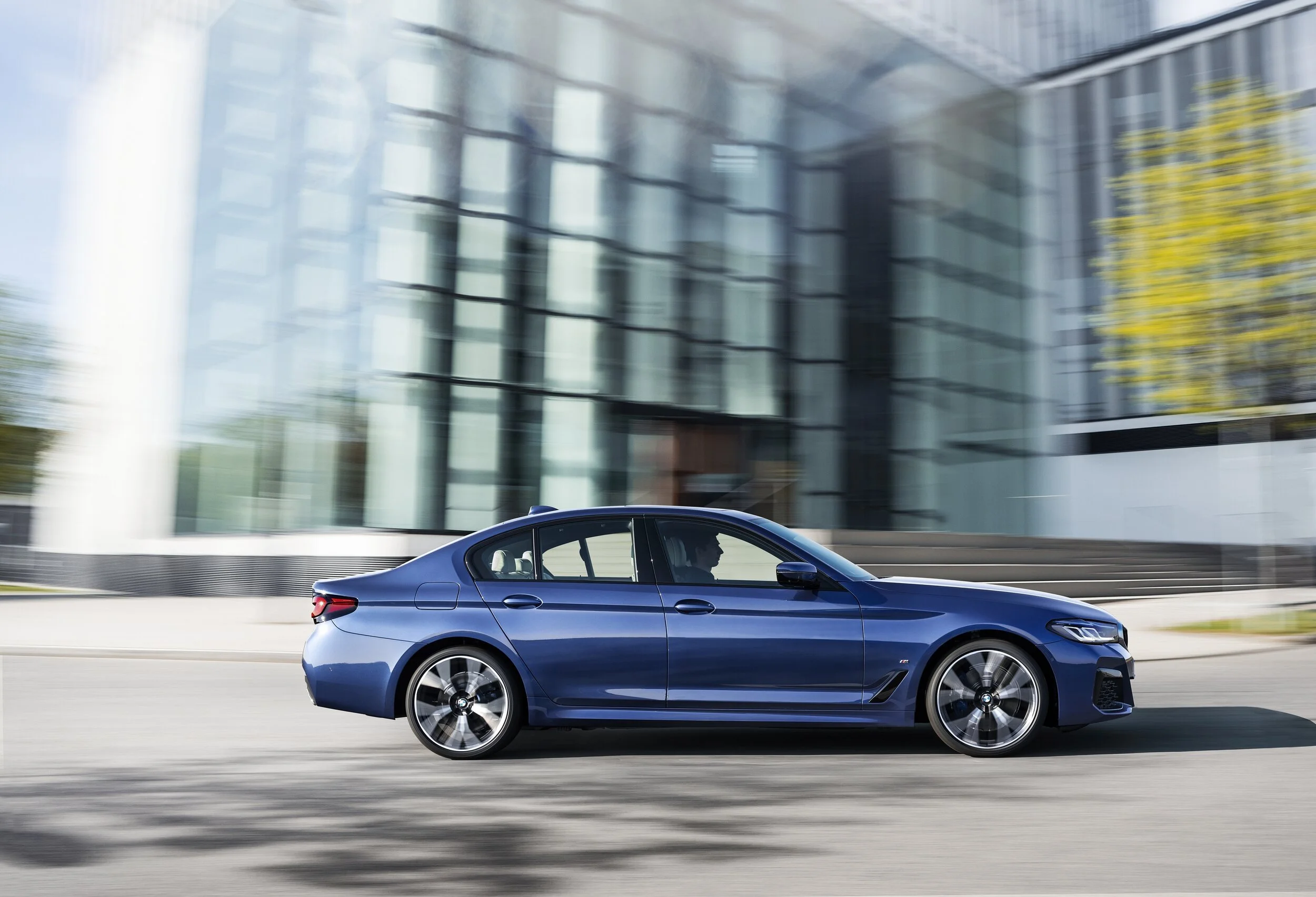
No argument about the Five Series’ – it’s still an important car to Munich, but the shift away from orthodox wagons and sedans to crossovers and full blown SUVs means its standing has become progressively historic. Still, that it won the inaugural New Zealand Car of the Year, in 1988, and snared the NZ Motoring Writers’ Guild title again in 2010 reminds that it has made a real imprint.

Can that allure continue? Five Series volume last year being less than a third of the count for the X5 that has progressively become more divorced from the road car suggests it is now something of a niche attraction.

Nonetheless, if street presence still counts for anything, then the updated line that BMW has just revealed ahead of expected arrival herein October surely stands a chance of winning interest?

A new-look, slimmed LED headlight cluster that eschews the hexagonal design of the outgoing model for an L-shaped motif also seen on the updated 7 Series, plus employment of a longer and wider grille deliver a sleeker look than the present product offers. Those lights are really high-end items too, being full LED beams with cornering function as standard. Even higher-tech BMW Laserlights avail as an option.

The L-shaped signature continues at the rear with a lightly restyled light cluster, while all grades will now come with trapezoidal exhaust tips. 

New colours and alloy wheel designs are on the delivery sheet, while the M Sport exterior design package promises to be beefier than before.

P90389009.jpeg

Almost all four and six-cylinder models now get 48-volt mild-hybrid electrification. The system (in effect an integrated starter/generator that’s coupled to a small additional battery) produces up to 8kW to help with overtaking, off-the-line acceleration and stop-start situations.

Inside, the 10.25-inch infotainment screen has been increased to 12.3-inches across the range to go with the redesigned centre console controls, while all variants now come with a leather multifunction sports steering wheel.

BMW New Zealand has yet to divulge exactly how many of the 16 variants the portfolio will come here, however it’s fair to say that whatever signs off for Australia will land here as well, so close is the transtasman association and management structure.

In that light, then, the range will include the M550i xDrive with its 390kW/750Nm twin-turbo V8. BMW in Melbourne is also relating interest in two other full petrol engines and plug-in hybrid (PHEV).

Thought is that the petrol variants will be the entry-level 520i with its 135kW/290Nm turbo-petrol four-cylinder engine, and the mid-range 530i, with the same engine boosted to produce 185kW/350Nm, while the 530e is rated as being a good starter for the PHEV duty. That model marries the 520i’s engine with an 80kW electric motor for a combined 215kW/420Nm.

That M550i will continue in its role of impressing as a pseudo M5. It’s a four-wheel-drive model that gets an M Sport differential and adaptive suspension and is rated to see off 100kmh in just 3.8 seconds.

On the safety front, the lane departure warning system now features steering assistance to return the car to the middle of the lane, while the range of functions in the Parking Assistant suite has been expanded to include reversing assistant, which enables self-backing for distances of up to 50 metres.

Wireless Apple CarPlay continues and Android Auto is now available, while BMW’s Intelligent Personal Assistant functionality has been expanded, with the ability to install updates over the air.

P90389015.jpeg


Countryman PHEV's range improved

Cleaner engines, technology and styling changes come with a refresh for the biggest Mini.

MINI Cooper SE Countryman ALL4 (1).PNG

IMPROVED range from the flagship plug-in hybrid drivetrain is promised with a mid-life update to the Mini Countryman.

The biggest model to bear the Mini badge continues with the current engines choices, though all have been reworked to improve economy and efficiency. Yet there are no alterations to outputs.

So, the entry Cooper’s 1.5-litre three-cylinder continues with 100kW and 220Nm; the Cooper S 2.0-litre four-cylinder still puts out 131kW and 280Nm and the Cooper SE ALL4 maintains total outputs of 165kW and 385Nm.

However, the unit that uses a 65kW/165Nm electric motor powered by a 9.6kWh lithium-ion battery pack now claims an electric-only range of up to 61km, against 40km previously. 

The engines all have particulate filters and the engines in the Cooper and Cooper S now have an exhaust manifold integrated into the cylinder head. A more efficient starter-generator system is standard across the range.

With the cars not coming until the end of the year, Mini isn’t yet keen to lend details on local market specification and, of course, there’s nothing yet on pricing. The hit shouldn’t be too extreme, though, given that sticker revisions in its home country have been modest.

External revisions are similar to those already meted to the three- and five-door hatchback two years ago the the Clubman in 2019.

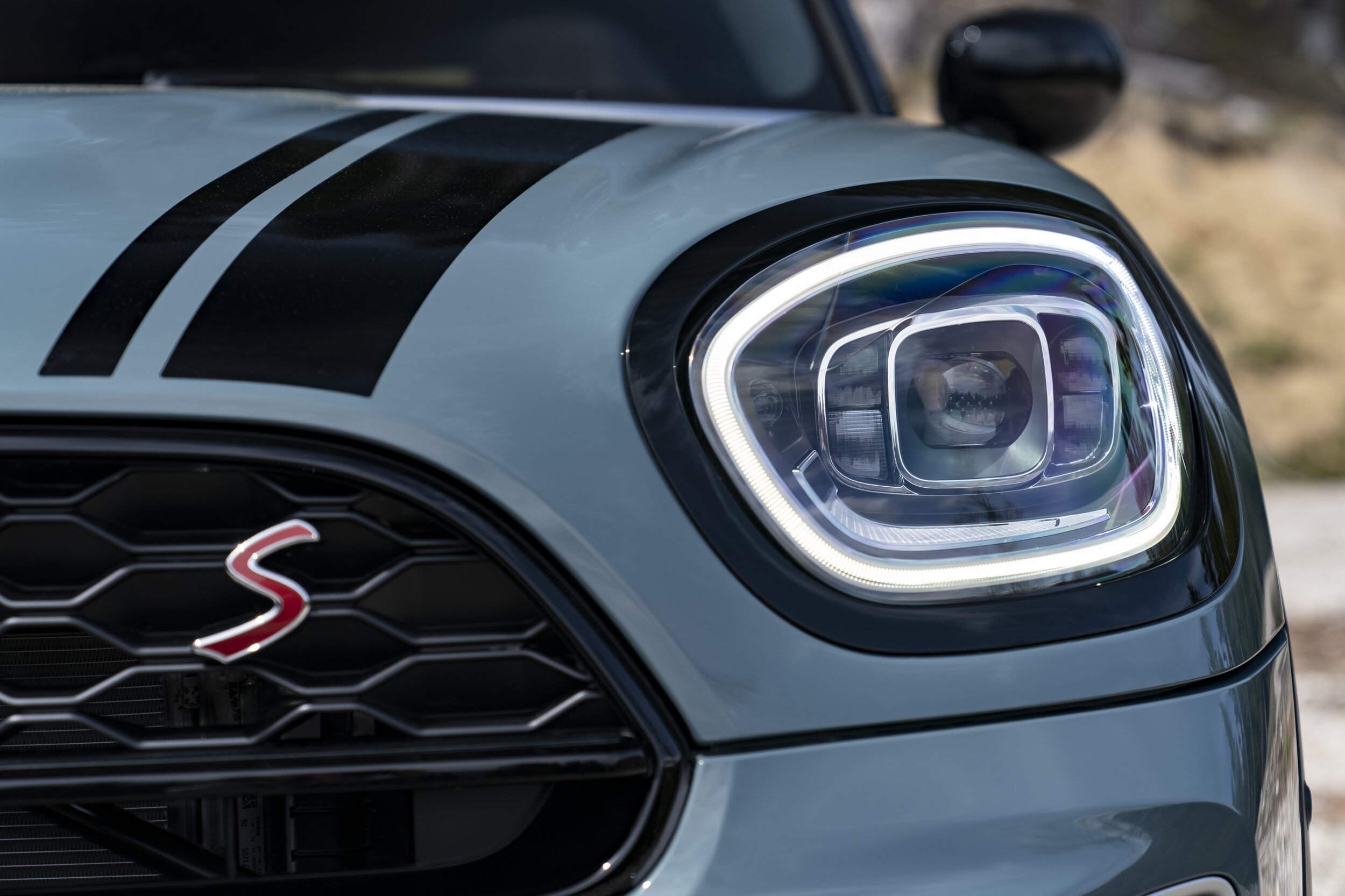
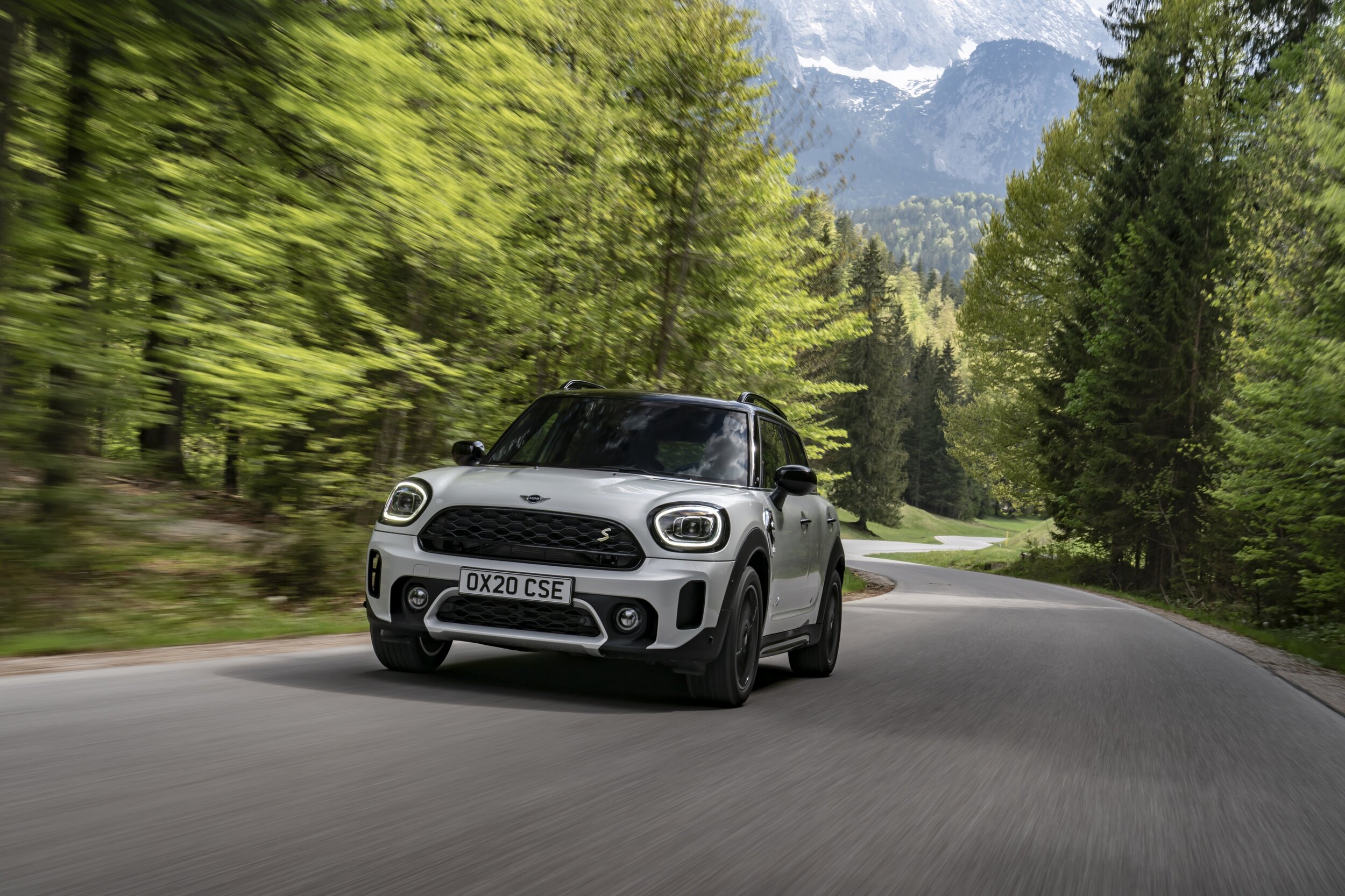
A new grille with hexagonal comb mesh and a new bumper below differentiate the incoming line from the 2017-released originals. The rear also gets a nip and tuck with Union Jack taillights. 
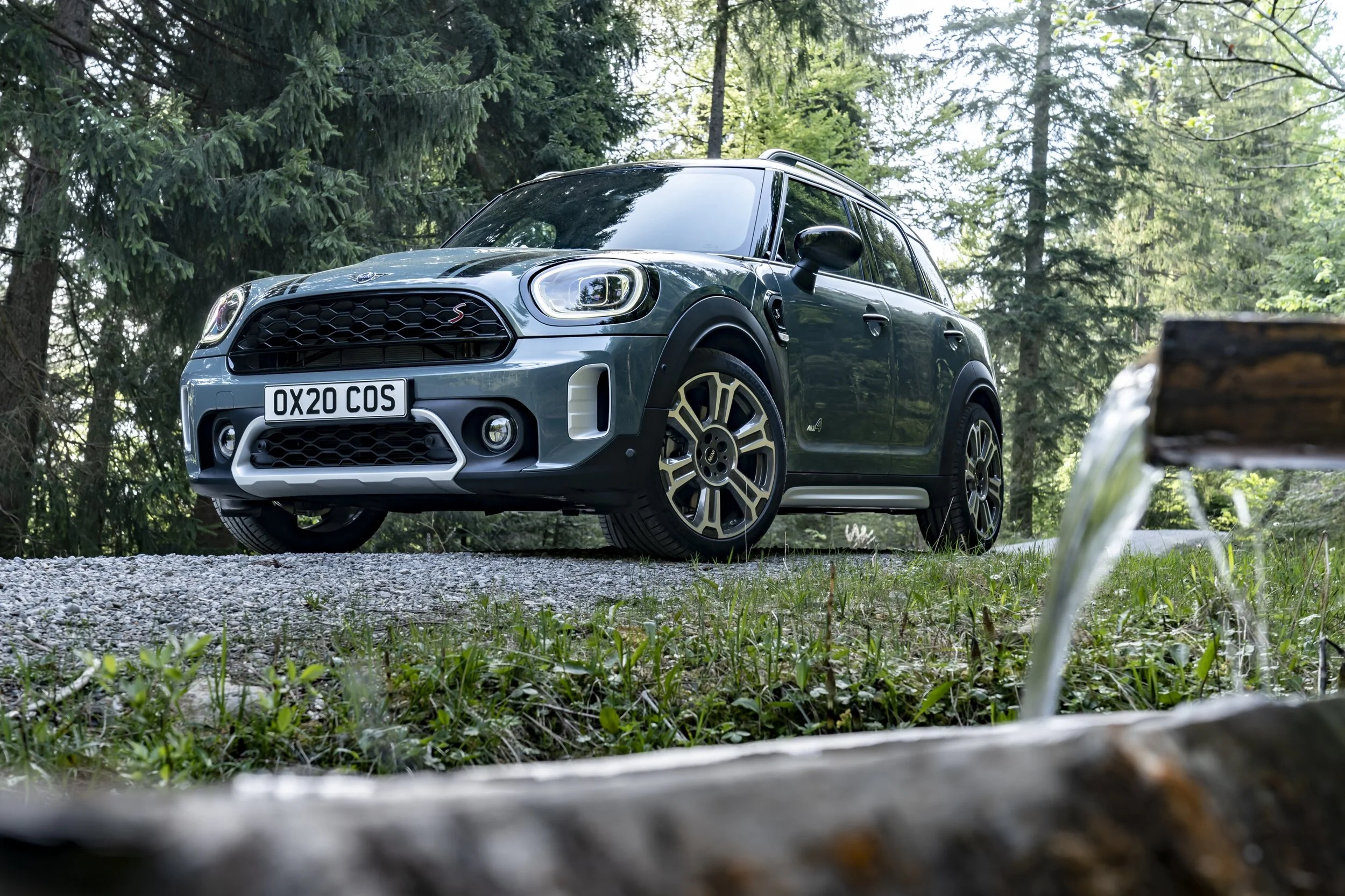
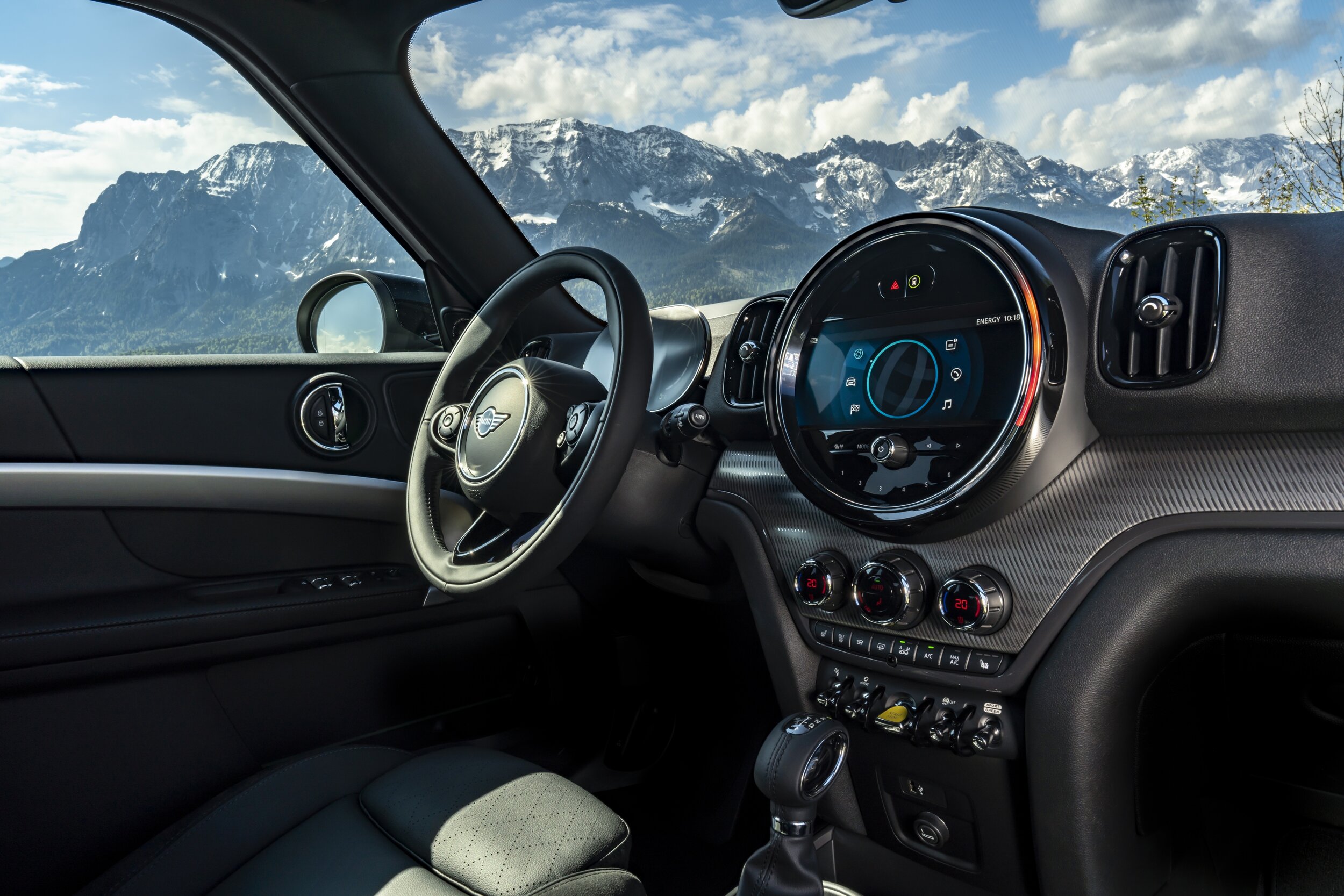
The interior delivers change with redesigned dash and layout, including a “refined surface around the circular control unit” which measures 8.8-inches in diameter and hosts MINI Connected features including Navigation Plus and Amazon Alexa integration and Apple CarPlay.

Equipment on the three trim grades includes 16-inch, 17-inch and 19-inch alloys, digital instrument display, roof and side mirror caps finished in either body colour, white, black or silver depending on model, piano black exterior and interior trims, plus a new range of materials and leathers is offered, including new blue and brown seat colours. As always, there’s an extended range of personalisation options and Mini accessories, including a rear bicycle rack, roof box, luggage mat and all-weather floor mats.


Mercedes GLB: Compact family mover raises stakes

Get set to enjoy the surprising star qualities of Benz’s smallest sports utility.

GLB 250 and AMG-tweaked GLB 35 (right) will likely achieve the bulk of volume.

GLB 250 and AMG-tweaked GLB 35 (right) will likely achieve the bulk of volume.


PLAYING for a full house is the game plan for Mercedes’ first baby sports utility.

 In revealing pricing and specification details for the GLB, which rides on new large iteration of the A-Class architecture, Mercedes Benz New Zealand has also revealed it only has eyes for the full-blown edition configured for family use, rather than an alternate derivative that presents as an extra-sized hatchback.

 Going just for the line-up in its 200 front-drive and 250 and AMG 35 four-wheel-drive full chair count presentations is a different tack than that adopted in Europe, where the five-seater is more on the front foot. 

The strategy conceivably doesn’t discount the car still being seen as a rival for the BMW X1 and Audi Q3, but certainly allows it to square up as an elite-end alternate to the only like-sized German model in this space, the Volkswagen Tiguan Allspace.

Mercedes’ local arm doubts it will be any poorer ignoring the five-seaters, pointing – quite reasonably – that this configuration is still availed the seven-chair edition; it’s just a matter of folding down the rearmost seats. 

This doesn’t mean the five-chair car couldn’t be sourced, as it does build in right-hand-drive. Just don’t expect to be able to order it through official channels. It’s simply not an option. “The car comes standard with seven seats in New Zealand,” a spokesman affirmed today.

The decision is based on a logic of keeping things simple, although it also identifies that additional flexibility and functionality will tune all the more nicely into the emergent Kiwi love for compact SUVs.

GLB 250 has 4MATIC

GLB 250 has 4MATIC

In respect to ensuring it is ticking all the boxes, MBNZ has also … well, ticked all the boxes. The suite of technology, safety and comfort inclusions and equipment specifications for NZ achieves beyond some other countries’ standard provisions.

You won’t have long to make up your own minds. A first shipment provisioning the $78,900 GLB 200 entry car and $92,200 mid-range GLB 250 4MATIC will unpack in several weeks. The flagship AMG-reworked GLB 35 4 MATIC, a $104,900 ask, comes later in the year, exact timing yet to be determined. All GLBs take the shortest sailing time yet for a Mercedes’ car, being sourced from a new factory in Aguascalientes, Mexico.

That launch timing is exactly to the plan unfurled last year during the car’s international release, when MBNZ managing director Lance Bennett expressed his optimism about why GLB will resonate, notably through it being in the right price band for families for whom this might well be their first new Mercedes.

“With the GLB we now have the ability to transport an entire family’s worth of activity and adventure from a much lower starting price than before,” he said then. “We expect this … will see us attract entirely new customers where we have not had a suitable vehicle in the past.” 

Notwithstanding that these thoughts were expressed before the world had even heard of coronavirus, let alone felt its impact on new car sales, the comment likely will remain relevant. A first drive last year in Spain imprinted hugely favourable impression of its qualities.

AMG engine is a sweet fit for this family-minded model.

AMG engine is a sweet fit for this family-minded model.

The packaging is right up there. This is the smallest SUV Benz has ever tackled, yet it doesn’t feel that way. Even though it is not, by any stretch, a large car in overall dimension, and regardless that the handsome Benz styling suggests it as a big hatch, GLB is at heart a box full of chairs in which every centimetre of interior space is put to excellent use.

So clever is the employment of the additional room resulting from being on a wheelbase that’s 100mm longer than the other related models within the ‘compact portfolio’ - the A-Class hatch and sedan, B-Class, CLA and GLA – allows it a decent chance of being seen as a tangible alternate for anyone who now cannot stretch to a GLE (in which five chairs are standard and seven an option) due to need to reduce their spending.

Front headroom is a claimed best in class at 1035mm with an “especially comfortable” 967mm of legroom in the second row. True, it’s tight right at the back, but even with Benz’s admission that it only offers comfortable seating for those under 1.68m tall, that third row zone is hardly for emergency use only, not least because the second row is able to be slid forward by up to 140mm.

What does imprint more is that, wen running full occupancy, the luggage space remaining is miniscule. Stowing the back pair (neatly, into the boot) and it’s much more convenient, of course, as then there’s a loading space of 560 litres, expanding to 1755 litres when the second and third rows are stowed.

The force-fed 225kW/400Nm 2.0-litre unit ensures the AMG is considerably quicker than the other GLBs.

The force-fed 225kW/400Nm 2.0-litre unit ensures the AMG is considerably quicker than the other GLBs.

A lot of clever thinking (and using that VW for benchmarking) delivers decent head and legroom, excellent outward visibility and good stowage solutions, but one thought from the launch was that, before letting the kids in, you’d do well to pre-check for sticky little fingers. This is a premium car, flashiness extending beyond the fully digital dash with the MBUX interface (and occasionally over-eager ‘Hi Mercedes’ prompt). Touch surfaces use high-quality materials, buttons and knobs have a satisfying tactility and reassuring clicks and it’s beautifully trimmed, with cushy seats.

The NZ-market spec plays to that. Base trim includes the now familiar side-by-side 10.25-inch digital screens, keyless go, electric tailgate, Artico upholstered Comfort seats, adaptive cruise control, smartphone mirroring, wireless charging, advanced satellite navigation, illuminated door sills, leather multi-function steering wheel, reversing camera, Comfort suspension, rain-sensing wipers, 19-inch alloy wheels and aluminium roof rails. 

Standard safety gear includes nine airbags, active parking assist with Parktronic, adaptive high beam assist, blind spot assist, traffic sign assist, active lane keep assist and active brake assist with semi-autonomous braking.

The car’s other big flavour hit arrives with the driving. Family buses are generally not exactly highly-regarded for any kind of ‘fun-to-drive’ factor, and you wouldn’t think Benz would be the first brand to come to mind as a rule-breaker. But, truly, it was a surprise; that AMG car, especially, doesn’t let do anything to tarnish that sub-brand’s pedigree but, in truth, the non-performance-tuned editions are quite playful, too.

The steering feel is good, the car’s track neatly and though the 4MATIC’s enhanced traction is obvious, the front-driver has good grip. The dynamics are interesting, in a good way. Even the pliancy resultant from the extended wheelbase and tuning with mind to having to cope with optimal loadings are pluses for the ride-handling balance. Yes, there’s a touch of lean, but on the other hand it shouldn’t surprise if these turn out to be more comfortable and quiet on NZ coarse chip than other products on this base. In Spain we drove every model in both chair counts and found any thought about the seven-seater being less involving than the five, merely through the weight difference, was pretty much undone.

The fastest small car on the school run?

The fastest small car on the school run?

The GLB200’s turbocharged 1.3-litre four-cylinder petrol engine, with 120kW and 250Nm, sent via a seven-speed dual-clutch automatic transmission delivers nifty delivery, but it’ll be easier to find excuse to seek an upgrade to the 250’s significantly more grunty (165kW/350Nm) 2.0-litre turbo. In addition to all-wheel-drive, it also adopts an eight-speed dual-clutch transmission. 

The mid-grade edition also adds more kit, including a panoramic sunroof, powered and heated front seats with memory function, adjustable damping, sports steering and five-spoke 19-inch alloy wheels.

Also included as standard is an ‘off-road engineering pack’ comprised of speed-adjustable hill descent control and an extra driving mode specifically tailored for light off-road use. We found it useful on a rain-drenched and reasonably rutted dirt track but the fact that Mercedes closed off a dedicated off-road driving circuit simply because of the precipitation perhaps is reminder that this car is better considered a crossover at best.  

What of the AMG; could it be called a hot hatch? On first encounter the more hunkered and honed flagship was an eyebrow raiser. Even though hot-rodding SUVs has become an AMG speciality and even if GLB is more expected to get people to race circuits than on them, with 0-100kmh in an exhaust barking 5.2 seconds and 250kmh top speed, it surely places at least the Audi SQ3 and BMW’s X2 M35i on notice.

The same force-fed 2.0-litre unit employed in the other compact ‘35’ variants generates 225kW and 400Nm, so it’s considerably quicker than the other GLBs. It also evidences higher lateral limits. Only when pushed really hard did it find understeer on the first trial, but impression on that day from burling it through some exquisite hairpins was that the high traction and surety exceeds what you expect from a family chariot. A true driver’s treat? Well, put it this way … if the kids (or family pooch) are coming, pack sick bags. 

The NZ-market treatment includes AMG Night Package exterior trim features and unique 20-inch alloy wheels, the full-barp exhaust system, high-performance brakes, speed sensitive steering and AMG Ride Control sports suspension.

Inside the performance theme runs to a Nappa leather-wrapped performance steering wheel, Lugano leather sports seats, Energising Comfort Control, brushed stainless AMG pedals and carbon interior trim.


Next Santa Fe fronts up

Hyundai has provided a first look at the next generation of its crucial sports utility.

the ‘luxury’ grille

the ‘luxury’ grille


GRADUAL unveiling of the next Hyundai Sante Fe has begun, with Seoul sending out shadowy preview images revealing the new car’s front.

There are two images, the reason being to demonstrate that the flagship car will have a slightly different gloss black grille to that meted the regular editions.

Either way, the new face is quite different to what we see now.

And those grilles are a significant departure from the 'waterfall' design that has evolved over the past decade across the Hyundai family.

In its new form, the Hyundai grille frame extends across the face of the new Santa Fe, tapering at each end to merge with the driving light housings.

Also new is the 2021 Santa Fe's daytime running light (DRL) signature, described as a ‘T’ shape.

the standard grill

the standard grill

The new lighting signature is described as reflecting "Hyundai's new integrated vehicle architecture". Is that a suggestion that what the SUV presents first will migrate into other Hyundai’s? 

No other angles have been revealed at this time, although Hyundai says we can expect “interior design updates providing premium amenities and comfort.” 

Also unclear are details on the new-look Santa Fe's mechanical package, though it could be that Hyundai also moves to adopt a hybrid set-up that is going into the Santa Fe’s sister ship, the new Kia Sorento.

The latter is taking a 1.6-litre petrol with battery assist – in ultimate form this being a 44.2kW electric motor and a 1.49kWh lithium ion polymer battery, for a total output of 169kW and 350Nm.

The new powertrain is presented under a new mantle, ‘Smartstream’, that also applies to the purely fossil fuel-reliant engines also going into the vehicle.

With the latter the choice with Kia is a new 206kW/421Nm 2.5-litre petrol and a refined version of the outgoing cars’ 2.2 turbodiesel, making 148kW and 440Nm. These marry to an eight-speed wet double-clutch automatic.

Kia NZ has yet to signal a firm local launch date for the Sorento, save for an indication some months ago that it might be here by the third quarter of this year. However, that timeframe was given pre-coronavirus; like so many others, Hyundai and its subsidiary have had to close down its assembly lines. 

Regardless of that, there is emergent possibility that the Sorento will beat the Santa Fe to market.

Both models stand on a new-generation midsize SUV platform and the Santa Fe is sure to align with Sorento in implementing a range of high-tech safety and convenience features.

Prime among these are a multi-collision brake system that mitigates the severity of secondary collisions. It automatically applies vehicle brakes when the airbags have been deployed after an initial collision, further protecting occupants from secondary frontal or side impacts. 

Kia’s new rig also has a remote smartphone Surround View Monitor. This allows users to check the vehicle’s surroundings with their smartphone in conjunction with the in-vehicle Surround View Monitor to maximise parking convenience.

Last year Kia registered 462 Sorentos in NZ while Hyundai NZ found homes for 1477 Santa Fes.

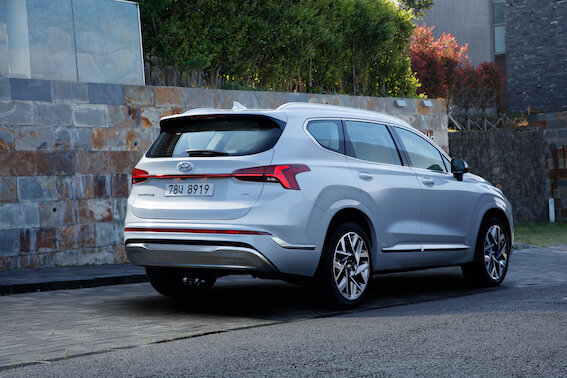
the current model santa fe

the current model santa fe


Buying a car preferred to riding a bus


Used car sellers are reporting intriguing customer feedback.

driving seems preferable to riding a bus … or a train

driving seems preferable to riding a bus … or a train

COVID-19 concern is driving Kiwis into buying cars in preference to using public transport.

So claims a company providing shipping and transport logistics for at least one third of ex-Japan used vehicles.

Autohub New Zealand Ltd chief executive Frank Willett says anecdotal feedback from numerous used car dealers is that Covid-19 has created a client who prefers to own a vehicle rather than take a bus

“No-one’s quite sure whether it is fear or paranoia that is causing this, and whether it will continue – but it’s happening,” he says.

“And the trend looks to being confirmed by the public transport operators themselves, who are reporting low patronage right now,” says Willett, who also wonders if current low price of petrol is also contributing to this buying trend.

frank willett

frank willett

The interest upswing is encouraging news for the country’s used vehicle dealers who – like their new vehicle counterparts – have been hit hard by the Covid-19 pandemic and lockdown.

Under normal circumstances up to 13,000 used cars are imported from Japan each month, their registrations roughly on par with the number of new vehicles that are registered here. Last year, for example, 154,863 new and 151,871 used vehicles were registered in New Zealand.

But then Covid-19 struck and New Zealand went into Level 4 lockdown, which has resulted in registrations of both new and used vehicles fall by more than three-quarters year-to -date to the end of April.

Adding to the crisis for the used car importers was the fact that many of them imported more vehicles than usual prior to a March 1 introduction of tougher government regulations that required all used imports to have electronic stability control.

Willett estimates that the number of used import orders prior to the March 1 deadline swelled by as much as 20 percent.

“There’s quite a bit of momentum involved in the used import business,” he says.

 “The vehicles get purchased in Japan, then they go to export yards, then to shipside for loading, then they’re on the water to New Zealand.  There’s about four to six weeks of momentum in this supply chain.

“When Covid-19 hit and we went into lockdown, we might have been able to turn the proverbial tap off here, but Japan didn’t. As a result, the supply chain continued to function.”

This in turn created problems with vehicle stockpiling and storage in New Zealand, because while ports were considered essential businesses and were able to unload the imported vehicles, the transport of the vehicles wasn’t. So they couldn’t be delivered to the end user.

This has eased since the country went to Level Two on May 13, but there are still a lot of vehicles still in storage, says Willett.

“At one stage our company alone had 2500 in storage. I’d estimate that the current total would be as many as 20,000 – that’s way in excess of normal.”

With Level Two the trade is back in business and seems to be working through pent-up demand.

“Our feedback has been that a lot of customers were happy to wait out the lockdown – but that as soon as they could go to a used car yard, they would.”

Even so, the used import industry is expecting the market to be subdued for most of the remainder of the year, says Willett. Contributing to it all will be market uncertainties that are normally associated with the lead-up to any general election.

Meanwhile, a foreign exchange specialist says the fluctuating value of the New Zealand Dollar against the volatile Japanese Yen has been causing financial headaches for businesses in the automotive sector.

Matt Spehr of Western Union Business Solutions says the Yen was already the most volatile of the major currencies for New Zealand importers before Covid-19 hit.

“Over the past 10 years it has moved 10 percent up or down on average every three months,” he says.

“However, the first quarter of 2020 has doubled that average, moving an incredible 20 percent from around 73 Yen for one New Zealand Dollar in January to below 60 JPY to 1 NZD at the end of the March. This has had a significant financial impact for most of our country’s car importers.”

Spehr says many car importers and dealers will try to reduce this impact to their profit margins by using forward contracts to lock in exchange rates for a few months in advance. This gives a business certainty about how many Yen it will get for the Dollar.


Manley’s record run keeps rolling on


Covid-19 is preventing a leading New Zealand motor industry executive from retiring.

manley took over when the nz vehicle assembly industry was in a state of flux. closing the line at wiri was an early job.

manley took over when the nz vehicle assembly industry was in a state of flux. closing the line at wiri was an early job.

HE’S the world’s longest-serving Nissan managing director and wants to retire – but the Covid-19 pandemic is preventing it.

John Manley runs Nissan New Zealand. He was supposed to retire at the end of April after 39 years working for the Japanese brand – 20 of them in his present position.

The plan was for his role to be taken over by Ben Hamilton, on transfer to New Zealand from Nissan Australia. But then the pandemic hit, and both New Zealand and Australia went into lockdown – which meant the Australian couldn’t get across the ditch to take up his new job.

Not that it mattered – because Manley couldn’t do what he planned to do anyway.

“We were supposed to head off on a trip to Canada,” he explains.

“But then in what seemed the blink of an eye I was unable to retire, my wife Helen was made redundant as a flight attendant, our daughter was also made redundant, and we ended up stuck at home.

“It’s amazing how quickly things changed. Everything looked tickedy-boo – and then the whole world closed down.”

john manley - world’s longest-seving Nissan ceo

john manley - world’s longest-seving Nissan ceo

The plan now is for Manley to continue with Nissan New Zealand until his replacement can get across the ditch to his new job.

“It’s not a hassle at all,” says Manley. “All our plans went pear-shaped anyway, so I’m more than happy to help out.”

When John Manley does retire, he will finish as New Zealand’s longest-serving motor industry executive. He’s also considered to be the world’s longest-serving Nissan managing director.

His motor industry career began 39 years ago when he started work as a new vehicle salesperson at Newmarket Nissan in Auckland. Prior to that he was a bricklayer.

“I was sitting on a job one day, it was absolutely pissing down with rain and I thought ‘there’s gotta be more to life than this’.

“I flicked through a newspaper and saw this job advertised by the local dealer offering a car and the promise of pretty good money so I thought ‘that’s me.’ And that’s how it started.”

At that time the dealership was a factory shop, Nissan NZ’s head office was in Lovegrove Crescent in Otara, and the brand’s assembly plant and national parts warehouse was at Wiri.

 He progressed up the corporate ladder, becoming sales manager and fleet sales manager before being appointed dealer principal at Takapuna Nissan. Then in 1997 he moved to Nissan NZ as national sales manager, and was promoted to managing director three years later.

Manley took over the big job at a time when New Zealand’s motor vehicle assembly was in a state of flux.

The Government’s plan had been to gradually decrease import duty on vehicles over a period of years to allow the importation of fully-built up product. But in the 1998 Budget it instead made the sudden announcement to drop all import duties several years ahead of schedule.

This had an immediate effect of making motor vehicle assembly un-viable in New Zealand, and Manley – like the heads of every other brand involved in CKD assembly in the country – had to begin the process of shutting down assembly operations.

At that stage Nissan NZ had about 400 employees building 40 vehicles a day at Wiri. But thanks to their high levels of training, the vast majority were able to be re-employed in other industries by the time the plant closed down a few months after the Budget announcement.

“It created some immediate difficulties, but it was the correct decision and a better option than a slow wind-down,” Manley recalls.

“And from that point on we at Nissan NZ had access to a wider range of Japanese domestic product that had a greater specification level.”

From a business perspective the halt of CKD assembly, and move to a fully CBU regime, represented dramatic change. In one fell swoop Nissan NZ went from manufacturing to becoming an operation focussed more on sales and marketing.

overseeing the release of the latest juke should be manley’s last big gig.

overseeing the release of the latest juke should be manley’s last big gig.

Adding to complications at that time was the fact that Nissan Motor Company had entered into a strategic partnership with French manufacturer Renault to form what was known as the Nissan Alliance. Manley says this in itself caused a quantum shift in focus and priorities – all of which had a major impact on operations. But the impact was positive, he adds.

One such impact has been the ability to source product from all over the world. For example, today New Zealand sources a selection of vehicles from Japan, Thailand, USA, and United Kingdom that best suit the Kiwi motoring environment.

And the benefits of that wide international choice are best illustrated by what vehicles John Manley will take with him when he is finally able to retire. He’s going to have a Thailand-sourced Navara ute, while his wife Helen will have a United States-built Pathfinder SUV.

“That will cover every eventuality,” he quips.

And what does John Manley see of the future of the motor industry in New Zealand?

“I see the industry constantly evolving to meet the requirements of consumers,” he says.

“The current pandemic will provide further opportunity for revision, but basically we are a people industry – an industry building vehicles that fulfil consumer needs and aspirations. The personal interaction with the customer is the highlight,” he says.

And insofar as his career goes? Lots of memories, no regrets, plenty of quiet pride.

“Not a bad effort for a brickie, I’d say.”


JLR defiance as market toughens

 In the face of black clouds … is one brand channelling the Black Knight?

updated f-type will be at forefront of JLR’s local effort this year.

updated f-type will be at forefront of JLR’s local effort this year.

PRODUCTION lines halted, factories closed, new models delayed, registrations at the lowest since … well, forever in some countries. 

Certainly, it seems fair to suggest the global coronavirus crisis has caused no small amount of pain to the car industry and probability of more discomfort ahead seems unavoidable.

The New Zealand forecast of 2020 delivering around 40-45 percent fewer new car sales compared with 2019’s national tally is actually optimistic compared with others being expressed elsewhere around the world.

In face of all this, what brand would dare demonstrate a degree of stiff upper lip against-whatever-odds’ defiance?

Step forward SVO, the performance division of Jaguar Land Rover.

Primarily taking this moment to celebrate how well it is done in the past 12 months – both globally and in New Zealand – it is also expressing a touch of confidence about the future being … well, if not outright bright, then perhaps ‘less bleak. 

Admittedly, even that level of quiet confidence will jar with how others see it.

rrsportsvr18mydetailtianmenroad13031823.jpg

And, assuredly, there’s still so much uncertainty about the market condition that what might for now seem to be a reflection of the spirit that kept Britain chipper after Dunkirk might yet equate to the outright nutsy ballsiness of the famous Black Knight of Monty Python and the Holy Grail movie fame who, you might recall, was so staunch in his refusal to give up that, even when reduced to a limbless torso, he wanted to fight on claiming those injuries were but a flesh wound.

Still, SVO having achieved record worldwide sales for the most recent fiscal year reminds that the Brit battler is making good gains in a sector where Mercedes-AMG and BMW’s M Division in particular have long held the high ground.

That success has been particularly felt on New Zealand soil, where the Kiwi pick of the very fast, very powerful, very loud and quite expensive versions of Jaguar Land Rover road cars and sports utilities has been a model that has impacted significantly everywhere, the F-Pace SVR.

Jaguar NZ general manager Steve Kenchington can be rightly proud that the $157,900 supercharged V8 flagship has nabbed 35 percent of local F-Pace volume, a rate that puts up well above the global average. 

Of course, as impressive as the local effort’s cited 175 percent year-on-year climb in volume sounds, it pays to bear in mind that the total count of SVO product sold here comes to a modest count. 

That just 157 units across the Land Rover and Jaguar portfolios in total came from the SVO operation reminds how exclusive this option is. Also, how expensive.

roaring f-pace svr has been a stalwart in this market.

roaring f-pace svr has been a stalwart in this market.

What imprint the hottest F-Pace can present in the future is less certain. The car’s 404kW/680Nm 5.0-litre eight-cylinder is set to soon be discontinued, with Jaguar switching to an alternate engine from BMW. 

Perhaps what’s especially plucky, all the same, is brand sentiment that, once we put this coronavirus issue behind us, Kiwi enthusiasts will again be keen to rev up their buy-in these understandably expensive products.

According to a local spokesman: “The demand (for SVO) is such that when we enter a more normalised world post Covid-19, we will be keen to restart SV specific drive days for our customers.”

There’ll be a new hero to try on those occasions, in the form of the updated and extensively re-engineered F-Type.

Meantime, Kenchington reckons the strong sales in the New Zealand market reflect Kiwi’s love for SV products “and their more sophisticated buying habits when it comes to performance vehicles.”

“While the SV product range has assisted Jaguar Land Rover New Zealand’s total sales growth over the last 12 months, the introduction of new technologies in electrification have meant that we are also able to offer the likes of World Car of the Year Jaguar I-Pace.

“Being able to deliver such strong innovation in quite different parts of the market is a testament to the incredibly hard work and innovation that is taking place at our factories,.”

rang rover svr product has also resonated

rang rover svr product has also resonated

The F-Pace aside, SVO has identified the Range Rover SVAutobiography as another particular winner that helped towards total sales of over 9500 cars.

But about that I-Pace. SVO ‘s overall boss, Michael van der Sande, has confirmed that his division is set to launch its first all-electric car within a few years.

However, in spite of SVO developing and running the I-Pace in the e-Tophy race series that supports Formula E, the battery crossover will not be the first electric car to receive an SVO makeover.

Speaking to Britain’s Auto Express magazine, van der Sande said: "We will be developing electrified versions of our cars, be that fully electrified or plug-in hybrids.

“I-Pace is not on that path, but there are various other things we are working on which we can’t talk about, but we’re very interested in electrification. That’s why we get involved in the eTrophy. 

“The technology transfer, the learning applies to that car and other cars but we’re not planning an SVR I-Pace at the moment.”

Part of that reason could be because the I-Pace sits on its own unique all-electric platform that won’t be used for any other JLR product.

The new XJ luxury sedan, to be unveiled later this year, will be the first car to make use of JLR’s new MLA architecture that’s set to be used across the entire large Jaguar and Land Rover product line-up in the coming years.

SVO’s boss has suggested it makes more sense for his division to work on that platform, making an XJ SVR a possibility, with the high-performance technology then rolling on to other all-electric models.

Another all-electric, full-size Jaguar J-Pace SUV and an as-yet unnamed Land Rover crossover are also ikely to use the MLA electric car platform.


Leclerc keeps Rendez-Vous with history

The Grand Prix was canned, but a Ferrari was still caned around Monaco by a top works driver today.

F5D_3856-Custom-1140x570.jpg

‘SOME appointments in the calendar cannot be forgotten.’

So says Ferrari in explaining its part in a just-conducted short film shoot.

Today should have been the Monaco Grand Prix. Coronavirus put a stop to that, yet local boy Charles Leclerc still ensured a Ferrari was hurtling around its streets.

With full factory support, Leclerc got behind the wheel of Ferrari’s SF90 Stradale early on race morning to assist director Claude Lelouch with the shooting of a short film reprising the theme of another, very famous flick.

“Le Grand Rendez-Vous” is inspired by LeLouch’s famous ‘C’etait un Rendez-Vous” filmed in 1976 and subsequently lauded as a pretty nifty homage to fast cars.

The original was an eight-minute drive through Paris during the early hours of a Sunday morning in August (when much of Paris is on summer vacation), accompanied by sounds of a high-revving engine, gear changes and squealing tyres. LeLouch, and Ferrari, insist the epochal movie was made with a Ferrari 275 GTB, but dark rumours still persist that the actual film car was a Mercedes 450 SE 6.9L, with the Fezza’s soundtrack dubbed in.

No matter. This time there’s no doubting. The Ferrari SF90 Stradale, the Prancing Horse’s first series production hybrid model, and the Monegasque talent, are very mich front and centre in what is promised to be a breathtaking drive through the Principality’s winding streets and roads.

SF90_Stradale_@Ferrari_SpA_2.jpg

We’’d like to show you the footage, but it won’t be released until June 13. In the meantime, Ferrari has furnished some stills. And, as a treat, we’ve included the 1976 original. See below.

The promise is that the film evokes both the atmosphere of the beloved Grand Prix and Lelouch’s original.

Leclerc certainly let his enthusiasm run wild, the car reaching speeds of up to 240kmh on the closed roads.

Ferrari knew it would do the job, saying before the action began: “On the city circuit the SF90 Stradale will measure its unmatched performance for a Ferrari production car: 736kW (1000bhp), a weight-to-power ratio of 1.57 kg/bhp, and 390kg of downforce at 250kmh.

“The car’s name, a reference to the 90th anniversary of Scuderia Ferrari celebrated last year, exemplifies the symbiosis of transferred technology between Ferrari road and track cars, of which this recent model is the maximum expression.”

The brand cited what it is calling the first post lockdown French shoot as a symbolic restart of a gradual return to the ‘new normal’ after the pandemic and the restart for the film industry, impacted significantly by recent restrictions.

Ferrari said welcomed partnership in the film as a way of demonstrating support for its tifosi, clients and supporters as an expression of  hope that the world will gradually be able to absorb the painful and complex health crisis which has affected everyone, allowing us to begin to look positively towards the future, also in anticipation of the expected restart of the F1 season in July. 

Leclerc was joined at the film shoot - but presumably not in the car - by Prince Albert II of Monaco and Ferrari Chairman John Elkann

Volvo slowdown hasn’t revved up customers

Safety-first Swede’s speed restriction is worth talking about, right? Erm….

Volvo’s current  speed kings, the just-landed S60 and V60 T88s, are hit hardest by the reduction

Volvo’s current speed kings, the just-landed S60 and V60 T88s, are hit hardest by the reduction

 IN the 48 hours since the parent brand announced intent to speed limit its cars to 180kmh, Volvo’s local distributor has been inundated with inquiry about how to secure faster fare still in stock.

Actually, that’s a fib.

A run on the quicker cars hasn’t happened and care to guess how owners have reacted?

Answer: So far … with silence.

Admits Volvo Cars New Zealand boss Coby Duggan: “We haven’t received any customer feedback in relation to the speed cap as yet.” 

Does this surprise? Not entirely. The Volvo owner persona isn’t so performance-fixated these days.

“I’m yet to come across a Volvo customer who had ‘top speed’ on their list of key purchasing criteria.”

Even though it was first signalled a year ago, and regardless that Volvo has an especially high status for being safety aware, the impact of Gothenburg having now implemented a determination for all new Volvo cars to be pulled back to a peak 180kmh and be tweaked to further restrict their top speeds using a programmable key, an initiative called Key Care is bold.

coby duggan: if you want a faster Volvo, call him soon.

coby duggan: if you want a faster Volvo, call him soon.

The new top speed is about 50-70kmh slower than the same cars can achieve now.

Sweden has acknowledged that a world-first statement no other car maker has dared make has proven “controversial”, but it is standing by its attitude that this is a core element of its plans to work toward its vision of a future with zero traffic fatalities and serious injuries in all new Volvo cars globally.

“We believe that a car maker has a responsibility to help improve traffic safety,” said Malin Ekholm, head of the Volvo Cars Safety Centre, during this week’s announcement. Volvo had “an obligation to continue its tradition of being a pioneer in the discussion around the rights and obligations of car makers to take action that can ultimately save lives.” 

"The speed cap and Care Key help people reflect and realise that speeding is dangerous.” 

All Volvos sold here carry the highest (five star) crash test scores given by Australasian New Car Assessment Programme (ANCAP), the only independent tester recognised by the New Zealand Government, which art-funds the Melbourne-based testing organisation.

Currently, the most recent models to be introduced locally, the S60 sedan and its sister V60 wagon in T8 plug-in hybrid format, stand as the brand’s fastest cars in production, with a top speed of 250kmh.

Volvo cites that the speed cap will implement across all cars for ‘Model Year 2021’, but as that period actually begins in 2020 basically it means local customers should assume any new car ordered from the factory from now onwards will potentially have the limit.

last of the fast: the V60 T8

last of the fast: the V60 T8

Says Duggan: “While there have been some COVID-related delays to the model year change, we expect to land the first of these in September and October. 

While the S60 and V60 T8 “are among our most recent arrivals, the intention was always for the speed cap to be applied across the range at the same time rather than in a more staggered manner, hence the MY21 roll-out.”

 The implementation isn’t retrospective, and chances are some cars here already will be available for sale beyond the point when speed-limited equivalents arrive.

“We’re in pretty good shape in terms of stock (without the speed cap) – both quantity and model mix – to carry us through to the arrival (of cars with the speed cap).

“While forecasting retail run rates is a tricky proposition in the current environment – for everyone - I don’t expect the speed cap in itself to have any impact on demand.”

There’s also expected to be strong interest in Care Key, an alternate physical car key which allows owners to set their own speed limits, "before lending their car to other family members or to younger and inexperienced drivers," Volvo has explained.

The cars will recognise when it is being unlocked by the Care Key and automatically implement a limited top speed of the owner's choosing. 

The Auckland-domiciled distributor has already considered what might happen were any future owners to conspire to over-ride the factory’s speed-restriction measures.

“We don’t believe the speed cap can be overridden and even if it was technically possible to do so it’s certainly not a service Volvo NZ or our authorised network would offer,” said Duggan.

He offered no response on whether tampering would impact on a car’s warranty, though generally implementation of any performance-altering software on new cars often does void the factory cover.


Juke’s NZ spec, prices revealed

The new Juke represents as a new start in familiar territory.

JUKE 2020 Group (2).jpg


THREE versions of the Juke will hold Nissan’s corner in the compact crossover class.

Pricing and specifications of the model have been announced ahead of launch in June, a process the New Zealand distributor has already admitted will be affected by supply constraints resulting from the plant in Sunderland, England, being closed by coronavirus https://www.motoringnz.com/news/2020/5/6/shutdown-jolts-jukes-nz-arrival.

Nissan NZ has indicated it had a shipment already en route when the factory shuttered, but has not divulged how many cars are coming on that first boat or if every variant is represented from the June 1 release date. There’s no additional comment on when reinforcements will arrive.

The models it will foot this time are an entry ST at $32,990, a mid-grade ST-L for $5000 more and a flagship Ti, retailing for $44,390 – or just $100 short of a Qashqai Ti. The previous Juke Ti was finally selling at $31,990.

This is just the second generation of Juke, replacing a car that ran in the market for 10 years – around two-to-three years longer than most rival makes keep their cars in circulation. However, it’s pretty much entirely fresh in every major facet.

There’s big change under the bonnet. Whereas the previous car presented with a choice of 1.6-litre aspirated and turbocharged petrols, generating between 85kW/190Nm and 140kW/240Nm, this time the entire family runs a 1.0-litre turbo-petrol three-cylinder unit producing 84kW/180Nm.

The constantly variable transmission has gone. Now there’s a seven-speed dual-clutch automatic transmission with paddle shifters, the three-cylinder engine drives the front wheels exclusively and comes with an official combined fuel consumption figure of 5.8 litres per 100km.

The platform is also fresh, being an underpinning developed with Renault, and is said to be stiffer by 13 percent stiffer and six percent lighter. It maintains MacPherson-strut front and torsion-beam rear suspension.

The switch allows for an increase in all major dimensions. In measuring 4210mm long, 1800mm wide and 1595mm tall, it is 75mm longer, 35mm wider and 30mm taller than the outgoing car. This of course allows a roomier cabin and also improves luggage capacity, which increases from 354 litres to 422 litres with the seats in place, expanding to 1305L with the 60:40 split-fold fully utilised.

The Juke being well-provisioned on the safety front has seen it land with a strong ANCAP score. Standard kit includes autonomous emergency braking with pedestrian and cyclist detection, lane departure warning with intervention function, rear cross-traffic alert, forward collision warning, blind spot warning, traffic sign recognition, intelligent driver alert, active speed limiter hill start assist, intelligent trace and ride control, rear parking sensors and a reversing camera.

The ST grade has a rear spoiler, 17-inch alloy wheels, daytime running lights, auto- LED headlights with high-beam assist and power-folding and heated door mirrors.

It takes an 8.0-inch touchscreen infotainment system with voice recognition, and Apple CarPlay and Android Auto compatibility, a 4.2-inch instrument cluster display and cloth seats with six-way driver and four-way passenger manual seat adjustment. 

The ST-L builds on the ST’s spec and adds LED foglights, satellite navigation, heated front seats and front parking sensors. 

The ST-L grade lifts up to 19-inch alloys, 7.0-inch instrument cluster display, six-speaker audio, electric parking brake, leather-accented steering wheel and shift knob, cloth/leather trim, rear USB port, three-level drive mode selector, ambient interior lighting, and new safety kit including moving object detection, adaptive cruise control and a surround-view monitor.

The flagship includes adaptive headlights, sticks to 19-inch alloys in Akari style, illuminated sill plates, quilted leather/Alcantara seat trim, Alcantara dashboard, knee pad and door panels, shark-fin antenna, eight-speaker Bose audio system and tyre pressure monitoring. 

Nissan NZ managing director John Manley has expressed confidence the car will set the bar for small SUVs, recalling also that its predecessor was a successful sector disruptor in its early days.

In addition to giving out information about Juke, the Auckland-domiciled brand has also identified intent to sell its special edition Navara, the N-Trek Warrior, for $74,990.