McLaren victory in enduro

The Hampton Downs Three-Hour provided plenty of excitement.

VanDerDrift_Smith_HamptonDowns_Sept2020_CopyrightGeoffRidder_GR403203C_Web.JPG

GEOFF Ridder was on duty for MotoringNZ.com when national level motor racing resumed in the North Island yesterday.

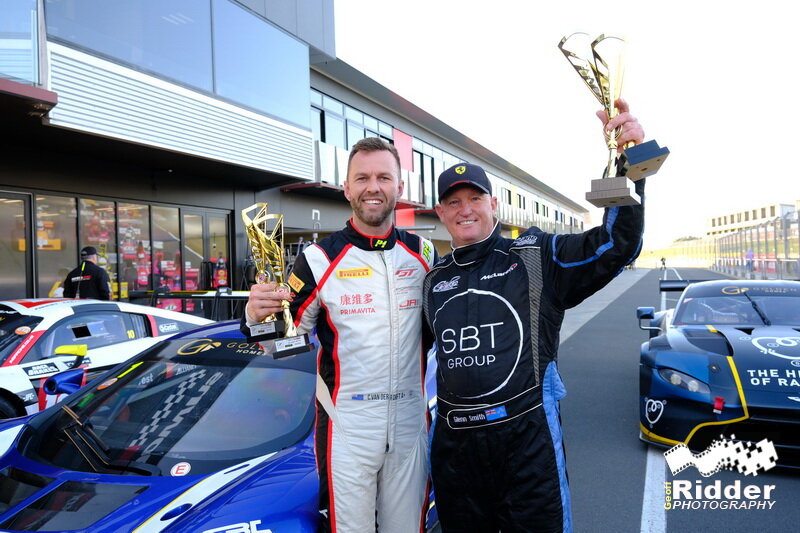
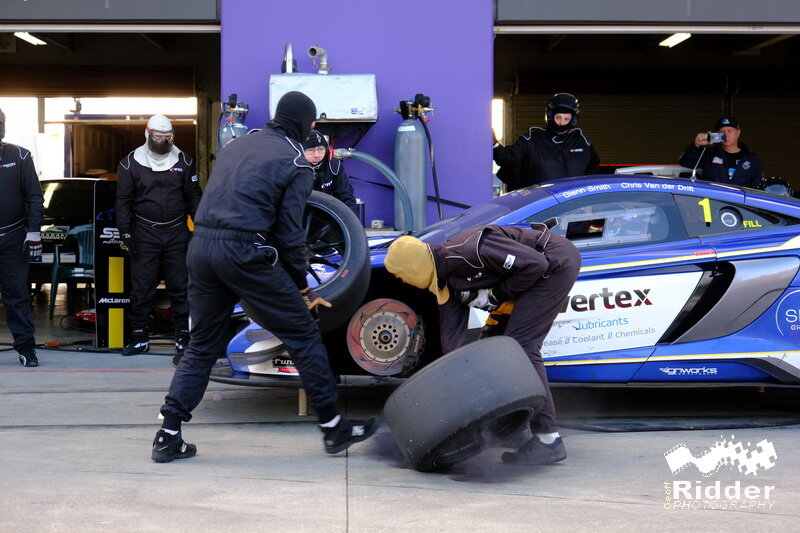
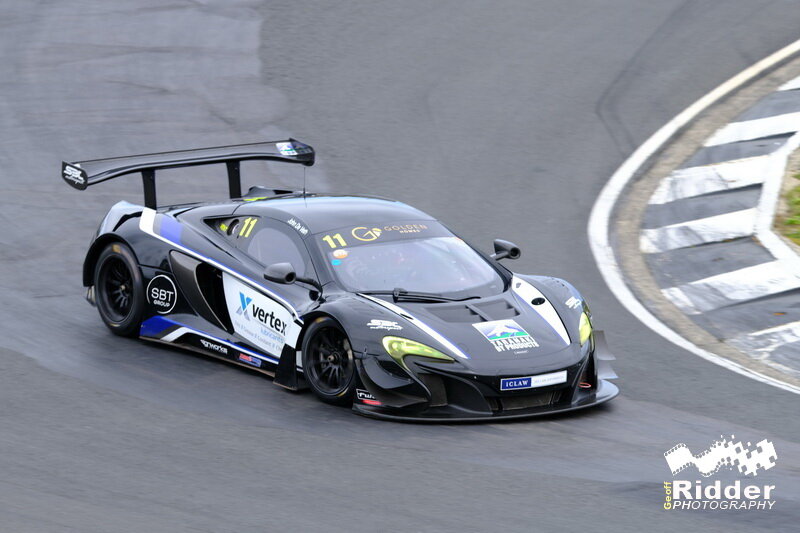
The opening round of the Golden Homes North Island Endurance Series brought a Hampton Downs Three-Hour victory for Taranaki’s Glenn Smith teamed with Kiwi international racer Chris van der Drift in the SBT Motorsport McLaren 650S GT3.

The McLaren qualified on pole position and although dropping to third position in the opening hour, the team ran an untroubled race to build a two-lap advantage during the second half of the enduro to complete 162 laps.

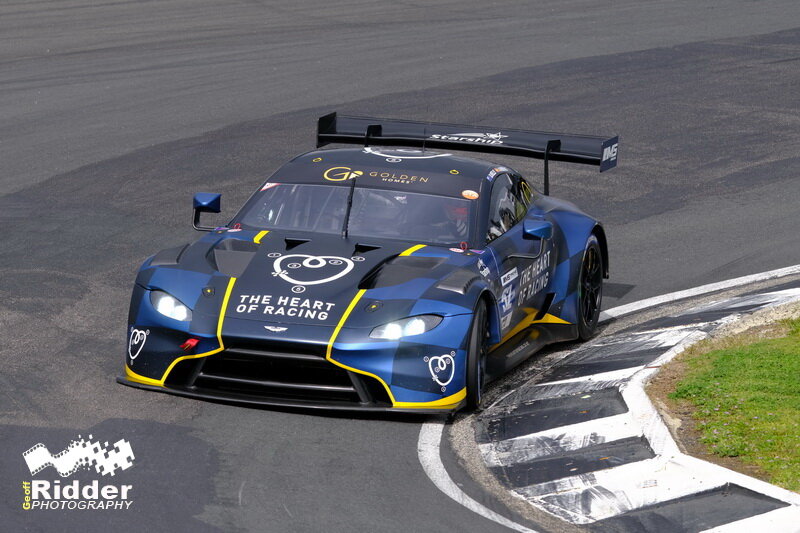
Andrew Fawcett and Sam Fillmore finished two laps back in their Audi R8 LMS after completing a late race pass on the Heart of Racing Aston Martin Vantage GT3 of Brazilian Alex Riberas and Kiwi drift star Darren Kelly. The Aston spent two stints leading in the opening 90 minutes of the race.

Behind the trio of GT3 cars the V8-engined Audi A5 of Matt Dovey and Jono Lester finished fourth. The 3-hour race had 18 starters with nine teams classified as finishers.

There was double Hampton Downs endurance success for McLarens with John de Veth driving Glenn Smith’s other 650S to victory in the 1-Hour race with Porsche GT3 racers Matt Whittaker and Callum Hedge completing the podium.

Now reduced to two rounds in 2020 due the Covid-enforced calendar changes, the North Island Series concludes at Pukekohe on Saturday October 24.

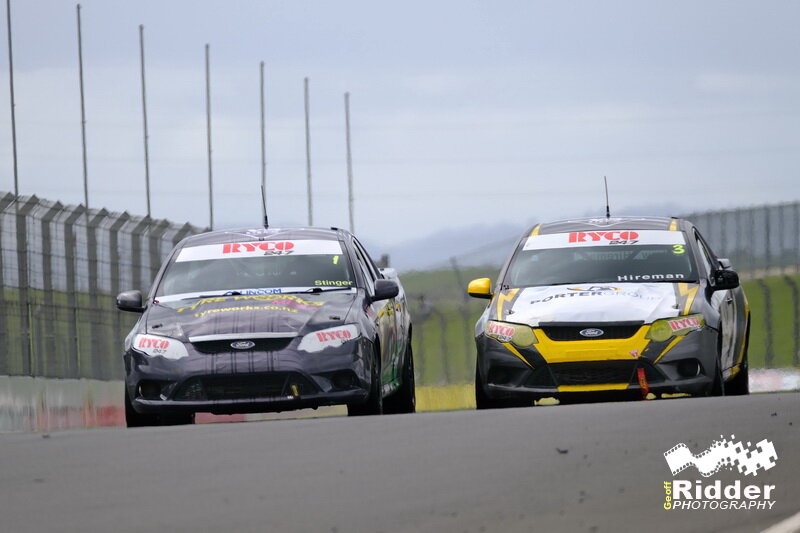
In between the endurance races there was also non-championship Best Bars Toyota 86 action and the completion of the 2019=20 Ryco 24.7 V8 Utes Series.

Series champion Peter Vodanovich was unbeaten in the Toyota 86 action with three narrow wins ahead of Connor Adam while Matt Spratt (two wins and one second) and Andrew Porter (one win, two seconds) shared the V8 Ute honours.
 

Sweet shift for Hyundai’s hotshot

One of the best hot hatches out there is finally coming up to speed in respect to transmission choice.

i30 N PE (PDeN) Teaser Images 01.jpg

HARDLY ever seen but don’t be fooled – they’re out there.

Enough, in fact, to propose that were the owners to form an actual club, they’d struggle to call themselves ‘exclusive.’ 

Not with 100 cars on the register.

That’s the surprise count of examples of the best-reconciled (by far) sports model that Hyundai has yet created … with quite a lot of help from new friends recruited from one of the finer universities dedicated to the development of ‘everyman’ performance fare: BMW’s M Division.

Anyway, the tally of those who have bought into the i30N in its original hatchback and more recently-added liftback forms would seem to be worthy of acknowledgement and applause, given these are aimed at a relatively select audience.

Specifically, they ask owners to live with an ingredient most buyers of those cars no longer desire: An old-school manual gearbox. All manner of data in respect to this category show today’s buyer wants a two-pedal setup … not a full automatic (thank God), but a dual-clutch manual. It’s why the Volkswagen Golf GTi camp has a 98-point-something percent preference for DSG, and why the Renault Megane RS and Ford Focus ST have gone from stick shifts to paddles.

i30 N PE (PDeN) Teaser Images 03.jpg

 In respect to that, good news from Hyundai, in two parts.

 First, i30 N owners to date aren’t afraid to exercise their left lefts and arms.

Says Hyundai NZ’s Kimberley Waters: “When we launched the i30 N in manual form we acknowledged then that we would only be playing in a small part of the sports hatch market …

“But in spite of only offering a manual transmission i30 N has exceeded our own expectations.”

So, a salute to those heroes. 

And now, a salvation for those hold-outs who love the car but have been awaiting the direct-shift alternate Hyundai and the N Division have been hinting at for at least 18 months.

It’s on the way. And with it, here’s hoping, a big increase in the fanbase for a car that’s definitely worth it … plus some stablemates, too.

Exactly when the updated i30 N will arrive has yet to be zeroed; all they’re saying for now is second quarter of 2021. These could be sleepness nights. 

As much as the “world-class wet clutch DCT”-  and, yes, in case you wondered, it IS the same eight-speed dual-clutch gearbox first put into the Veloster N, sold in North America – is the headline attraction, there’s more change besides.

i30N5.jpg

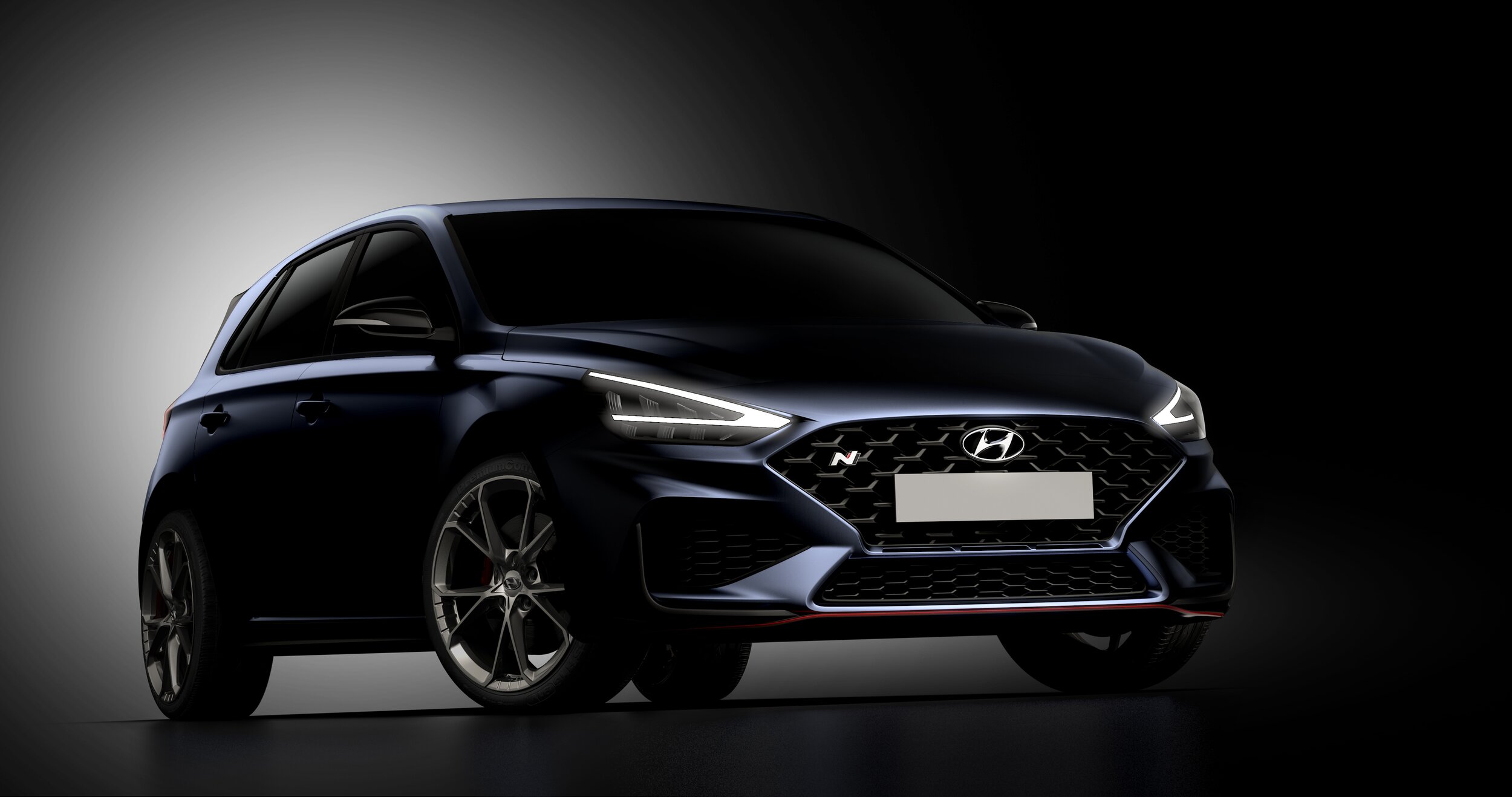
Hyundai’s release of the carefully shadowed images here reinforce word that it will also arrive with some significant change to the styling.

A redesigned front end that gains a wider grille, bigger air intakes, and sharper-looking headlights with V-shaped LED daytime running lights are evident. Tweaks to the rear include a new-look bumper with a wider diffuser flanked by round exhaust tips. We’ve included an image of the current car to give an idea of the full extent of the change.

Also set to happen is that the hatch will adopt the revised and, yes, improved suspension tune that came with this year’s liftback.Also, the The 19-inch alloy wheels are now foreged alloys, for weight-saving, and wrapped in bespoke (hence the HN designation) 235/35 Pirelli P Zero tyres as standard.

What about some extra fizz under the bonnet? No word, sorry. Hyundai didn't mention if it's changing anything else under the bonnet. Power for the current i30 N comes from a 2.0-liter four-cylinder engine turbocharged 202kW and 353Nm, enough to crack 0-100kmh in 6.1 seconds. While nothing is official yet, the dual-clutch could allow the i30 to speed its way into five-second territory.

Assuredly there’s already building excitement within Hyundai NZ headquarters in Auckland.

“We can compete in the whole market and expand the appeal in a fun and exciting segment. We expect that the i30 N DCT will welcome more local performance enthusiasts to the N brand.”

And when that happens? Well, it’s a good impetus for thinking about other N product also coming to the boil, she assures.

 “Hyundai Motor continues to add to the N range, and as and when they become available in right-hand-drive we look at them on a case-by-case basis for the NZ market.”

In respect to that, she adds, the Kona N and i20 N do already seem to look … well, kinda ‘right.’ We could see them within 12 months.

i30 N PE (PDeN) Teaser Images 02.jpg


Ranger line’s ‘king’ hit by special FX?

FX4 Max? Let’s just call it the working man’s Raptor.

FX4Max.jpg

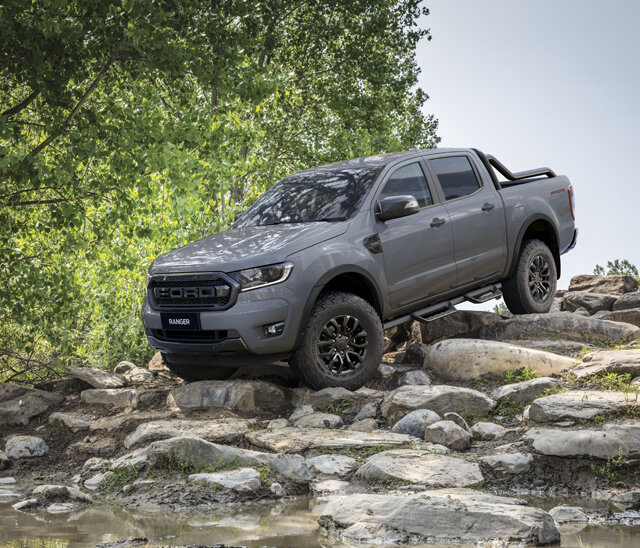
GNARLY but not overly extrovert in look, Fox suspension all-round, 32-inch off-road rubber and plenty of other dirty work upgrades … yet retaining a 3500kg tow rating and one-tonne payload: Is this the Raptor you always really wanted? 

If so, then Ford has finally obliged, with the FX4 Max.

A special edition quite probably coming out now to keep Ranger interest on the boil as the current generation heads into a final year of full production before restarting all over – this time as a co-development with Volkswagen – this edition will be on sale from early 2021, for $69,990.

And that there’s another attention-getter: The price.

As massive as the Ranger fanbase clearly is – given it’s continually siting in the monthly stats as the top-selling one-tonner here and sometimes becomes our best-selling new passenger vehicle overall - the relatively modest percentage uptake that Raptor achieves in those tallies suggests it’s always been a bit too much of a sticker shock, when availed at full retail.

Argument for that $84,990 tag has always been aligned with proposal that Raptor gave so much more.

Which it kinda does… in that it looks super beefy and definitely is tuned to tackle tough off-road conditions. However, Raptor’s shift to a complex and clever independent rear end also significantly reduces the ute 101 of being up to tow and haul big weights.

Not so FX4. The Max part of the name is a good reminder it doesn’t shirk a load. It’ll take near as dammit an honest tonne (well 981kg to be exact) on the back and tow 3500kg (so, 1500kg more than Raptor) just like any other regular Ranger wellside. Hence why it comes with a tow bar. 

The secret to this isn’t steroidal. It’s simply through the F-trooper staying with the standard (so leaf-sprung) suspension. 

FX4Max2.jpg

This regardless that it adopts those whizz-bang Fox shocks that, ahem, Ford also intimated back at Raptor’s release were also a reason why the top trumps truck carried such a premium. Maybe the exchange rates have improved. Or something.

To be fair, put the FX4 and Raptor together and the latter will still express as the more expensive truck insofar as content goes. The first is based on the XLT, so carries over that mid-grader’s blue collar trim.

Yet if you’re buying toughness over tech, then it’s hard to imagine why the FX4 isn’t going to win over plenty more friends.

Ford is certainly pushing the newbie’s merits by straight out saying the cheaper concoction’s upgrades are very much ‘Raptor-inspired’.

Of those extra ingredients, the most eye-catching are the 32-inch BF Goodrich All-Terrain tyres, attached to 17-inch dark grey alloy wheels.

With a width of 8.0 inches, the wheels feature an offset of +42mm, which gives the FX4 Max a 26mm-wider track than the normal Ranger line-up. For reference, the Raptor’s track is 150mm wider than the normal Ranger.

FX4 MAX - DESCENT F34 - 640x548.jpg

A full-size spare tyre with the chunky rubber has also been fitted underneath the rear tub. 

Squeezing the larger tyres under the wheelarches has been made possible with the fitment of Fox 2.0-inch shocks which creates a 20mm suspension lift, which combine with the tyres to provide 31mm-higher ride height over the XLT.

The bespoke suspension features a unique tune for the front coils and rear leafs (the latter of which scores remote reservoir shocks), while new lock-stop profile steering knuckles, front jounce bumpers and a 29mm front stabiliser bar are also included.

A number of exterior styling features have been borrowed from the Raptor, including the ‘FORD’ lettering on the front grille with dark grey surround, also included on the skid plate, exterior mirror caps, door handles, rear tray surrounds and wheelarch mouldings, which have been extended to fit the wider track.

It also muscles up for marketing purpose by taking a matte black tubular sports bar, lighting modules for the tray and body-mounted hooped side steps. There’s also a graphics pack for those who need even more attention.

Two colour options are available – Alabaster White pearlescent and Conquer Grey. Yes, the latter used to be restricted to Raptor. Talking about knocking a hero down to its knees, Ford. 

FX4 MAX - GRILLE - Feat_640x548.jpg

Like the Raptor, the FX4 Max is available exclusively with the 157kW/500Nm 2.0-litre bi-turbo four-cylinder diesel engine, driving all four wheels via a 10-speed automatic transmission.

Even though it isn’t as flash harry inside, the FX4 Max sounds like it’s putting on extra effort to dress for its extrovert crowd. 

The models features new seats with suede inserts and FX4 Max embroidery, Raptor sports pedals, leather-wrapped steering wheel, all-weather floor mats and a set of six blank auxiliary switches, designed to support accessories like light bars and winches – a Ranger-first.

 The new features join existing XLT kit such as an 8.0-inch SYNC3 touchscreen infotainment system with Apple CarPlay and Android Auto, dual-zone climate control, autonomous emergency braking with pedestrian detection, lane keep assist and reversing camera.

FX4 MAX - WHEELS - Feat_640x548.jpg


D-Max distributor in confident mood

If you’re a D-Max fan and wondering what justifies the incoming new line being so much pricier than before? Read on.

2020 ISUZU D-MAX_LS-M 02.jpg

PAYING more will be worth it: That’s a local message that the D-Max’s distributor is confident it can get through to the model’s current followers. 

Technology enhancements and assertion from our national crash test agency that the new Isuzu is the “safety benchmark for the competitive ute segment” has emboldened Isuzu Utes New Zealand’s argument for why the model costs up to $10,000 more than its predecessor, depending on the model.

The cheapest incoming model, a rear-drive LX, starts at $49,990 while the flagship, called the X-Terrain, is entering the market for $75,490.

How well will the model’s traditional fanbase accept that, given they’ve accessed the line for considerably less until this changeover?

The old D-Max at full retail was positioned between $39,890 and $61,990, but an aggressive clearance over the last few months has delivered those editions for substantially reduced stickers.

The make’s sponsorship, events and public relations manager believes it won’t be too hard to convince the customer base why the rig has gone from budget placement to now siting directly against the highest-priced competitors in the class.

Kimberley Waters acknowledges D-Max’s five-star score from the Australasian New Car Assessment Programme, better known as ANCAP, announced two days after the pricing was made public adds more value to the ‘why buy’ argument. The score was achieved under the latest scoring regime, which effected just this year and has raised the bar considerably. 

“The … D-Max offers more in every aspect compared to its predecessor with the inclusion of a more powerful and efficient turbo-diesel engine, upmarket equipment and features, and new safety technology,” Waters says. 

“Gaining a five star safety rating from the hardest ANCAP test to date, making it the safest ute on the market, also reinforces Isuzu’s investment and commitment to providing its customers with the best safety tech. 

“Increasing the value to the customer has been a key driver behind the significant lift in the level of specification across the board,” she says.

So in respect to the price having jumped?

2020 ISUZU D-MAX_X-Terrain 01.JPG

“The enhancements to the all-new D-Max has raised the bar … we believe our customers will see the value in what they are getting for their investment. We’re confident in the product and are already seeing some early positive signs with lots of enquiry by existing and new customers.

“We’re confident the all-new D-Max will be well received. It’s a game changer and a significant player in the ute market.”

The first phase of Isuzu Utes NZ’s marketing campaign has focussed on the vehicle arrival date and the ability to place a deposit now online to secure a unit.

Waters says this online ordering process is a New Zealand-first for the ute market. “We’ve been really pleased with the initial response.”

Once the ute is in dealerships next month “we’ll move onto the second phase of our marketing campaign which we are currently developing.”

In respect to that, we can expect to see the safety score being leveraged, she concurs.


Hello darkness my old friend

Mini pitches black.

MINI Nightfall Edition (1).jpg

LOOK up ‘Mini special editions’ on line and the list seems … well, endless.

And now there’s another.

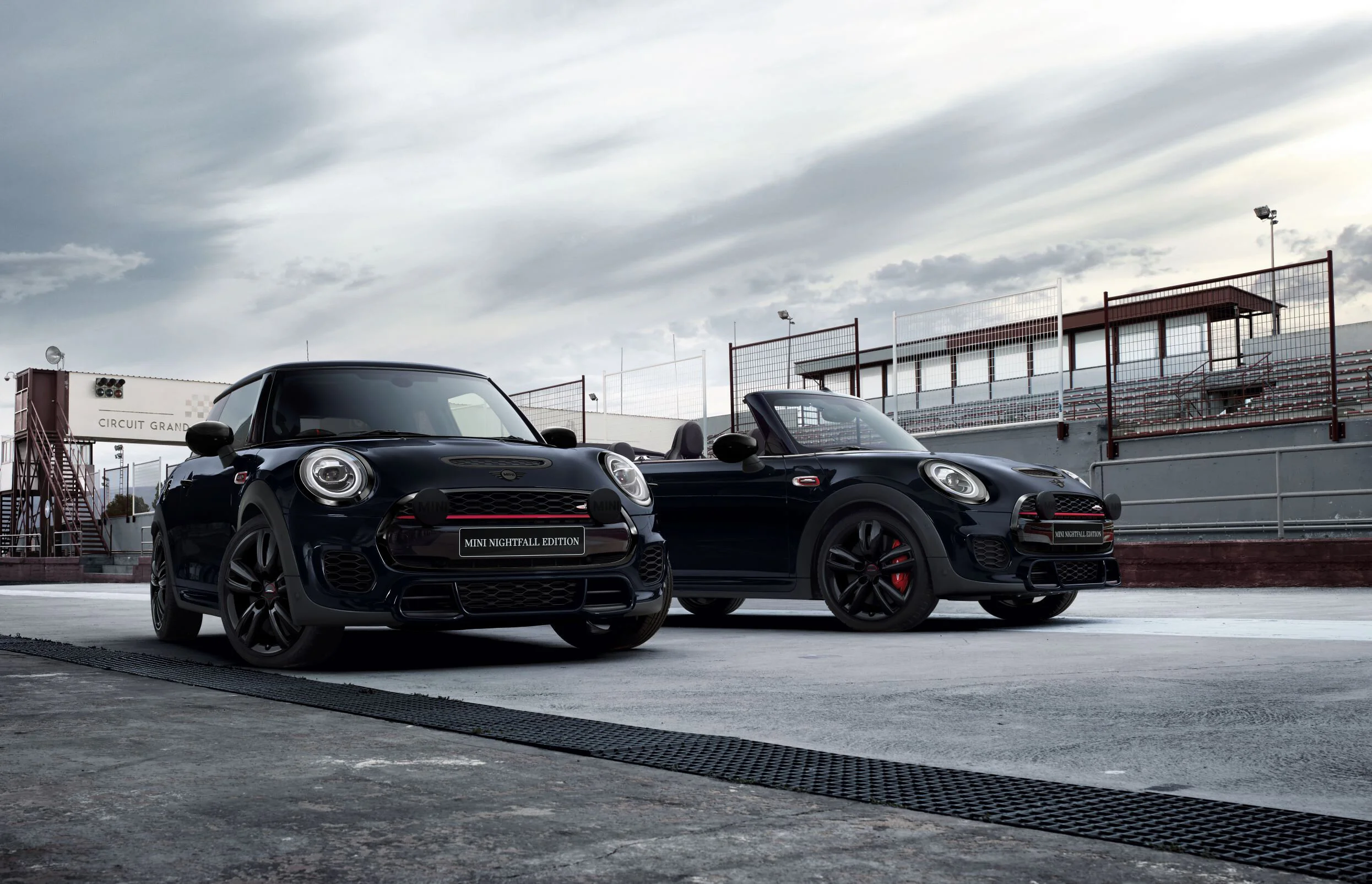
Mini New Zealand has confirmed that some Nightfall Edition models are coming in.

The Auckland-centred distributor has secured 13; all but three in three-door John Cooper Works hatch format, for $70,990 apiece. The others are John Cooper Works convertibles. You’ll pay $75,990 for those.

They’re based on JCW variants, so have the 2.0-litre turbo producing 170kW of power and 320Nm of torque. The transmission choice is … well, no choice. Just the eight-speed automatic. Not having to change gear makes it easier to pose, right?

The JCW element is also about dress up, so a carbon-fibre bonnet scoop, brake package upgrade, bespoke 17-inch wheels, and branded exhaust surrounds. Not the fog-lights attached to the grille as pictured. Australian Design Rules has done for them.

The Nightfall Edition presents in Enigmatic Black Metallic paint and all the bits usually chromed are gloss black, as is the badging.

The interior also has more black elements, plus there’s a JCW steering wheel and handbrake, 12-speaker Harman Kardon audio, wireless phone charging and Apple CarPlay.

MINI Nightfall Edition (3).jpg


D-Max achieves ANCAP A-plus

Strong test rating makes new model the sector’s crash test champion.

large-2.png

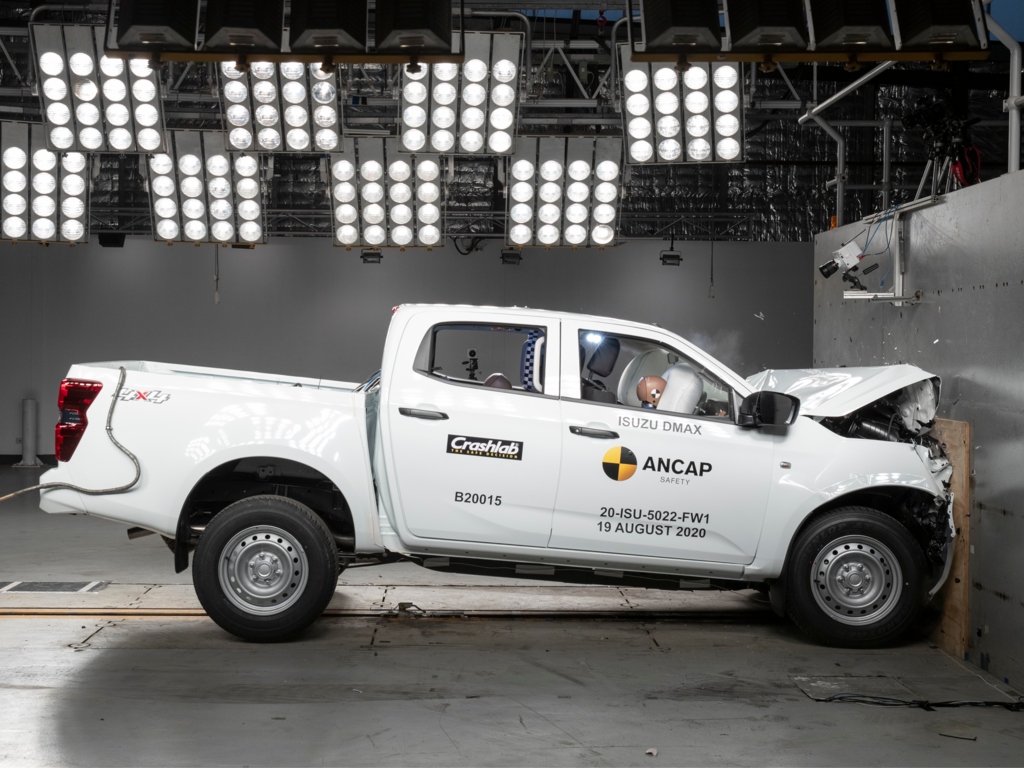
HIGH praise for the new one-tonne ute co-developed by Isuzu and Mazda has come from the independent safety agency most relevant to New Zealand.

The Australasian New Car Assessment Programme, better known as ANCAP, is a New Zealand-funded crash test operation based in Australia.

The organisation has determined the Isuzu D-Max, which is about to release on sale here and will soon after provision as the Mazda BT-50, to be the one-tonne sector’s safety benchmark.

This results from it becoming the first ute to score a full five-star ANCAP rating to  2020 standards, which introduce more stringent measurements of safety than have previously applied.

The vehicle safety authority, whose primary backers on this side of the Tasman are the New Zealand Government and the Automobile Association, is satisfied the score applies to all variants of the new model.

According to ANCAP, the D-Max is the  “safety benchmark for the competitive ute segment.”

large.png

 “Our 2020 requirements again set the bar higher to promote further vehicle safety improvements and address some of the ongoing challenges on our roads,” ANCAP director of communications and advocacy, Rhianne Robson, says in a release.

The score reinforces the merit of the Isuzu Intelligent Driver Assistance System (IDAS), which is fitted across the range.

This uses a Hitachi-supplied twin-camera system mounted high on the windscreen and is critical for forward collision warning, AEB with pedestrian and cyclist detection and turn assist, adaptive cruise control and lane departure warning and automatic steering assist.

It also traffic sign recognition, blind-spot monitoring, rear cross-traffic alert and emergency lane keeping, among further features.

On top of technology systems, Isuzu D-Max is also the first ute in the world to fit a front-row centre airbag as standard for added occupant protection and bringing the total number of airbags to eight.

Says Robson: “With the new challenges set by ANCAP from 2020, it is extremely pleasing to see manufacturers achieve good results against these increasing standards, and take responsibility by prioritising safety to provide their customers with the safest vehicles they can.”

The make’s national distributor has welcomed the score, which Conceivably puts the model above even other other utes that have achieved five star status, as their scores were decided under less stringent circumstances.

The previous D-Max was a less satisfactory performer in ANCAP testing.

However Isuzu Utes New Zealand general manager Sam Waller believes customers can “reassuringly drive away knowing this D-Max is equipped with cutting-edge safety systems to keep them out of trouble at a moment’s notice.

“Given double cab utes are proving a popular family vehicle, receiving one of the highest scores awarded by ANCAP for Child Occupant Protection will no doubt be very comforting for families.”

The score’s release comes in the same week of the distributor releasing the new line’s pricing, which brings a steep increase over the outgoing editions’ positioning, with $8000 to $10000 added to stickers when recommended retails are compared, and the gap widening significantly more when the special runout tags attached to the old model are considered.

Isuzu Utes NZ has yet to respond to an invitation to discuss the pricing, which elevates what was previously the sector’s budget buy into the same premium sector as the popular Toyota Hilux and Ford Ranger, albeit with more safety equipment than those rivals pack.

large-1.png


GR to Rallye to WRC cause

A special edition of Toyota’s upcoming GR Yaris sounds tasty … as does our neighbour’s incentive programme for this new hottie. We might see one, but probably not the other.

20200904-01-04hr.jpg

AN even wilder version of Toyota’s super-heated GR Yaris is heading into production.

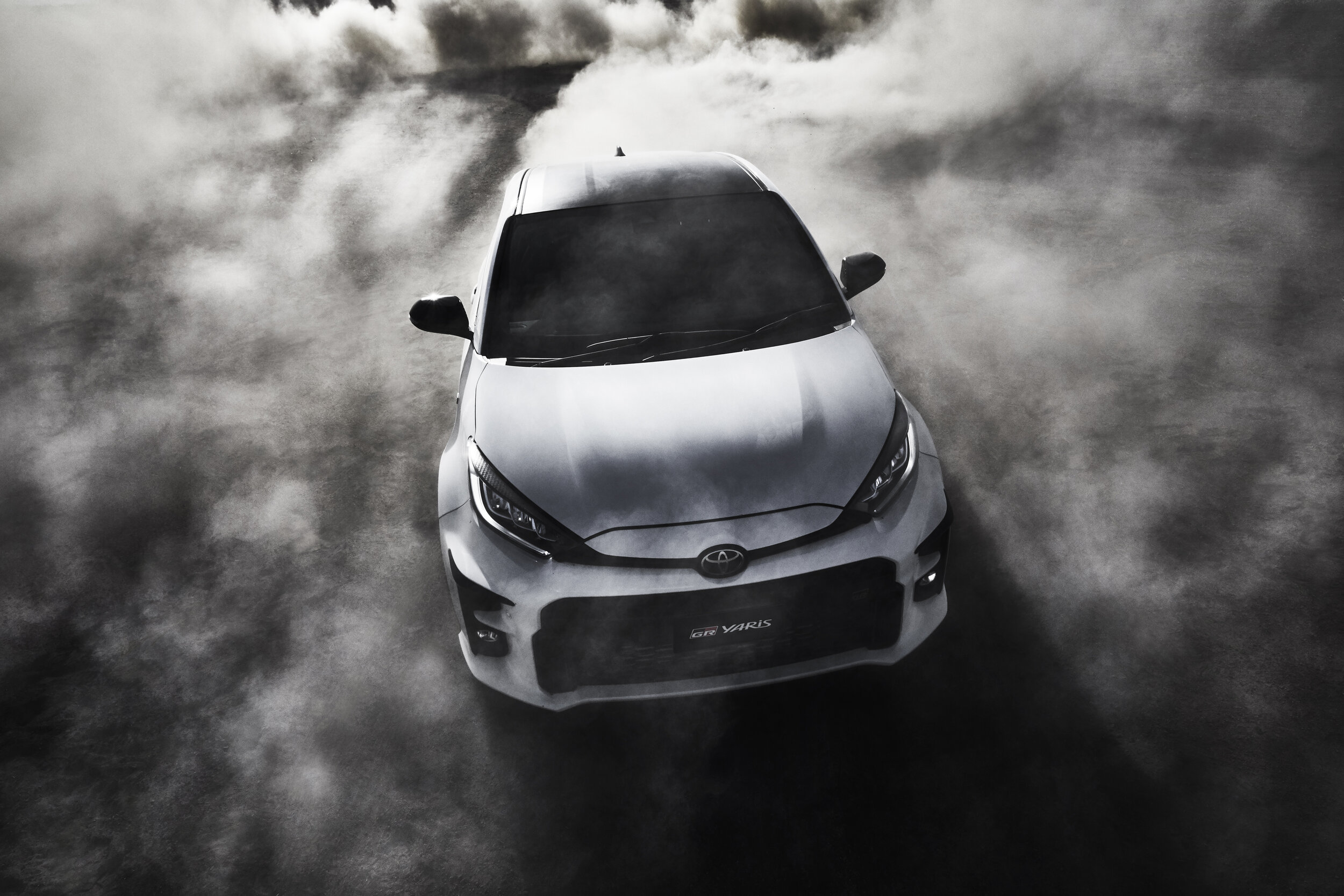
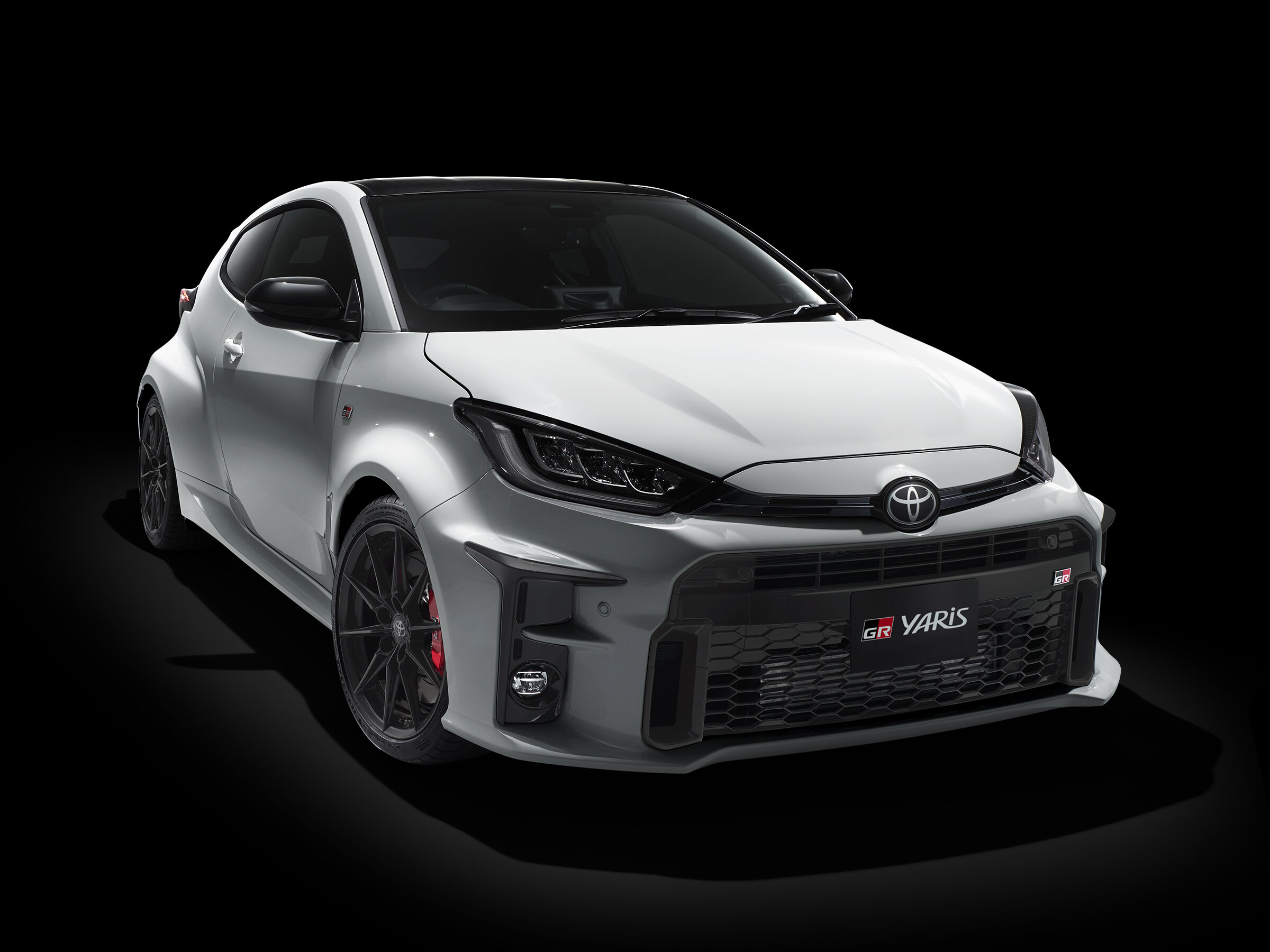
Set to be available in the first half of 2021, the GR Yaris Rallye – the white car seen here - further enforces the maker’s assertion that this three-door racer was not only born from Toyota’s success in the heat of motorsport but will have a credible ongoing homologation role with Toyota’s World Rally Championship programme.

The Rallye’s status with the emergent Gazoo fanbase will also be elevated through it being a limited-edition car.

 The difference between it and the ‘regular’ edition (represented by the black car) arriving in New Zealand soon isn’t defined by outright performance but by enhancements elsewhere.

Specifically, the Rallye will have circuit-tuned suspension, Torsen limited-slip diffs for both the front and rear axles, 18-inch forged alloy wheels from BBS, Michelin Pilot Sport 4S tyres and red brake calipers.
Naturally enough, those ingredients have been developed by Toyota Gazoo Racing in collaboration with Tommi Makinen Racing, the team that took the original Yaris WRC to a world title in 2018, 12 months after the car entered competition.

The Rallye’s additional content is undoubtedly more than window dressing.

Makinen’s outfit is now developing the new road car into their contender for the 2021 season and beyond – undoubtedly those extras will some way or another prove useful for the motorsport process.

The Rallye – which also restricts to just three paint colours; black, white and red – maintains the 1.6-litre three-cylinder turbo petrol engine in the same tune as the standard GR and also keeps the six-speed manual gearbox.

2020+GR+Yaris03hr.jpg

With 200kW and 370Nm the engine is the most powerful triple in production and gives both editions of the car an ability to sprint to 100kmh in just 5.2 seconds. The Rallye’s edge will undoubtedly come in the corners and under braking.

Talk of the Rallye has emerged with Toyota in Australia announcing a pricing plan for the GR Yaris that perhaps might leave New Zealand enthusiasts wondering how they might find a way to secure the model there and ship it back across the Tasman.

Toyota New Zealand’s announced sticker of $54,990 has been undercut by our neighbour – and massively so during a programme designed to elevate the Gazoo image across the Tasman.

Toyota Australia’s car, which seems to be kitted identically to that coming here, will only be $1200 less expensive than here at full recommended retail – but to ensure it gets off to a smart start, the first 1000 sold will only cost $NZ43,400 drive away. A huge $11,590 undercut.

The Rallye is not included in that programme and how much of a premium it will carry over the GR has yet to be announced.

2020+GR+Yaris04hr.jpg

Toyota Australia’s vice president of sales and marketing, Sean Hanley, says the launch price was to incentivise support for the Gazoo Racing brand, which is probably newer to our neighbour than it is here.

The NZ awareness programme began even before the first GR car, the Supra, landed last year as it was used in a sponsorship association with the international single seater Toyota Racing Series since the end of 2018.

As for a discount start here? It doesn’t sound likely, from the tenor of comment from TNZ chief executive Neeraj Lala.

His thought about what’s going on across the Tasman?

Says Lala: “Toyota New Zealand has not offered a Recommended Retail Price in New Zealand for the past 2.5 years to avoid this situation.

“This means our Toyota Driveway Price (TDP) provides our customers with an up-front and transparent transaction price which includes on-road costs and subsidised servicing.”   

BTW, he declined to comment on the potential of the Rallye coming here.

The GR Yaris is the first homologation special since the Celica GT-Four, the car that was used to find WRC rally success when Toyota was last involved in international rallying, becoming the first Japanese maker to win the WRC manufacturer’s title, in 1993. 

Toyota’s plan is for the GR Yaris to be an even hotter ticket for road use than the Celica and the hope is it will establish the same street status as such stage-to-road greats as Ford’s RS Escort Cosworth and Subaru’s Impreza WRX.


Hey, it’s the new Z!

Nissan has unveiled a concept offering an early look at what will be the first new version of its most famous two-seater sports car in more than a decade.

Nissan_Z_Proto_exterior_Front_2.jpg

 SO how many can you see?

References to past Z-cars, that is.

Let’s just agree there are plenty. Which is the irony in Nissan’s claim for the Z-Proto. 

This concept pointing to “a new generation of the legendary Z car” seems unable to break away from the type’s past. Which probably pleases the fanbase greatly yet might also disappoint those expecting something a little more creative.

As much as this is a design study – sorry, a "development study vehicle" in Nissan-speak -  and despite its maker being reluctant to share very many technical details, Nissan has identified what we see here is a "near-production protoype," and confirmed it will outfit with a twin-turbo V6 engine – the first since the 300ZX - and manual transmission.

As is patently obviously, the styling is clearly reminiscent of many old Zs.

Basically, every old Z. And that’s a few, given the sporting sub-brand has a 50-year history. 

The front-end with teardrop headlights and long bowed bonnet is from the 240 and 260 Z era.

The side profile? Just like that of the original. Look at the rear end and tell me you don’t see the 300ZX? The bootlid appears to feature a Fairlady Z badge – a name used for the original in Japan and the US, but often seen here as well, thanks to the used import trade. The pod gauges on top of the dashboard (one for turbo boost pressure) and door handles? Clear links to the 370Z. 

Easy peasy so far. But perhaps the reason why it has teardrop-shaped LED headlights will sort the regular fan types from the hardcore. Answer? They reference a particular rarity, the Japan-only 240ZG of the 1970s.

The yellow paint used is also an ode to popular paint choice colours for both the original S30 and subsequent Z32 generations, according to Nissan.

It’s not all backward-looking. The rectangular front grille, 19in alloy wheels and carbonfibre side skirts aim to modernise the look, the brand expressed during today’s international, on line reveal.

Nonetheless, the make’s head of design, Alfonso Albaisa, has conceded that the process to determine this design very much involved “making countless studies and sketches as we researched each generation and what made them a success.”

 “Ultimately, we decided the Z Proto should travel between the decades, including the future.”

The cabin is finished in black Alcantara-like material, yellow stitching highlights and has a fully digital 12.3-inch display dash for the driver.

There’s still a vintage aesthetic in that, as with every Z car, the design is centred around the driver with dials and gauges facing from the centre towards the most important seating position in the car.

Nissan_Z_Proto_dynamic_exterior_9.jpg

The car measure 4382mm long, 1850mm wide and 1310mm high, and rides on 19-inch black alloys wrapped in special 255/40 front and 285/35 rear rubber.

The engine seems likely to be the unit found in the Infiniti Q50 Red Sport, where it creates 300kW of power and 475Nm of torque. Enough to give rivals like the Toyota Supra a real run, right? Particularly since the sports car should be significantly lighter than Infiniti. 

When is it coming to our market? No date has been provided for the launch of the production car, though chances of it achieving showroom status within a year would seem as safe a bet as the proposal it’ll be called  ‘400Z’. 

 Nissan New Zealand has yet to offer any comment.

Nissan_Z_Proto_Interior_overview03.jpg


Pandemic, sales rush depletes new vehicle stocks

New car sales have been running hot … but at what ultimate cost? Brands are running short of stock and the industry says buyer demand is racing ahead of ability to supply.

New vehicle stocks held in New Zealand are diminishing fast … and replenishment has slowed.

New vehicle stocks held in New Zealand are diminishing fast … and replenishment has slowed.

NEW vehicle distributors are facing a new Covid-19 crisis – not enough vehicles to sell for at least the remainder of this year.

An unexpected rush in sales over the past few months has accelerated the issue of diminishing stock availability, a ripple effect from Covid-driven global assembly line shutdowns that occurred months ago.

It’s a double-whammy that is leaving showrooms running low on stock with no easy respite in sight.

The organisation that speaks for the new vehicle industry has declined to cite any brands or cite any specific models and is cautious when discussing the severity of the situation.

The Motor Industry Association does, however, acknowledge there are now insufficient vehicle numbers to meet present buyer demand.

Says chief executive David Crawford: “I wouldn’t describe the situation as catastrophic … but it is lumpy.”

Talk at retail and distributor level is certainly awkward; popular models are becoming harder to secure and orders taken now might not be fulfilled until next year, while impending new products are being delayed and allocations being reduced.

One big provincial yard for a top make last week suggested the cars it held in its showroom could not be easily replaced. A metropolitan outlet for a popular premium brand also recently said ready availability of two core models has also been in jeopardy. The distributor for that make did not respond to questions about this.

New vehicle distributors normally carry up to 100 days’ stock for vehicles and large parts, but this has reduced by around 50 percent.

At the end of last month, the national inventory of new passenger vehicles was just over 11,000 units – the lowest in at least eight years and half the tally held in April – and it’s been worse for commercials, that stockpile have quartered to under 5000 vehicles.

Most distributors, at best, are carrying no more than about a month’s stock, according to the MIA, which has been collating information from factory-appointed new vehicle importers.

At retail level, this means an increasing count of outlets are keeping up their business by taking customer orders on understanding those buyers may have to wait until early next year before their purchases arrive.

Crawford suggests a combination of market forces and temporary vehicle supply constraints will continue for most of 2020.

While shipments keep arriving, there are now likely to be long wait times for some makes and models and customers who have pre-ordered will have priority over walk-ins.

“Supply of vehicles remains affected by reduced factory production in various geographic places due to Covid-19 restrictions.

“Distributors are also facing challenges predicting how much stock to order and hold.

“It has to be admitted the industry got caught by a strong June and July, once the Covid restrictions eased,” he says.

“The industry didn’t entirely anticipate the level of demand for new vehicles.

David Crawford, Motor Industry Association chief executive: “The industry didn’t entirely anticipate the level of demand for new vehicles.”

David Crawford, Motor Industry Association chief executive: “The industry didn’t entirely anticipate the level of demand for new vehicles.”

“We didn’t factor in that people who were unable to travel overseas on holiday, would decide to purchase a new vehicle instead – just like others would have decided to renovate a kitchen.”

Though already braced for a slowdown in sales when the year began, the new car market was nonetheless in good shape, having had a series of highly-profitable bumper years.

Coronavirus rendered all forecasts worthless. Assembly plants all around the world were forced to shut down – some for several weeks, some for up to two months - because of the pandemic.

Though most are back in business, many have yet to achieve full production. Even when assembly lines are back to full steam, delays from components suppliers are common.

The supply chain also hasn’t recovered. This is particularly the case with product coming out of Europe, which even under normal circumstances have to be ordered up to six months in advance.

However, it seems probable all makes and sourcing points have felt impact to some extent.

Also hurting New Zealand is the modest size of our market – there have already been instances were other countries more important to makers have been given higher priority.

All this means that as much as recent months of emergent retail frenzy was welcomed, it has also been a sting because it was unexpected.

While the MIA warned as early as in March it would be inevitable that the shock wave from Covid’s impact on global car making and the parts industry was inevitable, it didn’t predict that consumers would go into such a buying frenzy these last few months.

Data shared by the MIA for this story reveals how NZ’s relatively healthy vehicle stockpile before Covid has pretty much gone.

At the beginning of this year the national new passenger vehicle inventory stood at 16,049 vehicles.

new vehicle production has largely resumed .. but plants are rarely operating at full-scale pace and makers are sometimes steering product to bigger markets than New Zealand.

new vehicle production has largely resumed .. but plants are rarely operating at full-scale pace and makers are sometimes steering product to bigger markets than New Zealand.

This rose to 20,327 vehicles in April, but the countrywide Level Four lockdown, then meant cars that landed but could not be retailed – hence, despite 5625 vehicles being cleared by Customs in April, only 707 vehicles were registered in that month.

Since then, the figures have been sliding as supply of vehicles built and in transit before the factory closures started to dwindle.

May’s inventory was 18,888, this reduced to 15,088 in June, to 12,593 in July and to 11,057 last month.

August’s count was the lowest in at least eight years but stock numbers are expected to reduce even further for at least the next two months.

Meanwhile, the import clearances are continuing at history low levels as they slowly recover to some normality – 2858 in May, 4619 in June, 4327 in July and 5405 in August – but they are not meeting the growing consumer demand. That’s at least 50 percent higher.

The commercial vehicle inventory that sat at around 12,000 vehicles in April and May had reduced to 4817 vehicles by the end of last month.

Since then, consumer demand has increased to the extent there were 3533 registrations in August – way ahead of the 962 vehicles that had cleared Customs. This means that for the remainder of the year there is virtually no fat in the commercial vehicle inventory.

Parts supply is also being severely affected by the pandemic. Prior to Covid-19, parts were transported to New Zealand by both air and sea, but air freight has now become too expensive due to reduced numbers of flights, and this has forced more use of sea freight which has much longer time frames, Crawford says.

The flow-on from the drop in new car availability is also being felt in the used car sector, with a commensurate drying up on late model pre-owned stock from fewer trade-ins occurring.

# Additional reporting by Richard Bosselman

New Tucson gets local provider excited

Striking new design, heaps of new tech, a hybrid to match the RAV4 and a seven-seater option.

All-new Hyundai Tucson 01.jpg

 POTENTIAL that Hyundai’s best-selling model here might emulate its big brother and format in a seven-seat option is not being discounted by its seller.

 In offering comment about the 2021 Tucson unveiled for global scrutiny (via a livestreamed online presentation) by Hyundai head office in Seoul today, the make’s national distribution has indicated it is giving consideration to taking the car in a new long-wheelbase format – that avails a third seating row – in addition to continuing with a five-chair layout that continues into a fourth generation.

The potential for the longer version – which measures 4630mm in length (so up 150mm on the short wheelbase), 1865mm in width (plus 15mm) and 1665mm in height (up 5mm), riding on a 2755mm (plus 85mm) wheelbase – is not being discussed by Hyundai New Zealand, though it has reminded that Tucson already strikes a strong chord with Kiwis, the model having achieved 23,000 sales since the nameplate arrived in 2004. 

Brand boss Andy Sinclair says he expects “the new model to attract even more customers with its striking new design and safety, comfort and convenience technology.”

Any decision will surely have to be fast-tracked if both are intended to be available for local usage from local launch, as Hyundai New Zealand says it intends to have the new model line here in the first quarter of 2021.

In addition to relaying its thought about the seven-seater, the Auckland-domiciled distributor has also said it will also look at a new N Line trim level the maker has also revealed.

As for powertrains?  It’s also casting an eye over the mild hybrid and plug-in hybrid options that are also coming into production, these based around a 1.6-litre turbo-petrol engine and producing a combined 171kW/350Nm.

New generations of the familiar 1.6-litre turbo petrol, 2.0-litre naturally-aspirated petrol and 2.0-litre diesel turbo, now selling under a Smartstream designation, are also cited. The first might now receive a pump up from 130kW to 145kW, as per the Kona. Outputs for the latter are 122kW/205Nm (petrol) and 136kW/400Nm (diesel). 

What of the new 2.5-litre four-cylinder engine delivering 141kW and 246Nm? Sorry, no comment on that one.

All-new Hyundai Tucson 02.jpg

The model will continue to avail in both front and all-wheel drive. The latter this time adds mud, sand and snow modes to the comfort, sport and eco-driving modes. The derivatives heading here seem set to have ride and handling tuning sorted by Hyundai Australia’s engineering team.

It’s heavily loaded on the safety front. Aids available include Highway Driving Assist (HDA), Forward Collision-Avoidance Assist (FCA) with pedestrian detection, Lane Keeping Assist (LKA), Lane Following Assist (LFA), Blind-Spot View Monitor, Blind-Spot Collision Warning (BCW), Blind-Spot Collision-Avoidance Assist (BCA) with Rear Cross-Traffic Collision-Avoidance Assist (RCCA), Advanced Smart Cruise Control (SCC) with Stop and Go, Safe Exit Warning (SEW), Surround View Monitor, Reverse Parking Collision-Avoidance Assist (RPCA), Remote Smart Parking Assist (RSPA), High Beam Assist (HBA) and Driver Attention Warning (DAW). 

Tucson’s new exterior styling is bound to raise plenty of comment. Hyundai says it expresses an evolving Sensuous Sportiness design identity and embodies what its designers call ‘parametric dynamics’ with “kinetic jewel surface details that emphasises Tucson’s distinctly different identity in a crowded segment.” Translation? There are a lot of sharp edges.

It fronts up boldly, too: The grille is filled with LED lights which only reveal themselves when illuminated. The rear will also make an impressive; it has a connected LED light bar sitting across the beltline and joining two clawed LED taillights.

All-new Hyundai Tucson 04.jpg

The interior also seems set to be a lot more plush and futuristic. Most ‘hard’ controls, such as dials and buttons, are gone. So too the gearstick.

The top treatment features a centre console stack flowing as one continuous design piece with flush buttons and a wide 10.25-inch digital touch display screen. It has wireless Apple CarPlay and Android Auto and an optional Bose sound system. The cabin ambience is set with a 64-colour mood lighting system with 10 levels of brightness.

Digital technology includes a key that uses a smartphone app to operate commands such as locking and unlocking the car, using Near Field Communication to detect authorised users from up to 27 metres away. In some markets the smart key can be tuned to control smart appliances at home (as you do) and  driven remotely without anyone in the driver’s seat – albeit very slowly and basically for parking purposes.


D-Max joins utedom's business class

The new D-Max is weeks from launch, but pricing is out now. We knew those extras would have to add to the bottom line, but … gosh.

2020 ISUZU D-MAX_LX 01.jpg

TECHNOLOGY enhancements surely set to elevate Isuzu’s D-Max’s status in ute-dom have also delivered with a hefty price rise.

Announcement today of the model range and prices for an eight-strong line-up reaching the showroom next month suggests the new derivatives will cost between $8000 to $10,000 more than their equivalents in the previous range when full retails are considered, and much more if comparison is made against the old models’ runout pricing.

The cheapest incoming model, a rear-drive LX, starts at $49,990 while the flagship, called the X-Terrain, is entering the market for $75,490.

20MY ISUZU D-MAX_LS (front).jpg

The increases were always in the wind; they’ve hit in every market where the rig sells and reflect how much change has come to the model, through its makers – not just Isuzu this time, but also Mazda – seeming to determine it’s time to create a more direct rival for the sector’s big guns, Ford Ranger and Toyota Hilux.

Yet the end cost of the effort necessitated to lift its game might nonetheless still come as a big shock to D-Max’s traditional customer base, which has been used to be spending much less.

It might also titillate Hilux and Ranger faithful, who will note that some D-Max models seem to be more expensive than comparable models in the Toyota and Ford lines.

The old D-Max at full retail was positioned between $39,890 and $61,990, but an aggressive clearance over the last few months has delivered those editions for substantially reduced stickers.

How the brand intends to argue the defence remains unknown. Isuzu Utes NZ general manager Sam Waller and public relations manager Kimberley Waters could not be reached for comment and the press information sent out today steered clear of directly addressing this issue.

The new line’s equipment provision was detailed by MotoringNZ on August 16 (https://www.motoringnz.com/news/2020/8/16/d-heading-for-a-plus?rq=d-max).

Our story then suggested that this model and the Mazda BT-50 that derives from it are set to deliver enough advanced safety and technology to reset market expectations.

That has been further reinforced by today’s release of information that confirms that every single model in the incoming range – including the three LX tradie versions that arrive in singe, space and double cab configurations, in manual and auto and two and four-wheel-drive formats –will deliver with an advanced safety package, including class-first advances of perimeter sensing technology and a centre airbag.

Other improvements to the entry derivatives include a seven inch touchscreen with wireless Apple CarPlay and Android Auto, automatic lights and wipers and adaptive cruise control for automatic models.

The next level is the LS-M, which avails in double cab 4WD with automatic or manual transmissions. It adds to the LX provision by implementing LED head lights with LED daytime running lights, a plusher trim. It rides on 17 inch alloys.

The LS line above this goes to a nine inch touchscreen with satellite navigation, Apple CarPlay and Android Auto, dual-zone climate air-conditioning, rear parking sensors. This edition runs on 18 inch alloys.

The top rung of the ladder is occupied by X-Terrain, which purely formats in an automatic double cab four-wheel-drive configuration.

In addition to the active safety technology of the other variants, it includes a powered driver seat, leather trim, a smart proximity key with remote engine start, front and rear parking sensors, wheel arch extensions and gun-metal exterior highlights (wheels, grille, mirror caps, door handles and roof rails) as well as a matte black roller tonneau cover and under-rail tray liner.

This D-Max is a co-production with Mazda, whose own BT-50 version is also coming to NZ this year, though release details have yet to be divulged.


S-Class Kiwi kit-out getting lots of thought


We ask Mercedes Benz to give insight into how much of a smarty pants its S-Class will be in local spec.

20C0358_071.jpg

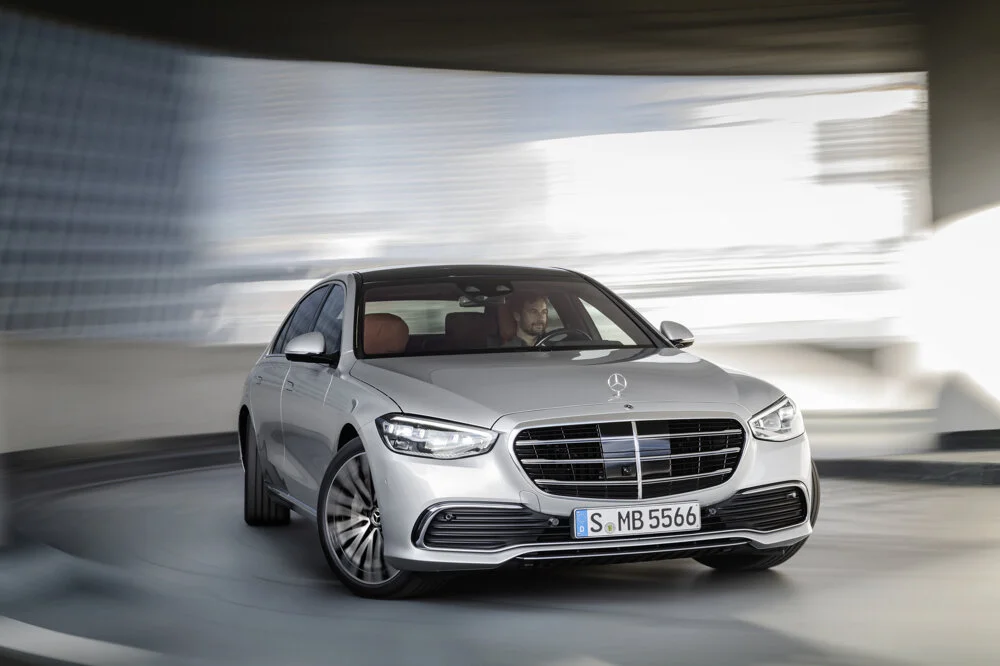
HOW clever will Mercedes’ smartest car turn out to be in New Zealand conditions?

The new S-Class, the most advanced car the world’s oldest vehicle maker has ever placed into series production, is not set to land for another eight months. Yet assuredly it’s already a question the brand’s distributor is already giving thought to.

The news could be good – while loath to lock into any particular commitments, Mercedes Benz New Zealand is expressing confidence about delivering a smart product in every sense.

That potentially means a huge wow factor. This technology trendsetter is engineered to achieve big feats and has been loaded with many more gadgets and a lot of extra computing power than has gone into any previous model. or any other Mercedes production car.

Still, no promises yet, for good reason. In as much as initial international media attention and brand spruiking of the past few weeks has left impression the sky is the limit here, the reality is that for all the drum-banging, there’s no certainty every whizzo feature will be an immediate or even certain a starter in our world.

First, and most importantly, Mercedes itself has to decide which functions are relevant in which markets. Distributors do not have open slather; even factory shops cannot simply tick every box. The maker has to analyse and decide. That’s a historic practice that potentially becomes all the more relevant now, with a car in which some features are so advanced that there’s no regulation in some places to guide their usage.

The good news for New Zealand is that there’s little red tape to impinge here. We have remarkably few regulations that might conceivably restrict advanced tech – in theory, if a fully autonomous car were to turn up tomorrow (and don’t get excited -  it won’t), there are no rules to keep it from operating.

However, there’s also a catch. To the Germans, New Zealand and Australia are considered one and the same. For expediency the product choices are common, whatever we take also has to suit our neighbour and since they are the bigger and more important market, their decisions become ours to live with. 

Unfortunately, their determinations are not just down to taste but also having to abide by Australian Design Rules. Drawn up to protect a domestic car-marking industry that patently no longer exists, ADR nonetheless still impinges heavily over there and so, by proxy, impacts over here too.

ADR is a hefty rulebook containing thousands of fish hooks, some of which can catch out a maker for what would outwardly seem the most bizarre reasons. Aussie has signed for the S-Class and it would seem highly unlikely the world’s smartest car won’t sail through ADR without hindrance.

20C0338_006.jpg

And, yes, that ‘smart drive’ portrayal is apt: On computing power alone, the S-Class makes others look dumb. The MBUX (Mercedes-Benz User Interface) alone is 50 percent more powerful than the system found in present product because it will operate up to five screens in this car. 

The main one is a 12.8-inch portrait screen on the centre console, with haptic touch feedback and changeable OLED technology. It’s where you’ll access the majority of controls and functions, so 27 buttons have been removed as a result, and adds over-the-air update functionality to the S-Class for the first time.

Today’s story highlights some of the head-line features. MB NZ boss Lance Bennett was happy to share his thoughts about each one and the chances of local utilisation.

We started off by asking about the new Drive Pilot system. The big story is that it can drive itself more often thanks to adoption of  ‘level 3’ semi-autonomous driving - meaning ‘hands-off’ autonomous driving on motorways and in traffic where legally permitted. 

We already known Benz plans a staged introduction of the new system, which uses lidar among other sensors, and every suggestion is that export markets won’t get to use it until sometime after it is activated in Germany. And that’s not set to occur until at least mid-2021.

20C0432_008.jpg

But are we in with a chance? Sorry nerds, Bennett isn’t going to commit, telling us only that: “ This feature will only be available in Germany once launched. At this stage, we cannot confirm which markets will be next.”

What about engine choices? Obviously there are still purely fossil-fuelled choices and we know the first derivative here will be one of those, being the six-cylinder petrol S450.

But we’re hearing about a petrol-electric plug-in hybrid drivetrain. The new S580e promises an electric range of just over 100kms on the WLTP test cycle – so, more than double the range of its predecessor – sounds good.

Good news. Bennett concurs.  “Yes we will be looking to bring the PHEV S-Class variant to New Zealand, we cannot confirm timing at this stage.”

As for other engine choices?  “We cannot confirm which models will launch following the initial confirmed S 450 variant, but will be considering all AMG S-Class variants for NZ.”

(BTW, a full blown electric S-Class isn’t coming. But an equivalent will be, being the EQ-S, the top dog of the standalone EQ electric vehicle family).

There are plenty of other smarts announced for the flagship sedan that, in its seventh generation, takes inspirations from upmarket home interior design and luxury yachts.

The instrument panel is a step up from the already class-leading display now common to all Benz cars, in that it delivers a 3-D effect that manifests itself when the driver looks at the dashboard. Say what? No, seriously: 3-D and without the need for special glasses. And yes, it can be deactivated if that seems a bit too weird.

So, can we get it? Says Bennett: “(It) will be available to our market and we will confirm if standard closer to our local launch.”

20C0338_007.jpg
20C0431_001.jpg

In respect to visual projection, there’s more. A giant alternate version of the standard head-up display can now project augmented reality content onto the road ahead of you. Animated arrows that show you exactly where to turn and real-time information about the distance from cars ahead, overlaid directly on the real-world objects—among other nifty animations. 

The extravagant version of the now digital headlights also gets in on that idea. It has powerful LEDs that are capable of projecting warning symbols and lane markings onto the road ahead. And these will be high res, highly detailed motifs. The lights can display 2.6 million pixals. According to Benz research and development boss Markus Schafer: “You could play a movie in your garage with resolution.”

Again, stupefying. And for us? “(It)  will be available to our market and we will confirm if standard closer to our local launch.” So that’s not an outright no, then.

20C0432_004.jpg

The same response goes for the following:

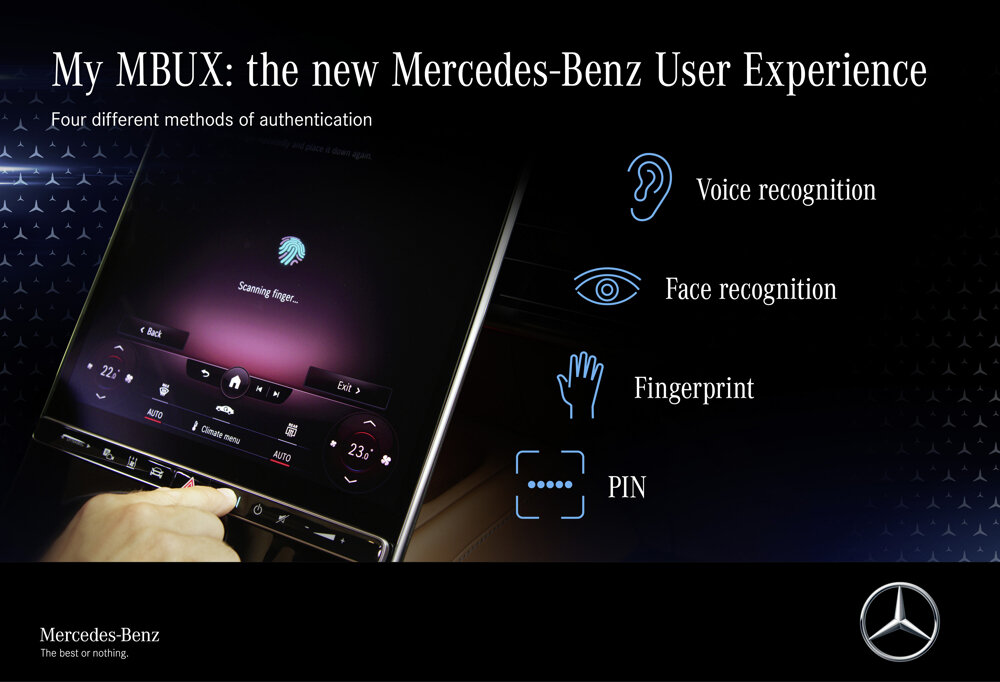
Interior Assist, which can recognise physical movements and enable selected vehicle functions - such as the passenger seat light illuminating if you reach over to pick something up from the seat. The dash display, climate and stereo preferences are also customised. To access your profile a driver "logs in" using facial recognition, voice recognition, a fingerprint sensor or a PIN.

20C0408_010.jpg

The ‘energising’ system that puffs out nice aromas from an in-built perfumer has new scents - “Bamboo Mood” and “Cotton Mood” have been highlighted. The active comfort features are upgraded. It’s also now capable of adjusting the lighting, seating and air conditioning and is compatible with some smartwatches and phones. The system will measure your stress levels and adjust settings accordingly. Also, if the S-Class senses you're drowsy, it'll run an environment programme to wake you up, using lighting and those scents.

The ‘4-D’ Burmester audio system that uses 30 speakers and eight resonators – aka bass vibrators - to produce the sound experience. Mercedes puts two of the latter in the back of each seat, and they reproduce the “sound resonance” for even more “tangible” listening. The intensity of the resonators can be individually adjusted for each seat, in case your passengers aren’t feeling up to experiencing sound in the fourth dimension. 

20C0408_002.jpg

The new parking camera. Instead of the usual bird's-eye view, the S-Class’s shows a chase-cam view, as if the car were being followed by its own personal drone. Swipe the screen and you can fly your view around the car, with quick, smooth animation.

Also, in respect to parking, it gets remote parking functionality, meaning the car can park itself or be summoned from a short distance via a smartphone.

Getting into parking spots will be even easier thanks to a new four-wheel steering system. At AMG level, the system is tuned for performance, with a 4.5-degree maximum steering angle on the rear axle, whereas less performance-oriented editions - called Executive Line cars - have a 10-degree steering system that reduces the turning circle to that of Benz’s smallest family car, the A-Class.

For us? “Will be available to our …” Etc, etc. You know the rest.

Same goes for E-Active Body Control suspension, which is surely going to be popular. It operates just like the system does on the GLE and GLS sports utilities, individually regulating the damping and spring forces at each wheel.

It includes adaptive dampers that work in tandem with processors and sensors located around the car. The system can monitor the road surface 1000 times a second and continually adapt the Airmatic air suspension.

This is primarily, but not totally, to ensure a plush ride. Mercedes says the level of adjustability certainly allows the car to be regally comfortable on poor surfaces, but stiff enough to hustle you so choose; as on the SUVs it can even lean the car into corners to help minimise body roll.

There’s a safety benefit, too: As an ingredient of the Pre-Safe safety suite, it will automatically raise the suspension by up to 80mm if the car is about to get T-boned, the idea being to put the side sill (which is stronger than the doors) in the path of the incoming car. There’s also a new central airbag that deploys to reduce the risk of a clash of heads in an accident. 

20C0377_014.jpg

Finally, with the market shifting so rapidly to SUVs, it almost seems like an anachronism that the S-Class, rather than the GLS-Class is still Mercedes' flagship. So, what’s the volume expectation for the sedan?

Says Bennett: “For now, we see them as two very different customers, historically, more than half of the current customers see no alternative to the S-Class.

“This means, an S-Class customer does not even consider buying a different model which is very different when compared to the rest of our range.”

As for when the GLS might begin to adopt the same features as the kingpin car?

 Sorry, nothing to report on that one.

20C0358_044.jpg


More electrics and fast, pressure group says

Temptation to buy into used fossil fuelled stock rather than electric vehicles will threaten environmental ambitions, an EV support agency says.

mark gilbert, of Drive Electric.

mark gilbert, of Drive Electric.

 AN electric car advocacy organisation that has had the Government’s ear has be driven to offer thought on policies relevant to this subject announced by two major political parties.

Mark Gilbert, who chairs Drive Electric, a not-for-profit established purely to promote the uptake of EVs in New Zealand, was speaking today in direct response to policy statements released by Labour and National this week.

Drive Electric has indicated it can see positives from each party’s policies. However, it also seems to think both are aiming too low.

National said today it would set a target of getting 80,000 EVs on the road by 2023. That target represents a fourfold increase on the number of EVs currently in the national fleet.

Gilbert however, says Drive Electric believes national intent to achieve legislated climate ambitions demands the national EV carpark to exceed more than 250,000 vehicles by 2025.

According, he says, what the country really needs “is an ambitious bipartisan roadmap to decarbonise the light fleet in line with the Zero Carbon Act, detailed in a New Zealand Motor Industry Plan.

“In New Zealand the light fleet constitutes more than 90 percent of the travel on New Zealand roads, and remains a growing component of our nation’s emissions. We can’t leave a transition to chance.”

The former managing director of BMW New Zealand says this country is an eager taker of automotive technology. But it could easily head in the ‘wrong’ direction.

“The future of light vehicles worldwide is carbon-free. Unless we have a consistent policy roadmap that deliberately moves New Zealand towards EVs, we will lock in the importation of second-hand fossil fuel powered cars from markets like Japan and the UK as they decarbonise. 

IMG_4268.jpeg

“We congratulate the National party for their policy announcement today, including specifying a target of 80,000 EVs on the roads by 2023. Hitting these numbers would mean progress. The proposal on FBT (fringe benefit tax), in particular, is a real step forward.

“NZTA data for 2019 shows that almost 60 percent of new passenger cars were bought by companies. Incentivising the corporate fleet to transition, through initiatives like this and access to bus lanes and high occupancy lanes, is a vital way to introduce EVs into the country.”

Drive Electric would like the next Government to go a step further and work with the industry to detail how New Zealand will then get to 250,000 EVs by 2025, and then move to decarbonise the entire fleet.

“We welcome Labour’s recommitment to the Clean Car Standard. However, this is just one element of a roadmap towards a light vehicle fleet that does not emit carbon.”

Gilbert says a standard needs to be supported by additional measures to enable businesses and consumers to move into emissions-free vehicles.

“Perversely, without actively encouraging consumers to switch to EVs through tax or other incentives, a clean car standard makes it more likely New Zealanders will buy cheap, second hand petrol cars exported from Japan or the UK, instead of EVs.”

This, he suggests, will lock in the number of petrol cars on New Zealand roads for longer, making it more difficult to meet our climate change ambitions.

“For New Zealanders, it’s fair that New Zealanders understand the future must be electric, so they can take this into consideration when they buy their next car.

“The abundance of renewable energy in New Zealand means the owner of an EV in New Zealand can charge their vehicle at home for as low as 30 cents a litre.”

Drive Electric recently announced five key policy platforms it suggests are required to decarbonise the fleet. That document can be found at: https://driveelectric.org.nz/wp-content/uploads/2020/08/DE-policy-discussion.pdf


Defender’s fours hit for six?

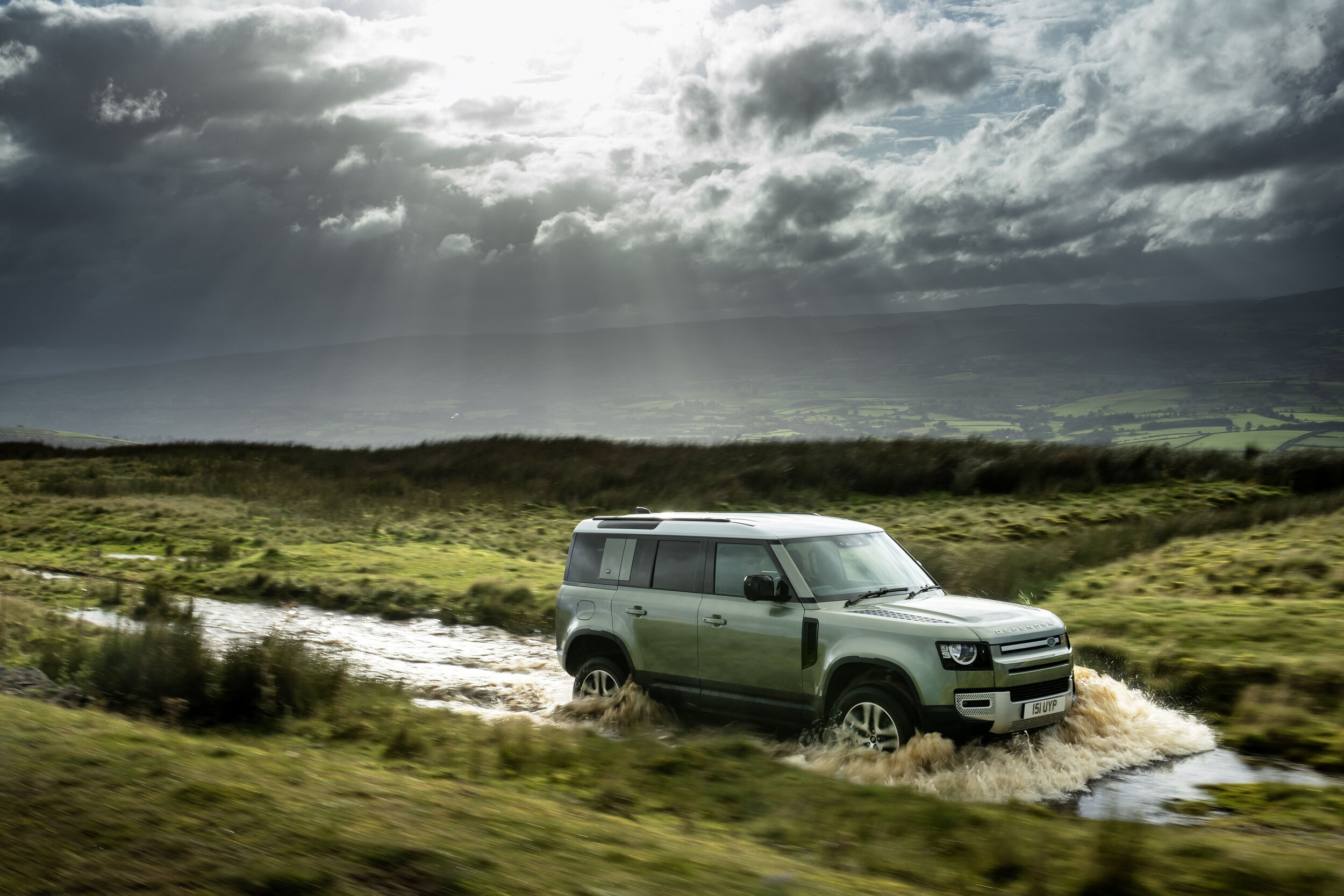
They knew the plug-in hybrid petrol drivetrain was coming - the shock news for Land Rover’s distributor in respect to the Defender is hearing the four-cylinder diesels that launched here less than two months are set to be retired soon.

LR_DEF_PHEV_21MY_090920_02_ND.jpg

 MORE information about the plug-in hybrid powertrain for the Land Rover Defender has come out, along with shock news – for the local distributor - that the four-cylinder diesels driving the model at present seem for the chop. 

In expressing thought about both, Jaguar Land Rover New Zealand’s top man says while the P400e (above), which blends 44km of pure-electric range with punchy 300kW petrol-fired performance, looks tasty, so much will come to price.

As for the apparent determination to axe the diesels that were front and centre at the national media event for Defender, staged just seven weeks ago? 

Well, that’s come as a shock to general manager Steve Kenchington and he’s been eager to get more information from JLR in the United Kingdom, which appeared to indicate this change in an overnight global release.

If that decision is valid, it’s not clear how much longer this market will be served by the D200 and D240 units that contain in all the launch derivatives.

What is known is that a six-cylinder diesel engine will be introduced in March of 2021. The national franchise already knew that this powerplant would arrive in top line D300 format. It’s the news, broken last night, of less powerful D200 and D250 variants of this unit that has come out of left field. Supposedly, these usurp the D200 four and D240.

LR_DEF_PHEV_21MY_090920_27_ND.jpg

Kenchington says there was no indication, when the car hit the market in July, that the four-cylinder option was set to disappear. As of today, he’s still not sure it will. Certainly, the reports have come as a complete surprise.

“It’s a real bombshell. I’m scratching my head on it to be honest. We actually haven’t had any formal notification that the four-cylinders are off the table for us.”

He thinks it all comes back to JLR’s focus on economies of scale and achieving less complexity. 

Defender has been selling brilliantly since release – demand is actually ahead of expectation and the likelihood is at least 350 units being ordered by next March, the end of the local arm’s financial year and just nine months away, when 300 were forecast for the entire calendar year.

He doesn’t think knowledge now that an under-bonnet change is going to diminish enthusiasm for the current engines. 

“If anything, it could be quite the contrary.”

Meantime, the idea of taking a PHEV alongside the current sole petrol choice, a 298kW three-litre six-cylinder (P400) that has 48-volt mild hybrid electrification.

LR_DEF_PHEV_21MY_090920_17_ND.jpg

As expected, the drivetrain is from the Range Rover Sport PHEV – so a 2.0-litre turbocharged petrol engine mated to an electric motor and a lithium-ion battery. The combined output of the two systems is 296kW and 650Nm, enough to help the Defender crack the 0-100kmh sprint in 5.6 seconds. It can also tow a trailer up to 3000kg in weight.

It can cover up to 44km on pure-electric power alone and, as electric drive is sent to all four wheels, there’s opportunity for zero-emission off-road driving.

The optimal fuel burn average - under the WLTP testing regime - is just 3.3L/100km, which is the same level as claimed for Toyota’s most efficient car, the Yaris Hybrid, while emitting just 74g/km of CO2. Topping up the battery using a 50kW fast charger, meanwhile, takes just 30 minutes for an 80 percent charge, or two hours using a 7.4kW wallbox home charger.

The diesel drive unwraps in an interesting manner. That the entry six-cylinder will continue with D200 badging might confuse, but has a logic, as it creates identical power as is generated by the current 2.0-litre, 147kW – even though torque lifts, from 430Nm to 500Nm. 

Retiring the D240 designation for D250 is logical, too, as it has 184kW, a 7kW lift, and a than the D240 delivers. Torque climbs to 570Nm.

LR_DEF_PHEV_21MY_090920_09_ND.jpg

The top state of tune from the six-cylinder in its flagship D300 tune, meantime, is 221kW and 650Nm. 

The big plus for the six-cylinder is enhanced efficiency, but more in terms of emissions - thanks to 48-volt mild hybrid tech, the D200 and D250 emit 250 g/km.

The story is different in respect to economy. Whereas the four-cylinders’ achieve optimals of 7.6 litres per 100km and 7.7L/100km, the D200 and D250 both average 8.7L/100km. The sixes are sharper in the sprint, though, with ability to hit 100kmh in 10.2 seconds (D200), 8.3s (D250), and 6.7s for the D300.

The new diesels also introduce Intelligent All-Wheel Drive to the Land Rover family: this allows up to 100 percent of engine torque to be diverted to either the front or rear axle if required.

Those engines avail in the current 110 and the incoming shorter 90 body styles, whereas the P400e is available only in the 110 wheelbase, with five or six-seat layouts. The PHEVs also come standard with air suspension and 20-inch alloy wheels.

In some markets, Land Rover has also introduced a new X-Dynamic trim that features a satin black finish for the front and rear bash plates, grille bars, recovery loops and alloy wheels. They also take illuminated tread plates and seats finished in hard-wearing Robustek fabric.

Land Rover has also released more detail on its commercial Defenders, named Hard Top, which maintain only the front seats and convert the remaining cabin space as a fully flat load floor and have a load area partition.

LR_DEF_PHEV_21MY_090920_30_ND.jpg


Goodbye Legacy – a past great’s run is ending


A Subaru staple since 1989 departs from the showroom in a matter of months and there’s no talk of a direct replacement.

Current generation Subaru Legacy sedan clearcut.png


ONCE the brand’s breadwinner, long an icon but latterly able to pick up just a few crumbs … the car that once drove Subaru’s fortunes in the showroom and in sport has been axed.

Subaru New Zealand has announced it is losing the Legacy, it’s longest-lived nameplate, with last orders effectively being taken from now on, though supply will not exhaust until early next year.

The medium-sized model, which has represented as a sedan since day one but also sold as a wagon until several years ago when pulled in favour of the Levorg, has put in more than 30 years service.

At its height, it was Subaru NZ’s top seller and even managed to be the country’s most popular sedan in respect to sales volume – though that claim relied on recognition of its high popularity as a used import.

However, those glory days were long ago – as the swing toward sports utilities and crossovers intensified, the Legacy has slowly but steadily fallen back into a supporting role, and by the end was barely earning its keep.

Ironically, the car within the Subaru family that has most eroded Legacy’s stature is one that started out as as derivative – that, of course, is the Outback, still easily recognised as being effectively a Legacy wagon on stilts as it shares a common platform, the same engines and styling direction 

While Subaru here has acknowledged that last year was lean – with just 64 registrations coming Legacy’s way  – it has failed to mention in a release confirming the car’s demise that this year is shaping to way worse.

Subaru Legacy wagon 1st generation.jpg

According to registrations data accrued by Government, just two examples have found homes since January 1.

The Levorg wagon, spun off the Impreza family but with WRX genes as well, that was supposed to fill the Legacy wagon’s shoe has done little better; today Subaru basically sells entirely on its SUV strength: Forester is strongest, then Outback then XV.

It is possible Subaru NZ did not make this call about the timing of the car’s demise directly; it’s probable, in fact, that our neighbour having made the same call last week effectively killed the car in our market.

However, it was going to disappear by 2022 anyway, as Subaru Japan intended to end production of the current generation car next year. It has not indicated if a replacement model is likely.

Australia has had better sales with its model, called the Liberty (because Legacy is the name of its returned serves’ association) but still decided it was too marginal to continue with.

In supplied comment, Subaru NZ boss Wallis Dumper has indicated a model line Kiwis have known since 1989 is set for a fond farewell.

He reminded that the car landed with a big job to undertake - replacing the old but much-loved Leone.

New Zealanders were quick to embrace the Legacy however, and its popularity soared, especially as a used import in the 1990s, Dumper said.

That created an intriguing situation: “Whilst the Toyota Corolla was top of the new car sales overall, Legacy was New Zealand’s number one selling used vehicle thanks to the massive imports ratio.”

For the Auckland-based distributor, that used import swing was not a threat but an opportunity.

“We knew people loved the brand and the car,” Dumper said.

“Legacy developed a bulletproof reputation, so it was a natural progression to guide customers from a used Legacy to a new Subaru, as time went on.”

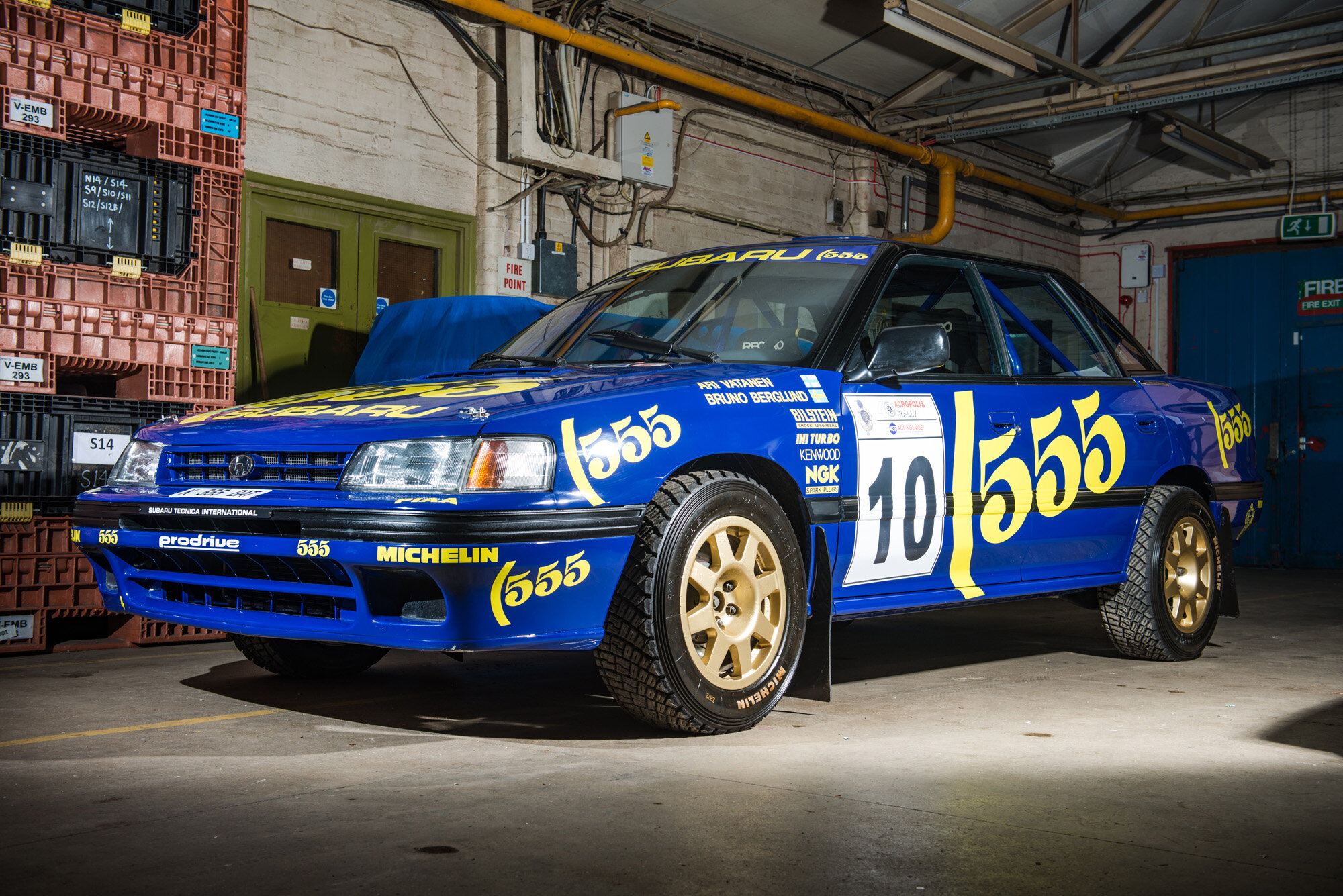
Legacy’s fame ignited with Scottish driving legend Colin McRae at the wheel when he scored the Subaru team’s first-ever World Rally Championship round win here at the Rally of New Zealand in 1993.

1993SubaruLegacyRSGroupAEx-ProdriveRallyCar2000px.jpg

“Whilst most Kiwis probably associate Subaru’s historic WRX model as being synonymous with winning rally championships, the reality is that Colin’s success in the Legacy then inspired Subaru to enter the WRX and become world champions three-times over in 1995, 2001, and 2003,” Mr Dumper says.

New Zealanders also did their bit to elevate the model’s ststus through rallying success.


“Legacy also starred on a national level in the New Zealand Rally Championship, with legends like the late Possum Bourne and multiple championship winner Joe McAndrew scoring their victories in this Subaru model,” Mr Dumper adds.

Legacy wasn’t just a success on gravel, and it has racked up a long list of awards, though it evaded the top prize – the national car of the year award, as determined by the New Zealand Motoring Writers’ Guild annually since 1989. Subaru finally got its name on that board with the latest Forester.

However, the various magazine prized it did achieve were enough to distinguished Legacy from the medium market pack, Sumper says.

Nonetheless, even though the car stood out because of its all-wheel-drive, it could not stave off the SUV trend. That 64 sold new here last year, compared to Outback’s sales of 1322 in the same period, said so much.

Over the generations, around 4000 New Zealand-new Legacys have been sold to Kiwi drivers.

Mr Dumper says: “No one can take away the credibility Legacy built for itself. Stable and sure-footed on the worst back country roads that New Zealand could throw at it and safe and reassuring on the wettest, slipperiest city intersection - Legacy has created its own legacy.”

“Subaru’s ‘Confidence in Motion’ catch phrase arose primarily from everyday Legacy drivers’ feedback to Japan’s engineers when they visited New Zealand in the early 2000s to learn why the brand was so readily accepted in Aotearoa.”

Dumper is hoping customers who still prefer a sedan will consider the current Impreza or even the WRX – though that car is but a short-term option, as it is also for the chop next year.

Meantime, a new Outback is also coming in 2021.


Sandero next ‘Romanian Renault’ for NZ?

The cut-price specialist that has just put Renault in the budget zone has just announced another baby.

The Sandero is a smaller sister ship to the Duster that has just introduced here as a Renault. What chance of also seeing it here?

The Sandero is a smaller sister ship to the Duster that has just introduced here as a Renault. What chance of also seeing it here?

MIGHT another model just announced by Renault’s budget brand could conceivably be in line for New Zealand introduction, also with a change of identity?

If chosen for adoption in our market, the new Dacia Sandero would – like a larger sister ship just trying out our terrain now – surely come here with French identification.

This potential arises with today’s announcement in Europe of the new generation Sandero, similarly styled but based on a smaller underpinning than the Duster that has just gone on sale here and historically an even cheaper car.

The Duster and Sandero are the biggest volume models built by Dacia, which began life as a Romania’s sole car brand and still makes all its cars in that country, though it has long been subsumed into the Renault empire, in the same manner that Skoda was pulled into Volkswagen.

Since essentially taking French citizenship, Dacia has specialised as a make that pitches Renault design and engineering to a more budget-minded audience than the owner can easily aim itself at.

That advantage has been used to unique degree by Renault New Zealand, which is among a handful of distributors allowed to do something that cannot happen in Europe – namely, to sell the Dacia cars as Renaults. 

Dacia also provisions the logan, a compact sedan (the silver car here). It’d likely be a hard sell in our crossover-fixated market.

Dacia also provisions the logan, a compact sedan (the silver car here). It’d likely be a hard sell in our crossover-fixated market.

Might that risk ruffling feathers with purists – or Dacia fans (assuming these existed in NZ, as the make has never been seen here under its own identity)? It doesn’t seem so.

A special launch price announced two weeks ago of $27,990 has immediately sparked interest in the 1.6-litre front-drive car, Renault New Zealand general manager Sam Waller says.

The launch strategy puts the model directly in competition with another like-sized and similarly-configured Korean model that also immediately found favour from releasing here under the same kind of special price launch strategy: Kia’s Seltos. 

 Duster compares well with the Kia, which still has a waiting list. The four-cylinder petrol engine makes 84kW of power and 156Nm of torque, delivers economy of 6.6 litres per 100km. The car has a modest towing capacity, just 1400kg, but loads up on good spec, with features including a 360-degree camera, blind-spot monitoring, and a 7-inch touchscreen with Apple CarPlay and Android Auto.

Duster’s availability and positioning in the sub-$30k zone has emboldened the distributor to appoint six additional dealers and push to raise the profile of a brand that, for years, has been barely noticed here and has survived mainly through support for its specialist RS performance products, plus a small fanbase for the Koleos sports utllity.

The Duster seems destined to establish a good following in the sub-$30k sector.

The Duster seems destined to establish a good following in the sub-$30k sector.

Conceivably, the Sandero would also strike a sweet spot. Dacia has so far only released images of the new-all model, these arriving overnight. It has said the car will go on sale early next year, starting in Europe, and promises to announced technical details in the immediate future.

Dacia says it will promising improved levels of equipment, while retaining trademark standards of simplicity and reliability.

This is the third generation of Sandero and the styling represents as an evolution of the outgoing model’s, with the same simple lines and high roofline. Roof rails, black plastic body cladding and a slightly raised ride-height are part of the persona, but restricted to a particular variant, the Stepway.

Observers say the proportions appear more stretched, with raises conjecture that it has gone onto the CMF-B underpinnings as the latest Clio and Nissan Juke.

Engines are likely to be a bunch of entry units design for Clio; petrol options could well include a 53kW naturally aspirated 1.0-litre three-cylinder petrol up to a 95kW turbocharged 1.3-litre four-cylinder petrol unit.

International speculation is that an upgraded platform would also mean the model is in line for a decent technology boost, though Clio's infotainment system and digital instrument cluster might be too expensive for the Sandero's notoriously low price-point.

Dacia has also started to dish out information about a compact sedan, the Logan. The silver car seen in one of today’s images. That car seems unlikely to find a home in NZ, as it would enter a sector that is fast eroding to negligible status.


Electric 3008, new 5008 coming

Peugeot’s cementing its status in the SUV sector.

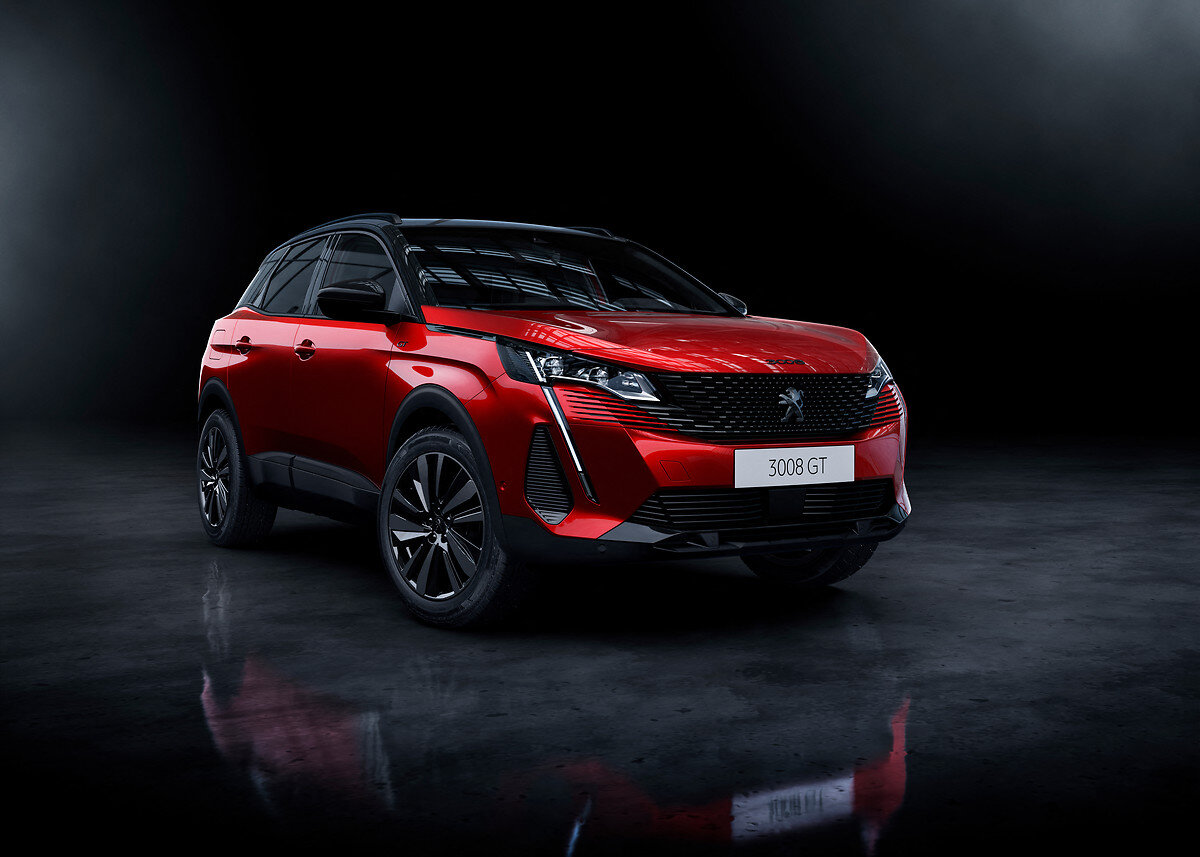
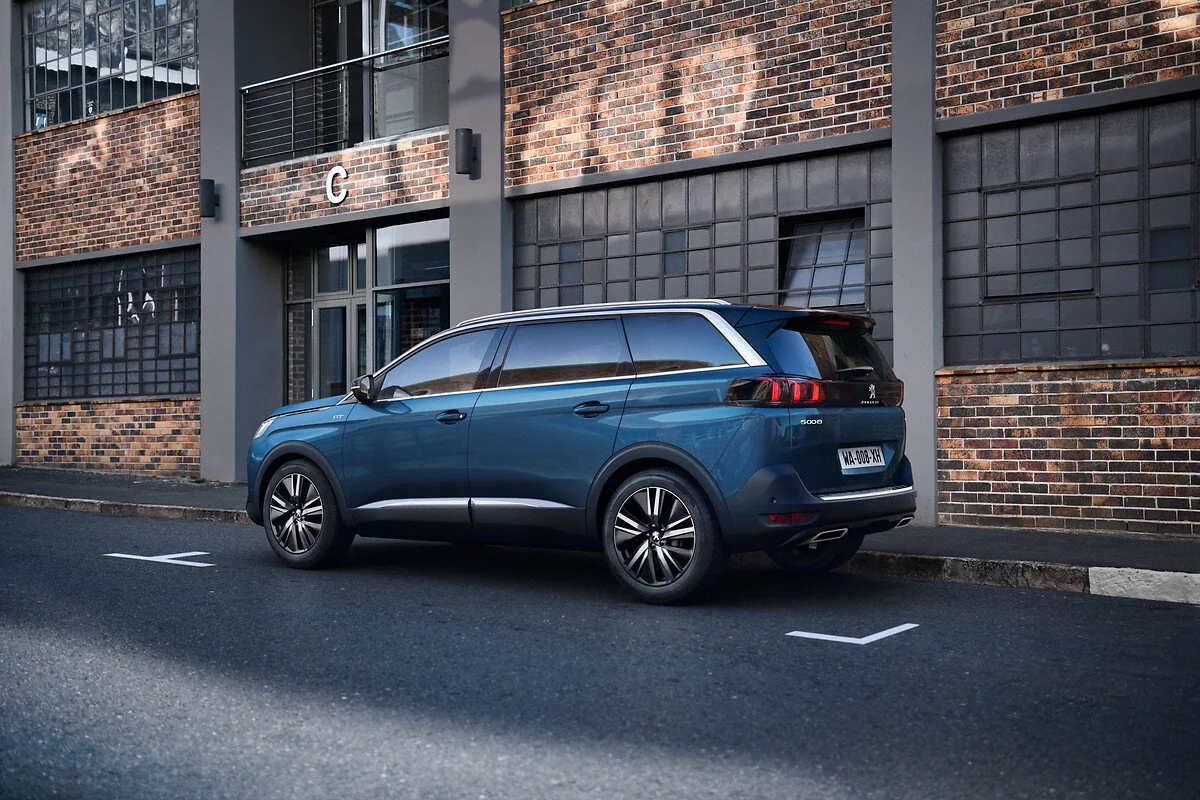
the 5008 is releasing as a larger option to the 3008, which has been Peugeot’s most popular model here and is also arriving early next year in updated form, including with a PHEV drivetrain.

the 5008 is releasing as a larger option to the 3008, which has been Peugeot’s most popular model here and is also arriving early next year in updated form, including with a PHEV drivetrain.

GOING bigger in the strongest part of the new car market is the gameplan in 2021 for Peugeot in this market – in addition to adding an electric edge to its most popular model it’s also entering the large sports utility sector.

Announcement of the seven-seater 5008 medium-large soft roader joining the local lineup, conceivably as a Skoda Kodiaq rival, follows confirmation that an update to the mid-sized and similarly styled 3008 five-seat crossover will span into another new area – electric driving.

The plug-in hybrid version of the 3008 – whose full name is a mouthful, being ‘AWD Hybrid4 300 e-Eat8’ - will stand as the first battery-compelled Peugeot sold here.

New 3008 SUV.jpg

The electric-assisted 3008 will likely introduce around the same time – so, early 2021 – as the 5008, whose two orthodox turbocharged four-cylinder engine options, a 1.6-litre petrol and a 2.0-litre diesel, might conceivably feature in other 3008 models.

No exact specifications or pricing has been announced for the cars. That won’t happen until closer to launch, says the brand rights’ holder, Auckland-based Auto Distributors New Zealand. 

Chief executive Chris Brown has expressed high confidence for both model lines, which despite being in different sectors as result of size difference are nonetheless closely related, being off a common platform and sharing the same drivetrains.

He views the 5008 as being “the perfect solution for families who desire unparalleled levels of comfort, style and refinement” while the 3008 should offer enough revised technology to maintain “as the most popular model in our line-up.”

The PHEV model augments the current edition’s 1.6 petrol with an electric motor and battery to produce a total output of 224kW and 520Nm. The electric drive configures to the rear wheels, so as to create a four-wheel-drive effect for a car that formats in front-drive in other editions. 

The driving range on electric-only power is almost 60km, according to testing on the independent WLTP cycle.

3008 HYBRID4 Charge.jpg

The 3008 also presents with a 2.0-litre diesel and a 1.6-litre petrol whose respective outputs of 133kW and 400Nm and 121kW/240Nm are as developed in current editions and also appear to be cited for the 5008 models, also with an eight-speed automatic. 

The refreshed 3008 is identified by a big update to the grille and LED lights and also delivers interior upgrades. 

The cabin takes a 12.3-inch digital drive display and also a larger 10-inch infotainment display system to refresh the i-Cockpit cabin theme. Expect new trim options and material finishes, too. 

The 5008 will intrigue as being very much a big brother in size and specification … and styling. From the back of the back of the driver’s door forwards it and the 3008 are effectively the same car. 

The model designation has never been represented previously, though it has been around for some years and used to apply to a large people mover.

Peugeot retired that car when MPVs fell out of fashion but re-issued the badge on identifying – as many others have – how large SUVs were being adopted in the same role.

New PEUGEOT 5008 SUV_Back.jpg


New Tucson, updated Kona revealed

Two models that deliver decent sales for Hyundai here will arrive next year with big changes.

All-newTucson(NX4)-01.jpg

MEDIA effort to unofficially unveil the next generation Tucso, releasing in 2021, appears to have compelled Hyundai to release some images that give an idea of what we’re in for.

Two photographs that give away some aspect of the exterior – and reveal the lighting array it delivers – and an illustration that gives an idea of how the cabin will look, though without fine detailing, were sent out today.

They seem to be in response to media speculation that has elevated to some well-known sites running their own renderings, that have relied using recent spy photos of prototypes – and taking the stylised Vision T concept that the brand put on show last year – as pointers to how the production model will eventually appear in its street-ready stage.

The official images enforce what Hyundai has made clear: That the next Tucson is a fresh start from the 2015-born current car that will debut an edgy new style, based on the brand’s latest design theme, which it calls ‘Parametric Dynamics.’ This direction also ties to another new catchphrase starting to weave into marketing materials - 'Sensuous Sportiness'.

All-newTucson(NX4)-02.jpg

Overseas’ commentators have reacted strongly to the idea of a Tucson with the new signatures of sharp creases and folds slicing through the body, plus large boxy guards and arches. The grille design, dubbed ‘parametric-jewel pattern', and those LED-lit front lamps are a big statement; so too the forked taillamp design and the (also LED-lit) light band across the tailgate.

Lots more has yet to be announced, of course. The drivetrain selection is still under wraps, but is expected to debut a plug-in hybrid working, as per the concept’s, as one of the options. An international media event - all online, of course, thanks to Covid - could well unwrap more information.

However, Hyundai NZ has already said it expects to see the car in early 2021. 

“Tucson is Hyundai New Zealand’s top selling model, so needless to say we’re excited about the arrival of the all-new model,” says general manager Andy Sinclair.

All-newTucson(NX4)-03.jpg

This is the second tranche of Hyundai SUV news this week, following the release of detail about the redesign coming for the smaller Kona, with the most obvious change being a fresh nose, though behind this will be found revised engines. The updated models also take upgraded technology. They are set to arrive in the first quarter of 2021.

News of a sporty N line trim leve, presented here by the orange car, will also likely enthuse, though nothing yet about the full-out N performance edition that has been spied undergoing testing, notably at Germany’s Nurburgring where Hyundai’s performance division has a base.

Hyundai NZ says full details of its model line up and specification will not be announced until closer to launch, however Sinclair is in optimistic mood.

All-new Kona N Line (5).jpg

“Kona has proved to be a popular model … since we launched it in 2017. We’re excited by the enhancements … and are confident its popularity will continue to grow along with the addition of the N Line.“ 

So, what’s coming? In standard trim - represented by the blue car - the facelifted Kona gets a new wider front grille with a larger lower air intake, slimmer headlights and LED daytime running lights, plus a restyled front bumper with contrasting silver bodywork trim.

The rear features minor changes limited to a redesigned bumper and tweaked lights. New 17- and 18-inch alloy wheel designs also feature.

The N Line trim adds a sportier looking front bumper with wider front fins and a deeper front spoiler with black contrasting trim. It also gets three small air intakes on the nose, colour-matched bodywork cladding, 18-inch alloy wheels, a rear spoiler, and a restyled rear bumper with a diffuser and twin-exhaust pipes.

The interior has undergone minor changes, with the addition of ambient interior lighting, a restyled centre console that houses the electronic handbrake switch, and aluminium trim on the air vents and speaker grilles. Heated rear seats are on the international options list, and rear passengers get a USB charging port.

New Kona (5).jpg

The N Line model gets aluminum pedals and red contrasting trim on the seats, gearstick, steering wheel and air vents.

A new 10.25-inch digital instrument cluster arrives, probably just for the high-end editions. The standard infotainment touchscreen is now eight-inches in size, and features wireless Apple CarPlay and Android Auto. A largest touchscreen features live parking assistance, and is capable of supporting multiple Bluetooth connections via a split-screen function.

Updated safety technology includes the addition of Leading Vehicle Departure Alert, which alerts the driver if the vehicle in front begins to move without the driver responding. A new Lane Following Assist function has also been added, which automatically keeps the car in the centre of the lane while driving. The car’s smart cruise control has been updated to full stop and go functionality, and the blind spot assistance now features collision avoidance.

No details have been shared about the drivetrains.

KONA 03.jpg


August return ok, but market sliding away

No prizes for guessing the top sellers in August.

RAV4 limited hybrid.jpg

TOYOTA’S RAV4 cleaned out the opposition in new passenger vehicle sales during August, selling at more than double the rate of anything else.

And the Ford Ranger ute almost achieved the same in the commercial market, taking a massive 27 per cent market share.

But overall, new vehicle registrations in August were once again adversely affected by the Covid-19 restrictions, especially the alert level 3 in Auckland, reports the Motor Industry Association.

August registrations came in at 15.8 percent below August last year, with 10,610 new vehicles registered, which was down 1997 units on the same month in 2019.

“Year to date the market is down 23.6 percent in a year that remains heavily affected by the Covid-19 pandemic,” said MIA chief executive David Crawford.

The shining lights among the depressed level of sales were the Ranger and RAV4.

Ranger achieved 964 registrations, way ahead of the Toyota Hilux whose 524 registrations were no doubt affected by the fact the current model was in runout prior to launch of a new model this month.

The massive success of Ranger allowed Ford to retain the market lead in the commercial sector with a 30 per cent share, followed by Toyota on 19 per cent and Mitsubishi on 11 per cent.

The RAV4, with its hybrid models at the forefront, achieved 638 registrations to dominate the passenger and SUV segment – in second place was the Kia Sportage with 313 sales, followed by its smaller brother the Seltos with 243 registrations.

No surprises then that Toyota was market leader for passenger and SUV registrations with a 19 per cent share, followed by Kia on 10 per cent and Suzuki on 8 per cent.

Overall the top segments for August were once again dominated by SUVs. Top spot went to medium SUVs with a 22 per cent share, followed by 4x4 utes with 18 per cent, and then compact SUVs also with 18 per cent.

Top 15 most popular vehicles in August

Ford Ranger                  964 sales
Toyota RAV4                638
Toyota Hilux                 524
Mitsubishi Triton          376
Kia Sportage                 313
Kia Seltos                     243
Suzuki Swift                 220
Toyota C-HR                 200
Mazda BT-50                199
Mazda CX-5                  197
Toyota Corolla              194
Holden Colorado          193
Hyundai Tucson            188
Toyota Yaris                 183
Mitsubishi Outlander   159  

Into the hot zone

The GR Yaris has been priced to compete with some serious performance hatches.

01.+Toyota+GR+Yarishr.jpg

TALK about landing in a whole heap of trouble … but potentially in good way. 

Toyota New Zealand making public that its first hotshot hatch in ages, the Yaris GR, will start out as a $54,990 buy cements earlier signal from the Palmerston North-based marque that it plans to be a massive disrupter in this sector.

Effectively, the price puts the mighty midge bang in the middle of the action; it’ll square up against some tasty, established and well-credentialed rivals with similar performance, if not exactly alike for technical presentation, dimension or even door count. 

Today’s story lists cars surely set to be considered competitors for the Gazoo Racing-prepped giant-killer. But first, a quick rundown on Toyota’s pint-sized pugilist.

20200110_01_02.jpg

GR Yaris.

THE second model is Toyota’s GR stable could well also be the smallest in that performance car sub-genre, but promises to be a heck of a firecracker nonetheless – and, despite being set to be in short supply to start with, ultimately surely has potential to make a bigger bang than the first model to bring Gazoo’s talent into NZ showrooms, the Supra.

Powered by a new 1.6-litre three-cylinder turbocharged engine developing 200kW of power and 360Nm of torque, for 0-100kmh in 5.5 seconds, it’s the only new Yaris variant with a three-door body design, a manual transmission (six-speed) and GR specific aero adornments, suspension, drivetrain and braking hardware. 

Two ideals drive this 1280kg car. It’s another Toyota out to reset public perception about the brand; Japan HQ, under its new leadership, has realised reliability’ only works so well as a sales tool. It now needs to re-install the fun element as well. This promises to have an extra-large personality. Yes, being a Yaris makes it smaller than every other hot hatch in this sphere, but assuredly it should go so big in other ways to offset thinking about tighter size being a drawback.

One big draw is that it comes with a motorsport background. The car obviously presents opportunity establish a link with Toyota’s rising dominance of the World Rally Championship with the Yaris. In this respect, the GR is more than just about street image and reflected glories from the current WRC weapon. It is actually the basis of the present type’s replacement, being an official homologation model for the one that’ll start competing from next year.

Indeed, as rally-keen colleague and MotoringNZ contributor Colin Smith has noted, the GT road car will arrive with all the attributes required for owners looking to compete successfully in local rally competitions. Anyway, this explains the lowered roofline, widened track, trick suspension, very clever all-wheel-drive, huge brakes and advanced aerodynamics.

Keen to buy in? You might already be too late for the initial consignment. Yaris GR is basically hand-built in Japan, ‘takumi’ (basically, artisan assemblers) working on on a special line in the Motomachi factory, and is in high demand in every country it will be offered to. New Zealand was originally promised just five examples for 2020, but after receiving orders for four times that many, has been able to wangle a larger consignment. Assuredly, though, it’ll be fewer cars than it can sell and that situation is unlikely to clear up until next year.

So, anyway, what else is in the running at or around this money?

Focus ST 1.jpg

Ford Focus ST

LAST week’s test reminded that New Zealand’s association with fast Focuses/Focii has been a wild ride through history. It also reminded that everything became all the more exciting when Ford doubled the mix; keeping a front-drive firework – with ST badging - but also offering a more honed higher-tier RS that, by adding in the ingredients of four-wheel-drive, tricky differentials and even more explosive power really shook things up. 

In pure ingredient, the latter would be more a foil for the GR, but that’s semantics now, because only the ST has made into production this time. It lacks the skills and sheer wallop to stand as an RS replacement, but still comes across as a great plaything. That 206kW and 420Nm 2.3-litre has heaps of character and the new automated manual will broaden its appeal.

Still, as much as last week’s test cited it as the best ST yet, overall conclusion was the car could be better: The slightly cheap ambience for the money is a pity and while the transmission’s operability is fine, presentation is not brilliant, with the sports modes being more complex than they need to be.

i30N6.jpg

Hyundai i30 N

You know how Hyundai cooked up the N: Created an i30 hatch as a VW Golf GTi competitor, poaching Albert Biermann, then head of BMW’s M Division,  and his crew to ensure the job was done right.

It was all so worthwhile. Hyundai’s hottie is a fantastic car that’s also the only one here to be exact-priced against the GR.

You’re probably also aware there’s now also an Nth degree N in the $4000-dearer Fastback; every bit as ferociously fast and feral, yet more finessed and, of course, more functional in delivering as a five-door hatch whereas the still available original is a three-door.

Both are awesome. With 202kW and 353Nm, Hyundai’s 2.0-litre isn’t the most fiery offer in this sector, but it has brilliant flexibility and it is fun.

 Yet there are drawbacks are clearly containing consumer excitement, unfortunately. It’s stuck in the same niche that might yet bog down the Yaris in being manual only but also suffers perhaps for a lack of visual excitement. Hyundai also runs in the WRC, of course, and yet as much as this car could leverage off the brilliant results from the i20 WRC – plus, of course, the Hayden Paddon association – fact is, it doesn’t. Indeed, Hyundai NZ really doesn’t do much to remind that it has this marvellous model in its ranks.

CivicTypeR2.jpg

Honda Civic Type R

 Again, slightly more expensive that the Toyota, with the standard model sitting just $10 under $60k and this year’s Mugen-enhanced (if only in bodykit) version another $5000 above that, the Civic probably still rates as as contender simply because it’s also a Japanese berserker whose extreme character isn’t just expressed by its grunt but also the packaging. The whole look is an outrageous origami that really polarises.

Honda isn’t kidding in calling it a car kitted to meet the thrill of driving. But wow, there are no half measures here. The car has a ton of go, no argument, and the 228kW/400Nm 2.0-litre’s effervescence is enthralling, but among everything here today, it’s the one that asks most of its driver in order to entertain. You’ve really got to stir that manual six-speed to make it work. Get into the zone and it is stunning … but it’s almost too race car for its own good: The ride is very rigid and even the seat design is unremitting.

Megane RS.jpeg

Renault Megane RS

A shift from three to five-doors and three pedals to two might have stunned some fans, but overall it’s been a sensible shock. A more family-friendly shape, a more convenient transmission with the six-speed EDC, even if this dual-clutch tranny isn’t quite as good as the Volkswagen direct-shift gearbox whose consumer favouritism compelled Renault to follow suit. When the EDC car came on test, there was still a manual on offer, for $3k less than the $62,990 sticker attached to the press model.

The sheer Frenchness of the recipe will cause some to hold back and, as much as the new body shape offers greater convenience, it just doesn’t look as chic as the previous edition. What it has in common with the Yaris is a rarity factor. Few are sold, so if you see one, it commands attention. 

WRX Saigo.JPG

Subaru WRX Saigo

Just announced today, it’s the final version of the current WRX (Saigo is Japanese for ‘last’).

Subariu NZ is trying to rev up enthusiasm  by calling it “an exceptionally limited, limited-edition collector’s car” however, really, that’s sounds a bit tenuous, regardless just 18 are heading this way.

Why? Well, for one, ‘last’ doesn’t mean last of the kind … it’s more accurate to call it the final special edition. Subaru NZ has acknowledged the ‘regular’ WRX is actually going to be available here until well into next year.

Also, it’s really just a dress-up; no additional performance is promised, which is a bit of a shame. Everything additional is for show rather than go and of these the best bits – 18 inch STI wheels and red Brembo brakes – are restricted to the manual version, otherwise the additions of value amount to a Harmon Kardon stereo and Recaro seats. Nice to have, and the body trim enhancements are nicely done, but as a collector’s item, it’s not exactly at 22B level, right?

On top of this, the current generation WRX arguably hasn’t been one the true greats anyway; though in fairness no modern WRX has really felt as resolved as those produced in the era of WRC involvement. The car has become better for road driving since it hung up its helmet, no argument, and the all-wheel-drive ingredient is a cool vibe, it’s also lacked a certain edginess, particularly when the Lineartronic CVT is optioned over the six-speed manual. It nowadays struggles on stonk (197kW and 350Nm) plus it’s starting to date in look. Still, at $55,990 in this new trim it’s in the zone.

DB2019AU00061_medium.jpg

Volkswagen Golf GTI

Also in its final year of production, with a replacement already on the road in Europe and destined for introduction here in 2021, the GTI nonetheless rates consideration simply because it has been the car that has set the standard in this scene for so long.

VW NZ is keeping the type on the boil with an exciting final blow-out TCR edition (above) that primarily attracts through having extra 44kW additional power over standard plus 235/35 rubber on 19 inch rims and an enhanced trim level, but realistically at $65,990 it’s less likely to be considered a GR competitor than the standard GTI, which starts at $56,990 and, though ‘only’ making 169kW, has the same 350Nm torque as the race-inspired special and, based on all past experience, will be just as much fun on a challenging road.

Sure, we’re talking front-drive, of course, but the chassis is sweet and that six-speed DSG is the box all others tend to be measured against. Though it’s not really playing the same game as the GR, fact is that established cred alone makes a GTI hard to turn down.