Q5 latest to join Audi coupe club

A more rakish body styling for the Q5 is coming.

Q5SB_000013.jpg

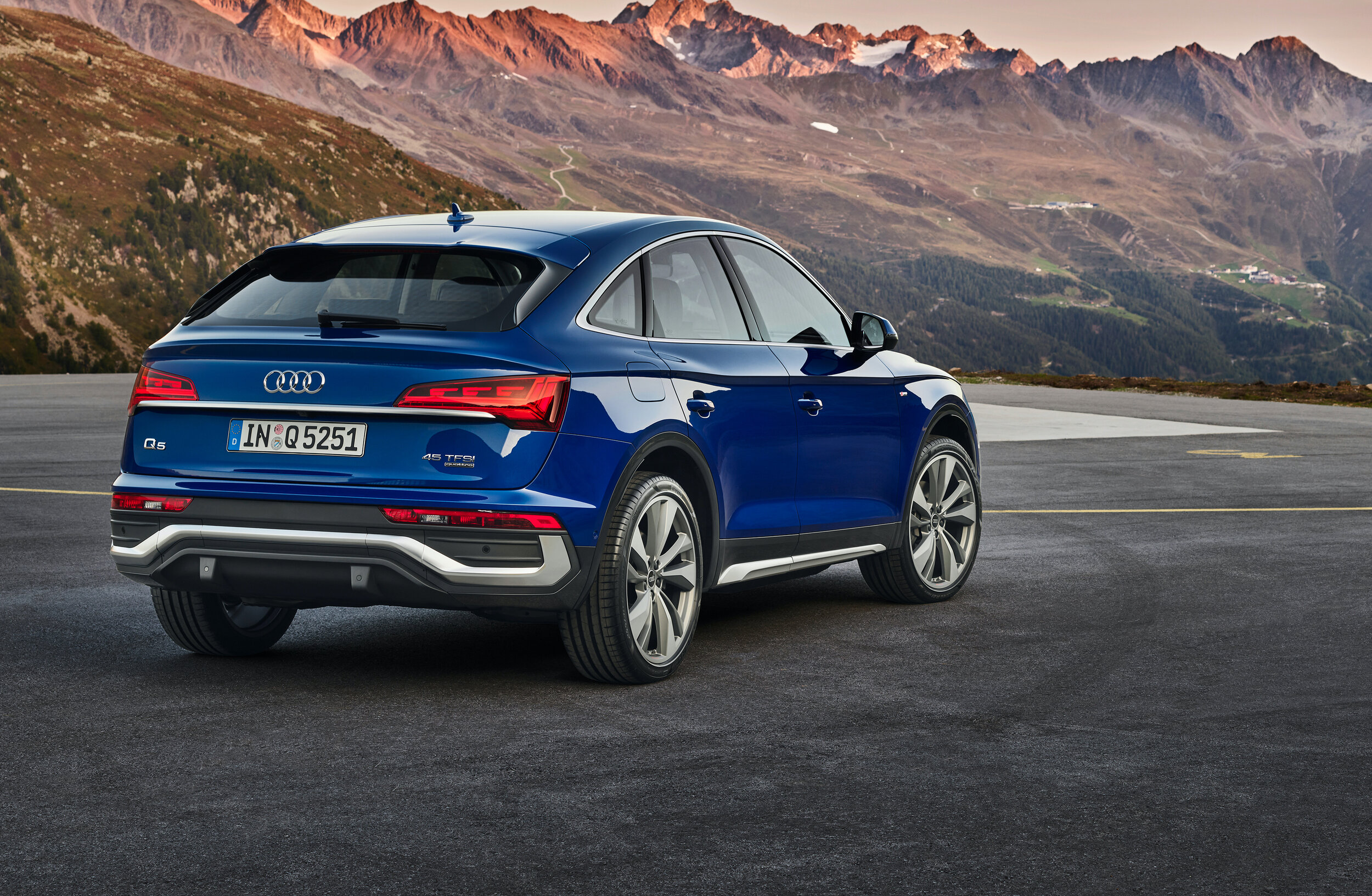
PLENTY of time to consider the specification and colour choice you prefer for the new Sportback edition Audi Q5 – this coupe sibling to the well-established sports utility model is still a year away from New Zealand release.

Unveiled by Germany at the weekend, this is the third Audi SUV to receive a coupe-style look, following the Q3 – which released here earlier in the year and is doing well – and the e-tron, which is just weeks from becoming available locally.

Audi New Zealand has confirmed it will achieve the Q5 Sportback, but from late 2021. By then the engine choice will have assuredly broadened from the launch provision for Europe.

The headline act there is a 150kW/400Nm 2.0-litre four-cylinder turbodiesel, with a mild hybrid system to enhance efficiency and in marriage to a seven-speed dual clutch transmission.

This will be later joined by an entry-level version of the TDI diesel engine making 120kW. This is the sole front-drive edition.

Also in the wings, but not for immediate provision, are a 3.0-litre V6 TDI engine making 210kW and two four-cylinder 2.0-litre TFSI petrol engines, one producing 150kW, the other making 195kW.

Eventually – and perhaps this will time in nicely for our market - plug-in hybrid powertrains will also be offered across two output variants, as well as an SQ5 Sportback performance variant.
Q5SB_00009.jpg

Customers have the choice of Audi’s standard steel spring suspension or a sports suspension, with adaptive air suspension available as an option, allowing the ride height to be adjusted over a range of 60mm. A towing rate of 2.4 tonnes has been suggested.

Styling cues and equipment levels don’t wholly tie to the SUV. Sportbacks gain a new honeycomb grille reminiscent of Audi’s RS cars, plus new air intakes at the front, the option of 21-inch Sportback-specific wheels. Patently, the shoulder line from the B-pillar onwards is all new. The tail-lights are OLED.

The Sportback adds 7mm to the length of the Q5 SUV, bringing the total length to 4.69 metres, but the overall height and width are common.

The boot boasts a capacity of 510 litres, which can be improved to 1480L with the rear seats folded.

The has an ambient light package, the 10.3-inch infotainment system features a new split-screen capability and a reworked version of the menu available on the Q5 SUV.

It’s joined by a second 12.3-inch digital driver’s display, or “virtual cockpit”, and a head-up display.
 

Power-packed Pug set for NZ?

Peugeot’s new hotshot hero might find a home here.

PEUGEOT_508SWPERFO_2009RC_013.jpg

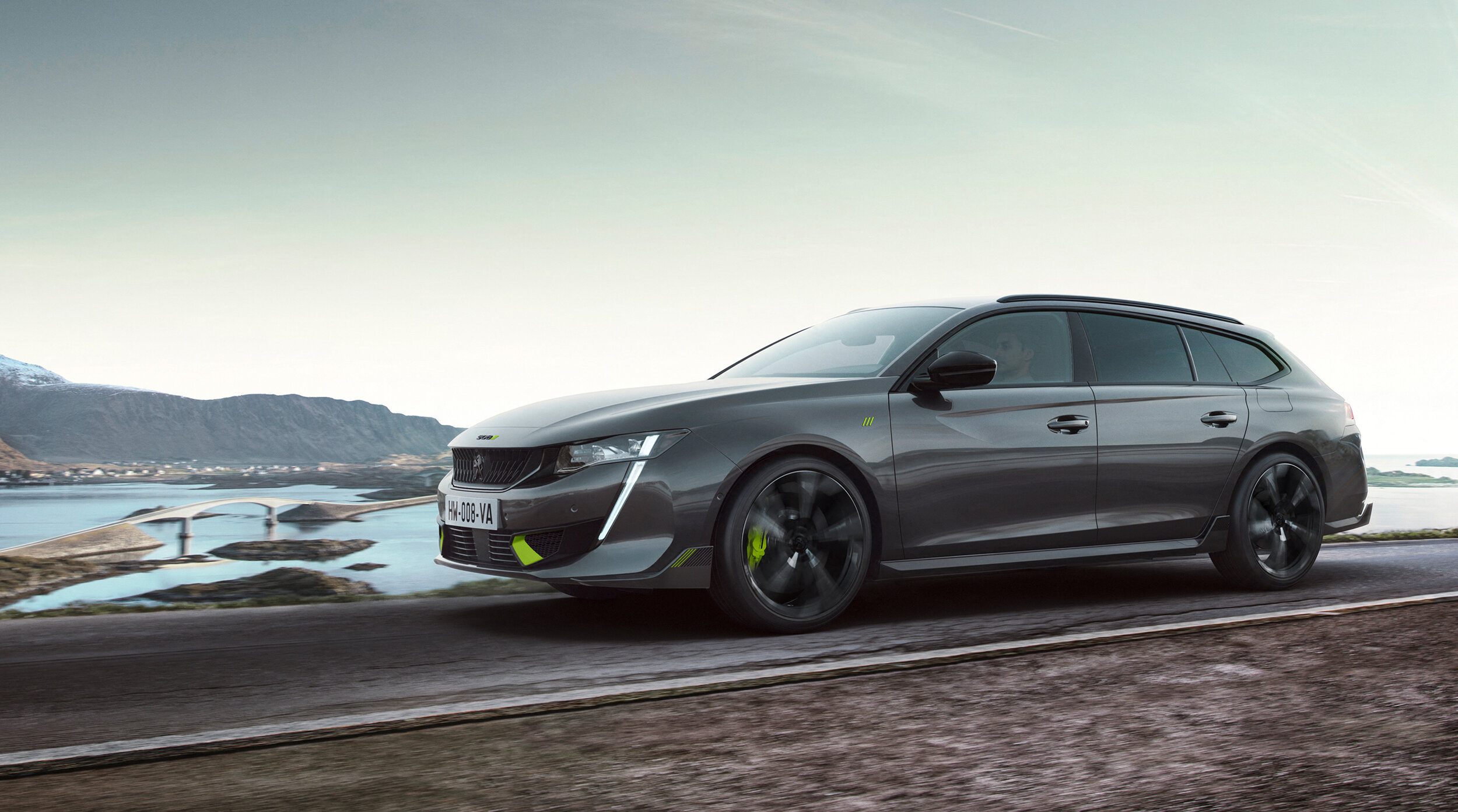
 ‘PERFORMANCE-tuned sleek Euro with electrifying edge’ – a descriptive ticking these many boxes is bound to win a lot of attention.

So good news is that the rights holder to Peugeot in New Zealand is striving to get the latest hot ticket item from France out here.

In comment relating to the announcement of the 508 PSE, Auto Distributors’ NZ commercial manager Arek Zywot says: “ADNZ is working closely with PSA to bring the 508 PSE to NZ, more details yet to be announced at the beginning of next year.”

 A car that broke cover at the weekend is a special treat by Peugeot to itself, developed to mark the launch of the make’s new Sport Engineered division.

PEUGEOT_508PERFO_2009STYP_102.jpg

In staying wholly in tune with these changing times, PSA’s premier player has ignored slotting in a petrol-hungry V6, the choice it might have taken a few years back, and instead gone for a performance plug-in hybrid set-up.

 The powertrain comprises a turbocharged 1.6-litre four-cylinder petrol engine and an electric motor mounted on each axle. The system generates a combined output of 263kW and 520Nm of torque – making it the most powerful powertrain Peugeot has ever fitted to a production vehicle.

Peugeot says the car will dispatch the 0–100kmh sprint in 5.2 seconds, before reaching an electronically limited top speed of 250km. Thanks to the instant torque from the electric motors, the car’s claimed in-gear acceleration is spectacular. For instance, it’ll nail 80kmh to 120kmh in three seconds flat. Hold onto those berets, right!

The 508 PHEV’s 11.5kWh battery pack provides a maximum pure-electric range of 42km, while recharging from a domestic wallbox charger will top up the battery in less than two hours. What’s more, with a full charge, the powertrain will deliver a claimed WLTP fuel economy figure of 59 km per litre and generate just 46g/km of CO2.

To support the extra power, Peugeot has fitted the 508 with quite a number of chassis tweaks, including new adjustable dampers, a widened track and larger diameter front brakes with fixed four-piston calipers. It has 20-inch alloy wheels shod in Michelin Pilot Sport 4S tyres.

There’s some restyling, too, with an aggressive front bumper, a gloss black rear diffuser, a new radiator grille and twin exhausts. Naturally, it achieves “Sport Engineered” badges and there are three unique paint finishes.

The interior makeover includes sports seats clad in Alcantara and leather upholstery and the 12.3-inch digital instrument cluster and 10-inch infotainment system have Sport Engineered displays.


Paddon power play seen soon?

Talk about an assault with batteries … in addition to the ‘Kiwi Kona’ courtesy of Paddon Motorsport, Hyundai itself has shown off a slick electric racer and Ken Block has scored an ohm run!

the RM20e reminds that Hyundai Motor Company is also racing with electric power

the RM20e reminds that Hyundai Motor Company is also racing with electric power

ESSENTIALLY identical core components and closely-aligned performances, common basic aims … both behind the same badge.

As much as they are, quite literally worlds, apart each is being developed at a leading motorsport facility with intent to create race-winning performance, starting with some astounding grunt: Up to 745kW.

The timeline trajectories are uncannily close. Announcements about one seem to always be followed by an update on the other.

Who will be first? Is it a race? Who else might be competing?

As the days toward each project achieving readiness for full-out field testing draw closer, the nation’s interest in Haydon Paddon’s groundbreaking Hyundai Kona electric rally car is set to grow.

Meantime, in South Korea and in Europe, all eyes seem to be on a car that, while not a doppelganger, is clearly also from the same broad breeding, the RM20e Prototype.

Meantime, anyone taken notice yet of the Ford Fiesta ERX, an early starter in the FIA’s new World Rallycross Project E race series, recently subject of a wild run to victory with the world’s greatest hoonigan at the wheel? 

All remind how motorsport is heading fast toward where every day motoring is unavoidably gravitating … a future that involves electric assistance.

Paddon’s car deserves priority mention, being ‘local’ and all that. Even so, it’s the one we know least about, technically speaking.

This image of the Paddon Kona was run on the DirtFish website last week.

This image of the Paddon Kona was run on the DirtFish website last week.

Yes, everyone knows it’s a massively reworked edition of the electric Kona crossover Hyundai has been knocking out for road use; delivering with four-wheel-drive, raised suspension and all the other addenda required for rallying.

But in terms of the exact spec of the drivetrain, the battery size and capability … that’s still under wraps. The team website continues to talk of up to 1100Nm torque, and more than one motor – as few as two, up to four, each making 220kW – through a single speed drivetrain.

There’s been talk of offering around 670kW in hillclimb mode and around half that for longer rallies, to improve range.

Any lack of detail does nothing to diminish the achievement: A car driven by our best known and most credentialed rally talent and created by a handful of hand-picked Kiwi engineers, working from a lock-up at Highlands Motorsport Park at Cromwell, developed alongside Hyundai New Zealand with the assistance of the University of Canterbury, Yes Power and STARD, an Austrian racing team that specialises in electric rallycross cars and has supplied the battery, inverter, and motor  … well, it’s a heck of a thing.

We do know it works. It ran for the first time last week and, according to a report from international rally web site Dirtfish, remains on target for a November 4 launch in Auckland – so, just over two years since project start. 

Hayden Paddon has big plans for the ‘Kiwi Kona’.

Hayden Paddon has big plans for the ‘Kiwi Kona’.

The car will be seen in public for the first time when Paddon completes demonstration runs at the Battle of Jacks Ridge on November 15.

“It was 100 percent pride when I drove the car for the first time,” Paddon told DirtFish several days ago.

“Everybody’s been working so hard here to make this happen – some of the guys have been putting in 100-hour weeks to get here … and it went absolutely to plan, no problems at all. We were only running the car at 30 percent power, but the responsiveness from the car is so obvious.

 “The other thing that became obvious is how much more straightforward the Kona EV is compared with a conventional rally car – the number of mechanical, moving parts is significantly less.”

Paddon told DirtFish the aim is to have the car out on a full-length rally this time next year. In other reports, he has spoken of hope to run it in selected rounds of the New Zealand Rally Championship in 2020; a hope that, to be realised, will require some rewriting of motorsport regulations.

Various safety issues have yet to be satisfied but, beyond that, there’s another question: Is it fair – or even conceivable – to expect parity between fossil-fuelled race machinery and electrics?

 Paddon asserts he doesn’t want an electric car for an electric championship. “We want to showcase this against current cars, to show electric can be fast, cool and hold its own. Motorsport should be any car against any car. 

That thinking is built on a solid foundation; like it or not, electric propulsion has a place in rallying at local and international level.

Hyundai says the RM20e will serve as a development tool for a future electric N performance road car.

Hyundai says the RM20e will serve as a development tool for a future electric N performance road car.

Patently, this programme is not just to prove a point on local roads. Paddon is keen to exploit the car’s potential for his own driving career and, apparently, as a commercial venture. How many examples are created and to what aim has yet to be fully spelled, but the South Canterbury instigator has always seen a global market potential. He certainly hopes the Kona will give him an advantage as the World Rally Championship heads down an electrified path.

As Kona readies for its big day, so too comes news of another Hyundai headliner, this one from the brand proper. 

No shying with the stats in respect to the RM20e. Everything but the range has been provisioned. So, it has 598kW and 959Nm of torque deployed to its rear wheels, will smash 0-100kmh in less than three seconds and be travelling at 200kmh after just 9.88s. For the purposes of public road driving, top speed limits to 250kmh. Hyundai says it balances these “race-car-like levels of performance, balance, braking and grip” with “daily-driver quietness, responsiveness and road-going capability.”

The drivetrain has developed by an electric vehicle maker whose star power is somewhat brighter than STARD’s.

Rimac is a Croatian car manufacturer that develops and produces electric sports cars, drivetrains and battery systems. Founded just 11 years ago, it rocketed to world interest with the Concept One, the slinky realisation of ambition to create the world’s fastest production electric vehicle. It gained even more notoriety when Richard Hammond crashed it during filming for the Grand Tour Season 2. Was the car too hot to handle? Well, it’s a tame tabby compared with Rimac’s next electric performance flagship, the C-Two, will touch down in 2021 with 1490kW and a top speed of 415kmh.  

Eighteen months ago HMC paid 80 million Euros for an undisclosed share in Rimac, with intent to develop two models – a sports car for itself and a fuel cell car, likely for Kia. The investment represents a 14 percent shareholding for HMC; Porsche, another investor, has a 10 percent share. A Chinese battery maker, Camel Group, is Rimac's second biggest stakeholder with 19 percent, while Rimac founder Mate Rimac owns 43 percent.

the rm20e’s development programme was undertaken at the Nurburgring, home base of Hyundai’s N operation.

the rm20e’s development programme was undertaken at the Nurburgring, home base of Hyundai’s N operation.

As revealed at the Beijing international Automotive Exhibition 2020 last week, the RM20e appears in readiness for track racing, just like the Veloster N eTCR, designed to take on a new eTCR electric touring car series. 

However, motorsport is not the end game in this instance. The factory says the car’s primary purpose is to act as a development tool and test bed for the N-branded performance road car division. It has the remit of being the basis of what yet one day become Hyundai’s equivalent of the Porsche Taycan.

The name is explained thus: RM stands for ‘racing midship’, and refers to the car’s mid-mounted electric motor, which is said to offer “ideal balance and agility from a low polar-moment of inertia.” Meaning it is easier to rotate the car about its axis. The numerical? Well, it’s a bit of a muddle, but effectively it’s the latest of a lineage. There have been four previous incarnations, the first being the RM16.

Back to the Fiesta ERX, which screamed – in a way only electric cars can – into motorsport history the other day by winning the first World Rallycross e-racing event at the famous Holjes circuit in Sweden, ahead of two identical Fords. 

Directly developed by STARD, this car is also a monster: 0-100km in just 1.8 seconds is a blistering time huge horsepower fossil-fuelled rallycross cars with anti-lag systems have been chasing off the start line for years.

What gets the ERX going is a giant 450-kWh battery pack liquid-cooled by dry ice. It delivers oomph through a pair of independent two-speed gearboxes that operate as single-speeds in race mode. Will the Kona go the same way?


Ford Puma - five stars but no comet for NZ

Sorry Puma fans – we’re only getting the tame versions, not the wildcat flagship.

2020_FORD_PUMA-ST_04.jpg

GOOD news about the new Ford compact crossover soon on sale here if you’re interested in safety – not so much if sizzle is more your turn-on.

The positive is a top marks safety score for the Puma, decided by an independent crash testing agency whose opinion is most relevant to New Zealand drivers as it is the only organisation that has our Government’s sanction and to be fuelled by NZ tax funding.

The Australasian New Car Assessment Programme’s decision to give the new five-seater a five-star rating has thrilled Ford New Zealand.

It’s a positive for potential buyers, too. ANCAP says the car’s inclusion of autobraking with pedestrian and cyclist detection, lane departure warning and lane keeping, traffic sign recognition, driver impairment monitoring, rear parking sensors, TPM, Isofix and provision of six airbags across the range all weighed into the result.

FORD_2020_Puma_ST-Line_X_014.jpg

That kit is available to all versions of the Puma – including one that was announced within a day of the ANCAP score being publicly shared.

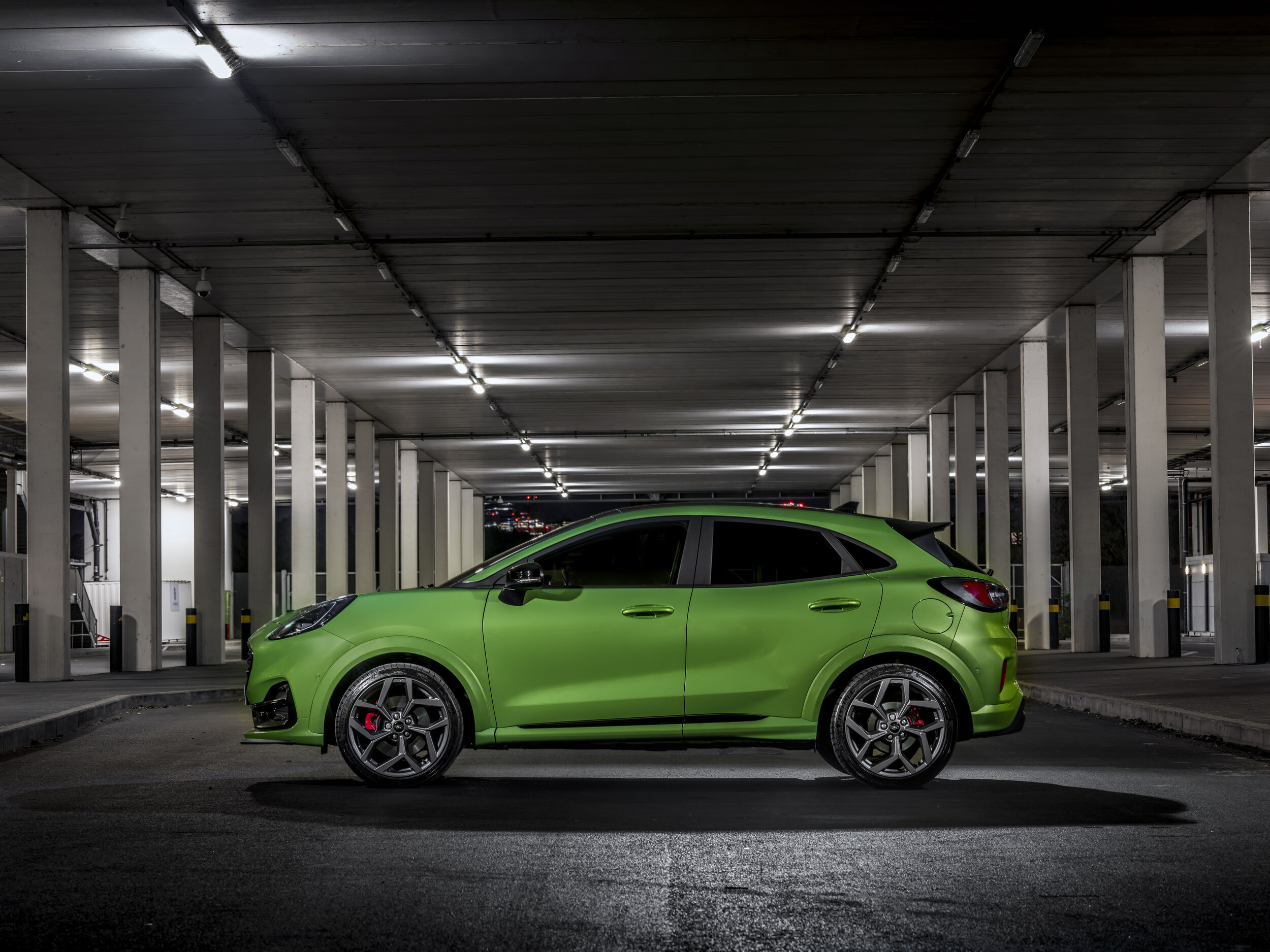
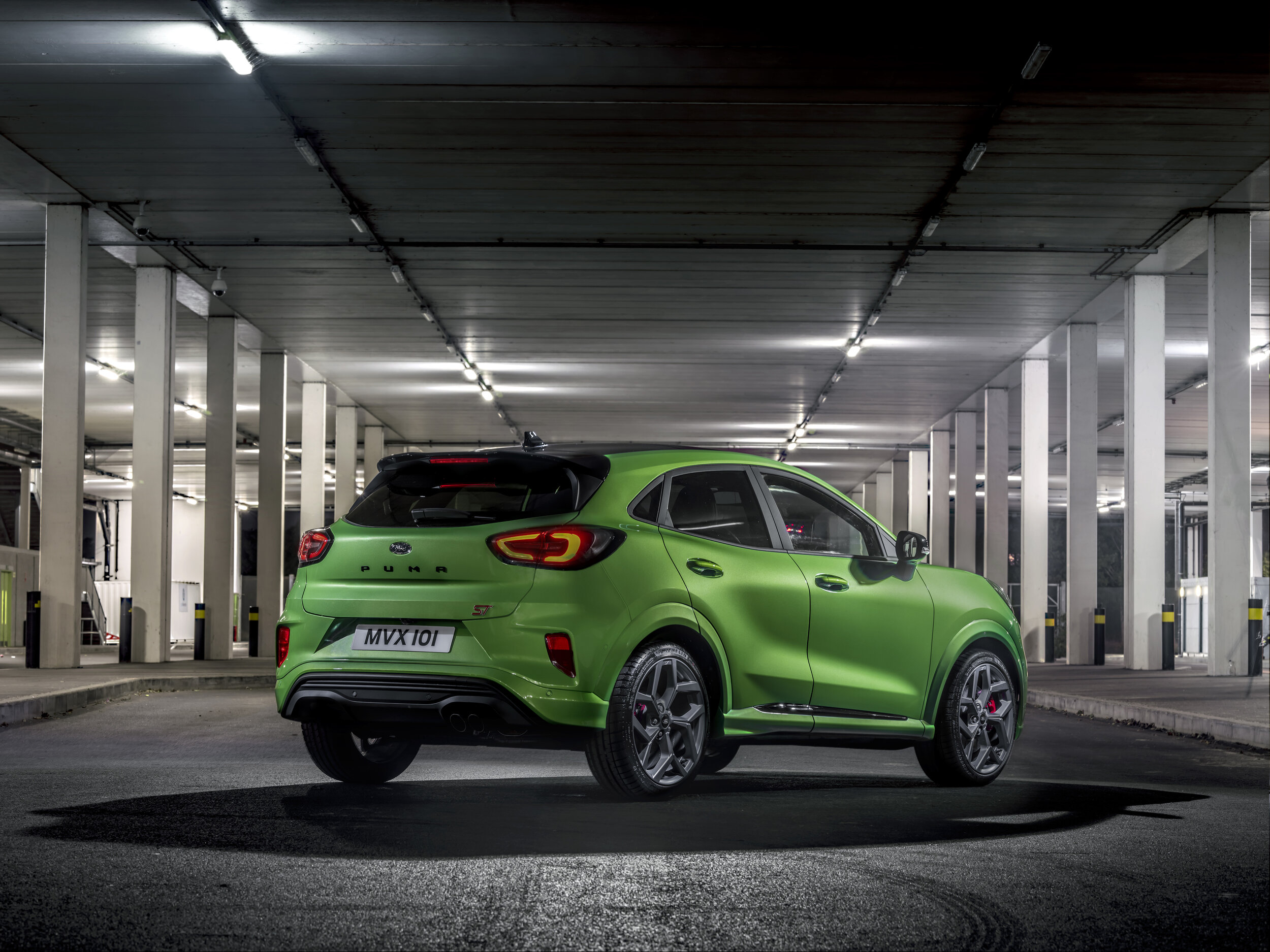
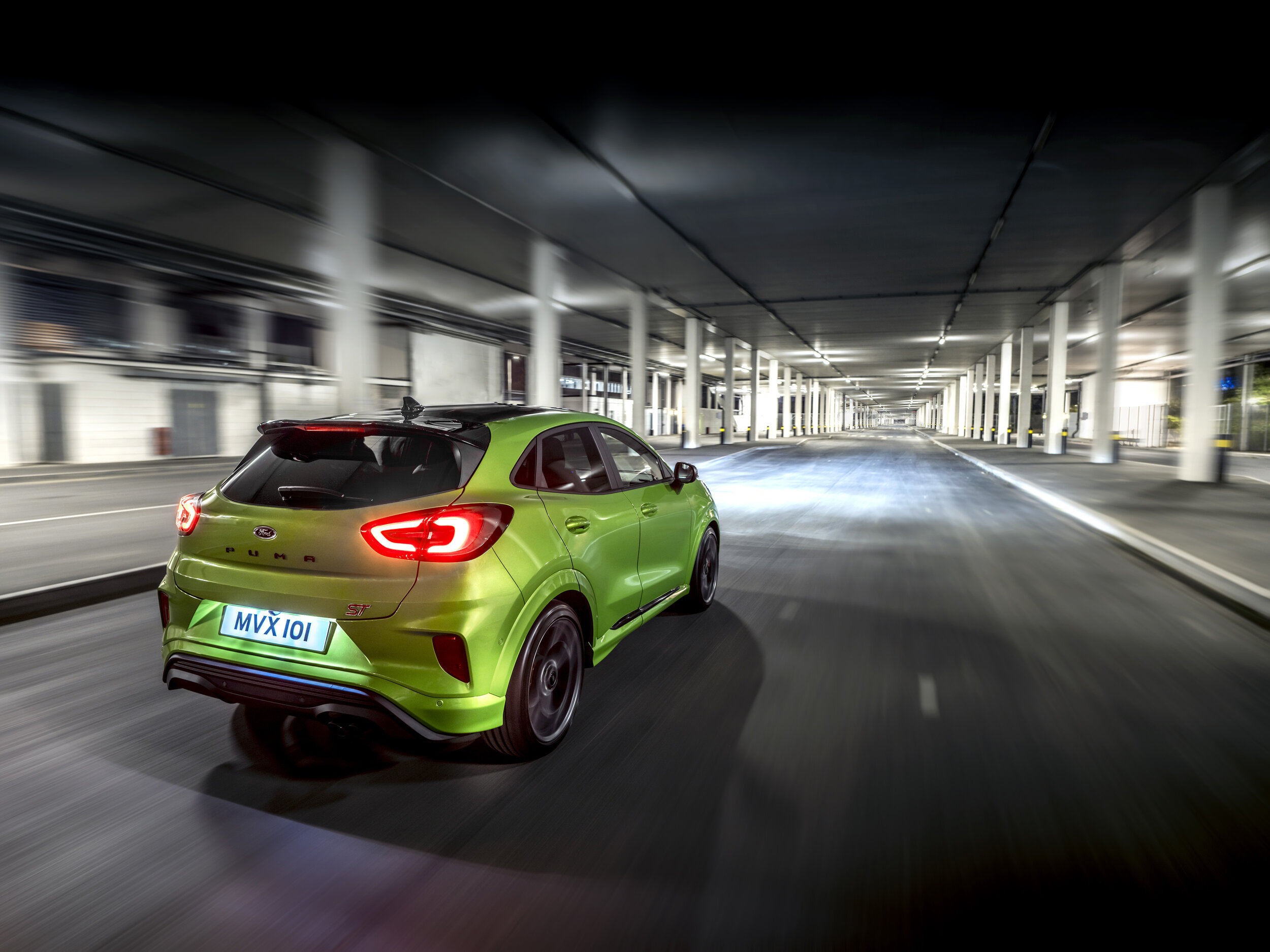
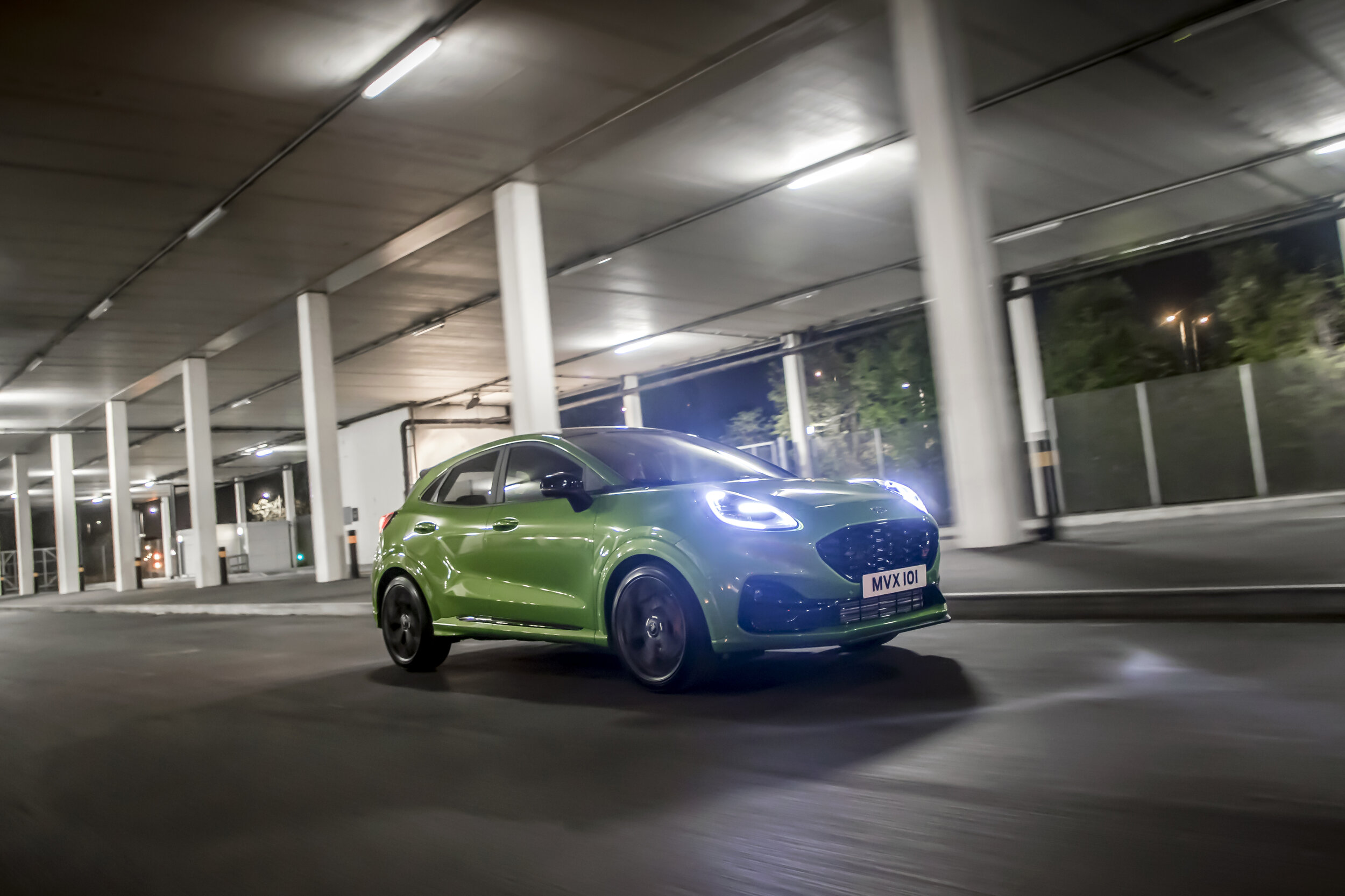
The Puma ST, the green car pictured today, is set to stand as the family’s performance flagship, offering a peppier alternate to the one litre model that lands within weeks in two forms.

To refresh your memory, there’s a standard edition going for $29,990 plus ORCs as a launch special. The full RRP is $33,990. The higher specified Puma ST-Line (the blue car) adds adaptive cruise control, sports suspension, seats and body kit, hands-free tailgate, paddle shifters and other gear besides. It will go for $37,990 plus ORCs.

The ST obviously sits above that, being a taller-standing equivalent of the Fiesta ST and Focus ST, which have become popular here though are currently subject to supply disruption.

No good asking about the potential premium, though. As much as it might seem like good addition to the ST push, the performance Puma won’t be coming here any time soon.

The reason why comes down to the transmission. For now the Puma ST only comes with an orthodox, three-pedal manual. Ford NZ doesn’t see it finding it sufficient favour with that choice – they’d prefer it to have the two-pedal automated manual that is solely offered with the Focus ST now. There’s no sign of that happening, sadly.

The decision might leave ST fans a bit confused, given that the Fiesta ST is only available with an orthodox manual and seems to do just fine, regardless.

Ford New Zealand’s comms man, Tom Clancy, steered clear of going into the issue, instead simply stating: “….. no plans for the Puma ST for NZ.”

In respect to Fiesta ST and Focus ST supply, he said both had been affected “initially and again due to hurricanes delaying boats. However, supply is getting back online.

“More Fiesta STs are arriving next month, and dealers have Focus STs available. All of our initial stock of Fiesta ST sold out.”

Focus ST sales ramped up in August, with the type account for more than 30 percent of Focus sales. 

“We’ve seen the hot hatch faithful come in as customers but also new customers.”

The Puma versions signed up for duty here run a 1.0 litre three pot turbo petrol, good for 92kW and 170Nm from 1400rpm and in marriage to a seven-speed auto.

The ST, meantime, has a 1.5-litre three-pot engine with radial-axle turbo and the same 147kW as the Fiesta ST, but with an even beefier 320Nm – up 30Nm.

The extra shove in grunt gives the Puma ST the same 6.7 seconds 0-100kmh time of the Fiesta version, despite a more portly curb mass. 

Power is sent to the front wheels via a six-speed manual. It has a mechanical LSD and torque vectoring to reduce understeer and the same force-vectoring springs of the Fiesta ST. The steering rack is also 25 percent quicker, and the brakes larger than standard. Oh yes, and it sits on 19-inch black alloys with Michelin Pilot Sport 4S rubber.

On offer for the driving experience are Normal, Eco, and Sport driving modes and a new Track mode which disables traction control while limited stability control.  Optional is a launch control function. ST Recaro sports seats make their way inside alongside a flat-bottomed steering wheel and ST gearknob.

Surely it looks worthy of a petition, right? 

Meantime, back to the Puma’s ANCAP score. One interesting aspect is that it is was based on the latest examination standard, the barometer the Isuzu D-Max (for example) faced up so well.

Because? Well, while the Puma is only arriving now, the car launched in Europe in 2019 and subsequently went through Euro NCAP crash testing in December that year. 

That same five-star rating has carried over to the Puma here despite ANCAP changing its testing criteria this year to include a more stringent frontal offset crash, side impact crash and far-side impact crash tests.

ANCAP says the ‘Euro’ rating has carried over because it is still applicable to the Puma despite the tweak in local testing.


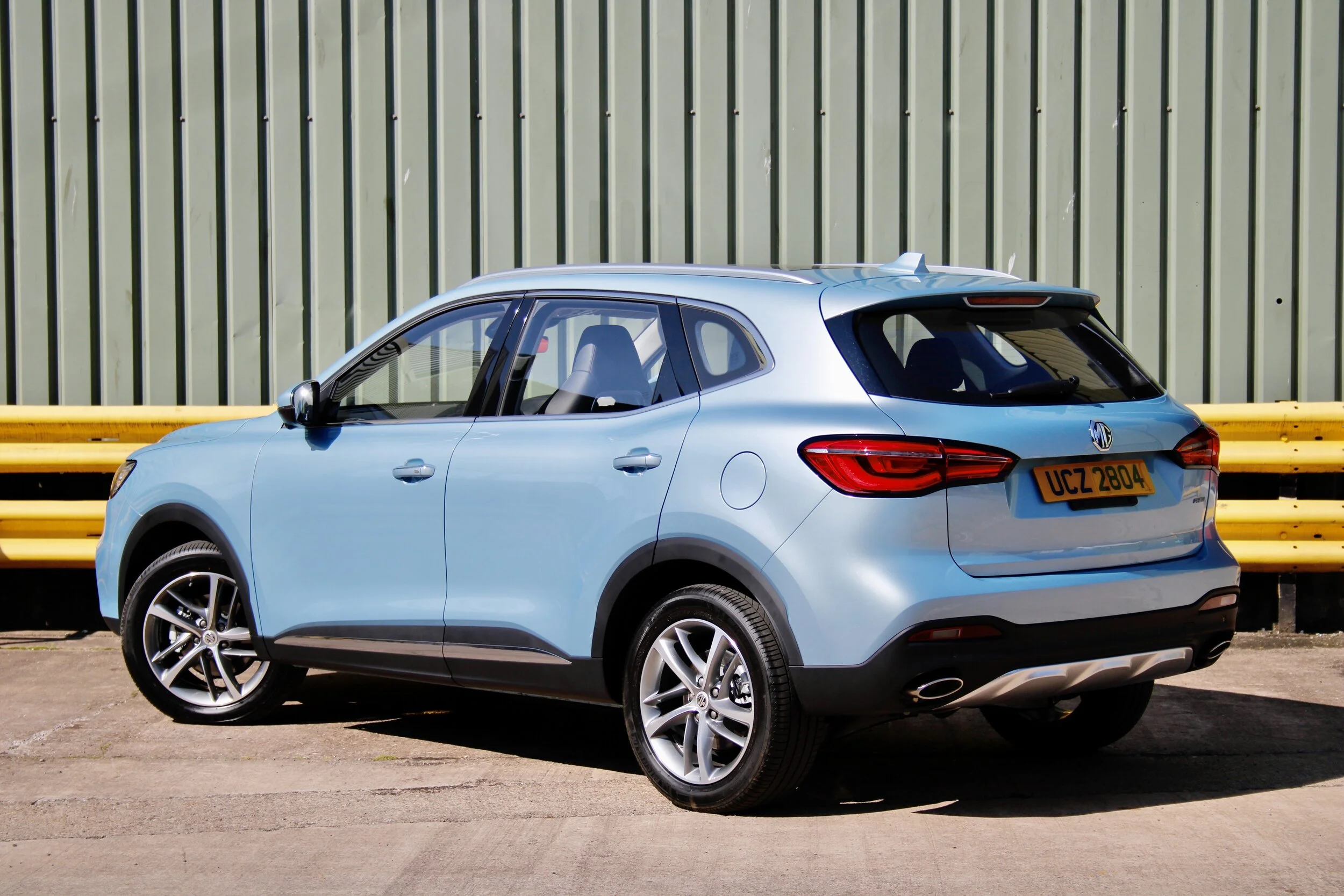
MG confirms second electric car, for early 2021

A competitor for the country’s favourite new plug-in hybrid is coming. 

IMG_8836.jpeg

AN electrified variant of MG’s flagship sports utility, the HS, will arrive here in early 2021 to become the second model in an increasingly battery-involved product strategy.

Unveiled just yesterday, the HS EV will present here from the first quarter in highest-trimmed Essence spec with a primary target being a car that has basically had this sub-sector all to itself, the popular choice Mitsubishi Outlander PHEV.

The models’ facedown in present formats will likely rage for all of 2021, as even though the current Outlander is set to be replaced next year by a new generation car, with greater involvement from technology partner Nissan. The next PHEV is more likely arriving in 2022. 

They seem sure to become intriguing rivals.

For the past year the Outlander has had a 2.4-litre petrol engine, replacing the original’s 2.0-litre, and updated to a higher capacity (13.8kWh) battery, sells for $52,490 in XLS and $58,990 in VRX, has a claimed full electric range of 55 kilometres, achieves fast charge replenishment in 25 minutes and delivers 1.9 litres per 100km optimal fuel burn, according to the factory. 

No price has been set for the HS yet and the local specification has not been finalised, however the drivetrain is known – it pairs a 119kW 1.5-litre turbocharged petrol engine with a 90kW electric motor for a combined output of 189kW and a 0-100kmh time of 7.5 seconds.

IMG_8734.jpeg

 Power is sent to the front wheels from both power sources through a newly developed 10-speed gearbox. This involves a six-speed orthodox automatic gearbox while the electric motor uses a four-speed drive unit.

A 16.6kWh battery pack gives an electric-only range of 51km and can be charged to full capacity in three hours using a Type 2 charger. It and emits 43g/km.

Equipment levels are high. The standard car, which is not being considered for introduction, takes 18-inch alloy wheels, electrically adjustable heated front seats, a 360-degree camera, keyless entry and climate control. The flagship trim adds a panoramic sunroof, electric tailgate, leather upholstery, ambient lighting and LED headlights in the specification offered in the United Kingdom, the car’s first right hand drive market. Whether the NZ spec will mirror the British market’s remains to be seen.

Safety features equipped as standard across the range include adaptive cruise control, traffic jam assist, automatic emergency braking, forward collision warning and blind-spot detection.  

While MG has so far based its market presence around petrol cars, the corporate aim is to go increasingly electric. How well that realises in New Zealand, however, will ultimately rest on political interest in battery driving, country manager Antony MacLean says. 

_MG_8857.jpeg

“The groundwork is there but at the moment it seems the country has taken a breath in respect to deciding what to do next.

“I think no-one (among political parties) has quite decided that so the election and its outcome is going to be interesting.”

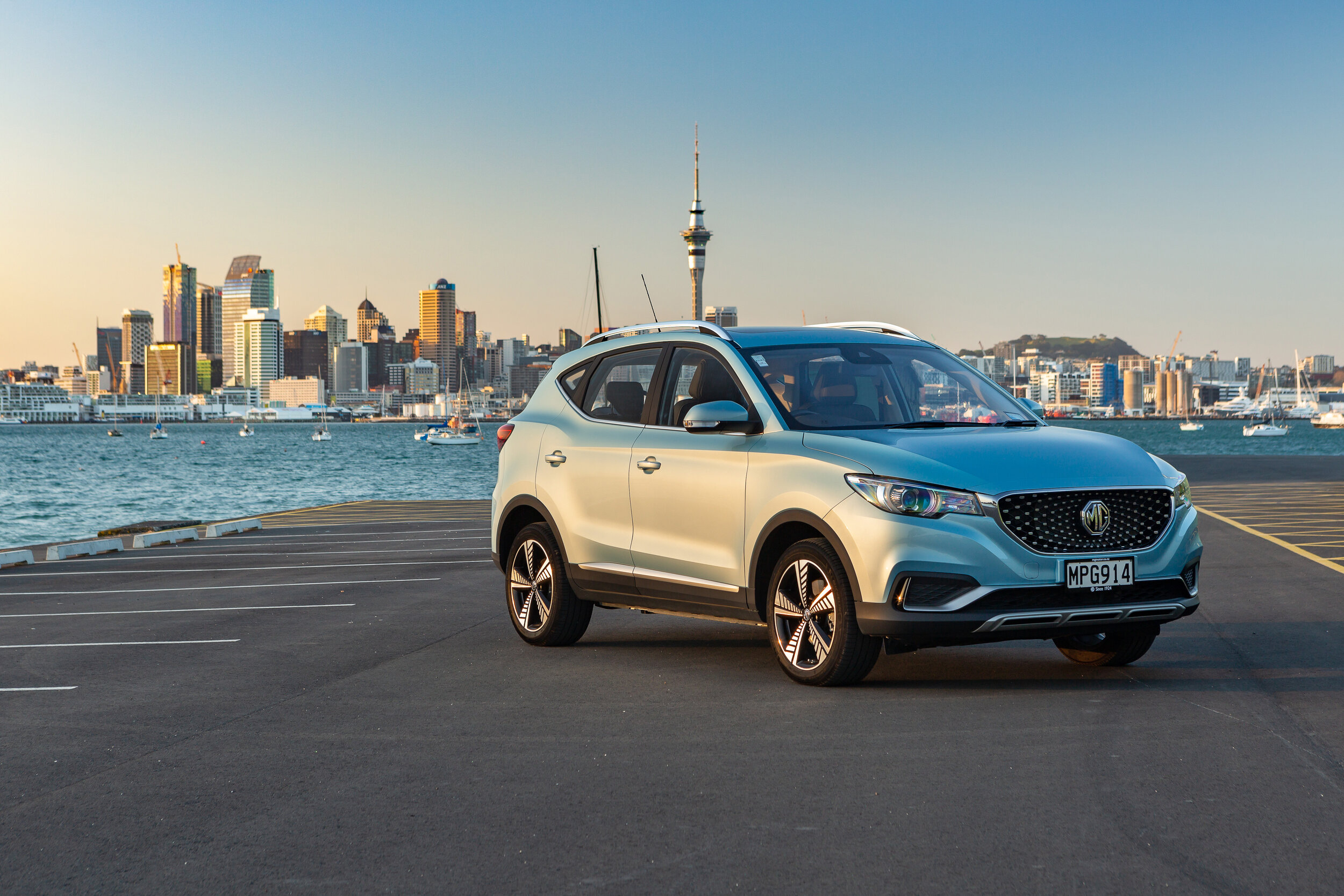
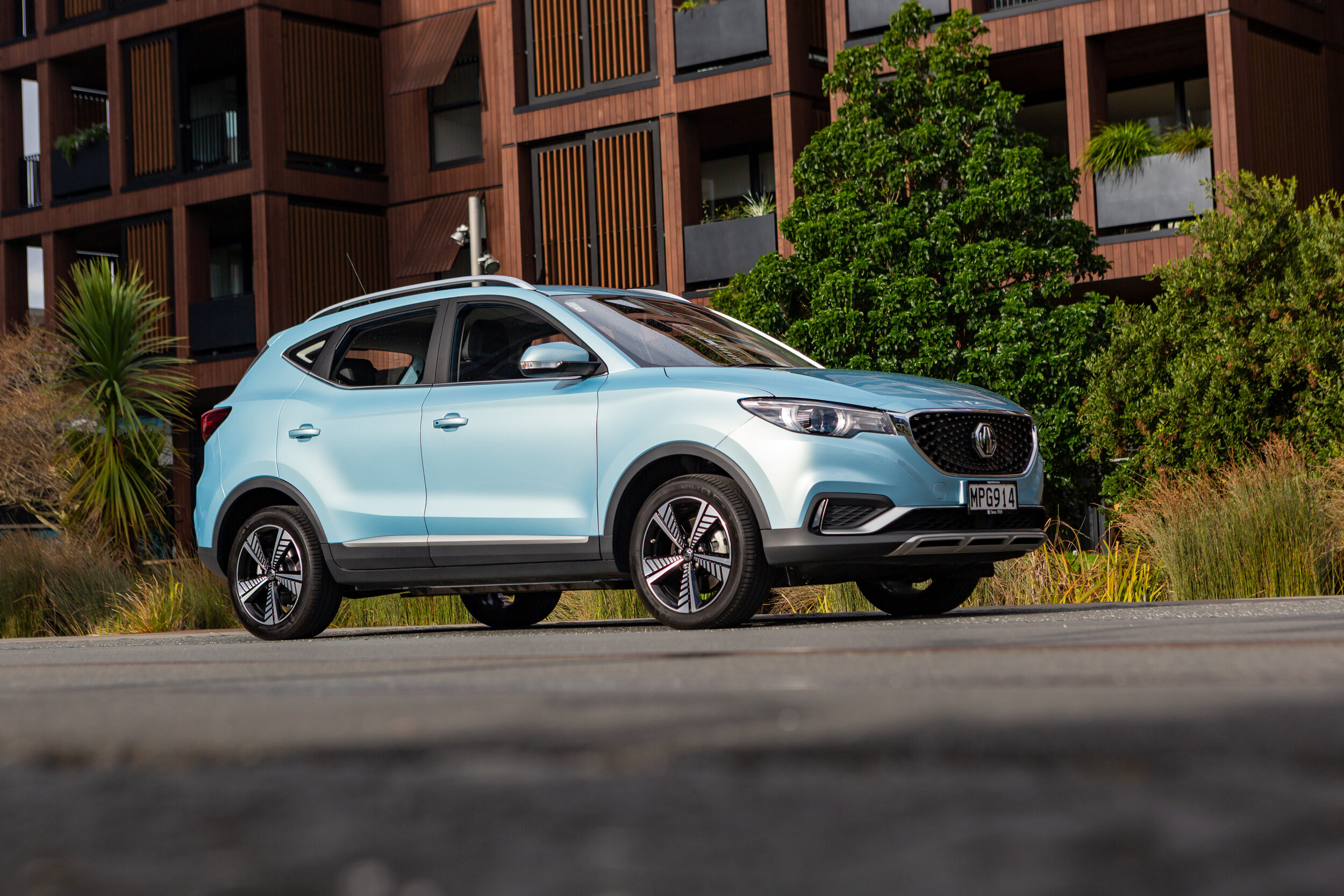
MG here has, of course, already started its electric journey with the MG ZS EV, a smaller crossover car that will go on sale soon. That model has already attracted Government interest as a potential fleet car; the HS is also already on the all-of-Government list, from which tender vehicles are selected.

The medium crossover will release for $55,990 plus on-roads, a sticker that will make it the country’s cheapest wholly battery-driven car – a title presently held by two contenders, the Nissan Leaf and Volkswagen e-Golf. Both currently listed at $61,990.

The only potential hindrance to acceptance, if more than local driving is intended on regular basis, is range: A factory-cited 262kms betters the Golf but bows to size-equivalents the Leaf and Hyundai Kona. 

Though full economy and ultimate range figures for the HS EV have yet to be given, MacLean is confident it will be the model that assuages any such concerns.

He also sees the car as having a very solid volume potential. “I’m really excited about this product … it will do an excellent job bridging the gap between pure electric and petrol cars.”

IMG_9064.jpeg

Also potentially available to MG here but unlikely to be taken up unless market conditions change is another full electric, the MG5 (above), which is spun off a fossil-fuelled station wagon sold by sister brand Rowe.

The front-wheel-drive electric edition is powered by a 114kW electric motor and features a 52.2kWh battery, giving a range of 344km. It can accelerate from 0-100kmh in just over eight seconds and can be charged from zero to 80 percent in 50 minutes using a rapid charger.

A large luggage capacity of 580 litres is a positive, but MacLean is wary of offering a station wagon in a strongly SUV-centric market.

 “My feeling is that we are an SUV market and ZS EV is better suited. However we are always looking for opportunities so if customers show preference, who knows.”


New Qashqai’s sharper street strength

Development of this key crossover has reached the point where prototypes are being spotted in public – but how soon before it reaches sale?

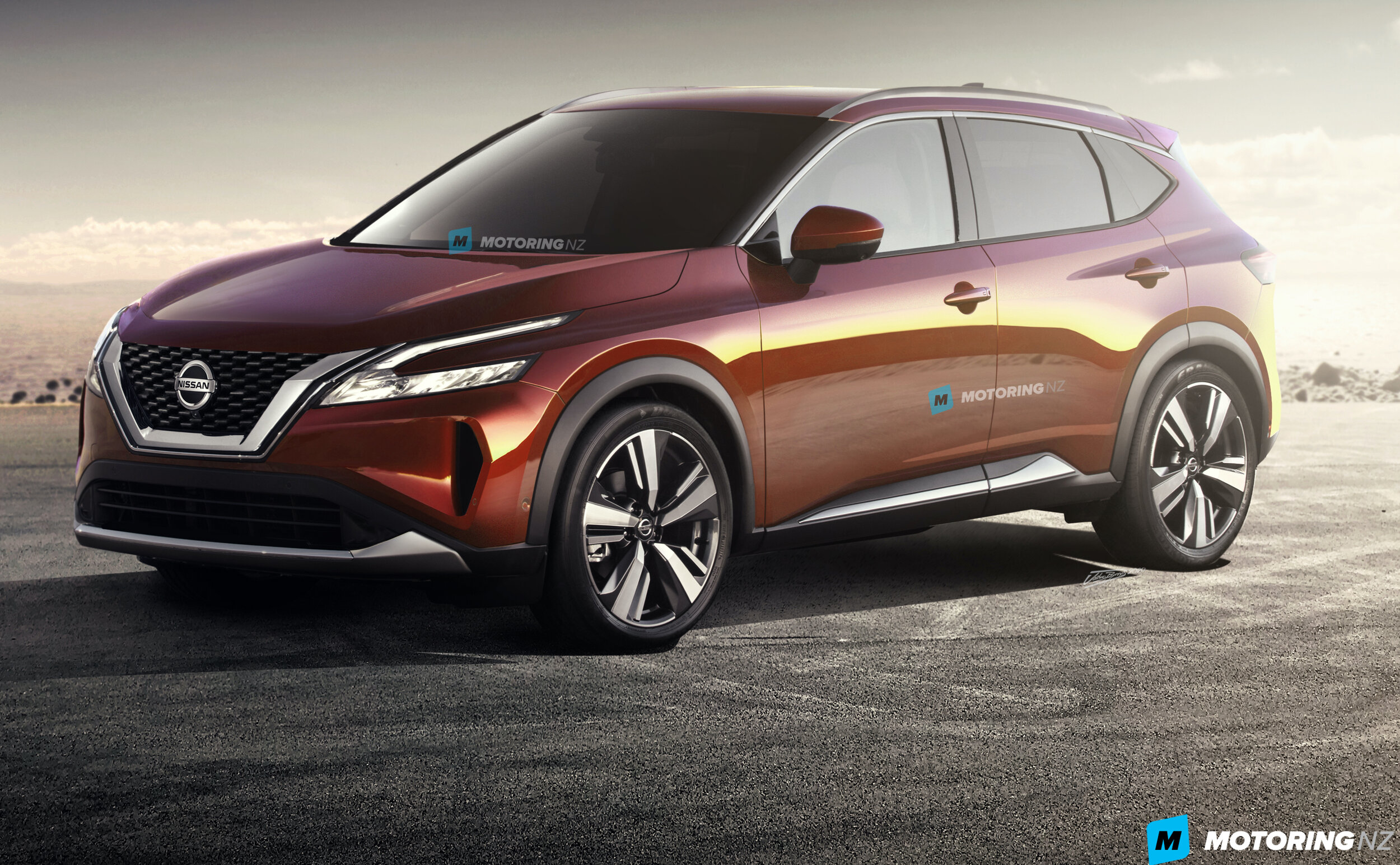
IMAGE: Josh Byrnes

IMAGE: Josh Byrnes

RECENT sightings of relatively lightly disguised examples undergoing testing in Europe have delivered opportunity to create a photorealistic render of how the next generation Nissan Qashqai will eventually represent in the showroom.

But when might that be?

The current iteration is nearing retirement; it dates back to 2013 and has been plodding along in the New Zealand market for the past couple of years, achieving 2590 examples last year and 1190 this year, as at end of August. Not a bad run, if also not enough to snatch the spotlight from from more popular crossovers.

With prototypes buzzing around in development – those here being spotted in Spain – might suggest the replacement is almost ready to go; certainly, a 2021 release has been the speculation for some time. 

However, just a couple of weeks ago, the story seemed to change, with reputable news sources Britain’s Autocar magazine and the Financial Times newspaper saying it now it seems more possible the car will not be hitting the world’s roads until mid-2021.

2020 Nissan Qashqai.jpg

If that’s true, then it’s not great news for Kiwis. We’re generally six to eight months behind primary markets so, conceivably, it could be a 2022 car for us. Keeping relevant in the interim will be a big ask of the current model.

According to the FT, this delay is largely due to the fallout from the coronavirus pandemic, which has hindered development and changed the company’s priorities. The delay could also give Nissan more time to figure out what to do in case Britain doesn’t secure a post-Brexit deal with the European Union. 

Current Qashqai accounts for two thirds of the 500,000 cars produced annually by Nissan at its giant factory in Sunderland, the United Kingdom, the birth place of the Juke crossover that is just starting to filter into NZ, albeit at low volume thanks also to Covid disruption.

So what do we know about the new Qashqai? The picture is far from complete, yet enough has come from Nissan to indicate the car will continue to use the Renault-Nissan-Mitsubishi Alliance’s CMF platform, which is also used for the Renault Kadjar and the larger Nissan X-Trail.

 The current line operates a 106kW/200Nm 2.0-litre naturally aspirated four-cylinder petrol engine, which drives the front wheels only via a continuously variable transmission.

Same for the new? It’s a good question. It’s hard to imagine the line not continuing with at least one wholly fossil fuel-fed choice, simply to achieve a good price placement, but it’s also equally likely range of electrified powertrains will also feature. 

Nissan Qashqai-2.jpg

A 48V mild-hybrid option seems likely and there’s been lots of talk about it achieving a plug-in hybrid powertrain based on that of the Mitsubishi Outlander PHEV.

It is unlikely, however, that the new Qashqai will be offered in electric form, with Nissan having now brought out the Ariya, a bespoke electric SUV on the Alliance’s new CMF-EV platform. 

However, it clearly sorely needs more battery-involved product to keep in tune with changing global demand and also to support its sole offer, the Leaf, whose progress in New Zealand in brand-new form has been utterly wrecked by the influx of used import cars, often with older technology. 

When revealing Ariya in May, Nissan suggested it will expand cooperation with Mitsubishi for plug-in hybrids in Asia and Renault for EVs in Europe.

 Japan’s Yoiuri Shimbun newspaper has also reported month that Nissan, Renault, and Mitsubishi Motors plan to strengthen their alliance by jointly developing electric vehicles. The three-company alliance will increase the number of models to be launched through joint development. By 2023, the alliance would create a range of electric vehicles, including subcompacts, small cars and SUVs of various sizes.

For its part, Mitsubishi is also to focus on plug-in hybrids and its one-tonne ute, the Triton, under the new business plan.

As for what we may expect from a visual standpoint? Well, continuing with an established platform means proportions to its predecessor, but as the render shows, it will also adopt Nissan’s latest design language, meaning a more angular aesthetic, as seen on the latest Juke.

The Byrnes’ look delivers plenty of exterior highlights - boomerang-style LED headlamps that flank an angular interpretation of Nissan’s “V-Motion” corporate grille, crisp front and rear haunches and a shapely back end with chiselled LED tail lamps and trapezoidal tailgate pressings.

2020 Nissan Qashqai-3.jpg

Perhaps the biggest (and most needed) change arrives in the form of a thoroughly redesigned interior, with an emphasis on improved materials and user interface experience. Whilst exact features and specifications won’t be known until closer to launch, the redesigned X-Trail and the new Juke surely serve as useful guides? 

Items likely to filter down from the new X-Trail include a customisable digital instrument cluster, heads-up display, 9.0-inch tablet-style touch screen display with wireless Apple CarPlay, surround view monitor and wireless charging.  

Nissan’s enhanced ProPilot assist might well arrive, if just the top end edition, bringing adaptive cruise control and improved lane-keeping abilities which use navigation-based data to pre-emptively reduce speed for motorway curves and junctions. It’s a level of driver-assist functionality often only found in the luxury sector.

Additional reporting Richard Bosselman


BMW M3 and M4 announced

Competition editions only for NZ market.

P90399175_highRes.jpg

SOMEWHAT large grille you say?

Well, we hadn’t really noticed. 

Okay, so the second of those sentences isn’t true.

But so much has been said so often already about the controversial new vertical twin kidney grille that seems set to hit all future BMW cars from now on that it’s highly questionable anything fresh can be added to the discussion.

So, yeah, basically, you’ll like it enough to live with it. Or you won’t.

In respect to that, however, it’s interesting that BMW New Zealand has used today’s global unveiling of the next M3 and M4 as an opportunity to remind how Kiwis hold a special place in their hearts – and driveways – for Munich’s performance models.

When measured by per capita, the take-up is impressively strong. At the moment we rate at No.2 in the world, according to the Auckland-domiciled national distributor. 

Is that a swipe at Mercedes-AMG and Audi’s RS, which have in the past claimed similar representations based on per-head-of-population calculation?

P90399177_highRes.jpg

If so, it’s worth raising one point. When it makes this claim, BMW here is basing its sums on marrying M and M Performance sales.

Fair to do? Well, while the first is rather more serious than the second, it’s also true the latter is less ‘sort-of’ sporty than it once was. Then again, it’s not how certain other German makes care to do it.

But, anyway, when they are counted as one, then it allows BMW New Zealand to claim one in four BMWs sold in the country carry high-performance badges and credentials.

Beyond that, the new M models are of deep interest because the distributor is only taking them in their sharpest and strongest form, badged as the Competition. That derivative is also the most expensive option but, hey, price has never seemed to be a burden in the past. 

Today’s international reveal while doubtless whet the appetites of those looking forward to signing up for the variants arriving in the first quarter of next year.

The M3 – which is the sedan, of course – and the M4 both run the same powerplant, a  twin-turbo six-cylinder in-line  petrol, creating 375kW of power and 650Nm of torque, against 353kW/550Nm in the standard format that Aussies can also take. 

P90399333_highRes.jpg

Fans of manual gearboxes are out of luck. For NZ the mill is paired solely to an eight-speed M Steptronic transmission. But that hardly hurts acceleration. BMW cites a 0-100kmh sprint time of 3.9 seconds, which is 0.3s faster than the standard versions, with 0-200kmh completed in 12.5s – 1.2s faster than the non-Competition cars. 

They’ll be offered in rear-wheel-drive initially, but M xDrive system – a first for BMW in this segment - becomes available later in the year. 

BMW claims the newcomers will deliver significant dynamic advances made over their predecessors, these arriving as result of a rigorous M development and tuning processes conducted in part alongside testing for the new BMW M4 GT3 race car.

They ride on adaptive M suspension with electronically controlled shock absorbers and M-specific kinematics and elastokinematics for the front and rear axles and have variable ratio M Servotronic steering and an M-specific version of the integrated braking system not only helping to boost stopping power, but also allowing the driver to customise the brake feel between two different settings.

P90399359_highRes.jpg

Speaking of fine-tuning. BMW has followed Audi’s lead in provisioning two steering wheel-mounted buttons providing direct access to the driver’s preferred driver set-ups which they can configure themselves and save.

Like the 3 and 4 Series models they are based on, the new M3/M4 have grown considerably compared to their predecessors, mainly in length – where there’s a 108mm gain – but also a touch more in width (up 26mm) and height, by 8mm. The coupe meanwhile shares its overall length with the sedan but measures is slightly narrower and lower. They both put on weight, too, by 83kg for the sedan and 140kg in two-door form.

 Both models come as standard with Park Distance Control with sensors at the front and rear, Front Collision Warning and Lane Departure Warning, plus the Speed Limit Info road sign detection system.

Options include the Driving Assistant Professional, complete with the Steering and Lane Control Assistant, Active Navigation function, Emergency Lane Assistant, BMW Drive Recorder and the latest generation of the BMW Head-Up Display with M-specific content.

The optional Parking Assistant comprises functions such as the Reversing Assistant.

Standard equipment including three-zone automatic climate control, LED interior lighting including ambient lighting and a hi-fi speaker system.

BMW Live Cockpit Professional – with its fully digital display grouping, cloud-based navigation system BMW Maps and the BMW Intelligent Personal Assistant – is standard.

Additionally, updated smartphone integration enables the use of both Apple CarPlay and Android Auto via the car’s operating system.

A steel roof with integral glass tilt/sliding sunroof is available as a no-cost option for both models as an alternative to the standard carbon-fibre version.  

A new M Race Track Package, meanwhile, brings about a targeted reduction in vehicle weight.

This package includes M Carbon ceramic brakes, weight-minimised M light-alloy wheels (available as an option with semi-slick tyres) and the M Carbon bucket seats.

P90399349_highRes.jpg


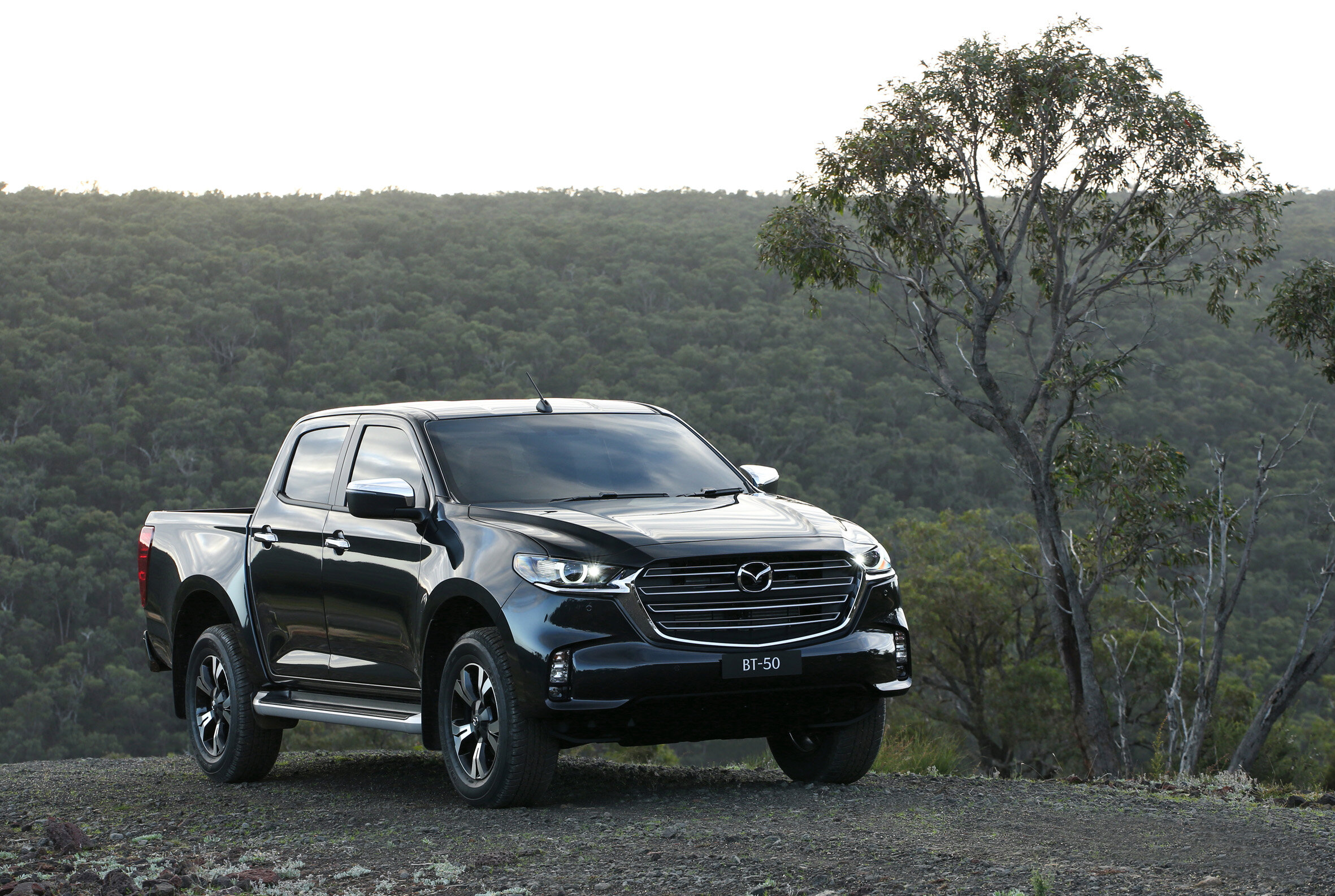
Current BT-50 to keep selling beside new

The old and new models will be side-by-side for at least five months.

BT-50-06.JPG

OLD will remain selling beside new when Mazda here releases the latest BT-50.

Talk of at least some variants from the present model family remaining on sale for months beyond the new rig’s arrival has been tacitly confirmed by the national distributor.

 While Mazda New Zealand isn’t keen to discuss specifics of how and when everything will unfold, it has confirmed the two generations will sit together and also not denied this is planned to occur from November until next March. 

Conceivably, it’s a strategy that seems to be mainly to answer demand for models other than those in a dual cab configuration, which is the only format the new vehicle will initially provision in.

Thought that the distributor might also be undertaking a plan to lessen the sticker shock that has come with the new model’s sister ship, the Isuzu D-Max, seems less likely now that BT-50 pricing for Australia has been released.

Assuming – and it’s sometimes not a good idea to – that our neighbour’s positioning has some relevance to what will happen here, then the Mazda would seem to be in stronger position than the Isuzu models. 

On today’s exchange rate, the 11-strong BT-50 line starts at the equivalent of $NZ47,694, for a dual cab chassis four by two in XT automatic form, and tops at $64,889 as a dual cab pick up four-wheel-drive auto GT.

The Isuzu line runs from $49,990 to $75,490 here. 

Mazda NZ product and sales planning manager Tim Nalden has indicated that NZ market pricing is still being sorted.

“We’re still obviously working through that as it’s coming out toward the end of the year.”

He did not want to go into the details of the product strategy, beyond acknowledging the current and incoming vehicles will be together for a while.

“We just think there’s potential for the current model.”

MazdaBT50_1.jpg

What helps Mazda NZ with this is that the new BT-50 and the existing vehicle come from different plants in Thailand.

The one incoming built in Isuzu’s plant in Thailand, off a line that has been dedicated to making the Holden Colorado and the previous D-Max.

The present BT-50, of course, was developed with Ford, and comes from the AutoAlliance factory which will continue to make the Ranger for the next year.

One potential selling point for the D-Max is the impressive score it achieved in crash testing by an independent assessor recognised and funded by our Government and the New Zealand Automobile Association.

Ironically, that five star accreditation meted the D-Max after it flew through a tougher test than older utes faced to achieve their equivalent scores won’t be of use to Mazda.

Although the BT-50 and D-Max and identical in technical make up and are sure to be closely related in their engineering, it is understood by Nalden that the Mazda will have to undergo an entirely separate crash test so as to achieve a wholly bespoke rating.


31,000 fewer registrations in 2020 predicted

Mazda NZ’s boss disagrees with some recent assessments but also holds belief that the new vehicle market is in a rough ride.

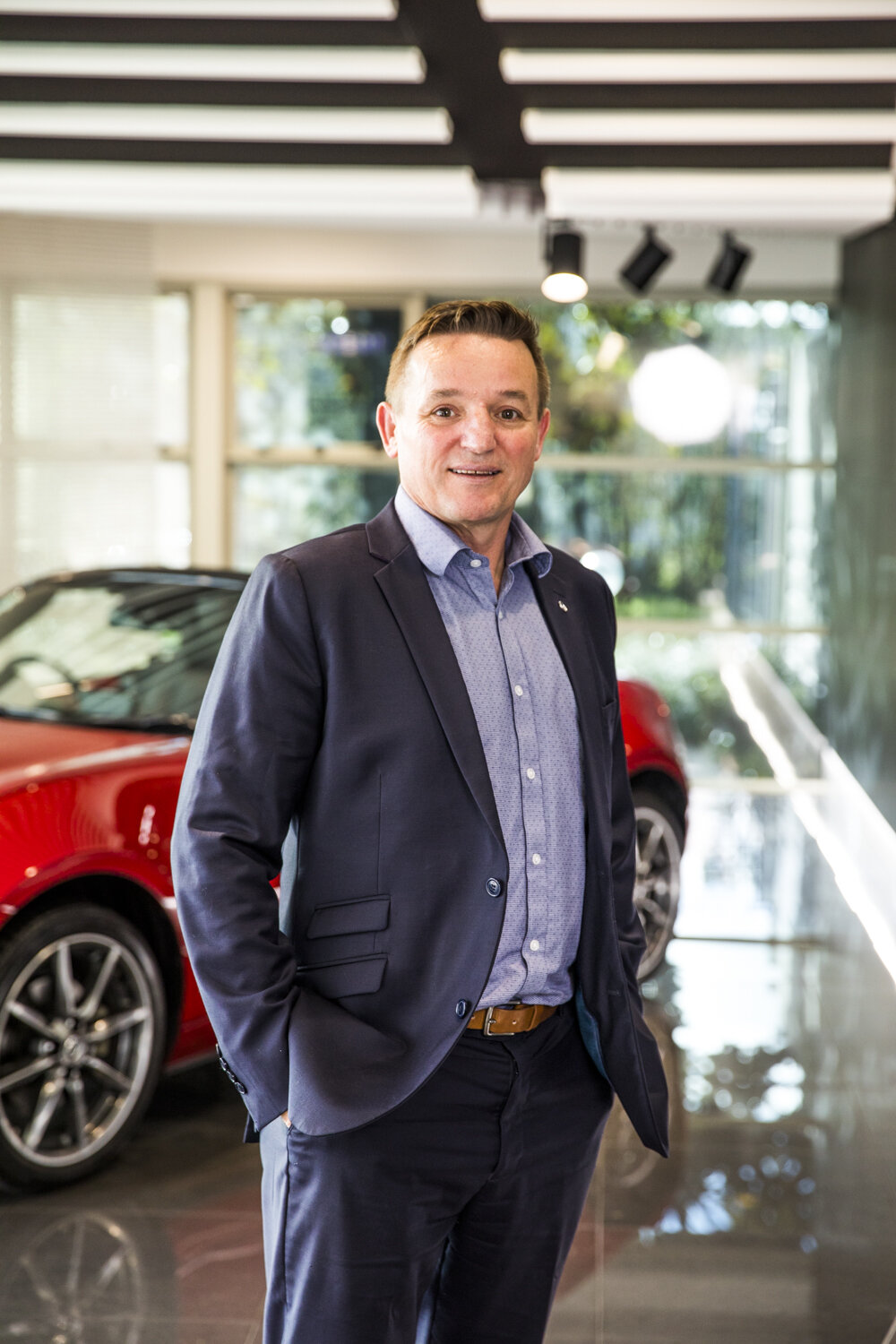
david Hodge: Mazda is in good shape to weather tough conditions.

david Hodge: Mazda is in good shape to weather tough conditions.

 NEW passenger and commercial vehicle sales in 2020 will likely be down 20 percent over last year, a drop of almost 31,000 registrations. 

 This assessment is from Mazda New Zealand’s boss, who holds that crunch time is coming.

If David Hodge’s prediction for this degree of calendar year-on-year decline is realised, it will represent the biggest drop since 2009, when new car sales plummeted 28 percent as the local economy tanked amid the global financial crisis.

Last year’s accrual of 154,479 new passenger and light commercial vehicles was already a decline, being 4.3 percent off the 2018 tally.

Regardless that the last three months has seemed rosy for registrations, the market year to date was down 24 percent at the end of August, Hodge notes.

It will remain tough though he also contends his own brand is in good shape, all things considered, to weather what’s ahead.

For one, he says, his make has steered clear of an emerging national stock shortage scenario of concern to the distributors’ representative body, the Motor Industry Association. 

In respect to the surge in registrations over the past three months that has hastened the depletion of the national new vehicle stock pile to apparent verge of exhaustion, Hodge reminds that some of this is down to orders from April and May – when the industry was frozen by the national lockdown - coming to fruition.

The BT-50 is Mazda’s next new model here and is considered a crucial vehicle.

The BT-50 is Mazda’s next new model here and is considered a crucial vehicle.

He respects the MIA’s reasons for offering a view about the increasingly parlous state of stock availability, and doesn’t absolutely question the accuracy of figures being bandied, but says it isn’t representative of his own brand’s status.

According to the association, new vehicle distributors normally carry up to 100 days’ stock for vehicles and large parts, but this has reduced by around 50 percent, to just over 11,000 units – the lowest in at least eight years and half the tally held in April. The situation for commercial models is said to be worse, that stockpile have quartered to under 5000 vehicles by the end of last month.

“Maybe 100 days is right as an industry average, but it’s not our situation. We have a shorter pipeline (for stock) against, for instance, the European brands.

“We are comfortable with our stock levels. We are lean, yes, but our stock pipeline is full, absolutely chocka.

“We have no problem at all with the number of vehicles coming to us.”

He wondered if Mazda had advantage over many other makes, or at least those unable to source from Japan, where production was virtually back to normal, or as close as it could be with working conditions being adjusted for coronavirus safety measures.

Mazda NZ takes cars from two plants in Japan and the BT-50 is from Thailand.

“Our plants are as close to 100 percent as is possible. The Japanese plants lost a shift the other day because of a typhoon, but other than that they are at full shifts.”

Hodge says Mazda production been relatively unaffected by coronavirus so the supply pipeline is full.

Hodge says Mazda production been relatively unaffected by coronavirus so the supply pipeline is full.

The commercial sector is now of high interest to Mazda NZ, as it plans a November release for the new-generation BT-50, by and large a doppelganger for the Isuzu D-Max that goes on sale on October. 

That model comes from the Isuzu plant in Thailand where, Hodge says, the impact of Covid-19 has not been huge. Also, the local workforce was in good readiness.

“They are accustomed to wearing masks, so that wasn’t unnatural for them, and they (Thai people) are not hand-shakers, so there’s another factor that probably makes them safer.

“I think the Thai plant did shut down for a while but that was demand-driven, not health-driven.” 

Hodge says the country going into lockdown in April was a stress for the motor industry and enforced that the car business at distributor level was essentially a “big money go round, money in, money out. 

The ‘money’ in suddenly curtailed “and it was a hard stop. But the money out kept happening as we still had a pipeline of cars and a commitment to the plant for vehicles we ordered and had to pay for.

“It was an issue of liquidity and we worked hard with local banks here. We had strong backing relationships and that’s what saw us through that initial shock.” 

After that, it was a waiting game. “We carried on work from home and though we didn’t sell anything we had a launch (the CX-30) at that time.” It also maintained a parts supply, initially to emergency services but gradually to the general public as shutdown conditions eased.

“Once we got out of Level Three, then to Level Two it was rally business as usual and when we got to One it was ‘yay, everything is back to the way it was.’

“But during April and mos of May the industry basically stopped. It didn’t go in a decline or anything, it was a hard stop. Same for the entire economy.” 

The tourism, aviation and hospitality sectors had a “bloody good stomp” and were still quite sore, still, he suggested, “but the rst of the economy basically has largely carried on.” 

The apparent rush in new vehicle sales in June, July and August was more perceived that actual, he suggested. The April and May activity also had influence.

“A lot of the sales in June, July and August were people who were going to buy in April and May. That has just helped top up those months.” 


Holden taking stock

If you’re up for a new Holden fresh off the boat … then, good news.

2017 Holden Astra Review14.jpg

SOME have moved on from the franchise, many have pulled down the signage – but for the few yards still sticking by Holden, there are still cars to sell …. including a surprise final shipment.

Talk about a last-minute consignment of Astras and a couple Commodores from Opel has been circulating the traps.

It’s thought these are cars Holden tried to cancel, only to be told by the Germans ‘you ordered ‘em, you’re getting ‘em’.

They should have been here well before now but had been further delayed by Covid-related assembly and shipping issues.

What happens next to the cars has not been made clear. Unsold Holdens here already are subject to clearance sale. There’s talk that this stock might be registered by the end of the month, then on-sold – perhaps firesaled – as used vehicles. 

It’s no use asking Holden New Zealand: That operation is down to skeleton staff and one of the first out the door, at the end of June, was its corporate affairs manager. It was just how the redundancy schedule rolled.

All this occurs as Holden goes into its death throe. While the brand doesn’t officially cease until December, the new vehicle sales side might well have resolved by then.

Certainly, quite a few franchises have also moved on. The country’s oldest Holden outlet, Wagg Motors in Masterton, is now selling Hyundais. The Auckland and Wellington retailers have pulled down their hoardings. It’s thought fewer than 10 franchises are still operating as sellers of new Holden cars. 

The special vehicles operations responsible for the Chevrolet Silverado truck and incoming product including the Corvette and – according to rumour – a hot Cadillac sedan, has yet to transfer from Holden Special Vehicles to new operator General Motors Special Vehicles. Some current HSV dealers in this country are already lining up to be GMSV agents. And GMSV has already appointed a general manager for New Zealand.

Appointed by GMNZ in August, Matthew Taylor is a former Holden NZ employee. HE joined that operation on 2017 and was product marketing manager then national sales manager. Prior to that, he was with Bayford Group and had positions with BMW and Volkswagen in Australia. He has declined to be interviewed.

In Australia, meantime, the winding down process has included the sale of the iconic GM Holden Proving Ground at Lang Lang in Victoria to Vietnamese automotive maker Vinfast, which has employed a number of Holden engineers.

Also, here and there, Holden's customer-facing website has dropped all references to its vehicles and now delivers the most basic information about the brand, including warranty and service information.

The company’s Melbourne head office has been silent about plans to farewell the brand internally. 

The upcoming Bathurst 1000 will mark the last Supercars race where Holden will feature as a factory team.


China's cheapie on Govt EV menu

MG Motor’s first electric car stands chance of becoming the pride of the state fleet.

MG ZS EV - NZs most affordable new EV (2).JPG

GOVERNMENT has joined private buyers in showing interest in the first electric car offered here by a Chinese brand.

Getting onto the an all-of-Government fleet tender system, from which Government department drive choices are made, was recently acknowledged by Anthony MacLean, country manager for the car’s maker, SAIC Motor, and is a big green tick for the MG ZS EV.

The medium crossover will release in November for $55,990 plus on-roads, a sticker that will make it the country’s cheapest wholly battery-driven car – a title presently held by two contenders, the Nissan Leaf and Volkswagen e-Golf. Both currently listed at $61,990.

Though the price-leader status is not necessarily indicative of electrics suddenly becoming cheaper to build – in that this model is still almost double the price of the most expensive of the four petrol versions – the EV’s placement will surely hold appeal to taxpayer-funded fleets that have been tardy to follow policy to buy more electrics, mainly because it has struggled to afford them.

The five-seater model is from MG, which through its background of British birthright, prefers to see itself an international entity, though it’s ownership by Shanghai Automotive (SAIC) rates it as a pukka Chinese automotive industry success story.

As sharp as the launch price might seem, the car was even cheaper for the 120 Kiwis who pre-ordered. 

Fifty who put their dollars 12 months ago benefitted from an early bird $49,990 buy-in that achieved target within a fortnight of announcement. 

Conceivably, if the Government gives it a go, then the purchasing process will seek to extract an even cheaper deal. 

Expectation of discounts of up to 30 percent off RRP are often cited when the industry lets slip about the State’s bulk purchase processes.

The car is an intriguing opportunity. With a 44.5kWh lithium-ion battery, a 110kW/350Nm permanent magnet synchronous motor, and a NEDC-based electricity consumption of 13.8kWh per 100km, it seems set to offer reasonable performance.

MG ZS EV - NZs most affordable new EV (1).JPG

Whether it will raise range anxiety has yet to be seen. In respect to how far it goes on a charge, with a factory-cited 262kms it tops the Golf but bows to size-equivalents the Leaf and Hyundai Kona.

MG Motor New Zealand itself has set a slightly lower range expectation of 250km based on driving in Auckland, mixing with urban traffic but excluding motorways, with the air conditioning on and with a driver and passenger. It says this trial was undertaken to validate real world range versus WLTP testing data, not to confirm or claim motor efficiency.

How it might perform at a steady 100km has yet to spelled out. But there’s good reason why the brand is reminding its customer base that the national recharging network is in reasonable shape, with a public charging point of some kind available every 70kms of main national highway on average.

The CCS Combined and Type 2 charging ports in the grille are compatible with the national charging infrastructure.  The car can be powered up to 80 percent in 40 minutes using a 50kW fast-charger, seven hours with a 7kW charger unit of the type that can be installed at home - or simply trickle charged using a standard three-point plug.

SAIC Motor makes its own charging boxes, but MG here has opted to use a third party supplier, TransNet, to supply and install a Wallbox range of home chargers in customers’ homes. 

MG has also announced a T edition of the ZS in 1.3-litre turbo petrol format, featuring the MG Pilot driver safety provision that packages a spread of assist functions, including forward collision warning, auto emergency braking, lane departure warning, a traffic jam assist and adaptive cruise with an intelligent capacity.


McLaren victory in enduro

The Hampton Downs Three-Hour provided plenty of excitement.

VanDerDrift_Smith_HamptonDowns_Sept2020_CopyrightGeoffRidder_GR403203C_Web.JPG

GEOFF Ridder was on duty for MotoringNZ.com when national level motor racing resumed in the North Island yesterday.

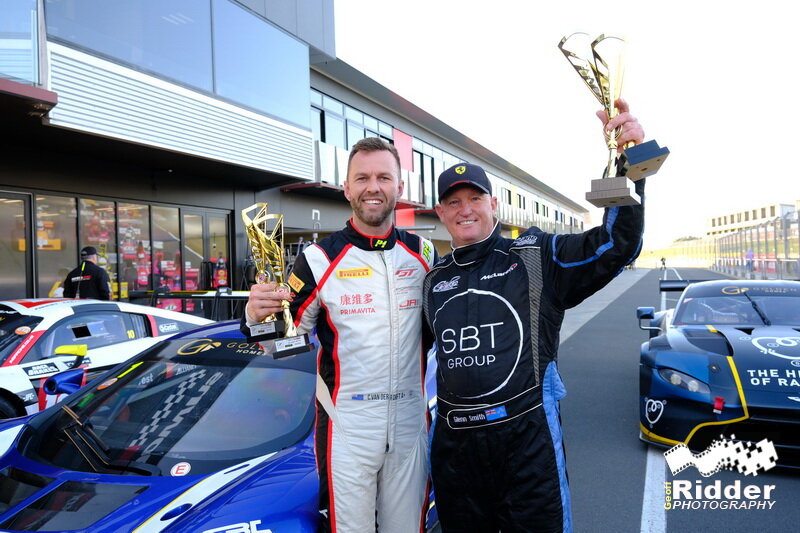
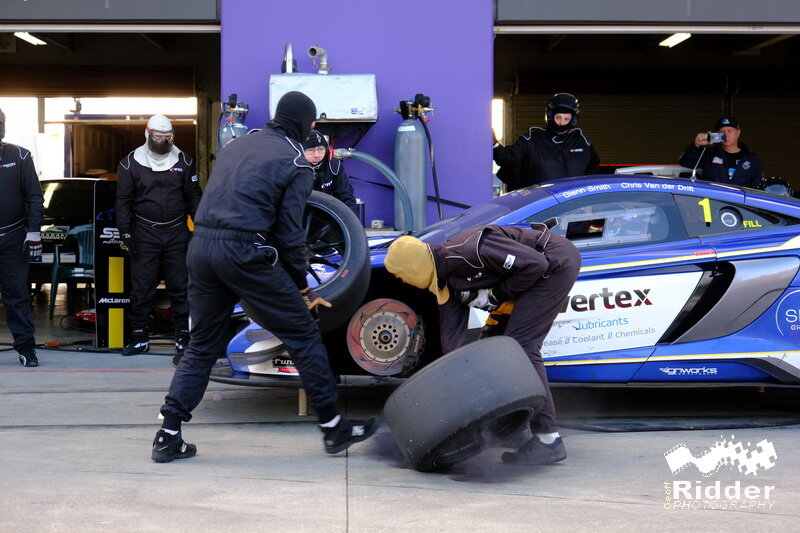
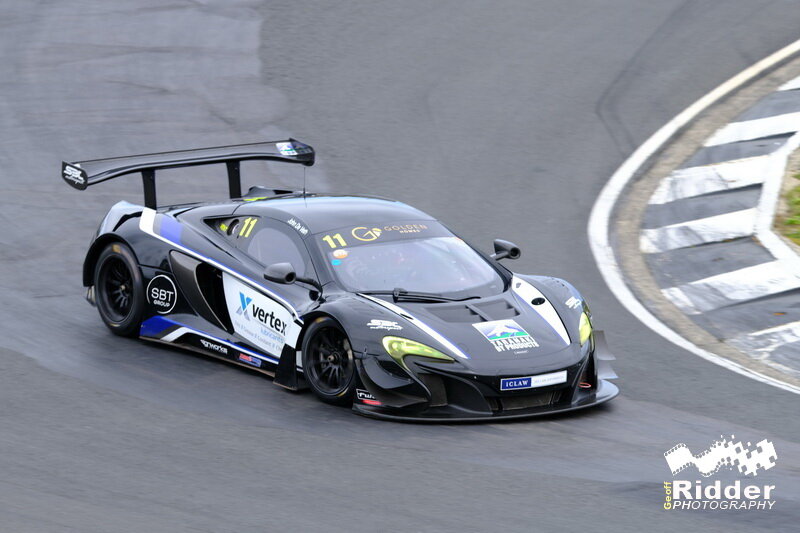
The opening round of the Golden Homes North Island Endurance Series brought a Hampton Downs Three-Hour victory for Taranaki’s Glenn Smith teamed with Kiwi international racer Chris van der Drift in the SBT Motorsport McLaren 650S GT3.

The McLaren qualified on pole position and although dropping to third position in the opening hour, the team ran an untroubled race to build a two-lap advantage during the second half of the enduro to complete 162 laps.

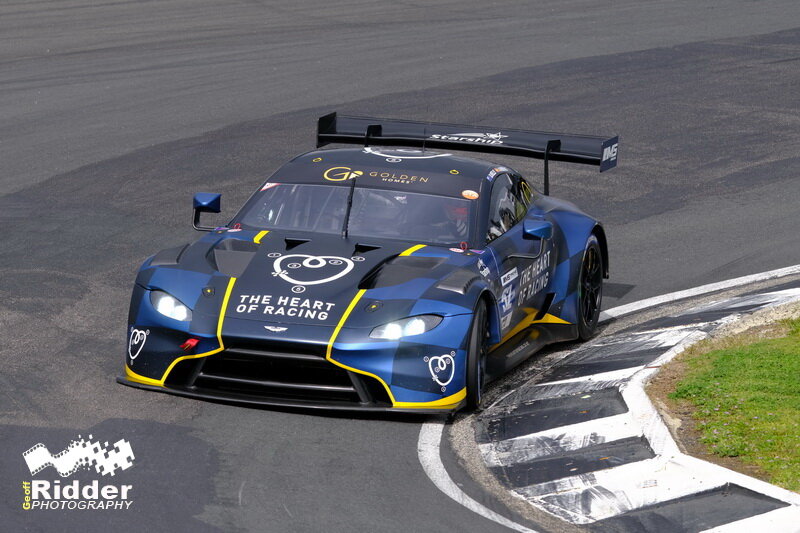
Andrew Fawcett and Sam Fillmore finished two laps back in their Audi R8 LMS after completing a late race pass on the Heart of Racing Aston Martin Vantage GT3 of Brazilian Alex Riberas and Kiwi drift star Darren Kelly. The Aston spent two stints leading in the opening 90 minutes of the race.

Behind the trio of GT3 cars the V8-engined Audi A5 of Matt Dovey and Jono Lester finished fourth. The 3-hour race had 18 starters with nine teams classified as finishers.

There was double Hampton Downs endurance success for McLarens with John de Veth driving Glenn Smith’s other 650S to victory in the 1-Hour race with Porsche GT3 racers Matt Whittaker and Callum Hedge completing the podium.

Now reduced to two rounds in 2020 due the Covid-enforced calendar changes, the North Island Series concludes at Pukekohe on Saturday October 24.

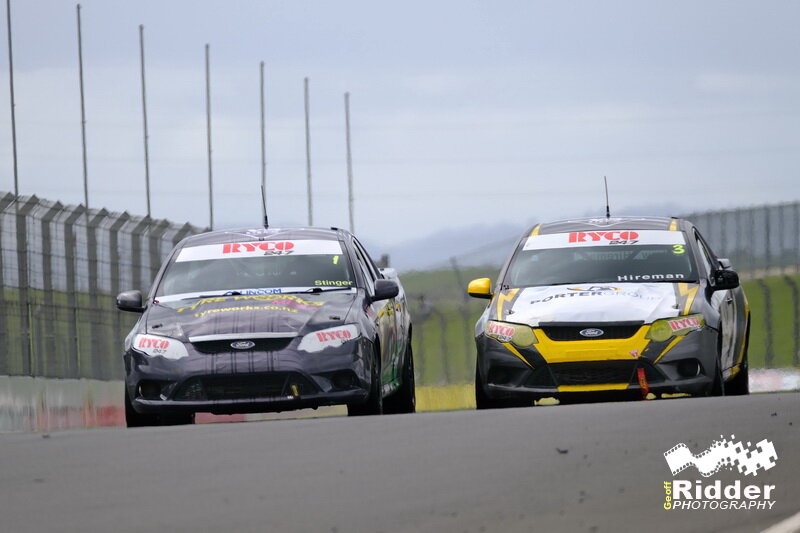
In between the endurance races there was also non-championship Best Bars Toyota 86 action and the completion of the 2019=20 Ryco 24.7 V8 Utes Series.

Series champion Peter Vodanovich was unbeaten in the Toyota 86 action with three narrow wins ahead of Connor Adam while Matt Spratt (two wins and one second) and Andrew Porter (one win, two seconds) shared the V8 Ute honours.


Sweet shift for Hyundai’s hotshot

One of the best hot hatches out there is finally coming up to speed in respect to transmission choice.

i30 N PE (PDeN) Teaser Images 01.jpg

HARDLY ever seen but don’t be fooled – they’re out there.

Enough, in fact, to propose that were the owners to form an actual club, they’d struggle to call themselves ‘exclusive.’ 

Not with 100 cars on the register.

That’s the surprise count of examples of the best-reconciled (by far) sports model that Hyundai has yet created … with quite a lot of help from new friends recruited from one of the finer universities dedicated to the development of ‘everyman’ performance fare: BMW’s M Division.

Anyway, the tally of those who have bought into the i30N in its original hatchback and more recently-added liftback forms would seem to be worthy of acknowledgement and applause, given these are aimed at a relatively select audience.

Specifically, they ask owners to live with an ingredient most buyers of those cars no longer desire: An old-school manual gearbox. All manner of data in respect to this category show today’s buyer wants a two-pedal setup … not a full automatic (thank God), but a dual-clutch manual. It’s why the Volkswagen Golf GTi camp has a 98-point-something percent preference for DSG, and why the Renault Megane RS and Ford Focus ST have gone from stick shifts to paddles.

i30 N PE (PDeN) Teaser Images 03.jpg

 In respect to that, good news from Hyundai, in two parts.

 First, i30 N owners to date aren’t afraid to exercise their left lefts and arms.

Says Hyundai NZ’s Kimberley Waters: “When we launched the i30 N in manual form we acknowledged then that we would only be playing in a small part of the sports hatch market …

“But in spite of only offering a manual transmission i30 N has exceeded our own expectations.”

So, a salute to those heroes. 

And now, a salvation for those hold-outs who love the car but have been awaiting the direct-shift alternate Hyundai and the N Division have been hinting at for at least 18 months.

It’s on the way. And with it, here’s hoping, a big increase in the fanbase for a car that’s definitely worth it … plus some stablemates, too.

Exactly when the updated i30 N will arrive has yet to be zeroed; all they’re saying for now is second quarter of 2021. These could be sleepness nights. 

As much as the “world-class wet clutch DCT”-  and, yes, in case you wondered, it IS the same eight-speed dual-clutch gearbox first put into the Veloster N, sold in North America – is the headline attraction, there’s more change besides.

i30N5.jpg

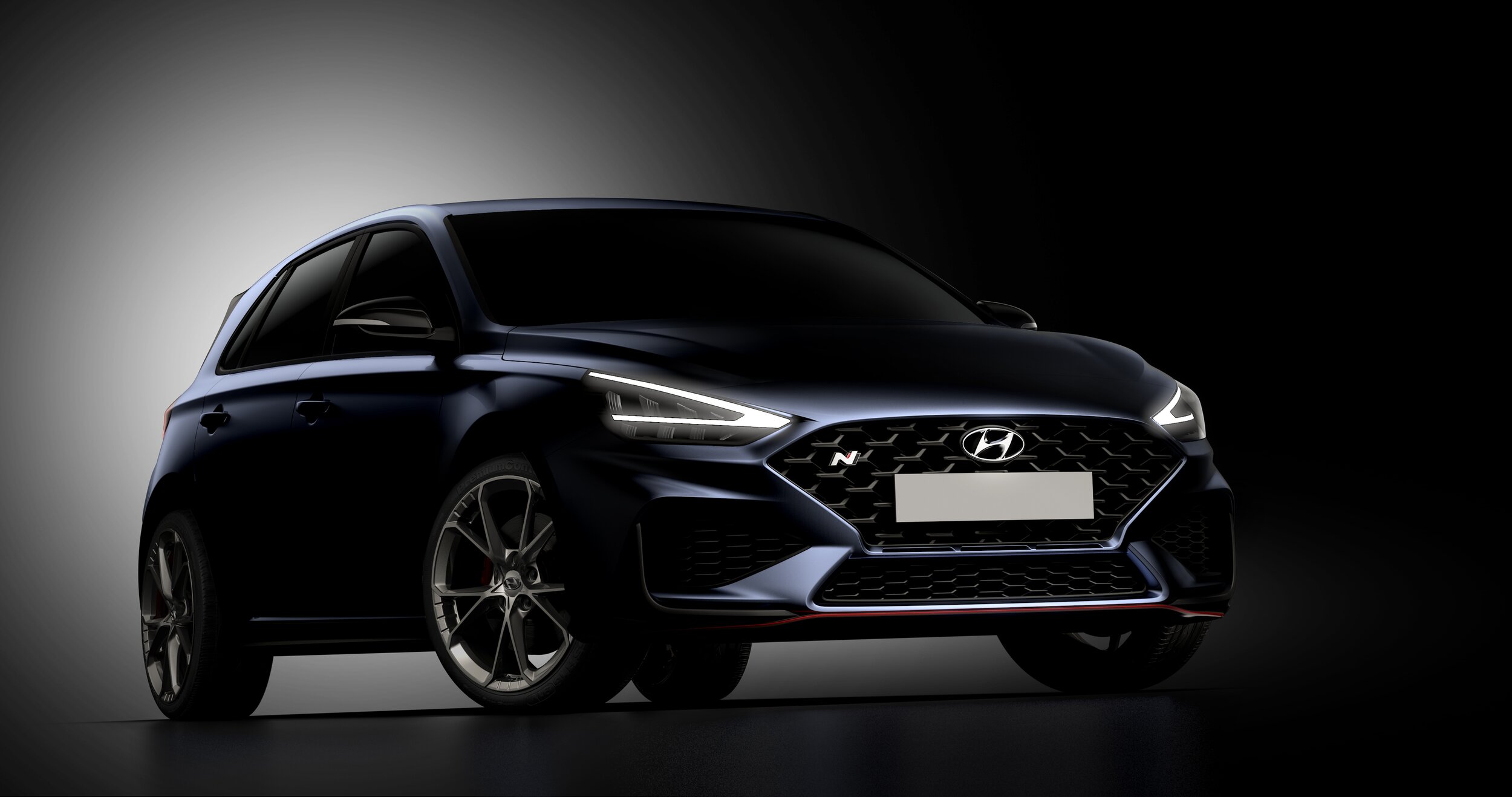
Hyundai’s release of the carefully shadowed images here reinforce word that it will also arrive with some significant change to the styling.

A redesigned front end that gains a wider grille, bigger air intakes, and sharper-looking headlights with V-shaped LED daytime running lights are evident. Tweaks to the rear include a new-look bumper with a wider diffuser flanked by round exhaust tips. We’ve included an image of the current car to give an idea of the full extent of the change.

Also set to happen is that the hatch will adopt the revised and, yes, improved suspension tune that came with this year’s liftback.Also, the The 19-inch alloy wheels are now foreged alloys, for weight-saving, and wrapped in bespoke (hence the HN designation) 235/35 Pirelli P Zero tyres as standard.

What about some extra fizz under the bonnet? No word, sorry. Hyundai didn't mention if it's changing anything else under the bonnet. Power for the current i30 N comes from a 2.0-liter four-cylinder engine turbocharged 202kW and 353Nm, enough to crack 0-100kmh in 6.1 seconds. While nothing is official yet, the dual-clutch could allow the i30 to speed its way into five-second territory.

Assuredly there’s already building excitement within Hyundai NZ headquarters in Auckland.

“We can compete in the whole market and expand the appeal in a fun and exciting segment. We expect that the i30 N DCT will welcome more local performance enthusiasts to the N brand.”

And when that happens? Well, it’s a good impetus for thinking about other N product also coming to the boil, she assures.

 “Hyundai Motor continues to add to the N range, and as and when they become available in right-hand-drive we look at them on a case-by-case basis for the NZ market.”

In respect to that, she adds, the Kona N and i20 N do already seem to look … well, kinda ‘right.’ We could see them within 12 months.

i30 N PE (PDeN) Teaser Images 02.jpg


Ranger line’s ‘king’ hit by special FX?

FX4 Max? Let’s just call it the working man’s Raptor.

FX4Max.jpg

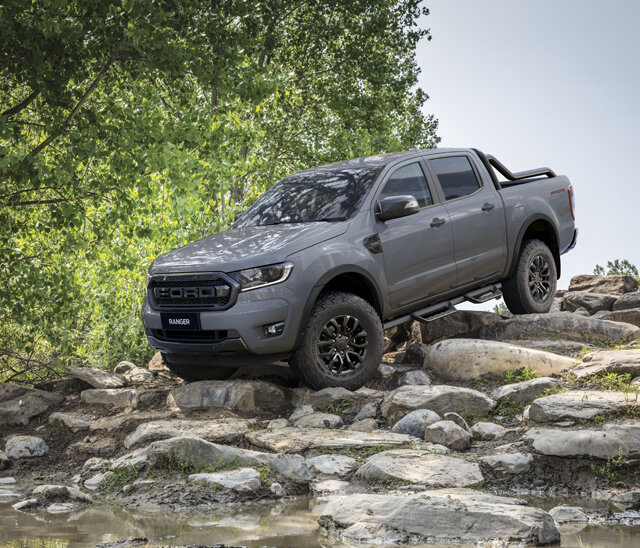
GNARLY but not overly extrovert in look, Fox suspension all-round, 32-inch off-road rubber and plenty of other dirty work upgrades … yet retaining a 3500kg tow rating and one-tonne payload: Is this the Raptor you always really wanted? 

If so, then Ford has finally obliged, with the FX4 Max.

A special edition quite probably coming out now to keep Ranger interest on the boil as the current generation heads into a final year of full production before restarting all over – this time as a co-development with Volkswagen – this edition will be on sale from early 2021, for $69,990.

And that there’s another attention-getter: The price.

As massive as the Ranger fanbase clearly is – given it’s continually siting in the monthly stats as the top-selling one-tonner here and sometimes becomes our best-selling new passenger vehicle overall - the relatively modest percentage uptake that Raptor achieves in those tallies suggests it’s always been a bit too much of a sticker shock, when availed at full retail.

Argument for that $84,990 tag has always been aligned with proposal that Raptor gave so much more.

Which it kinda does… in that it looks super beefy and definitely is tuned to tackle tough off-road conditions. However, Raptor’s shift to a complex and clever independent rear end also significantly reduces the ute 101 of being up to tow and haul big weights.

Not so FX4. The Max part of the name is a good reminder it doesn’t shirk a load. It’ll take near as dammit an honest tonne (well 981kg to be exact) on the back and tow 3500kg (so, 1500kg more than Raptor) just like any other regular Ranger wellside. Hence why it comes with a tow bar. 

The secret to this isn’t steroidal. It’s simply through the F-trooper staying with the standard (so leaf-sprung) suspension. 

FX4Max2.jpg

This regardless that it adopts those whizz-bang Fox shocks that, ahem, Ford also intimated back at Raptor’s release were also a reason why the top trumps truck carried such a premium. Maybe the exchange rates have improved. Or something.

To be fair, put the FX4 and Raptor together and the latter will still express as the more expensive truck insofar as content goes. The first is based on the XLT, so carries over that mid-grader’s blue collar trim.

Yet if you’re buying toughness over tech, then it’s hard to imagine why the FX4 isn’t going to win over plenty more friends.

Ford is certainly pushing the newbie’s merits by straight out saying the cheaper concoction’s upgrades are very much ‘Raptor-inspired’.

Of those extra ingredients, the most eye-catching are the 32-inch BF Goodrich All-Terrain tyres, attached to 17-inch dark grey alloy wheels.

With a width of 8.0 inches, the wheels feature an offset of +42mm, which gives the FX4 Max a 26mm-wider track than the normal Ranger line-up. For reference, the Raptor’s track is 150mm wider than the normal Ranger.

FX4 MAX - DESCENT F34 - 640x548.jpg

A full-size spare tyre with the chunky rubber has also been fitted underneath the rear tub. 

Squeezing the larger tyres under the wheelarches has been made possible with the fitment of Fox 2.0-inch shocks which creates a 20mm suspension lift, which combine with the tyres to provide 31mm-higher ride height over the XLT.

The bespoke suspension features a unique tune for the front coils and rear leafs (the latter of which scores remote reservoir shocks), while new lock-stop profile steering knuckles, front jounce bumpers and a 29mm front stabiliser bar are also included.

A number of exterior styling features have been borrowed from the Raptor, including the ‘FORD’ lettering on the front grille with dark grey surround, also included on the skid plate, exterior mirror caps, door handles, rear tray surrounds and wheelarch mouldings, which have been extended to fit the wider track.

It also muscles up for marketing purpose by taking a matte black tubular sports bar, lighting modules for the tray and body-mounted hooped side steps. There’s also a graphics pack for those who need even more attention.

Two colour options are available – Alabaster White pearlescent and Conquer Grey. Yes, the latter used to be restricted to Raptor. Talking about knocking a hero down to its knees, Ford. 

FX4 MAX - GRILLE - Feat_640x548.jpg

Like the Raptor, the FX4 Max is available exclusively with the 157kW/500Nm 2.0-litre bi-turbo four-cylinder diesel engine, driving all four wheels via a 10-speed automatic transmission.

Even though it isn’t as flash harry inside, the FX4 Max sounds like it’s putting on extra effort to dress for its extrovert crowd. 

The models features new seats with suede inserts and FX4 Max embroidery, Raptor sports pedals, leather-wrapped steering wheel, all-weather floor mats and a set of six blank auxiliary switches, designed to support accessories like light bars and winches – a Ranger-first.

 The new features join existing XLT kit such as an 8.0-inch SYNC3 touchscreen infotainment system with Apple CarPlay and Android Auto, dual-zone climate control, autonomous emergency braking with pedestrian detection, lane keep assist and reversing camera.

FX4 MAX - WHEELS - Feat_640x548.jpg


D-Max distributor in confident mood

If you’re a D-Max fan and wondering what justifies the incoming new line being so much pricier than before? Read on.

2020 ISUZU D-MAX_LS-M 02.jpg

PAYING more will be worth it: That’s a local message that the D-Max’s distributor is confident it can get through to the model’s current followers. 

Technology enhancements and assertion from our national crash test agency that the new Isuzu is the “safety benchmark for the competitive ute segment” has emboldened Isuzu Utes New Zealand’s argument for why the model costs up to $10,000 more than its predecessor, depending on the model.

The cheapest incoming model, a rear-drive LX, starts at $49,990 while the flagship, called the X-Terrain, is entering the market for $75,490.

How well will the model’s traditional fanbase accept that, given they’ve accessed the line for considerably less until this changeover?

The old D-Max at full retail was positioned between $39,890 and $61,990, but an aggressive clearance over the last few months has delivered those editions for substantially reduced stickers.

The make’s sponsorship, events and public relations manager believes it won’t be too hard to convince the customer base why the rig has gone from budget placement to now siting directly against the highest-priced competitors in the class.

Kimberley Waters acknowledges D-Max’s five-star score from the Australasian New Car Assessment Programme, better known as ANCAP, announced two days after the pricing was made public adds more value to the ‘why buy’ argument. The score was achieved under the latest scoring regime, which effected just this year and has raised the bar considerably. 

“The … D-Max offers more in every aspect compared to its predecessor with the inclusion of a more powerful and efficient turbo-diesel engine, upmarket equipment and features, and new safety technology,” Waters says. 

“Gaining a five star safety rating from the hardest ANCAP test to date, making it the safest ute on the market, also reinforces Isuzu’s investment and commitment to providing its customers with the best safety tech. 

“Increasing the value to the customer has been a key driver behind the significant lift in the level of specification across the board,” she says.

So in respect to the price having jumped?

2020 ISUZU D-MAX_X-Terrain 01.JPG

“The enhancements to the all-new D-Max has raised the bar … we believe our customers will see the value in what they are getting for their investment. We’re confident in the product and are already seeing some early positive signs with lots of enquiry by existing and new customers.

“We’re confident the all-new D-Max will be well received. It’s a game changer and a significant player in the ute market.”

The first phase of Isuzu Utes NZ’s marketing campaign has focussed on the vehicle arrival date and the ability to place a deposit now online to secure a unit.

Waters says this online ordering process is a New Zealand-first for the ute market. “We’ve been really pleased with the initial response.”

Once the ute is in dealerships next month “we’ll move onto the second phase of our marketing campaign which we are currently developing.”

In respect to that, we can expect to see the safety score being leveraged, she concurs.


Hello darkness my old friend

Mini pitches black.

MINI Nightfall Edition (1).jpg

LOOK up ‘Mini special editions’ on line and the list seems … well, endless.

And now there’s another.

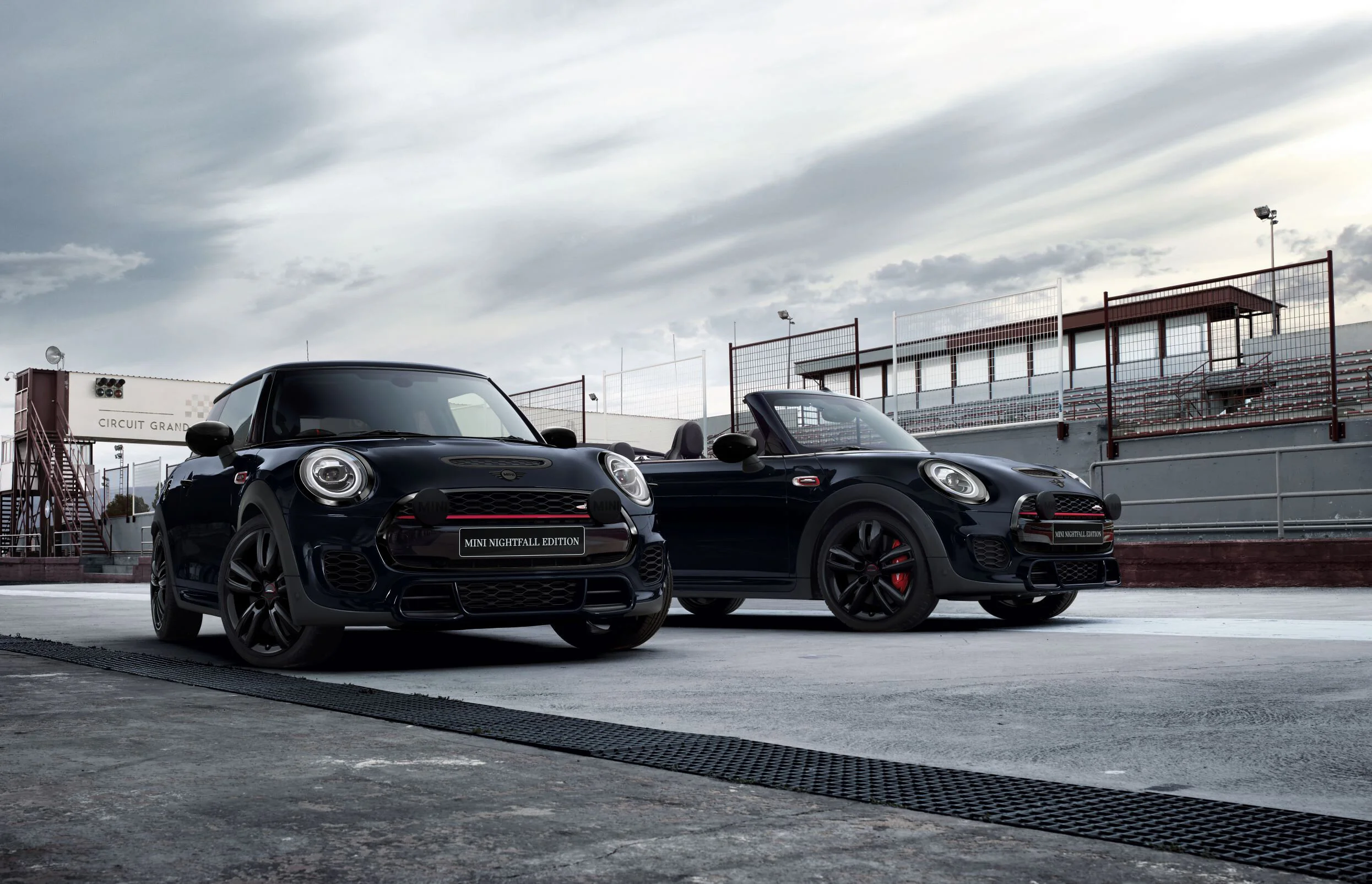
Mini New Zealand has confirmed that some Nightfall Edition models are coming in.

The Auckland-centred distributor has secured 13; all but three in three-door John Cooper Works hatch format, for $70,990 apiece. The others are John Cooper Works convertibles. You’ll pay $75,990 for those.

They’re based on JCW variants, so have the 2.0-litre turbo producing 170kW of power and 320Nm of torque. The transmission choice is … well, no choice. Just the eight-speed automatic. Not having to change gear makes it easier to pose, right?

The JCW element is also about dress up, so a carbon-fibre bonnet scoop, brake package upgrade, bespoke 17-inch wheels, and branded exhaust surrounds. Not the fog-lights attached to the grille as pictured. Australian Design Rules has done for them.

The Nightfall Edition presents in Enigmatic Black Metallic paint and all the bits usually chromed are gloss black, as is the badging.

The interior also has more black elements, plus there’s a JCW steering wheel and handbrake, 12-speaker Harman Kardon audio, wireless phone charging and Apple CarPlay.

MINI Nightfall Edition (3).jpg


D-Max achieves ANCAP A-plus

Strong test rating makes new model the sector’s crash test champion.

large-2.png

HIGH praise for the new one-tonne ute co-developed by Isuzu and Mazda has come from the independent safety agency most relevant to New Zealand.

The Australasian New Car Assessment Programme, better known as ANCAP, is a New Zealand-funded crash test operation based in Australia.

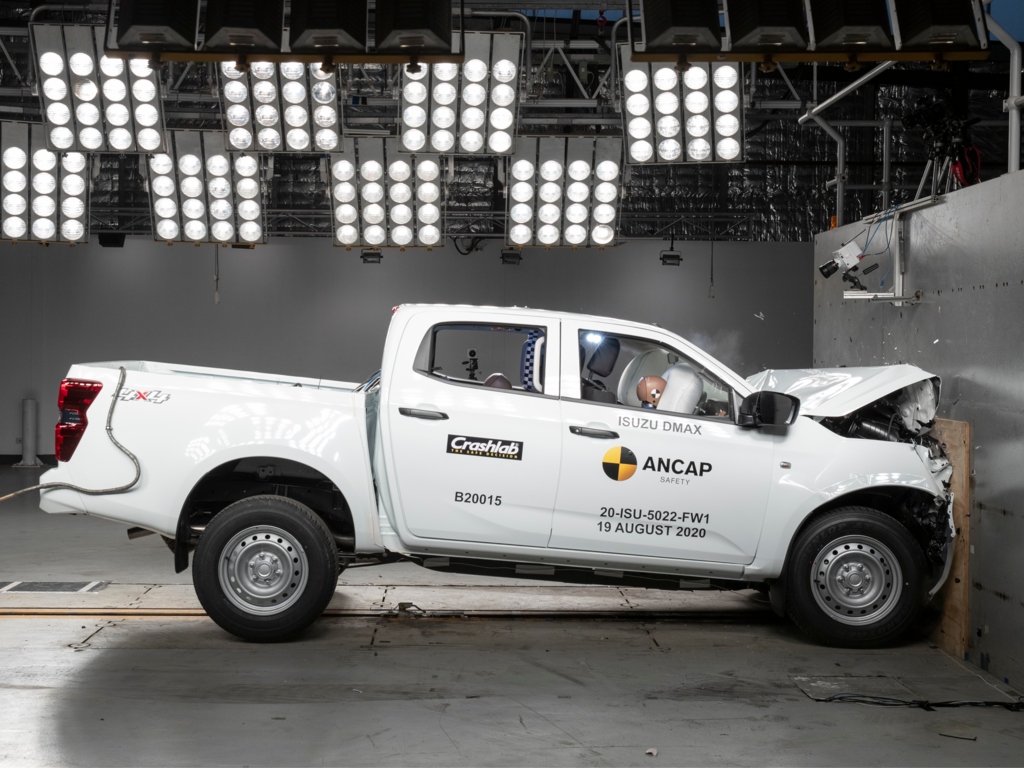
The organisation has determined the Isuzu D-Max, which is about to release on sale here and will soon after provision as the Mazda BT-50, to be the one-tonne sector’s safety benchmark.

This results from it becoming the first ute to score a full five-star ANCAP rating to  2020 standards, which introduce more stringent measurements of safety than have previously applied.

The vehicle safety authority, whose primary backers on this side of the Tasman are the New Zealand Government and the Automobile Association, is satisfied the score applies to all variants of the new model.

According to ANCAP, the D-Max is the  “safety benchmark for the competitive ute segment.”

large.png

 “Our 2020 requirements again set the bar higher to promote further vehicle safety improvements and address some of the ongoing challenges on our roads,” ANCAP director of communications and advocacy, Rhianne Robson, says in a release.

The score reinforces the merit of the Isuzu Intelligent Driver Assistance System (IDAS), which is fitted across the range.

This uses a Hitachi-supplied twin-camera system mounted high on the windscreen and is critical for forward collision warning, AEB with pedestrian and cyclist detection and turn assist, adaptive cruise control and lane departure warning and automatic steering assist.

It also traffic sign recognition, blind-spot monitoring, rear cross-traffic alert and emergency lane keeping, among further features.

On top of technology systems, Isuzu D-Max is also the first ute in the world to fit a front-row centre airbag as standard for added occupant protection and bringing the total number of airbags to eight.

Says Robson: “With the new challenges set by ANCAP from 2020, it is extremely pleasing to see manufacturers achieve good results against these increasing standards, and take responsibility by prioritising safety to provide their customers with the safest vehicles they can.”

The make’s national distributor has welcomed the score, which Conceivably puts the model above even other other utes that have achieved five star status, as their scores were decided under less stringent circumstances.

The previous D-Max was a less satisfactory performer in ANCAP testing.

However Isuzu Utes New Zealand general manager Sam Waller believes customers can “reassuringly drive away knowing this D-Max is equipped with cutting-edge safety systems to keep them out of trouble at a moment’s notice.

“Given double cab utes are proving a popular family vehicle, receiving one of the highest scores awarded by ANCAP for Child Occupant Protection will no doubt be very comforting for families.”

The score’s release comes in the same week of the distributor releasing the new line’s pricing, which brings a steep increase over the outgoing editions’ positioning, with $8000 to $10000 added to stickers when recommended retails are compared, and the gap widening significantly more when the special runout tags attached to the old model are considered.

Isuzu Utes NZ has yet to respond to an invitation to discuss the pricing, which elevates what was previously the sector’s budget buy into the same premium sector as the popular Toyota Hilux and Ford Ranger, albeit with more safety equipment than those rivals pack.

large-1.png


GR to Rallye to WRC cause

A special edition of Toyota’s upcoming GR Yaris sounds tasty … as does our neighbour’s incentive programme for this new hottie. We might see one, but probably not the other.

20200904-01-04hr.jpg

AN even wilder version of Toyota’s super-heated GR Yaris is heading into production.

Set to be available in the first half of 2021, the GR Yaris Rallye – the white car seen here - further enforces the maker’s assertion that this three-door racer was not only born from Toyota’s success in the heat of motorsport but will have a credible ongoing homologation role with Toyota’s World Rally Championship programme.

The Rallye’s status with the emergent Gazoo fanbase will also be elevated through it being a limited-edition car.

 The difference between it and the ‘regular’ edition (represented by the black car) arriving in New Zealand soon isn’t defined by outright performance but by enhancements elsewhere.

Specifically, the Rallye will have circuit-tuned suspension, Torsen limited-slip diffs for both the front and rear axles, 18-inch forged alloy wheels from BBS, Michelin Pilot Sport 4S tyres and red brake calipers.

Naturally enough, those ingredients have been developed by Toyota Gazoo Racing in collaboration with Tommi Makinen Racing, the team that took the original Yaris WRC to a world title in 2018, 12 months after the car entered competition.

The Rallye’s additional content is undoubtedly more than window dressing.

Makinen’s outfit is now developing the new road car into their contender for the 2021 season and beyond – undoubtedly those extras will some way or another prove useful for the motorsport process.

The Rallye – which also restricts to just three paint colours; black, white and red – maintains the 1.6-litre three-cylinder turbo petrol engine in the same tune as the standard GR and also keeps the six-speed manual gearbox.

2020+GR+Yaris03hr.jpg

With 200kW and 370Nm the engine is the most powerful triple in production and gives both editions of the car an ability to sprint to 100kmh in just 5.2 seconds. The Rallye’s edge will undoubtedly come in the corners and under braking.

Talk of the Rallye has emerged with Toyota in Australia announcing a pricing plan for the GR Yaris that perhaps might leave New Zealand enthusiasts wondering how they might find a way to secure the model there and ship it back across the Tasman.

Toyota New Zealand’s announced sticker of $54,990 has been undercut by our neighbour – and massively so during a programme designed to elevate the Gazoo image across the Tasman.

Toyota Australia’s car, which seems to be kitted identically to that coming here, will only be $1200 less expensive than here at full recommended retail – but to ensure it gets off to a smart start, the first 1000 sold will only cost $NZ43,400 drive away. A huge $11,590 undercut.
The Rallye is not included in that programme and how much of a premium it will carry over the GR has yet to be announced.

2020+GR+Yaris04hr.jpg

Toyota Australia’s vice president of sales and marketing, Sean Hanley, says the launch price was to incentivise support for the Gazoo Racing brand, which is probably newer to our neighbour than it is here.

The NZ awareness programme began even before the first GR car, the Supra, landed last year as it was used in a sponsorship association with the international single seater Toyota Racing Series since the end of 2018.

As for a discount start here? It doesn’t sound likely, from the tenor of comment from TNZ chief executive Neeraj Lala.

His thought about what’s going on across the Tasman?

Says Lala: “Toyota New Zealand has not offered a Recommended Retail Price in New Zealand for the past 2.5 years to avoid this situation.

“This means our Toyota Driveway Price (TDP) provides our customers with an up-front and transparent transaction price which includes on-road costs and subsidised servicing.”   

BTW, he declined to comment on the potential of the Rallye coming here.

The GR Yaris is the first homologation special since the Celica GT-Four, the car that was used to find WRC rally success when Toyota was last involved in international rallying, becoming the first Japanese maker to win the WRC manufacturer’s title, in 1993. 

Toyota’s plan is for the GR Yaris to be an even hotter ticket for road use than the Celica and the hope is it will establish the same street status as such stage-to-road greats as Ford’s RS Escort Cosworth and Subaru’s Impreza WRX.


Hey, it’s the new Z!

Nissan has unveiled a concept offering an early look at what will be the first new version of its most famous two-seater sports car in more than a decade.

Nissan_Z_Proto_exterior_Front_2.jpg

 SO how many can you see?

References to past Z-cars, that is.

Let’s just agree there are plenty. Which is the irony in Nissan’s claim for the Z-Proto. 
This concept pointing to “a new generation of the legendary Z car” seems unable to break away from the type’s past. Which probably pleases the fanbase greatly yet might also disappoint those expecting something a little more creative.

As much as this is a design study – sorry, a "development study vehicle" in Nissan-speak -  and despite its maker being reluctant to share very many technical details, Nissan has identified what we see here is a "near-production protoype," and confirmed it will outfit with a twin-turbo V6 engine – the first since the 300ZX - and manual transmission.

As is patently obviously, the styling is clearly reminiscent of many old Zs.

Basically, every old Z. And that’s a few, given the sporting sub-brand has a 50-year history. 

The front-end with teardrop headlights and long bowed bonnet is from the 240 and 260 Z era.

The side profile? Just like that of the original. Look at the rear end and tell me you don’t see the 300ZX? The bootlid appears to feature a Fairlady Z badge – a name used for the original in Japan and the US, but often seen here as well, thanks to the used import trade. The pod gauges on top of the dashboard (one for turbo boost pressure) and door handles? Clear links to the 370Z. 

Easy peasy so far. But perhaps the reason why it has teardrop-shaped LED headlights will sort the regular fan types from the hardcore. Answer? They reference a particular rarity, the Japan-only 240ZG of the 1970s.

The yellow paint used is also an ode to popular paint choice colours for both the original S30 and subsequent Z32 generations, according to Nissan.

It’s not all backward-looking. The rectangular front grille, 19in alloy wheels and carbonfibre side skirts aim to modernise the look, the brand expressed during today’s international, on line reveal.

Nonetheless, the make’s head of design, Alfonso Albaisa, has conceded that the process to determine this design very much involved “making countless studies and sketches as we researched each generation and what made them a success.”

 “Ultimately, we decided the Z Proto should travel between the decades, including the future.”

The cabin is finished in black Alcantara-like material, yellow stitching highlights and has a fully digital 12.3-inch display dash for the driver.

There’s still a vintage aesthetic in that, as with every Z car, the design is centred around the driver with dials and gauges facing from the centre towards the most important seating position in the car.

Nissan_Z_Proto_dynamic_exterior_9.jpg

The car measure 4382mm long, 1850mm wide and 1310mm high, and rides on 19-inch black alloys wrapped in special 255/40 front and 285/35 rear rubber.

The engine seems likely to be the unit found in the Infiniti Q50 Red Sport, where it creates 300kW of power and 475Nm of torque. Enough to give rivals like the Toyota Supra a real run, right? Particularly since the sports car should be significantly lighter than Infiniti. 

When is it coming to our market? No date has been provided for the launch of the production car, though chances of it achieving showroom status within a year would seem as safe a bet as the proposal it’ll be called  ‘400Z’. 

 Nissan New Zealand has yet to offer any comment.

Nissan_Z_Proto_Interior_overview03.jpg


Pandemic, sales rush depletes new vehicle stocks

New car sales have been running hot … but at what ultimate cost? Brands are running short of stock and the industry says buyer demand is racing ahead of ability to supply.

New vehicle stocks held in New Zealand are diminishing fast … and replenishment has slowed.

New vehicle stocks held in New Zealand are diminishing fast … and replenishment has slowed.

NEW vehicle distributors are facing a new Covid-19 crisis – not enough vehicles to sell for at least the remainder of this year.

An unexpected rush in sales over the past few months has accelerated the issue of diminishing stock availability, a ripple effect from Covid-driven global assembly line shutdowns that occurred months ago.

It’s a double-whammy that is leaving showrooms running low on stock with no easy respite in sight.

The organisation that speaks for the new vehicle industry has declined to cite any brands or cite any specific models and is cautious when discussing the severity of the situation.

The Motor Industry Association does, however, acknowledge there are now insufficient vehicle numbers to meet present buyer demand.

Says chief executive David Crawford: “I wouldn’t describe the situation as catastrophic … but it is lumpy.”

Talk at retail and distributor level is certainly awkward; popular models are becoming harder to secure and orders taken now might not be fulfilled until next year, while impending new products are being delayed and allocations being reduced.

One big provincial yard for a top make last week suggested the cars it held in its showroom could not be easily replaced. A metropolitan outlet for a popular premium brand also recently said ready availability of two core models has also been in jeopardy. The distributor for that make did not respond to questions about this.

New vehicle distributors normally carry up to 100 days’ stock for vehicles and large parts, but this has reduced by around 50 percent.

At the end of last month, the national inventory of new passenger vehicles was just over 11,000 units – the lowest in at least eight years and half the tally held in April – and it’s been worse for commercials, that stockpile have quartered to under 5000 vehicles.

Most distributors, at best, are carrying no more than about a month’s stock, according to the MIA, which has been collating information from factory-appointed new vehicle importers.

At retail level, this means an increasing count of outlets are keeping up their business by taking customer orders on understanding those buyers may have to wait until early next year before their purchases arrive.

Crawford suggests a combination of market forces and temporary vehicle supply constraints will continue for most of 2020.

While shipments keep arriving, there are now likely to be long wait times for some makes and models and customers who have pre-ordered will have priority over walk-ins.

“Supply of vehicles remains affected by reduced factory production in various geographic places due to Covid-19 restrictions.

“Distributors are also facing challenges predicting how much stock to order and hold.

“It has to be admitted the industry got caught by a strong June and July, once the Covid restrictions eased,” he says.

“The industry didn’t entirely anticipate the level of demand for new vehicles.

David Crawford, Motor Industry Association chief executive: “The industry didn’t entirely anticipate the level of demand for new vehicles.”

David Crawford, Motor Industry Association chief executive: “The industry didn’t entirely anticipate the level of demand for new vehicles.”

“We didn’t factor in that people who were unable to travel overseas on holiday, would decide to purchase a new vehicle instead – just like others would have decided to renovate a kitchen.”

Though already braced for a slowdown in sales when the year began, the new car market was nonetheless in good shape, having had a series of highly-profitable bumper years.

Coronavirus rendered all forecasts worthless. Assembly plants all around the world were forced to shut down – some for several weeks, some for up to two months - because of the pandemic.

Though most are back in business, many have yet to achieve full production. Even when assembly lines are back to full steam, delays from components suppliers are common.

The supply chain also hasn’t recovered. This is particularly the case with product coming out of Europe, which even under normal circumstances have to be ordered up to six months in advance.

However, it seems probable all makes and sourcing points have felt impact to some extent.

Also hurting New Zealand is the modest size of our market – there have already been instances were other countries more important to makers have been given higher priority.

All this means that as much as recent months of emergent retail frenzy was welcomed, it has also been a sting because it was unexpected.

While the MIA warned as early as in March it would be inevitable that the shock wave from Covid’s impact on global car making and the parts industry was inevitable, it didn’t predict that consumers would go into such a buying frenzy these last few months.

Data shared by the MIA for this story reveals how NZ’s relatively healthy vehicle stockpile before Covid has pretty much gone.

At the beginning of this year the national new passenger vehicle inventory stood at 16,049 vehicles.

new vehicle production has largely resumed .. but plants are rarely operating at full-scale pace and makers are sometimes steering product to bigger markets than New Zealand.

new vehicle production has largely resumed .. but plants are rarely operating at full-scale pace and makers are sometimes steering product to bigger markets than New Zealand.

This rose to 20,327 vehicles in April, but the countrywide Level Four lockdown, then meant cars that landed but could not be retailed – hence, despite 5625 vehicles being cleared by Customs in April, only 707 vehicles were registered in that month.

Since then, the figures have been sliding as supply of vehicles built and in transit before the factory closures started to dwindle.

May’s inventory was 18,888, this reduced to 15,088 in June, to 12,593 in July and to 11,057 last month.

August’s count was the lowest in at least eight years but stock numbers are expected to reduce even further for at least the next two months.

Meanwhile, the import clearances are continuing at history low levels as they slowly recover to some normality – 2858 in May, 4619 in June, 4327 in July and 5405 in August – but they are not meeting the growing consumer demand. That’s at least 50 percent higher.

The commercial vehicle inventory that sat at around 12,000 vehicles in April and May had reduced to 4817 vehicles by the end of last month.

Since then, consumer demand has increased to the extent there were 3533 registrations in August – way ahead of the 962 vehicles that had cleared Customs. This means that for the remainder of the year there is virtually no fat in the commercial vehicle inventory.

Parts supply is also being severely affected by the pandemic. Prior to Covid-19, parts were transported to New Zealand by both air and sea, but air freight has now become too expensive due to reduced numbers of flights, and this has forced more use of sea freight which has much longer time frames, Crawford says.

The flow-on from the drop in new car availability is also being felt in the used car sector, with a commensurate drying up on late model pre-owned stock from fewer trade-ins occurring.

# Additional reporting by Richard Bosselman