E-Class update brings more smarts

The facelifted line arrives next month, with an enticing AMG sedan continuing as pack leader.

E 63 S - Low Res.jpg


REST assured, it’s still endowed with ample horsepower and athleticism, still among the fastest sports sedans on the market.


So, when Mercedes-AMG attests that the biggest change arriving with the mid-life update for the E 63 AMG super-sedan is ‘enhanced everyday comfort’, you needn’t worry: A less edgy ride quality is the only outcome. Otherwise it’s still very much on pole as a performance icon.

The new $239,900 edition, above, heads up a revised E-Class lineup that includes five other derivatives, all with a 2.0-litre four-cylinder turbo petrol in various states of tune.

These range from the E200 sedan and Coupe with 145kW/320Nm that respectively set you back $106,600 and $108,500, the 220kW/400Nm E350 in $137,900 Coupe and $149,000 Cabriolet formats, plus the E 300e sedan, in which the engine pairs with electric assist. The (155 kW/350 Nm) engine is supplemented by a plug-in electric motor (90 kW/440 Nm) via the same nine-speed auto as in all the other variants. Total system output is 235 kW/700Nm. With the onboard battery topped up using the standard Type 2 charging cable, a combined cycle fuel economy figure of 2.2 litres per 100 km (ADR) is possible, Mercedes Benz NZ claims. This is a $146,100 car.

It’s a strong lineup, but Benz buyer trend tends to gravitate toward the strongest performer, so the arrival of AMG’s foil for the BMW M5 that has also recently revised will be eagerly anticipated, not least because Benz has made clear that the high-performance products it has now will certainly be the last to run this 4.0-litre twin turbo V8.

The New Zealand distributor isn’t wasting the opportunity to see this car out in style; as with the previous generation, it has opted only for the more powerful S trim of the E63, and only in a sedan body.

Power for the AMG S remains unchanged at 450kW/850Nm, sent through a nine-speed multi-clutch automatic transmission and all-wheel drive system.

The updated car is identified by it achieving a larger centre air intake on the front bumper, an AMG grille with vertical louvres and reshaped LED headlights. A wind-splitter and new, more functional air intakes up front add styling and also “significantly reduce lift” at the front of the car, according to Mercedes-AMG.

The standard 20-inch wheels are wider on the front of the revised E63 S, accommodated by wheel arches measuring 27mm wider than the outgoing model.

A revised rear bumper and diffuser, tail light and tailpipe trim design refreshes the rear end.

New colour offerings including graphite grey metallic, high-tech silver metallic and brilliant blue magno are available for the exterior of the 2021 Mercedes-AMG E63 S.

Inside, the AMG-specific Nappa leather-upholstered sports seats receive integrated head restraints, with the dashboard and door trim sections also finished in grey Nappa leather.

Across all updated E-Class models is Mercedes-Benz’s MBUX infotainment system, which features on dual 12.25-inch screens, with one acting as the instrument cluster and the other as the infotainment control.

The MBUX interface comes equipped with advanced voice control Mercedes claims can understand “nearly all sentences” related to infotainment and vehicle operation.

Each model in the range is equipped with a new, comprehensively digitalised generation of steering wheel, integrating an array of controllers – plus, for the first time in a Mercedes-Benz, “hands-on detection” is enabled via sensor mats integrated into the steering wheel rim.

Another new feature is MBUX Interior Assistant, which is standard on the E63 and optionally available on other models (excluding Cabriolets) as part of an innovation package. This allows actuation of some cabin functions by intuitively detecting hand movements from either the driver or passenger using a camera in the overhead console. For example, a hand gesture toward the centre touchscreen can change the media display or highlight individual elements. Or, a reading lamp can be switched on by extending a hand towards the interior mirror.

An Augmented Reality display is able to be specified for the first time; it’s a feature of the Vision Package and Innovation Package, again optional on all but the E63. Augmented Reality intuitively overlays navigational signals and key driving assistance information directly onto a forward camera view displayed on the central navigation screen.


Alfa updates Giulia, Stelvio

Less choice and admission prices rise, but tech also improves

Alfa Romeo Giulia QV 1.jpg
Alfa Romeo Stelvio QV 2.jpg

 ALFISITI considering a Giulia sedan and Stelvio sports utility will be less stressed about decision-making from now on, with arrival of a mid-life facelift allowing the distributor to slim down each model line.

The lines now each present with just two choices of engine, both petrols, a turbocharged 2.0-litre four-cylinder making 206kW and 400Nm and a 2.9-litre V6, with two turbos, that creates 375kW/600Nm.

Common derivative names also span the two families; so the base car in each is now a Veloce Carbon, while the flagships continue with the Quadrifoglio nameplate.

With the previous $69,990 Giulia Super and $79,990 Veloce having been dropped, the entry ticket to Giulia driving starts at $89,990. In Stelvio, the Diesel ($77,990), Petrol ($74,990), and Ti ($94,990) have all been removed from consideration. So the least expensive model is now a $99,990 choice.

The Quadrifoglio Giulia holds the same $139,990 sticker as it predecessor while the Stelvio flagship costs $5000 more.

Both cars have modest exterior styling revisions and the biggest common point of difference in their cabins is a new infotainment interface paired to an 8.8-inch touchscreen.

 Giulia picks up lane keep assist, blind spot assist, autonomous emergency braking and radar cruise control.


Yaris subject to two recalls


Seatbelt issue, hybrid drivetrain fault affects hundreds of cars.

50171694127_601bfee3be_k.jpg

TWO unrelated recalls within a week have befallen a recently-released Toyota model that was in the running for the country’s top motoring award. 

Subject to the actions is the latest Yaris, in a hatchback form that was under consideration for New Zealand Car of the Year 2020, an award that subsequently went to the Mercedes EQC, and an elevated crossover version, called Yaris Cross, that has just followed it into the showroom. 

A recall notified today requires replacement of rear centre seatbelts in 392 examples of the Yaris Cross.

This follows an action notified two days ago that dedicates to the Yaris hatch and Yaris Cross with a mild hybrid drivetrain and centres on a transmission issue that might cause affected cars to stop suddenly. 

The latter action involves some 513 cars. 

Both faults require dealership repair but the latter is particularly time consuming.

The brand has identified that the remedy requires a repair estimated to take nine hours’ workshop time, because it entails removing the engine in order to reach the affected component, an input damper within the transmission.

The fault raises as a potential for abnormal slippage of the transaxle damper when the driver accelerates rapidly. If this occurs, the vehicle’s warning lights will turn on and there is potential for the hybrid system to enter a ‘fail safe’ mode, Toyota says, that curtails the electric involvement.  

The affected models were manufactured from October 2019 to September 2020. A remedy has been implemented on models manufactured since.

IMG_8288.JPG

Stinger update arrives

No more kapow, some extra kit and a $5000 price increase with either engine.

MY21-Kia-StingerPE-GT-01.jpg

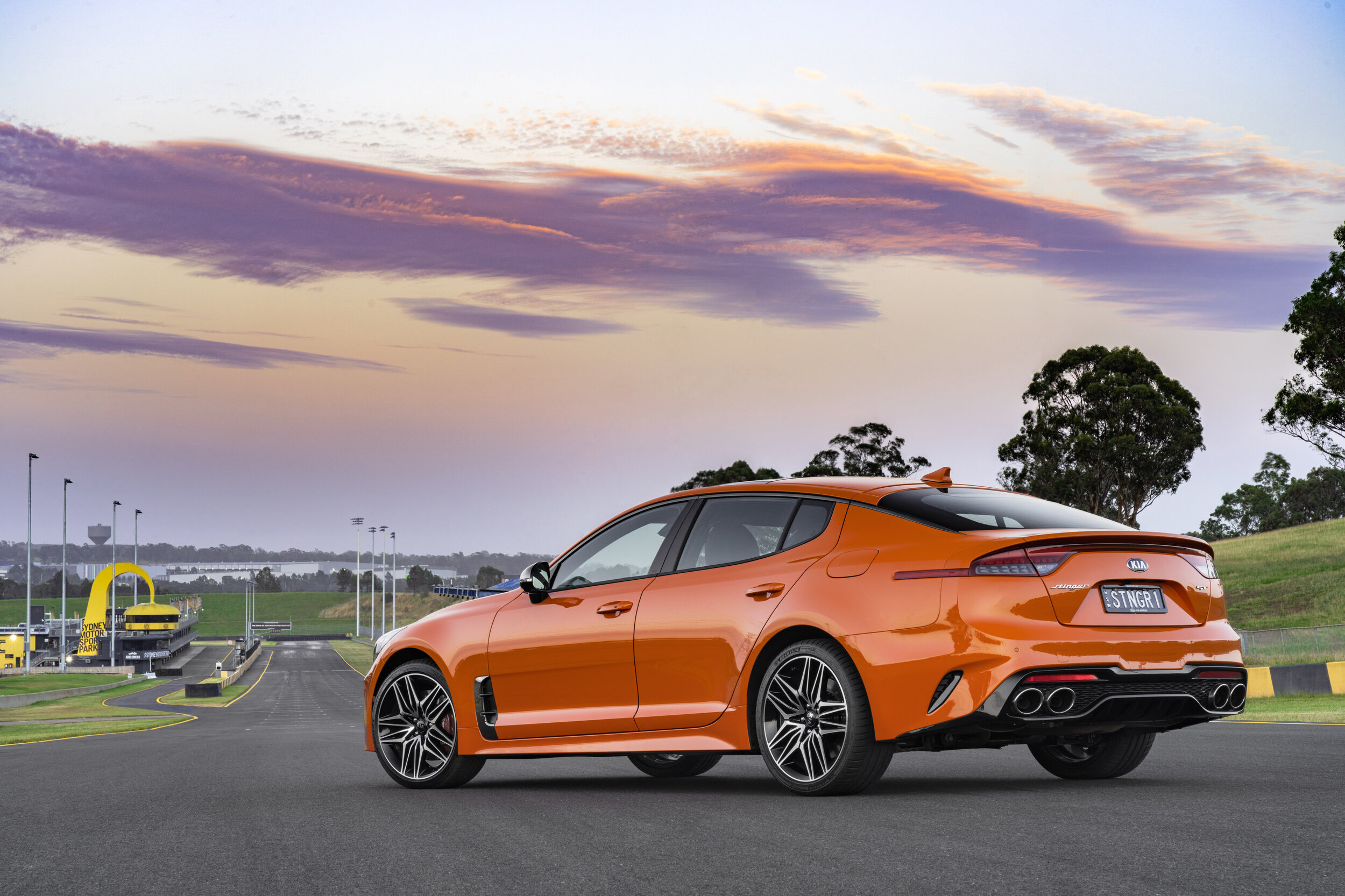
A SINGLE turbo four-cylinder GT Line and a fuller-blooded GT Sport with the headline twin-turbo V6 now comprise the choice of Stinger sedans offered by Kia NZ.

The range’s reduction from three models to just two, with a previous EX Turbo version being dropped, comes with an update that leaves the entry engine unaltered and the V6 achieving slightly more power – but no extra torque – and otherwise introduces some content updates, styling revisions and the sting of $5000 price increases for each.

The GT Line model, with the 182kW/353Nm 2.0-litre, now costs $64,990 while the GT Sport has become a $74,990 opportunity. The 3.3-litre engine now produces 274kW – 2kW more than previously – and continues to generate 510Nm.

Each engine marries to an eight-speed automatic.

The GT Sport achieves new standard bi-model exhaust and limited slip differential, a fresh wheel design and Nappa leather.

MY21-Kia-StingerPE-GT-02.jpg

Both cars update to a 10.25-inch central touchscreen, featuring a refined interface and improved reverse camera.

Common to both are an eight-way adjustable electric driver’s seat, heated and cooled front seats, a sunroof, a 15-speaker Harman Kardon sound system, and mood lighting.

The safety suite enhances to include safe exit warning, semi-autonomous highway driving assist (a combo of radar cruise and lane-keep assist working in unison), cyclist detection, rear occupant alert, and blind-spot view monitor (beaming an image from the wing mirror onto the primary infotainment screen).

MY21-Kia-StingerPE-GT-05.jpg


Subaru NZ limbers up for next Outback

New platform, new equipment – probably not the new turbo engine.

outback 4.jpg

CHRISTMAS is coming in late February for Subaru, this being when it will launch the next generation of a sales stalwart, the Outback.

An announcement today about the car’s release timing doesn’t spoil any element of surprise in respect to the kind of car we’re getting.

Subaru’s habit of releasing this model in North America well ahead of other markets continued with the sixth-generation line.  

The latest high-riding station wagon has been on sale Stateside for more than 12 months, with the world getting its first look when it was revealed at the 2019 Detroit motor show.

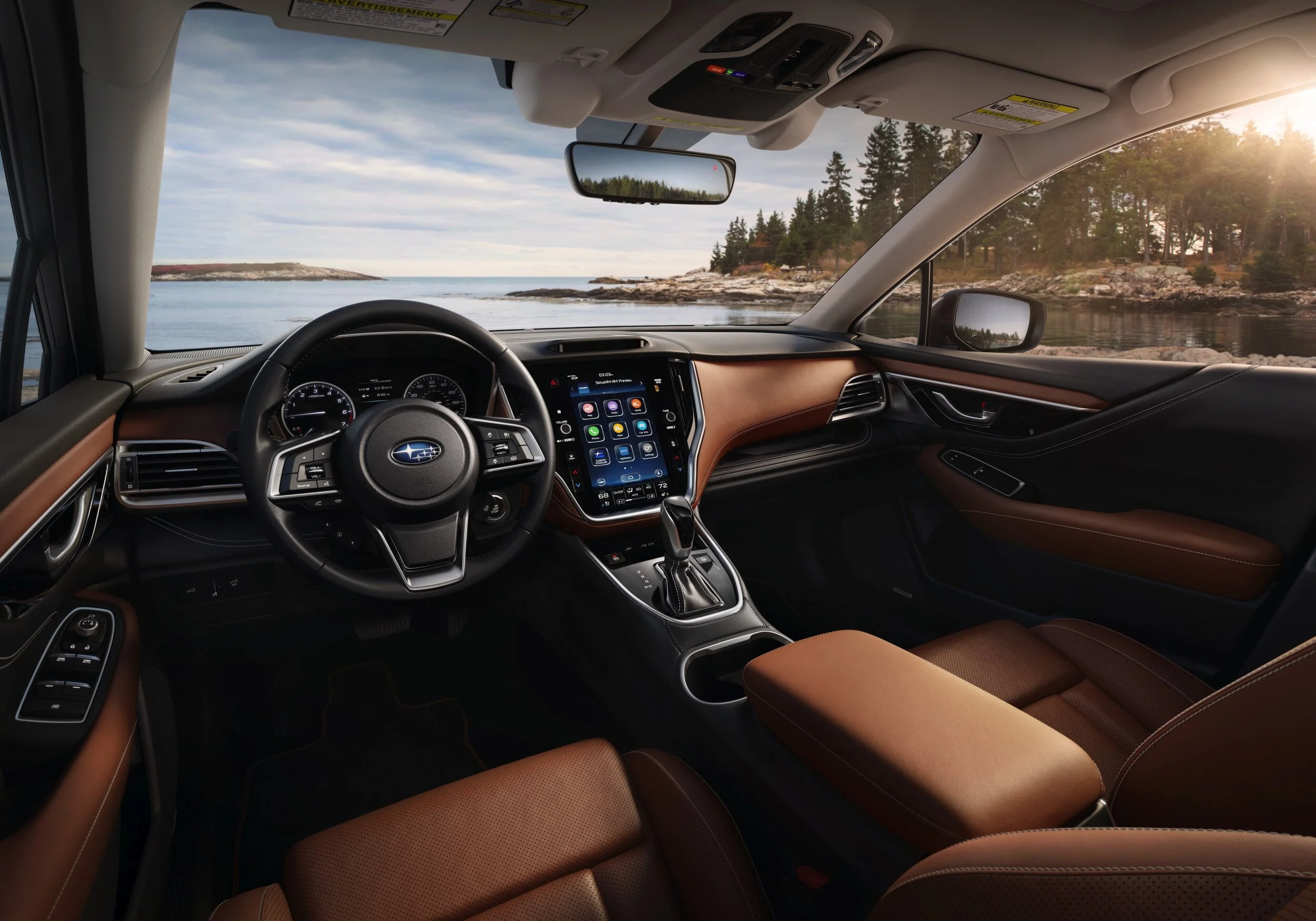
The recipe is highly familiar: A high-riding wagon powered by a flat-four petrol engine, married to a constantly variable transmission and always driving all four wheels, with styling that is very derivative of the outgoing car’s look, though the body is slightly larger and roomier and the car bases on a new underpinning, the Subaru Global Platform (SGP) that debuted with the latest Impreza.

outback interior.jpg

Subaru NZ’s managing director Wallis Dumper says the car has benefitted from continuous innovation, “which has resulted in the biggest, safest, most luxurious and technologically advanced Outback ever.”

“It’s safe to say this new generation Outback has undergone a serious transformation. Our rugged All-Wheel Drive adventurer is already our most popular Subaru and we are excited to unlock further potential in this completely new Outback.”

The big question is respect to the technology will be in respect to what’s under the bonnet.

What’s still to be clarified is whether there’s potential for our line-up to include the turbo petrol engine offered in North America as an alternate to the 2.5-litre naturally-aspirated petrol four-cylinder that carries over for another term, but with refinements.

Chances are … no. The car’s other significant right-hand-drive market, Australia, has confirmed today that all its variants will be powered by the naturally-aspirated unit.

Outputs likely to mirror those of the North American-market, 2.5-litre Outback, which develops 135kW of power and 238Nm of torque, so 6kW and 3Nm more than the current engine provisions. The turbo, meantime, is a 193kW/360Nm offer.

outback 1.jpg

The car has an uprated towing capacity of 2000kg – an increase of 25 percent over the current model – and also delivers a 11.6-inch infotainment touchscreen, alongside nappa leather-accented seat trim. 

Safety and technology is almost expected to be a feature of the new model, including the latest generation of the company's 'EyeSight' driver assist system, and the driver monitoring system as per the Forester. 

Other available technologies are expected to include forward and reverse autonomous emergency braking, adaptive cruise control, lane-keep assist and a 360-degree camera.

The model adopts as standard the updated X-Mode selectable terrain response system that has featured in the current Outback X. This combines driver-selectable drive modes for terrain and weather management with differential locks and hill descent control to simplify and improve capability on non-optimal driving surfaces.

outback 3.jpg


Octavia onslaught with wagon, conventional engines

Skoda New Zealand has finally been able to shared its proposal for a sales stalwart.

octavia_combi_021.jpg

WAGON versions will take the load of expectation hefted by the new Octavia medium car in this market. 

Skoda New Zealand has today announced three load-all variants – Combis in Skoda-speak - all with conventional powerplants.

In addition to not offering thought about the potential for another liftback – though it’s understood this version could still show, but as an indent-order car - it has steered clear of mentioning when or if it might secure the hybrid editions – topped by one with plug-in recharging - that are now claiming the spotlight overseas.

The New Zealand line starts with a $47,990 110kW 1.4-litre eight-speed entry Style model and progresses to a new RS that, at $57,990 is slightly cheaper than the equivalent in the previous range, whose stock has been exhausted for some months. The new RS runs a 180kW 2.0-litre and seven-speed transmission and, like the Style, is front-drive.

These are coming in March – about three months later than the timing local general manager Rodney Gillard had hoped to achieve and a timeline that is still fluid, due to the uncertainty about coronavirus impact on production and shipping.   

When speaking about the car immediately in the wake of its international debut, back in April, Gillard had voiced optimism of an end-of-2020 entry.

Those variants will be followed at some point in the second quarter by a four-wheel-drive Scout also with the 2.0-litre and with 15mm additional ground clearance and beefed styling cues. 

Octavia has been the brand’s biggest volume model internationally and has good history here, being the car that re-introduced Kiwis to Skoda in its new-generation (meaning, VW-owned) format.

This latest car, the fourth in its generation, is based on the MQB Evo platform that’s also used by the rest of VW Group’s latest compacts. 

It remains a generously-sized vehicle. Being 19mm longer than its forebear ensures this Octavia accounts for a 4689mm space in a car park. The wheelbase has remained unchanged at 2686 mm. It’s also 15mm wider, at 1829mm. 

Skoda cites it having markedly more interior space than the current model, giving a cargo volume of 600 litres before the rear seats are lowered. 

The new gen delivers big improvements is driving assistance technology. New systems include Collision Avoidance Assist, Turn Assist, Exit Warning and Local Traffic Warning, among other features.  

 The interior is also more advanced technologically, but Skoda here might be going light on this as well.

The announcement today talks of even a head up display being optional and it is not clear if the 10.25-inch Virtual Cockpit digital instrument panel that avails overseas as an alternate to an orthodox display will feature.

The plug-in hybrid will doubtless be asked about; it achieves a 150kW output from pairing the 1.4 petrol engine with an electric motor and 13 kWh battery. All that, and an EV driving range of up to 60km in the WLTP cycle. If that’s not good enough, there’s also the new Octavia RS iV plug-in hybrid which offers 180kW and a similar EV driving range.


Subaru confirms electric vehicle, NZ distributor keen

Auckland office has sought more info about car, a co-development with Toyota.

Subaru shared this image today

Subaru shared this image today

EUROPE will be served first, but if Subaru’s new battery-electric SUV ever becomes available for New Zealand use, the distributor will be an eager adopter.

That’s the word today from Subaru New Zealand managing director Wallis Dumper in reaction to head office in Japan acknowledging its first electric vehicle is under development.

“We would definitely be interested in anything electric, particularly anything electric that comes in four-wheel-drive,” he said in reaction to the unfolding news about the car.

“We will seriously consider anything with an ‘e’ association to it.”

A sports utility, similar in size to the Forester, the new model will be built on a new bespoke electric vehicle platform shared with Toyota.

Intention is to launch it in the first half of this decade, although it's tipped it to be revealed next year.

Because it will be built on an electric-only architecture, it's expected to get a new name; Japanese media are reporting that it will be called Evoltis, which surprises Dumper.

He points out that name is already used for a Latin America-market version of Ascent, the large seven-seater SUV that Subaru only makes in left-hand-drive and aims primarily at North America. 

Toyota announced its involvement in the EV co-operation last week, including that the platform will be known as e-TNGA and that it will develop a RAV4-sized battery-reliant car.

The architecture is designed to be highly adaptable to allow for vehicles of different lengths and can be used for front-, rear- and four-wheel-drive layouts, thanks to the ability to fit motors to both axles. It can also accept multiple battery sizes.

While not confirmed by either firm, the new Subaru EV is likely to be 'twinned' with that Toyota machine, according to the website for British motoring weekly, Autocar.

Beyond the use of the shared platform, Subaru has released no further technical details of the new EV, saying that it will divulge more details in 2021.

Dumper says he can be of no assistance either – the announcement to media today has been the only official word. He’d like to know more and that view has been shared with Japan. 

Screen Shot 2020-12-15 at 4.04.51 PM.png

Earlier this year, Subaru displayed an electric concept car (above) at a technology briefing in January, and it's expected that the eventual production EV will take styling cues from it.

Subaru’s first EV is a major step in its electrification plans. The firm has recently introduced mild-hybrid e-Boxer versions of its XV and Forester and is aiming for at least 40 percent of its global sales to be either electric or hybrid by 2030. 

Dumper says those cars are selling satisfactorily and have also raised consumer interest in Subaru product in general. “If people come in to look at the hybrid but don’t buy it they often buy a non-hybrid version instead.”

Autocar says Subaru had previously planned for its first electric car to be based on an existing model on its own Global Platform, but it changed that concept due to its new partnership with Toyota.


PHEV Tucson’s electric range cited

Plug-in tech a first for popular model, but will it come here?

Hyundai Tucson Plug-in Hybrid (1).jpg

DETAIL is finally out about one derivative of the new-generation Tucson Hyundai’s New Zealand distributor has yet to officially commit to.

When initial specifications were announced at the new generation Tucson’s international unveiling in September, the make only spoke about the purely fossil-fuelled drivetrains.

The Tucson plug-in hybrid will likely be of more interest, however, and not simply because of the growing consumer interest in electrically-assisted drivetrains. It is also a breakthrough for this brand. 

The set-up comprises a 1.6-litre T-GDI turbo petrol four-cylinder engine with a 66.9kW electric motor, and a 13.8kWh battery. Combined, the powertrain produces 197kW and 350Nm of torque. The electric motor on its own develops a peak of 304Nm. 

The Tucson plug-in hybrid drives all four wheels via a six-speed automatic gearbox.

It also incorporates some trick aerodynamics. Behind that complex radiator grille, there's an active air intake flap, that opens and closes as needed, improving air-flow into and around the car, depending on how much cooling the engine needs.

 A range of drive modes are on offer, the Tucson's standard mode driving the wheels via the electric motor alone at low speeds, with the combustion engine switching on at higher velocities or when rapid acceleration is required.

Hyundai reckons that the Tucson plug-in's electric-only range will be more than 50km on the WLTP cycle' but the final figure is to be confirmed.

There's a 7.2kW on-board charging system, so it'll charge reasonably briskly from either a home wallbox or a public charger. CO2 emissions figures haven't yet been issued. 

Hyundai Tucson Plug-in Hybrid (2).jpg

Though Hyundai describes the 13.8kWh lithium-polymer battery as being mounted on the underbody, this installation and the fuel tank has eaten into boot space a little.

While the conventional petrol-engined Tucson that Hyundai New Zealand has confirmed it will introduce in the first quarter of 2021 has a 620-litre boot, the plug-in model has to make do with 558 litres. That luggage space expands 1737 litres with the rear seats folded. 

That four-wheel drive system comes with HTRAC terrain response technology, and there's optional adaptive dampers for the suspension.

The PHEV's interior is all-but-identical to the standard, non-hybrid model, save for a handful of hybrid-specific displays for the 10.25-inch infotainment touchscreen and 10.25-inch digital instrument cluster.

The Hyundai BlueLink smartphone app also gains the ability to monitor the Tucson's lithium-polymer battery's state of charge, as well as manage charging settings.

In the safety department, exclusive to the plug-in Tucson is Parking Collision-Avoidance Assist, a low-speed reverse autonomous emergency braking system that detects and notifies the driver of hazards behind the moving vehicle, and applies the brakes if necessary.

The new Santa Fe is also set to present to NZ next year in a plug-in hybrid format, as well as in mild hybrid.


Cupra quartet for 2021 release

Three all-new cars are set to land mid-year, plus an updated Ateca arriving next month.

The Cupra family of 2021

The Cupra family of 2021

PRICING and arrival timing for the next crop of cars from Cupra, the performance arm of Volkswagen Group’s Spanish brand element, SEAT, has been announced. 

An update of the Ateca sports utility that has been flying the flag for Cupra for more than a year will be a pathfinder for the main group, with expectation of release next month. 

Three all-new models – the Formentor, the Leon hatch and Leon Sportstourer – are schedule to arrive in June, though that timing is dependent on ongoing effects of the coronavirus on car making and shipping.  

When notifying intention for Cupra today, local brand boss James Yates also reminded that Germany has just gone into a hard lockdown, not expected to lift until early January.

As is, Covid-19 has already caused the distributor, part of Giltrap Group, to delay these announcements for a marque that is intended become the lead product type for private buyers while SEAT product will be presented more toward fleet and rental use.

Whatever challenges lay ahead, thanks to the imprint made by the Ateca in its current form, Cupra is resonating with New Zealanders at a level that leaves Yates confident is a brand that will achieve more focus once the family enlarges. 

“If these three new models replicate the Cupra Ateca’s success, we’ll be seeing a lot of car buyers in New Zealand re-thinking their badge allegiances.” 

Formentor is expected to be the volume and image leader

Formentor is expected to be the volume and image leader

A striking sports utility coupe, Formentor is the first Cupra car designed exclusively for that make – the others being re-engineered and style editions of VW cars – and is expected to become the volume king.

It will stand to offer a point of difference on more than just the impressive looks: By late next year there’ll be a hybrid version with front-wheel drive that uses a 1.4-litre petrol engine and an electric motor to produce 150kW.

In June, however, the focus is on two all-wheel-drive (4Drive in Cupra-speak) models with orthodox petrol drivetrains, in 140kW and 228kW formats, for $54,900 and $68,900 respectively, precluding on-roads. No pricing has been set for the e-Hybrid yet.

The Formentor is based on VW Group’s MQB Evo platform. Yates proposes that styling resembles that of a rugged all-terrain vehicle, but the car’s exterior design features bring a lighter contrast to the vehicle’s silhouette. A striking ingredient of the interior is a panoramic 12-inch floating infotainment screen.

The Formentor has recently entered production for European markets, and it is made at the brand’s facilities in Martorell, on the outskirts of Barcelona.

Yates also believes the Leon models – $59,900 in hatch and $6000 more as a Sportstourer - might also deliver decent penetration, pointing out that sporty station wagons are rare fare. The Sportstourer has no direct equal among other Group brand represented here.

“New Zealand’s growing affection for SUV’s, means there is a distinct shortage of exciting station-wagon models available … those priced well under $100,000 any way.”

He says this model’s 228kW 4Drive setup will catapult the car safely from standstill to 100 kmh in less than five seconds and cites that, as result of being more hunkered than an SUV, it will offer a more dynamic driving experience.

The Leon comes with Dynamic Chassis Control (DCC) with four different pre-sets (Comfort, Normal, Sport and CUPRA) and the Sportstourer’s 620 litre cargo space is considerably larger than those offered by the Ateca (485 litres) and the Formentor (420 litres).

Meantime, the updated Ateca can be identified by styling revisions inside and out. The $66,900 model retains the current car’s 221kW/400Nm turbocharged four-cylinder 2.0-litre petrol and seven-speed auto. It will achieve 100kmh in 4.9s from a standing start. 

Meantime, Cupra’s first electric car, the el-Born, seems still likely to release here in 2022. Based on the same underpinnings as Volkswagen’s ID.3 hatchback and ID.4 SUV, the model has an official range of 498km on the WLTP test cycle.


X marks Sport Plus spot

A new name and fresh look for the mid-level model in the Forester family

Forester_X_Sport Press Imagery 7.jpg

IT’S the story of a middle child who figured becoming an extrovert was the best route to drawing more attention to themselves. 

Such change has emphatically come to the Forester Sport Plus that, after, three years in the market, has patently had enough of being known as the quiet one. It undergone a makeover that’s left it with a new name, a more extrovert look and impression of a more rebellious attitude.

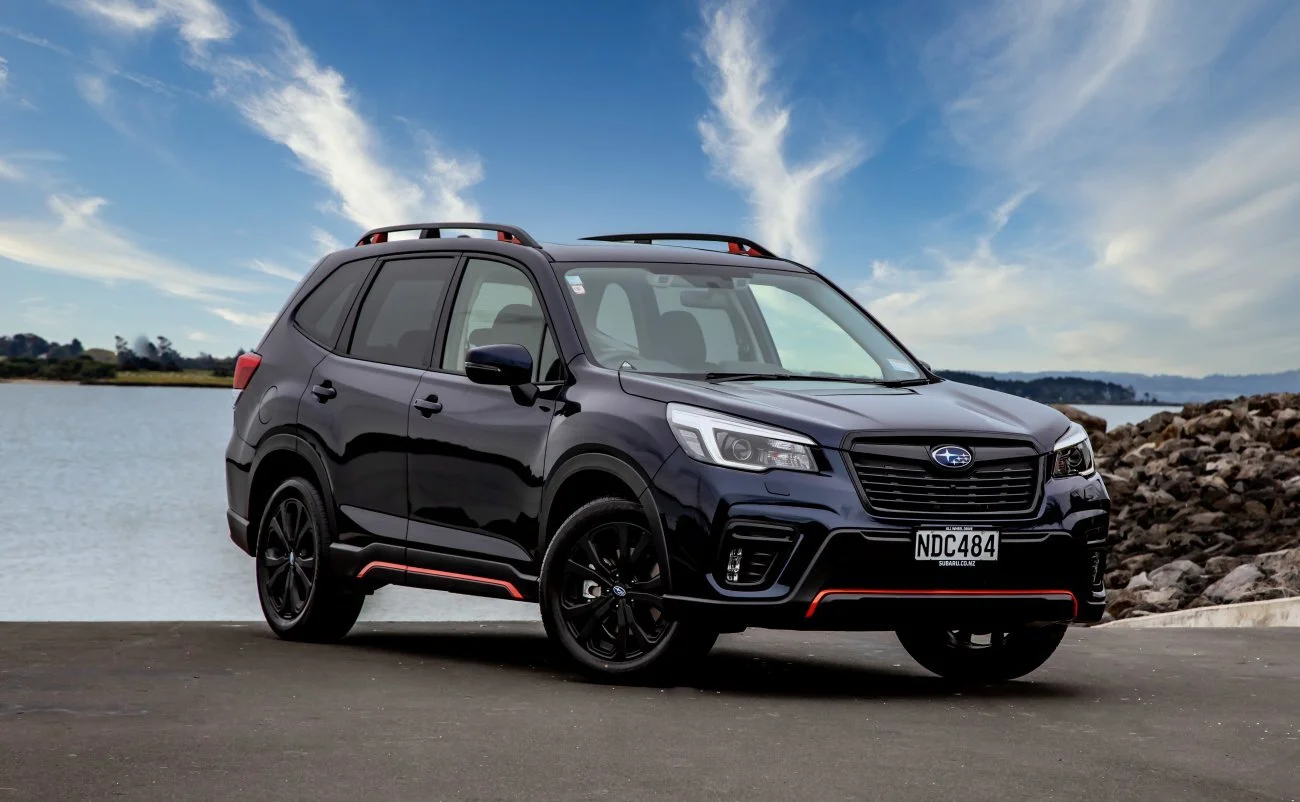
What is from now on the Forester X Sport will deliver with a styling pack that Subaru NZ describes as delivering “a special X-factor that helps you get from A to X.”

The core features are a new style of 18-inch alloy, in black, plus a host of orange accents – the front, side, rear under guard and roof rails all get the orange treatment, while on the interior, the orange features extend to the trim stitching and the gear selector surround. X Sport buyers have a choice of six different exterior colours, including the dark blue of the car in today’s photographs – this being a hue specific to this version.

The name change is made permanent by it taking X Sport badging, and with Subaru also now retiring the Sport Plus designation, though in respect to equipment level, everything from the old variant carries into the new, and the price unaltered, so still $47,490.

Forester_X_Sport Press Imagery 10.jpg

Subaru of New Zealand managing director Wallis Dumper has confidence this make-over will pull extra focus toward the derivative,  including those that may not have considered a Subaru before and are looking for a distinctive SUV.

“The Forester X Sport is a capable SUV with performance aesthetics. This winning combination of both style and substance will no doubt appeal, particularly to those that require the practicality of an SUV and are shopping for something sporty that sets them apart from the crowd,” he says.

The equipment provision includes an 8 inch touch screen infotainment system, satellite navigation and push button start. Water repellent seat fabric continues.

The enhancement times with Subaru having raised Forester towing capacity by 300kg to 1800kg braked in all models, excepting the e-Boxer Hybrid.

Forester_X_Sport Press Imagery 6.jpg


ID check: Why VW’s high-powered effort is so tasty

VW’s electric push is global, but NZ is not yet on the A-list. After seeing what’s on offer, you might wish we were.

The eye-catching ID Buzz concept of 2017 is coming out in 2017 as the ID.7. Let’s hope NZ catches this wave.

The eye-catching ID Buzz concept of 2017 is coming out in 2017 as the ID.7. Let’s hope NZ catches this wave.

THE sooner Kiwis get into the new electric vehicle habit, the sooner they will likely get to enjoy a slew of battery-reliant cars set to unleash from Volkswagen. 

That’s long been the indication from VW’s national distributor, which makes clear that markets that show most support for mains-supported models tend to achieve priority from this maker. 

We’re seeing it already; as is well known, this maker is well into a massive EV ambition; investment of around $122 billion in development of EVs and other new technologies over the next five years has been signed off and hardly a week goes by when yet another car in its bespoke electric family, called the ID range, doesn’t seem to pop up.

ID looks brilliant for NZ; but NZ – for all the attraction of being a world-leader in generation of ‘Green’ renewable electricity (thanks to our rich hydro, geothermal, wind and solar resource) – is not yet brilliant for VW.

The reasons why the e-Golf that has modestly plugged VW electric potentials for the past two years has retired with no direct replacement not set to land until the end of 2022 are multifold, but essentially VW is prioritising places where it has to be or where market opportunity is so obvious it cannot afford not to involve.

Europe is top of the list because of tough European Union emissions fleet-wise standards. Electric cars are a vital off-set to achieving CO2 targets. Failure will mean huge fines.

The second is the gold mine. China is VW’s largest single export market – it’s also the world’s largest EV market. VW is putting a lot of focus into launching eight ID models into China by 2023.  

More recently, it is paying attention to the increasing number of countries, of which the United Kingdom is probably the best known to us, that have set dates for the switch to zero emission-only cars.

These and other reasons – the impact of coronavirus on production, the fact that VW’s electric cars come out of a handful of factories, the limitations in making enough batteries - is why VW New Zealand boss Greg Leet expressed opinion a month ago that he expects “late 2022” is now the best bet for when NZ will start seeing ID cars on sale here.

That’s a huge frustration not least because other makes in the VW family that also have electric cars off the common ID platform (called MEB) are less constrained, to the point their own cars are almost certain to beat the ‘originals’ to local sale. For Skoda, that’s the Enyaq, for SEAT the E-Born and for Audi, which is already establishing increasing presence with its big e-trons, that’ll be the Q4 e-tron.

Regardless, when ID does arrive, we can expect to see an explosion of choice – VW has a much wider choice of MEB-based electric models than any other Group make. 

Let’s go through them:

ID.1 and the ID.2 crossover sister ship are city chic runabouts designed as budget EVs.

ID.1 and the ID.2 crossover sister ship are city chic runabouts designed as budget EVs.

ID.1 and ID.2: Respectively a supermini and compact crossover intended to sit alongside the combustion-engined Polo and T-Cross respectively that will hit production in 2023 and introduce on a ‘lite’ version of the MEB platform. 

These models have a firm urban, short journey focus so will run smaller batteries, up to 45kWh, and also sell in a lower price bracket. 

Volkswagen CEO Ralf Brandstatter intends pricing start at as low as $NZ33,400 in Europe, so $15,000 cheaper than the least expensive wholly electric new car here at the moment, the MG-ZS.

Already here as a parallel import, but not set to be repesented in NZ-new form, the ID.3 is selling well in Europe and the UK.

Already here as a parallel import, but not set to be repesented in NZ-new form, the ID.3 is selling well in Europe and the UK.

ID.3: The first of the family to hit production, a hatchback as important, in VW Germany’s view, as the Beetle and the original Golf.

It’s a core car, already well settled into European sale and doing well straight out of the box: In September, it comprehensively the Telsa Model to be Europe’s top-selling EV.

Right-hand drive production for the United Kingdom has begun, so conceivably were cars available, we could source from there. However, although grey importers seem keen to do so (there’s at least one here already), VW NZ has no plans for ID.3, mainly because it is concerned there will be insufficient consumer interest in an electric hatch.

Still, perhaps VW NZ will review if either ID.3 production frees up, or the private imports sell well or if it likes the cut of ongoing developments for ID.3, rolling out from next year. The core improvement is a modest increase in range – the 77kWh edition will gain an additional 38km, taking overall range to 570km, due in part to software improvements and advances in thermal management and cell efficiency.

ID.4 will be the first of the family to be sold by VW New Zealand … at the end of 2022.

ID.4 will be the first of the family to be sold by VW New Zealand … at the end of 2022.

ID.4: Revealed in September and closely based on the ID Crozz concept from 2017, this car is more than being simply a crossover version of the ID.3 – it’s the product onto which VW has pinned most international aspiration.

It debuts as Volkswagen's first all-electric SUV – making it a more obvious option for buyers looking to haul their family around in zero-emissions style than the ID.3, VW NZ believes.

At 4.58 metres long, it positions between the regular Tiguan (4486mm) and the stretched seven-seat Tiguan Allspace (4701mm). Specific interior figures are still to come, but VW claims the cabin will have the same sort of room normally the province of larger SUVs (because, no need for drivetrain packaging; it’s a flat-floored environment). Luggage space comes to 543 litres with the rear seats up and 1575 litres when folded flat. For context, the Tiguan lists 615/1775 litres and the Tiguan Allspace 230/1655.

In its initial form, motivation will be provided by a 150kW/309Nm electric motor drawing power from a 77kWh battery pack, with a WLTP-verified driving range of up to 520 kilometres.

However, VW has recently confirmed intent to add a ID.4 GTX, due to hit right-hand-drive production in mid-2021. GTX is VW-speak for ‘performance electric’; the ID.4 in this format will be dual motor (whereas the standard car s rear motor), so all-wheel-drive, with 225kW and 460Nm. VW is talking 0-100kmh in 6.2 seconds – so, 2.3s quicker than the standard rear-drive ID.4 - a top speed of around 190kmh and a range of up to 460km on a standard 82kWh battery.

Charging on a 120kW DC connection can get the ID.4 to 320km range in 30 minutes, while the 11kW on-board charger can deliver 53km of range in about an hour. 

ID.5 is a fastback ID.4, the styling expected to mirror that of the ID Crozz concept of 2017, seen here

ID.5 is a fastback ID.4, the styling expected to mirror that of the ID Crozz concept of 2017, seen here

ID.5: Based heavily on the ID.4, but with a coupe-style body. Effectively, then, VW’s equivalent of the Audi Q4. VW gave an indication of the look with a concept, the ID Crozz Coupe. The drivetrain has yet to be revealed, yet most pundits are picking it’ll mirror the ID.4’s. VW has indicated rear-drive and all-wheel-drive versions.

ID.6 will represent as a sedan as well as in the station wagon form seen here, in its ID Space Vizzion concept form.

ID.6 will represent as a sedan as well as in the station wagon form seen here, in its ID Space Vizzion concept form.

ID.6: Actually two cars, a sedan and a station wagon. Also in production from next year, these are derived from the ID Vizzion and ID Space Vizzion concepts, most latterly known as the Aero A and Aero B, are based on an updated MEB platform and will arrive in 2023.

The concepts featured an 82kWh battery pack however it’s thought a 111kWh battery could become available, to provide up to 700km of WLTP-rated range.

A rear-mounted 359kW electric motor will standard while some versions will add another electric motor on the front axle to increase output to 449kW. 

VW has suggested the production editions will largely stay true to the look and format of the concepts it showed off at the 2019 Los Angele Motor Show.

As much as station wagons have become a niche choice because of consumer shift to SUVs with similar spaciousness and practicality, that sharp aesthetic is one reason why the car is worth having, says Brandstatter.

The stronger aerodynamic advantage from a lower-slung wagon is the reason why the car can achieve its range, he says.

“Its aerodynamic design ensures a top drag coefficient and an extremely attractive high-tech look. A feast for the senses — and for all tech and design fans.” 

The concept has a very swish interior that Brandstatter has suggested will also be enjoyed by customers, with comment that the production equivalent will have a cabin as noble and spacious as that of the Phaeton – VW’s thwarted attempt at an unlimited luxury vehicle that released in 2002 and failed to resonate.

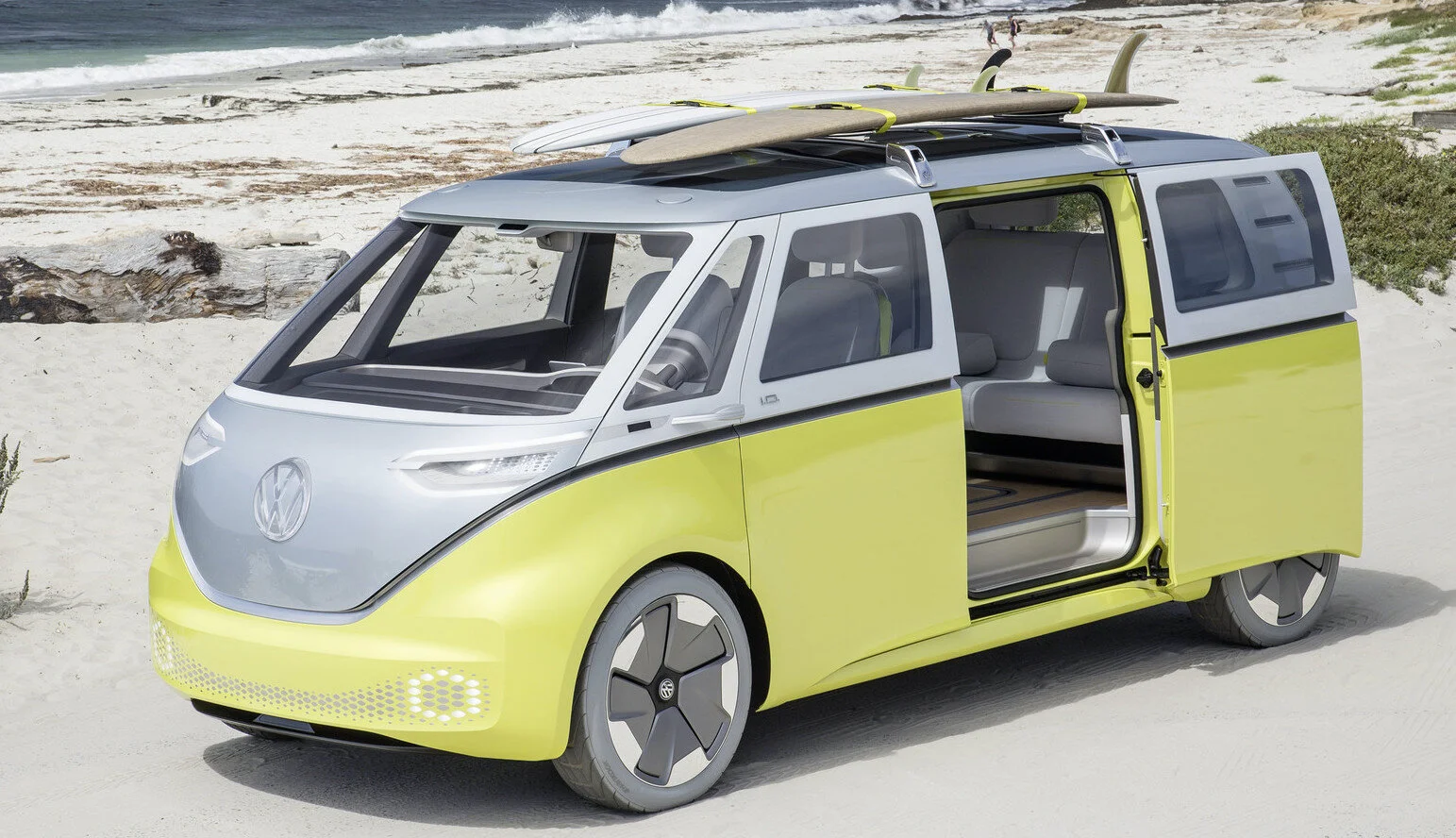
ID.7 is the production version of the ID Buzz, inspired by one of VW’s most famous models from yesteryear, the Microbus/Kombi.

ID.7 is the production version of the ID Buzz, inspired by one of VW’s most famous models from yesteryear, the Microbus/Kombi.

ID.7: Set to enter production in 2022, this is the model that has every VW fan particularly excited, if just because of the styling.

The ID Buzz passenger and IZ Buzz Cargo design studies of 2017 that foreshadow the ID.7 plainly draw lots of inspiration from one of VW’s most iconic models, the original Microbus. VW has vowed to keep that spirit alive with the production versions. Conventionally hinged front doors, automatic rear-sliding side doors, wheels up to 21 inches in diameter, according to a recent report by the website for British motoring weekly, Autocar.

ID.7 is destined to be the largest car coming off the MEB underpinning; there are standard and long wheelbase formats. VW has only shared dimension of the first, citing a 4962mm length, 1985mm width and1896mm height.

 The generously dimensioned interior will stretch to 2860mm in length; the passenger model will have seven seats, in three rows.

It’ll be produced in rear or all-wheel-drive and run an 82kWh battery. The large frontal area will impact on range expectation, Brandstatter has warned. “It won’t have 700km but something around 400km.” Still, any sacrifice for this styling is worth it, right?

Autocar reports that ID.7 will provision with the widest range of colour and trim opportunities. Special touches will include a smiling emoji symbol within the door handles, an ice scraper and bottle opener within the front middle stowage box and an umbrella graphic that is made visible within the base of the windscreen when the wipers are in operation.

ID.8 is at this stage just for China and will likely only be built there. This is the ID Roomzz design study from last year’s Shanghai motor show.

ID.8 is at this stage just for China and will likely only be built there. This is the ID Roomzz design study from last year’s Shanghai motor show.

 ID.8: A very plush large SUV, purely for China at the moment, derived from the ID Roomzz concept displayed at last year’s Shanghai Motor Show. The concept featured a 82kWh battery and a cited 450km (WLTP) range, with capability of replenishing within 30 minutes to 80 percent of battery capacity on a 150kW (DC) set up.

The design study runs two electric motors a system output of 225 KW, this allowing 0-100kmh in 6.6s and a 180kmh top speed.


Toyota NZ acknowledges vehicle supply issues

No quick fix for stock constraints, market leader warns.

the rav4 hybrid is among models that have become subject to delivery delay

the rav4 hybrid is among models that have become subject to delivery delay

WILL other brands lose reluctance to steer clear of acknowledging how affected they also are by an increasingly obvious problem – diminished new vehicle availability – now that the market’s biggest hitter has opened up about its own situation? 

That rhetorical becomes more valid with Toyota New Zealand’s concession that delivery times for popular models are slowing, to the point where orders are taking more than a month to fulfil.

The Palmerston North-based operator, which still accounts for one quarter of all new passenger vehicle sales nationally even after been hit hardest by the rental car business freeze, has stopped short in comment issued yesterday of being too specific about which model lines are being affected and for specifically how long in respect to individual types.

However, two models it has given as examples of being subject to hold-up – the RAV4 Hybrid and the new Hilux – are among its biggest stars and it has also cited that most of its popular vehicles are subject to some degree of inconvenience.

It also suggests an average wait time of six weeks between orders being lodged and fulfilled is often normal, that deliveries up to March, 2021, are impacted and there is potential for delays to continue until the middle of the year.

“The effects of Covid-19, closed borders and delayed shipping and logistics into New Zealand are severely impacting all operational areas of our business,” says chief executive officer Neeraj Lala.
 
“We have seen greater than a 30 percent reduction in our new and used vehicle sales due to the closure of the borders, and we are forecasting a minimum of 10 years impact to our overall value chain including reduced parts and service.”
 
As much as coronavirus-influenced supply chain disruptions and congested ports are the main cause of vehicle supply delays, TNZ these issues are also exacerbated by high global demand for new Toyota vehicles.

 
There is also further disruption in logistics with global shipping delays impacting new vehicles, used vehicles from Japan and parts, which has an effect on delivery schedules here.
  
Lala says the company is enormously grateful customers are showing patience but accepts that on-going delays will impact future sales as customers become frustrated.
 
“We are doing everything we can, but global demand and supply restrictions combined with shipping delays are fuelling customer frustration. We are providing customers with updates as often as we can but these timeframes are fluid.”
  
“We currently have 3,297 retail orders as at the end of November, which is a good position for Toyota New Zealand to be in but that means 72 percent of vehicles arriving in the country are pre-sold which is unprecedented for Toyota as demand for low emission hybrids continues to surge,” he says.


EQC becomes latest NZ COTY star

For a second year running, an electric car wins the nation’s top motoring prize.

Lance Bennett, general manager of Mercedes Benz Cars New Zealand, with the 2020 New Zealand Car of the Year, represented by the Peter Greenslade Trophy, and the EQC.

Lance Bennett, general manager of Mercedes Benz Cars New Zealand, with the 2020 New Zealand Car of the Year, represented by the Peter Greenslade Trophy, and the EQC.

NEW Zealand Car of the Year 2020 is the Mercedes EQC, the big premium sports utility becoming the third electric vehicle to take this annual accolade.

An award that is in its 33rd year first took an electric turn in 2015, with the BMW i3 being recognised.

Last year the title went to the Jaguar i-Pace, which also operates wholly off the mains.

That run means three of the six most recent winners, including today’s, have been electric.

Richard Edwards, president of the New Zealand Motoring Writers’ Guild, the organisation behind New Zealand Car of the Year, says the recognition for the $142,000 Mercedes sends a strong signal about electrification’s place in the future for motoring in New Zealand.

Though all the electric cars to so far gain this recognition have come from premium makes and two sell in the $100,000-plus executive sector, he contends the EQC’s placement is an example of how, in some segments, electric vehicles are nearing price parity with their petrol and diesel counterparts.

“If you look at where the EQC fits into the broader Mercedes-Benz range on size, specification and performance, its price is not out of place at all.”

He also anticipates many more electrified vehicles to follow it as New Zealand Car of the Year and notes that this year’s announcement follows a watershed time, with the Government announcing a ‘Climate Emergency’ and pushing for an increasing uptake of electrified vehicles, including in its own fleets.

The award was decided by a voting process involving two dozen Guild members who actively road test vehicles, with 10 cars making the final cut for consideration.

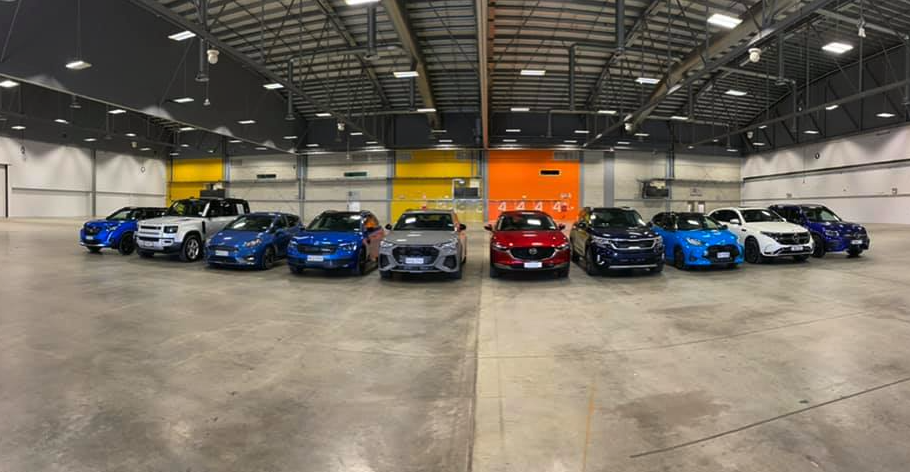
The others were the Ford Fiesta, Toyota Yaris , Audi Q3, Kia Seltos, Land Rover Defender, Mazda CX-30, Mercedes-Benz GLB, Peugeot 2008 and Skoda Kamiq.

2020-coty-new-zealand-mercedes-benz-eqc-high-res.jpg


Palisade’s Aus price gives Santa Fe a knock

The Palisade, Hyundai’s new super-large SUV, could present a big deal here if pricing reflects the Australia market strategy.

PalisadeHighlander2.2D-04.jpg

FAVOURABLE positioning against the just-landed Hyundai Santa Fe could seem a potential for that model’s big brother, the Palisade.

That’s on assumption stickers announced in the only other right-hand-drive market have been a guidance for the NZ distributor.

Hyundai New Zealand has confirmed intent to have the Palisade on sale here next month, but has yet to provision local specifications and prices for what will be the fifth SUV in its line-up and the first to offer eight seats.

It did not respond to a request to offer clarity on where it could stand, but conjecture has been fuelled by announcement of the car’s pricing in Australia.

If transferred here, our neighbour’s strategy would conceivably give the larger model a good start – but perhaps at expense of the Santa Fe, with which it shares a platform, a diesel drivetrain and even a common assembly line in South Korea. 

Across the water, Palisade will sell for the equivalent of $NZ63,850 in entry form and $NZ79,800 in a flagship trim, those recommended retails precluding on-road costs.  

PalisadeHighlander2.2D-03.jpg

If carried into NZ, that strategy would see a base Palisade siting $50 below the cheapest Santa Fe, but would also leave the top Palisade siting almost $20k beneath the most expensive Santa Fe here, the Limited.

 Australia has decided on an eight-seater entry model, simply called Palisade, and a range-topping version it calls Highlander, available with either seven or eight seats, both in front-drive petrol V6 and four-wheel-drive 2.2-litre turbodiesel.

 New Zealand and Australia are presently the only right-hand-drive markets for the car, which was originally expected to only be sold in North America, so conceivably that’s the full menu for us as well.

It became available for NZ consideration, with sign-off for sale confirmed in June, after Hyundai’s distributor in Australia successfully petitioned Seoul head office to start a right-hand-drive build programme.

Hyundai NZ has previously indicated thought that it sees good potential for Palisade, but has made clear it will not deliver it in as many formats as the Santa Fe. And don’t expect to see the Highlander badge – Toyota NZ obviously already has right to that name for its own SUV. It’ll be a Palisade Limited here, to maintain continuity with Hyundai NZ badging protocols. 

The big selling Palisade has previously been identified as the 2.2-litre four-cylinder turbodiesel four-wheel-drive. That’s been the top choice for Santa Fe, too. Palisade takes it the virtually identical tune, power output drops by 1kW in Palisade, to 147kW, but torque is identical at 440Nm.

PalisadeHighlander2.2D-05.jpg

Palisade’s alternate V6 is a 3.8-litre, creating 217kW and 355Nm, whereas Santa Fe runs a 3.5 good for 200kW/331Nm. They all run the same eight-speed automatic transmissions. Only the Santa Fe’s entry petrol, a 2.5-litre, is not in the larger setting.

Hyundai says the Palisade’s V6 uses 10.7 litres of fuel per 100 kilometres, which is just 0.2L.100km worse that the Santa Fe’s claimed optimal. The diesel’s economy suffers in the Palisade – Hyundai cites 7.3L/100km for the larger unit, against 6.1L/100km in a Santa Fe.

The exterior is to Hyundai’s current design language, but reminds of larger American SUVs, according to Australian website CarAdvice.

The entry car runs on 18-inch wheels, the high-end car on 20-inch wheels for the Highlander, together with bi-LED headlights and tail-lights.

Inside, buyers get a choice of black leather with metallic-look trim and a knit headliner in the Palisade, while the high-end model gets burgundy or beige Nappa leather with beech wood-look trim and a suede headliner.

A 10.25-inch infotainment screen featuring satellite navigation, Apple CarPlay and Android Auto capability, and multi-connection Bluetooth, which runs through a 12-speaker Infinity premium audio system, is a common fixture.

Due to the expansive cabin, the Palisade also offers 'Driver Talk', which allows the driver to speak to second- and third-row occupants through the car's audio system. The system also has a 'Quiet Mode' which mutes the rear speakers, and sets the front speakers to a low maximum volume.

Front occupants get wireless smartphone charging in the centre console, while second-row passengers have access to USB ports.

As well as three ISOFIX child seat restraints, the Palisade also features four top tether child seat anchor points in the seven-seat Highlander, and five anchor points in eight-seat configuration (all variants). The second-row of seats features one-touch folding to help with third-row loading.

Front occupants get to enjoy heated and ventilated power seats, while the driver gains a 7.0-inch LCD digital instrument cluster. The 10.25-inch, all-digital instrument cluster offered in overseas markets doesn’t feature in right-hand-drive, but a head-up display goes into the flagship.

On the Highlander, a blind-spot view monitor shows a live feed of the Palisade's left and right blind-spot zones within the instrument cluster when the indicator is engaged, as well as a surround view monitor with guidance provides a 360-degree birds-eye view when parking.

A dual-panel power sunroof and hands-free power tailgate are also standard on the more expensive model.

Hyundai's SmartSense safety suite comes standard, featuring blind-spot collision-avoidance assist, high beam assist, rear cross-traffic collision-avoidance assist, driver attention warning with leaving vehicle departure alert, lane-keep assist, lane following assist, safe exit assist (top model only), rear occupant alert, autonomous emergency braking with pedestrian and cyclist recognition, and adaptive cruise control with stop-and-go.


Outlander’s official unveiling less revealing

Days after images of the next-gen edition without disguise hit the internet, Mitsubishi sends out a shadowy sneak preview that reveals little.

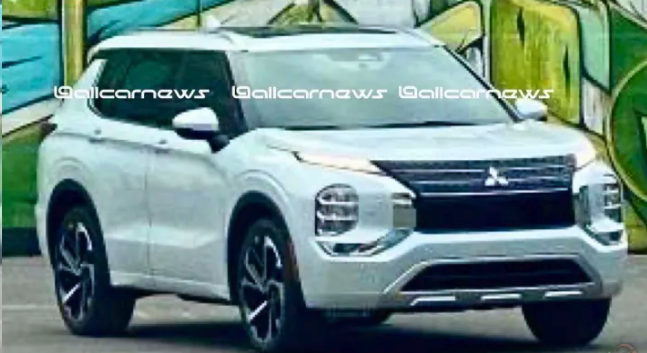
This and other images of what appears to be the next Outlander were posted on the web days ago.

This and other images of what appears to be the next Outlander were posted on the web days ago.

INTENT by Mitsubishi to maintain an air of mystery with the next Outlander that is expected to come on sale here in 2021 seems set to proceed, regardless that unexpurgated images of the model have already hit the web.

Today distributors, included Mitsubishi Motors New Zealand, sent out an official shadowy image, that of course discloses little detail, as part of a build-up to the car’s full official unveiling, timed for February.

There’s just one catch to keeping the suspense up – the cover asppears to have been completely blown.

Images of a car without any camouflage have been racing around the internet for most of this week.

Mitsubishi distributors sent this extremely shadowy image out today.

Mitsubishi distributors sent this extremely shadowy image out today.

Those pictures, seen here, purport to show a car in a public area and were posted first on Instagram account @allcarnews, then subsequently picked up by other websites, including Australia’s CarAdvice.

 The account claims the car was snapped while sitting in an open car park.

The new Outlander looks to share the bulk of its design with the Engelberg Tourer, a concept that was revealed at the 2019 Geneva motor show.

The ‘caught-out’ car carries the brand's current design language, showcasing slim headlights and pointed front facia.

It's expected the vehicle will share its underpinnings with the upcoming Nissan X-Trail, a result of platform-sharing within the Nissan-Renault-Mitsubishi Alliance. Some sites suggest an uncanny resemblance to the Nissan at the D-pillar.

According to a report from a US website, CarBuzz, the new Outlander will be powered by the X-Trail's 2.5-litre petrol four-cylinder engine, producing 135kW and 245Nm in its American tuning.

There will also be a replacement for the Outlander PHEV, but that comes later. The present model uses a 2.4-litre petrol four-cylinder mated to two electric motors mounted on each axle, with 60kW at the front and 70kW at the rear, and powered by a 13.8kWh battery pack.

Last year’s Engelberg Tourer concept

Last year’s Engelberg Tourer concept


Electric Caddies for GMSV push?

General Motors’ electric strategy affects every brand, so what possibility GMSV could provide a conduit for the NZ market?

Lyriq kicks off the Cadillac electric push … and other models are close behind

Lyriq kicks off the Cadillac electric push … and other models are close behind

HOW would you feel if the new General Motors Special Vehicles’ operation, in addition to selling NZ market-prepped Chevrolet Silverado pick-ups and Corvettes, also started supplying electric Cadillacs?

Conceivably, that it could happen. Insomuch as, when asked about this very scenario, the reply from the retail organisation that fills in the gap left by Holden Special Vehicles departing the scene was … well, intriguing. 

Here’s a hard fact: No maker is resisting the shift away from fossil fuels and toward battery-compelled products, Cadillac included. General Motors’ high-end marque figures in a GM commitment to having 30 electric vehicles by 2025, including 10 for availability outside of North America. One of those is Cadillac’s first battery-compelled car, the Lyriq crossover, due out in the US next year. 

Bear in mind this, also. Even though GM determined in mid-February to leave all right-hand-drive markets – a decision that finished off Holden – it remains in that game. 

The C8 Corvette coming in 2021 is factory-built in that format (it was basically production-ready when GM announced its exit strategy) and GMSV will distribute it. It is also continuing availability of Silverado pickups locally converted to right-hand drive – a business previously handled by Holden Special vehicles.  

And there’s this: Media speculation – never outright denied by GMSV – is that if it is to add more US-sourced models for Australasia, they will be Cadillacs.

Cadillac is now in the EV business. Its first battery model, the Lyriq crossover, is on sale in 2022 and the Celestiq, a fastbacked large luxury car, and a full-size SUV are also confirmed. There’s also been talk of a sports car.

Some of America’s Cadillac dealers are declining electric plug ‘n play.

Some of America’s Cadillac dealers are declining electric plug ‘n play.

Tasty? There’s no confirmation of any of these every selling outside of North America, but it’s worth keeping in mind that EVs are a relative cinch to transform from left to right hand drive because … well, no pesky engine under the bonnet to work around. 

So with all that, it seemed relevant to ask GMSV whether those potential products might include electric vehicles. 

The response? “We will continue to examine opportunities to bring vehicles to Australia and New Zealand that we believe can compete strongly in their segments, but we don’t have anything to announce at the moment.” 

Not everyone in Cadillac support club likes the idea of a mains electricty-refreshed future. Subsequent to the Lyriq being unveiled in August, around 150 of the marque’s 880 domestic US dealers have decided they’d rather take buyouts from GM than make upgrades required to sell electric vehicles. The estimated spend to include charging stations, training of employees and lifts that can carry EV batteries comes to around $NZ284,000 per dealership.

The cost to prepare at retail level is but a fraction of what GM intends to spend over the next few years; in November it made clear that targets established at the beginning of 2020 have changed. Now intention is to unveil more electric cars, trucks and SUVs than previously announced and that it will produce many of them sooner than originally planned.

GM will also lift the budget for all-electric, autonomous vehicles and battery development over the next five years to $NZ39 billion, an increase of $NZ10.1 billion over initial plans announced in March. 

GM has high confidence in its Ultium battery programme.

GM has high confidence in its Ultium battery programme.

All its US domestic market brands will provision electric cars to ensure availability at “all price points for work, adventure, performance and family use.”

GM has also created a new division, EV Growth Operations, dedicated to creating new electric vehicle models and the software and services to go with them. It anticipates that within five years, 40 percent of GM models sold in the US will be electric.

Some will have a new proprietary battery system, called Ultium, which GM believes presents a breakthrough for cost, packaging and range. GM says Ultium cars can clock 750kms before need for recharging.

Cadillac aside, there are also big plans for Hummer, GMC, Chevrolet and Buick.

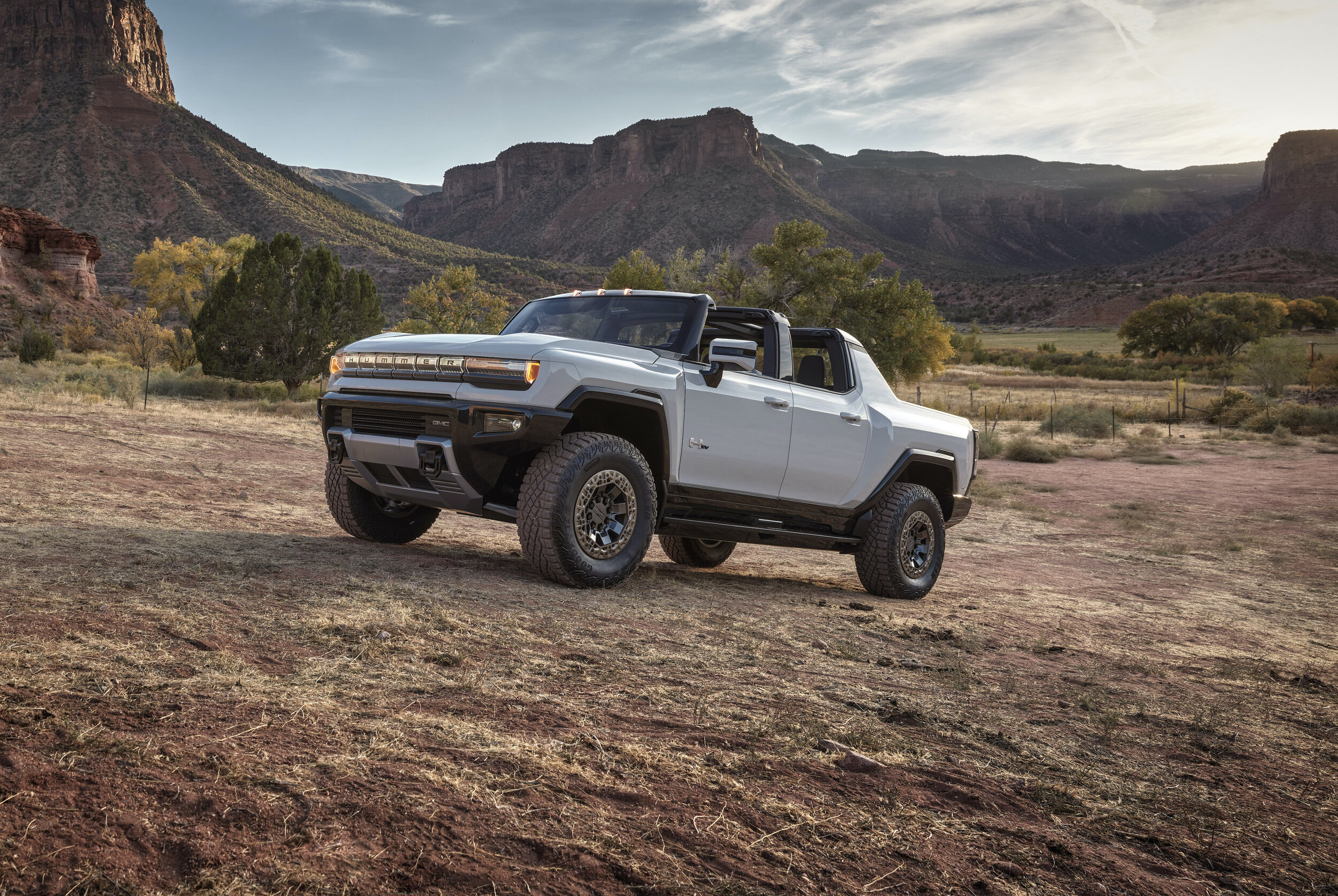
In addition to the Hummer EV pickup, GMC will add a Hummer EV SUV and these will eventually be joined by a mainstream electric pickup, also with GMC branding.

Chevrolet will release a replacement for the Bolt electric hatchback it presently sells in the US and Canada. Additionally, it will have an electric full-size pickup plus several SUVs and cars, though there’s never been an indication Corvette will join the electric charge. Buick has two SUVs.

All these brands have previously represented in New Zealand, though it’s been a long time between drinks for some.

Hummer has been reborn as an electric vehicle brand.

Hummer has been reborn as an electric vehicle brand.


Top three of 2020

This site’s three writers were asked a simple question … of all the vehicles driven in 2020, which one resonated the most?

IMG_7946.JPG

ANNOUNCEMENT tomorrow night of New Zealand Car of the Year seemed a good opportunity to put a simple question to the three contributing writers to MotoringNZ.com.

Which was? “Select, from all the New Zealand-new vehicles they tried in 2020, the one you’d most wish could take permanent residence in your garage and explain why, in no more than 50 words”.

Let’s lift the garage door and see what’s behind.

Yaris Cross.JPG

Rob Maetzig – Toyota Yaris Cross hybrid

Why did this car impress? Three reasons. First, it is a compact sports utility, which means it competes in the hottest market segment. Second, it is electrified which is extremely important in these carbon footprint-centric times. And thirdly, it’s a little beauty to drive. 

focusST.JPG

Colin Smith – Ford Focus ST

 Because? It continues the ST hot-hatch bloodline and edges a step closer to the car you can’t buy any more – the Focus RS. The Toyota GR Yaris is a touch more exciting but the space and practicality of the Focus ST makes it a performance car all-rounder.

defender.jpg

Richard Bosselman – Land Rover Defender

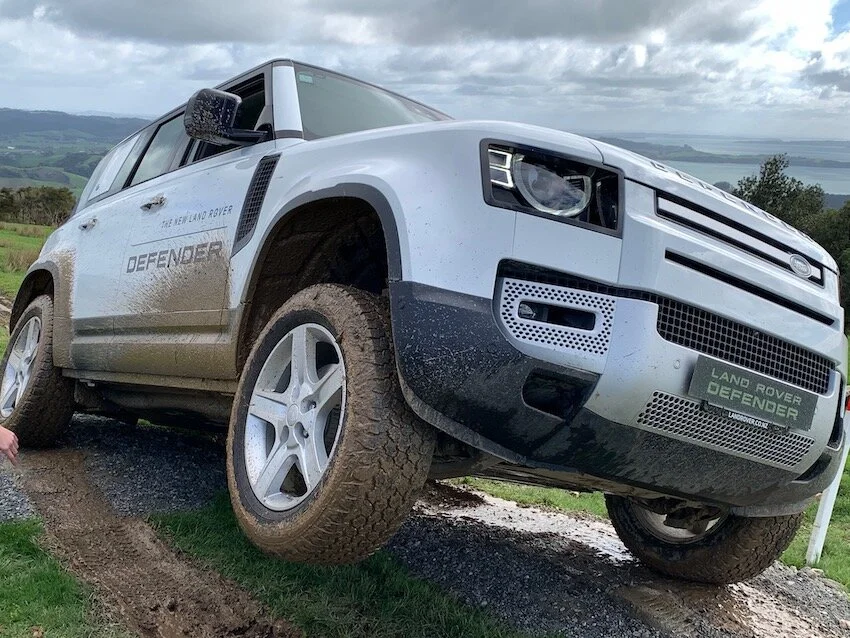
 … or the Toyota Yaris GR. They’re both astounding, engaging. Yet, it has to be the Land Rover. No disrespecting the hot Yaris, but Defender is more serious; it’s a tool, it’s a family, with a range of styles and engines, including a plug-in hybrid. Reaching a broad audience, it is also more vital and more from the maker’s heart. One other plus. It makes every rival feel even more ancient than some already are. My pick for NZCOTY.

Crash test plaudits for Defender and Sorento

Five star results for large sports utilities in NZ market form.

IMG_6163.JPG

TWO large sports utilities recently introduced to New Zealand have both received five star scores from the nationally-recognised safety ratings agency, one from testing in Europe and the other as result of a process undertaken in Australia.

The Land Rover Defender’s score comes from a test undertaken by European New Car Assessment Programme (NCAP) and applies to the long-wheel-based, five-door 110 model that is on sale in NZ, and not the short-wheelbase three-door 90 yet to release.

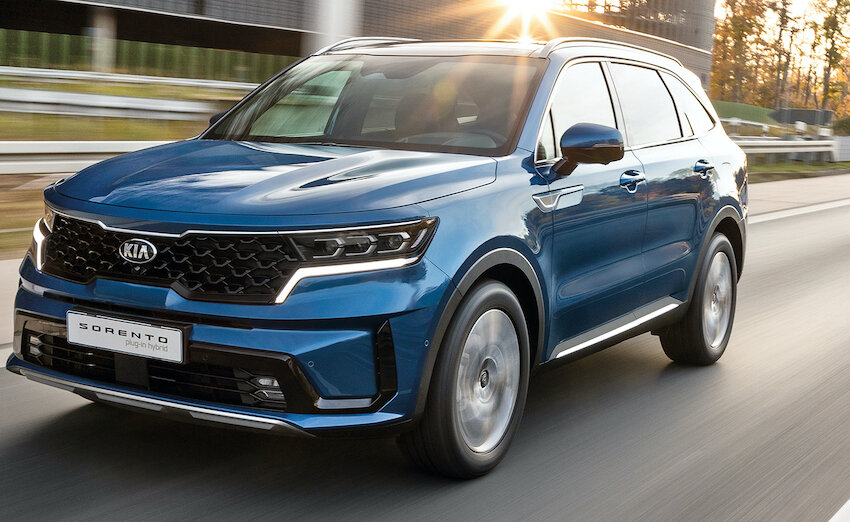
The Kia Sorento’s outcome was also determined by the European agency, however the score it gets comes with stamp from its Australasian sister organisation, ANCAP.

This is a procedural process but means that the ANCAP rating is only relevant to the 2.2-litre turbodiesel, all-wheel-drive variants – the only choice in Europe - and not any front-wheel-drive, 3.5-litre petrol V6 Sorentos that are built for other places. Those go unrated.

Helping the Sorento achieve its five-star safety rating and 82 per cent score in the Adult Occupant Protection category is the inclusion of a centre airbag, designed to prevent front occupants colliding with one another in a severe side impact.

It is only the third vehicle – and the first family SUV – with such a technology to be tested by Australasian or European safety authorities.

The Sorento received an 89 percent score in the Safety Assist category – the highest since the introduction of ANCAP's stricter 2020 testing protocols – with the safety body celebrating Kia's inclusion of driver attention monitoring as standard, and an autonomous emergency braking system capable of braking for cars turning across intersections.

Kia's new-generation family SUV also earned scores in the Child Occupant Protection and Vulnerable Road User Protection (i.e. cyclists and pedestrians) categories of 85 per cent and 63 per cent respectively.

However, ANCAP's technical report notes 'weak' protection of the driver's chest and upper legs in the frontal offset crash test, and 'poor' protection of a pedestrian's pelvis and head, the latter applying if their head strikes the base of the stiff A-pillars.

The Defender 110 received a solid 85 percent rating in the Adult occupant protection test (scoring 32.5 of 38 points).

 In this test, the Defender scored well in the lateral impact (scoring 15 of 16 points), rear impact (scoring 3.8 of 4 points) and rescue and extrication categories (scoring 2 of 2 points). It was the frontal impact category that the Defender 110 lost points, in scoring 11.7 of 16 points.

In the child occupant test, the Defender scored 85 percent yet again (scoring 41.7 of 49 points). In the Crash Test Performance based on 6- and 10-year-old children category, the Defender received a perfect score (24 of 24 points).

 It scored well in the child restraints (CRS) installation check as well, securing 10.7 out of 12 points. The only area the SUV lost out on was the safety features category (scoring 7 of 13 points), as it doesn’t have integrated child restraints and doesn’t have child-seat mounting points in the middle seat of the second row or in the third row.

The Defender scored 71 percent (38.4 of 48 points) in the vulnerable road users test, with the only major area of concern being the front edge of the bonnet, which provided poor protection to pedestrians. Lastly, it scored 79 percent (12.7 of 16 points) in the safety assist system category.

digital-1920x1080-ncap.jpg


NZ Car of the Year countdown begins

Contenders for the country’s annual motoring title are starring on television tonight

Screen Shot 2020-12-10 at 12.02.06 PM.png

THE PRELUDE to the announcement of the New Zealand Car of the Year features on a high-rating television show tonight.

The 10 contenders for the 33rd winner of the national title, meted annually by the New Zealand Motoring Writers’ Guild, will be assessed tonight by hosts of Television One’s ‘Seven Sharp’ programme.

The programme continues its COTY coverage tomorrow night, announcing the winner live at the culmination of the half hour current affairs programme, which screens from 7pm. 

The Guild membership comprises automotive journalists from around the country. The NZCOTY has established as the country’s most coveted motoring award and it has an unequalled history among various motoring prizes, with announcement annually since 1988.

Guild president Richard Edwards suggests the award’s mana comes down to it and the provider organisation having a good reputation. 

The selection of finalists is a robust and comprehensive process, which culminates in a vote involving more than 20 journalists and the Guild is fiercely independent “which not only adds to its credibility but also the high regard in which the award is held by the entire industry.” The input from Seven Sharp hosts Hilary Barry and Jeremy Wells is extramural to the voting process, but has added an extra flavour in the three years of the programme’s involvement.

The 2020 finalists were announced in November. Eight of the 10 finalists are from the SUV sector, which now commands huge interest from consumers, and two are from the small car segment. One is a full electric vehicle.

The award involves the local distributor of the winning vehicle receiving the Peter Greenslade Trophy, named after a founding Guild member. The present holder is Jaguar New Zealand, whose i-Pace electric SUV won in 2019.

Contenders, in alphabetical order, are Audi Q3, Ford Fiesta, Kia Seltos, Land Rover Defender, Mazda CX-30, Mercedes EQC, Mercedes GLB, Peugeot 2008, Skoda Kamiq and Toyota Yaris.


South Island enthusiast snares single special F-Type

The Heritage 60 Edition seems likely to carry a hefty premium over the standard supercharged V8 donor.

Jag_F-TYPE_Heritage60Edition_21MY_091220_01.jpg

SIXTY are being created to celebrate the E-Type's 60th birthday, just one is earmarked for New Zealand … and it’s already been spoken for.

 That’s the synopsis for the 2021 Jaguar F-Type Heritage 60 Edition, a special edition officially unveiled yesterday.

Coupes and convertibles are being produced, but it appears the open-air editions aren’t destined for this part of the world.

The single coupe locked in for Kiwi consumption has been signed off to a South Island fan, with mid-2021 delivery looking likely.

The deal appears to have been achieved regardless that final pricing has yet to be resolved, Jaguar New Zealand has indicated.

It won’t be cheap. Jaguar Australia reckons the five coupes it has been allocated will each sell for around $NZ350,000, before on-road costs.

That’s a significant premium over the most raucous version of the donor F-Type R, the P575 R, which is a $214,900 ask here and has the same 5.0-litre supercharged V8 sending 423kW of power and 700Nm of torque to all wheels through an eight-speed automatic transmission.

Jag_F-TYPE_Heritage60Edition_21MY_091220_04.jpg

Performance figures carry over; so a 3.7-second sprint from zero to 100kmh, towards an electronically-limited top speed of 300kmh.

All examples of the special are finished in Sherwood Green – an original E-Type colour, last offered on a new Jaguar in the 1960s – with duo-tone Caraway and Ebony Windsor leather, a combination exclusive to the Heritage 60 Edition.

The cars feature 20-inch gloss black forged alloy wheels, black brake calipers and gloss black and chrome exterior trim accents.

Unique highlights include aluminium centre console trim inspired by the E-Type's rear-view mirror housing, E-Type 60th Anniversary logos embossed into the seat headrests and above the infotainment display, commemorative sill plates, Caraway-edged floor mats and an SV Bespoke 'One of Sixty' plaque.

The anniversary logo is shared shared with six matching pairs of restored, 3.8-litre 1960s E-Types, that are being delivered by Jaguar Classic, the brand’s refurbishment division that dedicates to yesteryear fare.

The resto projects pay tribute to two of the most famous E-Types built, which wore British registration plates '9600 HP' and '77 RW'. These will be known as the E-Type 60 Collection. It’s not known if any of these are earmarked for NZ buyers.

Jag_F-TYPE_Heritage60Edition_21MY_091220_07.jpg