Record March despite supply disruptions

Vehicles are fast-tracking to customers.

Toyota Hilux was the top-selling model in March.

Toyota Hilux was the top-selling model in March.

CONSTRICTED new vehicle supply continues to hamper distributors – though last month’s registrations count might suggest otherwise.

Last month 15,498 new vehicle were registered. It’s the highest March count since record-keeping began back in the 1970s.

That this tally represents a massive 86.3 percent up on the same month last year is easily explained – the country went into the Covid-19 Level 4 in March of 2020, so distribution, sale and delivery was highly restricted. April last year was also bleak, with 1039 registrations, a 90 percent fall on April of 2019.

Last month’s accrual follows a record February, when 12,488 registrations were notified. Year to date the market is up 27.6 percent (9046 units) compared to the first quarter of 2020.

And all this is despite supply disruption, resultant from Covid-19 though a global shortage of semiconductor is also influencing. This is a rebound from manufacturers having cut chip orders as vehicle sales fell last year. They have found themselves at the back of the queue when the market rebounded. The entire global car industry buys about $US37 billion worth of chips.

“A year on from our first Covid-19 lockdown, our sector is still operating under disrupted supply arrangements and supply shortages,” says David Crawford, chief executive of the distributor organisation, the Motor Industry Association.

“As shipments arrive, vehicles are going straight through Customs, distributor pre-delivery inspections and entry compliance, to the franchised dealer and on to the new owner, who invariably has been on a wait list.”

Most popular vehicle last month was the Toyota Hilux, which continues to enjoy buoyant sales following a massive facelift late last year. In March it recorded 1019 registrations to claim a 19 percent share of the commercial market. Arch-rival Ford Ranger accounted for 828 sales to sit in second spot, with Mitsubishi Triton third on 691.

In the passenger segment the Mitsubishi Outlander again led the way with 467 registrations, comfortably ahead of the Kia Sportage, Mazda CX-5 and Toyota RAV4.

Of the total of 15,498 registrations, 424 (2.7 percent) were pure electric vehicles. There were also 150 PHEVs and 855 hybrids sold during the month.

Toyota remains the overall market leader with a 15 percent market share, followed by Mitsubishi on 11 percent and Ford on nine percent.


Sorento hybrid push hits six

Anything to read into the just-added entry EX being lineball on price with well-supported diesel edition in similar trim?

210401_Kia Sorento.jpg

 SPECULATION about the long-term future of Sorento in its historically bedrock diesel format has elicited response from Kia New Zealand.

Announcement of a sixth hybrid (HEV) petrol variant might raise questions about the implication for the 2.2-litre turbodiesel that has been the most popular choice by far for the majority of the model’s buyers.

The arrival of an entry EX means the brand now offers its petrol-aligned hybrids in four hybrid formats – across two trim levels, each in front or all wheel drive, topping with an $82,990 edition. It also has two AWD variants with plug-in replenishment capability, ultimately in a $89,990 format. 

It also has four diesel variants, from $59,990 to $76,990.

The EX edition in HEV (meaning it has electric assistance, but no external means to replenish) has been priced at $63,990 – the same money Kia New Zealand asks for the EX diesel that has often been a top seller.

A representative for the Auckland-based operation agreed with the proposal that hybrid popularity is growing, but resisted offering thought about what percentage of overall Sorento volume the types might achieve. 

“The initial uptake of Hybrid has been very strong, especially the new EX variant,” he said.

“With Sorento sales mix and volume being limited by supply for some time yet, we would have to be very brave to make any predictions at this point.”

Did the price parity with a popular diesel variant signal that Kia NZ is perceiving and planning for potential market shift away from the diesel?

“We are being bold with this pricing initiative, it's not often a brand will present owners with a price-parity opportunity to choose between two different powertrain options. 

“As we've stated previously, we have an eye on an electric future and this is one way to introduce people to a hybrid motoring experience without additional outlay at time of purchase.”

The EX variants are not identical; the diesel provisions in all-wheel-drive for that money, whereas the hybrid is front-drive. It can be bought in AWD for another $2000, however.

All electrified Sorentos use a 1.6-litre turbocharged petrol engine, producing 132kW/265Nm. The HEV adds a 44kW/264Nm electric motor while the PHEV gets a stronger 67kW/304Nm unit. Total outputs for each are 169kW/350Nm and 195kW/350Nm respectively.

The plug-in hybrid offers an electric-only range of 57km and fuel consumption of 1.6L/100km. The hybrid has more limited electric-only range and returns 5.4L/100km in 2WD guise and 6.2L/100km with AWD.

While the EX hybrid makes more power than the diesel, which has 148kW the tables are turned on torque, with the diesel creating 440Nm.

The diesel is beaten for economy, as it optimises at 6.1 litres per 100km, and on emissions. The hybrid is claimed to produce 124 grams per kilometre in front-drive and 141g/km in AWD versus whereas the diesel outputs 159g/km.

The Sorento powertrains also share with the Hyundai sister ship, the Santa Fe, but have yet to be positioned in those models in this market, though Hyundai NZ says it intends to undertake that span when it can.

Kia EV6 GT.jpg

Kia’s move toward electric-assisted propulsion is not restricted to the seven-seater sports utility. It already has an electric Niro compact crossover in the market to compete with the Hyundai Kona and last week confirmed it will introduce the exciting EV6 (above), the latest battery-pure product it has created.

This sister ship to the Hyundai Ioniq Five will be here before the end of this year, with pricing and full local specifications yet to be announced, though the local distributor has indicated the high-end GT performance version is included.

Kia NZ says the EX hybrid will present as an ideal vehicle for families contemplating the switch to reduced-emissions motoring - without compromising on style or passenger-carrying capability.

In a release about the type, Kia NZ managing director Todd McDonald said Sorento has already proven to be a fantastic success “so we anticipate the availability of a more competitively-priced entry option will only further the appeal of the new model.”

All Hybrid and Plug-In Hybrid Kia Sorento models feature a five-star ANCAP safety rating and offer a myriad of safety considerations as standard, including Forward Collision Avoidance Assist, Blind Spot Collision Avoidance Assist, Rear Cross Traffic Collision Avoidance Assist, Lane Keep Assist and Lane Follow Assist.


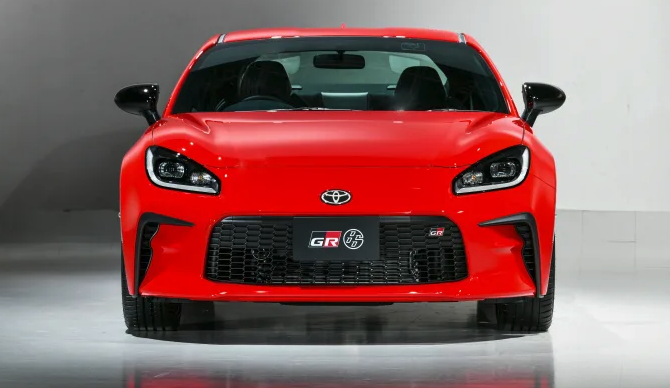
86 going to be a great Gazoo

GR86_002.jpg

AT last it’s out – the second generation of the Toyota 86 that is, still firmly focused on the same goal as the original: Delivering the dreams and the joy of driving inherent in sports cars.

This promise from an unveiling event in Japan today involving Toyota, via its Gazoo Racing franchise into whose hands the car now falls (so, yes, it’s now a GR 86), and co-developer Subaru.

Though shown in what Toyota Gazoo Racing calls a ‘prototype’ format, the new car is also confirmed as an accurate representation of the car as it goes on sale in Japan soon. No news yet from Toyota New Zealand about when it’ll hit here.

Toyota’s version follows in the tyre tracks of the second-generation BRZ (below), which was unveiled last November in the United States. Subaru NZ has straight out nixed conjecture of another BRZ-86 showdown, as occurred in the first year of the previous cars’ release, back in 2012.

22MY_BRZ-10.jpg

Today’s event suggests Toyota’s car has slightly stronger outputs than the Subaru doppelganger, with press material quoting maximum power of 173kW presented at 7000rpm and top torque of 250Nm, coming on at 7400rpm. That’s 3kW and 1Nm more than Subaru quotes.

 Either way, it’s still a healthy increase over the maximum outputs from the 2.0-litre car – Subaru quotes 11 percent more power and 15 percent more torque – and it shows in the 0-100kmh time of 6.3 seconds, claimed of course for the manual. The previous model delivered in 7.4s. 

The engine has direct injection but forget about a turbocharger; that feature is purely for the North America-only Subaru Ascent SUV from which this engine is more or less plucked.

Toyota says producing optimal grunt at high revs is all part of the fun, but adds the engine’s responsiveness has also been enhanced, providing smooth, stress-free sensations from “low to high rpms.”

The unit continues to run through six-speed transmissions, the auto now having a Sport function, and sending out the oomph through the rear wheels, with the vehicle stability control system offering five settings now to alter the degree of skid-tastic fun.

Macpherson strut front suspension and double-wishbone rear suspension also carries over and even though the chassis is thought to be an improved version of the current cars, the two generations are only identical in 1775mm width.

With a length of 4265mm, height of 1310mm and wheelbase of 2572mm, the GR 86 is 25mm longer, 13mm lower and 6mm longer in wheelbase than the predecessor.

Screen Shot 2021-04-05 at 5.36.46 PM.png

Toyota has quoted a kerb weight of 1270kg (for the manual) and, like Subaru, reminds the car’s roof is now aluminium to bring down the centre of gravity. Aluminum front wings, updated front seats and mufflers contribute to reduced weight.

Body rigidity has been improved, with the goal of offering pleasurable handling in all speed ranges—from urban driving to the upper limits of performance, the maker says. Torsional rigidity has been enhanced by approximately 50 percent over the previous model for greater steering stability.

However, Toyota says the GR86’s shape and aerodynamics have benefitted from the previous model’s immersion into motorsports, such as Toyota NZ’s GR86 (nee TR86) series. 

“The GR 86 features aerodynamic components seen on 86 models that participate in motorsports. These include air outlets, side sill spoilers, and other parts that improve steering responsiveness and stability.”

Recent media speculation about Toyota insisting that the GR86 should have a distinct driving feel appears spot on.

Says the Toyota Gazoo Racing release: “While engaging in friendly rivalry with the BRZ development team, TGR sought to develop a vehicle that would provide happiness to 86 fans, and realise an evolution of the 86’s unique driving sensations.

“As a result, the new GR 86 is specially designed for sports performance, and provides direct and satisfying driving performance of the highest order.”

Screen Shot 2021-04-05 at 5.36.33 PM.png

It also says the model is a result of an agreement, signed by the brands in late 2019, to enter into a new business and capital alliance, “as part of which the two companies committed to jointly engage in making ever-better cars.”

“The new GR 86/BRZ is not only a concrete example of this commitment, but also represents a new challenge for both companies, as they seek to subvert conventional ideas of cooperation in the automotive industry.

“Going forward, Toyota and Subaru intend to further ally their respective strengths, deepen their relationship, and so pursue the possibilities of making ever-better cars.”

Toyota says the car’s interior and exterior designs embrace responsive handling and functional beauty and that the model boasts a stance distinctive of front-engine, rear-wheel-drive vehicles. Its low, horizontal underbody and narrow cabin rear combine to create a broad, low-centre-of-gravity appearance.


The cabin design is all about ensuring the driver can concentrate on driving. There’s a new seven inch display screen whose opening animation sequence is “inspired by the piston movements of the horizontally opposed engine, and fosters a sense of excitement even before the drive begins.”

The automatic GR86 alone appears to pick up Subaru’s Eyesight driver assist technology, which include pre-collision safety technologies that help avoid or reduce collision impacts.

Toyota says a total of more than 200,000 first generation 86s have been sold worldwide.


Subaru celebrates March success

Distributor reckons it could have hit an even sales count had more stock been available.

Forester X (above) and new Outback were major contributors to Subaru’s March count.

Forester X (above) and new Outback were major contributors to Subaru’s March count.

Press Imagery 1_2021 Outback X.jpg

PERFECT storm conditions – that’s what Subaru New Zealand attests led last month delivering a best-yet sales count for the brand.

A count of 461 new vehicle sales represents a 20 percent gain over the previous top sales month, January of 2019.

Subaru New Zealand managing director Wallis Dumper says the March result would not have been possible without the dealer network’s hard work. Many Subaru Centres were owner-operator businesses, some with the brand for more than 25 years.

“It’s been a challenging 12 months … and to see a result like this, only 12 months after the grim picture economists painted for our future, is extremely rewarding,” Dumper says.

The distributor attributes several factors contributing to the record March sales, including the recent release of a new Forester derivative, the X Sport.  This variant has immediately accounted for a third of Forester’s sales and also helped to produce a record sales month for Forester.

On top of this, last month’s count also included the brand-new Outback, which officially launched at the start of the month and recorded more 200 registrations. Dumper says the performance was a tribute to the car’s quality, and the impact of the marketing campaign.

Also impacting on the count was the arrival of several delayed shipments of allocated stock.

Everything, he said,  “added up to the much-needed perfect storm.”

Nonetheless, Subaru continues to feel the effect of supply constraints and he imagines that will continue to be the case, despite the his operation having been given huge support by Subaru Japan.

 We have customers waiting as some of our Subaru dealers are out of stock and we already have factory back orders through to the third quarter.

“We have been in the unfortunate situation of not being able to supply some of our new 2021 models, including the Subaru XV, which would have also set a sales record if we had been able to secure allocation.

“Unprecedented demand beyond what we are able to supply is a good problem to have, but we like to think that our customers understand the situation and are willing to be patient.”

“The reality is that we are probably missing sales and as a company, we are doing our best to mitigate this.”

Dumper acknowledges that other automotive manufacturers have also had record-breaking months.

“After the year we have had, this is a phenomenal boost for the automotive industry.  While we are yet to receive the final results for the monthly industry performance, March is expected to be an exceptional month across the board. Congratulations to all the automotive brands that have had an outstanding month and long may it last,” he says.

A limited-edition STI model will arrive at New Zealand dealerships in the coming months. Hot on the heels of this final STI edition, will be the arrival of the completely revamped 2022 WRX in the new year.

Supply chain challenges will have the biggest potential impact on specific dates for these model launches and they will be confirmed later in the year says Subaru New Zealand.


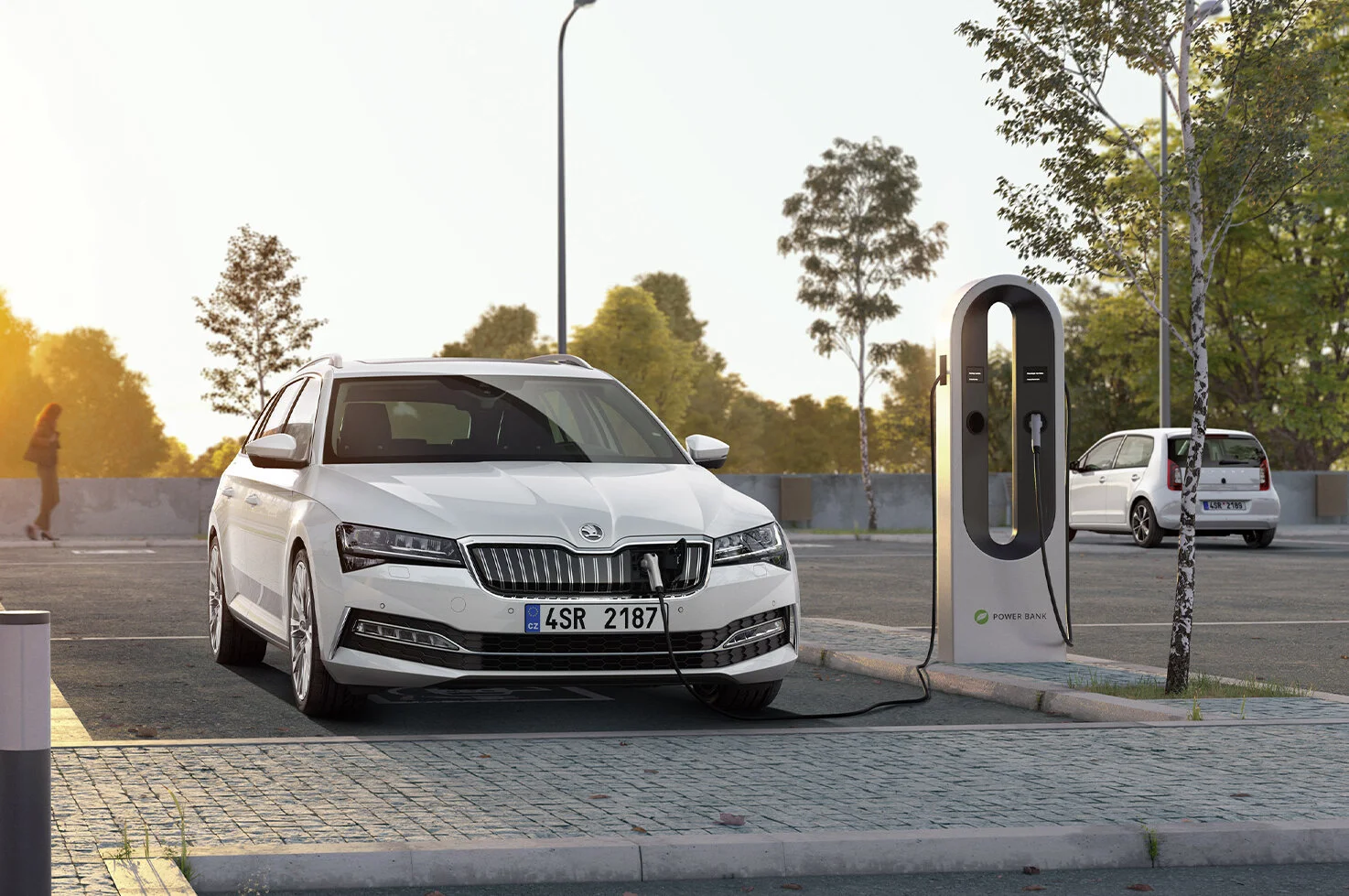
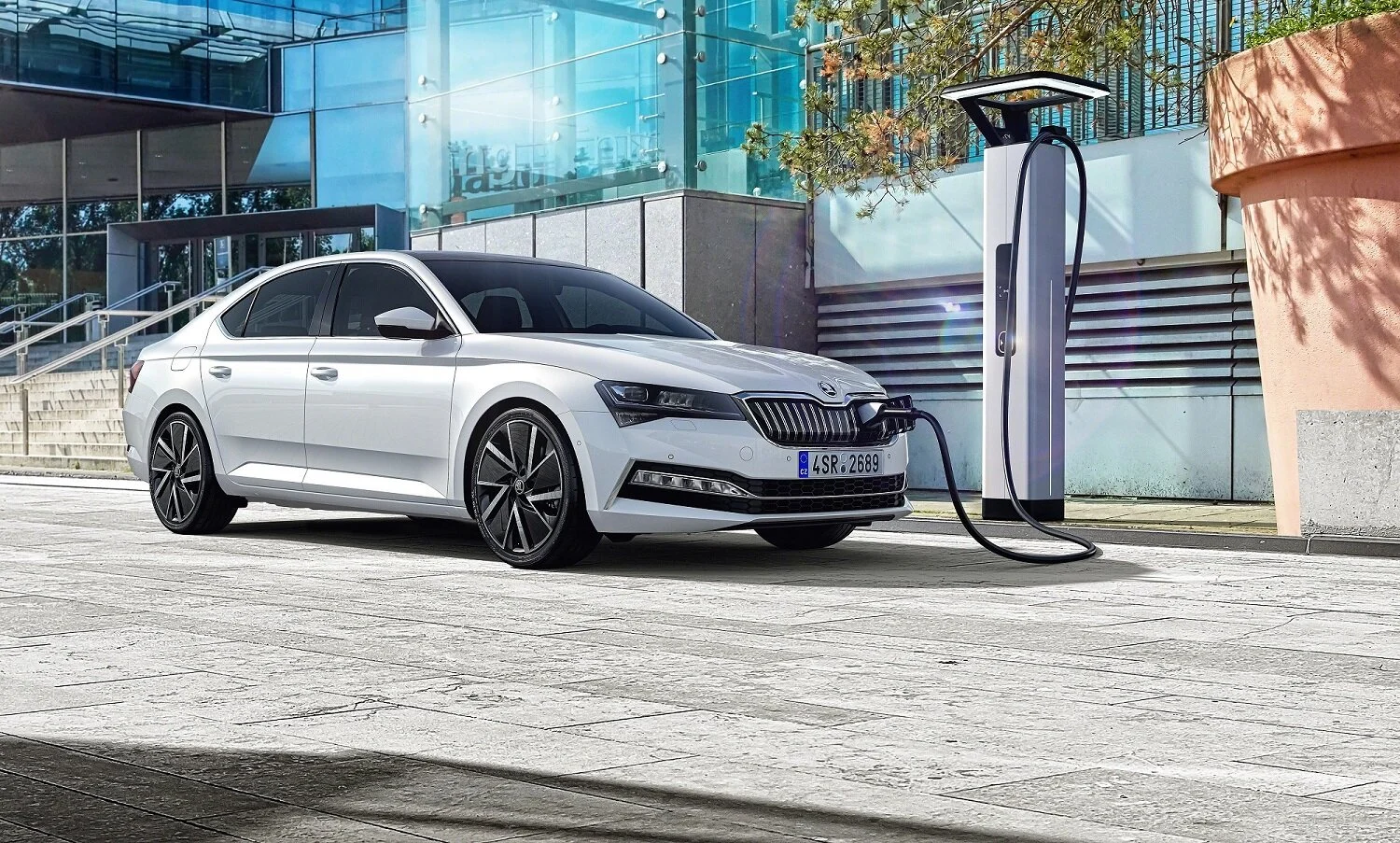
Skoda’s electric push starting with PHEVs

Economy king PHEV Superb is just months away and a version of the just-launched new Octavia will follow in early 2022.

The Superb iV delivers optimal economy of 1.5 litres per 100km and just 35 grams per 100km emissions.

The Superb iV delivers optimal economy of 1.5 litres per 100km and just 35 grams per 100km emissions.

PLUG-IN electric versions of two staple Skoda road cars, the Superb and the Octavia, are set to come on sale here.

Each promising up to 60 kilometres’ pure electric range, the derivatives will configure purely in wagon formats and seem likely to be particularly pushed as top choices for Green-minded fleets, though private buyers won’t be exempted.

The nation’s largest lfeet, the NZ Police, has committed to purely petrol-engined Superb station wagons as primary response vehicles.

Skoda New Zealand general manager Rodney Gillard says the PHEV Superb, which will be here around July-August, was not proposed for the patrol car deal but it is serving in that role overseas and was subject of general chat during Monday’s unveiling of the first Superb fitted out with Police equipment and livery.

Skoda NZ general manager Rodney Gillard with the new Octavia, released today in petrol Style and RS formats. The PHEV Octavia iV comes early next year.

Skoda NZ general manager Rodney Gillard with the new Octavia, released today in petrol Style and RS formats. The PHEV Octavia iV comes early next year.

He thinks it’s probable Police might like to drive the derivative at some point to compare against the visually similar 162kW front-drive and 206kW all-wheel-drive models set to go on patrol by June, with more than 300 on the front line by year-end.

Running a 1.4-litre petrol engine in tandem with an electric motor, the PHEV has a comparable performance to the Police’s 2.0-litre choices, but wallops them in respect to the efficiency the force claims was a winning factor.

Police have said they like their new cars’ CO2 counts, though these are still well above the 105 grams per kilometre average Government wants to impose and only slightly better than the output from the outgoing Holden ZB Commodore 2.0-litre.

The PHEV Superb is far Greener, with Skoda claiming just 35g/km in optimal operation. Economy is also much sharper, with an optimal 1.5 litres per 100km. 

As much as Police have locked into their patrol car choices, Skoda NZ is engaging in discussion to supply other product.

One subject of conversation is the suitability of another model, thought to be the Kodiaq sports utility, for conversion into dog handler vehicles, to replace the current Holden Acadias and Commodores. Conceivably, then, the iV model might still have a role with the Force.

Identified though having a small additional flap for the battery charge port and a market-new ‘iV’ badge on the boot, the PHEV models will sustain Skoda’s electric push here for the next two years, with Gillard today becoming the second local VW Group brand boss in a week to concede the availability of his brand’s fully electric car, the Enyaq iV crossover, will take longer than planned.

190918-SKODA-AUTO-begins-serial-production-of-SUPERB-iV-at-Kvasiny-plant-2.jpg

However, he is confident the iV Octavia and Superb wagons will be welcomed just as warmly, saying their availability is due to the Czech make looking favourably at NZ as a good pilot market for the models, to the point where the types’ availability was advanced.

“That’s the start to our roadmap for electric vehicles for Skoda (here).”

The iV cars’ drivetrain marries the engine to a 85kW electric motor fed by a 13kWh battery, running in front-drive format through an automatic transmission.

The combined system maximum power outputs are 152kW for the Octavia and 160kW for the Superb, while the latter’s claimed optimal 400Nm torque is 50Nm more than the Octavia musters.

Zero to 100kmh times are 7.7 seconds for the Octavia and 7.8s for the Superb. Both have the same WLTP-determined electric-only range. 

The Octavia iV is coming early next year to join 110kW/250Nm $47,990 1.4-litre Style and $57,990 180kW/370Nm 2.0-litre RS wagon versions that are releasing into the market now.

Skoda NZ says it’s too early to discuss pricing and local specifications for the iV cars, which have a modest reduction in boot capacity over the ICE editions, on account of where the lithium-ion battery is placed behind the rear seats.

The models are expected to remain popular after Skoda NZ manages to secure the fully electric Enyaq.

Gillard’s thought that this is unlikely to occur until 2023 exactly echoes a message from VW NZ’s general manager Greg Leet a week ago about a sister ship, the ID4.

190918-SKODA-AUTO-begins-serial-production-of-SUPERB-iV-at-Kvasiny-plant-1.jpg

Confirmation that the ID4 and Enyaq are delayed raises questions about whether two other sister ships promised for NZ - an Audi (the Q4 e-Tron) and a Cupra (called Born) – will also be hindered. 

All are on a new platform, called MEB, that is driving VW Group’s electric car ambition.

VW Group has sole production dibs on the MEB underpinning and appears to have a direct say in determining market release schedules and individual product availabilities for the cars that employ it.

Gillard says that’s not a situation he has experienced before, but it’s one he has to accept.

Accordingly, as much as he will keep pushing for a pre-2023 release, he accepts the greater probability is that this ideal won’t be realised. Quite potentially, too, VW will get its car into market first. 

Meantime, he is focussing on a positive – the big lift that the Police deal gives his brand.

The impact on sales volume will be huge, he says. The sales target of 2200 cars this year is 1000 units above the 2021 actual, which proved 400 units below forecast.  

This has been blamed on Covid-19 supply restrictions that are still being felt, with Skoda’s NZ getting used to its stock reserves being all but depleted at the end of most months.

“We are right now finishing the month with just seven cars in stock … the last three months we’ve been finishing with less than 10 cars in stock.”

 It’s something an industry veteran of almost 30 years has never experienced before.

Superb_PHEV_PubCharging_300dpi.jpg

On top of this, the global shortage of semi-conductors has hurt production of Octavia, as it uses more advanced electronics than other Skoda models (which are not affected by that issue). All this has meant Skoda NZ has managed to secure a small count of new Octavias to launch now, so few it could not stage a driving component for today’s reveal.

 That challenging climate is set to continue – “we have a fluid situation in regard to shipping, supply … there’s a lot going on and I personally see this going on for a while” – yet as much as it might make it harder for walk-ins to secure a car, Gillard assures Skoda’s factories can meet firm customer orders and has the delivery of 101 police cars by June and 353 by year-end in hand.

He says the Police deal will not only almost double Skoda’s market share, but should also lift the brand’s status.

“It’s a defining moment for us. Our challenge is to achieve awareness and consideration.”

Skoda has been a hidden secret and “I think the Police are going to unlock that.” The Superb’s selection will make the general public even more inquisitive about what’s so special about Skoda.

 The other action from Skoda NZ this year will be to launch, at year-end,  a facelift for the Kodiaq.


Taigo a no-go for NZ

Volkswagen here says nein to impending coupe-style T-Cross.

DB2021AU00192_large.jpg

BAD news for Kiwis excited about Taigo, the new compact coupe-like SUV just revealed by Volkswagen — it’s not being considered by the New Zealand distributor.

VW New Zealand has not offered explanation why this model, which is about the size of T-Cross and is based on the VW Nivus, that’s only sold in Brazil, won’t come here. 

Comment from the Auckland-domiciled operation, in the wake of the overnight release of images, is simply: “The Taigo is not currently in our plan for New Zealand.”

This comes after the parent  has sent out drawings lending a good preview of how the final car will look. It’s visually similar to the T-Cross, albeit with some sportier tweaks.

DB2021AU00193_large.jpg

The biggest difference is the roofline, which now slopes off towards the rear.  

There’s also a more aggressive front bumper for this R-Line spec drawing, with a light bar that’s near-identical to the T-Cross’ at the rear albeit with a slightly more angular LED design.

Those exhaust exits are the rear are likely to be fake – the just unveiled Golf 8 has the same purely style-driven treatment – and overseas’ pundits say we shouldn’t expect to see wheels quite that large. 

It’s believed Taigo will likely have an interior all-but-identical to the T-Cross, but maybe with some options to customise the dashboard panels for a bit more pizzazz.

Boot space and rear headroom will likely take a hit as a result of the sloped roofline, though.

The Taigo will launch exclusively with turbo petrol engines, though Volkswagen hasn’t said exactly what yet. T-Cross furnishes here with 110kW/250Nm 1.5-litre married to a seven-speed direct shift transmission.

DB2021AU00194_large.jpg


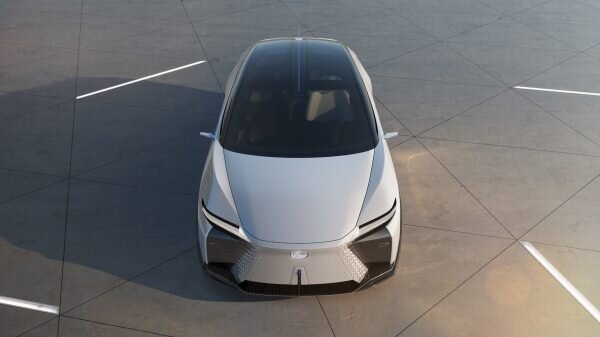
Future electric Lexus zaps in

The LF-Z, a full immersion by Toyota’s premier league maker into an all-electric future, is designated a concept – but it also appears all but ready to roll into the showroom.

2021-Lexus-LFZ-0048-600x338.jpg

THEY call it LF-Z Electrified and, officially, it’s just a preview of what a Lexus designed from the ground up to be all-electric could look like. 

With Toyota’s premium brand also announcing overnight intent to introduce 20 all-new or redesigned vehicles globally by 2025, at least half of which executives say will be all-electric or electrified hybrid models, there’s growing speculation this apparently fully operational four-seater SUV crossover here will be heading into production as a next step beyond its only current electric offer, the NX300e.

With a cab-rearward design that is unusual for an SUV, the LF-Z Electrified features many of the company’s signature design elements such as the ‘big tick’ headlights and spindle grill, but with new, more modern interpretations.

2021-Lexus-LFZ-0001-600x337.jpg

The interior features a somewhat minimalist design aside from driver-centric cockpit screens. It’s a driver-focused layout, with a mixture of switches on the steering wheel and a head-up display. The rear of the cabin features two bucket seats.

Lexus already has an electric car and it is expected in New Zealand later this year. But it’s a version of the NX, which was designed for combustion engines. LF-Z goes the next step; there’s no sign it will have an ICE powertrain.

The brand says the car sits on a bespoke electric platform, which is almost certain to be e-TNGA, the EV-specific underpinnings on which Toyota will base its upcoming BZ series of models. The first BZ is set to be unveiled within days. 

At 4880mm long and 1600mm tall, the LF-Z Electrified is just 10mm shorter than Lexus’s most popular SUV here, the RX, but the roofline is obviously lower, by 80mm according to the maker. The EV’s wheelbase is 160mm longer, too.

The LF-Z features Lexus’s DIRECT4 four-wheel-drive system and an electric motor set-up producing a total of 400kW and 700Nm of torque – enough to take the LF-Z Electrified from 0-100kmh in three seconds.

Lexus says the battery is a 90kWh lithium-ion unit, and that the LF-Z can travel for up to 600km between recharges. Its maximum recharging speed is 150kW. 

2021-Lexus-LFZ-0002-600x337.jpg

Lexus president, Koji Sato, has announced that the brand’s product refresh will kick in before the end of 2021.

“Starting with two new models to be released this year,” he said.

“We will continue to develop innovative products that will add colour to the diversifying lifestyles of our customers.”

Lexus New Zealand has yet to explain how the impending model roll out will impact on its own operation, but chief executive Neeraj Lala has offered that:  “The automotive industry both globally and in New Zealand are entering a period of once-in-a-century transformation.
 
“In addition to the growing imperative to achieve carbon neutrality for the betterment of the planet customers lifestyles and values are changing and diversifying at a speed previously unimagined.”

2021-Lexus-LFZ-0004-600x337.jpg

“Lexus will continue to lead the luxury market in New Zealand in reducing CO2 emissions and is looking at its future powertrain offerings. By 2025 Lexus plans to introduce 20 new or improved models, including more than 10 electrified models such as BEVs, PHEVs and HEVs, based on the concept of offering the right products in the right place at the right time.“

“Vehicle concepts like the LF-Z Electrified, excite the senses and give you a true feeling of what Lexus and Experience Amazing means,” says Lala.

Since the launch of the RX 400h – the world’s first luxury hybrid electric vehicle – in 2005, Lexus customers have purchased nearly two million electrified vehicles globally, as at the end of 2020. Lexus globally offers nine models of (HEVs) and battery electric vehicles (BEVs) in approximately 90 countries and regions around the world.

“In New Zealand we have seen customers moving to Lexus Electrified product with a 38 percent increase year to date*,” says Andrew Davis, Lexus New Zealand general manager. “Seventy-one percent of these sales are hybrid-electric powertrains.”

By 2050, Lexus aims to achieve carbon neutrality throughout the lifecycle of its entire model lineup – from the manufacturing of materials, parts and vehicles to vehicle logistics, to the final disposal and recycling of older vehicles.

“Lexus has always pursued both performance and sustainability, and through the Lexus electrified vision, will continue to use technology to create a sustainable future while still embracing the enjoyment and pleasure that cars offer customers,” says Lala.

2021-Lexus-LFZ-0006-600x337.jpg


Vette C8 pricing to start at $155k

Distributor’s sharp-edged strategy will surely sting independent importers.

New-Chevrolet-Corvette-Stingray-312383.jpg

CORVETTE’S official distributor has steered clear of thought that its pricing for the new-generation car, announced today, has been tailored to deflate grey importers who have been asking much more for the model.

GMSV official reason for announcing pricing now, and not closer to the car’s late-year arrival, is that it wants to kick off an order bank because supply will be limited.

General Motors will start building the NZ-bound C8s at the type’s famous plant in Bowling Green, Kentucky, in the last quarter of this year with hope some will hit GM Speciality Vehicles’ seven national sales outlets before Christmas.

 Planned or otherwise, the distributor’s Model Year 2022 cars are massively cheaper than left-hook examples that are already here.

GMSV’s NZ plan kicks off with a 2LT Coupe at $154,990 and a 3LT Coupe for $169,990. Those variants also provision as convertibles, carrying a $15,000 premium.

New-Chevrolet-Corvette-Stingray-312384.jpg

There is also a Carbon Edition launch special Coupe that has yet to be priced.

All run a 370kW/637Nm 6.2-litre V8 paired to an eight-speed dual-clutch automatic that drives the rear wheels. The C8 is the fastest Corvette yet, with a claimed 0-100kmh time of three seconds (which some independent testers claim to have bettered). 

At least half a dozen independently imported examples of the car often described as America’s answer to Ferrari and Porsche supercars are presently being advertised by private importers.

These cars – apparently shipped directly from the United States or from Japan, which accepts left-hand drive cars - are being advertised on TradeMe from $200,000 to close to $250,000.  

At least one importer appeared to have slashed pricing today, though not enough to achieve anything equality with the factory-appointed distributor.

Full details of the NZ-market models have not been shared, but GMSV NZ has assured they will not be low spec cars.

For instance, all NZ-bound official product will have as standard a Z51 performance pack and frontal lift that seems to be an option in the United States.

The Z51 package includes a dual mode exhaust, performance suspension with ‘Magnetic Selective Ride Control’ (magnetic active dampers that react and adjust within milliseconds), larger Brembo brakes, electronic-limited slip differential, a front splitter, rear fascia-mounted spoiler, extra cooling provisions and specific rear axle ratio.

GMSV here says it added the features because it recognised customers as performance enthusiasts who will want to enjoy the car to its fullest potential. 

The frontal lift is a push-button technology that lifts the front suspension at the press of a button at low speeds, so the front bumper doesn’t scrape on steep driveways.

The 2LT base model also has a colour head-up display, 14-speaker Bose audio system, the Z51 performance pack and frontal lift. The 3LT and Carbon Edition build off this.

2021-Chevrolet-Corvette-Stingray-Coupe-Convertible.jpg

The latter is based off a 3LT Coupe and will feature hand-picked interior trims, premium wheels and brake calliper package, an exclusive build plate and owners pack.

A spokesman said supply of the car will be constrained for some time, “due to the global popularity of the vehicle.

“Our focus at launch is to ensure that all GMSV dealers in NZ and Australia have an initial first allocation of one Carbon Edition each and one selling vehicle with two additional units available for customer order.

“Following the initial launch stage, further allocations will be available next year. 

“GM has a certain RHD production capacity, so this consideration coupled with significant demand means there is every likelihood that demand will exceed supply.” 

The Corvette nameplate goes back to 1953 but the latest, eighth generation model, is the first to be available as a factory-built right-hand-drive.

It is also the first to feature a mid-engine configuration.

In addition to the Corvette, GMSV has announced a new derivative of the Chevrolet Silverado large utility, the LT Trail Boss. 

Deliveries of the $119,900 model commence mid-year.

As the name suggests, the Trail Boss is designed to be a more versatile off-road product than the LTZ Premium that has already installed in the market.

“LT Trail Boss is purpose-built, born to perform, offering rugged dependability in off-road settings when exploring on the weekend, but is also at home in urban environments during the week,” says GMSV NZ general manager Matthew Taylor.

“It will enable big thrills and big adventures - it’s a way to really enjoy and experience the road less travelled.”

Silverado LT Trail Boss_March 30_MedRes.jpg

The Trail Boss achieve a factory-fitted suspension lift-kit, which increases ride height by approximately 25mm at the front and 30mm at the rear. It also takes a mechanical rear locking differential and 18-inch painted black aluminium wheels. Hill Descent Control, a heavy-duty air filter and protective all-terrain skid plates complement the all-round off-road package.

The driver receives a heated, leather-wrapped steering wheel and, together with the front passenger, enjoys a 10-way power and heated seat.

The vehicle achieves a towing capacity of 4.5 tonnes and runs a petrol 6.2-litre V8 coupled with a 10-speed automatic transmission. 

The column-mounted gearshift selector is a historic throwback – GMSV explains that configuration provides space for a large centre console which acts as a storage chest, capable of hiding away large and bulky items. 

A remote vehicle starter system, consisting of Keyless Open and Start, adds to convenience features.

 Access to the LT Trail Boss was achieved thanks to GMSV’s direct line to Detroit, where the request was made to supply the Australian and New Zealand markets and then remanufacture to right-hand-drive by Walkinshaw Automotive Group.


Fair cop – Superb police car unveiled

New patrol choice’s next duty is field testing, but it’ll be on the beat soon.

Screen Shot 2021-03-29 at 5.17.09 PM.png

 POLICE have shown off their new Skoda primary response vehicle. 

The first Superb station wagon to be fitted out with Police equipment and livery was unveiled by the force’s boss, Commissioner Andrew Coster, in central Wellington today. 

Relating that, for frontline staff, vehicles were a primary place of work, he said the new car - the first European model ever chosen by Police here - was “a safer, more comfortable environment for them while being value for money.”

Police had to go to the market for a new fleet supplier after previous supplier Holden announced it was being discontinued as a General Motors brand.

The Superb, Skoda’s largest car, was selected last November following an evaluation process.

 Police chose two versions as patrol vehicles, a 162KW front-wheel drive and a 206KW all-wheel drive. The car also formats as a large sedan but Police nominated the station wagon, on grounds it provides greater flexibility for deployment and was also preferred by staff.

Seven companies responded to the fleet tender; one of Skoda’s opponents being sister brand Volkswagen, which pitched the Passat, a car on the same platform as the Skoda. VW NZ’s general manager, Greg Leet, previously ran Skoda, but had moved on before this tender was proposed.

Police said each vehicle submitted was tested against rigorous criteria by a team of staff from across policing groups and roles. Criteria included radio interference, performance and brake testing, emissions and service capability and the total cost of ownership.

The car shown off today includes several new prototype features, including internal Perspex barriers for officers’ safety and real-time location information on each vehicle to assist with deployment. These will be field-tested during the vehicle’s initial months in operation.

There are more than 2000 primary response vehicles currently in the Police fleet, all of which will be replaced when they reach the end of their useful life; meaning the Czech-built products will for a while at least run alongside the Holdens (and Fords before that) that have been a backbone for decades. The new contract in fact broke a reliance on Australia-sourced large cars that lasted for 50 years.

Police intend to have 101 Superbs on duty before the end of June with a further 386 scheduled to hit the road by the end of the year.

Vehicles will be initially deployed to training staff in districts and at the Royal New Zealand Police College in Porirua. 

The full roll out is expected to take four years. One requirement from Police for the winning contractor is for it have a strong service network - a cinch for Holden (and Ford), as they had significant-sized franchise set-ups. Less so Skoda.

While the Skoda dealer network has not increased, the brand’s general manager, Rodney Gillard, has appointed more service agencies over the past year, mainly to cater to the Police requirement for quick turnarounds of frontline fleet cars.

Screen Shot 2021-03-29 at 5.17.46 PM.png

Police say the cars also stood out because the engines had lower CO2 emissions counts than cars they already used, though in both instances the factory-cited outputs are still well above the 105 grams per kilometre average that the Government hopes to instil soon.

Coster says Police are committed to reducing their carbon emissions even further “and, as part of our 10-year plan to achieve an emissions-free fleet, we’ve begun discussions with Skoda around what opportunities there may be in the future.

“While not currently a viable option for our fleet, hybrid technology continues to develop and open up further opportunities.”


Outback recalls averted

Brake booster and pre-collision system glitches checked out before cars hit retail network, distributor says.

Press Imagery_2021 Outback 6.jpg

SWIFT distributor action has kept the redesigned 2021 Subaru Outback from being subject to recalls that have disrupted the car’s release across the Tasman.

Two actions have been notified for the car, both with potential to affect its normal operation, and relate to electronics.

One is to with a potentially problematic electronic brake booster and other, related by the brand today, is a fault with the pre-collision braking system that may see it activate unexpectedly.

The latter issue is caused the company's factory in Japan to issue a "stop-delivery" notice for the car in Australia.

Subaru New Zealand, which launched the model just last month, says it was able to check and remedy its stock before it hit the retail network.

The pre-collision system remedy was a software update. Cars within a suspect build run for the brake booster were checked out.

A spokeswoman for SNZ said customers were not impacted.

The brake booster action was “fortunately a bit of a non-issue in NZ, it has affected a very small amount of initial supply.” 

With checks being undertaken before the cars entered the retail network, “… it actually has not affected the vehicles or supply in Aotearoa.”

The notice in respect to the electronic brake booster says it may not have been set up correctly. 

This could result in the cruise control not working, the stop light staying on at all times, and the battery going flat.

It suggests drivers may also find they need to apply greater pressure to brake the car and stopping distances may be longer. A fix takes under two hours to effect.


End of the line for Mondeo

The car whose name was determined to engender a sense of world-wide belonging has been dropped.

2019FordMondeo-Hybrid_04.jpg

ALREADY pulled from New Zealand, now set to leave every other market.

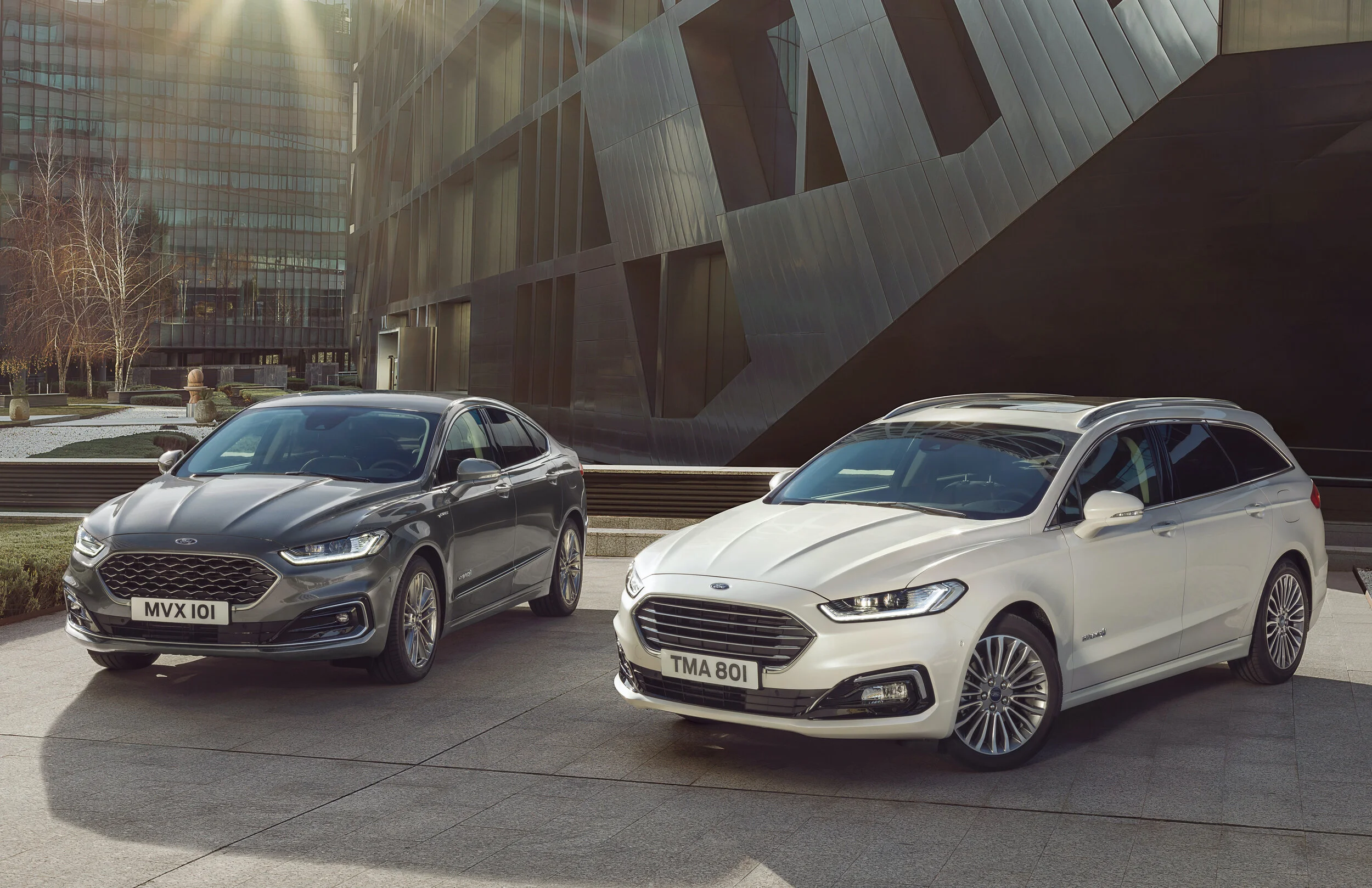
So it goes for the Ford Mondeo, set to die in 2022 after 29 years with no replacement planned, the Blue Oval having determined to focus instead of sports utilities.

Ford NZ has confirmed its stock essentially ran out at the end of 2020. The car’s final representation here was in petrol EcoBoost and 2.0-litre turbodiesel hatch and wagon formats, with a petrol hybrid sedan also availed as a special order unit.

All those models will go out of production in Europe in March 2022, when the nameplate is also set to be retired for good.

Mondeo launched in 1993 and ran for five generations, with five million built. The nameplate was derived from Latin mundus, meaning ‘world’.

It was thought Ford was hatching plans to replace the Mondeo with a croosover style vehicle. That car is coming, but with a different nameplate.

 Blaming "changing customer preferences" for the decision, Ford Europe said it was “evolving our passenger vehicle range in Europe to meet changing customer needs as we move to an electric future”.


R assault ticks Tiguan over Golf wagon

The quickest and most powerful production Golf in the model's history will arrive at year-end in hatch form … but don’t hold out for the wagon. Or Drift mode.

DB2021AU00058_large.jpg

 FAST wagon fans need quell their enthusiasm for the load-all variant of the Golf R that seems set to join the traditional hatch later this year.

While the next-gen five-door hatch – the most powerful in the type’s lineage - is definitely a starter for New Zealand, the wagon will not be, Volkswagen New Zealand has decided. 

Some of the local market R strategy was revealed at the recent national media event for the mainstream Golf 8.

In addition to confirming intent to have the R hatch here in December, the national distributor has confirmed the car coming here won’t achieve the ultimate pep package conceived for Europe – the R Performance set-up whose features include drift mode and a higher top speed that removes the 250kmh  limiter. 

The wagon is also off-limits.

VW NZ staff acknowledged that there will doubtless be some revheads here keen to sample the wagon derivative that, in VW-speak, is traditionally known as the Variant. 

However, assuming the edition will be made in right-hand-drive and that it might be okayed for delivery to our market, the general feeling is that there just will not be enough fans to make it worthwhile.

They say previous attempts with the Golf in that format, including one that had significant stonk, never really paid off.

Also tempering their thought is that they have this time signed off on another like-sized and same-powered beast able to cope with the same burdens as the trad wagon.

The Tiguan R, which is also going to be here late year and is the first of is type, will be every bit as pugnacious. It packs the same turbocharged 2.0-litre engine in identical 235kW and 420Nm tune as the Golfs and also sends that kapow to all four wheels, via a dual clutch gearbox. It’ll probably be even more practical than the Golf wagon, and it has an off-roading element absent from the wagon.

DB2021AU00060_large.jpg

The Golf R wagon has become a subject of interest because it has recently been spotted testing in essentially undiguised form. 

In terms of the styling, there are very few changes from the R hatchback, which differentiates from GTI and ‘base’ Golf Mk8 models by taking a restyled front bumper, larger side skirts, a more aggressive rear diffuser, quad exhaust tips, a larger rear spoiler, a blue-accented LED light strip across the front fascia and a slew of R badges.

The interior is expected to follow the hatch formula, so there would be R-badged, nappa leather-trimmed sports seats, a flat-bottomed steering wheel (with an ‘R’ button for easy access to Race mode), metallic pedals, paddle shifters for the DSG and blue contrast stitching throughout the cabin.

The 10.25-inch digital instrument cluster and available 10-inch infotainment touchscreen mirror that of the wider Golf range, aside from a selection of R-specific displays for the instruments.

It’s expected the R wagon will sit 15mm lower than the standard Volkswagen Golf wagon – the hatch hunkers down 20mm lower than the regular hatch - and will feature the hatch’s adaptive dampers (VW’s Dynamic Chassis Control) and a louder Akrapovic exhaust system.

The Golf R in both formats and the Tiguan R all benefit from a common new-generation, Haldex-type all-wheel-drive system featuring R Performance Torque Vectoring that allows up to 100 per cent of the engine’s torque to be distributed between the front and rear axles, or between each individual rear wheel, in milliseconds.

Volkswagen claims a 0-100kmh sprint time of 4.7 seconds for the hatch. The Tiguan and wagon are set to be a bit slower, as result of being heavier products.

The R versions benefit from the same ‘Vehicle Dynamics Manager’ system as the lesser GTI, which controls the ‘XDS’ electronically-controlled front locking differential, ‘DCC’ adaptive dampers, all-wheel-drive system and other electronics systems in tandem to sharpen driving dynamics.

DB2021AU00064_large.jpg

Had NZ taken the Performance pack, the car would come with a top speed of 270kmh, larger wheels and a larger rear spoiler, plus two extra and new drive modes additional to the regular car’s Comfort, Sport, Individual and Race modes.  

One is ‘Drift’ and the other is ‘Special’, which softens the adaptive dampers to cater for the undulating surface of the Nurburgring Nordschleife – enabling the Mk8 Golf R to shave 19 seconds off its predecessor’s lap time around the demanding circuit, to a time of 7 minutes 51 seconds.

The photos of the R hatch skidding up were released last week by Germany to showcase showcase that trick new all-wheel-drive, the rear differential … and that 'Drift' mode.

Under the skin, the new Golf R sits 20mm lower to the ground than standard Golf models, thanks to retuned suspension with 10 percent stiffer springs, revised control arms and wheel mounts, increased negative front camber, and unique anti-roll bars.

Filling the arches are 18-inch alloy wheels, 19-inch units wrapped in Michelin Pilot Sport Cup 2 performance rubber likely to be an option. Hiding behind the alloys is a set of larger performance brakes, measuring 358mm up front and clamped by two-piston aluminium callipers.

Sixty percent lighter brakes shave 1.2kg of unsprung mass off the car’s kerb weight, complemented by a further 3kg loss thanks to a lighter aluminium subframe.

NZ is said to support a healthy count of Golf Rs, starting with the first of the breed, the VR6-powered Mk4 Golf R32 of 2003.

DB2021AU00063_large.jpg


MG’s Marvel R not on NZ agenda


Might large successor to a model from sister brand Roewe show as a premium model from yet another sibling marque?

MG_MARVEL_R_02.jpg

MOVES by more Chinese car makers to target the luxury electric vehicle segment seem probable – but the push into right-hand-drive countries likely won’t include MG’s latest.

While Shanghai Automotive (SAIC) – which holds the now Chinese-made British-born MG marque in its stable, has discounted its large Marvel R from being available to New Zealand, it might yet have another card to play.

In the wake of rival Geely announcing it will launch a new premium EV brand, Zeekr, SAIC has also indicated it will have an upscale marque in the mix as well – known simply as R.

Zeekr and R both plan to offer models all around the globe – and the first concept, the R ES33, appears to be a development of the Marvel.

The concept is said to have 33 sensors on board, including a 4D imaging radar, Luminar lidar, laser radar, and an ultrasonic radar.

That’s a higher technical load than comes with the Marvel R, which a spokesman for MG Motor New Zealand has indicated is unlikely to steer into this market, saying it is primarily designed for sale in Europe.

''Information about the new MG Marvel R SUV relates to European product and launch timing.  We don't have any announcements to make at the moment with regards to the local market.”

MG_MARVEL_R_05.jpg

Marvel is a name already familiar to Shanghai Automotive followers, though previously it has been presented as a product of another of its brand, Roewe. A Roewe Marvel was brought to NZ by MG Motor here to demonstrate SAIC’s technology level. 

The MG Marvel R hitting Europe soon would conceivably serve similar purpose.

There will be two versions; one will have two electric motors on the rear axle, and the other will have a third electric motor on the front axle, making it four-wheel drive.

The four-wheel-drive model’s three motors generate 214kW and 665Nm of torque, and can accelerate the Marvel R from 0-100kmh in just 4.9 seconds. Top speed is limited to 200kmh.

 The brand claims it has a WLTP electric range of 400km, which is less than class-leading, but recharging is fast. The batteries can be topped up from empty to 80 percent in just 30 minutes, using a fast charger. The model also features a V2L (vehicle-to-load) system, which allows the car’s batteries to power an external device, such as an air pump, or even to charge another electric vehicle.

At 4674mm long, 1919mm wide and 1618mm tall, the Marvel R is slightly larger than the Roewe Marvel. It has a 2800mm wheelbase.

The boot offers 357 litres of space, rising to 1396 litres with the rear seats folded down.

Marvel-R_EU_LUX_Interior_Front.jpg


Is the 86 out for the count?

The skid-tastic sports coupe that kicked off Toyota’s drive back into being a fun brand has gone from NZ – and there’s a question mark over when its replacement will show.

Toyota used the last 86 to celebrate Chris Amon. It’s the rarest of all the editions sold here.

Toyota used the last 86 to celebrate Chris Amon. It’s the rarest of all the editions sold here.

“86 models are no longer available to purchase new.”

As farewells go, the single line announcement on Toyota New Zealand’s new car web page might seem to some enthusiasts to be … well, pretty cold.

Yet it’s all the country’s biggest brand has said in respect to the passing of a great. They’ve been even quieter when it comes to providing clarity in respect to obvious questions.

Like: Will TNZ be keen to take the replacement, presumably now ‘GR86’ – to bring it into the Gazoo Racing fold, alongside the GR Supra and Yaris - model and, if so, when might we expect to see it?

Equally relevant: What’s the future for TR86, the national racing class the distributor created, fosters and funds? Will the current cars race on for another summer or is the series under review?

The TR86 racing series has been a brilliant promotion for the brand and has become an important stepping stone category. Does it have a future?

The TR86 racing series has been a brilliant promotion for the brand and has become an important stepping stone category. Does it have a future?

Exactly when TNZ’s customer stock ran dry is not clear. What is known is that production of the fun-on-a-stick two door which it launched here in August of 2012 with great fanfare finally curtailed in Japan last month.

A heads up about the end being near first aired last August, when Subaru – which builds the 86 and its own BRZ (which didn’t last long in NZ) in its Gunma plant in Japan - told some markets that it was wrapping up build of its own car.

Of course, that news was preceded almost two years ago by announcement from both players that a second-generation car, very much true to the original styling and still with a flat four engine and still rear-drive, had been signed off.

Last November Subaru revealed its new BRZ, with a 170kW/2540Nm 2.4-litre engine replacing the original’s 2.0-litre. Subaru NZ promptly confirmed it will not be sold here – their marketing plan is all about all-wheel-drive, which the coupe does not have.

Now, more twists. From Japan, via America and Australia, conflicting reports.

One is that Toyota is apparently holding back its second-generation 86 in order to make it better. The other, potentially more accurate, suggests it will bring the car’s launch forward, with more announced on April 5.

The second-generation BRZ is out … bu won’t be sold new here. Toyota’s boss has reportedly held back the 86 version so  his engineers can make it less like the Subaru. Can it be done?

The second-generation BRZ is out … bu won’t be sold new here. Toyota’s boss has reportedly held back the 86 version so his engineers can make it less like the Subaru. Can it be done?

The first story is from American website Jalopnik, relying on a translation of a story that appears on a Japanese website called Best Car, known for breaking big stories. It says Toyota boss Akio Toyoda is displeased a car again developed with Subaru once again feels like … a Subaru. Go figure, right?

Anyway, he’s apparently told his development team: “Aim to differentiate performance from the BRZ.”

Differentiating the car from its badge-swapped sibling might be a big challenge and there’s been surprise that Toyoda wants it.

After all the similarities between the old BRZ and 86 never seemed to be much of an issue for Toyota before. Nor has the Supra’s and BMW Z4’s shared development and production.

The original 86 sat on top of a modified Impreza platform and used many Subaru chassis parts. It wasn’t quite Subaru in terms of engine design, however, as while the basics of the 152kW/212Nm 2.0-litre engine were Subaru boxer, it stands as the sole Fuji powerplant with Toyota's variable valve technology.

Jalopnik writer Adam Ismail offered this thought:

“It’s theorised that Toyota could accomplish this (differentiation) by messing with the car’s gearing and engine tuning. However, given that the car is essentially complete, the engineers are reportedly struggling to pull off the feat in the 11th hour. It may also push the car’s release into next year.”

Believe all that? There’s an alternate from Australia’s CarAdvice.com, citing the two brands having confirmed plans for the joint announcement, and providing a link to that page. It works. And that’s what it appears to say. Teasing the upcoming event, an image on the page appears to show the badges of both a Toyota GR 86 and a Subaru BRZ, with the words "Let's make ever-better cars together!"

CarAdvice also cites a statement from Toyota Japan, citing that Gazoo Racing president Koji Sato will take part in this upcoming. It believes that all but confirms earlier reports the new-generation 86 will join the GR family.

The outgoing car’s outputs have always been subject of intense enthusiast interest. Just right? Not enough?

It's fair to say that this has never been a car overly endowed with grunt; Toyota, in fairness, has always said it wanted the chassis to do the talking. As it always did: The reason why the 86 is such a great is that it is one sweet-handling, nimble car.

The 86 came here in a diversity of forms, from an entry $33,986 RC that was aimed at budget-constrained kids bu basically became the basis of the TR86 race car to an extravagant Toyota Racing Development flagship, which was an up-to $70k buy-in and outfitted with Brembo brakes, firmer suspension, bigger forged alloys and a rortier exhaust that added another extra 5kW power.

For all that, the mid-range that sold for under $50k always comfortably trended as the most popular choice with private buyers.

The TRD was the most overt version but, even though it only offered in a run of 20 examples, was not the rarest – or, arguably, the one that deserved most celebration.

That latter honour, in this writer’s view, befalls the Chris Amon GT86, issued in late 2018, two years on from his death and also in the lead-up to celebration of the 50th anniversary of his first New Zealand Grand Prix victory.

The ‘Chris Amon Edition’ delivered in just 10 cars, each for $55,990, all in distinctive orange, called solar flare, that was purely for this run.

Amon enjoyed 16 seasons at the highest level of international motorsport but spent twice as long working for Toyota NZ.

He put in more than 30 years’ involvement as a vehicle development and motorsport consultant to the Palmerston North-based brand, much of that work conducted at the Manfeild racing circuit  – which, shortly after his death, was renamed Manfeild: Circuit Chris Amon.


Clean car ambition timeframes challenged

New vehicle distributors agree the CO2 count has to fall, but say the pace of proposed change will be problematic.

NZ-new EV availability is ramping up, with this BMW iX (above) among confirmed 2021 entries, but the industry points out that left-hand-drive markets are prioritised, which hurts planning for this country.

NZ-new EV availability is ramping up, with this BMW iX (above) among confirmed 2021 entries, but the industry points out that left-hand-drive markets are prioritised, which hurts planning for this country.

DB2021AL00162_medium.jpg

NEW vehicle importers support a clean car standard but believe the mooted deadline of 2025 is impossible to achieve and have labelled electric vehicle uptake forecasting as a fantasy.

The Motor Industry Association, which speaks for new car distributors and has more than 44 members covering 81 different marques, is more partial to a 2028 deadline, as suggested in a Climate Change Commission report.

However, it is also particularly scathing of the commission’s considerations about the pace of EV uptake in New Zealand, saying its modelling “enters the realm of fantasy and wishful thinking.”

This is the MIA’s biggest concern, though it is also questioning the agency’s projections about when EVs will achieve price-parity with conventional internal combustion engine vehicles, saying that forecast is also seriously awry. Predictions of low emission vehicles also run ahead of what the MIA believes is possible.

“We consider that the commission’s target of 50 percent of vehicle imports to be electric by 2027 are overly optimistic, as are the projections for price parity.”

It highlights that the world’s EV makers are primarily concerned with meeting demands in markets where hard-and-fast deadlines for reduced emissions and ICE car availability has been established. It also points out that with the exception of the United Kingdom, which plans to ban new ICE cars from 2030, these are predominantly left-hand-drive markets, so as result production for right-hand-drive countries is limited at best.

The Association also believes the commission undervalues the role of carbon sinks, synthetic fuels – that could keep internal combustion engine (ICE) vehicles in circulation - and hydrogen technologies.

The latest comment comes after a number of high-profile local distributors, including Toyota New Zealand and European Motor Distributors – which holds rights to all brands held by Volkswagen Group, an electric vehicle production juggernaut likely to overtake Tesla next year (yet is unable to begin supply to NZ until 2023) - have called on the Government for a feebate scheme to sit alongside its clean car legislation, fearing that without it new EVs will struggle to see similar demand.

The MIA’s criticisms and alternate proposals are contained in a comprehensive report responding to the Government having announced, in January, an emissions standard which, if approved, will take effect from next year and also the commission’s subsequent draft report lending opinion about what it believes New Zealand must do.

The deadline for submissions about these matters is today.

The Government’s standard will require new and used car importers to meet incrementally lower emissions targets, falling to 105 grams of CO2 per kilometre average by 2025, from a present average of 171g/km.

The commission has subsequently recommended the Government deploy an end-date for petrol and diesel internal combustion cars, proposing 2032 as appropriate.

In a covering letter to the MIA’s submission, chief executive David Crawford says new vehicle importers supports need for cleaner vehicles, but says the timeline for a lower CO2 average is too rushed.

“Unfortunately the Government’s timeline of 2025 is impossible to reach with resulting penalties becoming a financial impost against all new vehicles including low emission vehicles.”

“Additionally, the transport policies in the draft report focus on vehicles entering the fleet which is only a small portion of the in-service fleet. We need policies to focus on not just only those entering the fleet, but also to target existing vehicles. This will garner a faster rate of emission reductions than just focusing on vehicles as they enter the fleet.”

Additionally, the transport policies in the draft report focus on vehicles entering the fleet which is only a small portion of the in-service fleet, he says. 

“We need policies to focus on not just only those entering the fleet, but also to target existing vehicles. This will garner a faster rate of emission reductions than just focusing on vehicles as they enter the fleet.”

In an executive summary, the MIA says the commission should have been “more technology agnostic, and not favour one technology over another, but enable the transport industry to develop innovative solutions” to meet reduced CO2 targets.

Crawford says the commission’s thought that technological breakthroughs will be crucial to enable the agricultural sector to reduce its greenhouse gas emissions does not give consideration to the potential for new technological breakthroughs for the transport sector.

David Crawford.

David Crawford.

“The MIA believes the (commission’s) draft advice report needs to give greater weight to the role that synthetic fuels (including e-fuels) could play in reducing emissions from the current ICE fleet.

“ ….we also consider the report has underplayed the potential for hydrogen propulsion, not only for heavy vehicles but also light, in addition to battery technology. There is also no evaluation of the role e-motorcycles/scooters can play in reducing emissions.”

It believes discussion of ICE bans is premature if synthetic fuel can be produced. It suggests the country should invest in the production of such ‘e-fuels’  “and we have an opportunity to do so.

“For example, once the extension to the Tiwai Point aluminium smelter contract has run its term in 2024 then that electricity could be utilised to make e-fuel to lower emissions of the entire NZ fleet of light and heavy vehicles.”

It also moots the use of wind turbines to assist in the creation of hydrogen, a process which is already signed off for trial, and is excited by the development of second generation biofuels which are sourced from various bio-stock (wood, for one) to make a crude bio-oil from which petrol and diesel can be produced.

In a recent commentary, Crawford noted “these second generation biofuels are known as ‘drop-in’ fuels which are 100 percent compatible with existing ICE engines and fuel management systems.”


Smart drive appeal for updated Tiguan

A mid-life refresh for VW’s best-selling model here delivers significant revisions.

IMG_8782.JPG

 TWO, four then phwoar …. so goes for the roll out of updated versions of the Tiguan, and that’s just the five-seater version.

 Actually, add seven into the mix as well. Later this year we’ll see a facelift of the seven-chair Allspace edition, replicating in the same mainstream trim levels availed to the standard cars.

 It’s a big effort, yes, but worth it, because this car is Volkswagen’s big earner these days, internationally – one built every 35 seconds, six million on the world’s roads – and especially here.

 One in three NZ-new vehicles registered at the moment is a medium-sized

sports utility and Tiguan is doing a great job keeping VW at the forefront of that trend. Since having shoved Golf aside several years ago to become VW’s most popular car in this country, it has also shrugged off Covid-related supply issues to hold top dog status by some margin.

This year the five-door, which achieves 70 percent of Tiguan volume, alone is expected to capture 1100 of the more than 3000 registrations the brand’s national distributor is aiming to snare. That’s a lift on last year, when Tiguan in all formats accounted for 800 out of a total passenger tally of 2877.

Here’s another factoid about Tiguan. It attracts the same level of astounding loyalty as the brand’s original stalwart, Beetle. Says product manager Jordan Haines: “Tiguan buyers stay in Tiguans.”

Going forward, those owners will enjoy a look and quality more closely related to VW’s next size up SUV, also its largest offer in this market. A clear impression from meeting the facelifted ‘Tig’ is that it has a bit more Touareg to its make-up.

IMG_8811.JPG

A front that used to be quite snub-nosed has, thanks to an entirely new grille and lights, become smoother and classier and, in doing so, has much more in common for facial look with the biggest soft-roader. A complete do-over of the instrumentation has much the same effect, only this time the Tiguan gets ahead, as it has VW’s very latest displays, these shared with the just-arrived Mk 8 Golf. Going the swank new MIB3 twin screens across the dash gives it a real lift. Crisp screen graphics and quick reactivity are hallmarks of the infotainment side, while the driver’s instrumentation, also fully digital, also looks good and a useful level of information is accessed using touch-sensitive steering wheel buttons. It aces over the hatch by having more coherent heating and air conditioning controls. 

Along with the new tech, there’s a palpable lift in the quality. Surfaces that were previously in hard plastics appear now to be rendered in softer, more enticing  materials.

Doubtless the furnishings are just as hard-wearing as ever, given the car’s role is primarily to serve as a family bus. In this respect, it still delivers honestly. The revision has not impacted on body dimensions, but there was no need to: The five chair edition is still a roomy car, with decent accommodation in the second row seat, and a big boot as well.

 To the range itself. The new models arrive progressively; front-drive cars here now, all-wheel-drives in a couple of months, the Allspace versions in the third quarter then, in December, a variant that’s never been tried before but could turn out to be a distinct winner: The Tiguan R (below), an all-out performance flagship with the same kick-ass 230kW/400Nm 2.0-litre, DSG and AWD drivetrain as the latest hotshot Golf R; also timed for late-year introduction.

DB2020AU01521_medium.jpg

The cars on hand at present are the base front-drive Life model that costs $46,990 and a plusher, more heavily-equipped R-Line variant, costing $55,990. That’s the one sampled during the launch event.

Both are powered by the same 1.4T engine as Golf uses but each is mated with a six-speed dual-clutch transmission in place of the hatch’s eight-speed auto. Expect optimal economy of 7.6L/100km.

The incoming all-wheel-drives are 2.0 litre turbopetrols, both with seven-speed twin-clutch transmissions. The $59,990 Style AWD model has 132kW and 320Nm and the $68,990 R-Line version has 162kW and 350Nm; the latter has better claimed economy (8.3 litres per 100km versus 8.6) due it taking stop/start. 

The 2021 editions achieve plenty of smarts and conveniences: Even the base Tiguan gets three-zone AC and an electric tailgate. Wireless App-Connect, LED headlights (Matrix type on the R-Line, along with automatic high beam control), ambient lighting also span the range. Wheel sizes enlarge as prices rise; base cars ride on 17-inch wheels, the R-Line 2WD has 19s, the AWD has 20s.

All but the base variant have heated leather seats and can be ordered with a powered panoramic sunroof. Self parking and front and rear sonar is standard and only the entry misses out on a 360-degree camera facility. R-Line has a larger central touch screen than the less expensive variants.

The AWD editions now have hill descent control and driving profile selection (four drive modes); all-paw R-Line has electronically controlled dampers but not the front-drive edition. The cars all come with roof rails and trailer hitch preparation. The front drives can cope with a maximum braked load of 1800kg, rising to 2100kg for the AWDs.

The driving? Just a quick flit, but enough to suggest an R-Line front-drive with this entry engine probably shouldn’t be expected to overly justify the sporty nature of its badging. It’s certainly capable, and maintains confidence through corners, but you’re hauling 1400kg so unsurprisingly this has impact on the dynamics and outright verve; you'd struggle to describe it as an all-out driver's car. But, to be fair, that’s not really a remit for anything other than the outright R, which will deliver 0-100kmh in 4.9 seconds. For the lesser editions, the ultimate ideal is to be roomy, comfy and safe, and on all those points, the Tiguan hits its marks.

DB2020AU01508_medium.jpg

Meantime, VW NZ has another Tiguan in its sights; the version running a plug-in hybrid drivetrain. This eHybrid (above) is intriguing.

The ultimate reason for it being is to ace economy and deliver some degree of electric only driving; it achieves both. Economy of 4.7L/100km is possible and the 13kWh battery provides an all-electric range of around 50km at speeds of up to 130kmh. 

However, it sounds like there’s a bit of a fun factor from the drivetrain, too. A combination of the 1.4-litre turbocharged petrol and 85kW electric motor means a total output of 180kW and 400Nm of torque, making it second only to the R in the Tiguan power stakes. All of the grunt goes through the front wheels alone and gets the eHybrid from 0-100kmh in 7.5 seconds.

 It looks the same as a regular mainstream Tiguan, and also delivers in the same trim specs. With the battery under the rear seat, the fuel tank is pushed back and boot space drops to 476 litres, which might seem a bit of a hit.

 Haines says talks are under way with the factory, but there’s no certainty about when it might become available. Sooner the better? “We would love to have a plug-in hybrid, especially as a corporate vehicle.”

IMG_8791.JPG


ID release timing now into 2023

NZ has been given a green tick from VW Group for accepting need to clean up transport CO2, but there’s no queue-jumping for its tasty-looking electrics.

ID cars are being exported … but the ship won’t be stopping in NZ until early 2023 at best.

ID cars are being exported … but the ship won’t be stopping in NZ until early 2023 at best.

BURNED by its diesel emissions scandal in 2015, Europe's largest carmaker is investing around $50 billion in electric vehicles, staking its future on new technology and a dramatic shift away from fossil fuels.

Its ambition is far from half-hearted. Analysts recently conjected the undisputed king of the electric car, Tesla, might well be matched sale for sale by Volkswagen Group as early as next year with the Germans 300,000 units ahead by 2025.

Most will be cars from the VW parent brand, from the already impressive yet still-growing ID family. Also in the mix are Skodas, Audis and SEAT/Cupra cars sharing the parent’s bespoke MEB platform.

What will be New Zealand’s contribution to this historic global assault?

Shockingly, for electric car fans, over the next two years, the official input is very likely to come to … zero.

greg leet, general manager of VW passenger in NZ.

greg leet, general manager of VW passenger in NZ.

That’s the sobering reality, outlined by Greg Leet, general manager of Volkswagen passenger here.

Asked when the ID brand will officially represent in this country, he has confirmed earlier optimism of anything coming within the next 18 months has been all but scuppered. Introduction in early 2023 at best seems far more probable. 

“I still feel we are one buying cycle away from the ability to buy a fully electric Volkswagen.”

It’s hardly good news for the growing EV fanbase eager now to put their cash behind Europe’s most promising alternates to the Tesla, Hyundai and, primarily in used import ranks, Nissan electric cars that have so far been the mainstay models on the national scene.

VW Group’s inability to serve is not a distributor decision. Leet openly admits he would have at least the ID4 crossover here now if that were at all possible. 

If VW was able, it would be selling the ID4 now. It believes the model would quickly gain much the same popularity as the current local best-seller, the Tiguan.

If VW was able, it would be selling the ID4 now. It believes the model would quickly gain much the same popularity as the current local best-seller, the Tiguan.

“There’s an absolute desire to have the ID cars.” If the five-seater ID4 was here now, he believes, it would “very quickly achieve the same volume as its closest ICE (internal combustion engine) cousin.”

That’s the Tiguan, which is forecast to take more than 1000 sales this year. “We have very good aspirations for the ID range.”

But it’s not going to happen. VW’s production is still ramping up; ultimately, ID cars will likely come out of numerous plants, not all in Germany. But, for now, the output is constrained, allocations are strictly decided by the factory – with Europe getting first dibs.

Germany respects that NZ has great Green credential in respect to our electricity generation and that is has developed a solid EV recharging infrastructure.

It is as heartened as Leet has been by the Government’s recent announcement of intent to encourage EV ownership, wean us out of combustion engine products and dissuade support for high CO2 emitting vehicles.

 Though a coat-tailing Climate Change Commission advisory on what NZ needs to do to bring CO2 counts into line with international forecast has caused the car industry some consternation, Leet says the preliminary comment from Government about need to clean up transport emissions is a positive recognition. It finally puts NZ in the same conversation, with the same requirements, that are being tackled in Europe.

“We are all committed to reducing the CO2 footprint. That there’s an absolute appetite from our Government to say ‘we want to be part of this as well’ is treated very seriously by the factory. It is one of the main topics that they listen to.”

Yet that’s not enough for Germany to alter its view that NZ is of lower priority for its new-era products than other countries.

What other elements might change its mind? An actual incentive programme to support purchase of NZ-new EVs would always be handy. Also, a better attitude from Australia. Like it or not, our markets are bundled. Our neighbour has much greater volumes. But – and this is a huge frustration – they just don’t have anything like the same interest in promoting EVs. 

Beyond that, ID isn’t a line that can just be introduced without preparation.

ID production is sill ramping up, bu VW has aspiration to go big. Very big.

ID production is sill ramping up, bu VW has aspiration to go big. Very big.

“There’s a lot of resource and work required to enable the ID range to different countries. While we are a part of that conversation with the factory, the opportunity for us to have it is still a little while away.

“We are part of the roadmap for the ID cars,” he insists. But the factory are very committed to Europe in respect to electrification.”

 In the meantime, then, with the e-Golf now out of production and local supply exhausted, VW NZ is out of the electric car business. It’s best hope of plugging in again in the interim is with PHEV versions of existing core fossil-fuelled cars, notably the Touareg – the incoming R runs mains-replenished battery assist – the Tiguan and the Golf. 

“Our commitment is to get hybrids and PHEVs to support our Government mandate to reduce CO2. 

“While our ICE vehicles are very fuel efficient, we are working really hard to improve.”

Leet reminds he can only speak about the product his operation sells. But all VW Group brand franchises here are held by a common distributor, European Motor Distributors, so they’re close.

So do the local operations for Audi – which, of course, already has electric fare here, on other platforms – SEAT/Cupra and Skoda having any better luck with achieving their own MEB models, already either in production (Skoda Enyaq) or soon to be (Audi Q4 e-Tron, Cupra Born) ahead of VW NZ? Says Leet about that: “I think we will have them (the ID and sister MEB models) at very close timings.”

Of course, NZ is already home to grey import IDs. Barely-driven cars from the United Kingdom, plucked as dealer demonstrators. Some examples of the ID3 hatchback – which VW NZ does not plan to sell here - are here and it’s accepted ID4s will soon join them. How does Leet feel about that? There’s a degree of pragmatism.

Leet says VW NZ will do its best to be of assistance to buyers of grey import IDs, but the official support network hasn’t been developed and, in any event, the ID3 that has so far been showing up won’t be sold here anyway.

Leet says VW NZ will do its best to be of assistance to buyers of grey import IDs, but the official support network hasn’t been developed and, in any event, the ID3 that has so far been showing up won’t be sold here anyway.

“We would dearly love to be the importer of those cars. But we just aren’t. I don’t blame a customer at all for … purchasing these cars. Our approach to it is that these are effectively new Volkswagens, so we want the opportunity to welcome those customers into the VW network as soon as we can.”

There’s been talk that the factory is so disgruntled by grey imports it has signalled they might lose manufacturer warranty protection. Is it that black and white? With ID, the maker has prescribed a particular view, Leet says. 

“The factory homologates cars for the market of destination. These are UK cars.”

That status might become important in event of, say, a recall. Conceivably, under any warranty that might still exist, a UK car would have to be tended to by an accredited UK dealer. Would any owner really want to ship their imported ID halfway back across the world for, say, a software update? Probably not. But what if VW signalled need to undertake a major revision, like a battery change, as Hyundai has now done with its big selling Kona and Ioniq?

Whoever imports has a duty to provide back up to best ability. What chance that will realistically happen? Not for Leet to say. He simply notes: “They are deemed the importer so you would assume they would also undertake some responsibility.”

As things stand, Leet says, those UK cars will be encumbered by sat nav and traffic sign recognition programmed for their place of original sale. ID models are designed to take software updates. Those will likely also be market specific.

Nonetheless, the VW NZ attitude is that it will do the best it can for all owners, regardless of how their cars are sourced. But with ID it is challenging; there’s not the readiness for it as there would be for, say, an ex-Japan Golf.

 “We do want to be in the position that we can look after, and repair, those cars as required. But that takes a bit of work – there is special tooling, there are specific software requirements for these cars” and they demand trained staff. “That takes a while to set up.” VW NZ has not gone down that path yet.  

“As far as the technology to set up for the software … we’re working on that, and are likely to achieve it.

“As far as being able to have panel parts, windscreens and other parts … we’re not quite there yet.”

Logically, too, even when ID has officially established, VW NZ will prioritise parts for the cars it sells new, rather than those it won’t. Something else for those ID3 buyers, in particular, to consider.


VW on the ball with soccer app

A new app for the latest Golf is set to score with fans of European football.

DB2020AU00152.jpg

 WOULDN’T it be great to never again miss a goal scored by your beloved top-level soccer team – even when you’re driving?

It’s a question that Volkswagen has taken seriously.

A feature in the latest Golf that has just gone on sale in New Zealand, the Mark 8, is a free “we score” app that delivers live football updates into the car’s cabin.

Users in Europe and the United Kingdom can pre-set three clubs and one national team, and follow their favourites in all competitions.

 Along with live scores – which football fans will recognise from smartphone apps – standings and football news are also displayed in the app. All this information can also be read out using the “text-to- speech” function.

DB2021AU00052_large(1).jpg

VW assures everything is displayed in such a way that they do not distract the driver from the road ahead.

The app covers the top two divisions and the main cup competition of the relevant country.

In Germany the 3. Liga is also available, while in the UK the Premier League and EFL Championship are included. The Europa League and Champions League are supported, in addition to the European Championships.


VW says the app is supported by the “Discover Pro” and “Discover Media” infotainment systems.

Alongside the “We Score” and “Amazon Alexa” services, customers can also use the In-Car Shop to subscribe to data plans which allow them to use streaming services or a Wi-Fi hotspot. The “We Connect Plus” extension is also easy to order in the In-Car Shop. Further products are in the pipeline.

Why football? At an international level, VW is a mobility partner of UEFA national team tournaments, including the European Championships. It is also supporting seven teams which have qualified for the tournament: Germany, France, Switzerland, Austria, Denmark, Finland, and Russia.


Electric Wrangler concept revealed

Jeep hits the electric trail with a design study that mixes battery-pure drive with a manual transmission.

02 Jeep Magneto.jpg

 A FULLY electric Wrangler is among concepts Jeep has revealed ahead of an annual brand event in the United States where it traditionally serves up concepts of potential production fare.

The Magneto, if brought into the showroom, would conceivably place as the next-step alternate to a plug-in hybrid Wrangler, the 4xe, that the maker already avails to its customers as an introduction to electric-assisted driving.

That product is restricted to North America so though Jeep’s New Zealand distributor has previously expressed some broad interest in taking an alternate to the purely fossil fuel-reliant range it offers, it also accepts that cannot occur until the battery-assisted programme includes right hand drive.

The Jeep Magneto features a solitary electric motor that generates 210kW and 370Nm of torque, powered by a 70kWh battery. The battery capacity is split up into four separate units mounted around the vehicle’s body to keep weight balanced and help off-road performance.

Jeep’s 2021 concepts are, from left, the Red Bare, the Magneto, Jeepster Beach and Orange Peelz

Jeep’s 2021 concepts are, from left, the Red Bare, the Magneto, Jeepster Beach and Orange Peelz

This output should mean the Magneto can sprint from 0-100kmh in 6.8 seconds, according to Jeep’s claims. The brand hasn’t published a figure for the Magneto’s range, it’s conjected such a battery system should allow for around 338 kilometres between charges.

Unusually for an electric vehicle, the Magneto features a six-speed manual gearbox. Jeep says the system is being set up for the motor to collect regenerated power as the driver eases off the accelerator when the clutch is engaged.

The Jeep Magneto was one of four concepts revealed ahead of the traditional Easter Jeep Safari in Moab, Utah, which starts on March 27 and runs until April 4.

The other concepts – the Jeep Red Bare, Jeep Orange Peelz and Jeepster Beach - and are a mixture of modern and traditional.

The first is cast in the mould of an ultra-rugged edition, with V6 turbodiesel power. The Peelz is more about turning heads; this concept does away with the side and rear windows, and uses prototype JPP half doors and a removable one-piece glass sunroof. The Beach, meanwhile, is a homage to a 1968 car that was a classic in the US, the C101 Commando. It runs a modified 2.0-litre turbocharged four-cylinder petrol engine that produces 255kW and 500Nm of torque, about 25 percent more power than the production version of that engine.

07 Jeep Red Bare.jpg
18 Jeep Orange Peelz.jpg
12 Jeepster Beach.jpg


Aston on track with road-legal special

The Vantage developed to mix with the Formula One pack is coming to the showroom.

VantageF1®Edition_10.jpg

TURNS out the two safety cars Aston Martin has developed to shepherd this year’s Formula One field can be enjoyed by the brand’s fanbase. 

A week after revealing its track specials, the British marque has unveiled the Vantage F1 Edition, which is basically the same car as that joining the grid for official duty, but without lightbars and so on.

New Zealand has been confirmed as a target market for the F1 Edition, with first examples wet to be available later this year. The car will likely raise big interest with local brand fans it is touted as being fastest and most focused of the whole Vantage breed.

As a celebration of Aston's return to F1 – yes, they were briefly in that mix six decades ago (see the video) - the Vantage F1 Edition has had direct input from Tobias Moers, who was recently appointed the company’s chief executive. In case you've forgotten, before that, he was the boss of Mercedes-AMG. If any bloke knows how to make a taut, thrilling, track-focused special or two, it has to be Moers, right? 

What’s the go here? Essentially, the formula is as you’d expect: More power, a new aerodynamics package and an uprated chassis. 

This edition adopts a retuned version of the ‘standard’ Vantage’s Mercedes AMG-sourced 4.0-litre twin-turbocharged V8, now developing 393kW and 685Nm – so, exact-matching the race-bound safety car, but up 18kW over the regular road car, and with its peak torque figure offered across a wider portion of the rev range, so as to improve tractability and in-gear response.

To cope with this upswing in muscle, the eight-speed automatic transmission now features an optimised torque-cut during upshifts that reduces the time taken to swap cogs. This also helps on downshifts, allowing for 'finer control when the driver is balancing the car at its limit of traction'. That's all about making the Aston better to steer on track. 

And faster? Seems so. Aston claims 0-100kmh sprint times of 3.6 and 3.7 seconds for the coupe and roadster respectively.

VantageF1®Edition_05.jpg

The type also achieves had serious chassis and aerodynamic upgrades enacted upon it by the engineering team of Aston Martin.

Moers asked his team to deliver a Vantage with faster lap times than any model yet seen, but with caveat that the on-road capabilities could not be compromised in the process.

The aero tweaks are more than meets the eye. Detailed underbody modifications are enabled to increase front structural stiffness for finer steering feel and response.

Moving to the suspension, the dampers' internals have been reworked to increase their effective force range, which means the vertical body control should be improved, so the car is less bothered by high-speed compressions or monstering its way over crests.

VantageF1®Edition_06.jpg

The rear spring rates have been jacked up, as has lateral stiffness at the back of the Aston. This sharpens turn-in and increases traction, meaning the trailing axle of the car shouldn't be dynamically 'left behind' by the more-eager front end.

To make the most of all this kinematic acuity, the alloy wheels have gone up a size, from 20s on the other Vantage models to a set of 21-inch rims here. These are wrapped in tyres developed specifically for the F1 Edition by Pirelli, and it's the first time any model of Vantage has had such sizeable rubber at all four corners.

The aero kit comprises a full-width front splitter, front dive planes, underbody turning vanes and a big rear wing. Aston hasn't changed the design of the rear diffuser on the F1 Edition, but claims significant positive front and rear downforce; optimally 200kg more than the regular Vantage can summon up at maximum speed.

Other distinguishing features of the F1 Edition include a vaned grille, 2x2-twill carbon-fibre exterior detailing, unique body graphics, quad exhausts and the Satin Black Diamond-Turned 21-inch wheels.

VantageF1®Edition_09.jpg

Aston will allow buyers access to a limited but distinctive array of body colours and interior finishing, obviously with a strong motorsport theme. That means the Aston Martin Racing Green colour is available, seen on both Aston's F1 contender for 2021 and also the Safety Car, but there's also Jet Black and Lunar White (Satin or Gloss finish), all of which have a Solid Matte Dark Grey racing graphic to contrast their main hue.

Inside, the Vantage F1 Edition features Obsidian Black leather teamed to Phantom Grey Alcantara, with contrast stripe colours of Lime Green, Obsidian Black, Wolf Grey or Spicy Red available. Choose any of these and the stitching is finished in the same shade, too.

Moers is excited about the car, commenting: “Performance is at the heart of every Aston Martin, but when it wears an F1 badge it has to be a truly exceptional car.

“Vantage was already the most focused sports car in our range but in the development of our Official Safety Car of Formula 1, it had to be a true athlete: more powerful; more agile; more immediate and more exciting to drive. And - of course - quicker and more capable in a race-track environment.

"I set the engineering team a tough target, as I was insistent that gains in performance came via genuine improvements in the car's dynamics, and not by fitting track-optimised tyres. The results speak for themselves.”