Subaru Outback Premium roadtest review: New angles, familiar flavour
/Look beyond the start-again styling and you’ll find a lot of what you liked before still remains.
Price: $59,990.
Powertrain: 2.5-litre normally-aspirated flat four petrol, 137kW power and 254Nm torque, constantly variable transmission.
How big: 4880mm long, 1880mm wide, 1715mm tall.
We like: Fantastic ride; quality, more useful interior; maintains sensible pricing.
Not so much: Powertrain feeling its age; losing integrated roof rack a blow; front seats a bit flat.
SO great were its feats and the cars and characters involved, at world and NZ national level, that Subaru’s image particularly cements to rallying, and fair enough … those were big headlines back in the day.
Nonetheless, let’s not forget that the car in Fuji’s portfolio that has singularly done more than any other to achieve volume has forged its success and reputation without any reliance on motorsport cred.
Mixing capability and space with off-road style, the Outback made its reputation as an utterly dependable go-anywhere, do-anything vehicle ideal for the adventuresome.
Now there's a new version and patently it’s something of a fresh start.
For 30 years, Outbacks have been elevated Legacy wagons. Even in the outgoing stanza, when Subaru decided to go alone with a jacked-up edition, the genetic code was obvious. But now?
The seventh-generation brings lots of change, being slightly larger than before and even more bold in stance.
The interior has gained a wholly fresh design, at one end there’s a new dashboard layout with a new 12.1-inch touchscreen, with the former portrait-style screen shelved, at the other end a much modernised boot. There’s more technology, especially in respect to attention monitoring. A shame, but unavoidable.
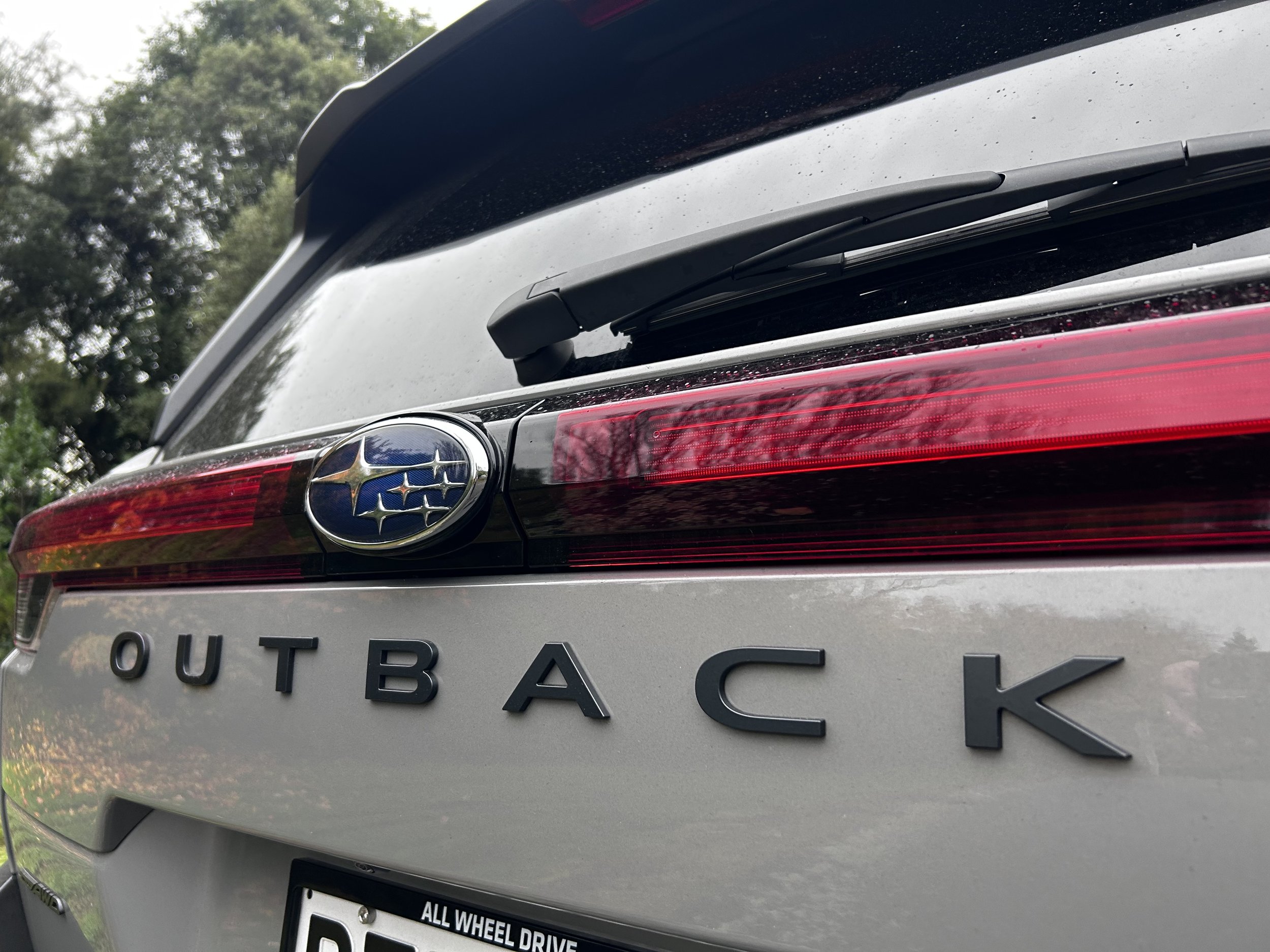
But THE point of difference every one is talking about is something else: Our favourite all-terrain station wagon has become a SUV.
A good thing? Subaru says bulky and blocky are what consumers now want. If so, Kiwis are the best test market Subaru has. We’re hot on SUVs and crossovers and statistically the per capita audience here for Outback sets the global standard.
So how do we feel about this change? Some stylings immediately captivate, some take time to settle, some never do.
Outback commands attention, but mixed views were heard.
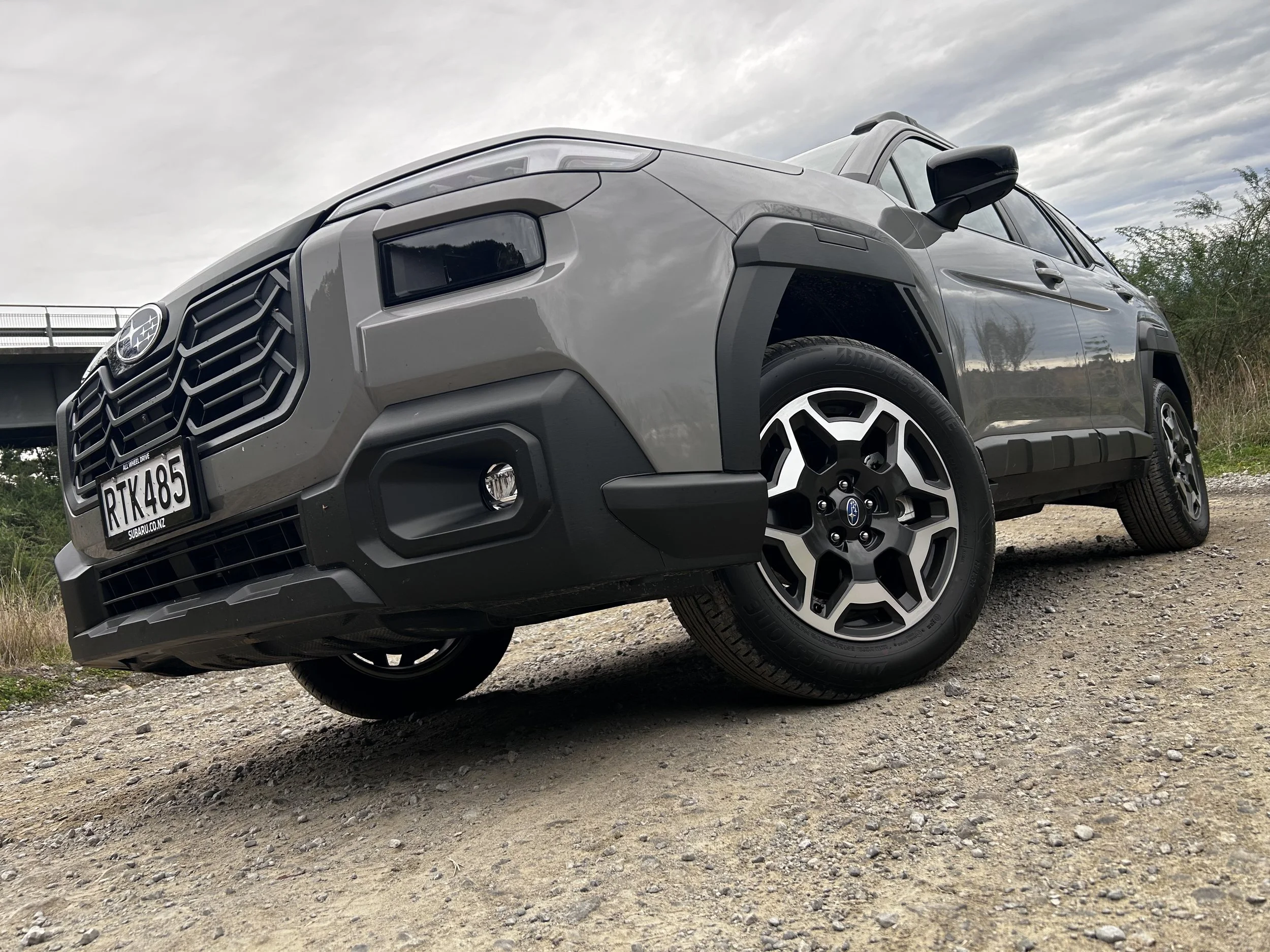
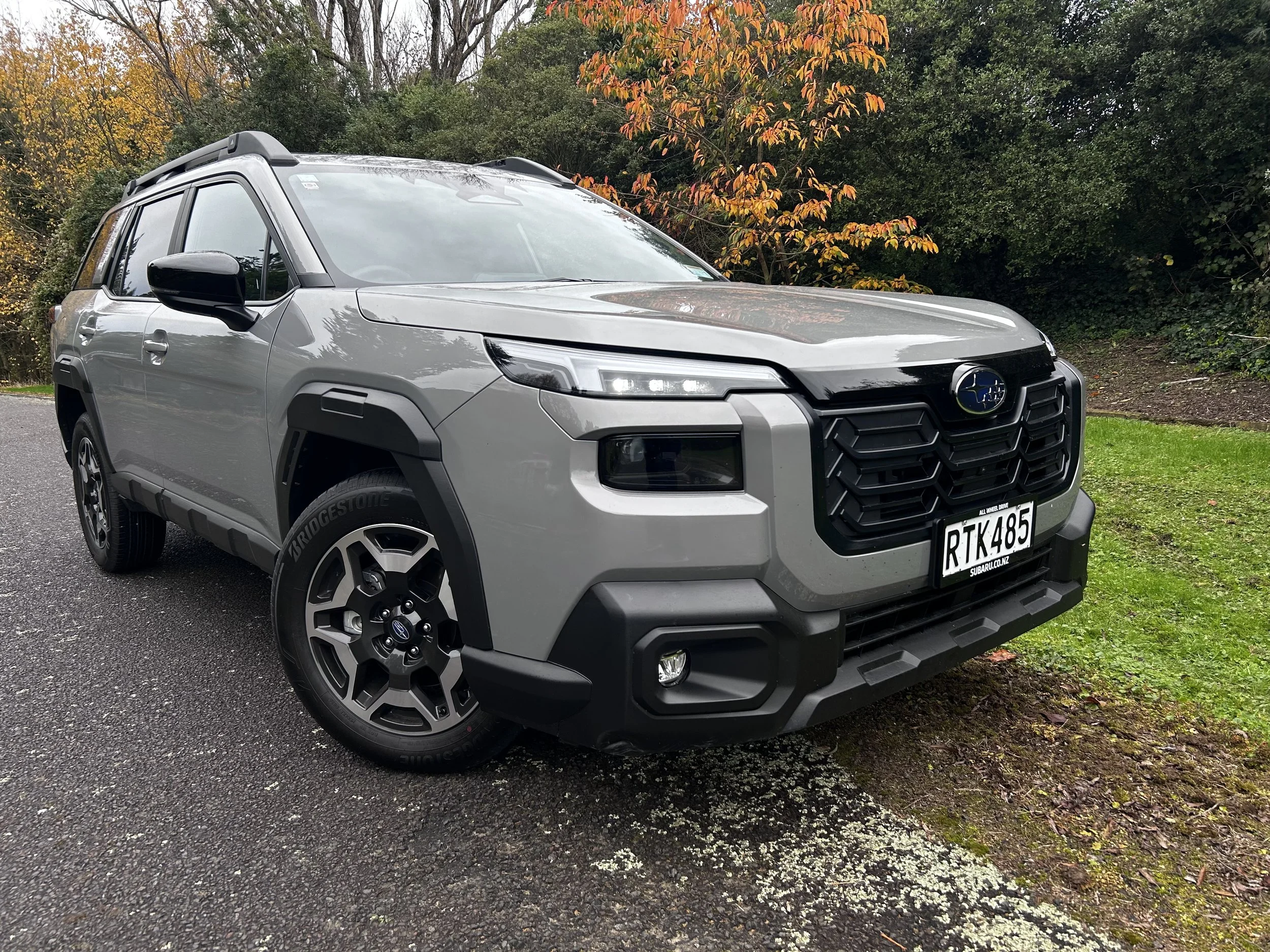
No argument that what you get now is an even more rugged design, with plenty of chunky body cladding all round. But as a former Outback owner, there’s an air of awkwardness now that requires an adjustment in attitude. The rear and front ends are a challenge, the wheel arch surrounds all the more so.
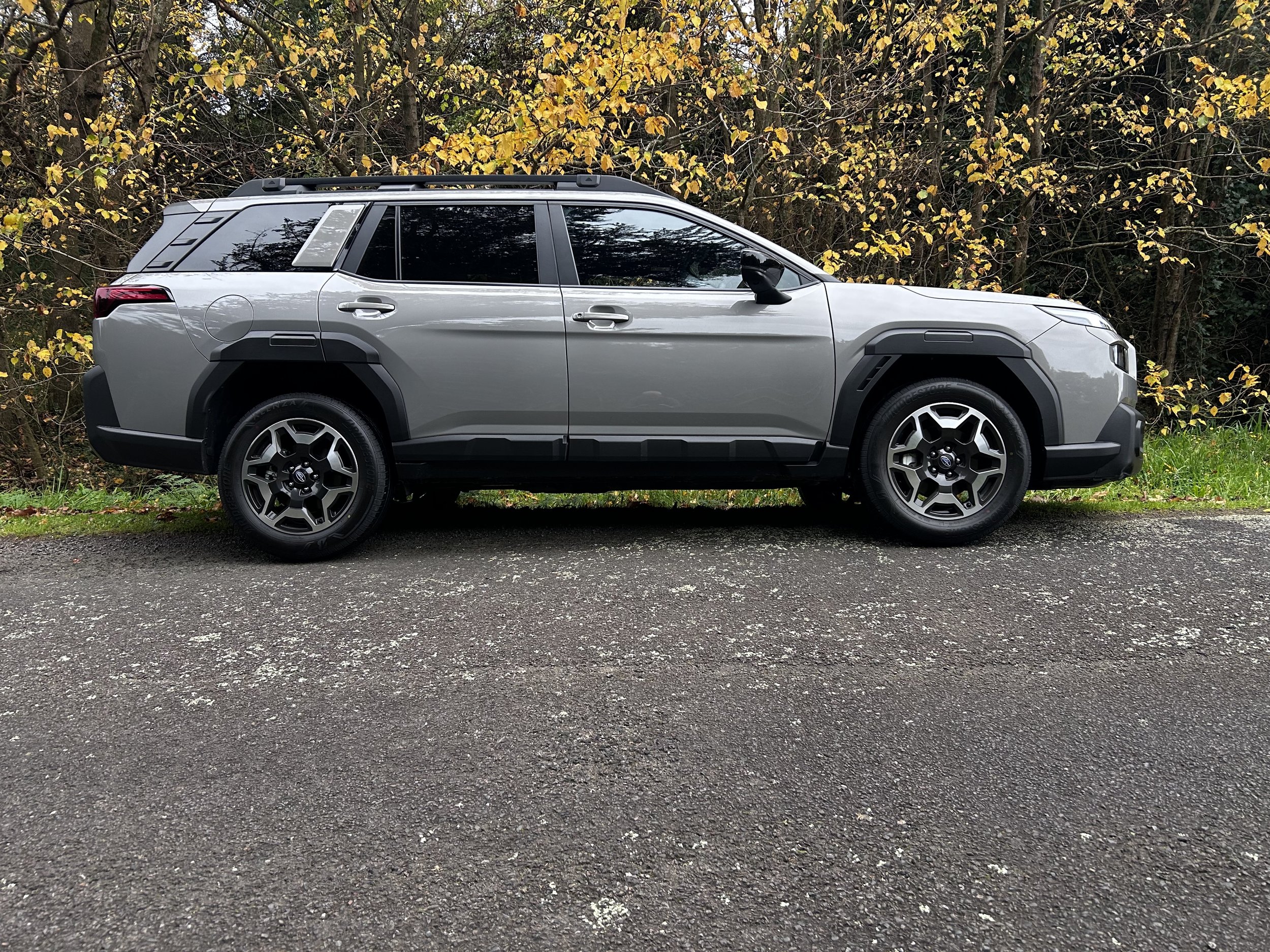
What saddens me more is something else. It’s that by reshaping, Subaru has bent a knee to the masses. Staying for so long with a station wagon shape when everyone else went for amorphous Lego-like looks struck me as being bravely individual; a stand against herd mentality. But what’s done is done.
Experience with the latest car in its second-cheapest Premium format proved a highly positive experience nonetheless. As much it squares up very differently visually, it still maintains core elements of an intrinsic ethos I always found highly appealing.
Outbacks have always set the standard for Subaru in regard to their quality of ride and, if anything in this setting, that side of things has elevated. It is stunningly good over any surface. Another plus point that has been further enhanced its the sheer practicality of this car. Subaru’s allegiance to boxer engine design is also to be applauded.
Subaru NZ’s confidence in the car remains high; with five versions in the family now, it is covering a broad spectrum of buyer interest and expenditure. The new Wilderness editions not only raise off-road ability to a higher level but also raise the spending peak, being the first Outbacks to cost more than $70k.
Buying into the Premium means sticking with the mid-level of three trims - the others being the $5000 cheaper entry AWD and $5000 dearer AWD Touring - that carry over from the old range, plus also a highly familiar powertrain.
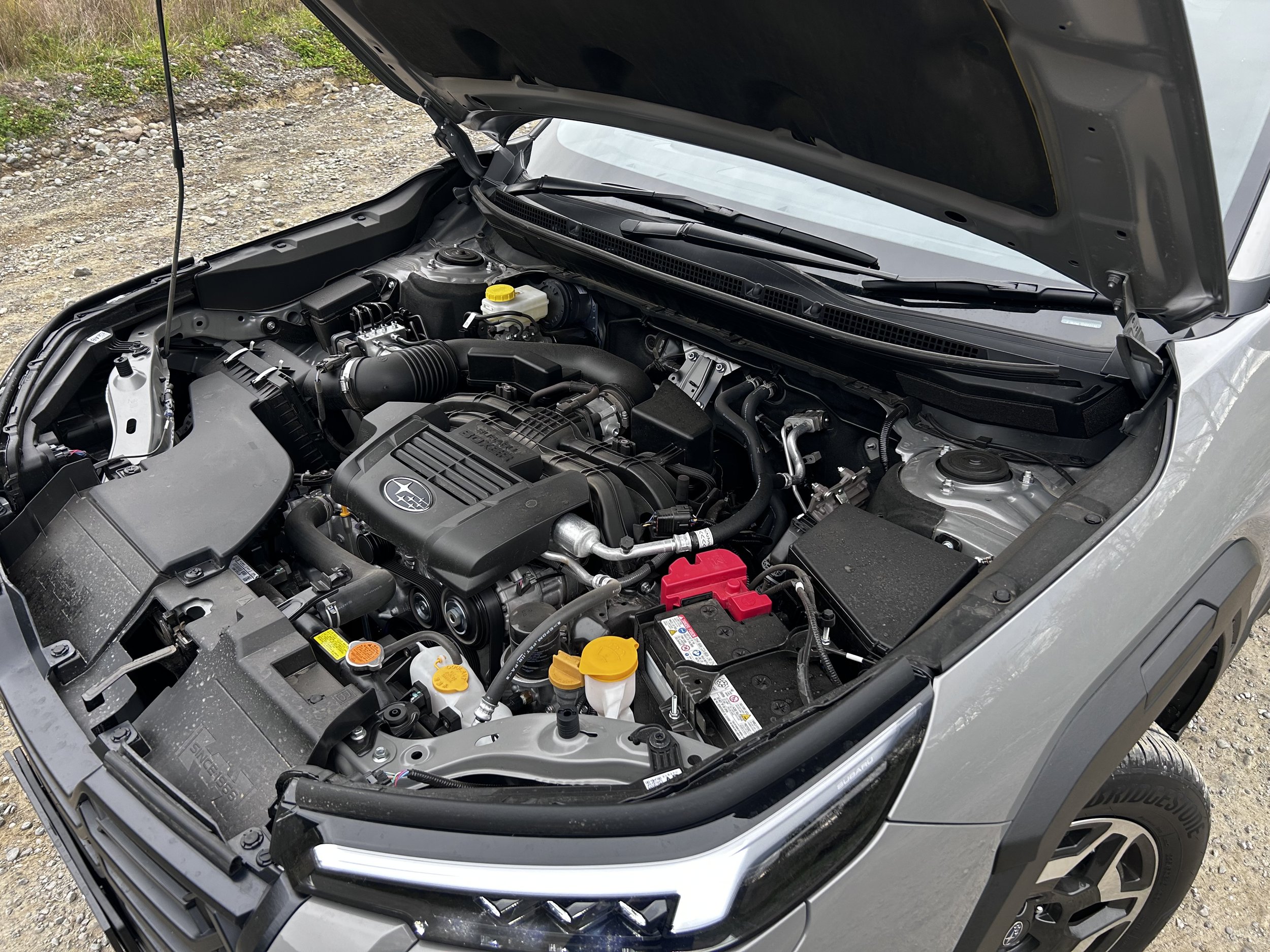
Although it has modernised over time, this is nonetheless essentially a fourth tour of duty for the normally-aspirated 2.5-litre.
In latest form, outputs have been slightly reduced yet it is also being asked to haul 90kg more body weight. Is that a good thing?
Efficiency-wise, my average for the week of 8.0 litres per 100 kilometres seemed a positive outcome, given Subaru claims it should average 8.2 on the combined fuel consumption cycle, but then I recalled that in the previous car it was good for, and could easily achieve, 7.3L/100km. So something’s going on.
Certainly, while it is in the main a fairly quiet performer, with little noise at low speeds, there’s definite sense a unit that has never been a fireball feels even less so now there’s 137kW and 254Nm to work with, which represents a drop of 1kW and 9Nm over the outgoing engine.
Most of my driving was undertaken with just myself or a single passenger. You could imagine that a car loaded fully with occupants and their luggage would be a stern test.
It’s not just that engine seems more obviously lethargic. It’s also one from a time most makers are moving on from. Including Subaru itself. As much as it has not quite hit the jackpot with its petrol-electric hybrids - though the latest, for Forester, is way better than the first - it seems downright unusual that one of those wasn’t considered for this car as well.
At the moment, the powertrain strategy seems set to drive more enthusiasm for the alternate 194kW/382Nm 2.4-litre turbocharged petrol, which means paying a premium, as it only only resides in the Wilderness.
With any Subaru engine (other than the one in the BRZ), you’re living with a CVT, which is automatic, but not as good as a traditional torque-converter auto gearbox. Subaru’s Lineartronic is better than many, but operability-wise is ultimately no different to any other in requiring a tread-lightly circumspection.
If any sort of decent acceleration is demanded of it, it remains prone to switching the ratio to something needlessly short, sending the revs sky-high and causing the engine to roar. A normal automatic might change down by one or two gears, but it would seldom take the revs to such an uncomfortable point.
It’s this, as well, that ensures the Outback's performance is a little lacklustre. Even if it's fast enough to keep pace with traffic, step off isn’t brisk and it can be caught out for overtaking.
But sportiness is not the Subaru's forte, and it's set up for comfort primarily. That’s where this Outback really excels. So long as you’re not in a huge hurry, the powertrain’s lack of absolute punch works for the car’s overall dynamic ambience.
The model has always had a lovely languid, loping driving styling and ongoing work with the Global Platform chassis delivers benefit.
Central to the effort has been a deft retune of the MacPherson strut-type front suspension and double wishbone independent rear suspension which benefits from new dampers. The focus was on reducing body lean and improving bump absorption and compliance.
They’ve also played with the steering, uplifting to a dual-pinion electric power steering system with rack-mounted motor, borrowed from the WRX range. This appears to have improved the directness of the turn-in and improves the feel.
It’s good stuff for a sensible car. But it is a wonderfully comfortable thing on seal and gravel, keeps good elasticity over ruts and bumps, and steers accurately. That makes it a more relaxing and trustworthy drive.
The Outback’s competence in reasonable to mildly-challenging off-road situations is well known. The standard set-up is good enough to make the Outback better than you may expect.
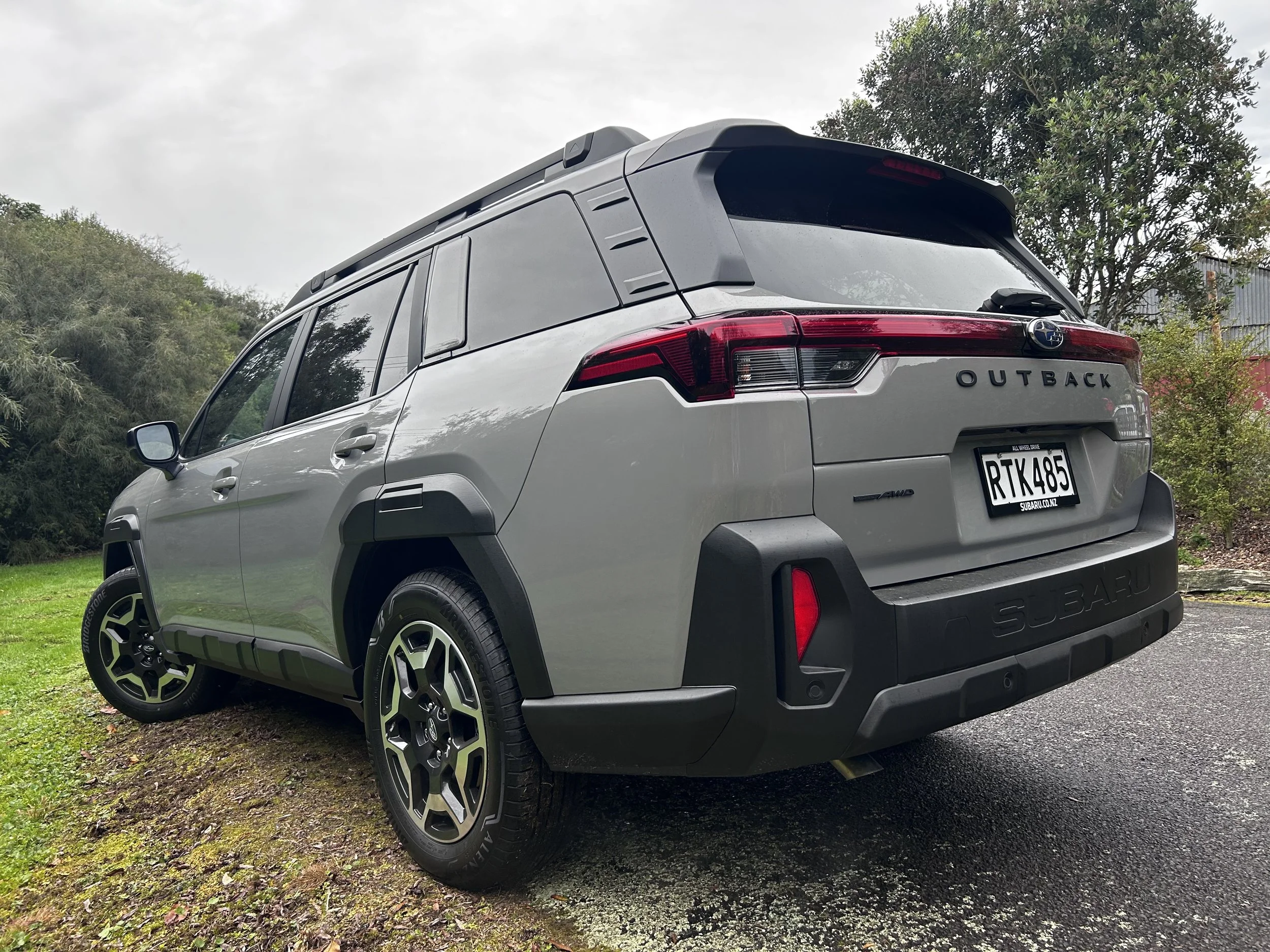
Key ingredients of permanent symmetrical all-wheel drive and more than 21cm of ground clearance retain. The entire range rides on sensibly-sized 18-inch wheels shod with a 225/60 Bridgestone Alenza type that is quiet on seal regardless that it has a slight, but not pronounced, off-seal cut.
It has new driving modes to tackle various types of terrain, too. The additional 20mm clearance of the Wilderness will of course ultimately make a difference and in any Outback there will come a point where you’ll have to stop tailing LandCruisers and Land Rovers. Even so, rest assured a bit of snow, firm-packed beach sand or a farm track won't bother in the slightest.
So there’s that. Then there’s the practicality. No matter how you feel about a vertically-faced, sharped edged Outback, you cannot deny that the restyle has freed up a lot of room, not just in the cabin but also in the boot, which has been entirely reshaped.
The boot lip being 50mm higher means it’s a bit more of a jump for the dog, but barely a hardship for humans, but that’s the only potential drawback. The boot shape itself being much more rectangular is highly welcomed. The capacity with the rear seats up is now 530 litres, an increase of just eight litres, but you’d swear it had gained much more. Your dogs are going to love it (on that note, it you want carry hounds, Subaru still requires you to sort out a barrier and protective floor, side and sill covers. There’s a great provider of the latter stuff in the States, Canvasback, I used for mine).
Leave the back seats upright and the Outback offers plenty of passenger space in the rear. There's adequate head- and legroom for two tall adults, while children will be more than satisfied with their lot.
The populated part of the cabin also shows where more real progress has been made in respect to the technology implementation.
I thought the old car taking on a large portrait-oriented centre screen, but kept analogue gauges in a 4.2 inch binnacle, which seemed a good solution to me. Clearly that was a minority view. The vertical touchscreen lasted just one generation and has been replaced by a landscape type while the driver has a 12.3-inch digital instrument cluster, with a few different views to choose from.
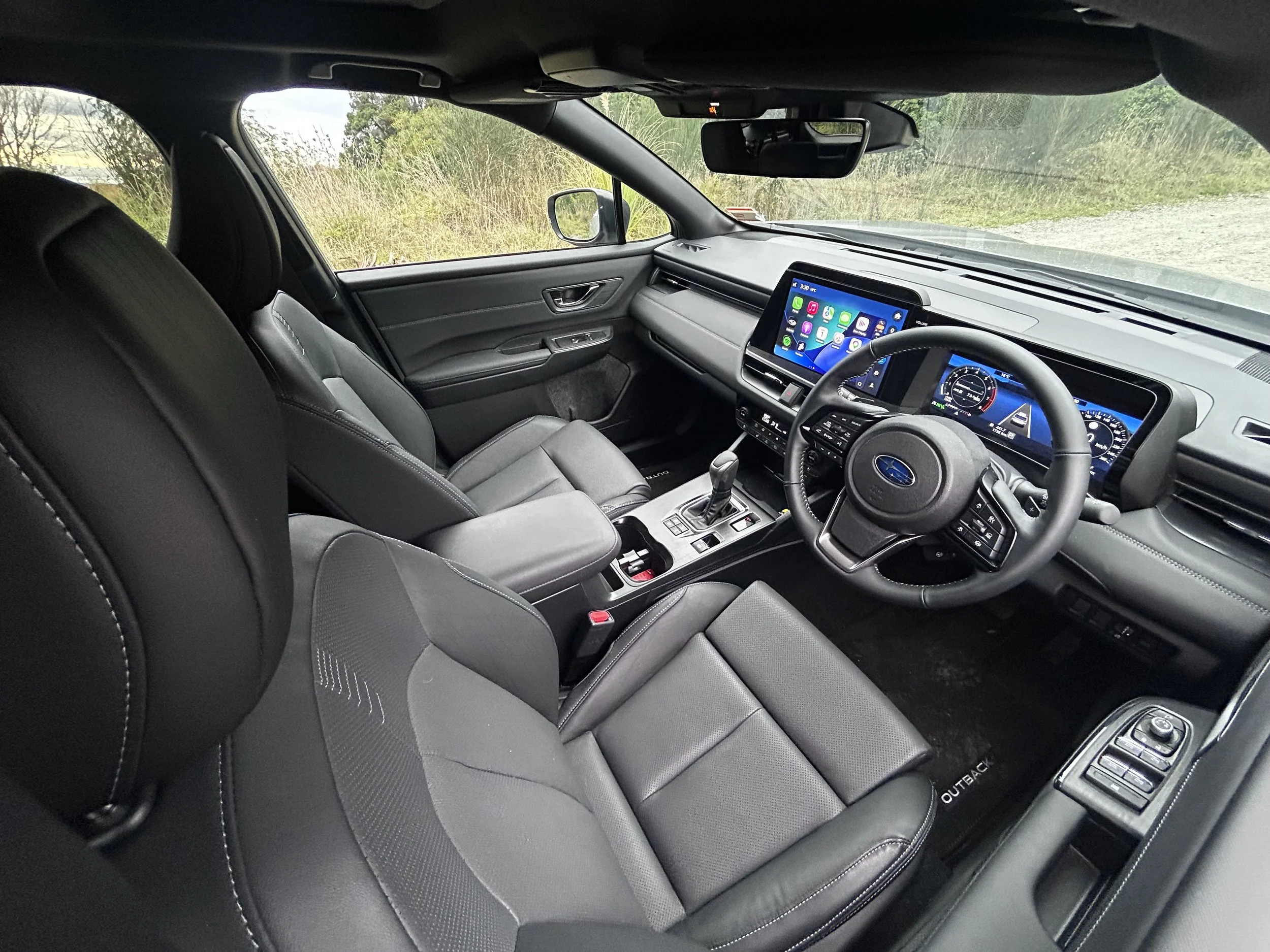
I wondered if this might prove unduly complex. After all, so often big screens seem to give makers a chance to put up too much clutter, to point they seem deliberately over-complicated. No worries here.
The driver display is fantastically coherent and the central unit’s layout is utterly straightforward. Easily fathomed widgets and logical menus make it massively friendly. The Apple CarPlay and Android Auto menus, which run up wirelessly, also migrate seamlessly, and it’s super quick to respond. The real test is how easy it is to use those prompts when you’re taking on bumpy terrain. It passes that one with flying colours.
What’s also great about the layout is that, while more screen involved, it’s not totally wed to haptic operation. Climate controls have been relocated from on-screen to a discrete panel of buttons beneath it. Hooray for that. Buttons are also implemented into the steering wheel. Perhaps there are a few too many, but for the most part, it’s a win for those who prefer convention.
Outback’s specification provision remains solid, but what you get or lose when stepping between the grades does seem a touch quirky to me and, in premium level, there are two areas where ground is lost. First, those trademark roof rails no longer incorporate those clever swing-out stays for affixing that luggage pod, skis or kayak. Also pulled from this grade is auto-dipping off the LED headlights’ high beam.
That’s a bit unexpected when even the base formula includes a power tailgate, X-Mode all-wheel-drive, wireless smartphone mirroring, auto-activated lights and wipers, dual-zone climate control and eight-way power driver’s seat. To this the Premium adds heated front seats/wheel that were appreciated on frosty mornings, power passenger seat, navigation and a sunroof.
The Touring buys nappa leather with driver’s memory, cooled front/heated rear seats, neither of which I’d die on a hill for. But if it was possible, I’d gladly swap out the sunroof for Touring’s improved Harmon Kardon audio, wireless smartphone charger and auto driver’s seat and side mirror adjustments.
Onboard safety includes nine airbags, forwards/reversing autonomous emergency braking, adaptive cruise, lane centring, and a 360-degree camera on all bar the base grade. Driver attention monitoring is added and is very sensitive indeed to the point of being outright annoying. I can’t imagine there’d be any relief from the Touring’s enhanced system. As the Premium’s seat is a bit flat in the back, the next step-up car’s driver’s four-way driver's seat lumbar support could be worth investigating.
The Wilderness models run a different menu again, with more off-road tweaks, which makes sense. All in all, when you look at what each car provides, and how much is in isolation to specific models, you have to spare a thought whoever is looking after the parts inventory.
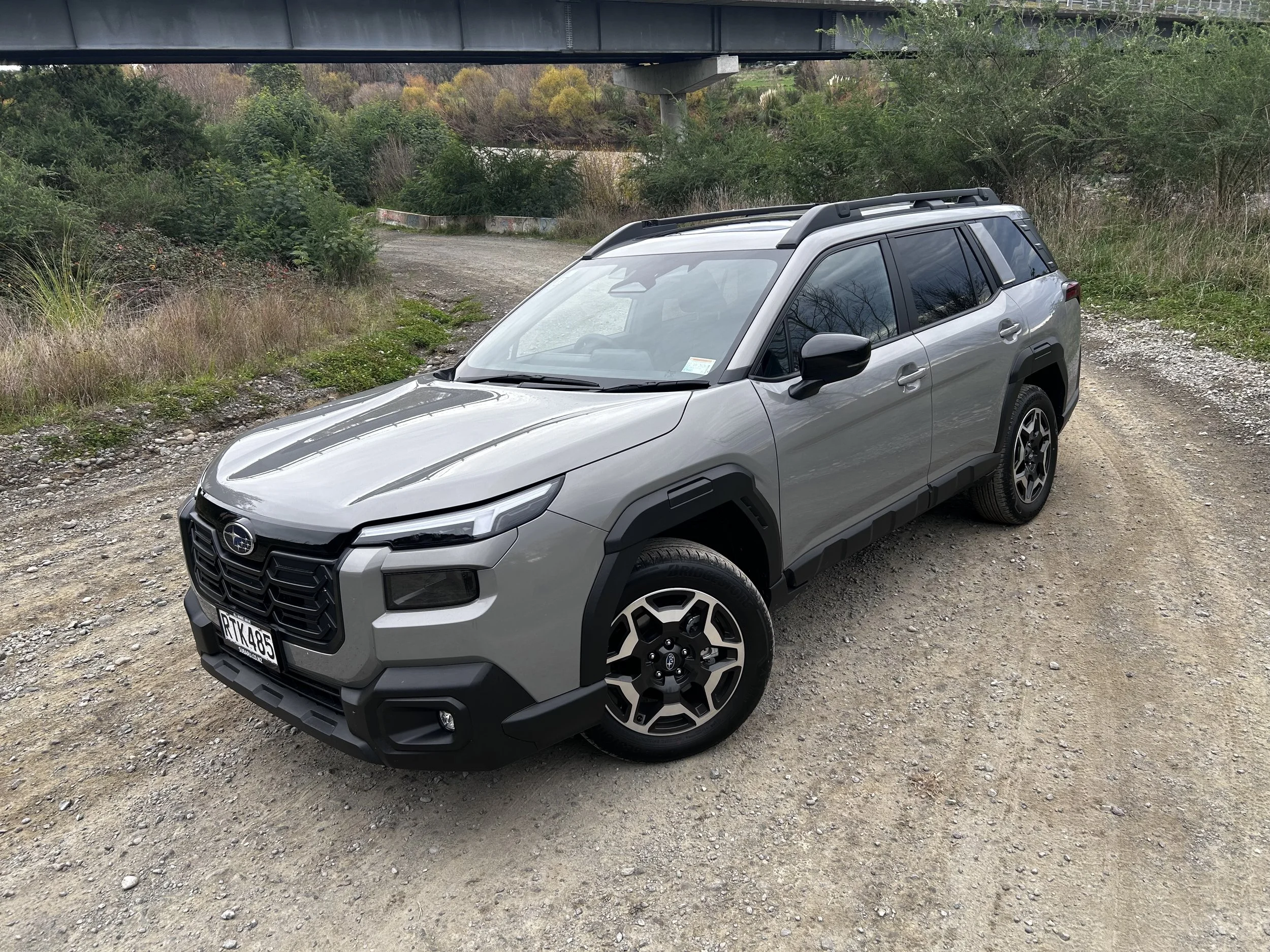
However you go, it’s the same spacious cabin, same driving position that is more akin to one you’d find in a car than in a full-out SUV and excellent build quality is also good. Some of the plastics feel a bit low-rent, but that often seems to be the case with Japanese cars aiming for longevity. What matters is that they're all bolted together sturdily, and the switchgear feels substantial. That’s the case here.
As drastic as the styling change clearly is, getting too hooked up on the Outback’s design transmogrification is a mistake. However you feel about the exterior styling, the way it presents inside, performs, rides and handles also demands assessment before any decisions are made.
In saying that, it’s clear now that there are two kinds of Outback; the Premium is in a set of three that stay most familiar to what we’ve known.
And then there are the two new Wilderness models, with their stauncher looks and more spirited powertrain, so perfectly applied to the previous car. Do they now stand in another space entirely? There’s argument to suggest that could be the case.
I’m looking forward to finding out.