Kia Stinger GT Sport: Singing a more aggressive song

Kia Stinger GT Sport: Singing a more aggressive song

HOW’s this for anticipation? When you turn the Kia Stinger’s Drive Mode selector to Sport, the side bolsters on the driver’s seat fold inwards to hold you more securely in place.

That little action acts as a prelude to some enthusiastic motoring – if you want it - aboard this big 3.3-litre twin-turbocharged V6-engined rear driven sedan.

Read More

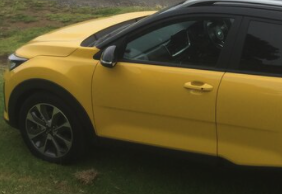
Kia Stonic Limited: Just the tonic?

Kia Stonic Limited: Just the tonic?

Stonic? Apparently it’s a combination of ‘Speedy’ and ‘Tonic’.

An appropriate name given how the vehicle has rapidly become one of the dominant players in what is now this country’s hottest vehicle segment.

Seemingly out of nowhere the Stonic has gone from being a new vehicle due to arrive in the midst of various vehicle assembly and shipping holdups caused by the Covid-19 pandemic, to instantly positioning itself as New Zealand’s eighth most popular passenger vehicle.

Read More

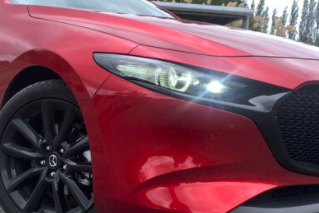
Mazda3 SkyActiv-X: So petrol’s dead? Hold that thought …

Mazda3 SkyActiv-X: So petrol’s dead? Hold that thought …

PUSHING boundaries is a Mazda thing – going rotary, dabbling with hydrogen, re-inventing the sports car. So much beyond-the-box thinking.

At a time, then, when so many other brands are announcing intent to either freeze ongoing internal combustion engines or even drop them altogether, it probably shouldn’t come as a surprise that the Hiroshima concern is putting a dollar each way.

Read More

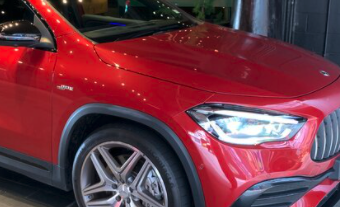
Mercedes-AMG GLA35: Fire and ‘nice’

Mercedes-AMG GLA35: Fire and ‘nice’

OFTEN you hear about brands that are ‘late to the party’; not so here – indeed, quite the contrary.

Mercedes has offered AMG versions of its sports utilities since 1999, so it was there at the start and knows the playlist backward.

Drive some AMG cars are you’d think this is a brand that has its head buried in the speakers as they blare sounds of past decades. Research what they’re preparing for the times ahead, however, and you’ll know that’s not true. Quite the contrary. These people accept electric-enhanced driving is coming, understand why it has to be and have signed off their plan.

Read More

Toyota Yaris Cross: When small goes big

Toyota Yaris Cross: When small goes big

PEOPLE who want larger small cars, those desiring hybrid but prefer not to draw attention to themselves, folk keen on off-road styling yet have no desire for any beyond seal ability.

In a nutshell, the Yaris Cross is for you.

With small crossovers being chic, petrol-electric interest rocketing, and an increasing count of consumers looking outside of the box … well, you can see why Toyota is confident about achieving big things from a car that slots a body shape inspired by its larger sports utilities onto a platform shared with the smallest tyke it sells.

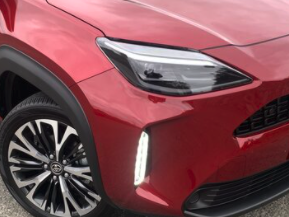
Sure, from driving the hybrid editions in base GX (the silver car) and line-topping Limited (in red) formats, some personal irks were noted.

Read More

AUDI Q5 45 TFSI: Reaching mid-life without crisis

AUDI Q5 45 TFSI: Reaching mid-life without crisis

REVISIONS that arrive with the mid-life update of Audi’s Q5 are so relatively modest you might be left with impression it was already in such a sweet spot the maker determined the less change, the better.

In the here and now, that might well be true. In reality, it’s also an acknowledgement from this maker that this another product being kept just fresh enough to maintain relevance until the new one comes along and essentially puts the type onto an entirely different path.

Read More

Isuzu D Max X-Terrain: Hero at ground zero

Isuzu D Max X-Terrain: Hero at ground zero

AT 2518 metres, Mount Taranaki is the imposing presence in its namesake province … yet it used to be significantly taller still.

What cut the conical mountain down to modern size was what is known as a volcanic debris avalanche, a truly cataclysmic event when it occurred.

At least 7.5 cubic kilometres – yes, kilometres – of debris crashed off Taranaki Maunga’s north-western slopes, covering up to 250 square kilometres of land with material up to 30 metres deep. All the way to the coastline.

Read More

Audi A5/RS5 Sportback: Lifting the game

Audi’s five-door, four-seater coupe is a standout for more than just its styling. 

RS5 profile.JPG

Audi A5 40 TSFI/RS5 Sportback

Price: A5 $92,450 as tested; RS5 $157,900.

Powertrain and economy: 2.0-litre turbocharged four-cylinder petrol, 140kW/320Nm, 3.0-litre twin turbocharged V6, 331kW/600Nm; seven-speed dual clutch, eight-speed automatic; FWD/AWD; combined economy 5.9/ 9.0 litres per 100km; CO2 136/206 g/km.

Vital statistics: 4673/4723mm long, 1846/1861mm wide, 1371/1360mm high, 2764/2766mm wheelbase, luggage capacity 465 litres,19/20-inch alloy wheels.

We like: RS5 is a fast and impressive car; styling has aged well; beautiful interior materials.

We don't like: A5 spec could be richer, Sportback shape is not for families.


 BY now we should be getting used to the feeling that the wholly fossil fuel-reliant cars entering the market right now might very well be the last of an ‘old’ breed.

 Electric in all its diverse formats is incoming and you can be positive about it, or hide your head in the sand, but either way the single biggest change in this industry since - well, since it began – seems a done deal.

And yet, that doesn’t mean you’ll wake up tomorrow and find petrol station forecourts chained off and growing weeds and everything moving being sustained off the mains. As quick as the change is racing in, there’s still time now – and potentially for quite a few years to come – to keep enjoying the tastes and sensations of what we’ve grown up with.

Spending time with Audi’s updated A5, tested in ‘mainstream’ 40 TSFI Sportback and more extreme RS5 formats, also presented as a breather from another trend.

THE RS5 (above) is a real stormer, but Audi offers enhancements that really lift the street image of the A5 (below).

THE RS5 (above) is a real stormer, but Audi offers enhancements that really lift the street image of the A5 (below).

A5 front.JPG

There are now so many SUVs, some many formats and sizes, that it’s actually becoming rare to strike an orthodox car any more. But that’s definitely what the A5 is. It felt refreshing to be sitting this low down but also a little odd.

Who’s still into it? Well, apparently there’s been a bit of resurgence of interest now that Audi has stopped bothering with the three-door shell and now put all its engines and drivetrain choices into the five-door shell. It’s a slinky car, so not the very best choice if practicality is a priority; but doesn’t have to be, because that’s why Audi has the A4.

With this Sportback the boot space is fairly decent, but the rakish roofline of course eats into rear headroom and, also, when a tall person (hands up, here) is driving, legroom behind does rather suffer. It’s tolerable, but no more. It’s also really a four seater because the high transmission tunnel running down the centre of the car means the middle-rear seat is all but useless.

 Still, I really cannot imagine many buyers are choosing this car for full-out family consideration but Audi won’t imagine that’d be a problem; it’s why they also do a DNA-sharing A4. The ‘Five’ is more a driver with front-seat passenger kind of deal, though it does offer plenty of luggage room for weekend getaways: the boot will take 480 litres and it has a nice, wide opening, although there is quite a high lip to lift things over.

The car’s look is an enduring strength. For a design that dates back to 2015, it still looks quite fresh, and certainly desirable; tangibly sportier and sexier than the A4.

The sheer quality is also massively impressive. Audi has long been the king of cabin quality and even though it's true to say that some aspects have been bettered by competing marques, it is still a really swish place. The sense of quality is undeniable.

The A5 on test was an $83,500 car that could have passed for a $150k model, thanks to being loaded with around $9000 worth of extras. Those 19-inch Audi Sport alloy wheels, for $1200, really suit its style for starters. This one also had sports suspension with damping control ($2500), a flat-bottomed sports steering wheel ($750), a matrix headlights package that’ll set you back $2800, privacy glass for $1400, and an ambient lighting package $300. So, $92,450 all up. For making million dollar impression? Good value. 

Further, it also pretty good to drive. Markedly more decisive at RS level but still quite enjoyable in entry format, where even though dynamic assertiveness is less pronounced there’s delight in well-weighted steering. Suspension tune is pretty well sorted too; the RS is harder, of course, but even its comfy enough. 

A5 buyers are clearly performance chasers; surely that’s why the street race editions now dominate. Whereas once the RS car was the niche edition, now the entry version is more fitting of that designation.

RS5 rear.JPG
A5 rear.JPG

Strictly speaking, the 40 is the only ‘A5’ here for Kiwis. The other choices are the $126,500 S5 and the $157,900 RS5, which carry a different expectation given they swap from a front-drive system to having the brand synonymous quattro and bump out the entry car’s 2.0-litre four-cylinder petrol for a V6.

The S5’s is single turbo and makes 260kW, the RS5’s is twin turbo and generates 331kW. The A5 gets along with 140kW, which is okay, but you’re never in any doubt about it not being the biggest or sharpest knife in the drawer.

Which is presumably why Audi will very quickly remind how economical it can be, with a cited optimal fuel consumption of just 5.9L/100km for the combined cycle. RS acolytes won’t bother to ask how their one fares but, well, let’s just say it’s not anything as brilliant.

Mind you, the A5 should have an edge given that, above the fundamental four-cylinder advantages, it has an additional fuel-eking feature in the form of a mild hybrid system, whose core implementation is a belt alternator starter connected to the crankshaft. When a driver lifts off the throttle or brakes lightly the BAS can recover up to 5kW of power and feed it into a lithium-ion battery. When the car is operating in the 55-160kmh speed range, the vehicle can coast with the engine switched off and the lithium-ion battery then powers the electrical consumers. Audi says the MHEV system can reduce fuel consumption by up to 0.3 litres per 100 kilometres. 

The A5 provides an extensive suite of technology to enhance safety and comfort, with plenty of options to add if these don’t seem enough; it seems strange, though, that these cost extras include an active cruise control.

A5 interior presented as the epitome of high-tech smart … until the RS5 (below) showed up.

A5 interior presented as the epitome of high-tech smart … until the RS5 (below) showed up.

RS5 interior.JPG

It’s standard on the RS5 but should also really be packaged to the entry model, as well. In respect to the operability of various functions, the A5 is the latest model to feel Audi's decision to drop the old MMI rotary controller for the infotainment and switch to a touchscreen. You get used to it easily enough but it’s challenging to work out how it delivers a comprehensively better operability.

Of enduring appeal is Audi’s ‘Virtual Cockpit’, which replaces the conventional dials with a full-LED display, ultra-high definition screen quality and iPhone-like configurability, to give a highly effective blend of technology and sophistication. 

Shifting to the RS5 required something of a change of mindset. It’s obviously even more capable of putting a smile on your face away from the main road. Just triggering the V6 into burbling idle is enough to remind that a far more potent engine lurks beneath this version’s creased clamshell bonnet. Seeing that there are now RS1 and RS2 drive buttons on the well-crafted, flat-bottom Alcantara steering wheel further raises the heart rate.

An ability to nail 100kmh from a standing start in just 3.9 seconds and reach 250kmh before the speed limiter is serious shove by any measure. But that’s just part of the RS recipe and because all that muscularity channels through the company's quattro all-wheel-drive transmission too, you at least know the power is being dispatched to all four wheels in the most efficient fashion.

For all that, yes, there will be occasions when it aches to deliver more than you might necessarily want it to, but at same token it is not so feral as to become the sort of car that you’d never want to allow to fall into inexperienced hands. It will comfortably cruise at 100kmh in top gear with the engine barely seeming to rise far beyond idle speed.

Naturally, there’s more. A lot more. This engine has less aural theatre than the old V8, but when the turbos spool up, the V6 really comes alive - there is a massive swell of torque that'll keep your head and back firmly against the quilted leather sports seat. Switch the drive mode to Dynamic and the transmission into manual and you’re driving a wholly different car.

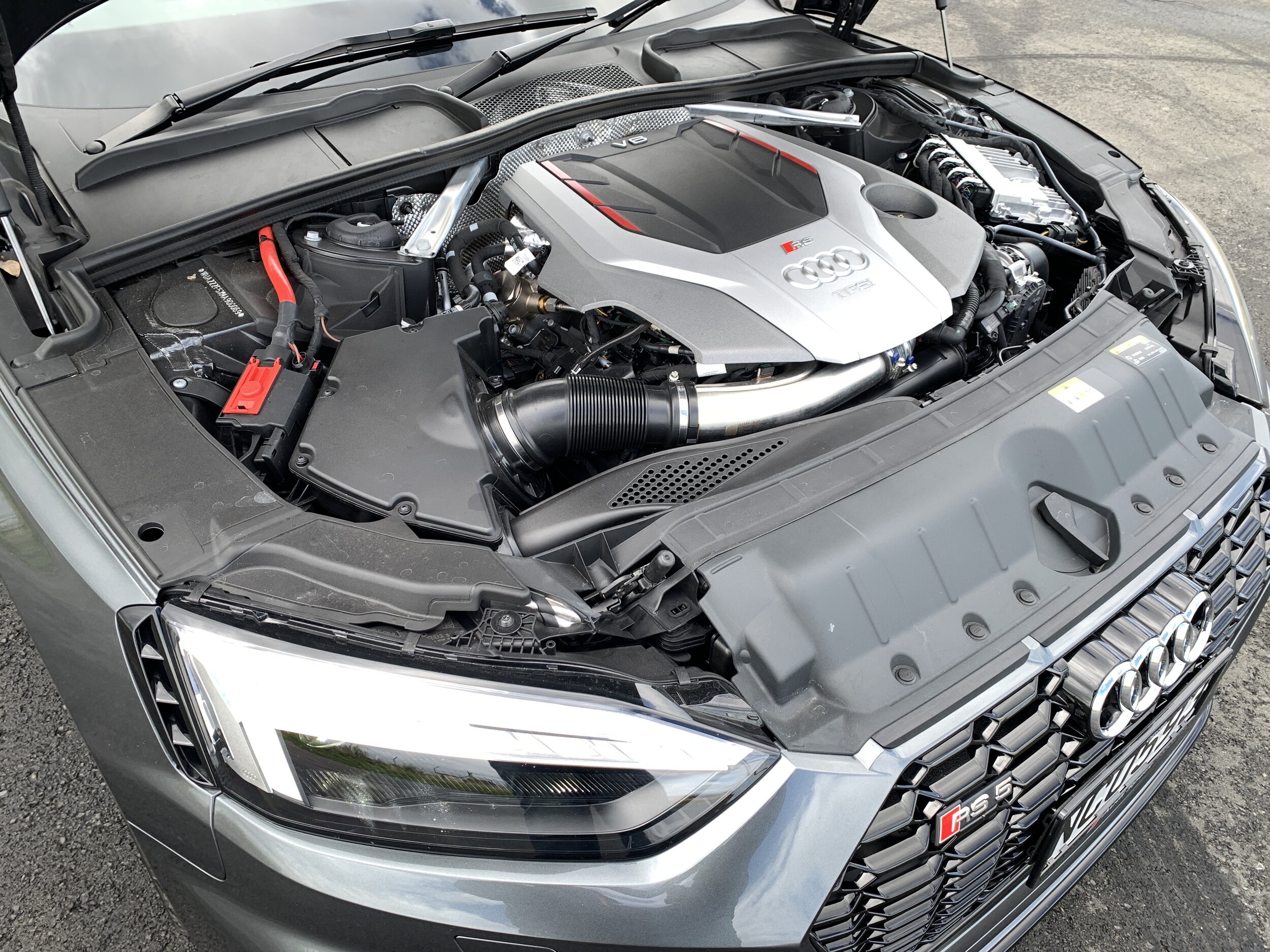
The RS5 sports a twin-turbo 3.0-litre V6, the A5 gets by quite nicely with a 2.0-litre four-cylinder.

The RS5 sports a twin-turbo 3.0-litre V6, the A5 gets by quite nicely with a 2.0-litre four-cylinder.

A5 engine.JPG

The one constant whether driving easily or eagerly is the tremendous traction. Despite having such huge torque within 35 degrees of right ankle articulation, the quattro system can never seemingly be bested. It could potentially be a more exciting ride if it could be made to deliver a more rearward bias, but then it might risk becoming less manageable. As is, it stands as a hugely effective cross-country tool, enabling drivers of all skill levels to safely maintain a decent average clip in seemingly all conditions.

Picking the RS5 from lesser A5s hardly requires an onerous detective work; the car is seriously altered in a myriad of ways beyond it achieving the requisite badges. You can add more, of course, by buying into a carbon fibre styling pack, an RS sports exhaust system and having the brake callipers treated to a red paint finish. Matrix LED headlights also enhance the package and, of course, the after-dark illumination.
You would struggle to call even the RS5 an all-out ‘driver’s car’, but it – and the A5 – are nonetheless good to drive. You can cover ground at quite a lick in either.

The way things are going, it’s very likely the next generation of this car could be massively different to what we get now. Even though the RS edition received its V6 because the V8 it once had was just politically untenable, given how deeply Audi has immersed into making electric cars it would seem probable that, at the very least, a plug-in theme is not so much a matter of ‘if’ but ‘when’ for this line.


BT-50’s big Northland adventure

Mazda’s new ute takes a big drive to the beach. Actually, lots of beaches.

The BT-50 looks over the entrance to Hokianga Harbour.

The BT-50 looks over the entrance to Hokianga Harbour.

 Mazda BT-50 Limited

Price: $60,990

Powertrain and economy: 3.0-litre turbo-diesel four-cylinder, 140kW/450Nm, 6-speed automatic, 4WD, combined economy 8.1L/100km (as tested), CO2 208g/km.

Vital statistics: 5280mm long, 1870mm wide, 1790mm high, 3125mm wheelbase, 18-inch alloy wheels.

We like: Much improved ute design; driving manners almost SUV-like; impressive fuel economy; appealing price.

We don’t like: Some safety technologies are a bit intrusive; some electronic interfaces difficult to operate.


HERE’S a question that is almost impossible to answer: Which Northland beach is the most attractive?

Is it Mangawhai Heads, Langs Beach, or Waipu Cove? Sandy Bay or Ocean Beach near Whangarei? Is it one of those lovely beaches along what is dubbed the ‘Million Dollar View Road’?

Or maybe Coopers Beach or Taipa facing Doubtless Bay? Tokerau Beach or circular Maitai Bay on the Karikari Peninsula? Spirits Bay with its stunning sand right at the top? Ahipara Beach down the other side? Or maybe all the little coves along historic Hokianga Harbour?

It’s an extremely difficult choice. There are dozens of beaches and 10 major harbours along the region with the longest coastline – it stretches a massive 3200km – and at times it seems that each one is even more lovely than the one before.

I know all of this from having just toured quite a number of them in Mazda’s latest BT-50 ute.

Hokianga history. Hidden between a primary school and a bowling club at Kohukohu is a part-buried stone arch, the remnant of New Zealand’s oldest bridge, built in the 1840s using Sydney sandstone that was ship's ballast.and seen in this photo (below…

Hokianga history. Hidden between a primary school and a bowling club at Kohukohu is a part-buried stone arch, the remnant of New Zealand’s oldest bridge, built in the 1840s using Sydney sandstone that was ship's ballast.and seen in this photo (below) taken in the 1860s.

Screen Shot 2021-03-04 at 6.26.46 PM.png

Our Northland circuit was aboard the top BT-50, a 4x4 Limited, which at $60,990 achieves price advantage over almost all the competition, including the Isuzu D-Max equivalent, the X-Terrain. How’s that for re-setting retail thinking?

Mention also has to be made of the BT-50’s warranty. The ute’s new vehicle factory warranty covers five years or 150,000km, and Mazda NZ also offers a $250 fixed-cost servicing programme as well as on-call roadside assist, also for five years. That’s appealing. 

Our plan for the beach-hopping journey through our northern-most region was to keep off State Highway 1 as much as possible, instead tracking up the east coast all the way to Cape Reinga, and then back down the west coast to Northland’s southern border halfway down the Kaipara Harbour – and visit as many beaches as we could along the way.

That’s a lot of beaches …. and a lot of winding secondary road to get to them. But this was the very environment that underlined the improvements achieved with the new BT-50. At the Limited level it is very much a road-oriented ute, with its 18-inch Bridgestone Dueller 265/60 tyres combining with new electric power steering to offer nice driving balance.

Of course the fact the ute continues with the live rear axle with leaf springs setup that is common on one-tonne utes, meant things often became quite juddery when negotiating some badly corrugated unsealed beach access roads. But the BT-50 handling it all, and the ability to move into 4WD High at speeds of up to 100kmh gave additional handling security.

A carving of enigmatic Kupe guards the entrance to the new cultural centre at Opononi.

A carving of enigmatic Kupe guards the entrance to the new cultural centre at Opononi.

And engine grunt? The 3.0-litre four cylinder turbo diesel aboard the ute is all Isuzu, a manufacturer that prides itself for making solid truck engines. For this iteration the engine, which was aboard the previous D-Max, has undergone various internal improvements that have added 10kW of power and 20Nm of torque.

The engine now offers 140kW of power and 450Nm of torque, with that torque available from 1600rpm to 2600rpm, which is right in the revolutions zone that the BT-50 operated virtually all the time. So it worked well, with hardly any stresses on the six-speed automatic transmission. As a result, we completed our Northland journey with an average fuel consumption figure of 8.1 L/100km, which was almost right on the button of the claimed 8.0 L/100km for 4x4 models.
A feature of this new ute is that it carries more than 20 passive and active safety technologies as part of what is called Advanced Driver Assist System. It’s very comprehensive, and ranges from automatic emergency braking to cruise control with stop/go, traffic sign recognition and blind spot monitoring, hill descent control to trailer sway control.

Overlooking a sea of avocados in northern Northland.

Overlooking a sea of avocados in northern Northland.

Some of it is a bit intrusive. For example the traffic sign recognition system audibly lets you know every time you have moved in or out of every speed zone and also complains whenever you are just a few kays above the speed limit. Same with the lane departure warning system, which also tugs on the steering wheel whenever it judges the ute is starting to wander.

If can become a little tiresome. Still, from the safety perspective it is far better to have such features aboard than not. And they have all contributed to the BT-50 being recognised as among the safest utes on the New Zealand roads, carrying a five-star ANCAP crash safety rating.

As we tracked north and visited to some lovely beaches and historic harbours, we eventually got past Mangonui and its famous fish ‘n chip shop (which has just been renamed Mangonui Fush Shop, for heaven’s sake), and stopped for the night at Taipa.

Maitai Bay at the top of the Karikari Peninsula

Maitai Bay at the top of the Karikari Peninsula

Now here was a magnificent beach. White sand, gentle surf, views out across Doubtless Bay, and a new bridge across the river of a design reflective of a sea-going double hulled waka, all to acknowledge that Taipa was one of the first – if not the first – landing places by Kupe, the great Polynesian explorer and navigator who discovered and named Aotearoa more than 63 generations ago.

There’s also a monument alongside the bridge’s western abutment that is a combination of a Pou Whenua marking Kupe’s landing, and a memorial that commemorates locals who died during the two world wars.

Beauty, tranquility, history … it was all there at Taipa. We agreed these factors could combine to make it Northland’s most attractive beach.

But then a couple of days later we arrived in the historic Hokianga Harbour, and our thoughts began to unravel. Because there at the little settlement of Opononi was a brand-new visitor attraction called Manea: Footprints of Kupe, an impressive multi-sensory journey of guided storytelling that tells the tale of the voyage and life of our country’s original coloniser – who, claim local iwi, landed first at Hokianga and based himself there for 40 years before journeying back to Hawaiki.

Pohutukawas are a feature of Northland's beaches. They provide great shelter.

Pohutukawas are a feature of Northland's beaches. They provide great shelter.

It’s interesting to note that there was some local opposition to the creation of Footprints of Kupe because of fears it would ruin the relaxed vibe that is such a feature of the Hokianga. But the facility, opened late last year, is brilliant. And even better news is that Te Hua o Te Kawariki, the charitable trust that operates the facility, represents the harbour’s four marae, and all profits are returned to these marae for community projects.

As we used our BT-50 to wander around the Hokianga and visit its series of villages such as Kohukohu, Rawene and Horeke, it became increasingly obvious that the harbour is a massive cradle of history – Maori and European – and that the Footprints of Kupe simply adds to that.

So we decided that even though Hokianga isn’t a beach per se, it is part of the regional coastline and its combination of beauty, community and history makes it Northland’s most attractive beach.

And as for the new Mazda BT-50? Well, I’d say its combination of design, performance, comfort and safety specification puts it right up there as one of New Zealand’s best utes and clearly my view is widely shared.

Whereas last year a total of 1812 BT-50s were sold, in the opening two months of this year 466 have been registered. If that rate continue, this line could end the year with close to 3000 sales.

Characterful speed signage outside The Marlin hotel at Whangaroa.

Characterful speed signage outside The Marlin hotel at Whangaroa.