Polestar 4 SUV first drive: Booted, better suited
/The style-led Sino-Swede has delivered extra personality - and more practicality - change to an important model here.
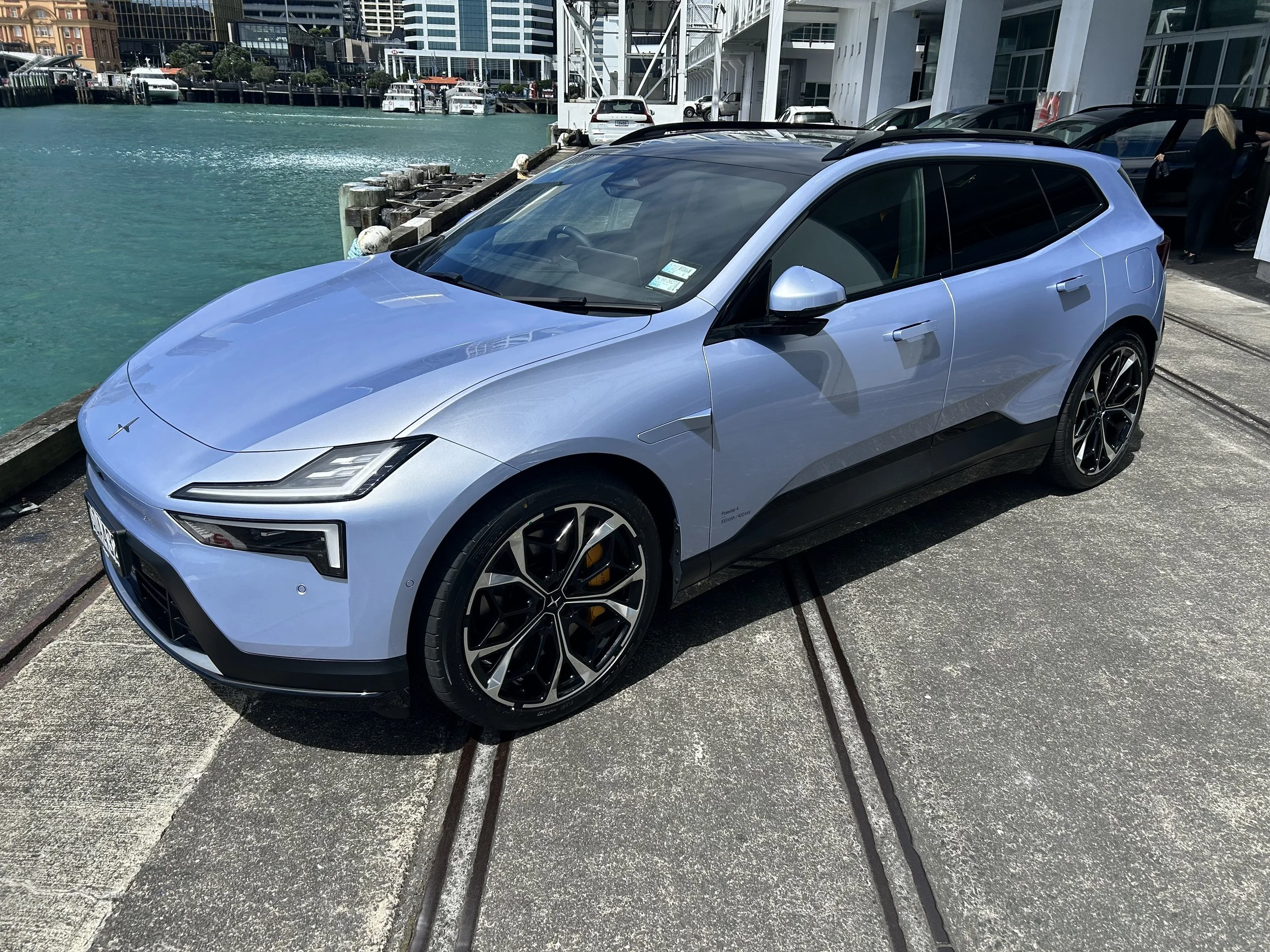
ANOTHER body styling is expected to raise the stakes of a model that in its original presentation surely rated as Polestar’s oddest/most radical (you choose) executive electric.
Having represented here since mid-2024 as a mixture of sports sedan, crossover and station wagon all in one car with no rear window - yeah, THAT car - the 4 has now joined the mainstream.
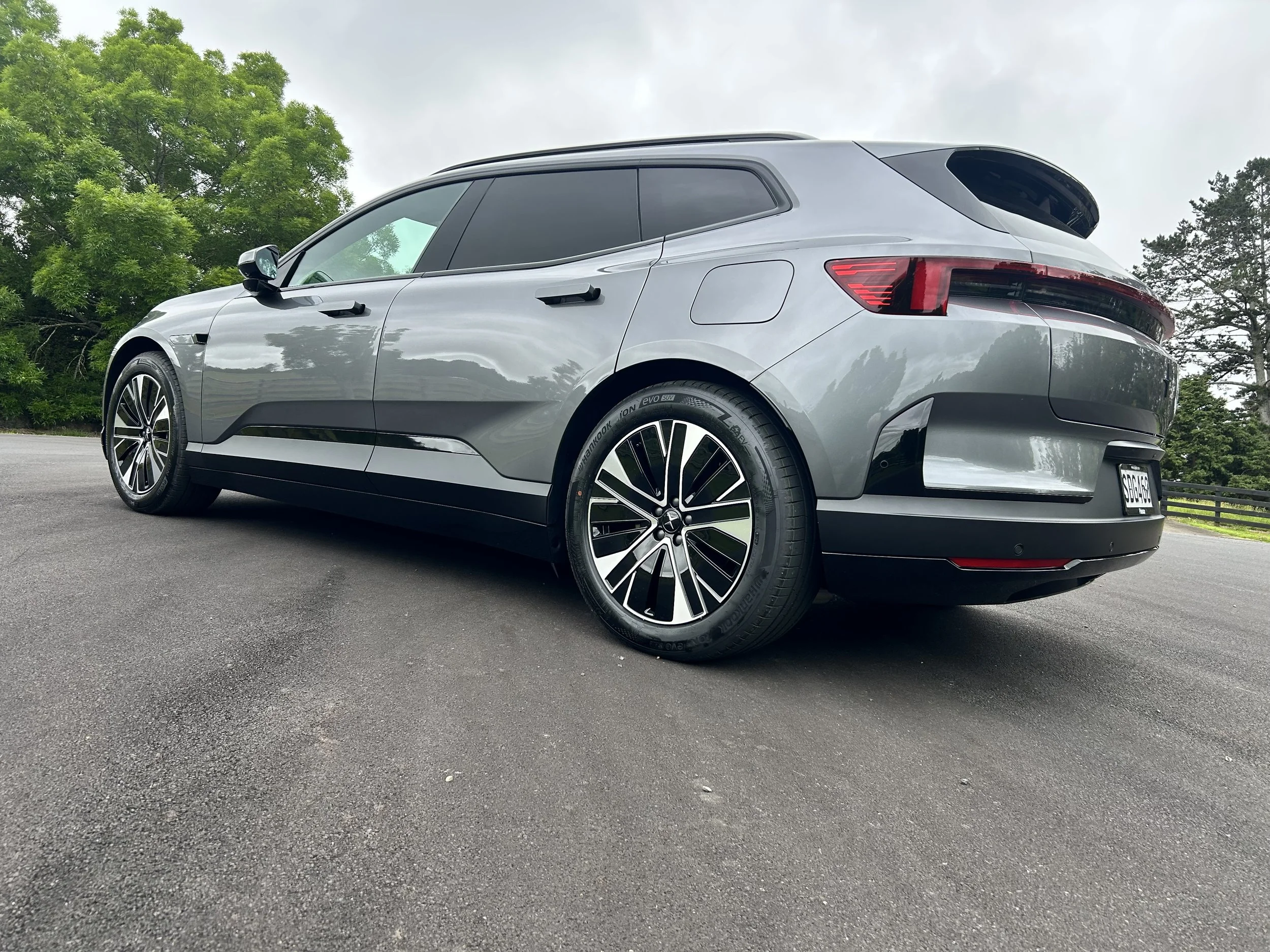
Available from now is a more conventional sports utility shape with, yes, a totally conventional glassed rear end that you can see through.
That SUV designation might well confuse because, two years ago, the car this new one builds off arrived …. as a SUV.
Well, that’s what Polestar called it then. To everyone else, it looked more like a coupe and was generally described thus.
Anyway, the SUV-that-fooled no-one is staying alongside an SUV-that-more obvioiusly-is, but what chance the original will become far more of a background choice now?
From first meeting, you’d have to say the new body format is much more attuned to consumer desire. Even though this latest shape is only a little taller and just a touch longer, it is tangibly bigger and more practical within. That’s enough to make it seem a big step forward.
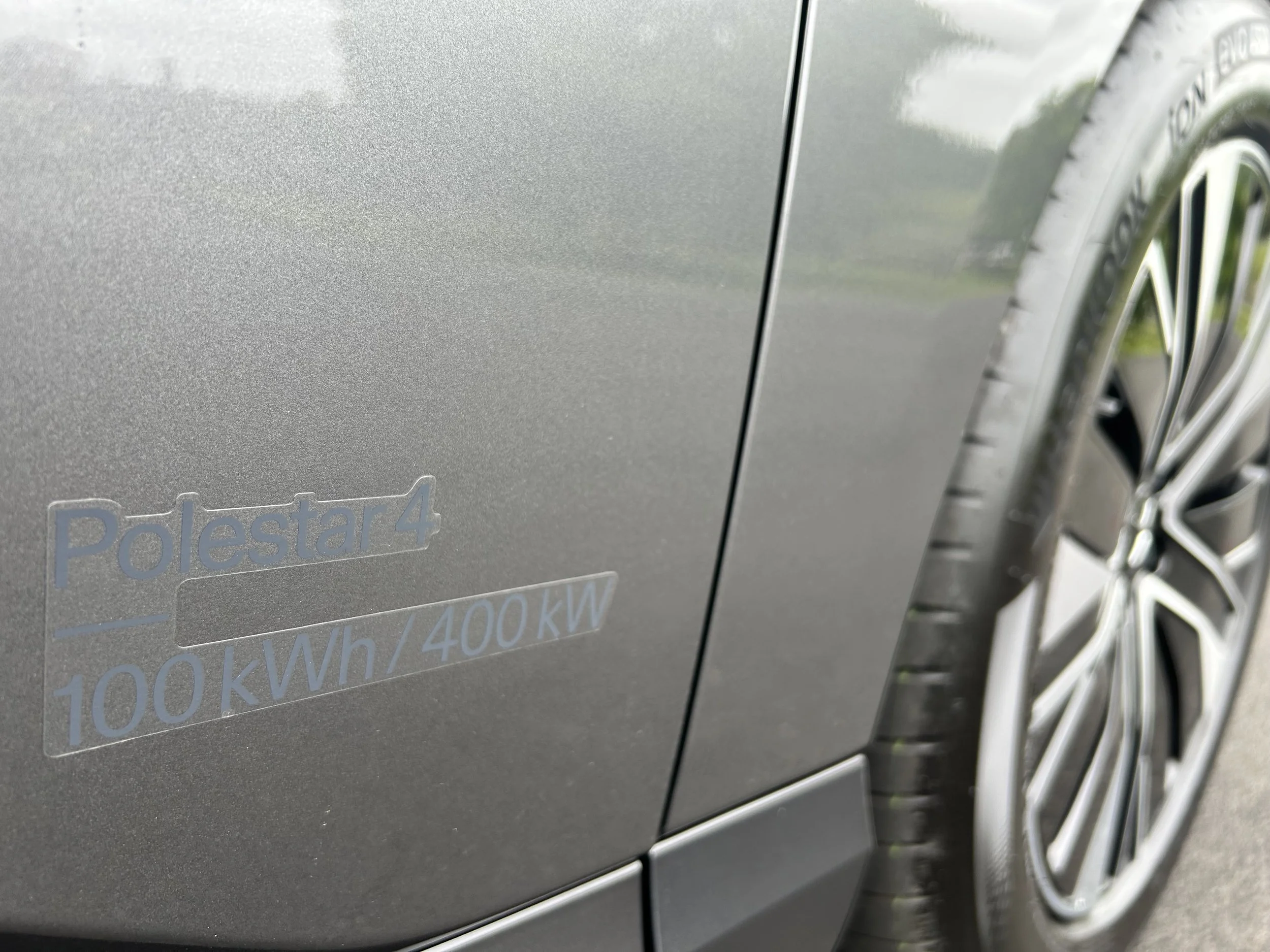
The SUV continues the same chassis, motors, battery and mechanical package as the other car. So, single-motor rear-drive with 200kW/343Nm and dual-motor AWD with 400kW/686Nm.
When pricing announced a couple of weeks ago it left impression the latest would carry a slight premium over the established car. As it transpires, only sort of.
But that’s not the case, because Pilot and Plus packs that cost extra before are now standard, so the options list is down to paint, interior trim and a $9000 Performance Pack for the Dual Motor.
Which means you pay $109,990 for either shape in rear drive and $10,000 more for them in standard dual motor.
Is this type better than the lower-slung original version? An initial drive yesterday from Auckland to Matakana and return suggests it could well be, this comment recognising that insofar as dynamic feel goes, the bar was set high by the first tilt.
While that lack of a rear window probably pushed it just beyond acceptability for some judges, I always felt the coupe’s on-road aptitude and its design chutzpah gave it a good tilt at competing for New Zealand Car of the Year in 2024.
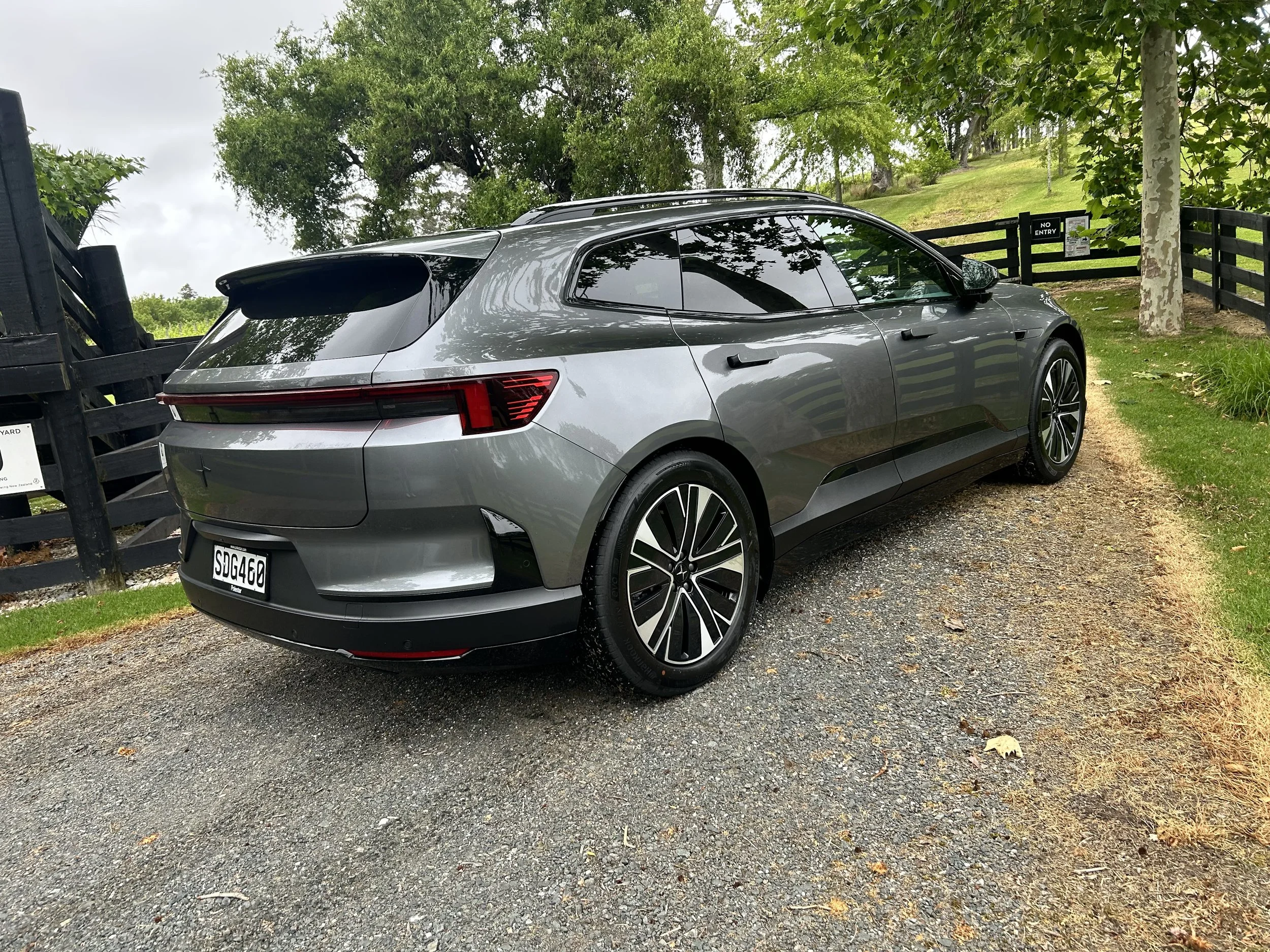
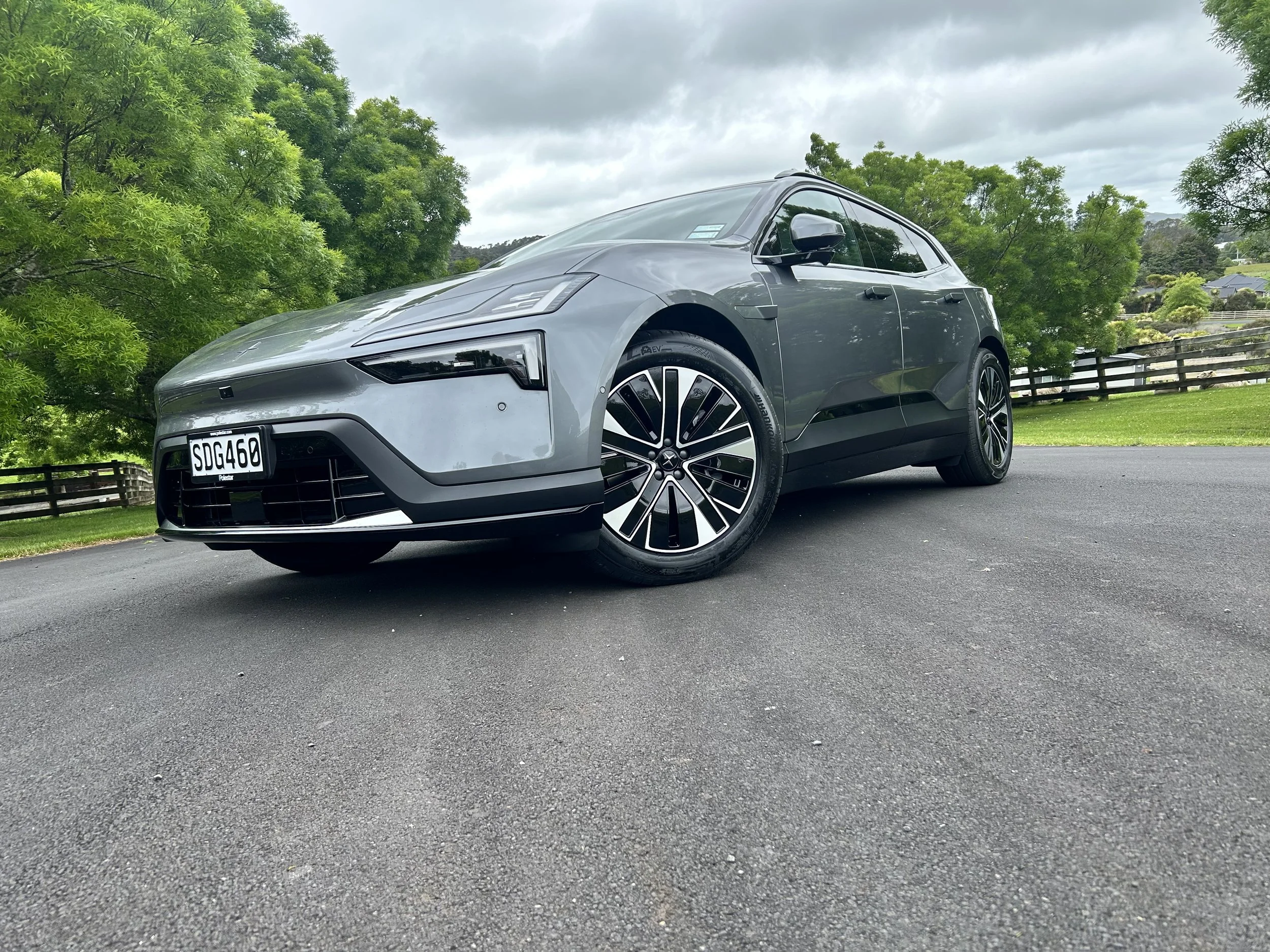
The SUV builds on those strengths. What’s cool about this transition is that it’s not too obvious; some SUV adjustments get far too bulked up. Here the only really obvious dimensional change is that it’s taller, and that’s just by a mere 22mm. But in overall silhouette, it’s still slinky, though that’s still enough alteration to create a more commanding profile.
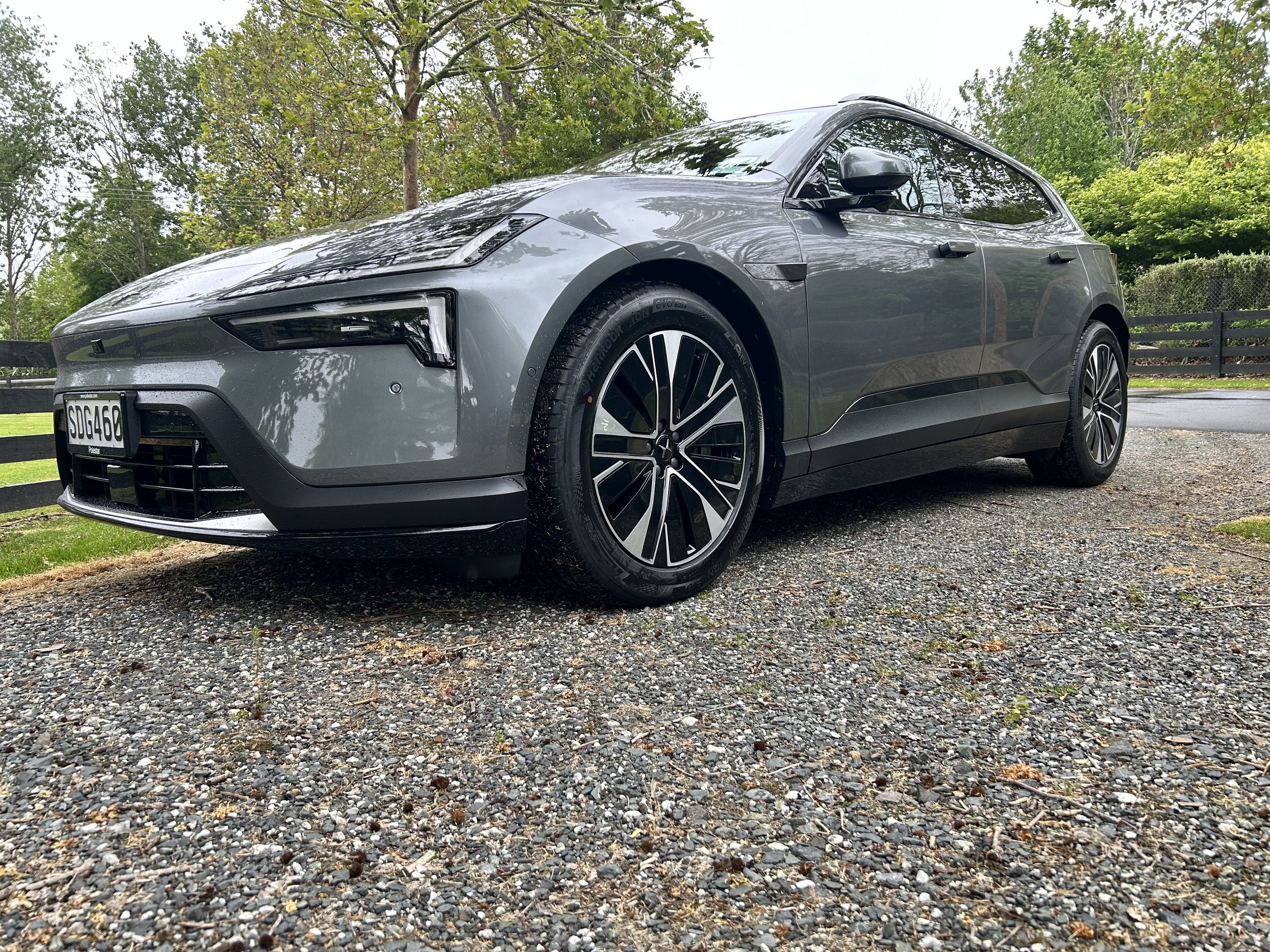
The nose design remains familiar, with sleek lines that come almost to a blade shape at the tip, framed by the distinctive split-L-shaped headlights.
At the rear, the Polestar 4 SUV gets very slim lights, which have a deep undercut to their shape, implying that they're as much a part of the car's aero package as they are for lighting.
They're linked by a full-width brake light bar but aside from that, as at the front, the styling is clean and minimalist.
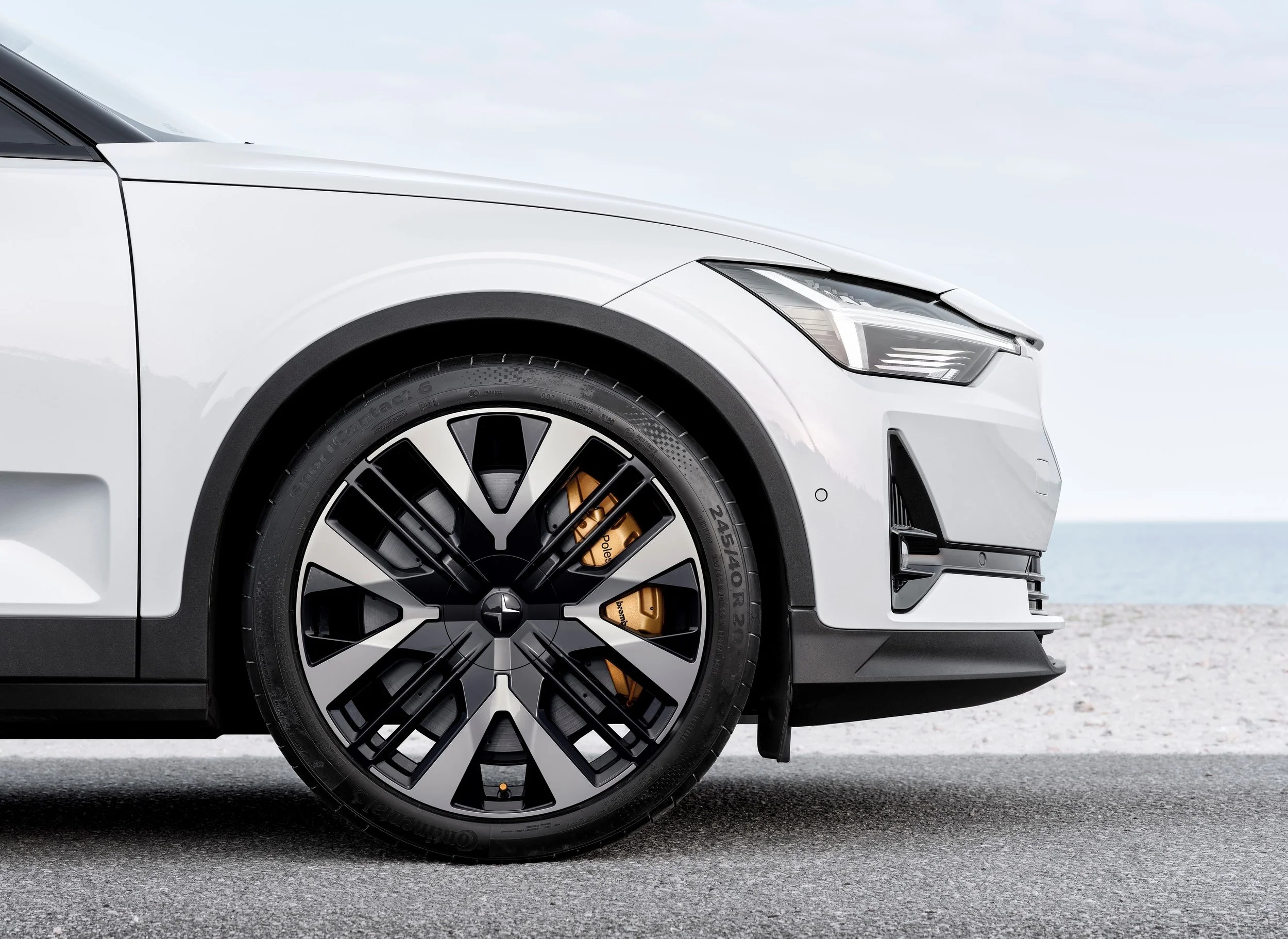
The standard 20-inch rims look good and the specially developed Hankook iON tyres are quiet on coarse chip. The Performance Pack achieves more aggressively sporty Pirelli P-Zeros that raise more roar over stones, but quieten down on smooth asphalt. They look good, too.
The proposal is about increased versatility and practicality, which goes beyond the ability to carry larger loads when required.
Vehicle to load and a camping mode are new ingredients for Polestar here, the roof rails are strong enough to take a small roof tent - and a light human load - and it’ll tow, with the ADE doing better than the RWD, with ability to haul 2000kg, a 500kg advantage. Both cars have a specific Trailer Stability Assist function built into the car's electronic safety systems, which should be helpful.
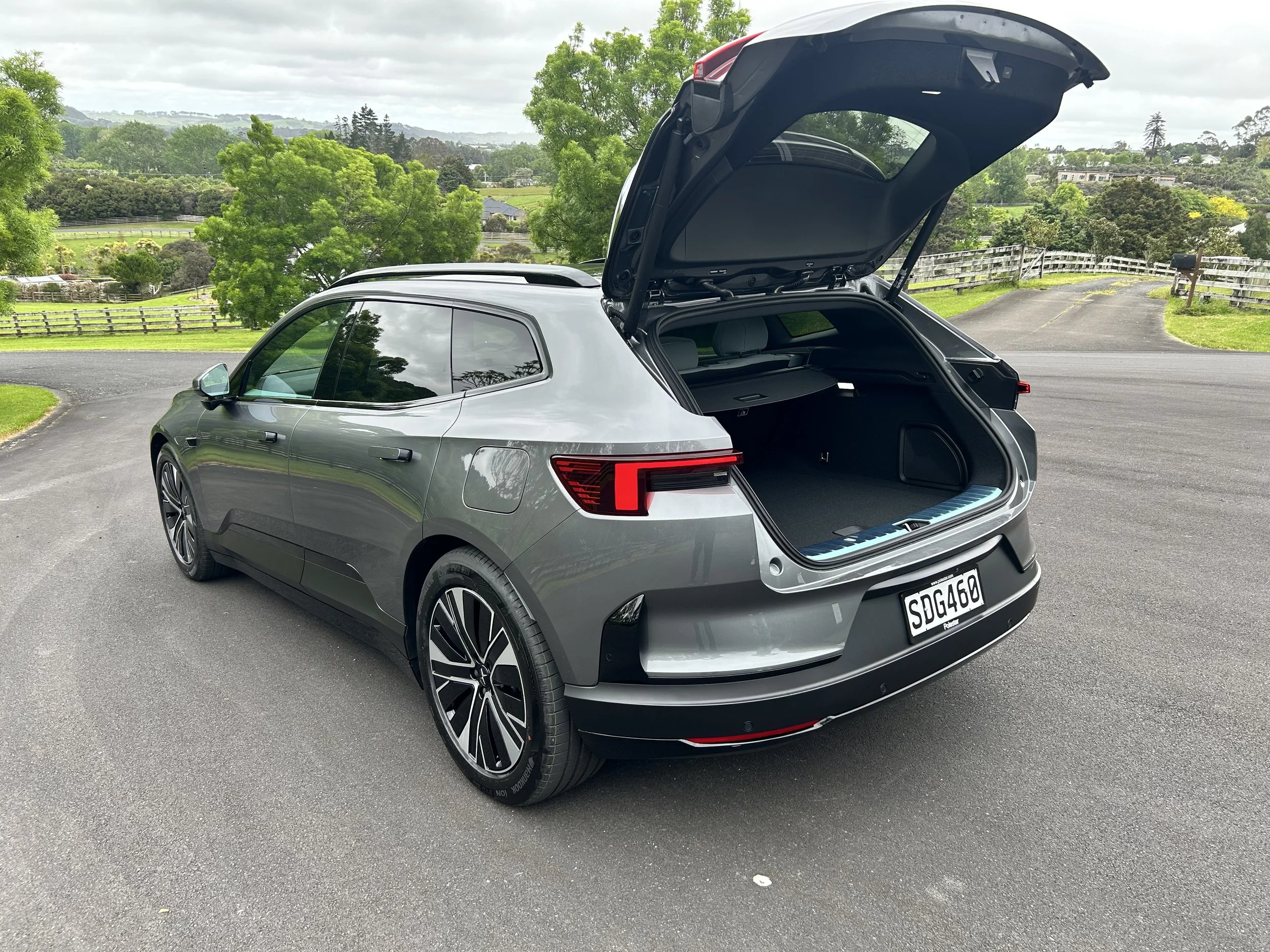
What about when you’re loading up the cabin? Measured up to the top of the seatbacks, the Polestar 4 SUV holds barely more more than its sibling car, at a quoted 530 litres versus 526.
The bulkier rear end of the new choice means up to 655 litres can be accommodated up to the roof and tumbling down the 60:40 split folding rear seats and that climbs to 1665 litres.
Sure, there are more commodious wagons for this money, but fact you're going to be able to fill the 4 SUV with much bigger loads than you could manage in the 4 coupe is going to be a very strong selling point.
BTW, like the coupe, it gets a 15 litre frunk, which might prove handy because while there's a small under-floor storage area in the boot, big enough for charging cables, you’ll have to unpack shopping/luggage/dogs etc to get at it.
Of course, the one drawback of filling the boot right up might seem that it will utterly negate any benefit from having an orthodox rear view mirror.
But Polestar has thought of that. They can sell you the same digital rearvision mirror that goes into the coupe … albeit for $2000. That’s a lot considering the other main option, a electrochromatic glass roof, is $3400.
And the latter is not only a much more substantial item but also is more tech, given it delivers with four sections individually adjustable for opacity. A really neat thing to show off … once you work out how to operate it. We failed to discover the secret on the launch drive.
It’s a more comfortable Polestar 4 for tall occupants, in that while seat designs and leg room is the same here as in the coupe, the SUV shape opens up 25mm extra rear headroom.
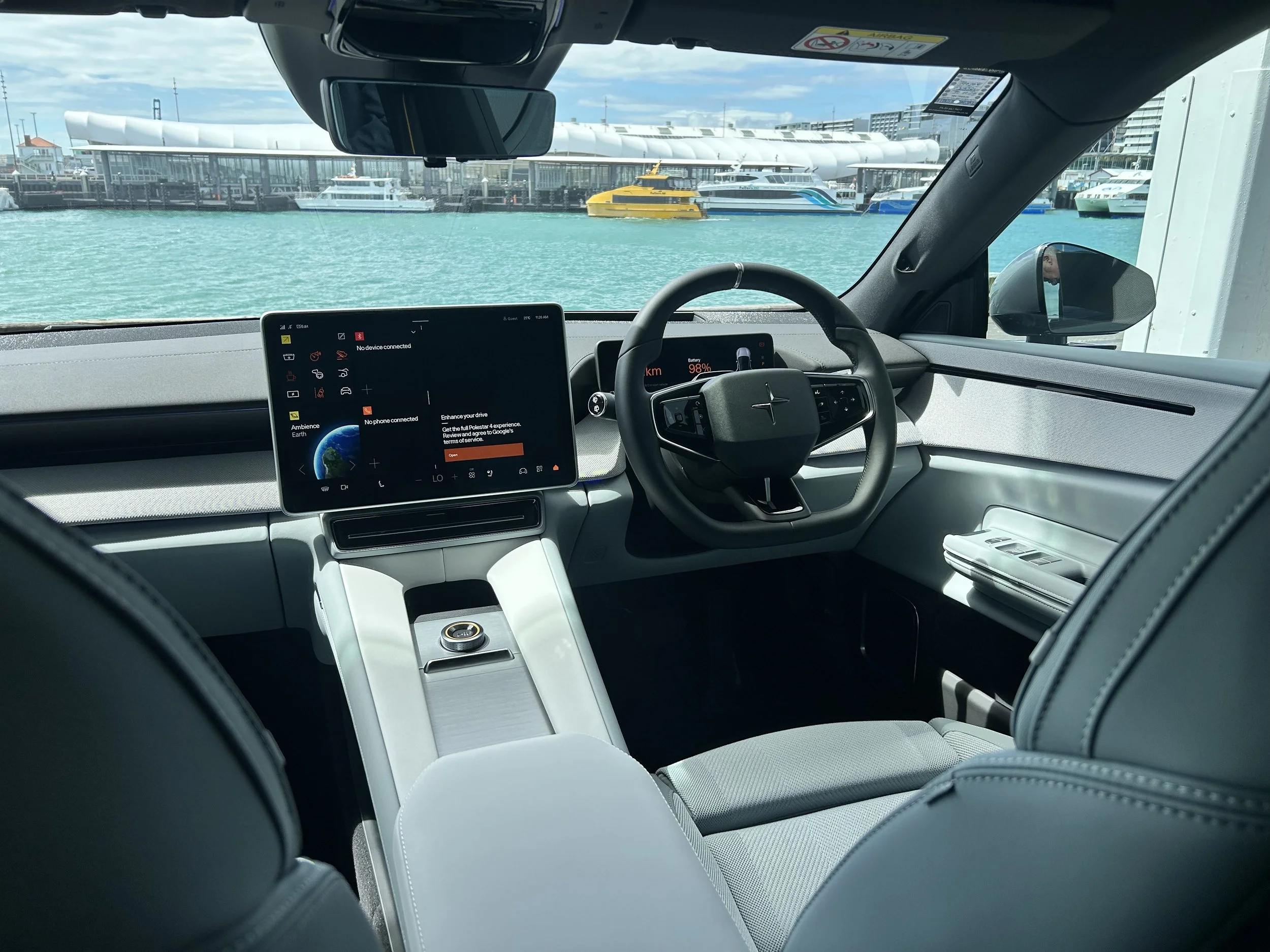
Eyes forward, everything is as per the coupe, so a focus on sustainable and traceable trim materials, a large touchscreen in the middle using Google Gemini, solar-system-inspired ambient lighting themes.
A 100kWh lithium ion battery pack is common to both editions, and from this the rear-drive car will achieve a quoted 630 kilometres on the official WLTP cycle. It clocks 0-100kmh in 7.3 seconds. The AWD is much faster off the line, with a time of 3.9s quoted, but its range drops to 600km. Still, both variants have slightly better range than the equivalent coupes.
Polestar uses several electric car architectures right now. The 4 stands alone in being wedded to the Sustainable Experience Architecture from Chinese owner, Geely. That means it is a 400 volt car.
But not for long. Next year it’ll join the cool club in ramping up to 800v, at which point the current maximum recharging rate of 200kW will undoubtedly be improved on. Maybe that’s not so long to wait. In respect to home recharging, it can take up to 11kW on three-phase AC chargers.
The 4 SUV also has a different passport than the coupe, in that instead of coming out of China, it hails from South Korea. The reason why is down to Polestar thinking this would safeguard its sale in the United States, where China-made cars are not welcome. It didn’t. Polestar has pulled from the US.
As for the wheel time? Very fulfilling, but as the Coupe had impressed, there was very chance the SUV would fail to also hit the right notes.
The drive north was in a standard AWD car, coming back was in this format with Performance Pack. In its basic form, there's no shortage of performance, but the alternate full-blown choice is nonetheless markedly zestier.
Comparing to the coupe would have been worthwhile, but that wasn’t on the cards. MotoringNZ.com assessed an AWD with Performance Pack in November 2024 and found it to be dextrous, very fast, a lot of fun but very firm, “not to point of being intolerable, but even in the most compliant phase, steel yourself for a somewhat ripply ride out of the adaptive dampers.”
We’re not saying anyone in Sino-navia read that test and took note, but it’s a matter of record that compared to the coupe, the SUV has been given a recalibrated chassis, which Polestar developed by adding a 60kg weight mounted high up in the chassis of a test car, to replicate both the extra weight of the car's taller, longer bodywork and the fact that owners would likely be using it to carry heavier items.
To cope with that, the springs were made slightly stiffer, by up to 12 percent at the rear, whereas the anti-roll bars were softened up a tad. Polestar created different lower rear suspension links to tighten up the cornering stiffness.
All in all? On strength of this run, anyone weighing up which body style to chose might find there’s more than just practicality to consider. I cannot say if the coupe is any worse - that would need a back-to-back - but would sat that the SUV is genuinely very pleasing to drive. It’s one of those EVs that impress in delivering a nice, natural feel.
When my driving partner pushed on hard on one twisting section, you could sense how hard the tyres were working, but even at point where there was vertical pitch in the suspension as the weight of that battery pack influenced, it still felt confident and in control.
Maybe it’s not just the driver. The car packs such safety kit as 'Understeer Control Logic' which keeps the nose tight to the inside of a corner in extremis. It also has a 'Direct Traction Control' system which is close-coupled to the electric motors, and which Polestar claims responds as much as 10 times faster than a conventional traction control setup.
As with the coupe, where the SUV really looks set to shine is as a cruiser; on the smooth surface highway sections, it was very five star in respect to noise isolation.
The quality of the car also shows through in a cabin that will compare very validly to the best premium German brands can manage.
Because it’s Polestar, many materials are bio-attributed, including the leather that’s optional to a soft fabric rendered from recycled something-or-other. The cow skin is from welfare-monitored herds supplied by Bridge of Weir leather in Scotland.
Light coloured interior hues are a polestar thing, likewise lots of ambient cabin lighting. The cabin overall is as per the coupe, but it seems the SUV has lent opportunity to simplify the seat adjusters, so instead of a single oblong controller with multiple functions, there are more logical seat-shaped buttons down on the side. The seats themselves are highly comfortable.
One change that would be welcomed, but wasn’t effected, concerns the heavy reliance on using the screen to make adjustments that would be far easier and faster achieved with orthodox controls. It’s a faff to have to set up the steering wheel and wing mirror positions by selecting the right option on the touchscreen, and then using the multi-function buttons on the steering wheel itself.
As much as this car’s 15.4-inch central touchscreen is one of the better displays in respect to overall functionality, responsiveness and clarity, using it to enact functions you might need to fine-tune on the move is a digital overload.
That many other brands also use identical operability is no excuse. Polestar should be above it. So talk from high-ups at the launch that it might be about to relent on the everything-on-the-screen nature of its current models is welcome.
In current delivery, having air conditioning and heated seat controls always showing at the base of the screen is a plus, but as is there is only one physical button on the centre of the dashboard, and that's the large rotary controller for the stereo volume and play/pause functions.
This version of the Polestar 4 is doing well in Europe and, with the Polestar 2 out of the picture until the new version lands some time in 2027, it is expected to be a volume leader here for some time.