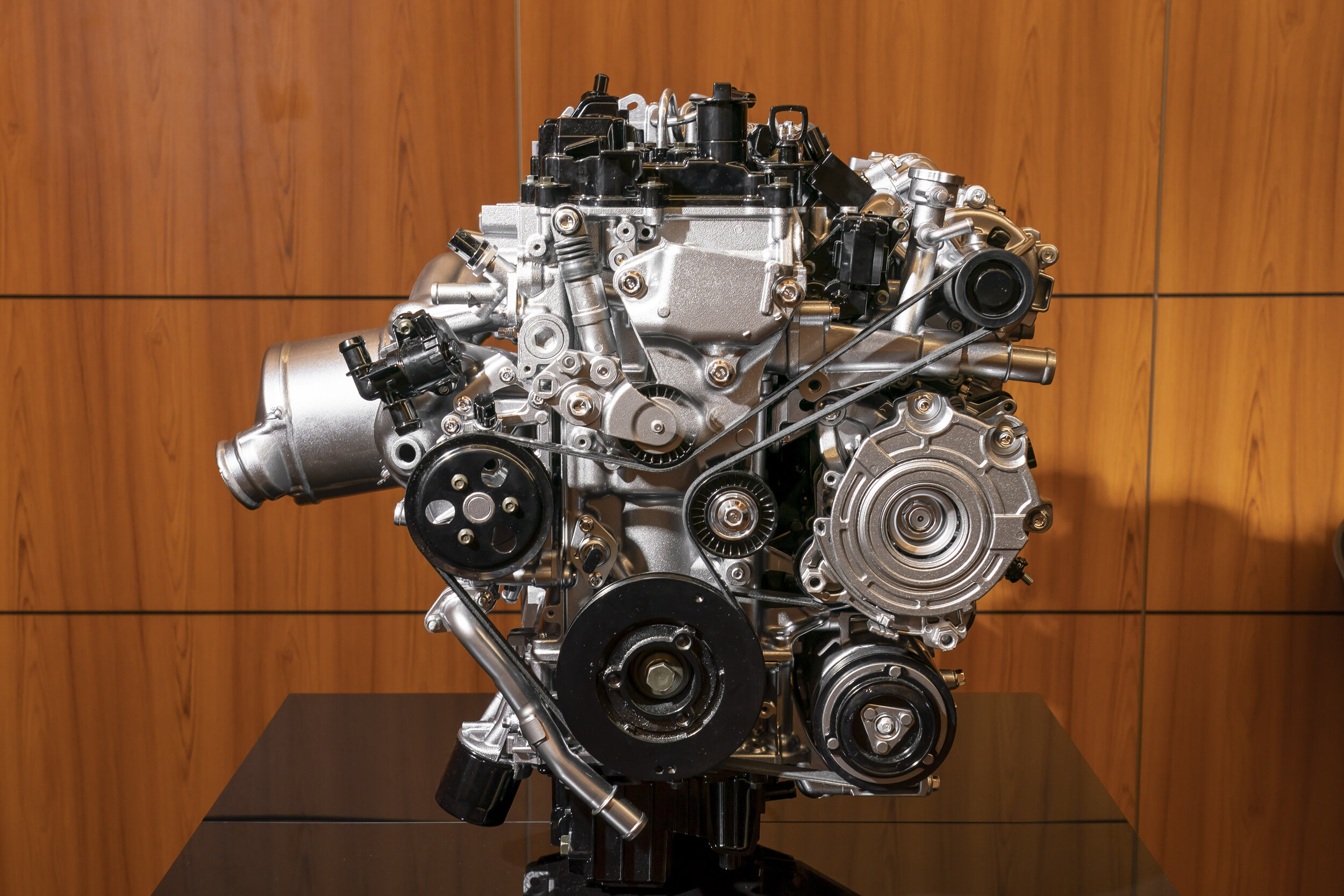
Mazda freely admits the route it has forged was certainly a challenge and a half. A Homogeneous Charge Compression Ignition (HCCI) engine that simulates how diesels operate but with petrol, with compression rather than spark igniting a lean fuel-air mixture, took a lot of figuring. And time. And money. Mazda was not the first to try but is, to date, the only brand to have stayed the course.
Even though it uses a spark plug, unlike the diesel design that inspired it, SkyActiv-X is genuinely a compression ignition approach. The crux of the spark plug is that it can be relied upon in high-load situations but also to bring the lean air-fuel mixture to the point of instantaneous homogeneous combustion – the point where all the mixture combusts instantly at the one moment. By contrast, in a normal petrol engine, the spark plug initiates combustion in the piston chamber that moves away from spark plug and is less efficient.
If that’s befuddling, think of it as a colleague much smarter than I has put it. A normal combustion process is like a strip of matches lined up in row – one ignites and then quickly the other match heads ignite away from the initial spot of combustion. Compression ignition is like all the match heads in the row igniting at the same time. It results in a much faster combustion time.
Lift the bonnet and the X engine appears to fill out more of the engine bay than a regular unit. That’s really because of the supercharger, whose role is far from orthodox is this application, in that it’s here to push the massive volumes into the engine that are requisite to its operation. As explained in the previously published backgrounders.
With the electric age coming up fast, why bother with a different kind of petrol engine? Simply because, as much as it also intends to commit to battery-pure driving, Mazda also believe fossil fuels will continue to be part of our driving life for decades to come yet. However, it also believes we need to do more with what’s left.
It’s an interesting thought that the make that takes this attitude now was also steadfastly committed to another radical engine, one without the stop-start, up-down reciprocating motion of pistons and connecting rods.
Is there irony that the brand that stood so ardently behind the Wankel rotary, surely the simplest engine design ever, is now banking on another that stands out for a high degree of complexity? Well, perhaps, but you have to admire any company with the pluck to think outside the square. In this respect Mazda, one of Japan’s smaller makers, is a true giant.
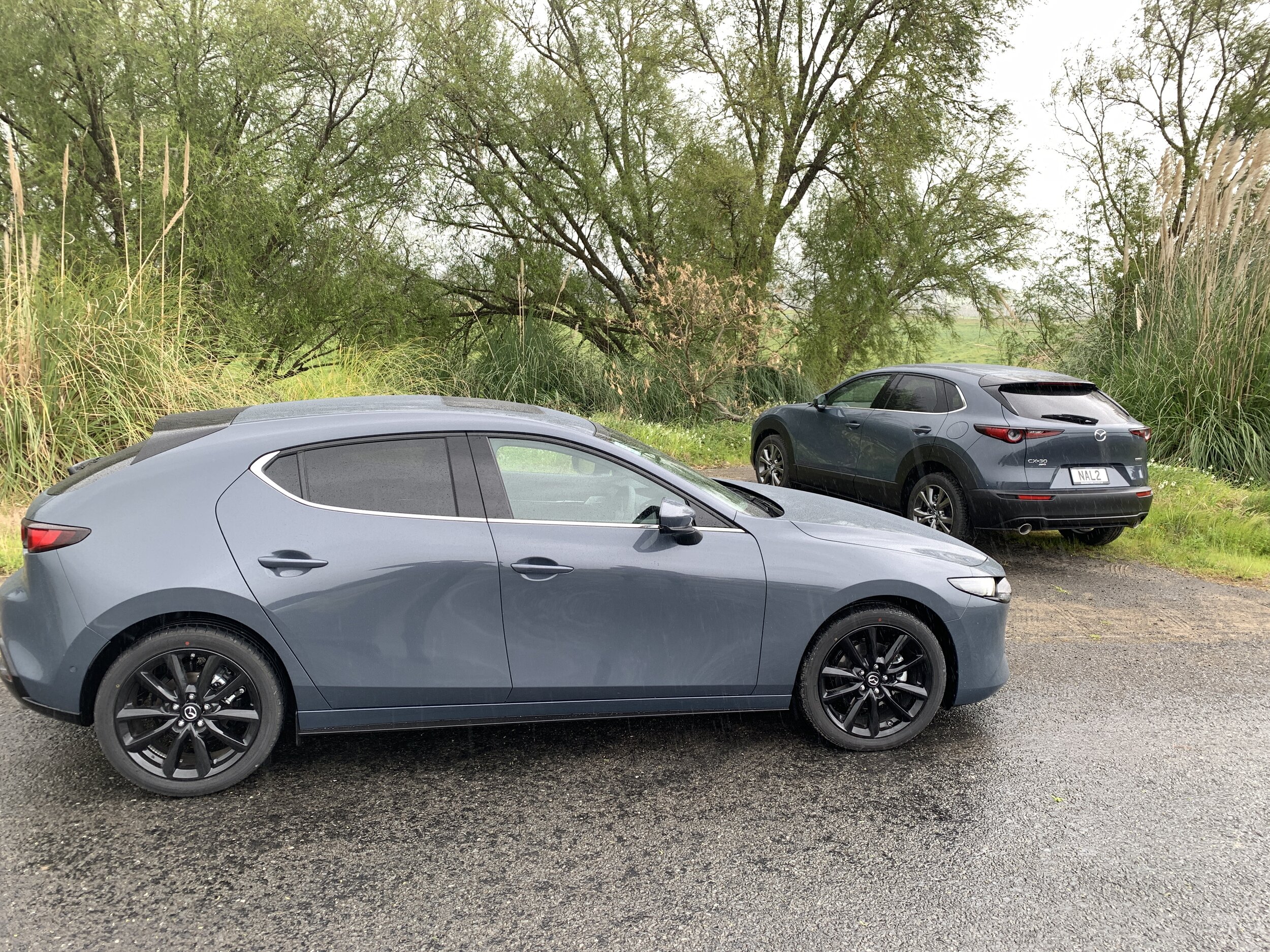
Consumer uptake will decide the merits. Mazda NZ anticipates the SkyActiv-X editions will achieve around 15 percent of take-up within their respective model lines. The only ask of owners is that they feed it 95 octane or higher petrol (whether it accepts ethanol blend fuel is being looked into) and that’s all. Servicing-wise, it demands no special requirement.
Mazda here doesn’t know what other candidates are in line for SkyActiv-X, but it will not be surprised if Hiroshima widens the availability of this tech and continually refines it, the next obvious step being to perhaps go from a mechanically-driven supercharger to one running on electricity.