
Self-drive function among potentials for Leapmotor
/NZ-market models will require lidar that facilitates in China, but are otherwise good to go.
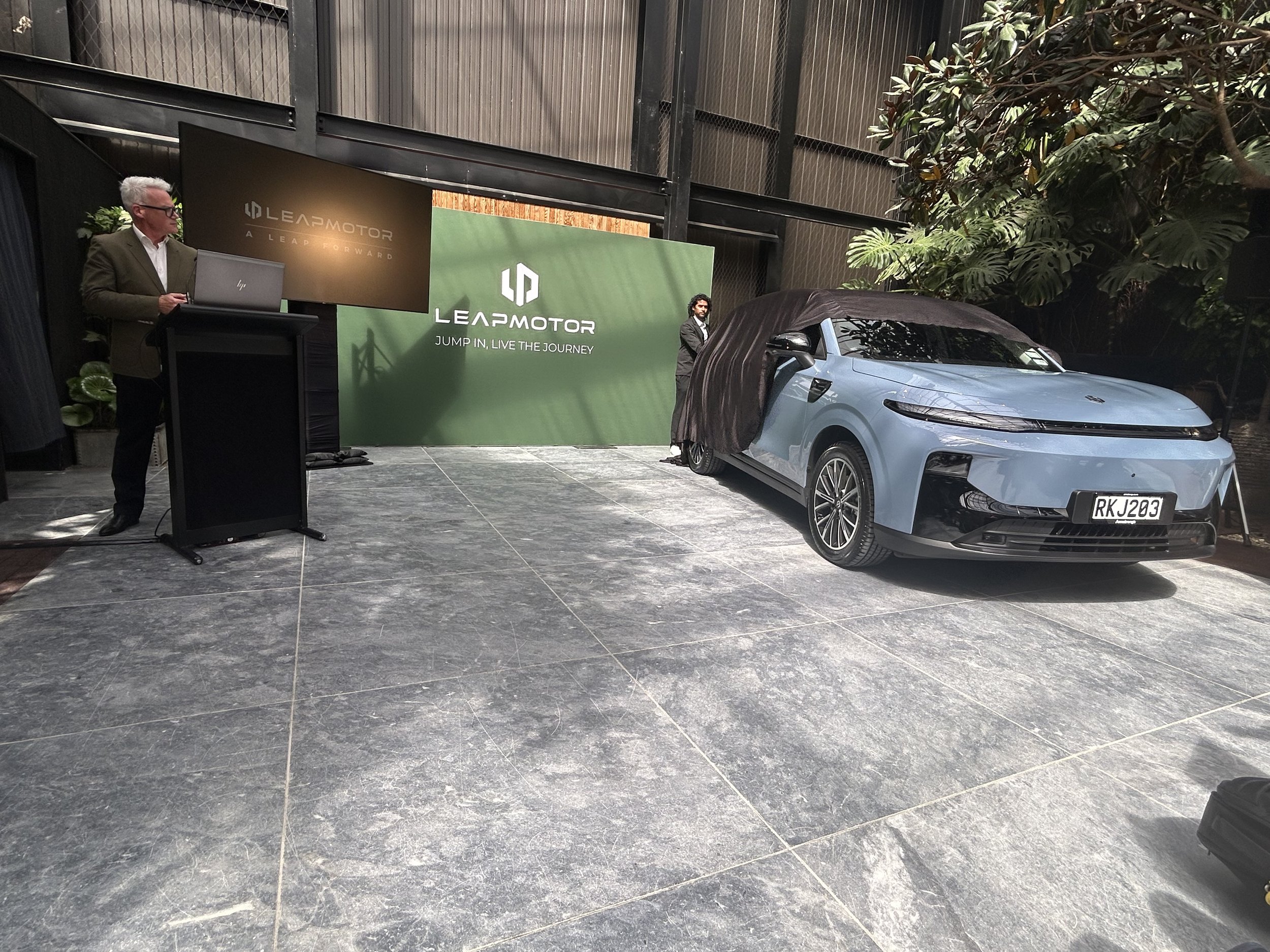
TECHNOLOGY edge for Leapmotor cars stops short of ability to provision sustained self-driving - but only because one ingredient the make believes is vital hasn’t left China.
With a new B10 compact sports utility to stand beside the C10 medium SUV it entered the NZ scene with last year, Leapmotor is confident about ramping up its presence here.
One sales point being pushed strongly is the technology edge.
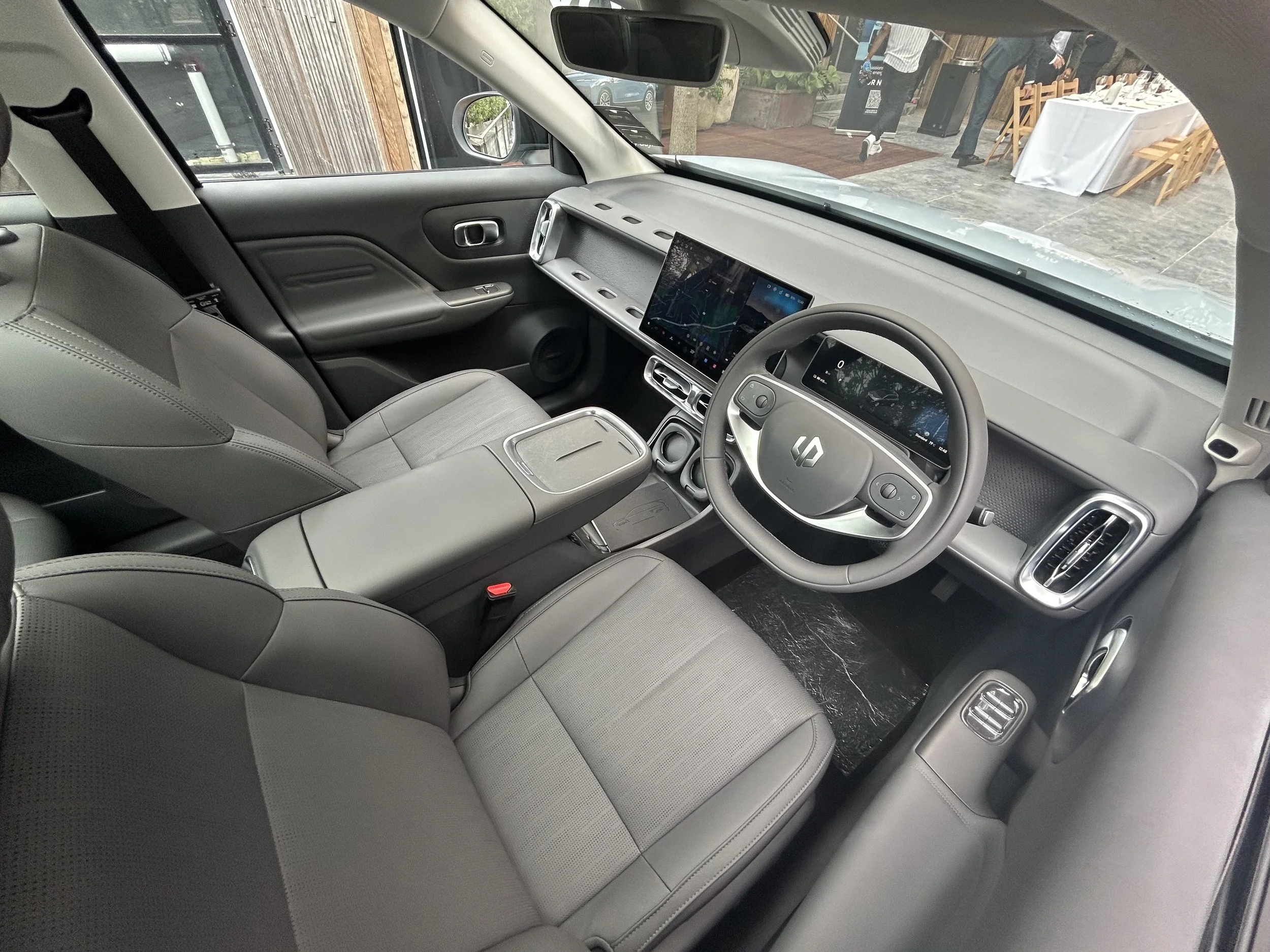
Both cars utilitise advanced electronic architectures - though, quirkily, just B10 enables the popular Apple CarPlay ad Android Auto apps - that with B10 includes the state of the art Snapdragon chip and run with a key card, but also can be activated by a phone app.
The models bring a swathe of driver assist, ticking off all the usuals including lane keep, attention monitoring and so on that can be finessed by over the air updates.
Fast facilitation of this is from it having implanted 4G, an uncommon concept.
The information transfer is not just into the car, but from it; Leapmotor says this allows it to learn more about its user. It also conceivably opens the door to users imparting more information from their connected devices that owners might have been prepared to share; users have to tick box an electronic acceptance and none have raised concern,Leapmotor’s local representation says.
In China, these models and two other Leapmotor vehicles under consideration for introduction here next year, the small B05 hatch and the C19 large six-seater, also facilitate hands-free driving that's at least to the same level now being offered by Tesla here as ‘full self-drive supervised.’

As with the Tesla system, the Leapmotor cars require a person at the wheel, expected to have the competence to take control at any time.
Whereas Tesla relies purely on cameras, Leapmotor is among the many other makes also incoporating radar and lidar.
The latter, which stands for ‘laser imaging, detection and ranging’ is the most complex and expensive ingredient.
It is considered vital to resolve the glitches and issues Tesla’s way can still be troubled by. A key plus point is that it enables a three-dimensional image of a roadscape when it might be obscured to the human eye; for instance in fog, snow and on very dark nights.
Leapmotor’s lidar inclusion so far only relates to China, but there’s every expectation it will eventually roll into the export cars. The NZ market cars already have the hardware to support it.
Auto Distributors, the Armstrong Group operation which holds brand rights, is keen to explore it and is aware at least one other semi-rival, MG’s upmarket IM make, stands to be the first to roll out lidar here.
There’s no clarity about cost, but for FSD-S, owners of the Tesla cars that allow it - and that’s just the latest facelift version of Model 3 and Model Y - is steep, either a $159 monthly subscription or an all-out single cost close to $12,000.
Will Kiwis take to it? That’s something Auto Distributors’ high-ups are keen to understand.
Managing director Simon Rutherford is relaxed about the C10 and B10 not having that function just now.
“I think if New Zealand consumers were in a hurry, that would be a different matter, but I don't believe they are right now.”
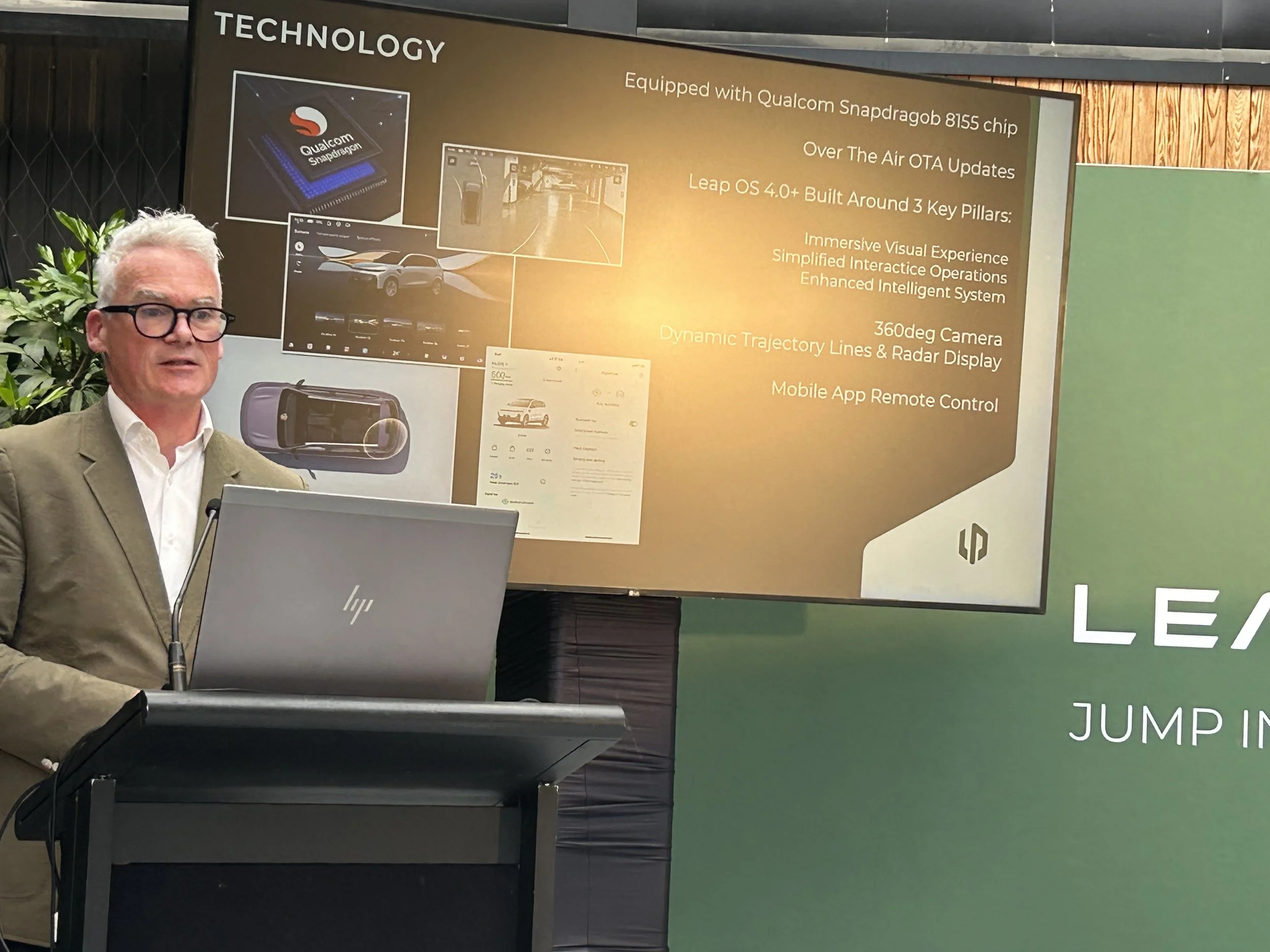
Leapmotor general manager of sales Brian Carr (above) agrees Telsa’s recent enabling of self-driving capability has become a talking point, and has no doubt Leapmotor can counter it. But much comes down to market adoption.
“My view is that I don't think there'll be an issue with development … it’s more a case of what's relevant and wanted and desirable and usable per market. There is a long journey with autonomous driving stuff.”
As things stand, the cars have an advanced adaptive cruise control that does enable some auto steer functionality, but for just a short period. The car then requests the driver to resume control.
“In other parts of the world, China included, there is a lidar system that is available at the moment and this takes the cars into higher levels of autonomous driving.
“It is not available in New Zealand. I can't give you a timeframe when it will be. At some point it will be, but remember over the air updates enables us to continually improve the software and technical capabilities of the car.”
The B10 will start out as a single motor full electric, with a lithium ion phosphate battery in two sizes.
The 56.2kWh type in the entry Life - $44,990 at full retail but subject to a special $2000 discount likely to last until early next year - and a 67.1kWh choice for the higher-spec Design ($47,990 now, $49,990 ultimately) respectively offer WLTP-attested ranges of 361 and 434 kilometres.
Both variants feature a 14.6-inch central infotainment screen, an 8.8-inch driver display, wireless phone charging, vehicle-to-Load (V2L) functionality for powering devices directly from the car and phone app-based controls for keyless entry, remote air-con operation and to scheduled charging.
The Design has more premium elements of ventilated eco-leather seats, a 12-speaker audio system, heated steering wheel, and an electric tailgate.
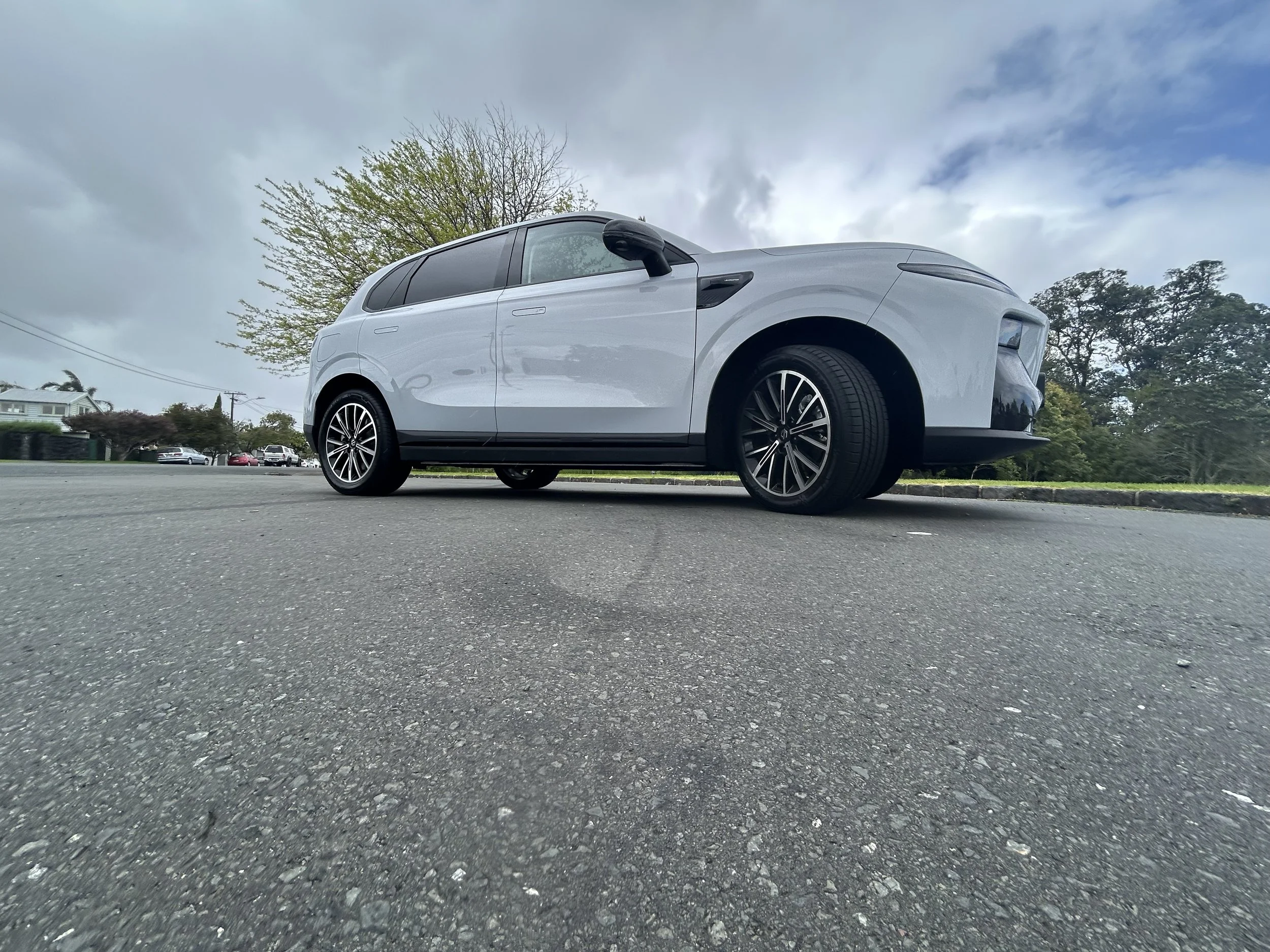
As with C10, there will be a range-extender petrol-electric choice, set to land around April next year. how closely that will price align with the C10 version is to yet clear. The latter starts at $49,990.
Unveiled at last year’s Paris Motor Show, B10 is proposed by its maker as a rival for the $49,000-and upward BYD Atto3, which was a big seller here prior to the cessation of electric car subsidies at the end of 2023, but now does little.
In either form, the rear-mounted electric motor makes 160kW of power and 240Nm of torque, for 6.8 seconds in the 0-100kmh sprint time and a top speed of 170kmh.
The EV can be charged from 30 percent to 80 percent in about 20 minutes on DC, with a maximum upload speed of 140kW in Life and 160kW in Design.
When replenished from a wallbox, the respective charge times are two hours and 30 minutes and three hours, and when from a three point home socket, they are nine hours and 20 minutes and 11 hours.
The range extender also leverages the EV’s 800-volt architecture, with the engine acting as a generator to feed a battery that will power a front-mounted electric motor to drive the rear wheels.
It appears to use the same drivetrain as the C10 REEV, which means a 158kW/320Nm 1.5-litre four-cylinder unit, charging a 28.4kWh battery via a 50kW on-board generato.
The C10 petrol-electric is capable of an all-EV driving range of 145km, or 970km combined (both WLTP figures), while averaging just 0.9L/100km. It’s thought the smaller SUV’s figures will be even better.
Sitting on a 2735mm wheelbase, the B10 measures in at 4515mm long, 1885mm wide and 1655mm tall, so isn’t much more compact than the C10 at 2825mm/4739mm/1900mm/1680mm.
The B10 has a 25-litre frunk, with 420 litres’ boot capacity, this expanding out to 1415 litres when the rear seats are down.
Leapmotor has the backing of Stellantis, so is represented in New Zealand by Armstrong Group, which has some but not all Stellantis brands here.
Armstrong’s Leapmotor dealerships are already established in Auckland (Greenlane), Christchurch and Wellington, with a new location recently added in Auckland (Botany). More locations are set to follow as the brand continues to grow.
The B10 is the first model in Leapmotor’s new medium-size SUV lineup, which is focused on delivering globally competitive electric vehicles tailored for international markets.
Though it only came into being in 2015, and didn’t release its first car until 2019, Leapmotor has wasted no time in developing a range. The B10 is the seventh model to be unveiled, coming out a year after C10. The only Leapmotor car definitely not coming here is the T03 electric city hatch.
Stellantis owns a 21 percent share in Leapmotor and a 51 percent slice of Leapmotor International, which conducts all activity for the brand outside of China.