
FJ Cruiser is back … with NZ-favoured diesel hybrid
/Engine that already serves in two Land Cruisers and the Hilux here is signalled for the second gen of model that Kiwis struggled to accept in petrol.

RETURNING the modern FJ to the LandCruiser menu here might be a consideration, given reports the engine it has revealed with - another petrol - is expected to be optional to a diesel the original lacked, and suffered for NZ acceptance as result.
The second generation of the chunky model that keeps a revered nameplate in Toyota circulation has been shown off in Japan.
It seems as gloriously retro as the original reinterpretation, which sold in New Zealand from 2010 to 2016, and now bases on the same platform as the Land Cruiser Prado that launched last year but its wheelbase is 270mm shorter.
Though the examples at the reveal were labelled as prototypes, Toyot has made clear the will launch in Japan next year and is expected to be available thereafter for export.
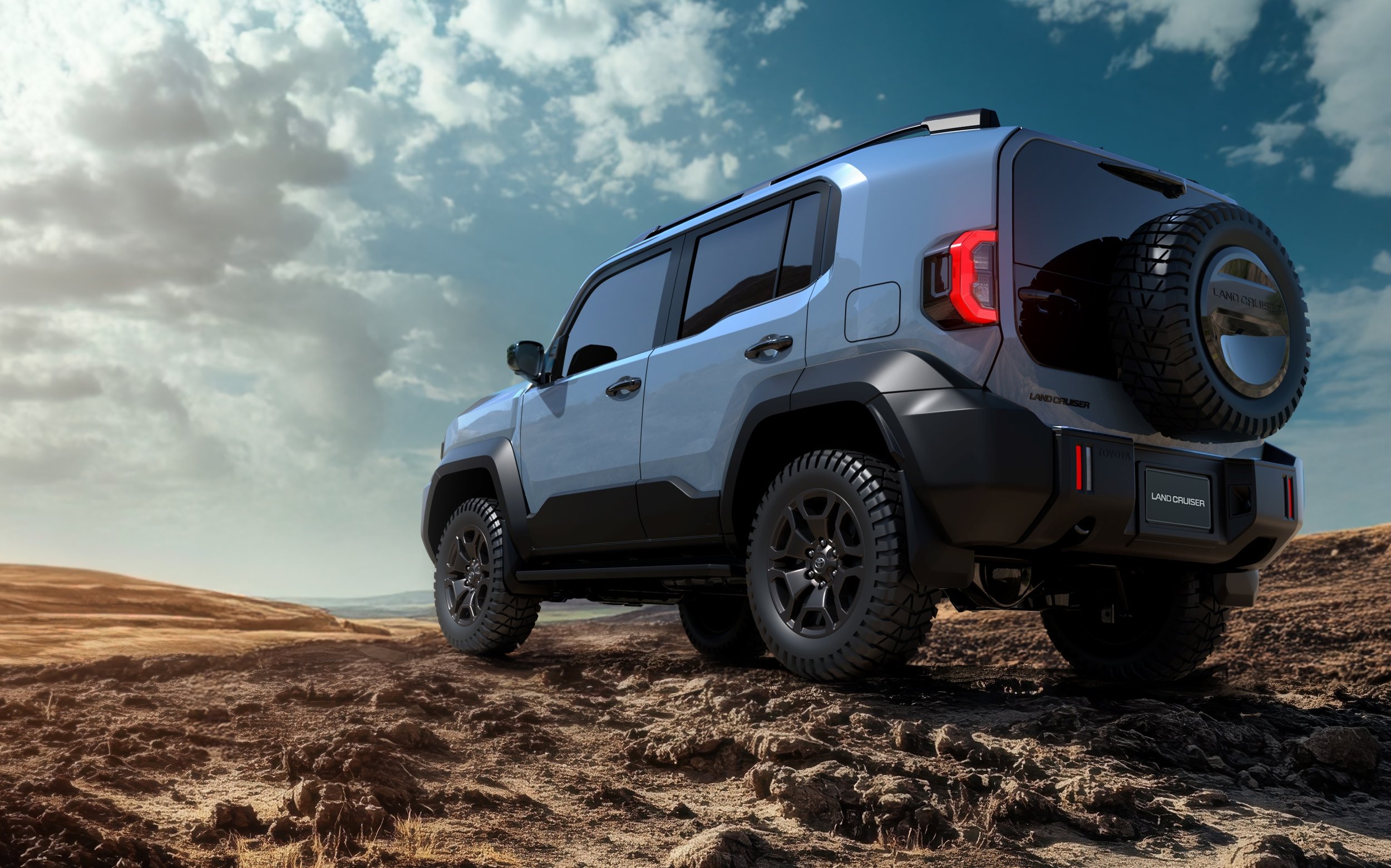
However, there’s already talk by then the powertrain option will have broadened beyond the 120kW/245Nm 2.7-litre petrol four it has shown with.
The other choice will an engine Kiwis already know in the Prado, 70-Series Cruiser and the Hilux ute.
The ‘hybrid’ 2.8-litre diesel that makes 150kW and 500Nm in those existing Land Cruiser applications offered in NZ is reportedly already signed up for Europe and the United Kingdom.
Toyota New Zealand has yet to make comment on the 2026 FJ, but will doubtless have to give it consideration.
But they will doubtless take note that the previous rebirth achieved just 299 registrations over six years - a tally that was well below those achieved by the Prado of the time in any single year during that period.
A big issue with the first gen model was that it only came with a 2.7-litre V6 petrol that was as ingloriously thirsty.
The new FJ has permanent four-wheel-drive, but this is sent via a six-speed automatic gearbox, whereas Prado has gone to an eight speed now.
Toyota says the model has been created as a new entry into the Land Cruiser range and has been designed to open the nameplate up to a wider range of buyers and a “new generation” of customers.
At 4575mm long, 1855mm wide and 1960mm tall it is a close match for the Land Rover Defender 90.
Full specifications are yet to be revealed, but Toyota says it has a similar ground clearance and approach angle to the 250 – for reference this is 215.3 mm and 31deg – while offering a claimed turning circle of just 5.5m.
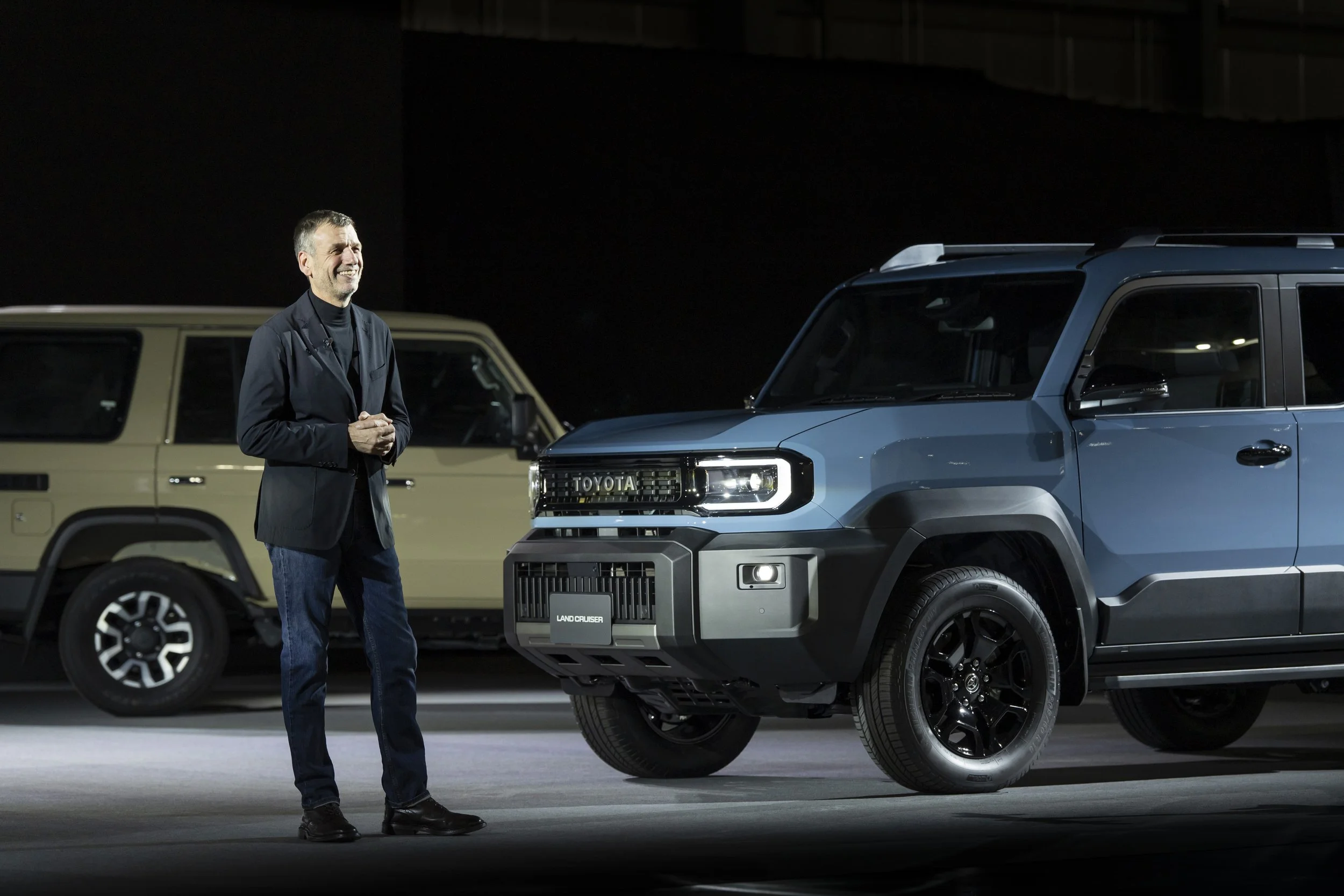
Simon Humphries (pictured), Toyota’s chief branding officer, says the FJ offers “a minimal footprint with a new dimension in driving performance and manoeuvrability”.
The FJ has been designed to be lean but strong, Toyota says, with flared bumpers and arches showing off a “powerful sense of stability”.
Customisability is a key part of the FJ’s selling point, notes Toyota, with both the front and rear bumpers able to be removed and replaced – which also helping aid quick repairs.
Other customisation options include round headlights, cargo panels, and an engine intake snorkel, as seen on the green version here. The blue car is representative of the alternate treatment.
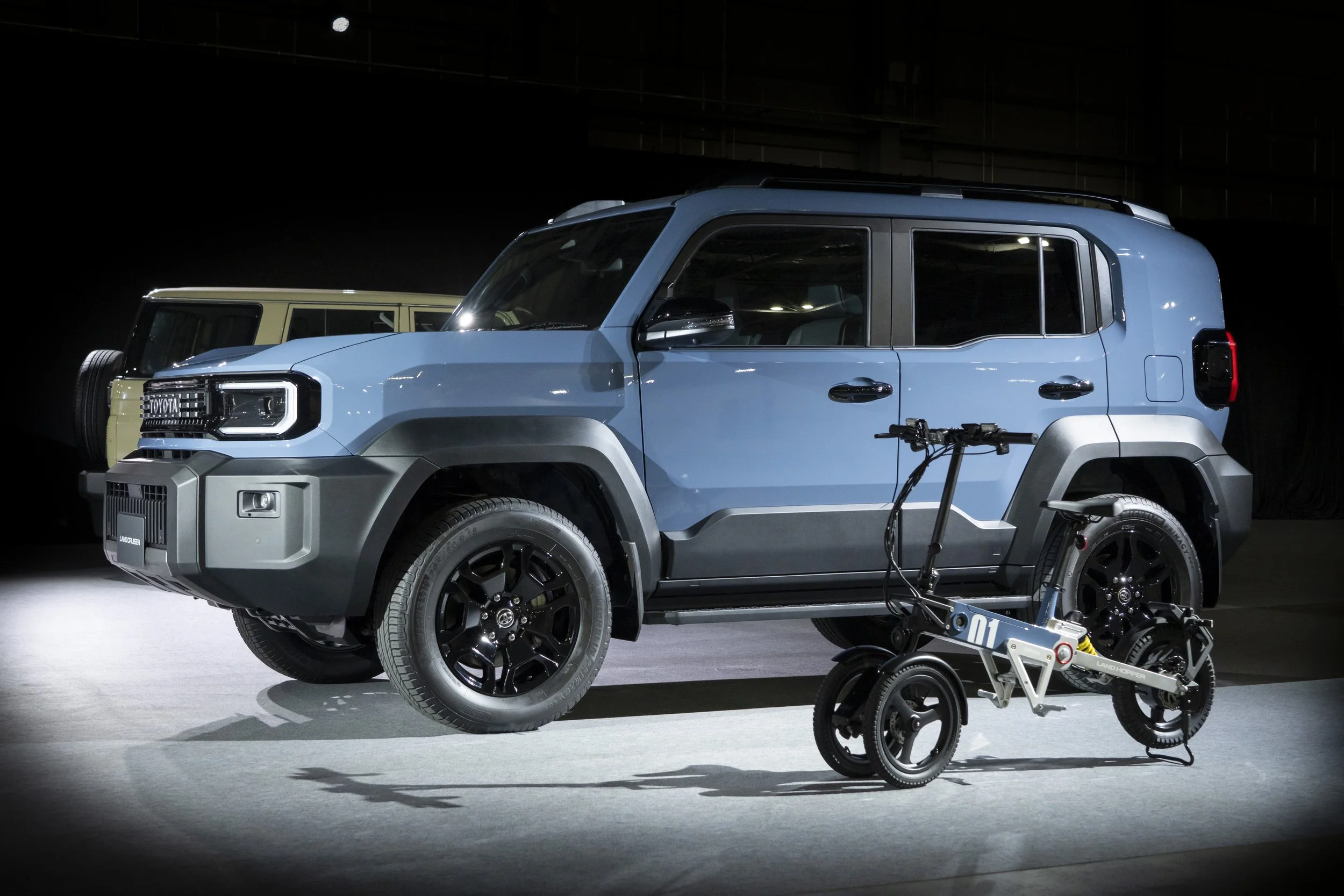
Another proposed option is a small foldaway motorcycle for exploring territory when the FJ is parked up in a exotic location; perhaps as a camp ground scout vehicle.
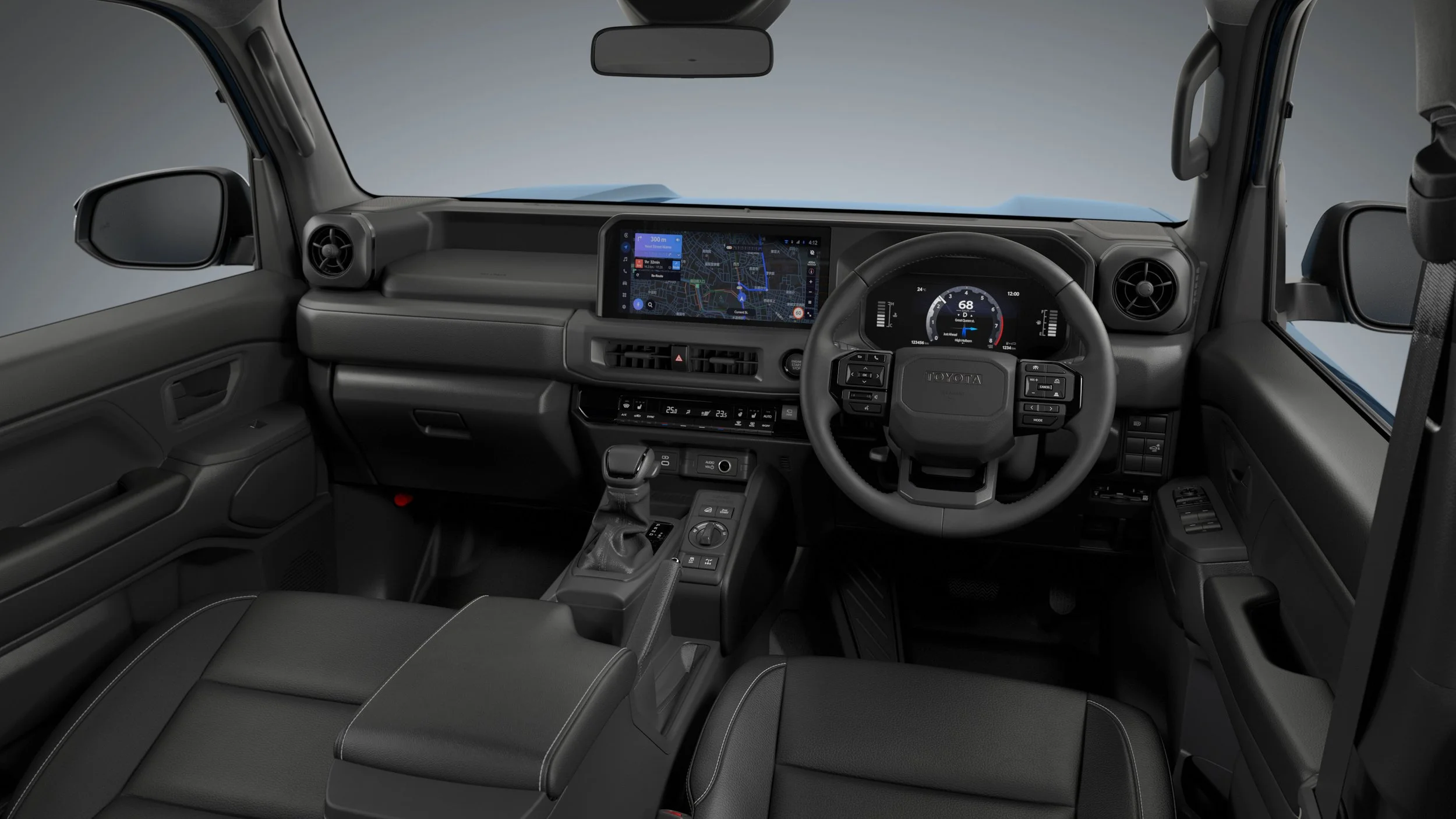
Inside, the FJ mirrors the Prado in featuring a 12.5in infotainment touchscreen which is flanked by a array of physical buttons and switches for the main controls.
“Two years ago we launched the Land Cruiser 250 (Prado), going back to the origin to redefine the Land Cruiser. At the end of that presentation, we promised the 250 was just the beginning,” Humphries told a media event last night.
“From the early days, Land Cruiser has been a family, with the 250 at the centre, 300 at the peak, and 70 as the workhorse. Now there is a new addition to the family.”