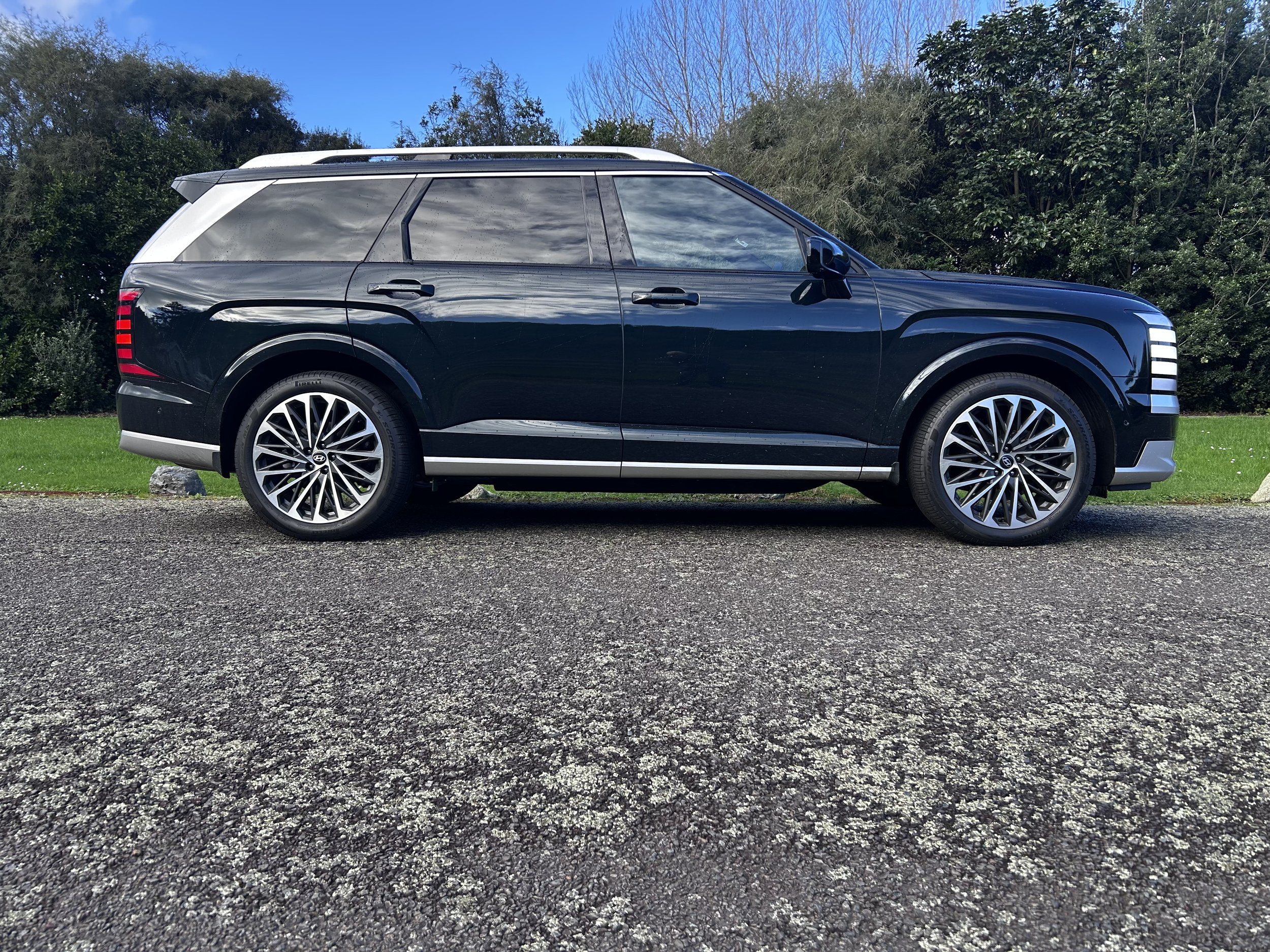

Ioniq 9 a big decision for Hyundai NZ
/Regional arrival of super-sized plush family EV isn’t a firm sign of what might come here, if it does.
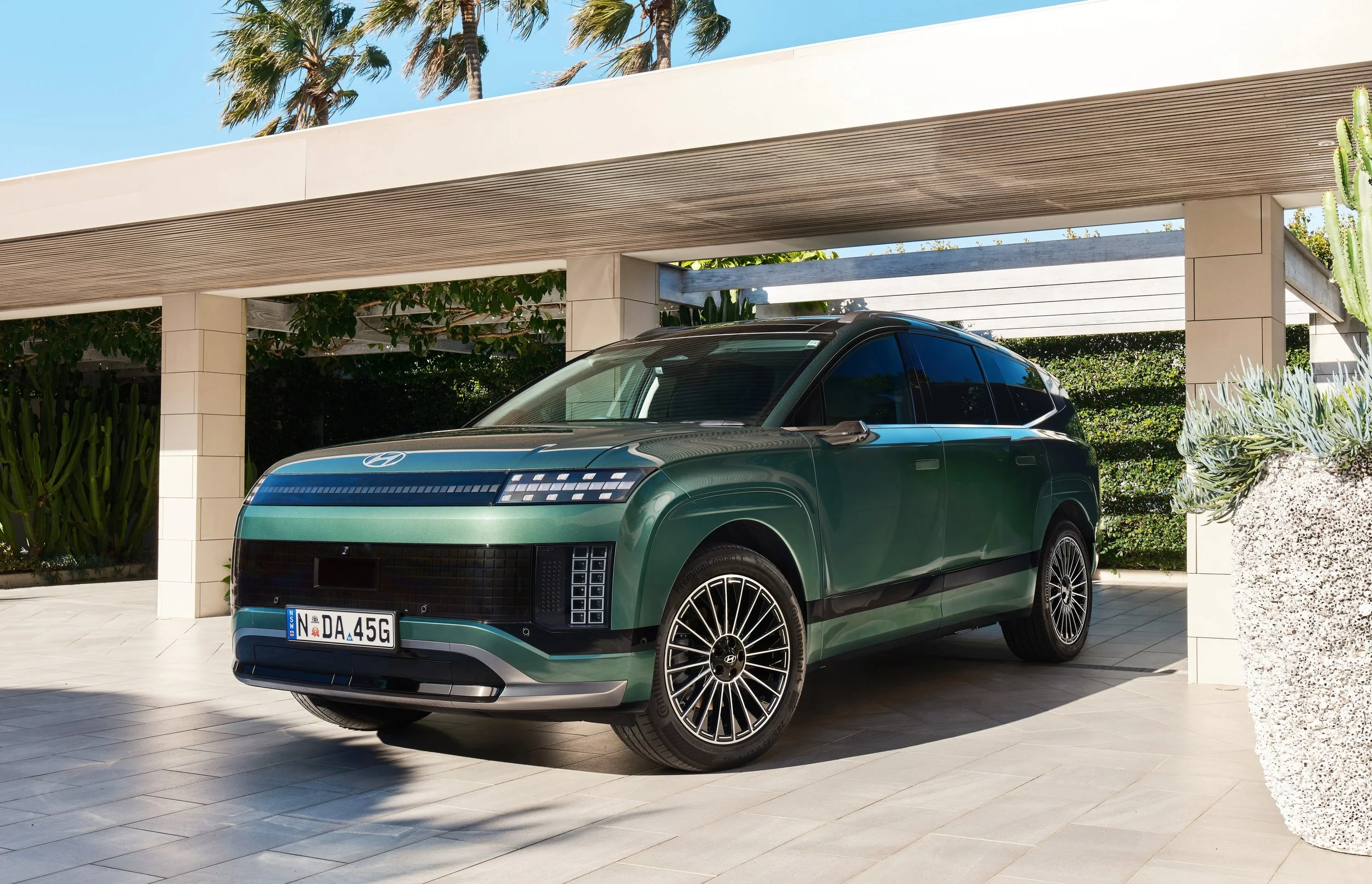
FOR our neighbour, only the best will do, but that doesn’t mean New Zealand selection of the biggest, most extravagant electric car Hyundai builds will mirror Australia.
Assuming it comes at all.
The Ioniq 9 having now gone on sale in Australia, purely in its highest-trimmed Calligraphy format, might well raise expectation from Kiwis about when it will show here.
That’s yet to be decided, Hyundai NZ said today.
For now the big three-row sports utility, built on Hyundai Motor Group’s ubiquitous 800-volt Electric-Global Modular Platform (E-GMP) and an equivalent of the Kia EV9 that landed just over a year ago but larger and with a bigger battery for longer range, is under evaluation.
A spokesman for the Auckland-domiciled make suggested today that the EV sector being in a doldrum is hardly helpful.
However, if and when the car is signed off, there’s no certainty we would adopt the same strategy as Australia, where it has positioned as the make’s most expensive car sold there, with a tag that equates to $142,000 here.
If the same pricing shifted to New Zealand, it would not dislodge the high-performance Ioniq 5 N as the priciest Hyundai here, as that car now sells for $149,900.
Historically, in general comparison, Hyundai stickers in NZ tend to be higher than those across the Tasman when identical cars are compared. In Australia, the Ioniq 5 N is $10k cheaper than Ioniq 9 Calligraphy.
“Ioniq 9 remains under evaluation for New Zealand including timing, grades, and specification,” the spokesman said.
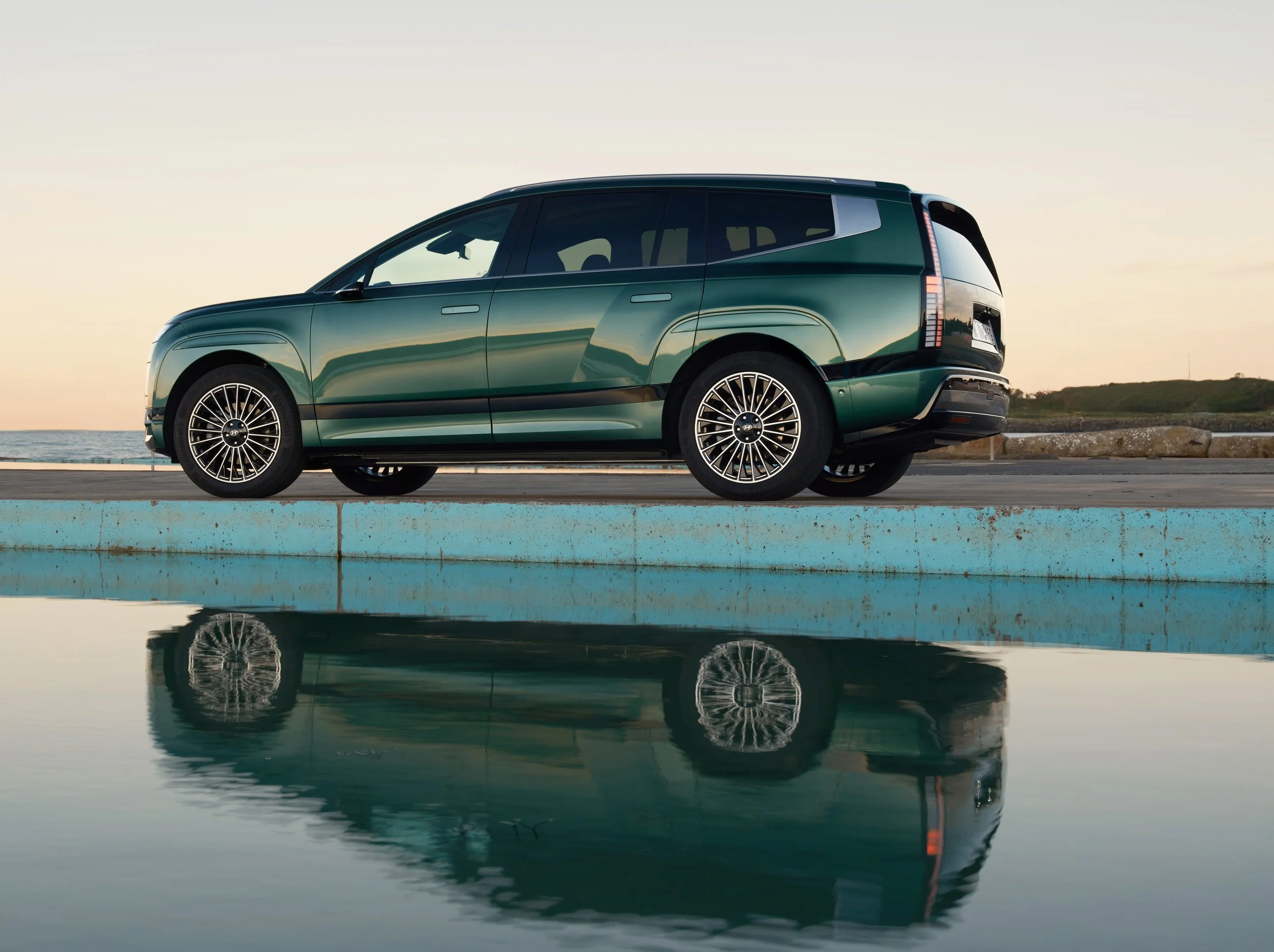
“While we’re aware of Australia’s Calligraphy-only launch, our decisions will be based on what best suits the NZ market, rather than mirroring their approach.
“The EV sector is certainly going through a transitional period, and we’re adapting to that environment.
“That said, our commitment to offering compelling EV options remains strong.”
Kia NZ having had priority boarding for the large SUV project has arguably hardly been any advantage - the EV9 had barely landed when the market went into a death plunge at end of 2023.
When stock simply failed to shift, the distributor had to bring in significant discounting from last July.
This pulled $35,000 from the flagship GT-Line, quirkily leaving it cheaper than a entry edition, whose RRP wasn’t altered, to reposition at $99,990. The mid-spec Earth that entered the market for $115,990 became an $89,990 opportunity.
That jolted interest back into life, and to date 296 EV9s have been registered, according to electric vehicle watchdog EVDB.nz.
Australia’s EV scene is healthier than NZ’s, but over there the brand admits restricting Ioniq 9 top its plush Calligraphy trim is a bold step.
However it says the model isn’t meant to set the sales charts alight, but rather is pitched as a halo for the brand to prove it can build electric vehicles of all sizes.
Ioniq 9’s perceived advantages over EV9 include that it sits on a slightly larger footprint, and fits a bigger battery for a 100km-longer driving range.
The dual-motor all-wheel drive runs a large 110.3kWh NMC battery pack with a claimed 600km of EV driving range (WLTP), and a long list of equipment.
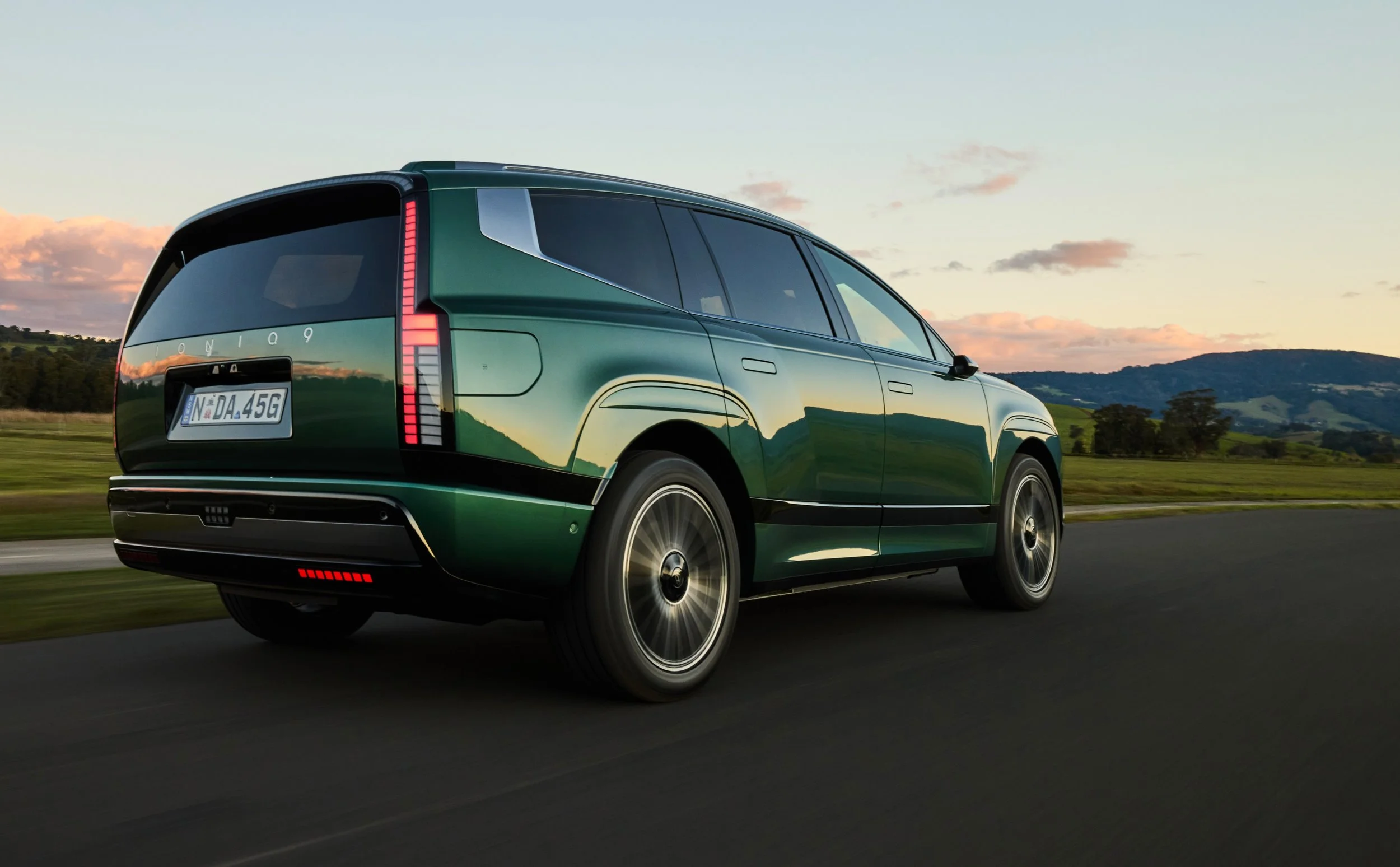
The twin 157kW motors produce 314kW of power - so, 31kW more than the GT-Line - and 700Nm of torque, which Hyundai claims to enable 0-100kmh acceleration in 5.2 seconds and 80-120kmh for overtaking in 3.4 seconds.
Ioniq 9 is said to charge from 10 to 80 percent in as little as 24 minutes when connected to a 350kW DC charger.
The types introduces Australian motorists to ‘Digital Key 2.0’ technology and Google Places Search integration, joining Hyundai’s Bluelink smartphone-enabled connected car services and over-the-air update capability.
Google Places Search provides multiple destination search methods, including text-based searches like "restaurants near me" with type-ahead suggestions and detailed results including addresses, operating hours, and contact information.
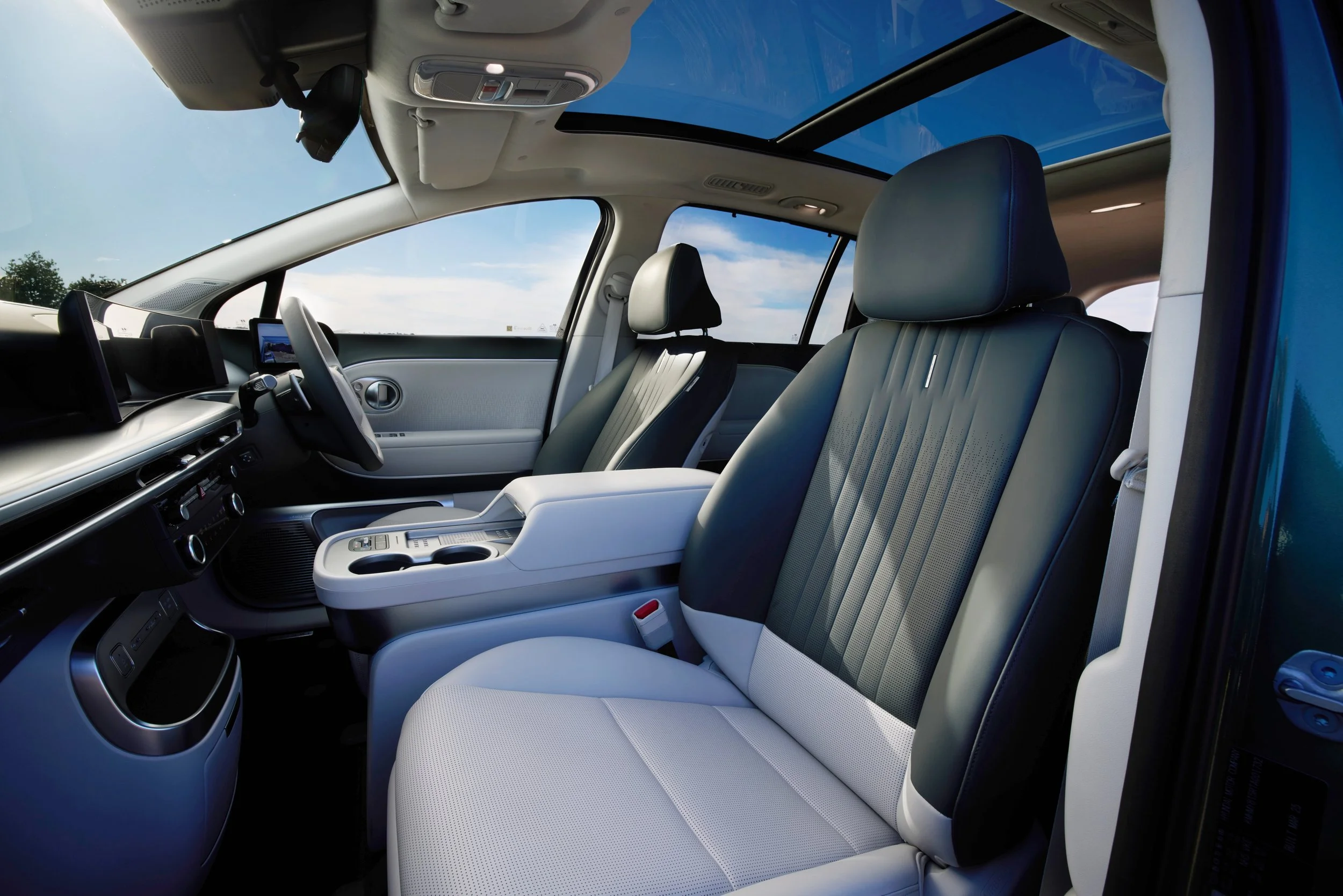
The interior combines a 3130mm wheelbase and flat floor to create what Hyundai describes as the most spacious cabin in its class, accommodating six or seven - depending on the chosen seating count, the lower count costing extra - occupants in “lounge-like” comfort.
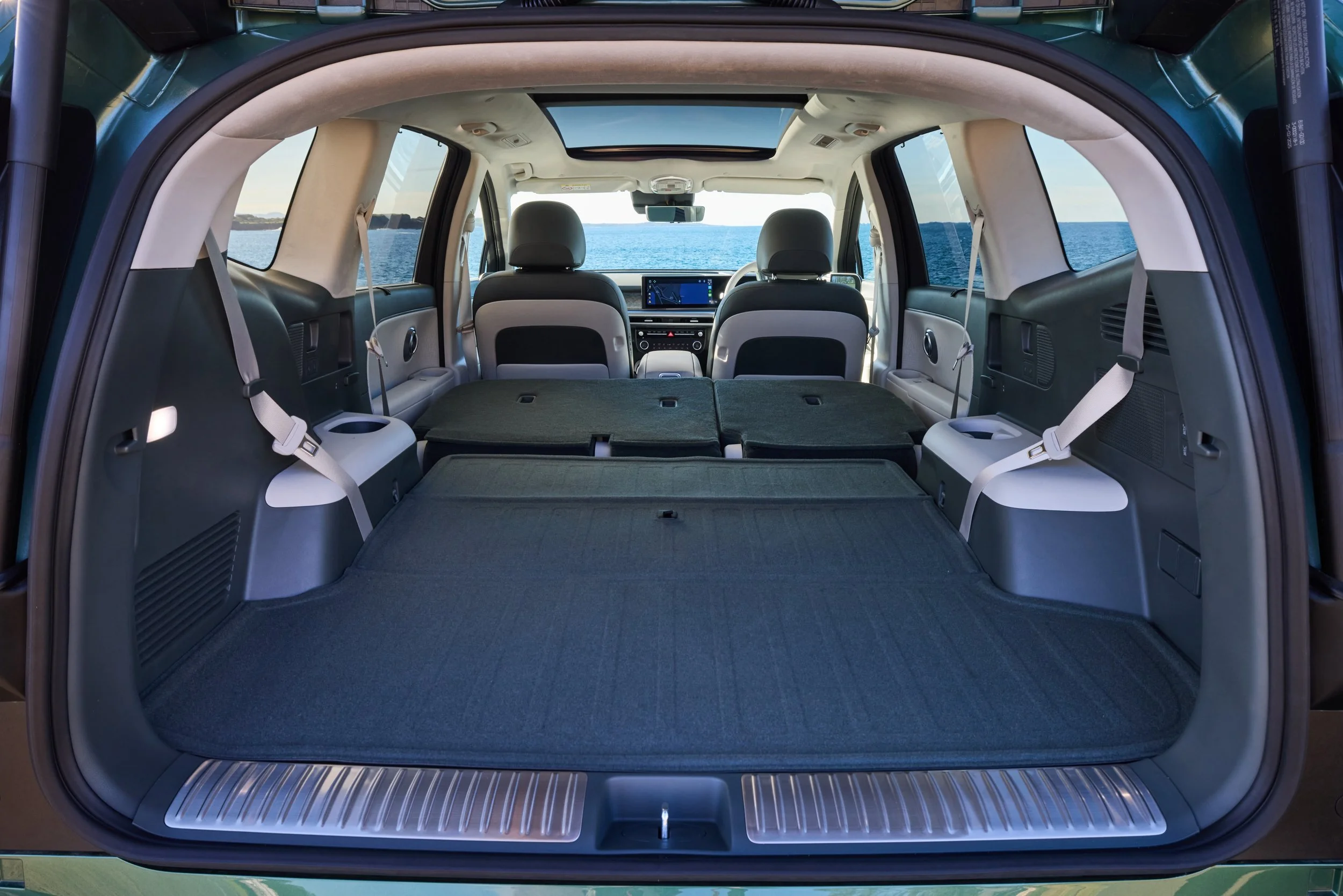
A curved dashboard display combine dual 12.3-inch instrument cluster and infotainment interfaces, and in Calligraphy Nappa leather upholstery, synthetic leather door panels and aluminium garnish promise to create a premium look and feel.
The six-seater configuration gains a ‘Universal Island 2.0 Centre Console’, which slides up to 190mm fore and aft to provide access to storage for both first- and second-row occupants plus ‘relaxation seats’ for second-row passengers, matching those at the front.
Front-row occupants get a claimed 1005mm of headroom and 1052mm of legroom, those in the second row have 996mm of headroom and 1086mm of legroom and third-row passenger space stats include 1000mm of headroom and 813mm of legroom, according to Hyundai.
Claimed cargo capacity remains decent with all three rows occupied, offering 338 litres behind the third row and expanding to 908 litres behind the second row. Additional storage is provided by a front cargo area under the bonnet.
For comparison the EV9 has 333L of boot space with all seats in use and 828L when the third row is folded.
The Ioniq 9 features comprehensive safety equipment including 10 airbags, with a driver’s knee airbag and front centre side airbag designed to prevent secondary collisions between first-row occupants.
Hyundai’s SmartSense technology suite includes second-generation forward collision avoidance, highway driving assist and lane following assist systems along with blind-spot monitoring, blind-spot camera views on the digital cluster, and key-operated remote parking assist.
Ioniq 9 rides on MacPherson strut front and five-link rear suspension with vibration-minimising hydro bushings and a self-levelling system to prevent sagging under heavy loads.
Aside from a slippery exterior design, noise-reduction measures are special tyre tread patterns, noise-absorbing tyre materials, reinforced body panels, sound-damping insulation, three-layered wheel arch padding, tight door seals designed to minimise wind noise and double-laminated soundproof glass plus active road noise-cancelling sound waves generated by the audio system.