
Geely brands on electric ute, van attack
/Farizon and Riddara - two new names from China en route.
BATTERY-pure passenger vehicles are still battling back into the consumer mindset, and the commercial sector has proven resistant - but the distributor for China’s Geely reckons it can spark up interest with two electric-pure offers, a van and a ute.
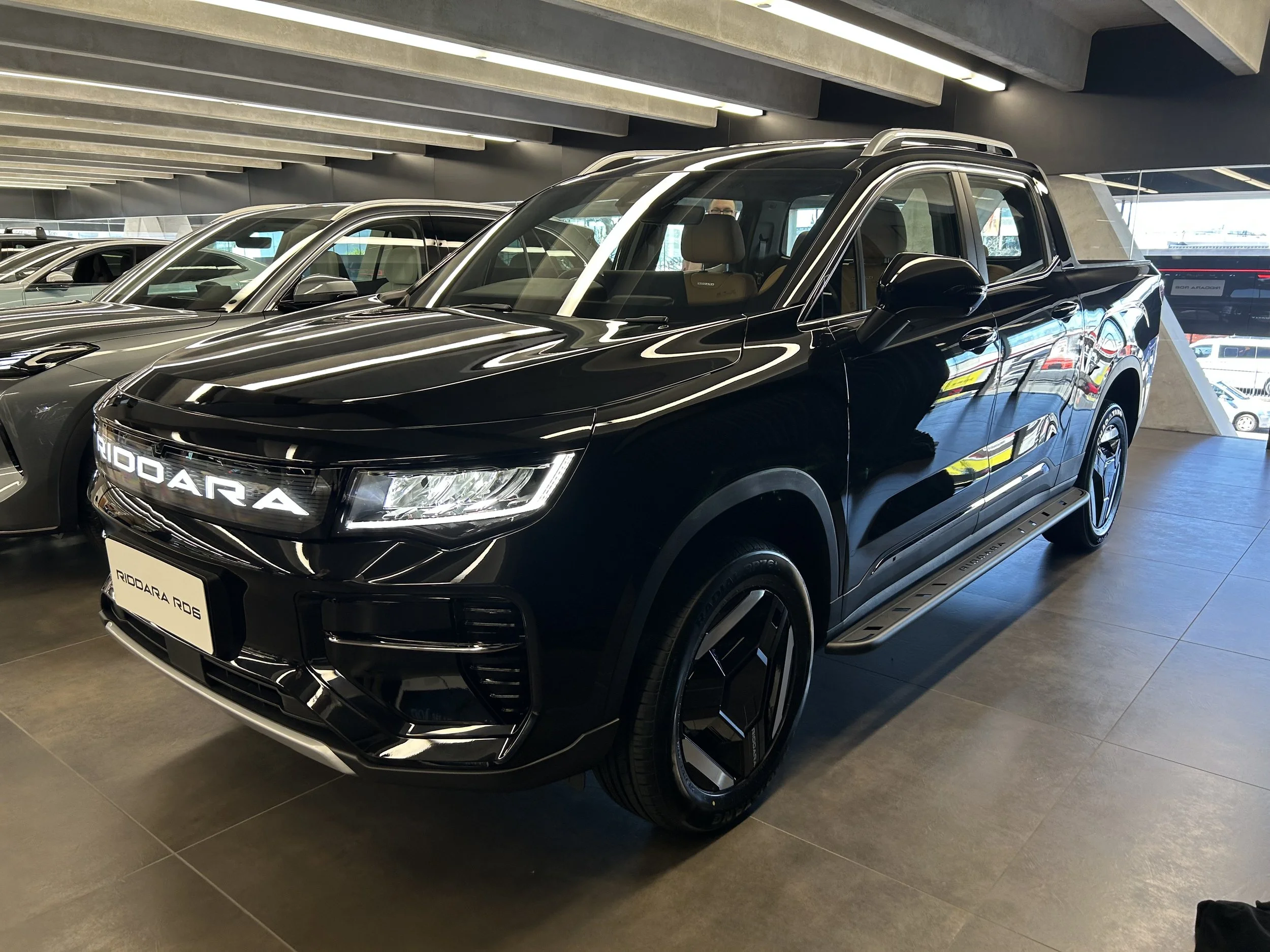
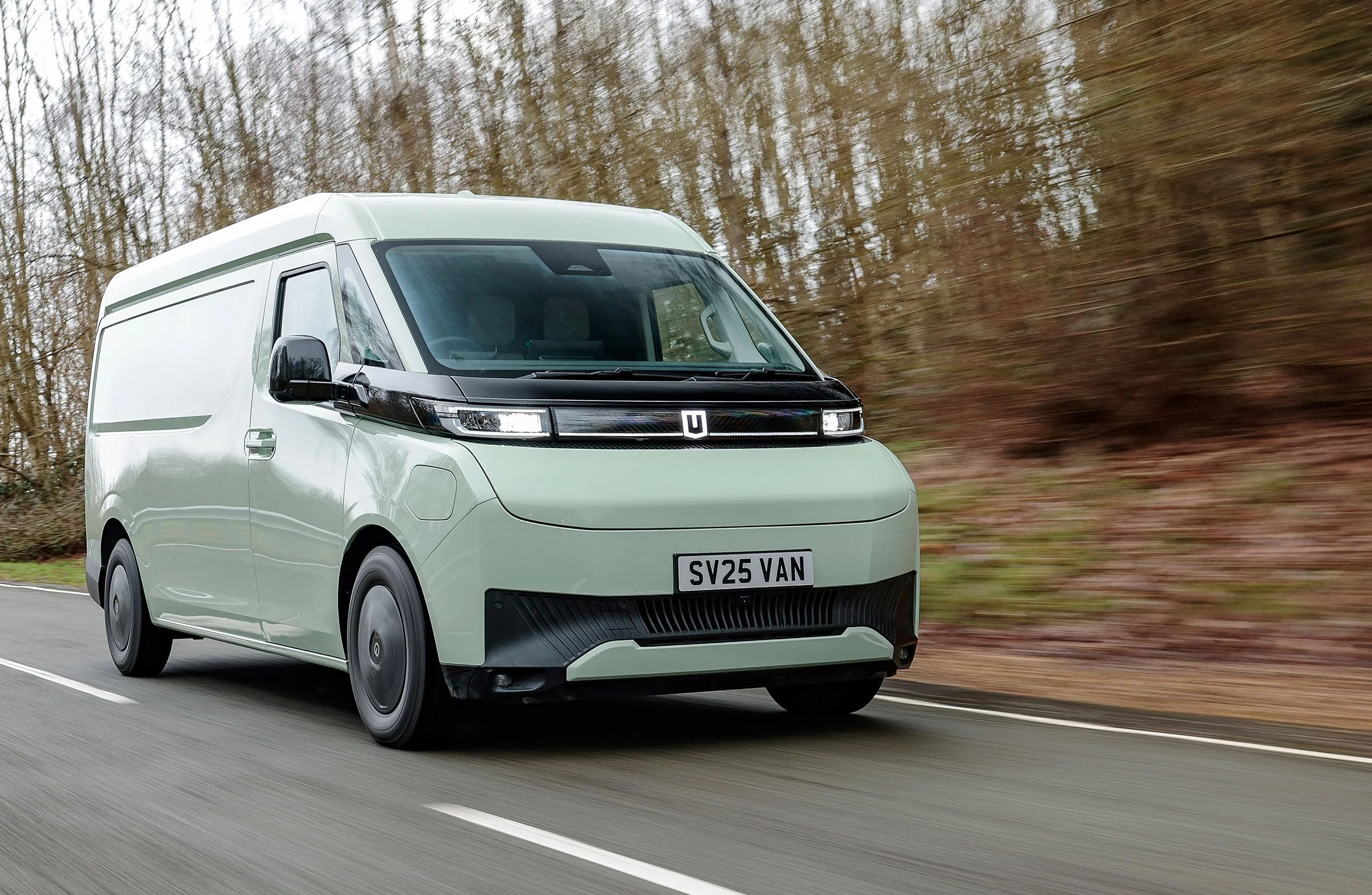
Among announcement from today’s launch of Giltrap Group’s new China-focused NordEast division were the Farizon SV van and a dual cab utility, the Riddara RD6.
The first is intended to show 170kW front-drive forms in 67kWh and 83kWh lithium iron phosphate battery sizes, all with ranges above 300 kilometres, and in several body shapes, sized between five and six metres, from $74,990 to $89,990.
Riddara RD6 is arriving in a $69,990 flagship type that has a 73kWh battery of the same chemistry as the vans, feeding dual motors developing 315kW/595Nm combined.
It promises up to 360 kilometres’ range when measured to WLTP, delivers a 1030kg payload and three tonnes towing and will hit 0-100kmh in 4.5 seconds. That’s a startling quick time for a ute; the current internal combustion champion, the Ford Ranger Raptor V6, does it in 5.8s.
Safety ratings help sell commercial vehicles - the Farizon has a five star from European NCAP - and nothing less than a five star from the Australasian New Car Assessment Programme is often accepted by ute-buying fleets.
RD6 is well provisioned with active and passive safety gear, but seems unlikely to be subjected to audit by our national crash testing agency. Geely brand manager Jordan Haines (below) says. If it isn’t, it will very likely be categorised as ‘untested’, with consequences yet to unravel.
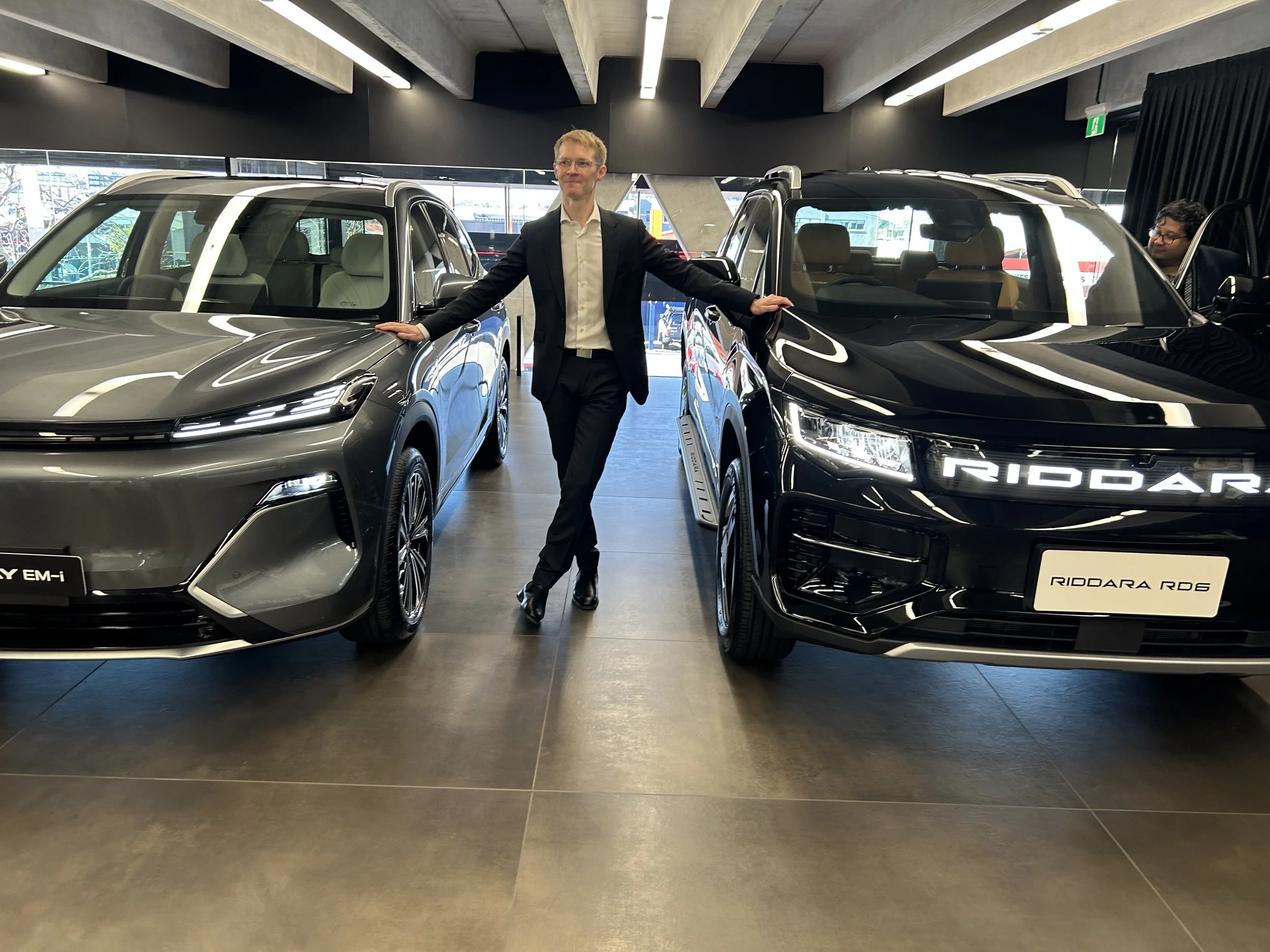
Both makes are owned by Geely, which Giltraps represents, and it’s new NordEast channel sees each model line as being primed to create good business.
The van space is already populated by other battery-wed choices, but two other mainstream aspirants, LDV and Ford, do not appear to have found the going at all easy, respectively with the e-Deliver and electric Transit.
The electric ute sector has belonged purely to the LDV e-T60; another troubled product, but as a rear-driv vehicle, it’s a different thing to the AWD Riderra. Then again, as much as it might logically be seen as a fossil fuel-escaping alternate to the diesel one tonne utes that dominate the NZ mindset, the RD6 takes an alternate path beyond having an obviously different core drivetrain.
A heavy-duty ladder-frame underpinning is common in ute-dom, but not here. The new entrant instead has a car-derived platform, called SEA - for ‘Sustainable Experience Architecture’ - used by other Geely group electric cars.
Though relevant off-road aptitude is claimed, RD6 also lacks locking differentials or low-range capabilities, with reliance instead put on a selection of off-road traction-control modes.
For all that, and despite the display example being on obviously road-tuned rubber, NordEast cites that the Riddara is reasonably rugged.
It has a heavily protected battery - sited under the main cabin, rather than the deck - good ground clearance and a generous 815mm maximum wading ability is decent for any ute. It also has a braked towing capacity of 3000kg.
Conceivably, it might yet be pointed less at the sector-dominating diesels and more at the BYD Shark 6, which costs the same but is a plug-in hybrid with a lighter payload (730kg) and towing ability (2500kg) and the $5000 cheaper GWM Cannon Alpha, also a PHEV, but up to taking 1000kg on the deck and to tow 3500kgs.
All are substantially undercut the Ford Ranger PHEV, which keeps true to the Ranger-standard 3500kg towing, but has a sub-one tonne payload, between 930kg and just 808kg depending on variant.
RD6 also comes out in single motor rear-drive and plug-in hybrid revealed at this year’s Shanghai motor show claims a 1000km driving range in hybrid mode from a 1.5-litre turbo-petrol engine, electric motor and LFP battery.
Haines say the PHEV “is not currently in the portfolio plan”. Same goes for the rear-drive, which gives up 315mm wading depth, 500kg braked towing capacity and has a 63kWh battery.
The all-wheel drive also provisions in a longer range format but with a 86kWh manganese cobalt battery that’s seemingly only for China.
Measuring 5260mm long, 1900mm wide and 1865mm tall, on a 3120mm wheelbase, the RD6 dual cab is similar in size to a Hilux.
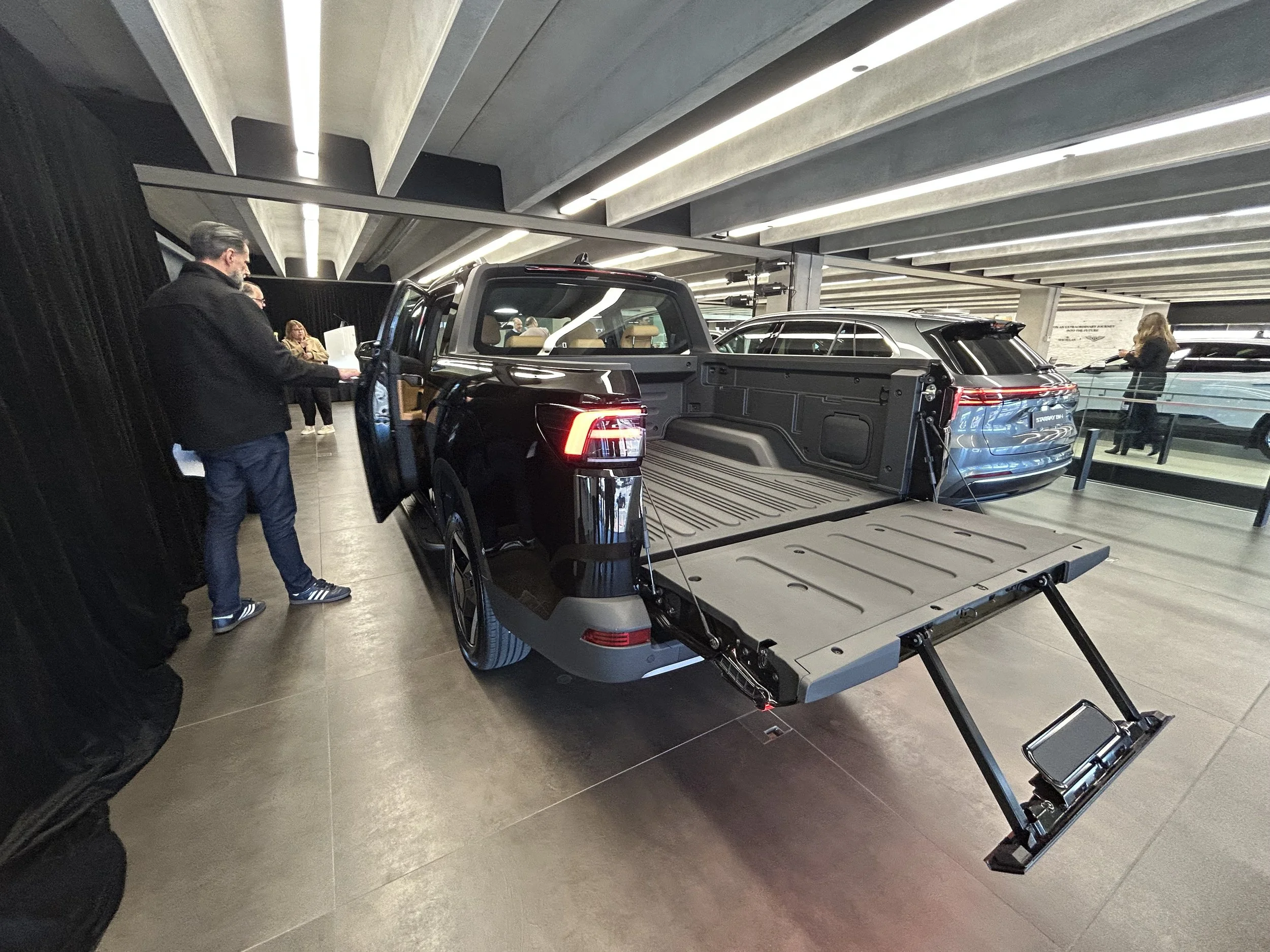
A tub measuring 1525mm long, 1425mm wide and 540mm high is slightly smaller than Toyota’s or Ranger’s. It weighs in at 2205kg rising to 3235kg gross vehicle mass.
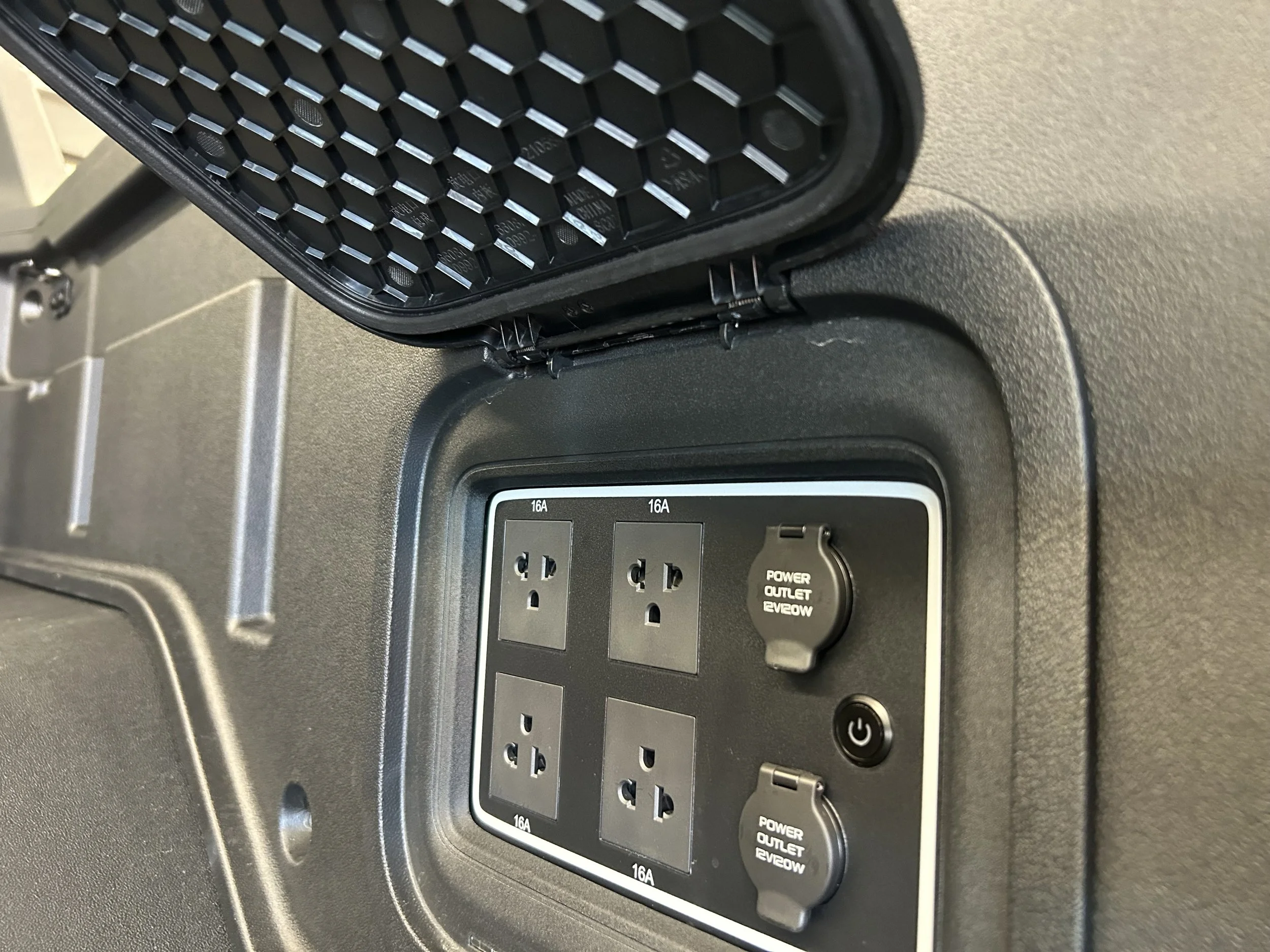
The RD6 has four tie down points and the tray has a rubberised protection. It also features six power sockets - four for three-point plugs (their design will be altered to suit NZ types) and two for round types - and a fold out step coming off the tailgate, designed to take up to 150kg.
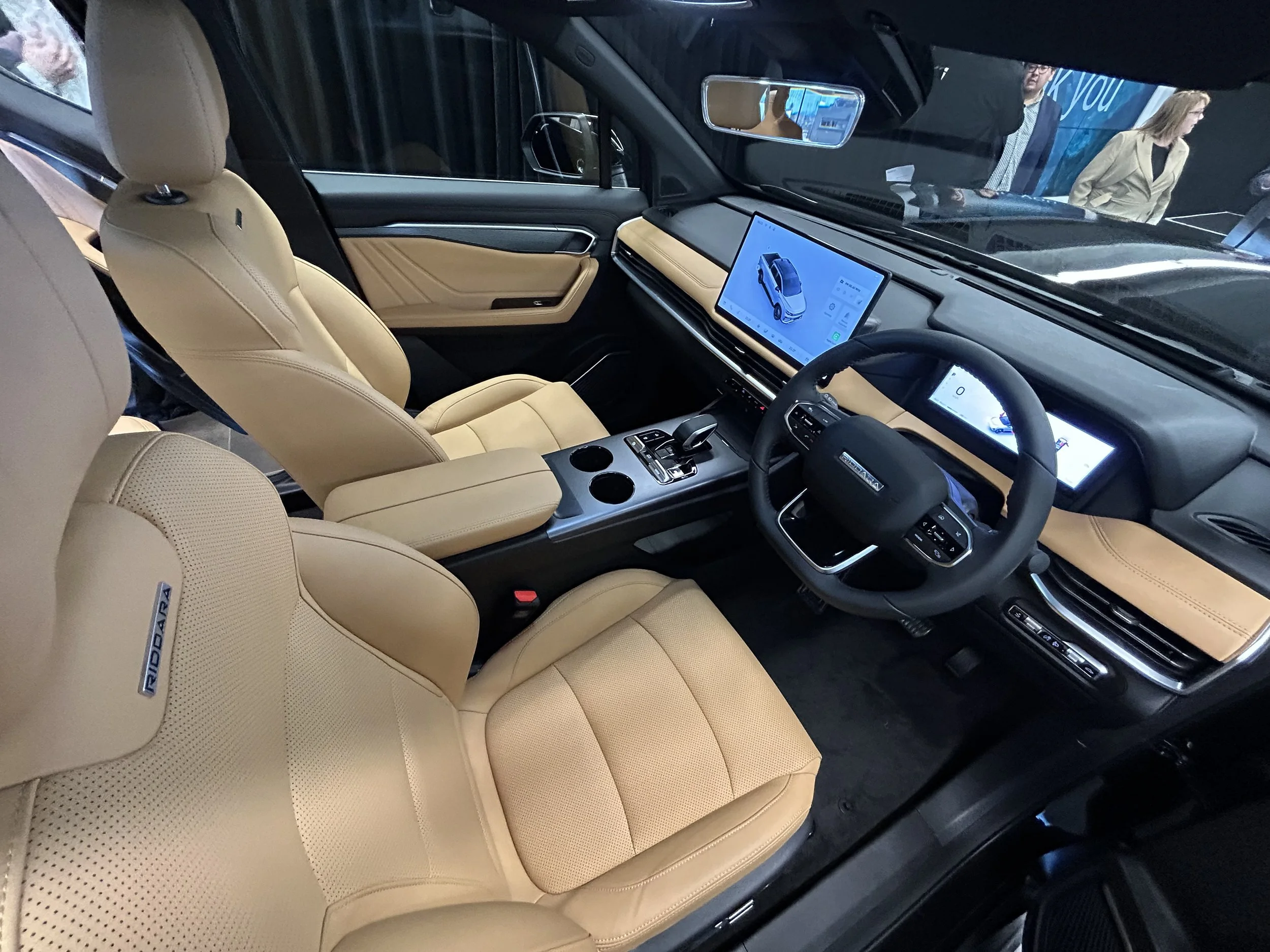
The display vehicle had a 14.6-inch touchscreen with Apple Carplay, a 10.25-inch instrument display, dual-zone climate control, power-adjustable front seats, ventilation for the front and rear seats, and leather-look seats.
Ford’s Transit Custom PHEV and the LDV e-Deliver are cited as closest rivals for the Farizon van, but Haines says neither are directly comparable for differing reasons.
Both appear to have been challenged to find market acceptance; though in the market for less than a year, the LDV has become subject to significant discounting.
However, Haines says there will be a serious pitch to convince that the models from Farizon, which only founded in 2016, are better sorted to change attitudes.
According to overseas data, the 67kWh battery will lend a range of 302km, while the 83kWh battery boosts range this to 234km. The largest version can be specified elsewhere with a 106kWh battery that takes it 550km; a massive leap over anything of that genre currently in our market.
A payload of at least 1035kg, a low load lip of 550mm and up to 13m cubic metres of load volume are cited, but also of note is a payload monitoring system and high comfort features. Air conditioned seats, a heated steering wheel, rear plug sockets and 360deg parking camera are in the kitbag.
Farizon also sell its van in a passenger configuration, called the Big Bee, aimed at the taxi business. It has seating for seven, a power sliding side-door and 630 litres’ luggage capacity. The interior has been designed for passenger convenience, with cupholders, a multi-function storage box and USB Type-C charging ports located in each row.
NordEast is considering expanding Farizon beyond vans, with interest in trialling the make’s H9e light electric truck here, but small electric wagon with a truncated utility deck seems unlikely.