
Electric M3 ‘geared’ for action
/Plenty of stomp, no shortage of dynamic dexterity - as the countdown to release enters the final phase, BMW ups its argument for change.
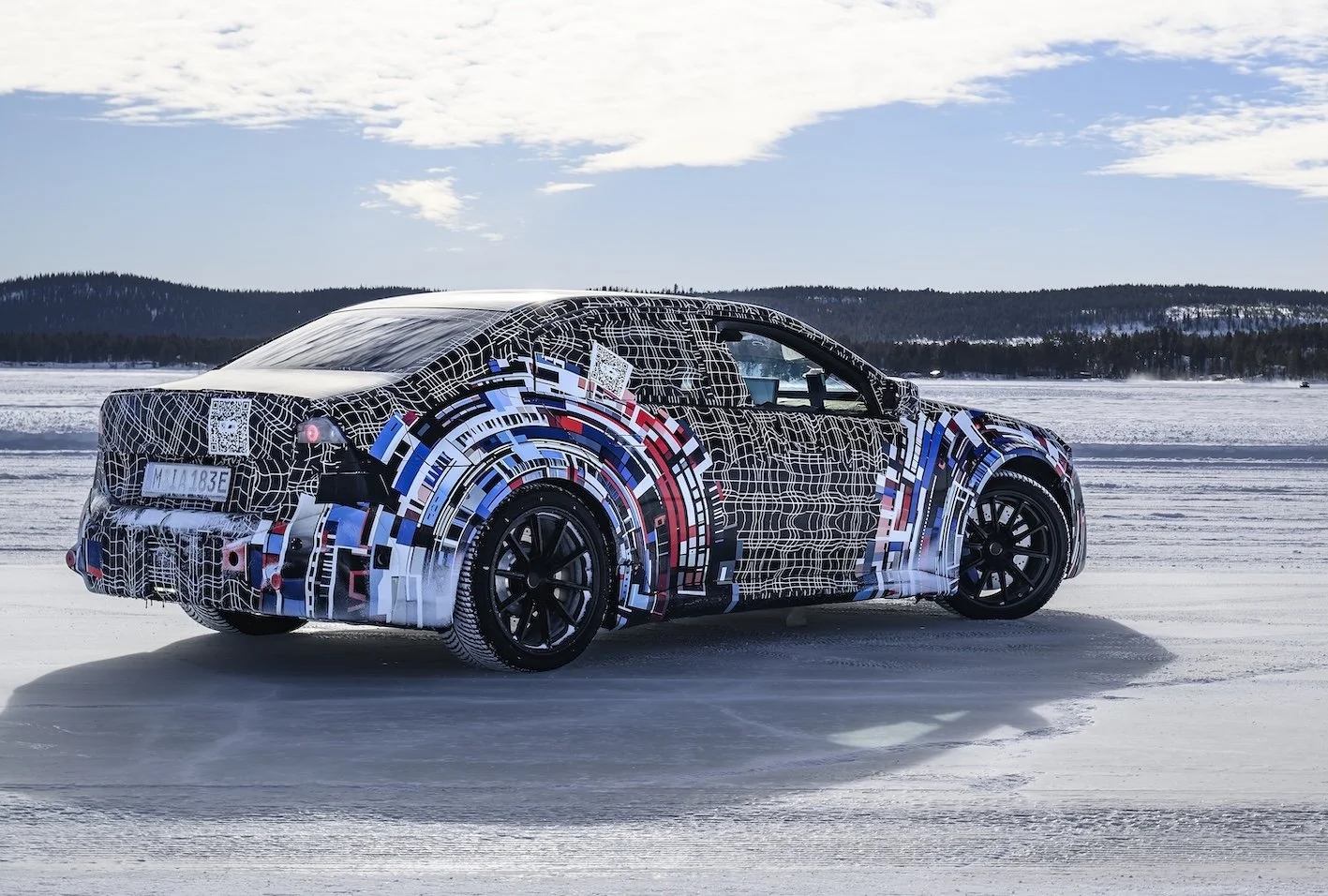
MORE information about the especially big leap electric BMW Munich needs, but is likely unsure about how many of its fan REALLY want, is starting to filter through.
With the full reveal of BMW's hugely important new 'Neue Klasse' all-electric 3 series, the new i3, very close, the make is now putting the spotlight on the battery-ised evolution of a famous sports flagship.
The standard model will be closely related to the iX3 electric sports utility that’s already been unveiled. Will it be the same for the all-electric new M3 EV from the mighty M Division?
A battery-powered M3 is as much a necessity as any other electric BMW.
Emissions targets, the industry being fully aware of need to wean off oil and all that guff. Trump laughs, but he’s a clown. The world needs to take this seriously.
But the M3 (and M4) in petrol is an especially hard act to follow. The current car is probably the best sports product BMW builds.
Munich knows what’s at stake. Look at the Mercedes-AMG C63. It isn’t even fully electric, but instead a halfway house plug-in hybrid matching electrics with a fantastically feral four-cylinder. Technically stunning. A seriously fast product. But a total dud in the showroom. Which is why it’s going back to V8.
Being wholly battery-dedicated makes BMW’s proposal a much bigger leap still. Will it make emotional impact? That’s up to us to decide, but by now it’s apparent electrics can touch the heart.
Will it come across as being a be-all for sophistication? That’s the story BMW and its skunkworks are starting to relate now, with an information unload synching with release of the car undergoing cold weather testing.
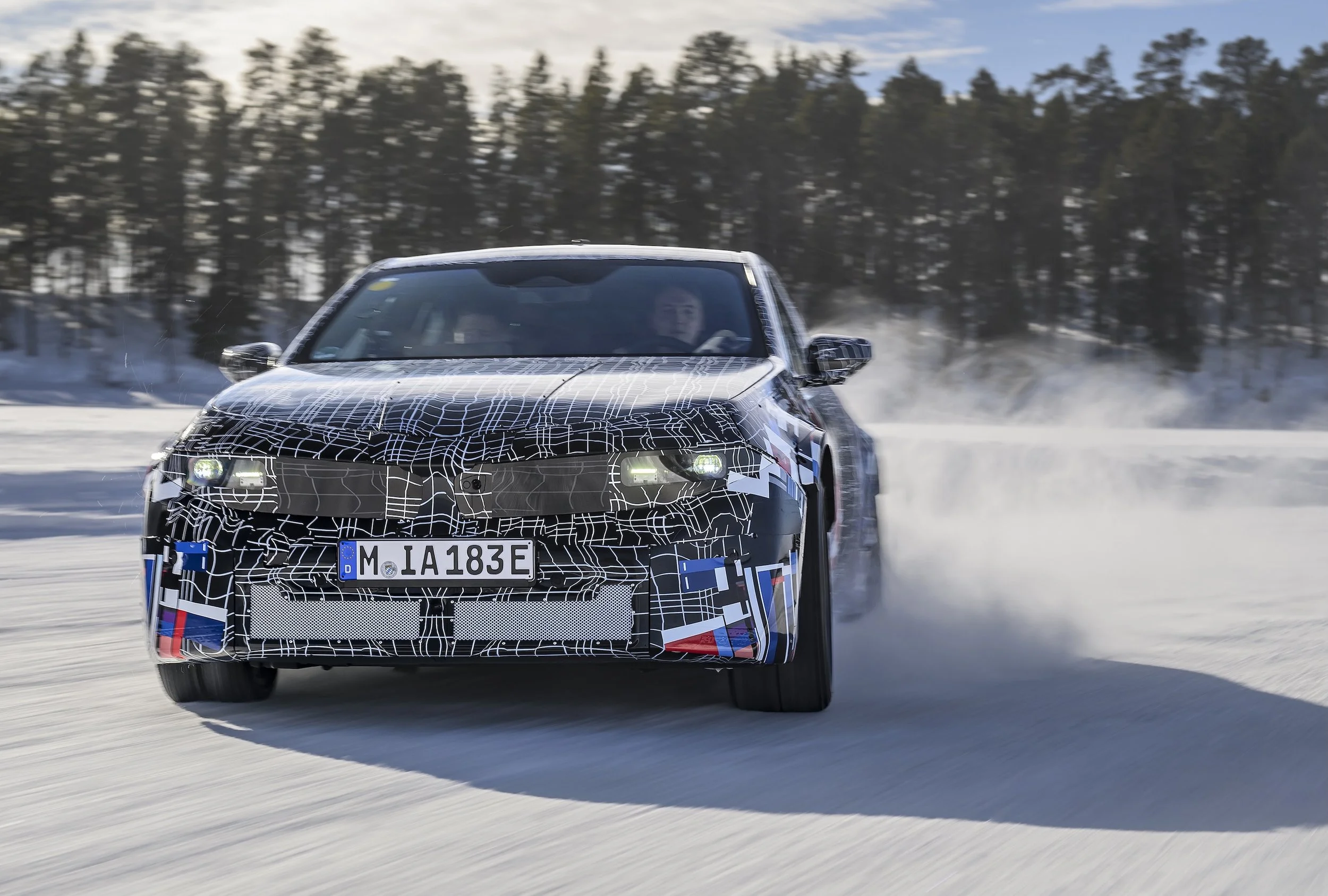
“Born on the racetrack. Made for the streets. Core of a passionate community”. That’s the tagline for the all-battery M3 EV/ (or i3M, or Mi3).
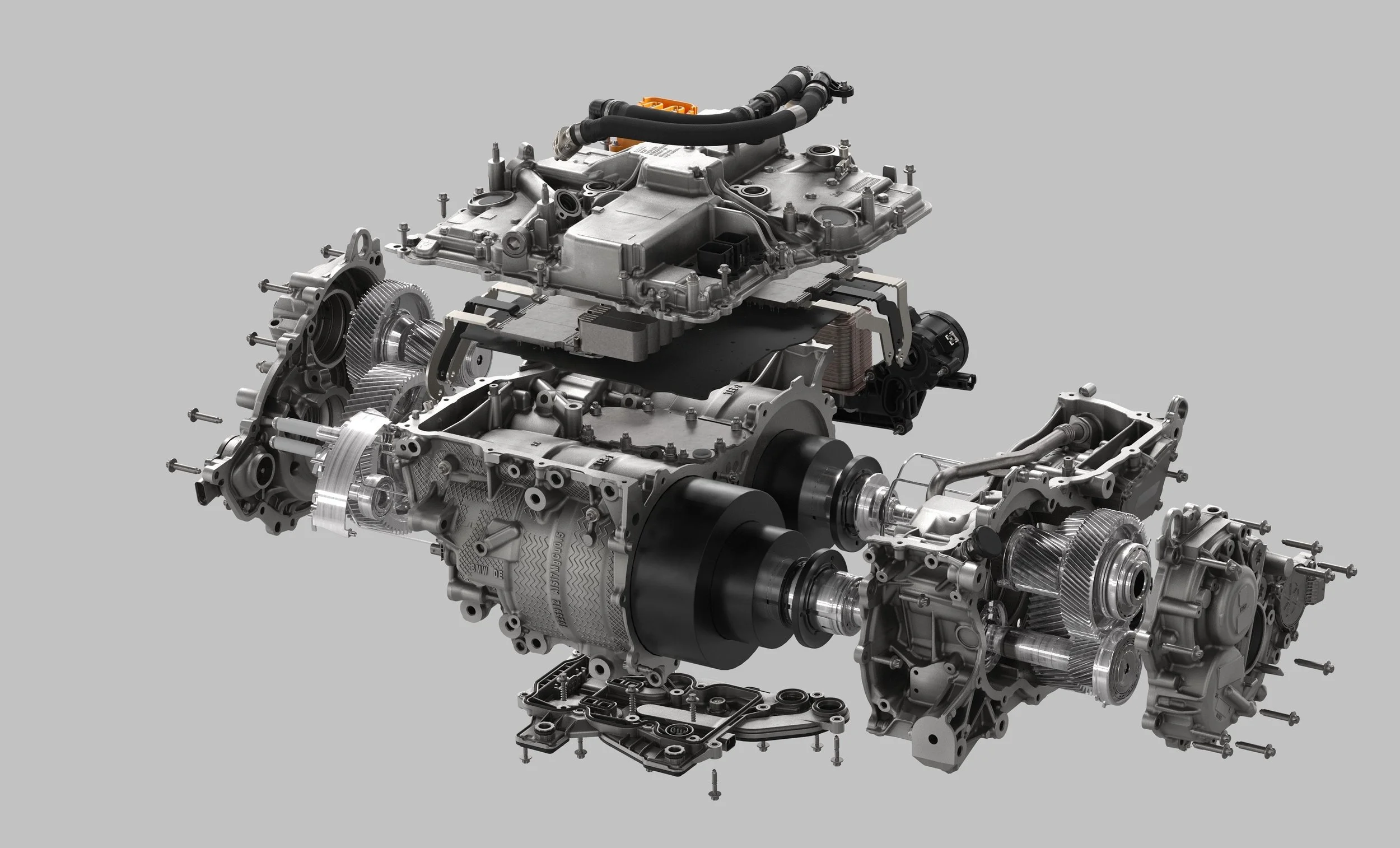
The car is breaking new ground by using no fewer than four electric motors, mounted within each wheel, so as to optimise shuffling of torque and power between each corner of the car.
Plus, it will have gear shifts…
Well, in the same way the Hyundai Ioniq 5 N - another stunner that’s not selling - does.
Most EVs just use a single reduction gear, so have two-speed gearboxes. Either way, they don’t emulate shift feel. But the M3 will give the impression, just as the 5 N does, in the same way.
BMW is introducing a specific programme into the M3's control systems that allows its electric motors to deliver power in a series of rising peaks, with a tiny pause after each peak that feels as if the gearbox is shifting up or down.
The idea is to make the electric M3 feel more 'natural' in how it delivers its performance, if you're used to a high-performance petrol engine.
The M3's control systems are said to be a developed form of those found in the iX3 and i3, which use four so-called 'superbrain' electronic control units, each one focused on a specific element of the car or its batteries and motors. The most vital is the 'Heart Of Joy' controller, a silly name for a install with a serious purpose.
In the iX3, it combines all of the car's electronic systems from steering to acceleration to braking and ties them together to create an ‘analogue' feel. Same for the M3 EV, but even more driver-satisfying.
Four in-wheel motors mean not only can it individually send power to each wheel, you also individually brake each wheel, via the regenerative braking capacity. That should assist stability and agility. Overseas’ commentators also point out it also means the car will be able to recover energy from braking right up to its dynamic limit.
The M3 EV will also go big on lightweight materials, especially a type of carbon fibre made from more environmentally friendly, natural, recyclable fibres, so as to keep its weight to a minimum.
BMW isn’t talking performance yet, but previous concept versions have had a reputed four-figure horsepower output, which would suggest a 0-100kmh time of under 3.0 seconds.
The battery capacity is still unknown, but conjecture is it will use a modified version of the 108.7kWh nickel-manganese-cobalt battery from the iX3 and i3. In those cars, the claimed range is at least 805km and up to 900km. Thought is the M3 EV is likely to restrict to 700-750km on a full charge. But that’s way more than a petrol type will furnish, even when driven with care.
The information share out of Munich also includes comment, in this instance from Franciscus van Meel, managing director of BMW M.
“The next generation of models are set to establish a new benchmark in the high-performance vehicle segment,” he has shared.
“With the latest generation of Neue Klasse technology, we are taking the BMW M driving experience to a new level and will inspire our customers with outstanding, racetrack-ready driving dynamics for everyday use.”