
Who wants to live forever? Answer: Your EV
/Battery degradation needn’t be a concern for electric car drivers, according to a new study into lifespans.
AS an electric vehicle user, how often do you hear this from those of a dubious nature?
“It’s all very well now, but those batteries are surely going to be toast in a few years’ time. What happens then?”
Well, research shows the fallacy of that fear. To point of providing very firm evidence that ‘what happens then’ is highly unlikely to happen at all.
Research into longevity of the power units for motor vehicles remains batteries that power electric vehicles aren’t the same as the ones you have to bung into a torch after a couple of weeks’ use. They’re also not like the lithium ion types you might use for electric power tools.
No, these are far more robust.
True, concerns - heard since the introduction of the first electric cars - that batteries will one day become too weak for their initial purpose is not entirely irrational.
Those used by the world-breaking Nissan Leaf, are nowhere near as good as the latest, largely because chemistries were more rudimentary then and also because the packs then were passively cooled, and within a metal box that was more or less sealed from external air flow.
Once makers worked out how to get a fan blowing air into the pack, that helped. The breakthrough, now common, is use of liquid-cooling systems, which typically run a water and glycol mixture through chilling plates under pouch cells or through ribbon tubes.
So advancement in tech has helped. Yet, in saying this, you only have to notice how many Leafs from the start of the 2010 period that are still on the move to see that the most rudimentary systems are holding up pretty well, all things considered.
And even when Nissan batteries become too weak for cars, they still hold plenty of zap. There’s good reason why they are sought after for a second life as a power wall.
Anyway, for those who find themselves always defending EVs on this subject, new research from vehicle telematics experts GeoTab, a Canadian specialist with global involvement - closest office to here seems to be in Australia - will be highly useful.
GeoTab has been keeping an eye on battery lifespans for some years now, and its research in 2024 showed that batteries were degrading, on average, at a rate of 1.8 percent per year.
The latest update to that research shows that the figure now stands at 2.3 percent, which is - obviously - worse, but needs to be taken in context.
It means that a small EV will lose around 10km of overall range each year. A car with a larger battery, would lose 14km, but that is from a total claimed range of 565km.
Is that bad? Actually, no. It’s actually quite good, and the data is robust as it comes from 22,700 electric cars, across 21 makes and models.
It's also important to remember that other research, such as that carried out by Germany's ADAC organisation, there equivalent of our Automobile Association, shows that battery control systems can be upgraded over the air.
ADAC put a Volkswagen ID.3 through four years and almost 200,000km of abuse, including lots of fast charging, and inclusive of software updates that liberated a little extra usable battery capacity, the net degradation was just two pe cent over four years.
“EV battery health remains strong, even as vehicles are charged faster and deployed more intensively,” cites Charlotte Argue, Geotab’s senior manager of Sustainable Mobility.
“Our latest data shows that batteries are still lasting well beyond the replacement cycles most fleets plan for. What has changed is that charging behaviour now plays a much bigger role in how quickly batteries age, giving operators an opportunity to manage long-term risk through smart charging strategies.”
If you’re wondering can you might be able to do to protect your battery?
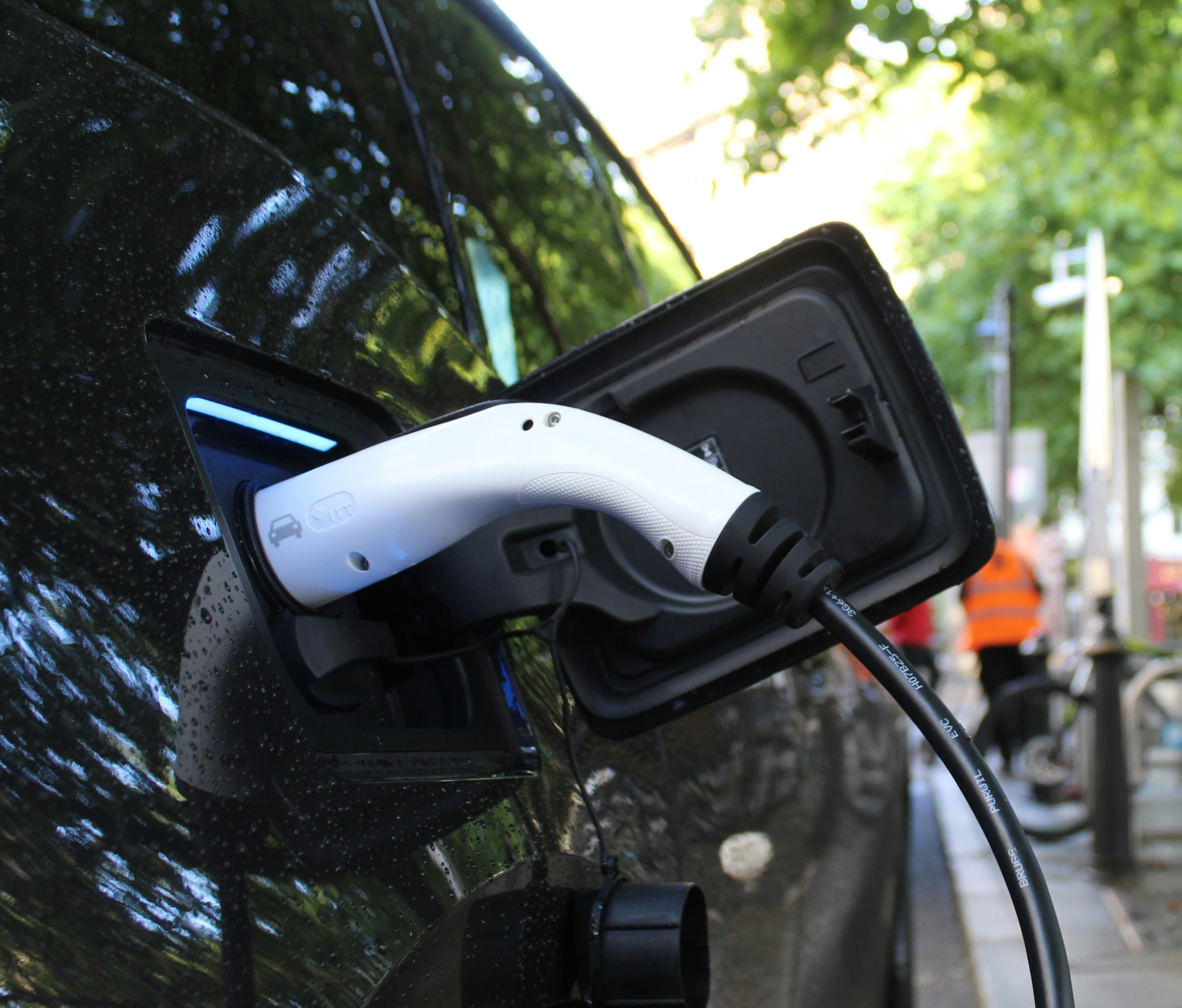
The answer, according to GeoTab, is to charge slowly most of the time.
As much as fast DC chargers are useful, GeoTab's numbers show that regularly fast-charging above 100kW of DC power can accelerate battery degradation to around three percent per year.
If you stick to primarily slower AC charging - and this is where having a home charger really comes into play - then average degradation falls to just 1.5 percent per year.
GeoTab's work showed that climate has a smaller independent effect. Vehicles operating in hotter regions degraded around 0.4 percent faster per year than those in mild climates. NZ seems to be in a sweet spot, all the same. Our seasonal extremes might cause grumbling, but in international terms, they’re not really extreme at all.
The research also showed that it's fine to charge your battery to full on the regular, as long as you're using the power up. Degradation only increases meaningfully if you're frequently leaving the battery fully charged or almost totally depleted.
Use it lose it? Actually, use it … and don’t worry about that. High mileage accelerates battery ageing a little, but only by 0.8 percent compared to vehicles with lower mileage.
“For fleets, the focus should be balance,” said Argue. “Using the lowest charging power that still meets operational needs can make a measurable difference to long-term battery health without limiting vehicle availability.”