
Pajero priced to attack market leaders
/Two seven seater variants signed for December availability.
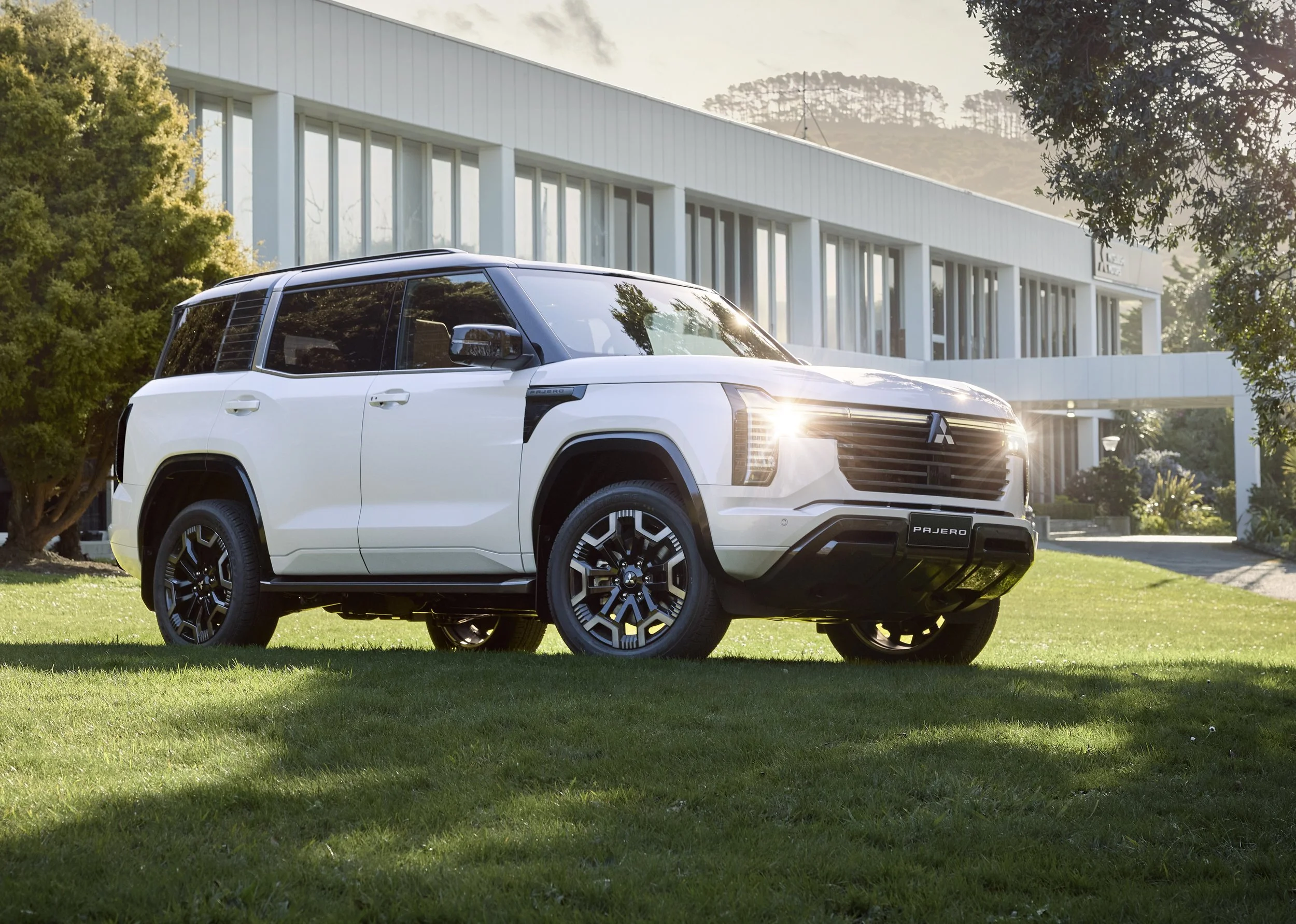
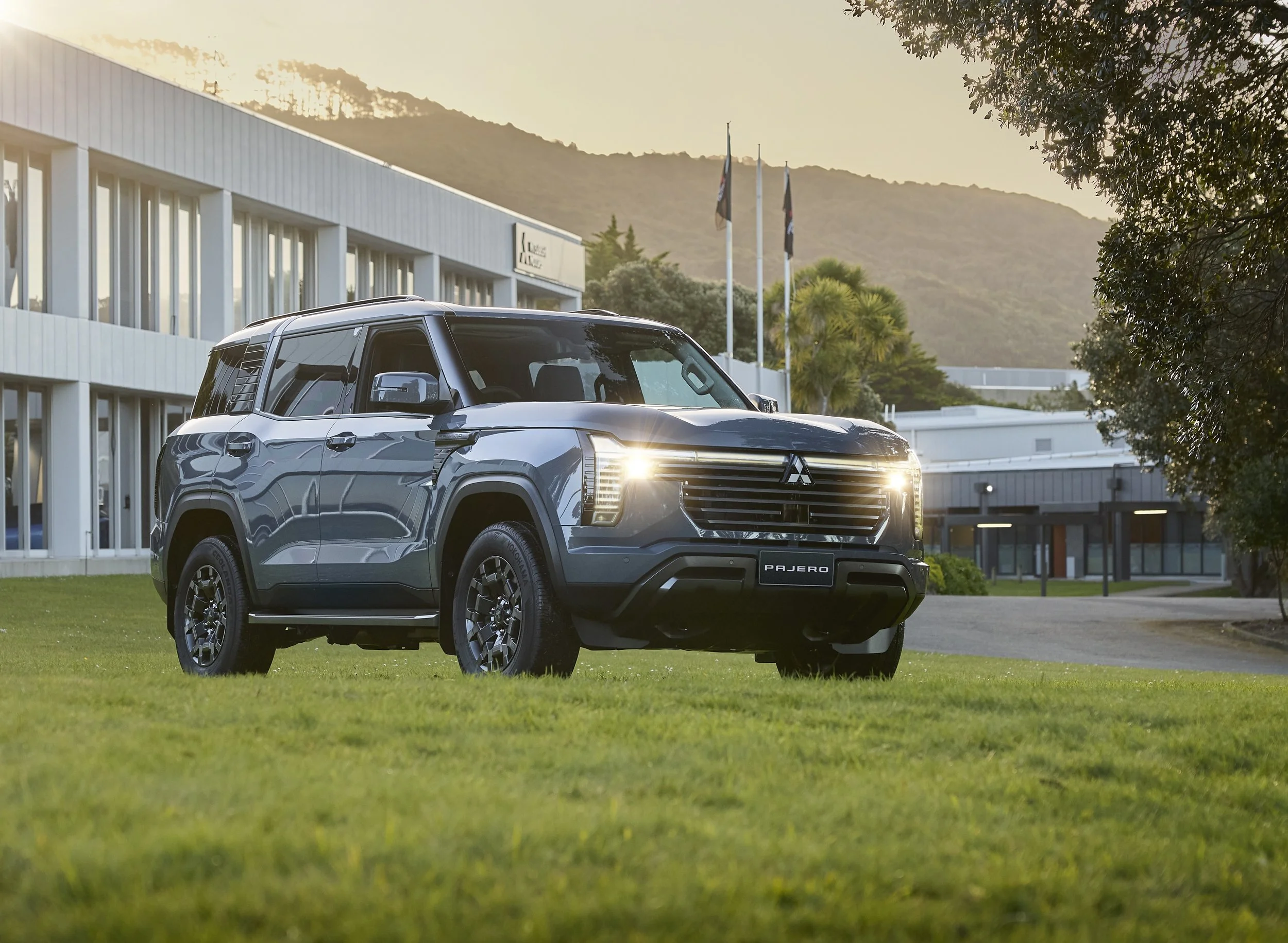
ALL versions of the Toyota Prado and all but the entry four-cylinder Ford Everest are under direct pricing attack from Mitsubishi’s incoming equivalent, the new Pajero.
A pair of seven seaters with the 150kW/480Nm 2.4-litre turbodiesel, in $79,990 VRX and $86,990 Exceed specifications, will present in the market from December, with Mitsubishi Motors New Zealand saying it hs already received strong customer interest.
Like the elderly Pajero Sport, the new product is based off the Triton, so has a ladder frame chassis, but is derived from the latest generation of that utility, so presents as a technology and design step up, with nothing shared, though both have eight-speed automatics.
At 4920mm long, 1925mm wide and 1910mm high, the new Pajero is 95mm longer, 110mm wider, and sits 75mm taller than the Pajero Sport, with the wheelbase having grown by 70mm to 2870mm.
For context, the Toyota Prado - which in seven chair form starts at $85,490 in GXL trim then steps through $95,490 VX and $105,490 Adventure (with five steeper versions $1000 less) - is 4990mm long, 1980mm wide and 1935mm tall. The seven seater Ford Everest that represents in four-cylinder Active for $68,990 and then goes into V6 formats starting with a Sport at $85,990 is 4940mm long, 1923mm wide, and 1841mm tall.
Pajero’s engine is a reworked version of Triton’s with a variable-geometry turbocharger, water-cooled intercooler and dual-loop EGR, so makes 10Nm more torque. It requires AdBlue, has an auto stop-start system and is the first Mitsubishi engine to meet Euro 6d emissions standards.
The auto is also updated on the type in Pajero Sport, with a wider ratio spread and engine ‘blipping’ on downshifts for smoother shifts.
Mitsubishi’s long-serving Super Select II 4x4 system offers 2H, 4H, 4HLc and 4LLc modes. It is abetted by Super-All Wheel Control and Active Yaw Control across seven drive modes: Eco, Normal, Gravel, Snow, Mud, Sand and Rock.
The Pajero nameplate dates back to 1982 and was discontinued for international distribution in 2021, by which point it was truly ancient, save that it has a monocoque design.
Mitsubishi opted for a ladder frame over a monocoque in the latest because it says it offers greater strength and durability for customers using the vehicle in tough conditions and is better for towing.
The front section of that specific underpinning and the front floor are shared with the Triton, but most other components are specifically for Pajero.
The frame is significantly stiffer than the Pajero Sport’s and pairs a front double-wishbone set-up with a five-link rigid rear axle and long-travel suspension for off-road comfort.
Pajero is rated at 3.5 tonnes braked towing, with Trailer Load Assist to help stabilise the load, plus a 300kg static roof-load rating for rooftop tents and racks.
Mitsubishi says the off-road ability has been enhanced through wider front and rear tracks of 1630mm (compared to the Pajero Sport’s 1520mm front and 1515mm rear figures), a greater ground clearance of 230mm (up 12mm).
Approach and departure angles have risen to 30.4 degrees (from 30 degrees) and 25.8 degrees (from 24.2 degrees) at the front and rear. The break over angle has dropped from 23.1 degrees to 22.6 degrees.
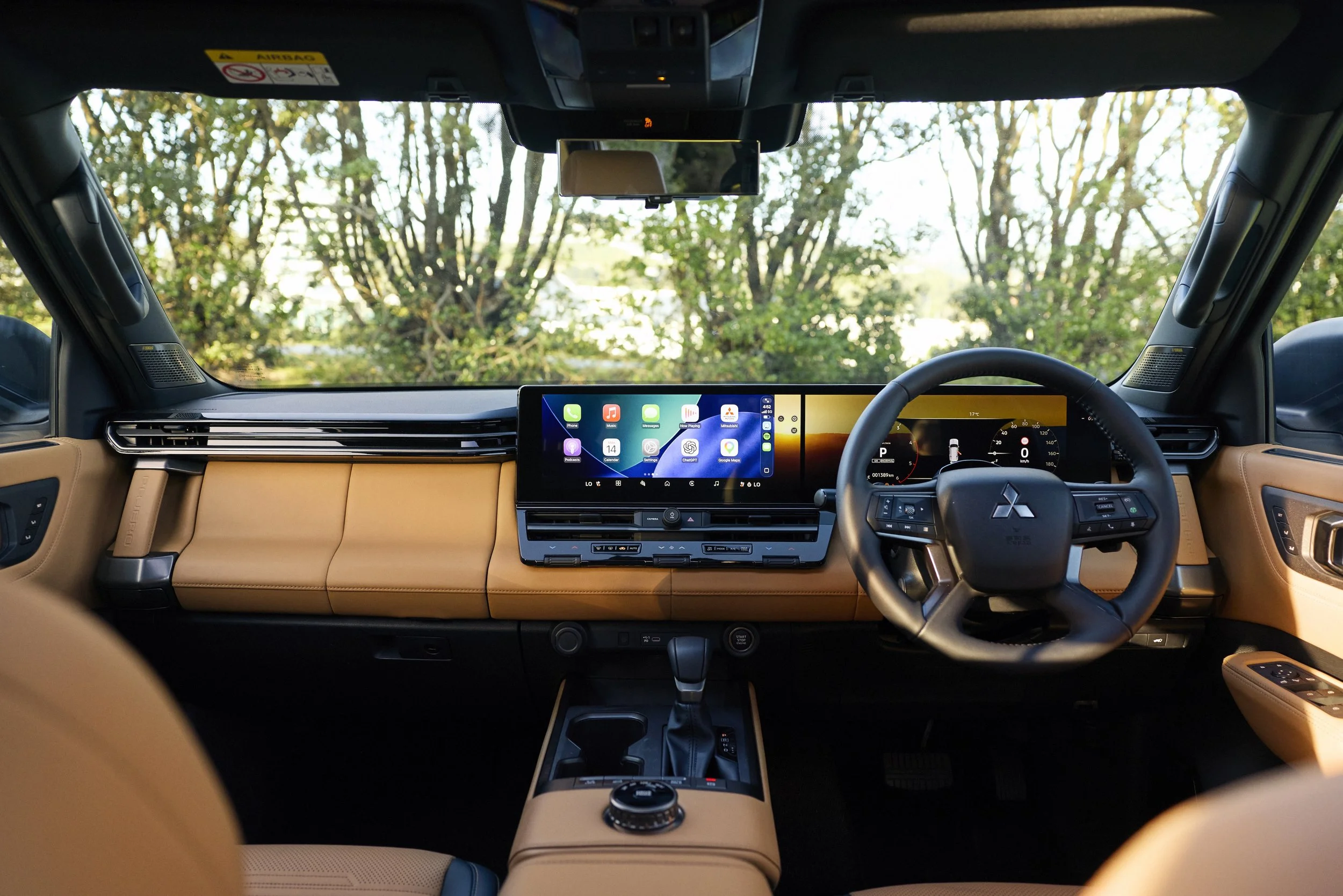
When the model announced internationally last month, Mitsubishi Japan made a big noise about it going bold with a camel interior hue, including seat trim. Here, though, the leather is in black.
VRX has a 12.3-inch Smartphone-link Display Audio system and matching 12.3-inch digital driver display.
Standard equipment includes heated first- and second-row seats, power-adjustable front seats, three-zone automatic climate control, heated steering wheel, wireless smartphone charging, six USB-C ports, digital rear-view mirror, electric tailgate and MI-PILOT driver assistance technology.
Exterior specification includes 18-inch dark grey machined alloy wheels, black roof rails, LED headlights, daytime running lights and fog lights, dark satin side steps and skid plate.
The Exceed has dual 14.3-inch displays, camel and black leather trim upholstery and interior trim, ventilated front seats, driver and passenger memory functions, an electric tilt and telescopic steering wheel with memory, centre-console cooler box and 12-speaker Dynamic Sound Yamaha Ultimate audio system.
It runs 20-inch alloy wheels and has adaptive LED headlights, black door mirrors and wheel-arch mouldings, dark grey side steps and additional dark exterior detailing.
Availability ties with local release of MMNZ’s electric car, the ASX VR-e and the Outlander Sport.