
BAIC big boss enthusiastic about NZ push
/Group chairman vows full support; including potentially even more choices than on distributor’s wish list.
INTENT to cement a place in the market for the BAIC brand has been enthusiastically supported by head office in China - to point it might have committed more models than the local distributor had originally considered.
Desire to see Rick Armstrong’s Auto Distributors NZ operation do well with this brand and at least one of its affiliates, ArcFox, is such that Beijing Automotive Group’s big boss came to New Zealand for the February 27 release of the two sports utilities that kick off the push.
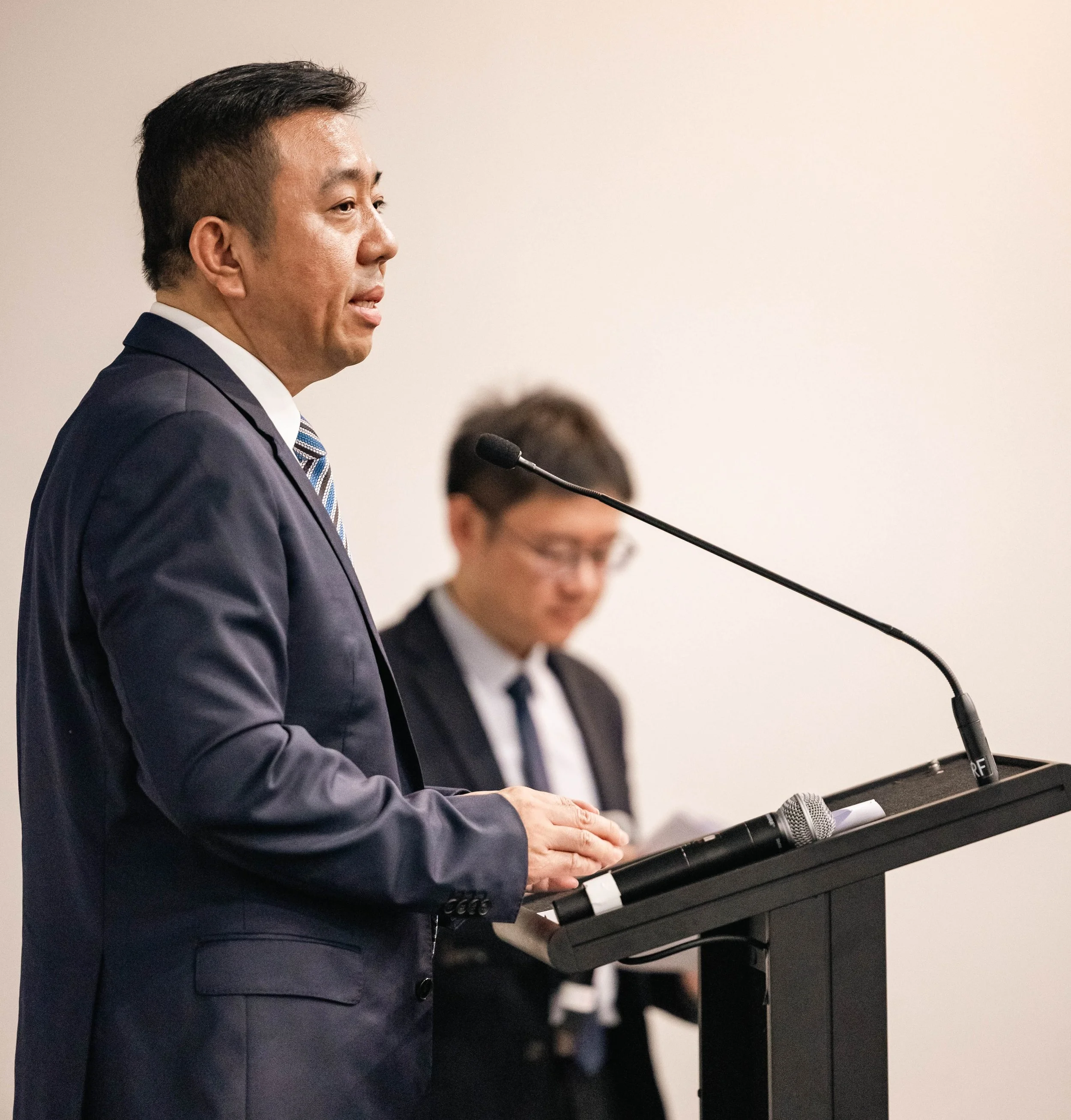
In speaking to media and other guests, group chairman Wang Jianhui (below) made clear his brand is enthusiastic about giving Auto Distributors full support to gain significant traction in a regional right hand drive debut.
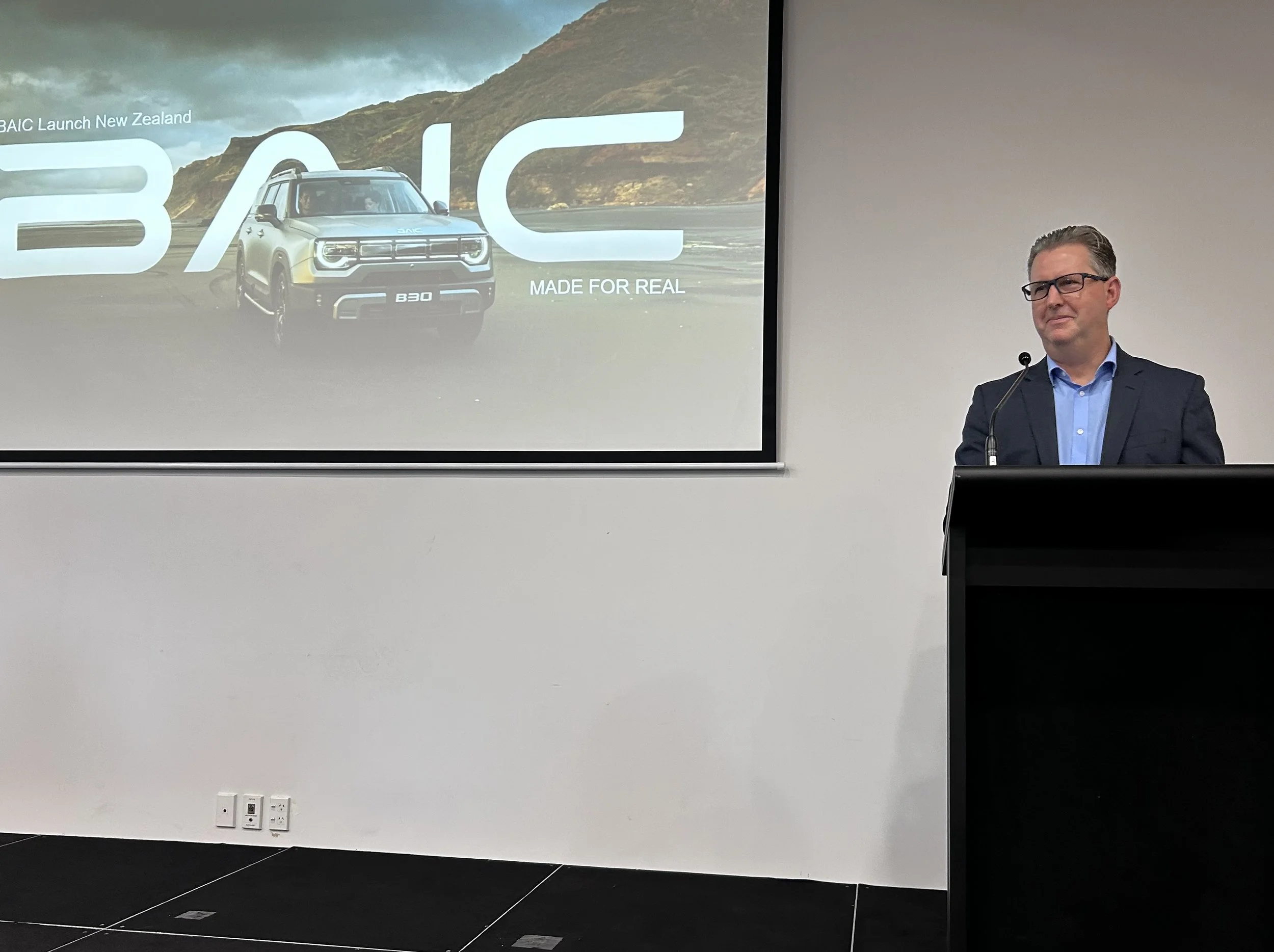
Wang has promised “at least” five new models additional to those already here will be available to New Zealand within two years from .
ADL chief executive Simon Rutherford (above) meanwhile, has spoken of potential for up to that many additional products, including two out of ArcFox, the electric/electrified car specialist in the family.
From them? An electric model and a range-extender electric, with timing estimated for either late 2026 or the first quarter of 2027, to stand apart from BAIC’s hybrid and internal combustion engine launch strategy, but again presenting in SUV and crossover format.
ArcFox has already been integrated into dealer and distribution planning as a straightforward addition alongside the newly launched BAIC operation. It’s been held back because, says Rutherford, “we’re trying to do is establish BAIC first … but it (Arcfox) is an easy tuck-in alongside BAIC.”
Some are laying bets on the Arcfox Alpha T5 mid-size SUV, which builds in electric and range-extender configurations, both with handy battery sizes and ranges. An Alpha S5 sedan might also seem easy.
Another incoming prospect is a ute, ostensibly from a specialist in commercial light to heavy trucks, already familiar to Kiwis.
Foton already has a sales channel here, under a different distributor, and there’s no talk of that changing. Rather the BAIC edition would be a rebadge of a current product or a next-gen replacement, Rutherford says.
“It’s an unknown right now. The short cut route is to use the Foton donor platform … but it’s not decided. They are talking about an all-new BAIC one as well.
“Foton has a distributor already. They are going to keep that, including the commercial part of it.
“Whether there will be product that can leverage that base capability, but branded as BAIC? We don’t have the full answer on that year. But we’re not doing Foton.
A “key want” is the B40, a ladder-frame four-wheel-drive with locking front, centre and rear differentials.
“It’s not confirmed yet and we’d love to have it. They (BAIC) are currently going through a full review of they (model) cycle plan … the plan is basically going to be leaning more into the off-roady space and then ArcFox.
“There are a number of baby, mid-sized and larger options in the (BAIC) SUV space.”
For now, focus is on two 1.5-litre cars now on the ground and good to go.
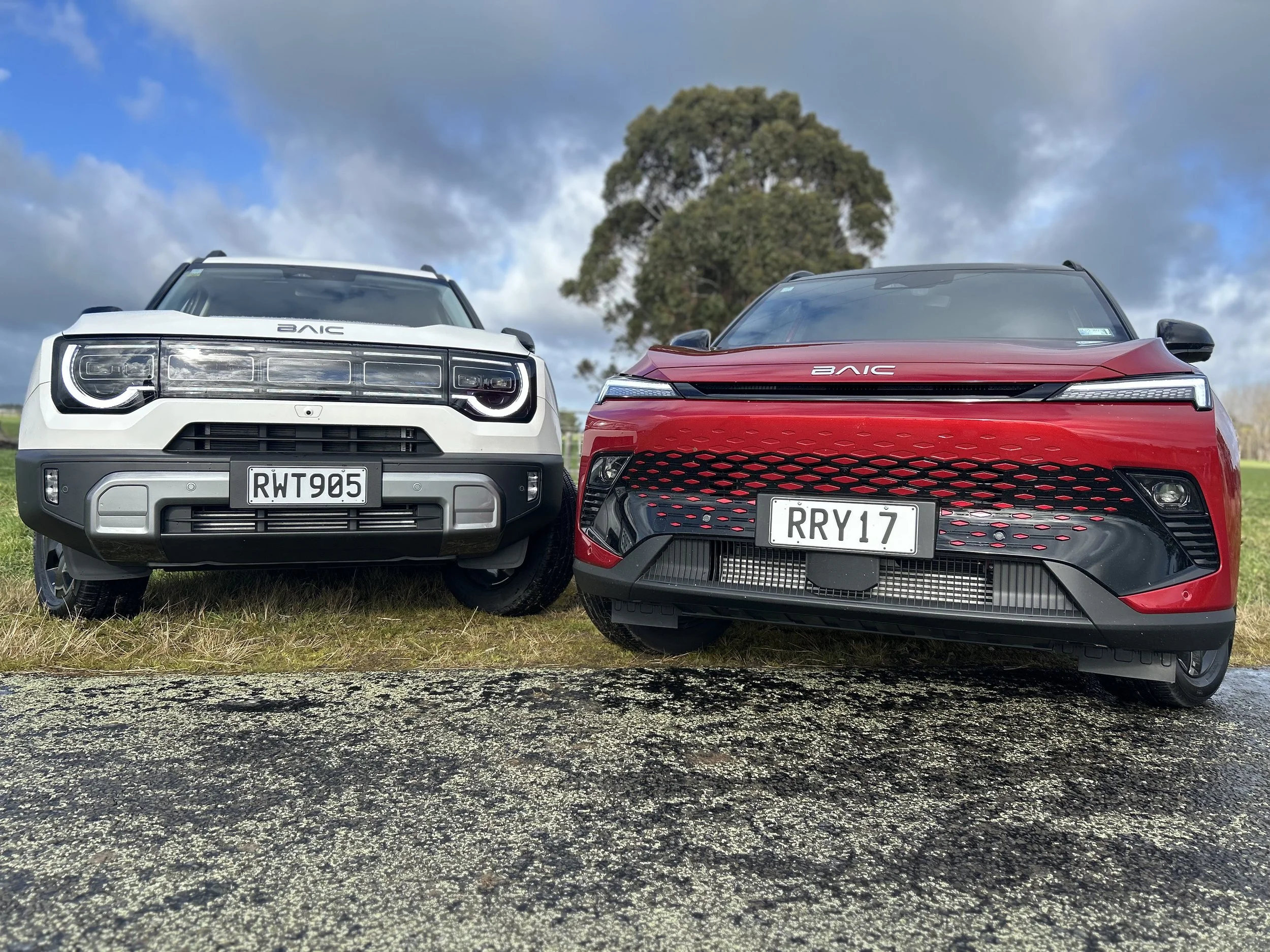
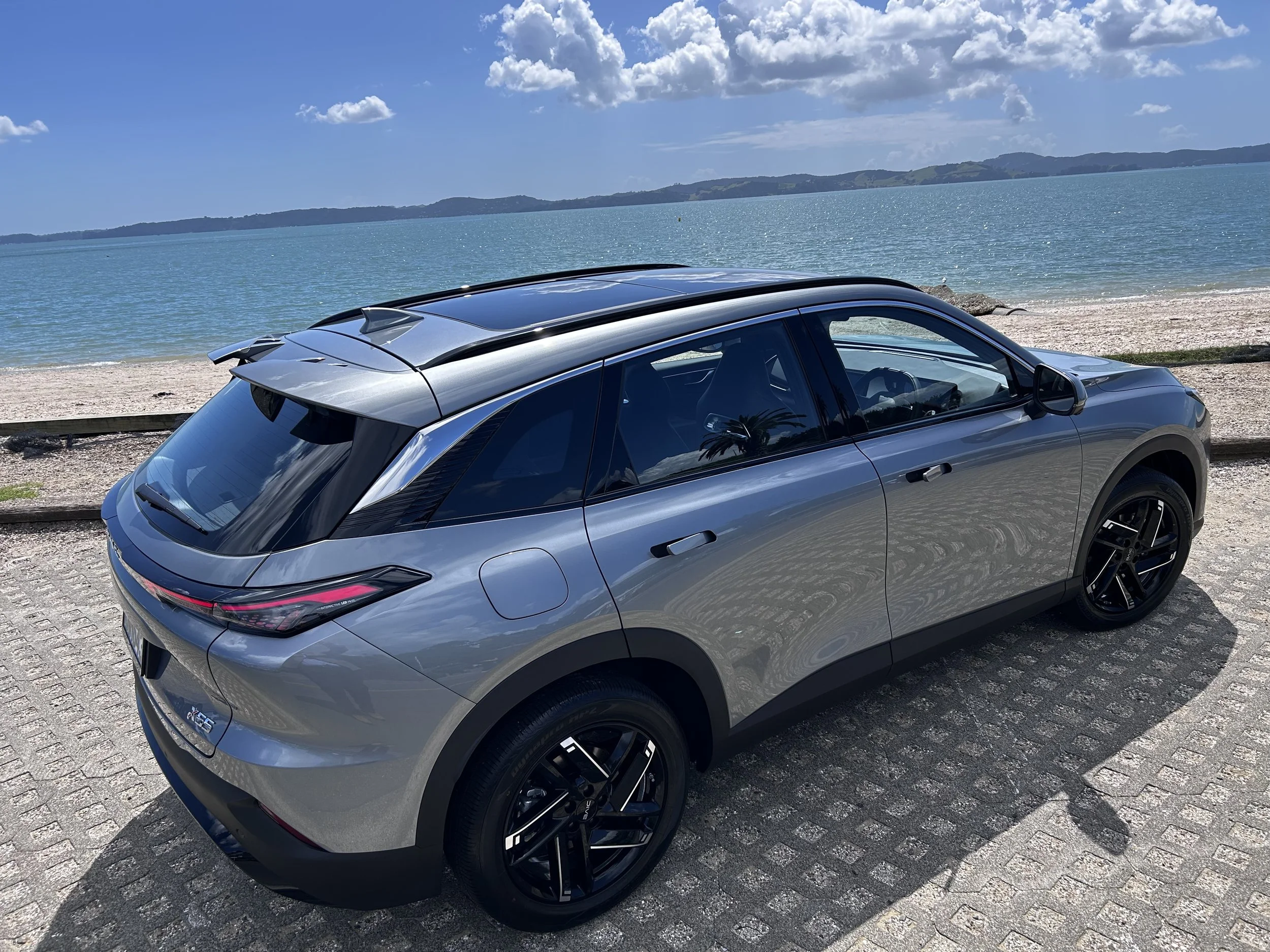
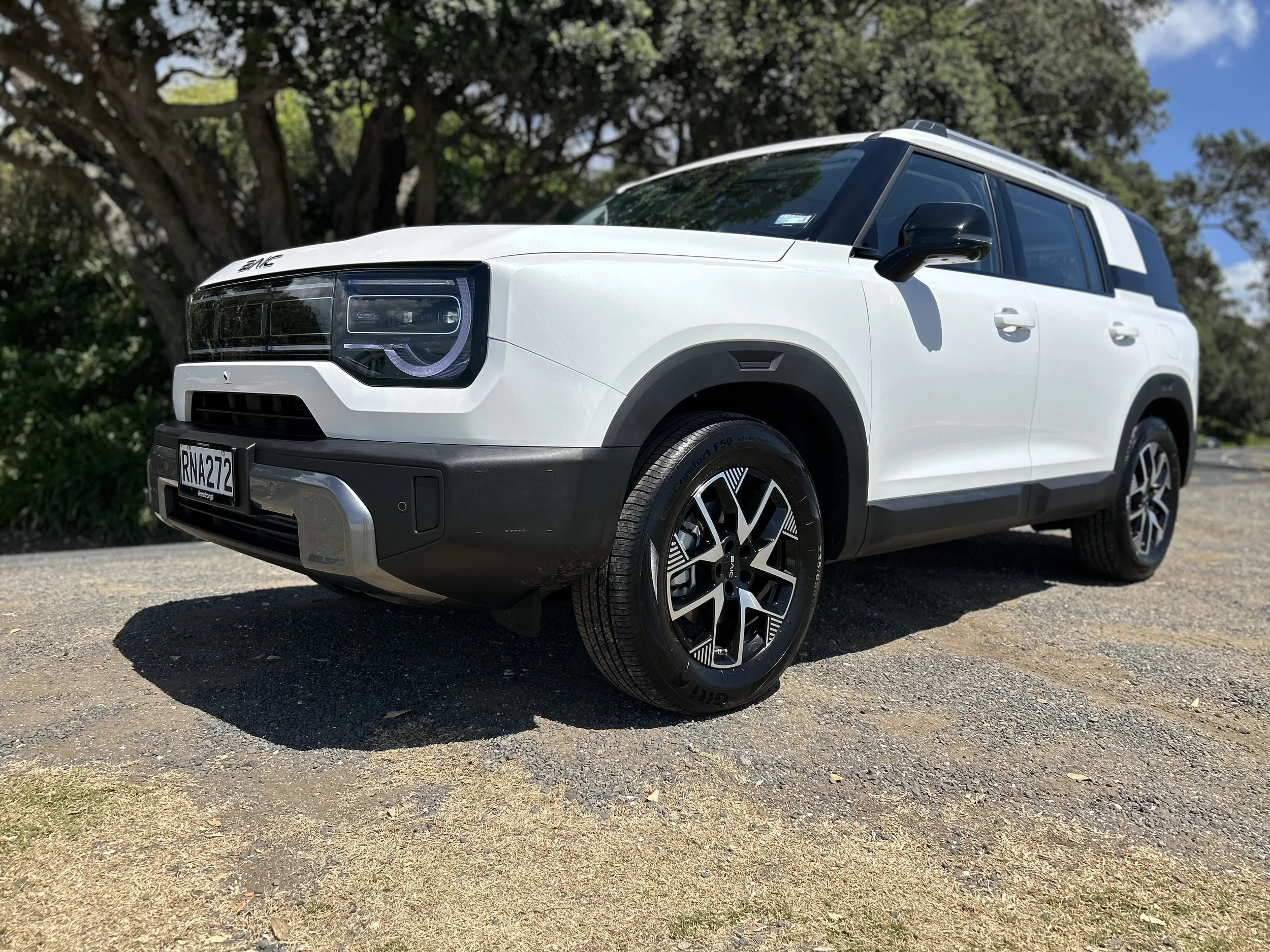
The compact X55 (top image) and the bigger, more square-bodied B30 medium SUV that lead this debut are 1.5-litre petrol engined products.
The 138kW/305Nm petrol feeds into the X55 and also features in a base Elite Adventure B30, also as a front-drive.
The pricier Premium Adventure versions have hybrid enhancement across front and flagship all-wheel-drive.
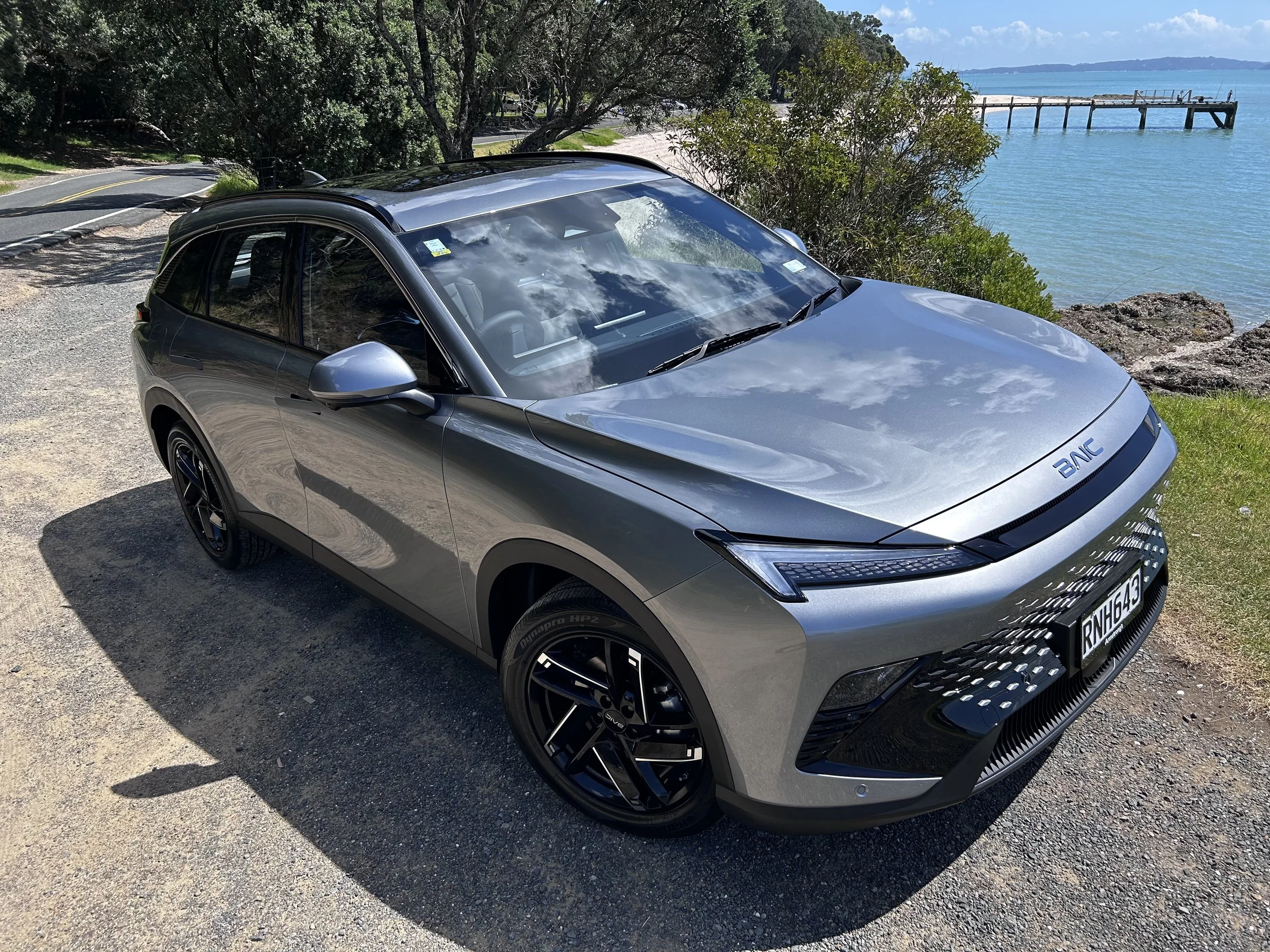
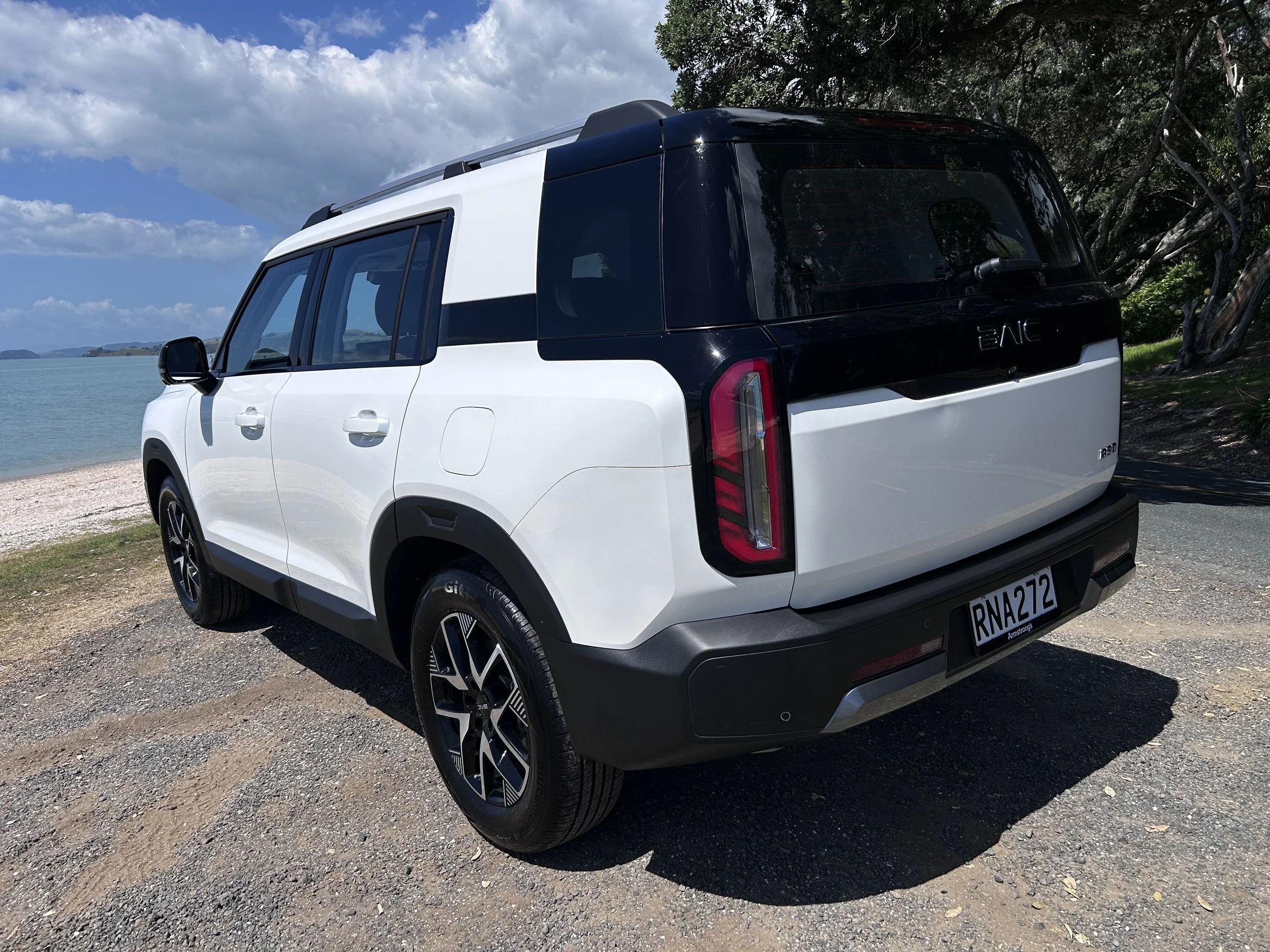
The engine in those detunes to 116kW/235Nm but with a 130kW/315Nm 'Magic Core Hybrid System' electric motor the combined output is 246kW/550Nm.
Sharp pricing is always a factor with China Inc; likewise discounting for an initial period. That’s the go here, the recommended retails being cut by $3000 until June 1.
That means the X55 Premium that will ultimately price at $37,990, is initially $34,990, while the B30 range spanning from $42,990 to $52,990 in the long term will kick in at from $39,990, lifting to $44,990 then to $49,990.
Intent with BAIC is to focus on the sports utility vehicles it specialises in under its own brand, a strategy that creates clear air with the other out-of-China makes Armstrong’s already has responsibility for.
Those are Leapmotor, Dongfeng and Smart (European born, but now only built in China). ADL also represents Peugeot-Citroen, but has just dropped their stablemate, Opel, after a reinstatement bid that ran just three years.
The 4620mm long and 1886mm wide X55 is expected to be less important volume-wise than the B30, but Rutherford nonetheless sees it winning attention from buyers who might also be looking at other China Inc product; citing Omoda, Haval, Chery and MG as potential competitors.
The proposal is that BAIC’s entrant over delivers in terms of performance and premium features, with ingredients and capabilities “expected of a larger SUV for small-SUV money.”
Standard equipment for the X55 includes a 10.5-inch touchscreen, 10.25-inch digital cluster, wireless phone mirroring, LED headlights and taillights, faux leather black upholstery with red stitching (with optional black pleather, with red stitching), heated and ventilated front seats, wireless Apple CarPlay and Android Auto, wireless device charging, a 360-degree camera, dual-zone climate control, 19-inch front and rear parking sensors, adaptive cruise, and more. It has a boot space of 350-litres.
Standard equipment for every B30 includes a 14.6-inch centre touchscreen, 10.25-inch digital cluster, hill descent, power operated and heated front seats, dual-zone climate control, and a premium sound system.
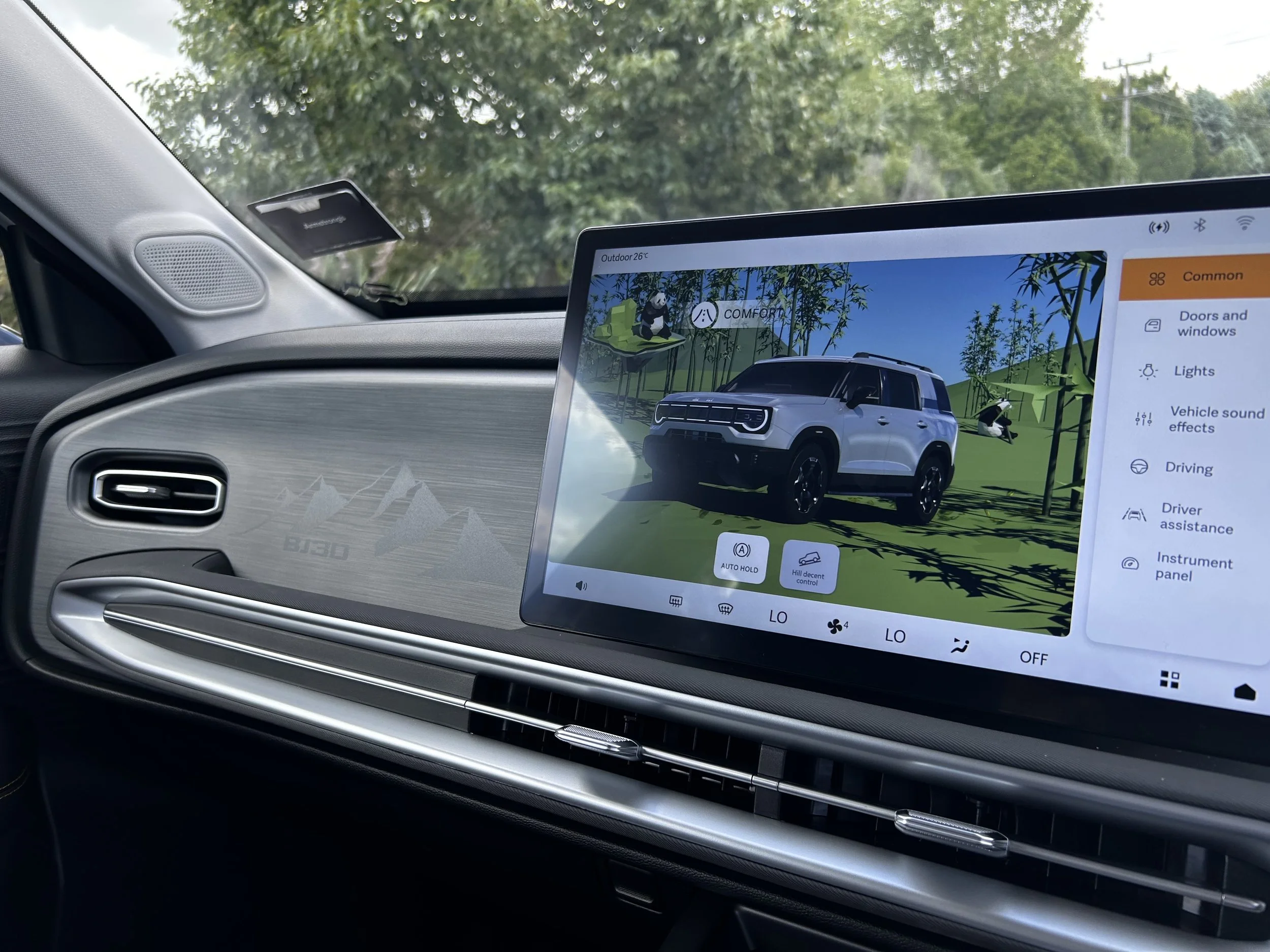
The Premium Adventure FWD adds a 150W rear power socket, acoustic glass, 19-inch wheels and a 'launch' drive mode. The AWD further adds a heated steering wheel, wheel arch side lights, ventilated front seats, a memory driver seat, LED front fog lights, A/C pre-conditioning and additional off-road drive modes.
Notwithstanding that it has a car-like monocoque body rather than the more traditional ladder-frame chassis, Rutherford cites the B30 as an adventure SUV “which is most at home when out and about exploring yet provides its occupants with the peace of mind knowing they haven’t compromised between comfort, safety and capability.”
The AWD delivers with a 215mm ground clearance, 600mm wading depth, Hill Descent Control and Hill Hold Control, a 25 degree approach and 30 degree departure angle as well as mud, sand and wading drive modes.
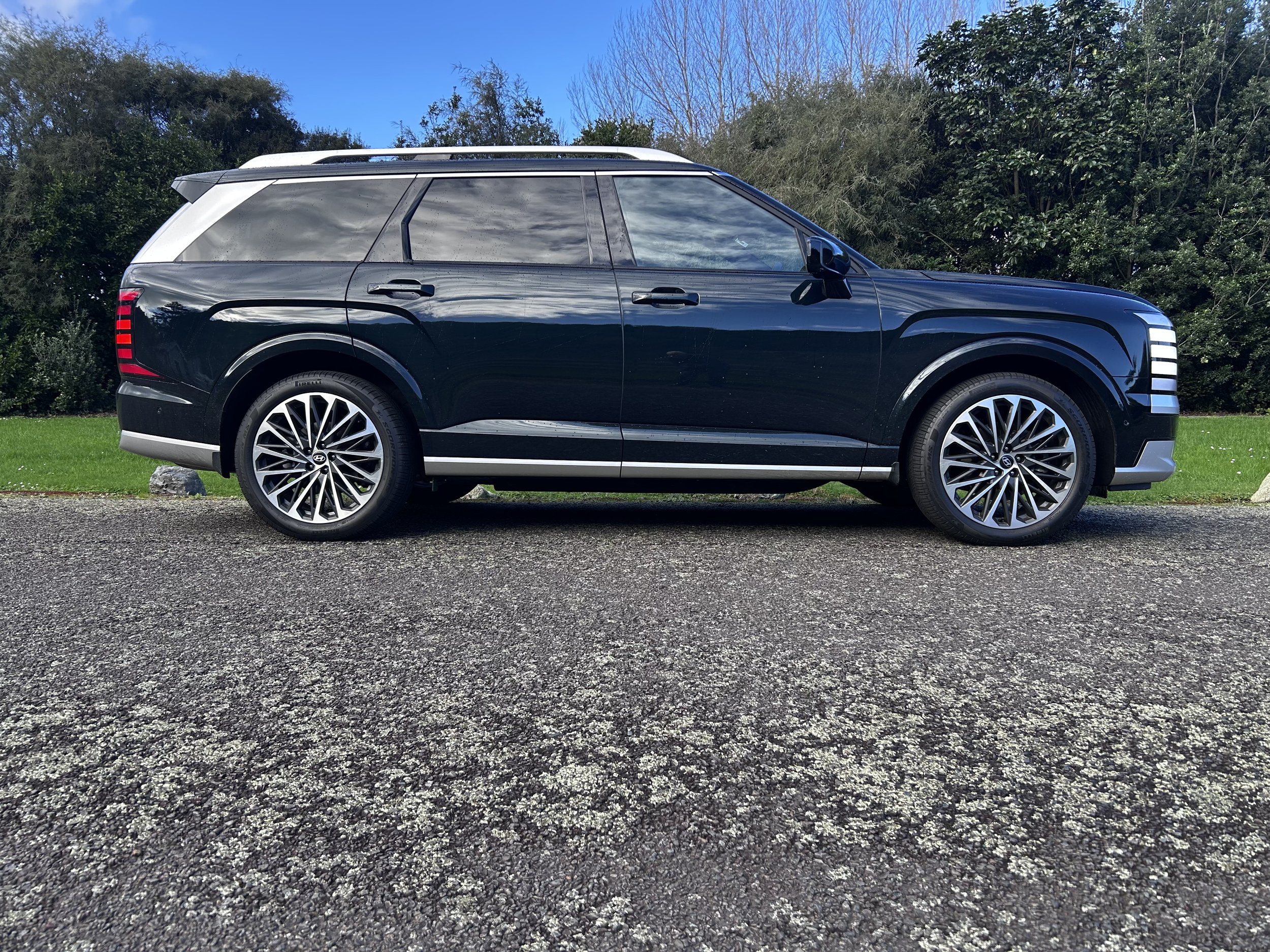
China’s answer to the Subaru Forester? Rutherford cites the impending new-generation Toyota RAV4 as potential competitor, not least the hybrid editions, but he also suggests the B30 is a more rugged car.
“It features a tough chassis with a long wheelbase for stability and added surefootedness, offering real ability without the trade-offs often associated with large off-roading machines.
“The B30 is the most capable medium-size SUV you could ever wish for and is the perfect alternative between a car and truck with outstanding utility matched with everyday comfort.”
Both BAIC lines come in strong for safety technology, with lane-keep assist, adaptive cruise control and autonomous emergency braking among common features. Neither have been tested by ANCAP to date, but Rutherford says they are scheduled for this.
Are other powertrain options in the wind? Rutherford says both also avail with a range extender powertrain, in which the engine acts as a generator of electricity for motors that do all the driving (as per Nissan’s e-Power system). Handy to have when there is pressure for brands to reduce their fleet average CO2 counts.
“What we want to do with these products is ensure they are future-proofed. We have tried to keep things simple and focused at launch but we know that as the price and emissions equation evolves over time, the technology can move with the nameplate.”
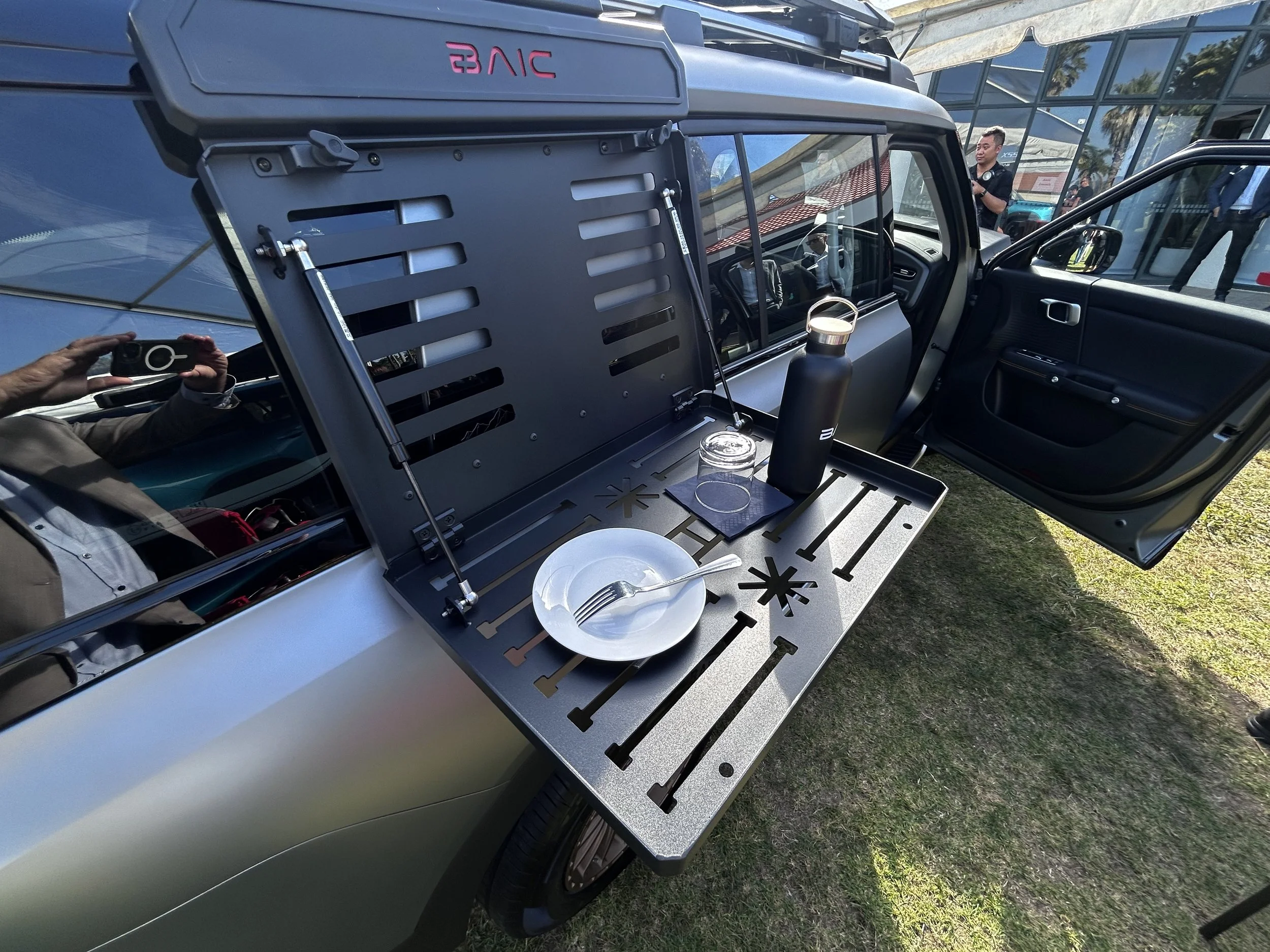
Accessories are also subject to launch special pricing and there are plenty to choose from, especially for the B30. This car be tricked out with a roof platform, side ladder, a side window extension rack, a roof storage box, a side awning, electric running boards, nitrogen shock absorbers, engine and rear motor guards - all from China - plus a tow kit, which is being developed locally. For X55, extras amount to carpet mats and boot liners.
The warranty on both is seven years’ unlimited kilometres, with eight years’ unlimited kms on the traction battery, plus the cars comes with seven years’ roadside assist. Service intervals are one year and/or 10,000kms. BAIC also has capped cost service plans over three, four and five years.
The new marque launches in New Zealand with seven dealership sites. These include two in Auckland (Epsom and Takanini), one in Wellington, and one in Christchurch.
Expect sales folk to be well-schooled in the BAIC brand gistory, which has some fascinating aspects.
In operation since 1958, this partly state-owned maker is the fifth largest automotive OEM from China and has collectively sold more than 31 million vehicles in its time.
It is the biggest external shareholder in Mercedes Benz, with a 9.98 ownership stake, and had joint ventures in China with the Germans and also with Hyundai.
The latter association has reached point where it builds, via the Beijing Hyundai subsidiary, the Elexio, a Hyundai electric car being sized up for NZ.
Fourteen years ago BAIC won world attention when it unveiled the fruits of its 2009 purchase of Saab technology. The haul included the rights to the 9-3 and 9-5 platforms, spun off from architecture developed with former parent General Motors.
Plans for heavily-revised and redesigned cars, developed specifically for the Chinese market and known as the C70G and C60F, were ambitious.
The 9-5 based C70G was launched with a 2.0 litre turbo four cylinder, with an electric model expected to follow. That never happened and the C7OG wasn’t around for long.
The smaller C60F, based on the 9-3 first introduced in 1998, was set to show in 2013, but didn’t get past concept state. There were some Saab echoes in the styling of both cars, most obviously from the base of the windscreen back, but the larger had a Mercedes-like face, while the C60F seemed to take clues from a Hyundai Genesis of the time.
Back around then, BAIC also unveiled the Stone 01, a plug-in hybrid four-wheel-drive with an uncanny resemblance to what was then the new Land Rover Defender. Details such as its wheel design, side vents and even fuel filler flap positioning were copied-and-pasted from the British model. And it was also about the same size as a modern Defender 110.
It ran a 112kW turbocharged 1.5-litre, four-cylinder petrol engine teamed with a pair of electric motors on the front and rear axle – producing 150kW and 200kW respectively – powered by a CATL battery pack.
Finally, in 2016, BAIC announced an electric supercar, similar in styling and dimension to a Ferrari 458, capable of accelerating from 0-100kmh in less than three seconds and reaching a top speed of 260kmh, plus a range of 300km.