
No Escape - medium SUV pulled
/Ford has dropped its medium five-seater and says no substitute is pending.
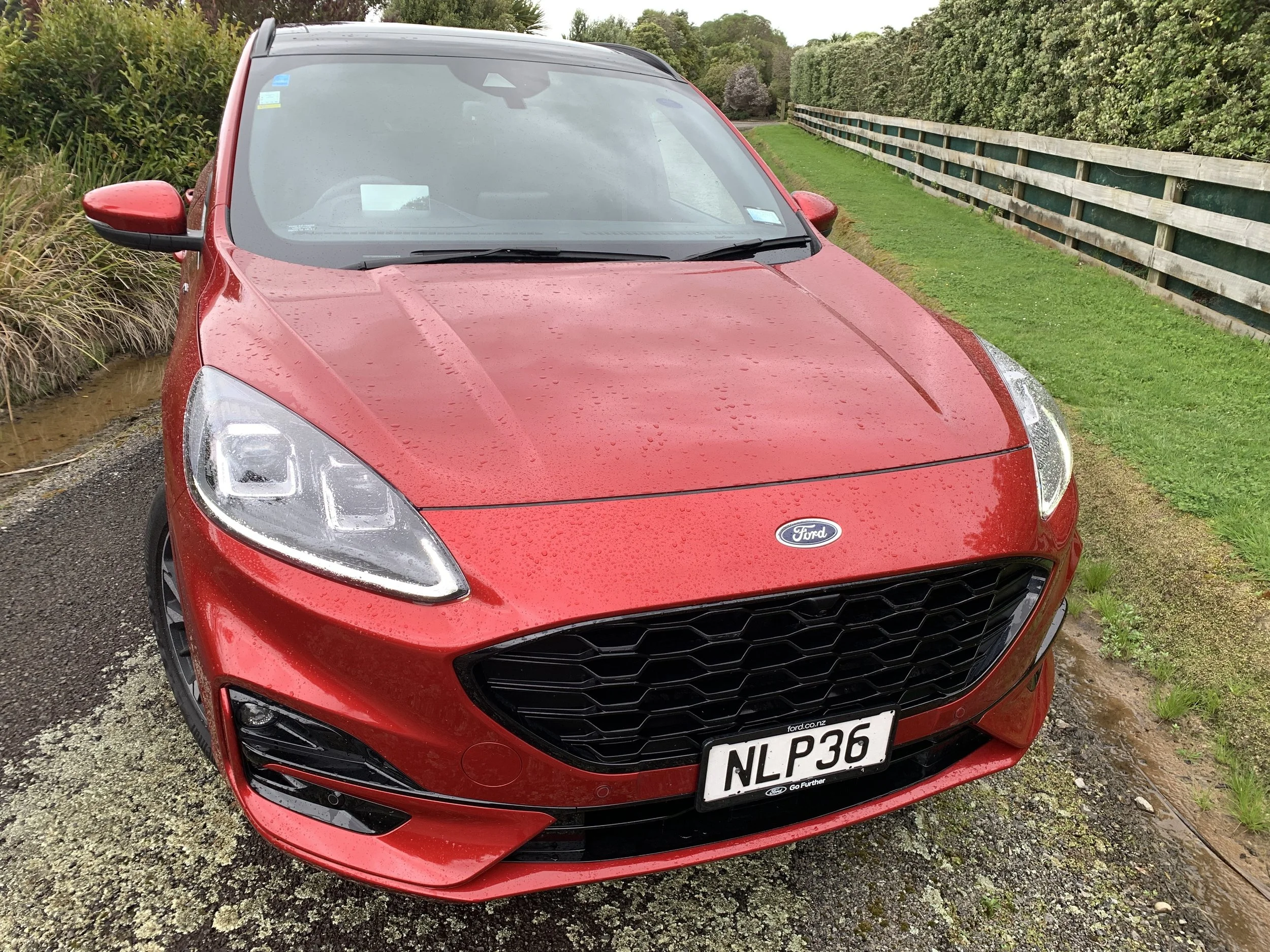
PETROL family passenger car choice from Ford is down to a pint-sized product whose future is uncertain, with the brand today acknowledging it has dumped its most usefully-sized choice.
The Escape’s exit is almost complete. Only a handful remain in dealer stock, Ford New Zealand communications manager Tom Clancy said today.
“Once the few remaining vehicles go there will be no new stock ordered in New Zealand. Only a handful remain in dealer stock.”
Axing the car means abdicating a nameplate that has lasted more than 20 years and leaves the brand without a medium-sized SUV to challenge the Toyota RAV4, Mitsubishi Outlander, Hyundai Tucson, Nissan X-Trail and a broadening count of like-sized cars from China.
Ford is already heavily reliant on a single commercial model, the Ranger utility, here - it accounts for 75 percent of volume - and without Escape, that side of the business conceivably becomes all the more important.
It is moving forward with just two petrol cars, the Puma, a much smaller four-door SUV that aims more at the city based off the defunct Fiesta hatch, and the Mustang coupe.
Passenger editions of the Tourneo and the Transit Courier also offer, but those are drawn off commercial vehicles.
Asked if Ford NZ has any other passenger car products in mind to restore health to that side of the showroom, Clancy said: “…no other news to come out at the moment.”
Petrol Puma has an uncertain future as Ford has determined the model will do better as electric car.
The battery-pure Puma Gen-E entered production last year and for a while seemed probable for NZ, as smaller alternate to the Mustang Mach-E, only to be regionally rejected in late 2024.
Escape updated substantially at beginning of last year with primary push falling to 2.5-litre all-wheel-drive hybrid (FHEV) and front-drive plug-(PHEV) ST-Line X formats, which at full recommended retail respectively priced at $66,000 to $72,990; high-end stickers for the category.
The nameplate has been around since 2001, originally being attached to a rebadged Mazda Tribute before switching to two other models. One from Europe for a short time sold as the Kuga then reverted to Escape.
The last originally arrived in 2020 in 2.0-litre pure petrol and was gradually abetted by electrified forms; at one point there were nine versions in the market.
Once Clean Car enacted it which appeared set to do well as a hybrid and in PHEV because electric-assisted petrol drivetrains at that time were favoured by this legalisation.
However, a change of Government in 2023 saw PHEV rebates dropped and, once those were also affected by Road User Charge, the public taste for that level of electric involvement all but ceased. On top of that, the hybrid also struggled to penetrate.
Ford NZ nonetheless kept Escape in the programme, apparently seeing it as handy car for meeting Government’s request on brands to reduce their fleet average CO2 outputs.
Anything electric, or electrified, was important as its best seller Ranger, and the Everest SUV spin-off, are high emissions products. Even the Ranger PHEV is not especially clean living, other than by ute standards.
Clancy reminded that Ford NZ was the last regional seller of Escape, noting that it had been dropped by Ford Australia in 2023.
“We are aligning with other markets like Ford Australia. We will of course continue to support Escape customers.”