
Euro agency’s 6e safety score okay with ANCAP
/National crash test auditor signs off five star score for impending Mazda electric sedan.
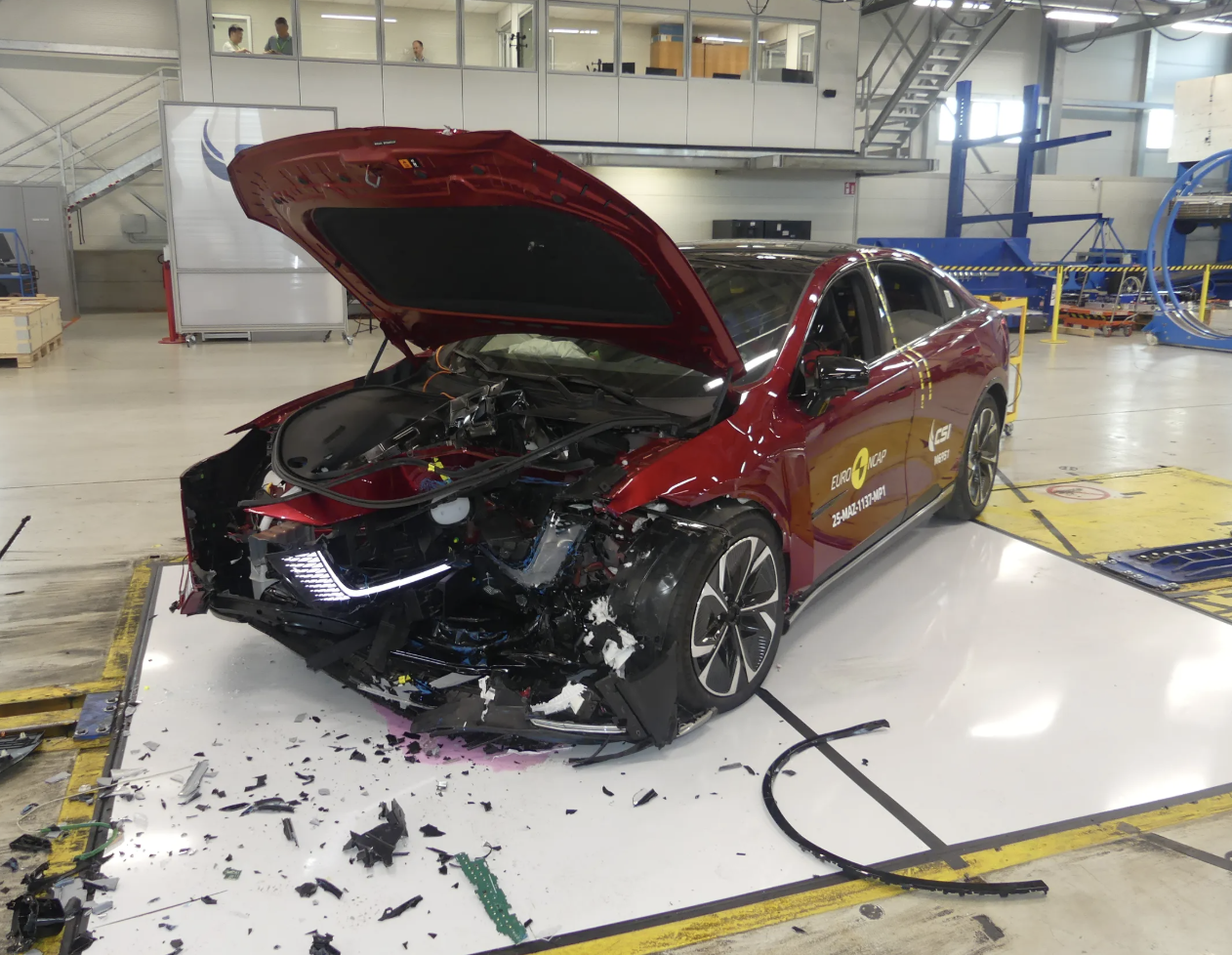
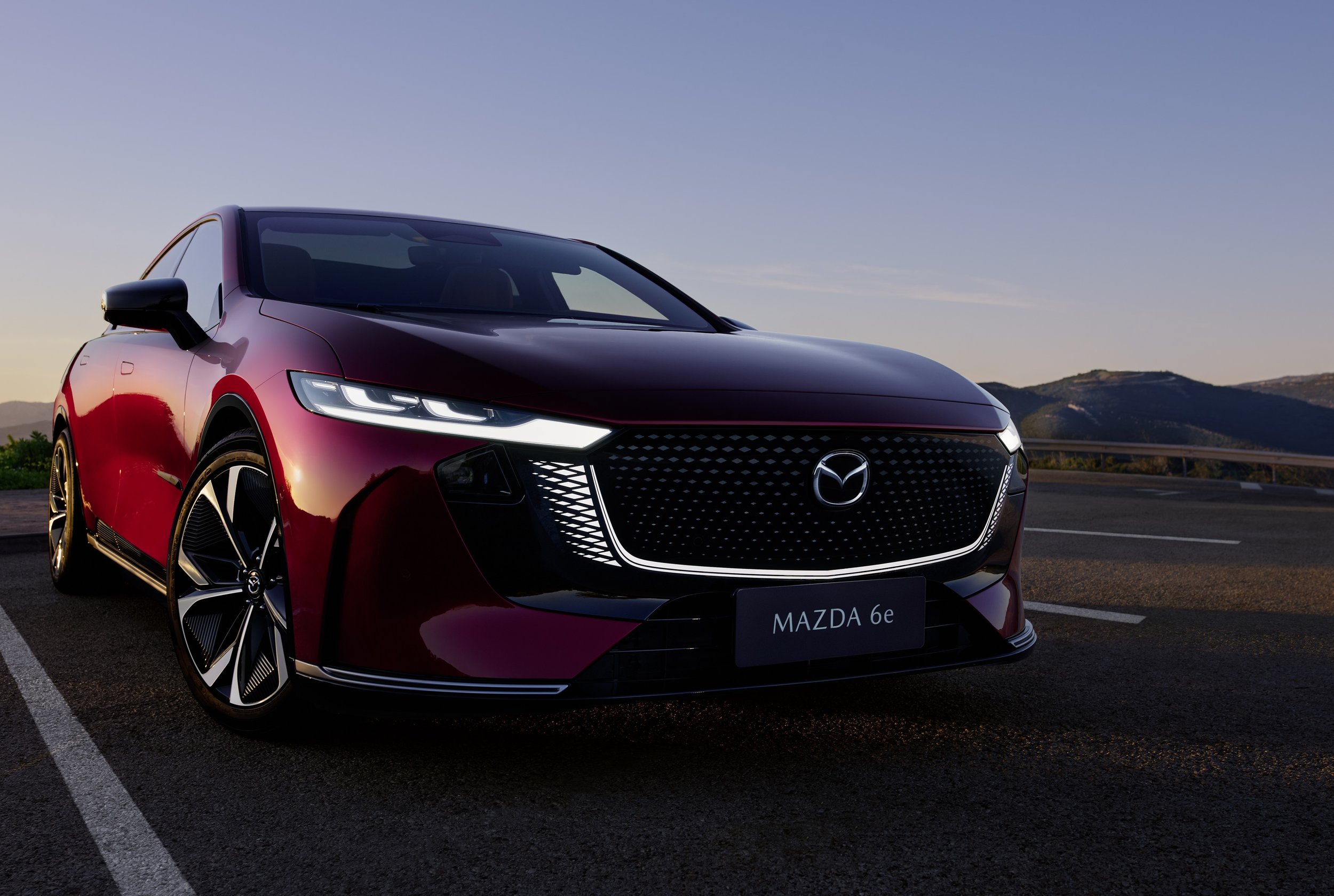
SPARKED up market condition for battery-committed cars determined Mazda to come in hot with its electric sedan - and adding to that confidence about the impending 6e is the awarding of a top level safety score.
The five-seater out of China that will sell for $58,990 has today received a five-star rating from New Zealand’s accredited crash test auditor, independent safety authority ANCAP.
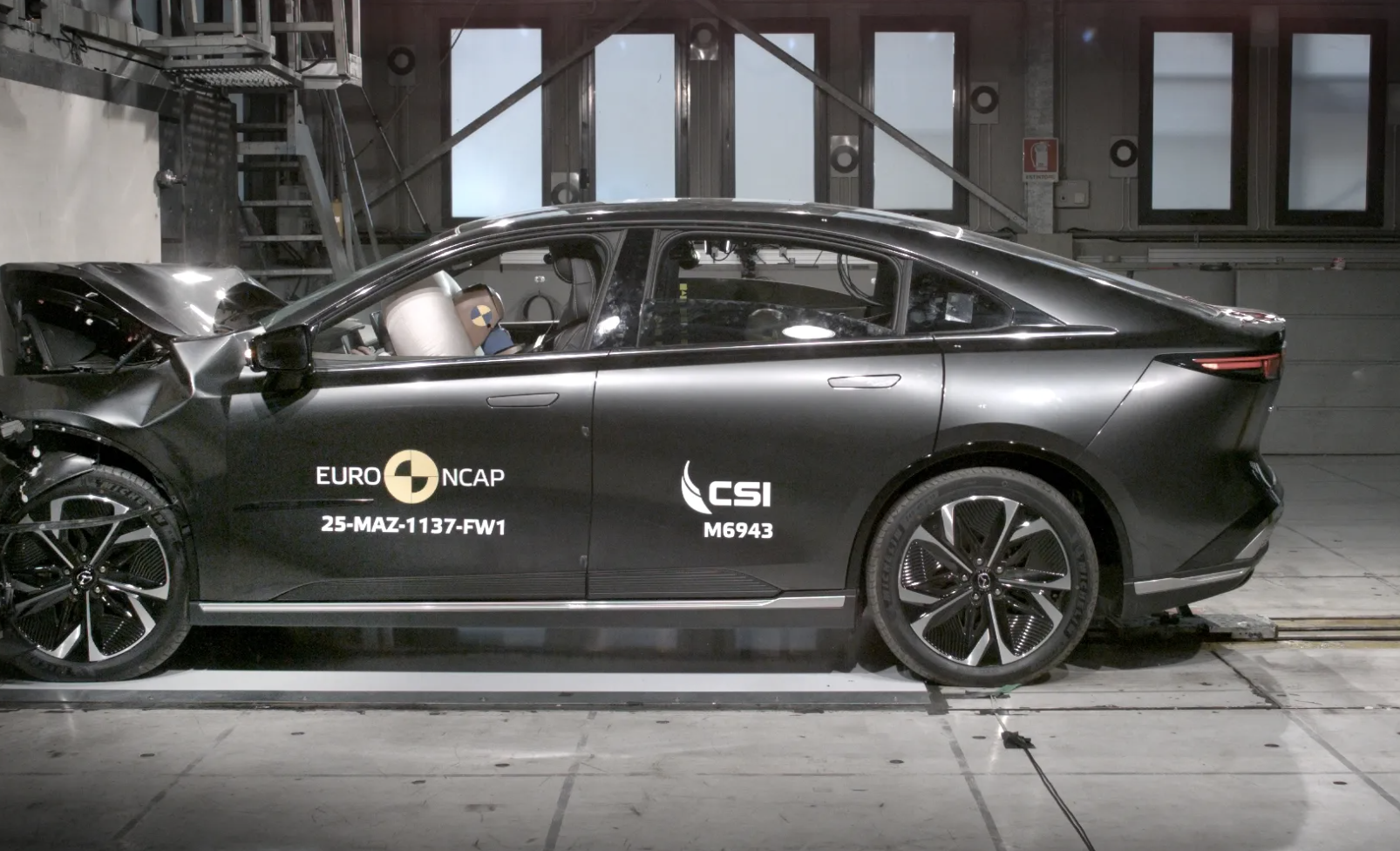
The 6e’s rating has transferred from the crash-test outcomes it achieved when considered by Euro NCAP, which ran its test last October.
That means it was assessed against ANCAP’s previous 2023-25 safety protocols, rather than the stricter 2026 protocols now enforced in its own regime.
The Mazda 6e received an adult occupant protection rating of 93 percent, a child occupant protection rating of 93 percent, a vulnerable road user protection rating of 74 percent, and a safety assist rating of 79 percent.
ANCAP found protection of adult and child occupants was Good across most criteria, though it deemed protection of the driver's chest and lower legs in frontal offset testing to be ‘adequate’, along with protection of the driver’s chest in both the full-width frontal and oblique pole tests.
Assessment of its suite of active safety and driver assist technology found a mixture of ratings, with the autonomous emergency braking (AEB) system alone being deemed ‘good’ for avoiding collisions with other vehicles but ‘adequate’ for junction-crossing scenarios and ‘weak’ in head-on testing.
The model is availing here in a swish Takami treatment in rear-drive, with a 78kWh battery. Some cars are in NZ, and have been shown to (but not driven by) dealers.
Release is being held back until next month, perhaps because the national distributor is also rolling out the new CX-5 right now. That car is now in dealerships.
Mazda is hoping 6e’s external styling likeness to the defunct Mazda6 sedan will be a favourable selling point.
The comparison to other current Mazda cars is less obvious within the cabin, where the layout is very much akin to that in the China-market car from Mazda’s car-making partner there, Changan. That brand builds the 6e alongside its own car, which markets as the Deepal EZ-6.
The NZ pricing strategy for 6e puts it in competition with the Tesla Model 3 Premium Rear-Wheel Drive and the BYD Seal Premium, which respectively cost $5000 and $7000 more.
The 6e has a lithium-iron-phosphate (LFP) battery and a 190kW single electric motor driving the rear wheels.
Driving range north of 500 kilometres based on WLTP testing is cited. Charging capacity from 30 to 80 percent in just 15 minutes is also cited.
Mazda NZ has lacked a passenger car of this size since the petrol Mazda6 was dropped at the starts of 2024; since then it has intensified effort into sports utilities and crossovers.
Changan also produces an electric sports utility for Mazda; it will come here as the CX-60. Arrival now seems to have been pushed back to January, 2027.
Mazda NZ now intensively targets the SUV sector and tried without success to include its previous electric model, the MX-30, into that action.
The latter came out in 2021, first as full electric then in range extender, but never resonated, even when electric car sales were at a boom.
Meantime, a replacement for an old stager in Mazda’s lineup, the CX-3, appears set to show in 2027, which Mazda in Japan having shown off an image of a heavily disguised prototype recently.
The new generation of the car appears to be taller than the current model, with a bigger grille opening and reworked headlights in line with the marque’s Kodo design philosophy.
CX-3 has been in production since late 2014, with periodic minor updates filtering through since.