Bonkers now in blue

Honda’s hard-as hottie achieves dynamic updates – and a noise-maker.

2020HondaCivicTypeR-overseasmodelshown(2).jpg

STILL plenty of edge – in every sense, including visual – but perhaps a less remitting ride. 

That’s the deal with the MY20 update of the Civic Type R hot hatch in a New Zealand specification announced today, a week ahead of public release.

Revised pricing is also part of the update; at $62,990 the incoming variant costs $3000 more than the pre-facelift edition did at launch in 2017, but is also $2000 cheaper than the ‘Mugen-Equipped’ runout variant. 

General rule for a mid-life refresh is to tweak under the bonnet and perhaps alter the styling, but that doesn’t seem to be Honda’s way for a model that achieved 55 registrations in 2019 and a further 41 this year to date.

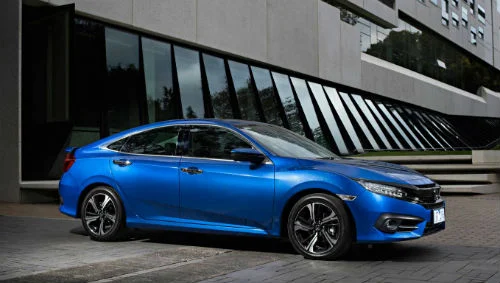
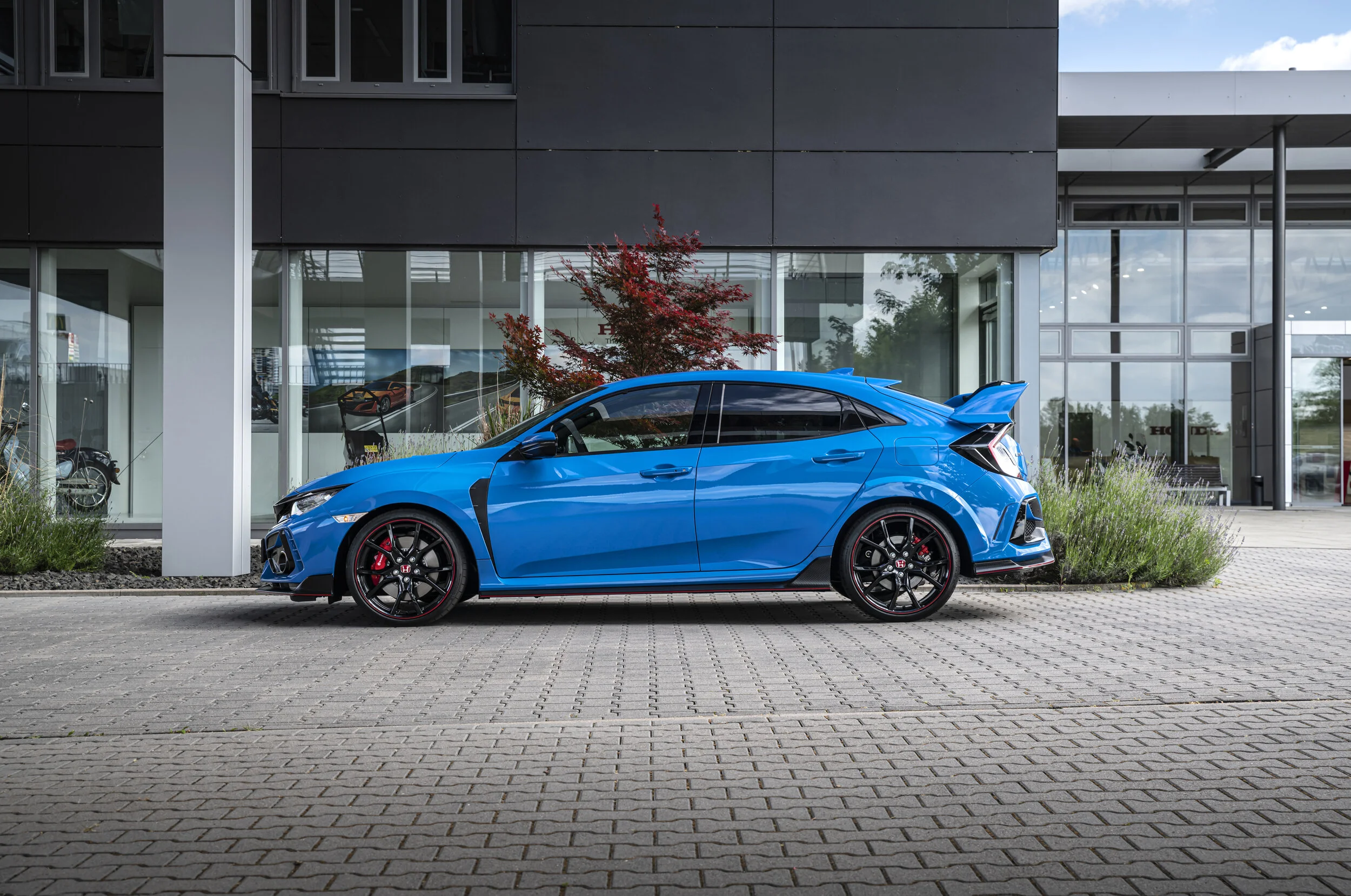
Unless you spot one in the one new colour, an effervescent sky blue, the best way to distinguish the MY21 Type R might be by driving feel. In that sense, it’ll be more about the dynamics than the power delivery.

The revision bypasses engine bay alteration, so it’s the same 2.0-litre still creating 228kW at 6500rpm and 400Nm from 2500rpm to 4500rpm, continuing to operate purely through a six-speed manual.

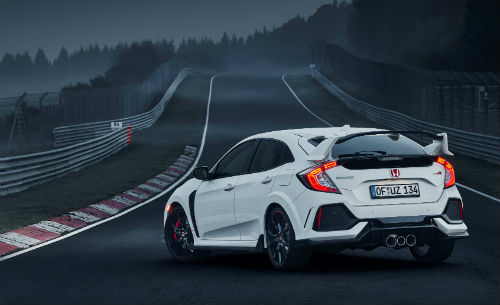
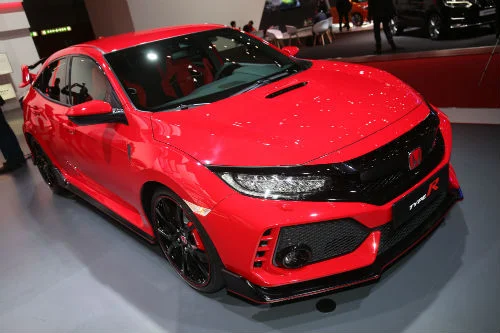
The origami styling is also largely unaltered, save for minor tweaks – perhapsonly the sharp-eyed will even spot the reshaped bumpers, an altered grille, the addition of some body-coloured accent blades, different surrounds for the driving lights.
2020HondaCivicTypeR-overseasmodelshown(6).jpg

So how has Honda’s team earned its dough?

Mainly through reworking the dynamics, which admittedly were already pretty good, and improving the ride quality – which, in original form, was a touch f-f-f-f-firm.

Aiming to reconcile the latter and further sweeten the first is the revised adaptive suspension, which now evaluates road conditions 10 times faster thanks to a damper software update. Result? Better handling response, better ride quality, Honda claims. 

The company also says stiffer front and rear bushings have resulted in sharper steering feel for better control and improved toe-in characteristics when cornering respectively, with the former achieved alongside new lower-friction ball joints.

An upgraded braking system is also implemented, with new two-piece floating front discs fitted alongside fresh pads with a more fade-resistant material.

Brake stroke has been reduced by about 17 percent (or 15mm) under heavy loads, leading to a more immediate pedal feel, according to the company. The updated set-up decreases unsprung mass by around 2.3kg. 

2020HondaCivicTypeR-overseasmodelshown(10).jpg

The altered grille improves engine cooling and a revised radiator core also helps to reduce coolant temperature by up to 10 percent in high-demand scenarios.

Inside, the car now has an Alcantara-trimmed steering wheel and a new shift lever for the six-speed manual with a teardrop-style knob and an Alcantara boot. A 90g internal counterpart has been added to the latter to better feel and accuracy.

An updated 7.0-inch touchscreen infotainment system is also implemented, with physical shortcut buttons and a volume control knob now part of the package.

That might not excite rev-heads, but how about the following?

Drivers keen to keep track of their driving data will doubtless delight in the new LogR software, an app for an Apple or Android phone which can monitor performance, log lap times and score drive behaviour.

Also, though the engine hasn’t been altered, the impression of the sound it makes has.

An Active Sound Control is an exhaust noise enhancer; the idea seems to be that the sound system’s speakers emit additional and artificial noise during aggressive driving in the Sport and  Plus R modes but refines it further in the Comfort setting.

And, yeah, there’s the new colour, seen here: Boost Blue Pearl.

2020HondaCivicTypeR-overseasmodelshown(5).jpg


Clever bricks recreate Mt Panorama

Honda has laid claim to a Holden versus Ford battleground.

MountHondarama(4).jpg

BUILDING a Lego race car … well, who hasn’t done that?

Creating a famous race circuit with those plastic bricks is a different story.

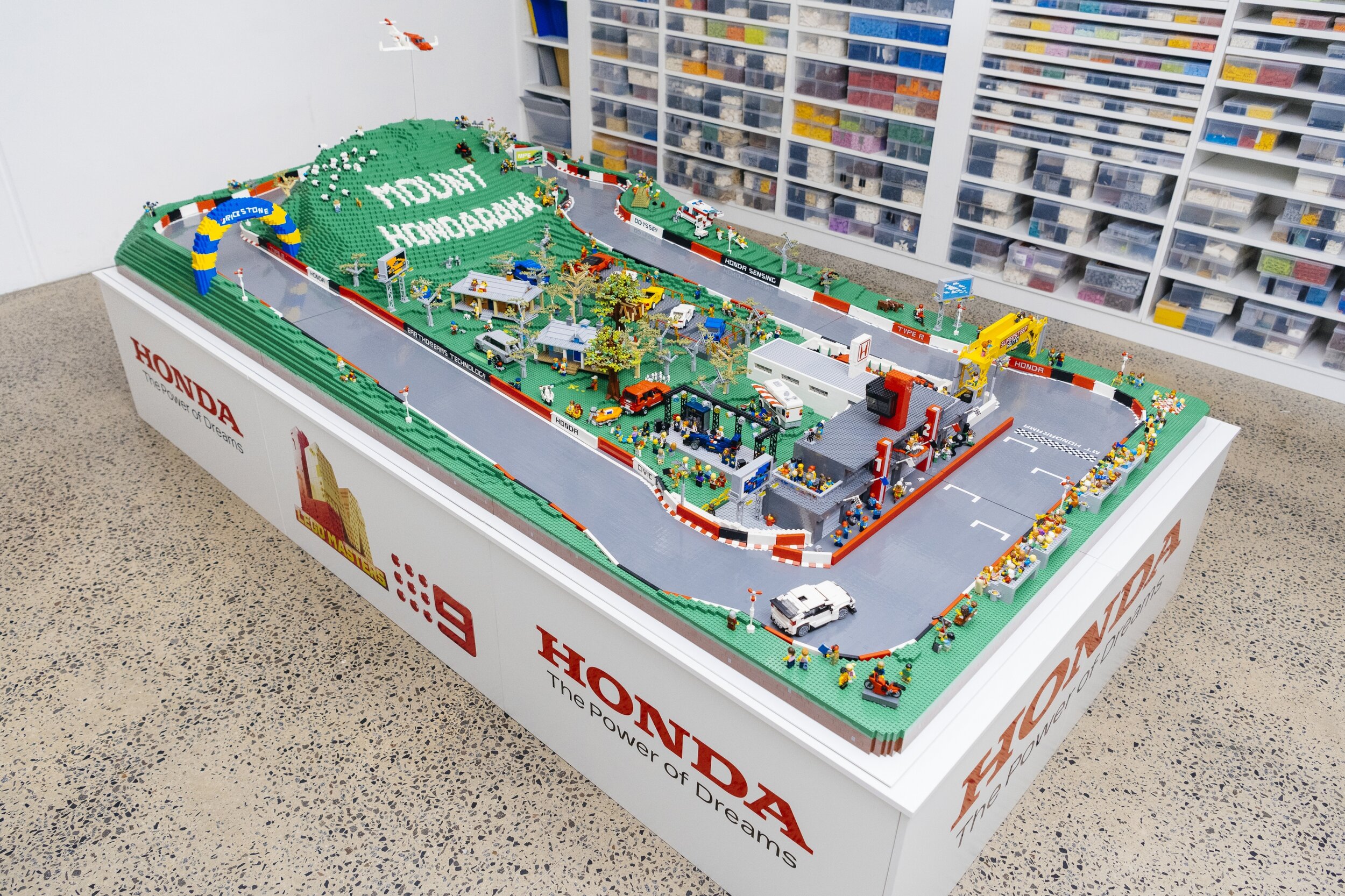
As a promo for its Lego Masters television programme, Australia’s Channel Nine has team with our neighbour’s Honda distributor and a professional assembler to create the Mt Panorama circuit at Bathurst, New South Wales, out of the interlocking materials, but with a twist to suit the backer.

Mount Hondarama is a neat follow-up to last year’s commission involving the car brand and Ryan ‘The Brickman’ McNaught, a life-sized Civic Type R hot hatch, as just on a year ago former Formula One champion Jenson Button set a benchmark lap time for a front-wheel drive production car around the famous Bathurst layout.

Obviously Mt Hondarama isn’t to the same life-sized scale as the real thing, but its still pretty substantial, being 3.3 metres long and 1.8 metres wide, weighing approximately 210kg and involving a team of eight builders, who used more than 150,000 bricks and were working for more than 650 hours.

Introducing Mount Hondarama. This year Honda partnered with Ryan 'Brickman' McNaught to create a Lego inspired Bathurst track with a Honda twist. For the sec...

So, a big job, but still rather less of a challenge than the Civic Type R, which used more than 320,000 bricks and took more 1300 hours.

Adding to the special flavour is the use of extremely rare LEGO remote control cars.

“The biggest challenge for us this year is the fact that we’ve got lots of moving pieces. Moving parts are very challenging to do with LEGO, let alone having cars actually racing around a LEGO model,” said ‘The Brickman’, who is credentialed as a ‘LEGO Certified Professional’.

“Our mantra is to grab people’s attention with something obvious and then hold their attention with lots of special details and fun things. One of the great things about LEGO bricks is that you can bring dreams to life and that’s exactly what we’ve been able to do with all of Honda’s products.”

MountHondarama(3).jpg

Robert Thorp, Honda Australia’s general manager of product, customer and communications, views the work as being “a Honda dreamscape, a graphic representation to reflect Honda’s values and the joy of creating.”

Mount Hondarama includes many of Honda’s most recognised products transformed into LEGO, including its latest cars, motorcycles and power equipment, along with some iconic cars from years gone by. There is also a Honda dealership and service centre, a F1 car to represent Honda’s global motorsport activities, as well as the truly unique HondaJet, which is the fastest, highest-flying, quietest and most fuel-efficient jet in its class. But no sign of bogans along Skyline.


Seven-seater CR-V coming

The CR-V family unit has grown – a new generation of Honda’s compact crossover will deliver extra strength in the seat count.

MNMay10_HondaCRV2.jpg

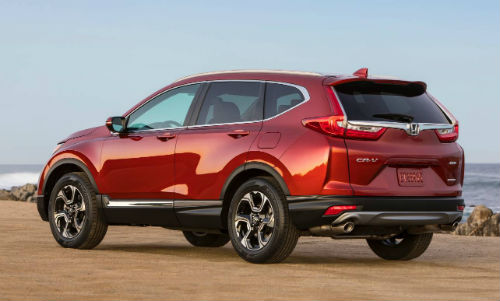
ONE edition within the new Honda CR-V range set to come on sale in July will deliver something new for the model – an extra row of seats.

Honda New Zealand has confirmed it will introduce a seven-seat version of the all-new car, but for now only in front-drive format.

The trim specification of this first-time format has yet to be provided. The car will place alongside several front and all-wheel-drive versions that continue to configure in the more familiar five-seat format.

The variant is expected to go head to head with other mid-size seven-seat SUVs including the just refreshed Nissan X-Trail, Mitsubishi’s Outlander and Volkswagen’s impending Tiguan Allspace. 

The fifth-generation CR-V takes just one powertrain, a 140kW/240Nm ‘Earth Dreams’ turbo-petrol VTEC engine, paired with a continuously variable transmission.

This engine is an uprated version of the 1.5-litre turbo-petrol unit that powers the new Civic that was launched last year in sedan guise and arrives next month as a hatchback. It’s the first turbo petrol for the car.

Honda has promised this fifth gen car will build on the characteristics of the previous CR-Vs, such roominess, flexibility and “off-highway” capability.

The model has an all-new platform, will offer “benchmark steering precision, ride comfort, body control and cabin quietness,” according to the Japanese car-maker. 

The model is 14mm shorter than the model it replaces, but the wheelbase is about 40mm longer, and it is close to 30mm lower and about 35mm wider than the fourth-gen car.

All wheel drive models feature an upgraded Real Time AWD System with a significant increase in maximum rear wheel torque delivery and new electronic control allowing stepless control in everyday driving conditions and further improved all weather confidence and control.  

“The new Honda CR-V raises the bar in every way, delivering more style, performance, economy, space, safety, connectivity and premium interior than ever before,” said Nadine Bell, General Manager Marketing, Honda New Zealand.

“Customers are going to love what they see and what they experience behind the wheel of this new CR-V.”