Next Santa Fe – a bit of old, a lot of new

The new Santa Fe has finally been revealed and will be here in late 2020.

SantaFe(TM)PE-01.jpg

NEW body, new interior, new tech and heavily revised underpinnings - the next generation of Hyundai’s crucial big sports utility is certainly a significant departure from the current edition’s design direction.

And, yet, strictly speaking, the ‘gen four’ coming in the final quarter of this year is essentially a revision, the maker admitting it still uses core elements of the current-generation seven-seater. Not that this shouldn’t keep it from winning plenty of attention.

 “We modernised the new Santa Fe with premium features and appealing aesthetics that are sure to add value,” said SangYup Lee, the senior vice president who also heads the brand’s Global Design Centre and is been elevated to becoming the brand’s design spokesman in wake of the recent sudden departure of Luc Donckerwolke as design chief. 

“The bold lines that extend from one side to the other and from front to back give Santa Fe a rugged yet refined look that SUV customers want. Besides, we’ve added numerous features and functions to create a truly family-focused SUV that is a pleasure to drive.”

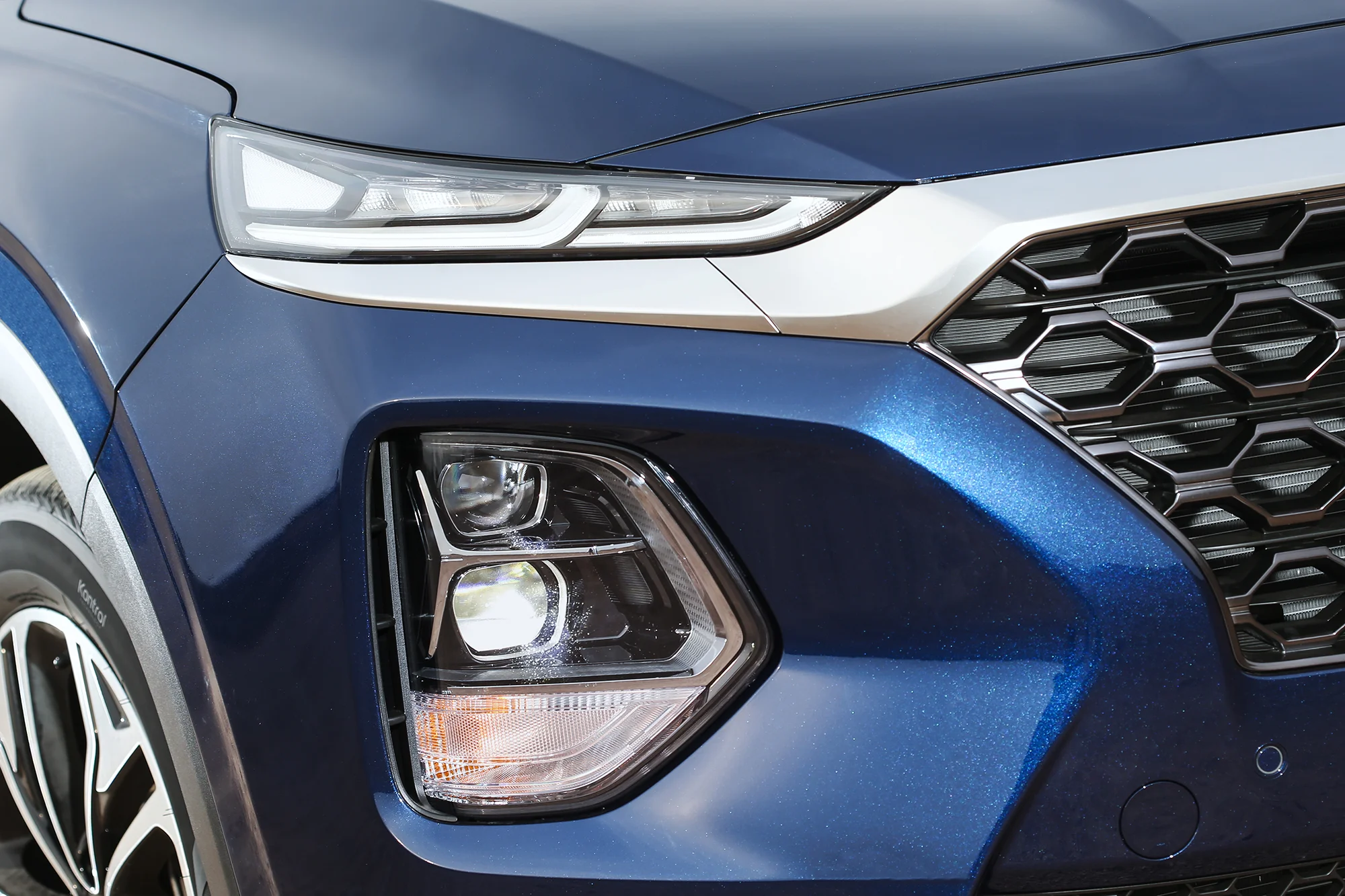
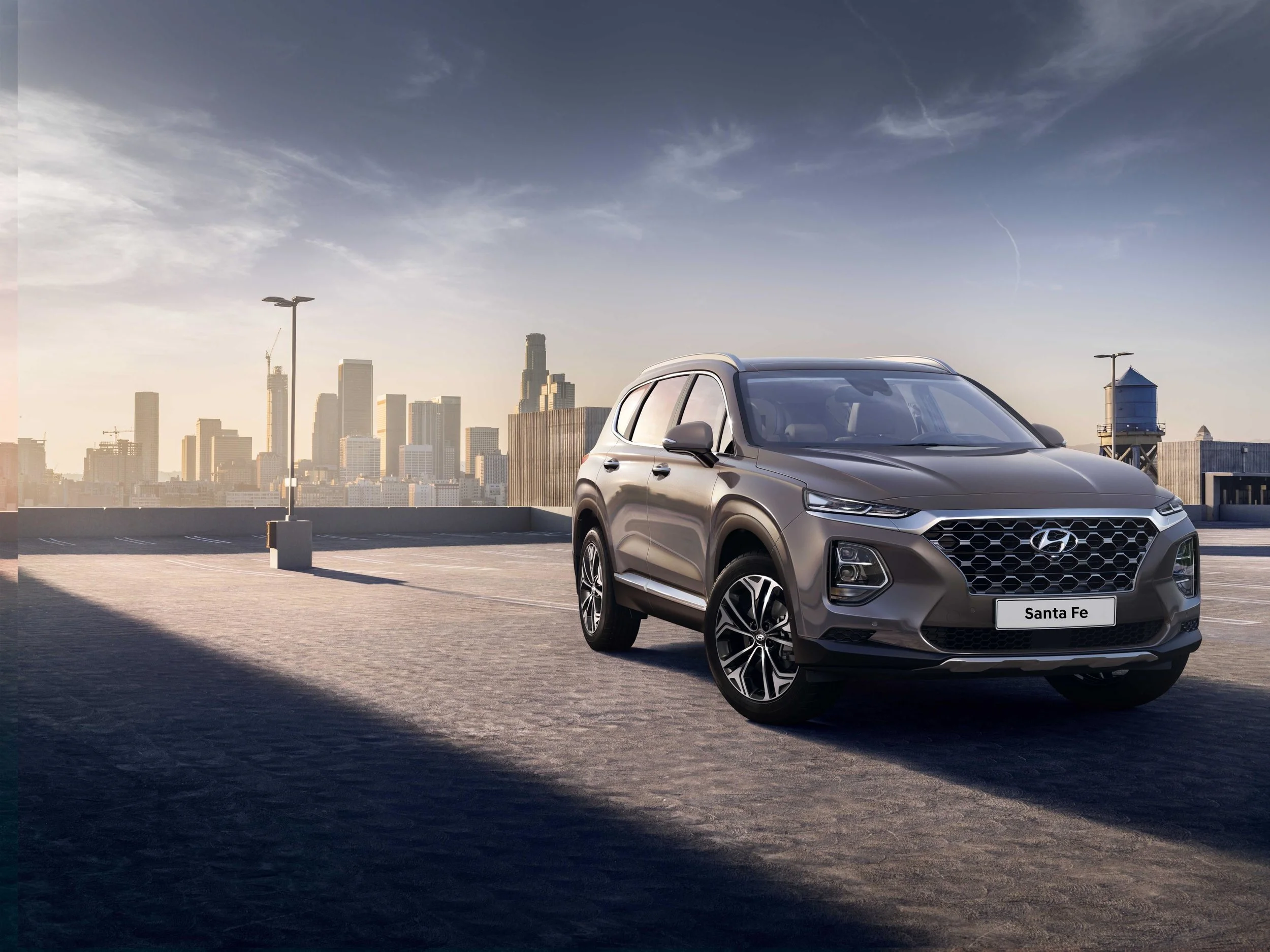
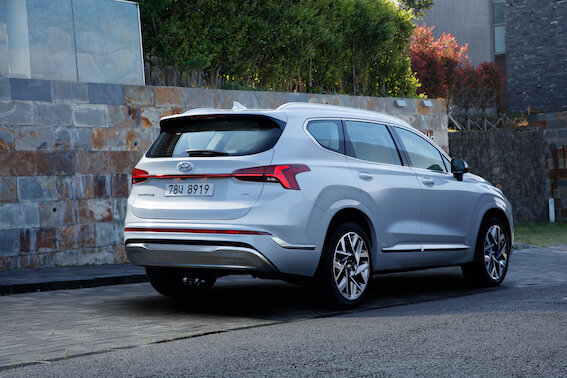
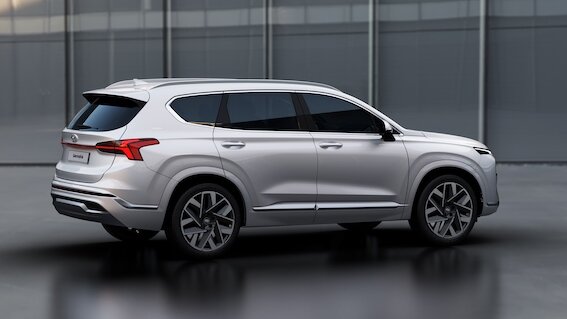
The new Santa Fe’s front section is defined by the wide grille that extends across the entire width of the vehicle. The brand suggests the ‘clamped shape’ of the lower air intake harmoniously extends the horizontal line to accentuate the vehicle’s wide and well-balanced stance.

The grille – or grilles, as there are two designs, the more intricate pictured here being reserved for the new flagship - also integrates the headlamps, a signature style found on many Hyundai cars. LED Daytime Running Lights (DRLs) start at the top of the grille and cut through it to create T-shapes at each corner when lit.

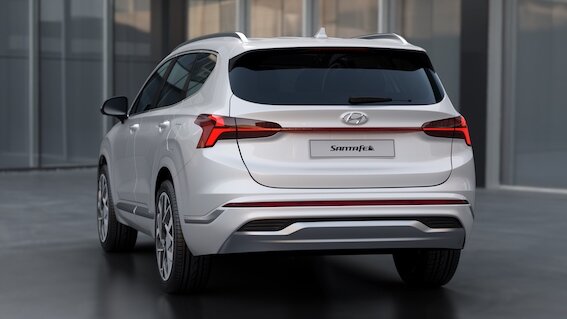
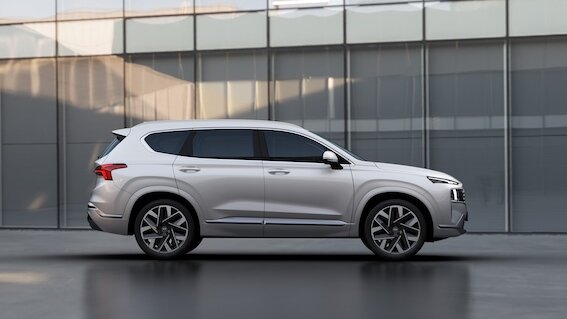
Each side section of the New Santa Fe is characterised by a seamless line that connects the DRL to the taillights, this to lend the car ‘a sensuously sporty look’. The increased width on wheel arches accentuate the SUV’s rugged and powerful character, which is also emphasised by 20-inch wheels.

The new Santa Fe’s redesigned taillights are connected across the rear hatch by a slim illuminated bar that complements the horizontal design theme on the front and sides of the vehicle. The theme is once again expressed by the wide rear reflector and skid plate, creating a unique three-layer look. 

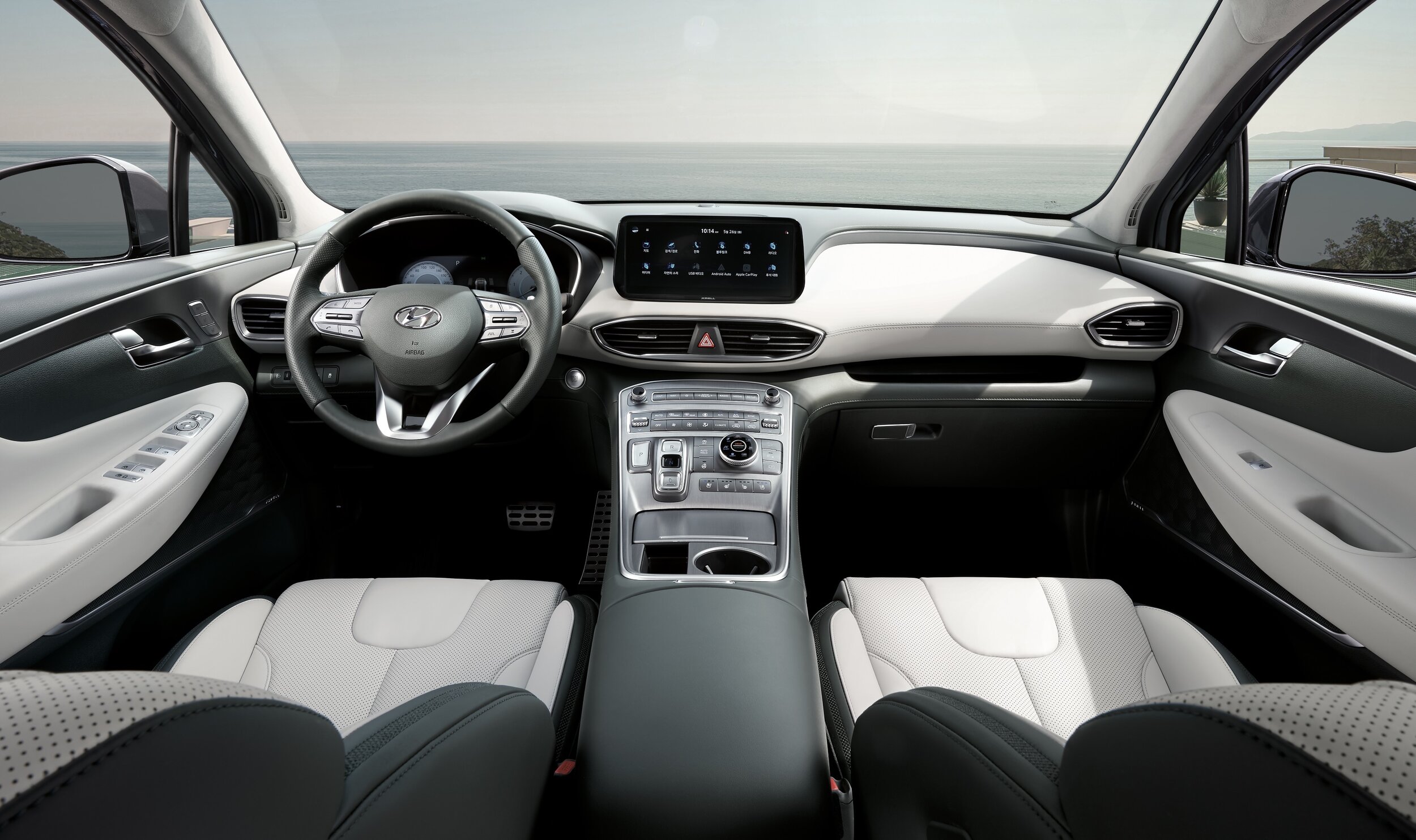
Hyundai says the redesigned interior now provides more space, comfort, and convenience compared to the previous model and also takes the car to ‘a new level of luxury’ with every component finished in premium soft-touch materials. The centre console sits high, giving the driver and front passenger the feeling of sitting in an armchair, according to information released today.

The buttons are all centred for intuitive and ergonomic use. In the middle of the redesigned centre console sits gear shift buttons along with other functions that are used often. Hyundai says a ‘shift-by-wire system’ allowed the designers to put buttons instead of the conventional shift knob.

For the first time, the new Santa Fe comes with a Terrain Mode selector: a control knob located in the centre console to conveniently switch between different drive modes, optimising performance and ‘HTRAC’ all-wheel-drive settings for a variety of driving situations. This feature includes unique modes for sand, snow and mud, as well as eco, sport, comfort and smart modes, the last of which automatically recognises the driving style and selects a mode so the driver does not have to.

The new centre console’s layout freed up space for more storage in the redesigned lower dashboard. The console also accommodates a new 10.25-inch AVN (audio, video, navigation) touchscreen display with pre-loaded maps, satellite-based voice guided navigation, rear camera display, and complete in-car entertainment and connectivity features.

As for the mechanical package? tjhat’s still be be explained, but it could be that Hyundai also moves to adopt a hybrid set-up that is going into the Kia Sorento, a sister ship despite any corporate claims to the contrary.

The latter is taking a 1.6-litre petrol with battery assist – in ultimate form this being a 44.2kW electric motor and a 1.49kWh lithium ion polymer battery, for a total output of 169kW and 350Nm.

The new powertrain is presented under a new mantle, ‘Smartstream’, that also applies to the purely fossil fuel-reliant engines also confugring, these being a 206kW/421Nm 2.5-litre petrol and a refined version of the outgoing cars’ 2.2 turbodiesel, making 148kW and 440Nm. These marry to an eight-speed wet double-clutch automatic.


Next Santa Fe fronts up

Hyundai has provided a first look at the next generation of its crucial sports utility.

the ‘luxury’ grille

the ‘luxury’ grille


GRADUAL unveiling of the next Hyundai Sante Fe has begun, with Seoul sending out shadowy preview images revealing the new car’s front.

There are two images, the reason being to demonstrate that the flagship car will have a slightly different gloss black grille to that meted the regular editions.

Either way, the new face is quite different to what we see now.

And those grilles are a significant departure from the 'waterfall' design that has evolved over the past decade across the Hyundai family.

In its new form, the Hyundai grille frame extends across the face of the new Santa Fe, tapering at each end to merge with the driving light housings.

Also new is the 2021 Santa Fe's daytime running light (DRL) signature, described as a ‘T’ shape.

the standard grill

the standard grill

The new lighting signature is described as reflecting "Hyundai's new integrated vehicle architecture". Is that a suggestion that what the SUV presents first will migrate into other Hyundai’s? 

No other angles have been revealed at this time, although Hyundai says we can expect “interior design updates providing premium amenities and comfort.” 

Also unclear are details on the new-look Santa Fe's mechanical package, though it could be that Hyundai also moves to adopt a hybrid set-up that is going into the Santa Fe’s sister ship, the new Kia Sorento.

The latter is taking a 1.6-litre petrol with battery assist – in ultimate form this being a 44.2kW electric motor and a 1.49kWh lithium ion polymer battery, for a total output of 169kW and 350Nm.

The new powertrain is presented under a new mantle, ‘Smartstream’, that also applies to the purely fossil fuel-reliant engines also going into the vehicle.

With the latter the choice with Kia is a new 206kW/421Nm 2.5-litre petrol and a refined version of the outgoing cars’ 2.2 turbodiesel, making 148kW and 440Nm. These marry to an eight-speed wet double-clutch automatic.
Kia NZ has yet to signal a firm local launch date for the Sorento, save for an indication some months ago that it might be here by the third quarter of this year. However, that timeframe was given pre-coronavirus; like so many others, Hyundai and its subsidiary have had to close down its assembly lines. 

Regardless of that, there is emergent possibility that the Sorento will beat the Santa Fe to market.

Both models stand on a new-generation midsize SUV platform and the Santa Fe is sure to align with Sorento in implementing a range of high-tech safety and convenience features.

Prime among these are a multi-collision brake system that mitigates the severity of secondary collisions. It automatically applies vehicle brakes when the airbags have been deployed after an initial collision, further protecting occupants from secondary frontal or side impacts. 

Kia’s new rig also has a remote smartphone Surround View Monitor. This allows users to check the vehicle’s surroundings with their smartphone in conjunction with the in-vehicle Surround View Monitor to maximise parking convenience.

Last year Kia registered 462 Sorentos in NZ while Hyundai NZ found homes for 1477 Santa Fes.

the current model santa fe

the current model santa fe


Man draws ute, media goes nuts

Everyone loves a good ute. Does the Tarlac meet those tastes?

8d431e96203525.5ea9142389d8b.jpg

FOR the past couple of years, anyone gloating about their new car might, in reality, be talking about something taller, heavier and – despite all the mod cons – less polished.

Despite new car registrations having faltered a touch in 2019, utility vehicles continued to dominate, with the Ford Ranger and Toyota Hilux the top two selling vehicles, with 9486 and 7126 sales respectively.

Demand tapered off by the December quarter and no-one’s yet brave enough to bet on how many might be sold this year. 

But chances are the ute – and by that we really mean well-trimmed dual cabs, since they account for the bulk of interest - sector might yet recover more quickly from the Covid-19 pandemic’s impact than the general passenger car market.

0a713c96203525.5ea916075a8f9.jpg

They’re so strongly entrenched. Also, if and when recovery comes, it’s going to be led by builders and farmers – two key buyers of utes.

What might also stir up interest is that this is the first if several years when traydeck turnover occurs. As in, model cycle change. Some are set to be rebirthed and most of the others are going to be refreshed.

Isuzu’s reskinned and re-engineered D-Max and its new under-skin twin, the Mazda BT-50, are coming out this year. We expect to see another radical revision for the Hilux. In 2021 comes the successor to the mega-hit T6 Ranger, retiring after a decade on the job.

A conjoined effort with Volkswagen and likely to be the last Ranger designed and engineered fully in Australia, the next one runs on a new version of the current platform and is expected to add a pair of turbocharged V6 engines added to the line-up; a 24wk@ petrol and a 187kW diesel. And hot on its heels, the Amarok – still a German product despite the Aus-shared influences.

And there’s another, also eagerly anticipated …. 

So, anyway, today’s images are of the Tarlac.

 Hyundai’s dual-cab ute has been in the works for an eon, but finally the wheels are set to be rolling. And instead of one kind, it’s becoming increasingly likely there will be two 
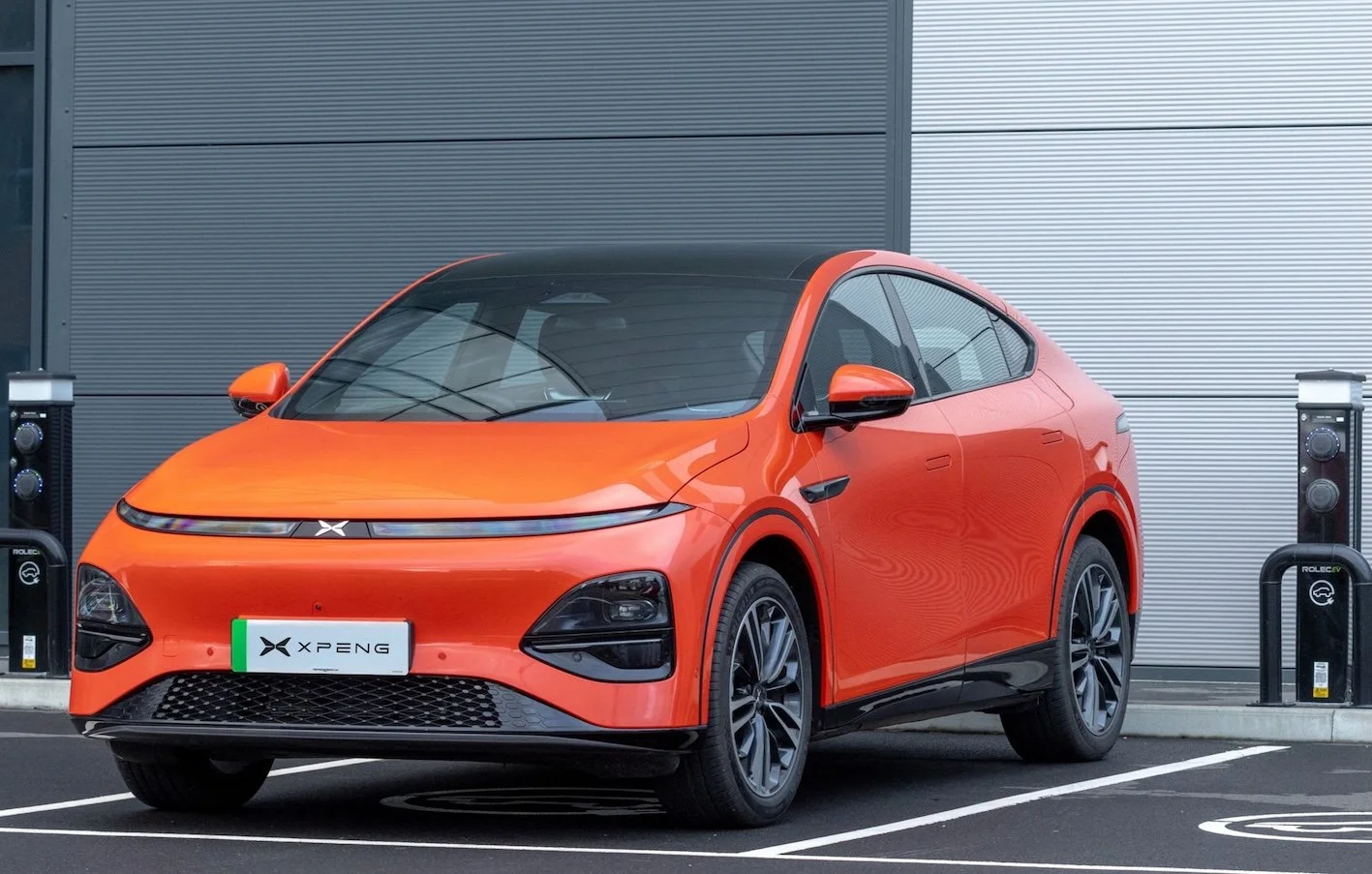
America is being targeted as the primary recipient for a load-lugger that will retain the name, and much of the look, of the Santa Cruz concept shown in 2015. This will come out of Hyundai’s plant in Alabama in 2021. The Santa Cruz will differ from other dual-cab utes as it will be built with a monocoque chassis.

5a44f896203525.5ea914238f3f3.jpg

However, Hyundai has also confirmed it also has a traditional ladder-frame light commercial vehicle is in development. Costs of this one shared with sister company Kia. This yet-unnamed model is expected to become available in 2022-23.

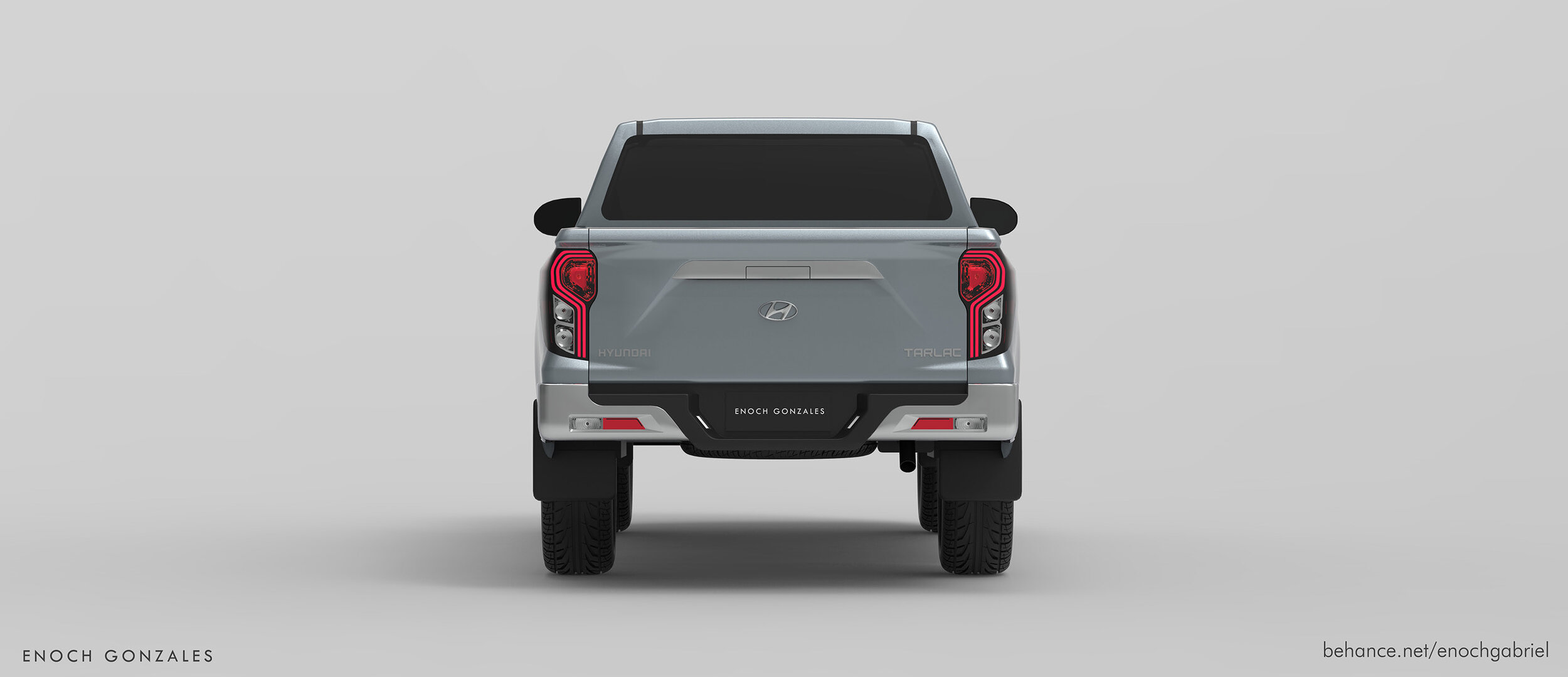
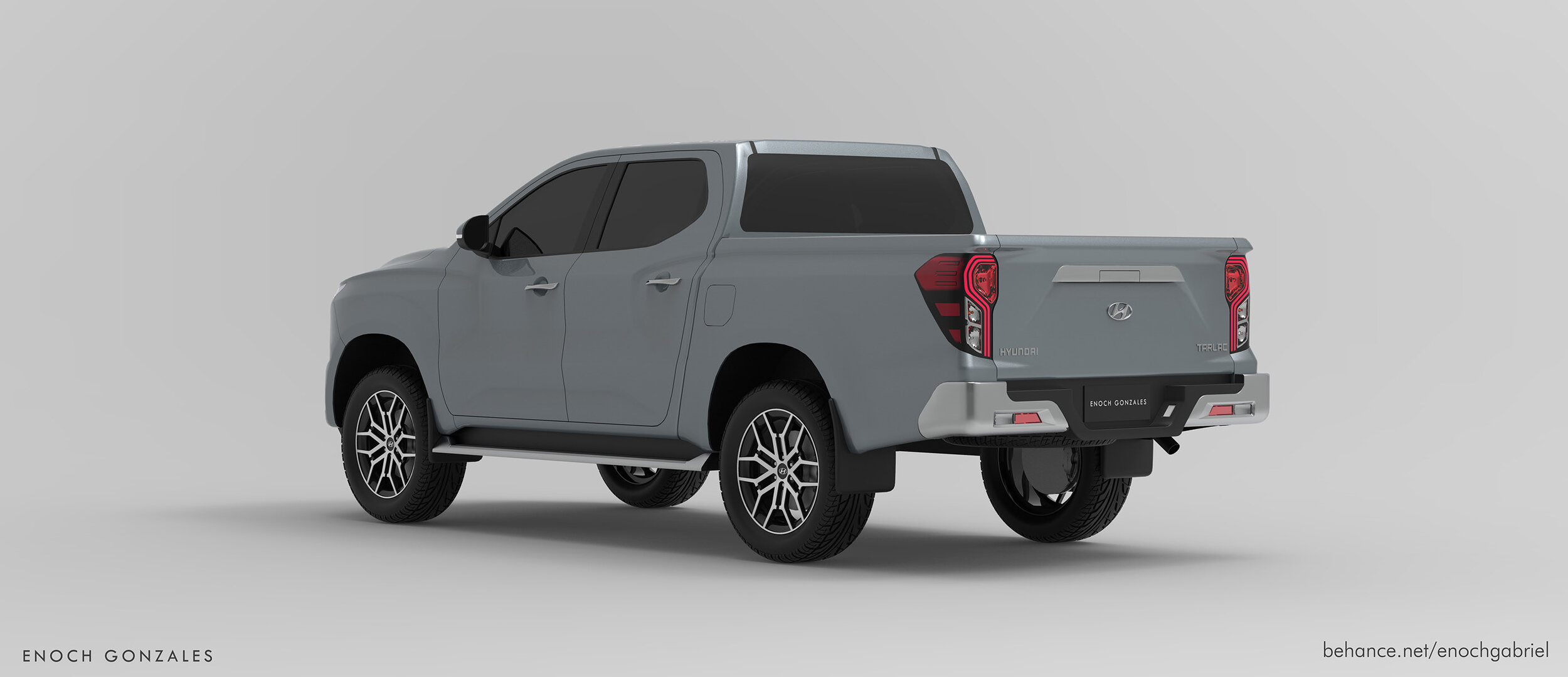
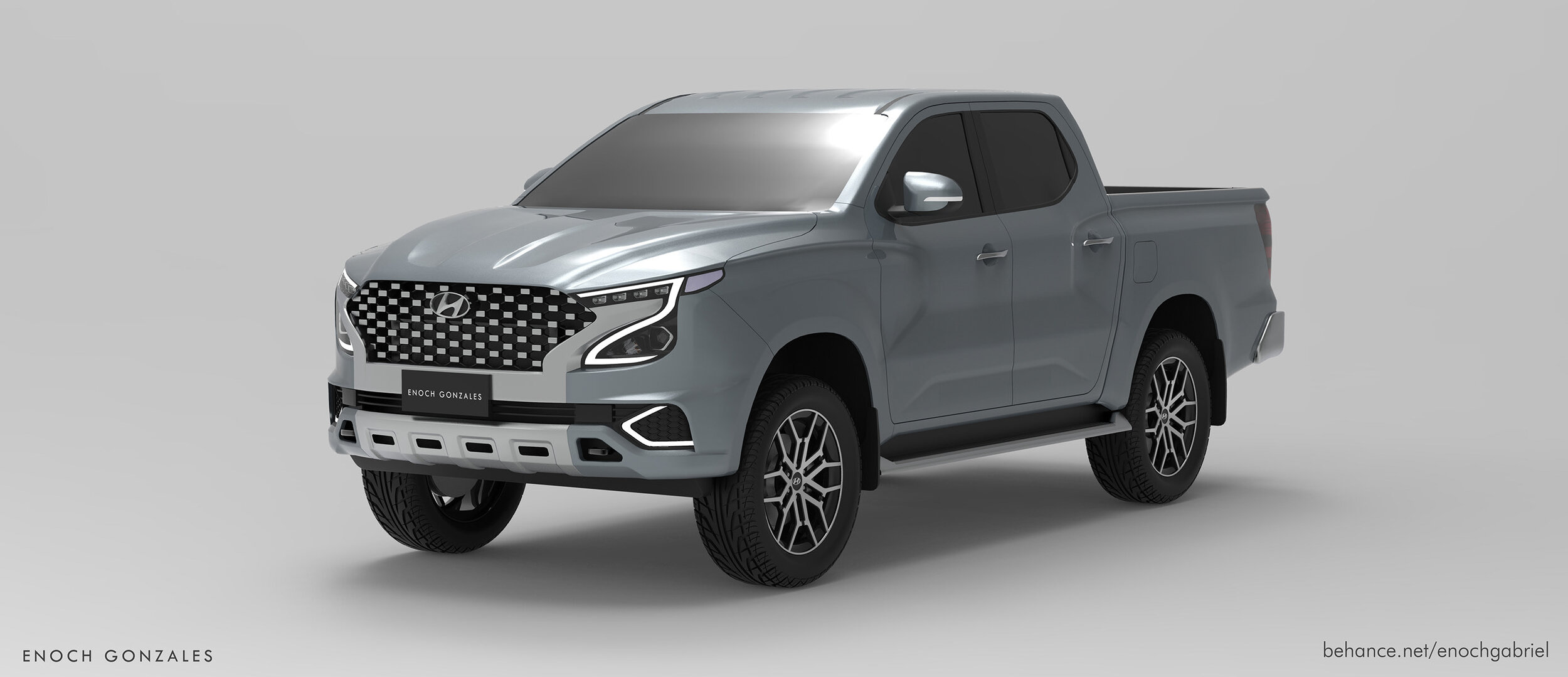
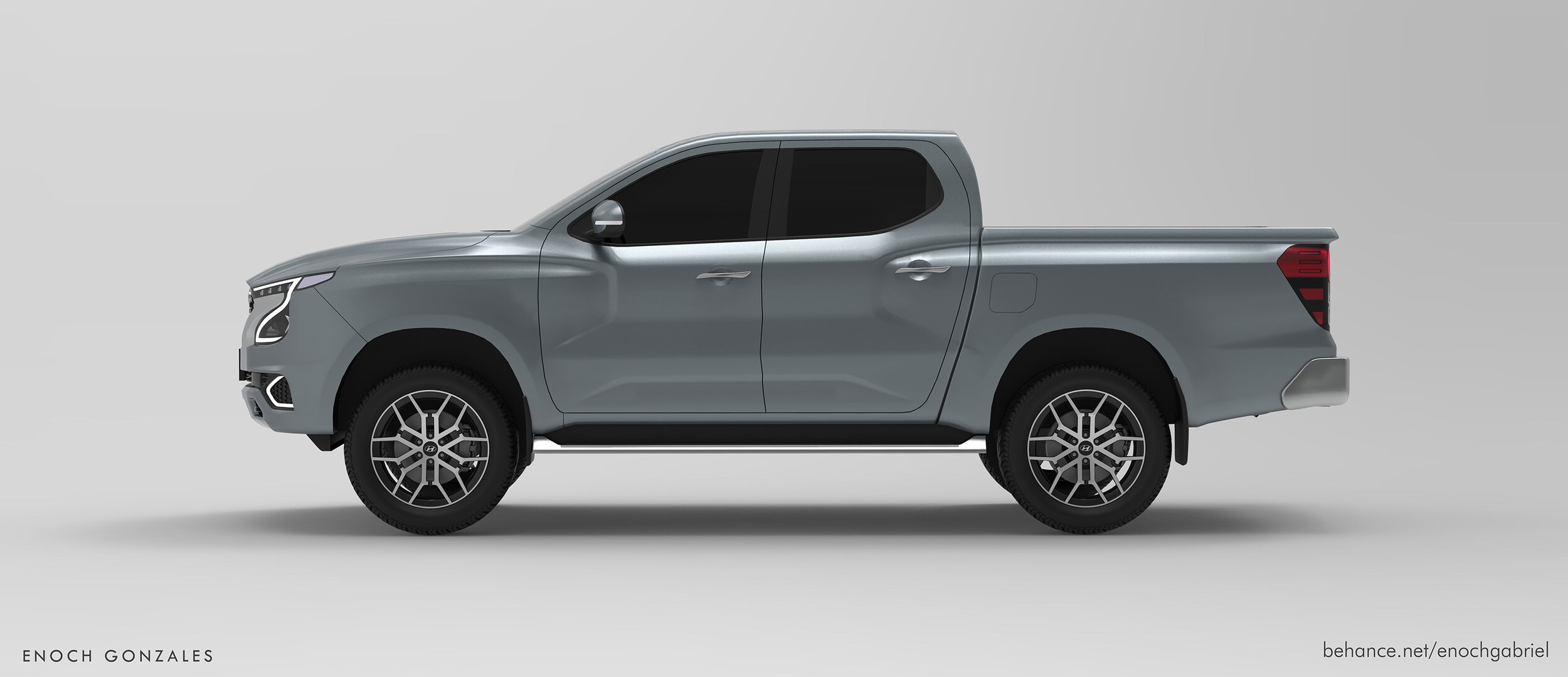
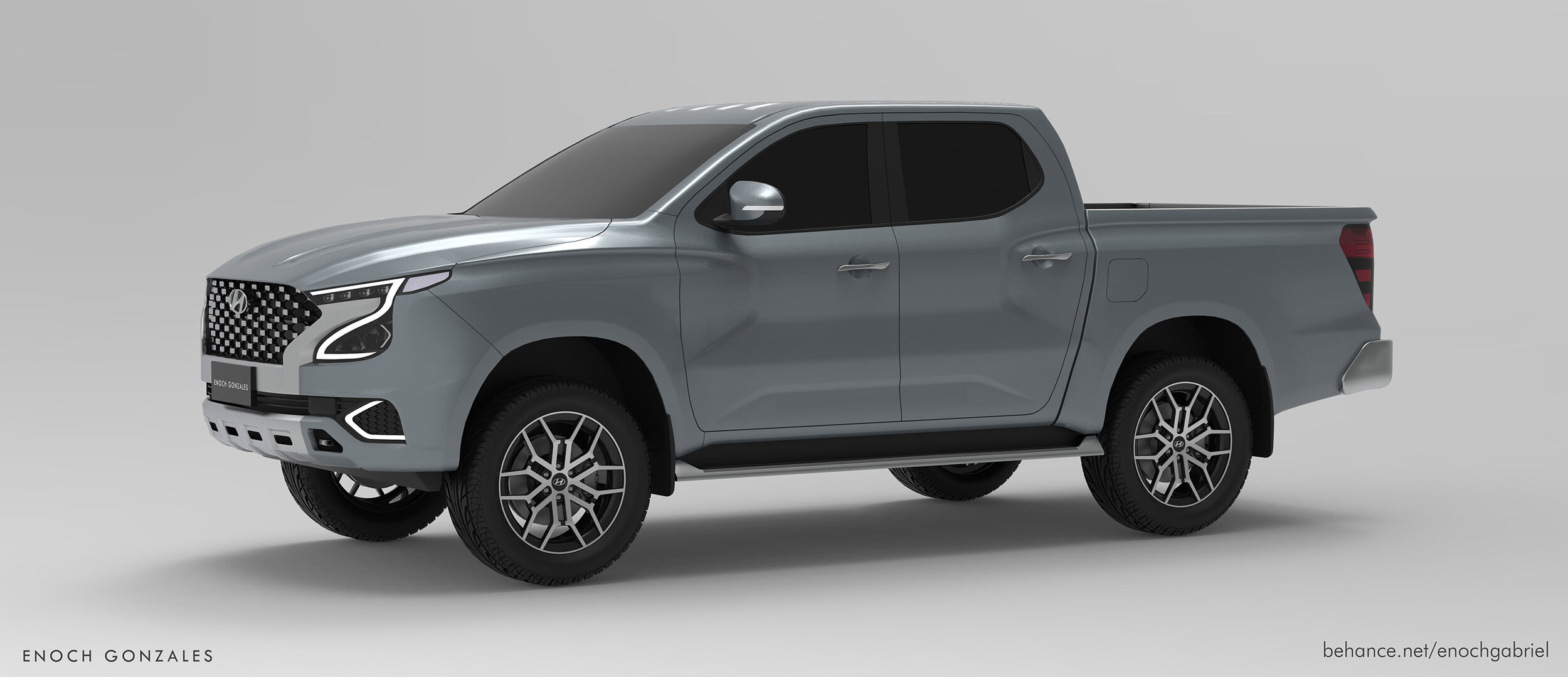
So what will it look like? Well, an industrial designer in the Philippines reckons he has a pretty good idea.

Enoch Gabriel Gonzales has fired up motoring sites all over this part of the world by publishing numerous images of a virtual model whose configuration is based on the few published images of the actual vehicle when it’s been snapped when out testing.

Given the real thing has always been heavily disguised, how confident can we be that his Tarlac – named after a province located in the Central Luzon region of the Philippines – is a good representation?

It’s a good question. Gonzales does admit that the workhorse he’s envisioned has a more traditional body shape than what the spy photos suggested. But he also claims to have remained faithful to Hyundai’s current design language.

The fascia is inspired by the Santa Fe sports utility and its bigger brother, the Palisade, which is expected to come on sale here at the end of the year.

Beyond that, he has designed Tarlac to look like a natural competitor for Hilux, Ranger and Mitsubishi’s Triton.

Regardless, let’s not forget this. There’s nothing official about the Tarlac. Gonzales is clearly a very good designer, but he doesn’t work for Hyundai.

A fact that seems to have escaped all the media who have used the images and allowed their imaginations to run wild. But, granted, there are excellent renditions.


Visual fizz for Hyundai sedan

Will we, won’t we? Hyundai NZ is being especially evasive.

i30 Sedan N-Line 01.jpg

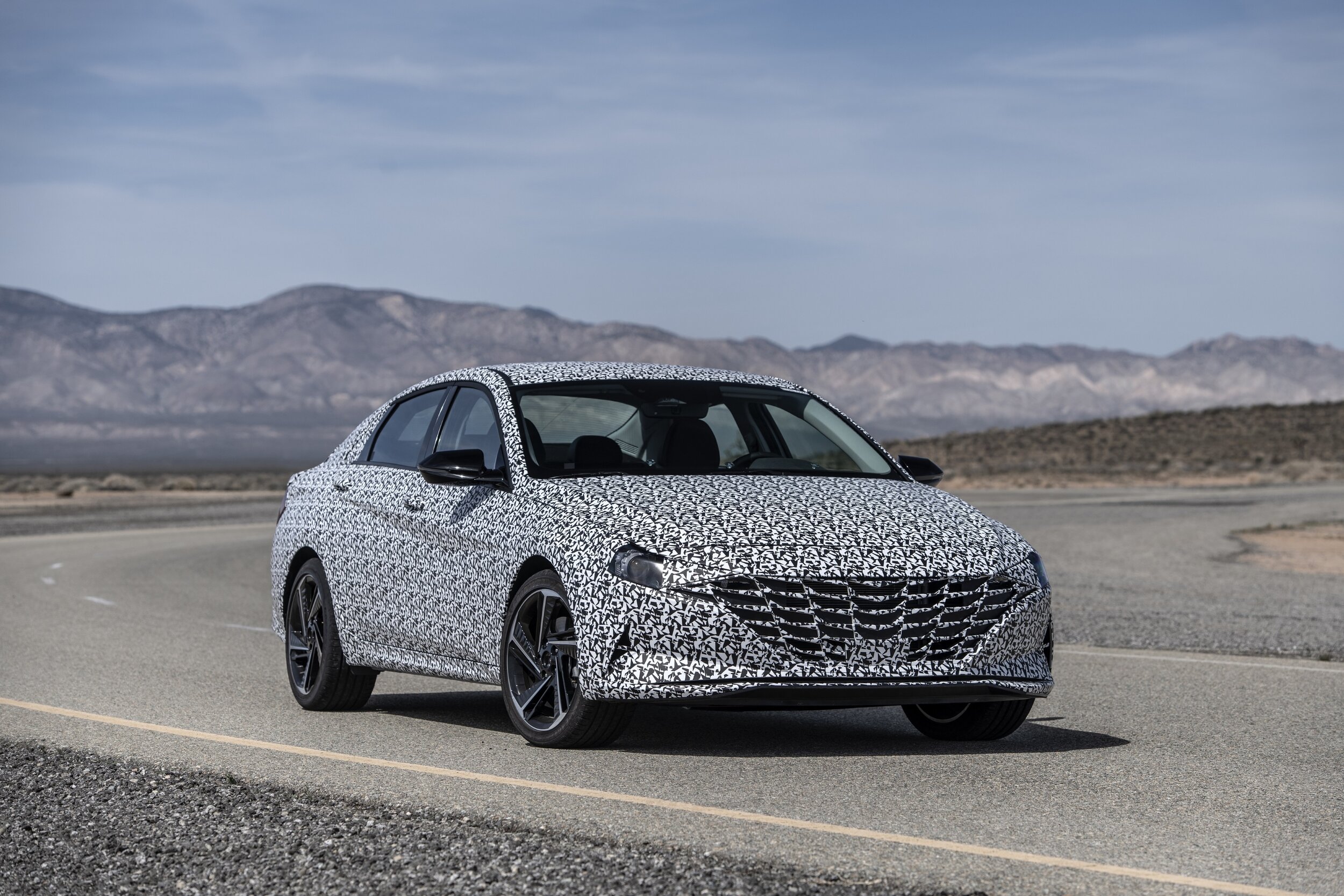
NOT an outright ‘yes’ nor an actual ‘no’ … just an acknowledgement that, should the compact sedan whose sportified look has been teased be picked up for New Zealand, it’ll more likely be called an i30 than an Elantra.

Hyundai New Zealand is being especially non-committal about local potential for a compact four-door model, to place alongside the i30 hatch and liftback, that has attracted international attention through South Korea putting out a teaser video showing the car in an N-Line trim.

This follows release weeks earlier of the standard car without the camouflage covering the N-Line edition. Can they be that much different? Well, probably not ….

Anyway, in sharing the N-Line news, Hyundai NZ’s public relations manager Kimberley Waters was making every effort to steer clear of suggesting anything that might indicate the car having local potential. Or not.

“Please note Elantra is what it this model is known as in other markets. Because Hyundai New Zealand take Australian spec and they have changed the nameplate to i30 Sedan, we too will adopt that name if we bring in the i30 Sedan and/or i30 Sedan N-Line. 

So there you go. Whatever Aussie does is what we’ll also do. Should we do it.

 Moving on. 

The N-Line should not be confused with the outright N product plan, which is basically Hyundai creating an equivalent of BMW’s M Division – indeed, the man leading this, Albert Biermann, is the former head of the Munich madhouse.

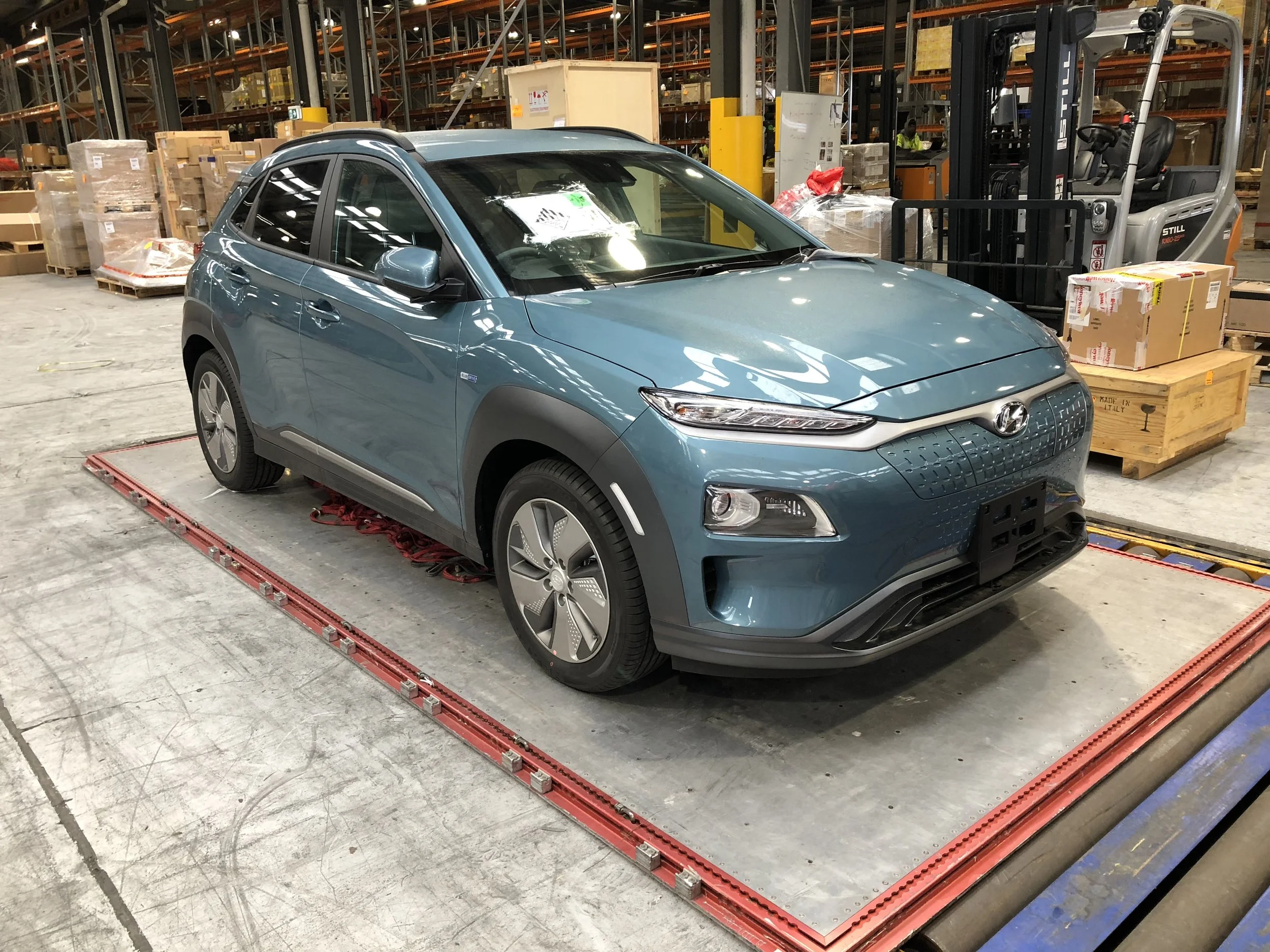
The only N model here now is based off the i30. The Veloster N is also in production, but just in left-hand-drive. The next N model for New Zealand is expected to be a version of the Kona compact crossover, with a 2.0-litre turbocharged petrol four-cylinder engine producing around 200kW and 350Nm. Also likely to also introduce the dual-clutch automatic transmission, this model is expected to land in the second half of this year.

Anyway, back to Elantra/i30 sedan. It is built on the new K3 platform which Hyundai states is lighter and stiffer with enhanced driving dynamics, and shows the brand’s latest styling outside – yeah, we know, instant nominee for ‘scary grille of the year’  - with plenty of technology highlights inside.

The only export market to so far involve with the mainstream model (below) is the United States, where it runs front-wheel drive with a continuously variable automatic transmission and the 103kW 1.6-litre that ran in the previous generation.

With N-Line, you get a few sporty looks but not the hooligan edge. With the sedan, the dress-up encompasses black exterior mirrors, more aggressive two-tone five-spoke alloy wheels and a set of twin exhaust tips poking out of the right side of the bumper. Is this an indication the variant will run the 150kW/265Nm 1.6-litre turbo-petrol used elsewhere in the Hyundai and Kia stable?

Large-40585-2021Elantra.jpg

Well, it’d seem a safe bet given that, for its part, Seoul head office has offered: “the upcoming i30 Sedan N Line adds N brand specific design elements, chassis upgrades and a turbocharged engine to the recently revealed i30 Sedan”.

The car in the video seems to include a dual-clutch automatic transmission – most likely the seven-speed unit from the current i30 N Line.

The most pronounced of the chassis upgrades will likely include an enhanced (firmer) suspension set-up. Note that the N Line hatch rides 5mm lower than the standard models.

The i30 Sedan also has a multi-link rear suspension arrangement – only seen previously on the current N Line hatch. That bounds well for the driving feel.

So is it coming? Probably. Hyundai NZ doesn’t have a habit of sending out information about cars it doesn’t intend to sell.

Even so, setting aside the ‘will they, won’t they?’ side, sedans – previous Elantra very much included - have become such slow sellers, the more relevant question might be: ‘Will you notice?’

i30 Sedan N-Line 02.jpg


Right gear, wrong car

The transmission that would definitely broaden the appeal of the best driver’s car Hyundai sells here has been unveiled.

VelosterN8-DCT02.jpg


HERE’S something to make you smile – a wet dual clutch transmission with a ‘grin’ feature.

No, for real. In releasing information about the two-pedal eight-speed box that will provision into its hard-out i30N hot hatch as an option to the six-speed manual that’s the sole choice now, Hyundai has identified one of the box’s three settings is called … ‘N Grin Shift’. Only in Korea, right?

Laugh along, because the joke will be on rivals who might dare to diss. The i30 N as is rates really well and this new transmission is simply going to broaden the appeal.

We likely won’t know by how much for a little while yet, unfortunately.

The make has decided the Veloster N coupe should be the first recipient of this tricky tech. Indications from the factory have long been that this car is only available in left-hand-drive and might only avail in two places, South Korea and the United States.

The brand claims that the DCT Veloster N will accelerate from 0-100kmh in just 5.6 seconds – exact-matching its six-speed manual counterpart.

Slotting into ‘N Grin Shift’ doesn’t make it any faster, yet promises a feistier more feral feel as that ups torque by seven percent to 378Nm thanks to a turbocharger overboost function for 20s.

An ‘N Power Shift’ feature is also included, which stays in the torque band when upshifting at more than 90 per cent throttle.

There’s also an N Track Sense Shift feature can pre-select gears depending on driving conditions, such as downhill or racetrack settings, for “optimal performance”, according to Hyundai.

The edition also retains functions such as rev matching and launch control, while also gain steering wheel-mounted paddle shifters. Expect also see them on the two-pedal i30 N whenever it rolls out.

VelosterN8-DCT01.jpg