Goodbye Legacy – a past great’s run is ending


A Subaru staple since 1989 departs from the showroom in a matter of months and there’s no talk of a direct replacement.

Current generation Subaru Legacy sedan clearcut.png


ONCE the brand’s breadwinner, long an icon but latterly able to pick up just a few crumbs … the car that once drove Subaru’s fortunes in the showroom and in sport has been axed.

Subaru New Zealand has announced it is losing the Legacy, it’s longest-lived nameplate, with last orders effectively being taken from now on, though supply will not exhaust until early next year.

The medium-sized model, which has represented as a sedan since day one but also sold as a wagon until several years ago when pulled in favour of the Levorg, has put in more than 30 years service.

At its height, it was Subaru NZ’s top seller and even managed to be the country’s most popular sedan in respect to sales volume – though that claim relied on recognition of its high popularity as a used import.

However, those glory days were long ago – as the swing toward sports utilities and crossovers intensified, the Legacy has slowly but steadily fallen back into a supporting role, and by the end was barely earning its keep.

Ironically, the car within the Subaru family that has most eroded Legacy’s stature is one that started out as as derivative – that, of course, is the Outback, still easily recognised as being effectively a Legacy wagon on stilts as it shares a common platform, the same engines and styling direction 

While Subaru here has acknowledged that last year was lean – with just 64 registrations coming Legacy’s way  – it has failed to mention in a release confirming the car’s demise that this year is shaping to way worse.

Subaru Legacy wagon 1st generation.jpg

According to registrations data accrued by Government, just two examples have found homes since January 1.

The Levorg wagon, spun off the Impreza family but with WRX genes as well, that was supposed to fill the Legacy wagon’s shoe has done little better; today Subaru basically sells entirely on its SUV strength: Forester is strongest, then Outback then XV.

It is possible Subaru NZ did not make this call about the timing of the car’s demise directly; it’s probable, in fact, that our neighbour having made the same call last week effectively killed the car in our market.

However, it was going to disappear by 2022 anyway, as Subaru Japan intended to end production of the current generation car next year. It has not indicated if a replacement model is likely.

Australia has had better sales with its model, called the Liberty (because Legacy is the name of its returned serves’ association) but still decided it was too marginal to continue with.

In supplied comment, Subaru NZ boss Wallis Dumper has indicated a model line Kiwis have known since 1989 is set for a fond farewell.

He reminded that the car landed with a big job to undertake - replacing the old but much-loved Leone.

New Zealanders were quick to embrace the Legacy however, and its popularity soared, especially as a used import in the 1990s, Dumper said.

That created an intriguing situation: “Whilst the Toyota Corolla was top of the new car sales overall, Legacy was New Zealand’s number one selling used vehicle thanks to the massive imports ratio.”

For the Auckland-based distributor, that used import swing was not a threat but an opportunity.

“We knew people loved the brand and the car,” Dumper said.

“Legacy developed a bulletproof reputation, so it was a natural progression to guide customers from a used Legacy to a new Subaru, as time went on.”

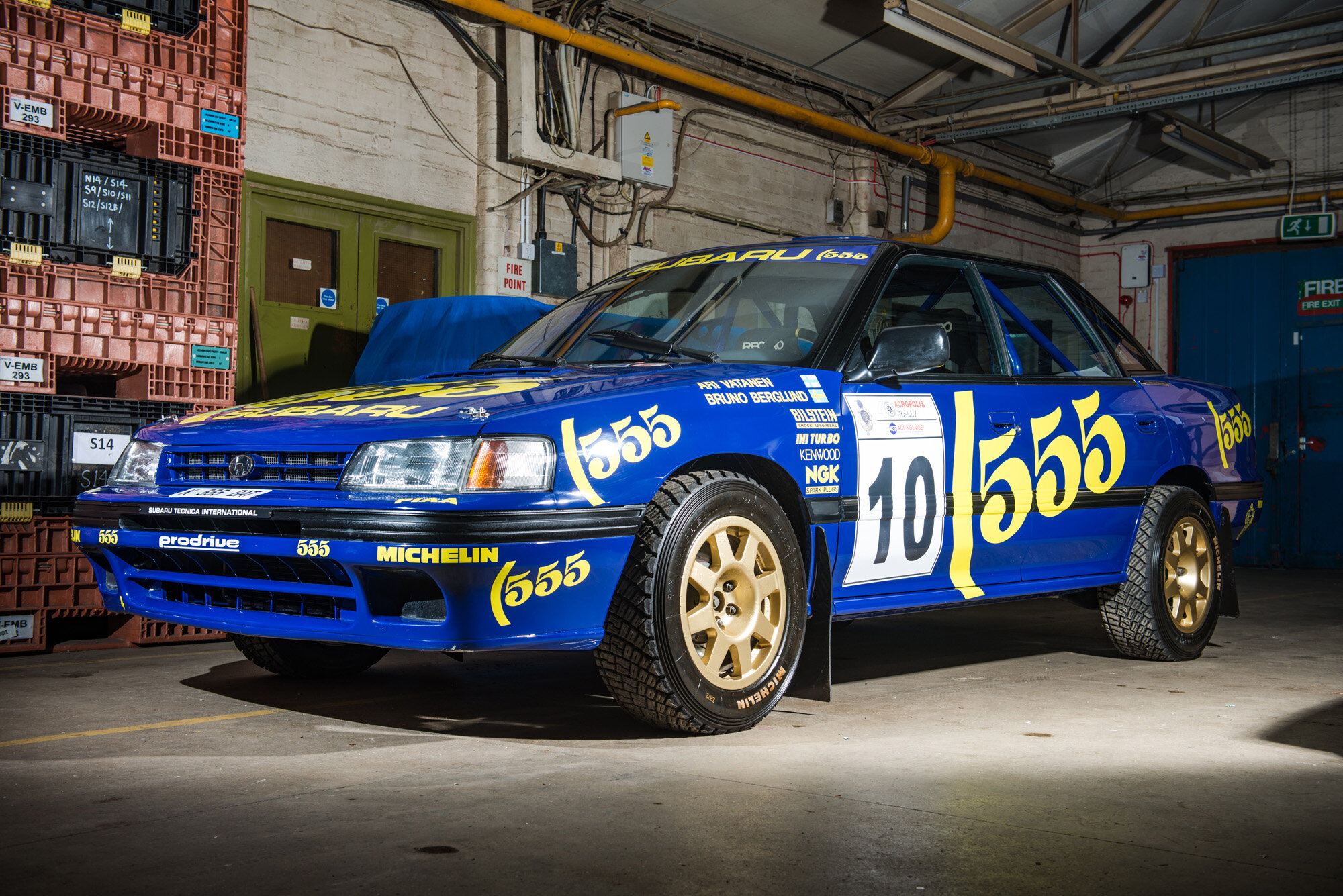
Legacy’s fame ignited with Scottish driving legend Colin McRae at the wheel when he scored the Subaru team’s first-ever World Rally Championship round win here at the Rally of New Zealand in 1993.

1993SubaruLegacyRSGroupAEx-ProdriveRallyCar2000px.jpg

“Whilst most Kiwis probably associate Subaru’s historic WRX model as being synonymous with winning rally championships, the reality is that Colin’s success in the Legacy then inspired Subaru to enter the WRX and become world champions three-times over in 1995, 2001, and 2003,” Mr Dumper says.

New Zealanders also did their bit to elevate the model’s ststus through rallying success.


“Legacy also starred on a national level in the New Zealand Rally Championship, with legends like the late Possum Bourne and multiple championship winner Joe McAndrew scoring their victories in this Subaru model,” Mr Dumper adds.

Legacy wasn’t just a success on gravel, and it has racked up a long list of awards, though it evaded the top prize – the national car of the year award, as determined by the New Zealand Motoring Writers’ Guild annually since 1989. Subaru finally got its name on that board with the latest Forester.

However, the various magazine prized it did achieve were enough to distinguished Legacy from the medium market pack, Sumper says.

Nonetheless, even though the car stood out because of its all-wheel-drive, it could not stave off the SUV trend. That 64 sold new here last year, compared to Outback’s sales of 1322 in the same period, said so much.

Over the generations, around 4000 New Zealand-new Legacys have been sold to Kiwi drivers.

Mr Dumper says: “No one can take away the credibility Legacy built for itself. Stable and sure-footed on the worst back country roads that New Zealand could throw at it and safe and reassuring on the wettest, slipperiest city intersection - Legacy has created its own legacy.”

“Subaru’s ‘Confidence in Motion’ catch phrase arose primarily from everyday Legacy drivers’ feedback to Japan’s engineers when they visited New Zealand in the early 2000s to learn why the brand was so readily accepted in Aotearoa.”

Dumper is hoping customers who still prefer a sedan will consider the current Impreza or even the WRX – though that car is but a short-term option, as it is also for the chop next year.

Meantime, a new Outback is also coming in 2021.


Sandero next ‘Romanian Renault’ for NZ?

The cut-price specialist that has just put Renault in the budget zone has just announced another baby.

The Sandero is a smaller sister ship to the Duster that has just introduced here as a Renault. What chance of also seeing it here?

The Sandero is a smaller sister ship to the Duster that has just introduced here as a Renault. What chance of also seeing it here?

MIGHT another model just announced by Renault’s budget brand could conceivably be in line for New Zealand introduction, also with a change of identity?

If chosen for adoption in our market, the new Dacia Sandero would – like a larger sister ship just trying out our terrain now – surely come here with French identification.

This potential arises with today’s announcement in Europe of the new generation Sandero, similarly styled but based on a smaller underpinning than the Duster that has just gone on sale here and historically an even cheaper car.

The Duster and Sandero are the biggest volume models built by Dacia, which began life as a Romania’s sole car brand and still makes all its cars in that country, though it has long been subsumed into the Renault empire, in the same manner that Skoda was pulled into Volkswagen.

Since essentially taking French citizenship, Dacia has specialised as a make that pitches Renault design and engineering to a more budget-minded audience than the owner can easily aim itself at.

That advantage has been used to unique degree by Renault New Zealand, which is among a handful of distributors allowed to do something that cannot happen in Europe – namely, to sell the Dacia cars as Renaults. 

Dacia also provisions the logan, a compact sedan (the silver car here). It’d likely be a hard sell in our crossover-fixated market.

Dacia also provisions the logan, a compact sedan (the silver car here). It’d likely be a hard sell in our crossover-fixated market.

Might that risk ruffling feathers with purists – or Dacia fans (assuming these existed in NZ, as the make has never been seen here under its own identity)? It doesn’t seem so.

A special launch price announced two weeks ago of $27,990 has immediately sparked interest in the 1.6-litre front-drive car, Renault New Zealand general manager Sam Waller says.

The launch strategy puts the model directly in competition with another like-sized and similarly-configured Korean model that also immediately found favour from releasing here under the same kind of special price launch strategy: Kia’s Seltos. 

 Duster compares well with the Kia, which still has a waiting list. The four-cylinder petrol engine makes 84kW of power and 156Nm of torque, delivers economy of 6.6 litres per 100km. The car has a modest towing capacity, just 1400kg, but loads up on good spec, with features including a 360-degree camera, blind-spot monitoring, and a 7-inch touchscreen with Apple CarPlay and Android Auto.

Duster’s availability and positioning in the sub-$30k zone has emboldened the distributor to appoint six additional dealers and push to raise the profile of a brand that, for years, has been barely noticed here and has survived mainly through support for its specialist RS performance products, plus a small fanbase for the Koleos sports utllity.

The Duster seems destined to establish a good following in the sub-$30k sector.

The Duster seems destined to establish a good following in the sub-$30k sector.

Conceivably, the Sandero would also strike a sweet spot. Dacia has so far only released images of the new-all model, these arriving overnight. It has said the car will go on sale early next year, starting in Europe, and promises to announced technical details in the immediate future.

Dacia says it will promising improved levels of equipment, while retaining trademark standards of simplicity and reliability.

This is the third generation of Sandero and the styling represents as an evolution of the outgoing model’s, with the same simple lines and high roofline. Roof rails, black plastic body cladding and a slightly raised ride-height are part of the persona, but restricted to a particular variant, the Stepway.

Observers say the proportions appear more stretched, with raises conjecture that it has gone onto the CMF-B underpinnings as the latest Clio and Nissan Juke.

Engines are likely to be a bunch of entry units design for Clio; petrol options could well include a 53kW naturally aspirated 1.0-litre three-cylinder petrol up to a 95kW turbocharged 1.3-litre four-cylinder petrol unit.

International speculation is that an upgraded platform would also mean the model is in line for a decent technology boost, though Clio's infotainment system and digital instrument cluster might be too expensive for the Sandero's notoriously low price-point.

Dacia has also started to dish out information about a compact sedan, the Logan. The silver car seen in one of today’s images. That car seems unlikely to find a home in NZ, as it would enter a sector that is fast eroding to negligible status.


Electric 3008, new 5008 coming

Peugeot’s cementing its status in the SUV sector.

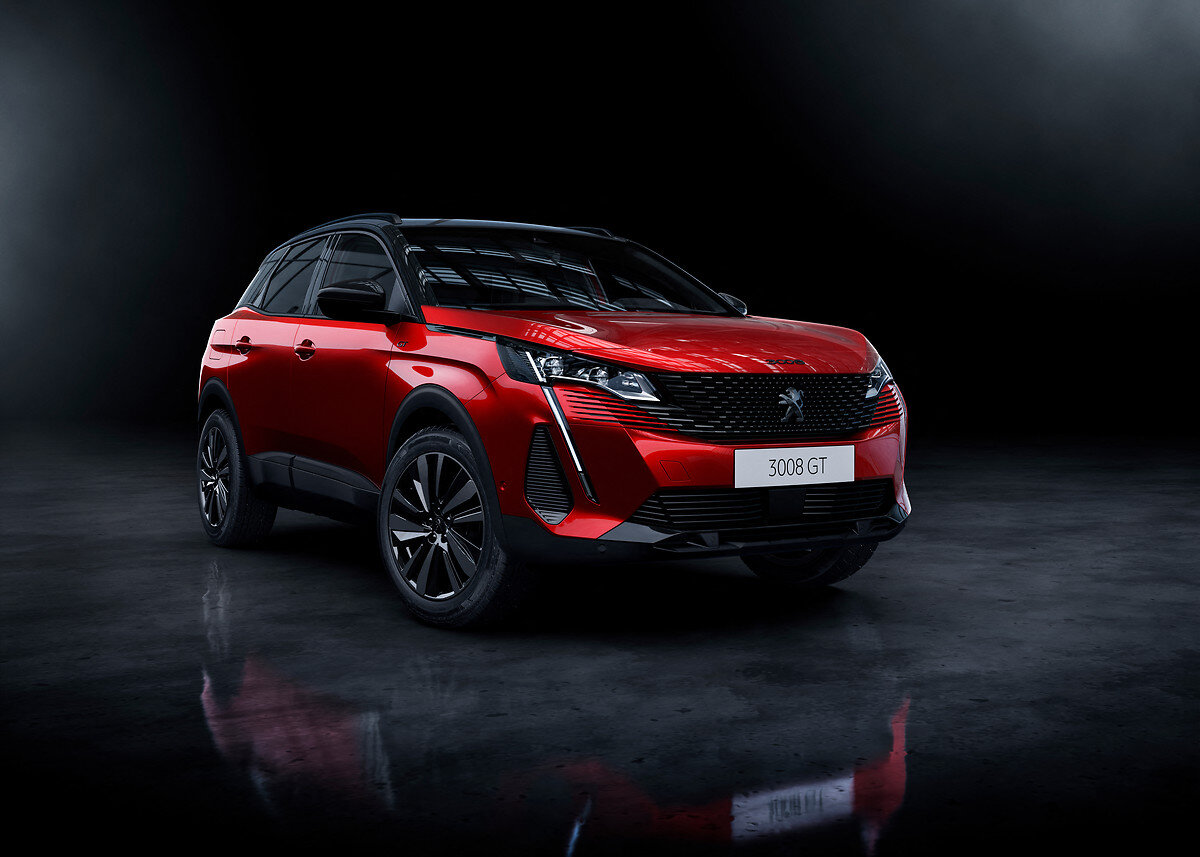
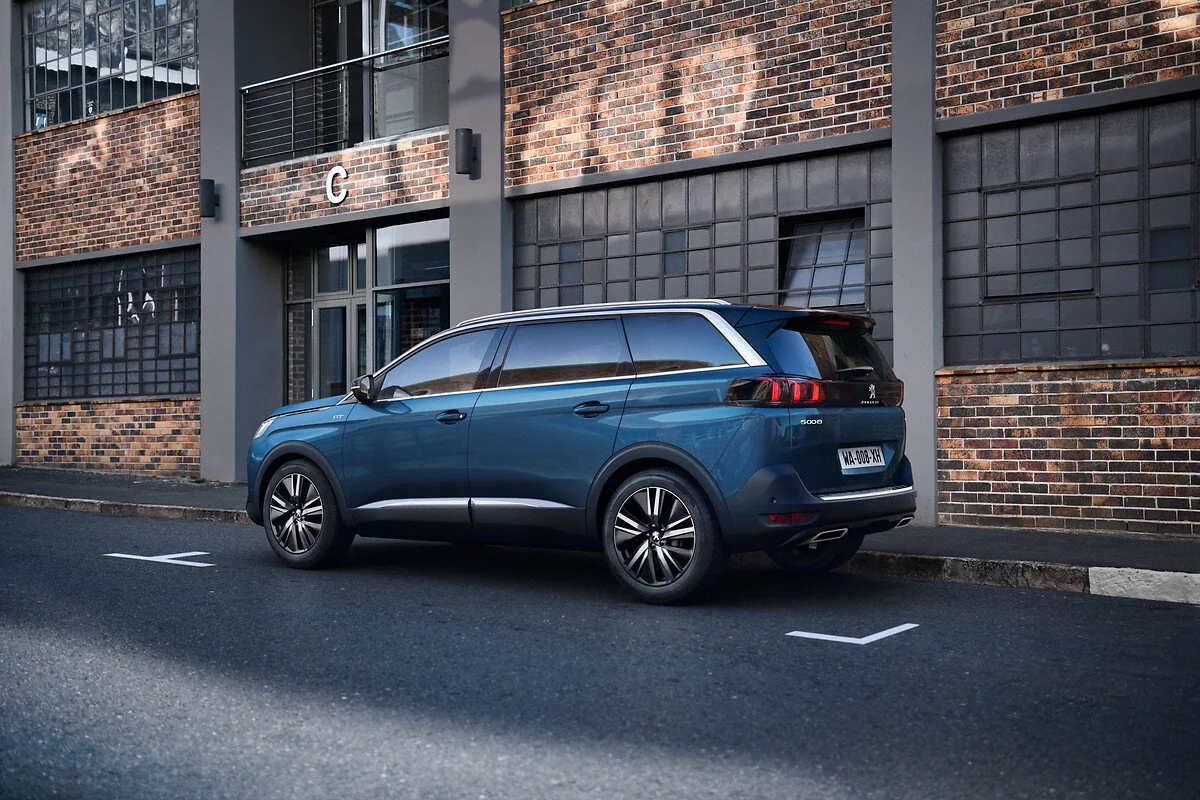
the 5008 is releasing as a larger option to the 3008, which has been Peugeot’s most popular model here and is also arriving early next year in updated form, including with a PHEV drivetrain.

the 5008 is releasing as a larger option to the 3008, which has been Peugeot’s most popular model here and is also arriving early next year in updated form, including with a PHEV drivetrain.

GOING bigger in the strongest part of the new car market is the gameplan in 2021 for Peugeot in this market – in addition to adding an electric edge to its most popular model it’s also entering the large sports utility sector.

Announcement of the seven-seater 5008 medium-large soft roader joining the local lineup, conceivably as a Skoda Kodiaq rival, follows confirmation that an update to the mid-sized and similarly styled 3008 five-seat crossover will span into another new area – electric driving.

The plug-in hybrid version of the 3008 – whose full name is a mouthful, being ‘AWD Hybrid4 300 e-Eat8’ - will stand as the first battery-compelled Peugeot sold here.

New 3008 SUV.jpg

The electric-assisted 3008 will likely introduce around the same time – so, early 2021 – as the 5008, whose two orthodox turbocharged four-cylinder engine options, a 1.6-litre petrol and a 2.0-litre diesel, might conceivably feature in other 3008 models.

No exact specifications or pricing has been announced for the cars. That won’t happen until closer to launch, says the brand rights’ holder, Auckland-based Auto Distributors New Zealand. 

Chief executive Chris Brown has expressed high confidence for both model lines, which despite being in different sectors as result of size difference are nonetheless closely related, being off a common platform and sharing the same drivetrains.

He views the 5008 as being “the perfect solution for families who desire unparalleled levels of comfort, style and refinement” while the 3008 should offer enough revised technology to maintain “as the most popular model in our line-up.”

The PHEV model augments the current edition’s 1.6 petrol with an electric motor and battery to produce a total output of 224kW and 520Nm. The electric drive configures to the rear wheels, so as to create a four-wheel-drive effect for a car that formats in front-drive in other editions. 

The driving range on electric-only power is almost 60km, according to testing on the independent WLTP cycle.

3008 HYBRID4 Charge.jpg

The 3008 also presents with a 2.0-litre diesel and a 1.6-litre petrol whose respective outputs of 133kW and 400Nm and 121kW/240Nm are as developed in current editions and also appear to be cited for the 5008 models, also with an eight-speed automatic. 

The refreshed 3008 is identified by a big update to the grille and LED lights and also delivers interior upgrades. 

The cabin takes a 12.3-inch digital drive display and also a larger 10-inch infotainment display system to refresh the i-Cockpit cabin theme. Expect new trim options and material finishes, too. 

The 5008 will intrigue as being very much a big brother in size and specification … and styling. From the back of the back of the driver’s door forwards it and the 3008 are effectively the same car. 

The model designation has never been represented previously, though it has been around for some years and used to apply to a large people mover.

Peugeot retired that car when MPVs fell out of fashion but re-issued the badge on identifying – as many others have – how large SUVs were being adopted in the same role.

New PEUGEOT 5008 SUV_Back.jpg


New Tucson, updated Kona revealed

Two models that deliver decent sales for Hyundai here will arrive next year with big changes.

All-newTucson(NX4)-01.jpg

MEDIA effort to unofficially unveil the next generation Tucso, releasing in 2021, appears to have compelled Hyundai to release some images that give an idea of what we’re in for.

Two photographs that give away some aspect of the exterior – and reveal the lighting array it delivers – and an illustration that gives an idea of how the cabin will look, though without fine detailing, were sent out today.

They seem to be in response to media speculation that has elevated to some well-known sites running their own renderings, that have relied using recent spy photos of prototypes – and taking the stylised Vision T concept that the brand put on show last year – as pointers to how the production model will eventually appear in its street-ready stage.

The official images enforce what Hyundai has made clear: That the next Tucson is a fresh start from the 2015-born current car that will debut an edgy new style, based on the brand’s latest design theme, which it calls ‘Parametric Dynamics.’ This direction also ties to another new catchphrase starting to weave into marketing materials - 'Sensuous Sportiness'.

All-newTucson(NX4)-02.jpg

Overseas’ commentators have reacted strongly to the idea of a Tucson with the new signatures of sharp creases and folds slicing through the body, plus large boxy guards and arches. The grille design, dubbed ‘parametric-jewel pattern', and those LED-lit front lamps are a big statement; so too the forked taillamp design and the (also LED-lit) light band across the tailgate.

Lots more has yet to be announced, of course. The drivetrain selection is still under wraps, but is expected to debut a plug-in hybrid working, as per the concept’s, as one of the options. An international media event - all online, of course, thanks to Covid - could well unwrap more information.

However, Hyundai NZ has already said it expects to see the car in early 2021. 

“Tucson is Hyundai New Zealand’s top selling model, so needless to say we’re excited about the arrival of the all-new model,” says general manager Andy Sinclair.

All-newTucson(NX4)-03.jpg

This is the second tranche of Hyundai SUV news this week, following the release of detail about the redesign coming for the smaller Kona, with the most obvious change being a fresh nose, though behind this will be found revised engines. The updated models also take upgraded technology. They are set to arrive in the first quarter of 2021.

News of a sporty N line trim leve, presented here by the orange car, will also likely enthuse, though nothing yet about the full-out N performance edition that has been spied undergoing testing, notably at Germany’s Nurburgring where Hyundai’s performance division has a base.

Hyundai NZ says full details of its model line up and specification will not be announced until closer to launch, however Sinclair is in optimistic mood.

All-new Kona N Line (5).jpg

“Kona has proved to be a popular model … since we launched it in 2017. We’re excited by the enhancements … and are confident its popularity will continue to grow along with the addition of the N Line.“ 

So, what’s coming? In standard trim - represented by the blue car - the facelifted Kona gets a new wider front grille with a larger lower air intake, slimmer headlights and LED daytime running lights, plus a restyled front bumper with contrasting silver bodywork trim.

The rear features minor changes limited to a redesigned bumper and tweaked lights. New 17- and 18-inch alloy wheel designs also feature.

The N Line trim adds a sportier looking front bumper with wider front fins and a deeper front spoiler with black contrasting trim. It also gets three small air intakes on the nose, colour-matched bodywork cladding, 18-inch alloy wheels, a rear spoiler, and a restyled rear bumper with a diffuser and twin-exhaust pipes.

The interior has undergone minor changes, with the addition of ambient interior lighting, a restyled centre console that houses the electronic handbrake switch, and aluminium trim on the air vents and speaker grilles. Heated rear seats are on the international options list, and rear passengers get a USB charging port.

New Kona (5).jpg

The N Line model gets aluminum pedals and red contrasting trim on the seats, gearstick, steering wheel and air vents.

A new 10.25-inch digital instrument cluster arrives, probably just for the high-end editions. The standard infotainment touchscreen is now eight-inches in size, and features wireless Apple CarPlay and Android Auto. A largest touchscreen features live parking assistance, and is capable of supporting multiple Bluetooth connections via a split-screen function.

Updated safety technology includes the addition of Leading Vehicle Departure Alert, which alerts the driver if the vehicle in front begins to move without the driver responding. A new Lane Following Assist function has also been added, which automatically keeps the car in the centre of the lane while driving. The car’s smart cruise control has been updated to full stop and go functionality, and the blind spot assistance now features collision avoidance.

No details have been shared about the drivetrains.

KONA 03.jpg


August return ok, but market sliding away

No prizes for guessing the top sellers in August.

RAV4 limited hybrid.jpg

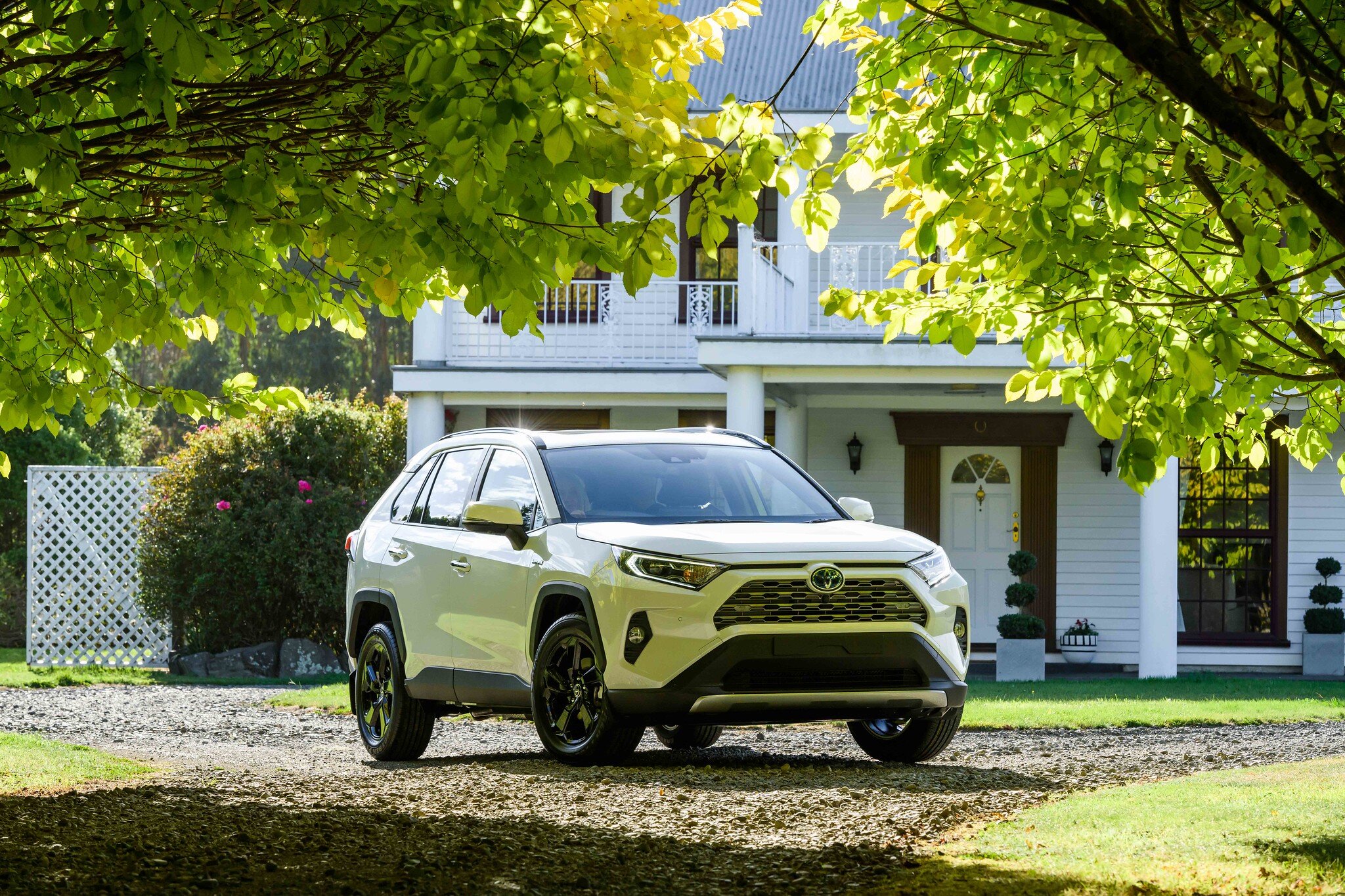
TOYOTA’S RAV4 cleaned out the opposition in new passenger vehicle sales during August, selling at more than double the rate of anything else.

And the Ford Ranger ute almost achieved the same in the commercial market, taking a massive 27 per cent market share.

But overall, new vehicle registrations in August were once again adversely affected by the Covid-19 restrictions, especially the alert level 3 in Auckland, reports the Motor Industry Association.

August registrations came in at 15.8 percent below August last year, with 10,610 new vehicles registered, which was down 1997 units on the same month in 2019.

“Year to date the market is down 23.6 percent in a year that remains heavily affected by the Covid-19 pandemic,” said MIA chief executive David Crawford.

The shining lights among the depressed level of sales were the Ranger and RAV4.

Ranger achieved 964 registrations, way ahead of the Toyota Hilux whose 524 registrations were no doubt affected by the fact the current model was in runout prior to launch of a new model this month.

The massive success of Ranger allowed Ford to retain the market lead in the commercial sector with a 30 per cent share, followed by Toyota on 19 per cent and Mitsubishi on 11 per cent.

The RAV4, with its hybrid models at the forefront, achieved 638 registrations to dominate the passenger and SUV segment – in second place was the Kia Sportage with 313 sales, followed by its smaller brother the Seltos with 243 registrations.

No surprises then that Toyota was market leader for passenger and SUV registrations with a 19 per cent share, followed by Kia on 10 per cent and Suzuki on 8 per cent.

Overall the top segments for August were once again dominated by SUVs. Top spot went to medium SUVs with a 22 per cent share, followed by 4x4 utes with 18 per cent, and then compact SUVs also with 18 per cent.

Top 15 most popular vehicles in August

Ford Ranger                  964 sales
Toyota RAV4                638
Toyota Hilux                 524
Mitsubishi Triton          376
Kia Sportage                 313
Kia Seltos                     243
Suzuki Swift                 220
Toyota C-HR                 200
Mazda BT-50                199
Mazda CX-5                  197
Toyota Corolla              194
Holden Colorado          193
Hyundai Tucson            188
Toyota Yaris                 183
Mitsubishi Outlander   159  

Into the hot zone

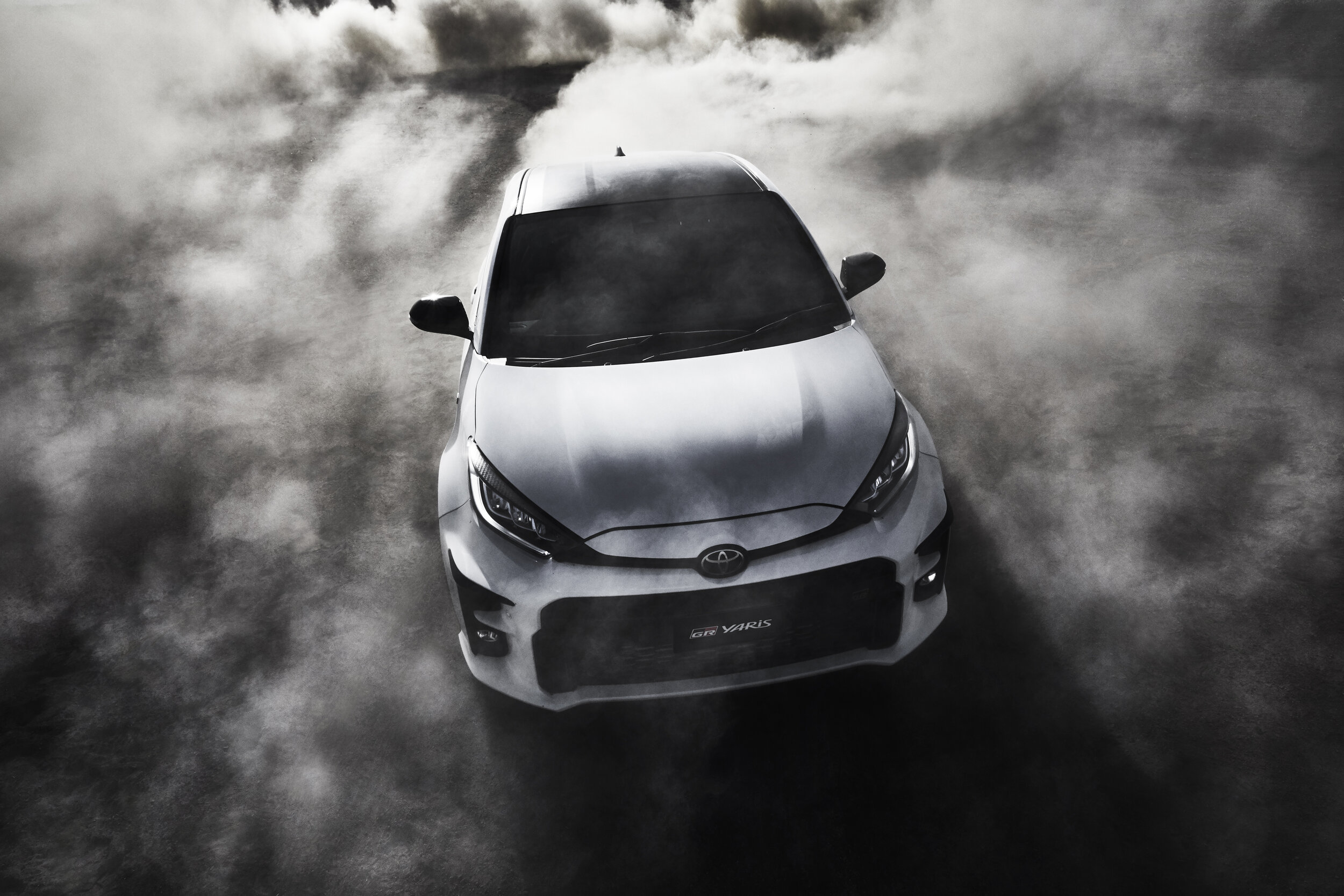
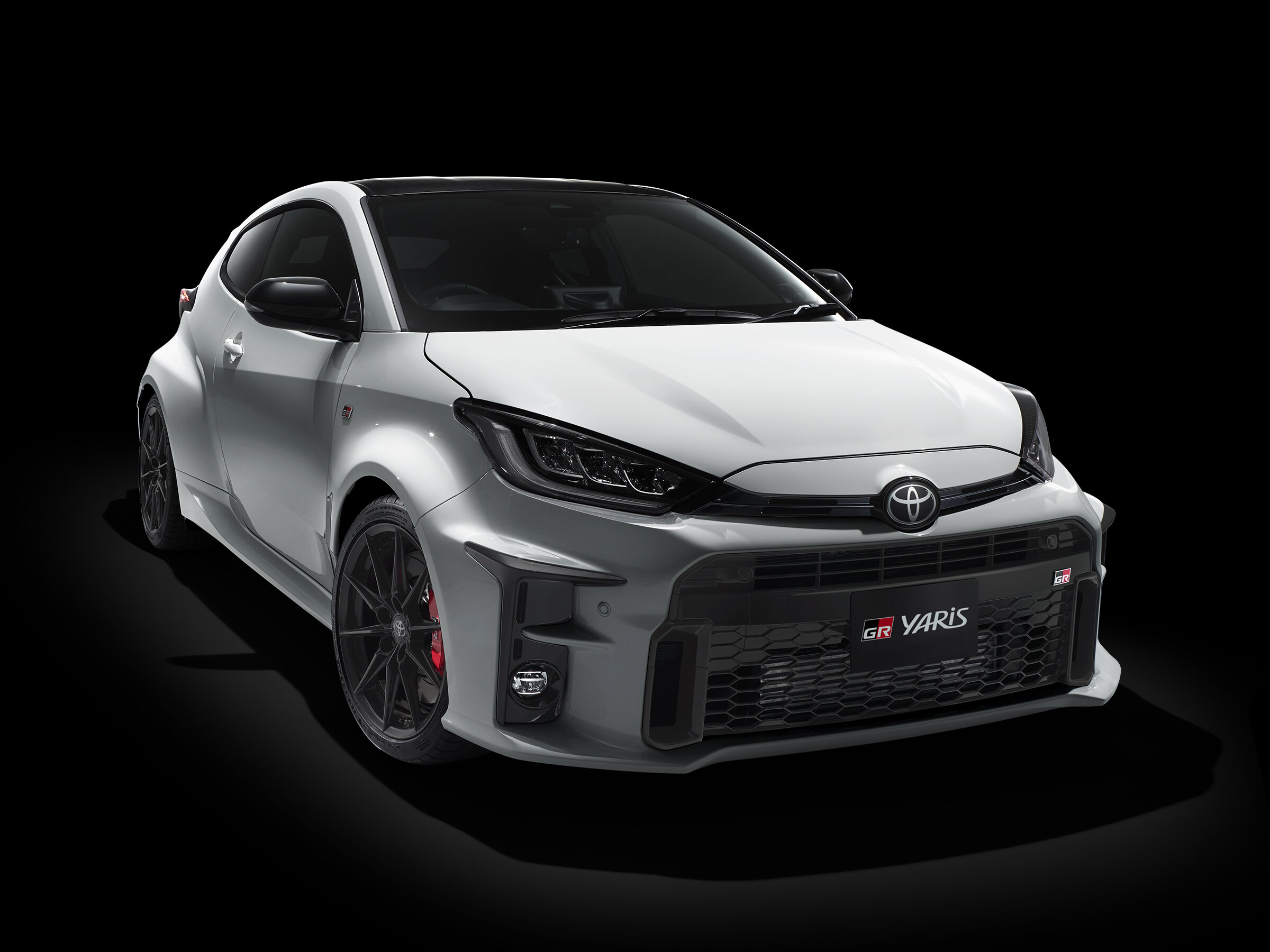
The GR Yaris has been priced to compete with some serious performance hatches.

01.+Toyota+GR+Yarishr.jpg

TALK about landing in a whole heap of trouble … but potentially in good way. 

Toyota New Zealand making public that its first hotshot hatch in ages, the Yaris GR, will start out as a $54,990 buy cements earlier signal from the Palmerston North-based marque that it plans to be a massive disrupter in this sector.

Effectively, the price puts the mighty midge bang in the middle of the action; it’ll square up against some tasty, established and well-credentialed rivals with similar performance, if not exactly alike for technical presentation, dimension or even door count. 

Today’s story lists cars surely set to be considered competitors for the Gazoo Racing-prepped giant-killer. But first, a quick rundown on Toyota’s pint-sized pugilist.

20200110_01_02.jpg

GR Yaris.

THE second model is Toyota’s GR stable could well also be the smallest in that performance car sub-genre, but promises to be a heck of a firecracker nonetheless – and, despite being set to be in short supply to start with, ultimately surely has potential to make a bigger bang than the first model to bring Gazoo’s talent into NZ showrooms, the Supra.

Powered by a new 1.6-litre three-cylinder turbocharged engine developing 200kW of power and 360Nm of torque, for 0-100kmh in 5.5 seconds, it’s the only new Yaris variant with a three-door body design, a manual transmission (six-speed) and GR specific aero adornments, suspension, drivetrain and braking hardware. 

Two ideals drive this 1280kg car. It’s another Toyota out to reset public perception about the brand; Japan HQ, under its new leadership, has realised reliability’ only works so well as a sales tool. It now needs to re-install the fun element as well. This promises to have an extra-large personality. Yes, being a Yaris makes it smaller than every other hot hatch in this sphere, but assuredly it should go so big in other ways to offset thinking about tighter size being a drawback.

One big draw is that it comes with a motorsport background. The car obviously presents opportunity establish a link with Toyota’s rising dominance of the World Rally Championship with the Yaris. In this respect, the GR is more than just about street image and reflected glories from the current WRC weapon. It is actually the basis of the present type’s replacement, being an official homologation model for the one that’ll start competing from next year.

Indeed, as rally-keen colleague and MotoringNZ contributor Colin Smith has noted, the GT road car will arrive with all the attributes required for owners looking to compete successfully in local rally competitions. Anyway, this explains the lowered roofline, widened track, trick suspension, very clever all-wheel-drive, huge brakes and advanced aerodynamics.

Keen to buy in? You might already be too late for the initial consignment. Yaris GR is basically hand-built in Japan, ‘takumi’ (basically, artisan assemblers) working on on a special line in the Motomachi factory, and is in high demand in every country it will be offered to. New Zealand was originally promised just five examples for 2020, but after receiving orders for four times that many, has been able to wangle a larger consignment. Assuredly, though, it’ll be fewer cars than it can sell and that situation is unlikely to clear up until next year.

So, anyway, what else is in the running at or around this money?

Focus ST 1.jpg

Ford Focus ST

LAST week’s test reminded that New Zealand’s association with fast Focuses/Focii has been a wild ride through history. It also reminded that everything became all the more exciting when Ford doubled the mix; keeping a front-drive firework – with ST badging - but also offering a more honed higher-tier RS that, by adding in the ingredients of four-wheel-drive, tricky differentials and even more explosive power really shook things up. 

In pure ingredient, the latter would be more a foil for the GR, but that’s semantics now, because only the ST has made into production this time. It lacks the skills and sheer wallop to stand as an RS replacement, but still comes across as a great plaything. That 206kW and 420Nm 2.3-litre has heaps of character and the new automated manual will broaden its appeal.

Still, as much as last week’s test cited it as the best ST yet, overall conclusion was the car could be better: The slightly cheap ambience for the money is a pity and while the transmission’s operability is fine, presentation is not brilliant, with the sports modes being more complex than they need to be.

i30N6.jpg

Hyundai i30 N

You know how Hyundai cooked up the N: Created an i30 hatch as a VW Golf GTi competitor, poaching Albert Biermann, then head of BMW’s M Division,  and his crew to ensure the job was done right.

It was all so worthwhile. Hyundai’s hottie is a fantastic car that’s also the only one here to be exact-priced against the GR.

You’re probably also aware there’s now also an Nth degree N in the $4000-dearer Fastback; every bit as ferociously fast and feral, yet more finessed and, of course, more functional in delivering as a five-door hatch whereas the still available original is a three-door.

Both are awesome. With 202kW and 353Nm, Hyundai’s 2.0-litre isn’t the most fiery offer in this sector, but it has brilliant flexibility and it is fun.

 Yet there are drawbacks are clearly containing consumer excitement, unfortunately. It’s stuck in the same niche that might yet bog down the Yaris in being manual only but also suffers perhaps for a lack of visual excitement. Hyundai also runs in the WRC, of course, and yet as much as this car could leverage off the brilliant results from the i20 WRC – plus, of course, the Hayden Paddon association – fact is, it doesn’t. Indeed, Hyundai NZ really doesn’t do much to remind that it has this marvellous model in its ranks.

CivicTypeR2.jpg

Honda Civic Type R

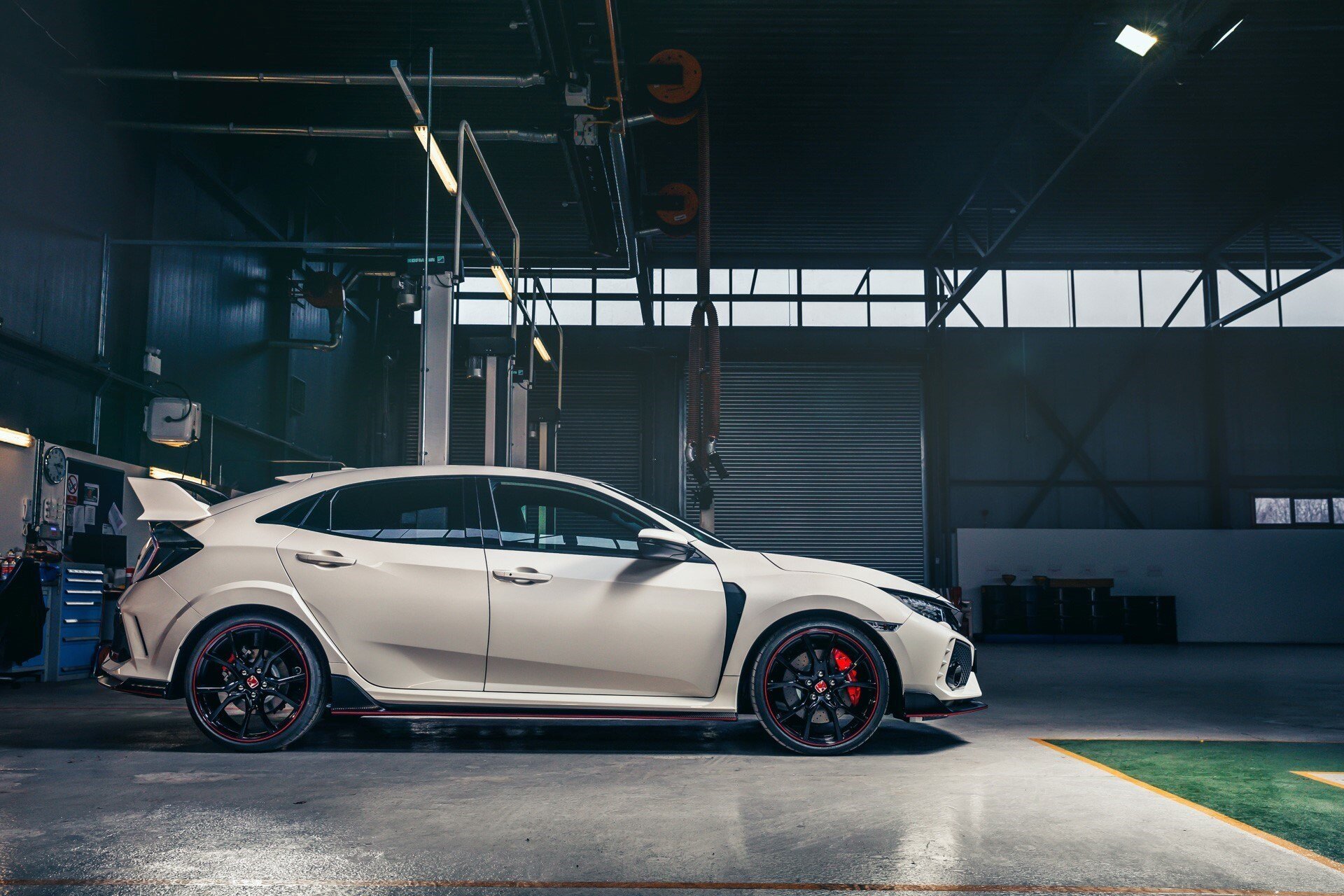
 Again, slightly more expensive that the Toyota, with the standard model sitting just $10 under $60k and this year’s Mugen-enhanced (if only in bodykit) version another $5000 above that, the Civic probably still rates as as contender simply because it’s also a Japanese berserker whose extreme character isn’t just expressed by its grunt but also the packaging. The whole look is an outrageous origami that really polarises.

Honda isn’t kidding in calling it a car kitted to meet the thrill of driving. But wow, there are no half measures here. The car has a ton of go, no argument, and the 228kW/400Nm 2.0-litre’s effervescence is enthralling, but among everything here today, it’s the one that asks most of its driver in order to entertain. You’ve really got to stir that manual six-speed to make it work. Get into the zone and it is stunning … but it’s almost too race car for its own good: The ride is very rigid and even the seat design is unremitting.

Megane RS.jpeg

Renault Megane RS

A shift from three to five-doors and three pedals to two might have stunned some fans, but overall it’s been a sensible shock. A more family-friendly shape, a more convenient transmission with the six-speed EDC, even if this dual-clutch tranny isn’t quite as good as the Volkswagen direct-shift gearbox whose consumer favouritism compelled Renault to follow suit. When the EDC car came on test, there was still a manual on offer, for $3k less than the $62,990 sticker attached to the press model.

The sheer Frenchness of the recipe will cause some to hold back and, as much as the new body shape offers greater convenience, it just doesn’t look as chic as the previous edition. What it has in common with the Yaris is a rarity factor. Few are sold, so if you see one, it commands attention. 

WRX Saigo.JPG

Subaru WRX Saigo

Just announced today, it’s the final version of the current WRX (Saigo is Japanese for ‘last’).

Subariu NZ is trying to rev up enthusiasm  by calling it “an exceptionally limited, limited-edition collector’s car” however, really, that’s sounds a bit tenuous, regardless just 18 are heading this way.

Why? Well, for one, ‘last’ doesn’t mean last of the kind … it’s more accurate to call it the final special edition. Subaru NZ has acknowledged the ‘regular’ WRX is actually going to be available here until well into next year.

Also, it’s really just a dress-up; no additional performance is promised, which is a bit of a shame. Everything additional is for show rather than go and of these the best bits – 18 inch STI wheels and red Brembo brakes – are restricted to the manual version, otherwise the additions of value amount to a Harmon Kardon stereo and Recaro seats. Nice to have, and the body trim enhancements are nicely done, but as a collector’s item, it’s not exactly at 22B level, right?

On top of this, the current generation WRX arguably hasn’t been one the true greats anyway; though in fairness no modern WRX has really felt as resolved as those produced in the era of WRC involvement. The car has become better for road driving since it hung up its helmet, no argument, and the all-wheel-drive ingredient is a cool vibe, it’s also lacked a certain edginess, particularly when the Lineartronic CVT is optioned over the six-speed manual. It nowadays struggles on stonk (197kW and 350Nm) plus it’s starting to date in look. Still, at $55,990 in this new trim it’s in the zone.

DB2019AU00061_medium.jpg

Volkswagen Golf GTI

Also in its final year of production, with a replacement already on the road in Europe and destined for introduction here in 2021, the GTI nonetheless rates consideration simply because it has been the car that has set the standard in this scene for so long.

VW NZ is keeping the type on the boil with an exciting final blow-out TCR edition (above) that primarily attracts through having extra 44kW additional power over standard plus 235/35 rubber on 19 inch rims and an enhanced trim level, but realistically at $65,990 it’s less likely to be considered a GR competitor than the standard GTI, which starts at $56,990 and, though ‘only’ making 169kW, has the same 350Nm torque as the race-inspired special and, based on all past experience, will be just as much fun on a challenging road.

Sure, we’re talking front-drive, of course, but the chassis is sweet and that six-speed DSG is the box all others tend to be measured against. Though it’s not really playing the same game as the GR, fact is that established cred alone makes a GTI hard to turn down.


Hilux to debut ‘DPF drama’ cure

It took years and huge effort here, but Toyota reckons it has finally smoked an emissions control issue dogging a core diesel engine.

Spencer Morris with the updated catalytic reduction system and particulate filter that will not only feature on the impending 2020 Hilux, Fortuner and Prado but will also become a retrofit for pre-face NZ-new examples of those models.

Spencer Morris with the updated catalytic reduction system and particulate filter that will not only feature on the impending 2020 Hilux, Fortuner and Prado but will also become a retrofit for pre-face NZ-new examples of those models.

NO more white smoke, no longer a risk of a blackened reputation – that’s the expected outcome of a fix for an engine powering Toyota’s recreational and utility vehicle push.

 Toyota New Zealand is confident the refreshed version of the 2.8-litre four-cylinder turbo diesel progressively rolling out over the next few months – initially in the upgraded Hilux on sale imminently then its sports utility sibling, the Fortuner, and lastly the LandCruiser Prado - has reconciled an emissions technology failing that has affected examples of those models for some years. 

A remedy that has been on trial here since last year is good news for those customers who own pre-facelift examples of those cited vehicles, too, as the brand intends to retrofit these with the fix, as well.

Optimism voiced by the Palmerston North-headquartered brand’s technology expert and after-sales manager, Spencer Morris, that problems with the engine’s catalytic reduction system and the diesel particulate filter (DPF) intrinsic to its operation have finally been nailed has come along with frank discussion about how much time and effort – primarily here, ultimately in Japan - has gone into reconciling an issue that might have caused customer disquiet. 

the updqted hilux, now just weeks from going on sale, will be first to debut the big fix.

the updqted hilux, now just weeks from going on sale, will be first to debut the big fix.

“It’s been a complex problem to solve,” Morris acknowledged.

“It has not been easy for us. We have had a number of Japanese visitors out to assess the issue and have had quite hard conversations about how to get on top of this.

“Every time we did something (remedial) the fail rate went down, but we never got a 100 percent cure until now, with a new DPF.”

Fitted between the engine and exhaust, DPFs collect soot and dangerous particles from diesel. 

Because DPFS, like any filter, only have a certain capacity the captured pollutants – some carcinogenic (meaning they can cause cancer) – have to be burned off, a process called regeneration.

All going well, the system will reduce particulate emissions by around 80 percent compared with your diesel-powered vehicle not having one, but the process requires the engine reaching a certain temperature and maintain it for the period of regeneration.

The system previously used by the 1GD-FTV 2.8-litre from 2015 until now has proven problematic in its original design, though curiously just within Australasia.

In saying that, while around 2000 New Zealand-new vehicles have returned issues, our market has come off lightly compared to how our neighbour appears to have fared.

The total count of vehicles showing issues here represents just 10 percent of total Hilux, Fortuner and Prado volume achieved over the past five years.

This suggests a much lower impact than is reported in Australia, where the issue has triggered a class action lawsuit, yet to be reconciled, on behalf of angry owners.

For its part, TNZ has determined to be highly proactive – not only will the updated models of the affected product have a new combined DPF and catalytic converter that provides resolution, but that part is also to be issued as a retrofit to all the vehicles it sold within the time frame where it has potential to become an issue. 

“Now we have a fix our intention to over time replace all of them. Our priority (to date) has been problem vehicles and we have pretty much worked through them.”

The redesigned DPF that Toyota Japan has created for the updated models coming soon has been trialled here since last year.

“We have fitted it to the very worst affected vehicles since last year that we couldn’t (previously) fix and it has provided a satisfactory fix … we’re very happy with the outcome and, more importantly, the customers were happy with the outcome.”

Morris reinforced that TNZ always took the issue seriously and was absolutely committed to finding a resolution as customer satisfaction was always the highest priority.

“We replaced some vehicles because we inconvenienced some customers so much. We had a number of attempts of fixing their vehicles and, in the end, we said ‘we have mucked you around too much.’ So the conversation went down the route of replacing.”

updated Prado is also due to take the refreshed technology.

updated Prado is also due to take the refreshed technology.

What might have saved us could be the weather: Simply, the hotter the climate, the worse the problem seems to be. Also, it seemed less prevalent on automatics than the manual.

Says Morris: “From what I understand, this was not a global problem. It was very much our markets.

“Ambient temperature is an issue … we have certainly not seen it as a nationwide issue. The further north you go, the worse it seems to get.”

 However, it’s not the sole factor for failure. Another is a common challenge for all diesel powertrains with DPFs struggle to cope with: Long-term idling and vehicles being driven short distances and at low speeds also accelerated the build-up of particulate matter.

Either way, the Toyota problem at its worst was impossible to ignore; blockages and the tell-tales of foul-smelling emissions from the exhaust, poor fuel economy and greater wear and tear on the engine – culminating in copious output of white smoke from the exhaust.

Toyota’s first try to get on top of this was an update to the engine software, the introduction of a DPF custom mode, and a manual inspection of the DPF for built-up particulate matter.

When that didn’t deliver as hoped, the factory stepped up to adding, in 2018, a button on the dashboard for owners to be able to manually regenerate the system if it was not automatically doing so at the required moment.

This button remains as a fully factory-fitted item in the 2020 models, which also gain more specific software and hardware improvements that, the make says, further improve the way the DPF operate and how it regenerates. 

The button is a good back-up to the vehicle’s regenerative programming. “Automatic regeneration happens when the system determines it needs to be done, but it has to complete the cycle.

Some operators found that was an inconvenience, because the process requires a period of time to complete. The manual control therefore was better for them.

“If you’re operating in an environment where you don’t want it to regenerate during that time, you might prefer to action that process in a more convenient place. 

“But I don’t know if our issue was entirely about just the regeneration, because it’s not just a DPF – that’s all part of a catalytic reduction system and it also requires a diesel oxidation catalyst, a catalytic converter.

“The DPF and catalyst are one unit. Exhaust gas passes through the catalytic converter first and then the soot is captured in the DPF.

“There are a number of different system designs but what you’re basically trying to do is poke fuel into the exhaust and get that to do the burning.

“You can do it in a number of different ways. One that is not uncommon is to inject fuel on the exhaust cycle, so you’re not combusting it, but putting it down the exhaust pipe. 

“That’s problematic because it can also cause your oil to be diluted, and some brands have had that problem. We have had it in the past, on some used import vehicles.

“The Hilux uses a system that injects fuel directly into the manifold, using a fifth injector, and one of the problems we were having was seeing a certain amount of blockage in the oxidation catalyst. 

“That caused white smoke and is what Hilux became known for.”

How to fix this? That was a frustration.

“We had a number of counter-measures … we tried a number of remedies along the way, all of which we thought would work … but they worked for some cases, but not for others.

“Our fault rate diminished over time, but we didn’t have a complete fix, so we weren’t able to satisfy all customers. It was frustrating for them and for us.”

But, finally, a breakthrough. “We are pretty confident now we have solved the problem.” 

The end cost in dollars? Morris has no idea, but imagines it wouldn’t be paltry.

“It has been an expensive exercise but we’re all about ensuring people have a great customer experience. We regret that some people have not had a great experience in this case, but we have never given up.

“We have worked on solving the problem and stuck at it until it has been resolved.”

Meantime, as well as a resolution to this issue, the 2020 update powertrain also delivers a performance upgrade, with the engine now producing 150kW at 3400rpm and 500Nm at 1600-2800rpm when mated to the automatic transmission, whereas the manual transmission option develops a lesser 420Nm at 1400-3400rpm.

IMAGE_2020 Toyota Hilux ups the ante .jpg


Coping with a zero tolerance roadscape

What does it mean now road police have scrapped any good will in respect to speed limits?

46256400-auckland-nz-june-03-2014-traffic-police-officer-pointing-his-radar-gun-at-speeding-traffic-traffic-p.jpg

NO more leniency, so a lot more speed obsession?

Road police have scrapped their speed buffer on roads in favour of a no tolerance approach.

All motorists edging over the limit at any time of the year can now expect to be pulled over and possibly fined, national road policing manager Acting Superintendent Gini Welch has told a national media outlet.

It brings an end to a long-standing convention that law enforcement would let minor speeding breaches slide. 

“We don’t have a threshold,” Welch is reported as saying. “We don’t have anything other than the speed limit. That’s what we will enforce.” 

In theory, this raises the potential of punishment for straying just 1kmh over a posted limit. In probability?

Speed measuring tech used by enforcement agencies undoubtedly has capability of clocking just that difference, yet will police be that draconian for all motorists in all circumstances? It’s one thing to ping an individual vehicle but quite another to constrain an Auckland’s traffic stream in its entirety, right?

That’s not to say a driver shouldn’t try to stay on the right side of the law. We all need to be proactive about safe driving; anyone out there actively being stupid and presenting a danger to others deserves to be brought into line.

At same token, you’d have to imagine having to become to so zealous about keeping exactly to, or under, a posted limited isn’t good for anyone, either. It’s easy to imagine some drivers becoming focused on this to the point of distraction. How’s that a plus for road safety?

So, some good news about that. Even if you’ve been in the habit of driving j-u-u-u-s-t above the posted limited, chances are you’ve really still been in the safe zone. That’s because your vehicle has very probably always been intentionally fibbing about how fast it’s been going all.

Indeed: Here’s a statement that will generally be true - if your speedo is exactly indicating 100kmh your true speed is more likely to be somewhere closer to 96kmh. It might even be slower.

Sorry, you’re telling my car’s speedo is inaccurate?

Yup.

Speedometers are always calibrated to over-estimate a vehicle's true speed to help stop drivers from unintentionally speeding.

The actual allowance for margins of error varies between car makers and models and is not disclosed, but as a rule they have always set speed measuring devices to read faster than actual road speed.

Why are they doing this? 

It’s a safety net.

International regulations in respect to speedometers is reasonably uniform.

Industry standard is that a speedo must not indicate a speed less than the vehicle’s true speed or a speed greater than the vehicle’s true speed by an amount more than 10 percent plus 4kmh.

Accordingly, manufacturers target a suitably high overestimation - in the five to eight kays an hour range - and that allows them some wriggle room on intrinsic speedo accuracy and differences in tyre sizes and so on. I’ll have more about the latter in a minute.

Isn’t this a bit duplicitous?

Well, I suppose it’s something you could argue out in court – but why would you?

 Makers could argue they’re being proactive and argue this is a safety net that’s good for all. Hands up those drivers who might occasionally sneak over the legal speed limit without realising it? Yup, exactly.

And that’s the only reason they do it?

Well, okay, it also means you really cannot blame the manufacturer for committing a speeding offence - because the speedo didn’t make you do it. In fact the speedo is probably slowing you down.

And you’re saying this is a status quo?

Yup.

And it’s been shown to be true in testing. For instance, a couple of years ago a big media outlet in Australia undertook an exhaustive test, spanning five months and involving 60 popular models new at the time. 

It found 93 percent inaccuracy and showed most speedos measured over the posted limit by an average of 5kmh at 100kmh – well within the Australian Design Rule parameters which align with European regs in requiring a vehicle's true speed must not be higher than the speed indicated by the speedometer. 

The most inaccurate reading was from a large heavy duty off-roader no longer being sold in New Zealand (though it was then). It was out by 11kmh. Just as a matter of interest, luxury cars fared better in the testing than regular passenger cars – usually within 2kmh of the true speed – as did models built in Australia. The compulsion to achieve greater accuracy with the latter increased when some states, notably Victoria, cut out leniency some years ago. And Victoria, of course, has long been the one state that NZ authorities seem to see as the leader they must follow for road safety practice.

And you’re saying this is ALWAYS the case?

Well, almost always. One crucial factor it assumes is that vehicle has not been modified inappropriately in terms of wheel/tyre size.

It’s not uncommon for a manufacturer to issue a product with a wide range of wheel and tyre sizes; but even when they do this, care is being taken not to change the overall rolling radius and total wheel height of the wheel/tyre set. 

So, for instance, a base model on 16-inch rims and a flagship on, say, 19s will still have the same rolling radius, as the smaller wheel will carry a taller tyre whereas the larger will be fitted with lower-profile rubber. 

It’s when people move to nicer rims and different tyre choices beyond the maker’s spectrum where things get interesting. If you manage to reduce the total wheel height, then the speedo will show a faster speed than the vehicle is actually going. On the other side of the spectrum, when bigger tyres are fitted, the opposite effect on the speedometer occurs.This particularly happens with off-road models when they are fitted with either mega-sized dirt tyres or, alternately, with larger rims than the maker will provision as original equipment.

So, okay, we ‘ve taken all this on board and have decided we want to be absolutely certain we’re not exceeding the limit, even by a fraction. Is this possible? 

I know where you are heading with this: GPS.

Global positioning satellite tech is a fantastically useful to establish location and ground speed. That’s why these have become a fairly common and handy accessory and driver aid in recent years. 

That speedo accuracy check in Australia was undertaken using a satellite phone app. Sitting on 100kmh with the cruise control activated, testers monitored the true speed of the app over a period of about 60 seconds, comparing it with a vehicle’s indicated speed. The app reading was then compared to an industry-certified GPS performance meter, to ensure absolute accuracy.

The results were considered bombproof, but testers were very specific about something else: The trial zone. All tests were conducted on the same flat stretch of road.

That’s because GPS accuracy is potentially compromised uphill or downhill. The system itself is reasonably robust for the Z-coordinate, but the receiver you use might not be paying that much attention to elevation in practise.

So you’re not advocating GPS as an absolute?

Well, let’s just say it might shoot you in the foot. For sure, if you want to drive legally, but at the maximum permitted speed, you can suck a GPS unit to your windscreen and compare it reading to that of the speedo to derive a correction factor.

But be aware error might not be constant across all operating speeds in your car. Also, GPS systems that indicate a vehicle's speed have NO built-in safety margin.

Plus, consider the degree of focus it will require. Even for the most fanatical and focused driver, trying to consistently drive to the maximum speed limit even for the shortest distance is pretty much impossible.

 There’s argument that the risk of getting caught speeding increases if drivers travel to the speed indicated on the GPS system, and ignore the vehicle's indicated speed.

And by the way, when discussing GPS, we’re talking about external devices, not the integrated system that the car maker has primarily provided to provision sat nav duty. The latter generally do not display speed. Presumably because manufacturers don’t want to open the floodgate of complaints about speedo inaccuracy from indignant customers, when they see two mutually irreconcilable readings on the same instrument panel. 

So why not just put my absolute trust in cruise control?

That’s really only going to work on the open road and the degree of usefulness will come down to how smart your cruise control.

To explain: Cruise control oversees your car’s speed in exactly the same way you do. Via the throttle.  These days it’s a wholly electronic set-up run through a computer which attunes to when the car has reached the desired speed or when it’s falling away from that pace.

Now we’re into the era of adaptive (also called active) cruise control, which adds in either a radar or cameras to help your car use another car’s speed to regulate its own based on your own pre-set speed. 

Regardless, the big test of how smart your cruise control will come as you head down a hill.

Some systems are able to retard the vehicle in that scenario, either through self-braking the car or at least using the gearbox, if it’s an automatic, to induce some engine braking. But these are in the minority.

If your car has a cruise control that just relies on the throttle to control speed and not the brakes, you’ll need to be ready to induce some braking to prevent ‘running away’ down a hill.

As said, if you have an automatic with ‘grade logic control’ it might have better chance of maintaining the pre-set speed, as this allows the gearbox to sync with cruise control. The system will downshift the gearbox to provide more engine braking.

However, now we’re seeing some advanced cruise control systems that will apply the brakes to keep speed in check when travelling downhill. One or two even detect corners and slow down. An increasing count are now able to read speed signs and adjust the vehicle’s pace accordingly. 

And they’re not all really expensive, either. One of the very best systems in the market is Intelligent Speed Assist, which not only tells the car you don’t want it to exceed a sign-posted speed limit, but will self-slow it when, say, moving from a 50kmh zone to a 30kmh area. This fits to a budget car, the Ford Focus

Is there a chance that police speed radar readings can be wrong?

That’s a touchy subject with the rozzers but, yes, any web search on this subject will deliver a rich haul of international tales about occasions when speed measuring devices have had to be pulled and tickets rescinded because of faulty readings.

Police use mobile and fixed speed cameras, plus radar and laser speed detection devices, either hand held or mounted in a vehicle. All sorts of information about the latter can be found on the we – we even discovered an operator’s manual (dating from 2013). The accuracy and fallibilities of equipment used by New Zealand police seems to be open to question. It’s not something I’m going into here, but assuming it is still accurate, the following made some interesting points.

https://drivetribe.com/p/police-radar-Nh9xuJ51Qo-H3dqE6LNYtg?iid=JlRN-XQ0Q8m1myf4sE-5BQ 

Right, so all in all this could be a challenge for everyone – so why are they doing this?

Police are adamant. Their research overwhelmingly shows whatever causes a crash, the outcome depends on speed. Driving below the speed limit and to the conditions reduces death and trauma on our roads. They say most illegal speeding is in the one-10kmh band above the limit. Speeds in this band are associated with the most crashes.

Therefore, they argue, everyone travelling a few kilometres slower makes us all safer. With even a small decrease in average speed, we see a decrease in the number of fatal and injury crashes.



Now there are three?

Landcruiser Prado looks set to be a candidate for the newly-updated 2.8-litre four-cylinder turbodiesel announced for Hilux and Fortuner.

Prado 2.jpg

UPGRADES similar to those confirmed for the mid-life updated Hilux and its Fortuner sibling will spread into the Prado four-wheel-drive.

Toyota New Zealand has yet to respond to a call asking about latest revisions, however information shared in the venerable Landcruiser’s core market, Australia, spills the beans.

The big change is that it achieves the same upgraded 2.8-litre four-cylinder turbodiesel in identical tune to that already announced for the Hilux and Fortuner – for Prado, that means 20kW more power and 50Nm extra torque.

There are also improvements to the equipment level, in respect to safety as well as comfort – and, yes, no surprise that it’s another Toyota to finally achieve Apple CarPlay and Android Auto compatibility. 

Prado 1.jpg

Prado’s latest refresh follows a mostly cosmetic update meted two years ago and comes as it enters an 11th year of production – that’s almost twice the normal life span for a passenger car but is par for the course for large off-road machines. The larger Land Cruiser 100-Series, whose update has already been revealed overseas and has a good chance of showing here before year-end, has been around for even longer.

TNZ has not shared its thoughts about the future sales prospects for Fortuner, however it is probable some re-evaluation will be required as it has been among models that have been pitched heavily into the rental scene, mainly for winter use, particularly in Queenstown. Same goes for Prado.

Vehicle registration stats show 542 of the 816 Fortuners plated-up in 2019 were for rental. With Covid-19 having destroyed international tourism, the hire scene penetration has unsurprisingly completely eroded this year and, with 154 units registered to date, buyer interest in general is also well down,.

IMAGE_2021 Toyota Fortuner has been updated, international image shown.jpg

Prado, meantime, claimed 1056 registrations in 2019, of which 586 were rentals, and since January 1 this year has so far found 173 registrations, of which three are noted as heading into rental use. 

The engine update is as touted for Fortuner and Hilux. Maximum outputs are now cited at 150kW and 500Nm in all three models when married to the automatic transmission that is standard to the wagon variants.

The Prado being the heaviest model with this engine will likely be the slowest off the mark to 100kmh, and potentially might be the thirstiest, though in that respect there is still improvement.

Toyota suggests the combined fuel consumption has been reduced and combined CO2 emissions are also down, this coming from adoption of a variable flow control power steering device and modifications to turbo design and cooling system.

A new water-cooled, heavy-duty ball-bearing turbocharger with a newly developed variable nozzle vane mechanism features, while cooling and efficiency have both been stepped up thanks to “optimised pistons and piston rings, changes to the cylinder block and head, higher fuel-injection flow rate and the adoption of high-performance materials for the exhaust manifold”. 

As before, drive is sent permanently to all-four wheels via a six-speed automatic transmission with a low-range transfer case.

Maximum braked towing capacity also holds firm at 3000kg for Prado; with Fortuner this increases from 2800kg to 3100kg.

IMAGE_ 2021 Toyota Fortuner has been updated_international image shown.jpg

Both model lines gain changes within the cabin. With Prado, the touchscreen is upgraded to an 8-inch display and the instrument cluster and multi-information display have been revised with new information displays including front wheel turning angle.
 
The Fortuner range has two specification levels – the GXL, and the Limited. Both variants gain parking support alert, which includes two front and four rear parking sensors. 

With Prado rain sensing wipers have also been added across the range and features contained within the Toyota Safety Sense system upgraded.

The autonomous emergency braking system has been expanded to now detect cyclists in daylight and pedestrians at night (previously only in the day) while the lane departure warning system can now brake one side of the vehicle to help the driver remain in their desired lane.

Road-sign assist with speed sign recognition also joins the package with the new function able to reset the Prado’s cruise control setting.


Crumpy spirit ... and the pride of Aussie

Everything good arriving with the update of a Kiwi icon ute is due to Ocker influence. Apparently.

IMAGE_ 2020 Toyota Hilux ups the ante .jpg

 "I'M sure if Hilux could talk, it would definitely have a strong Aussie accent." 

Yes, he really said that. ‘He’ being Toyota Australia's general manager of product planning and development.

Rod Ferguson claims a one-tonner whose Kiwiness is a core sales strength here is “more Australian than ever.”

The comment is based on the high degree of development work behind the model’s mid-life facelift having been undertaken across the Tasman.

Now just weeks from national introduction, the updated line – whose NZ pricing was announced today - is core to Toyota New Zealand putting any effort into renewing effort to regain ute market leadership.

It held that position with ease for more two decades until the pesky Ford Ranger turned up and nabbed the crown more than half a decade ago.

Hilux conceivably has a chance to get back on top, not this year but perhaps in 2021, which will be when Ford ends sale of the current Ranger and swaps to a new model that becomes a co-share with Volkswagen. Ford is leading that project, so the new Amarok will be a Ranger in engineering though probably not in look. 

Toyota NZ has worked hard to cement Hilux as a Kiwi icon; that effort beginning in earnest in the 1980s with advertising involving total Kiwi bloke, Barry Crump.

Back then, too, it used to host Japanese engineers keen to understand what New Zealanders wanted from their utes. Occasionally, pre-releasing testing was undertaken here.

However, what happened then – and hasn’t happened here for years – pales into insignificance in comparison with the rework job of the current Hilux that Japan headquarters has entrusted to Toyota Australia. 

Detail of that project has been revealed to an information pack that has circulated to media across the Tasman. 

IMAGE_2020 Toyota Hilux ups the ante.jpg

Ferguson claims his design and engineering teams were entrusted with undertaking significant styling, development and evaluation work that finetunes the international specification.

In other short, that means the Hilux coming to us is all thanks to them.

Ferguson says Toyota Australia played a considerable role in styling the exterior of the Hilux range, as part of an international team, to the extent they had transformed the styling to align it more closely with the global Toyota ute and truck family.

Engineers from the brand’s Melbourne-based operation had focused on evaluating and helping to develop upgrades to power and torque, suspension and steering.

The combined effort from the Australian teams – who worked extensively with their Toyota counterparts in Japan and Thailand – has delivered the bolder looks while offering even stronger performance, enhanced ride comfort and a more precise steering feel.

"Being awarded this project was a real feather in the cap for our team - and a tribute to the level of design capability we have at Toyota Australia," Ferguson said.

"In addition, our vehicle evaluation team was instrumental in the global development of the 2.8-litre turbo-diesel engine and improvements to the way it rides and handles across a wide variety of conditions," he said.

"I'm sure if Hilux could talk, it would definitely have a strong Aussie accent."

Toyota Australia's product design manager Peter Elliott said the brief was to develop a simple and strong athletic pick-up truck, a vehicle that was tough and genuine.

"From the beginning, our sketches investigated bold and tough themes that centred on a larger, more vertical trapezoid grille enhanced by an upper bonnet moulding and lower bumper components that lock into the grille surround," Mr Elliott said.

"The headlamps have been moved outboard and they now connect with the distinctly chiselled bumper corners, linking the design. We progressed through clay models and CAD, evolving the idea to be cohesive with the rest of the vehicle, while maintaining maximum visual impact.

"The final design was milled as a full-size clay model and shipped to Japan, where it was well received as a bold step forward with a strong Toyota DNA."

Development and evaluation of the 2.8-litre engine - which now develops 150kW and up to 500Nm with a recalibrated six-speed electronic automatic transmission (and 420Nm with the six-speed manual) - suspension and steering in Australia was conducted in collaboration with teams from Japan and Thailand, as well as representatives from ‘other’ markets. Presumably that means someone from Toyota NZ got to ride along.

Toyota Australia's vehicle evaluation manager Ray Munday said Australian road conditions cover more than 80 percent of the different environments around the world, and local customers are some of the toughest Hilux users.

IMAGE_2020 Toyota Hilux ups the ante .jpg


Munday said higher engine output, particularly with a wider and flatter torque curve, had resulted in significantly improved acceleration, overtaking and towing.

Toyota engineers claim to have improved performance and fuel economy simultaneously by adopting a larger, heavy-duty turbocharger with a ball-bearing cartridge for exceptionally crisp and strong throttle response, and a new common-rail injection system with a higher maximum fuel pressure of 250 MPa.

Fuel economy is also said to benefit from a new combustion chamber that reduces cooling losses and more efficient exhaust gas recirculation (EGR) in the intake manifold. A water-cooled double-pipe pre-cooler results in optimum EGR gas temperature.

On SR and SR5, drivers can choose two modes: ECO which reduces throttle response in favour of fuel economy and reduces power consumption for heating and cooling; and POWER to provide sharper acceleration response for a more engaging drive on undulating and winding roads.

Munday said the six-speed automatic transmission had been recalibrated to allow earlier lockup for improved acceleration and cooling performance, especially while towing.

HE has also opened up about the suspension rework. The models introduce longer leaf springs to suppress road vibrations, wider spacing of the springs for stability while cornering under load, and revised attachment points to promote steering stability.

The 2020 facelift has resulted in retuning of spring rates, shock absorbers and suspension bushes as well as revised cabin mounts. These improvements are designed to deliver a more agile handling response and improving ride comfort, particularly when unladen on country roads and over speed humps.

"The ride comfort of the rear suspension has been noticeably improved when driving without a load. Importantly, the vehicle maintains the Hilux DNA of being able to carry heavy loads with excellent body control, both on sealed and dirt roads.

"We also confirmed that Hilux maintains its acknowledged off-road traction with the combination of high wheel articulation and traction control systems which have previously been tuned in the real-world customer conditions of Australia.

"In addition, we adopted a variable flow control power-steering pump to provide a more direct steering feel on narrow winding country roads and to reduce steering effort when parking."

Each part of the new package was tested in Australia to confirm that it met the performance targets in real-world customer conditions as well as on test benches and test tracks.

"Importantly, we were able to confirm the cooling performance was maintained in every test we could throw at it - including uphill highway towing with an ambient temperature well over 40 degrees.

"If a vehicle can survive the Australian customer and the Australian environment, it can survive anywhere," Munday said.

hr-15.+2020+Toyota+HiLux+SR5+7625.jpg

MotoringNZ has previously touched on the spread of driver assists incoming, but to remind it has the usual full range of electronic braking and traction-control technologies, emergency stop signal (hazard lights), reversing camera (pick-ups), seven airbags, and seatbelt reminders for all seats. On double-cab variants, the rear seats have two top tether anchors and two ISOFIX points.

Downhill Assist Control is standard on all 4x4 SR5 variants and 4x4 automatic SR double cabs (including cab-chassis). Toyota Safety Sense technologies in HiLux are: a pre-collision system that can also detect pedestrians (day and night) and cyclist (daytime); high-speed active cruise control, and lane-departure alert that offers steering assist (via the brakes) to prevent unintended wandering into another lane. Road-sign assist can now recognise speed advisory signs. New for SR5 double and extra-cab pick-ups are front and four rear sonars to support parking. When the system detects objects, it alerts the driver with a buzzer and a message in the multi information display.

By the way, Ranger fans who see this Aussie influence as something funny should stop smirking now. Their favourite truck underwent exactly the same process and will again, with Ford Melbourne having maintained its role as the Ford model’s primary development centre.

Toyota NZ proposes to launch with 18 Hilux variants, evenly split in rear and four-wheel-drive. The rear drive models start with a 2.7-litre Workmate single cab chassis with automatic at $28,990 and topping with a 2.8TD PreRunner SR5 Cruiser Double Cab automatic for $47,490. The four-wheel-drive range is totally wed to the 2.8-litre and starts with a single cab chassis at $44,990 and tops with a $58,990 SR5 Cruiser double cab auto.


High confidence with Expert

Another European van is about to arrive. Or, more accurately, return.


Expert 2.jpg

DETERMINATION to deliver a driving feel and cabin ambience that would be familiar and comfortable for its car customers while also tailoring to meet best expectations of the commercial sector has been prioritised with the new version of a French van making a second go of the local market.

Arek Zywot, commercial manager for Auto Distributors, the national franchise holder for Peugeot, says the formats for the Expert van chosen for this market are reflective of extensive work by his office and the brand’s distributor in Australia, where identical models will be adopted. 

Thus, a wider choice of body styles, engines, drivetrains and trim and specification levels for a model that builds with a single roof height in all formats has been refined.

This market will to just two wheelbases – 4950mm for what’s being called the $54,990 ‘medium’ here (and is known as the ‘standard’ in Europe), and 5300mm for the $4000-dearer ‘long’ (these respectively provisioning 2510mm and 2860mm load lengths) – with a common 2.0-litre turbodiesel creating 110kW and 370Nm married to an eight-speed automatic transmission. 

These adopt a safety pack that encompasses all increasingly commonplace features and assists, but disregards some advanced aides that operators in Europe and the United Kingdom enjoy.

The NZ market trim takes smart headlamps, driver and passenger front side airbags, adaptive cruise control, blind spot monitoring, automated emergency braking and a distance alert system, but has a more simplified rear parking assist than can be provisioned in Europe and comes without the head-up display, lane departure warning, speed limit recognition and full driver monitoring meted in its home market. 

Expert 1.jpg

Nonetheless, Zywot is confident his brand has created a stronger foil for the new Renault Trafic, Ford Transit and others than the previous Expert, which was dropped three years ago having struggled to imprint in this challenging sector.

“We looked at all the options … we didn’t strike for an entry level price point or model. We just went for what we believe this market wants, so we delivered the van with those specifications.

“We wanted to focus on as passenger car-like equipment level; with a focus on safety and comfort. We’re bringing an upper-level feel to the van world.

“If you drove one of our passenger cars and jumped into our van, and got the same feeling of comfort and safety, then we have achieved what we are aiming for.” 

That’s why the 110kW engine was chosen over other like-capacity formats, one making 89kW and the other 129kW. Auto Distributors’ research had identified that the 110kW unit was within a space most enjoyed by the market.

“When you look at ours against the Trafic or the VW Transporter, we are in the ballpark with the same or more kiloWatts and it delivers us the right torque to give us a good payload.”

Expert 3.jpg

About that. A particular plus point that the distributor will enforce is that it’s 1300kg payload is a best-in-class while it’s also being one of two choices in the market that can tow more than two tonnes braked.

These feats might seem all the impressive given that the Expert is an interesting blend in respect to its engineering, this generation having become a merging of the previous model’s rear portion with a front based on the EMP2 platform that Peugeot and Citroën use for their cars.

The vans also seem set to match the fully passenger fare in fuel consumption, which is claimed to be 6.3 litres per 100km in optimal condition, with CO2 emissions of 165 grams per 100km.

The model’s re-entry being an Australasian effort made it easier for to go for a blended spec than simply adopt the models that go into the vehicle’s right-hand drive market, the United Kingdom, where there two standard trim levels, S and Professional, plus Grip and Asphalt versions that are a bit more specialised.

Also influential was recognition that the smallest variant, called the Compact overseas, was potentially too size-compromised for this market. 

Accordingly, that 4600mm long option has been ignored for the Medium and Large, whose load volumes are 5.8 and 6.6 cubic metres respectively in orthodox form, though an optional Moduwork’ package delivers ability to transport longer items such as lengths of wood via a through-loading hatch located under the passenger seat.  This increases maximum load length capability by 1162mm. Both models have with an overall height of 1940mm and a useable internal load height of 1397mm. 

Twin sliding doors are standard and it has dual barn-style rear doors, capable of opening to 180-degrees. In Europe there’s a hands-free entry feature that lets you wave your foot underneath the rear bumper to open the side door.

Expert might yet range into carrying passengers as well as packages. The minibus configuration with three rows of seats and space for nine passengers has not been discounted, though immediate introduction doesn’t make sense with the tourism market have been destroyed by Coivid-19, Zywot suggests.

As is, consideration for occupant comfort compelled delivering the vehicle with a bulkhead behind the seats, creating a completely sealed cabin environment, which enables a more car-like experience, Zywot says, and improves the effect of the heating, ventilation and air conditioning functions. He believes the audio coming with Apple CarPlay and Android Auto functionality will also be popular.

A diversity of accessories will avail.  Items include a wooden floor, wall panel and wheel arch box inserts, as well as a rubber mat for added grip and protection in the cargo area. Another option includes a fold-down writing table in the central seat-back, as well as a storage squab under the central passenger seat.

The styling can be given a bit of a fizz up with an optional ‘Look Pack,’ which delivers body colour front and rear bumpers, side rubbing strips and exterior door handles.  Larger 17-inch alloy wheels are also included, as are LED daytime running lights.

Expert 4.jpg


The science of SPCCI explained

Raised compression and ultra-lean air:fuel ratios are at the core of an innovative combustion control process set to debut here soon. The new SkyActiv-X petrol engine will power flagship additions to the Mazda3 and CX-30 line-ups. 

A small displacement Roots-type supercharger assists with the high volume of air needed for ultra-lean combustion.

A small displacement Roots-type supercharger assists with the high volume of air needed for ultra-lean combustion.

‘CROSSOVER’ has become a modern automotive buzzword.

Mazda has developed a crossover engine – one which runs on petrol but has combustion characteristics more closely aligned to diesel.

And to emphasise the achievement it’s applied the X-suffix to its SkyActiv nomenclature.

The new 2.0-litre SkyActiv-X delivers the throttle response and revving characteristics of a petrol engine with the high torque and low consumption attributes of a diesel.

It’s a practical application of the Homogeneous Charge Compression Ignition (HCCI) petrol engine principle in which a very lean air:fuel  mixture reacts spontaneously to heat and pressure during the compression stroke.

To-date HCCI has been considered impractical for production vehicles because they work in a narrow range of conditions. Variations in atmospheric pressure, temperature and fuel quality can result in destructive pre-ignition and detonation.

Mazda’s clever solution has been to add spark control to an engine that theoretically shouldn’t require a spark plug along with a world-first application of in-cylinder pressure sensors.

The SkyActiv-X engine achieves both spark ignition and compression ignition and can move between modes.

Mazda calls the technology SPark Controlled Compression Ignition (SPCCI). The new engine has a very high 16.3:1 static compression ratio and operates at extremely lean air:fuel mixtures.

The theoretical ideal for gasoline engines is to burn a 14.7:1 air:fuel ratio - known as stoichiometric - which defines that all fuel is burnt without excess air.

SkyActiv-X can operate at ratios more than twice as lean (higher than 30:1) – a scenario in which a spark plug would be unable to ignite the lean mixture.

SkyActiv engine production is now at full steam

SkyActiv engine production is now at full steam

In SkyActiv-X the spark plug is used to initiate and control combustion. As the piston is compressing the ultra-lean mixture the engine control systems are monitoring cylinder pressure and combustion is initiated with a small and precisely timed atomised fuel charge being injected close to the spark plug.

When ignited it creates an expanding fireball (Mazda calls this an air piston) that rapidly raises the pressure and temperature in the combustion chamber to the point where the much leaner mixture is ignited.

Mazda says size and timing of the fireball is being constantly altered. At cold start and under high revs/high load conditions the engine primarily works in spark ignition mode.

Across a range of normal driving conditions, it is estimated the engine operates in SPCCI mode about 90 per cent of time.

The extremely lean mixture burns cooler which in turn reduces temperature differences in the cylinder head, piston and cylinder walls. The cooler combustion also significantly reduces the formation of nitrogen oxides (NOx).

Along with less fuel the engine also requires more air for which the solution is a small displacement, belt-driven ‘‘Roots’’ type supercharger.

Mazda's MZ-D Connect centre display provides confirmation of when the SkyActiv-X engine is running in SPCCI mode.

Mazda's MZ-D Connect centre display provides confirmation of when the SkyActiv-X engine is running in SPCCI mode.

In common with the familiar SkyActiv-G 2.0-litre direct injection petrol unit, the SkyActiv-X measures 1998cc displacement.  The engines share much of their block and bore/stroke architecture but a new cylinder head has been designed for SkyActiv-X.

Peak power is 132kW at 6000rpm (compared to the current 2.0-litre SkyActiv-G developing 114kW) along with 224Nm of torque at 3000rpm (up from 200Nm and arriving 1000rpm earlier than current SkyActiv-G engines).

When its powering a six-speed auto Mazda3 hatch on 18-inch alloy wheels the fuel consumption is rated at 5.8L/100km (WLTP test procedure) and Mazda estimates an overall consumption improvement in the region of 15 to 17 per cent along with corresponding CO2 emission improvements.

There’s also a Mild Hybrid contribution to the SkyActiv-X efficiency equation with a belt-driven 24-volt integrated starter/generator system. It assists with engine starting, initial movement away from stationary and bolsters the lower portion of the torque curve.

Hybrid output is rated at 4.8kW of power at 1000rpm with a 60.5Nm torque boost at just 200rpm.

To support the new engine characteristics the gear ratios have been altered. The SPCCI engine doesn’t conform to a normal pattern of increased fuel usage as engine revs increase so shorter gear ratios allow the engine to rev a little higher and provide improved response and a sportier character.

While Mazda has achieved a petrol engine breakthrough with its SkyActiv-X technology, the company says diesel engine vehicles will continue and there is a second generation SkyActiv-D diesel family expected to be announced in the near future.

the Mazda3 (above) and CX-30 are first candidates for this new engine technology.

the Mazda3 (above) and CX-30 are first candidates for this new engine technology.


Thanks but no thanks for the hybrid


OPINION: These vehicles are helping clean up New Zealand’s emissions act – but bureaucracy won’t recognise them. Why?

Toyota has led the way with hybrid systems … and has reaped reward as result.

Toyota has led the way with hybrid systems … and has reaped reward as result.

PITY the poor petrol-electric hybrid. You know – the vehicle that is electrified but doesn’t need to be plugged-in to be charged. Yeah that’s the one – the vehicle that’s currently selling like the proverbial hot cakes in New Zealand.

So why pity the hybrid? Its because as a vehicle type, it’s stuck in a sort of environmental no-man’s land.

On one hand, the Government refuses to recognise them. Its Ministry of Transport says hybrids cannot be considered electric vehicles because their batteries cannot be charged from an external electric source. So hybrids are not included in Government statistics on the size of this country’s EV fleet.

But on the other hand, the motor industry does recognise them. The Motor Industry Association says the Government view is too narrow and ignores technologies which are achieving fuel consumption the equivalent or better than plug-in hybrids.

That includes hydrogen by the way, because vehicles carrying that new technology can’t be plugged-in either, despite the fact the so-called ‘green’ hydrogen is 100 per cent emissions-free.

But through all of this, the hybrid itself probably doesn’t care. That’s because it is selling in far greater numbers than EVs. Last month, for example, 1045 hybrids were registered new in New Zealand.

As an aside, within that statistic there’s another statistic that dramatically underlines the current popularity of hybrids. Of those 1045 registrations, 641 of them were Toyota RAV4 hybrids – which represented 80.5 per cent of all RAV4s registered last month.

RAV4 hybrid has become a strong seller in 2020.

RAV4 hybrid has become a strong seller in 2020.

The overall story of Toyota hybrids is impressive. In 2017 the brand sold 1337 of them, this increased to 5159 last year, and to July this year there have been 3627 sold. And the hybrid sales growth will surely continue next year following the recent launch of the new Yaris hybrid, and scheduled future launches of hybrid versions of the Highlander SUV and possibly even Hilux ute.

Not only that, but we’ve also now got Suzuki in the game with the new Swift hybrid, and Subaru with the e-Boxer models.    

Meanwhile, while hybrid sales are going great guns, EV sales aren’t. Last month a measly 90 EV and 69 PHEV vehicle were registered new, and 317 registered used. All this goes to show that despite the Government’s push to encourage kiwi motorists to buy EVs, the change isn’t happening anywhere near as quickly as anticipated.

Back in 2016 the Government introduced its Electric Vehicles Programme, which among other things exempted owners of EVs from paying Road User Charges until the end of 2021 or until EVs made up 2 per cent of the national vehicle fleet, whichever came first.

The aim was to have at least 64,000 EVs on our roads by the end of next year. It’s now obvious that’s not going to happen – as of July this year the national EV fleet size (both those purchased new and imported used from Japan) was 21,568 vehicles, which represented about 0.5 per cent of the total national light vehicle fleet which has just moved past 4 million.

Prius introduced New Zealand to petrol-electric drivetrains and thousands roam our roads. But consumer tastes have moved on.

Prius introduced New Zealand to petrol-electric drivetrains and thousands roam our roads. But consumer tastes have moved on.

It’s a pity, because it is a given that action must be taken to protect New Zealand’s climate by reducing greenhouse gas emissions. The light vehicles we drive are a vital part of this action, as transport accounts for nearly 20 per cent of all this country’s CO2 emissions – and light vehicles account for 70 per cent of that.

But the reality is that at this stage EVs are simply too expensive to buy, and range anxiety remains a big issue, particularly in regional New Zealand. And remember, while they are impressively inexpensive to run now, from December next year EVs will be hit with RUCs of $76 per 1000 km, which will add an average of close to $900 to their annual operating costs.

So what’s a motorist with an environmental conscience to do? The obvious economical answer is to buy hybrid until the market has finally reached the stage where full EVs are fully affordable, with better range on a single charge, and there is a comprehensive nation-wide charging network properly up and running.

That way, the motorists concerned can at least make some contribution to reducing the nation’s exhaust emissions. That’s because while hybrids still run on the dreaded fossil fuel (aka petrol), they are generally far more economical than standard petrol models – for example, whereas a 2.5-litre all-wheel drive petrol-engined RAV4 has average exhaust emissions of 156g/km, the hybrid version’s emissions are 112 g/km.

Adding to this scenario is the matter of what the Government – whichever one it is in the wake of the September election – is going to do next.

Subaru and Suzuki both joined the hybrid club this year. Will that effort pay off?

Subaru and Suzuki both joined the hybrid club this year. Will that effort pay off?

Last year the current Government proposed its Clean Car Initiative which contains some very good ideas. It envisages a Clean Car Standard (a fuel efficiency standard) and a Clean Car Discount (a feebate scheme that would apply a rebate or penalty depending on exhaust emissions), all to financially discourage motorists away from gas guzzlers and towards smaller, more fuel efficient cars – and in particular, EVs.

Trouble is, a few weeks ago Government coalition partner New Zealand First put a stop to that plan, and the Greens responded by promising they would make the feebate proposal an election issue. The re-emergence of Covid-19 has prevented this from happening yet, but it is most likely it will happen.

Meanwhile, we have the transport and environmental bureaucrats desperately hoping kiwi motorists will join the EV cause. Truth be told, many would love to – but a lack of financial incentive other than not having to pay RUCs for a further 16 months, presents as a major barrier to this happening.

Let’s hope then that the incoming Government is quick off the mark in introducing fresh incentive, preferably the proposed Clean Car Initiative. Meanwhile, there are tens of thousands of motorists throughout New Zealand who are doing their environmental bit by opting for vehicles with obvious clean credentials but which the bureaucrats won’t officially recognise: hybrids.


TNZ boasts market-beating emissions counts

The market leader and its luxury offshoot are cleaning up among car brands when it comes to CO2 emissions.

RAV4 hybrid has been a huge success for TNZ

RAV4 hybrid has been a huge success for TNZ

COMBINED average fleet emissions from Toyota and Lexus product sold here are already below the national standing and should fall even more in coming months. 

This contention comes from the brands in a spruik relating how its hybrid models are achieving increasing popularity, in part driven by enhanced fleet interest.

Toyota and Lexus say their combined carbon dioxide emissions profile year to date stands at an average of 167.5 grams per kilometre. The industry average across all manufacturers is sitting at 175.9g/km year to date, the makes claim.

 Toyota New Zealand says introduction this month of the new Yaris in its hybrid state will further reduce Toyota’s fleet emissions profile. The car is claimed to deliver fuel efficiency of 3.3 litres per 100km and emissions of just 76g/km in optimal test conditions.

The Palmerston North-based market leader says it is selling, on average, 15 hybrid models a day.

It also states that it has gone from selling 1337 hybrids in 2017 to 5159 in 2019 and is on track to increase further in 2020, with 3627 petrol-electric cars sold by the end of July.

Neeraj Lala, chief executive officer for Toyota and Lexus here, says parent Toyota Motor Compnay in Japan is on a mission to reduce greenhouse gases.

Neeraj Lala is pleased with his brands’ increasing petrol-electric presence.

Neeraj Lala is pleased with his brands’ increasing petrol-electric presence.

“It’s satisfying to report that the high number of hybrids sold is helping Toyota achieve two objectives – reducing our overall emissions as a brand and helping us support the New Zealand Government’s target to reduce gross carbon emissions by 30 percent by 2030.”

“CO2 reductions are a journey for Toyota and our customers,” he says. 

“This is why hybrids help us achieve reductions as we transition to alternatives when supply, infrastructure, and demand is ready.

“The customer transition has been more evident as the new generation of hybrid have the capability to outperform traditional petrol alternatives.” 

One particular hybrid hit has been the RAV4, with demand outstripping supply. Forty-nine percent of the 8313 examples sold since the model released in March 2019 have been with the hybrid drivetrain and interest has grown this year to the point where those types accounted for 81 percent of RAV sales in July. That translates to 2141 units.

TNZ cited an example of one customer, beverage supplier Frucor Suntory, being so convinced by hybrid technology it is transferring its entire Australasian fleet to the battery-electric RAVs.

The Griffin’s Food Company has also adopted a Toyota hybrid fleet for its vehicle eligible employees while Silver Fern Farms has a fleet of 39 Toyota RAV4 Hybrids. 

Lala says that while the extra technology required for a hybrid vehicle makes the car more expensive to build, but Toyota has intentionally kept the price differential between a petrol and hybrid versions of vehicles minimal.

“We deliberately keep the price difference down as we genuinely want people to access our fantastic hybrid options,” says Lala.

“We have seen through customer demand for hybrids that our pricing strategy has paid off.”

Yaris hybrid is expected to be influential for the remainder of the year.

Yaris hybrid is expected to be influential for the remainder of the year.


Sky’s the limit for innovative powertrain

As NZ introduction nears, it’s timely to remind what a breakthrough this tech potentially represents.

Mazda is now hinting the SkyActiv-X tech won’t restrict to the 2.0-litre engine likely to provision to NZ drivers soon.

Mazda is now hinting the SkyActiv-X tech won’t restrict to the 2.0-litre engine likely to provision to NZ drivers soon.

“IT is a combustion technology – and that combustion can work on any size of engine, so it doesn’t need to be a 2.0-litre; it can be in other things…”

As New Zealand ramps up to receive our first Mazda vehicles with the brand’s SkyActiv-X engine technology, this comment from the marque’s marketing director in Australia is a good reminder about the full potential of the world’s first production-ready petrol that uses compression ignition.

For now, two models off a common platform have adopted what Hiroshima formally calls it’s SPCCI – for spark plug controlled compression ignition – tech: The Mazda3 and the CX-30 crossover.

Those cars run together in every market where SkyActiv-X places; including in Australia, though there the introductions are staged. The road car first, from this month, and the CX-30 following in September.

Will that double act also provision in New Zealand? All odds favour that outcome, but the local distributor isn’t yet ready to make an announcement. Media have been notified of a conference dedicated to SkyActiv discussion will occur in four weeks’ time.

Anyway, when Mazda Australia staged its press introduction to the cars last week, marketing head Alistair Doak made a good point by reminding that simply because SPCCI – and the mild hybrid involvement it also delivers (more on this in a bit) dubbed Mazda M Hybrid - only packages for now in a 2.0-litre four cylinder form doesn’t mean it cannot reach into other displacements or cylinder counts in the future.

compact crossovers and SUVs are on a sales roll, so a SkyActiv-X provision in the well-received CX-30 is a logical enhancement.

compact crossovers and SUVs are on a sales roll, so a SkyActiv-X provision in the well-received CX-30 is a logical enhancement.

Doak provided the comment that introduces this story as a response to being asked whether the new 2.0-litre four-cylinder could power a vehicle as large as the Mazda CX-9, as an example.

He went on to suggest hinted that Mazda might choose to upscale SkyActiv-X to an engine of larger displacement. But equally true, he suggested, there was no reason the maker couldn’t develop a smaller engine employing the same process.

Which means? Sorry, Doak – doubtless because he is a former motoring writer – was too canny to fall into letting out any secrets in respect to future rollouts.

However, he hinted that the option likely won’t remain the preserve of flagship models in the Mazda3 and CX-30 ranges for long.

Currently, he said, there were no plans to expand SkyActiv-X in other models, “but it’s certainly available to us in Mazda3 and CX-30. It’s available in Europe in those models, across all grades… or most grades…

“So there is that availability… should the desire from customers be there. But ultimately, it’s up to us, from a marketing and brand point of view to tell the story, and explain what SkyActiv is,” he explained. 

“If people like that story, and are curious, then hopefully they’ll come and test-drive, and hopefully they’ll buy.

“If the demand is there, then absolutely, we’ll meet that demand. But we haven’t started yet, so it’s very much a hypothetical at this point.”

SkyActiv-X is certainly a new chapter, in that it marks the start of Mazda’s corporate goal to reduce ‘well-to-wheel’ emissions by 50 percent from 2010 to 2030.

It has been in production since last August, and was first revealed to the world in 2018, so you might wonder why it has taken so long to get here.

reduced emissions are a strong plus point with SPCCI.

reduced emissions are a strong plus point with SPCCI.

Coronavirus likely hasn’t been much help but even before that global calamity Mazda had determined to focus first on servicing western Europe, for simple reason that countries there encourage low CO2 engines. The Mazda3 hits that button, if not quite as effectively as a hybrid, with a claimed emission of 127 grams per kilometre. 

Sure enough, the make has seen a brisk take-up of the technology in those initial target markets, to the point where the acceptance rate has been much higher than it anticipated.

"Since we launched the engine, we are seeing a very encouraging feedback: 60 percent of the orders for the Mazda3 are currently for cars equipped with the Skyactiv-X engine, as well as 45 percent of orders for the Mazda CX-30 crossover," Mazda Europe CEO Yasuhiro Aoyama said last August. That rate has not decreased since then and the demand has stretched Mazda’s capabilities.

Still, it seems to have now found ability to service our part of the world. Our neighbour reckons it can achieve good supply of the Mazda3, which it takes in manual and automatic formats, and the CX-30, which it will achieve purely in auto. NZ might be even more selective and take just the auto.

SPCCI’s potential to deliver will be eagerly monitored. For one, everyone will be keen to establish the value aspect; a focus that becomes important because this is a premium priced engine, more expensive than the ‘regular’ four cylinders that provision in the two models in 2.0-litre and 2.5-litre formats.

In our neighbour’s case the SkyActiv-X models cost $NZ3300 more than the priciest 2.5s. It’s expected Mazda NZ will do as other markets have and package the powertrain into its plushest trim level, which in this market is called Takami. That’ll be a new fit out for the CX-30, where the current trim line tops with a Limited provision.

As said, SkyActiv-X uses compression ignition typical of a diesel, but with a petrol engine which the brand says helps blend the high-revving character of a petrol engine with the fuel efficiency and torque of an oiler. 

Capable of both spark ignition and compression ignition, the engine can utilise the two types of combustion while operating in tandem.

To further maximise fuel efficiency, the engine features an integrated, belt-driven starter generator and 24-volt lithium-ion battery which assists the engine and recoups lost energy during deceleration. 

The addition qualifies this to be considered the first hybrid offering in Mazda’s local line-up. Next year, of course, it seems set to deliver its first electric car, with the MX-30.

As explained in previous stories, the attraction of SkyActiv-X is that it presents an intriguing ‘cake and eat it’ proposal – decent pep and yet also potential to deliver very good parsimony.

European numbers show the new 2.0-litre four-cylinder engine will generate 132kW and 224Nm of torque, while fuel economy of 4.3 litres per 100km from the manual is getting close to Toyota Prius levels of efficiency. Be aware that this figure is the result of Mazda using the NEDC testing regime, a format that has now been largely shelved on grounds it’s results are difficult to achieve in everyday driving. Using the now preferred 'real world' (WLTP) fuel economy formula, the claimed consumption is 5.4L/100km.

Still, that thrift and the power outputs place it above the existing 114kW/200Nm 2.0-litre unit and, while the 2.5-litre engine has more punch, with 139kW/252Nm, it also achieves it by using more fuel, 6.6 litres per 100km in an automatic Mazda3 on the test cycle.


Get ready for GMSV … and Corvette

It’s all over for HSV … but, don’t worry, there’s a good reason.

2020CorvetteSingrayReveal015.jpeg

 CONFIRMATION today that Holden Special Vehicles is going, GM Speciality Vehicles is taking over within a couple of months and from now on the push is with American Chevrolets, pick-ups and a certain two-seater sports car … to start with.

Nothing about the above will surprise: Talk about a re-emergence as GMSV traces back to comment aired during the General Motor’s announcement on February 17 about Holden heading for the grave.

The one twist in today’s announcement from the remnants of the soon-to-go Holden operation is that the guy who has developed GMSV for New Zealand and Australia won’t be holding the reins when this new enterprise springs into operation.

Peter Keley, a General Motors and Holden ‘lifer’ who in rising up through the ranks of the Lion Brand served a popular term from 2005 to 2008 as managing director of Holden New Zealand, has elected to leave the brand at the end of October.

The amiable and energetic Australian will work with Joanne Stogiannis, announced today as Director – GM Speciality Vehicles, to establish the GMSV dealer network in Australia and New Zealand in the lead-up to his departure.

She’s been Holden’s dealer development manager, with more than a decade of experience working with the lion brand.

HSV_SILVERADO 1500_F3Q_BLACK BG LIGHTS ON.jpg

GMSV establishes alongside GM’s existing business units in the region, Holden Aftersales and Isuzu New Zealand.  It is scheduled to commence operations in the fourth quarter of this year.

Full clarification on what this means for those dealers currently flying the HSV flag in is yet to be spelled out. Currently, HSV has 56 dealers in Australia and eight in New Zealand, all but two in the North Island. Does GMSV need that many outlets?

There’s also no word about what this means for any employees of HSV in New Zealand.

When this writer last spoke to Andrew Lamb, the specialist make’s New Zealand regional manager, it was on April 28.

 His comment was sought then on talk then that has also come to prove true now – that central to the future programme is a deal between GM and Walkinshaw Group, the powerhouse behind HSV, which dates back to 1988. 

As was speculated then is confirmed now. GMSV be a joint venture between Walkinshaw Group and GM and its task initially will be to continue exactly what HSV has been doing now; take North American-built, left-hand-drive GM product and convert it to right-hand drive in Melbourne.

Specifically, that’s just the Silverado. HSV ceased remanufacturing of the Camaro into right-hand drive in April. There’s no plan to restart this. 

Speculation about GMSV and what it meant for HSV rose at an interesting time for Kiwis as it was when dealers here were finally told that the Silverado 1500 pickup was coming here.

GMSV comment today is that this model will be core to ongoing operations, though the larger 2500 will also be expected to pull its weight.

However, it’s clear that if any one vehicle will pull punters in for tyre-kicking, it’s the world’s first factory right-hand-drive Corvette, whose availability in 2021 has been signalled. No more news than that, however.

And then? Well, there’s already conjecture GMSV will want to add in more metal to fill in some gaps. So, conceivably, the Chevrolet Tahoe and some Cadillac variants might also show.


Thar set to invade Jimny’s wicket


Jeepers, does this look familiar? Kiwis will get to evaluate the new Mahindra Thar, just revealed in home market India.

thar-waterfall.jpg

“IT’S not only a vehicle – it’s a beast.”

If that soundbite from the promotional video featured here today comes across as fighting talk … well, it’s intentional.

Rhetoric in tune with somewhat, erm, ‘familiar’ styling for the Mahindra Thar reminds this is a maker hellbent on being noticed. Potentially at any cost. Including, perhaps, in legal fees? Who can say. 

Kiwis won’t have to wait long before they get to judge this model’s ‘jeep-ness’ for themselves.

Mahindra’s New Zealand distributor has confirmed intent to add the Thar to their lineup, the push beginning – coronavirus lockdowns notwithstanding – with an example displaying at the Big Boys Toys show in Auckland in mid-November, a preamble to it releasing for sale … well, some time after that.

The exact launch timing is not the only matter to be sorted. Price and specifications for our market are still being worked through as well, a spokesman says.

However, the primary target has been identified and, for all its Wrangler-esqueness (not a word but, hey, it works), Mahindra assuredly isn’t hunting Jeeps.

Instead has sights on another off-road hero, one firmly stuck in the budget end of the mud-flinging sector – the $25,990 Suzuki Jimny. Whether that’s the measuring stick for the higher-end AX model or entry LX is unclear.

Exactly how closely will this second-generation shape up against the country’s favourite small SUV?

Go Thar and you’re getting a machine that’s also in dual-range part-time four-wheel-drive but is a bit bigger and around 540kg heavier, though it also offers a longer wheelbase, a roomier cabin (with four or six seat layouts depending on trim) and comes with a diesel engine, an option Suzuki doesn’t have. With the Mahindra, too, there’s a mechanical locking rear diff, front swaybar disconnect and larger fuel tank. It also provisions in soft top or hard top formats.

Some of these features represent as upgrades over the old one. Thar arranges with two engines in India, both four-cylinders and both new.

Thar sits on a ladder-frame chassis, has front-axle disconnect, differential on both ends via brakes, and a mechanical rear locking differential. The off-roading angles are a 41.8 degree approach, 36.8 degree departure and 27 degree breakover.

When equipped with 18-inch wheels and 225/65 tyres as an option to the entry 245/75 R16 set the ground clearance is 226mm and 650mm wading depth.

The Jimny has a 37 degree approach, 28 degree rampover and 49 degree departure angle, ground clearance of 210mm and wading depth of 300mm. Kerb masses are 1650kg versus 1090kg, Thar’s GVM has to be announced.

Thar’s revision brings a fresh grille, LED round headlamps and driving lights, new fog lamps and new taillights. Seat coverings are cloth or vinyl and it has a height-adjustable driver’s seat, 7.0-inch touchscreen infotainment system, driver’s display with LCD display, multi-function steering wheel with controls for voice, audio and cruise functions, and roof-mounted speakers.

Tyre direction monitoring, electronic stability, hill hold assist, and hill descent control are features. India-market models have only dual airbags and basic electronic safety aids, but it’s expected export vehicles will achieve more safety inclusions.

Thar LX (above) is a four seater while AX seats six.

Thar LX (above) is a four seater while AX seats six.


D heading for A-plus?

The D-Max utility’s release in Australia points to exciting news for Kiwi buyers of this model – and its impending Mazda sister ship.

1597286465155_GAD2SI02E.4-2.jpg

BOUGHT a Ford Ranger or Toyota Hilux in the past few years purely on strength of these being considered well-kitted for driver assists and safety equipment? 

If so, then perhaps the replacements for those models should be two rigs that until now have been overshadowed on those ingredients.

Impression that this model and the Mazda BT-50 that derives from it are set to deliver enough advanced safety and technology to reset market expectations has been cemented by how the D-Max has just presented in Australia.

While Isuzu and Mazda in New Zealand have yet to set release dates for the new-gen one-tonners in this market – beyond saying it’ll be before year-end -  and even though the BT-50 has also yet to touch down in Australia, the D-Max’s specification for Australia, its first export market, have been fully laid out.

That act - which includes the video here today, made because the Australian media were introduced by way of a virtual launch, because of coronavirus - lends accurate insight in what’s coming here, given that the NZ market representatives of both makes have never made any secret that we can expect basically identical provisions that are being delivered across the Tasman.

If so, then ute market leader, Ford, and consistent runner-up Toyota are going have to become used to now treating the Isuzu and Mazda products more seriously as direct equals than they might have done previously. 

Isuzu essentially shocked the Australian industry in announcing every single model in the 2021 D-max range – including the basic tradie versions – will come with an advanced safety package, including class-first advances of perimeter sensing technology and a centre airbag.

It’s highly likely everything that goes into the Isuzu will transfer to the Mazda, given those model lines are already so closely aligned in every other major mechanical and design aspect.

As is, all D-Max models announced for our neighbour – and that’s four variants, from base SX to a new flagship X-Terrain fitted with plenty of flash kit - come with the new Intelligent Driver Assistance System (IDAS) with a unique twin-camera system used by independent partner Hitachi. Enabling 3D effect, the cameras substitute the usual radar sensors which mount lower in the vehicle and can be easily fouled by mud, dirt and accessories.

Yes, it might well come at a cost. The new flagship D-Max X-Terrain Crew Cab is $A58,990 ($64,648 in our money), so some $A7000 ($7676) more than its current range-topping D-Max LS-T.

However, this provision also means that what has until now been a stalwart work ute has become an especially advanced offering.

The full capabilities of the safety system include Autonomous Emergency Braking (AEB), AEB with turn assist, forward collision warning, post-collision warning, mis-acceleration mitigation and adaptive cruise control (but only on automatics), lane departure warning and prevention, lane keep assist (also not for manual), traffic sign recognition, speed limited, blind-spot monitoring, auto high beams, rear cross-traffic alert and driver attention assist.

This big step up in safety tech is supported by the ute having also gone new in its design: A new look, fresh – though still, of course, old-school ladder frame - chassis and an all-new engine and improved drivetrain are also likely to be appreciated. 

Three D-Max cabin types are offered to our neighbour - Single Cab, Space Cab and Crew Cab – and aside from X-Terrain there are SX, LS-M and LS-U variants. 

1597286465155_GAD2SI02B.2-1.jpg

D-Max’s renowned robustness is still a core ingredient, Isuzu assure; it says the development programme included more than four million kilometres of “vigorous” testing to ensure it has improved in every area of ride and handling and performance yet retained that acknowledged toughness.

Though it maintains the 3.0-litre capacity associated with the current D-Max, the ‘4JJ3-TCX’ turbo diesel engine is new. It produces 140kW at 3600rpm 450Nm of torque at 1600-2600rpm, an increase of 10kW and 30Nm over the old motor.

Isuzu speaks to a quieter, more refined performance with noticeable real-world driveability improvements. Just as importantly, in the legislative world, it now complies with Euro 5 emissions regs. Be prepared for a slight change of pace in respect to fuel burn. In some variants it sits at 7.7 litres per 100km

But others are up to 8.1L.

Transmission choices are a six-speed manual or auto, the latter being a new Aisin Rev-Tronic unit with sports mode and manual shifting.

A body that has grown wider (with a 30mm longer wheelbase) provides more cabin space, yet the shape is more aerodynamically efficient. The interior fitout has been covered previously, but one turnup is that the multimedia system (seven-inch screen at base, nine-inch for the luxury provision) is capable of wireless Apple CarPlay connectivity – a first for a ute in this market. Android users need a USB cable to use the Auto service. 

1597286465155_GAD2SI02K.4-1.jpg

The larger touchscreen has built-in sat nav and interior appointments have also been given the upmarket treatment with new finishes and soft-touch surfaces.

The flagship has electrically operated leather-accented seats, piano black trim, remote engine start, dark grey alloy wheels, aero sports bar, roller tonneau cover and tub liner.

Ride and handling have improved, with new independent double-wishbone front and the same three-leaf spring setup in the rear but with 30mm of axle travel and tuned to light or heavy load work depending on the grade of model.

It also delivers upgrade to off-road ability, with all 4×4 models now offering an electromechanical rear differential lock, improved ‘Terrain Command’ that can shift from low to high range within one second on the move at up to 100kmh.

The D-Max has an 800mm wading depth. Aussie’s LS-U and X-Terrain also have a higher 240mm ground clearance with 30.5 degrees approach, 24.2 degrees departure and 22.8 degrees ramp-over. All four-by-two and four-by-four also offer hill start assist and hill descent control as standard.

For touring and working, the payload goes up to 1320kg in the SX cab chassis, and towing capacity is 3500kg braked with a 350kg tow ball limit. GCM is 5950kg and GVM goes up to 3100kg.

Oh yeah, we need to talk about the accessories – no ute being complete without a few add-ons, right?

BT-50-04.JPG

The Aus market is taking more than 50 accessories -  bullbars, tow bars, electronic brake systems, roof racks, cargo organisers, alloy trays and tonneau covers, as well as toolboxes and oddments. 

Take note that the Isuzu factory nudge or alloy/steel bullbars will work with the IDAS system.

Towers will be able to select a tow pack with tow ball kit rated to 350kg and meeting expectations of the 3500kg braked towing capacity, and a Redarc electric braking system. There’s also a weight-distribution hitch on the list.

And what will all that tech do for the crash test rating? Conceivably, it should go well. Isuzu itself is said to be highly confident D-Max will score a maximum five-star ANCAP safety rating. However, that’s yet to be proven. crash testing has been delayed due to the coronavirus pandemic.

1597286465155_GAD2SI028.2-1.jpg


S4 Avant and M3 Touring add spice to school run

High-performance wagons are rare now, but two German brands are keeping the faith.

audi-galerie-2.jpeg

SO you think performance wagons are being pummelled into extinction by high-powered sports utilities?

Audi and BMW beg to differ. Two brands that admittedly, have produced plenty of big hoofed huge horsepower SUVs and crossovers in the past decade are nonetheless still showing commitment to the purer format of a proper high-practicality family performance car by announcing new additions. 

One is here now – that that’s the S4 Avant, the silver medal earner on the Audi A4 wagon performance podium behind the full-out RS4 (which has also just been updated) – and the other will be along in a couple of years.

That second offer sounds exciting because it’s a car BMW has always been theoretically able to make for years, but never has: A M3 Touring.

Munich announced this week that this derivative, set to sit along the M3 sedan  and M4 coupe, will soon begin testing and development at its plant near Garching, Munich, and on the Nurburgring Nordschleife, before launch in 2022.

P90396108_highRes_the-first-bmw-m3-tou.jpg

There are no details yet, save the obvious connection use of the S58 turbocharged straight-six petrol M engine, which produces 352kW and 600Nm in the sister models.

BMW New Zealand, which choses to speak to NZ media via a publics relation company in Auckland (that generally has to relay everything through BMW Australia, home to the overall regional office, for approval) has not directly communicated thought about it coming on sale here.

However, the odds of it doing so seem very high, as, BMW Australia has given the nod, telling one outlet there: “We plan to introduce the M3 Touring and will advise arrival timing closer to the launch date.”

Just the shadowy image has been released, though spy photographer assert having seen what they believe to be heavily disguised mules in testing.

Meantime, Audi NZ has begun delivery of the S4 Avant, which costs $122,500 plus on roads.

This model runs a 260kW/500Nm 3.0-litre V6 TSFI engine via an eight-speed Tiptronic automatic gearbox and is, of course, all-wheel-drive. Audi claims 0-100kmh in 4.8 seconds and a top speed of 250kmh. Sports suspension is standard here.

Matrix LED technology with fully automatic high beam and a Bang & Olufsen premium sound system are among gloat-worthy standard features for NZ.  Driver assist systems include adaptive cruise assist, active lane assist and park assist and there are Tour, City and Park packages.

Owners can use a myAudi app on their smartphone to connect with the car, with a key option allowing remote lock and unlock and engine start. It also allows up to 14 myAudi users to store their preferred settings in individual profiles.

The wagon format brings luggage capacity of 495 litres, expanding to 1495 with the rear seats folded down. The tailgate and luggage compartment cover are electrically operated, of course.

audi-galerie-6.jpeg


Lexus NZ to join pure battery power play

The first EV from Lexus is coming to NZ. But does a core question remain unanswered?

20191122_01_02_s.jpg

CONFIRMATION the UX 300e, the first EV production vehicle from Lexus, will come to New Zealand leaves uncertainty about whether parent Toyota also has a battery car heading this way as well.

Toyota New Zealand, of which Lexus New Zealand is an operational aspect, is declining to offer elaboration.

This comes after Neeraj Lala, chief executive of both, confirmed the 300e will be sold here. He would not say when that will happen and no other details have been forthcoming.

Lexus has cited China as a primary market for the model, hence why they chose to stage the international reveal at last year’s Guangzhou motor show. And while it also cited Europe and Japan as other recipient markets, it has never been clear about what other countries might be in line. Until now, of course.

With Lexus in the EV-sphere, where does that leave Toyota? It and Lexus have said they plan to release three EVs by the end of 2021. Also, in past discussions with media, but specifically during a media conference on August 3, Lala said the main brand will have its first EV on sale in NZ in 2021. The broader gameplan involving, as well as the single EV, a PHEV and more mild hybrids, was outlined on August 6 (https://www.motoringnz.com/news/2020/8/6/extra-electric-involved-product-for-tnz).  

20191122_01_05.jpg

So is that the Lexus – bearing in mind that TNZ is always adamant, in the face of the obvious ownership situation and occasional engineering and technology cross-pollinations, that Lexus and Toyota are separate entities – or is it another car?

That question has been put directly to Lala today. However, the response, via TNZ’s communications channel, is no comment.

And so to the UX 300e. Built on Toyota’s GA-C platform, it runs a front-mounted motor that produces 269kW and 300Nm of torque. Energy comes from a 54.3kWh underfloor lithium ion battery offering a claimed range of around 315km on the official WLTP testing regime. It's capable of 0-100kmh in 7.5 seconds and has a top speed of 160kmh.

The model is capable of DC replenishment and rapid-charging from zero to 80 percent takes 52 minutes. It features a number of driving modes so that the performance of the motor can be better managed, along with paddles to alter the strength of the regenerative braking.

Lexus says the drivetrain has been developed with a focus on on-road performance and the goal of offering a quiet and refined driving experience. Extra bracing has been added over the regular UX hybrid and the dampers reworked to maintain optimum weight distribution.

The first market to announce intent to sell the right-hand-drive has been the United Kingdom.

It says it will take a single model, with two options: Premium Plus and Takumi. Standard equipment runs to LED headlights, heated seats, parking sensors, a reversing camera, 17-in alloys and smartphone integration.

Premium Plus, adds leather upholstery, a heated steering wheel and heated rear seats, keyless entry and a wireless smartphone charger.

The Takumi option comprises an upgraded sound system, a 10.3-inch infotainment screen, surround view camera, 18-inch alloys and a sunroof.

Special features include Active Sound Control  that “transmits natural, ambient sounds to communicate the driving conditions”. Smartphone integration will allow owners to check battery charge and remaining range remotely, be notified when charging is complete and pre-condition the car using the climate controls.

The 300e has not diverted from the general US styling, but of course has specific badging and has picked up aerodynamic wheels.