Refreshed Citroen crossover for NZ

Distributor assures C3 Aircross unveiled internationally today is a starter.

CL21.003.019.jpg

ARRIVAL in the third quarter of this year is envisaged for the updated Citroen C3 Aircross, revealed internationally overnight.

A restyling, new infotainment and more versatile interior storage are among alterations for the compact crossover. It’s the five-seater model’s first major update since it released in 2017.

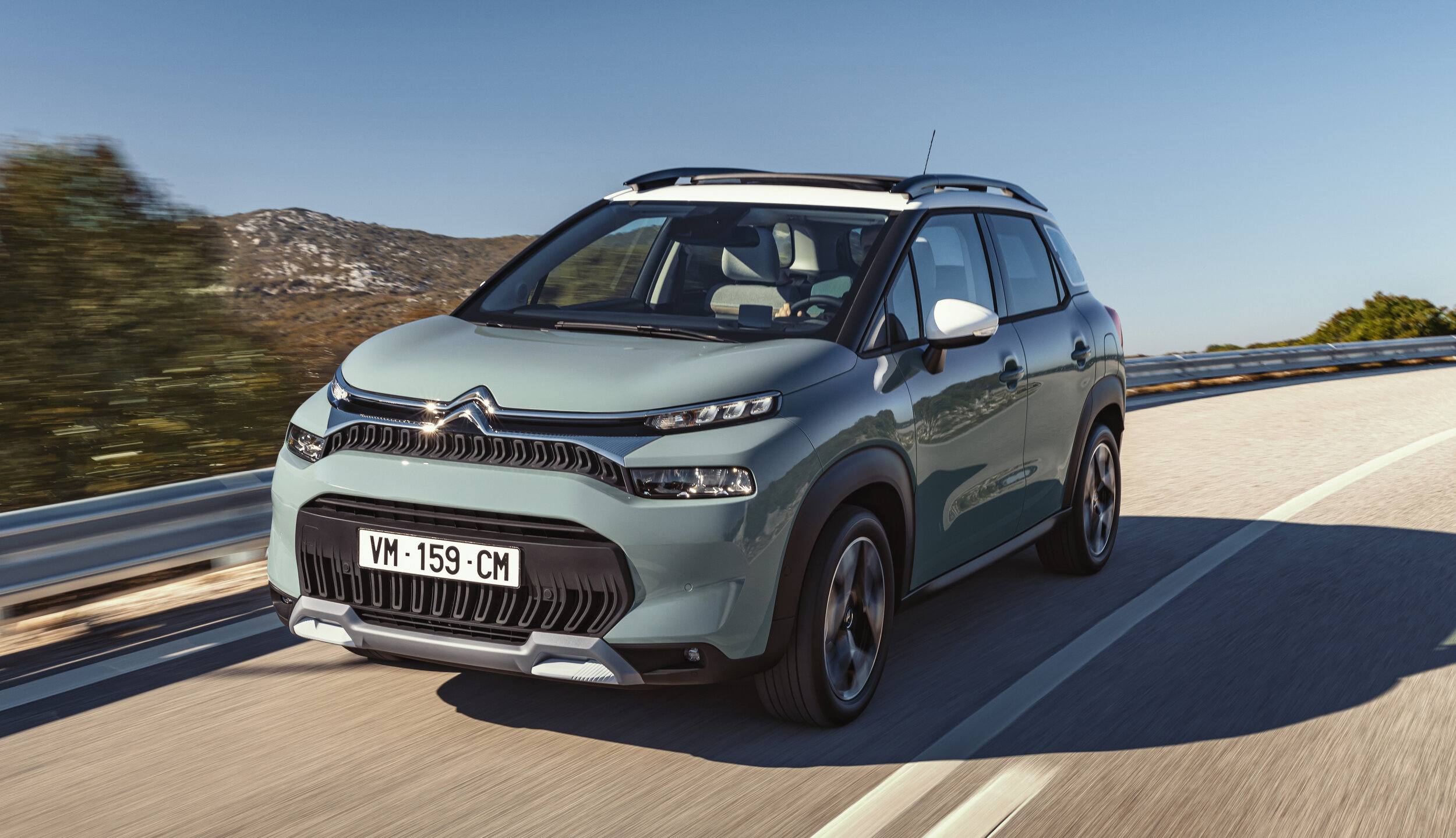
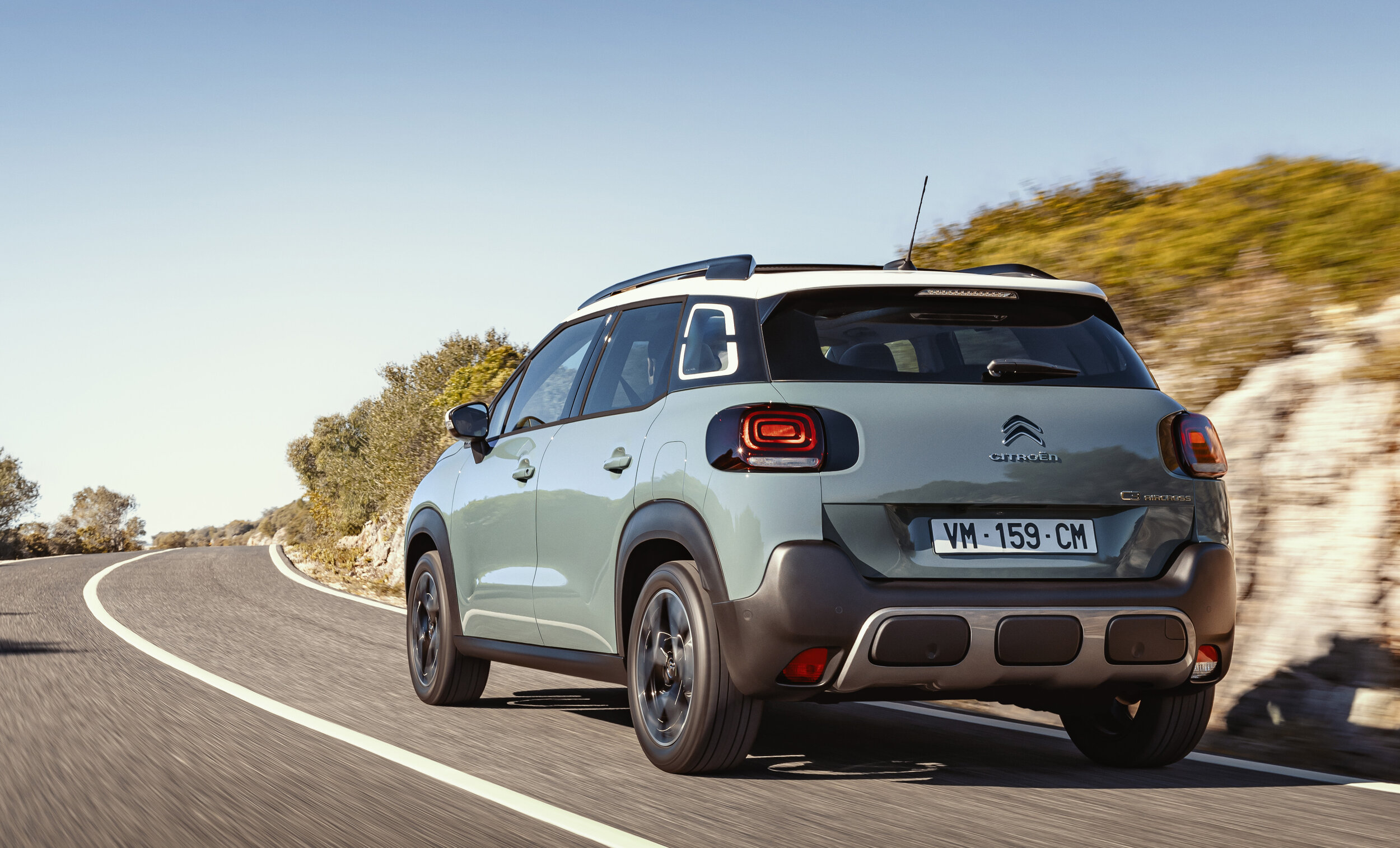
The design changes mainly occur at the front. New chrome chevron shapes extend out to restyled LED headlights and a new geometric-pattern grille, while a skid plate with coloured inserts also features. The lower lights move from the rounded squares of the old model to thinner rectangular units. Citroën says it gives “greater structure with the impression of a higher-set bonnet”.

A new diamond cut and gloss black alloy wheel design also arrives, available in 16 and 17-inch sizes. 

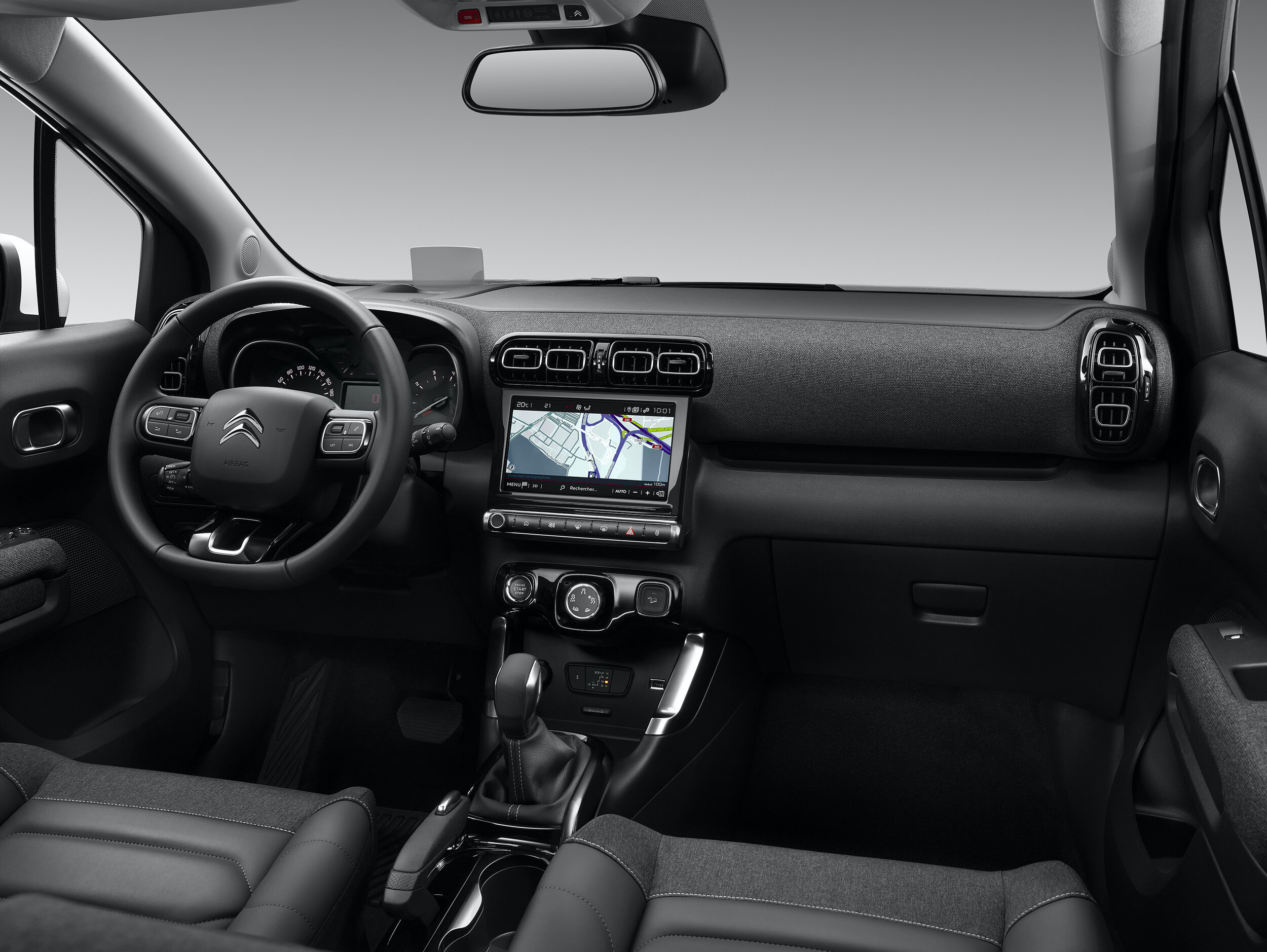
On the inside, the basic design and layout of the dashboard remains, but Citroen has introduced new trim options and it also adopts front seats shared with the next-size-up C5 Aircross.

New Zealand pricing and final specifications are as yet unresolved, but on strength of past preferences it seems likely rights’ holder Autodistributors NZ will adopt the upmarket trim that includes a larger and sharper nine-inch central touchscreen infotainment system with navigation, Apple CarPlay and Android Auto connectivity. There’s also a new, larger central console with more storage space. 

Driver assistance technologies such as speed sign recognition, automatic emergency braking and automatic high-beam control feature, plus a head-up-display and a top-down style 360-degree parking camera will likely arrive here. Off-road functions such as hill-descent control and a grip control selection feature can be optioned. 

Electrified powertrains don’t figure in this car. The engine line-up for right-hand-drive starts with a PureTech 110 1.2-litre three-cylinder turbocharged petrol engine developing 80kW and sending drive to the front wheels through a six-speed manual gearbox, but more likely for here is the PureTech 130 option, developing 95kW, which is also offered with the choice of a six-speed automatic gearbox. Citroen has diesel options as well. 


The Camel’s back

Famous Trophy model reinterpreted by Land Rover.

L_Classic_Trophy_100221_22.jpg

THE classic that Land Rover had to leave behind in order to move forward has risen from the grave – in its most famous guise.

The British brand has announced the Defender Works V8 Trophy, a modified version of the previous generation version of the company’s iconic four-wheel-drive, which stopped fullscale production in 2016 and was replaced last year by a far more modern model.

The ‘new-old’ edition is built by Land Rover Classic and designed to pay homage to the brand’s Camel Trophy-winning off-road racer from 1989, now a highly sought-after collectible. 

Prices start from over $300,000 for the short wheelbase 90 model – and production will be limited to just 25 examples. It is not known if any will go to customers outside of the United Kingdom.

The original Camel Trophy-winning 1989 was powered by a 2.5-litre four-cylinder diesel engine. This new homage features Jaguar Land Rover’s 5.0-litre V8, which outputs 297kW and 515Nm of torque. The engine is mated to an eight-speed automatic gearbox and sends drive to all four wheels via a two-speed transfer box.

Land Rover has added uprated suspension, new anti-roll bars, improved disc brakes with four-piston calipers and heavy-duty 16-inch steel wheels wrapped in mud-terrain tyres.

Buyers also get a range of functional and cosmetic exterior revisions, including a front winch, a roof rack, a snorkel intake and LED spot lamps. There’s also some extra safety equipment, such as underbody protection panels and an externally mounted multi-point roll cage. 

The car’s bodywork is also finished in a similar shade of yellow as the original Camel racer, while its wheel arches, bonnet and rear door are finished in contrasting Narvik Black. LED headlamps also come as standard, along with a heritage radiator grille and special edition “Land Rover Trophy” badging.

The Defender Works V8 Trophy gets a unique clock for the dashboard and an infotainment system designed to look like the original car’s stereo. Land Rover has also added a pair of Recaro seats, trimmed in black leather upholstery and contrasting yellow stitching.

Purchasers also get to compete in an exclusive three-day challenge at Land Rover’s legendary test centre at Eastnor Castle in Herefordshire, England. The event will be the first time customers will drive their new cars and each buyer will receive tuition from a team of seasoned drivers.


Tucson recall pending, Hyundai NZ says

One of the Korean make’s best-sellers has a fault that could cause a fire – it’s been recalled elsewhere; NZ is awaiting information from Seoul.

Hyundai Tucson.jpg

 NEW Zealand’s Hyundai distributor will involve in a recall of a popular model to address a possible fire risk due to a manufacturing error - just as soon as head office in South Korea identifies how many cars are affected. 

Hyundai New Zealand has given this explanation after being asked why is has yet to publicise a remedial action for the Tucson compact sports utility highly-favoured by Kiwis. 

The car has been subject to a recall elsewhere and it has become big news. The brand in Australia is advising owners to park the vehicles in an open space away from garages and flammable materials due to fears of the car's engine catching fire, even when the vehicle is turned off.

 The fault is with current generation cars built from November 2014 to November 2020.

It has been traced to a potential issue in the electronic circuit board in the Anti-Lock Braking System (ABS) module. This may short circuit when the components are exposed to moisture. This can occur even when the engine is switched off because there is constant power supply to the component. As a remedy, Hyundai has developed a relay kit to prevent a power surge.

Hyundai-Tucson-170915-1.jpg

The make issued its bulletin, initially in the United States – where a dozen cars have caught fire – and most recently in Australia, where 93,000 vehicles are involved. Our neighbour announced its recall last week.

Hyundai NZ says it is aware of the issue and the sales network has been given a heads-up; but that’s it so far.

“Whilst we are aware of this recall, we have not yet received official communication from Hyundai Motor Company regarding the vehicles affected in New Zealand,” explained Kimberley Waters, the Auckland-based brand’s spokeswoman, in an email yesterday responding to questions sent on Monday about an apparent lack of action.

“Customer safety is paramount. We have already taken steps to communicate this expected recall with our dealer network, update our website and brief in our Customer Experience team should our customers have queries.

“As soon as we receive official notification of the vehicles affected in New Zealand we will initiate our recall process and contact those customers affected to arrange for their vehicle to be booked in and repaired.”

“We have had no reports of any incidents related to this recall issue. Whilst customers are able to continue driving their vehicle we will be advising them if their Tucson displays any warning lamp on the cluster, to stop driving and contact Hyundai Roadside Assistance on 0800 498 632.” 

HyundaiTucson3.jpg

The issue has been sensationalised in some overseas media, with reports the fault will cause the cars to "explode".

The remedial action might take some time to process; Hyundai in Australia has said it expects the replacement part required for its cars to start arriving in late February but has warned all 93,000 replacement components won't arrive at once as it takes time to produce them.

 The fix itself is straightforward – it’s fitting a fuse repair kit – and quick. Hyundai Australia cites the job taking about 40 minutes.

Hyundai Korea’s advice says it is safe to continue driving the vehicles and that the brakes will still work as normal.

Meantime, it is set to release a new generation Tucson here soon.


Honda NZ refines sales pitch

The brand that rocked the industry with its ‘Price Promise’ strategy has now gone further still.

200833_Civic_Type_R_Limited_Edition.jpg

WANT to buy a new Honda but not via a dealer?

 From May 1, Kiwis won’t have to. Instead, they can buy the car they want  directly from the manufacturer, from their computer.

The brand that has operated a distinct Price Promise sales model since 2000 has today announced intent to further refine that process.

From the start of next month customers will be able to purchase Honda passenger models directly from Honda, either in a traditional store or via a new e-Commerce platform. 

Any benefits that might arrive from this have yet to be spelled out by the brand. It is also not clear if the Price Promise name will be kept 

“Our independent Honda agents have served the Honda brand incredibly well over many years, and we have greatly valued these relationships during this era,” said Nobuya Sonoda, Honda New Zealand’s managing director.

“The changes we are embarking on in 2021 are about actively managing our operations to ensure they are fit for the future and are reflective of Honda’s long-term commitment to continue investing in our people, operations and our communities.

“By making these changes we are placing our customers at the heart of everything we do, and importantly, putting the purchasing power where it belongs — in the hands of our customers.”

The Honda national dealer network comprises seven Honda-owned branches, plus 17 independently owned agents.  

In its statement, Honda NZ says those independent agents will now be converted either into fully fledged Honda stores, Honda Service Stores, or Authorised Service Stores.

The changes are set to streamline the sales experience across the board, while also decreasing independent involvement in stores outside of major centres.

The strategy is in keeping with what is known as an agency sales model. With this in its purest form, retailers/distributors shift their allegiance with a manufacturer.

Instead of buying a vehicle from the maker for a price usually well below list and so with a built-in margin, they simply accept a fee for each car sold.

It’s a fundamental shift. An agency model means a maker – or in this instance, the distributor - controls car pricing, instead of dealers, giving them a better chance of achieving haggle-free pricing.

Honda NZ took steps toward an agency model 21 years ago with its Price Promise policy, which ensured new-car buyers got the same price on a new Honda no matter who they were, where they lived, and what day of the month they purchased.

 Honda NZ said then that special offers, run-out deals, discounts and end-of-the-month sales all lowered resale values, which in turn affected a vehicle’s depreciation rate.

Back then, the price of a new Honda was also different around the country based on the individual dealer and the customer.

The company argued this led to an inequality. If one buyer received a five percent discount and another a 15 percent discount, the first buyer’s car would have depreciated by an extra 10 percent.

The NZ Price Promise changed that, so the only factors affecting the resale value of a Honda became vehicle age, mileage and condition. The system was designed to make Honda’s vehicles depreciate slower than those of rival brands.

For the dealer, it also meant lower operating costs. It meant dealers could sell any vehicle on order nationally, not just the ones allocated to them, with access to the full Honda range without incurring floorplan costs.

Honda NZ owned all demonstration stock at the dealerships and all the new-car stock.

Toyota New Zealand also has an agency model and other brands are looking at it.


E-Tron GT and RS racing to NZ

The sporty electric that represents the ultimate Audi brand statement and the start of a new era could well be just four months away.

A210290_medium.jpg

UNVEILED fully today in all its four door coupe glory and potentially on sale here as early as June – Audi’s near-twin to the Porsche Taycan electric car is wasting no time making its big trip to New Zealand.

As previously reported the new all-electric four-door will be offered in two configurations – an entry-level Quattro variant, the grey car pictured, and top-spec RS, seen in a dark hue.

Local pricing and our market’s specifications have yet to be shared by Audi NZ, but at technical level the variants roughly align with the Taycan 4S and Turbo respectively.

Porsche’s cars cost from $203,900 and $289,900 but there’s nothing to suggest the Audi’s will be lineball – quite potentially, there could considerable air between them.

The GT is Audi’s fastest car since the combustion-engined R8 and the flagship is the first electric car from Ingolstadt’s famous RS division. 

Both versions send power to all four wheels, thanks to an electric motor on each axle, and have plenty of spark. 

In normal driving mode the Quattro derives 350kW/630Nm from its dual axle-mounted motors, whereas the RS has a claimed output of 440kW/830Nm.

Engaging the launch control function lends both a brief but significant power bump off the line – the Quattro has 390kW for up to 2.5 seconds, while the RS achieves 475kW for the same duration.

This feature allows the Quattro variant to accelerate from 0–100kmh in a claimed 4.1 seconds on the way to a top speed of 245kmh, Audi’s media information says. 

A210285_medium.jpg

The RS completes the sprint in a claimed 3.3 seconds and tops out at 250kmh.

Both models run with an 85kWh lithium-ion battery, with an estimated real world range of 488km.

Keeping the performance in check is a comprehensive suite of chassis technology.

The GT gets adaptive damping as standard, while the RS model adds air suspension and an active rear differential.  

All-wheel steering is optional on both, as are carbon ceramic brake discs. The RS version does get tungsten carbide coated discs by default. Under braking, the electric motors provide approximately 0.3 g of regenerative deceleration, which Audi says can achieve a maximum recuperation of 265kW.

 The GT offers with 19-inch rims, but can be optioned to adopt the 21 inchers the RS runs with.

A210283_medium.jpg

The car is 4990mm long but also low, with a height of just 1410mm. The body is 1960mm wide (not including mirrors), and Audi says the overall shape has a drag coefficient of just 0.24.

The standard cabin features leather-free "sustainable" upholstery, while a leather package can also be optioned.  The cabin uses some of the current Audi switchgear and detailing, but it debuts a lovely new steering wheel and has a simpler centre stack than some models in the range.

A stepped battery layout under the floor has been designed to maximise cabin space, while boot capacity sits at 405 litres. 

The Pre Sense Front and Pre Sense Basic safety systems are fitted as standard on both models, as is lane departure warning. Three optional safety packages are on offer, these being “Tour,” “City,” and “Park.”

Matrix LED headlights are fitted as standard on the RS E-Tron GT and offered as an option on the E-Tron GT Quattro, while Audi’s laser light high beam feature can also be specified on either model. It’s not clear if the camera rear vision mirrors that debuted on the e-tron SUV as an option carry to the GT.

In a brief comment, Audi NZ described the GT as being “a demonstration of how fascinating and exciting electric mobility is – the start of a new era, the Gran Turismo of the future.” It says the car will be here mid-year.

With coronavirus making the usual glam international media launch impossible, Audi ran its launch as a video presentation. That’s included here. There’s a fair bit of chat, but also some interesting video of the cars in action, including a sprint between a Formula E racing car and the RS GT, the latter driven by Nico Rosberg.


BMW’s revived electric onslaught starts this year

Kiwi interest in the iX3 and iX, potentially arriving around October, is ramping up.

The new iX is the most important car BMW will release here in 2021 …. and other all-new EVs are on the way.

The new iX is the most important car BMW will release here in 2021 …. and other all-new EVs are on the way.

 TWO car brands last year took pride in having achieved putting 500,000 electric models into the market.

One was Tesla, the other BMW Group.

 The difference was in the time taken to get there. Twenty-20 was a year when Elon Musk’s crew achieved producing half a million cars in a year.

BMW Group took a longer route to achieve the same figure, and did so with battery-involved product beyond its sole fully electric car.

The i3, whose production dates back to 2013 and which broke the mould when it came on sale here in 2015, has actually recently clocked up 200,000 units.

No, the jelly and icecream ‘half-a-mill’ moment was for the entire BMW Group and reflected it having sold more than 500,000 electrified models – a descriptive that, of course, covers its plug-in hybrids as well as fully electrics - across the BMW and MINI brands.

That this has taken years is nothing to worry about. The pace has stepped up - by the end of 2021, BMW Group is confident it will have doubled its penetration – and so too the level of commitment.

Twenty-five electrified vehicles on the road by 2023 is one ambition; another is to build “a quarter of a million more electric cars than originally planned” between now and then. A target that’ll allow it to more than double the share of electrified vehicles in its sales from around eight percent last year to around 20 percent. Beyond that? It’s to sell 4.6 million fully electric vehicles and almost as many plug-in hybrids within the next 10 years.

The i3 as we know it now will continue to contribute. Plans to kill it off last year were rescinded. It’s hard to say how long the stay of execution will last; some suggest it will continue to be manufactured until 2024.

This is ‘Power of Choice’; a strategy that BMW New Zealand is very energetic about. In a briefing today, managing director Karol Abrasowicz-Madej, and product manager Tim Michaelson, have made clear NZ will benefit from the global roll-out.

The ‘Power of Choice’ push also puts PHEV to the fore.

The ‘Power of Choice’ push also puts PHEV to the fore.

‘Electrified’ means more than full-out electric. ‘Power of Choice’ calls for up to four different powertrain variants – petrol, diesel, plug-in hybrid and pure-electric – in each of its main model lines to be built on the same production line.

Even so, it’s a big move for a make whose electrification plans – and the pace surrounding the subject - has varied wildly, between pioneering and glacial, over the last decade.

Cars like the i3 and i8 sports car were way ahead of their time when new but they were hugely costly for Munich to develop and sell. What’s followed has been a series of plug-in hybrids and arguably little else.

Kiwis have already experienced all of the above (in X3, X5, 3, 5 and 7 Series), and notwithstanding BMW NZ having achieved success with some, activity – and consumer interest – will surely ramp up all the more with two additional products arriving around the third, potentially fourth, quarters.

The iX3 and iX have both been subject of extensive coverage already.

The i3 put BMW on the electric drive route in 2015 here and is set to stay on sale for a while yet.

The i3 put BMW on the electric drive route in 2015 here and is set to stay on sale for a while yet.

The first is as the name says, a wholly electric version of BMW’s second-smallest crossover. It provisions in pure rear-drive form and is the make’s first product for us out of China. BMW NZ originally expected it at mid-year, but has held off to achieve a 2022 edition that takes some enhancements not meted early build cars. Michaelson says the tech doesn’t change; it’s all about extra specification and additional paint choices.

The iX, meantime, is BMW'S first electric SUV built from the ground up on a new EV platform.

BMW NZ has already begun an on-line campaign and it appears orders have been placed, regardless that pricing has not been announced.

In respect to that, and also in regard to potential allocations, Abrasowicz-Madej doesn’t want to give too much away.

However, he says there’ll be enough allocation to meet market demand and suggests it might feasible to imagine an iX3 could cost similarly, or perhaps a touch more, than the X3 30e plug-in hybrid that is a $120,000 ask here.

As to who is expected to buy-in? His hope is that both cars will attract conquest customers as well as existing brand loyalists. “It’s going to be interesting to see how that eventuates.”

He doesn’t expect these to erode the sales performances of the X3 and X5, his two best-selling models, though in terms of flavour the newcomers are probably not going to be entirely different to those orthodox SAVs.

“But (with iX) we are still talking about differences in size, in design and in many other factors.”

Abrasowicz-Madej says the local interest is a positive; notwithstanding BMW’s deep dive into EV-dom, many customers are still coming to grips with understanding the technology. “It is an education process. They are still learning about the technology, recharging, the driving.” However, he agrees it is easier to talk about the benefits of electric driving now than perhaps has been in the past.

Michaelson, meantime, is calling iX an especially exciting product.

It shares exterior dimensions of an X5, is as tall as an X6 and has the wheelbase of an X7, with very high specification and plush appointments in two levels of bodywork, a standard look and a sport enhancement with more rakish styling elements.

The iX3 is likely to settle in nicely, but it will be no surprise if it is utterly overshadowed by iX; the latter will be a far pricier proposition, but it will also be more premium and reaches further in design and technology.

BMW NZ is especially excited about the potential presented by the iX.

BMW NZ is especially excited about the potential presented by the iX.

The car’s bold roadside impression carries into a cockpit that uses a lot of inspiration from the iNext, a concept car that has become important to the whole BMW electric strategy. The iX takes the design study’s hexagonal steering wheel and vast curved digital displays for the driver and front passenger.  

It also features BMW's new ‘fifth-generation’ electric powertrain tech. We are told that the car will be powered by two electric motors (with no rare earth elements), producing 'more than' 370kW, which comprehensively beats the 300kW Mercedes EQC and Audi e-tron 50 and 55 (respectively 230kW and 300kW).

Apparently the iX will do 0-100kmh in under five seconds, but of greater importance is the efficiency and range between charges. BMW expects the car will average 21kWh per 100km on the WLTP cycle, resulting in a range of more than 600km from its 100kWh battery pack.

Recharging times are also impressive … when the right hardware is in place. The iX can be DC fast-charged at up to 200kW, allowing 10-80 percent charging in under 40 minutes, or 120km range for 10 minutes of charge.

The car premieres a new aluminium space frame that supports an inner carbon cage fabricated from CFRP – for composite plastic and carbon-fibre-reinforced-plastic – covered with a body made out of a combination of aluminium and CFRP. The latter is a material BMW has become accustomed to working with as it features intensively in the i3 and now discontinued i8.

For the first time in a modern-day BMW model, the iX will feature a fixed clamshell style bonnet. A series of aerodynamic developments, including the blanked-off grille, minimal air ducting within the front bumper, flat underbody panelling, integrated door handles with an electronic opening mechanism and the tapered glasshouse, contribute to a claimed drag coefficient of 0.25.

Full LED main beams are standard, though buyers will also be able to specify BMW’s Laser lights as an option. At the rear, the iX’s narrow tail lamps receive LED functionality as standard.

The iX3 will sit alongside conventional and PHEV versions of the popular compact SAV.

The iX3 will sit alongside conventional and PHEV versions of the popular compact SAV.

The iX3 obviously takes a different approach; for a start everything about how it looks is very familiar, of course.

Yet it nonetheless represents an important step. It’s not just BMW’s first electric SUV, but also the first BMW to be available with either pure combustion, plug-in hybrid or pure electric power. 

The X3’s platform has been adapted with a new rear sub-frame that houses a single electric motor and an 80Wh battery pack that, BMW says, is 20 percent more energy dense than any battery it has used before.

Output is to the tune of 210kW and 400Nm and a 6.8-second 0-100kmh sprint is claimed. BMW says it’ll provide an impressive 460km range, as determined on a WLTP test cycle. Using fast-charging, the iX3 is capable of receiving 80 percent charge in 34 minutes. 

BMW is talking up the car’s adaptive energy recuperation system, which it claims automatically enhances efficiency on longer drives. Using location data from BMW’s latest cloud-based navigation system, the iX3 can autonomously change the level of braking recuperation on the move and according to the road ahead. For instance, if the car recognises that a stop sign is ahead, full recuperation will be deployed without any need for the driver to select it. 

Alternately, the driver can take manual control of the regenerative braking, with three levels of resistance availed. A ‘B’ position on the Drive selector enables high enough energy recovery for one-pedal driving around town, a trick the brand appears to have nabbed from Toyota/Lexus. 

The iX3 gets a unique tune for its standard adaptive suspension system with electronically controlled dampers. Alternately, buyers will be able to specify a sportier Adaptive M suspension setup. 

The front grilles are closed off for aerodynamic purposes and the bumpers have been reprofiled and it gets set of aerodynamic wheels styled to reduce the drag coefficient by around five percent compared with regular X3 wheels. 

So, these are the 2021 entries. What’s next? Perhaps understandably, that’s a subject BMW’s national representatives were reluctant to talk about, though that is hardly an inhibitor.

There’s been plenty said overseas, none of which has been denied by the parent brand, to cement the road map’s course. The following is based on what’s being said overseas.

Plug-in hybrids are set to be ubiquitous in Munich’s line-up. The X3 will be first to tick off the ‘diesel, petrol, phev and electric’ remit; others will follow.

Internationally, if not here, there will be multiple plug-in hybrids within different families to choose from; for the 5-Series, as example, BMW has revealed a 545e hybrid as well as a 530e hybrid.

As for the electrics?

The i3 as we know it now achieves another facelift and larger battery, but it’s just a see-me-out strategy with a new i3 to take its place – only this one will be an all-electric version of the familiar-looking 3-Series.

Meantime, an as yet unseen i1 model - an electric extension to the new 1 Series lineup - will take the current i3’s place. There’ll also be an iX1 crossover, with a raised seating position and relatively compact dimensions.

Still getting your head around the next car to bear the ‘i3’ badge being so different? Well, an all-electric 3-series is also a big change up, too. In addition to the sedan, there’ll be a four-door fastback called … you got it, the i4. It’s been seen in concept form and testing and the production edition is to be unveiled later this year.

BMW has sent out images of the i4 during its development and says the production model will be revealed later this year.

BMW has sent out images of the i4 during its development and says the production model will be revealed later this year.

Both run the vastly improved eDrive tech in the iX3 and the iNext. The new tech is around 30 percent power denser than the powertrain shown in the i3 we know now.

BMW talk specific to i4 has been to expect a range of 600km (WLTP), 390kW and a top speed of 200kmh. It’s gunning for the Tesla Model 3; the cited 0-100kmh sprint time of around 4.0 seconds is on pace with Beemer’s own V8-powered cars. 

Also en route are the i5, an electric version of the eighth-generation 5 Series, due in 2023. It will initially be a sedan, but a station wagon version could be offered in some markets.

The most famous Five will continue to be the M5. The next, arriving in 2024, will be a dramatic change from the current F90. Why? Because it’s expected to be the first M car to be exclusively electrified – either as a ‘Power PHEV’ or full-electric car. There’s that philosophy of powertrain choice.

BMW is openly working on the ‘power BEV’, using a 5-series mule. That model has three e-motors borrowed from the iNext/i4 powertrain. One drives the front axle while the rear wheels get a motor each. Numbers? 530kW and sub-3.0s 0-100kmh. 

The BMW iX5 is already in pilot-production at BMW’s Dingolfing factory. This is the SUV iNext truly points to. It offers a base range of 547km, rising to 740km with an optional 110kWh battery. It’s also planned to support level-three autonomous technology.

Its powertrain will be similar to that of the i4, so is promising a rough 600km range and all-wheel drive.

More? There’s strong talk of the i7; an EV flagship based on the next 7 Series sedan which is due next year. Suggestion it will share much of its mechanicals with the i5 and iX5 and achieve a range of up to 740km. Prototypes have been seen.

Also, an iX7. Overseas’ media say design proposals for a seven-seat sister to the iX5 have been pitched, with intent for release in 2025.

 And what about another i8? BMW teased with the Vision M Next Concept (below) in 2019. Back then it looked set to be a huge milestone for M division, ultimately paving the way for a full-electric M car. But it’s been cancelled. 

Vision M next.png


All the dirt on a cleaner future

Today, a big read assessment of the full ramifications of Government’s push for a low emission light vehicle standard – and promise of penalties for those who cannot make the cut.

Geographic isolation is among factors that have kept New Zealand from poor air quality being a regular experience in our big cities, however motor vehicles are a major contributor, hence why CO2 count enforcement is important.

Geographic isolation is among factors that have kept New Zealand from poor air quality being a regular experience in our big cities, however motor vehicles are a major contributor, hence why CO2 count enforcement is important.

 WE’VE been tardy about creating an emissions standard, but finally something is being done. 

The clean car import standard laid out on January 28 sets an average emissions target of 105 grams per kilometre and follows a swift timeline; legislation will be progressed this year and a standard will be in place in 2022.

Next year the only onus is on distributors of new vehicles and importers of ex-overseas’ used (and parallel imported new) cars is to report CO2 data. From 2023, penalty will begin to apply to any player who fails to meet targets.

These will start at $50 for every exceeded gram, rising to $75 per gram in 2025. Used car importers will be charged half this amount.  In 2025 there’ll be a review. An even lower emissions target could very well result. The European Union already has a target of 95g/km.

It’s a grand plan, and perhaps you’re still struggling with understanding how it might affect you. Certainly, the industry has views, too, and today’s piece results from discussion with numerous figures within that business, to get a handle on what they are thinking.

And one point before going further. Though it has cautioned this is an especially steep challenge to meet Government’s expectation within the cited timeframe, the Motor Industry Association, which speaks for distributors, is supportive of Green motoring initiatives.

 This, after all, is why all the key makers have already committed to electric and, in some cases, hydrogen fuel cell. It’s their future. The biggest concern is the timeframe: We’re not necessarily taking on too much, but the rollout might be too fast.

Why the standard?

The Government cites the average vehicle in New Zealand as having CO2 emissions of around 171 grams per kilometre (g/km). It says our cars and SUVs alone average 161 g/km, compared to 105 g/km in Europe.

 It suggests that, in 2017, the most efficient vehicle models on our market had, on average, 21 percent higher emissions than their counterpart models in the United Kingdom.

The industry involvers spoken to generally opined that the comparison that created this data was overly simplistic, but they all agreed the sentiment is correct. There’s concession, too, that NZ likely has less fuel-efficient cars than many markets, mainly because fuel is cheap and we don’t tend to like driving under-powered cars.

Emissions testing is serious business in many countries. We’ve not bothered.

Emissions testing is serious business in many countries. We’ve not bothered.

In respect to the national output, NZ is slightly ahead of Australia, primarily due to our higher electric vehicle uptake per head of population. There’s reminder that NZ regulations insist on all new passenger product meeting at least the Euro 5 emissions standard, which dates back to 2009 and focuses mainly on reducing CO2 emissions, and some now meet Euro 6 (which dates to 2014), which reduces some pollutants by 96 percent compared to 1990s’ limits but primarily focuses on cutting diesel-associated nitrogen oxide emissions.  

Commented one contributor: “Our emissions are not bad; we have better standards (Euro 5) than the likes of India and we have some Euro 6 cars here because our fuel quality is so good, unlike Australia. Our vehicles aren’t necessarily all that dirty, just thirsty.” 

How strong is the argument for change?

 According to the Government, the light vehicles coming into the country are among the most fuel inefficient, and emission intensive, of any OECD country.

The Government consistently cites New Zealand as being only one of two countries in the OECD without a vehicle CO2 standard. The other nation it cites is Russia. That’s not a good example. Last time we checked, Russia is not, and has never been, in the OECD.

The Government also says the target set for 2025 was already achieved by Japan in 2014 and by Europe in 2020.

The industry reminds that the latter is a bit disingenuous; it says the vehicle industry performers in Europe have not actually hit the mark; the average for 2020 has not been published yet, but in 2018 and 2019 it was 121 and 122 (yes, it went up) grams per kilometre. There is expectation that it won’t be unanimously achieved. Same goes for this year; some brands are steeling for being hit big in the pocket.  

Makers are trying. The production and availability of low-CO2 product, particularly electrics, has rocketed – and they are popular, take-up being fuelled by incentives. Most countries in Europe also have fuel economy standards and high-emitting vehicles are subject to higher tax loading. 

Is this just some Government plot to force us into hybrids, mains-replenished plug-in hybrid and full electric vehicles?

The Government says on average, New Zealanders pay 65 percent more in annual vehicle fuel costs than people in the European Union, even though Europe’s petrol prices are higher.

Reality is that Government hardly needs to force change; it’s coming ready or not.

Most car makers have decided to wean out of wholly fossil fuelled products and some have made quite radical commitments.

General Motors, perhaps not the best example with Holden now defunct, has decided to phase out vehicles using combustion engines by 2035. It’s pinning hope on electric (and will have 30 pure battery models out by 2025) and fuel cells. On February 7, Ford announced intent to commit $US29 billion to electric and self-driving cars. Toyota, already the world’s top gun by far in the hybrid sector, also sees itself heading in the same route; again, it sees big merit with hydrogen, but alongside electric solutions. Stellantis, the new co-op between France’s PSA and Fiat-Chrysler, is the same. Mercedes, BMW, Audi – in fact all of VW Group – Nissan and so on. And so on. All are looking to battery-enabled motoring.

However, the Government is jumping the gun if it imagines all brands have non-fossil fuelled solutions for all situations right now. This decade is very much a period of transition.

Toyota is the world’s biggest producer of hybrid cars, has the world’s biggest selection and the Prius is the world’s most popular petrol electric. However, hybrids still account for just of the make’s production.

Toyota is the world’s biggest producer of hybrid cars, has the world’s biggest selection and the Prius is the world’s most popular petrol electric. However, hybrids still account for just of the make’s production.

EV production is ramping up and will continue to do so annually. Production of PHEVs is also increasing and it’s the same with hybrids. Yet overall, these do not account for a huge percentage of annual global vehicle manufacture. As much as Tesla is leading the way, it still only produced 500,000 vehicles last year. That didn’t even get it into the top 10 of global light car manufacturers.

Toyota and premium affiliate Lexus have hybrid in most of their models now; those brands have together put 15 million cars with this tech on the road since the original Prius emerged in 1997. The technology has reduced CO2 emissions by more than 120 million tonnes worldwide to date compared to sales of equivalent petrol vehicles. Great work, but hybrids still only account for 52 percent of total Toyota annual production. 

The EU gave car makers 10 years’ prior warning of its expectation and, even so, that was barely enough time to develop and produce the right kind of cars. Remember, in 2011, electrics were still a novelty, there was barely any infrastructure to support them and range was poor. All that’s changed.

Europe is a core car market; because of that, and because of the CO2 penalties, it’s become a priority market for EV suppliers.

At present, most Euro EV action is contained to the premium market. The challenges are at the affordable end. Before Government’s intent was clarified, the Euro with potential to best shake up our mainstream EV choices, Volkswagen Group, was also putting us low on the shipping list.

At one time, the new-generation VW, Skoda, SEAT and Audi products on the electric-dedicated MEB platform were set to roll in from this year; now entry in late 2022 seems a best – and even that’s optimistic.

Says one involver whose brand sells fully electric and electric-assisted product. “It’s all about getting the right cars … at the moment, Europe is accounting for most (of his brand’s) production. Supply for us is not as good as we want; we take everything we can get – and can sell it – but we cannot get enough and that’s unlikely to change for years.”

FYI: The Climate Change Commission report proposing future trends reckons just 40 percent of our fleet will have electric assist by 2035.

Okay, so how will this scheme work? 

ANSWER: Each supplier will have a different target to meet, reflecting its fleet of vehicles. Across the vehicles it brings in it has to ensure the average CO2 emissions are equal to, or less than, the target for its vehicles.

As it works by averaging, vehicles exceeding the CO2 target can continue to be brought in so long as they are offset by enough zero and low emission vehicles.

The 2025 target will be phased in through annual targets that get progressively lower. This gives vehicle suppliers time to adjust and source enough clean vehicles to meet the targets and to encourage buyers to opt for low emission vehicles. 

These penalties – won’t they just be passed onto the consumer; meaning cars will get more expensive?

No-one’s offering any comment on this, though several people spoken to reminded that, at present, the average CO2 count is 65g/km above target. Translate that into initial penalty dollars and it represents as an average $3500 impost on stickers. 

Will distributors have any support?

ANSWER: Waka Kotahi will develop an online tracking and forecasting tool to allow importers to see how their CO2 accounts would be affected if they purchase particular vehicles in international auctions. It would also help importers complying on a fleet-basis by easily allowing them to monitor how their actual average fleet CO2 emissions are tracking, against their fleet targets. 

Flexibility will be given for the industry by allowing them to bank, borrow and transfer. Banking will allow suppliers to carry over any overachievement of their CO2 targets to offset the following three years.

Borrowing allows suppliers to miss their targets for one year as long as they make it up the following year.

Transferring allows suppliers to transfer overachievement of their CO2 target to one or more other suppliers operating within the same compliance regime.

That’s all well and good, says one commentator, but he remains convinced that the best incentive is … well, incentives.  

That’s been proven time again overseas. More than 30 countries have EV incentives and these commonly take form of comprehensive electrification strategies, not just handouts.

“Our products are popular, but they aren’t the most popular vehicles we sell. We always ask ‘will customers automatically want to buy them’. You have to pay more for electric, that’s just an unavoidable. Some people are keen, not everyone is. The economies (of widespread acceptance) won’t work without support.”

How easy will it be for all distributors to meet the new standard – might we see some brands or vehicles, even vehicle types, simply disappear?

The Government does not address this but some in the industry would not be surprised if this scenario plays out.

Kiwis love their diesel utilities - but the type are high CO2 emitters. That’s a factor brands that do well with those models will have to consider now.

Kiwis love their diesel utilities - but the type are high CO2 emitters. That’s a factor brands that do well with those models will have to consider now.

The easiest way to get the make-wide average CO2 down is to slot in an electric-assisted model into the range. EVs are of course best, because it’s only CO2 out from the vehicle: For those cars, that count is ‘zero.’

All well and good, but some makes simply do not have that luxury. The idea is for them to buy credits from those do, and have some to spare. Tesla has effectively come into profit on Fiat-Chrysler payments.

It’s not fair to name names, but it’s easy enough to find out which brands have EV strategies and which do not. Those without will be hurt.

One comment: “It’s not just the obvious gas guzzlers that are impacted by this. The requirement is for even small cars to improve and that’s a much harder ask for them than it is with big ones.” 

The impact on the current fleet will be interesting, we were told. “More consumers will start to look at fuel economy.”

If this all about improving our environment, why aren’t used importers having to follow the same regime as new vehicle distributors? After all, we’re all breathing the same air. Also, there’s no mention of importers of effectively brand-new cars from overseas – what’s their responsibility?

The average ago of used imports is 10 years. The effective requirement is for these to meet Euro 5; a standard implemented 12 years ago.  

So, theoretically, imports will be within this mandate. All the same, the used importers’ association, which was not approached for comment, has already expressed distaste for the requirement.

The feeling, from the new car industry, seems to be that everyone should do their share. Thought that importers of as-new product might only have to pay half the penalty the same vehicle, if over the limit, would be hit with is not welcomed. On the other hand, there’s also sentiment that those operators shouldn’t achieve any incentives, should these materialise, for favoured models. The reason? Those operators have not invested in the infrastructure required to support those cars.

Are the penalties stiff enough?

The reason why brands selling in the EU are so compelled to meet the target there is that the penalty is much steeper than it will be here; $160 per gram exceeded.

The Government says this will impact on vehicles being delivered from a certain date – it won’t be retrospective, so what we are driving now won’t be affected. Or will it? What impacts could this have on, say, on residual values – will some cars become unsaleable and, if so, what types might raise a red flag?

It’s too soon to tell. However, the potential for this legislation to change vehicle buying seems obvious.

Said one respondent: “Our cars are heavier on average than those sold in Europe. This has a massive impact on fuel economy. The best way to get average economy counts down is to drive more efficient cars.”

At the moment, some said, we have cheap fuel and use too much of it. “We love powerful and large vehicles, and 23 percent of new vehicles sold are utes, which on average are all emitting more than 200 grams of CO2. 

“That factor alone makes us very different to Europe. Utes aren’t at all popular over there. 

What drives that interest? Perceived superior versatility (which is often not realised in reality – many vans are better choices), opportunity to circumvent Fringe Benefit Tax and our love of towing.  

The whole swing to utes has rankled some. One thought expressed: “The high level of ute uptake by businesses is a direct result of the Inland Revenue Department’s failure to police their FBT rules.

“Check out your local boat ramp and I bet you’ll see plenty of sign-written utes and just know their owners aren’t paying FBT, though they should be.”

Electric car uptake is set to rise, but no simply because of political will. Fact is, most carmakers now see this technology being their future.

Electric car uptake is set to rise, but no simply because of political will. Fact is, most carmakers now see this technology being their future.

Beyond that? “The older and thirstier – and that’s not necessarily the same thing – vehicles will become less popular,” one involver suggested.

“If the cost of carbon continues to rise, and we can expect this, fuel will get more expensive and interest in thirsty cars will continue to decline … hopefully this will be supported by a scrappage scheme.” 

And potential red flags? A hard one, but potentially ultimately anything with a six or eight-cylinder petrol engine that isn’t considered a classic. Perhaps some turbocharged four-cylinder mainstream cars.

Are there any circumstances where vehicles might be subject to dispensation; we hear that in the EU, all the really exotic stuff – you, know, your Ferraris, McLarens and Rolls-Royces and so on – are exempt because their production runs are so low. Will that happen here, do we know if there is a registration count cut-off for what excludes and what doesn’t?

The exemptions so far explained are for: vehicles intended primarily for military operational purposes; agricultural vehicles/equipment that are primarily driven on farms, such as tractors, harvesters, mowers, toppers, bailers; vehicles with historic value, or vehicles such as classic cars; motor vehicles constructed before 1 January 1919; motor vehicles constructed on or after 1 January 1919 and are at least 40 years old on the date that they were registered, reregistered, or licensed and scratch-built vehicles and modified vehicles certified by the Low Volume Vehicle Technical Association.

It’s still unclear if that same leniencies that have allowed the high-end exotic brands to keep selling in the EU will impact here. However, it is worth noting that many are intensifying the electric efforts nonetheless. Though, in the case of Rolls-Royce, the potential of a fully electric car before too long has nothing to do with consumer demand. It’s more because big cities around the world are increasingly deciding to shut themselves off the high-emissions traffic.

Anything else we need to know?

Australia.

We historically often collude with our neighbour on common market selections. Car makers love volume. NZ doesn’t buy many new cars but, if we take the same stock as our neighbour, then often it’s enough to win a production priority and a stronger negotiating status. 

Our tastes were already distancing but the new legislation might lead to a complete divorce. Our respective national visions are far from alike.

 Australia has no mandated CO2 regulation now and, more disturbingly, is disinclined to adopt one; a situation that in itself has so alarmed the car industry they’ve rolled out a voluntary code. 

Even then, they face a different core challenge. A catalyst for our neighbour’s relatively lax emissions regs is that the fuel sold there is of lower quality than we receive. This means Australia’s fuel and Euro 5-based noxious emissions standards are lax by global standard; to the point where they act as an impediment to introduction there of internal combustion engines that can be sold here. The standards are being tightened. But not until 2027. 

Like us, they’ve ruled out EV subsidies in favour of encouraging companies to electrify their vehicle fleets. We aim to make EV owners pay Road User Taxes (though when is still unclear). Over there, some states are pushing for EV road taxes to compensate for lost fuel excise earnings; Victoria is considering fiting EVs with GPS trackers for per kilometre charging. Why would anyone keen to kick the oil habit been keen on that?

Beyond that, Prime Minister Scott Morrison’s administration seems largely indifferent to the matters we are aiming to address. 

The Federal Government seems to be happy with indulging in what a senior writer with Wheels magazine has called an “embarrassing fossil fuel addiction while the rest of the world joins the e-volution.”

Daniel Gardner, who said his views about electric cars and the positives of their involvement in any roadscape came from (pre-Covid) visits to Europe, particularly time spent in Germany, says he is embarrassed that the Australian Federal Government's 2020/2021 Federal Budget included money to upgrade a coal-fired power station in New South Wales, and $A52.9 million expanding Australia’s gas industry “while allocating a measly A$5 million for electric vehicles.”

He added: “Get chatting to a German and, regardless of their political inclination, they simply won’t believe why we are so opposed to electric vehicles and gorging ourselves on fossil fuels. And when you see just how feasible Germany makes the transition to electric cars appear, you probably wouldn’t either.”

Australia’s determination to keep mining and burning coal relates so much about our neighbour’s attitude toward clean air concern, critics say. EV producers’ making Australia a low-priority market might not do un any favours.

Australia’s determination to keep mining and burning coal relates so much about our neighbour’s attitude toward clean air concern, critics say. EV producers’ making Australia a low-priority market might not do un any favours.

He wrote of exasperation that “Australia has a government that sees absolutely nothing wrong with digging millions of tons of filthy brown coal out of the ground and burning it to power the nation. A government that not only refuses to invest in renewable energy despite being one of the most suitable countries in the world, and instead favours more coal mines. 

Australia’s indifference has also fired up the country’s peak electric vehicle lobby, which says the latest future fuels strategy, which released in draft form late last year, as “yet another flaccid, do-nothing document that will prevent Australians getting access to the world’s best electric vehicles”.

They’re right. Limited electrified vehicle production is being allocated to places where incentives are greatest and/or restrictions on CO2 are the most painful. Australia? Said Wheels magazine last month: “As the Federal Government’s ideological constraints and contradictions extend its environmental and electric vehicle policy vacuum, Australia is slipping down the shipping list.”

NZ distributors are finding themselves having to negotiate directly with makers to achieve any kind of product and often there’s a cost – which has to ultimately be passed on – and, in many cases, acceptance of compromise (so, a car might arrive in another right-drive country’s spec: Latterly, it’s been Ireland).

Having a neighbour we can’t live with, but cannot live without is hardly helpful.


Audi’s hot electric uncovered

Spanish website gives preview ahead of official reveal.

Screen Shot 2021-02-07 at 2.13.49 PM.png

SCHEDULED for an unofficial global unwrap tomorrow, Audi’s much anticipated rival to the Tesla Model S has surfaced online ahead of that timeline.

The E-Tron GT electric sedan surfaced on social media with images of what appears to be the completely showroom-ready example published on Spanish car enthusiast community Cochespias.

The GT has been seen camouflaged form under testing, and a concept was displayed by the Volkswagen Group brand in 2018, but this might well be the first look of the car as it will avail to buyers.

Kiwis might have particular excitement, as New Zealand seems set to be an early adopter of the performance-focused four-door coupé, which combines enough rapid performance with rapid charging to match the platform-sharing Porsche Taycan, whose supercar-slaying stomp has won global acclaim.

Audi NZ has signalled the first electric out of Audi that’s been purpose-designed to specifically appeal to the marque’s petrolhead audience, especially fervent in this country, will come here from mid-year.

Screen Shot 2021-02-07 at 2.14.08 PM.png

 It is set to present in the guise seen here and also as a full-blown RS model, the latter being the first electric car from Ingolstadt’s performance tuning operation. Audi appears to have successfully kept the production look of that flagship, seen below during testing, under wraps.

Last October Audi NZ boss Dean Sheed explained to MotoringNZ why he’s comfortable promoting these cars to revheads presently driving fossil-fuelled S and RS models.  

“We’ll definitely be talking to them because they are right in the sweet spot. The reason I say that is because this is the first complete car from Audi Sport … it has a huge credibility and it just happens to also be electric.”

Will the old-school buy into the new way? Sheed reckons he can talk most around to at least thinking about it.

“When people see it, when they understand the technology and when they find out how it drives .. well, they’re going to want it.”

The hero variant is powered by a 440kW/830Nm electric system that will power it to 100kmh in less than 3.5 seconds – thanks to a 475kW output in overboost mode. 

Media says this pales in comparison to the new ‘Plaid’ variants in the most recently updated Tesla Model S, however, which promise 0-100km/h times from 3.2 seconds and right down to “less than 2.0 seconds”. 

Driving range for the E-Tron – at least in RS form – is expected to come in at around 400 kilometres on the WLTP measure, thanks to an 83.7kWh (93kWh gross) battery pack. 

E-Tron GT RS.jpg


Quick drive, longer wait for record sign-off?

The bid to enter the Guinness Book of Records went well – now ratification is awaited.

Screen Shot 2021-02-08 at 8.16.24 AM.png

 RATIFYING the successful record-bid electric car drive from the top to the bottom of mainland New Zealand completed by John Fitness could take much longer than that two day feat of endurance – weeks, perhaps months. 

The Auckland man registered with the Guinness World Records to set a record for travelling the length of the country in the fewest number of charging stops in an EV.

He set off from Cape Reinga in his Tesla Model 3 at 5.37am on Thursday, February 4, arriving in Bluff at 9.34pm on the next night, where he subsequently quipped to a television news crew that he didn’t imagine the drive “could've done it much faster in a petrol car, if at all, actually."

Fitness did the drive to prove to Kiwis perhaps sceptical about the merits of electric cars that they actually had the range and performance to match fossil-fuelled equivalents for long distance driving – but at much lower running cost. 

He says the combined cost of the electricity drawn by his car from the six fast-charging stations he replenished at en route came to $117.69.

In subsequent Facebook posts, Fitness acknowledged two other aspects.

His allocation of ‘free’ charging that attaches with Tesla ownership for a set duration has now almost exhausted – he now has enough for perhaps one more trip.

Also, the process of confirming his effort meets the status required to become an official record, recognised by the Guinness Book of Records, will likely take some time – perhaps up 18 weeks.

Fitness had to keep a careful record and also arrange official witnesses, accepted by Guinness, to vouch for him along the way. They included Invercargill’s mayor, media and public identity Tim Shadbolt, who greeted the car when it reached Bluff. 

At his six stops along the way - three in the North Island, three in the South Island - he was greeted by supporters.

Among those seeing Fitness off at the start of his journey were Northland iwi Ngāti Kuri, something the EV enthusiast told TVNZ "kicked off the trip with the right tone".

Each of the charging stops ended up being the "perfect break" through the trip, Fitness says.

They were spaced out around three-and-a-half to four hours apart and last around 35 minutes each.

Fitness told TVNZ it was a good way to break up fatigue.

"It's time to get some food or a coffee as you go for a bit of a walk about. It was actually a perfect break."

The car ran seamlessly, he said, though the driving schedule was disrupted by the Cook Strait ferry he took running slightly late, but he made up time on the road.

Teslas have featured in previous distance driving record pitches for electric cars, including a feat in Europe in 2017 that saw a car clock 1078 kilometres on a single charge. This asked for a team of drivers as it involved hypermiling – a technique of careful driving often at well below posted open road limits. A marked difference to Fitness’ run, which was at everyday pace.


Toyota’s autonomous Supra drift car

When an American university teams up with Toyota’s Research Institute, the outcome is … well, smokin’!

Screen Shot 2021-02-06 at 11.34.41 AM.png

IT’S one of those things every ‘driver’ will claim is dead-easy to do … until they try.

When it comes down to it, achieving a decent drift ain’t half as easy as it looks.

That is, when a human is at the wheel.

When a car is left to do its own thing, turns out big controlled skid action is an utter cinch.

WTF?

Okay, so the car in question isn’t exactly as it departed the production line.

Creating a Toyota Supra that can quite literally drift itself took quite a bit of after-market finetuning. But, wow, as the video shows: Totally worth it!

The prototype, built by engineers from the Toyota Research Institute (TRI) and Stanford University’s ‘Dynamic Design Lab’, is supposed to help the carmaker “develop sophisticated control algorithms that amplify human driving abilities and keep people safe”.

The TRI points out that “while most crashes occur in mundane situations, in other situations drivers may need to make manoeuvres that take their vehicle close to and, at times, exceed normal limits of handling”.

A car that can catch a slide with little to no human intervention would help when drivers “need to make manoeuvres that are beyond their abilities” in order to avoid a collision. In this case, catching a slide brought about by, for example, a driver taking evasive action, their own over-exuberance or poor road conditions.

When it’s up and running, the system will be another tool in the automotive industry’s ever-expanding armoury of driver-assistance systems. Toyota says its active safety technologies will be shared broadly “so that Toyota and other auto manufacturers can deploy it on the road”.


Strong January, but chips are down for car makers

 A shortage of semiconductors is significantly impacting the world’s car makers.

Toyota Hilux enjoyed another strong month, though overshadowed - yet again - by Ford’s Ranger.

Toyota Hilux enjoyed another strong month, though overshadowed - yet again - by Ford’s Ranger.

 NEW vehicle sellers made a strong start to the year – but some in the industry wonder if troubles lay ahead.

The Motor Industry Association, which represents distributors, is positive about last month’s tally of 13,893 new passenger vehicle registrations – citing it as being up 6.2 percent on the same month of 2019 and the third most successful January for car purchases. 

Individual brands are celebrating bonanza returns, most particularly Mitsubishi Motors New Zealand which cites the sale of 1403 of its vehicles – 1002 being passenger models and the remainder Express vans and Triton utilities – as being a 30-year peak.

 MIA chief executive David Crawford says the overall industry count suggests huge promise after more than six months of speculation about whether the local motoring industry has ‘turned a corner’ since its big losses during the Covid-19 pandemic’s numerous lockdowns.

He concedes, though, that January’s result was buoyed by “comfortable amounts” of supply arriving, much of which comprised backorders from previous months. 

One industry involver, who declined to be identified, believes January, this month and perhaps March might be the best months of the year.

From there on, he believes, most if not all distributors might start to feel the impact of a global issue for car makers around the world – the shortage of vital computer chips, particular semiconductors.

The factories making these items are now snowed under – and car assembly lines are slowing because products cannot be finished.

A global semiconductor shortage is hurting the world’s car makers.

A global semiconductor shortage is hurting the world’s car makers.

The local commentator says car makers all around the world have been impacted.

That view is supported by overseas reports that have termed the shortage a “crisis within a crisis.”

Audi is among victims. According to media reports from Europe, it is resigned to 10,000 fewer cars in the first quarter of the year and putting more than 10,000 workers on furlough because it cannot finish cars. 

Its parent company, Volkswagen, announced its own go-slow due to a lack of chips last week, alongside rivals such as Honda.

The issue pre-dates the global Covid crisis; 2020 started poorly for new car sales, particularly in Europe, so brands believed fewer components were required.

Once plants and the countries they locate in were hit, often hard, by Covid-19, many manufacturers cut their orders from the Chinese factories making computer chips. 

The market has since rebounded but now the components are no longer so readily available, as suppliers switched their attention to other sectors, most notably gaming and home electronics.

Ordering new chips has proven to be a challenge. 

As one overseas’ analyst explained: "Semiconductors have a broad range of applications but a very limited pool of companies capable of manufacturing the silicon. 

"Demand is high, and supply is tight" and any sudden needs "can prove very difficult to accommodate". 

"Modern cars are becoming computers on wheels, with an abundance of silicon required to control everything from the infotainment system to camera, radar and lidar," he said. 

The demand from carmakers "competes for manufacturing capacity with smartphones, servers and a host of other segments".

And a boom in the market for devices such as PCs and new game consoles was making it doubly difficult to book manufacturing time. 

Numerous brands have had to suspend production, some for days, some for weeks.

Numerous brands have had to suspend production, some for days, some for weeks.

The shortages have seen Mercedes-Benz, Fiat, Ford, Honda, Nissan, Subaru and Toyota all reportedly suspend production for days or weeks at a time.

The MIA has yet to address this matter.

In comment pertaining to last month, it says most of the growth was in the passenger vehicle and SUV sector, which saw a 6.7 percent rise year on year. Commercial vehicles (a sector driven largely by utes) also increased, but by a lesser 5.1 percent. 

The Ford Ranger and Toyota Hilux were the country;s most popular vehicles, respectively with 948 and 750  registrations in January.

Toyota maintained its spot as market leader, with 17 percent market share. Mitsubishi, Ford, and Kia were all trailing, on 10 per cent market share a piece.

It was also a strong month for electrified vehicles, with 1073 hybrids, 93 PHEVs and 244 pure electric vehicles sold. The strongest-selling EV was the Hyundai Kona, with 56 sales, followed by the MG ZS EV, with 49.


New Pathfinder smartens up

New tech and fresh styling, plus a return to an automatic transmission, with current underpinning and engine retained.

2022 Nissan Pathfinder_L-24-source.jpg

NISSAN has revealed the next generation of its Pathfinder sports utility, but has yet to make clear if it will be available in New Zealand.

Designed and built in its primary market, North America, the new model presents a new styling on top of a current platform that has been extensively re-engineered.

The sole engine being discussed for now is a 3.5-litre petrol V6 that’s been a Nissan stalwart though it has slightly more power and torque, with an uplift to 212kW and 351Nm, but a hybrid featuring a 2.0-litre four-cylinder petrol is said to be in the wings.

Plus, the transmission is new, Nissan having divorced the current model’s constantly variable unit for a nine-speed orthodox automatic. The model avails in front as well as four-wheel-drive.

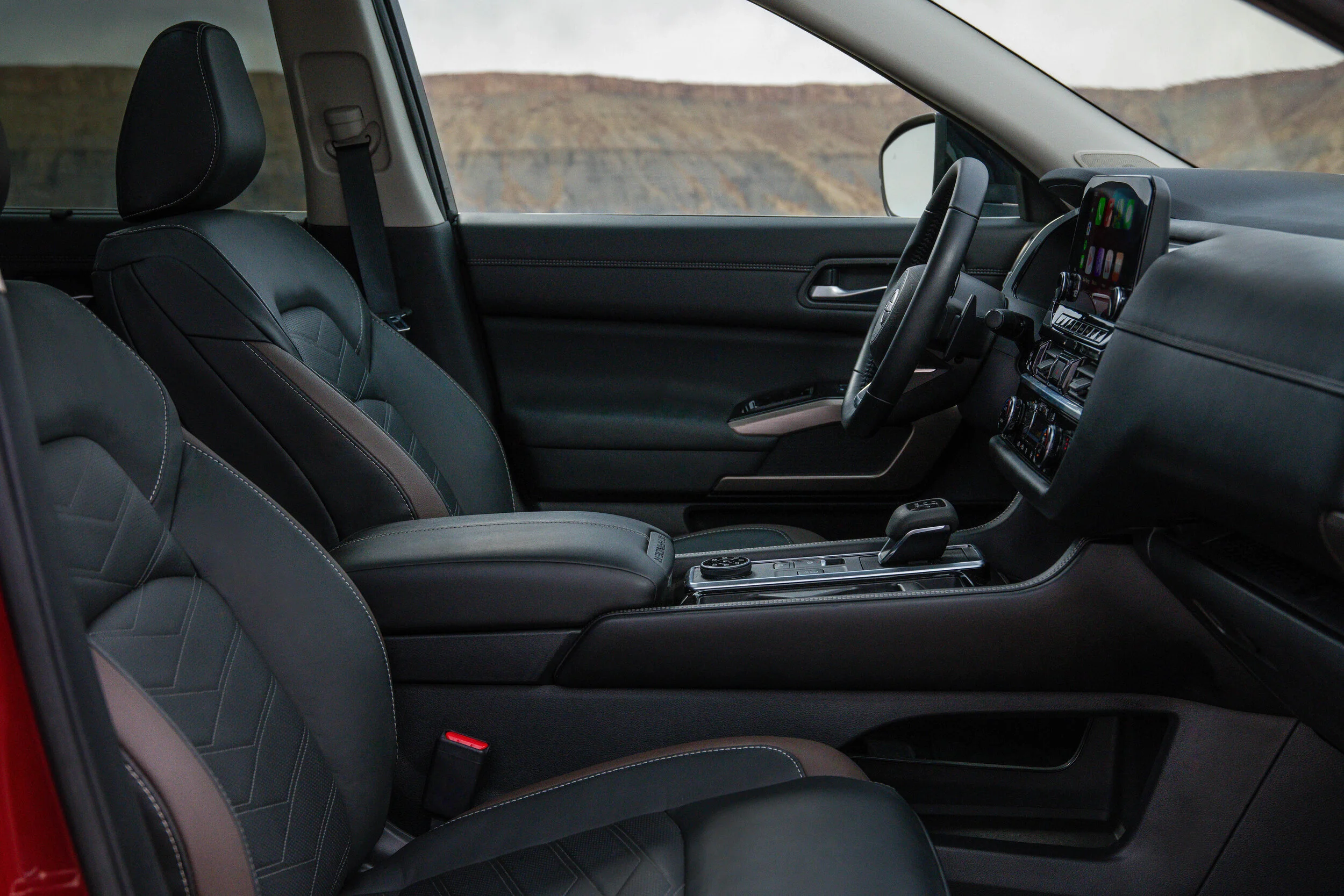
Other news is that it seats eight, over three rows, and loads up on latest Nissan technology, including a swish infotainment suite.

Much of the old car remains under the new model's skin, with the new SUV sharing the previous model's 2900mm wheelbase. Overall length has shrunk by 38mm to 5003mm, while the car's width and height have grown by around 19mm and 12mm to 1979mm and 1778mm respectively.

2022 Nissan Pathfinder_L-17-source.jpg

The body styling rework delivers the company's new design language, expressed particularly strongly up front with C-shaped LED headlights and signature daytime-running lights, plus Nissan's 'V-motion' grille.

The eight-seat layout is standard, but a seven-seat configuration is an option, the latter taking individual chairs in the second row separated by a removable centre console.

Comfort levels step up. The driver and front passenger enjoy climate-controlled seats and even the third row seats can be heated. The interior is dressed in semi-aniline leather.

The new infotainment provisions with a 9.0-inch touchscreen running a 'NissanConnect' system, including wireless Apple CarPlay and wired Android Auto capability and a Wi-Fi hotspot.

The driver gets a 12.3-inch digital instrument panel with a 10.8-inch head-up display, while other interior featured include wireless smartphone charging, satellite navigation, a 360-degree camera, and a Bose premium audio system with 13 speakers.

Nissan's release today speaks of an onboard 'ProPilot Assist' system with adaptive cruise control and lane-keep assist, to offer semi-autonomous speed control on highways. The brand's 'Safety Shield 360' safety suite offers front and rear autonomous emergency braking with pedestrian detection, blind-spot monitoring, rear cross-traffic alert, lane-departure warning and high-beam assist.

2022 Nissan Pathfinder_L-31-source.jpg


Tesla recall unseen by NZ?

It’s unclear if a worrisome Telsa infotainment glitch will become a problem for NZ owners.

Screen+Shot+2021-02-04+at+1.20.22+PM.jpg

THE national car safety recall database appears yet to note an action affecting two Tesla models.

NZTA’s vehicle safety recalls page does not signal an infotainment system recall, that seems to be slowly spreading into the cars’ international markets.

The United Kingdom is the latest place where  regulators have pushed for action to remedy a problem that prevents drivers from using certain safety features.

The most recent Tesla recall on the NZTA site is for Model S cars, built in the period 2014 to 2016, to address a potential airbag fault.

This latest action is of significant scale in the United States, where it triggered.

Tesla there is chasing up almost 135,000 Model S sedans and Model X there following disclosure from the National Highway Traffic Safety Administration (NHTSA) that infotainment displays are at risk of failing. 

Originally, the recall only affected US cars built before 2018 – but Tesla has since expanded the programme’s reach to UK cars of the same age.  

The firm says the recall is voluntary and is only required if the owner’s infotainment system is exhibiting signs of failure. The number of affected cars in the UK is unknown.

Teslas are reliant on their infotainment systems for key vehicle functions – and the faulty units in these earlier cars have reportedly prevented owners from using safety features such as the car’s rear view camera, and essentials like the indicators. A failure also means that drivers cannot access the windscreen defrost function, which the NHTSA said could pose a significant safety concern in adverse weather. 

The inquiry has been ongoing since June of last year, and initially, 

Tesla to remedy the issue with over-the-air software updates and targeted repairs. However, NHTSA wasn’t satisfied with the quick fix and has requested an organised recall.

NHTSA has narrowed the issue down to a memory device. The infotainment hardware is only rated for 3000 programme-erase cycles before wearing out – after which it struggles to prevent the data it stores from becoming corrupted.

This means the infotainment screen doesn’t have access to all of its software, which causes the loss of functions. 

Tesla says it will upgrade its old 8GB memory device with a new 64GB unit as part of the recall.

However, Al Prescot, Vice President of Tesla’s legal department, said the hardware troubles demonstrated the problem of “electronic components becoming increasingly more complex, while the expected useful life of vehicles has grown substantially.” 

Prescot also said that Tesla’s first-generation infotainment system was only expected to last between five and six years under average daily usage conditions, due to the finite capacity of the unit’s storage hardware. 

 Tesla is keen to stress that it was aware of the problem and has already updated the storage devices in some of its older cars. However, the affected owners paid to have the issue resolved – and, in the places where the problem has been flagged as an official recall, Tesla says it will refund the relevant customers.


Electric car enduro under way

Auckland enthusiast running Cape Reinga to Bluff to prove EVs aren’t just for short trips.

John Fitness is chasing a world record in his Tesla Model 3

 CALL it a true a test of Fitness, his car and Tesla’s national electric vehicle recharging infrastructure.

Anyone travelling the major North-South route today and tomorrow should keep an eye out for Auckland’s John Fitness, who has hit the road in his distinctive Tesla Model 3 to prove a point and hopefully set a world record while he does it.

The Cape Reinga to Bluff roadie is a 2068km, 29-hour marathon roadie which Fitness wants to complete with as few stops as possible.

He departed Cape Reinga this morning on what is planned out as a two-day drive that he aims to complete with just six charging stops — three for each island. This means on average, he will have to travel 300km from stop to stop.

The trip has interest from the Guinness Book of World Records – Fitness aims to reset the record for travelling from the top to the bottom of a country with the least amount of stops.

To ensure the record is recognised as legit by Guinness, he has numerous witnesses lined up across the journey.

Today’s stops are in Whangarei, Hamilton, and Mangaweka then he hopes on a ferry to cross Cook Strait.

Tomorrow begins with a 74km run to a charger in Ward, with other stops in Christchurch and Palmerston before finishing in Bluff. 

Fitness says he’s inspired by a recent Tesla Supercharger launch in Whangarei. It was then that he realised the brand’s recharging network was in place to make a world record run possible.

“I thought, 'Look, we've actually got the infrastructure now to do a full run through the country, essentially to emulate that great Kiwi road trip from the Cape to the Bluff,’” he said.

“Having been involved with having an electric car for such a long time, even my closest friends go, 'Oh you can't go far out of Auckland, you can't drive that far,' and it's just about dispelling some of those myths.

“I think my longest drive is just under four hours. Because I've got those six evenly spaced stops, each stop will be between 30 to maybe 55 minutes roughly.

“The battery technology has improved so quickly in the last three years I've been driving electric, inevitably it'll come down super quick and I think that when you look at your next car, it's starting to become more realistic to go electric or partial electric — hybrid or plug-in hybrid, for example.

“What I want to show with this trip is that, granted, the price might be too high at this point, but very soon — maybe this year or the year after next — you're looking at factory electric cars that can do everything you need it to, including the great Kiwi road trip. It shows feasibility.”

It's not clear how of much the run will be conducted solo, though he does have a friend joining as a navigator for a South Island section while local enthusiasts will help as guides to ensure he gets a smooth run through unfamiliar city routes.

Screen Shot 2021-02-04 at 8.08.34 AM.png


E push restricts to Jazz, but initiatives are not being ignored

Government’s push to promote electric cars could be music to the local Honda distributor’s ears.

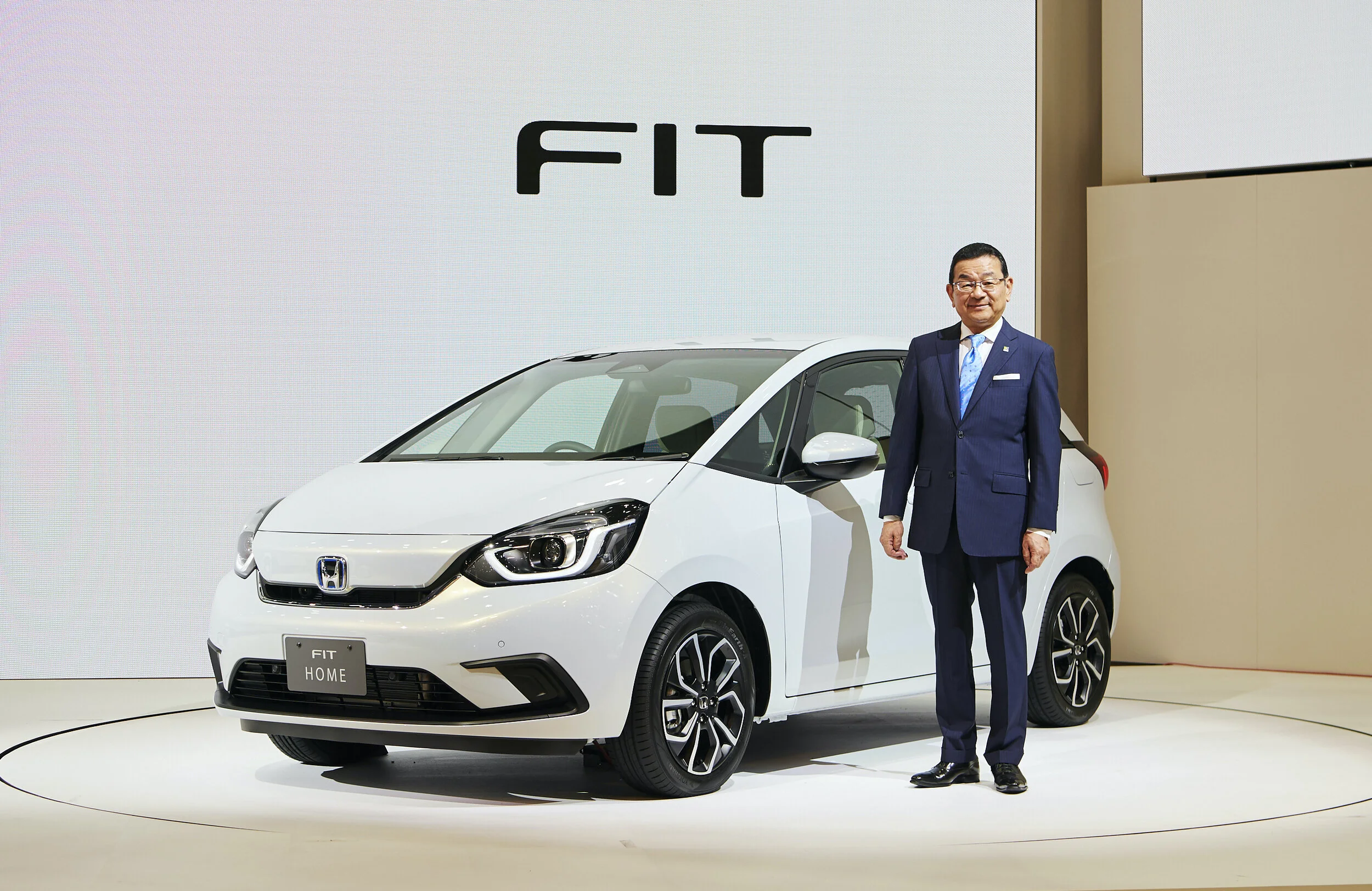
Honda’s push with the fourth-generation Jazz (seen here in Japan, as a Fit) will centre on the hybrid, arriving in May.

Honda’s push with the fourth-generation Jazz (seen here in Japan, as a Fit) will centre on the hybrid, arriving in May.

NO thought yet about whether Honda’s cute ‘E’ electric car could end up on the same play list as the new Jazz incoming soon, but the brand’s local agent says the Government’s clean car initiatives that give clear support to pure battery models are being followed with interest. 

For now, though, the only model being locally represented with any level of ohm drive ability will be a hybrid, landing in May, that seems set to be sold under a ‘Honda e technology’ push.

It’s a tag with potential to cause some confusion about the potential official availability of the retro-styled ‘Honda E’ electric car that, while not represented by the distributor, is nonetheless starting to proliferate as a grey import, in used and as-new parallel product.

Matt Woodburn, marketing and product manager at Honda New Zealand, says his Auckland-domiciled operation is excited to have the hybrid Jazz as a choice within the 2021 line-up that appears set to include several wholly fossil-fuelled variants.

Clarity about this will only avail when details about the range, pricing and specification relating to the fourth-generation model are released.

Honda NZ likely has plenty of options; the car avails in Japan in five different versions. The entry car is the Basic, there's a Home for urban use, a more vibrant Ness (as in Fit Ness), a crossover version called Crosstar and a leather-trimmed Luxe flagship. 

No official availability in New Zealand has not kept the Honda E from arriving.

No official availability in New Zealand has not kept the Honda E from arriving.

How those trims correlate to the hybrid drivetrain availability is not clear. 

Jazz is the first Honda to get the new e:Technology branding that will eventually feature on all the firm’s electrified products. 

The Jazz system employs a system similar to the ‘intelligent Multi-Mode Drive’ (i-MMD) set-up used by the CR-V in other markets.

In typical driving situations, rather than driving the wheels directly, the engine acts a generator, sending charge to an electric motor, which tops up a small battery. When more performance is needed, the 1.5-litre petrol engine can drive the wheels directly via a fixed-ratio gearbox. 

While stopping short of expressing exact volume hopes, Woodburn has made clear that he believes the hybrid model will be a winner and “a strong seller”.

“We are excited to be introducing Honda e: Technology … we are sure Kiwis across the country will be impressed by the new model. It’s the biggest change to the Jazz since the first generation launched in 2002,” he asserted.

As for potential to see proper representation of the Honda ‘E’? The model which operates with a rear-mounted electric motor making 315Nm of torque, and up to 113kW, with a claimed range from the 35.5kWh lithium-ion battery pack of 220km – so, the same as the MINI Cooper SE electric – is definitely a head-turner and has become a highly-talked about brand icon.

Woodburn agrees is “a very exciting and interesting product.”

However, it seems the pathway that have allowed its introduction by independent distributors is a much easier route than the brand’s actual representative must follow.

Head office insistence expressed when the production E first showed, in October 2019, that this model is just for Europe (including the United Kingdom) and Japan seems still to be firm policy.

Woodburn hasn’t shared how his own operation feels about seeing the car here nonetheless and has been guarded in relating, when pressed, what the situation is in respect to it having any involvement should there be servicing or warranty issues with those privately-delivered examples.

“Regarding support for grey imported models, there are many challenges in this space,” he acknowledged. “… but, as with all customers, we strive to support them as best we can.”

In respect to whether last week’s Government announcements might help Honda NZ make a case for including a fully electric product, he offered: “We are closely following the Clean Car announcements and are communicating with Honda Motors to discuss the future.”

HondaOdyssey2021YearModel(4).jpg

Meantime, Honda NZ has also released a heavily revised version of the Odyssey people carrier, in eight-seater Touring and seven chair Premium, respectively priced at $49,990 and $59,990.

The car is based on the same underpinnings as the outgoing version, but takes a comprehensive exterior and interior redesign and new technology, spanning from Apple CarPlay and Android Auto audio integration to dual one-touch power sliding doors, walk away automatic locking, and the Honda Sensing Advanced Safety suite — which avails blind-spot monitoring, cross traffic warning, radar cruise control.

The Premium delivers with leather trim and features additional to those on the Touring include a hands-free kick-to-open power tailgate, gesture control for the sliding doors, memory seating, a climate control screen for second-row passengers, increased interior lighting.

The powertrain for both continues to be a 2.4-litre i-VTEC four cylinder, producing an unchanged 129kW of power and 225Nm of torque and paired to a paddle-shift CVT. There is no talk of the hybrid that sells in Japan being availed for export.


Reprofiled Rhino ute revealed

An image of the model’s update has surfaced as a major South Korean news agency reports on the latest about the brand’s fight for survival.

Screen Shot 2021-02-03 at 3.00.31 PM.png

LEAKED images of an update for the Ssangyong ute we know as the Rhino have surfaced on the internet.

The beavily facelifted one-tonne ute – which most of the world knows as the Musso (a name it once had here, before it then rebadged as the Actyon Sport, before becoming Rhino on local release in 2019) - has been spotted and reported on by Mocar, a YouTube commentator popular in South Korea.

It’s badged as the Khan ute in its home country – yes, if only these people could decide on one name and stick to it, right?

The new look is bolder and brings a strong, blunt nose with larger headlights flanking a tall grille.

The model’s unexpected unveiling sends a strong signal to though wondering about what SsangYong has been up to while weathering troubles in its home market in the face of bankruptcy. An issue that has not affected operations in New Zealand; it’s business as usual for the independent distributor.

Today a major South Korean news agency, Seoul-based Yonhap News Agency, reported that the make’s main creditor as saying it has yet to decide on the cash-strapped automaker's push for a speedier bankruptcy procedure.

This comment comes in the wake of SsangYong having failed to receive approval from its potential buyer, according to the agency.

SsangYong, the smallest of South Korea’s five car makers, has been under court receivership there since December, as it defaulted on loan payment of about $NZ199 million.

the Rhino ute in current form.

the Rhino ute in current form.

India’s Mahindra and Mahindra, which holds a 74.5 percent stake in SsangYong, has been in talks with HAAH Automotive Holdings, a United States vehicle distributor, to sell its majority stake, but they have not yet reached an agreement. 

HAAH is a California-based business that also acts for a newcomer brand, Vantas, which has developed a medium sports utility similar in size and look to a Toyota Highlander. Described on the HAAH website as being a ‘near-premium’ product, the vehicle is produced in North America and set to go on sale in the US later this year, as 2022 model.

 Choi Dae-hyun, vice president of the state-run Korea Development Bank (KDB), said the potential buyer did not make a final decision on the pre-packaged plan due to SsangYong's delayed document submission.

The pre-packaged plan is a combination of workout and court protection under which a restructuring plan is agreed upon prior to the filing of the bankruptcy case to streamline the bankruptcy process. It starts with the approval of creditors who hold more than half of a company's debts.

If SsangYong fails to draw fresh investment or submits an unfeasible plan, its liquidation may be unavoidable, Yonhap quotes Choi as saying.

The agency says industry sources have related that HAAH Automotive proposed acquiring a 51 percent stake in SsangYong, but wanted the bank to partner.

The KDB has been under pressure to inject additional funds into SsangYong to avoid job losses and bankruptcy of its contractors.

SsangYong has faced difficulty at production lines in Pyeongtaek, about 70 kilometres south of Seoul, as some of its contractors refused to supply parts on delayed payments for their goods, Yonhap says


IS, EV important to Lexus NZ's 'grand' plan

It’s niche, yet it’s still necessary – Lexus NZ’s boss explains why his operation retains faith in the IS sedan despite a tough couple of years. Andrew Davis also talks about the brand’s performance and electric future.

The fourth generation IS is really a big refresh of the old car, but Lexus NZ is confident the update will appeal more to Kiwis and lead to a sales resurgence.

The fourth generation IS is really a big refresh of the old car, but Lexus NZ is confident the update will appeal more to Kiwis and lead to a sales resurgence.

HOW much challenge awaits a highly-rated performance-themed sedan when it delivers with fresh pizzazz – a host of styling and technology tweaks abetting the outgoing model’s well-regarded underpinnings?

Market trend suggests it will still be considerable, the local boss of Lexus concurs, in discussion about the IS.

The consumer rush to crossovers and sports utilities has lifted Lexus but not without loss; that shift is fuelled by sedan abdication. It’s why the GS has been pulled, the ES and LS are down to a sales crawl.

And IS? The past two years’ NZTA registrations relate that the BMW 3-Series fighter has also taken a pummelling; 40 national registrations last year after 63 in 2019.

Not a good graph, you’d think.

And, yet, while IS is down, it isn’t out. There’s confidence it can climb back – potentially into a three-figure sales result this year, Lexus NZ general manager Andrew Davis vouches.

New styling is just part of the IS’s makeover. It also picks up additional technology. The drivetrains and chassis are carried over, though.

New styling is just part of the IS’s makeover. It also picks up additional technology. The drivetrains and chassis are carried over, though.

Hence why it has unleashed seven derivatives of its smallest rear-drive product, including a new hybrid variant, in a performance theme.

What’s being described as the fourth-generation model is more accurately a big makeover. A number of fresh technologies, improved dynamics and a complete overhaul of its dramatic styling place atop an existing platform, with carryover hybrid and pure petrol powertrains, albeit with a few unique mapping tweaks to increase responsiveness.

Davis sees it as a fresh start car and is confident the 2021 count will be at least double last year’s – perhaps even hitting three figures. However, he concedes the decision to keep the car in circulation was no given.  

Could it have been dropped? Simply, yes. Global and local trends could hardly be ignored.

“Consideration for us came into quite a few factors,” Davis says on explaining why it ultimately received a green light, rather than a red.

One was not having a GS. Thought was IS could successfully span into the bigger car’s zone. Also, Lexus took another look at how certain European models were bucking the trend. Specifically? Mercedes C-Class.

“We thought ‘some competitors, particularly Mercedes, are still going quite well with sedans’. We realised that the car the size of IS therefore still has a place. We had also had reasonable success, albeit low volume, with ES. So we thought we still should keep it in the market.”

Still, some will say Lexus NZ is being extraordinarily bold in launching with seven IS derivatives; going by the registrations counts for the past two years, there surely has to be a strong likelihood some of these might represent in availability only and never in true ownership?

Andrew Davis, who now heads Lexus NZ in addition to being head of marketing for Toyota NZ, says the aim this year is to achieve 1000 sales - or more - for the premium marque.

Andrew Davis, who now heads Lexus NZ in addition to being head of marketing for Toyota NZ, says the aim this year is to achieve 1000 sales - or more - for the premium marque.

Davis says it’s an interesting question. “We’ve added in an F-Sport hybrid and hybrid is becoming a bigger proportion of our sales … and the technology has gotten better and better.  I think people still want the hybrid benefit, but they also want the look, so we’ve added that to our range.” The initial order of six base cars, 13 F-Sport and 16 Limited hybrid models suggests the demand is there and also supports in-house thought that hybrid F-Sport and Limited will be the lead sellers. Ultimately, the market will decide what’s hot and what’s not, yet he’s confident nothing will be left on the shelf.

AS for volumes? Davis asserts there’s every likelihood the bottom of the curve has been reached; from now on, the graph line is ascending. He thinks this year’s IS tally will be at least double the 2020 result, if not exceed 100 units. Which, if achieved, means the car will contribute to 10 percent of the brand’s overall expected volume for this year.

“We definitely expect growth. You do with every new model coming in. I think the styling is more appealing to New Zealanders … the spindle grille is a little more subtle.”

Last year Lexus NZ achieved 818 registrations, with its SUV stock accounting for more than 70 percent of that volume. Davis expects that dominance to ramp up to almost a 75 percent split in 2021, where the target is 1000 units. Or more.

“We are expecting good growth. When Covid was hitting hard – we’re talking July-August – we reduced our (2020) forecast to 650 units. So we are looking at quite a turn.” Last month produced a good start; 131 cars sold. “If you’re looking at 1000, 131 is a good start.” All the same, Lexus is no more immune to any other brand when it comes to sourcing stock. The market is running strong, but fulfilling that demand could well be challenging.

Could you see this car being the basis of another IS-F? The thought intrigues Davis, and there has been scuttlebutt, but nothing concrete.

Could you see this car being the basis of another IS-F? The thought intrigues Davis, and there has been scuttlebutt, but nothing concrete.

Now that Toyota has Gazoo Racing, is there latitude for Lexus to revive the full-blown IS-F performance car? Indeed, is there latitude for Lexus – the make that brought the world the astounding V10 LF-A, which Toyota boss Akio Toyoda raced in several Nurburgring 24-Hours, including when the rocketship coupe was still under development - to have anything like Gazoo?

That one raises a reflective laugh from Davis. “There’s nothing on the horizon that I’m aware of. There is speculation on IS-F and I think this speculation just shows there is still market interest in those sorts of cars.”

Lexus has had RC-F and GS-F, so there’s logic to think there might still be space for another IS-F. That the old model has established a cult following also weighs into it.
Still, as much as indications are that if another generation of the V8 monster sedan entered the fray, it might still have a good reception. At same token, though, the realities of modern motoring also cannot be ignored. Emissions, economy … even halo cars don’t get to escape those realities, all the moreso now Government has clarified its clean car intentions.”

The Lexus ‘performance into passion’ credo resonates strongly with him. “You’ve got to have cars that inspire emotions … we need cars that perform really strongly.”

Yes, Lexus held the performance mantle pre-Gazoo, but there’s no sense that the premium brand has been robbed by Toyota’s new motorsport-inspired energy.

“Yes, Gazoo is where the Toyota product is going, but Lexus will still lead, I believe, with performance. It’s just that whether that performance takes a different shape and perhaps with a different powertrain. 

“I think what we see is that the motorsport-related performance cars will be Toyota rather than necessarily Lexus, and there is logic in that when you consider where the GR brand is going.

At same token, there’s clear recognition that “consumers connect luxury and performance together. Which is why I say Lexus still needs some element of performance to continue to a leading luxury brand. That’s a challenge we will face.

“When you look future powertrains, Lexus will likely lead with some of that activity. So then it’s what sort of performance does that take.”

UX is already well-received by Lexus buyers and hybrid drivetrains are favoured, so potentially the next-step UX300e full electric should find easy acceptance with customers.

UX is already well-received by Lexus buyers and hybrid drivetrains are favoured, so potentially the next-step UX300e full electric should find easy acceptance with customers.

Speaking of … Lexus is very strongly established as a hybrid marque now and soon it will have a full electric car, with the UX300e, arriving later this year (final confirmation pending). What kind of preparation is being considered for that model’s release and marketing?

There’s a challenge in establishing a support infrastructure; Lexus has of course studied how some competitors already operating in the EV-sphere have achieved this. Toyota’s experience with Prius Prime hsd also been invaluable.

“What is going to interest me is the adopters of hybrid - once they have an electric option, will they move, and how quickly will they move. I think they will have good trust in the technologies, because they have already adopted hybrid.”

Price remains an unknown, but it’s the right kind of car for a battery charge, not least given it packages in a bodystyle brand fans are familiar and comfortable with.

“If the model already suits them and it’s just a matter of a different powertrain, then I think they’ll go (EV). It’ll just be in what volumes.

“UX has been a big seller for us and customer feedback is great … it’s the right size for Kiwis, so I cannot see why people wouldn’t go to it.”


Gearstick gone in Tesla update?


Transmission selection set to become a matter of occupant’s on-screen touch or test of car’s smarts as it achieves an intuitive ‘feel’ for the roadscape.

Screen Shot 2021-02-01 at 2.08.18 PM.png

HOW often have you employed sat nav to locate an address only for the guidance to relate an arrival point that’s actually down the street from where you actually want to be?

Alternately, the system is asking you to prematurely make a turn at a intersection?

This level of inaccuracy is not a fault of the system per se. Sat navs, whether embedded in your vehicle or running via a external device such as your phone, all rely on accurate location fixing. And that comes down to how many satellites are around. New Zealand is not always as well served as some countries, so the optimal triangulation required for full accuracy sometimes doesn’t occur. Accordingly, we have to sometimes put up with a degree of ‘guesstimation.’

It’s a factor that could prove irksome should a technology advancement just hinted at by Tesla’s boss be adopted in a series of updates announced, last week, mainly for the Model X car.

Big news there was an styling update for the SUV, a few cosmestic tweaks on rhe outside and a bigger rework within (notably, it now has the same size and formatted ‘do-all’ centre screen as the Model 3), plus adjustment of the lineup to replace the Performance trim level with a new model running the exotic three-motor “Plaid” performance drivetrain developed for the updated Model S sedan.  

As the cars share the same basic platform, it drops straight into Model X. It has an output of 750kW – enough for a 0–100kmh time of just 2.5 seconds and a top speed of 260kmh. More relevantly, Tesla also says the new flagship will cover around 548km between charges. The Long Range edition is also improved.

Like the new Model S, the Model X has also received a few updates to its autonomous driving systems. Now, the SUV can drive itself on the motorway “from on-ramp to off-ramp,” automatically changing lanes and avoiding traffic as it sees fit. The Autopark function has improved so the car can now park itself in parallel and end-on spaces with a single touch.

Screen Shot 2021-02-01 at 2.10.03 PM.png

About that ‘t’ word. In subsequent on-line discussion about the new innovations for his cars, Elon Musk also slipped in another ‘improvement’ that might prove as flaw-ridden as his premature attempt to enable his cars with a higher level of autonomy that the world’s established car makers have deemed irresponsible.

Look into the cabins on the updated S and X and, erm, …. Sorry, where’s the gear stick, exactly? 

In addition to replacing the orthodox completely circular steering wheel for a yoke-style control similar to those seen in high-tech racing cars (what makes sense for F1 at max attack might seem rather annoying when attempting a multi-phase u-turn) Tesla seems to have completely eliminated the physical gear stalk. Previously, both cars used shifter stalks, sourced from Mercedes-Benz apparently, required being moved up or down to shift between Drive and Reverse, with a button on the end of the stalk being pushed to place it in Park.

It’s gone. Musk believes that the car is now capable of guessing which one of those you want based on context, saying when queried on Twitter, that the “car guesses drive direction based on what obstacles it sees, context  and nav map.”

He concludes with: “You can override on touchscreen.” Motoring publications have taken that to mean that there’s a set of controls that will pop up on the now 17-inch central touchscreen.

Tapping on a touchscreen for Drive, Reverse and Park is one step further than any other manufacturer in the world has gone.

How do we feel about that? Says US site Autoblog: “Considering all the information that the car is capable of taking in, this system of guessing could work just fine in many cases.

“It would require an extremely effective method of informing the driver which gear the car has chosen, but it could very likely choose the right gear in the majority of situations. However, it could also choose wrong. Never mind the ability to override the car’s "guessing," this possibility sounds like a safety issue that deserves exploration.”

You might be wondering about the legality of this move. Apparently, US legislation doesn’t have any specific code or rule that would bar Tesla from selling such a shifter design. Autoblog figures that’s probably because, at the time those regulations were drawn up, the idea of a transmission guessing what gear it should be in would have seemed so far-fetched they may have never even considered taking it into account.

Added the site: “There’s nothing within the rules that suggests putting the shift controls into a touchscreen is illegal, either. As long as the shift positions are identified and shown when the Federal Motor Vehicle Safety Standards says they should be, Tesla seems to be in the clear. But just because something is legal or appears to be legal, doesn’t make it a great idea.”

Meantime, to support the new powertrain and technology updates, Tesla says it has fitted the Model X with “updated battery architecture.”

Again, there’s some element of mystery surrounding this as the nature of the updates are yet to be confirmed. It’s been reported previously that the company has been working on a more efficient shingle-lattice load-bearing battery, which would replace the firm’s traditional cylindrical cells, but nothing has been acknowledged in detail. Nor can it easily be: Tesla no longer has a communications department.

The result of the new design is likely to be a battery pack of a similar size and weight, but which can store far greater reserves of power. The cells are also touted to be much cheaper to make – a factor which is helped along by the switch to a new silicon anode in place of the traditional graphite anode.

Meantime, thought expressed by some Teslarati on the NZ EV Owners Facebook site seems to concur that the updated cars are set to be 2022 arrivals locally.


Dirty dozen (plus one) – high CO2 culprits easy to cite

The clean car legislation announced by Government aims to take high-emission product off the road. If imposed today there’d be plenty to choose from.

3946Pre-bookedparkingsaves132tonnesofCO2.jpg

KIWIS like to think green and care about the environment, but our car, van and utility buying preferences relate a dirtier truth.

The average vehicle in New Zealand has CO2 emissions of around 171 grams per kilometre; our cars and SUVs alone average 161 g/km.

New cars in general are cleaner now than counterparts that came into circulation 10 years ago, a time when fully electric cars were hardly an influence and even mild hybrids were considered a bit kooky.

Yet there’s evidence to suggest our rate of improvement has actually been retarded in recent years and it’s all our own fault. Emergent interest in one-tonne utes and, to some extent, SUVs, is to blame. While it is true that diesel engines emit less CO2 than petrol equivalents, the technology that delivers true efficiency gains in this area has tended to be delivered to proper cars and crossovers rather than the traydecks we prefer. Most of those are still delivering more than 200g/km. That’s why they’ve become an unhealthy addiction – one we probably must serious consideration to quitting with a 105g/km average looking set to install within four years.

Even if we seriously ease up on buying utes, reaching that new target will require radical change nonetheless as no light vehicles operating purely by virtue of using wholly fossil fuel-fed combustion engines slip under the new mandate, though some do come very close. It’s a matter of record, though, that the best-in-class orthodox CO2 emitters – that it is, models that produce the least exhaust nasties within their segments – that are virtually in the zone are rarely a high priority for new car buyers. Green isn’t always cool; why buy a base 1.2-litre Suzuki Swift (with a 106g/km output) when the more effervescent if less efficient Swift Sport is so much more fun?

Reality is that many of the cars that we’ve revered and adored for years are going to have a hard time surviving. That’s why their makers are in many cases one step ahead, and already working to consign them to history, in favour of replacements that take a partial, or even total, electric path.

That’s in the future. Today’s exercise uses RightCar data freely-available to give an idea of how far outside the clean air target the Government plans to have in place by 2025 some vehicles are.

The models listed today are generally at the extreme edge, but include best choices now and vehicles you might love to buy with a lucky Lotto win.

In ascending order of smuttiness:

WRX Saigo.JPG

Subaru WRX

211g/km

 The version that we have at the moment is on its last lap; the Saito edition pictured was sold (and snapped up) on strength that it is a ‘final’ special edition, though notwithstanding that the regular car is set to remain available at least all this year.

 And then? Well, all sorts of speculation is swirling around but it is certain, now that there will be a replacement for the current model and that, rather than going to an electric drivetrain, the newbie will stick to a petrol addiction, but this time in a 2.4-litre format that might produce more than 298kW. So, the good times are set to roll on … expect more of the spirit that dominated the World Rally Championship.

All the same, sticking to the old formula adds additional imperative for Subaru to produce far more efficient cars that will offset the racer’s CO2 hit. It already has two mild hybrids that will help but far more core will be the fully electric model that has been signed off; this being a co-development with Toyota. It’s a medium SUV, in production from later this year. To meet a 105g average without penalty, though, probably means one EV won’t be enough.

Subaru plans to have 40 percent of its global sales be hybrid or electric vehicles by 2030, but also says it won’t have hybrid or electric versions of every vehicle in its lineup until 2035.

2015 Ford Ranger Wildtrak - River.jpg

Ford Ranger 3.2

227g/km

No replacement for displacement, right?

These days, displacement is being replaced by technology. Multiple turbochargers, advanced fuel injection and efficient engine designs mean you can get more power, torque and efficiency from a smaller power plant.

Ford has three powertrains for this country’s best-selling ute (for five years) but, really, just two matter: The 3.2-litre five-cylinder that has been in service since the T6 platform introduced in 2011 and the 2.0-litre biturbo that came into action several years ago. Originally earmarked for high-end versions, but gradually no availing across most versions, the latter doesn’t feel as effortlessly muscular as the original, even though the latter in fact has more power and torque. The reason why the new motor is here, and will likely continue into the all-new Ranger landing in 2022 (a Ranger-rok as it is a combined effort with Volkswagen) is its efficiency: It’s thriftier and far, far cleaner than the 3.2, which for all its strengths is undone by having the worst CO2 count in this popular category.

PalisadeHighlander-10.jpg

Hyundai Palisade

246 g/km

 It has yet to officially go on sale – that happens in a week or so – but already the biggest, most expensive SUV from South Korea’s largest maker is on a blacklist.

Bad start? To be fair, it’s not as bad it looks. The version that has the spotlight is one most people will not consider, given it runs a normally-aspirated 3.8-litre V6 petrol. The main thrust will be with the diesel, a 2.2-litre turbocharged four-cylinder, which is cleaner, emitting 195g/km.

The point here is to remind that even modern big capacity petrol engines are still not clean enough for legislators. It is also worth bearing in mind, however, that Hyundai could have helped itself by installing, in its biggest rig, the more modern powertrains that have gone into the recently-released, latest form Santa Fe. Actually, make that one specific powertrain.

The next-size down SUV is not the same choice, being physically smaller and with fewer seats, and in V6 form it really has no Green advantage over Palisade’s; Santa Fe’s 3.5 emits 244g/km. However, it’s different in diesel. Palisade has the old cast iron block 2.2; Santa Fe has gone to an alloy engine. It’s cleaner, with 160g/km. Santa Fe will continue to hold a Green card going forward, when mild and plug-in hybrid petrol models land later this year. Both have lower emissions counts still. However, there’s no talk about those powertrains availing in the Palisade.

Jag_F-PACE_SVR_21MY_29_Static_DF2549_021220.jpg

Jaguar F-Pace SVR

272g/km

Considered in the widest perspective, it’s a grub. Narrow that view down to just the ‘bonkers performance SUV’ genre in which it resides and, actually, it’s not too bad. Or, at least, not the worst. Which is surprising, perhaps, given that this $157,900 rocketship’s 5.0-litre supercharged AJ petrol is an old engine. Soon to retire, in fact, with JLR set to install a BMW 4.4-litre eight in its stead.

 Jaguar, of course, is already sitting pretty in that it has a decent option for SVR buyers who need to quit their petrol addiction: It’s the superb iPace all-electric crossover. Not quite the same thing, but certainly a reasonable alternate, even if doesn’t have the thunderous growling exhaust note that, it has to be said, is really quite a fantastic element of the SVR package.

IMG_6053.jpeg

 RAM 1500

280g/km

 The figure above is for the diesel that’s slightly cleaner than the alternate petrol. But, like, just 3g/km cleaner on the overall average. The price of sticking to a diet of Freedom Fuel also reveals in sobering fuel burn, of course, but it’s the CO2 count that matters here.

A big heart is intrinsic to America's big lugger because it is genuinely in another league to one-tonne utes in so far as load-hauling goes. It’s also worth taking note that the 1500, a more popular choice for Kiwis than the larger 2500 and 3500, is at least a steady drinker – economy on the last one tested was much the same unladen as when it was running with a stacked deck and a big trailer. Still, it reinforces why this model has a 121-litre tank.

The DS model here is expected to stay available for some time, though with a ‘Classic’ designation, when the new-gen RAM arrives, probably in April. This is the DT line, which is more modern in look, technology, styling and equipment. It’ll also evidence in V8 petrol only. We’ve yet to see a local emissions count.

HSV_SILVERADO 1500_F3Q_BLACK BG LIGHTS ON.jpg

Chevrolet Silverado

282g/km

 Again, a substantial emissions count is the price of being American-big; not just size by engine capacity. There’s a 6.2-litre V8 under the massive bonnet.

Can it survive under the new legislation? According to the rules, each make’s official distributor will have a different target to meet, reflecting its fleet of vehicles. Across the vehicles it brings in it has to ensure the average CO2 emissions are equal to, or less than, the target for its vehicles.

As it works by averaging, vehicles exceeding the CO2 target can continue to be brought in so long as they are offset by enough zero and low emission vehicles. The 2025 target will be phased in through annual targets that get progressively lower. This gives vehicle suppliers time to adjust and source enough clean vehicles to meet the targets and to encourage buyers to opt for low emission vehicles.

So, with Chevrolet then, the situation as it stands goes like this. Silverado is currently the sole flag bearer. It should be joined, by late year, by the Corvette sports car but, of course, that’s also a V8. Not necessarily helpful for achieving the new standard, at least without attracting a penalty. 

However, GM has announced intent to build a whole heap of electric cars. If some of those arrived here, and sold under the same broad branding umbrella, it could conceivably make a heck of a difference.

RSQ8.jpeg
Urus2.jpeg

Audi RSQ8/Lamborghini Urus

278-282 g/km

 One makes 441kW and the other 478kW, both run the same 4.0-litre twin turbo V8; a true stomper for sound and sizzle. But, clearly, also a bit troublesome in respect to what primarily comes out of the exhaust pipes.

For all the eco-guilt it lays on, I really enjoyed the RSQ8 in sense that it made a far more sensible selection than the Urus, being basically the same with a German accent but shaped but kitted way better and costing a lot less.

 At same token, it does seem to be interesting and intriguing play, not least because it arrives just when Ingolstadt has deeply immersed in the electric car scene. If any Audi is set to stand out as the epitome of an ‘anti e-tron’, it surely has to be this machine: A super swanky, two tonne five-seater SUV coupe battering ram capable of 300kmh but also downing a horrendous quantity of fuel in the process of expressing optimal performance.

 It’s definitely the last of an old breed. And the RS e-Tron GT that is coming later this year is definitely the first of the new.

Mustang-GT-Shadow-08_GrabberLime-rear34.jpg

Ford Mustang V8

292g/km

And you still have to ask why the Blue Oval has decided its first fully electric car is also a Mustang?

The V8 engine has been part of the Pony car’s tale since day one, but it clearly comes with a cost.

Ford has already tried hard to wean fans off the eight cylinder route, with the now 2.3-litre EcoBoost engine as an alternate. It hasn’t worked – NZ preference for the V8 is even stronger than the global average. We just don’t care for anything less than the ‘real deal’, represented very well by the 5.0-litre engine.

Buyer swing toward the four-cylinder and the Mach-E electric, when it comes, could well be the saving of Mustang. Continued allegiance to the V8, as brilliant as that powertrain is, makes no sense in a world where passion has to take a back seat to pragmatism.

2016_Lexus_LX_570_003lr.jpg

Lexus LX570

334g/km

 THE combined Toyota and Lexus carbon profile in this country is an example to all other brands save, obviously, the one that doesn’t sell anything fossil-fuelled: Tesla.

 The Japanese giant’s count is already below the national standing and should fall even more this year, with more hybrids coming and two electrics as well. Those battery-assisted hybrids have made massive imprint for global good; a year ago the makes reckoned their cars had cumulatively saved their owners 25 billion litres of fuel: Enough, theoretically, for each of those cars to travel around the world, and then some.

It’s a nicely-Green calculation, a great crow for brand credibility. Just a shame that the wholly Green image cannot be claimed; at least not while the Lexus keeps its top-line version of the Land Cruiser 200-Series. This eight-seater monster holds black sheep standing within a family that works hard to portray a goody two-shoes eco-pitch.

 Why it is still here? Lexus always claimed the LX has enjoyed a core of supporters who find it hard to transfer to anything else quite like it. We note that the Land Cruiser it bases off is about to retire, with a new line coming – maybe this year, maybe next – with a hybrid V6 powertrain said to be far more efficient and Earth-friendly than the current V8s (diesel in Land Cruiser, petrol in LX). It’d be good for LX to follow suit.

CullinanFuxinOrangeexteriorV2.jpg

Rolls-Royce Cullinan

342g/km

 Talk about the filthy rich, right? This giant all-terrain land yacht is certainly making its presence felt through more than just gravitas, sheer substance and obvious affluence. Even it has a massive engine, hauling around all that luxury is clearly not a clean business.

 Rolls is at least know recognising this sort cannot go on. The ultimate toff brand is planning to bring an electric vehicle to market within the decade, though it will likely be a purely road-bound car. Thought about what future technical direction the Cullinan might adopt has not be expressed.

Meantime, the make admits this isn’t exactly the result of customer pressure. What’s compelling the brand to develop one is because many cities plan to ban petrol-powered cars in the not-too-distant future. If that seems a bit distasteful then there is main competitor Bentley, which has advertised more ambitious plans – it intends to release an EV by 2025 along with a hybrid version of each of its cars.

LamborghiniAventadorSVJ.jpg

 Lamborghini Aventador

394g/km

 Start with a 6.5-litre V12 that creates 544kW and there will be consequences, right? The Aventador is also a standout for its thirst: 16.9 l/100km is the factory’s optimal economy estimate, so maybe it’s a typo that had RightCar put it at 19.61.

 Still, they say here are supercars, and then there are Aventadors. There’s no question this machine is a proper Lambo’. It’s the quintessential Italian hypercar. The entire thing, from the carbon-fibre tub to the engine, handmade by a bunch of mad Italians in Sant'agata Bolognese. 

Can it continue? No. What’s next? Electrification, of course. They might be mad, but they’re not bonkers.

 A replacement for this car, the Egoista, will be a plug-in hybrid, though still V12. The new version of its Huracan, meantime, is taking the same track, though is expected to use either a modified version of the Audi R8 architecture or else an evolution of the 992 Porsche 911’s platform. Oh yes, and the Urus is getting a plug, too.

GCtrackhawk3.jpg

Jeep Grand Cherokee Trackhawk

395g/km

 The world’s most potent SUV drinks a lot of dinosaur juice and clearly has quite a powerful dino-breath, too, thanks to adoption of the supercharged 6.2-litre V8 that configured originally in just the Dodge Challenger and Charger Hellcat cars before Jeep decided, in 2018, that it needed some of the same fury.

The NZ distributor has done okay with a model that vanquishes 0-100kmh in 3.6 seconds – or 1.3s quicker than the SRT that used to be the king hitter  - covers the quarter mile in 11.9 seconds, hits 290kmh overall and drinks … well, the word ‘copious’ is an understatement when discussing the thirst.

But clearly it does all this with a very dark cloud hanging above. Another whose chances of survival seem … erm. minimal. If it was to be kept on once the clean car levies impose and assuming Jeep couldn’t find any way of avoiding those (through buying credits from another source) then it would carry a $15,000 penalty.


Although utes impact due to sheer volume, some are worse grubs than others. The Ford Ranger, which has dominated ute sales for five years, has a bet either way with two engine choices.

The 2.2-litre four-cylinder biturbo emits a category best 177g/km whereas the five-cylinder 3.2-litre single turbo alternate evidences a near class-worst 234.


Rolls-Royce Cullinan

Rolls-Royce has the highest average emissions in New Zealand, but then sells comparatively few cars that are only driven sparingly.


One solace for ute faithful is that makes reserved for rich listers still top the scale of shame. Aston Martin achieves 265.1, Bentley 274.7, Ferrari 279.8, Lamborghini 305.2 and McLaren 257.3. Then there's Rolls-Royce, the worst emitter, with an average of 343.3g/km.

Those elite end makes are among low volume makes still exempted from the EU's latest expectation,


Quiet approach for BMW’s ultimate lout

When it comes to how many and how much … well, it’s ‘M’ for mystery.

P90411323_highRes.jpg

HOW many examples of the most powerful M car BMW has made for public use are set to hit New Zealand is open-ended … how much each will cost is a closed book.

BMW New Zealand appears set to be one of the brand’s few distributors unwilling to publicly share pricing or potential sales count for the car, even though most other markets have done so.

The Auckland-based operation indicates because the CS is a “limited-run exclusive special edition model” it intends to keep specific pricing detail between two parties – the seller and the buyer.

Other markets, Australia included, have not been at all reluctant to include the price – over there, it’ll be a $NZ327,000 buy – or to say how many they’re getting: 20.

In respect to the likely NZ count, BMW NZ is unwilling to comment beyond offering “while the M5 CS will only be in production for a calendar year, we do not anticipate any delays or obstacles for New Zealand customers who place orders.” 

Chance of seeing one in the showroom doesn’t seem high. It is an indent model only and seems to be among cars channelled specifically through a new web portal it has established.

A version of the X2 compact crossover this week became the first car to be specifically notified as being for sale purely through the BMW Online Store website. The site is also the conduit for inquires for the impending iX3 and iNext electric cars, both set to come on sale this year.

When asked to elaborate on why the CS’s pricing was not being shared and if other BMW models are likely to be handled this way, a BMW New Zealand spokesman offered the following.

“BMW will always maintain a dealership partner business model at its core, but is continuously exploring new and digitally-enhanced ways of showcasing its range of products, for example with the BMW New Zealand Online Store.

“The new online channel provides us with a flexible channel to promote these types of limited-edition models, like the BMW X2 Mesh Edition, the highly-anticipated fully-electric iX3 and the all-new iX.”

Positioned to compete with Audi’s Q2 crossover and the Mercedes-Benz GLA, the Mesh Edition is based on the mid-tier front-drive sDrive20i variant, so runs a 2.0-litre turbo-petrol engine outputting 141kW/280Nm, which is paired with a seven-speed automatic transmission.

P90411293_highRes.jpg

The variant scores a number of cosmetic changes to stand it apart from the crowd.

Finished in a Brooklyn Grey metallic paint, the it also sports a high-gloss black kidney grille, and Black-Brown-coloured exterior highlights on the front bumper, side skirts and wheelarches.

Contrasting the paintwork are decals on the bonnet and flanks in an attention-grabbing orange colour.

The price? It’s no secret: $77,900.